Building a better world, one link, one line of code at a time

Once upon a time, not so long ago… in a world dominated by the #dotcons, closed-source technology and centralized decision-making, a small group of passionate activists and developers came together to reboot an old way of building technology. They believed that technology should serve the needs of people, not only the profit of big corporations and governments. They called themselves the #4opens community.

The #4opens community believed that openness and trust were the path we need to take to creating technology that served the needs of people. They rallied round the codified existing #FOSS, open-source working practices as a process called the #4opens, which consisted of four #KISS principles: open data, open source, open “industrial” standards, and open process. They understand and valued that by embracing these principles, they could create technology that was more transparent, collaborative, and decentralized.

The first principle of the #4opens is #opendata. The community believed that data should be freely available to everyone, so that anyone could use it to build new tools and uses. They created a platform: #OMN where people could share data openly and collaborate on projects together.

The second principle of the #4opens is the #mainstreaming idea of #opensource. The #4opens community believed that software should be free and open for anyone to use, modify, and distribute. They created a library of #FOSS software that people and communities use to build grassroots tools and services.

The third principle of the #4opens is open “industrial” standards. This principle was a little more complex, but it basically meant that technology should be built using open, standardized protocols that anyone could use. This would ensure that technology was interoperable and that people could easily switch between different tools and services to push the projects that grow in the most healthy way.

The fourth and final principle of the #4opens is open process. This was perhaps the most important of all. The #4opens community believed that technology should be developed using transparent, collaborative processes that anyone could participate in. They organized on a platform https://unite.openworlds.info/ where people could share ideas, collaborate on projects, and make decisions together.

Over time, the #4opens community grew and expanded. They built new tools and services based on openness and trust. They created an ecosystem of developers, designers, and users who worked together to create technology that served the needs of people, and pushed back the profit greed of big corporations and governments and the people who server them.

And so the #4opens community continued to grow and evolve, creating a more healthy vision for technology. They knew that their work was just the start, they were determined to keep pushing, to keep building a better world, one link, one line of code at a time.

Looking at #DIY projects

Looking at failures offers lessons: the importance of balancing sustainability with integrity, the necessity of regenerating core culture in growing communities, and the need for healthy conflict resolution to prevent ideological capture. In each case, the projects burned bright for a time, flashes of what’s possible when people come together to build outside the #mainstreaming. But without tending to the human side of organizing, even the most vibrant initiatives unravel.

The #VillageButty project was a vital social hub for London’s boater community, a floating space where people gathered, share stories, and maintain the traditions of life on the waterways. It served as a beacon of #boaterculture, offering a place for community events, music, and collective organizing. However, the project’s survival depended on a delicate balance: generating enough income to sustain itself while remaining true to its grassroots ethos. Commercializing too much risked alienating the people it was meant to serve, while staying purely community-driven made it financially precarious. We struggled to navigate this tension. Attempts to expand and bring in outside funding diluted the project’s identity, and without enough internal cohesion, the balance tipped. The Butty lost its anchor, and despite the clear need for such a space, we failed to keep as a centre of the #Londonboater community.


The #LondonHackspace was a cornerstone of the DIY and maker scene, a living example of what can be achieved through collective skill-sharing and open collaboration. Initially stewarded by an invisible affinity group, people who quietly maintained the space and nurtured its culture, it flourished as a haven for experimentation and tech creativity. But success came with growing pains. As membership surged, the core collective was overwhelmed, leading to burnout and disengagement. The influx of new members diluted the shared values that had held the space together. Without that core cultural glue, informal trust-based governance gave way to rigid bureaucracy. Conflict, once mediated through affinity bonds, spilled out in toxic online discussions, poisoning real-world interactions. The space itself became drained of energy, losing its spark. It became a lesson in how scale can crush solidarity if care isn’t taken to regenerate the social fabric that makes spaces like this thrive. It failed.

The #HiveDalston started as a promising experiment in community space, a potential sanctuary for grassroots organizing, creative expression, and radical thought. The idea was to create an open, collaborative environment, but without a shared vision or clear conflict-resolution practices, ideological fractures emerged. Political differences, personal agendas, and unspoken tensions built up over time, eventually boiling over. Instead of addressing the underlying issues, one faction seized control, remolding the project in their image. What was meant to be a space for collective liberation became just another battleground, mirroring the very dynamics it had hoped to disrupt. The Hive became a cautionary tale of how personal politics and a lack of structural care can fracture communities. We failed.

I need to add #socialhub and the #Fediverse, maybe #ActivityPub, #resistanceexhibition to this list.

“the currency of the 21st century is information”

“the currency of the 21st century is information” highlights the growing importance of data and knowledge in our rapidly-evolving digital world. For the last 5 years, the rise of encryption and cryptocurrencies is on aspect of this trend, reflecting a growing concern for privacy and the secure exchange of information.

The unspoken liberal individualism and private property ideas that come with encryption and cryptocurrencies is a market-based approach that prioritizes exploitation, greed, and selfishness. In contrast, #4opens can be seen as promoting connection, cooperation, and altruism.

The concept of a #4opens approach, which prioritizes connection, cooperation, and trust, represents an alternative to the market-based approach and highlights the importance of social norms and values in shaping the technology we use.

There is a divide between the “soft power” of social norms and the “hard power” of code in the #geekproblem, and the challenge is to find ways to talk about these issues and bring them into the #mainstreaming discourse.

How do you understand a conservative worldview?

The culture of hopelessness is a deeply conservative reaction to social change and challenge. It is marked by reflexive opposition and inward-looking tribalism, rather than by hope, solidarity, or progress. Instead of imagining alternatives, it retreats into irony and disengagement.

Meme culture and pervasive sarcasm are good examples of this tendency. They often reinforce a narrow, consumerist worldview that feels clever but lacks the power to engage with or transform wider social realities. In this way, such “invisible” movements quietly contribute to the problems we face, rather than helping to solve them.

At its core, this is a #deathcult mentality. The pressures of #mainstreaming and #stupidindividualism do not lead to human flourishing, they normalise despair, fragment collective action, and make systemic change feel impossible.

We used to have heathy alt culture

#Indymedia was a global network of independently-operated media outlets that provide an alternative to #mainstreaming media and promote participatory and decentralized journalism. The network was founded in 1999 to cover events and provide a platform for activists, community groups and journalists to share their perspectives and experiences.

#Indymedia consisted of hundreds of websites and local collectives, each with their own focus and editorial policies, but all sharing radical #4opens and PGA hall marks working.

Over the years, the Indymedia network faced challenges, including censorship, legal pressure, and technical issues, but it remained an important and influential platform for independent media until its decline in the late 2000s and early 2010s.

Alternative grassroots cultures fail for obvious reasons

Alternative grassroots cultures fail for obvious reasons include lack of resources, limited interest, conflicting #ideologies in the group, difficulty in maintaining momentum and attracting new participants, and difficulty in sustaining community infrastructure.

Grassroots cultures also face external challenges, such as opposition from #mainstreaming cultural institutions and power, as well as regulatory and legal attacks.

The success of a #grassroots culture depends on a variety of factors, including the vision and goals of the community, the level of participation and commitment of its members, and the resources and support available to the group.

What is wrong with Non-governmental organizations (#NGOs)

Non-governmental organizations (#NGOs)

* Lack of accountability: They operate without being transparent about their funding, goals, and methods.

* Dependence on funding: NGOs rely on funding from governments, corporations, or private individuals, this dependence compromises their agenda and integrity.

* Ineffectiveness: #NGOs are not equipped to solve complex social and economic problems, and that their interventions can do more harm than good.

* Overlap and duplication of efforts: With so many NGOs operating in the same areas, there can be a lot of overlap and duplication of efforts, which can be inefficient and ineffective.

* Cultural insensitivity: #NGOs are criticized for imposing #mainstreaming ideas and values on other cultures, and for not taking into account local customs, traditions, and beliefs.

If you can’t understand ideology, you generally cannot “think”

We exist in a world of ideas at best spoken, at worst unspoken. Thinking about #Ideology plays a role in shaping society as it provides a framework for understanding the world and determining values, beliefs, and principles that guide behaviour and decision-making. By understanding a society’s #mainstreaming ideologies, we can better understand its political, social, and cultural institutions, as well as the motivations behind various actions and decisions.

For example, a society’s unspoken political ideology influences the formation of political parties, the structure of government, and the laws and policies that are enacted. Social ideologies shape the relationships between different groups in society, such as the roles and expectations of men and women, the treatment of minorities, and the distribution of resources. Cultural ideologies shape our beliefs about beauty, art, and morality, as well as the way in which history is interpreted and remembered.

This active #KISS, understanding, the idea, of ideology is important because it is insight into the underlying beliefs, values, and motivations that drive human behaviour and shape the society we live in. It helps us to make sense of the world around us and make informed decisions about the future we would like.

As we are now realising that we have been worshipping an ideological driven #deathcult for the last 40 years, it’s useful to collectively lift our heads and look at this afresh. Best not to be a prat about this, thanks.

Worshipping the #deathcult for the last 40 years has led us to this mess.

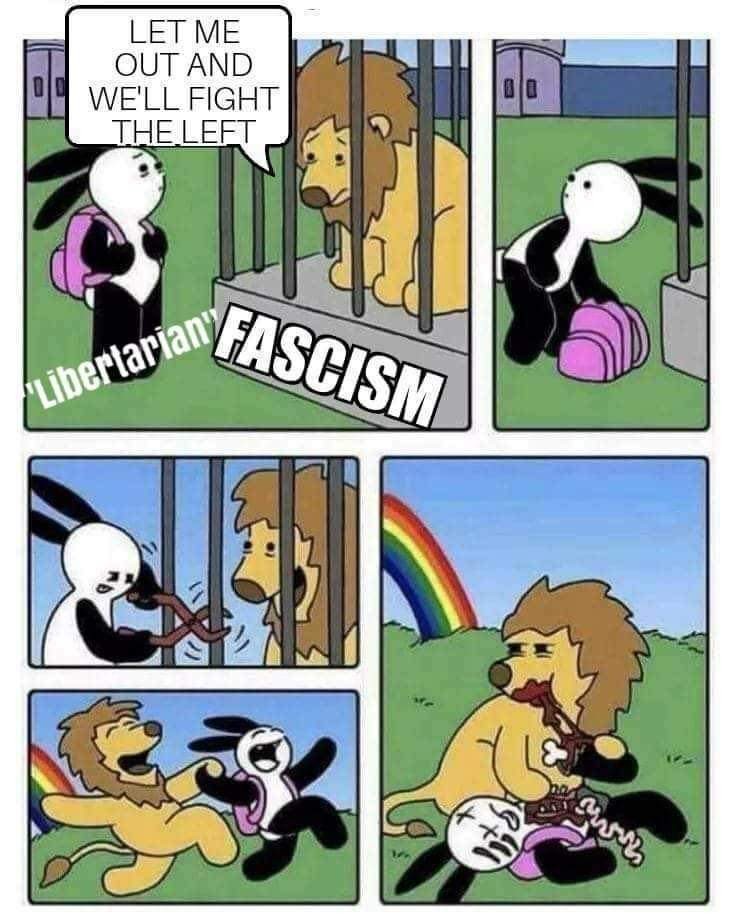
There has been a rise in far-right and fascist ideologies in many countries around the world in recent years. This is characterized by anti-immigrant sentiment, racism, xenophobia, nationalism, and a disregard for democratic norms and institutions. Far-right and fascist movements have gained traction, in response to perceived threats to cultural and national identity, as well as economic and political anxieties.

This ideologue is in direct opposition to the values of equality, tolerance, and democracy, and have been responsible for significant human rights abuses and acts of violence throughout history. It is important for people to actively stand against fascism and far-right ideologies, and to support progressive and democratic values. This can be done through grassroot protest, #mainstreaming political action, and supporting #4opens organizing.

Why European Social Democracy for some people is a path to a just and sustainable future

For decades, European social democracy has stood as a counterweight to the relentless logic of capitalism, proving that societies can thrive when they prioritize people and planet over profit. Yet in recent years, these ideals have been swept away by the rise of #neoliberalism and the slow creep of corporate capture. For some people it’s worth revisited the core principles, not as relics of a bygone era, but as seeds for the future? Let’s look at potential benefits of this approach, and why reclaiming its best elements might be help in rebuilding our world in the face of #climatechaos and growing inequality.

Reduced income inequality by challenging the hoarders of wealth, Social democracy actively fights against the extreme wealth inequality that fuels the #deathcult path of capitalism. By implementing progressive taxation on the ultra-rich and corporations, wealth redistribution to fund public services and social programs, outs limits on wealth accumulation to prevent runaway hoarding. This old #mainstreaming path treats wealth not as a private treasure, but as a collective resource. It challenges the idea that billionaires should exist at all while millions live in poverty, and asserts that the role of the state is to level the playing field, not deepen the divides.

Improved standard of living, a life of dignity for all, not only trying to mitigate suffering, this works to actively uplift people’s quality of life through: Universal healthcare that prioritizes public well-being over profit. Free or affordable education as a path to empowerment. Robust public services like transport, libraries, and childcare. By ensuring everyone has access to the essentials for a good life, social democracy shows that collective care leads to individual flourishing. It breaks the narrative that people must “earn” the right to exist and replaces it with the belief that dignity is a human right.

Stronger safety nets with protection from capitalist precarity, where markets rule, people are left vulnerable to constant boom-and-bust cycles. Social democracy disrupts this instability by creating social safety nets that catch people when they fall. Unemployment benefits to prevent destitution during job loss, Disability and sickness support for those unable to work, Public pensions to ensure people can retire in dignity. These policies directly challenge the capitalist threat that without endless labour, people deserve to suffer. Instead, they affirm the belief that societies are strongest when no one is left behind.

Greater economic security with power to the workers, social democracy strengthens workers’ rights and provides economic stability: Job protections & fair dismissal laws, living wage policies tied to actual living costs, Support for unions & collective bargaining. This redistribution of power away from corporate greed towards the workers who actually produce value is a radical shift from the top-down hierarchies of capitalism. It proves that economies don’t need to run on exploitation, they can be collaborative systems where workers share in the prosperity they create.

Increased political representation by reclaiming democracy, deepened democracy where people have a real say in how their societies function through, proportional representation to ensure every vote counts, publicly funded elections to reduce corporate influence, citizen assemblies and referenda for direct democracy. This expands democracy beyond just voting every few years, empowering people to shape the decisions that shape and impact their lives. It challenges the idea that politics is the domain of #nastyfew elitists and replaces it with the radical belief that people can and should govern themselves.

Environmental protection by defending the future from #climatechaos. Social democracy recognizes that the health of the planet is inseparable from the well-being of people. That’s why this path champions investment in renewable energy & public green infrastructure, strict environmental regulations & corporate accountability, sustainable development policies that balance human and ecological needs. Rather than treating nature as a resource to be exploited, this path sees the environment as a common inheritance that must be preserved for future generations. It directly challenges the short-termism of capitalism, which sacrifices the future for the sake of immediate profits.

Investment in public goods for the collective good, instead of pouring public money into private profit machines, social democracy reinvests in the public commons through infrastructure development for sustainable transport and energy, public research & innovation for collective progress, cultural and community spaces to foster connection and creativity. This long-term public investment shows that societies thrive when they share resources, not when they sell them off to the highest bidder. It dismantles the myth that privatization is more “efficient”, and proves that public ownership can build lasting prosperity.

What this means for radical media and the #openweb, The principles of solidarity, collective ownership, and democratic control, overlap the values that grassroots projects like the #OMN and #indymediaback embody. But instead of waiting for governments to catch up, we can start building these systems and paths now. Decentralized media platforms to break corporate control of information, open-source technologies governed by communities, not corporations, digital commons where people can share, learn, and organize freely.

The #4opens already provide the blueprint for a more democratic and sustainable digital ecosystem. It’s an easy path that by combining the best aspects of the older #mainstreaming social democracy with the “new” power of decentralized tech, we can bypass broken #deathcult institutions and start creating the future from the ground up. The old story of social democracy showed us a path, now it’s time to take it further http://hamishcampbell.com

#SocialDemocracy #WorkersRights #PublicGood #ClimateJustice #OpenWeb #ReclaimTheFuture


Talking about the #indymediaback project

Q. A few comments on your excellent video.

Your page layout is driven by desktop. Nowadays, people think mobile first.

The rollback: an interesting idea.

A. Yep it’s the #nothingnew part of the project, the original IMC was ripped apart buy internal arguments and bad process, so we are rebooting the project before this happened so making minimal changes outa the box of UX and process, the needed changes can then come FROM “consensus” of the fresh crew running the rebooted instances.

The mobile expirence is swipe sideways to each of the menu items as columns. This is a reasonable compromise, as the original project had no mobile interface.

This is an example https://indymedia.hs2rebellion.earth/users/news you have to click past the SSL error to see the site, on mobile a single column interface, but the swiping is not implemented, so you have to click on the menu at the top. This test site is a RSS/AP aggregator #indymediaback

Q. Well, that is interesting. Seeing something is so much more impressive than just a video. What is the software platform? What web server are you using?
It is pretty easy to do https.
Is anyone actually using the software?

A. sadly, the 2-year working project was killed off by covid just as we were going to start the outreach at protest camps. The codebase is now abandoned, was based on epycion, but dev on this folk is now stopped/blocked.

What we had is a good expirence though, Imagen if the swiping worked. The RSS and AP side works for input, the AP output does not work, none of the tagging was implemented on these rollout test sites, we are still running 3 but needs a committed crew to restart #indymediaback

Was 6 months work for 3 people to put this working code together #DIY and a wider collective to do the work on the text and process to bring the original #indymeda back in the spirit of #nothingnew but the stress of dev and covid broke this as we were getting close to test rollout, been dormant since then.

We need to chose a new codebase and find a coding crew, most of the hard work is done, all the existing design, process and outreach text is in place to push this out agen as the “news” part of the #fediverse

But its another year of nonpaid #openweb work… phwww… fighting agenst the pointlessness of the #mainstreaming is a hard sell, even though it’s blatantly and obviously needed.

A look at the recent history of radical grassroots activism

#ClimateCamp was a radical grassroots direct action movement to directly challenge to raise awareness about climate change and advocate for solutions to mitigate its effects. The movement was made up of a loosely organized network of activists who used a diversity of tactics to achieve their goals. Climate Camps were established in many countries. The movement reached its peak in the late 2000s and early 2010s and had a significant impact on public debate and government policy at the time.

#Protestcamps are gatherings of activists who set up temporary camps in public spaces in order to bring attention to a cause or issue, or sometimes to push direct change. The goal of these camps is to create a #DIY direct action space where people come together, discuss, create real alternatives and demonstrate. The camps range from #fluffy peaceful gatherings to more #spiky disruptive and confrontational, depending on the nature of the issue protested and the diversity of tactics of the activists involved. Some well-known examples of protest camps include #Occupy, #ClimateCamp

#CriticalMass a decentralized activism movement started in 1992. The movement is a monthly direct action bike ride where participants gather to raise awareness, and directly challagne car culture. Critical Mass is about reclaiming public space for cyclists and to assert the right of cyclists to use the roads. The rides are a festive and celebratory, this activism as since spread to cities around the world, with similar events taking place in many countries.

I bring these movements and traditions up because using #openweb tech tools like #RSS and #ActivityPub has benefits in the context of direct action and grassroots politics.

  • Decentralization: RSS and ActivityPub are decentralized technologies that are not controlled by any single entity, making them resistant to censorship and control.
  • Interoperability: By using open standards like ActivityPub, organizations and individuals can communicate and share content with each other, regardless of the platform they use.
  • Transparency: The use of #openweb tools can increase transparency and accountability in the political process, allowing for greater public scrutiny and engagement.
  • Ownership: By using #opensource tools, individuals and organizations can own and control their data, rather than relying on proprietary services controlled by corporations.
  • Accessibility: By using #openweb technologies, information can be more easily accessible to those who are marginalized or excluded from the mainstream, enabling more inclusive and equitable participation in the political process.

These tools and traditions can help direct action and grassroots politics, tech is an important tool for effecting social change. Direct action refers to forms of activism that seeks to achieve a goal directly, without intermediaries, often through disruptive or confrontational means. Direct action can include strikes, sit-ins, blockades, and other forms of resistance.

Grassroots politics refers to a political movement or approaches bottom-up, rather than top-down, meaning it seeks to empower citizens to take action on political issues, rather than on traditional power structures such as political parties or government. Grassroots politics gives a voice to marginalized or underrepresented communities to create change from the ground up.
Together, grassroots direct action and offer a way for people to engage in the political process and to bring about change in a democratic and inclusive way. By taking action outside traditional political channels, activists and communities bring about change on issues that they care about.

We can see the seed of this in the #Fediverse, a #openweb decentralized social network consisting of independent, community run servers that are all compatible with each other. This allows for a more open and democratic internet experience, as people can choose to participate in online communities without relying on single centralized platforms. The Fediverse is seen as a more privacy-friendly alternative to the #dotcons, but this is a working “white lie” based on #4opens thinking.

What is happening today? #XR “Extinction Rebellion,” a global social movement that uses non-violent civil disobedience to protest against the failure of governments to take action on the climate and ecological crisis. The movement disrupts the status quo and forces political leaders to take immediate action to address the crisis. The movement was founded in the UK in 2018 and has since spread to other countries around the world, with a focus on large-scale protests and acts of civil disobedience.

#XR is a protest movement, some #fluffy people classify XR as a #spiky radical protest movement due to its tactics and goals, but others consider it more liberal because of its commitment to #fluffy non-violence. Ultimately, the classification of XR as radical or liberal depends on individuals looking at the problem, it’s a debate.

What can we do to help contemporary activism? Programming and ideology are different areas that intersect. Ideology refers to a set of beliefs, values, and assumptions that shape an understanding of the world and people’s place in it. In the context of programming, ideology comes into play when a programmer brings their often #mainstreaming values and beliefs to the coding they write and the systems they build. You can see this in the copying of the #dotcons to build the #fediverse and how this is now shaping the current #openweb reboot.

In the current mess, most real radical social change and challenge projects get bogged down in discussing invisible #postmodernism and the criticism of “isms”. This hole in our ideas of blindly following #mainstreaming ideology can make a person a “zombie” to limit the ability to think critically. The phrase #nothingnew is used to suggest that fresh thinking on old issues is needed, rather than blindly following existing dead #mainstreaming ideologies. The use of ad hominem arguments, which is a type of logical fallacy attacking individuals rather than the argument they are making, is clearly #blocking. to make this reboot work, we do need to compost this mess.

The #OMN project focuses on linking alt/grassroots media, to play a role in rebooting the #openweb and thus avoiding the #blocking by #fashernista and #geekproblem agenda. The #openweb is the internet where information and content is accessible to all, regardless of their location, device or network, and can be shared, linked, and re-used without restrictions or barriers imposed by proprietary platforms, walled gardens, or monopolistic practices.

This path needs to be often contrasted with the #closedweb or “walled garden web”, where content and data are locked behind proprietary platforms, controlled by corporations or governments, and subject to limitations, restrictions, and surveillance. The #dotcons

DRAFT