What Did We Learn from Web3, Crypto?

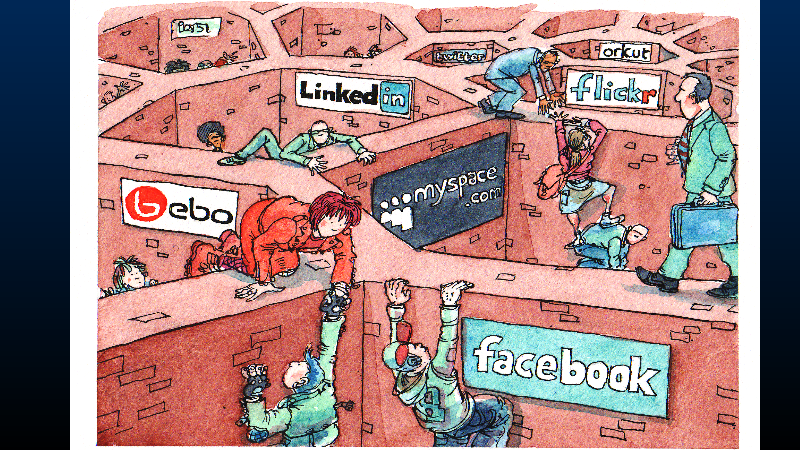
Looking back from the mid-2020s, the arc of #web03, #NFTs, and blockchain culture is very clear. What once promised (lied about) decentralisation, liberation, and a break from corporate capture now looks like the same mess, #techcurn pattern repeating itself, yes it had new language, new branding, but it was easy to see it had the same underlying dynamics.

As these #geekproblem projects hollowed out, the signs became hard to ignore. The technical optimism faded, the user bases thinned, and the economic logic exposed itself. What followed was totally predictable: spin. Makeup and perfume slapped onto decaying projects to hide the smell of rot and exploitation. Rebrands. New narratives. New demographics. Same extraction. This was the outcome of building “liberation tech” on foundations that still centred vertical money, speculation, and power concentration.

With these projects we are now in the zombie phase, projects kept moving, kept talking, kept selling – long after the animating ideas had died. Influencers and promoters continued to perform belief, even as any substance drained away.

This was a few years when #fashionista culture met #encryptionist ideology – aesthetics and technical absolutism snogging the undead remnants of a failed #deatcult vision. The result wasn’t in any way decentralisation; it was a simply new enclosure. People weren’t being freed, they were being financialised, its the money problem #KISS

At the core was a simple structural truth: #dotcons feed on money. Put money in, influence comes out. That logic doesn’t disappear just because you wrap it in cryptography or decentralised rhetoric. “Bad actors” weren’t anomalies – they were following the incentives as designed. Any social good becomes just collateral damage, this is why the lie collapsed.

The deeper harm and problem with #techcurn is each wave claims to have fixed the problems of the last. But each wave reproduces them, because this is what works when worshipping the #deathcult. This isn’t just a failed tech trend, the #techcurn disparity, driven by extraction systems cause enormous human harm, displacing livelihoods, concentrating power, and amplifying inequality at planetary scale. This is bad news in a time of ecological claps.

These systems don’t fail harmlessly, they fail onto people. That’s why the call isn’t just to “be critical,” but to step away to something better – and help others step away too. Not through purity exits or individual moralising, but through collective paths back to technologies built for people rather than profit, thats life over zombies

There has always been another path: the #openweb. Messy, imperfect, slower, less glamorous, but grounded in shared infrastructure, social trust, and human-scale governance. The #OMN approach on this path doesn’t promise salvation. It offers compost instead of speculation. Process instead of hype. People over tokens.

A note on hashtags: And yes, the hashtags matter. Click them., search for them. They cut sideways through algorithms – small back doors into less mediated, less controlled ways of seeing. Not a solution, but a crack in the wall.

The #Fashionista problem: How fear blocks change

This story is about compost, not control: Our world is smeared in social shit. We live in a vast, stinking pile of it. The left has its post-modern shit – where truth dissolves into vibes and dreams. The right has its fascist shit – where truth is something you enforce with obedience and violence. We drink the seeping effluent from this dung heap. Our work, our shops, our politics, our tech… all of it is smeared in the same rot. The planet itself is decomposing under the weight of this social shit.

But, shit makes good compost, you just need a shovel, It’s useful to start this composting with #fashionista thinking being the enemy of compost, its one of the recurring problems in our movements, from grassroots tech to climate activism to alternative media, it is why we need to call out this #fashionista thinking. It’s damage, pushing a complacent, fear-based mindset shaped by aesthetics, purity, and performance rather than working process, mess, and collective work.

This blindness leads to a focus on control, which quickly turns toxic. The moment control becomes the organising principle, everything messy, experimental, or unfinished becomes a threat. And that’s when behaviour turns into this full-on #blocking.

This path of narrow “thinking” skips the first steps: The awkward attempts, the compost and mud, the scaffolding, the incomplete prototypes. Instead, it judges the seed for not already being a tree, the foundations for not being a building, and the prototype for not being a polished “safe” product.

It’s not just irritating, it’s actively destructive, when #fashionista worldview treats change like a commodity, it’s a poisonous dynamic. The refusal to understand #KISS process leaves people stuck in this dark pattern, mostly having no idea they’re doing it. This is a very contradictory issue, on one hand they can still believe they’re “defending standards”, protecting “the right way”, or acting as guardians of quality or values. But in practice, it’s ignorance, and malice or parody at worst. On the other there are nihilism just destroying everything, as I say it’s a mess.

An example of this mess

Organic metaphors help bridge the messy gap: A plant needs soil, soil needs compost, compost is messy. If you can’t handle the compost, you are not working in the garden.

Then we need to touch upon the defensiveness problem, when we challenge this behaviour you get instant negativity. A strong defensiveness kick because critiquing the #fashionista paradigm exposes the gap between self-image and real impact. People who think they’re “the adults in the room” get, fearful, then angry when told they’re slowing things down. They double down, personalise the issue, and then retreat into purity/safety politics.

Refusing to have conversational space outside the deathcult’s terms is, frankly, worshipping the #deathcult. Conversations become impossible, because they can’t tolerate talking outside the narrow bandwidth of #mainstreaming “common sense”, that is in “undefined terms”,

So what can we do? The #openweb reboot needs mess, not perfection. The tradition – the real open web, not the #NGO-sanitised simulation – is built on: rough consensus, running code, shared mistakes, public process, imperfect prototypes, open but flawed governance and messy collaboration. We need to communicate the understanding that everything meaningful starts rough, unfinished, and imperfect. Perfection is not the starting point, perfection is what you get after a thousand messy, iterative steps.

This is why #fashionista thinking harms the #openweb, a strong tendency to block all of this, and worst of all, it convinces people who should be building that, shaming, they’re “not good enough” to begin, this mess kills movements before they start. People trapped in this rarely see that they’re part of the problem, not the solution.

We need a culture that protects messy steps, if we want the #openweb to reboot in a way that isn’t swallowed by #dotcons logic. We need collective composting, not competitive posturing.
Likewise, we need a culture that treats steps as legitimate even when they’re provisional, blurry, imperfect. Never judge the seed by the standards of the forest, nothing grows if people are afraid to plant in the first place.

The #OMN plan, is to keep working and presume people will stop being #mainstreaming prats at some point. And start doing useful #openweb tech. This could be you, message us if it is 🙂

Verticals can be fuckwits when it comes to anything horizontal. That’s not a personality flaw, it’s a values clash, a basic “common sense” failure.

You see this in every movement, and you can see it clearly online right now in the #openweb. Vertical thinking defaults to hierarchy, control, and enforcement. Horizontal thinking defaults to trust, process, and shared responsibility. When the former tries to manage the latter, everything breaks.

I short-circuit a lot of pointless debate by defining the terms #KISS, with a tech focus:

Left = open / trust

Right = control / fear

That’s it. Everything else is noise.

It’s pointless to build on complexity in a post-truth world powered by #techchurn and driven by #fashionista incentives. Complexity just becomes camouflage for power, branding, and control. We’ve spent the last few years watching this fail, over and over again.

Without this #KISS shortcut, we go nowhere, the real choice is simple: build social truth together, or keep worshipping the #deathcult.

The second option is what currently passes for “common sense.” The first one needs a shovel #OMN

Digital Detox Is Urgently Needed

Fighting #fashionistas with fashion. We have an app outline for that: iPhone or android.

Not as a lifestyle tweak, not as wellness branding, not as another individual “better habits” story. These proposed apps and the wider projects have nothing to do with self-optimisation, productivity hacks, or personal purity. Framing it that way is already defeat – that’s #stupidindividualism doing the work of the #dotcons for them.

What we’re facing in our digital mess isn’t only a failure of self-control, it’s a structural capture problem. The #dotcons platforms are designed to extract attention, shape behaviour, and enclose social space. You don’t fix that by telling isolated individuals to be stronger or more disciplined. You fix it by changing the infrastructure people live in.

That’s why this has to be collective infrastructure. Shared norms, shared limits, shared tools. Social agreements embedded in tech and process, not moral pressure dumped onto individuals. The goal is to change default behaviour at the group level, so resistance isn’t exhausting and opting out doesn’t mean disappearing.

The native #OMN path is about rebuilding the commons: tools that assume trust, reciprocity, transparency, and accountability from the start. Defaults that slow extraction, not accelerate it. Processes that make manipulation visible and contestable. Mediation instead of opaque algorithms. Human-scale flows instead of infinite feeds.

We do need to keep lighting, this isn’t self-control, it’s collective self-defence. Anything on the normal path is simply dresses up surrender as “wellness” and calls it choice, it is just more head down, worshipping the #deatcult.

The core idea: The buddy method. You don’t fight addiction alone, don’t detox alone, you don’t escape algorithmic capture alone, you do it with another human.

App 1: Digital Detox Buddy

A simple app that sits on top of existing child lock / screen time APIs. No dark magic, spyware, behavioural profiling. Instead, simple:Just process, consent, and friction.

Defaults matter. Default allowance: 4 hours per day on #dotcons, when time runs out: You get a 10-minute grace extension button. Extending beyond this requires talking to your buddy

To permanently end limits: You must unbuddy (an explicit social action). This creates pause, reflection, conversation – the opposite of dopamine scroll loops.

Time reduction is gradual, a soft landing, not punishment. Start at 4 hours/day, reduce by 1 hour per week/month. People can stabilise or reverse with buddy agreement. This is about retraining habits, not moral purity.

What Is counted (and what Is not)? Metered: Phone screen time (total). Time spent on #dotcons platforms. Unmetered: Web browsing, #FOSS apps, Reading tools, Local-first utilities, Creative tools.

The framing is explicit: The problem is not only “screen time”. The problem is extractive platforms.

Privacy + accountability balance, Aggregated stats are public (community-level visibility, cultural pressure). Exact stats are buddy-only (trust-based accountability)

Public stats answer: Average phone use, average #dotcons use, detox participation trends

This is #DemocracyOfReach applied to behaviour change – cultural signal without surveillance.

Architecture: First version: client–server is OK, preferably designed for #p2p later

Buddy relationship is explicit, revocable, symmetric, no central behavioural scoring, no advertising, no data resale, this is infrastructure, not a product.

App 2: Consumerism Detox Buddy

Same logic. Different addiction.

Consumerism Is also a platform problem, endless consumption isn’t “choice”. It’s nudging, targeting, and engineered impulse. This second app mirrors the first but focuses on shopping behaviour. How it works, uses geolocation, identifies time spent in: shopping centres, large retail chains, branded consumption spaces,

Same buddy rules: time limits, soft extensions, explicit social negotiation. Local markets, repair, reuse, libraries, commons spaces are excluded or positively weighted.

This is people to people anti-#deathcult economics made concrete in apps.

This is why it belongs on the #OMN path, and why it is not about personal optimisation, quantified-self nonsense, wellness capitalism, #NGO nudging, or behavioural surveillance.

A clear path about collective governance of attention. With explicit social process, open defaults, visible culture change. Tools that support people talking to each other, not being silently managed.

The apps don’t “fix” people, they change the environment people live in. This is striving to mediate what matters now: digital addiction and consumerism aren’t side effects. They are core pillars of the #deathcult. If we can’t or won’t build ways to step out together, all we get is isolated “self-help”.

These apps are p2p, gentle, federated, human-scale refusal, not banning, shaming or preaching. Its #KISS “Let’s do less of this – together.” If we can build social media apps, we can build #dotcons exit apps. A #OMN-native path.

Before you ask, the second stage, step, is to socialise the first step, offline.

Why the #OMN works with #ActivityPub – And why we need a bridge to #p2p

Let’s look at this. #ActivityPub is not a product. It’s not even really a “protocol” in the narrow, rigid sense that vertical tech likes to imagine. ActivityPub is a shared vocabulary, a public language for moving meaning and connection across the #openweb. It gives you nouns and verbs, and the community defines the grammar through lived use.

This is why the #OMN works with ActivityPub, a metadata and meaning layer, not a platform, flows, not silos. ActivityPub is the widely deployed #4opens protocol that treats publishing as a flow, a conversation.

Unlike the more vertical stacks (#ATProto is a good example), ActivityPub doesn’t force a worldview. It doesn’t tell you, “this is how your network must be structured.” It doesn’t enforce hierarchy or lock you into one interpretation of identity, authority, or workflow. It’s a #KISS path – here’s a shared language, verbs for publishing and receiving, express objects, updates, relationships. The rest is up to the commons

This flexibility is exactly why the #OMN can become a part of this flow. ActivityPub, with #FAP process, is already evolving this way – not through top-down committees, but by developers and users defining new grammar for shared needs. Quote posts, permissions, object types, and many other extensions are emerging organically. This is horizontal protocol evolution, which aligns well with the #OMN path.

To mediate the #geekproblem trying to break this path. We need to say clearly why we don’t want an “ActivityPub 2.0”. A clean break is a vertical move, it reproduces the #techcurn cycle: throw away the compost, start another shiny stack, burn everything down every five years because fashion demands it. It’s the #fashernista mindset applied to protocols.

For the #OMN, we need continuity, evolving the commons, not abandoning it. ActivityPub works because it’s an accretion protocol, not a replacement protocol. We extend it, we add grammar, we build bridges, we compost the broken bits. This is the #nothingnew ethos: repair, adapt, extend, don’t rewrite reality every cycle.

This is fine up to a point, but still too much – Central points of failure – Which is fine for much of the #fediverse. But the #OMN isn’t only for well-resourced servers, it’s for change and challenge. Activists on the ground, communities without reliable hosting, people under surveillance, low-resource groups, offline-first publishing, pop-up networks, autonomous movements that cannot rely on central infrastructure.

For this layer, we need true #p2p protocols. This is where #DAT, #Hypercore, and similar tools matter – not as replacements, but as bridges. These are needed for resilient metadata flows, where stories, tags, and meaning travel across networks even when the networks are broken.

We need to understand why both matter, It’s because they do different things. ActivityPub gives us: wide distribution, discoverability, moderation structures, federation, slow-moving cultural infrastructure. We add to this what #p2p gives us: autonomy, resilience, offline survival, local-first publishing, anti-censorship pathways,

The #OMN’s job is to bridge these layers, same metadata vocabulary, same hashtag meaning system, same open processes. Two different transport layers depending on the need. Think of it like the compost metaphor: ActivityPub is the shared soil bed. #p2p is the mycelium running underneath, keeping it alive when storms hit.

This matters, we don’t want just another Fediverse, we don’t want just another p2p experiment. We need a living ecosystem that can: publish everywhere, survive disconnection, resist capture, remain open, remain public, remain messy, remain ours. ActivityPub gives us the public commons, p2p gives us the underground root network. The #OMN ties them together through shared metadata, hashtags, practices, and governance.

Compost, not silos, ecosystems, not empires. Federation on the surface, peer-to-peer underneath. This is the #OMN path.

Manifesto for the Hashtag Commons

Outreach for the #OMN path, for the past year, the hashtag story has taken shape, not as branding, not as marketing, but as a shared language for navigating the mess we’re in. Each tag is compost: lived experience, memory of struggle, lessons from broken movements, glimpses of collective futures. Together they form a map of where we have been and the ground we are trying to rebuild.

This story is now done enough to act as a tool: a framework that connects all the projects, all the struggles, all the seeds of the #openweb still alive beneath the concrete of the #dotcons. It is the cultural layer that makes the technical layer possible.

But culture alone doesn’t run servers. Ideas alone don’t federate. And stories alone don’t build the future. We are at the point where the #OMN needs hands, skills, and messy collaboration to move from compost to sprouts.

Why this matters now, the last decades have been dominated by #stupidindividualism, a value system that believes progress comes from isolated actors, personal brands, and vertical structures. It produced a brittle world where resilience is outsourced, where every commons is pushed to monetise, and where the #deathcult logic of extraction is treated as “normal.”

Our work – the hashtag ecosystem, the #4opens, the #OGB, the #OMN – is a counter-current. Not a product, not an app, not a platform chasing hype cycles, it is a path toward:

  • Public-first networks
  • Permissionless publishing
  • Collective governance
  • Local autonomy woven into global flows

This isn’t nostalgia, it’s urgently needed #KISS survival. If we do not rebuild horizontal infrastructure now, the coming decades of #climatechaos will be shaped entirely by closed systems, proprietary protocols, and “solutions” that cannot be questioned.

The Hashtag Story as outreach tool, the hashtag system functions as a shared vocabulary, a way for people to step into the conversation without needing insider history.

#stupidindividualism, #openweb, #deathcult, #climatechaos, #OMN, #OGB, #4opens, #techshit, #nothingnew. These are not memes, they’re a lexicon for agency. The next phase is to combine this cultural layer with working codebases. Once one of the #OMN implementations is stable, the hashtag-combination tools will become transformative. They allow:

  • networked meaning-making
  • distributed editorial processes
  • peer governance
  • cross-platform, public-first publishing
  • local instances that connect into a wider commons without central control

This is the infrastructure the last generation of movements never had. What is blocking? People and Resources, yes, the same old story, funding and people. Here in Oxford, the search for a tech crew hasn’t turned up much yet. The bigger truth is that many potential contributors are scattered, burnt out, or trapped inside the #dotcons economy where every hour of labour must be monetised.

But there are people out there who still believe in the commons. People who want to build rather than brand. People who understand that open infrastructure is not optional.

This manifesto is an invitation to those people. If you want to #KISS work on:

  • federated, non-corporate publishing
  • governance without gatekeepers
  • open metadata and community sorting
  • tools that strengthen movements instead of extracting from them
  • infrastructures that grow like ecosystems rather than like empires

Then the #OMN path is open, we are not looking for heroes, we are looking for collaborators,
for people who can work in the open, for people who understand that messy is healthy, for people who know that compost is more valuable than hype.

If that’s you, step forward. Bring code, or time, or testing, or critique, or even just curiosity. The groundwork is laid, hashtags are seeded, what we need now is the crew to grow the next layer.

Let’s build the commons. Let’s reboot the #openweb. Let’s make the #OMN real.

https://hamishcampbell.com/?s=hashtag+story

We are not suffering from a shortage of “great leaders”

What we are suffering from a shortage of collective pathways. The crisis we are walking into isn’t caused by a lack of charisma or vision at the top. It’s caused by the cultural trap we’ve built around individual solutions to systemic problems. #stupidindividualism – the obsession with personal leaders, personal brands, personal genius – is going to kill millions and displace billions over the next 20 years. Not because individuals are inherently harmful, but because individualism is the wrong tool for a collapsing world.

Vertical thinking can’t see horizontal realities. If your whole value system is built around leaders, ranks, and “key figures,” you will be blind to the commons, to networks, to peer processes, to messy collective agency. And this blindness is not neutral, it accelerates #climatechaos, feeds the #deathcult, and locks us into the same extractive paths that got us here in the first place.

The way forward isn’t another charismatic savior or another “hero innovator.” What we need is to balance collective pathways built from the ground up. Any working future needs:

  • Networks, not heroes. Because no single person can hold the complexity ahead.
  • Practices, not brands. Because technique and culture outlast personalities.
  • Open processes, not closed hierarchies. Because transparency is the only antidote to captured systems.
  • Shared governance, not managed optics. Because appearance won’t save us, but participation might.
  • Messy, compostable infrastructures, not shiny hype machines. Because real change grows from what we renew, reuse, and reimagine, not what we market.

This thinking points toward the #OMN, not as a product, not as a platform, not as “the next big thing,” but as a path. A way of organising, publishing, coordinating, and governing that is native to the horizontal world we actually live in. A way to compost the #techshit and grow something more real.

We don’t need better leaders, we need better collectives, we need spaces where the horizontal becomes visible again. And we need them now.

The #mainstreaming has a crap story, they say that the crisis of communication – the noise, the chaos, the misinformation, the anxiety – can only be solved by “returning to trusted sources.”
They will argue that decentralized media is dangerous, that the “wild internet” must be cleaned up, that only vetted, official voices should have reach.

They will say that decentralized paths, all horizontal spaces are inevitably viral cesspools, and that our #openweb native podcasts, newsletters, open blogs, fedi servers are similer unregulated contamination. The growing fascism, in the end, will push that non-institutional voices are a threat to public order. That public conversation must be brought back under professional management, them.

The line will be simple: “Let the experts speak. Everyone else, sit down.” This is the predictable response of a broken society that lost control of its own narratives. And yes, they are right about one thing, that Big Tech is a sewer. The #dotcons profit from rage, division, algorithmic sewage, and emotional manipulation. Their business model is engineered disinformation. They are the factories of mess we live in.

But the establishment’s mistake, or more accurately, their strategic convenient lie, is pretending we, the #openweb, are the same, we are not. The #fediverse is not Facebook, Podcasts are not TikTok, Blogs and newsletters are not X, the #openweb is not #AlgoMedia.

We are: human-scale, chronological, transparent, open-process, community governed, non-addictive, non-manipulative. Decentralized media is not chaos – it is plurality. The messy public – not the polished elitists – speaking in many voices.

The establishment wants a return to vertical media because they cannot see horizontal people. Their value system literally blinds them. They believe discourse must be orderly, top-down, fact-checked by institutions that have long since been captured by the #deathcult of capital and careerism.

The problem is not that too many people speak, the problem is that too few people have been allowed to listen. The #OMN is the seedling of the opposite vision, many small voices, widely distributed, human editorial networks, community amplification and messy compostable infrastructure. The fedi, podcasts, blogs, newsletters – these are not the disease. They are the immune system emerging in response to the disease.

The establishment sees disorder, we see a rewilding,

They see danger, we see a necessary correction.

They see fragmentation, we see a path back to collective agency.

Not only that, but the current #mainstreaming are desperate to recentralize the narrative because decentralization breaks their #deathcult monopole on truth, framing, and attention. The people do not need saving from themselves, they need saving from the system that hijacked their voices. They need a native path that is open, messy, federated, to push compostable public media, where trust is earned through transparency, not authority.

#KISS

Eastern Europe on a Zloty – Kraków to the Balkans

This adventure started out with a peace march. The Global Walk for a Liveable World had already crossed America once – LA to New York in ’89 – while I was drifting through Santa Cruz, not quite sure where the thing would begin or end. I drove across the States instead of walking it, then flew back across the Atlantic. Found out about the second stage in the usual sideways way, a line at the bottom of one of my mum’s Ribbon leaflets.

In March ’91 I rang the organisers in the States to offer help with the UK leg, expecting to join a team. They wrote back to say that, actually, I was the team. Three weeks of phone calls, letters, searching for beds for 60–100 people, then scaling it all down to 20–30, and a week before arrival they announced only two or three walkers were coming. In the end four people appeared at the Battersea Peace Pagoda. Two weeks of trudging to Dover, then waving them off with a polite promise that I “might meet them in Berlin.” Truthfully, the earnest Californian-spiritual-self-help tone grated. They meant well. It just wasn’t my culture.

Hitching to Berlin. Set off for Berlin anyway, in the middle of… whatever month it was. Hitchhiking out of London was the usual purgatory. Bus → tube → Greenwich ferry back and forth trying to find a good spot. The gale stole my new Panama hat and sent me scrambling down the Thames foreshore to find it. Eventually got a lift out to the usual hopeless nowhere on the edge of town.

Midnight ferry to Ostend. Cheap day return, slept outside under the stars remembering the S/Y Nana and the Atlantic. Wandering off the boat, slinging my bag over my shoulder, I bumped into a Turkish-Cypriot driver who offered me a ride. Ended up drinking coffee in a friend’s flat while they talked Turkish and showed each other swords. Another lift dropped me at a service station 20 miles on.

A blur of rides later I was wandering lost in a village near Arnhem, slip road off the motorway, none on. Five miles through villages and pine forest to find the on-ramp. Lift to Hanover outskirts, dusk coming in, then, while trudging up the slip road, a ride all the way to Berlin. Stopped at the old border checkpoint at sunset. Dover to Berlin in 23 hours with a single hour’s sleep: exhausted but, strangely, the best way to do it.

Berlin: Unification or Just Glue? Dropped ten miles outside the city at midnight. S-Bahn staff surly, East Berliners insecure and unhelpful. Missed one train because nobody would point at the correct platform. Finally reached central East Berlin at 2am. Wandered empty streets, waited for tourist offices to open at eight. Everything misprinted, misdirected, kaput. Eventually found the address, a big communal house in the leafy suburbs, with activists, squatters, campaign groups, home turf of sorts. The Walk had left the day before. Slept. Woke late. Looked around Berlin. Got a Polish visa. Visited an old friend. Drifted.

Into Poland with the Walk. Caught up with one of the walkers, joined for a couple of days. Trudged into a village where we lounged on the grass eating bananas and ice cream while an old woman peered suspiciously through her curtains. A drunk man on a bicycle invited me fishing.

We camped two days beside a lake: sandy beach, forest, dragonflies, lilies, beavers. No tent, so I colonised a new picnic hut with a thatched roof half a mile around the lake. On the last night there was a party across the water with East Germans, Russian soldiers’ wives, and a group of Chernobyl kids. Vodka, folk songs, Beatles tunes until late.

Too tired and drunk to walk back to the hut I slept on the beach under my banner. Half-dreaming I felt a damp snout rooting at my neck. Sat up to see a small wild boar scamper away. Lay back down. Fifteen minutes later another attempted entry into my sleeping bag. Another boar.

Poland. Frankfurt-Oder → Poland Proper, Left the walk at Frankfurt-Oder, crossed the river, no border guards, no stamp. Changed a bit of money without knowing the rate. Hitchhiked through poorer, rougher towns. One couple gave me a lift, suspicious at first. When they realised I was from England their faces lit up: they’d never met anyone from “the West.”

In Wrocław, grey, rattling trams, I wandered two hours to a youth hostel that had closed years ago, then back again to the one I’d already passed. Looked for a tent; the shops offered nothing light, small or cheap. Took the train to Kraków instead.

Kraków, one of Europe’s great fairytale cities. Old town wrapped in green parkland, the filled-in moat. Enormous square crowned by the cathedral, a stone-roofed market hall, and a tower straight out of wizards and alchemists. Sat watching the Poles watch the Hare Krishnas dance.

Day trip hitching to Auschwitz with a young Jewish American, his first time hitching. Warm, generous people en route, which helped soften the horror of the camp: the endless wooden huts, the rails, the exhibitions. Romania’s display was the clearest; Hungary’s and Czech Republic’s had aged badly.

High Tatras. Bus to Zakopane, then on to Kuźnice. Walked two hours up into alpine meadows and pine paths. Stayed two nights in a mountain lodge built of giant boulders among firs. Walked barefoot to a lake at dusk, ice water numbing, snow on the shore. Two sunsets in one day after climbing a higher ridge. Back to tea, talk, and sleep, until a bear rummaging in the firewood woke everyone.

Walked five hours across ridges to Czechoslovakia. Pure mountain beauty: bilberries, moss-padded rock, icy streams, butterflies, deer crashing through undergrowth. Border guards grumpy about my missing stamp. Gave an old woman money and postcards to post, as there was no postbox at the crossing.

Slovakia: High and Low Tatras. Hitchhiked around: one lift from an obnoxious “entrepreneur” pushing overpriced rooms. Stayed two days in a cheap tourist motel, rode a forest tram to a surprisingly modern ski resort. Bought a tent for 2,100 crowns.

A Dutch couple took me to the ice caves, then to Dedinky, a lakeside village in the Low Tatras. Stayed four days. Lost half my clothes from a washing line and had my watch stolen at a birthday party. Thunderstorms, flooded tent, dubious rum, questionable hospitality.

Gypsies offered goulash and too much alcohol. Wandering deer-stalks with my camera. A glade so full of butterflies they landed on my jacket for the salt. Tea with syrup in the pub. Eventually hitched south and the last lift to the Hungarian border was, luckily, with Neo-Nazis who didn’t speak English.

Hungary. Walked across the border. Hitched halfway to Budapest in a Trabant with a new western Polo engine. The driver was proud until a giant French Citroën swept past; then he was crushed. The west in one gesture: effortless superiority, consumer glamour.

Budapest: big, beautiful, bullet-scarred. Wandered museums, fought off born-again Christians and McDonald’s kids. Lost my passport and found it again. Ate pastries and fruit for under a pound.

Caught a train to Szolnok. Wandered markets. Watched Russian helicopters drop paratroopers in dust clouds. Hitchhiked into a storm, huge drops, lightning, no lifts. Finally pitched my tent in a hollow outside Püspökladány, mosquitoes murderous, only sweets for dinner.

Next day: a lift with a Romanian to the border. Almost into Romania proper until visas and bribes made it impossible on my dwindling cash. Lunch of salted cheese and pickled vegetables. Foul orange drink. Backtrack.

Yugoslavia Approaches: Truckers, War Talk, Rain. English truckers took me under their wing. Rumours, hatred of Yugoslav drivers, endless cynical war talk. Rain hammered down. Hail. Under-bridge shelters. A hotel full of dancing wedding guests. A lonely prostitute named Gorge offering cigarettes and small kindnes. Long night. No lifts.

Eventually an English truck to Niš, avoiding the Croatian war zone. Dropped in a hotel in a storm that flooded the roads. More dancing, more waiting, more rain. Then stuck again, hitching useless.

Waited eight hours on a motorway. Walked off in frustration through dusty villages, sunflower fields, Soviet air bases, shepherds, rubbish dumps. Turned down buses. Took random side roads. A young man tried to help but we couldn’t communicate. Found a café owner who spoke French; they invited me to stay.

A Night in the Village. The café owner’s family fed me soup and bread and pálinka that could have cleaned engine parts. We talked in fragments of French and wild gestures. Their three kids stared at me like I was an escaped zoo animal. This was deep Yugoslavia, well off any tourist map, and I was the strange wanderer washed up by weather and bad timing.

They cleared a space for me to sleep on a narrow bed in the spare room. Old wallpaper peeling. A dog barking outside half the night. Rain on the tin roof. Perfect. Better than most hostels I’d paid for.

At dawn the café owner drove me back to the road, shook my hand with the elaborate warmth Balkan men have towards travellers, and wished me luck with the war. That was how people talked about Yugoslavia then, “the war” as if it were weather you might dodge if you timed the clouds.

Finally Moving Again. Two Orthodox priests in a green Lada dropped me near Skopje. They chain-smoked and offered philosophical commentary in a mix of Serbian, German, and what I think was half-remembered Latin. One of them insisted the devil lived in television aerials.

A trucker took me the rest of the way. The cab smelled of onions, diesel, and the sour damp of someone who slept in the cab too often. But he was kind, and he bought me a coffee from a kiosk that looked like it had been assembled from scrap during Tito’s time.

Skopje felt like a place trying to remember itself. Concrete modernist blocks, markets spilling fruit onto the pavement, the smell of grilled meat, the odd leftover fragment of Ottoman architecture poking up like a tooth. A city between eras.

I wandered the bazaar. Bought cherries so ripe they stained my fingers. Sat by the river watching young men throw themselves dramatically into the water to impress girls who pretended not to look. Same story everywhere in the world.

Spent the night on the floor of a dormitory where half the travellers were on their way to Istanbul and the other half had just escaped it.

South Again. Hitching out was slow. Eventually an Albanian family squeezed me into their car, seven people and me, limbs everywhere. They gave me boiled corn and water and argued loudly over whether I looked more like a German or a Spaniard.

Near the border, the father insisted on buying me lunch: greasy lamb tat I could not eat, tomatoes, bread like clouds. Hospitality thicker than the Balkan humidity. Crossed into Greece on foot. The border guard barely looked at my passport. I think he was half-asleep.

Northern Greece. Hitching here was easier. People were curious. Everyone wanted to talk politics, history, religion, football, and how Germany was ruining Europe. I learned quickly that agreeing with everyone was the safest option. Slept one night in an olive grove. Stars so sharp they felt like they could cut you. Woke to goats nosing the tent.

A trucker dropped me at the edge of Thessaloniki. Another city between worlds: Byzantine churches, grimy apartment blocks, and the sea shining like nothing was wrong anywhere.

End of the Road. I sat on the harbour wall watching ferries come and go. Backpack stained with rain, dust, and bad wine. Boots half-destroyed. No plan, no deadline, no proper money left. Just the quiet satisfaction of having walked, hitched, and lucked my way across a continent in a time when borders were dissolving and reforming beneath your feet.

You never really end these journeys. You just stop somewhere and breathe. The world keeps moving. You move with it.And eventually you turn the stories into compost for whatever comes next.

Towards Istanbul. From Thessaloniki, everything tilts gently downhill towards the East. The light changes. The air feels older. Even the road markings start to look like they were painted by someone who learned their craft from Byzantine mosaics.

I caught a lift with a fisherman in a battered blue pickup. Nets in the back, the faint smell of diesel and the sea following us inland. He didn’t say much, just offered me a cigarette every twenty minutes as if that were the correct dosage for crossing northern Greece. When we stopped at a roadside café he bought me a coffee strong enough to restart a small tractor.
He dropped me near Kavala, waved, and disappeared in a cloud of dust and fish-scented goodwill

Sleeping Rough, Thinking Too Much. I slept that night above a rocky beach, backpack for a pillow. The Aegean murmured below, waves rolling in like slow thoughts. I remember lying there thinking how strange it was, the world felt wide open then. Borders were just lines on paper. You could hitch from Scotland to the edge of Asia with nothing but a backpack, a half-broken map, and the soft confidence that strangers would mostly help you.

Trust-based travel. Pre-#dotcons, before fear culture colonised everything. Before algorithmic sorting. Before #deathcult narratives turned everyone into either a threat or a customer. It was all human-scale. Messy. Improvised. #KISS by default.

Crossing Into Turkey. The next morning a Greek–Turkish family picked me up. They were going home after visiting relatives, the boot stuffed with gifts and olives and god-knows-what from villages along the route. Three kids in the back seat, all elbows and arguments. They fed me pastries, corrected my pronunciation, and insisted on telling me the entire family history of Thrace. At the border the father argued with the guard about paperwork, the mother handed out more pastries, and the kids tried to climb over me to see the soldiers.

And then, just like that, I was in Turkey. The Road to Istanbul. The highways were louder now, more chaotic. Traffic like a living organism. Drivers inventing new lanes, new rules, new geometries of risk. I stood at the roadside for ten minutes before a lorry screeched to a halt and the driver leaned out, waving wildly, shouting “ISTANBUL! ISTANBUL!” as if he’d been waiting specifically for me.

We barrelled westward, the cab rattling like it was held together by optimism and borrowed bolts. The driver sang folk songs, swore at traffic, and at one point produced a melon from under the seat and insisted I eat half of it.

First Sight of the City – And then – there it was. A vast sprawl of light and concrete and history piled on top of history. Istanbul doesn’t appear gradually; it erupts. One moment you’re on a motorway, the next you’re in a civilisation that has swallowed entire empires and still hasn’t finished digesting them.

The skyline hit me first: minarets, cranes, towers, domes. Old and new arguing with each other. The Bosphorus shimmering like a border between worlds.

Finding a Corner to Exist In. I got dropped somewhere central-but-not-quite. Walked uphill, downhill, through markets selling spices and plastic toys and counterfeit jeans. Found a cheap hostel with doors that didn’t quite lock and beds that creaked ominously with every breath.
I dumped my pack, went outside, sat on a low wall, and watched the city breathe. The call to prayer drifted over rooftops. Boats moved like ghosts across the water. People hurried past carrying bags, bread, gossip, whole lives.

I felt like I’d reached the edge of something – the edge of Europe, the edge of the analogue era, before everything got flattened into apps and fenced-in channels.

#Traval #hamishcampbell #easteurope

The Power of Film

The Godfather films, aren’t only stories about criminals, they’re stories about the world we live in: hierarchy pretending to be community, patriarchy pretending to be protection, capitalism pretending to be freedom, politicians pretending to be legitimate, family pretending to be love. It’s the #deathcult mythos in cinematic form.

They’re parables about how hierarchy rots everything it touches. Coppola and Puzo create a world where the mafia isn’t an aberration but a mirror of #mainstreaming power: patriarchal families, capitalist accumulation, politicians in pockets, and a state captured by private interests. It’s #deathcult logic wrapped in myth.

It opens not with the fake glamour of today’s action films, with none of the politically correct obscuring, but with real working people doing real life, it’s a view outside the current post truth polished mess. It’s about what’s behind the shiny surface blindness, you watch this film today to experience filmmaking and politics, like meany older films, the pacing is slow. Our attention spans are broken, good to keep this in your mind as you learn to see anew this ethnography of a pastime.

The Corleones aren’t only monsters from the shadows; they’re the real face of American power with the mask removed. Vito Corleone is an older, more honest version of the #neoliberal billionaire who buys judges today. The story’s “crime families” are stand-ins for competing capitalist blocks. The story is a metaphor for how power protects itself, how legitimacy is a costume, and how the violence of the system, hides behind talk of “family,” “business,” “respect,” and “tradition.”

The first two films critique the world we live in, a family built on the same contradictions that tear it apart. Quotes:

“It’s not personal, it’s strictly business.”
→ the neoliberal worldview: harm without responsibility.

“I’m going to make him an offer he can’t refuse.”
→ the essence of capitalist coercion: “choice” backed by threat.

“We’re bigger than U.S. Steel.”
→ capitalism’s real goal: monopoly masked as freedom.

“Just when I thought I was out…”
→ no exit from systems built on domination.

The films are showing us the mythology of the mainstreaming #deathcult. America as Mafia, Mafia as America.

The first film opens with a small man being crushed by the system: a father whose daughter is brutalized, and the courts shrug. This is how neoliberalism works: public services are defunded, fail, people are pushed into private “solutions.” Justice outsourced to a Don is no different from healthcare outsourced to a corporation: both sell what should be a right. Vito’s “friendship” is the same as corporate “philanthropy”, a mask over structural violence.

The “family” keeps up appearances – the bourgeoisie’s favourite hobby – while patriarchal rot devours everyone inside. Connie is beaten by Carlo, but the family shrugs because patriarchal norms demand they stay out of a “private matter.” The same system that fetishizes “protecting our women” abandons them whenever protection would inconvenience male hierarchy. It’s about too much control and not enough care.

Competition, crises, violence – the capitalist cycle – it is useful to see the mythology in #KISS terms, the Five Families aren’t criminals; they’re competing capitalist firms. Their war is a stand-in for economic crises. Clemenza even says these things happen “every ten years,” which is basically the capitalist business cycle.

The Tattaglias and Barzinis pushing heroin aren’t “more evil”, they’re the next stage of capitalism’s expansion, accumulation demanding new markets. Violence is “nothing personal,” which is how every predatory corporation sees the world.

Michael, capitalism’s golden child, was meant to be “legitimate” – a senator, a governor. A respectable frontman to maintain the illusion. Instead, he becomes the perfect neoliberal mess: calm, disciplined, efficient, emotionally repressed, willing to destroy anyone to maintain order. He is the patriarchal son weaponized. The obvious patriarchy flowing through the films is a useful reminder for some and insight for meany about what happens behind closed doors in the current hard right with their calling for “family values”.

By the end of the first film, when he wipes out all rivals while standing in a church professing faith, we see the metaphor: authoritarian capitalism, patriarchal religion, and state legitimacy all fused together. He “renounces Satan” while becoming him, the system itself.

Part II, sharpens this critique. We see young Vito’s rise in a world where feudalism is giving way to capitalism, one hierarchy composting into another. He kills Don Fanucci (feudal power) so he can build Genco Olive Oil (capitalist power). Same structure, new branding.

Meanwhile, Michael, the more matured form of this system, expands the empire into Nevada, New York, Miami, Sicily, Cuba. It’s the globalisation arc. And like all global empires, it’s built on betrayal: Fredo’s betrayal (internal collapse), Kay’s rejection (patriarchal fragility exposed), Michael’s violence against his own (self-destruction inherent in all hierarchical systems). By killing Fredo “for the family,” Michael destroys the family. Capitalism works the same way: protecting profit destroys society.

And the ending is the #techcurn lesson: systems built on secrecy, power, and control always collapse inward, devouring the people they claim to protect. Michael Corleone is neoliberalism in human form. Vito is the earlier, “nicer” version of the same system. And the people around them? Compost.

The Cuba revolution is the one moment where the system cracks – the #openweb moment of the film – where people try to reclaim the commons, break the hierarchy, stop being pawns.

On the subject of filmmaking, a lot of the films’ technics now look every day, this is not because they are, they are brilliant, it’s because every film for the last 50 years has coped them and thus diluted their shine with mediacy. Open your eyes, afresh, watch the films, you are seeing the invention of cinema. When you are used to a lifetime of derivative drivel.

The History of visionOntv: What We Built, What We Lost, and Why It Matters Again

Looking back at the old TubeMogul stats – the archived page from 2011 – I had a jolt:
18 million verified views, and when you added the torrent distribution, RSS syndication, video CDROM redistribution, and all the edge-case channels we seeded into, the total was closer to 34 million views. These were big numbers back then.

All grassroots, all #KISS, all built on the early #openweb ethos, that number matters, not for vanity, rather, it showed proof-of-work for what a truly decentralized media network could do before the #dotcons consolidated their grip.

People forget this now, but #visionOntv was one of the earliest real-world demonstrations of the idea behind what we have now with the #Fediverse, years before the word existed:

  • distributed hosting
  • open content flows
  • creative commons
  • no algorithmic manipulation
  • human curation
  • peer-to-peer distribution
  • training and empowerment as core paths

This wasn’t theory, it was practice, in the era just before the enclosure of the Web took hold. The original vision – visionOntv’s mission statement from back then – looking at it now through the Web Archive – still works:

“Are you feeling dejected and bored? Does mainstream media make you feel ill? Then get off your ass…” This wasn’t branding, it was the cultural tone of a time when people still believed the internet could change things, and it genuinely did. visionOntv was a platform, seed for a network, built around a simple idea: video for social change, delivered in formats normal people could actually use.

We were deliberately designing for the “lean-in / lean-out” model before UX people had the words for it. You could sit back and watch it as TV. Or you could click deeper, link up to the grassroots campaigns behind the stories, jump straight into action.

The point was always outreach, always getting beyond the activist bubble, aways trying to plant seeds of agency in ordinary people, that “compost” metaphor we still use today. Quality, not chaos, visionOntv was not open-publishing, we had a quality threshold, we mentored people into producing work that worked, visually, politically, narratively, not gatekeeping, but gardening.

This is something the #openweb forgot: freedom isn’t the same as noise. We were trying to hold onto a craft tradition inside a political one. Tools, Training, and #4opens. We pushed #FOSS open source production tools as far as they could go, but we weren’t dogmatic. If a corporate tool was necessary for outreach, we used it. The guiding star was always:

Does this help media democracy grow?
Does this empower real people?
Does this keep the compost fertile?

And because we distributed everything in Creative Commons non-commercial, people everywhere could download, remix, project in their communities, hand out self copied video CDs to run their own screenings. One broadband connection could feed a whole neighbourhood. That was media democracy. Again: this was proto-Fediverse thinking before the word existed, this was a people’s broadcasting network built on the #4opens.

What happened, the #dotcons consolidated – Facebook, YouTube, Twitter – and sucked the air out of open distribution. We were publishing into a storm of #enshittification before the word was coined. And of course we tried to ride the wave, keep the doors open, keep the channels alive. But the gravity of centralized platforms crushed the ecology, distribution dried up.

The “lean-in/lean-out” mechanism was rendered obsolete by the algorithmic feed. The early #P2P ecosystems were squeezed by copyright paranoia and corporate capture. It wasn’t that visionOntv failed, the Web changed around it, in the same way soil ecology collapses when a monoculture plantation takes over.

The #Peertube Era That… Almost Happened. When the #Fediverse bloomed, we did the obvious thing: we pushed all the video archives, feeds, and channels onto PeerTube. It was the correct move, and we were there early. But PeerTube was young, fragile, underfunded, underhyped. And unlike the massive #dotcons, decentralized tech requires community support to stay alive.

We didn’t get that support, so the server went dark. And now the whole archive – all that history, all that outreach, all the proof-of-work – sits offline. This isn’t a guilt trip, it’s a call-out to the people who care about the #openweb: Come on, folks, let’s bring visionOntv back https://opencollective.com/open-media-network/projects/visionontv

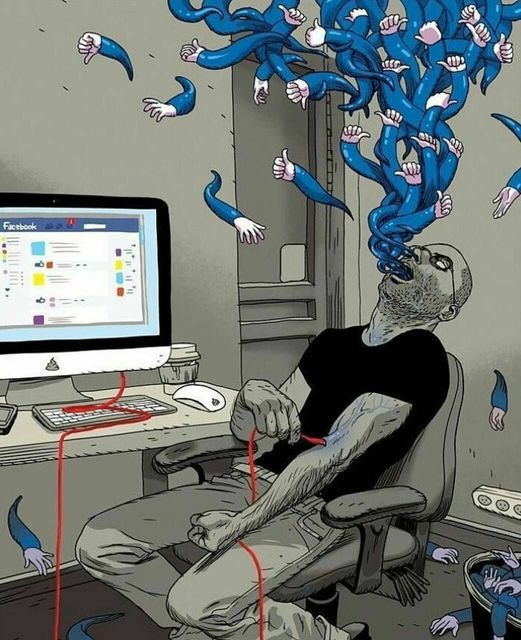
The internet itself isn’t the problem

Let’s be clear: the internet itself isn’t the problem. We knew how to build decentralised, humane, empowering networks long before the #dotcons turned everything into a behavioural extraction machine. The original internet – messy, permissionless, #4opens by default – can’t addict you. It doesn’t care. It doesn’t optimise. It just connects.

What addicts you are, the enclosure layers built on top of the internet. The sticky walls. The velvet handcuffs. The slick, dopamine-juiced engagement loops that the #dotcons built precisely because an open commons is unprofitable to their shareholders.

The tragedy is that we’ve let that thin, commercial crust redefine what people think the internet is. And because people can’t see the difference anymore, they blame “technology” or “the internet” instead of the actual problem, #dotcons corporate capture of communications.

This misframing is not an accident. It’s a political success for Silicon Valley. We do need to call out this #techshit, the compost layer we need to break down and return to the soil, but don’t mistake it for the internet. One is a commons. The other is a shopping mall with mirrors.

And this matters, because if we accept the framing that the entire internet is toxic, addictive, or inherently harmful, we give up the ground needed to fight for a public-first, #openweb future. We surrender the commons to the #dotcons by default. It’s classic #deathcult logic: destroy the shared world, declare it unfixable, then sell the gated alternative.

The #KISS path is still there, just harder to see under the sludge: simple tools, open protocols, people over platforms, and messy, real community instead of “curated engagement.” Things grow in compost. Even #techshit. Especially #techshit.

The task now is helping people tell the difference between the internet and the systems designed to trap them, and then getting them out into the open air again.

The #OMN Path: Openness as Revolution

This is about revolution as regeneration, not only destruction. In an era built on tech dependency, revolution isn’t only about smashing the machines, it’s about liberating them. Turning tools back into commons, not commodities. It’s composting the toxic monoculture of the #dotcons into fertile ground for the #openweb to grow again. Revolution means reclaiming agency, not blindly rejecting technology, but re-rooting it into light, human-scale, transparent, and accountable relationships.

The #openweb as infrastructure for freedom, isn’t just a technical architecture, it’s a social contract. Revolution means re-establishing that contract through the #4opens. When we build networks this way, we decentralize power, not just servers. The #KISS act of publishing, federating, and remixing information freely is itself revolutionary in a world where everything is locked behind paywalls and algorithms.

Tech as commons, not commodity, We’ve learned that “innovation” under capitalism means enclosure and surveillance. Revolution in this context looks like refusal of extraction: creating cooperative infrastructures that are not driven by profit but by maintenance, care, and shared use. Think of community built #p2p mesh networks, open hardware, peer-to-peer storage, and federated #ActivityPub publishing as revolutionary paths – not add-ons, but foundations.

Cultural and cognitive shifts, shifting the cultural narrative from “user” to participant. From “consumer” to custodian. The real struggle is against the #deathcult of endless growth and the #geekproblem of technocratic detachment. It’s about re-learning how to think together, rebuilding trust, and balancing the #fluffy (care, empathy, collaboration) and the #spiky (truth, resistance, boundaries).

Direct action in the digital today looks like:

  • Practicing digital mutual aid – sharing skills, hosting, dev, and care.
  • Bridging online and offline organising, connecting digital tools to local struggles for housing, food, land, and rights etc.

Above all, any real revolutionary network – like the #OMN – has to strip away the old skins of power. No hierarchies. No hidden structures. No property games. No fetishizing of tools, status, or “official” etiquette.

If we’re building something new, we can’t carry the unconshuse ghosts of the old world with us. That means not just saying we’re open, but being #4opens. Open in decisions, and open in how decisions are made. Transparent in process, not just in outcome. Coherent theory is practice, and practice is theory.

Everyday life has to reflect the world we want to grow. That means composting the commodity mindset, no trading social trust for personal gain. It means building through shared assemblies, through community, through small and self-directing circles that stay alive to change and challenge.

The structure of the #OMN should always be simple, transparent, and direct, so that anyone can walk in, understand it, and shape it. No special knowledge required, no gatekeeping. Thousands of “unprepared” people able to join, act, and make it their own. That’s what #4opens means, a living culture of clarity and participation.

Only when a movement reflects the decentralized, self-organizing community it wants to bring into being can it avoid becoming another elitist shell, another bureaucracy pretending to be radical.

When the #OMN does its work right, it doesn’t stand above the revolution, it dissolves into it, like a thread into a healing wound, leaving behind not an organization, but a living network.

That’s the path: community, openness, trust, and the messy joy of self-organization.

Rebuilding Grassroots Media – Back to the Soil

From my point of view, it needs to start from the raw truth: There is currently no functioning grassroots media. Not in any coherent sense. Before we talk about video, storytelling and digital tools, we have to answer the most basic question, one that most people have forgotten to ask: What is grassroots media?

It’s not “content creation.”
It’s not “influencer culture.”
It’s not another #NGO-funded project selling “voices from below” to tick a box for a funder’s annual report.

Grassroots media is the messy, local, real-world network of people using simple tools to speak, share, and act together, outside institutional control.
It’s about agency, not branding.
It’s about trust, not reach.
It’s about doing, not performing.

This is the core almost everyone skips, and it’s why so much “independent media” ends up feeling like a watered-down copy of the mainstream it was meant to replace.

Building networks, not platforms. If we want living, breathing alternatives, we need to think like ecosystem builders, not tech entrepreneurs. Balance means deliberately prioritising the roots – where stories grow from – to counter the dominance of traditional and #NGO media that always speak from above.

The corporate #dotcons – Facebook, YouTube, TikTok, X, all of them – have poisoned the soil. Their logic is control, enclosure, and profit extraction. We can’t reform them, but we can compost them. Use what’s left of their infrastructure tactically. KISS – keep it simple, use and abuse what remains as compost to fertilise the new.

We need to dig back into the living history of #DIY media culture, those messy, chaotic, beautiful experiments that worked, to where and when media grown from social trust, not algorithmic metrics. Back in the day, it used to work because it was grounded in the #openweb a culture built on openness, transparency, federation, and collaboration. What we call the #4opens.

The #OMN (Open Media Network) path is about rediscovering that soil and replanting in it.
Building federated, trust-based, messy, human networks of media again. It’s not about replacing corporate platforms with shinier tech. It’s about rebuilding the culture of open media, the relationships, the ethics, the shared practice of truth-telling and collaboration.

Because if we don’t grow our own grassroots media again, someone else will sell it back to us in plastic wrap.

Extreme liberalism is the outcome of #postmodernism, the rot at the heart of the current “progressive” mess. It’s what happens when shared stories are replaced by (non) individual narrative, and meaning dissolves into (non) individual performance.

Our current #fashernistas swim in this thin soup, they call it “diversity,” “empowerment,” “innovation,” but it’s a dysfunctional mess, with marketing dressed as virtue. The problem we need to compost is that every attempt to make something that works – collective, rooted, accountable – gets drowned in an endless tide of self-expression and identity management.

Postmodernism was supposed to liberate us from hierarchy and dogma. But it left us atomised, trapped in their #dotcons feeds, without any shared compass. Out of that vacuum came the extreme liberalism of the last 20 years we think as “progressive”: the cult of the individual, the religion of choice, and the morality of markets. It’s the #KISS polite face of the #deathcult, its neoliberalism with a rainbow filter.

The #openweb – through the #4opens – is a path out of this swamp. It’s not about the illusion of freedom sold by #dotcons, or the grant-funded “activism” of the #NGO class. It’s about activist trust-based openness: code, data, governance, and process dogmatically open, that people and community can build, see and shape.

The #OMN (Open Media Network) grows from this ground. It’s not another brand or a platform – it’s a garden for messy, local, grassroots media to regrow. It starts from compost: the failures, the blocks, the burned-out projects. From that, we build something living again.

To move at all on this, we have to compost #postmodernism, keep its healthy scepticism, but drop the self-absorption. Keep openness, but return to shared meaning. Truth matters. Trust matters. The network needs to feed the commons, not the “individual” play-acting ego.