We need to keep highlighting an old but still urgent tension: the intersection of technology and social change. In this too often unspoken divide, one side leans heavily on practical, technical problem-solving. They want working code, functioning systems, and tangible results, not abstract debates. To them, critiques about capitalism shaping code sound like distractions from the “real work.” The other side insists that technical problems are social problems. They argue that all code is written by people, shaped by culture, power, and history. Ignoring the social dynamics behind technology guarantees we repeat the same failures.
This divide plays out constantly in movements trying to bridge the worlds of #AltTech and social transformation. You see it in tensions between the tech-focused “geek” communities and broader #mainstreaming society. And both sides have blind spots.
The geek camp often falls into the #geekproblem: over-prioritizing tech innovation while ignoring the human and social context. Meanwhile, the #mainstreaming crowd tends to embrace vague social ideals while underestimating the soft power – and necessity – of building real technical infrastructure to support those ideals. Neither side alone can solve anything meaningful, especially not something as vast as rebooting the #openweb or to even start to touch on #climatechaos.
We need bridges, that’s what projects like the #OMN (Open Media Network), #OGB, #IndymediaBack, and #MakingHistory are about: building trust-based, grounded, people-powered platforms that can span the divide between tech and society.
But let’s be honest, there’s a lot of very bad behaviour on all sides of the #openweb reboot. Blocking progress, gatekeeping, aggression, virtue signalling… it’s all too common. Let’s try not to become prats, it’s easy to start, and hard to stop. Mess breeds more mess, prat-ish behaviour comes in waves. It aligns with waves of #mainstreaming and the reactive “alt” backlash, these tides bring a lot of flotsam, it’s up to us to shovel and compost what we can.
Our biggest block right now? The culture war postmodernist fog that has drifted through radical spaces over the past decades. It’s slippery, full of “common sense” that doesn’t hold up, but is hard to challenge because it feels “right”. Composting this will be difficult, but necessary.
The #Fediverse is built on people-to-people relationships. Trust, not just tech, is the foundation. That’s why there’s a healthy pushback against “tech fixes” that try to replace social trust, a path that is much more common in places like #Nostr and #Bluesky, where algorithms and cryptography are too often seen as the solution to everything.
Yes, in reality, we need a balance of both. The debate is fluffy in places, spiky in others. But if we build tech-bridges to span this messy social terrain, we might actually get somewhere. This brings us to the hard green question: how do you scale local, eco-conscious solutions to a disinterested – and sometimes hostile – global population? Green progressives often promote small-scale, ethical living. That’s great for the 1% who can afford to live that way. But what about the other 99%?
Let’s be blunt: some people will die from #climatechaos. Maybe 9%, maybe more. But 90% will still be here, and they will need different kinds of solutions. Right now, the options on the table look like this: A rebooted, green-infused social democracy (the old Corbyn project was an example). A slide into eco-fascism and top-down “solutions” (the Trump path). Or doing nothing, and let #climatechaos run wild (the current #mainstreaming).
One thing is likely, a wartime economy is coming within 20 years, where there’s will be little room for the last 40 years of #neoliberalism, and “soft” liberalism will likely play a secondary role at best, the political landscape is shifting fast. The new #mainstreaming question is which side will you be on?
Because we need more than clean branding and good vibes – we need bold, practical, radical action rooted in both tech and human trust. We don’t just need freedom from the state and the #dotcons – We need freedom from our own dogmas.
The #OMN isn’t just about media, it’s about building the social soil where openness can grow, thrive, and renew. We need compost, and not just as a metaphor.
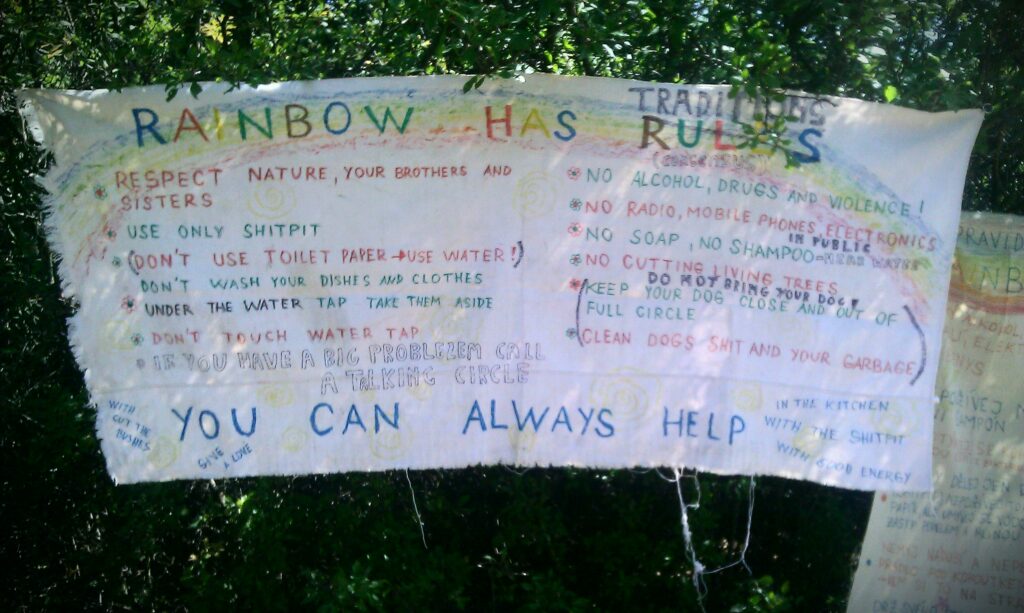
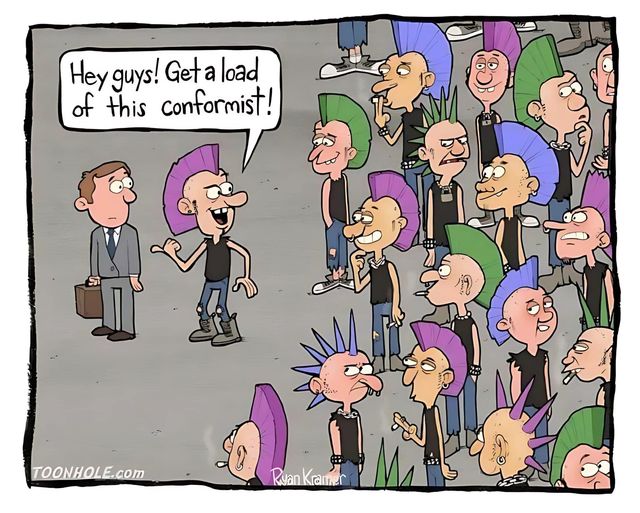
In the alt paths we need to talk about a circler familiar mess: when movements that are open, non-hierarchical, and anti-authoritarian end up recreating the hierarchical problems they set out to escape. This is the “dogma of anti-dogma”, and you see it everywhere, the example I am using here is in groups like the Rainbow Gatherings.
The Rainbow Gatherings have deep roots in 1970s counterculture. Born from the peace and ecology movements, it emerged with a back-to-the-land, anti-establishment, peace-and-love spirit. Think spiritual communes, consensus meetings, and gatherings deep in the forest – far from the control of the state or #mainstreaming system. For #FOSS tech, this sound familiar? It mirrors much of “native” internet culture and resonates strongly with what we’re trying to grow through the #openweb today, in projects like the #OMN.
In the 50-year history of Gathering’s, there are no leaders, no money, no official permissions. People just show up. Communal kitchens are built, spaces are created for kids, elders, ceremonies, workshops. At the heart is the “Open Centre,” where anyone can speak, sing, or simply be. It’s grassroots in its purest form. When it balances, it becomes a lived example of radical inclusivity and cooperation. But as in any movement, issues emerge, beneath the surface freedom lie 50 years of mythos and informal traditions shaping this nomadic utopia.
This openness recurringly becomes a tangled mess for more vertical-minded people. While there’s no formal leadership, some long-timers – “elders” of any age – naturally hold more sway. And while there are no written laws, there’s a strong social tradition to follow certain paths and perform a kind of functional “openness.” When more #mainstreaming folks arrive and try to “suggest” (read: impose) better structures or force their way into consensus processes, the friction can soon become dysfunction. Often, after creating much mess, their well-meaning input ends up having to be set aside, in #OMN terms #rolledback.
Balancing this is active openness – it’s about pushing back against #mainstreaming orthodoxy being imposed without care, without consent. That tension mirrors what we’ve seen again and again in #mainstreaming “horizontal” movements, from Occupy camps to DIY tech spaces to alt-social networks. The desire to avoid hierarchy doesn’t eliminate power – but in a recurring circle it risks making it invisible. The problem isn’t structure itself, it’s unaccountable structure.
With the #OMN (Open Media Network), we face this contradiction head-on. We draw on the “native” mythos of the #4opens – Open Data, Open Source, Open Standards, Open Process – as living traditions. Not just to #KISS build tools and platforms, but to build trust networks. We’re not pretending hierarchy doesn’t exist. We aim to make it visible, accountable, and, crucially, temporary. It’s not only about flattening decision-making, but ensuring it flows through real human relationships, not hidden power or #geekproblem black-box tech.
Rainbow Gatherings walk a nomadic path, grounded in mutual aid, shared meals, and rich social ritual. When we reboot the #openweb, we have to learn from paths like this. Radical inclusivity isn’t just about keeping the doors open – it’s about building shared social mythos and working traditions. And it’s about staying alert to how exclusion creeps back in: through silence, through pressure, and often through the #mainstreaming crowd who refuse to let go of their blindness.
Movements need memory, they need culture, but they also need self-awareness and space for dissent – space to reflect on the paths we’re walking together. A better #Fediverse, a real #openweb, has to be built by communities that can see their own shadows, name their own contradictions, and keep evolving together, link by link.
Because we don’t just need freedom from the state or the #dotcons, we also need freedom from our own dogmas. The #OMN isn’t just about media, it’s about building the social tech, the soil where openness can grow, thrive, and renew. And it needs compost, stinky and alive, not just metaphor.
At this point, it’s hard not to notice a pattern. You’ve received clear, thoughtful proposals aligned with your calls – yet no real engagement, year after year. I’ve said this gently before: your call-out text needs to be composted. If you’re not funding alternative, open, activist infrastructure – just say that. Don’t lead people on.
Not surprised. This is probably the 10th time we’ve applied to the #NLnet / #NGI fund over the years. Just heard back: our proposals for #OGB (Open Governance Body), #indymediaback, and #MakeingHistory were not selected – again.
“We are very sorry that we cannot offer you support for your good efforts.”
Sure, I, appreciate the polite brush-off again. But after so many rejections for solid, urgently needed tech projects that actually fit the funding goals, it’s time to name what’s really going on.
That there’s no #mainstreaming support for grassroots alternative, activist-rooted #openweb infrastructure. These projects aren’t pointless and inoffensive enough, not wrapped in shiny #NGO-speak, and don’t fit the comfy (in)circles of #geekproblem “innovative” funding. But they are native, they are needed, and they work – if you actually want a humane, federated, public-interest net that the funding outreach text says you do.
Time and again, we’re told these projects are “not selected” – Meanwhile, funding continues to flow toward a few good minority projects, a few #mainstreaming#fashernista alt tech projects, but the most goes to, minority interest, academic paths or closed bureaucratic #geekproblem circles, recycling the same stale stack of status quo ideas in slick/pointless packaging.
On balance, this is VERY much not building the #openweb – it’s way too often pushing #NGO and geek hobby paths or building another layer of the #closedweb under a friendlier mask. Yes, the is some small good done with this tech funding, it supports the big #dotcons copying Fediverse projects, no bad thing. But on the question of balance, we can see the lies.
We’re not discouraged. We’re composting this – as ever – into the next push. And yes, we’ll keep applying in till they change the text of the invites, so our projects are not the perfect fit they are now. Not because we believe the system works, but because we need to document the process if it works, well more when it doesn’t work, sadly. Composting lies is a part of the #openweb reboot.
If you do want to support native, trust-based, grassroots tech building, outside the NGO bubble, chip in here: https://opencollective.com/open-media-network or help to make this institutional funding work as it says it does.
The essence of the #geekproblem is its narrow, self-referential logic. Here’s a #spiky, pointed, prody view of the narrow track of thinking that defines the #geekproblem in the context of an #openweb reboot:
“There is no Emperor, King, or Priest in the Fediverse’s feudalism.”
The illusion is that it’s all flat – no power structures, just pure meritocracy. If you’re already a priest or acolyte, there’s no need to ask. You just do:
Want a new app? Code it.
Want a new protocol? Spec and ship it.
Want a new UX? Design it and deploy.
And if you can’t do it yourself? Then you kneel before the alternative establishment and pray. Or, as they prefer to say, advocate.
This is both a critique of the (hidden) hierarchies and a mirror held up to the myths of autonomy and openness in the current #Fediverse culture. There’s a real power structure – it just doesn’t wear a crown, but if you look it’s VERY visible, people choose not to look, this is the #techshit mess we make and need to balance with healthy grassroots composting.
Pull conflict into shared space (#openprocess#4opens#trustflows). Poison thrives in private channels, so you gently but consistently move things:
from DMs → into group threads from whispers → into meetings from vague → into specific
This doesn’t eliminate conflict, it grounds it. Sunlight doesn’t solve everything, but it stops the worst rot. From “how do we stop bad behaviour?” To “how do we stop bad behaviour from breaking the commons?”. The #4opens makes many people uncomfortable. Why? Because it cuts through the bullshit. Think about it: #FOSS already runs most of the world’s information flows. Servers, networks, phones, clouds – all built on open code, open standards, open processes. The world already depends on openness.
Yet, when we bring this into activism, NGOs, or “progressive” tech, people recoil. They prefer managed openness – consultations, workshops, endless talk – while the real decisions stay hidden, careers protected, power intact, but that’s not open, that’s control.
The #4opens is seen as dangerous because it removes the masks:
Open Data: no hoarding.
Open Code: no black boxes.
Open Standards: no silos.
Open Process: no backrooms.
When you have this second look, it’s common sense, but for meany it kills the comfort of #mainstreaming, when the soft power of gatekeepers shrivels under sunlight, that’s why they hate it.
We already live in a world powered by #FOSS. The only question is whether we keep pretending otherwise, or compost the mess and take openness seriously. Why does this matter? On the wider picture, we’re past the point where the #mainstreaming paths have effectively given up on mediating #climatechaos and social break down.
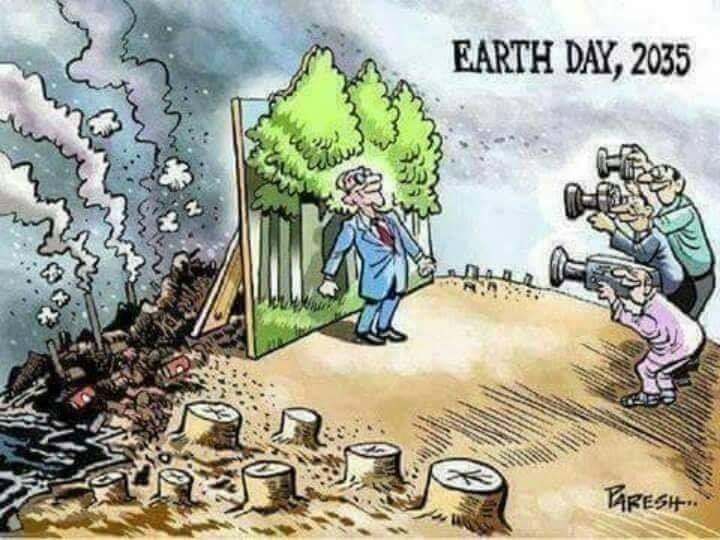
What we’re seeing now is ONLY the performance of action – flashy, expensive, technocratic distraction to keep business-as-usual afloat a little longer. It’s not any longer about preventing catastrophe, or even mediating catastrophe. What we have now is managed #PR and keeping in place elitist continuity as the small #nastyfew and their sycophants visibly retreat from the growing mess.
Solutions? Take this example: https://heimildin.is/grein/24581/climeworks-capture-fails-to-cover-its-own-emissions/#Climeworks, a flagship carbon-capture initiative, is so inefficient it fails to offsetting its own emissions. This is the #techshit path the #mainstreaming are backing to get us through the next few centuries? This is beyond a mess, it’s ideological collapse. These fake solutions are the logical outcome of continuing with #neoliberal ideology, where systemic change and thus challenge is avoided at all costs, and techno-fixes are sold to us by #PR as silver bullets, the #deathcult in action, profit-driven stalling wrapped in light green branding.
Let’s be clear on this: Carbon capture is currently not scalable, not ethical, and not even functional. It is not a climate solution – what it is, is a delay tactic, an obscuring hedge for polluting industries. It’s backed by the same #nastyfew class of institutions that told us markets would fix inequality, that endless growth was compatible with ecology, that privatization would bring prosperity. The truth is simple, they, the #nastyfew we keep putting into power, have no plan. They are playing at engineering the social and ecological collapse while, at this final stage, simply pretending to be managing it.
So what do we do? We #KISS hard stop trusting in any elitist-managed futures. We collectively refuse to be spectators in the mess of the #mainstreaming paths. Instead, we compost these lies and build #4opens, rooted, local, horizontal networks of resistance and renewal. Projects like the #OMN (Open Media Network) don’t pretend to “solve” everything, but they create space for people to act together, share knowledge, mediate and hold power to account, and thus build trust for action outside the collapsing verticals.
This isn’t about hope in the abstract, it’s about practical solidarity in the spreading ruins. No one is coming to save us, but maybe we can still save each other. Let’s build the seeds of the next world, before this one burns everything down around us.
The #4opens framework is best understood not as ideology or branding, but as a simple set of engineering heuristics for evaluating whether a project will remain usable, forkable, and resilient over time.
Most long-lived #FOSS projects already follow some version of these practices implicitly. The value of #4opens is making those assumptions explicit, so people can quickly understand how a project works, who controls it, and whether it will survive beyond its original maintainers or funding cycle.
In practical terms, the #4opens ask a few straightforward questions:
Is the development process visible and reviewable?
Are data formats and interfaces documented and reusable?
Can someone else run this independently without permission?
Are governance and decision-making transparent enough that forks remain viable if needed?
These aren’t abstract political goals, they’re lessons learned from decades of broken platforms, abandoned repositories, and “open” projects that centralised control.
For developers and sysadmins, applying the #4opens as a lightweight checklist helps reduce risk:
Less lock-in to fragile ecosystems.
Easier collaboration across projects.
Better long-term maintainability.
Clearer expectations for contributors and downstream users.
A shared registry or index based on these criteria functions much like early open source directories or package repositories – not as gatekeeping, but as a map. Projects could self-declare alignment and provide verifiable signals about openness, interoperability, and governance structure.
The goal isn’t purity tests or badges for their own sake. It’s about improving signal-to-noise so builders can quickly identify tools that are likely to remain open, portable, and maintainable.
In a landscape where systems drift toward centralisation and corporate capture, the #4opens simply provide a shorthand for practices that help keep the commons viable, without requiring anyone to agree on ideology.
Keep group doing real things. (#praxis#indymediaback#buildstuff). Endless talk spaces breed toxicity. Shared work diffuses it. When people are:
publishing fixing organising building
There’s less energy for backbiting, and more grounding in reality. Practice cuts through a lot of bullshit.
Horizontal people always get fucked over by vertical people. This is normal, why? Because horizontals give away power to build social fabric, while verticals hoard and concentrate power to extract and dominate. Every. Single. Time.
And the only thing that makes horizontals work, in the face of such mess making, is shared worldview, which we currently lack. Instead, we’ve got swarms of #stupidindividualism, where everyone thinks they’re the centre of the universe, interpreting everything as if their personal “common sense” whims are political strategy. And then, surprise! We keep getting steam rolled.
An example, let’s bring in the rot of #postmodernism, the #pomo guy proudly clams that “Ah, but classification requires a classifier!” This is what #postmodernism does to your brain. It unplugs you from reality while pretending it’s insight. It’s true that classifiers precede categories linguistically. But the material world precedes both. Rocks didn’t need a PhD to be granite.
This kind of derangement isn’t just stupid, it’s systemically useful to the #deathcult. Because if you believe that value only exists if humans assign it, then a tree has no value unless it can be turned into toilet paper. A whale has no value unless it can be monetized or aestheticized. Nature becomes valueless. And so it’s obliterated.
Meanwhile, people in the #fediverse are still pretending codebases matter more than people. No. The value of the Fediverse is in the humans running the instances and inhabiting them. Not the bloody Git repos. Without people, the code is just more maths.
On this #FOSS path, don’t be a prat. Recognize the root issue:
A problem we’ve inherited from the last ten years of corporate social media, the #dotcons, is the toxic confusion of the personal and the public. Platforms like #Facebook and #Twitter blurred the lines between private conversation and public broadcasting, monetizing both as if they were the same. That mess wasn’t accidental; it was profitable.
Unfortunately, we’ve reproduced this mess on the #Fediverse without properly composting it first. What does that mean? We’ve taken this tangled, unhealthy paths and rebuilt them with new tools, many of them open-source, but we haven’t separated the core issues or composted the conceptual issue. As a result, we still see confusion around what content belongs in the public commons and what should stay private. People are still posting as if they’re in a private chat while standing on a soapbox, or trying to gate keep public news through private group dynamics.
The reality is: we already have a clear, simple solution.
The Fediverse is public. It is for public media, public conversation, news, projects, what we want to share with the world.
Encrypted chat apps (like Signal) are for private communication, what we want to keep between individuals or trusted groups.
This needs to be simple #KISS: Keep It Simple, Stupid, but instead, we have well-meaning but unthinking devs and users trying to remix the worst of #dotcons culture, mushing together public and private spaces, throwing moderation at everything like it’s a catch-all fix, and muddying the waters of what these networks are actually for.
This is not innovation, it’s common crap behavior inherited from systems built to manipulate, monetize, and pacify us all. If we want more of real, trusted, meaningful media, we have to get back to basics: public news needs to be built on #4opens, and it needs to be created, distributed, and discussed in public spaces.
That’s why projects like #OMN (Open Media Network), #OGB (Open Governance Body), and the #indymediaback reboot matter. They offer paths where grassroots, trust-based publishing thrives again, outside #NGO capture and corporate control and enclosure.
With this change in mind, why the #Deathcult Hashtag?
People often ask why I use the hashtag #deathcult so much. It’s provocative, yes, but it’s not just for shock value. It’s a term that names the dominant ideology of the last 40 years: #neoliberalism. An ideology so pervasive that most people can’t even see it any more, even while it’s actively eroding the very values they claim to be upholding.
You see this when a liberal proudly buys “organic” yogurt at Safeway while supporting systems that are destroying the planet. That’s not just irony, that’s the entire logic of the deathcult. It’s the normalization of destruction wrapped in “ethical” branding. And no, it’s not just the yogurt, that’s just the joke. It’s everything: our phones, our work, our schools, our activism.
If you can’t find a part of your life untouched by the deathcult, it’s because it has touched everything. That’s why the hashtag exists: to make people uncomfortable. Because without that discomfort, we won’t challenge the roots of the system we’re all still living inside.
This movement isn’t about reinventing wheels, it’s about returning to native paths. The public internet worked before, let’s compost the #techshit by usefully separating the public from the private, and rebuild the “native” path on clear, #4opens foundations.
We can do better, we already know how, let’s stop pretending we don’t.
The #makinghistory project is a decentralized, open-source archiving and storytelling network designed to preserve and amplify grassroots histories. It’s founded on the idea that history isn’t written by the winners – it’s made by those who resist, build, and care. We seed this network using digitized collections like the CampbellFamily archive, the project invites communities to reclaim their narratives through shared, federated #DIY instances. This isn’t just another data repository – it’s a living, breathing ecosystem where collective memory is gathered, enriched, and kept accessible for future generations and social movements.
The application functions as a community-installable tool that allows anyone to host their own archive node. These nodes, whether local or remote, connect into a wider peer-to-peer network of storytellers, archivists, and activists. Core features include uploading and organizing digital files, enriching metadata flows, to link material to broader narratives using human-created tags and annotations. The platform follows a participation-first path, encouraging affinity groups to contribute not just data, but context, weaving a rich web of interlinked histories.
But #makinghistory goes further than archiving. It’s a space for collaborative storytelling, publishing, and public exhibition. Its narrative layer draws from the archive to trace connections between people, places, and events, transforming scattered fragments into stories of solidarity, resistance, and change. These outputs feed both digital commons and real-world installations like the Resistance Exhibition, where history is brought to life in public, participatory spaces. This is the infrastructure for radical memory work, a composting system for movement knowledge.
Implement a single-column interface that lists objects (text, image, link).
Set up two test instances that can post and sync objects between them.
Default view lists objects by most recent. Super simple.
Phase 2: Hashtag Columns
Add support for hashtag-based columns (inspired by Mastodon’s Tweetdeck interface).
Reuse and adapt existing open-source implementations where possible.
Phase 3: Story Objects
Introduce a new “Story” object that composes and links existing media objects, with added narrative context.
These stories are published through collective/community accounts (discussion needed on access/trust models).
Phase 4: Federation & Flows
Begin mapping and testing how edits, hashtags, comments, and objects flow across federated instances.
Align this with the #OMN trust model and the work from the #indymediaback reboot (estimated 90% overlap).
User Interfaces
Desktop: Use a Tweetdeck-style interface, similar to Mastodon’s current layout.
Mobile: Build a simplified UI with a single-column scroll. Objects open fullscreen with sideways swiping (like Tusky for Mastodon).
Every Object
Has edit capabilities (if user has login/auth).
Editable hashtags.
Comment threads.
All changes sync across instances via federation/trust flows (option 4).
The current test interface and images will need refreshing, as they’re based on early-stage mockups. But the concept remains: keep the interface minimal, usable, and focused on narrative composting. This project is both infrastructure and imagination, grounded in the old but reaching toward the new.
These images need an update as they were based on the dev work from back in the day. This is the very basic interface for testing. The mobile user facing interface is a flick sideways basic interface.
At the core of the #makinghistory infrastructure lies the Open Media Network (#OMN) – a trust-based, human-moderated, #4opens project that offers a decentralized, federated database shared across peers. What makes the OMN unique isn’t just what it does – but what it refuses to do. Rather than chasing complexity or abstract “AI-powered” solutions, the OMN focuses on simplicity and social cohesion, using technology to support and grow human networks. Its structure is purposefully minimal, with only five essential functions:
These core functions are: Publish (to share a story as an object into a stream); Subscribe (to people, pages, groups, or subjects); Moderate (to express trust or disapproval by pushing or pulling content); Rollback (to remove content from your stream based on trust flows); and Edit (to collaboratively change metadata across federated nodes where you’re authenticated). This framework serves as the back-end engine for building a grassroots, DIY semantic web. The front-end can take many forms: city-based or subject-specific sites like a modern reboot of Indymedia, regional storytelling platforms, or thematic archives like #makinghistory. Protocols like ActivityPub form the connective tissue of this system, the plumbing.
In practice, this means people can build meaningful media spaces that reflect local struggles and solidarities without being dependent on corporate platforms or NGO gatekeeping. The data cauldron of the OMN stores the shared knowledge, and every community holds a golden ladle – a way to draw out, remix, and republish what matters to them. If you’re interested in supporting this effort financially, you can do so via Open Collective. And if you’re ready to dive deeper, we need to make this #KISS project work. Let’s build tools for memory, not marketing, infrastructure for resistance, not careerism. Let’s be #makeinghistory together, not sit bord looking at a screen.
This #OMN path is “native” built on a simple, powerful truth: “This is the Internet”:
GET PUT POST DELETE –MERGE–
These basic actions — close to the core HTTP verbs every website uses — are all you need to create, share, remix, and grow. (From RFC 7231 and RFC 5789.)
Then you have the #4opens which are about reclaiming the grassroots social power of the web:
Open data
Open source
Open process
Open standards
No gatekeepers. No #dotcons middlemen. No closed silos. Just people, building together. This is what #openweb reboot looks like.
Most people understand that culturally, and socially, we are in a growing nasty mess. The #blocking of action, the constant stalls, confusion, and fragmentation, has a lot to do with our use of language. And the deeper issue is how this bad language feeds back into culture, which then loops back to make the language even murkier. It’s a feedback loop that clouds meaning, erodes trust, and paralyses collective action.
The last 40 years of postmodernism and neoliberalism made this worse. #Postmodernism chipped away at the idea of shared reality, leaving us with endless interpretation and “personal truths.” #Neoliberalism, on the other hand, commodified everything, including language itself, into marketing, spin, and #PR. Together, we have hollowed out words like “community,” “freedom,” and even “change,” to the point that we barely recognize practical use value.
Take “mutual aid” for example, a term grounded in solidarity and reciprocal responsibility. Now, on both #dotcons and #openweb platforms, it gets reduced to casual crowdfunding and anonymous asks, with little relational context. Not bad, but far from what it could and needs to be. If we want affinity-based action to work, if we want people to work together and trust and act together, then we have to compost this mess. And the way to do that might be surprisingly simple #KISS – Keep It Simple, Stupid, not stupid as in naive, but stupid as in clear.
We need to reclaim simple language that carries shared meaning. This is exactly what we’re trying to seed with the positive side of the hashtag story. Hashtags act as anchors in this storm of noisy abstraction. They cut through, to the root meaning, and allow collective orientation without needing corporate gatekeepers or #blinded institutional filters. Think:
#4opens – a shorthand for open code, open data, open governance, open standards.
#techshit – composting the mess, not throwing it away.
#nothingnew – slowing tech churn, reclaiming meaningful pace and paths.
Each of these tags points to deeper, shared narratives that are simple, but not simplistic. They invite action, not common sense confusion. By composting the abstraction we regrow clarity, reclaim trust paths, in both tech and social spaces. Speak simply, act clearly, hashtag wisely with intention is a working path, please use this.
On this path, It is important for the progressives and radicals to come together and focus on real issues and the challenges facing society, rather than fighting among ourselves. To find this balance between being “nice” and being “nasty” is key to being effective about lasting social change.
The #hashtags embody a story and worldview rooted in a progressive and critical perspective on technology and society. By highlighting the destructive impact of neoliberalism (#deathcult) and consumer capitalism (#fashernista) on our shared lives, while promoting the original ideals of the World Wide Web and early internet culture (#openweb).
The #closedweb critiques the for-profit internet and its harmful social consequences, while #4opens advocates for transparency, collaboration, and open-source principles in tech development.
The #geekproblem tag draws attention to a dysfunctional cultural tendency in tech: where geeks, absorbed in their tools and logic, overlook the broader social effects of their creations. This feeds into #techshit, where layers of unnecessary complexity pile up, further distancing people from tech’s social roots. Meanwhile, #encryptionists critiques the knee-jerk reaction that “more encryption” is always the answer, reinforcing control and scarcity, rather than liberating people and community.
Together, hashtags tell a loose, coherent and powerful story. They call for a more humane, collaborative, and transparent approach to both technology and society.
#nothingnew asks whether constant innovation is the right path — or if we need to slow down and improve what already works.

#techchurn names the cycle of flashy, redundant tech that fails to solve core issues.

#OMN and #indymediaback point toward an Open Media Network — and a revival of the radical, decentralized media that once rivalled corporate media on the early web.

#OGB stands for Open Governance Body, an invitation to practice grassroots, transparent, community-led decision-making.
It’s an ambitious, needed path, to build and grow social tech that “fails well”, meaning they fail in a way that can be fixed by the people, through trust and collective action, not closed-source patches and corporate updates, that are control not community. The #OMN’s focus is human-first. Tech comes second, as a mediator, a tool, not the destination.
Yes, the #geekproblem is real. Technical expertise becomes a gatekeeping mechanism. But tech can also empower, if we design for simplicity, accessibility, and community-first paths and values. The only working path is simple, trust-based, and human. That’s why we keep coming back to #KISS.
Why haven’t we been doing this for the last 10 Years? Over the past decade, we’ve lived in a state of quiet paralysis. Climate change, ecological collapse, technological overreach, all of it loomed. And instead of digging in to work on solutions, we froze. Well-meaning people chose fear over action. Understandably. But fear is a poor foundation for building anything sustainable.
We’re not on this site to only blame – we’re here to compost. The problem? We stopped critiquing, we stopped examining the tools in our hands. Not only that, we bought into the illusion that #NGO paths and tech would save us. That shiny apps and startup culture could greenwash a better future. And when the results disappointed, we turned inward, stopped questioning, and left things to rot.
So now, can that rot be composted? By using the #4opens – open data, open code, open standards for open governance, we have a practical framework to call out and compost the layers of #techshit that have built up. Tech that divides us, tech that distracts us, tech that damages the planet and calls it progress. Yep, like gardening, composting takes time, it smells at first, it’s messy. But give it care, and you get soil – to plant better ideas in, soil for hope.
One of the reasons we haven’t made progress is the #geekproblem, a narrow slice of technically-minded culture made up of (stupid)individuals, which so far have dominated the design and direction of our tools. They, sometimes, mean well, but in their obsession with technical elegance and “solutions,” they’ve sidelined the social and the ecological. What’s left is a brittle, sterile infrastructure, constantly churning out newness without any substance.
Meanwhile, #stupidindividualism has flourished, encouraged by #dotcons social media systems built for engagement, not connection. These silos encourage performance over solidarity, branding over community, and endless scrolling over doing. We’ve all felt it.
And most activist groups, instead of resisting this tide, drank the #NGO poison, chased funding, watering down their goals, professionalizing their resistance until it became another logo in a funding application. We’ve lost a decade to fear, distraction, and capture.
But it’s maybe not too late, we have the tools, in the #ActivityPub based #Fediverse. We have the frameworks, the #4opens can guide us to rebuild with transparency, collaboration, and care. The hashtags like #geekproblem, #techshit, #nothingnew, and #OMN give us a shared vocabulary for critique and regeneration. They point to a web where people, not platforms, hold power, and where technology serves life, not control. Let’s stop being afraid to critique, stop outsourcing responsibility and get on with composting.
Because that’s where the soil of a better path will come from.
It’s worth remembering that, in the current political mess, the right-wing and the so-called centre are extremists.
They are insisting that endless growth on a finite planet is “realistic,” that widening inequality is “natural,” that ecological collapse can be managed by markets, and that social breakdown is an acceptable cost of doing business. It’s constant crisis management, coercion, and denial of material reality.
What’s labelled “left-wing” is generally moderate: the belief that people should be able to meet their basic needs, that cooperation works better than competition for shared survival, and that systems should serve society rather than extract from it.
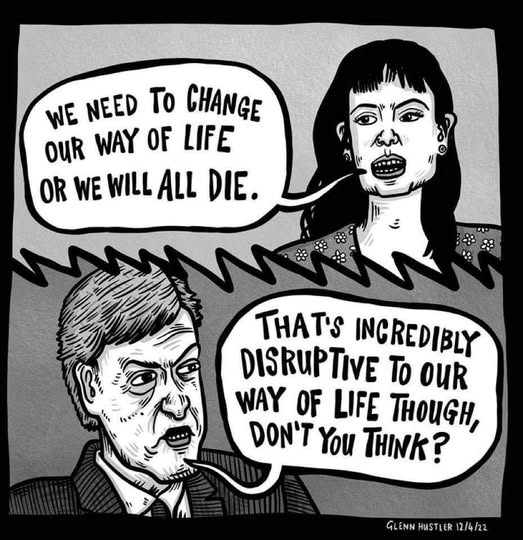
The Overton window has been dragged to exploitation and collapse that proposing care, restraint, and collective responsibility is framed as radical, when it’s the minimum required for any stable future.
Seen this way, extremism isn’t in change and challenge. It’s insisting that a failing system must continue at all costs.
All the #OMN projects I’ve worked on over the years, from #OGB to #indymediaback, are not directly about social change. They are about creating the possibility of social change. A subtle, but critical difference.
We don’t claim to have the answers. What we do offer are tools, networks, and processes that make it easier for people to imagine that the world can be different, and then help them to take the first step.
Yet still, here’s the mess that keeps being pushed over us. We are told this work is “too high up the stack,” “too fuzzy,” or “too political.” But in reality, the same topics and themes do receive #NGO funding, just safely sanitized within the logic of the #deathcult. In this, the “shadow” keeps getting funded, but the light source is ignored.
When we say “the world can be different,” we’re not talking about abstract theory. We mean literally:
Media that people control from the grassroots up
Governance that isn’t locked behind elitist gates
A web that grows through trust not platforms
Protocols that reflect values, not just efficiency
But the funding, even in the so-called ‘alternative’ spaces, is trapped in a conservative loop. People working in these orgs are either too captured by their own #geekproblem funding logic, or too afraid to support anything that might really challenge their place in the status quo, by threatening to end the funding flows they live in.
Some of the real replies to the over 20 funding applications I have put in for the last ten years: “This kind of effort is very hard to seek grants for…” “I don’t have an obvious candidate for you to go to, either.” What these polite deferrals mask is a structural failure of imagination. The fear of change is so strong that even funders tasked with enabling alternatives end up only supporting work that conforms to existing institutional logics and barely deviates in meaningful ways from the normal #mainstreaming paths.
So, where does that leave those of us pushing for a real #openweb reboot? We get silence or slow-walked rejections. We burn out or pivot to “safer” projects. Or worst of all, we get absorbed by the very forces we wanted to challenge. And look, maybe that’s the plan. Maybe co-option is the endgame for the #openweb: a slick, tamed version of rebellion, friendly enough for NGOs and palatable to #EU bureaucrats.
But that’s not our plan. Not the plan we’ve been composting all these years. The challenge:
Funders: If you want the future to be different, stop only funding imitation’s, fund the real thing, step outside the safety of compliance. Trust radical imaginations.
Builders: If you’re still holding the compost shovel, don’t drop it. The real garden will grow, but only if we stop watering the plastic plants.
Everyone else, demand more. Not just better bling, but better foundations.
We don’t need more advice, we do need courage. The #openweb is not dead, but it is at risk of becoming another façade unless we build the possibility of real change into its #rebooting core.
Almost all our posting in the #openweb and in the #dotcons in response to #mainstreaming news is noise. It’s reactive, fragmented, performative. We scroll, we rage, we boost, we block, but we don’t build. Sometimes, someone posts something thoughtful, something deep, meaningful. But it vanishes in the churn. The system is designed this way.
Even on our #openweb, where we have more autonomy, we are mirroring this spectacle path, feeding it attention, reposting its narratives, amplifying its blinded framing. In the mess of this world, our timelines become echo chambers of secondhand despair and outrage. In short, we’re still speaking their language, on their terms, even with our tools.
Why? Because we haven’t (re)built a place for real signal yet. The #OMN (Open Media Network), is a push to shift this dynamic. It’s not about broadcasting noise slightly more ethically. It’s about creating different spaces entirely, where the roots of stories matter more than the spin, where the focus is on shared compost rather than hot takes, where people and community are producers, and where signal isn’t just a flash, but an ongoing process.
The current state of the web, especially on the path of the #dotcons, is colonized communication. It rewards (stupid)individualism, immediacy, virality. It buries context, nuance, history. This structure #blocks liberation because it’s built to sell alienation back to us, one like or scroll, one click at a time.
Even the current #openweb reboot, for all its potential, reproduces these patterns, because we carry them within us. We don’t just need alternatives in name, we need alternative cultures, processes, and values. We need to compost the mess, the #techshit, and grow new paths from the decay. That’s what the #OMN is seeded to do.
But let’s be honest, we’re not there yet. And we won’t get there unless we start collectively focusing on building signal, not just yelling about the noise. The tools need to be #KISS (Keep It Simple Stupid), the governance needs to be transparent, trust-based, and the tech has to get out of the way, not be the centre. This requires stepping away from the #geekproblem, the cult of control, complexity, and abstraction, and towards living, messy, grassroots cultures that grow access, action, and accountability.
Take media coverage of protests as an example. It’s always framed through the lens of disruption and spectacle, “violent clashes,” “unrest,” “inconvenience to commuters” rather than the systemic injustices that birthed the protest in the first place. The message from the #mainstreaming is clear: “Why can’t you express your anger in a way that’s easier for us to ignore?” This is not journalism, it’s narrative policing. It flattens struggle into caricature and erases the causes: the exploitation, the dispossession, the broken promises. This is normal when we have no media infrastructure of our own. Without projects like #indymediaback to hold space for grounded, first-voice storytelling, all we get is the echo of power describing its own reflection.
The #mainstreaming is collapsing under the weight of its own contradictions. But that collapse is not the revolution. What grows next is.
The #Fediverse exists, and more than that, it’s alive and kicking. Sure, it might be a messy, chaotic, a bit fragmented, and yes, still niche. But let’s not underplay it, this is the healthiest corners of the internet we’ve got. Tens of million accounts, hundreds of thousands active people, and some are sometimes talking about how we build our digital spaces from the bottom up.
Yep, there are the cat videos, the #fluffys and the #spikys. But also an in-group debate is bubbling away about who speaks for the Fediverse? What defines it? Is it the standard #ActivityPub that binds us only technically? Or is the value in the community that’s formed it, the living web of relationships, servers, instances, and admins making this work day-in-day-out? Truth is, it’s both. #activitypub without community is just code. Community without #activitypub is just another silo waiting to collapse. They are not the same, but they are inseparable. To build something real, we need to nurture both the tech and the people.
What works in the #Fediverse is decentralisation with purpose, it works because it resists centralisation. It gives people choices, want a cat picture, instance? A political instance? A hyper-local or themed space? You install and build it, and people might come. This is #DIY grassroots digital culture in motion. Standards support this growth, #ActivityPub, like #RSS before, may not be perfect, but it’s open, extensible, and functional. It allows platforms and networks to talk to one another. This is a real #4opens foundation for collaboration, not control. That’s the kind of architecture we need in the #openweb reboot.
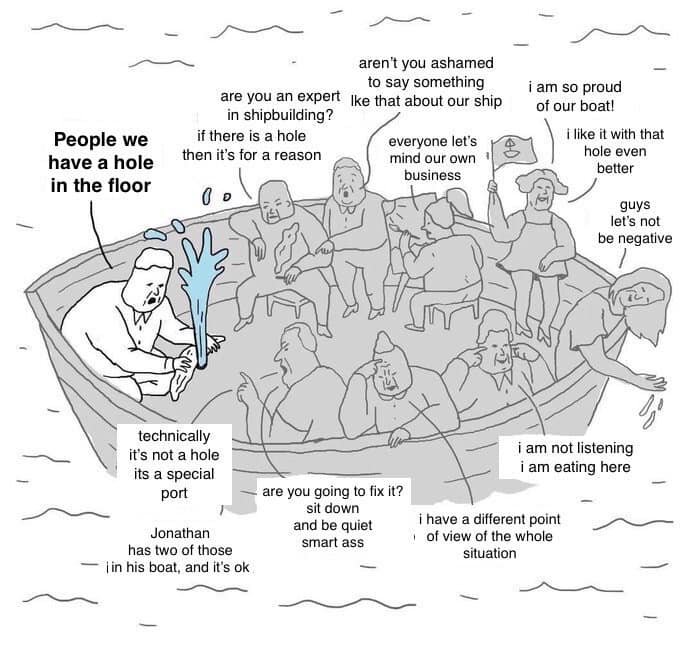
What doesn’t currently work is the over-reliance on hard blocking as a solution, with the common approach to problems is too often to block, users, instances, entire classes of servers like the #dotcons. While this kinda makes sense in the short term, it’s not a long-term strategy. It’s the digital equivalent of putting your head in the sand. You’re not solving the problem, you’re just not looking at it any more. This has the strong tendency to feed the “Cave Mentality” where some corners of the Fediverse are in defensive mode, retreating into smaller and smaller bubbles, avoiding engagement, trying to build perfection behind walls. But hiding from the mess doesn’t clean it up. If the #openweb becomes too closed, it dies from within. Openness is a value, not just a setting.
This is in part due to a lack of collective strategy, yes we’ve got the passion. We’ve got the tools. What we’re missing is a shared direction. The is currently too much reinventing the wheel, too many forks without purpose, not enough joining the dots. A thousand flowers bloom, but the garden needs tending.
#nothingnew is a basic tool about this, then there is the use of the #4opens, we need to make the #Fediverse and every layer of the #openweb, measurably open. That means: Open Data: accessible and remixable content. Open Source: transparent and forkable codebases. Open Standards: like #ActivityPub, that let different platforms interconnect. Open Process: decision-making in public, with participation and accountability.
The #4opens framework is a guide, not to perfection, but to direction. It’s a map toward trust, decentralisation, and sustainability. On this path, we need to build culture, not only code. Healthy communities don’t just appear, they’re built. Instead of building tech features, let’s also build social norms. Encourage, informative, welcome messages, transparent moderation, shared spaces for discussion. Moderation and admin is labour, support it, reward it and most importantly decentralise it.
To build community, don’t shy away from engagement. It’s tempting to block and move on. But sometimes, the hard work is worth it, call things out, talk things through, escalate when needed, but don’t disengage by default. We need active participation, not digital ghost towns. If we want the #Fediverse to grow, we need to build bridges, not walls. Let’s weave human trust networks to grow spaces that are porous, where new people can enter, learn, contribute, and stay. This is the work of social federation, which is just as important as technical federation.
There is a bigger picture if you are interested and are motivated to look, the #OMN, Open Media Network project is a vision and collective path for this kind of social architecture. It’s a federated network of media hubs, rooted in community, powered by open standards, and guided by human trust. It doesn’t seek control, it offers #KISS tools to build trust, add value, and create meaningful networks from the ground up. On this “native” path, rather than rejecting “bad actors” by exclusion, we build systems that surface good actors through collective tagging, trusted feeds, and editorial flows. Moderation becomes a feature, not a bug.
Final thought, let’s not repeat the mistakes of the past. The last 20 years of alt-tech is a graveyard of well-meaning platforms that failed because they forgot one thing, the humans. The #geekproblem has been building “perfect” systems with no one in them. That’s not the #openweb we want. We need less abstraction, more interaction. Less control, more cooperation. And above all, we need to recognise that openness requires work, but it also delivers freedom. So yes, the Fediverse exists. It’s healthy. But it can and needs to be more. Let’s stop hiding. Let’s start building. Together.
First we need to look at the core problem for the last 20 years has been that most activists were locked into #dotcons (corporate social media silos) because open alternatives were either too difficult to use, lack network effects, or fail to meet their practical needs. With the current reboot of the #openweb with the #fedivers based on #ActivityPub we have already taken a step away from this mess.
From my experience, here’s what’s needed from a software development perspective to break out of this mess. Open & accessible publishing networks. Activists need easy ways to publish and share information outside corporate-controlled platforms. Right now, #Fediverse is a first step, tools like #Mastodon and #PeerTube exist, but they are still largely copies of centralized platforms rather than native alternatives that work for any working grassroots media.
To take the second step in alt tech we need a native decentralized, trust-based publishing network (#OMN is the example I am working on) Bridging tools to syndicate content between #dotcons and open platforms. Better “unbranded” discovery tools for surfacing trusted grassroots content (think of a federated search engine that’s not controlled by Google)
The third step of secure yet open communication, is already mostly in place. Activists do need to secure yet transparent communication tools that balance privacy with accessibility. Right now, many are stuck using encrypted corporate platforms like #WhatsApp and #Telegram, which create spy silos and exclude people who purposely don’t have the apps. Projects like #Signal and XMPP chat kinda work in this space, so this is not a strong social tech focus, but is a social issue to work on getting people to use the tools.
Finally, the type of project we do need #indymediaback, #makeinghistory, #OGB and the base #OMN coding. There is a continuing need for resilient infrastructure, hosting and sysadmin alongside sustainable funding tools for activists’ websites, blogs, and tools. Currently, these tools often get taken down due to coordinated attacks and lack of resources. On the more dev side of this path, hybrid peer-to-peer hosting solutions (so sites can stay online even under attack) could be useful to bridge current client server tools.
There’s a roadmap, but the problem is developer focus and funding. If you’re serious about helping, check out the stalled dev work on https://unite.openworlds.info and see how it can be set in motion, please. If you’re a dev who wants to make a real impact, this is a good place to look.
The issue, we need to work more on, with #FOSS tech development, the failure of many #FOSS projects, is a failure to move from theory to practice. The issue is that developers work in isolation, disconnected from grassroots needs, and get lost in perfectionism rather than delivering functional prototypes.
The #geekproblem dominates, with coders prioritize control, abstract debates, and self-contained experiments over practical, usable tools for real-world communities. This is why projects stall: they are not built with activists in mind. Meanwhile, centralized platforms continue to consolidate power, because they offer simple, accessible, and functional solutions, despite their deep and nasty flaws.
To break this cycle, we need:
Practical iteration, build rough, working solutions rather than endless theorizing.
#4opens culture, embrace open process, standards, and real collaboration.
Bridging solutions, tech that activists can actually use, not just developer-driven experiments.
Funding models beyond #NGO traps, so projects remain independent and sustainable.
The fight for the #openweb is not only about resisting #dotcons but creating alternatives people can and will use. Can we move beyond abstraction and actually make history?