Why good faith is a technical requirement for #FOSS

If you’ve spent years in #FOSS, you’ve likely developed a strong allergy to vague political language. You care about licenses, reproducibility, governance models, and whether something actually runs. Good. That discipline is why free software exists at all.

But here’s the uncomfortable question, what if the biggest blocker to the #openweb right now isn’t technical debt – but social debt? And what if “good faith” is not a moral nicety, but a core infrastructure requirement?

The problem is when activism meets the #geekproblem. Anyone who pushes for change – especially against #mainstreaming pressures – develops a recurring relationship with bad faith. You see this when:

  • Corporate actors adopt the language of openness while enclosing the commons.
  • Institutions celebrate “community” while centralizing control.
  • Projects technically comply with openness while culturally gatekeeping participation.

This isn’t new, but the scale is new, in the age of #dotcons, #NGO enclosure is polished, funded, and normalized. Resistance generally fragmented, exhausted, and defensive as years of platform manipulation and extractive models have left people burnt out and cynical. In that climate, good faith is fragile, yet without it, nothing decentralized works. Good faith is infrastructure, decentralized systems cannot rely on coercion at scale. They rely on:

  • Trust
  • Transparency
  • Shared norms

The assumption is that participants are not actively trying to sabotage the commons, as when bad faith dominates, decentralized governance collapses into:

  • Endless meta arguments
  • Capture by the loudest actors
  • Drift toward hierarchy “for efficiency”

Sound familiar? This is why good faith isn’t sentimental, it’s structural. If you’ve ever tried to maintain a FOSS project while navigating trolls, corporate opportunists, and purity politics, you already know this.

To help the #4opens is a practical test, not a vibe. The #4opens framework exists precisely to operationalize good faith. It asks four simple questions of any grassroots tech project:

  • Is the data open?
  • Is the source open?
  • Are the processes open?
  • Are the standards open?

This extends beyond traditional open data initiatives (often institutional, often cosmetic). It covers the entire ecosystem of a project, not just its outputs. The value is not ideological purity, it’s resilience. When data, code, process, and standards are open:

  • Capture becomes harder.
  • Forking remains possible.
  • Governance can be contested transparently.
  • Communities can leave without losing everything.

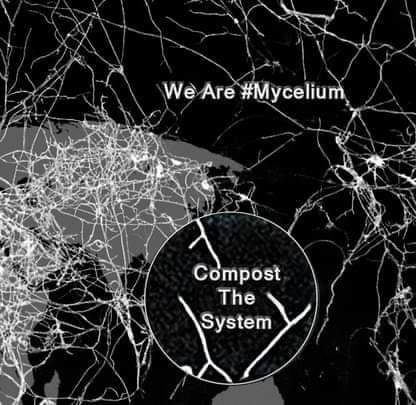
That’s not abstract politics, it’s survival architecture. Composting the current rot is why #OMN exists as a project. We are living in a digital environment thick with enclosure and manipulation. Years of bad faith, disempowerment, and algorithmic extraction have created social decay. The instinct of many geeks is to build a cleaner stack and hope people migrate. But the problem isn’t just software, it’s trust collapse.

If the #openweb is to mean anything beyond developer autonomy, it has to support collective storytelling and coordination, not just individual expression. #OMN is a shovel, not a cathedral. It’s a way to compost the mess rather than pretend it isn’t there.

The #OMN (Open Media Network) is not a shiny new protocol. It’s deliberately simple: Publish, Subscribe, Moderate, Rollback, Edit. That’s it, no engagement hacks, no growth funnels and no surveillance capitalism. It’s a #DIY, trust-based, human-moderated space. Messy, organic, built for communities, not only users.

This matters in the era of #climatechaos and social break down. As climate instability accelerates, centralized platforms will align with state and corporate power to prioritize “order” over dissent and optimize for profitability in shrinking margins.

To balance these communities will need coordination without permission, information flows that aren’t algorithmically distorted and infrastructure they can adapt locally, that’s a social demand. If #FOSS remains culturally optimized for the small minority who enjoy living inside the #geekproblem, it will not meet that demand at all.

We need to understand that the vast majority do not want to self-host, they do not want to debate licences, they do not want to live inside issue trackers. They want functioning, trustworthy spaces, if we can’t provide that, someone else will – and it won’t be #4opens.

The hard part is working with the empowered disempowered of our #fashionista class. We have a generation trained in #closed systems that reward performative critique over collective construction. On #dotcons platforms and strands of #NGO thinking, people are empowered to disempower others with common sense #blocking of call-out culture, optics over substance and branding over shared process. You get a strange anti-politics, egotistical, individualistic, allergic to long-term responsibility. A culture that critiques power while replicating it. Escaping this dynamic may be uncomfortable, it may get nasty before it stabilizes.

But here are some kinder strategies we can use:

  • Make contributions obvious and low-drama, clear process reduces ego battles.
  • Reward maintenance, not only innovation, culture follows incentives.
  • Default to transparency over suspicion, sunlight reduces paranoia looping.
  • Design for groups, not influencers, collective accounts, shared moderation, distributed ownership.
  • Keep it simple (#KISS), as complexity amplifies gatekeeping.

None of this eliminates conflict, but it shifts the terrain from personality warfare to shared work.

An invitation to the sceptics, you don’t need to buy the rhetoric, maybe ask instead does this increase forkability? Reduce capture risk? Does it lower dependence on extractive infrastructure to strengthen collective agency? If the answers are yes, they belong in the #FOSS conversation. The future of the #openweb will not be secured by better branding or cleverer stacks. It will be secured by projects that treat good faith as a design constraint and collective resilience as the goal.

This is not about purity, it’s about durability. We can keep polishing tools for the tiny minority who enjoy living inside the #geekproblem, but, we need to build infrastructure that ordinary communities can also use to navigate the storms ahead. The invitation stands, pick up a shovel, help compost the mess by build something that gives back more than it extracts.

#4opens #indymediaback #openweb #compostingthemess #KISS #makeinghistory #OMN

State Funding of #FOSS and Open Source: Is it a Good Idea or a Bad Idea?

Who’s Building the #Openweb – and Who’s Just Feeding Off It

Almost all funding in the #openweb space gets absorbed by the mediation layer – the people and organisations who talk about, manage, and frame the work rather than doing it. Some money reaches (#geekproblem) developers. Some supports visible projects and #fashionista careers. But the pattern holds: funding flows to what institutions can understand, and institutions rarely understand messy, unglamorous, day-to-day grassroots work.

So resources pile up around reports, events, strategy documents, coordination roles, and polished narratives – while the people actually running infrastructure, holding small communities together, and doing the labour that sustains the #openweb go unfunded. That’s not usually corruption, it’s structural. Institutions fund what they can measure and present. What they can measure and present is almost never the soil layer.

The result is a widening gap between the #fashionista story of the #openweb and the lived reality of it. More funding grows blinded narratives faster than it grows anything real. The question isn’t just “more money”, it’s how do we get resources to the people actually doing the work?

That’s why strong words matter. Naming parasites gives people who are currently being parasitic a chance to stop. Naming #techshit gives people making it a chance to compost their own mess. If they take that chance, good – a kindness has been done. If they don’t, we compost the mess ourselves and grow something better. #KISS.

“Impossible” Is a Political Word

Slavery abolition was impossible. Universal suffrage was impossible. Worker self-organisation was impossible. An open global communications network outside state control was impossible. Until people acted as if it weren’t.

Calling something impossible is usually political – a way of narrowing imagination and disciplining ambition, keeping demands within what existing power structures can tolerate. Structural shifts rarely begin as reasonable proposals. They begin as overreach. Commons infrastructure, resisting enclosure, building beyond scarcity logic – none of this looks feasible from inside the incentive structures it’s trying to replace.

If we only aim for what seems immediately achievable, we are reinforce existing incentives. If we aim beyond them, we shift the terrain. We may not reach the impossible goal, but we change what becomes possible next. That’s not utopianism. Historically, it’s actually #KISS and it’s how boundaries move.

Open Spaces Attract Parasites. That’s Ecology.

The #openweb generates real value: code, trust, collaboration, legitimacy, cultural capital. None of it is stable without maintenance. When drift sets in, someone has to shovel. That work is messy, exhausting, unpaid, and constant – because digital commons produce nutrients, and institutional actors are trained to harvest nutrients. If nobody composts the shit, the project chokes.

The “parasite class” in tech isn’t made up of evil masterminds. They tend to be institutional, NGO-aligned, career-professional actors who attach themselves to commons projects and redirect energy toward grant cycles, brand positioning, and compliance governance. They don’t build the soil. They feed on it. And they usually don’t know they’re doing it.

The most common parasite logic is digital scarcity: “everyone should pay their way.” It sounds responsible. It sounds sustainable. It’s also a direct import from market ideology. Digital infrastructure is non-rivalrous – it can be shared at near-zero marginal cost. But scarcity gets reintroduced through subscriptions, premium tiers, paywalled features, SaaS dependency, and professional gatekeeping. That’s enclosure wearing a cardigan. It’s not building commons, it’s rebuilding #dotcons platforms with nicer vibes.

The #NGO layer brings its own infection: risk aversion softened by consensus theatre. Measurable outputs. Depoliticised language. Branding as reputational management. None of it is directly evil, but it’s structurally parasitic – because the moment legitimacy becomes more important than usefulness, you start designing for funders instead of participants. You optimise optics instead of flows, you protect the brand instead of the commons.

This keeps happening because commons produce surplus – trust, energy, attention, infrastructure – and institutional actors are trained to capture surplus. They don’t see themselves as parasites. They see themselves as stabilisers. But when their survival depends on controlling narratives, they can’t help bending the project toward those needs. That’s structural parasitism, not personal villainy.

So ask yourself honestly are you building soil or feeding off soil someone else built? Are you increasing abundance or reintroducing scarcity through “sustainable” monetisation? Are you materially decentralising power or just professionalising it? Commons infrastructure should reduce dependence on gatekeepers, not multiply them.

This is a traditional political view of these people

Pick Up the Shovel

Yes, there are parasites. Yes, there’s shit to shovel. No, pretending everything is collaborative harmony doesn’t help anyone. The work of #OMN and #4opens isn’t trend-chasing or #NGO alignment. It’s building resilient soil, designing against digital scarcity, and keeping governance open and genuinely messy. If that makes institutional actors uncomfortable – good. Composting always smells bad before it becomes fertile.

One last thing: stop burning out alone. The number of good people burning out right now is not accidental. It’s what happens when systemic problems get reframed as personal responsibility. Collective infrastructure is weak, crisis is constant, and nobody can carry that alone. Nobody should try. The solution isn’t heroic individual effort. It’s shared architecture. In #FOSS terms: if the system keeps crashing, stop blaming the users and redesign the stack.

That’s the composting we actually need to do.

This message is a shovel

Ten years ago – and honestly long before that – there were endless conversations on #failbook about how useful it was for campaigning. The dominant view back then was simple: it’s just cat memes, it’s just tooling, it isn’t political so we can use it harmlessly. Before Snowden, this wasn’t a fringe view – it was probably a 90% consensus, especially among activists, and #fashionista tech communities. I’m not pointing fingers here, as this was normal. Many of us – including friends and collaborators – believed this.

And that’s exactly why we need to remember it. If we forget, we repeat, if we scapegoat, we learn nothing and become no better than the trolls. The problem isn’t individuals – it’s collective amnesia. The is an issue of responsibility and historical memory, that when people deny their own history of responsibility, they disconnect from reality. That’s how too meany people drift into the same “post-truth” space we criticise in figures like Trump or Stammer, where inconvenient past positions are quietly erased.

The uncomfortable truth is that many of us argued that #dotcons were neutral platforms, engagement was empowerment, memes were harmless cultural glue. Meanwhile, our healthier #openweb tools were neglected and dismantled, community infrastructure withered, while the #closedweb platform economy consolidated power. Looking back isn’t about blame. It’s about understanding how we arrived at this mess.

The campaigning trap? Ironically, many tech-minded activists used to run workshops teaching people how to campaign on #dotcons – even as we recognise that these platforms structurally undermine autonomy, community governance, and sustainable organising. This didn’t only happen because people were stupid or malicious. It happened because convenience replaced infrastructure building, the #geekproblem undervalued usability and social design and short-term reach trumped long-term resilience. The result is a paradox: we built our movements inside systems that weakened them.

But spreading more shit without composting it – just makes alternative spaces smell worse and drives people away. This mess is not history, it’s now. This conversation isn’t nostalgia or score-settling. It’s about the present and future. Looking back is how we understand structural mistakes to rebuild shared memory and #KISS avoid repeating cycles of platform capture.

The compost metaphor is useful, #OMN is a spade not a weapon – a tool. A spade digs, turns soil to compost what came before. The mess we helped create – the attention traps, the algorithmic silos, the dependency on corporate platforms – isn’t something to deny or hide, it’s material to compost into something better.

The choices we made then still shape the terrain we stand on today. It’s the #fashernista problem, one of the biggest blocks to building real alternatives is this #fashernista dynamic – activism as aesthetic performance rather than infrastructure building. It looks radical, It feels good, but it rarely produces durable tools or collective power. Real alternatives require slower, less glamorous work of maintaining systems, building trust networks to support messy grassroots processes and designing for longevity rather than attention spikes.

A bridge forward? As I keep saying, this isn’t about shame or purity politics. Almost everyone followed the same path because the incentives pointed that way. The real question is that now that we know better, what do we build next?

#OMN isn’t nostalgia for a lost web – it’s an attempt to learn from past failures and construct a media infrastructure that remembers history to support collective agency and avoids repeating the mistakes that led to the current #dotcons landscape.

This message is a shovel. The question is whether we use it to dig trenches against each other – or to prepare soil where something better can grow.

Funding Proposal: Open Media Network (#OMN) – Building Portable, Human-Centred Digital Commons

The rise of #stupidindividualism as a common sense path

Part of the shitty mess we’re in comes from the failure of #DIY culture and the rise of #stupidindividualism as the common sense path. #stupidindividualism is completely unscalable in social terms. It fragments, isolates, and exhausts. That isn’t accidental, it’s a classic divide-and-control strategy of the #deathcult. And we need to consciously step away, and away, and far away from this.

An example, over the last 20 years, I’ve answered the same questions individually, over and over. But the point of #DIY culture was never one-to-one hand-holding. You don’t need to stress personal connections just to begin. The hashtags are links – they exist to let you start the process yourself.

You can do this by #KISS following the flow, not by demanding individual explanations. Click the #hashtag links. Read the background posts. Trace the project history. Use a search engine. Learn how the process works before pulling people into one-on-one clarification. This is basic #DIY practice, grounded in the #4opens.

You need a second example, looking back, remember how many of our activist friends ran workshops on how to use #dotcons social media as a campaign tool? How to organise activism through corporate platforms? While this was happening, our own independent media was being ripped apart internally, ossified by process, and then abandoned by the same #fashionista activists.

This mess is the devil child of #postmodernism and #neoliberalism, all surface, no grounding, all individual expression, no shared responsibility. We know the names and URLs of many of the people who did this. It’s the legacy we’re dealing with. Our projects like #indymediaback exists because of this history.

If you’re serious about changing society, you have to think your way past this common sense #blocking. That means rebuilding collective pathways, shared knowledge, and common processes, not endlessly repeating the same individual conversations. The tools are here. The links are here. The work starts when we stop pretending this is a personal problem and recognise it as a social one.

Capitalism grew from historical processes rooted in enclosure, extraction, and the exploitation of people and nature. Liberal politics stabilise rather than challenge this, while promoting forms of (stupid)individualism that fragment collective power, making it harder for people to organise together against entrenched control.

The individual, their freedom, and their capacity for reason are products of social relationships, not independent origins. Society is not built from isolated individuals; individuals grow from shared culture, history, and collective life. As society grows richer and more humane, individuals gain the conditions needed for deeper development – and real freedom emerges from this shared foundation.

We need to stop worshipping a #deathcult

A path to do this is to step away from the #mainstreming mess. In 2024, the Nobel Prize in Economics was awarded to Daron Acemoglu, Simon Johnson, and James Robinson. The prize recognised their work on how institutions shape prosperity, most famously through their book Why Nations Fail. The timing matters, it matters a lot.

This award lands at exactly the moment we should be asking why Institutional Economics – the respectable face of #mainstreaming – has spent the last fifteen years pushing us to keep kneeling at the altar of the #deathcult of #neoliberalism.

For more than a decade after the 2008 financial crisis – a crisis that should have finished neoliberal economics for good – our liberal institutions quietly stepped in to rescue the doctrine. Not by defending it openly, but by reframing its failures. This wasn’t accidental. It’s central to the mess we’re living in now.

The 2008 crash began with the collapse of Lehman Brothers and rapidly spread from finance into the real economy. It triggered the largest global contraction since World War II. Advanced economies saw GDP falls of over 10%. In the US alone, more than $16 trillion in household wealth vanished.

The shock was so extreme that Queen Elizabeth II famously asked economists at the London School of Economics why nobody had seen it coming, the profession replied that it was a “failure of the collective imagination”. That answer was revealing and evasive. Because imagination hadn’t been lacking before the crash. Throughout the 1990s and early 2000s, #neoliberalism dominated economics. Its core beliefs were simple, absolute, and aggressively enforced:

  • Markets are efficient
  • Deregulation increases productivity
  • Financial innovation reduces risk
  • Macroeconomic instability has been solved

These ideas were institutionalised across universities, central banks, and international organisations. Nobel Prizes were handed out to models built on perfectly rational actors and self-correcting markets. Central bankers talked confidently about a “Great Moderation”: stable inflation, steady growth, forever.

Economics became “scientific”, self-referential, and closed to challenge. This wasn’t wisdom, it was a pile of shit built on mathematical abstraction – a classic #geekproblem – detached from lived social reality. Financial fantasies were celebrated. Subprime mortgages were reframed as inclusion. Mortgage-backed securities were said to spread risk. Collateralised debt obligations were hailed as marvels of modern finance.

They were, in reality, weapons of mass financial destruction. The #deathcult was warming up. When the system collapsed, neoliberal economics should have been held to account. No theory in modern history had failed so completely, so quickly, with such devastating consequences. Instead, it reinvented itself.

The first move was redefinition. Under the Obama administration, the US abandoned laissez-faire dogma overnight. Banks were declared “systemically important”. Corporations were bailed out. Trillions were injected into markets through quantitative easing. Socialism for the rich was revealed as normal.

This should have been the moment it became obvious that #neoliberalism was never about principles. It was always about power. Markets, models, and theories were tools – not truths – used to maintain capital’s dominance over society. But what we got was the normal mess of denial, spin, and fragmentation.

Once stability returned, denial followed. Economists claimed victory. The crisis was blamed on interest rates, oil prices, China’s savings – anything except the theory itself. The line became: “The models failed to predict the crisis, but the solutions worked.” That sleight of hand kept neoliberalism alive.

Instead of lifting our heads and walking away, we fell for the smoke and mirrors. The priesthood fragmented neoliberalism into subfields, and our #fashionista classes filled the space. Game theory analysed distressed financial institutions without asking why they were distressed.
Behavioural economics blamed low-income borrowers’ “biases” while ignoring policies that made housing unaffordable. Feminist economics debated unpaid labour while leaving capital accumulation untouched.

Each critique was partial. Each acted as a distraction. None threatened the altar we were still collectively worshipping. The strongest shield, however, came from Institutional Economics – the respectable centre of #mainstreaming liberal thought.

Why, Why Nations Fail succeeds, it “common sense” argues that prosperity comes from “inclusive institutions” – markets, property rights, patents – supported by political institutions like democracy and the rule of law. “Extractive institutions”, we’re told, lead to stagnation.

This framework was easy to accept in the common-sense fog of the #fashionista class. It sounded critical while leaving capitalism intact. Weak, procedural democracy was sold as the mechanism that could tame markets.

What it ignored – completely – is that democracy inside highly unequal societies is easily captured by capital. Elections reproduce power relations far more often than they correct them. By declaring any market outcome produced through elections legitimate, the #nastyfew who this mess served grabbed and twisted “democratic” approval.

At a moment of global instability – Eurozone debt crises, austerity, mass unemployment – #mainstreaming economics offered a comforting story: the problem wasn’t capitalism, just “bad institutions”.

The reality on the ground, in Europe, austerity devastated entire societies. Greece lost over a quarter of its GDP. Youth unemployment passed 50%. Public assets were stripped. Debt increased. Today, a six-day work week is framed as “responsibility”.

In the United States, recovery was brutally unequal. Between 2009 and 2019, the top 1% captured 40% of all income growth. Asset prices exploded while wages stagnated. Private equity gutted industries. In the world of the #dotcons, gig work replaced stability. Neoliberalism didn’t retreat. It consolidated.

There was, however, a different path. China – worshipping a different cult – ignored neoliberal assumptions after 2008. Instead of monetary inflation, it pursued fiscal stimulus, infrastructure investment, R&D, and industrial policy. Growth remained high. Manufacturing expanded. Living standards improved. China became the world’s largest economy by purchasing power parity more than a decade ago.

Western institutions urged “liberalisation”, framed through #mainstreaming economics. Political reform was demanded – meaning access for Western capital. China refused. When China’s property bubble burst in 2021, contagion was contained. Capital was redirected into technology and manufacturing. Industrial dominance accelerated.

This success could not be acknowledged, so institutional economics reframed it as “extractive”, unsustainable, and destined to collapse. Yet the facts contradict the story. Inequality is far higher in the US. China’s overproduction lowers global prices and stabilises living standards. Without it, global inequality would already be politically explosive.

So why are we still stuck, #Neoliberalism survives not because it works, but because it controls the story of what is possible. It offers legitimacy without transformation, democracy without redistribution, reform without power shifts.

Worse, over the last forty years it has reshaped education, work, identity, and the value of human life itself. It trained people to see themselves as assets, competitors, and risks. It normalised insecurity and abstraction. That’s why we’re facing collapse now: a system that has exhausted its social, ecological, and moral foundations.

Yes, it’s a mess, you probably need a shovel #OMN

What is not real is pretending that violence is secondary to discomfort over language

In my life, what is real is people being beaten and shot, blood on the walls, evidence fabricated, mass arrests, torture in prisons, borders closing, and fear becoming an everyday condition. Fear isn’t imagined. Fear is rational.

What is real is watching a police officer chat casually one moment, then flip instantly into an instrument of state violence the next. A human being turns into a mechanism: boots stamping, braking toes, batons smashing heads, cameras destroyed, people dragged away. Hundreds detained illegally. This isn’t abstract. This is lived experience.

This is what power looks like when legitimacy erodes. And this is not new. History is full of these moments – when states retreat from consent and rely instead on force, surveillance, and spectacle. When violence becomes administrative, repression is normalized and denial becomes #mainstreaming policy.

What is not real is pretending that this violence is secondary to discomfort over language. What is not real is prioritising hurt feelings, tone-policing, or abstract arguments about phrasing. What is not real is treating “uncomfortable language” as a greater harm than broken bones, smashed lives, and stolen futures. There is a profound mismatch here.

People are upset about words because words feel manageable. Words can be moderated, reported, debated. State violence cannot. It is harder to face. It demands courage, solidarity, and risk. So attention is redirected, from material harm to symbolic offence. This is how reality gets inverted, this is too much of the mess of the last ten years.

Talking outside someone’s direct experience is not violence. Naming systems of power is not oppression. Describing brutality is not the problem, the problem is the brutality itself. When repression becomes normal, discomfort becomes a distraction. It’s a luxury concern in a world where people are being beaten, imprisoned, and erased. Policing language while ignoring violence is not moral clarity, it’s moral collapse.

If we cannot distinguish between discomfort and domination, between harsh words and broken bodies, then we have already lost our grounding in reality. What is real is violence backed by the state. Everything else is noise, no matter how it makes you “feel.”

Yep, it’s a mess, that needs mediating for any outcome other than more mess to compost.

#Fashionista #postmodern #blocking #spiky #fluffy

On the #openweb path, what “prat” means

On the #OMN and #openweb paths, when I talk about not being a “prat”, am not talking about a personal insult in the everyday sense, I am naming a pattern of behaviour that actively blocks collective work, let’s be explicit. A prat is someone who:

Performs critique instead of doing the work

They talk about problems endlessly but won’t touch the shovel. They judge seeds for not being trees. They dismiss unfinished work while contributing nothing usable themselves. This isn’t accountability – it’s avoidance dressed as intelligence.

Defaults to vertical thinking in horizontal spaces

They try to manage, gatekeep, or “correct” instead of co-creating. In #OMN terms, this is importing #dotcons logic into open systems.

Treats values as weapons, not commitments

They quote rules, codes, or ideals to hit people with, not to strengthen the commons or protect the vulnerable. A code of conduct, used this way, becomes a club. The prat believes they’re being ethical – while undermining ethics in practice.

Confuses identity with contribution

They think being right, being radical, or being aligned is more important than building something that works. This is #fashionista behaviour: aesthetic politics, purity signalling, zero tolerance for mess.

Can’t handle undefined space

They panic when things aren’t: Finished, branded, institutionally sanctioned, measurable in platform metrics. Because #openweb work is by nature undefined, they respond with fear, defensiveness, or hostility. This is where “VERY negative when challenged” shows up.

Redirects anger

Their frustration is often justified, but it gets aimed at: Other builders, messy experiments, imperfect allies. Instead of: Centralized power, enclosure, #dotcons capture, #deathcult economics. This is how movements eat themselves.

What “prat” does not mean

It does not mean: Someone asking honest questions, someone disagreeing in good faith, someone making mistakes, someone learning in public. Mess, failure, argument is allowed. Blocking isn’t.

Why this matters

The #openweb only exists if people are free to: Start badly, iterate publicly, cooperate loosely, build trust over time. Prat behaviour shuts this down by: Discouraging participation, freezing experimentation, replacing process with performance. That’s why we say it plainly, not to shame – but to clear the path.

The simple rule (#KISS)

If you’re not helping build, not helping others build, not protecting the space for building. Then stop throwing rocks, pick up a shovel, or step aside. That’s what we mean by “don’t be a prat” on the #OMN and #openweb paths.

What Did We Learn from Web3, Crypto?

Looking back from the mid-2020s, the arc of #web03, #NFTs, and blockchain culture is very clear. What once promised (lied about) decentralisation, liberation, and a break from corporate capture now looks like the same, mess, #techcurn pattern repeating itself, yes it had new language, new branding, but it was easy to see it had the same underlying mess making dynamics.

As these #geekproblem projects hollowed out, the signs became hard to ignore. The technical optimism faded, the user bases thinned, and the economic logic exposed itself. What followed was totally predictable: spin. Makeup and perfume slapped onto decaying projects to hide the smell of rot and exploitation. Rebrands. New narratives. New demographics. Same extraction. This was the outcome of building “liberation tech” on foundations that still centred virtical money, speculation, and power concentration.

With these projects we are now in the zombie phase, projects kept moving, kept talking, kept selling – long after the animating ideas had died. Influencers and promoters continued to perform belief, even as any substance drained away.

This is a few years when #fashionista culture met #encryptionist ideology – aesthetics and technical absolutism snogging the undead remnants of a failed #deatcult vision. The result wasn’t in any way decentralisation; it was a simply a new enclosure. People weren’t being freed, they were being financialised, the money problem #KISS

At the core was a simple structural truth: #dotcons feed on money. Put money in, influence comes out. That logic doesn’t disappear just because you wrap it in cryptography or decentralised rhetoric. “Bad actors” weren’t anomalies – they were following the incentives as designed. Aany social good becomes just collateral damage. This is why the lie collapsed in te end.

The deeper harm and problem with #techcurn is each wave claims to have fixed the problems of the last. But each wave reproduces them, because this is what works when worshiping a #deathcult. This isn’t just a failed tech trend, the #techcurn disparity, driven by extraction systems cause enormous human harm, displacing livelihoods, concentrating power, and amplifying inequality at planetary scale.

These systems don’t fail harmlessly, they fail onto people. That’s why the call isn’t just to “be critical,” but to step away – and help others step away too. Not through purity exits or individual moralising, but through collective paths back to technologies built for people rather than profit, life over zombies

There has always been another path: the #openweb. Messy, imperfect, slower, less glamorous, but grounded in shared infrastructure, social trust, and human-scale governance. The #OMN approach doesn’t promise salvation. It offers compost instead of speculation. Process instead of hype. People over tokens.

A note on hashtags: And yes, the hashtags matter. Click them., search for them. They cut sideways through algorithms – small back doors into less mediated, less controlled ways of seeing. Not a solution, but a crack in the wall.

The current #Ai hype bubble is repeating this mess with a little more useful #LLM functionality, but on top of this is a huge mess of #techchurn, which will need composting.


Observation: some people go into news to speak truth from power – using institutions to legitimise the status quo and defend the worship of the #deathcult.

Others speak truth to power – using journalism to expose, question, and challenge unequal power and its consequences.

Only one of those serves the public interest #KISS

A fashionista culture addicted to surface can’t change

Most of what the #fashionista fights and campaigns for, and expends endless energy on isn’t liberation, it’s unthinking equality in worshipping the #deathcult. The argument isn’t about whether the path is destructive. That’s quietly accepted ignored, inevitable, “just how things are.” The fight is about who gets included on the path, who gets representation, who gets a seat at the table – not about whether the table should exist, or whether it’s crushing everyone underneath it.

In this #mainstreaming, success means being allowed to participate in the same extractive systems, the same growth-at-all-costs economics, the same surveillance platforms, the same attention-harvesting tech, the same environmental destruction, as long as access is more “equal”, It’s little to do with emancipation, rather its about equal opportunity complicity.

This is how too often radical language gets emptied out, structural critique is replaced with branding. Power isn’t challenged; it’s redistributed symbolically. The mess keeps spreading, just with better covers and more diverse faces unrolling it.

The #fashionista mindset treats inclusion as the goal, rather than a first step for dismantling what is actually killing us. It can’t imagine stepping outside the current “safe” path, because its common sense value structure depends on recognition within it. The outcome? Dissent gets flattened into lifestyle, resistance becomes performance, politics becomes aesthetic alignment. And anyone who questions the underlying mess is treated as naive, impractical, or “not serious”.

But when the altar is poison, equal access to worship before it doesn’t make it less deadly. Real change means refusing to kneel to the altar itself, and that requires mess, conflict, loss of status, and building alternatives that don’t look good on a CV.

That’s why the #OMN path feels uncomfortable, unfashionable, and slow. It doesn’t offer better branding, it offers a way out. And in a culture addicted to surface, people can’t change, and thus refusing the #deathcult looks like heresy.

The #Fashionista problem: How fear blocks change

This story is about compost, not control: Our world is smeared in social shit. We live in a vast, stinking pile of it. The left has its post-modern shit – where truth dissolves into vibes and dreams. The right has its fascist shit – where truth is something you enforce with obedience and violence. We spend our lives drinking the seeping effluent from this dung heap. Our work, our shops, our politics, our tech… all of it is smeared in the same rot. The planet itself is decomposing under the weight of this social shit.

But, shit makes good compost, you just need a shovel, It’s useful to start this composting with #fashionista thinking as this is the enemy of compost, its one of the recurring problems in our movements, from grassroots tech to climate activism to alternative media, it is why we need to call out this #fashionista thinking. It’s damage, pushing a complacent, fear-based mindset shaped by aesthetics, purity, and performance rather than working process, mess, and collective work.

This blindness leads to a focus on control, which quickly turns toxic. The moment control becomes the organising principle, everything messy, experimental, or unfinished becomes a threat. And that’s when behaviour turns into this full-on #blocking. This path of narrow “thinking” skips the first steps: The awkward attempts, the compost and mud, the scaffolding, the incomplete prototypes. Instead, it judges the seed for not already being a tree, the foundations for not being a building, and the prototype for not being a polished “safe” product.

It’s not just irritating, it’s actively destructive, when #fashionista worldview treats change like a commodity, it’s a poisonous dynamic. The refusal to understand #KISS process leaves people stuck in this dark pattern, mostly having no idea they’re doing it. This is a very contradictory issue, on one hand they can still believe they’re “defending standards”, protecting “the right way”, or acting as guardians of quality or values. But in practice, it’s ignorance, and malice or parody at worst. On the other there are nihilism just destroying everything, as I say it’s a mess.

Taking about an example of this mess

Organic metaphors help bridge the messy gap: A plant needs soil, soil needs compost, compost is messy. If you can’t handle the compost, you are not working in the garden.

Then we need to touch upon the defensiveness problem, when we challenge this behaviour you get instant negativity. A strong defensiveness kick because critiquing the #fashionista paradigm exposes the gap between self-image and real impact. People who think they’re “the adults in the room” get, fearful, then angry when told they’re slowing things down. They double down, personalise the issue, and then retreat into purity/safety politics. Refusing to have conversational space is, frankly, worshipping the #deathcult, conversations become impossible, because they can’t tolerate talking outside the narrow bandwidth of #mainstreaming “common sense”.

So what can we do? The #openweb reboot needs mess, not perfection. The path is – the real open web, not the #NGO-sanitised simulation – it is built on: rough consensus, running code, shared mistakes, public process, imperfect prototypes, open but flawed governance and messy collaboration. We need to communicate the understanding that everything meaningful starts rough, unfinished, and imperfect. Perfection is not the starting point, perfection is what you get after a thousand messy, iterative steps.

This is why #fashionista thinking harms the #openweb, a strong tendency to block all of this, and worst of all, it convinces people who should be building that, shaming, they’re “not good enough” to begin, this mess kills movements before they start. People trapped in this rarely see that they’re part of the problem, not the solution.

We need a culture that protects messy steps, if we want the #openweb to reboot in a way that isn’t swallowed by #dotcons logic. We need collective composting, not competitive posturing.
Likewise, we need a culture that treats steps as legitimate even when they’re provisional, blurry, imperfect. Never judge the seed by the standards of the forest, nothing grows if people are afraid to plant in the first place.

The #OMN plan, is to keep working and presume people will stop being #mainstreaming prats at some point. And start doing useful #openweb tech, this could be you, message us if it is 🙂

Verticals can be fuckwits when it comes to anything horizontal. That’s not a personality flaw, it’s a values clash, a basic “common sense” failure. You see this in every movement, and you can see it clearly online right now in the #openweb. Vertical thinking defaults to hierarchy, control, and enforcement. Horizontal thinking defaults to trust, process, and shared responsibility. When the former tries to manage the latter, everything breaks.

We short-circuit the pointless debate by defining the terms #KISS, with a tech focus:

  • Left = open / trust
  • Right = control / fear

That’s it, everything else is noise. It’s pointless to build on complexity in a post-truth world powered by #techchurn and driven by #fashionista incentives. Complexity just becomes camouflage for power, branding, and control. We’ve spent the last few years watching this fail, over and over again.

Without this #KISS shortcut, we go nowhere, the real choice is simple: build social truth together, or keep worshipping the #deathcult. The second option is what currently passes for “common sense.” The first one needs a shovel #OMN

It’s how humans have always lived – together

For 200 years, capitalism, for the last 40 years #neoliberalism, taught us that we’re isolated individuals who compete to survive. But any real view of our actual history – and our biology – say the opposite: we’re interdependent, social, and ecological beings. For almost all species time before the current mess, we thrived through commons-based systems, shared forests, grazing lands, rivers, and community knowledge. Villages maintained open wells, fishermen shared tidal calendars, and guilds protected collective craft standards. Cooperation, not competition, is what allowed us to endure.

This is why now alt tech, matters, it is about rediscovering, what makes us human, the digital form of that is commoning online. Just as medieval commons were fenced off during enclosure, our early digital commons were captured by #dotcons. Rebuilding the #openweb is the act of reclaiming that shared ground, not nostalgia, but in the era of #climatechaos and hard right shift its #KISS survival.

What we need to compost is our own-shared memory. The commons are missing from today’s “common sense”. The idea that people can manage shared resources together has vanished from public imagination. Yet the commons is the older, more adaptive, and far more humane way of organizing.

In tech, the #Fediverse shows this in action, thousands of community run servers cooperating through a shared protocol, ActivityPub. Projects like #PeerTube, #Pixelfed, or #Funkwhale replace enclosure with federation, showing that open paths can scale through trust rather than control. Alt tech, built on open protocols and co-governance, is simply the digital commons rebooted, a network of networks where no one owns the whole.

We need much more resources and focus pushed into this real grassroots path of reclaiming the means of communication, in the 1990s and early 2000s, the internet was all ready a commons: decentralized, people-driven, and impactful. Early #Indymedia collectives covered protests outside mainstream #blocking narratives. #4opens email lists and wikis built movements across borders. Then capital pushed in, WE let the #nastyfew of #Facebook, #Google etc privatize our collective infrastructure, turning participation into surveillance and creativity into content.

Alt tech projects like the #OMN (Open Media Network), Mastodon, and wider #Fediverse are attempts to rebuild what we keep forgetting, this time, protected by #4opens shield to build shared governance. This path is not a nostalgic throwback, but living/acting paths for post-capitalist communication we need in the growing era of social backdown.

It’s not only “tech” – it’s social trust infrastructure. A common is not only software; it’s the culture of cooperation that surrounds it, shared values, mutual aid, and relational ethics, you can’t “code” trust into hardware, as the last decade of #blockchain and #AI mess proves. Smart contracts failed to make people honest; they just automated mistrust, it’s on going #geekproblem blindness we need to be working to compost.

What works, the resilience, comes from people, not algorithms. Through frameworks like the #4opens: open data, open code, open standards, open process. We can build transparency and accountability into the social layer of the network. Trust is a practice, not a protocol #KISS

We need a future that’s better, not just less bad. The #deathcult story – neoliberalism’s great myth – says “there is no alternative.” Alt tech is the alternative, working proof that cooperation scales, that people build shared infrastructure without extraction and less coercion. Look at LibreOffice, Wikipedia, Linux, or the #Fediverse, all imperfect, collaborative systems built on trust, not profit. They are real-world examples of how collective will outperform the normal deadened paths of corporate hierarchy.

Alt tech gives us believable hope, which is the only real antidote to despair and apathy. The ground for grassroots power is in pushing change and challenge. If the liberal state and #dotcons won’t reform, we need to be building parallel structures that work differently.
Projects like the #OGB (Open Governance Body) experiment with federated, transparent decision-making. The #OMN builds tools to connect grassroots media in trust networks, bypassing gatekeepers entirely. Together they form a scaffolding of a working commons, capable of hosting culture, not only control.

Healing the social media wound? We need to compost the lie of #dotcons which spent the last 20 years turning us into consumers and outrage machines. The shovel we need is affinity groups rebuilding social tech around self-governance, interoperability, and most importantly trust to reclaim the human side of the internet. Imagine the world different, feeds that empower communities, not advertisers, tools that nurture relationships, not metrics, platforms that amplify context, not conflict.

This is the work of making the internet human again, working together on the path of alt tech matters because it’s not about gadgets; it’s about freedom, community, and survival. It’s our path to remembering that the #openweb, like the Earth itself, belongs to everyone, or it belongs to no one. And every time we build a shared tool, or hold open a door, we remind the world that cooperation is not naïve, it’s our oldest #KISS technology.

A cross-cultural conversation on this subject

UPDATE: I haven’t touched on two other #4opens projects here, so let’s tap them at the end: #Nostr is a “me-too” project stuck in the #geekproblem loop, it won’t go anywhere until it learns to value community as a building block. #Bluesky, on the other hand, is already drifting into the hands of VC-funded #fluffy elitists who turn every commons into a brand. It’s a very likely a dead-end for real change or challenge, which is why the #mainstreaming #blocking #NGO and #fashionista crowds flock to it.

UPDATE 02: Digesting the comments. For the past 10,000 years of agriculture, 500+ years of Euro-colonialism, 200+ years of #capitalism, and 95 years of #neoliberalism (45 officially declared as such), the #nastyfew practicing control through production have dominated everyone else. Capitalism, as described in Capital, grew wherever it could. By the late 19th century, labour organised and fought back. Social democracy transformed the capitalist state so effectively that capitalist development stalled by the 1930s.

The response? A reorganisation of capital, using anti-communism as its rallying cry (WWII, NATO, Korea, Vietnam) to defeat social democracy and retake control of the state. By the 1980s, “they” felt secure enough to brand reform itself as a product: #Neoliberalism. I’m simplifying, of course – this is for the #hashtagStory outreach, so it can become a #KISS tool people can actually use. Clarifications and deeper dives you can find in the comments 🙂

Now, about this idea that “capitalism told us we’re isolated individuals competing to survive.” It’s partly true, but not in the way people think. Capitalism depends on interdependence, we work together to produce, but in a way that isolates us socially and politically. That’s the contradiction: interdependence turned into alienation. It’s the mess in our heads that recreates these bad social structures, the inner factory of control. That’s what we have to compost.

In the end, it’s not just social control, it’s social destruction. As we rush deeper into #climatechaos and the global hard-right turn, it’s clearer than ever: the ideology of separation keeps power safe and people powerless. I know this isn’t #mainstreaming liberal logic, that’s the point. We have to think differently.

And for context, I’m not speaking from the sidelines – I’ve got an MA in politics and 30 years of hands-on work in grassroots #openweb tech. Isolation is social control, see #stupidindividualism. Let’s keep this grounded and not turn it into trolling, yeah?

LIVE at c-base a #fluffy Fediverse conference

It’s been going on for the last few years, let’s look at a current example. Live at c-base is a #Fediverse event that highlights the need for composting the dogmatic #fluffy mess making to keep balance in our shared #openweb reboot. With our #fluffy crew talking about the shared reboot, on the surface it looks positive – friendly conversations, smiles, the right hashtags – but underneath it reveals a deeper problem: there is zero balance at these events. This is the third event I’ve seen with the same issue: the same small group, the same narrow framing, the same blindness. It is not healthy. It is not balanced. And it is not a good path to stay on.

What we are seeing, again and again, is a kind of #blinded #blocking. A narrow circle, reproducing itself, shutting out the very people who dug the digital soil for the seedling stage of the current #Fediverse growth. Sadly, #blindness and #blocking makes these people prats, not because they don’t care, but because they can’t see beyond their narrow bubbles.

Composting the mess, we need to be honest here. We all make messes in movement spaces, and the only way forward is to compost these messes. Composting means breaking down what is toxic, unbalanced, or self-serving and transforming it into nutrients that can grow something better. If we ignore the problem, the mess just piles up until the whole project smells. If we compost it, we can build soil, roots, and future growth.

Where’s the hope? Right now, hope is hard to see in these paths. A purely #fluffy approach – friendly, soft, smiling – is good for atmosphere, but it slides into dogmatic blindness. Fluffy alone does not challenge power. Fluffy alone does not create balance. Fluffy alone does not compost.

What we need is spiky/fluffy. We need the warmth of fluff but also the edge of spike, the courage to challenge, to draw lines, to say when things are going wrong. Without this, we share the same blindness, wrapped in smiles and funding applications. One thing that might explain this narrowness is that we are in the middle of a generation change. The original crew who put real work into growing the #Fediverse in its seedling years are no longer invited, and the real problem is that to this new fluffy crowd the last generation are mostly invisible.

Looking at the Berlin Fedi Day schedule the only person I recognise from that seedling stage, that built the current working reboot is Christine Lemmer-Webber, and they were always firmly within the #NGO-fluffy camp. Everyone else? New faces, from before, like Evan Prodromou who played no role in the atavism of the seedling stage or the people from after ??? Who to often bring the #NGO and funding paths that is at the root of current mess making.

One such event would be understandable. But three in a row? It looks less like an “accident” and more like a PRAT move, hardcoded fork of our shared project. A fork that speaks with arrogance “for all of us” while shutting out the #spiky voices of the community who helped built the current #fedivers path. Towards balance, where do we go from here?

  • Name the mess: We can’t fix what we won’t face. #blinded #blocking is real, and it needs to be called out. This is what I am doing here.
  • Compost, don’t cancel: These are not enemies, just our #NGO, #fashionista in need of wider perspective. We don’t waste energy and focus in burning them out; we compost their mess into fuel for growth, they are a part of the debate.
  • Spiky/Fluffy events: The next gathering should explicitly mix both tendencies. Spikiness to challenge, fluffiness to care. That balance is the only way to keep hope alive, let’s not be prats on this, please.
  • Reconnect with roots: We need to bring back more of the seedling stage #Fediverse builders and seedling voices, not as nostalgia but as grounding. The roots matter if the tree is to grow.
  • Expand the circle: No small group should speak for the whole. Open doors, open process, open web. #4opens. A part of this is embedded in the closed funding of these events and process.

Final thought, right now, what we’re watching is real prat behaviour, dressed up in smiles and #NGO funding. That’s a dead end. If we want the #openweb reboot to be more than another hollow fad, we need balance, humility, and compost. The fluffy mess won’t compost itself. That’s our job.

You likely need a shovel #OMN to work on composting. Or if you want to continue with this kind of mess making then clearer naming the events for the minority they invite and host would help to make less mess, a few #NGO groups have started to do this like #FediForum and the #SWF now have less imperialistic language, which is at least is a little less blinded.

#fediday #c-based