Why does this matter? The #mainstreaming of counter-cultures, like the #openweb, #Fediverse, and #Mastodon, touch on web culture (#Netiquette) and needed community sustainability. It should come as no surprise that we need both action and community to hold together the culture, values and integrity of these deaminising digital spaces.
Normalization and Dilution of Values: As counter-cultures like the openweb and Fediverse gain #mainstreaming acceptance, the values and ethos that created these spaces and technology they are based on get diluted, this is the normal. The needed/sustaining, community-driven, decentralized, and open-source principles are pushed over by commercial interests and current mainstream norms.
Sustaining Cultural Integrity: The challenge lies in maintaining the native culture of these spaces while expanding their reach. The inclusion of diverse voices and broader participation is essential for growth, but it needs to be balanced with the preservation of #4opens foundational path for the value to have the maximum impact that we need.
Different Perspectives: The interpretation of #mainstreaming as good, bad, or indifferent varies depending on political and ideological perspectives. For some, mainstream acceptance represents success and broader impact. For others, it signals a loss of autonomy and a clear steeping away from the original needed path.
Critical Stance: it should be obvious that #mainstreaming without holding the original #4opens and #DIY ethos in place is a bad path to push. There is growing need for vigilance and action to safeguard these spaces from being co-opted and over “common sense” commercialized.
Participation: Engaging “natively” in discussions on platforms like SocialHub used to be a path. This participation helped in shaping the future of these open’ish spaces and ensuring they remained relevant and on mission.
DIY : The #DIY (Do It Yourself) is fundamental to the #openweb and #Fediverse. Emphasizing community control, self-reliance, and collaborative development. Promoting and practising this ethos to resist “common sense” #mainstreaming pressures is important and needed.
Mobilization: Encouraging wide community involvement is essential. Whether it’s through developing new features, creating content, or moderating discussions, contributions sustain the “native” ecosystem, it is its best a “gift economy” path.
We should not shy away from the #mainstreaming of counter-cultures of the #openweb, #Fediverse, and #Mastodon as it is filled with challenges as well as opportunities. With native participation, a strong commitment to #DIY principles, and a collective effort to preserve this native culture, it is as to possible to sustain and grow these spaces without losing their original path of cultural integrity.
You can find out much more thinking on this http://hamishcampbell.com, and please try “not to be a prat” thanks.
Anarchism is a part of #FOSS governance, it is a political philosophy and social movement that shaped the foundations of the internet and #openweb on a path to move from centralized power to decentralized, self-government. This was a strong part of #web01 and a strong part of why it worked so well. So this space embodies #anarchism which believe that society and technology can be organized to build freedom, equality, and cooperation
What is Anarchism?
There are forms of anarchism, some well-known:
Anarcho-Communism: Advocates for the abolition of private property and the establishment of a classless, stateless society based on communal ownership and cooperation.
Anarcho-Syndicalism: Seeks to abolish the wage system and replace it with a system of workers’ self-management and direct democracy.
Individualist Anarchism: Emphasizes the importance of individual freedom and autonomy, and is associated with the writings of figures like Emma Goldman and Max Stirner.
This has a long and varied history, with roots in liberalism and socialism.
Anarchism in Action
Direct Action: Anarchism emphasizes direct action over traditional protest. Instead of petitioning authorities to make changes, anarchists take matters into their own hands. For example, if a community lacks drinking water, anarchists would dig a well themselves rather than petitioning the government.
Acting as If Free: Anarchism is about behaving as though one is already free, practising this directly.
Democracy Without Government: Anarchism can be seen as democracy without the state, where people collectively make decisions without hierarchical structures. It is based on self-organization, voluntary association, and mutual aid.
History of Anarchism
Some old dead figures and movements include:
The French Revolution: Inspired many early anarchists with ideas of liberty, equality, and fraternity.
Pierre-Joseph Proudhon: The first self-proclaimed anarchist, wrote the influential work What is Property? In 1840.
Mikhail Bakunin: A Russian revolutionary, was a key figure in the anarchist movement of the late 19th century.
Emma Goldman: An American feminist, anarchist, was a prominent in the early 20th century.
Arguments for Anarchism
Supporters of anarchism emphasize:
Individual Freedom and Autonomy: Anarchism values individual freedom and autonomy, arguing that centralized systems of power limit personal liberty.
Equality and Cooperation: Anarchism promotes equality and cooperation among people, envisioning a society where resources are shared, and the needs of all members are met.
Direct Democracy and Grassroots Participation: Anarchism is associated with a strong commitment to direct democracy and grassroots participation in decision-making.
Challenging Oppressive Systems: Anarchist ideas inspired many social movements to challenge and dismantle oppressive systems and hierarchies.
Arguments Against Anarchism
Critics of anarchism raise concerns:
Unrealistic or Utopian: Critics argue anarchism is unrealistic or utopian, calling for the abolition of centralized power, many believe are necessary for maintaining order and protecting people’s rights.
Overemphasis on Individual Freedom: Some forms of anarchism, such as individualist anarchism, are criticized for placing emphasis on individual freedom and autonomy at the expense of community and collective action.
Association with Violence: Anarchism has been associated with violence and extremism, particularly in the form of bombings and assassinations carried out by anarchist individuals or small groups.
Practical Implementation: Critics argue that anarchism is too hard to put into practice, as it calls for the overhaul of existing political and economic systems, which is a steep path to walk and difficult to achieve in the “real” world.
One thing, we do need to understand is that anarchism is at the heart of meany of our #openweb norms, its advantages and disadvantages depend strongly on assumptions and material conditions in the time and place where people try and enact it. The #openweb and #Fediverse with its strong flow of “trust” and “abundances” is a fertile place for “nativist” experiments like this. Though, as critics, argue this path is not easy or without its problems.
Let’s look a bit deeper, anarchism challenges forms of authority and domination. The idea, rooted in classical liberalism and Enlightenment principles, is any exercise of authority or power must justify its legitimacy. This burden of proof applies universally, whether within a family, a state, or global institutions. If authority cannot demonstrate its legitimacy, it should be dismantled.
The concept of legitimate authority is central to anarchism. Those in power must justify their actions and their right to hold power. If they cannot, their authority is considered illegitimate.
Personal Example: Imagine walking with a granddaughter who runs into the street. If you pull her back, that is an exercise of authority. However, this action must be justified as legitimate, perhaps by arguing that it was necessary to protect her from harm.
Broader Examples: The same principle applies in broader contexts. Men in patriarchal systems must justify their authority over women. Governments must justify their authority over citizens. Corporations must justify their control over workers.
In democratic paths, legitimacy is supposed to be maintained through public debate, interaction, and struggle. If these mechanisms fail, the legitimacy is in question. In totalitarian or authoritarian systems, legitimacy is non-existent because these systems do not allow challenges to authority. People in positions of authority internalize the belief that their power is legitimate. This internalization makes it difficult for them to recognize or acknowledge the need to justify authority.
Throughout history, authority and domination have been accepted as legitimate by those who are subordinated. This acceptance flows from a combination of indoctrination, socialization, and the internalization of prevailing values.
Slavery: Many slave societies were stable because slaves accepted their subordination as legitimate.
Feudalism: In feudal societies, people accepted their roles within the hierarchy as natural and proper.
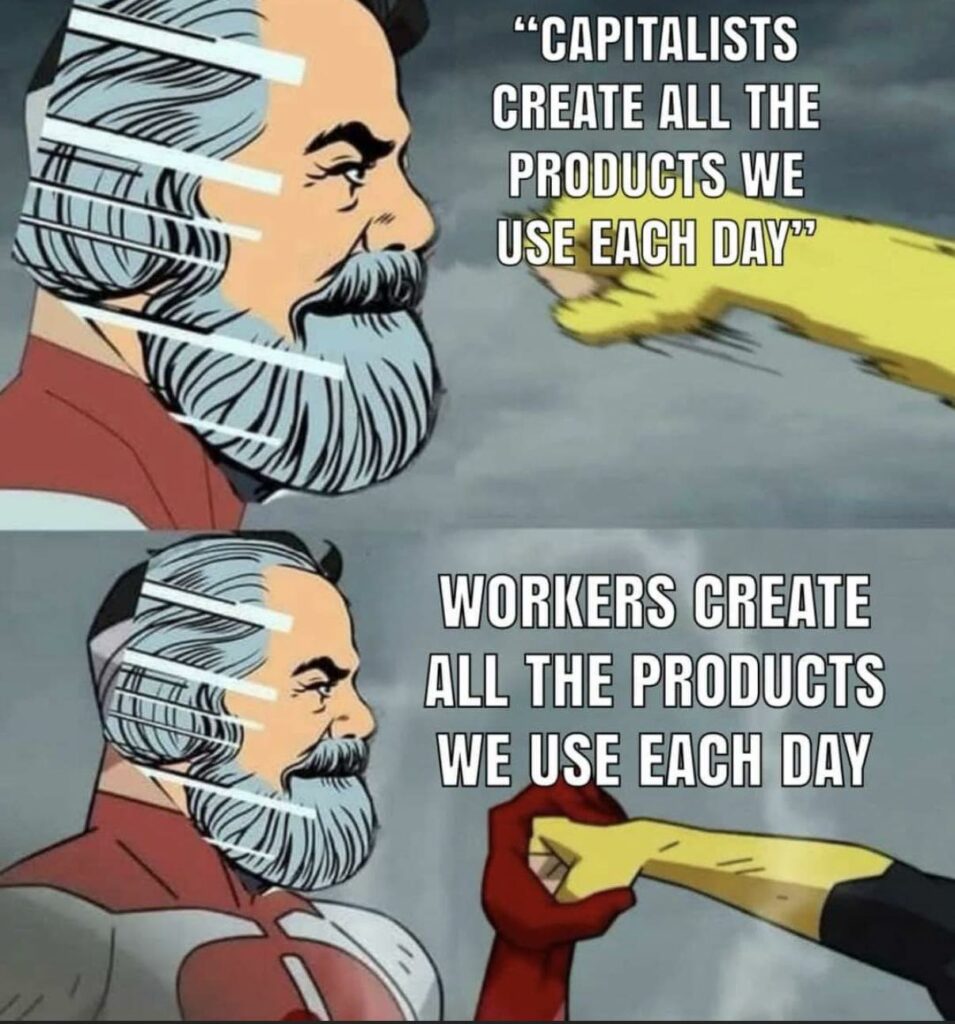
Modern Employment: Today, many people accept the necessity of renting their labour to survive, a concept that was once seen as wage slavery.
We need to make this obvious that people challenging the legitimacy of authority leads to social struggles, revolutions, and sometimes significant change. Anarchists take this challenge seriously and push questioning the illegitimacy of authority through active resistance and the promotion of #DIY self-governing structures. Understanding, this path and philosophy has profound implications for how we build and work in technology and shapes our current #openweb reboot.
Toxic positivity is one of the powerful #blocking forces in #mainstreaming culture. It shows up everywhere – in career advice, life choices, and the relentless pressure to follow paths deemed acceptable by social norms. The cheerful insistence that everything works out for those who try hard enough isn’t kindness, it’s a way of silencing legitimate frustration and blocking any real path to change and challenge.
The Myth of the Temporarily Embarrassed Billionaire
The idea that anyone can become wealthy through sheer effort is especially dogmatic in the USA, but it spreads far wider, it pushes that economic success is a product of individual will, erasing systemic inequality, inherited advantage, and the enormous role of luck. The cruel trick is that it keeps people striving toward a summit only a tiny, already-privileged minority will ever reach, and when they don’t make it, they’re encouraged to blame themselves rather than the system. Frustration and disillusionment are the predictable results.
The Commodification of Purpose
In the era of the #deathcult, meaning itself gets a price tag. Personal fulfilment gets equated with career achievement and material wealth, and anything that doesn’t generate profit gets dismissed as a hobby, a nice distraction from the serious business of earning. This squeezes out human purpose and pushes people toward work that serves capital rather than community. The result? A widespread, low-level misery that mainstream culture keeps insisting you should be grateful for.
The American Dream and the Meritocracy Lie
The belief that hard work and intelligence reliably produce success isn’t just wrong, it’s actively harmful. When the myth of meritocracy is internalised, people who don’t achieve financial success, the growing majority, are implicitly blamed for their own situation. Poverty becomes a character failing, alternative choices become shameful. This culture of blame keeps people locked into deadening careers and lives, afraid to step off a path that was never really leading anywhere worth going.
The Corporate Grind
The promise is simple: sacrifice now, reward later. The reality is monotony, deferred dreams, and a nagging sense that the reward keeps moving further away. Recognising the corporate grind for what it is – a system that extracts human energy in exchange for hollow promises – is the first step toward something better. Not every alternative is easy, but at least it’s honest.
The Alternative
Rejecting toxic positivity isn’t pessimism, it’s clarity. When you stop performing contentment you don’t feel, you start asking what actually matters, and building toward that instead. #DIY paths, community-rooted work, and meaning made rather than purchased: these aren’t naive retreats from reality. They’re more humanistic responses to a system that was never designed with human beings at its centre.
We are surrounded by piles of #techshit, so let’s try and understand why are we in such a mess. Imagine buying a new car to find out that you can’t replace the tires when they wear out. Instead, you’re forced to pay an exorbitant amount to get them fixed at an authorized repair shop. Sounds ridiculous? Well, this scenario isn’t far from reality when it comes to tech products like smartphones, printers, or household appliances. This is the world of planned obsolescence.
Cartels and Monopoly:
Planned obsolescence isn’t a simply random occurrence; it’s a planned strategy employed by tech companies to keep us perpetually consuming, a story as old as #capitalism itself to maximize profits at any cost.
Why Things Break More Often?
Have you ever wondered why your new printer is dirt cheap, but the ink cartridges cost a fortune? Or why your smartphone seems to slow down just before the latest model is released? It’s all part of a scheme to make you buy more frequently. Planned obsolescence ensures that products break down faster, become obsolete quicker, and push us into a cycle, lifestyle of constant consumption.
Strategies for Reducing Product Lifespan:
Repair locking, software limitations, and compromised durability are tactics used to ensure that our gadgets don’t last as long as they should. Ever noticed those tricky screws in your smartphone that prevent easy repairs? Or the sudden software updates that render your device sluggish? It’s all part of this mess.
Environmental Impact and Political Consequences:
The consequences are deeper than personal consumer frustration, as this mess leads to overproduction, waste, and environmental degradation. The mountains of e-waste generated by discarded gadgets are an invisible example of the unsustainable path of our consumption habits. Moreover, planned obsolescence fuels imperialist domination and conflicts in poor but resource-rich regions.
Perceived Obsolescence:
It’s not just about making things break, it’s also about making perfectly usable items seem outdated. Fashion industries thrive on perceived obsolescence, constantly churning out new trends to keep people buying. This is what drives the never-ending cycle of consumption driven by manufactured insecurities.
What’s the Solution?
Reformism simply won’t cut it, repairing items yourself (#DIY) or pushing for right-to-repair legislation helps, but won’t touch the systemic issue. Fundamental social change is likely needed, for example socialism offers a real alternative where production is based on need, not profit.
Do you have a shovel?
In conclusion, we really need to compost #TechShit by challenging this planned obsolescence and pushing hard for systems that prioritizes sustainability, environmental and social benefit over profit. I talk a lot on this site, https://hamishcampbell.com
Looking at history is useful, building a different economic system in one country with hard opposition is a steep path to climb. We can learn a lot from the interesting mess left by past attempts.
Competition with the West: The #USSR’s framing itself as a direct competitor to American capitalism, rather than a unique system, led to perceptions of being outclassed in some areas. This competitive stance with vastly different starting points made the USSR seem inadequate in some respects.
Military Overspending: Excessive focus on military parity with the U.S. detracted from the USSR’s ability to improve civilian life and scientific progress. This allocation of resources, driven by historical security concerns and international threats, was necessary but ultimately detrimental.
Lack of Economic Diversity: Smaller socialist countries, and even some Soviet republics, had undiversified economies, relying heavily on single burocratic industries or resources. This lack of diversity made these nations vulnerable to economic instability and dependent on larger, dogmatic socialist allies.
Inadequate Light Industry: The focus on heavy industry over light industry led to shortages and lower quality in consumer goods. This affected the everyday satisfaction of citizens, due to the availability of personal and household items being limited.
Limited Democratic Participation: While socialist nations like the USSR had forms of proletarian democracy, there was still significant room for improvement in workplace democracy and political participation. The burocratic centralization and rubber-stamping within the system lead to ossification and hindered any real democratic engagement.
Restrictions on Cultural Expression: Over time, the USSR shifted from promoting local cultures to a subtle #russification process, causing cultural homogenization and dissatisfaction among non-Russian ethnic groups. Similar repressive policies existed in other socialist states like Albania.
Deportations: The forced relocation of ethnic groups during World War II was a severe and unnecessary measure. While intended to prevent collaboration with the enemy, these actions fermented long-term harm and discontent.
Purges: The purges in the USSR, aimed at eliminating a fifth column, were based on social paranoia and a flawed assessment, this led to widespread fear and instability. The failure to initially prevent the formation of such internal threats was a significant oversight.
Limitations of Planning: Early economic planning in the USSR was hampered by the lack of advanced computational tools, limiting the complexity and effectiveness of this planing. Despite the advent of computers, the potential of democratic #4opens planning systems was not realized.
Profit Reorientation: Transitioning enterprises to a profit-based system under Khrushchev led to a shift in priorities that confused socialist principles. This move fostered a capitalist mindset and contributed to the growing inefficiencies and corruption.
Ossification of Party Leadership: The “power politics” of the ageing leadership within the Soviet government stifled innovation and responsiveness. More horizontals, younger, more dynamic paths were needed to maintain the vitality and adaptability of this socialist experiment.
The Comintern: The centralized and bureaucratised coordination of international socialist movements by the Comintern had its drawbacks, such as imposing strategies that were not suitable for all member nations. A more horizontal and flexible approach could have mitigated these issues.
Over-Bureaucratization: Bureaucracy and ossification within socialist states led to inefficiencies and resistance to change. Healthy grassroots #DIY culture could have streamlined administrative structures and reducing redundant positions that would have improved governance and responsiveness.
Sovietization of Socialist Experience: The replication of burocratic Soviet methods in other socialist countries led to inappropriate policies and practices. Each nation needed to critically assess and adapt strategies to their unique contexts.
This historical vertical path has much to tell us if we are interested in taking a native horizontal path. Let’s try not to simply repeat this history, “don’t be a prat” comes to mind on taking this path.
None of this is news, what matters is what we do with it, the same fault line:
vertical vs horizontal
control vs trust
closure vs openness
bureaucracy vs serendipity
representation vs participation
This past mess wasn’t “too much socialism.” It was too much centralization, too little process, and not enough openness. Which brings us to the path out, the lesson isn’t “don’t try.” The lesson is, don’t repeat vertical solutions to horizontal problems.
The way forward is not one-country revolutions, grand blueprints, or any ideological purity. It’s native, federated, plural experimentation, linked together loosely and transparently. This is where the #OMN, #4opens, and the #openweb matters now, we’re not facing a simple choice between capitalism and socialism. We’re facing systemic collapse accelerated by the #deathcult logic of extraction and control. Repeating 20th-century vertical models won’t save us, nor will neoliberal “innovation.” So the only viable “common sense” path is fascism, it would be good not to repeat this history on the right or the left.
Many small systems, not one monolith, local economies, media, governance, federated, not unified. Economic diversity by design, mixed models, resilient local production, no single points of failure.
What might work is rebuilding horizontal systems of trust, production, and meaning – slowly, unevenly, locally – and federating them. And that’s why the old mistakes matter even more. The goal isn’t perfection, it’s not hero leaders, it’s not clean solutions. It’s not being a prat by default, doing the same thing again.
The mess we build when public’s attention is being deliberately diverted by those in power. They want us to focus on national borders and other divisive issues, preventing us from addressing the real crisis #climatechange. This distraction tactic is designed to benefit the #nastyfew who continue to profit from the destruction of our planet.
As we approach, another election, the insidious #deathcult ideologies offered by the main political parties have gutted life for the majority, while vile conmen exploit our ignorance and anger, distracting us with racism and hate. To hide the underlying economic warfare waged against us by predatory capitalism.
We are at the most perilous point in human history. Future generations, if they survive the coming decades, will look back and think us insane for not having climate scientists and progressive agenda leading our countries. Instead, we allow fossil fuel agendas to dictate our policies.
Figures like Farage are human smoke bombs, generating clouds of xenophobia and culture wars to hide the economic exploitation pushed by the capital that funds their campaigns. Farage’s vision of a future is filled with labour shortages, crumbling public services, and deepened social divisions.
The fight against climate change is fraught with challenges, from powerful economic interests to political distractions. However, the voices of activists, scientists, and concerned people highlight the urgent need for action.
By pushing #KISS core issues and building grassroots #DIY alternatives as seeds to prioritize the planet, we can try to mitigate/weather the worst impacts of this growing global crisis.
Changing the European Union (#EU) to be more competent and progressive on social and tech issues requires concerted effort and engagement from all the stakeholders, including activists, citizens, civil society organizations (#NGO), policymakers, and Eurocrats. I outline some #fluffy strategies for driving change within the EU:
Engagement and Advocacy: Citizens and civil society organizations can engage with EU institutions through advocacy efforts, lobbying, and participation in public consultations. By pushing concerns, proposing solutions, and advocating for progressive policies, grassroots movements can exert pressure on policymakers to prioritize social and tech issues.
Policy Innovation: Grassroots and “organic” experts in the fields of social and technology policy can develop and promote “innovative “native” policy proposals that address emerging challenges and needed change. This includes regulations that protect the #4opens paths, promote community, and foster #KISS technological innovation reasonably.
Transparency and Accountability: Promoting transparency and accountability within EU institutions to ensuring that decision-making processes are open, inclusive, and accountable to the people. This involves pushing for #4opens in policymaking, access to information, and mechanisms for holding people and policymakers accountable for their actions.
Capacity Building: Investing in capacity building initiatives enhances the knowledge and expertise of policymakers, civil servants, and “grassroots” stakeholders involved in shaping EU policies. This includes shifting funding, training, resources, and support to enable all stakeholders, focusing on the grassroots, to effectively engage with complex social and tech issues and develop evidence-based policy solutions.
Coalition Building: Building coalitions and alliances among diverse spiky and fluffy stakeholders amplify voices and increase collective influence on EU. By forging partnerships across wide sectors, groups and organizations leverage their collective strengths and resources to drive the needed systemic change.
Public Awareness and Education: Raising people’s awareness and educating citizens about social and #FOSS and #dotcons tech issues is essential for building progressive policies and initiatives. This includes conducting #DIY public campaigns, organizing #4opens educational events, and leveraging grassroots media and networks to inform and mobilize the people around key issues.
Participatory Governance: Promoting participatory governance within the EU enhances peoples engagement and democratic decision-making. This includes establishing networks like the #OGB for public participation, citizen assemblies, and deliberative processes for people to contribute to policy development and decision-making.
International Collaboration: Collaborating with international partners, organizations, and networks to amplify efforts to drive change within the EU. By sharing “native” practices, knowledge, and coordinating advocacy efforts at the international level, stakeholders strengthen their collective impact and influence the needed global policy agendas.
Overall, changing the EU to be more competent and progressive on social and tech issues requires a grassroots approach that involves activism, engagement, advocacy, policy innovation, transparency, capacity building, coalition building, public awareness, participatory governance, and international collaboration. By working together in active fluffy/spiky debate across sectors and borders, stakeholders can contribute to shaping the change and challenge needed to build an inclusive, equitable, and sustainable future within the EU and wider world in the era of #climatechaos
From a grassroots #DIY tech perspective, most of our #openweb#fashionistas are part of the problem, not because they have much real-world impact – they don’t – but because they dominate the conversation and soak up the space needed for practical paths and projects. We need less #techshit and #techchurn, and more tools that communities use. The #4opens is a simple way to compost the noise and focus on what matters: building trust-based, working infrastructure.
A useful step for this is that words shape how we think, that if we can’t share, common meanings, we end up talking past each other, as ideology sits underneath all thinking, the dominant ideology becomes invisible as “common sense”, while alternatives are dismissed as unrealistic, extreme, or fringe. That’s how #mainstreaming works – it hides its own assumptions while demanding everyone else justify theirs.
If we want change, our job isn’t simply to oppose the mainstream, it’s to make better ideas become the new common sense. That’s why the current centrist agenda is such a dead end. It created many of the crises we’re now living through, yet it continues to defend the same assumptions that produced them. Pity won’t fix this, and hate only deepens the divide. We need practical paths that help people step outside this “common sense” trap.
This is where the #4opens comes in, it’s a simple framework that helps us compost the noise and focus on what matters: projects with open data, open source, open standards and – most importantly – open process. Together these build trust, which is the real foundation of any commons. The goal isn’t to win arguments, it’s to create working alternatives that people can use, improve and govern together. That’s how ideas stop being fringe and start becoming common sense.
The term #openweb describes a social/tech ecosystem for the internet rooted in decentralization, interoperability, and community-driven values. It embodies the #4opens – open data, open source, open standards, and open process. This stands in contrast to the #closedweb of the #dotcons, whose platforms are centralized and proprietary, and the broader #mainstreaming of the internet, which has a strong tendency to replicate closed, corporate models. The #openweb offers a fundamentally different vision for the future, both for the web and the society it shapes.
In this landscape, the #Fediverse is an example of decentralized networking. Built on the protocol #ActivityPub, it enables people and communities across different platforms to interact seamlessly. Codebases like #Mastodon, #PeerTube, and #Pixelfed serve as alternatives to corporate platforms, Twitter, YouTube, and Instagram, offering a more ethical, people-centric path for people to walk.
For more technical or geeky conversations, the term #web1.5 is useful. It acts as a buffer against the confusion and hype of #web3 and the #encryptionist obsession with blockchain-driven solutions that miss the social dimension.
When communicating with broader or more mainstream people, talking about the Fediverse can be tricky. In many cases, simply saying “Mastodon” is enough. As the most recognizable platform in the Fediverse, it serves as a useful gateway for those unfamiliar with decentralized technologies, yet curious to explore alternatives to Big Tech.
Ultimately, terminology should match context and audience. Whether you’re deep in conversation with fellow geeks or introducing someone new to decentralized spaces, choosing the right term can make all the difference in clarity and accessibility.
Of course, tribalism within these communities can sometimes make things harder than necessary. A gentle reminder applies here: don’t be a prat. Shared understanding matters more than gatekeeping.
The #fediverse, promises decentralized social networking and democratic governance, stands as a light of hope for a native #openweb. However, as it navigates the terrain of politics, technology, and human behaviour, it faces challenges that threaten to undermine its #4opens civic potential. In this post, we delve into these challenges and explore potential pathways to realize the promise of the #fediverse.
At the heart of the fediverse lies the tension between its potential benefits and the risks of subversion by commercial interests and structural dysfunction. Commercial capture, driven by the allure of proprietary features and enhanced user experiences, poses a threat to the “open and decentralized nature of the fediverse native culture”. The current shift from distributed funding models to centralized and #NGO ones exacerbates this challenge, leading to a concentration of power and influence in the hands of a few people and entities. To counter this trend, developers, producers, institutions, and users can collectively work to uphold the #4opens principles of interoperability and openness.
Structural dysfunction, characterized by a lack of native governance approaches and a reliance on #DIY moderators and self-funded instances, poses another challenge. Without a “native” structure for governance, the fediverse risks succumbing to governance failures and reputational assaults. To address these issues, there is a pressing need to develop democratic governance structures (like the #OGB) that empower people and ensure accountability and transparency at every level of decision-making.
The fediverse is more than just a technical system; it is also a political structure. As such, it requires a nuanced understanding of the socio-political dynamics that shape its development and governance. Techno-Romanticism, which elevates simplistic views of technological progress and overlooks the labour and networks that underpin it, poses a threat to the fediverse’s sustainability. By fostering a culture of critical engagement and social action, we can mitigate this, to ensure that the Fediverse remains a space for civic discourse and collective action.
In summing up, nurturing the potential of the Fediverse requires a multifaceted approach that transcends technical considerations and delves deep into the socio-political paths. By addressing issues of commercial capture, governance dysfunction, and techno-Romanticism, we pave the way for a native inclusive, democratic, and sustainable Fediverse as an #openweb native network.
The story around universal #SSL has been presents as a purely technical and inevitable improvement, make everything encrypted and the problem is solved. But technology is not separate from the social systems around it. SSL/TLS encryption improves security, the question here is not whether encryption is useful – it clearly is. The question is what happens when one technical approach is treated as a universal requirement, and what that tells us about the changing culture of the web.
The distinction matters because the original #openweb was built around accessibility, decentralization, linking, experimentation and the ability of ordinary people and communities to publish their own material. The #closedweb, by contrast, concentrates infrastructure, ownership and control in #dotcons platforms and technical institutions. From this view, the universalisation of SSL raises an interesting #openweb question – when does a useful security technology become part of the centralizing infrastructure?
This is where the #geekproblem enters, not as an argument against technical expertise, technical knowledge is essential. The problem comes when technical solutions are treated as if they exist outside social context – when a technically elegant answer becomes more important than accessibility, participation, resilience or the paths of ordinary people.
Universal SSL becomes an example of this thinking. For a technically confident organization, obtaining and maintaining certificates may be straightforward. For a small community project, #DIY server operator or someone trying to put a simple service onto the web, the accumulated requirements becomes another layer of technical knowledge, infrastructure and administration. Each individual requirement may appear reasonable, the cumulative effect can still be exclusionary.
There is also a deeper infrastructure question – security versus centralization. Modern web encryption depends on certificate authorities and a chain of trust. That creates powerful intermediaries between the person running a website and the person visiting it. Let’s Encrypt is an important part of this ecosystem and has made HTTPS certificates easier and cheaper to obtain. That is a genuine achievement.
But concentration still deserves scrutiny. If large parts of the web depend on a relatively small number of organizations and technical systems for establishing trust, then those systems become important points of power and potential failure. The isse is whether security has to mean centralization, a very #openweb question – that the more interesting issue is not SSL itself but the cultural shift – from voluntary tool to universal rule “This is a useful security tool.” to “Everything must work this way.”
Once a technical standard becomes mandatory through browsers, hosting providers, search engines, platforms and infrastructure, the choice is no longer being made by the person running the website. The web becomes easier for some people and harder for others, large #dotcons platforms absorb the complexity were the small community projects have to learn another system.
The corporate developer gets another abstraction layer, the DIY operator gets another thing that can break. This is how the #openweb slowly become a #closedweb without anyone explicitly deciding to close it. Nobody has to say “Ordinary people shouldn’t run websites.” instead, we simply keep adding requirements until doing so becomes difficult.
This is the problem for the fear-based path to security, were security is presented through fear: Hackers – Attack – .Surveillance – Identity theft – Compromise – Catastrophe. Yes, some of those threats are real, but fear paths produce a particular response: more control, more centralization and more dependence on trusted authorities. That is a conservative path to security, were the assumption becomes that safety comes from putting more infrastructure between ordinary people and the systems they use.
The #openweb asks a different question – can we create security through distributed trust, understandable systems and resilient communities rather than simply adding more layers of authority? That doesn’t mean abandoning encryption, it means refusing to treat encryption as the whole answer. A healthy #openweb needs encryption, it needs transparency, it needs understandable infrastructure with multiple paths to trust. It needs decentralization, it needs people who can actually participate – this is where the #4opens idea of trust becomes useful.
The #openweb needs systems that can fail locally without taking huge parts of the web down with them. Secure, open, understandable and resilient infrastructure that ordinary people and communities can use. We need to be able to ask – Who controls the infrastructure? Who gets to participate? Who gets excluded? Where are the points of failure? Who decides what counts as trusted? Can communities maintain their own systems? Can ordinary people understand enough of the infrastructure to control it? And what happens when the trusted intermediary fails?
These are not only technical questions, they are questions about power. The #openweb should not become a place where security means handing more control to increasingly centralized technical institutions. We need a different balance: encryption where it is useful, open standards wherever possible, decentralized infrastructure, transparent processes and multiple forms of community trust.
The criticism is of the assumption that one technical solution should become universal without considering the social and infrastructural consequences. Security should protect the #openweb, not become another mechanism for closing it down. That is the #4opens challenge and why the debate about universal #SSL is ultimately not just about SSL, it is about what kind of web we are building.
This is true. With the #OMN we are building tools for use, not for distraction, shouting into the void is not the project. Community, talking to community, is the core mission. The “personal” is not a part of our core project.
This is alien to #mainstreaming common sense in social tech. Politics as human not as other, we need the tools and the use to build the everyday of our lives #DIY
How to actually communicate this to the #mainstreaming is the challenge that is very hard to bridge. This is actually impossible, so agen our plan is to build it and communicate by doing, not by just talking.
We are looking for a crew to build and do,” talking” is the tool to create this crew #DIY it’s not the tool itself for change and challenge.
Funding Application: Building the Open Media Network
Project Overview: The Open Media Network (#OMN) is an innovative project aiming to construct a trust-based, human-moderated, and decentralized database shared across multiple peers, encompassing both peer-to-peer (p2p) and server-based architecture. OMN is centred around the #4opens principles, emphasizing openness, transparency, collaboration, and decentralized control. The project’s primary focus in using technology to empower human networks and foster community-driven content curation and dissemination.
Key Functions: OMN boasts five primary functions:
Publish: Users can easily publish various types of content, including text, images, and links, to a stream of objects.
Subscribe: Users have the ability to subscribe to streams of objects from people, organizations, pages, groups, hashtags, and more, enabling custom content flows.
Moderate: The platform integrates moderation tools from the #Fediverse, allowing users to express their preferences (e.g., like/dislike) on streams or objects, as well as provide comments.
Rollback: Users, admins can remove untrusted historical content from their flow or instance database by publishing flow/source/tag, ensuring the integrity of the content.
Edit: Users have the flexibility to edit the metadata of objects and streams across various sites, instances, or apps where they have login credentials.
Project Scope: The back-end infrastructure of OMN serves as the foundation for constructing a #DIY, trust-based, grassroots semantic web. The technology, affectionately referred to as the #WitchesCauldron, is designed to facilitate decentralized publishing, content aggregation, curation, and distribution while prioritizing user trust and community building. The front-end applications of OMN are diverse and adaptable, ranging from regional/city/subject-based #indymedia sites to distributed archiving projects like #makeinghistory.
Funding Needs: To realize the vision of the Open Media Network, we require funding support to cover essential expenses such as:
Development: Hiring skilled developers to build and refine the back-end infrastructure and associated tools, ensuring robustness, stability, and interoperability.
Moderation Tools: Integrating advanced moderation tools from the Fediverse to enhance user experience and promote healthy content flows.
Community Engagement: Facilitating community outreach and engagement efforts to onboard users, gather feedback, and foster a vibrant and inclusive user community.
Infrastructure: Investing in server infrastructure and maintenance to support the decentralized nature of the OMN platform and ensure reliable performance as the project rolls out.
Documentation and Training: Creating comprehensive documentation and providing training resources to empower people to effectively navigate and utilize the OMN network.
Impact: By supporting the Open Media Network, funders will contribute to the development of a groundbreaking platform that empowers people to take control of their lives and digital experiences, participate in meaningful content creation and curation, and build vibrant and resilient grassroots communities. OMN aims to democratize access to information and facilitate decentralized communication, fostering a more #4opens, transparent, and equitable digital ecosystem.
Conclusion: The Open Media Network represents a real opportunity to revolutionize content distribution and community engagement in the digital age. With your support, we can bring this visionary project to life, empowering people and communities to reclaim power over their online experiences and build a more inclusive, democratic, and sustainable people based future. Join us in building the future of media and communication with the Open Media Network.
Thank you for considering our funding application.