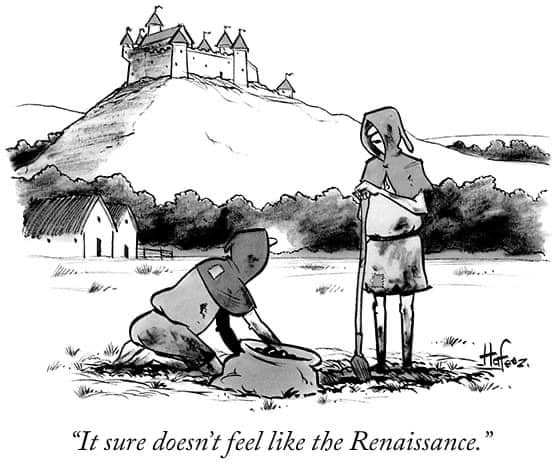
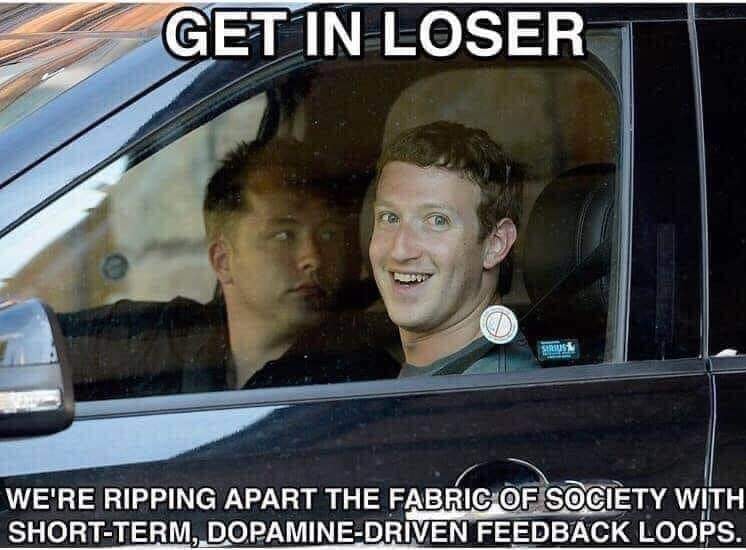
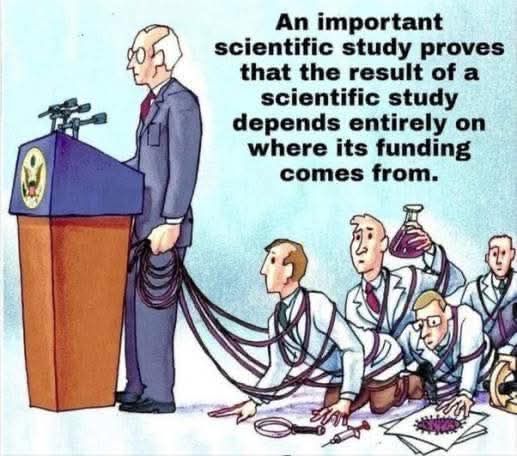
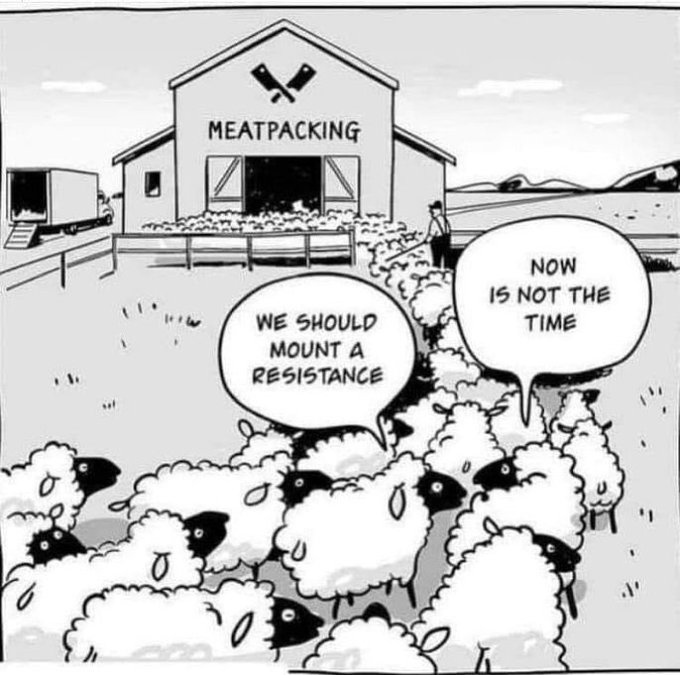
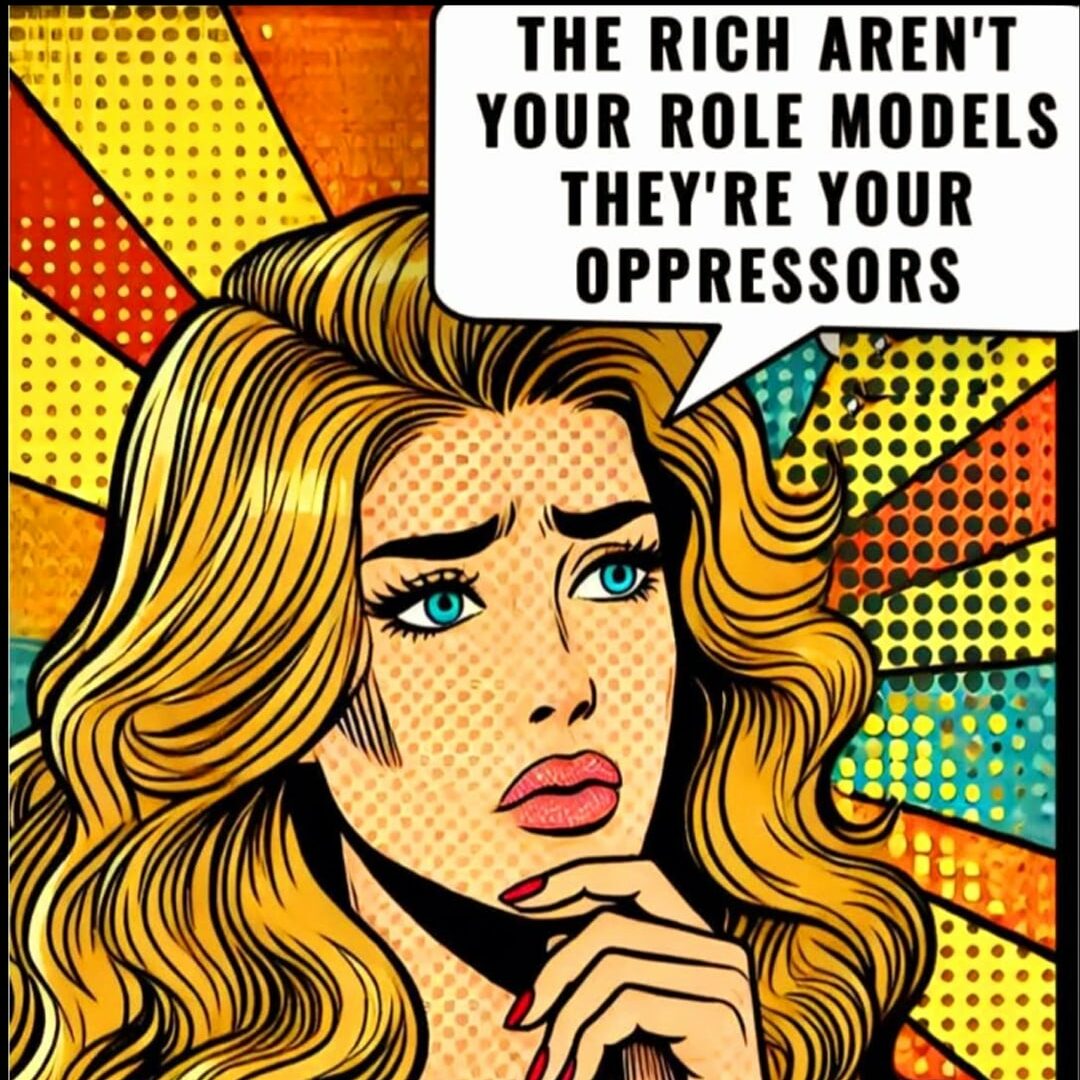
Techno #feudalism is a description of the power that large #dotcons technology platforms now have over the economy and society. The comparison is with medieval feudalism. Under feudalism, land was the critical means of production and ordinary people worked land they did not own. Lords controlled access to it and extracted rents or surplus from those who depended on it.
This is relevant today were the critical bottleneck is increasingly digital capital: platforms, servers, algorithms, data, cloud infrastructure, app stores and enormous networked captured user bases. A few corporations, run by an increasingly visible #nastyfew control this infrastructure. Communities, businesses, workers and creators are dependent on platforms they do not control.
The current shift is from ownership to access, instead of owning software, music, games or other digital tools, people rent access through subscriptions and platforms. This means wealth and control accumulate with the owners of the infrastructure rather than with the people using it.
The #closedweb platform economy creates rent extraction. App stores, marketplaces, hosting platforms and gig-economy companies take a percentage from the economic activity that passes through them. Network effects make dominant platforms increasingly difficult to challenge, as we are seeing, allowing those rents to rise.
#AI is we get past the narrow use case of #LLMs could intensify this dynamic by replacing human labour with capital-intensive systems. If a few companies own the #AI infrastructure, the bargaining power of labour will fall while the power of capital owners, the #nastyfew takes over the levers of power over the #mainstreaming.
The political dimension – #dotcons don’t merely control economic infrastructure; their algorithms influence what billions of people see, discuss, believe and buy. This gives the #nastyfew platform owners an extraordinary ability to shape public discourse.
But yes, you would be right to point out this is just the normal monopoly capitalism for now, these companies still invest enormous amounts in research, infrastructure and innovation. They operate within markets and people are not legally bound to them in the way medieval serfs were bound to their lords. The system can also be understood as an intensification of monopoly capitalism and rent extraction.
For the #OMN, the strongest point is that the problem isn’t technology itself, it is concentrated ownership and control of the technological infrastructure. A simple stepping to #4opens network changes the relationship, instead of everyone being tenants on somebody else’s platform, we build infrastructure around open standards, federation, interoperability, shared ownership, participation and commons-based production.
That makes the #openweb and projects such as the #OMN more than technical alternatives. They become part of the struggle over whether the digital world develops into a feudalistic landscape of platform landlords and digital tenants, or remains a genuinely distributed native #openweb commons.
In that sense, #4opens is an economic and political argument as much as a technical one: keep the infrastructure open enough that nobody can permanently own the flows through which everyone else has to live and communicate.
We need to stop talking about “climate change” as though we are discussing a slightly inconvenient change in the weather. Climate change is too soft, too neutral. Climate change makes it sound as though something simply happened to us. It didn’t, we pushed this mess, we built an economic system that treats the living world as raw material, turns everything into property, pushes everything through markets and then calls the resulting destruction “growth”. The next twenty years will be the “bill” we pay for this short-sighted greed. And the really dangerous part is that we are still trying to solve the problem using the same thinking that created it.
Welcome to #climatechaos, not one dramatic event that starts on a particular day, it is chronic, it accumulates, compounds. It moves through food systems, water systems, ecosystems, economies and communities. This makes it politically difficult because there is no single moment when everyone can point at the disaster and say, there it is. Instead, the extremes get worse, harvest fails, rivers floods, insurance disappears. The food price rises, drought lasts longer and finally the ecosystem quietly collapses. But one thing that is becoming common sense is we cannot carry on pretending this is normal.
A small step is that the language matters “Global warming” sounds almost pleasant, “Climate change” sounds neutral. Climate breakdown tells us something more important, there is a direction of travel, continuing accelerating the conditions that make human and ecological life less stable. That is what the next twenty years are, yes science based global averages are useful, but the things communities actually experience are extremes – heat, flooding, drought, food insecurity and other disruptions.
Living through the consequences, will show that today’s common sense, the #neoliberal answer to #climatechaos is wonderfully convenient for the #nastyfew – you are the problem, you have the wrong car, eat the wrong food, you use too much energy and bough the wrong thing. You didn’t recycle enough, and feel guilty.
This is the #deathcult at work, the individual is made responsible for a systemic crisis while the systems generating the crisis remain untouched. The absurdity is the dumping of climate responsibility onto individuals while corporations continue selling products that cause global warming. This mess isn’t accidental – #stupidindividualism is politically useful as isolated individuals have very little power. Where communities, workers, cooperatives, movements and collective action do have power.
By now it should become a little obvious that we don’t need greener consumption, what we do need a different relationship with the living world, the current uncomfortable path. Let’s make this plan – #Climatechaos isn’t an energy problem, it isn’t just a transport problem, it isn’t just a technology problem, it is a problem with how we understand ourselves. We have built a culture around the idea that everything exists to be owned, land, water, animals, forests, minerals, knowledge, attention. Even our relationships, on the #dotcons, become a commodity.
Everything becomes something that can be extracted, then we are surprised when the living systems collapse. To start to compost this mess the next twenty years need to be more about moving from ownership to participation, from extraction to stewardship. About better balancing competition and cooperation to move from isolated individuals to resilient communities. In an economic sense from commodities to commons. And yes, it is a much bigger political project than buying an electric car.
Food is going to expose the current blinded stupidity, food is where the abstraction ends. You can argue about climate models forever, but when food becomes unreliable and expensive, everyone understands. The climate discussion points to the vulnerability of agricultural systems, including dependence on a few major crops due to growing pressure on farming from heat, drought and extreme weather.
The response cannot simply be another technological monoculture. We need real diversity, more resilient crops, local knowledge, healthy soils to grow this biodiversity. We need shorter and more resilient supply chains, community food systems. And probably a much more serious conversation about what we choose to eat and how much land and sea we devote to producing it because agriculture isn’t happening outside nature.
The next twenty years will remind us that nature is not decoration, currently we treat biodiversity as something nice to have after the economy has been sorted out. But ecosystems are part of the economy, wetlands manage water, salt marshes protect coasts, healthy soils support food, forests regulate water and store carbon. Biodiversity provides resilience, this is not romantic environmentalism, it is infrastructure.
And then comes the techno-fix – whenever capitalism encounters a problem caused by technology, extraction and industrial growth, it offers us more technology. So next we get geoengineering, perhaps we can reflect sunlight, perhaps we can manipulate the atmosphere, perhaps we can capture carbon, perhaps artificial intelligence will optimise everything. Or perhaps some billionaire will save the planet. This is the reheated #mainstreaming#geekproblem version of climate politics, the problem is that the blinded underlying assumption, the system is fine, we just need a better machine.
But, unspoken is more mess we then need to compost – Who gets to control the thermostat? Who decides? Who is accountable? Who gets protected? Who gets sacrificed? These are not engineering questions, they are political questions, the next twenty years will be a democratic test of where the climate crisis becomes bigger than climate policy. We are going to have to make real choices about where should people live, what happens to communities that cannot be protected? Who pays? Who decides? What technologies are acceptable? And from a deep green prospective what land is for humans? What land is for the rest of life?
There are no purely technical answers, science can tell us what is happening, it tells us what happens if emissions continue. But science cannot decide what kind of society we want, that is politics, at best it is democracy. And at worst it is where the #mainstreaming agenda becomes dangerous as #climatechaos doesn’t care about our current political comfort zones. To find a path through this mess, we have created, we need resilience, not reassurance
Doom on its own is useless, but pretending everything will be fine is worse, people need real information about what is happening? What are the risks? What can we do? What can our community do to prepare, to organise? This is why #KISS communication needs to become local and participatory.
The example of community-based #OMN like projects matter – people come together, learn what is happening and then discuss what they can do locally. The process itself builds resilience, this should be obvious. A community is more resilient when it knows how to communicate, when it can share information. More resilient when it trusts people, when it has local knowledge and more resilient when it has shared infrastructure to remember what happened last time.
That is why media matters – the rebooted #openweb becomes climate infrastructure – where the #climatecrisis connects directly to the #OMN. We need an information infrastructure that belongs to communities rather than corporations, so communities can continue to document what happens to them. Because when the next flood comes, the official report six months later isn’t enough. The native #openweb can be part of the infrastructure of climate resilience that is if we stop treating it as another marketplace for attention.
The #OMN is native to this kind of future, it’s not a climate project in the narrow sense. But the underlying problem is the same – how do we build systems that support collective intelligence rather than extracting it? How do we allow people to publish, share, moderate, correct and preserve information without handing control to a handful of #closedweb platforms?
How do we create the trust we need without building more centralised authority? How do we make community knowledge persistent? How do we build infrastructure that can survive the failures of individualist #dotcons platforms? These questions become much more important as #climatechaos increases. Because resilience requires distributed systems, but not just technically distributed systems, we also need socially distributed systems.
The mainstream will always tell us – now is not the time, too radical, too expensive, too difficult, too political for people to accept, or the market isn’t ready, the technology isn’t ready. We have had 20 years of stalling change and challenge: we need more evidence, consultation or another #fashionista report. The #KISS answer is simple, NO, we have had decades, the next twenty years we either build resilience or discover how truly fragile we really are.
On a thin but needed positive note, the #climatecrisis is already producing the conditions for change, the question is whether that change is democratic or authoritarian. And in a narrow sense of our #openweb culture, whether it breaks the monopoly of the #geekproblem or gives it more power. It’s a simple choice of do we compost the old system or let it push us aside.
To not simply be pushed aside we need political movements capable of defending life in its widest sense, yes, the next twenty years will not be comfortable. There will be disruption, loss, conflict and there will be failures. But the future is not simply something that happens to us, it is something we organise. So please stop asking “How do I, personally, save the planet?” and ask “What can we build together that makes a different future possible?” in short get off your knees from worshipping the #deathcult, and stop waiting for the #mainstreaming agenda to save us.
In internet culture, stop handing every problem to the #geekproblem.
Light green environmentalism stop turning climate action into consumer guilt.
In economics stop treating nature as an externality.
In fashion, stop treating people as consumers.
To compost current mainstreaming mess, we need to start treating people as participants to rebuild the commons and infrastructure of trust. In short, we need people to #makinghistory, by getting the bloody shovels out. The old system is already compost, the question is what we grow from it.
For years, climate breakdown was treated as distant, a problem for activists, scientists, future generations or places somewhere else. That blinded view is now harder to sustain. Heat, fires, floods, crop failures, infrastructure disruption, rising insurance costs and the growing difficulty of simply keeping homes and communities safe are making climate disruption part of our everyday life.
As we are talking about tech on this site – the important question for the #OMN is therefore not only how do we stop climate change? It is also – how do we build the social infrastructure needed to live through the disruption that is already here? This is where the climate conversation needs to become broader, and treat adaptation not surrendering, due to the fear that talking about adaptation means giving up on mitigation, it doesn’t.
We still need fundamental social change to reduce emissions, change energy systems and challenge the economic structures pushing us to ecological destruction. But we also need to mediate the very real mess and disruption is already here, we need to be honest about that. A community facing repeated flooding needs flood planning, when homes become dangerously hot, people need cooling, insulation and better housing. When extreme weather repeatedly disrupts transport, energy or communications, communities need resilient alternatives, insurance companies withdraw from areas they consider too risky, it is basic that communities also need better ways of thinking about collective risk and resilience.
These are not future problems, they are now simply ordinary infrastructure questions. And this infrastructure is never only physical, we also need social infrastructure too. This is needed to grow climate resilience, information resilience, on this path we need native #openweb systems where communities can publish what is happening, preserve local knowledge, compare experiences, challenge bad information, coordinate responses and maintain collective memory. That is very different from the current model of social media, where information is filtered and controlled through commercial algorithms, engagement incentives and platform ownership.
The #climatecrisis is already difficult enough – we don’t need our communication systems making it harder. Thus, the climate crisis is also a media crisis: When a flood happens, what matters? People need to know where the water is. They need to know which roads are closed, where vulnerable people are, which services are operating. They need to know what happened last time to know who they can trust.
And afterwards, someone needs to record what actually happened, this last part is particularly important. Without good local records, every disaster becomes an isolated event. Communities repeatedly rediscover the same problems because institutional memory disappears. This is one reason the #OMN#makinghistory matters, the idea is simple: communities should create living, collaborative records of what is happening around them. Not just journalism in the traditional sense, but a shared memory infrastructure. Stories, events, places, people, evidence, changes and responses connected over time to give communities something valuable during #climatechaos – memory.
You would be right we already have more information than ever, the problem is that information is fragmented into disconnected #closedweb platforms. One person posts on Facebook, someone else posts on X, another publishes a video on YouTube. A council puts an announcement somewhere else, a local activist keeps information on a personal website were a journalist publishes an article that disappears behind a paywall.
Then the flooding comes, and suddenly nobody has a reliable picture of what happened. This is the #datasoup problem. The answer isn’t simply more information, we need better ways of connecting information while keeping its provenance, context and history. This is why open standards matter – #RSS, #ActivityPub, open metadata, decentralised publishing, archives and interoperable tools are not just technical preferences, they are pieces of a social resilience infrastructure. The #4opens is a useful starting point: Open Data. Open Source. Open Standards. Open Process. These matter because climate resilience cannot depend entirely on proprietary systems controlled by a few companies.
We shouldn’t respond to the crisis by creating another centralised technological solution and declaring it the answer. This is not about building one perfect system, there is another lesson here – climate chaos is too complicated for that. Different communities have different needs, the important thing is that these systems connect and remain open. We already have a path for this – the #openweb is already a diverse ecosystem rather than another platform monopoly. This is why the #OMN approach is deliberately practical and pluralistic, we don’t need technological purity, we need useful tools that work together and remain in the commons.
Yes, finally the wider #mainstreaming is noticing the physical problem. Heatwaves are no longer exceptional, flooding is no longer unimaginable, insurance withdrawal will become a political issue. Food and energy security need to become part of everyday political discussion. The mainstream is beginning to understand the hard infrastructure problem, but the social infrastructure problem remains much less visible.
We need to build paths through this before we need them – The worst time to discover that your community has no communication infrastructure is during a disaster. The worst time to discover that nobody knows what happened during the previous flood is during the next flood. The worst time to discover that all your community information lives on somebody else’s platform is when that platform changes its access rules or goes away.
Resilience therefore means building before the emergency, but not another giant centralised project, more lots of small interconnected pieces. Open tools, local archives, community websites, federated publishing sharing metadata based on open standards. Then the social side is people who know how to maintain servers, know how to tell stories, how to moderate and systems that allow all those pieces to connect, as climate resilience is also social resilience.
The deeper point is that climate chaos exposes the weakness of the current #dotcons social model. A society organised around individual consumption, competition, private ownership and short-term profit is poorly equipped for long-term collective disruption. The response has to move in the opposite direction: balancing individualism towards community; from enclosure towards commons; from proprietary platforms towards open infrastructure; from disposable information towards collective memory and from centralised control towards distributed resilience.
Technology cannot solve #climatechaos, but the wrong technology can make it much worse, while the right kind of technology can help communities organise, remember, communicate and cooperate. That is the space we are interested in with the #OMN to build the open social infrastructure underneath society – infrastructure that can survive the platforms, the political fashions and hopefully some of the climate disruption coming our way.
The climate crisis is not only asking whether we can build stronger walls, better drains and cooler buildings, it is asking whether we can become better at being a society. That is where the #openweb has a role – you need a shovel #OMN
This summer, heat, fires, the soon to come winter floods and insurance withdrawals will make #climatechaos harder to treat as something happening somewhere else. For years, climate breakdown was framed as an activist issue, something discussed by environmental groups while mainstream politics carried on with business as usual. That is changing, people are experiencing the consequences: extreme heat, flooding, damaged homes, rising insurance costs, failing infrastructure and growing uncertainty about what the next few years will look like. The #climatecrisis is moving into everyday life, so how do we live through what is already locked in?
Once the consequences of a warmer world are being experienced everywhere, adaptation becomes an unavoidable path. That means practical changes will finally start to happen such as resilient building standards, flood planning, water management, food systems, energy resilience, heat protection and changes to where and how we build.
But there is a danger in treating adaptation as purely a technical problem, we might redesign buildings, strengthen flood defences, change planning regulations. We can develop better warning systems – but who controls these systems? Who decides what gets protected? Who gets information when something goes wrong? Who maintains the infrastructure? Who remembers what happened last time? And who gets left behind? These are social and political questions.
The missing infrastructure is where the #OMN native path becomes important. Surviving #climatechaos isn’t only about physical infrastructure, it is also about information infrastructure and community infrastructure. During crisis, people need reliable information to know what is happening locally, they need to know who needs help, to know which transport links are closed, where resources are available, what services are operating and what communities are doing. They need ways to communicate when normal paths fail.
And afterwards, they need a record of what happened, this is why the #openweb matters, a resilient society cannot depend entirely on #closedweb privately owned platforms whose responsibility is to the current #nastyfew shareholders and advertisers. It is basic that the #dotcons are not resilience infrastructure – Facebook, Google, X, TikTok and the other #dotcons distribute information, and misinformation very quickly, but speed isn’t the same thing as resilience.
These current #closedweb digital systems are designed around control, engagement, advertising, data extraction and platform addiction. They are dangerous to use when important information will disappear into algorithmic feeds. It should be becoming obverse that communities cannot keep being dependent on proprietary services, as accounts can be suspended, interfaces can change, companies can change their business models, services will disappear.
And the information itself is often difficult to preserve, connect or reuse outside these #closedweb platforms. That is a terrible foundation for a society increasingly dealing with environmental disruption. This is why the #OMN focuses on the #deathcult story, in part to highlight it isn’t simply a collection of bad corporations. The current mess is about the way of organising society around short-term extraction, profit before resilience, growth before sustainability, competition before cooperation. Private ownership comes before the commons, and immediate financial returns are prioritised over the ability of communities to survive any long-term disruption.
In this mess, climate adaptation within this risks becoming another market, those who can afford resilience buy it, those who can’t are left exposed. Insurance withdraws from risky areas, property values become tied to climate risk. Private companies decide which infrastructure is commercially viable, the result is adaptation as another form of inequality.
To compost this mess we need #KISS social adaptation too – The alternative isn’t to reject technology – It is to change what technology is for. The #4opens provide a useful starting point: Open Data – Open Source – Open Standards – Open Process. These principles make it easier for communities to share information, build on each other’s work and maintain infrastructure without being locked into one corporation. The #openweb gives us the technical culture for this, #Federation allows different communities to remain independent while still communicating. Open standards allow systems to interoperate. Open data allows information to remain useful beyond one platform. And open process allows communities to understand and participate in decisions affecting them.
There is another important piece: memory, when a flood happens, people document it. When a heatwave hits, people record what happened, when infrastructure fails, somebody usually knows why. But much of this grassroots knowledge disappears into #dotcons social-media feeds. A few years later, we start again from scratch. This is why #openweb projects such as #MakingHistory matter. We need living community archives that connect events, places, people, media and responses over time. The archive becomes part of resilience, knowing what happened last time helps communities prepare for the next time.
Moving beyond the current #NGO pointlessness – we need to grow projects like the OMN as shovels, to clear the #techshit mess to grow grassroots infrastructure for publishing, sharing, moderating and preserving information. But yes, the technology is only part of it, the deeper goal is to help communities build trusted information networks that are not dependent on the current #dotcons. A resilient media system should allow people to – publish locally – discover relevant information – share between communities – moderate collectively – preserve important records – correct mistakes – maintain metadata – and keep historical context. This becomes especially important when normal systems are under pressure as the #mainstreaming is only seeing half the problem. But yes, the mainstream conversation is beginning to understand climate adaptation matters, but adaptation cannot be reduced to flood barriers, new building codes or air-conditioning.
We also need to ask whether the social systems surrounding those technologies are resilient. Can communities cooperate? Can people trust the information they receive? Can knowledge move between organisations? Can local experience become shared knowledge? Can communities govern their own infrastructure? Can we preserve memory? These questions are still largely outside the mainstream climate conversation. They shouldn’t be, the next wave of #climatechaos will test not only our physical infrastructure but our social infrastructure. The challenge is therefore twofold – build the physical systems that help us survive the changing climate – build the open, collective information systems that help communities understand and organise that survival.
The first is increasingly #mainstreaming, the second is where the #openweb, #4opens, #OMN, #OGB and #MakingHistory have something important to contribute. We do need #KISS more resilient communities, and resilient communities need infrastructure they can actually trust and control.
Just because you feel attacked doesn’t mean someone is attacking you, sometimes that feeling is worth listening to, it may be telling you that something doesn’t fit with how you currently see the world. But a feeling is not a fact, this matters because much political discussion now begins and ends with personal reactions rather than examining the underlying structures.
Take the hashtag #stupidindividualism. Many people read it as, “You’re stupid because you’re an individual.” That isn’t what it means, the intended meaning is: The form of individualism promoted under capitalism makes us think and act in ways that become self-defeating.
The criticism is not of individuality, individuality is valuable. The criticism is of an ideology that teaches us to see every problem as personal and every solution as individual, even when the problems are obviously social, economic or ecological. This is what we mean by #stupidindividualism.
When every issue becomes “my opinion”, “my identity”, “my choice”, or “my feed”, we lose the ability to understand systems. We stop asking how institutions, technology, economics and culture shape our lives together. That isn’t stupidity as an individual trait, it’s a social condition.
The same misunderstanding appears whenever we talk about #mainstreaming or the #deathcult. When we say #mainstreaming thinking has become “insane”, I’m not saying that individual people are crazy. I’m saying that forty years of neoliberal common sense has normalised behaviours that are collectively destructive.
Endless economic growth on a finite planet, treating community as a market, replacing trust with metrics, replacing politics with branding and replacing human judgement with algorithms. These ideas have become “common sense”, yet they are driving us deeper into #climatechaos and reinforcing the #geekproblem, where technical fixes are repeatedly offered for problems that are fundamentally social.
The same pattern appears across the #Fediverse. Most people are acting in good faith, but many default to familiar #FOSS assumptions without asking deeper political questions. Most newcomers have little knowledge of the history of the #openweb, making it easier for corporate interests, NGOs and well-meaning developers to reshape the space according to the assumptions of the wider #closedweb.
Without governance that fits the culture (#OGB), fragmentation is inevitable. Without trust, federation becomes increasingly fragile – without memory, every generation repeats the same mistakes. Rebooting the #openweb isn’t primarily a technical challenge, it’s a social one. The first step is recognising that not every uncomfortable idea is a personal attack, sometimes discomfort is simply the beginning of thinking.
The internet didn’t become broken overnight, it drifted from being a network of communities into a marketplace dominated by platforms whose purpose is extracting value. This is the logic of #dotcons most of us invested our lives and community into. How did we get into this mess? The problem isn’t only bad companies, it’s that our digital lives depend entirely on proprietary #dotcons paths and software, commercial interests end up controlling our reality.
This is why #FOSS (Free and Open Source Software) matters. The “free” in #FOSS is about freedom, the freedom to use, study, modify and share the tools that shape our lives. Those freedoms create something much more important than software, they create #4opens social power. Open code means community accountability.
Instead of trusting #closedweb corporations, we can build “native” trust through transparency. That changes how communities work as closed platforms create consumers, open projects create participants. The community doesn’t just use the infrastructure, it becomes in part responsible for maintaining it. We can exit to a more #DIY path, were anyone can inspect, improve, challenge and adapt to disparate community needs.
This isn’t always the fastest path as open collaboration is often messy. Consensus takes time, criticism can be uncomfortable. But these are social strengths, not weaknesses. Diverse communities find problems earlier, reduce hidden bias and create paths and systems that are more resilient because they are shared.
The #OMN approach builds on this real world path and body of ideas. That technology can strengthen communities rather than replacing them, code can support human trust rather than algorithms deciding everything. Infrastructure should belong to the commons rather than becoming another private enclosure.
Today’s #closedweb social media platforms are digital landlords. Yes you may build a following, create value and invest years of work, but you’re still a tenant. The rules can change overnight, your reach can disappear, your community can be fragmented at the click of a button.
The #openweb offers another path were we have control of identity and content to connect through open protocols instead of closed silos. We need this more than ever to building communities that can survive the failure – or hostility – of any single platform.
We can’t keep repeating the same mess, this composting matters even more in the age of #AI. If the software, models and infrastructure are closed, then a handful of companies determine how knowledge is created, filtered and shared. If they are open, communities can inspect them, improve them and govern them together.
The future isn’t simply open source software, it’s open source society. That means investing back into the commons we depend on. Maintaining infrastructure, supporting contributors, building institutions that outlast individuals. Planting trees whose shade we may never sit under.
That’s what #OMN is about. Not simply writing better code, but helping build a better social fabric for the #openweb. Because freedom isn’t something technology gives us, it’s something communities build together.
The current common sense of #neoliberal worldview replaces trust with greed as the social motivator. The problem is that every successful society is built on trust. When you undermine trust, you build a #deathcult. Climate breakdown, inequality, social isolation and failing public institutions are not accidents – they’re the predictable outcomes.
When people recognise the problem, ask them what the solution is. Most will instinctively reach for the same neoliberal “common sense” that created the crisis. That’s the moment to gently point out that those ideas are part of the #deathcult, not a way out.
The alternative starts with rebuilding trust, commons and community, #FOSS needs to become a core to this.
Facts matter, technology matters, governance matters. But people rarely change because they read theory, a specification or a list of features. People change because of stories, this is why storytelling is central to the #OMN path. A story gives people somewhere to stand, it connects ideas to lived experience.
Instead of explaining the #4opens as an abstract framework, tell the story of a community escaping a #dotcons platform by building trust on the #openweb. Instead of arguing about governance, tell the story of how a group solved a conflict through #OpenProcess. Instead of listing technical features, tell the story of someone who regained control of their community tech after years of platform lock-in.
Stories carry values, the last forty years of #mainstreaming have been held together by stories about competition, consumption and individual success. These stories have normalised the #deathcult, making extraction and enclosure feel like “common sense.” We now need better stories about cooperation instead of competition, commons balancing ownership, about trust instead of surveillance. Stories about building rather than consuming.
The #Fediverse itself is a story, an accidental reboot of the #openweb that proves another internet is possible. It isn’t perfect, but it demonstrates that people can build social infrastructure without billionaires directing the conversation.
The challenge is that the academics or the #geekproblem tell stories only to other, academics or geeks, technical and academic paths are important, but they don’t inspire people to act, so we need stories that people can understand:
A neighbourhood rebuilding local media.
Boaters organising to defend the waterways as a commons.
Volunteers composting #techchurn into useful tools.
Ordinary people discovering that they can build infrastructure together.
These stories become shared memory, shared memory becomes culture, culture shapes “common sense.” and changing common sense is how lasting social change happens. So don’t just build software or academic theory, tell stories that help people imagine themselves as part of a healthier #openweb.
Need to come back to this, as people still are not seeing the value or use. The #4opens is a simple, practical tool for evaluating and guiding grassroots technology, media and social projects. Rather than asking whether a project is simply “open source”, it asks a broader question – can people actually trust this project to remain part of the commons? The #4opens helps distinguish native #openweb projects from #closedweb platforms and projects that have drifted into corporate, bureaucratic or #NGO capture. It is as much about social trust as it is about technology.
The Four Opens:
Open data is the foundation. The content, metadata and information created by a project should be openly accessible, portable and reusable. People should be able to export data, archive it independently and move between codebases without losing years of work. Open examples: Wikipedia content can be copied and mirrored, Mastodon users can export their accounts and migrate between instances, RSS feeds allow content to flow between different tools. Closed examples: Facebook owns your social graph, Instagram traps your audience, TikTok keeps your community inside its walls. Open data prevents lock-in and keeps knowledge in the commons.
Open Source. The software itself should be available under a free software licence. Anyone should be able to inspect the code, improve it, fix bugs, adapt it for local needs or fork it if necessary. Open examples: Mastodon, PeerTube, WordPress, MediaWiki, Linux. Closed examples: Facebook, Slack, Discord, Microsoft Teams But #4opens goes further than #FOSS, open code alone does not create an open project.
Open Standards. Projects should communicate using open protocols rather than proprietary APIs. Open standards allow different communities to use different software while remaining connected. Examples include: ActivityPub, RSS, email (SMTP/IMAP), HTTP, HTML This creates federation instead of monopolies, a Mastodon server can communicate with a PeerTube instance, an RSS reader can subscribe to thousands of independent websites. No central company owns these conversations. Contrast this with: Facebook Messenger, WhatsApp, Discord, Teams as each creates its own isolated island. Open standards create ecosystems rather than products.
Open Process. This is the missing piece. Many projects are technically open while socially closed. Open Process asks: Who actually makes decisions? How are disagreements handled? Can newcomers participate? Is governance visible? Can communities influence direction? Is power accountable? Without open process, “open source” becomes: founder dictatorship, hidden hierarchies, developer elitism, endless forks, NGO capture and corporate capture. Open Process keeps projects alive as commons rather than products. This is why #4opens adds the social layer missing from some traditional #FOSS thinking.
An example of how it can work – The #4opens deliberately keeps things simple, projects can roughly assess themselves, others can assess them – people aggregate the results.
2 Opens — Bronze
3 Opens — Silver
4 Opens — Gold
This is horizontal – point of this isn’t certification, it is encouraging projects to become progressively more open.
Examples:
Wikipedia
✔ Open Data
✔ Open Source
✔ Open Standards
✔ Open Process (imperfect but visible)
A Gold project.
Mastodon
Generally Gold. However, individual instances vary enormously, a technically open instance with opaque moderation becomes weaker on Open Process. Technology is only half the story.
PeerTube
Strong across all four opens as it provides decentralised video hosting without surrendering control to YouTube.
Excellent encryption, good open source, weak federation as governance remains centralised. Strong tool for private communication, but not a complete #openweb social infrastructure.
So why open process matters – Many grassroots projects fail here, the code is open, the data might be open. But decisions happen behind closed doors, so that power accumulates around: maintainers, foundations, funding, celebrities, NGOs. Eventually communities lose trust, people fork, energy fragments. Nothing grows, the technical project survives but the social project dies. The #4opens recognises this pattern.
It is at root a tool for composting – the #4opens isn’t a purity test, nobody starts perfect, instead it asks – Which direction are we moving? Projects drift, communities drift, funding changes, people leave. The #4opens gives us a simple way to notice when projects are becoming enclosed. Instead of abandoning them, we can compost the mess, repair governance, open the data, document the process to replace hidden power with visible trust. The Open Media Network builds directly on the #4opens, the aim is not simply better software, it is social infrastructure that communities can actually #DIY themselves.
People can grow, infrastructure based on trust rather than surveillance, federation rather than monopoly, commons rather than platforms, participation rather than consumption and cooperation rather than extraction. Technology is simply the tool, the real project is rebuilding the commons.
A simple question to ask is, whenever you encounter a new project, ask four questions:
Can I get my data out?
Can I inspect or improve the code?
Can I communicate with other systems?
Can I see how decisions are made?
If the answer is “yes” to all four, you’re probably looking at a native #openweb project. If not, you’re probably feeding another #closedweb platform. The #4opens won’t solve every problem, but they do provide a remarkably effective compass for navigating the difference between projects that grow the commons and projects that quietly enclose it.
Let’s look at a #fluffy positive view of the path we need to be on. We are living through a dangerous moment, the systems around us are failing, but the dominant response is still denial at worst or to try to repair the existing structures that created the crisis at best. But, the problem is not one bad policy, one bad company, or one bad government. The problem is a whole way of organising society around extraction, scale, speed and distance.
A system that measures success through endless economic growth has turned the living world into a resource pool, nature becomes something to consume, our communities become markets. People become workers and consumers to turn relationships into transactions. This is the logic of the #deathcult – the belief that there is no alternative to the endless expansion of production, consumption and competition.
But there are very different stories, for most of human history, people lived through relationships with place, community and the natural world. When knowledge was rooted in local experience, skills grew through connection, culture evolved through diversity. The problem is not that humans are incapable of living differently. The problem is that we built systems that separate us from the consequences of our actions. A global supply chain moves food thousands of miles while hiding the real costs. A corporation extracting value from a place without being accountable to the people who live there. A financial system creates wealth for a few while pushing the damage onto everyone else.
The result is not just ecological damage, it is cultural damage to the shared humanist knowledge, ecology, stories and local power. The process that creates monoculture in culture and thinking, when everything becomes standardised, the same products, platforms, economic assumptions, the same idea that progress means becoming more disconnected. This is where the old path of humanism and resulting localisation becomes important. Localisation is not about retreating from the world, it is not about small communities ignoring global problems. It is about rebuilding the connections that make society healthy, creating economies where people can see the impact of their choices.
This is where the #OMN story connects, the Open Media Network is not just about publishing tools, it is about rebuilding the missing social layer. The #openweb originally grew from the idea that people could connect, collaborate and create outside centralised control. It was messy, diverse and alive, in till the #closedweb enclosed this with #dotcons platforms designed around attention extraction, surveillance and profit.
The work of composting this mess is not simply building another platform, it is more about rebuilding culture. We need “native” networks that support local voices to connect #4opens globally to bridge a diversity of communities, ideas and ways of living. Not one giant system trying to manage everyone, we need a garden, not a factory. The challenge is that technical decentralisation on its own is not enough, a network can be decentralised and still reproduce the same problems. We need decentralised power, not just decentralised technology.
The exciting thing is that this is already happening, across the world people are rebuilding commons, the #Fediverse, creating alternative economies, restoring ecosystems and forming communities of resistance and care both online and offline. These stories rarely appear in the mainstream because the #mainstreaming is built around crisis, competition and spectacle. But underneath the noise, seeds are growing. This is why we need to stop only fighting the broken system to also grow alternatives.
Build tools that strengthen communities instead of replacing them.
Move from consumers back into participants.
From isolated individuals back into connected communities.
A movement is not created by everyone agreeing on one answer, a movement grows through many different experiments, connected by shared values. The future is not something we wait for, it is something we build. A flourishing society will not come from making the current system more efficient. It will come from growing something different.
But we also need to be honest about the scale of the challenge. The #deathcult does not simply disappear because we build nicer alternatives. It has power, institutions, money, media, infrastructure and the ability to absorb, dilute and sell back every challenge. This is where many #fluffy movements fail, they mistake visibility for power, mistake inclusion in existing systems for change. They mistake being allowed a seat at the table, for changing who owns the table.
The current system is very good at taking the language of resistance and turning it into another product. It can sell sustainability while accelerating extraction, sell community while building more isolation, sell “open” while creating new forms of enclosure.
This is why the #spiky#OMN is not about creating another nice corner inside the existing mess, the path is not to make the #dotcons slightly less harmful. This path is to grow a tech native humanistic network, an alternative that can change and challenge, culturally, socially and practically. Because the battle is not only over technology or economics, it is over imagination. For decades, we have been trained to believe there is no alternative. That large-scale capitalistic paths are inevitable, humans are just consumers, that communities are outdated, that efficiency matters more than resilience.
The deepest enclosure is of our minds, to break this we need both the fluffy and the spiky path. The fluffy grows gardens, relationships and commons. The spiky challenges the structures that keep the garden fenced in. Without the fluffy, to easily resistance becomes empty anger. Without the spiky, alternatives become harmless hobbies that the system can ignore. We need both, people building the new while also questioning the old.
Because the future will not be gifted to us by governments, corporations or platforms, it will be built by people organising together. The question is not whether change is possible, it is whether we organise enough, quickly enough, to make the possible real. Now we need the compost, the networks and the collective effort to help change and challenge grow.
A lot of our current mess can be understood through the long transition from #modernism to #postmodernism. Not as an academic debate, but as a lived reality. Modernity was about progress. It believed that society could be understood, improved, and consciously shaped. Science, democracy, planning, industry, public institutions, trade unions, education, and infrastructure were all part of this path. The future was something people could build together.
Of course, this vision was never as simple or as benign as some people imagined. Modernity produced extraordinary advances in health, communication, and material abundance. It also produced colonialism, industrial warfare, bureaucracy, environmental destruction, and systems of control on a scale previously unimaginable. Yet despite its contradictions, modernity had confidence. It assumed that problems could be solved, that collective action mattered.
Then came the invisible #postmodern turn. The failing social democratic institutions lost legitimacy, narratives stopped convincing people. Governments increasingly rejected planning and handed decision-making to markets. Globalisation connected everything while making almost nothing feel controllable. Information mess exploded beyond individual’s capacity to understand any of it.
Instead of thoughtful maps, we had endless competing realities. Then, the #deathcult, the promise of #neoliberalism, that deregulated markets and individual freedom would create the best possible outcomes. In practice, much of what happened was the dismantling of collective institutions without replacing them with anything capable of holding society together. People gained consumer “choice” while losing all political agency. We became slaves focused on choosing between products while unable to shape the systems that govern our lives.
This is where contemporary politics becomes difficult to understand if we keep trying to use any grounded categories – mess increased the conflict between people trying to rebuild collective meaning and people retreating into fragments – Some fragments become consumer identities, some become nationalisms. In alt culture we lived through a decade of conspiracy theories while the #mainstreaming become lifestyle brands.
The common thread is that people are still looking for belonging in a world that increasingly feels impossible to influence. This is why so much contemporary politics is irrational, people are not responding to facts, they are responding to the crisis of meaning. A crisis of trust, a crisis of belonging.
Modernism reminds us that collective action matters, that process we build matter’s, DIY infrastructure matters and finally that society can be consciously shaped. Were #Postmodernism at its best reminds us that dogmatic system contains blind spots. That power hides itself behind claims of objectivity. That diversity of experience matters, thus blinded certainty to often leads to oppressive. With the ending of modernity:
We lost confidence in human planning but kept bureaucracy.
We lost collective power but kept #elitists concentrations of power.
We gained diversity of voices but lost shared language.
This mess leaves us trapped in blinded deadens of certainties of yesterday and the endless fragmentation of today. The challenge for projects like the #openweb is finding paths beyond this deadlock – not returning to centralised authority or surrender to endless relativism, but rebuilding shared processes that hold diversity without demanding conformity.
This is where projects like the #Fediverse, #OMN, and the #4opens matter. Their value is not primarily technical, their value is social. They are historical lived experiments in creating spaces where cooperation emerges without central control. Where differences coexist without immediate fragmentation and where communities develop shared infrastructure without surrendering autonomy.
The #KISS task is creating conditions where many narratives can coexist while still allowing collective action. That is harder than either modern certainty or postmodern scepticism. But it is the path through the era of #climatechaos, #dotcons platform monopolies, social fragmentation, and democratic decline.
Power is built, not granted – Power comes from power – it is something people build, organise, and create together. In the best outcomes, power is shared and circulated. But it is rarely something simply handed down from above. A lot of modern political thinking still struggles with this. It imagines power as something that belongs to institutions, leaders, owners, or authorities – something granted through permission.
But historically, power has always been created through collective action. Private property is one example of a social agreement backed by power. The myth is that ownership is a natural thing that existed forever. The reality is that ownership systems are historical arrangements, enforced through social structures.
The old story is simple – Someone draws a line in the sand, they say “Everything on this side is mine.” The group accepts that boundary – or someone has enough force to make them accept it.
That model of power still shapes much of our world, but notice, this is not the foundation of the #Fediverse. The #Fediverse is built on a different assumption, it is based on an open flowing social web of connection rather than enclosure, participation rather than ownership, federation rather than domination and shared infrastructure rather than a single centre.
The lines in the sand are not permanent walls, they move, they adapt, they blow in the wind. That does not mean there is no power. It means power works differently. The challenge is that many people approach the #Fediverse using old assumptions from the #closedweb of who owns it? Who controls it? Who is the authority? Who gives permission? Those questions make sense in a platform economy, they make less sense in a living commons.
This is where some of the current liberal tradition has become confused, as liberalism at its best gave us important ideas of individual rights, freedom of thought, limits on arbitrary power and space for difference. But much of the current political culture has absorbed the logic of the #deathcult: neoliberalism, market absolutism, and a fragmented postmodern culture where everything becomes identity, performance, and competition.
The result is a strange contradiction of a culture that talks endlessly about freedom while creating systems that reduce collective freedom, that celebrates choice while making real alternatives harder to build, that protects individual expression while weakening the shared social foundations needed for that expression to matter. The question is not how we return to some imaginary past.
The question is then how do we build new forms of collective power that fit the world we actually live in? This is the unfinished work of the #openweb. We need constructive thinking beyond “common sense” because much of what is called common sense is simply the habit of old systems.
Technology shapes society, the design of our networks shapes how we relate – Closed systems create dependency – Open systems create possibility. But openness alone is not enough, we need the social practices around openness of trust, care, stewardship, accountability and collective imagination.
The future will not be given to us by institutions, it will be built by people creating alternatives and connecting them together. Power is not permission, power is participation.
This toot sparked off some thinking – A blinded assumption of modern Western liberalism has been that there is an automatic connection between free enterprise, liberal democracy and economic and technological progress. The story was simple that open markets create wealth, wealth creates a middle class, the middle class creates democracy, technology and progress naturally follow the same path. This became more than an economic theory, it became a “common sense” worldview – a belief that every successful society would eventually converge on the same path (this nasty mess is 50 years of #deathcult worshipping).
The assumption was that countries like China would either fail to catch up, or that if they did catch up economically, they would inevitably become more like the West politically. That assumption has now been challenged in the #mainstreaming thinking, not only by China’s rise, but also by the internal crisis of Western systems themselves. The rise of oligarchic politics, authoritarian movements, and the return of far-right nationalism inside liberal democracies has exposed something uncomfortable:
What we learned in the past and what we are learning today is that capitalism does not automatically produce democracy and that economic power can concentrate into forms that undermine democracy. The history of the early 20th century already showed this pattern, that in periods of crisis, concentrated wealth and political instability produce authoritarian outcomes rather than democratic renewal. It should by now be easy to see that the #mainstreaming mythology was always more fragile than it appeared.
The blindness of a single story – The problem was not only that the West misunderstood China. The deeper problem was the inability to imagine different paths. The dominant “common sense” story said “There is one successful model, everyone else is either behind or secretly becoming like us.”
This made it difficult to see what was actually happening. China’s development strategy did not emerge from copying one simple Western formula. It drew from multiple sources, one influence was the experience of the Soviet Union’s industrialisation. The Soviet five-year plans brutally transformed an agricultural society into an industrial power. The human costs were enormous, but the speed of industrial growth challenged Western assumptions during the 20th century.
The shock of events like the launch of Sputnik was not only technological, it was the fear that a different economic and organisational path was capable of producing rapid scientific and industrial progress. A second influence came from observing East Asian development, countries often presented as examples of “free market success” were much more complicated. South Korea’s industrial rise had strong state direction, industrial planning, protected markets, and coordinated investment. Singapore – often misunderstood in Western political debates – developed through a path of authoritarian public ownership, state planning, and strategic intervention.
The lesson is not that one system is automatically superior, the lesson is that reality is always messier than blinded invisible ideology. Successful societies have always borrowed, adapted, experimented, and mixed approaches.
The danger is the belief that there must be one correct path. This is the same cultural problem we see across technology, politics, and social organising. A single dominant path becomes so normal that alternatives appear impossible. But societies are not machines, they are ecosystems, they grow through relationships, institutions, culture, trust, experimentation, and shared knowledge. Diversity is not weakness, the value of alternatives is not simply that one alternative will “win”. The value is that diversity creates resilience.
A forest with one species is fragile, a network with one path is fragile, a society with one accepted model is fragile. Different communities, different approaches, and different experiments create the possibility of learning. This is one of the core lessons of the #openweb. The power does not come from control, the power comes from linking different nodes together.
#4opens federation works because diversity is a feature, different servers, different communities, different cultures – connected through shared protocols. The alternative is the #closedweb model: one platform, one algorithm, one owner, one business logic – that is efficient for control, but fragile for society.
The future needs linking, not convergence. The mistake of much modern politics is searching for the final answer. The better question is, how do we create systems where many answers can coexist, communicate, and improve each other?
This is the #OMN approach, of not replacing one dominant ideology with another, to create another closed system, But building networks where alternatives can exist, connect, and evolve.
To come back to china, the lesson from history is not “capitalism failed” or “state planning succeeded”. The lesson is that no single path owns progress. Human creativity comes from diversity, the future will not be built by everyone becoming the same. It will be built by creating the conditions where different paths can connect, learn, and grow.
People nowadays are soaked in #stupidindividualism, and the important word on this is hopeless. Not hopeless because people are bad, but because we’ve spent decades dismantling the social structures that gave us the ability to act together. We know how to consume, react, and perform as individuals, but increasingly struggle to cooperate, organise, and build collective power. A society of isolated individuals is easy to manage and hard to change.
There have been a lot of institutional prat moves on the #Fediverse over the last few years, we’re facing a growing signal-to-noise problem. As more NGOs, foundations, governments, media organisations, and corporate-adjacent actors arrive, they bring resources, visibility, and legitimacy. That’s the fluffy side of the story. More users, more funding, more attention, more recognition.
But #NGOs didn’t build the #Fediverse – and they’re not saving it either their bringing institutional habits that are often hostile to the native culture of the #Fediverse. Risk management replaces experimentation, branding replaces community, public relations replaces dialogue. Governance becomes something done for people rather than with them. The result is a lot of noise: endless press releases, carefully managed messaging, and performative consultation that produces little actual change.
This is where the spiky side comes in. The #Fediverse did not grow because institutions planned it into existence. It grew because messy communities built things, argued about them, broke them, fixed them, and kept going. The culture emerged from people doing the work in public. Much of the value came from precisely the things institutions find uncomfortable: openness, disagreement, rough consensus, and grassroots initiative.
The problem is not that institutions are involved, the problem is when institutional logic starts drowning out community logic to create a growing signal-to-noise problem. The signal is people building infrastructure, running servers, writing code, creating culture, organising communities, and solving problems together. The noise is the endless churn of reports, branding exercises, stakeholder management, conference panels, and “engagement” processes that consume energy without producing any substance.
The useful framing here might be:
Fluffy: welcoming people in, building bridges, creating shared spaces, encouraging participation.
Spiky: defending native values, challenging bad practice, calling out capture, and maintaining boundaries.
The #Fediverse needs both, too much fluffy and everything gets absorbed into #mainstreaming culture until the original values disappear. Too much spiky and you end up isolated, talking only to people who already agree with you. The challenge is maintaining a productive tension between the two.
The real debate isn’t institutions versus communities. It’s whether institutions can learn to work within #openweb culture rather than replacing it with the same management culture that has already failed across much of the #closedweb. The signal is still there, the question is whether we can keep hearing it through the noise.
Mix this with the bigger picture of hard-right and #climatechaos feeding each other in a vicious cycle. Climate breakdown drives displacement, insecurity, and social stress. The right exploits that suffering to spread fear, hatred, and division. As they gain power, climate action is weakened to protect existing wealth and fossil-fuel interests, leading to worse climate impacts and displacement.
The result? More refugees, more scapegoating, more environmental collapse, and more authoritarian politics. Stopping #climatechaos and stopping the rise of fascism are not separate struggles. They are the same struggle viewed from different angles. The answer isn’t more noise. It’s rebuilding solidarity, strengthening grassroots alternatives, and creating collective solutions that challenge both environmental destruction and the politics of fear.
With this in mind – have the people fixated on #mainstreaming noticed how little change and challenge they actually achieve? A lot of energy goes into fitting in, managing perceptions, and staying respectable, while the problems keep getting worse.
We might finally get somewhere when more people notice this and start doing something different. So if you meet a dedicated #mainstreaming person, do thank them for helping demonstrate what doesn’t work. The real debate isn’t institutions vs communities – it’s whether institutions can learn to stop drowning us out
This story is about the ideology that won. In the late 1970s and early 1980s, two politicians on either side of the Atlantic didn’t only win elections, they reshaped what people came to accept as “common sense.” Margaret Thatcher in Britain and Ronald Reagan in the United States did not invent capitalism’s worst tendencies, but they gave them state power, institutional infrastructure, and ideological legitimacy.
What they built was not simply a set of policies, it was a social programme we are still trapped inside more than forty years later. The push was simple and devastating citizens became “taxpayers,” public services became “handouts,” collective investment became “inefficiency,” and the commons became a problem to be solved through privatisation.
Decades of postwar social infrastructure – built on the understanding that some things are too important to be left to markets – were dismantled, defunded, and handed over to private interests -the very same interests funding the political projects carrying out the dismantling.
This is what #OMN means when we talk about enclosure. Not just land enclosure, but the enclosure of everyday life itself: Water, housing, transport, education, healthcare, communication and culture. Everything turned into a commodity.
Neither Thatcher nor Reagan created this mess, the project was carefully engineered. Reagan established a President’s Commission on Privatisation which drew up extensive plans to strip public assets and services. Thatcher pushed through mass privatisation of utilities, council housing, and national industries while selling the process as “popular capitalism.”
Behind them stood an entire ideological machine of the Heritage Foundation, the Adam Smith Institute, the Institute of Economic Affairs, the Reason Foundation, and countless university economics departments and corporate-funded policy groups.
Their role was to make radical upward redistribution sound like neutral common sense, and they succeeded. Even the language changed “tax burden,” “efficiency,” “choice,” “reform,” “flexibility.” Every word quietly carrying the ideology.
The method itself was brutally simple – cut taxes for the wealthy and corporations. Create public deficits. Use those deficits to declare public services “unaffordable.” Privatise the resulting wreckage. Transfer wealth upward. Starve public institutions until they fail, then point at the failure as proof they never worked.
The cruelty was not accidental, it was structural. Thatcher’s Chancellor openly described mass unemployment as “a price worth paying.” Reagan’s administration treated social devastation as collateral damage in the restoration of elitist power.
The results were not abstract, from 1948 to roughly 1979 in the United States, productivity and worker wages rose together. After Reagan, productivity continued climbing sharply while wages largely stagnated. Workers produced more wealth than ever before, but a growing share of that wealth flowed upward into capital accumulation rather than wages or public goods.
The mess this created was Labour’s share of national income steadily declined while housing costs rose, debt exploded, unions collapsed, and public infrastructure deteriorated. Debt became the mechanism keeping society functioning: mortgages, credit cards, car loans, student loans, payday lending. Daily survival increasingly depended on borrowing. Higher education shifted from a public good into a privatised commodity. Healthcare became financial extraction. Housing became speculation rather than shelter.
The language was “freedom.” But the freedom being expanded was the freedom of capital. None of this was racially neutral. Reagan’s “welfare queen” narrative deliberately racialised poverty to fracture working-class solidarity. The actual fraud case behind the story was tiny compared to the propaganda built around it, but the myth worked politically because it redirected anger downward rather than upward.
The so-called “War on Drugs” targeted Black communities while harsher sentencing laws entrenched mass incarceration. Meanwhile, the AIDS epidemic was ignored for years because many of the people dying were treated as disposable by political elites. Thatcher’s government supported sanctions-busting trade with apartheid South Africa while denouncing the ANC and treating Nelson Mandela as a terrorist.
These were not side issues, the neoliberalism story required enemies: welfare scroungers, criminals, radicals, immigrants, trade unionists, the “undeserving poor.” Every enclosure needs someone to blame for the damage enclosure causes.
In the rich west the programme attacked wages, unions, and public services. Abroad it was openly violent. Reagan’s administration funded and armed the Contras in Nicaragua despite international condemnation. US-backed regimes across Latin America carried out massacres, disappearances, and systematic repression while being framed as defenders of “freedom.” Thatcher supported Augusto Pinochet long after the scale of torture and repression was well known.
The noise was consistent and on going as liberation movements became “terrorists,” dictators aligned with Western capital became “allies,” and democracy mattered only when it protected existing power. The same logic still dominates global politics today.
What was lost was not only economic, the postwar social settlement – however flawed – rested on the idea that some things belonged to everyone and should be collectively protected:
healthcare,
housing,
education,
water,
transport,
welfare,
culture,
democratic infrastructure.
These systems were not gifts from benevolent elitists, they were won through the struggle by labour movements, cooperatives, mutual aid traditions, socialist organising, and community solidarity. Thatcher famously claimed:
“There is no such thing as society.”
This was not only rhetoric, it was a political programme. Destroy people’s belief in collective action and you destroy their ability to resist enclosure. This is where the #OMN critique of the “tragedy of the commons” matters. People are capable of managing commons collectively, history is full of successful examples, what neoliberalism destroys are the social conditions that make commons possible:
trust,
reciprocity,
accountability,
long-term stewardship,
community responsibility.
When competition replaces care, extraction replaces stewardship, hyper-individualism – what we call #stupidindividualism – erodes social fabric itself. The tragedy becomes real because the conditions needed to avoid it are systematically dismantled.
Understanding this matters not for nostalgia, but for navigation. The crises surrounding us now: housing collapse, ecological breakdown, inequality, democratic decay, loneliness, food insecurity, social fragmentation, mental health crises, are not random failures. They are predictable outcomes of forty years of #neoliberal wrecking. The mess this created is functioning largely as designed, prioritises elitist capital accumulation above any social wellbeing.
The liberal centre cannot solve this because it operates inside the same logic, technocratic management of decline is not transformation. Real alternatives require rebuilding #KISS commons-based infrastructure, not only as abstract ideals, but as practical trust infrastructure. This is the work of composting the current mess and growing alternatives from within the ruins.
Thatcher claimed there was no alternative, she was wrong. But building alternatives means being honest about what was destroyed, who destroyed it, how they destroyed it, and why the same logic still dominates today. This honesty is where rebuilding begins.
With this in mind, let’s recap on what Thatcher and Reagan built, its not just bad policy, not just inequality, its a full #deathcult – the self-destructive logic of #neoliberalism so committed to short-term greed and #stupidindividualism that it knowingly sacrifices the ecological and social foundations human life depends on. Forty years of hard indoctrination that doesn’t just fade away its – normal is walking around in a toxic story and calling it common sense.
The #nastyfew – platform owners, landlords, corporate lobbies, think tank networks – didn’t win through merit. They won the #classwar temporarily, by capturing institutions, rewriting rules, and flooding the #mainstreaming with their logic until it felt like gravity.
The #dotcons – Facebook, Google, X/Twitter and the rest – are the digital continuation of the same enclosure. Corporate platforms built on data extraction, presenting themselves as neutral public spaces while converting human attention and community into profit. The #closedweb is just privatisation with a friendlier interface.
And the #climatechaos bearing down on us is not a separate crisis. It is the #deathcult arriving at its logical destination.
Real alternatives are built from the bottom, not handed down from the top. The #openweb – internet infrastructure built on open standards, community control, and the #4opens (open code, open data, open standards, open process) – already exists as working infrastructure, built by thousands of ordinary people, not governments or corporations. Then we have the #fediverse, #activitypub, #FOSS, #indymedia – these are not utopian visions, already built, from the ground up, by people practising #DIY politics for real.
The #geekproblem is when this gets captured – when technical control replaces social trust, when complexity becomes a barrier rather than a tool, when #techchurn burns through community energy without building anything lasting. The antidote is #KISS – keeping it simple, human, and rooted in real relationships.
The #NGO path – professionalised, funder-friendly, managed dissent – is #mainstreaming with a radical badge on, it defuses rather than builds. The #fashernista tendency prioritising the look and language of activism over the unglamorous work of building lasting structure is #fluffy blocking in performance clothing.
What actually works is #grassroots organising grounded in trust, horizontal process, and the willingness to #compost failure breaking down what didn’t work into fuel for what comes next rather than hiding the mess or repeating it. As the #OMN path puts it: broken institutions need rebuilding as commons, not as managed services or branded campaigns.
The #deathcult is real, the mess is real, the #nothingnew reminder is useful – these cycles have happened before, and ignoring that history is how we walk straight into the same traps again. But so is the ground we already stand on, sart there.