The Open Media Network: Composting the Dead Systems

#FOSS and open source is always political. Let’s say that out loud, because it’s easy to forget. The very idea of open collaboration, of sharing code, ideas, and stories freely, was never a neutral stance. It was, and remains, a radical act of refusal. Refusal to privatize creativity. Refusal to turn cooperation into competition. Refusal to let the #deathcult of neoliberalism define what freedom means.

From the early days of free software and the #4opens, to the #openweb and #Indymedia, the roots of our digital commons grew from solidarity. People gave their labour not for profit or prestige, but because they believed we’d all be better off together, if we stopped rewriting the same bits of code in isolation and started building commons instead of empires.

That’s not apolitical – that’s revolutionary. But over time, the #dotcons wrapped this labour in corporate branding, turning our shared tools into their private profit. They renamed nasty exploitation as nice “innovation.” They turned our commons into capital. The result? A generation of good minds submitting to stupid ones. Of strength and courage strangled by envy, greed for power, and fear of change.

People see their talent, their work, their lives wasted, buried under managerial control, compliance, and hierarchy. This is not just a technical story; it’s a moral one. We need to work to stop this “common sense” apathetic path of waste. The #deathcult is the slow deletion of memory, looking back:

  • Think of #Indymedia – once a global blaze of collaborative media freedom, later smothered by internal bureaucracy and external hostility.
  • Think of #visionOntv’s attempt to reboot on #PeerTube – an echo of that radical history, only to see ten years of grassroots video quietly unfunded, deleted, shadowbanned, “de-prioritized.”

Bureaucrats, NGOs, “leaders” are all terrified of what real openness might unleash. That’s what the suffocation of freedom looks like today, not yet jackboots, but the slow deletion of memory. The #deathcult doesn’t need to crush rebellion outright; it just needs to keep people afraid as it thrives on fear and hierarchy and the illusion that safety comes from control.

They call it “stability.” But as Ursula K. Le Guin warned in The Dispossessed, obedience doesn’t create stability – it creates death. The capitalist world of Urras ran on obedience. The anarchist world of Anarres survived on trust and mutual responsibility. We face that same choice today, every day: control or change, Urras or Anarres, death or life.

The path we need to take is composting the #closedweb. The natural world already knows what we’ve forgotten: compost happens.

When something dies, it breaks down.
From that decay, new life takes root.

The same is true of culture and technology. The #closedweb and #dotcons are already rotting, bloated with ads, surveillance, and fear. For 20 years, they’ve trapped our creativity and turned every act of sharing into data extraction. We don’t need more “innovation” in this rot, we need composting.

That’s what the #OMN – the Open Media Network – is for. To take what’s broken and turn it back into living soil. A simple, federated network built on the #4opens – open data, open process, open code, open standards – to grow grassroots media ecology. Not as a static structure, but as a breathing, evolving commons. Because revolution is not only destruction – it’s also renewal. It’s the composting of the dead so that the living can grow.

Choosing life, choosing change, please stands for the living side of that choice – open, messy, collective, and grounded. This path can’t offer the mainstreaming illusion safety or stability, but it can push growth, courage over comfort, collaboration over control.

As Le Guin wrote:

“You cannot buy the revolution.
You cannot make the revolution.
You can only be the revolution.”

Let’s be it, compost the dead systems and make space for what’s next, act on remembrance, rebellion, and renewal please.

Change is Freedom, Change is Life

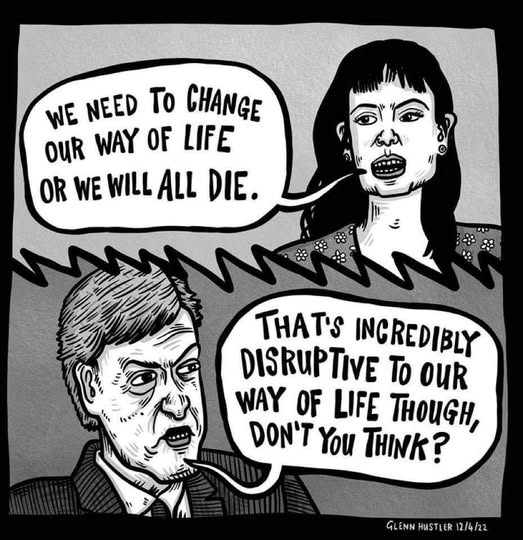
You don’t get transformative change by building according to the incentives of the dominant system. A post inspired by rereading Ursula K. Le Guin’s The Dispossessed: An Ambiguous Utopia as part of the Utopia Reading Group in #Oxford

“There’s a point, around the age of twenty, when you have to choose whether to be like everybody else the rest of your life, or to make a virtue of your peculiarities.”
— Ursula K. Le Guin, The Dispossessed

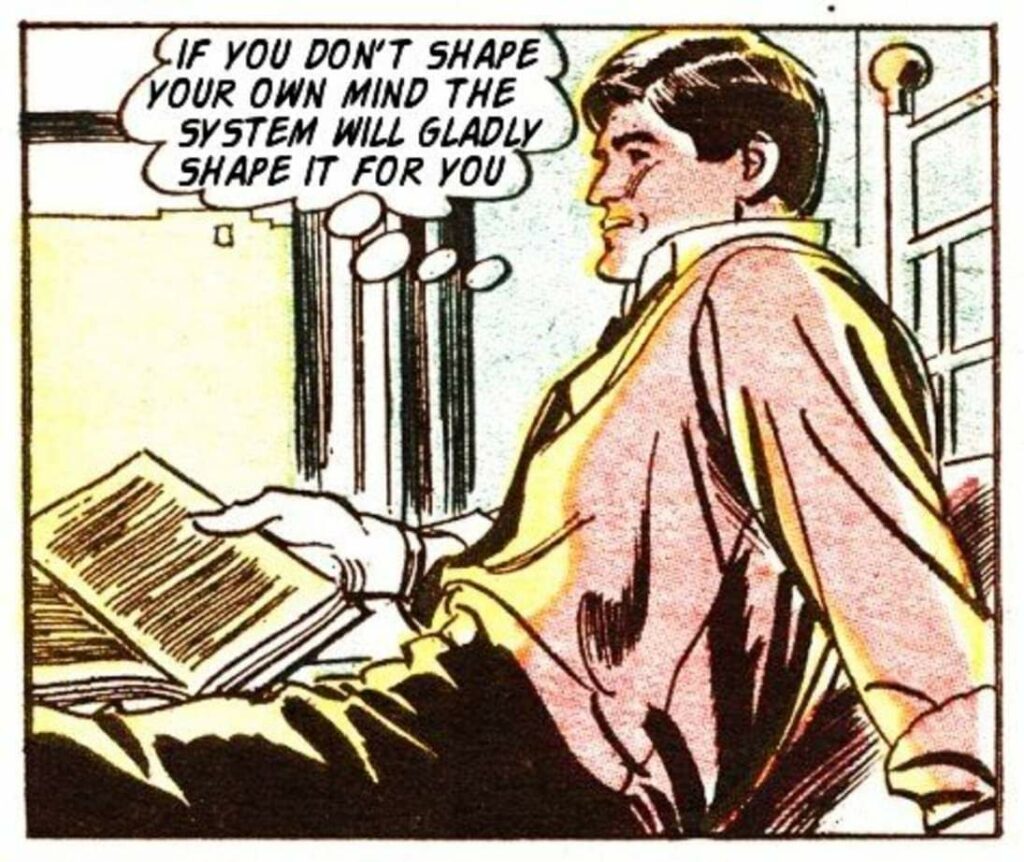
Most people choose the easy path: they find a nice, safe hierarchy and settle in. They obey the rules, repeat the slogans, and mistake obedience for belonging. They stop thinking for themselves. They stop changing.

But change is freedom. Change is life.

Le Guin’s The Dispossessed captures the tension perfectly – between the anarchic, cooperative world of Anarres and the closed, hierarchical planet of Urras. It’s not only a science-fiction metaphor; it’s the current mirror of the #openweb we refuse to look into. The “open” world we imagine is already all around us, fragile, fragile seedlings buried beneath layers of control, ego, and fear.

This is the mess we need to compost, we see it every day. Talented people watching their work and lives being wasted. Good minds submitting to stupid ones. Strength and courage strangled by envy, greed for power, fear of change.

Looking back at web history, think of how #Indymedia burned bright for a moment, then was strangled by internal control and external hostility. Think of how the second reboot – visionOntv on PeerTube – tried to keep that radical history alive, only to collapse again under neglect, lack of support, and the dominance of #dotcons platforms. Ten years of grassroots videos deleted, shadowbanned, or “de-prioritized.” That’s oftern what the suffocation of freedom looks like, not jackboots, but the slow deletion of memory.

Everywhere, the potential for something living and new gets buried under the weight of control. When a grassroots project loses its edge because it’s easier to fit into “funding priorities.” When energy turns to exhaustion, creativity to compliance, rebellion to report-writing. This is the logic of the #deathcult – the slow suffocation of change.

The #deathcult thrives on fear and hierarchy, the illusion that safety comes from control.
It’s not that people don’t care, it’s that the system teaches them not to. Managers, bureaucrats, “leaders” are all terrified of what real openness might unleash.

The banality of obedience. Le Guin warned us that the danger of obedience is not stability, it’s death. Urras, the rich capitalist world, runs on obedience. Anarres, the poor anarchist moon, survives on mutual responsibility.

You can’t get transformative change by operating according to the incentives of that system.
That’s why NGO culture and corporate-funded “innovation” projects always fail the real test.
They replicate the very control structures they claim to challenge.

The composting of culture, the natural world understands what our institutions forget: compost happens whether you want it to or not. What’s dead breaks down, and from that decay, new life takes root.

The same is true for culture and technology. The #dotcons and #closedweb platforms trap creativity and channel it into profit. They turn every act of sharing into data extraction, every connection into surveillance. They turn good minds into “content” and living movements into metrics.

We don’t need more “innovation” within this rot, we need composting. That’s what the #OMN (Open Media Network) is for, taking what’s broken and turning it back into living soil.
A simple, federated network built on the #4opens to grow real, grassroots media again, not as a static structure, but as a breathing, evolving commons.

Revolution is not destruction; it’s renewal. It’s the composting of the dead so that the living may grow. Revolution is our obligation, our hope of evolution.

Choosing life over control, to choose change is to choose life. To cling to control is to choose decay. The #OMN is one path to life, open, messy, collective. The alternative is more of what we already have: talent wasted, good minds ground down, courage strangled.

Le Guin’s lesson still stands:
“You cannot buy the revolution.
You cannot make the revolution.
You can only be the revolution.”

Let’s be that change. Let’s compost the dead systems, and make space for what’s next.

#4opens #openweb #OMN #nothingnew #techshit #deathcult #TheDispossessed #UtopiaReadingGroup

A Tolkien view of #OMN

A central thesis of Tolkien’s books is that evil provides the means of its own defeat. Sauron forged the One Ring that destroyed him. Shelob impaled herself on Sam’s blade. Smaug exposed his belly to Bilbo and revealed the weak point that brought him down. Tolkien’s world is full of this pattern: the seed of destruction lies buried inside the will to dominate. Power over others always carries its own undoing.

But there’s a second truth, less often spoken. Good must still act. The Ring did not cast itself into the fires of Mount Doom, it had to be carried, inch by inch, through the mud and terror, by two small Hobbits who refused to give up. Shelob could only fall because Sam held his arm firm when it would have been easier to drop the blade. Smaug was slain not by fate, but by the hand that fired the black arrow.

Even when evil weakens itself, the act of courage still has to be taken. The small people still have to step up. And there’s a third lesson here, one that feels painfully relevant to our time: good only loses when it surrenders to hopelessness. Denethor’s despair nearly doomed Minas Tirith.
Frodo would have fallen without Sam’s stubborn love. Bilbo’s small act of faith. In Tolkien’s world, hope is not naïve optimism, it’s an act of defiance.

In our current #closedweb Mordor, we see a similar pattern. The #dotcons – Facebook, Google, X, TikTok – are our modern Mordor. Their empire of control looks invincible, but the same logic applies: the seed of their undoing lies within their design. They rely on enclosure, makes them brittle. They feed on attention, makes them hollow. They claim to connect, yet they isolate. Their power depends on us believing there is no alternative. The moment we act otherwise, the “Ring” begins to crack.

This is where the #OMN (Open Media Network) is about, it’s the Hobbits of the #openweb, a simple idea built around trust, openness, and shared meaning, the values that the #mainstreaming web abandoned in their push for scale and profit. The #OMN path is not glamorous, it’s messy, human, and small in the best possible way, it’s the hobbit path.

While the lords of code build towers of algorithms and surveillance, the #OMN builds compost – small, fertile spaces for stories, community, and resistance to grow. Each node, each local server, each trust-based network is another Hobbiton – small, grounded, but vital to the health of the wider networked world.

And like Tolkien’s hobbits, the people carrying these projects are not heroes in the conventional sense. They’re tinkerers, storytellers, boat-dwellers, coders, gardeners – ordinary people who refuse to give in to despair.

The weakness of the Ring, is the weakness of Mordor – and of our #dotcons empires – is that they depend entirely on compliance. Their control works only as long as we feed it: our attention, our data, our labour. The act of reclaiming media, even on a small scale, is an act of resistance, the equivalent of carrying the Ring toward Mount Doom.

But again: it doesn’t happen automatically, we have to act, have to keep building, sharing, teaching, mediating – before the co-option machine moves in, before the #fashernista crowd turns the work into branding and drains it of meaning.

This is the role of projects like #OMN, #indymediaback, #4opens, and the broader #openweb ecosystem. They’re not just technical projects, they’re moral ones. They remind us that good requires persistence, that hope is work, and that defeat only comes when we stop trying.

Evil destroys itself, yes, but only if someone carries the Ring. The systems of enclosure, surveillance, and monetized despair will fall apart on their own contradictions, but only if enough of us are walking the long, muddy road toward something better.

That’s what the #OMN is for: a space to hold hope, to act before hopelessness takes root, to build the commons even when it feels impossible. And like Tolkien’s world, we won’t win through strength, but through endurance, through small acts done together, with trust.

Because the web – like Middle-Earth – is worth saving.

YouTube and the #deathcult of “Independent” Media

Over the last ten years, we’ve all been spending more and more time on #YouTube. And maybe you’ve noticed something strange: many of the channels you once thought of as independent are no longer independent at all. They’ve been quietly bought up by private equity firms with billions in backing from SoftBank, Amazon, Disney, Goldman Sachs, Blackstone – the usual #mainstreaming priests of the #deathcult.

Channels like Task & Purpose, Vice, Veritasium, Donut Media, Simple History, Economics Explained, The Drive, and History Hit are already part of the buyout wave. Some of the biggest names in our worship of “creator culture” – CocoMelon, Colin and Samir, The Theorists, Dude Perfect – too. And that’s just the ones who admitted it. There’s no law requiring disclosure.

Capitalism has a logic, that creators are commodities. “Independent” YouTubers once worked on tiny budgets – a camera, editing software, a couple of friends – to reach millions. They were messy, risky, sometimes radical. Capital sees something else: predictable cashflow, brand expansion, safe investment. But these operations are fragile. They depend on one platform (#YouTube), one personality, and an algorithm that can erase a career overnight. Normally, this risk would scare off capitalists. But with $12 trillion sloshing around private equity in the US alone, they’ve run out of businesses to buy. YouTube channels are the new frontier.

This is how grasping control kills creativity, when capitalism takes over, the overhead explodes. Analysts, strategists, managers, lawyers all need their cut. That means: more ads, more sponsorships, more merch, safer, algorithm-friendly content, the same formula cloned across every channel in the for profit portfolio. This “roll-up” logic flattens everything into old-school TV. Risk disappears, the spark that made YouTube compelling at first is smothered by business strategy. We’re already seeing it with channels like Veritasium, slowly shifting away from Derek Muller to reduce “keyman risk.” Once a personality becomes a liability, the accountants start grooming replacements.

Old school #traditionalmedia tried to counter te first wave of #dotcons social media by throwing money at “new media” outfits like Vice, Buzzfeed, Mashable, and Vox. They burned cash, collapsed, and left nothing but layoffs. The new approach is simpler: don’t build, just buy. Disney doesn’t need to grow the next Vice; it just needs to buy a handful of YouTube channels and tell shareholders it’s “ready for the future.”

The same #deathcult logic applies to this, appease shareholders first, audiences last. The cost is paid by viewers, the result for us – #dotcons friendly content becomes blander and safer, sponsorships dominate, but direct support (merch, memberships) dries up, because who wants to fund faceless #nastyfew agendas? “Creators” burn out, and vanish, replaced by interchangeable hosts or locked down with non-compete contracts. It’s the industrialisation of #fashionista “independent culture”.

There is a history to this, and #openweb parallels, we’ve seen this story before, in the 90s, independent radio stations were bought out by Clear Channel, homogenising the airwaves. In the 2000s, blogs were enclosed by Facebook, Google, and Twitter, killing off messy but vibrant grassroots media. Even movements like Occupy or Extinction Rebellion felt the same pressures: a burst of openness and creativity, followed by co-option, #NGO capture, and fragmentation under managed dissent. The lesson is always the same: once capital steps in, the mess is tidied away, and any possibility of change and challenge dies.

I have seen this on the #dotcons platforms we use as backups and hook for the #openweb native projects, our visionontv YouTube loses a video or two every month to not advertising friendly, copyright strike for clear fair use etc.

The #OMN Lesson, YouTube is repeating the same pattern we’ve seen across the #closedweb: a few years of openness and experimentation, followed by enclosure, consolidation, and financialisation. Capitalism cannot tolerate risk, it cannot tolerate diversity, it needs control, predictability, and growth at all costs. And that is the death of any real grassroots media.

The #OMN path is the opposite. We need federated, messy, trust-based networks where media is not just another asset class. Media must be inherently open – created, shared, and remixed under the #4opens. If we don’t build and defend this, the future of online culture is already sold out.

Compost the blocking, keep the seeds alive, and make space for growth

It’s good to see more people turning their focus back to the #openweb. But for the past five years of the #reboot we’ve been distracted in a signal-to-noise mess from the #fashionistas. That waisted time needs to be over, we need to start looking clearly at both internal rot and the external threats.

A good first step to this is in balancing the realisation that we actually have far more direct power to deal with the internal mess than we do over the external #dotcons and their #closedweb “common sense” colonialisation. That’s why we need to put activism into composting the internal #blocking (see: https://hamishcampbell.com/?s=compost). Composting isn’t just a metaphor – it’s a way to recycle the piles of #techshit we’ve built up into soil that can grow new #openweb seeds we need to cultivate.

I understand the normal focus on the external #dotcons, yes, we need to balance this to keep pushing back against the external enclosures. But inside our own spaces, it’s clear that possessiveness, in code, in reputation, in control over projects, undermines cooperation and destroys trust. It wastes resources, it corrodes integrity – People often destroy what they love, not out of hate, but out of possession.

This is directly relevant to the degeneration of the #SocialHub project (see: https://hamishcampbell.com/why-teach-everyone-to-code-has-become-a-dead-end-slogan/). What was once the lively centre for the #ActivityPub and #Fediverse reboot is now reduced to a handful of unthinking “problem” people circling the drain. That’s not unusual, it’s a normal outcome when we fail to compost mess.

The lesson is simple: compost the blocking, keep the seeds alive, and make space for growth.

What can you do? Use the compost metaphors (#techshit, seeds, soil) into accessible non-branded messaging that sticks. You can help with editing to transform the long posts into shareable, short-form content for Mastodon, Fediverse, and allied networks.

Help is needed in curating and organizing existing #OMN writings into a structured wiki-style knowledge base. To build summaries, FAQs, and primers for newcomers who hit the projects cold. We need draft “composting guides” – how to deal with #blocking, #fashionistas, and #geekproblem inside communities. Moving this simple documentation to the Unite Forge and other new #OMN tools. Helping draft roadmaps that explain what’s built, what’s missing, and what needs contributors. Producing explainers on why #OMN is different from #dotcons and #NGO capture, why being grounded in #4opens matters.

Write out templates for horizontal decision-making (#OGB style) that projects can adapt. Suggest practical ways to “compost” blockers while keeping the wider network fertile. Help draft neticate rooted in #KISS + #4opens rather than #NGO-speak.

Each of these can be grown into living resources: wiki pages, blog posts, shareable guides, or activist toolkits – depending on where you want the energy to flow.

Composting the reboot funding

Dear Michiel,

At this point, it’s hard not to notice a pattern. You’ve received clear, thoughtful proposals aligned with your calls – yet no real engagement, year after year. I’ve said this gently before: your call-out text needs to be composted. If you’re not funding alternative, open, activist infrastructure – just say that. Don’t lead people on.

Look forward to seeing what did get funded – I’ll be writing something on that soon https://hamishcampbell.com/?s=nlnet

A post on why this kind of institutional #geekproblem push needs compost: https://hamishcampbell.com/we-need-to-compost-the-current-culture-of-lying/

Hamish

Not surprised. This is probably the 10th time we’ve applied to the #NLnet / #NGI fund over the years. Just heard back: our proposals for #OGB (Open Governance Body), #indymediaback, and #MakeingHistory were not selected – again.

“We are very sorry that we cannot offer you support for your good efforts.”

Sure, I, appreciate the polite brush-off again. But after so many rejections for solid, urgently needed tech projects that actually fit the funding goals, it’s time to name what’s really going on.

That there’s no #mainstreaming support for grassroots alternative, activist-rooted #openweb infrastructure. These projects aren’t pointless and inoffensive enough, not wrapped in shiny #NGO-speak, and don’t fit the comfy (in)circles of #geekproblem “innovative” funding. But they are native, they are needed, and they work – if you actually want a humane, federated, public-interest net that the funding outreach text says you do.

Time and again, we’re told these projects are “not selected” – Meanwhile, funding continues to flow toward a few good minority projects, a few #mainstreaming #fashernista alt tech projects, but the most goes to, minority interest, academic paths or closed bureaucratic #geekproblem circles, recycling the same stale stack of status quo ideas in slick/pointless packaging.

On balance, this is VERY much not building the #openweb – it’s way too often pushing #NGO and geek hobby paths or building another layer of the #closedweb under a friendlier mask. Yes, the is some small good done with this tech funding, it supports the big #dotcons copying Fediverse projects, no bad thing. But on the question of balance, we can see the lies.

We’re not discouraged. We’re composting this – as ever – into the next push. And yes, we’ll keep applying in till they change the text of the invites, so our projects are not the perfect fit they are now. Not because we believe the system works, but because we need to document the process if it works, well more when it doesn’t work, sadly. Composting lies is a part of the #openweb reboot.

If you do want to support native, trust-based, grassroots tech building, outside the NGO bubble, chip in here: https://opencollective.com/open-media-network or help to make this institutional funding work as it says it does.

A look at this narrow #NGO and #geekproblem point of view

The essence of the #geekproblem is its narrow, self-referential logic. Here’s a #spiky, pointed, prody view of the narrow track of thinking that defines the #geekproblem in the context of an #openweb reboot:

“There is no Emperor, King, or Priest in the Fediverse’s feudalism.”

The illusion is that it’s all flat – no power structures, just pure meritocracy. If you’re already a priest or acolyte, there’s no need to ask. You just do:

  • Want a new app? Code it.
  • Want a new protocol? Spec and ship it.
  • Want a new UX? Design it and deploy.

And if you can’t do it yourself? Then you kneel before the alternative establishment and pray.
Or, as they prefer to say, advocate.

This is both a critique of the (hidden) hierarchies and a mirror held up to the myths of autonomy and openness in the current #Fediverse culture. There’s a real power structure – it just doesn’t wear a crown, but if you look it’s VERY visible, people choose not to look, this is the #techshit mess we make and need to balance with healthy grassroots composting.

What would a #fluffy view of this look like?

OMN, best not to get distracted, this isn’t about purity, it’s about direction

We need to talk about the mess we are in, in plain terms. The current wave of #deathcult #mainstreaming of the hard right and “progressive” liberal left is less about progress and more about manipulating the human condition. It doesn’t offer real solutions, what it does do is pushes pacifiers. We live in a world where “common sense” alienation, loneliness, and meaninglessness are manufactured at scale, then sold back to us as control wrapped in empty promises.

Porn is loneliness sold as sex.

Alcohol is escape sold as fun.

Fast food is poison sold as nourishment.

Luxuries are emptiness sold as joy.

Video games are isolation sold as play.

Celebrities are ads sold as role models.

Drugs are numbness sold as happiness.

Social media is likes sold as friendship.

Smoking is addiction sold as relaxation.

Scrolling is distraction sold as downtime.

From the #dotcons

What we’re living through is not simply cultural and ecological decline, it’s the path of the #deathcult, replacing community with consumption, meaning with metrics, and connection with control. This cheap selfishness is the Trojan horse of modern misery. A social drug pushing, dopamine economy, engineered to keep us distracted, unfocused, passive, docile, and obedient, while the real decisions are made elsewhere, by the #nastyfew, elitists, institutions, and algorithms that grow and thrive on our social disconnection.

Where’s the path out of this mess? It’s not always easy, but it is possible. We compost the mess, not by withdrawing completely, but by rebuilding and bridging grounded alternatives – local, collective, messy, real. The #OMN (Open Media Network) is one such seed: a framework for reclaiming media, meaning, and mutual aid from the commodified hellscape of the #closedweb.

To step away from this mess, we really don’t need more #dotcons platforms that capture our attention, we need native #openweb spaces that grow humanist trust. We need to re-learn how to talk, disagree, and create together without constantly being sold something in the process.

Best not to get distracted, this isn’t about purity, it’s about direction. When we shift the default away from commodification and toward community, we begin to detox from the #stupidindividualism trap we live in. We can begin to see more clearly, and from there, we build a different kind of world, not based on manipulation, but on meaning.

Let’s start, you likely need a shovel #OMN

Enclosure of the open web was a crime

This spirit of the early internet and #WWW – sharing, remixing, collectively creating – is the heart of what we call the #openweb. It wasn’t perfect, but it was a space of possibilities, commons, where you could take what you needed and leave something behind, hyperlink by hyperlink. The tools were open – #RSS feeds, #XMPP and #indymedia were built to bridge between ideas and movements, not the walls of monetized algorithmic sludge we have today.

But the #dotcons came, they fenced in the wild garden, what we’re living through now is a digital version of the enclosure of the commons, a #neoliberal land grab dressed in Silicon Valley T-shirts. Just like in 16th-century England, they drew arbitrary lines around our #4opens shared land (data, conversation, culture), declared it private property, and shut the gates. And we, the people, got algorithmic slop in return.

The comparison isn’t metaphor – it’s literal – just as the landed gentry stole the commons to fuel the industrial revolution, the tech gentry stole our digital commons to feed surveillance capitalism. They did it through legalese, marketing BS, and brute force. We were left outside the firewalls, told to be thankful for “free” services while they harvested our metadata to sell back consumerism as advertisements and social control.

The #techbros didn’t invent this theft, they just updated the tools, the same ideological mess that displaced peasants from their land now displaces communities from their networks and platforms, killing independent sites, closing APIs, and locking away archives behind paywalls. Twitter’s 2023 shutdown of free API access? A textbook enclosure. Hundreds of # fashionista grassroots tools and bots vanished overnight, #Techshit at its most brazen.

And then there’s #RSS – the veins of the old web. Stabbed slowly, first by Facebook, then by Google. For the #fashionistas, the blade fell hardest in 2013 with the death of Google Reader, a quiet coup that pushed most of us into the fenced-off gardens of algorithmic consumption we live so much of our lives in today. The commons didn’t just vanish; it was actively destroyed, under the smog of monetization, “engagement,” and corporate “safety.”

It is useful for us to see this in a simple way, this isn’t #progress, it’s theft, the kind that wears the mask of legitimacy because lawyers and lobbyists made it look neat on paper. The reality is old, it’s a #classwar fought with code instead of clubs, and it’s won because we lost our memory of what common “land” even looked like.

But not everything is lost. The #Fediverse, the #OMN (Open Media Network) still plants seeds in the cracks. #Wikidata, #OpenStreetMap, the #ActivityPub protocol, these are digital hedgerows that survived the scorched earth. They are messy, collaborative, and unmonetized. That’s their strength, that’s what the #fashionistas to often don’t get – they can’t sell what they can’t own.

A story by Cory Doctorow – Masque of the Red Death

The #geekproblem here is fatal, in both the grassroots and the #dotcons, too many technologists are blind to the politics in their code. In the #mainstreaming, they build better tools for corporations that destroy the commons, over and over again. The solution? For the grassroots coders, compost the #techshit, seed something else, and reclaim what was always ours. Let’s help lift the lid on the #dotcons mess, our own unthinking #fashernistras, #NGO geeks call the internet, it is simply a thin veneer on top of what is actually ours, the #openweb

Let’s stop being polite about this as the #closedweb is a crime scene. The #dotcons platforms we rely on are bonfires of common culture, feeding the engines of the next wave of control. If we don’t remember how we got here, we can’t step out of this mess. It’s time to say it plain: The privatized web is a #deathcult, and only a #4opens reboot can bring life back.

An article: https://johl.io/blog/enclosures-and-the-open-web

The West, Russia, and the madness of mutual sabotage

With the current hard move to the right let’s look at the current mess more clearly, we’re watching the slow-motion implosion of geopolitical sanity, driven by a feedback loop of paranoia, expansionism, and elitist delusion all round. I will use an example, the Russian neo-monarchy we installed with the fall of the #USSR is both authoritarian and insulated from reality, it harbours a deeply ingrained – but not entirely unfounded – fear, that the West wants to partition and neuter Russia, to finally break its imperial spine and sideline it permanently from global power.

The response to this is predicable, the wannabe Russian Empire moves to lash outwards. Expand. Destabilize. Subvert. Sabotage. Whether in Ukraine, Syria, Africa, or via bot farms and proxy networks, the strategy is the same, externalize the crisis, manufacture mess, weaken the “enemy”, and in doing so, fortify internal control. It’s a survival tactic wrapped in a brutal shell of historical grievance and nationalist myth-making.

But, what we do, in the West, in response is the real insanity, our response mirrors the very thing they fear. The West’s led by Washington #neoliberal hawks, Eurocentrists, and the ever-profitable security-industrial complex – isn’t, peace, trade, exchange, strategic clarity, de-escalation, or rebuilding multilateral resilience. No. It’s tit-for-tat sabotage, economic warfare, arms races, and public rhetoric that edges ever closer to advocating regime change, disintegration, and total subjugation. The wet dream of the #nastyfew think tank ghouls, a post-Russia carved up, pacified, and absorbed into the #closedweb of western corporate “freedom.” they tried it after the breakup of the #USSR, and now we repeat the same crap plan.

Do we really think it helps to become the very monster the Russians, are not without foundation, paranoid about, and already believe us to be? Yes, we do keep repeating this path of endless #fuckwittery feedback loops, imperial reaction and counter-reaction has been the geopolitics of the #deathcult for way too long. The world we have now is a paranoid empire meets a suicidal empire, Russia, trapped in its authoritarian echo chamber, acts from a place of imperial insecurity. It remembers the Cold War, NATO’s slow crawl eastward, the gutting of its economy in the ’90s under western advisors. Its fear is rooted in historical trauma, yes – but also in hard analysis. The West has pushed precisely the policies Russia fears.

Instead of “us” building genuine alternatives – non-aligned diplomacy, economic multipolarity, climate cooperation – we escalate. We double down. We treat their paranoia not as a challenge to deconstruct but a justification for more militarism, more sanctions, more media war, more fantasy of breaking the Russian state entirely. This is not a path to peace, this is not a path to any humanistic justice, this is mess-making on a planetary scale. And in the era of #climatechaos, where we face shared planetary collapse, it’s more than just dangerous, it’s become the hard right’s apocalyptic fantasy of civilizational suicide.

Let’s be very clear, this cycle is not driven by “the people.” It’s the #nastyfew, the hard-right elitists, ideologues, the nationalist technocrats and billionaire opportunists who feed on fear and profit from instability. In Russia, they wear the mask of Orthodox autocracy. In the West, they wear the suits of think tanks and boardrooms. But their vision is now the same, control through collapse.

They aren’t interested in saving the world, they want to own the wreckage. They’re building bunkers while the rest of us fight over ruins. They’re funding war while cutting climate adaptation, speak of “freedom” while mining the last drops of oil and blood. This isn’t realism, it’s delusion, this isn’t defence, it’s offence by inertia, this isn’t strategy. What it is, is the new #deathcult replacing the dead old one of 40 years of neoliberalism.

Where now? What we don’t need is more war games, we don’t need to break Russia or “win” against China. A key though is we don’t need to be right – we need to be alive, and for that we need radical de-escalation, grassroots diplomacy, and growing planetary solidarity. The answer to paranoid imperialism isn’t more imperialism – it’s compost. Yes, compost. We need to take this mess, this decaying structure of late-stage empire, and break it down into something fertile.

We need to stop thinking like empires and start thinking like ecologies. Build networks, not states, trust, not surveillance, infrastructure of care, not bombs, media for truth, not narrative warfare. We can’t outsource survival to failing nation-states, or hand over justice to militaries. What we need is a grassroots push to step outside the spiral. The #openweb gives us a glimpse of this possibility: federated, decentralized, trust-based networks that grow from the ground, not fall from the sky. What comes next depends on what we build in the growing cracks. Because we can’t keep feeding this mess.

We do need tools to share to help people on the path back onto the #openweb

The struggle to grow the #Fediverse and this #openweb reboot has never been about technology alone – it’s always been about narrative, framing, and belonging. If we want people to step away from the toxic silos of the #closedweb and #dotcons to step into something better, we need more than protocols and servers – we need invitations.

That’s why it’s good to see the redesigned onboarding experience at Fedidb.com/welcome. I had a quick look at it, and it seems to be a “native” practical tool we can share and use, not just as a gateway into the #Fediverse, but as a wider entry point into the ecosystem of the #openweb.

For too long, onboarding to the Fediverse has been a confusing, even alienating experience for newcomers. Too much #NGO pushing of “branding” too many choices, not enough context. Geeky terms like “ActivityPub” and “instance” are clear to us, but for the uninitiated, they create a wall instead of a welcome. We need more and better, Fediverse onboarding to give new people a structured, thoughtful, and human-first guide to joining this #humanistic diverse and decentralized space.

But here’s the real value, it’s not just technical hand-holding, it’s about cultural translation. This is why language matters: #Fediverse vs #Openweb. While “Fediverse” is a useful term, it points to specific protocols and tribal communities – it doesn’t always resonate beyond our circles. It can sound cryptic, niche, or overly geeky. That’s why it’s helpful to expand the use of the term #openweb alongside it.

The #openweb is bigger than any one path. It’s a historical vision – built on a history of cooperation rather than control, of federation instead of centralization. It’s the contrast to the #closedweb, where corporate algorithms shape what we see, and people and community freedom is traded for convenience and profit. Framing this as a cultural and political distinction helps move the conversation from tech choice to social movement.

Using #openweb helps make the values of the Fediverse legible to a wider public, openness, transparency, interoperability, and community control. And it opens the door to include other aligned projects – peer-to-peer tools, decentralized publishing, grassroots governance – that don’t neatly fit under the “Fediverse” label, but absolutely belong in the same garden.

Tools alone aren’t enough – But they help. Let’s be clear, no onboarding tool, however well-designed, can solve the challenges we face in building a vibrant, humane alternative to the #dotcons. This is not a tech issue – it’s a social, political, and cultural one. But non branded tools like this matter, are a good step, because they lower the barrier to entry. They help us welcome people in, especially those who want to leave the toxic platforms behind but don’t know where to go or how to start.

We should treat this onboarding page as compost, part of the broader cycle of growth. It helps new people take root, connect, and contribute. And as they do, we need to support them not just technically, but socially, through trust-based networks, clear values, and open processes. This is how we build resilience. This is how we grow real alternatives.

So yes, this is something we can share. With friends, with family, with disillusioned Twitter refugees or burned-out Instagram doom scrollers. But more than that, it’s something we can build on. The #Fediverse is a living, breathing project. The #openweb is the soil it grows in.

Share the link: https://fedidb.com/welcome

Bridging alt and mainstreaming: A note on the shape of resistance

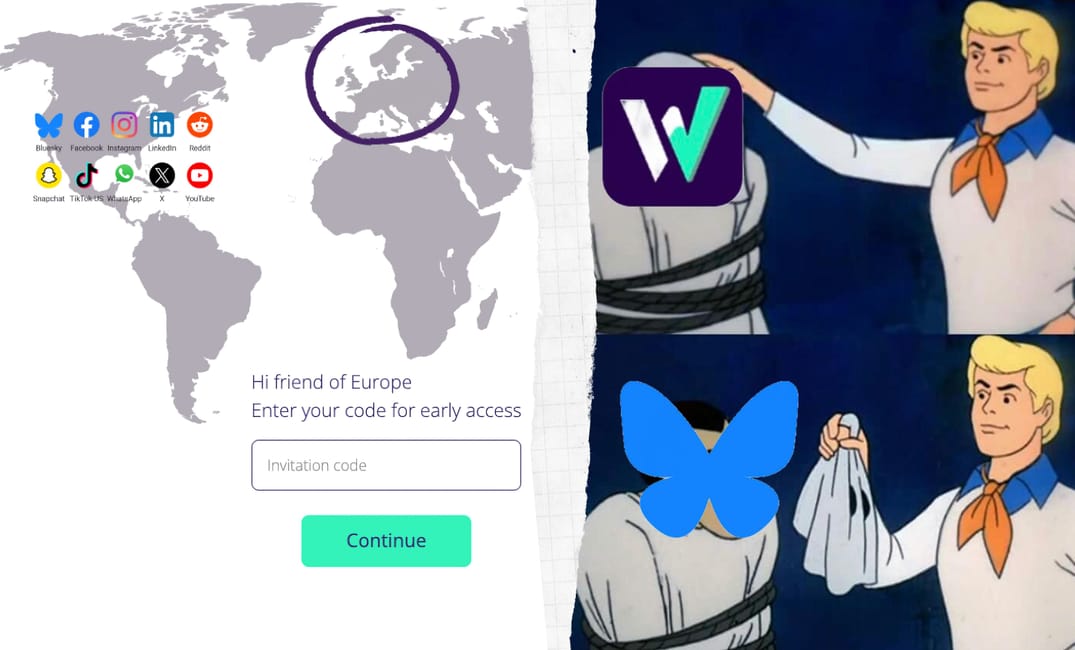
There’s a nice post by Elena Rossini’s, “This is what resistance to the digital coup looks like.” she is commitment to the #Fediverse, #FOSS tools, and open publishing solutions, and her critique of #VC-funded platforms like #Substack and #Bluesky is needed. At the same time, it’s worth pausing to reflect on how we talk about these things, particularly when we’re speaking to an emerging audience, still navigating the gap between centralized tech and more native, grassroots tools. Because while we do need clarity, we also need care. Otherwise, we risk turning signal into noise.

Rossini’s article is a good example of how alternative infrastructure begins to reach broader consciousness. Many of the platforms she champions – Ghost, Beehiiv, and even certain curated Mastodon experiences – fall within or adjacent to the broad #4opens networks. They are a part of the solution. But they also carry baggage. Some are corporate-lite. Some depend on foundation funding. Some straddle a line between truly open and VC-sanitized.

This isn’t a problem per se, but it’s important to be transparent about it, many of us in the radical grassroots space, nurturing compost heaps of alternative media, peer publishing, and federated community infrastructure – have seen what happens when clarity is lost. The #NGO-ization of resistance. The capture of the #openweb by polite #PR. The story gets smoothed out, the risk disappears, and the power we need to shift change and challenge can simply be adapted and absorbed.

Let’s name the agendas, kindly. We’re not calling anyone out, quite the opposite, this is a call in. A reminder that it’s polite and politically grounded to acknowledge the agenda and position of the tools we use, even more so the ones we promote. Are they native to the grassroots? Are they part of a transitional bridge? Are they compromised in some ways?

Rossini’s argument – that using Substack and Bluesky while denouncing Big Tech sends a mixed message – is fair. But the same critique could be gently extended to Ghost and Beehiiv, too. These aren’t immune from #mainstreaming pressures. If we want to build a truly alternative infrastructure, we have to be honest about what’s native, what’s transitional, and what’s being branded as “alternative” without any roots in the alt.

The #4opens as compass, is a tool that helps us make these distinctions: open source, open data, open process, and open standards. It’s not a purity test, nothing ever should be, but it gives us a compass. A way to orient ourselves as we navigate the mess. A platform might look open because it feels different from Big Tech. But if it lacks open process, if its governance is closed or opaque, then it’s not truly part of the alt path. If it uses open source code but locks users into proprietary hosting or hidden metrics, that’s worth noteing too.

This doesn’t mean we throw out every tool that doesn’t tick all four boxes. It means we contextualize. At best, we practice a kind of digital literacy that includes politics, power, and history, not just #UX user experience. Clarity is compost, Rossini’s voice is part of a broader chorus rising in defence of a better “native” web. That’s good news, but let’s make sure that as more people join this space, we compost the confusion, not spread more of it. Some things we might use to balance this good practice:

  • Choosing native language when we can (use “open publishing” or “independent Fediverse platforms” rather than brand names as default). #openweb is a powerful statement in itself as it contrasts to #closedweb.
  • Naming the agendas behind the platforms we use or promote.
  • Valuing bridges, but not confusing them for destinations.
  • Practicing digital humility, so we can learn without defensiveness.

On the current path there’s little clarity to begin with, let’s help each other work through the compost, with bare feet and open minds, toward something truly rooted in the commons. And yes this will mean dirty feet and hands 🙂

#TED – A Community of Delusions

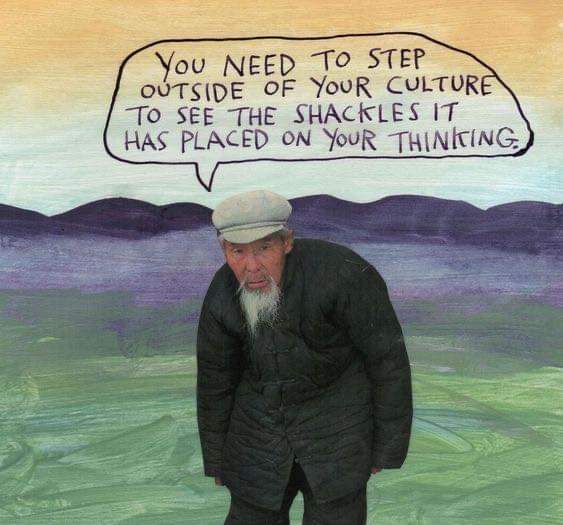
Messy language feeds back into messy culture

Most people now understand that culturally, and socially, we are in a growing nasty mess. The #blocking of action, the constant stalls, confusion, and fragmentation, has a lot to do with our use of language. And the deeper issue is how this messy language feeds back into culture, which then loops back to make the language even murkier. It’s a feedback loop that clouds meaning, erodes trust, and paralyses collective action.

The last 40 years of postmodernism and neoliberalism made this worse. #Postmodernism chipped away at the idea of shared reality, leaving us with endless interpretation and “personal truths.” #Neoliberalism, on the other hand, commodified everything, including language itself, into marketing, spin, and #PR. Together, we have hollowed out words like “community,” “freedom,” and even “change,” to the point that we barely recognize practical use value.

Take “mutual aid” for example, a term grounded in solidarity and reciprocal responsibility. Now, on both #dotcons and #openweb platforms, it gets reduced to casual crowdfunding and anonymous asks, with little relational context. Not bad, but far from what it could and needs to be.

If we want affinity-based action to work, if we want people to work together and trust and act together, then we have to compost this mess. And the way to do that might be surprisingly simple #KISS – Keep It Simple, Stupid, not stupid as in naive, but stupid as in clear.

We need to reclaim simple language that carries shared meaning. This is exactly what we’re trying to seed with the positive side of the #hashtag story. Hashtags act as anchors in this storm of noisy abstraction. They cut through, to the root meaning, and allow collective orientation without needing corporate gatekeepers or #blinded institutional filters.

Think:

  • #4opens — a shorthand for open code, open data, open governance, open standards.
  • #deathcult — pointing to the suicidal path of #neoliberalism.
  • #techshit — composting the mess, not throwing it away.
  • #nothingnew — slowing tech churn, reclaiming meaningful pace and paths.

Each of these tags points to deeper, shared narratives that are simple, but not simplistic. They invite action, not common sense confusion. By composting the abstraction we regrow clarity, reclaim trust paths, in both tech and social spaces. Speak simply, act clearly, hashtag wisely with intention is a working path, please use this.


On this path, It is important for the progressives and radicals to come together and focus on real issues and the challenges facing society, rather than fighting among ourselves. To find this balance between being “nice” and being “nasty” is key to being effective about lasting social change.

The #hashtags embody a story and worldview rooted in a progressive and critical perspective on technology and society. By highlighting the destructive impact of neoliberalism (#deathcult) and consumer capitalism (#fashernista) on our shared lives, while promoting the original ideals of the World Wide Web and early internet culture (#openweb).

The #closedweb critiques the for-profit internet and its harmful social consequences, while #4opens advocates for transparency, collaboration, and open-source principles in tech development.

The #geekproblem tag draws attention to a dysfunctional cultural tendency in tech: where geeks, absorbed in their tools and logic, overlook the broader social effects of their creations. This feeds into #techshit, where layers of unnecessary complexity pile up, further distancing people from tech’s social roots. Meanwhile, #encryptionists critiques the knee-jerk reaction that “more encryption” is always the answer, reinforcing control and scarcity, rather than liberating people and community.

Together, hashtags tell a loose, coherent and powerful story. They call for a more humane, collaborative, and transparent approach to both technology and society.

#nothingnew asks whether constant innovation is the right path — or if we need to slow down and improve what already works.

#techchurn names the cycle of flashy, redundant tech that fails to solve core issues.

#OMN and #indymediaback point toward an Open Media Network — and a revival of the radical, decentralized media that once rivalled corporate media on the early web.

#OGB stands for Open Governance Body, an invitation to practice grassroots, transparent, community-led decision-making.

It’s an ambitious, needed path, to build and grow social tech that “fails well”, meaning they fail in a way that can be fixed by the people, through trust and collective action, not closed-source patches and corporate updates, that are control not community. The #OMN’s focus is human-first. Tech comes second, as a mediator, a tool, not the destination.

Yes, the #geekproblem is real. Technical expertise becomes a gatekeeping mechanism. But tech can also empower, if we design for simplicity, accessibility, and community-first paths and values. The only working path is simple, trust-based, and human. That’s why we keep coming back to #KISS.


Why haven’t we been doing this for the last 10 Years? Over the past decade, we’ve lived in a state of quiet paralysis. Climate change, ecological collapse, technological overreach, all of it loomed. And instead of digging in to work on solutions, we froze. Well-meaning people chose fear over action. Understandably. But fear is a poor foundation for building anything sustainable.

We’re not on this site to only blame – we’re here to compost. The problem? We stopped critiquing, we stopped examining the tools in our hands. Not only that, we bought into the illusion that #NGO paths and tech would save us. That shiny apps and startup culture could greenwash a better future. And when the results disappointed, we turned inward, stopped questioning, and left things to rot.

So now, can that rot be composted? By using the #4opens – open data, open code, open standards for open governance, we have a practical framework to call out and compost the layers of #techshit that have built up. Tech that divides us, tech that distracts us, tech that damages the planet and calls it progress. Yep, like gardening, composting takes time, it smells at first, it’s messy. But give it care, and you get soil – to plant better ideas in, soil for hope.

One of the reasons we haven’t made progress is the #geekproblem, a narrow slice of technically-minded culture made up of (stupid)individuals, which so far have dominated the design and direction of our tools. They, sometimes, mean well, but in their obsession with technical elegance and “solutions,” they’ve sidelined the social and the ecological. What’s left is a brittle, sterile infrastructure, constantly churning out newness without any substance.

Meanwhile, #stupidindividualism has flourished, encouraged by #dotcons social media systems built for engagement, not connection. These silos encourage performance over solidarity, branding over community, and endless scrolling over doing. We’ve all felt it.

And most activist groups, instead of resisting this tide, drank the #NGO poison, chased funding, watering down their goals, professionalizing their resistance until it became another logo in a funding application. We’ve lost a decade to fear, distraction, and capture.

But it’s maybe not too late, we have the tools, in the #ActivityPub based #Fediverse. We have the frameworks, the #4opens can guide us to rebuild with transparency, collaboration, and care. The hashtags like #geekproblem, #techshit, #nothingnew, and #OMN give us a shared vocabulary for critique and regeneration. They point to a web where people, not platforms, hold power, and where technology serves life, not control. Let’s stop being afraid to critique, stop outsourcing responsibility and get on with composting.

Because that’s where the soil of a better path will come from.

It’s worth remembering that, in the current political mess, the right-wing and the so-called centre are extremists.

They are insisting that endless growth on a finite planet is “realistic,” that widening inequality is “natural,” that ecological collapse can be managed by markets, and that social breakdown is an acceptable cost of doing business. It’s constant crisis management, coercion, and denial of material reality.

What’s labelled “left-wing” is generally moderate: the belief that people should be able to meet their basic needs, that cooperation works better than competition for shared survival, and that systems should serve society rather than extract from it.

The Overton window has been dragged to exploitation and collapse that proposing care, restraint, and collective responsibility is framed as radical, when it’s the minimum required for any stable future.

Seen this way, extremism isn’t in change and challenge. It’s insisting that a failing system must continue at all costs.