Our current working models of “governance” in #opensource are mostly:
Monarchy – the dictator for life. Aristocracy – the devs. Oligarchy – NGOs/funders. And way out on the edge: Democracy – the users.
We need better governance native to the #openweb. Let’s look at this at a more personal level before the normal wider social view. Yes, in #FOSS development the devs doing the work deserve respect, and #OMN isn’t arguing that users should simply demand things from volunteers.
The point about “aristocracy” is about more where decision-making power sits, less whether devs are privileged people or whether their work has value. If the people who write and maintain the code also decide what the project is, what gets built, what gets rejected and how the project develops, then you have a governance structure where technical expertise becomes political authority.
Hope am clear, that isn’t a criticism of individual developers, it’s a structural observation. The #OMN approach is to separate doing the work from owning the direction. Developers are essential participants, but so are users, moderators, communities and other contributors. Different kinds of knowledge need different kinds of power.
The challenge is building governance where devs don’t get bossed around by users, users don’t get bossed around by devs, funders don’t get to buy the direction, and nobody gets to become the permanent ruler.
That’s what the #OGB work is trying to explore: governance native to the #openweb, based on trust, transparency, participation and voluntary cooperation. This alternative isn’t “users rule”, it’s shared power with different roles.
With this in mind lets talk about the wider issue, a reminder: when I talk about the internet and society, I am not necessarily talking about you, I am talking about groups, cultures, classes, institutions and patterns of behaviour that you might be part of. You can recognise yourself in a critique without the critique being a personal attack – Simple – Take the useful bit and move on.
What is interesting – and a pretty good example of #stupidindividualism – is how difficult this has become. We increasingly seem to believe that we are not allowed to talk about groups any more. Everything has to be reduced to the individual “Are you saying I’m stupid?” “Are you attacking me?” “Who exactly are you talking about?” This makes it difficult to discuss social patterns, and that matters because many of the problems we face are not individual problems. They are produced by relationships between people, institutions, technologies and economic systems.
If we cannot talk about groups, we cannot talk properly about the #geekproblem, #mainstreaming, the #dotcons, #NGOs and funders, tech communities, activist cultures, class interests, institutional power, #neoliberalism or the wider #deathcult culture. We end up privatising a public conversation.
This is one of the things that makes #dotcons-style social media so destructive, as everything becomes personalised, emotional and reactive when structural criticism gets turned into interpersonal conflict. But a feeling is not a fact, a feeling attacked does not necessarily mean someone is attacking you. Sometimes it means that something has made you uncomfortable, or challenged a worldview you have become accustomed to.
That discomfort can actually be useful as the point isn’t to find individuals to blame, the point is to understand the systems and cultures we are collectively caught inside. We need to get beyond the #neoliberal#TINA – There Is No Alternative – thinking that reduces everything to individual choice and responsibility. We need to be able to say – This is a group pattern, a cultural pattern, a class interest, an institutional problem. It’s about how power reproduces itself, then we can actually talk about what to do about it. That is the conversation we need to reclaim: public, collective and capable of naming the structures that shape our lives.
Remember none of this is about personal attacks, not tribal prat fights, not individualised outrage. It’s a public conversation about public problems.
People nowadays are soaked in #stupidindividualism, and the important word on this is hopeless. Not hopeless because people are bad, but because we’ve spent decades dismantling the social structures that gave us the ability to act together. We know how to consume, react, and perform as individuals, but increasingly struggle to cooperate, organise, and build collective power. A society of isolated individuals is easy to manage and hard to change.
There have been a lot of institutional prat moves on the #Fediverse over the last few years, we’re facing a growing signal-to-noise problem. As more NGOs, foundations, governments, media organisations, and corporate-adjacent actors arrive, they bring resources, visibility, and legitimacy. That’s the fluffy side of the story. More users, more funding, more attention, more recognition.
But #NGOs didn’t build the #Fediverse – and they’re not saving it either their bringing institutional habits that are often hostile to the native culture of the #Fediverse. Risk management replaces experimentation, branding replaces community, public relations replaces dialogue. Governance becomes something done for people rather than with them. The result is a lot of noise: endless press releases, carefully managed messaging, and performative consultation that produces little actual change.
This is where the spiky side comes in. The #Fediverse did not grow because institutions planned it into existence. It grew because messy communities built things, argued about them, broke them, fixed them, and kept going. The culture emerged from people doing the work in public. Much of the value came from precisely the things institutions find uncomfortable: openness, disagreement, rough consensus, and grassroots initiative.
The problem is not that institutions are involved, the problem is when institutional logic starts drowning out community logic to create a growing signal-to-noise problem. The signal is people building infrastructure, running servers, writing code, creating culture, organising communities, and solving problems together. The noise is the endless churn of reports, branding exercises, stakeholder management, conference panels, and “engagement” processes that consume energy without producing any substance.
The useful framing here might be:
Fluffy: welcoming people in, building bridges, creating shared spaces, encouraging participation.
Spiky: defending native values, challenging bad practice, calling out capture, and maintaining boundaries.
The #Fediverse needs both, too much fluffy and everything gets absorbed into #mainstreaming culture until the original values disappear. Too much spiky and you end up isolated, talking only to people who already agree with you. The challenge is maintaining a productive tension between the two.
The real debate isn’t institutions versus communities. It’s whether institutions can learn to work within #openweb culture rather than replacing it with the same management culture that has already failed across much of the #closedweb. The signal is still there, the question is whether we can keep hearing it through the noise.
Mix this with the bigger picture of hard-right and #climatechaos feeding each other in a vicious cycle. Climate breakdown drives displacement, insecurity, and social stress. The right exploits that suffering to spread fear, hatred, and division. As they gain power, climate action is weakened to protect existing wealth and fossil-fuel interests, leading to worse climate impacts and displacement.
The result? More refugees, more scapegoating, more environmental collapse, and more authoritarian politics. Stopping #climatechaos and stopping the rise of fascism are not separate struggles. They are the same struggle viewed from different angles. The answer isn’t more noise. It’s rebuilding solidarity, strengthening grassroots alternatives, and creating collective solutions that challenge both environmental destruction and the politics of fear.
With this in mind – have the people fixated on #mainstreaming noticed how little change and challenge they actually achieve? A lot of energy goes into fitting in, managing perceptions, and staying respectable, while the problems keep getting worse.
We might finally get somewhere when more people notice this and start doing something different. So if you meet a dedicated #mainstreaming person, do thank them for helping demonstrate what doesn’t work. The real debate isn’t institutions vs communities – it’s whether institutions can learn to stop drowning us out
The new #NGO generation are in the process of the second sell-out of the #openweb. These people are eather new or are coming back to this “native” space, stepped straight into running the current reboot after the original grassroots path burned out and was pushed aside. This new “NGO generation” holds strong views, their perspective, is that they already lived through a catastrophic failure once, and they are determined not to repeat there version of it.
Their mostly blinded story goes something like this: “We tried radical openness, tried informal governance, trusting culture to hold things together, It didn’t survive scale, money, or power. The result was capture by corporations far worse than anything we imagined, we can’t afford another naive collapse.” This trauma – not betrayal – is their common sense starting point. Many of these people genuinely believe they were burned by “idealism”.
From this #NGO insider view, they did watched Flickr get eaten by Yahoo, Twitter go from a playful commons to authoritarian infrastructure, and Facebook hollow “community” into extraction. They watched #fashionista volunteer governance implode under harassment, burnout, and capture, but what they did not see was the intolerance of the internal implosion.
From that self inflicted wreckage, they did not conclude that capitalism is the problem, they concluded that informality does not scale and gets eaten alive by capitalism. So when they hear words like commons, grassroots, trust-based, or we’ll figure it out as we go, what they actually hear is: “We’re about to lose everything again, but faster this time.” That fear shapes everything in the current takeover path they push us down in the #Fediverse.
They, think they are OK, and see themselves as harm reducers, rather than visionaries or builders of a new world. In their mindset, “real alternative talk” is too often how bad actors slip in. Their self-image is closer to #mainstreaming than the alt they are trying to manage, thus are think inside the current system, the alt is working to change and challenge.
Platforms exist – you can’t wish them away
Capital exists – you can’t abolish it from a policy office
States exist – and they will regulate you whether you like it or not
So their question isn’t “What world do we want?” It’s “How do we prevent the worst outcomes in the world we actually have?” That’s why their tools are regulation, standards bodies, foundations, charters, boards of the great and the good (or at least the less bad). To them, this is adult responsibility, not what we see in the alt as sell-out.
So why do #NGO paths feel “inevitable” to them? They believe power only listens to things that look like power, that, what matters, is that governments won’t talk to messy collectives, anonymous affinity groups, rotating stewards and informal federations like our native #Fediverse. Funders won’t fund things without legal entities, without accountability structures or paths without named decision-makers. Media won’t quote “the commons”, “the network”, “some people on the Fediverse”. So to them the path needs foundations, and boards, which aren’t ideological to them, they’re blind to this only seeing simple translation layers in there work.
At their best, they see themselves as “Standing between chaotic grassroots energy and hostile institutions, translating one to the other, so the whole thing doesn’t get crushed.” From inside this framing, NGOs aren’t buffers, they’re shields, a polite way of saying #blocking. Where they are partly right – and where it goes wrong – is that yes, some of their fears are real. Millions of people depend on existing infrastructure, sudden collapse hurts the most vulnerable first, and power vacuums often produce authoritarianism or monopoly – not freedom.
Their nightmare scenario is not enclosure, its collapse followed by something worse. So aim for incremental change, stability (for themselves and their class), and institutional continuity, even when it’s ugly. This is dressed, with radical lipstick up as legitimacy, but, sadly, it functions as structural #blocking.
This part is uncomfortable, but central, they marginalise grassroots voices, and believe this is justified. They sincerely believe grassroots underestimate adversaries and overestimate culture, so will collapse under conflict by refusing compromise needed for staying power. They tell themselves “We’ve seen this movie. Passion burns hot, then disappears. Institutions are what remain when people move on.” So when they sideline grassroots projects as “naïve” or “unscalable”, they think they’re being pragmatic, not abusive. In there common sense they don’t see exclusion, they see triage, were they are the doctors saying who lives and dies.
Where the worldviews break is both sides are responding to real history, they just draw opposite lessons from the same wreckage. What the #NGO crew don’t see – and why this keeps looping – is that their “stability” reproduces enclosure, their “common sense” legitimacy reproduces hierarchy and professionalism produces exclusion, the obsession with safety produces stagnation.
From inside these sell-out paths, survival feels like success with funded projects, policy wins, seats at tables and published #NGO frameworks. The tragedy is that both sides are trying to prevent disaster, but they are optimizing against different disasters. Capitalism is very good at rewarding one of those fears while quietly #blocking the other.
From the NGO side, grassroots looks reckless, from the grassroots side, the NGO crew looks complicit. Both are partly right – but the power imbalance matters. The NGO crew controls: funding, platforms, mainstream legitimacy and narratives. Which means their fear shapes reality far more than the real hardworking people actually building change and challenge we need at the grassroots.
Some of the lies that keep this messy system running are “We are neutral stewards, not power holders.” This is a claim to power with NGOs and foundations acting as if they merely facilitate and convene. But they control funding flows, agenda setting, who is “in the room”, which projects are “serious” and finally which histories are remembered. That is, #KISS, power.
They must deny this because admitting it would require accountability to the commons, which they structurally cannot offer. Their accountability flows upward to funders and states, not downward to people. So when challenged, they say “we’re just trying to help” – while continuing to decide. “We represent the ecosystem.” They don’t, they represent whoever didn’t leave there process and whoever depends on their funding to make them stay. Non-participation is treated as absence, not refusal. Blocking, muting, and burnout are erased. Their legitimacy depends on being the voice, because if they admit they’re just one actor among many, their seat evaporates.
Reports about “the community” are published without recall, veto, or dissent. “Anyone can participate”, but participation requires unpaid labour, institutional literacy, polite tone-policing, time abundance, and tolerance for bureaucratic process. Then the exclusion is re-framed as personal failure. When grassroots actors disappear, the story is that “They disengaged.” Never “We made engagement unbearable.”
Formal governance, regulation, and the illusion of control is a dogma that formal structures prevents capture, its an old lie. Formalisation doesn’t prevent capture, it defines the capture interface. Once power is legible (roles, chairs, processes), it becomes fundable, lobbyable, and replaceable.
Informal power is hard to seize, formal power is easy. NGOs point to “best practice governance” while real decisions happen off-record. Likewise, regulation is not a substitute for collective ownership. Regulation manages behaviour, not incentives, shareholder obligation remains, extraction remains, enclosure remains – just slower and more polite. Abolition or ownership transfer is politically unthinkable from their position, so guardrails are celebrated while the underlying path stays untouched.
This is about scale, collapse, and conflict “Scale is necessary to matter” is another unexamined belief. Most harm on the internet comes from scale, most resilience comes from multiplicity, redundancy, and smallness. #NGOs chase scale because that’s how they survive – while dismissing small systems that actually work. Likewise, they claim “we prevent collapse” hides the truth: they mostly prevent transition, stabilizes dying models long enough for capital to reconfigure and re-enter. Everything feels “temporarily stuck”, for years in there world.
And finally “Conflict harms the movement.” but in realty, conflict is how power becomes visible. Suppressing it doesn’t remove it, it pushes it into backchannel, exits, forks, burnout, and silence. Yes, conflict scares funders, so dissent becomes “toxicity”, and #mainstreaming consensus is quietly enforced.
The deepest contradiction “We can midwife the commons without becoming its governors.” This has never been true, organizations that control resources, define legitimacy, and speak externally are exercising power, whether they admit it or not. Smiling NGOs are not outside power, they are simply power with better #PR. They say they exist because they don’t trust people, say they represent people, but you cannot hold both without lying to yourself.
Compost is the right metaphor as you can’t argue someone out of a frame that keeps their institutions alive, you can only make that frame less central by growing something that actually works. That’s what the #OMN path is about – if people build it, support it, and help it grow in the spaces we work to open up, we can become the change and challenge we actually need.
The #Fediverse is a lesson, it doesn’t need representation, it needs narration (many voices), aggregation (not unification) and refusal (to be spoken for). Every attempt to “represent” it centralizes it, makes it legible to power, and prepares it for capture. So the current move, the Fediverse isn’t being captured by villains, it’s being domesticated by caretakers. And history tells us enclosure doesn’t come screaming – it comes with minutes, frameworks, and funding rounds.
So, who are today’s bad guys? The corporate elitists, the fossil fuel barons, the billionaire class, and their pet politicians. The #neo-liberal who chant ‘TINA’ while the world burns. The green-washers and compromises who whisper that change must be ‘reasonable’ while we march off a cliff.
There are familiar voices resurfacing in today’s debates about the future of the web, measured, reflective, earnest, often grey-bearded., and it has funding. These are the people who were there in the Web 2.0 era. The #Flickr builders. The early platform designers, the conference speakers who once talked about “community”, “social objects”, and “public infrastructure”. Many of them now occupy foundations, NGOs, advisory boards, and policy circles.
And they are doing something dangerous, as their thinking is too trapped inside capitalism, and they are selling the #openweb reboot for a second time. Not maliciously, cynically, but from a place of deeply internalised capitalist thinking that they cannot – or will not – step outside.
The original Web 2.0 was built on a powerful lie, one many progressive people wanted to believe, that privately owned platforms could become public infrastructure. “Social” media might actually mean social in a public, civic sense, that venture capital could somehow birth commons. As one of the original designers of Flickr puts it:
“We had sort of deluded ourselves into thinking in Web 2.0 that we were building public infrastructure.”
Yes, exactly, but that delusion wasn’t accidental, it was structural – from trying to build public goods inside a system whose legal obligation is to maximise shareholder value. The moment scale arrived, the moment infrastructure emerged, the public was quietly enclosed. This wasn’t a failure of design, it was a failure of basic political economy.
The problem isn’t insight – it’s the frame – what makes the current moment frustrating isn’t their voices lack insight. On the contrary, their analysis of algorithmic control, enclosure, loss of stewardship, and extractive business models is sometimes sharp. The problem is where their thinking stops.
Again and again, the horizon of possibility remains trapped inside capitalism:
Regulation instead of abolition
Better governance instead of any collective ownership
NGOs instead of grassroots power
“Public–private partnerships” instead of commons
Even when they correctly identify that platforms have become infrastructure, the proposed solutions remain managerial, institutional, and polite. The unspoken assumption is always the same, capitalism stays, “we” sand the sharp edges. This is the limit of their narrow self-imposed view, and the danger to see is that this mirrors of the original sell-out and what makes this especially dangerous is that this thinking now takes up far more space than it deserves.
Just like in the Web 2.0 era, these voices dominate conferences, funding channels, policy conversations, and media narratives. Grassroots alternatives are marginalised as “naïve”, “unscalable”, or “too political”. This is abusive sidelining where the outcome at best is – once again, we are told to be patient. Once again, we are told to trust institutions. Once again, the radical edges are smoothed away.
This blinded cowardice mirrors the original sell-out:
Then: “Let’s build community on platforms.”
Now: “Let’s fix platforms with better policy.”
Different language, same enclosure. We see this with the #NGO trap and the illusion of stewardship, #foundations and #NGOs are presented as the solution. “Public product organisations”. “Stewardship entities”. Designed governance models that still focus on state and capital power. It’s the mess we need to see to compost – NGOs are not the commons, they are buffers.
They absorb dissent, professionalise resistance, and translate radical demands into grant-safe language. They reproduce hierarchy while speaking the language of participation. This is not an accident, it is how capitalism metabolises critique.
This is why bridges continue to collapse, I have said myself: “Let’s build bridges. We need these people on side.” Yep, we’ve tried that, the problem is that when challenged – when the underlying mess is named – the response is not dialogue, its #blocking, muting, institutional silence, invitations withdrawn and funding evaporates.
This mess keeps tells us what we need to know, bridge-building only works when both sides are willing to move. When one side controls the platforms, the conferences, and the purse strings, “bridges” become assimilation pipelines.
So yes, the path we need to take is compost, not deference, not cancellation, not personal attack. But refusing to let this thinking keep dominating the space. Compost is how dead ideas become fertile ground for new growth. It is messy, uncomfortable, and necessary.
We don’t need another generation of politely regulated enclosures. We don’t need a warmed up Web 2.0, reboot with better language and worse outcomes.
We need:
Commons, not platforms
Collective ownership, not stewardship theatre
Grassroots infrastructure, not NGO mediation
We need the #4opens, not “ethical-ish” branding. The #openweb will not be rebooted by the same people, using the same frameworks, who helped bury it the first time.
If you want to bridge, comment and engage honestly.
The old #mainstreaming was only in a limited way about freedom, so we now need to focus on more on what it was about, equality in obedience. Equality in our blinded worship of the #deathcult: growth, consumption, competition, endless mess on a dying planet.
That’s why #fashernista liberal progressivism is always a dead end problem, it plays radical, says radical, but composts nothing. At best, it sells rebellion as a lifestyle. It’s equality inside the system, not about freedom from it.
We’ve seen this play out a thousand times. Movements rise, fresh and alive, then get polished into campaigns, reports, and consultancy slides. Grassroots becomes “stakeholder.” Vision becomes “strategy.” Change becomes “branding.” All form, no compost. All language, no shared life.
Any real change, living change, means turning the dead weight of institutions, egos, and fear into fertile soil. It’s messy, collective, risky. It doesn’t ask permission. It doesn’t chase funding and #NGO approval. It grows because it has to.
That’s what the #OMN (Open Media Network) path is about – composting the old #techshit, the #dotcons, and the NGO decay into something living again. Media that belongs to no one but serves everyone, built on the #4opens.
So the real question is simple. What does real change and challenge look like to you? How do we build it together, in the open, without falling back into the same polite obedience that killed everything before?
The #OMN and the #4opens aren’t abstract ideas, they’re tools for action. If we’re serious about composting the old world into something living, we need hands in the soil, not just words in the air. Here’s how people can start now, from wherever they stand:
#FOSS coding: Build the #openweb, not the #closedweb. Work on #Fediverse tools – join existing native #fashernista projects like Mastodon, PeerTube, Mobilizon, Funkwhale, or the more useful #OMN itself. Fix bugs, improve UI, write docs, or just help test and report issues.
Use the #4opens in practice: No private repos, no hoarding, public decision-making, everyone can use it. Compost old code: take abandoned projects and adapt them. Don’t build shiny new tech for ego points, fix what’s already here. If you’re practical, run small community servers: self-host media, blogs, Fedi instances. Learn how networks breathe.
Then we have social activism, keep it social, messy, and grounded. Form local affinity groups around #openweb media – film nights, repair cafés, public jams. Document everything: record protests, community stories, forgotten spaces.
The next #Indymedia starts with people saying this matters. Challenge control where you see it growing – in meetings, projects, #NGOs, progressive spaces. Ask: is this open? Who holds power here? What’s being hidden? Compost negativity: don’t waste energy on flame wars. Turn frustration into content, conversation, and code.
Avoid the #NGO trap – don’t let money dictate the mission. Use micro-funding and co-ops: OpenCollective, Liberapay, cooperative hosting. Keep the process/books open: publish budgets, donations, and decisions publicly (#4opens). Value labour differently, not everything needs to be paid. Shared work and mutual aid count as real economy.
Bridging to #NGOs and Institutions but don’t get eaten. Engage, but on your terms, use the #4opens as a boundary tool. If an #NGO don’t work openly, walk away. Offer bridges, not control. Help NGOs learn openness, federate, don’t integrate.
Bring culture into the conversation. Explain why open process and transparency are political acts, not technical choices. Stay autonomous: The moment an institution starts setting your agenda, compost it.
Build the commons, not empires. Everything we do should feed back into the collective soil. * If you build a tool, make it usable by others. * If you make media, licence it open. * If you host something, teach others how to host too.
This is how we win: not through scale, but through replication. Small, self-organizing, composting networks connected through trust. Remember, revolution isn’t about blowing up the system. It’s about composting what’s dead, sharing what’s alive, and keeping the soil open for what’s next.
Let’s try some metaphors (was looking for a Star Wars meme but find them horribly right-wing, we have made a real mess of this)
Had to use an old video, kinda on subject to the metaphor
A long time ago, in a network not so far away… The internet was alive with wild diversity. Countless small worlds of the #openweb – linked by trust, shared roots, and messy, beautiful collaboration.
This #FOSS federation of commons was rising… until the Soft Empire came. They did not come with star destroyers and stormtroopers. They came with funding proposals, frameworks, and friendly smiles. Their weapons were not lasers but language, phrases like “scaling up,” “alignment,” and “governance.” They promised stability, but what they brought was assimilation.
Across the #Fediverse, the #NGO Order spread the doctrine of “professionalisation,” pushing the one’s free instance into managed dependency. This “Fluffy Fleet,” draped in banners of care and civility, softly conquered all that was unruly, to replace the grassroots with “strategic partners.” Yet in the outer systems, among abandoned nodes and fading servers, a Native Resistance survived. The composting moon, a dim squat, in forests of forgotten code, still small online imaginary fires burn. Around one fire sits a circle of rebels – coders, gardeners, storytellers – the last of the Commons Stewards.
“They say ‘alignment’,” whispers one. “But what they mean is assimilation,” replies another. “We compost their words,” says the elder. “We turn control into soil for renewal.”
They speak of ancient #FOSS practices – #4opens, the sacred code of trust. Their whispered language is relational: “affinity,” “balance,” “re-booting.” They call themselves the Open Media Network (# OMN) keepers of the native web. Their mission: to expose the imperial euphemisms hiding behind “good governance,” to reclaim story telling as an act of freedom, to rekindle the federation of wild diversity across the digital web. “In the age of the Smiling Empire, domination wears the mask of care. Naming is resistance. Trust is rebellion. And compost is revolution.”
Our language is where the imperialistic paths hide
In the change and challenge of the #openweb reboot of the last few years, there are strong echoes of imperialism through #NGOs – soft domination rather than open conquest. Funding becomes a disciplining tool: if you want a seat at the table, you must conform to their norms. This is semi hidden economic and cultural imperialism inside the #openweb, pushing the path of replacing shared trust (#4opens) with institutional control.
To shovel to compost this, first, we need to look at where the Imperialistic language hides, the imperialism here isn’t overt, it’s in tone, framing, and process. You see it in phrases like: “Scaling up” or “professionalising” community work. “Creating standards for everyone.” “Ensuring governance” (but meaning control). “Bringing structure” or “alignment” to “fragmented” communities. “Representing the movement” or “speaking for the community.”
These sound neutral or even helpful, but in context they reproduce colonial logic: centralising power, erasing difference, replacing “native” messy grassroots diversity with clean, managed systems and narrowing paths that are in serves to funders and institutional interests. This is soft imperialism – language as enclosure, while framing itself as care (“we’re helping you get organised”) but, the harder reality is its ownership and #mainstreaming domestication.
In contrast, “native” grassroots languages, speak in a different tongue, open, lived, relational. You can hear it in: “Composting” instead of “managing.” “Rebalancing” instead of “reforming.” “Native paths” rather than “standardisation.” “Affinity” instead of “alignment.” “Trust” instead of “compliance.”
That’s the language of commons stewardship, not imperial management. The clash in practice, can be seen most clearly when #NGO-fluffy or #dotcons outreach talk about “onboarding the next billion users” or “building shared infrastructure,” they’re actually talking about absorbing the commons to pull people into their world, under their definitions, within their control.
Our native path, on the other hand, speaks about bridging, federating, sharing roots, and keeping diversity alive. That’s anti-imperial by design, the tension is clear: #mainstreaming always wants to flatten difference, while we aim to amplify difference within shared openness.
In our work, with clearer naming, we can strip away the euphemisms, we can call things what they are. Imperial language real meaning: “Scaling” Colonising, “Professionalising” De-commonsing, “Governance frameworks” Control mechanisms, “Community representation” Gatekeeping, leading to “Alignment” Assimilation.
And on the positive side is commons language rooted meaning: “Grassroots governance” Native balance, “Decentralised collaboration” Open trust networks, “Interoperability” Mutual recognition leading to “Commons stewardship” Collective autonomy
The positive #KISS thing we can do is in simply naming the power play as it happens, not after it’s already shaped the story. Imperial language hides behind civility and “neutral coordination.”
Naming is power. And if we can focues to name it, we can compost it. #OMN’s job – and ours – is to expose those euphemisms and restore more native naming so we can see the social we build more clearly.
Let try to do some of this: “Invisible roots / generation change”… “…the original crew who put the real work into growing the Fediverse… are no longer invited, so become invisible to the new fluffy crew.” This is historical erasure, rewriting origins stories, to present them selves as the natural inheritor of progress. Here, “new” replaces “native.” The grassroots phase is forgotten or mythologized, allowing control to shift quietly to NGOs, corporate “helpers,” and state-aligned foundations.
Then we have “Fluffy dominance”, “…friendly, soft, smiling… but sliding into dogmatic blindness.” The language of niceness too oftern act as imperial propaganda to enforce a monoculture of tone, with no dissent, no spikiness. This becomes ideological policing through manners, a soft colonialism of behaviour.
“Zero balance”, “…third event with the same narrow people… zero balance…” Imperial projects always stabilise imbalance. “Balance” is removed, so hierarchy can harden. Here, the imbalance is cultural: those aligned with funding and institutional legitimacy dominate; those rooted in messy grassroots work are marginalised.
So we need to work to compost the imperialism, in #OMN stories, composting means turning the waste of #mainstreaming into organic soil for renewal. The antidote to imperial framing is openness and plurality: Reclaim language – stop saying “community” when we mean “closed club.”. Decentralise narrative – many voices, not one authority to re-root trust – back to the base layer, where people actually do the work. Expose the smiling empire – funding, branding, and institutional capture need transparency to reassert the #4opens – the anti-imperial charter for #OMN governance.
The future of the #openweb depends on seeing through the soft imperialism of “good intentions.” If we can see it, we can name it, then we can compost it to grow something real, grounded, and free.
In our political paths we face a mess, the hard right has been taking the agendas, traditions, and paths that the left abandoned, and twisting them to push its authoritarian politics harder. It’s a mess of our own making. When we walked away from the sense-based left paths – trust, solidarity, open debate, collective action – we left a vacuum, that the right filled with fear and control. Yes, we fucked this up, now we have to fix it #KISS
With the spreading of right-wing propaganda on the #dotcons we’re experiencing late-stage algorithm control. Once our #dotcons accounts starts feeding this current level of right-wing “recommended” propaganda, you can be certain that the average person has been saturated with it for years. That’s in large part is how we end up with the cultural rot and polarisation we see now.
The dynamic is simple:
Engagement is the only metric → anger and fear drive more engagement than trust or hope → the algorithms amplify right-wing and conspiratorial content as a feedback loop.
Normalisation follows → people stop noticing the manipulation, because it comes wrapped in every day “banter,” “debate,” as “news.”
Politics bends to the feed → #mainstreaming media, #NGOs, and politicians chase the same attention flows, further dragging “common sense” into the gutter.
So yes, getting people to step away from #dotcons and back into the #openweb is crucial. The compost metaphor fits:
#techshit to compost → all the broken, manipulative, ad-driven “social” platforms.
The #Fediverse is a step, then the #OMN → a messy, trust-based garden where communities can grow their own media again, rather than being force-fed monoculture by algorithm.
Path forward → build simple, transparent tools (#KISS) and link them to social practices (trust, affinity, #4opens) so people see the difference in their own lives
This move is necessary because the alternative is to let the rotting #deathcult (#neoliberalism + #dotcons) keep pushing smoke and mirrors, feeding on our attention, poisoning our discourse, and steering our politics to the hard right.
To start this useful composting work, is getting people to step away from the right propaganda paths, that plays us, to distract from the extremes of the right by for example claiming there’s an “extreme left.”
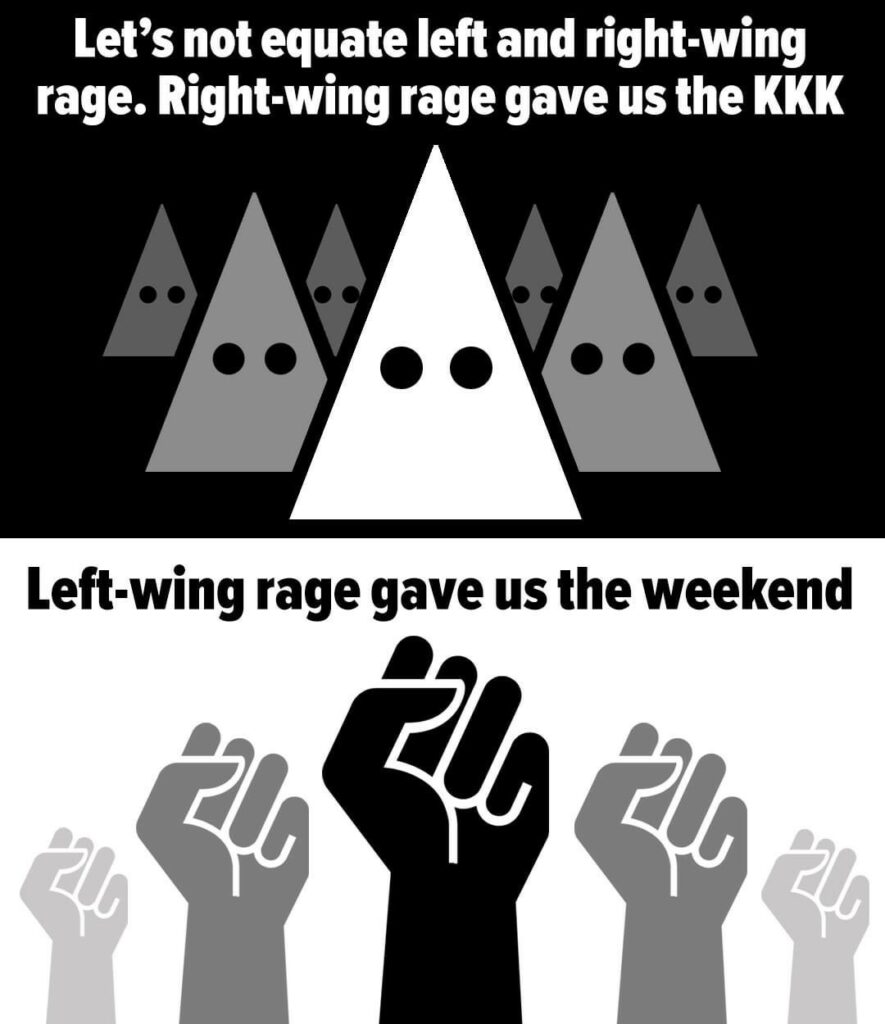
Let’s lift the lid on this. The right is driven by individualism and the obsession with “winning” as if it’s a contest. This path breeds selfishness and calculated cruelty with zero empathy – more selfishness, more cruelty. The left, is a strong contrast, it starts from kindness and mutual support, at best it believes in sharing, in building together. The extreme of that isn’t violent chaos but extreme kindness, extreme empathy. Which side would you rather see amplified by algorithms?
And yes, our thinking on this is a mess. We need to get to work with shovels to compost it – so get digging.
The intended consequence of that EU budget framing is to sound like “law, rights, stability” – but the (un)intended (and very real) consequence is to strangle the roots of protest, dissent, and grassroots organising we need to move way from the current mess. Here’s why it’s a problem for protest, which is the foundation of any meaningful liberal democracy path:
Rule of law vs. rule of order: These budget “safeguards” don’t distinguish between authoritarian crackdowns and legitimate acts of civil disobedience. If a protest camp, blockade, or media collective gets painted as “breaking the law,” EU funding mechanisms can be used to cut support, stigmatise, and silence them.
Weaponising legality: Movements that we need to challenge “captured” state and corporate interests always end up criminalised – not because they are wrong, but because they are inconvenient. Think of climate activists fined for blocking pipelines, migrants criminalised for crossing borders, journalists harassed for exposing corruption. With this EU framework, the act of being in dissent will be turned into grounds for exclusion.
Civil society narrowed: The EU says it wants to “support civil society” – but only the kinds of #NGOs and associations that worship the same #deathcult: professionalised, polished, grant-dependent. Grassroots networks, messy and spiky as they are, don’t fit. They’re starved out, left unfunded, delegitimised.
On the surface this image seems sensible, lift the lid, and it’s only a desperate and pointless shield for #Deathcult stability. Behind all this is the push to preserve the stability of a collapsing order – the long dead and blinded #neoliberal economics, fortress borders, fossil infrastructure. “Democracy, security, and economic stability” is code for maintaining the #deathcult status quo, no matter how much it rots the roots of any real democracy. So yes, this is exactly the kind of shit we need to compost, break it down, expose the rot, turn the shiny “rule of law” path into humus for the real path of the commons, of protest, of collective resistance.
A good start is to move to prosecute the people pushing this “law and order” agenda #KISS
This should be obvious to anyone who as some knolage of left politics. They are the people who always rise to the top when #mainstreaming takes hold. You see them on TV, in parliament, running #NGOs, managing #dotcons tech projects.
On the surface, they don’t always look bad – in fact, they often present as competent, articulate, even charming. But scratch that surface and the pattern is clear: their drive is not shared flourishing, it’s possession and control.
This minority #nastyfew, from a historical view, are today’s bourgeoisie. Marx outlined (https://en.wikipedia.org/wiki/Bourgeoisie), that the bourgeoisie historically gained their power through ownership of the means of production – factories, land, capital – while the working class had nothing but their labour to sell. The bourgeoisie used their control over wealth and coercion to keep society in balance, a balance where they stayed on top and everyone else stayed dependent.
The same dynamic runs through our present, the #nastyfew work to preserve a status quo that serves them. They exploit labour (waged or unwaged), capture resources, and use subtle or blunt coercion to suppress any change or challenge.
Those who hold power – social, technical, financial – remain the #nastyfew unless we actively work to compost them.
Then, in our cultural circles, we have our own “common sense” #blocking, the “parasites” who feed from progressive paths.
#fashernistas – chasing visibility, hashtags, and trends instead of substance. They drain energy by endlessly cycling the latest buzzwords while ignoring the compost underneath.
#Blinded dogmatic liberals – well-meaning perhaps, but so trapped in their own ideology that they block radical change without even seeing it.
The wannabe #nastyfew – those who orbit power, adopting the habits of control in hopes of rising up themselves.
Neo-liberals in disguise – the most dangerous, because they consciously wear the clothing of other paths: climate, diversity, openness… while quietly feeding the #deathcult of enclosure, growth, and control.
Some of these act blindly, reproducing harmful patterns without much thought. Others are deliberate: they know what they’re doing, and they’re doing it to consolidate control.
The unthinking #mainstreaming majority are shadows of the above. They’re not directly malicious, but they absorb the surface story: They repost the slogans. They nod along with “common sense” solutions pushed by the #dotcons and NGOs. They go with the flow, even when the flow is a sewer. Without working composting, they become the mulch for the #nastyfew to grow stronger.
The “nice liberals”. Not all liberals are destructive. Sometimes they play a healthy role: They keep projects afloat by doing practical work. They can mediate between radicals and the #mainstreaming. They often mean well, and can be allies if they’re not left holding the steering wheel all the time. They’re not the compost, they’re more like the worms: sometimes useful, sometimes wriggly, but part of the soil cycle.
And beyond, there are what has value, the progressive radical paths – both #fluffy (trust, care, openness) and #spiky (confrontation, defence, rupture). That’s another layer of the compost pile, and deserves its own focus. The key point: the #nastyfew and their parasites will always try to rise up in any fertile ground. The progressive trick is to compost them early – recycle their energy, block their possessiveness, and keep the soil rich for new seeds.
To recap, let’s look at some history. When the #openweb reboot began about a decade ago, it was rooted in grassroots values: #4opens, federation, collective governance, affinity trust networks. But as soon as the energy started to gather, the #mainstreamin pushed in:
#Dotcons pivoting into the space – Facebook rebranding as “Meta” and trying to swallow the Fediverse through the #Threads/ActivityPub move. This is enclosure dressed up as “openness”.
Standards capture – The #NGO actors increasingly gatekeeper the “neglected” #W3C processes, pushing, more corporate-driven priorities while blocking messy grassroots paths that did the shovelling to grow the reboot during the seedling years.
Control of resources – a few “elitist” individuals began hoarding power over infrastructure, domain names, and repos, reproducing the same top-down model we’re supposed to be escaping.
The result? We are seeing the #mainstreaming channeling energy away from collective growth into more controlled, branded silos. The Fediverse started as messy, small-scale, radical. But the same pattern repeated:
SocialHub degeneration – once the buzzing hub for ActivityPub, it decayed into a handful of blockers. The sometimes competent-and-charming surface masks a deeper instinct for control. Threads stagnate, dissent is suppressed, and the soil turns barren.
Mastodon centralization – while #Mastodon has been vital, its dominance has also let a single dev-team shape the Fediverse “common sense”. That concentration of reputation and technical control looks very much like a wannabe mini-bourgeois class rising.
#NGO incursions – funded NGOs present themselves as allies, but bring managerialism, paywalls thinking, and “stakeholder” logic. Instead of composting conflict, they plaster over it with workshops and careerism. Then #block the people who complain.
This is the #Fediverse version of “workers remain workers, employers remain employers”: contributors remain contributors, gatekeepers remain gatekeepers. We face the issue of possession over collaboration – we see that collectives fracture when individuals cling to admin roles, mailing lists, funds, and leadership positions. Possession rots trust and then groups wither.
The people who hold (and hored) resources, contacts, and media attention become more deadened than path, even if they started with good intentions.
The composting lesson, is that over and over, the #nastyfew and their parasites repeat the bourgeois pattern at scale: They present as competent and charming. They consolidate possession and control. They preserve the status quo by suppressing dissent.
And over and over, the solution is the same: compost them. Turn the piles of #techshit and #NGO mess back into fertile ground. Protect the seeds of grassroots tech trust, keep the social soil messy and alive.
The #OMN is based on human beings doing the right thing.
And they will not, and it will fail.
Human beings doing the right thing, and they will not, and it will fail.
And they will not, and it will fail.
And will fail.
This is the challenge in the era of the #deathcult: A culture that feeds on fear, on greed, on possession.
Seeds are planted, but the soil is barren. Trust is offered, but hands close into fists. A path is drawn, but the walkers scatter into shadows.
The #OMN is fragile, thin green shoots in a field of ash.
It asks the simplest thing: Do the right thing. Not once, but again, and again, and again.
And if we do not? It will fail.
And if we do? Perhaps, seeds will take root, and grow beyond the compost, beyond the #deathcult, into the messy, open, living forest.
Funding the #openweb is a political act, yet most funding decisions today are framed in technical terms only – dominated by what we call the #geekproblem – a worldview where infrastructure is king, user needs are secondary, and social context is largely ignored.
Let’s unpack this with real-world examples and look at how we keep falling into this trap, and what we could do to climb out. The call-out for funding is phrased in social language, to build privacy-preserving tools, improve the commons, empower communities, decentralize infrastructure. But the funded projects rarely reach or empower actual communities. This is the disconnect, a cultural blind spot that stems from the #geekproblem.
We need to fund the social layer, as a strong backend is necessary, nobody is saying otherwise. But it’s not sufficient, the #openweb is not failing because of lack of backends. It’s failing because almost nobody knows they exist, cares, or knows how to use them. Take ActivityPub, the protocol behind Mastodon and the #fediverse. It had existed in various forms for years, but it only took off because:
Mastodon made it social.

It had good UX for regular people.

There was media buzz and community-building.

It offered emotional utility — a real alternative to Twitter at the moment people needed it.
Without this social glue, ActivityPub would have been another elegant-but-abandoned standard. A backend sitting on a shelf, this is the lesson:
To have an #openweb because we need to fund the people and projects who do social UX, onboarding, design, documentation, evangelism, and community organizing.
We currently keep building plumbing and call it a house, we then blame people for not living in it, feeding the #dotcons. Here’s a bitter irony:
Funding backend tools with no regard for adoption pathways just helps #dotcons.
The corporate world happily scoops up open source backend work (including ActivityPub) and wraps it in slick UX, marketing, and control. That’s how:
Meta is building Threads with ActivityPub.

Google funds protocol work to feed proprietary services.

Microsoft contributes to open source, then wraps it in Azure services.
They have the social layer, #PR, onboarding, monetization, network effects, and we hand them the backend work for free. We build the roads, they put up the toll booths.
The Fediverse is not a collection of protocols, it’s not a stack of servers, it’s a culture – or it was. And that culture is in crisis:
Burnout among developers.

Fractured community governance.

Rising influence of #NGOs and foundations pushing vertical, institutional models.

Selling out to mainstreaming partnerships (ex: EU outreach, Threads integration).

Social stagnation as microblogging dominates over creativity, curation, and real collaboration.
There is still potential, a web of relationships, tools, and practices built on trust rather than control, but we are not funding that potential. We are, instead, funding more tools, more protocols, more #techchurn.
What’s the pat out of this mess? We need to rebalance, right now funding overwhelmingly goes toward:
Code (especially backend)

Security and cryptography

Infrastructure-level "innovation"
We need to start funding:
Onboarding, documentation, UX

Social features, not just tech protocols

Network-building between grassroots media and communities

Outreach that isn’t just evangelism, but relationship-building

Public education, not just developer conferences

Human infrastructure — the people doing the messy, unglamorous work of care and connection
Think about projects like: The Open Media Network (OMN) – which builds out real linking between alt-media producers using existing standards like RSS and ActivityPub. It’s boring tech, but socially radical. This project aren’t shiny, but it matters.
We cannot build future paths by pretending the problem is just technical. The #geekproblem is a cultural blindness, the belief that the social will magically emerge once the tech is “good enough.” It won’t.
If you want a flourishing #openweb, you need to fund the people with shovels — the ones doing the care work, building bridges, and holding space for non-geek communities.
Until we do that, the #openweb will remain a ghost town of beautiful ruins – and a free R&D lab for the next generation of #dotcons.
Let’s begin from a traditional liberal framing: Most social interactions should be OPEN, some private or sensitive interactions may be CLOSED.
This isn’t radical. It’s been a functional principle across free societies for the last century. But in our current digital culture, this simple framing is often flipped or ignored. Many developers, activists, and even funders uncritically push for closure, often in the name of privacy, safety and control, without recognizing what’s lost when everything closes.
The power of OPEN is in all good forms of social power, and progress comes from open processes:
Transparency builds trust.

Sharing creates knowledge and community.

Federation gives us alternatives to centralized control.
From the printing press to Wikipedia, openness has always been a powerful force for liberation, creativity, and ideas of justice. Meanwhile, much of the worst abuse and corruption festers in the dark:
Hidden surveillance (NSA/Five Eyes).

Closed algorithms (Facebook/YouTube).

Closed decision-making in opaque NGOs and funding foundations.
If we push everything into private silos or locked behind paywalls, we kill the culture that allows us to challenge and change the systems we live and die under. We are left with only closed, and that’s not a world we want to live in.
A real-world example is needed? Let’s talk about the Diaspora project, 15 years ago, in response to Facebook’s rise, a group of well-meaning devs built a “privacy-first” social network. They rejected the openness of exiting paths like #RSS and federated tech like #XMPP. They wanted to start from scratch, build their own private network, and lock down data flows, for “safety”.
The result was a very predictable mess, Diaspora burned brightly and briefly, but never built a vibrant network. In contrast, existing open networks were shouted down, de-funded, and ignored. Ten years passed. Then, we had to reinvent the same open paths, we had shut out, with ActivityPub to get back to what #RSS and other open tools had already done.
This is the #geekproblem, the idea that you can throw away working social infrastructure because it’s not “clean” or “cool”, and replace it with abstract, closed systems… a path that usually ends in failure. Worse, it delayed progress by a decade. Encryptionism, privacy dogma, and the closing of the commons, where mess we now need to compost
Yes, privacy is important, nobody is arguing otherwise, but what many #encryptionists miss is that building only for privacy is building only for fear. You can’t build a shared culture on fear alone, you need to balance this with trust, transparency, and cooperation too. These require openness. When everything defaults to closed, the commons die, and without the commons, there is no #openweb.
A politics of openness, is not just technical. It’s deeply social and political. It touches on human nature, ideology, and power. If you’re new to these ideas, start with some reading of the basics of Sociology (Wikipedia) and Political ideologies then ask what assumptions are built into tech? Who does it empower? Who does it exclude?
This is about where to begin, to understand motivations and outcomes in #openweb development, it helps to name the ideological currents at play:
Conservatism → favors stability, hierarchy, closure.

Liberalism → favors rights, transparency, and balance.

Anarchism → favors decentralization, autonomy, and openness.
Much of the Fediverse, despite the tech mess, is functionally anarchist in ethos. But this is rarely understood or spoken aloud. We have the A (Anarchy) but not yet the O (Order). A job people could take on is to fix this by building the O in the Fediverse, rather than let the default path be imposed, by the natural flow where #NGOs and #foundations bring closed governance models wrapped in the fig leaf of “participation”, we should be working now to build native, open forms of governance.
That’s what the Open Governance Body (#OGB) is outlined to do, to creating soft structure for an open culture. That’s what the #4opens help guide: basic principles for transparency and shared power, let’s support these paths. As if we default to closure – either because of fear, control, or ideology – we kill the #openweb before it can grow back.
Let’s remember, we are the stewards of the future commons, let’s keep the doors opens. Thoughts? Examples? Let’s keep this conversation alive, in the open.
Almost all of our #geekproblem software fails because it’s built with a mindset of control.
Control over users. Control over systems. Control over outcomes.
But all good societies, and all durable communities, are based on trust. When we ignore this, we don’t just write bad code, we produce #techshit that nobody uses, that burns out developers, and that confuses users. Then we start over… and call it “innovation.” That’s #techchurn.
Control-driven projects: Examples of failure
Diaspora
Touted as a Facebook alternative, it focused too much on cryptographic control and data silos — and forgot the social UX that makes people actually want to use social media. It never recovered from this early design flaw.

GNOME Online Accounts
Supposed to be a bridge between the desktop and online services. Instead, it became a privacy puzzle with unclear consent and broken trust. Control was enforced without social understanding.

Secure Scuttlebutt (SSB)
A radical peer-to-peer network, very promising. But became increasingly unusable due to overcomplicated trust mechanics and lack of simple social pathways for onboarding new users. The community stalled.

Matrix / Element
Still pushing forward, but has constant friction because it replicates many centralised “control” models in the name of “choice.” Powerful, yes. But still struggles with real decentralised trust outside geek bubbles.
🌱 Trust-Based Systems: What Works?
Fediverse / Mastodon
It works because it’s socially familiar and based on human trust over algorithmic control. You choose who to follow, what server you trust. And it grew because of this — not in spite of it.

Signal (Early Days)
Before turning more into a consumer app, Signal succeeded by focusing on trusted networks — your phonebook — and making end-to-end encryption invisible. It was about trust, not just security.
The real problem is in part to do it money and the funding of the wrong side of tech, in that most funding goes to things that feel safe:
Protocol development

Core backend infrastructure

“Governance” initiatives run by “neutral” NGOs
These are important up to a point, but this “safe” money ONLY reproduces the #geekproblem:
Building tech without communities

Tools without culture

Features without stories
When we do try to fund the social side, the interfaces, user onboarding, documentation, actual relationships, it too often gets handed to parasite #NGOs with no grassroots accountability. Just look at the endless pilot projects by digital rights NGOs that are abandoned 18 months later. Or the “governance frameworks” that never go anywhere. It’s a cycle of buzzwords over boots-on-the-ground.
The people with shovels, in a messy world, the only thing that might work is messy people with shovels, people who compost the shit, clean the broken tools, and patch the networks to keep things going.
These people are rarely funded. They’re not “scalable.” They don’t write grant-friendly proposals. But without them, none of the tools work.
Who funds them?
A call to action: If we want an #openweb that survives the coming waves of #climatechaos and #mainstreaming sellouts… We need to fund trust, not control, to support social infrastructure, not just servers and specs, to back messy doers, not polished whitepapers. We need to talk about this, fund this, and build on this, or we’re just making more compost for the next #dotcons to grow from.