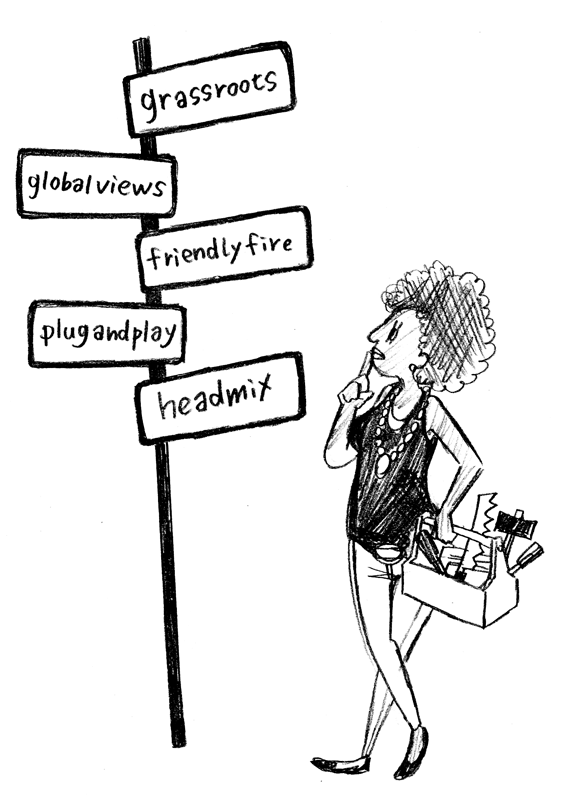
The #KISS secret about the noise in “digital sovereignty” is very simple – Ignore most of this branding and build commons tech instead. That’s the path, not another layer of management, another funding bureaucracy for a glossy strategy document. Not another NGO conference circuit explaining why nothing can happen without another round of funding. Just build working commons.
This matters because much of the #EU “digital sovereignty” conversation is simply more churn inside the same #neoliberal#mainstreaming logic that created the problem in the first place. Europe spent decades outsourcing infrastructure, privatising public space, undermining local autonomy, and feeding the #dotcons.
Now the consequences are becoming impossible to ignore, dependence on US platform monopolies, fragile infrastructure, imperialist surveillance capitalism, cloud centralisation, shrinking democratic accountability, and growing geopolitical vulnerability.
So suddenly everybody is talking about “sovereignty”, but what do our chattering class of institutional actors mean by sovereignty? Too often they mean procurement contracts, compliance frameworks, consultancy ecosystems, defence posturing, startup hype and fashionable funding narratives. The same old structures wearing a new outfit.
This is where the #fashionistas rush in to cash out of the latest cycle of #techshit, every crisis produces a new branding wave #Web3, #AI, #blockchain, smart cities, trusted identity and now digital sovereignty. The words change, the consultants were the same clothes, to push funding applications with different buzz words. But underneath, the social relations to often stay exactly the same. This is why so much “innovation” produces so little durable social value, the energy and focus gets consumed by branding, positioning, institutional competition, and funding capture.
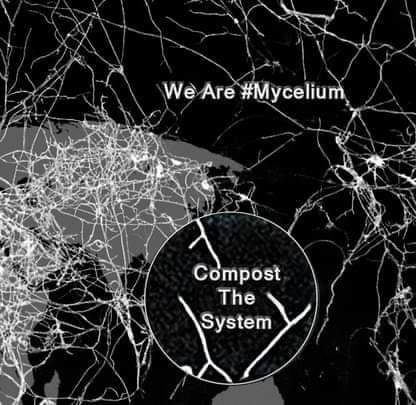
The #OMN approach is to compost this mess rather than feed it. Composting means recognising that some parts of the existing system still contain nutrients technical knowledge, infrastructure, institutions, legal frameworks, public funding, developer skills. But these need breaking down and re-rooting into commons processes instead of simply reproducing the same dead structures.
The #KISS approach is important because complexity is often used as a control system, the more complicated the governance path becomes the harder it is for normal people to participate, the easier it is for insiders to dominate, and the more power flows to the parasite class managing the process. People then confuse institutional complexity with competence, but most healthy social systems are not built this way, healthy systems tend to be transparent, iterative, federated, participatory, and grounded in practical trust.
That’s why the native #openweb worked when it worked, people built things together directly like mailing lists, forums, blogs (bit more messy), federated publishing, open protocols, community hosting, shared standards. Messy? Yes. Human? Yes, but functional. The current “digital sovereignty” debate ignores this history because acknowledging it would undermine the need for the giant managerial layer now feeding on the crisis.
A lot of the current policy noise is about preserving institutional power during systemic decline, that’s why signal-to-noise matters, most of the noise performs concern, manages perception, protects careers, and absorbs dissent into harmless process. Signal is rarer, it’s about building actual commons’ infrastructure, creating durable trust networks, supporting federation, sharing governance openly, and keeping paths simple enough that communities can understand and maintain them.
This is one reason the #4opens remain central, without these, “digital sovereignty” simply becomes another enclosure strategy under a different flag. European-owned silos are still silos, state-managed platform capitalism is still platform capitalism. Replacing Silicon Valley landlords with Brussels landlords is not liberation.
The real challenge is rebuilding public digital commons, that means the hard part is cultural, not only technical. People are deeply trained by #mainstreaming to look upward for solutions to governments, corporations, experts, influencers, NGO etc. But commons culture grows sideways instead, through participation, trust and through practical collaboration, yes this is slower at first, but far more resilient over time.
That’s the real #KISS secret, ignore much of the spectacle and quietly build the alternative underneath it. Less noise, more compost – Less branding, more commons – Less #techshit. More grounded infrastructure. That’s how you compost the #mainstreaming mess instead of endlessly feeding it.
“Being in #Oxford today, I popped into the #OxfordUnion to use a room. Glancing through the term card, it’s absolutely vile – and has been consistently so for the two years I’ve been back in the city. It’s a useful, if deeply dispiriting, exercise in reading the people and place. This is where parts of the next ruling class form their opinions and sharpen their instincts. Judging by what they’re platforming, we are not heading for a good time…”
One useful term about this mess on the #OMN path is “Sophist”. Historically, the Sophists were traveling teachers in Ancient Greece during the 5th and 4th centuries BC. They taught rhetoric, politics, philosophy, and persuasion to the sons of the ruling elite. In many ways, they were the media consultants, communication strategists, and public intellectuals of their time. Their ideas were, and still are, deeply useful to elitist power. Truth was treated not as something to strive for, but as something relative to perspective and circumstance. Protagoras summed this up with the phrase “Man is the measure of all things.”
From this flowed a power-based philosophy – if truth is flexible, then gaining and holding power is less about discovering what is true, and more about learning how to persuade people effectively. Sophists became famous for teaching students how to win arguments regardless of the facts, make “the weaker argument appear stronger,” and manipulate rhetoric and perception for advantage.
This is why philosophers like Socrates and Plato attacked them so fiercely. Classical philosophy, much like the modern scientific ideal, was supposed to be a search for truth, ethics, wisdom, and understanding. The Sophists instead treated philosophy as a competitive social tool for gaining status, influence, and power.
That conflict has never gone away, when we look at the last 40 years, it becomes obvious that we now live inside a revived Sophist culture. Under neoliberal #mainstreaming, politics, media, academia, branding, and online culture have steadily shifted away from questions of shared reality and toward competitive narrative management.
The central questions are no longer what is true? what is just? and what works for the commons? Instead, the “common sense” questions become what performs well? What wins attention? What controls the narrative? What protects the brand? What keeps the funding flowing? And finally, the #stupidindividualism of, what keeps the career safe?
This is the culture the #dotcons perfected, were algorithms reward emotional reaction over understanding, public relations replaces public reasoning, identity replaces grounded collective politics so that communication becomes performance instead of dialogue. Truth becomes aesthetic.
That is in part why so many people now experience a constant feeling of unreality, we are swimming in rhetorical systems optimized not for understanding, but for engagement, manipulation, and market positioning. The modern “post-truth” condition is not accidental, it is the logical outcome of self-interested #postmodern Sophist culture merged with #dotcons platform capitalism feedback loops.
What do we have to balance this, the #OMN path matters because it tries to push against this drift. The goal is not some fantasy of perfect objectivity, humans are always partial, messy, emotional, and socially situated. But there is still a huge difference between collectively searching for grounded truth together, and treating all communication as strategic manipulation. The first builds commons – the second destroys trust. This is why the #4opens matter:
Open process, Open data, Open standards, Open licences.
These are not only technical principles, they are social tools designed to reduce hidden manipulation and rebuild shared trust. Visible process matters because invisible power breeds Sophistry. Open discussion matters because branding culture hides contradictions behind managed messaging. Shared media matters because without public memory, every conversation resets into manipulation and spin.
The danger of endless rhetoric is that a society trapped in Sophist culture loses the ability to act collectively. Everything becomes performance, positioning, optics, career management, and endless dead-end symbolic conflict. Meanwhile the real flowing crises deepen, #climatechaos, enclosure, collapsing infrastructure, rising authoritarianism and the destruction of public life. People are trained to argue endlessly while losing the ability to build together.
This is one of the many reasons the #openweb matters, yes, native #openweb culture is imperfect, messy, and chaotic, but it is also rooted in a stronger relationship between communication and shared reality. People built infrastructure together, they argued, but they also created commons, this spirit still survives in fragments across the #Fediverse path.
We need to use these tools to compost the Sophist mess – not through purity politics or ideological certainty, because that simply creates another closed rhetorical system. The path is to reboot cultures where truth matters again, evidence matters, lived experience matters, dialogue matters, and collective accountability matters. This needs focus because the current system trains exactly the opposite habits.
The #OMN path tries to compost this mess instead of reproducing it – with less rhetorical theater and more grounded process, less manipulation, more trust, less “winning the argument,” more building shared understanding strong enough to support collective action. That is the underlying conflict beneath much of today’s social and political confusion – the struggle between communication as manipulation and communication as commons.
And right now, the commons desperately need rebuilding, and this matters for both the #openweb reboot and the #OxfordBoaters struggle. Both are fundamentally fights over who controls reality, narrative, legitimacy, and public memory. The landowners’ push in Oxford is a small-scale example of modern Sophistry in action. The issue is not simply “facts” about moorings, river access, safety, or management. The battle is over framing of who gets presented as “reasonable,” who gets framed as “problematic,” whose voices count, whose history becomes visible and who’s gets erased. This is how eliteist power works – not only through visible force, but through narrative management, institutional framing, bureaucratic process, selective legitimacy, and most importently control of communication channels.
The boaters to often fail to engage with this power because of the atomized #stupidindividualism that dominates our lives. Yet they are precisely the people with lived experience, practical knowledge, and deep historical connection to the river, metaphor and real.
Instead, the conflict becomes nastier than it needs to be because it shifts away from solving shared problems and toward managing perception. That is modern Sophistry in practice, the same thing happens across the wider internet. The early #openweb was messy, but it was rooted in participation, shared infrastructure, transparency, and collective building. People made websites, forums, federated systems, community media, and open tools together. There were arguments, conflicts, and failures, but there was also visible process and public memory.
The rise of the #dotcons replaced much of this with managed perception systems optimised for engagement, advertising, behavioural manipulation, and social control. Communication shifted from dialogue to performance, from publishing to branding, from communities to audiences, from commons to platforms and from participation to passive consumption. Again, this is Sophistry – communication not for understanding, but for influence and control.
This is why the #OMN path matters. The project is not simply about “better media” or “better activism.” It is about rebuilding the social conditions where grounded collective understanding becomes possible again. For the #openweb reboot this means rebuilding commons infrastructure, restoring public conversation, protecting shared memory, creating transparent governance to resist platform manipulation.
For the #OxfordBoaters struggle this means creating our own media stories to document lived reality, preserving collective memory, make hidden processes visible. This is why the #4opens are practical anti-Sophist tools – Open process counters hidden manipulation – Open data counters selective framing – Open standards counter enclosure – Open licences protect shared social knowledge from privatisation. Without these, power disappears into invisible structures while presenting itself as neutral management.
One of the deepest problems today is that many people now trust polished institutional narratives and #dotcons tools more than messy lived experience. Boaters should already understand this because they directly experience the gap between official language and material reality. The boat struggle and the #openweb struggle are connected because both are about defending commons against enclosure: river commons, communication commons, social commons and democratic commons. And both are being undermined by the same Sophist culture of managed perception, institutional branding, bureaucratic abstraction, and invisible power.
So the task is not simply to “win arguments.” That is the Sophistry trap. The native path we need is rebuild is gthe environments where truth emerge collectively, trust grows, so conflict can become productive instead of performative, and people can act together in the real world.
In short, the fight is not just against bad policies or bad platforms. It is between communication as manipulation and communication as commons. And if we do not consciously rebuild the commons side of that divide, both the rivers and the web will continue disappearing into managed enclosure #KISS
The pattern we need to compost – You write something rooted in years of experience and practical work, you try to make it accessible. Someone responds immediately with an objection that shows they haven’t read let alone followed the argument yet. Or they react to the tone, the hashtag, or one phrase instead of engaging with the substance.
Sometimes the response is sincere but rushed, sometimes it’s performative, often it’s shaped by the habits we’ve absorbed from #dotcons culture, where speed of reaction is rewarded more than depth of thought. And then comes the difficult choice do you explain everything again? Do you spend energy untangling misunderstandings? Or do you move on because there’s already too much real work waiting?
This is not about wanting agreement or avoiding criticism, good disagreement is useful, serious challenge helps sharpen ideas. What becomes exhausting is the absence of engagement underneath the reaction.
So why does this matter beyond personal burnout? It affects the quality of collective thinking itself as social movements need spaces where people can develop ideas slowly enough for them to become useful, they need room for reflection, experimentation, disagreement, revision, and learning.
But current online cultures work against this, they reward immediacy, certainty, and social positioning over-curiosity and understanding. The result is that careful, grounded thinking gets buried under waves of noise over signal. Meanwhile, the people willing to do the slower work of connecting history, practice, and lived experience quietly burn out or retreat, a real loss for movements trying to survive let alone challenge these difficult times.
On a positive note meaningful engagement still happens – and when it does, you notice it immediately. Someone reads carefully, they respond to what was actually written. They disagree thoughtfully, ask useful questions, or add experience that deepens the conversation. Suddenly the exchange becomes productive instead of draining, a resent example:
“Thanks for sharing this. It’s funny, but I have no idea how we’re connected, even though we have been since 2008 and, given your off-grid existence, we live in very different worlds.
I’ve been following the Fediverse world tangentially for some time, and I’m not surprised by your observation. The frictionless pervasiveness of corporate control is inescapable, and most people have no concept of #openweb.
Safe travels”
Those moments matter more than they might seem, because real engagement changes the social atmosphere around ideas. It creates space where people can think out loud together without conversations collapsing into noise and defensiveness, it reminds us that collective intelligence is still possible. And importantly, thoughtful engagement does not require expertise, it mostly requires attention and good faith. Simple things help:
reading fully before reacting,
asking clarifying questions,
responding to the core argument rather than the easiest target,
and being willing to sit with discomfort long enough to understand it.
That’s commons culture, and we need more of it.
Composting the mess – A lot of what we’re struggling with right now comes from broken communication environments. The platforms most people use are designed for engagement metrics, not understanding. Over time that shapes how we think, organise, and relate to each other.
But we are not trapped inside those habits forever, we can consciously grow slower conversations, more curiosity, less instant certainty, stronger trust, and more willingness to build on each other’s thinking instead of competing for attention.
Yes, this doesn’t magically fix the systemic problems, but it does create spaces where useful ideas can survive long enough to grow into practical action. The work ahead is difficult, we need people capable of thinking carefully, critically, and collectively about the mess we’re living through. We need spaces where difficult ideas can be explored instead of instantly flattened into social performance.
So the ask is #KISS – Read carefully, respond thoughtfully, disagree well to help build conversations that leave everyone understanding the issue a little better than before. That’s how we keep our shared work alive, and honestly, that’s how we keep each other going too.
The online tools we “common sense” rely on for organising and campaigning are genuinely dangerous, and I find that paralysing. This isn’t paranoia, it’s a practical reality that urgently needs addressing. Until we do, offline working groups are one of the few reliable ways to unblock the mess.
Where we actually are now… Disappearing, encrypted chat outside the #dotcons is one of the few spaces that feels even marginally safe. But even then, safety depends entirely on who’s in the room, which means those spaces need to stay small, focused, and constantly tended. The moment trust becomes uncertain, the space becomes a liability.
The result, for me personally, is that I currently have no viable online tools left for outreach. Everything leaves traces, so all that remains is slow, word-of-mouth. The legal reality we need to talks about offline, almost everything posted on #dotcons platforms leaves a digital fingerprint – metadata, timestamps, IP addresses, connection logs, account linkages. In practical terms, nowhere on these platforms is truly safe to post anything sensitive.
The specific danger that doesn’t get named often enough is this: if someone who was loosely connected to a campaign later commits a crime in the name of that campaign, the person who posted most visibly can end up legally exposed – even if they had absolutely nothing to do with what happened. The evidence trail is strong, easily misinterpreted, and the legal system is not neutral, it has historically been used as a tool of repression by those with power and resources against those without. That’s not a conspiracy theory, it’s a pattern with a long, well-documented history.
This means high-volume posting, public organising on corporate platforms, and mixing open campaigning with less legal internal discussion in the same spaces isn’t just tactically sloppy, it has destroyed people’s lives.
Two paths: closed and open, people have been campaigning on digital security in activism for years, and the basic framework is straightforward – there are closed paths and open paths, and we need both working without the current aggressive #blocking that creates so much damaging mess.
For closed working groups – small, trust-based, sensitive – use whatever, non #dotcons tool the group agrees on and trusts. Signal is the obvious everyday choice: it’s not perfect, but it’s practical, easier to understand, and good enough for most internal communication when used carefully.
For open working groups – anything involving outreach, public-facing organising, and building broader community – the answer has to be #4opens common tools. Not a fragmented collection of proprietary apps that each create their own data trail and dependency. The digital splintering of activist spaces across dozens of incompatible, corporate-owned tools is itself a security problem, as well as an organisational one. #KISS.
As our lives are more directly touched by repression what we need is real conversations – across campaigns and communities – about #4opens web security in practical activism. Not a geek seminar, not a jargon-heavy toolkit nobody reads, but an honest, accessible discussion about:
What the actual risks are and who they fall on
Which tools are appropriate for which purposes
How to keep open organising genuinely open without handing surveillance infrastructure a dangerous map of our work
How to support the people most exposed – those who post publicly and visibly – so they’re not carrying legal risk in isolation.
The #geekproblem here is real, too many of the existing resources are built by and for technically confident people, and leave everyone else either confused or falsely reassured. We need socially safe security culture that works for normal people doing necessary work.
On a side note: I wish people would stop blaming me for the problems they create themselves LINK
“To put some “commons” structure into this kindness… A path before we knee-jerk criticise members of the community we should make real offers to help repeatedly (x3) in a positive community way. Only then let the “negative” monster of judgment lose to clean up the mess. Focus on clean up first, the “common senses” desire to attack second. What do you think about growing our positive norms (common sense).”
This is the hard bit of any grassroots movement of turning stress, conflict, and exhaustion into actual commons culture instead of mutual destruction. The #openweb and the #oxfordboaters struggle are not separate things, they are the same social problem playing out in different spaces.
What kills communities is rarely only outside pressure. Most often, communities collapse because fear, exhaustion, and insecurity get turned inward. People stop seeing each other as comrades surviving a mess together and start judging each other as obstacles, annoyances, or moral failures.
That path always ends the same way, more, silence, resentment, burnout, fragmentation, and finally removal by outside power. If we don’t make the effort to really/affectively care the mainstream system does not need to crush fragmented communities, it just waits for them to exhaust themselves.
So it should be obverse to us that we need to consciously grow a different “common sense”, a simple common’s principles. An example that lead to this post – Before criticism, make real offers of help. Repeatedly. Publicly. Patiently. Say “Can we help?”, “Can we clean this together?”, “Can we support this person?”, “Can we solve the practical issue first?” Do this once, then again, then again. Only after repeated good-faith attempts fail do we move to much harder, but needed, conversations about responsibility and boundaries.
That flips the current social norm on its head as right now, many people instinctively jump first to blame, moral judgment, public criticism, personal conflict, and social positioning. Which only goes to make more mess with defensive reactions, gossip, claques, leading to more bad feelings and more mess to compost. The original problem becomes secondary to the social fallout, it is the same destructive pattern we see constantly on the #closedweb of people performing morality instead of building trust.
The irony is that many people involved genuinely care. The problem is the social structure they are acting inside. Without commons culture, care easily mutates into aggression under stress. And the stress is real, boat communities are under pressure:
housing pressure,
enforcement pressure,
media pressure,
financial pressure,
environmental pressure,
and constant uncertainty.
Under those conditions, fear spreads quickly, fear then sharpens into suspicion, suspicion turns personal. Then people who are already vulnerable get isolated and targeted. This is why community structure matters. And yes, people HATE talking about structure. Because structure sounds formal, controlling, bureaucratic, or “political”. But avoiding structure does not create freedom, it creates invisible power, unspoken hierarchies, emotional manipulation, and endless circular conflict.
#KISS applies here, keep it simple, by helping first, focus on solutions before judgment, clean up mess before assigning blame, defend community before performing outrage. That does not mean “anything goes”. Commons culture still needs boundaries. But boundaries work far better when they emerge from visible care and collective trust rather than instant punishment culture.
The really uncomfortable truth is in struggling movements, powerless people can sometimes become dangerous to the very people trying to help them. Not because they are evil, but because abandonment, stress, and insecurity distort behaviour. People lash out sideways when they have no power upwards. This is common across activist scenes, precarious housing struggles, and grassroots communities.
Meanwhile, institutions simply wait, then, when the land becomes valuable enough or politically convenient enough, they sweep everyone away. This is exactly why commons defence matters. If we are serious about defending moorings, boat culture, and free community space, then we need social solidarity strong enough to survive internal conflict without collapsing into backstabbing and fragmentation.
That means both “fluffy” and “spiky” people matter, the fluffy crew mediate, support, de-escalate, organise care and hold social trust together. The spiky crew hold boundaries, confront institutions, resist manipulation, refuse displacement to defend space when pressure grows. Without fluffy people, movements become cruel, without spiky people, movements get crushed. We need both, and despite all the mess, there are positive signs.
The growing “shiny summer” feeling among boaters matters. Community meals, litter picks, conversations, mutual support, visible presence on the river – these things are not trivial. They build legitimacy, morale, and collective identity.
That social light is important because a media dark shadow is coming, as pressure increases, traditional media narratives will frame boaters as irresponsible, antisocial, dirty, chaotic, or obstacles to “proper management”. We need to pre-counter that now through visible commons culture: care for the river, care for each other, visible participation, practical action, and stories rooted in lived history. Because this struggle is not new.
The canal system survived before because communities fought for it. The history matters. Books like Narrow Boat and struggles like Battle of Stourbridge remind us that preservation only happened because ordinary people organised collectively and refused to let living waterways be erased. This is the path again now, messy, human, imperfect, but still possible. If we can grow a new “common sense” rooted in mutual aid, patience, practical care, trust and collective defence, then free boating communities might still exist here in ten years.
Hard fight ahead, but people before us already showed that these waterways and our #openweb culture are worth defending.
#Horizontalism is a buzz word, but let’s look at it anyway as it’s the start and the end of this story, a form of social organization based on the #DIY non-hierarchical, democratic path where power is distributed among participants rather than concentrated in leaders. With a working focuses on “prefigurative politics,” to live and act in the present according to the values of the future society you want to create (e.g., equality, mutual aid, and self-management). Think of a honeycomb or network rather than a pyramid:
Assemblies & consensus, were decision-making happens through assemblies to create affinity groups that reach working practical consensus (rather than majority voting), aiming to ensure all voices are heard.
Affective politics is about building relationships based on dignity, trust, and mutual respect rather than mere efficiency.
Direct action & autonomy has a long history, movements, create their own spaces and services (like food and medical care). The “Fluffy” (Constructive) aspects.
Empowerment breaks down the “leader/follower” divide, encouraging everyone to be an active agent of change.
Adaptability, because it is decentralized, it can be resilient and difficult for authority to “headhunt” leaders to stop it. The “Spiky” (Messy/Challenging)
Let’s look at the problems and inefficiencies:
Decision-making by only consensus is very slow and time-consuming, thus the rapid shift to #4open affinity groups to balance this.
Hidden power dynamics is its real problem that sometimes the lack of structure leads to informal hierarchies, where those with more time or charisma dominate, despite the lack of official titles. We have to solve this by sharing responsibility.
Scalability – while great for small, local groups, scaling this path to large, nationwide, or international movements create coordination issues that we need working federated tech projects like the #OMN for.
Sustainability, maintaining the energy required for horizontal assembly, especially when faced with external opposition, can be difficult. But without this path of #Horizontalism as a necessary “corrective” to traditional vertical politics, we don’t and up in any participatory spaces at all.
So on a positive sense it’s an easy – but strongly anti-common sense path – to start the real composting we need. On a negative sense its mess and more mess to wade through, alongside the mainstreaming mess flooding in… it’s all mess might as well get used to this 😉
People ask why the articles are hard to follow without background, it’s a fair point, but a distraction as these are not stand-alone hot takes, they are all a part of a long flowing story about how we got into this mess and how we might get out of it.
So, focus, please share this and the other posts if we’re going to recover focus and direction on the #openweb path. What happened over the last ten years on the Fediverse wasn’t random. It was a slow drift away from the native path that worked, and toward a confused mess of branding, #NGO careerism, platform thinking, and endless social noise.
The problem is most people now arrive in the #Fediverse with no memory of the culture that built the #openweb of trust networks, grassroots publishing, the messy but functional commons, the #4opens, the idea that media belongs in public and the understanding that social process matters more than shiny tech.
Instead, people arrive carrying the assumptions of the #dotcons – branding over community, engagement overtrust and control over openness. Leading to assumptions of private chat over public knowledge and algorithmic mediation over human responsibility. Then they push focus to rebuild the same broken structures again and again while calling it “innovation”.
That’s the real story of the last ten years, we inherited working social and technical traditions, then forgot why they worked. Now we’re drowning in signal-to-noise, fake “governance”, performative moderation, invisible power structures, startup logic and endless #fashionista churn.
And yes, this matters beyond tech culture, because while people are busy polishing identities and building another pointless #techshit platform layer, the world is burning – #climatechaos, collapsing public infrastructure, rising authoritarianism and corporate enclosure of every part of public life. So yes, we need “alt sense” – alternative common sense – or we are genuinely beaten, not only in an abstract future way, but in ten years in a “rubber truncheons and floodwater” way.
Make the effort to understand the path built from alt common sense history, or we’ll keep repeating the same mistakes until there’s nothing left worth defending.
You know, when people are heading over a cliff, I’m more than happy to be “left behind“.
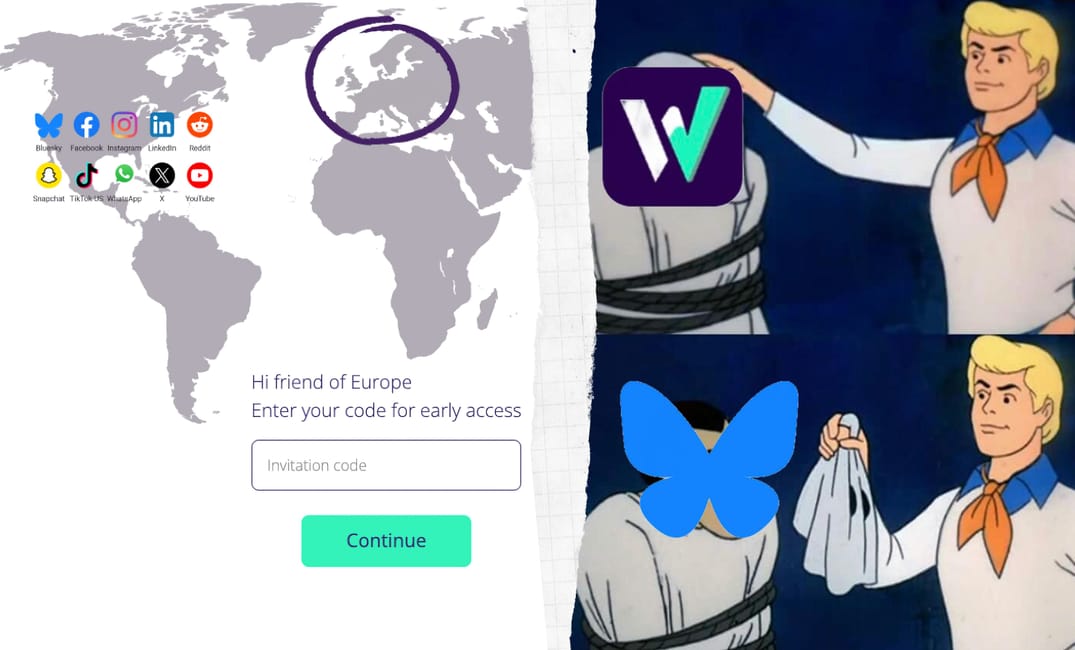
This story is #openwashing, not innovation. “New European social network” is actually a fork of #Bluesky wrapped in sovereignty language, as Elena Rossini says with the same #dotcons logic – PR-first launch (Davos), reality comes later (or never). This tech mess illustrates, if people start with branding, funding, and media narrative instead of community and process, it’s not #openweb – it’s #closedweb in a mask, when people ignore existing commons is easy to see the red flag.
Why is this a mess? Existing working systems: #Fediverse (e.g. Mastodon), RSS, open standards, were ignored or dismissed as “non-scalable” or “non-monetizable” so there plan is reinventing the wheel → badly. With “scaling” used as an excuse for control with claims that the #fediverse “can’t scale” and “needs monetization”. The simple reality is scaling here is an old story of centralising control + extracting value.
Let’s look at this from a native view of grassroots scale = trust, diversity, human limits vs corporate scale vs control, extraction, surveillance. They are different processes → different outcomes with ID verification = anti-commons architecture. What this creates is exclusion, surveillance, and power asymmetry. This shallowly hidden #dotcons path flips the #openweb model from permissionless participation to controlled access and tracking. It’s not a public space – it’s “smiling” infrastructure for governance and policing.
Let’s look at how the media failed as it’s a part of the problem, journalists repeated press releases with no technical or cultural literacy, leading to the #mainstreaming mythology of “first European network” unchallenged, this cultural memory hole is a recurring mess we need to compost. The outcome is every shallow reboot looks “new”.
This feeds the real divide in tech vs culture. You see the same split again on the dev side: forks protocols, builds platforms → ignores social process. And on the activist side: understands community → stuck in Facebook/Slack. Without combining both you either get silos or you get capture. One useful way of seeing this is to follow the money, to see the outcome of investor-driven, marketing-heavy teams with “Monetization” as a core requirement. Funding-first projects don’t build commons, they build exits, leverage and control systems.
It should be obviously – nobody should be surprised that this liberal pushing of “Sovereignty” is being hijacked, using #EU branding as legitimacy. This is the #eurowashing of #dotcons models we touched on at the start. Real “sovereignty”, what ever it means, lives in open protocols, distributed governance and local autonomy. Not in a branded platform, or the nation state any more – thus the danger is confusion. People will still join because “it’s European”, “it’s new” and “it sounds ethical”. Thus, the problem isn’t only evil actors – it’s signal-to-noise collapse.
What this means for projects like the #OMN (the actionable bit). This whole story reinforces the core path – that we focus on stopping building “new platforms” to start composting what already exists. A common’s strategy using existing protocols (#ActivityPub, RSS), rooted in grassroots trust networks. Keep processes open (#4opens) to accept human-scale limits then scale by federate for reach, not control.
The #WSocial mess shows exactly what happens when you strip the #openweb of its culture and replace it with PR, funding, and control. Our native path is the opposite, growth from the commons. Its #KISS or you just recreate the problem.
Let’s focus on being honest, the most exhausting and destructive habit in activist and alternative tech spaces is the blinded reflex to turn disagreement into personal conflict. Someone challenges an idea, and it becomes an attack, names a pattern of behaviour, and suddenly it’s a vendetta. Someone points at structural problems and gets accused of targeting individuals. This is #stupidindividualism in its purest form, and it’s #nothingnew.
It’s not only about difficult personalities or bad intent, it’s the result of forty years of #neoliberal conditioning. The #deathcult of “common sense” market logic has trained us to see everything as personal, personal responsibility, personal success, personal failure, personal conflict. The frameworks for understanding structural problems have been stripped away, so when structural problems are talked about, people fall back on the only tool they’ve been given – finding someone to blame.
The result is nasty and predictable, good projects collapse into personality clashes, needed critiques get dismissed as personal attacks. The real issues will be the systemic mess that needs composting, never get addressed, because everyone is too busy dealing with the drama. This is #deathcult doing what it’s designed to do – keep us fighting each other instead of the system.
So why do we struggle to see this mess, it’s mostly invisible to the people caught inside it as people feel like they’re responding reasonably to real problems, and sometimes they are. But the frame – “this person is the problem” – is almost always wrong as this mess runs like background software, it shapes perception before conscious thought kicks in. A structural critique goes in, a personal accusation comes out – not because people are stupid, but because that’s how they’ve been trained to interpret things.
This is why telling people to “be less defensive” or “think structurally” rarely works. Were asking people to change behaviour without changing the environment that produces it. Culture follows structure, if we want different behaviour, we need different processes, practices, and spaces.
How we actually compost this? It isn’t about perfection, it’s about having better tools – some practical shovels (like the #OMN) to use to name the pattern, not the person, when things start getting personal, we simply shift the frame. “This feels like it’s turning into a personal conflict, but the issue is actually how we’re making decisions” works better than “you’re being defensive.” One opens space, the other closes it.
Build processes before you need them, don’t wait for conflict to figure out how to handle it. Groups that survive disagreement usually have simple, visible processes in place: how decisions happen, how issues get raised, who mediates. This is what #4opens and #OGB are for – use them early.
Separate decision-making from chat as most drama lives in chat spaces – WhatsApp, Discord, comment threads are optimised for reaction, not reflection. If decisions happen there, we’ll get reactive, personalised outcomes. Move important decisions into slower, more visible, documented spaces.
Make structural problems visible as vagueness fuels personalisation – Clear statements like “our funding model creates dependency” or “new people can’t influence decisions” give people something real to work on. Without that clarity, frustration gets directed at individuals.
Actively grow a different culture, its slow, but it works. Model structural thinking by rewarding people who name patterns rather than blame individuals. Create spaces where “this process isn’t working” is normal. Over time, this shifts what feels like common sense.
Let people step back without drama, not everyone can work in structurally-aware, non-hierarchical spaces right now, that’s OK. If leaving a project becomes a crisis, everything becomes personal. Lower the stakes, reduce the pressure, and personalisation drops.
Compost failure publicly, when things go wrong, talk about what failed, not who failed. The #openweb keeps reinventing broken wheels because we don’t compost our mistakes. Honest, structural post-mortems build shared learning.
The deeper work is that none of this is quick. The #deathcult didn’t embed itself over decades by accident, and it won’t disappear because of a few good arguments. People don’t think their way out of (stupid)individualism, they experience their way out.
What works is repetition of building spaces that function differently, showing that collective approaches work and sticking with it long enough for that experience to become normal. That’s the path of #OMN not only focusing on fixing people, not that only the right language solves everything. The path is #KISS, building open, trust-based, structurally honest systems – and composting the failures along the way – we slowly shift what “common sense” looks like.
The work is slow, practical, and unglamorous, the shovel is structure, the compost is honesty. The soil is what grows when we stop treating every problem as someone’s fault. Pick up the shovel, there’s a lot to get through.
The fluffy/spiky tension is one of the oldest and least resolved arguments in activist and grassroots organising spaces. It’s real, it’s necessary, and it’s been exploited. Let’s name the grounding first.
The Fluffy Position
Fluffy politics is about inclusion, emotional safety, consensus, and non-confrontation. At its best it builds welcoming spaces, holds diverse people together, and prevents the macho posturing that drives people away from radical movements. Fluffy people are doing the invisible emotional labour that keeps groups functioning. Without them, most grassroots projects collapse into ego wars.
At its worst, fluffy becomes conflict avoidance dressed as principle. Real problems don’t get named,difficult people don’t get challenged. The group becomes a feelings-management exercise rather than an organising force. Nothing spiky – meaning nothing that actually confronts power – ever gets done, because confrontation itself has been pathologised.
The Spiky Position
Spiky politics embraces confrontation, directness, and a willingness to name uncomfortable truths regardless of who gets upset. At its best it cuts through bullshit, holds people accountable, and actually frightens the powerful rather than merely inconveniencing them. Spiky people often do the work nobody else wants to do – the hard conversation, the direct action, the refusal to pretend things are fine when they aren’t.
At its worst, spiky becomes machismo with a political justification. Aggression gets mistaken for radicalism, burning things down feels more satisfying than building. People who raise concerns about tone or process get dismissed as weak, co-opted, or bourgeois. The movement shrinks to whoever can tolerate the bad atmosphere.
The Debate
The genuine fluffy/spiky debate is worth having. Movements need both tendencies and the tension between them is productive when it’s honest. Fluffy without spiky produces nice shallow groups that change nothing. Spiky without fluffy produces effective alienators who also change little, just more dramatically. The balance is hard and context-dependent – what works on a picket line is different from what works in a community meeting, which is different again from what works online.
The problem is this debate rarely gets had with any honestly, because of a third character type who poisons the the change and challange path.
The Passive-Spiky Fluffy Troll
This is the one that needs naming clearly. This character tends to presents as fluffy. They speak the language of care, inclusion, and safety. They invoke consensus, call for kindness, and position themselves on the moral high ground of the group. But their actual behaviour is spiky in the most destructive possible way – not the honest confrontational spiky that names real problems, but a passive, weaponised spiky that:
Distracts – derails productive conversations with tone policing, and hurt feelings at strategic moments
Decides – makes unilateral calls while performing consultation, using the language of consensus to smuggle through their own blinded preferences
Destroys – systematically undermines people and projects they find threatening, always with plausible deniability, always from behind the shield of their own stated good intentions
They are, in effect, trolls. Not the obvious aggressive troll who can be identified and dealt with, but something more insidious – the troll wearing a fluffy third-bear costume, all warmth on the surface, all disruption underneath.
The Character Types
The Tone Policer – Never engages with substance, always has a concern about how something was said. Uses the language of trauma and safety to shut down challenges to their comfort or control. Allies with whoever seems most aggrieved at any given moment.
The Consensus Hijacker – Performs collective process while actually steering outcomes. Calls meetings, sets agendas, summarises discussions in ways that happen to always reflect their own narrow position. If challenged, expresses deep hurt that their commitment to the group is being questioned.
The Concern Troll – Agrees with the goal in principle, always. Just has concerns. So many concerns. The timing isn’t right, the framing is off, this might alienate people, have we really thought this through. Concern is infinite and self-replenishing, ensuring nothing ever moves forward.
The Moral Credentialist – Collects grievances and allyships like armour. Their identity and stated commitments make them immune to criticism. Any challenge to their behaviour becomes an attack on the community they represent. This is the most effective variant because it recruits others to their defence automatically.
The Exhaustion Engine – Doesn’t block directly, just makes everything take so long, require so much emotional management, and generate so much process overhead that the capable people eventually leave. Wins by attrition.
What To Do
Treat them as trolls. Not with hostility – that plays into their framing – but with the same basic approach you’d use for any bad-faith actor in a shared space:
Don’t feed the performance. Engaging earnestly with endless concern-raising rewards the behaviour.
Name the pattern, not the person. “This keeps happening and it’s blocking us” is more useful than “you are doing this deliberately.”
Keep moving. Don’t let process objections halt action indefinitely. Document, note the objection, proceed.
Protect the genuinely fluffy people. Real fluffy organisers are valuable and they’re often the first casualties of passive-spiky trolling, because they’re the most susceptible to guilt and the most invested in harmony.
The fluffy/spiky debate is needed, but the passive-spiky fluffy troll makes sure it never happens properly. Naming them is the first step to composting the mess they make.
Freedoms are not given, they are taken. — Peter Kropotkin
This post comes from real life experience with #Oxfordboaters, but I am going to address it as a tech problem as it is the same mess we need to work on composting in our social tech projects.
People don’t actually hate structure, what they tend to resist is visible structure – the kind we need to make visible so we can see, question, and challenge. At the same time, they’re always perfectly comfortable inside invisible structures – because they feel natural, neutral and just “the way things are.” This is the blinded social mess we’ve inherited and now need to focus on composting for rebalancing.
Invisible structures are things like platform algorithms shaping what we see, informal hierarchies deciding whose voice carries and cultural norms that reward some behaviour and sideline others. Because these aren’t named or surfaced, they don’t feel like control, even when they are. That’s why the #dotcons path works so well, controlling power is everywhere, but hard to point at.
Visible structures, on the other hand – mythos, traditions, governance, open processes – feel uncomfortable. They can look rigid, political, or “too much”, but they’re also the only place where accountability can actually exist. If you can see the structure, you can change it.
This is the tension at the heart of the current #openweb mess we need to compost. When we avoid visible structure, we don’t get freedom – we just default back to hidden power of informal gatekeeping replacing explicit governance, were influence concentrates quietly, the same “common sense” patterns reappear, just harder to challenge.
So if we’re serious about #OMN, we need to flip this instinct by making structure visible, keeping it simple (#KISS), keeping it open (#4opens) and accept the discomfort that comes with that, because that discomfort is where real participation lives.
The work isn’t to eliminate structure – it’s to surface it, soften it, and make it accountable. That’s the composting process, taking the invisible, unspoken mess and turning it into something we can actually grow from.
If we don’t do this, we just keep rebuilding the same hidden systems we say we’re trying to escape.
Let’s look back to before the #Fediverse, to be honest about the last two decades of #openweb failure, for a long time we got pulled off the path. Not only by enemies, but by a mix of fear, fashion, and half-understood technical “solutions” that felt right to fearful people at the time.
The rise of the dogmatic, blinded #encryptionist mindset came out of real conditions of mass surveillance revelations (Snowden era), common sense #neoliberal distrust of states and corporations and the real harms of our worship of the (same neoliberal) #deathcult of the #dotcons
Encryption mattered – and still does – private space matters, protection matters. But what happened next at this time is where things went wrong – we shifted focus from necessary tool to blinded totalising path. For the #geekproblem and its fashionista followers – encryption shifted from being a tool in the stack to the answer to everything.
Instead of asking what should be public? – what should be private? And how do we build shared, accountable space? We got a flattened answer of “make everything encrypted and trustless” that sounds good to the blinded fear filled crew as It feels “safe”. But if you are not blind, it obviously undermines the foundations of the #openweb we were working to reboot, the #openweb isn’t built on secrecy – it’s built on shared visibility, trust, and negotiation.
This was mess, enter #blockchain and #DAO – the peak of the detour, this is where the #fashionista layer really took over. Into this already confused path stepped #blockchain, #NFT’s and #DAO governance models of token economies. The mess making was wrapped in smoke and mirrors language of decentralisation, autonomy and trustlessness to “fixing governance”.
But look at what they actually did – financialisation of everything, instead of building commons, we got tokens, ledgers, “market” incentives leading to speculation. This is a very easy to see failed imagination of market logic reintroduced through the back door of wealth = power, not in any way new, it’s smoke and mirrors to hide the same old system the native #openweb path was supposed to move beyond. This detour directly contradicts gift economies, commons-based governance and trust-based collaboration, it was used to push this needed path out of sight.
It’s the normal mess of fear based #stupidindividualism – governance avoidance disguised as governance. DAOs didn’t in any way solve governance, they simply avoided it as real governance is messy, social, contextual, rooted in trust and relationships. DAOs tried and failed to replace this with hard voting mechanisms, token-weighted decisions and rigid rules. That’s not in any way useful governance, that’s automation of power to remove the human layer instead of engaging with it, its pure #geekproblem that our #fashionistas were to blind (or self-interested) to see past.
This is the same problem we are repeating today (still in embryo) with the current new crew taking over pushing the #openweb reboot – this time its not only encryption, but it’s the same mess of shifting focus away from what actually matters, the same distraction.
What can we compost from the last mess, to shine light on this path, back in the day people were busy writing whitepapers, launching tokens, debating protocol layers. Were they should have been building communities, maintaining infrastructure to grow trust networks to support real-world use #KISS This misdirection of focus, resources and energy is the recurring damage as attention is diverted away from the soil layer into tiny self-interested abstract cliques that never root.
The #geekproblem and the #NGO loop feed this mess, as the fashionista class capture does not happen in isolation. It is amplified by two reinforcing dynamics – the #geekproblem – preference for technical certainty over social mess, belief that systems can replace relationships, discomfort with ambiguity and lived complexity. The #NGO layer with its need for fundable, legible “solutions”, preference for clean frameworks – over messy reality, career pathways built on producing narratives, not outcomes.
Put these together, and you get complicated “solutions” that look impressive, but don’t work in practice. Back then we had a decade of drift we need to not repeat now. Back then we ended up with over-engineered systems nobody uses, governance models disconnected from lived communities and fragmented efforts chasing the next “solution”. This weakened focus on building actual alternatives, meanwhile, the #dotcons carried on consolidating power.
The reality check for today is we built a pile of #techshit, and we are doing the same now with the current takeover crew of the #Fediverse. The last time because we failed to compost the accumulated outcome of the mess of abandoned projects, broken promises, conceptual clutter we still have the current confused direction. We need to now compost this historical mess, as keeping pretending this is fine is part of the problem, it’s not fine. But – and this matters – this “shit” doesn’t need to be useless, it’s compost.
The native path we didn’t take (but still can), was always simpler, and still is, to build in public (#4opens), separate public and private space (#KISS), focus on trust, not “trustless”, grow from real communities, not closed cliques.
We need to develop governance as lived practice, not only code, this is what #OMN and #OGB are pointing toward – human networks first, tech as support, not driver, openness as default for shared knowledge, privacy where it actually matters. If we’re serious about a future – it is to stop chasing totalising tech fixes, stop “common sense” financialising community, stop pretending governance can be automated and start growing from the soil up. And most importantly shift from control → collaboration, from abstraction → grounded practice to shift from narrative → lived reality.
The point is the #encryptionist turn wasn’t (only) evil as it was a reaction to real harm. But it became a dead end when it tried to replace the social with the technical. What we need to lean from this to shift the current mess is if we want a real #openweb we don’t need more “solutions”, we need to get our hands dirty again to compost the mess to make soil to plant something much more real that can grow.
So what path should we be focusing on to balance this current oligarchy mess. The #OMN (Open Media Network) is decentralized, grassroots, focused on an “open process” rather than a fixed, top-down control structure, it’s a governance model:
Continuous ecological process, as navigation through lived memory rather than a set of static rules.
Decentralized & community-driven, from users, producers/creators, and admins, aiming to balance out central authority.
Federated coordination, strong transparency were no one has to agree, but reasoning and actions are publicly visible to produce accountability for public mess making.
The #4opens Principles – building on open data, open source, open standards, and open process.
Emergent structure, grows organically through “lived collaboration” and social federated tech flows #OGB (Open Governance Body).
The #OMN is a path to growing an alternative to corporate-controlled platforms (#dotcons), a “public-first” digital commons.
These people are a problem, the group of people who took over running the #Fediverse from us first wave crew. The problem is that they are liars – not out of malice, but in a blinded, dogmatic way. They arrived in this native #openweb movement already carrying this mindset, and it’s only deepened since. That doesn’t make them personally nasty, but it does make them dangerously incompetent. Why? Because they generate serious signal-to-noise problems, misallocate resources, misplace competency, and shift focus away from what actually matters.
The problem with https://www.blog-pat.ch/moving-sideways-paths-to-growth/ isn’t that it’s wrong – it’s that it emerges from a closed loop of “truthy” ideas that feel insightful but don’t engage with #openweb material reality. That’s where the blind, dogmatic lying comes in, not malicious, but structurally embedded. It recycles a familiar narrative, classic signal-to-noise inflation, where old ideas are dressed up as insight.
This group of people abstracts away power and material constraints. “Growth” is framed as an individual mindset or path choice, when in reality sideways movement is shaped by structural limits – the very things the #OMN project is addressing: lack of upward mobility, organisational bottlenecks, precarity, stagnation, and misallocation of labour. That’s the “blind lie”: turning systemic limitation into a personal growth narrative. Not evil, but deeply misleading.
What we see is the individualist path (#stupidindividualism), centres on the individual journey – your path, your growth, your mindset – with no sense of collective structures, shared infrastructure, governance, or power relations. This is the failure mode we should be composting, instead, the current mess drags “open” thinking back into #neoliberal self-optimisation culture. Rather than asking how we build systems that enable meaningful growth, it asks how you reinterpret your path as growth, that’s a dead end.
It also contributes to resource and focus drift. This kind of thinking has real consequences for projects like #openweb and #OMN as it encourages endless reframing instead of building – validates drift that weakens focus on the native outcomes and infrastructure we actually need. In practice, it leads to misplaced competency, misallocated effort, and degraded signal. That’s the “dangerously incompetent” part – not personal failure, but systemic impact.
The deeper issue is that these aren’t bad people, it’s that they are aligned – unthinkingly – with #deathcult thinking by individualising systemic issues and amplifying noise in already fragile spaces. They arrived with this mindset, and the environments they shape reinforce it.
A grounded approach would ask harder questions: how do we build collective structures that make sideways movement meaningful? Without that, this is just narrative smoothing, smoke and mirrors.
So to sum up: the post linked above isn’t wrong, it’s worse than that, it’s harmless-sounding, blinded ideology that recycles known ideas, strips out material context, reinforces individualist framing, and adds noise where clarity is needed. In a healthy ecosystem, this would be background chatter, in a struggling one – like the current open social web space – it becomes actively damaging.
“I headed up to Oxford to a Marmalade Festival event: The World Works on WhatsApp.”
I’m in Oxford, and I saw that event listed. My reaction was: I can’t stomach that. Still, I probably should have gone, it would have been useful to have that conversation in person.
The problem we now face is these people will #gatekeep… if the is no way in or out without there agreement we are going to fail, there is a long history of this mess making. I have seen the same problem people destroy numerous grassroots movements over the 40 years I have been working in this path.
#Identitypolitics, is what happens when liberalism turns inward and fragments – call it mad liberalism. #Culturewar is what happens when that same liberalism hardens and lashes out – bad liberalism. Both look like opposites, but they come from the same place.
The uncomfortable part is both were pushed onto the “left” as the way to fight #neoliberalism the very system that’s been tearing apart the social fabric for decades. Instead of building collective power, we pushed endless identity fragmentation, reactive outrage cycles and symbolic battles detached from material change the left is about.
Energy that could have gone into organising, building, and challenging power structures got redirected into managing discourse and fighting each other. That wasn’t an accident, it was the path of least resistance within a liberal framework that can’t actually confront the roots of the problem, because it’s part of the problem.
So while people were arguing over representation and language, the underlying mess – what we call the #deathcult – carried on concentrating wealth, hollowing out communities and locking in structural inequality. And now, that same system is producing a hard shift to the right, feed by anger without direction, backlash without solutions and reaction filling the vacuum left by the failure of the “left” to build alternatives.
So yes, the liberal centre made the mess, but the more important point is this we’re still stuck inside its framing, still reacting, still fighting on terrain that leads nowhere and still avoiding the work of building something that can actually replace what’s failing. Not to dismiss identity or culture – those matter – but to put them back in proportion, grounded in material reality and collective process. Because if we don’t do that, we stay locked in the loop of liberal fragmentation → right-wing reaction → deeper collapse, and this loop doesn’t end well.
The question isn’t only who to blame, it’s whether we can stop playing the same game long enough to build something else. Let’s look at this from a much wider view.
For a long time, the dominant mainstreaming story has been that today’s instability is blamed on the anger of the “left-behind” in the West, a neat, comfortable narrative. But this is shallow, as long before discontent surfaced in the US or UK, entire societies in Eastern Europe and the former Soviet Union went through something far more extreme.
The 1990s transition to #neoliberalism wasn’t just “reform” – it was a peace-time social collapse when life expectancy dropped, savings were wiped out and crime and addiction surged. This “history” matters now because it shows that what we’re living through isn’t new, it’s the long tail of our worshipping of the same #deathcult, that has been breaking societies for decades.
The illusion of stability from the early 1990s to around 2010, when the world looked unusually stable, even peaceful. Major wars between big powers disappeared, military spending dropped, trade and GDP surged – “Democracy” spread across the globe. This period was framed as success, some even called it the end of history. But this “peace” rested on smoke and mirrors.
#globalisation as control – economic interdependence was supposed to prevent war, the idea was simple if everyone is economically connected, conflict becomes irrational. What actually happened was production was off shored, labour was weakened in the West, global supply chains became fragile and unequal and wealth concentrated at the top. This wasn’t peace, it was #classwar.
The fig leaf of “democracy” was always market compliance, less about collective decision-making and more about maintaining economic growth. In practice governments served markets, institutions constrained popular power and politics became technocratic management. In #OMN terms, this is #mainstreaming – reducing real political choices into narrow, “acceptable” to the #nastyfew options.
The hidden cost was hollow societies, this system did produce growth. But hollowed everything out, communities weakened, industries disappeared, inequality exploded and politics lost meaning. People were told everything was fine, while their lived reality worsened.
So the anger we see today isn’t sudden, it’s delayed. The imperial layer is power without accountability at the global level, this system was held together by a dominant power structure. And here’s where the cracks deepen as rules applied selectively, international law was a tool, not a constraint, economic systems weaponised as needed. The result was a loss of legitimacy, as when rules are not applied equally, they lift the veil to stop functioning as rules at all.
We are now moving out of that world back to no longer having a single uncontested centre of power. Instead, we have competing blocs, regional tensions, fragile alliances and increasing militarisation. This is what’s called a multipolar world in #IR terms. Historically, these systems are unstable unless there are shared norms and limits, right now, those norms are weak or collapsing.
So we understand that the liberal #deathcult logic no longer works, globalisation is fragmenting, states are prioritising more self-sufficiency, supply chain control, strategic industries. The old idea of interdependence is now seen as a risk, not a safeguard.
Liberal ideas of democracy aren’t stabilising conflict, instead of reducing tension, elections amplify nationalism, reward confrontation leading to deepen division. The “#deathcult peace” is no longer holding, It’s a dangerous feedback loop, that without strong shared “rules”, the mess drifts toward proxy conflicts, regional wars, arms races and escalating mistrust. Even if full-scale war is avoided, instability becomes normal, and this instability feeds back into domestic politics – creating more fear, more reaction, more breakdown.
The deeper problem is #neoliberal exhaustion, we no longer treat the #deathcult as sacred and with #climatechaos and social break down our deaths are seeping closer. It’s now visible systemic exhaustion of the rule of the #nastyfew who built this era of #neoliberalism to prioritised finance over production, replaced politics with management, concentrated wealth and power and stripped away collective purpose.
This mess making didn’t resolve contradictions, it displaced them into culture wars, liberal identity conflicts and into abstraction. Now those social control is failing, we see the return of “history” where fundamental questions can’t be avoided anymore:
What is the purpose of the state?
Who benefits from the economy?
What do we protect and why?
How do we organise collectively?
This is uncomfortable, but necessary. As the previous era avoided these questions, this one forces them.
The #OMN perspective on this mess is compost, don’t collapse, that this moment is not just crisis – it’s raw material. The breakdown of the old system creates space, but we need to use the space, it’s why the #compost thinking matters – don’t deny the mess, don’t romanticise collapse, process it into something usable. Because if we don’t, the vacuum gets filled by reactionary politics, authoritarian control and deeper #mainstreaming mess.
The “end of history” wasn’t an achievement, it was a pause – built on unstable foundations. What we’re living through now is history restarting, messy, risky, uncertain. But also the first real chance in decades to build something that isn’t just a updated version of the same #deathcult logic. We might build a #lifecult if we can hold our nerve, and actually do the work.
So what comes next? We are moving from “stability” without meaning to instability with possibility. Yes, that shift is dangerous, but it also reopens agency, the question is no longer “how do we maintain the system?” It becomes “what do we build instead?”
The #KISS choice is the #OMN path to grow new #openweb, grassroots, trust-based structures, or we default fall back into more centralised, extractive systems?