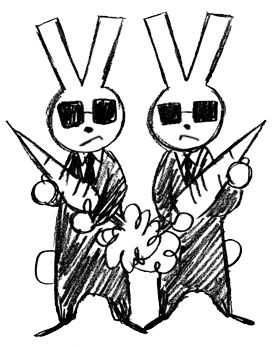
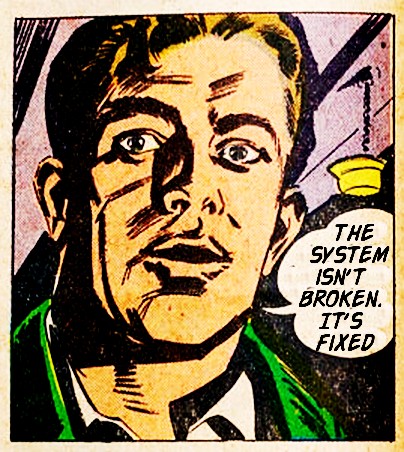
Pick up a shovel, the work is ours

The right-wing feeds on division.
The left-wing grows from trust.

This simple #KISS truth is buried under decades of shit.

Stalinism’s dead weight.
Postmodernism’s cynical fog.
Neoliberalism’s greed-choked rot.
All piled onto our social soil.

Now we stand in the stink:
social, technological, political, philosophical mess.

We don’t deny it.
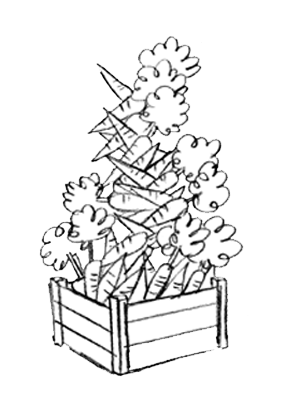
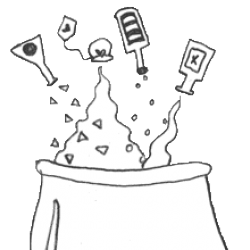
We compost it.
We turn the pile, let it breathe,
make decay into fertile ground.

From this soil, we grow a humane culture.
Trust. Commons. Care.
A path beyond the #deathcult.

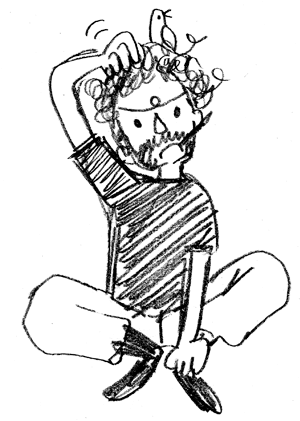
Pick up a shovel.
The work is ours.

#OMN #4opens #KISS

What is #blocking this simple step away,
one reason is the #mainstreaming insist you use the “proper channels”
is because they own the channels.
They wrote the rules. They staffed the committees.
They built a maze where the end is always defeat.

That’s why they’re so confident it “won’t work.”
Because it isn’t designed to.
The proper channels exist to bleed energy,
to bury dissent in paperwork and “stakeholder processes,”
to keep power safe where it already sits.

The #OMN takes the opposite path.
No hard gatekeepers. No “proper channels.”
Just open flows. #4opens all the way down.

Instead of wasting years trying to squeeze through their pipes,
we compost their mess and build new streams.
Trust networks. Shared publishing.
Messy collectives that actually do the work
instead of talking it to death.

That’s what really scares the #mainstreaming people most.
That we don’t need their channels at all.
That we can walk away and build our own.

The deep wound a lot of people carry – and it’s not personal, it’s structural. When “you” don’t feel “respected,” when the mainstream has no time or use for “you”, it’s because their whole machine is built on efficiency of exclusion. They don’t even see “you” as a subject in the conversation – you’re treated as noise, not signal.

And when the alt paths are blocked – often by the same smiling faces, the same gatekeepers in different clothing – the feeling is doubled: shut out by the mainstream, and suffocated by those who claim to be building alternatives.

This is by design, the “common sense” mainstream wants you atomized, silenced, despairing. The #fashionistas push you into disciplined frameworks, their branding, their “proper channels.”

What happens then? Most people turn inward. Cynicism. Burnout. Bitterness. Or they retreat into bubbles that feel safe but become sterile. That’s the trap.

The composting metaphor matters here. The disrespect, the exclusion, the blocking, it’s all stink. If we don’t turn it, it just festers and poisons everything. If we do turn it together – shovel in hand – it becomes the soil of solidarity, resilience, culture.

The act of composting is, naming the disrespect (without internalizing it), pulling people back from isolation into trust networks, refusing to fight on their terrain (mainstream channels, fashionista frameworks), building small, living alternatives that don’t need their validation.

The painful truth: you will never get “respect” from #mainstreaming. The dignity comes from walking away, composting their waste, and growing something rooted in trust not division.

#KISS

The #mainstreaming is hallucinating

Let’s look at this problem, the #fashionistas are everywhere in our spaces. They look shiny, sound clever, and always seem “in the know.” But scratch the surface, and you find nothing but mirrors and buzzwords. They are hallucination machines, not listening, not dialoguing, not building, just repeating empty noise to hide their lack of substance.

What we need to do, is to shovel the empty words into piles, turn them over, and use the stink to fertilize something real. The #OMN is one such tool, not polished, not PR-friendly, not built for grants or press releases. It’s messy, grounded, spiky, and fluffy. A toolkit for people who actually want to build, not brand. The #fashionistas will hate it, because it doesn’t need them. Good, that’s how we know we’re on the right path.

These #fashionistas, conscious or not, are about wrapping the #deathcult in a soft blanket of jargon and “professionalism”, to make exploitation sound like innovation. To turn grassroots messiness into #PR. And people keep falling for it. Why? Because the #fashionistas sell the feeling of being respectable, of being listened to by power. They dangle the bait of #NGO grants, seats at the table, and photo ops. But what they deliver is silence, blockage, and decay.

They call it communication, but it’s not dialogue, not listening, not truth. It’s hallucination: Smiling faces repeating empty words. Buzzwords to cover the rot, smoke and mirrors to keep power safe in its head down worship.

This is the work of the #fashionistas of our spaces. They parade their new “frameworks,” their shiny “initiatives,” their endless “community guidelines.” Always dressed up, always polished, always empty. They are masters of looking good while doing nothing.

They sell hallucinations because reality frightens them. Reality is messy, full of dissent, full of challenge. Reality is compost – steaming, turning, breaking down. From compost grows life. From their hallucinations grows only more of the #deathcult. While they hold the space, communities are silenced. When they push themselves, the centre holds only rot. With their hallucinate, the #mainstreaming keeps killing the margins.

What we do not need is their delusions. We do not need their fashion “shows”. Our path is different. The path we take is composting. Shovel in hand, we turn the pile. We let the stink breathe. We break down the lies, the #PR, the shiny reports. We turn their hallucinations back into fertile ground for something real.

Yes tis is work, we need more projects like the #OMN: open process, open data, open code, open standards. The #4opens: sunlight over secrecy, dialogue over control. The #KISS principle is our reminder: keep it simple, keep it real.

Let the #fashionistas keep their hallucinations. We need to be busy with planting the soil.

Sanity means stepping outside the churn. The obstacle is simple but heavy, people cannot see change and cannot face challenge. That blindness keeps us stuck, yes, some say what I write here is “bleeding obvious.” It is, but that’s the point, it’s not for the already converted, not for the initiated. These posts are shovels: tools to compost the #fashionistas and the #geekproblem, to turn the pile of #techshit into fertile soil.

The #OMN project grows from this compost. It’s not a theory to admire, it’s a path to move people out of #mainstreaming and into diverse subcultures where we actually live change and challenge. When rupture comes – and it always does – the strength of that diversity, the lived practice of horizontals, will be seeds for planting a future worth having.

This path is not about being “original.” It’s about being useful. About creating spiky, fluffy translations that help us step aside from the churn, shovel in hand. Use them, or lose them, just dont stand aside like a prat, please.

We keep seeing this mess. The moment grassroots energy spills over into #mainstreaming, something alive, the #fashionistas arrive to “facilitate.” Suddenly the spiky edges are dulled, the fluffy warmth is flattened, and what’s left is another empty process path, they kill with kindness, or worse, with “common sense.”

Let’s be very blunt, these people are not important as individuals. What matters is the path they push us down. The “commonsense” they sell is poison. Every time we let them set the frame, our direction, our spaces collapse back into #stupidindividualism or #NGO capture. Every time.

Compost the blocking, keep the seeds alive, and make space for growth

It’s good to see more people turning their focus back to the #openweb. But for the past five years of the #reboot we’ve been distracted in a signal-to-noise mess from the #fashionistas. That waisted time needs to be over, we need to start looking clearly at both internal rot and the external threats.

A good first step to this is in balancing the realisation that we actually have far more direct power to deal with the internal mess than we do over the external #dotcons and their #closedweb “common sense” colonialisation. That’s why we need to put activism into composting the internal #blocking (see: https://hamishcampbell.com/?s=compost). Composting isn’t just a metaphor – it’s a way to recycle the piles of #techshit we’ve built up into soil that can grow new #openweb seeds we need to cultivate.

I understand the normal focus on the external #dotcons, yes, we need to balance this to keep pushing back against the external enclosures. But inside our own spaces, it’s clear that possessiveness, in code, in reputation, in control over projects, undermines cooperation and destroys trust. It wastes resources, it corrodes integrity – People often destroy what they love, not out of hate, but out of possession.

This is directly relevant to the degeneration of the #SocialHub project (see: https://hamishcampbell.com/why-teach-everyone-to-code-has-become-a-dead-end-slogan/). What was once the lively centre for the #ActivityPub and #Fediverse reboot is now reduced to a handful of unthinking “problem” people circling the drain. That’s not unusual, it’s a normal outcome when we fail to compost mess.

The lesson is simple: compost the blocking, keep the seeds alive, and make space for growth.

What can you do? Use the compost metaphors (#techshit, seeds, soil) into accessible non-branded messaging that sticks. You can help with editing to transform the long posts into shareable, short-form content for Mastodon, Fediverse, and allied networks.

Help is needed in curating and organizing existing #OMN writings into a structured wiki-style knowledge base. To build summaries, FAQs, and primers for newcomers who hit the projects cold. We need draft “composting guides” – how to deal with #blocking, #fashionistas, and #geekproblem inside communities. Moving this simple documentation to the Unite Forge and other new #OMN tools. Helping draft roadmaps that explain what’s built, what’s missing, and what needs contributors. Producing explainers on why #OMN is different from #dotcons and #NGO capture, why being grounded in #4opens matters.

Write out templates for horizontal decision-making (#OGB style) that projects can adapt. Suggest practical ways to “compost” blockers while keeping the wider network fertile. Help draft neticate rooted in #KISS + #4opens rather than #NGO-speak.

Each of these can be grown into living resources: wiki pages, blog posts, shareable guides, or activist toolkits – depending on where you want the energy to flow.

What should be closed? And what should never be?

We need a better conversation about ideology, sociology, and the #openweb. A good place to start is with a basic liberal framework: “Most social interactions should happen in the open. Some personal interactions should remain private.” Seems reasonable, right? That’s the position many of us think we agree on. Yet when we look at how our technology, and by extension, our society, is being built, that balance is totally out of whack. Today, more and more of life is CLOSED:

Closed apps.

Closed data.

Closed social groups.

Closed algorithms.

Closed hardware.

Closed governance.

And on the flip side, the things that should be protected, our intimate conversations, our location, our health data, are often wide open to surveillance capitalism and state control. What the current “common sense” dogma gets wrong? What is missing from the #mainstreaming tech culture, privacy absolutists, and many crypto/anarchist types:

Almost all good social power comes from OPEN.
Most social evils take root in CLOSED spaces.

When people organize together in the open, they create commons, accountability, and momentum. They make movements. When decisions are made behind closed doors, they breed conspiracy, hierarchy, abuse, and alienation.

It’s not just about what is open or closed, it’s about who controls the boundary, and what happens on each side. If we close everything… If we follow the logic of total lockdown, of defaulting to encryption, of mistrust-by-design… then what we’re left with is only the closed. This leads to a brutal truth, the powers that dominate in closed systems are rarely the good ones. Secrecy benefits the powerful far more than the powerless. Always has.

So when we let the #openweb collapse and treat it as naive, we’re not protecting ourselves. We’re giving up the last space where power might be accountable, where ideas might circulate freely, where we might build something together.

We can find examples of when openness was lost. Let’s talk about a real-world case of #Diaspora vs. #RSS. 15 years ago, Diaspora emerged with crypto-anarchist hype as the alternative to Facebook. It was secure, decentralized, and… mostly closed. It emphasized encryption and privacy, but lacked network effects, openness, and simple flows of information.

In the same era, we already had #RSS, a beautifully open, #KISS decentralized protocol. It powered blogs, podcasts, news aggregators, without permission or centralized control. But the “Young #fashionistas ” of the scene shouted down RSS as old, irrelevant, and too “open.” They wanted to start fresh, with new protocols, new silos, new power. They abandoned the working #openweb to build “secure” ghost towns.

Fast-forward a decade, and now we’re rebuilding in the Fediverse with RSS+ as #ActivityPub. The same functionality. The same ideals, just more code and more complexity. That 10-year gap is damage caused by the #geekproblem, the failure to build with the past, and for real people.

So what is the #geekproblem? At root, it’s a worldview issue. A failure to think about human beings in real social contexts. Geeks (broadly speaking) assume:

  • People are adversaries or threats (thus: encrypt everything),
  • Centralization is evil, but decentralization is always pure (thus: build silos of one),
  • Social complexity can be reduced to elegant protocols (thus: design first, use later).
  • But technology isn’t neutral. It reflects ideologies. And if we don’t name those ideologies, they drive the project blindly.

A place to start is to map your ideology, want to understand how you think about openness vs. closeness? Start by reflecting on where you sit ideologically, not in labels, but in instincts. A quick sketch:

Conservatism: Assumes order, tradition, and authority are necessary. Values stability, hierarchy, and often privacy.

Liberalism: Believes in open society, individual freedom, transparency, and market-based solutions.

Anarchism: Rejects imposed authority, promotes mutual aid, horizontal structures, and often radical openness.

None of these are “right,” but understanding where you lean helps clarify why you walk, build or support certain tools. And if you say you’re building tools for the #openweb, these questions matter:

Do you default to closed and secure, or open and messy?

Who do you trust with knowledge—individuals or communities?

Do you believe good things come from control, or emergence?

These are sociological questions, not just technical ones, maybe start here: https://en.wikipedia.org/wiki/Sociology and https://en.wikipedia.org/wiki/List_of_political_ideologies.

Where do we go from here? Let’s bring this back to the openweb and the projects we’re trying to build, like:

#OMN (Open Media Network)

#MakingHistory

#indymediaback

#Fediverse

#P2P tools (DAT, Nostr, SSB, etc.)

All of these projects struggle with the tension between openness and privacy, between usability and purity, between federation and anarchy. But if we start with clear values, and an honest reflection on the world we want to create, we can avoid the worst traps. Let’s say it plainly:

Not everything should be open. But if we close everything, we lose what’s worth protecting.

Let’s talk: What do you think should be closed? What must be kept open at all costs? What’s your ideological instinct, and how does it shape your view of the #openweb?


Interesting look at a #4opens project notice “”Strict scrutiny” means that any measures instituted for security must address a compelling community interest, and must be narrowly tailored to achieve that objective and no other. ” We have come a long way from this with our #encryptionsist agenders.

Rise and Fall of Grassroots #OpenWeb

The #fashionistas are coming https://yewtu.be/embed/u_Lxkt50xOg? It’s time to become more real before this inflow swamps our “native” reboot, if we let them they will consume it and shit it out as more mess. To mediate this shit storm, it’s time to act, please, feel free to repost these web posts, thanks.

To understand where the #Fediverse and the #OpenSocialWeb are heading, and how not to lose our way, we need to reflect on where we’ve come from. The history of grassroots #openweb activism offers both inspiration and hard lessons.

Foundations are built by real people, social movements start local, they begin with people on the margins – those directly affected by injustice – taking action with the tools they have. In the late ’90s and early 2000s, tech projects like #Indymedia were the blueprint: decentralized, radically open, and run by volunteers who trusted each other and worked horizontally. It worked, for a while.

Today, projects like #OMN (Open Media Network), #indymediaback, and #makeinghistory try to learn from that past. They aim to reboot media infrastructure and historical memory, powered by the #4opens: open data, open source, open standards, and open process. We need to remember that this kind of work doesn’t scale by magic, it grows from grounded trust and native infrastructure, not from #VC injections or #NGO grants.

The trap of #NGO thinking is one of the biggest reasons grassroots projects fail, co-optation. When grassroots groups chase funding, they start shifting agendas to fit the funder’s priorities. Slowly, the mission gets neutralized. Culture changes, risk-taking of change and challenge vanishes, the projects to often become empty shells wearing yesterday’s slogans.

This has happened time and again, from later #Indymedia nodes to #EU-funded tech projects that are now more about kickbox reports than what any “user” wonts or the needed basic radical change. We can’t afford to go down this path again in the current #openweb reboot, the Fediverse.

We need Spiky/Fluffy balance, mutual aid that’s not just charity, but infrastructure. That’s where the #Fediverse shines: not just as an alternative platform, but as a parallel public space for organizing, sharing, and then resisting. It has to support both spiky (radical, disruptive) and fluffy (care-focused, relational) approaches.

On these paths, memory matters, projects like #makeinghistory remind us: if we don’t remember our wins and losses, we’ll keep repeating the same mistakes. Documenting not just content but working practice, how decisions were made, what trust looked like, what failed and why – is crucial. History is not just a mirror; it’s compost.

No monoculture, today, #Mastodon is becoming the monoculture of the Fediverse. It’s not evil. But it is dominating to the point of distortion. It’s following NGO-friendly paths and watering down the radical possibilities the #openweb offers. That’s a problem. We need more balance, more useful codebases, more governance experiments. This space is meant to be a garden, not a plantation.

Security isn’t paranoia, it’s culture, security on the #openweb isn’t about creating another bureaucratic nightmare of permissions and logins. It’s about cultural practices, trust, openness, moderation by consent, and keeping things simple. Most of all, it’s about not building what you don’t need, complexity is the enemy of security.

Final thought, to build real alternatives, we need to stop chasing virality and start building resilience. Less hype, more humility. Less “engagement,” more entanglement. And always, a ruthless focus on not becoming the thing we were trying to replace. Let’s not feed the mess. Let’s compost it and grow something better.

Enclosure of the open web was a crime

This spirit of the early internet and #WWW – sharing, remixing, collectively creating – is the heart of what we call the #openweb. It wasn’t perfect, but it was a space of possibilities, commons, where you could take what you needed and leave something behind, hyperlink by hyperlink. The tools were open – #RSS feeds, #XMPP and #indymedia were built to bridge between ideas and movements, not the walls of monetized algorithmic sludge we have today.

But the #dotcons came, they fenced in the wild garden, what we’re living through now is a digital version of the enclosure of the commons, a #neoliberal land grab dressed in Silicon Valley T-shirts. Just like in 16th-century England, they drew arbitrary lines around our #4opens shared land (data, conversation, culture), declared it private property, and shut the gates. And we, the people, got algorithmic slop in return.

The comparison isn’t metaphor – it’s literal – just as the landed gentry stole the commons to fuel the industrial revolution, the tech gentry stole our digital commons to feed surveillance capitalism. They did it through legalese, marketing BS, and brute force. We were left outside the firewalls, told to be thankful for “free” services while they harvested our metadata to sell back consumerism as advertisements and social control.

The #techbros didn’t invent this theft, they just updated the tools, the same ideological mess that displaced peasants from their land now displaces communities from their networks and platforms, killing independent sites, closing APIs, and locking away archives behind paywalls. Twitter’s 2023 shutdown of free API access? A textbook enclosure. Hundreds of # fashionista grassroots tools and bots vanished overnight, #Techshit at its most brazen.

And then there’s #RSS – the veins of the old web. Stabbed slowly, first by Facebook, then by Google. For the #fashionistas, the blade fell hardest in 2013 with the death of Google Reader, a quiet coup that pushed most of us into the fenced-off gardens of algorithmic consumption we live so much of our lives in today. The commons didn’t just vanish; it was actively destroyed, under the smog of monetization, “engagement,” and corporate “safety.”

It is useful for us to see this in a simple way, this isn’t #progress, it’s theft, the kind that wears the mask of legitimacy because lawyers and lobbyists made it look neat on paper. The reality is old, it’s a #classwar fought with code instead of clubs, and it’s won because we lost our memory of what common “land” even looked like.

But not everything is lost. The #Fediverse, the #OMN (Open Media Network) still plants seeds in the cracks. #Wikidata, #OpenStreetMap, the #ActivityPub protocol, these are digital hedgerows that survived the scorched earth. They are messy, collaborative, and unmonetized. That’s their strength, that’s what the #fashionistas to often don’t get – they can’t sell what they can’t own.

A story by Cory Doctorow – Masque of the Red Death

The #geekproblem here is fatal, in both the grassroots and the #dotcons, too many technologists are blind to the politics in their code. In the #mainstreaming, they build better tools for corporations that destroy the commons, over and over again. The solution? For the grassroots coders, compost the #techshit, seed something else, and reclaim what was always ours. Let’s help lift the lid on the #dotcons mess, our own unthinking #fashernistras, #NGO geeks call the internet, it is simply a thin veneer on top of what is actually ours, the #openweb

Let’s stop being polite about this as the #closedweb is a crime scene. The #dotcons platforms we rely on are bonfires of common culture, feeding the engines of the next wave of control. If we don’t remember how we got here, we can’t step out of this mess. It’s time to say it plain: The privatized web is a #deathcult, and only a #4opens reboot can bring life back.

An article: https://johl.io/blog/enclosures-and-the-open-web

Digging over the rot and planting something more real

Q: People are angry about #AI scrapers and that this is exploiting everything for “free” – our art, our words, our data. But let’s be honest, we’ve spent the last 40 years gorging on “free” content online, music, games, video, writing, without paying for a thing unless forced to with a paywall. Yes. We block the ads, we hate the tracking, and we very rarely donate. So… with the idea that everything has to be paid for, are we really that different from the AI scraping machine?

A: The current “common sense” frames this as a moral issue, but it’s better seen as a systematic one. And that’s where people keep getting lost in talking about this.

We live in a society rooted in greed and extraction. That’s the baseline. It’s called capitalism, and for the last 40 years it’s been accelerated by the neoliberal #deathcult, where today “ethics” is bought in plastic tubs of organic yogurt at our local supermarket.

What grows out of this shit heap? #Stupidindividualism, people demanding everything for free while shouting about their personal rights to consume. They want to save the planet, but only with next-day delivery and zero commitment. Then you’ve got the #fashionistas – the “good people” who “perform” care while feeding the same destructive paths. It’s not irony, it’s the logic of the path we take.

No, I don’t want tracking ads. No, I don’t want my ideas and writing turned into #AI sludge. But I’m also not pretending this is a matter of “personal choice”, when we need to shout loudly and continually that it’s a system built to turn “creators” into social shit and call it innovation, when better to speak truth and call it compost.

We don’t fix this by feeling guilty, we fix it by building something else. That’s what #OMN is for, that’s why #4opens matter. Public media, open processes, radical trust, of native #openweb paths, not just another polished platform for exploitation with feel good #UX

It’s not about blame. It’s about digging over the rot and planting something more real #KISS

Enclosure of self is deathcult worship in the era of #climatchaos

#Neoliberalism isn’t just an economic system, it’s a cult of self-enclosure. Its superpower? #stupidindividualism, turning people inward, away from shared life, into isolated fragments clicking, swiping, and scrolling through ruins. It disconnects us from collective being, and then sells the pieces back as “individual freedoms.” This isn’t an accident. It’s the plan, a trick of enclosure, take a concept of civic breakdown and turn it into a moral failing of the person, not the system. A classic #deathcult move.

Let’s call it what it is #stupidindividualism = the neoliberal condition of enclosure. A social operating system designed to lock us into self-referential survival while the commons burn.

We’ve all been forced into #stupidindividualism with the #dotcons enclosing our attention. The gig economy encloses our labour. Even our friendships are enclosed in “encrypted” DMs, monetized by adtech. Public life? Gone, auctioned off to the highest bidder or locked behind paywalls.

We are encouraged to be good “idiots” in the ancient Greek sense – disengaged from collective power. This #deathcult under capitalism, is a feature, not a bug. They, the #nastyfew want “us” atomized, docile, and scrolling, not stepping away from the path to new norms. And so we rot in a swamp of aestheticized politics – “likes” over lives, vibes over values, empty radical branding over messy collective struggle.

Some symptoms of this sickness can be seen in commons being destroyed: Libraries gutted, parks sold off, hospitals privatized. Nothing left to meet in. Social life enclosed: From Facebook groups to “creator economies,” all relations are branded and transactional. Fear replaces solidarity, precarity rewires our brains – everyone a competitor, every community a threat. Politics becomes content, no spaces for deliberation, only locked comment sections and algorithmic outrage. Under this path, “engagement” is a metric, not a practice. #stupidindividualism is the “normal” common sense path we currently blindly walk down.

The left hasn’t escaped, we’re not immune, we’re infected. Too much of what passes for radicalism is just #stupidindividualism with better fonts. Buzzwords, identity consumption, internal drama cycles, empty memes. Most leftist language itself has been enclosed into performative radicalism, saying the right things in the right tone to the right audience – but nothing changes. It’s a ritual, not resistance. Aesthetic replaces action: Solidarity becomes merch. Mutual aid becomes charity. “Revolution” becomes content marketing.

This is all the “common sense”, #mainstreaming by another name, the #stupidindividualism is also core to what meany of our #fashionistas call the left. And, simply, we can’t win if we keep playing by the #deathcult’s dogma. So how do we compost this? We grow living language from real ground. No more floating hashtags. No more semantic bubbles. Here’s the path, embed language in practice, political terms should come from mutual aid kitchens, picket lines, and assemblies – not Slack threads or Twitter feuds.

Don’t just “speak truth to power” – speak truth to each other, if we want to build a better world, we need collective life again. This isn’t nostalgia. It’s survival. We’re in a fight against a system that thrives on isolation. #Neoliberalism has turned us all into (stupid)individuals, and then blamed us for it.

Let’s be clear, the opposite of #stupidindividualism is not intellect, it’s interdependence. So let’s plant words in soil again. Let’s grow meaning from shared struggle. Let’s compost the #deathcult and sprout something real. On this path, just say no to self-enclosure. No to semantic drift. No to aesthetic radicals trapped in content loops. Instead, let’s get our hands dirty.

#deathcult / #geekproblem / #nothingnew

#Techshit Hype – #NothingNew

The is nothing new to pointing out that our #fashionistas #mainstreaming crew push tech mess.

Remember when drone deliveries were going to revolutionize shopping? When every major news outlet unthinkably reported that we’d have autonomous quadcopters dropping off toothpaste and Amazon boxes on our doorsteps?

Or when 3D TVs were the future of entertainment, pushed so aggressively that manufacturers stopped making non-3D models for a while? Where are they now? Rotting covered in dust in clearance bins or forgotten in garages.

Then there was the Internet of Things (#IoT) hype, your fridge was supposed to talk to your toaster, which would text your smart kettle to boil water before you even knew you wanted tea. Instead, we got insecure, surveillance-riddled devices spying on us for #dotcons corporate profit.

And we need to not forget #blockchain, #NFTs, and the endless #Web3 hype? Each was pushed as a revolution, yet all followed the same pattern of hype, vulture capital gold rush, and then, inevitably, disillusionment. NFTs went from “the future of digital ownership” to being abandoned by even their most vocal promoters.

If we won’t a progressive world, why do we keep pushing this #techshit? Every time a new #mainstreaming tech fad appears, it follows a predictable, boring hype cycle. First, it’s marketed as the next big thing, a must-have, must-invest, must-embrace technology. Then, sceptics, like this site, are ridiculed as out-of-touch or anti-progress, at best or simply trolling at worst. But when the promised revolution never materializes, the same people, quietly move on, forgetting the past mistakes and priming ourselves for the next wave, this is a rinse and repeat cycle.

We need more people, to lift their heads, to say, “Not this again, you were wrong last time”? So we have space to ask why do we let the wannabe #nastyfew feed us this mess, why do we let it slide, allowing the same marketing binds to #blind us over and over?

The answer is that we have our heads down worshipping a #deathcult, and this is the pushing of #fashernista tech, the cycle of embracing new trends not because they work but because they fit the cultural moment. A mixture of corporate propaganda, social pressure, and the desire to be seen as forward-thinking creates a path where critical thinking is drowned out by #FOMO (fear of missing out). It’s fear, simply fear.

How do compost this? A first step is, instead of dismissing #KISS critics, we should embrace grounded scepticism as part of a healthy tech culture. The goal isn’t to reject all new technology, it’s to demand real, meaningful progress rather than letting corporations sell us snake oil over and over. There’s a hashtag for this: #nothingnew, a reminder that most “revolutions” are just recycled ideas repackaged for a new round of exploitation.

This is part of the native #openweb story, not just about technology, but about culture. We don’t need to keep mindlessly adopting every new fad. Instead, we should compost the hype, extract what’s useful, and discard the corporate waste. Yes, it’s messy. But that’s what being native to the #openweb means.

Read more: hamishcampbell.com

A shift back to radical values and paths

Much of academia post-1990s is just a shadow of the #deathcult, stripped of radicalism and repackaged into careerist, bureaucratic loops. It became another self-referential path, detached from real world struggles. The privatization of knowledge through paywalled journals, corporate funding, and NGO capture made sure of this.

The same thing happened with #FOSS and #opensource, once about radical openness, it was watered down when organizing shifted to closed chat systems and corporate-friendly platforms. We lost the #openprocess that made early public archives powerful.

Then you have, Modern Art, once revolutionary, was quickly absorbed into the cultural arm of the #deathcult, turning radical expression into a commodity for the #nastyfew. It’s the same cycle over and over:

  • A movement starts as a real challenge to power.
  • It gains momentum.
  • Power co-opts it, waters it down, and sells it back to us.

People will keep doing stupid things, that’s inevitable. The job is to call it out, push better paths, and make sure they don’t repeat the same mistakes. It’s not glamorous, and it won’t get you applause, but that’s how real social change works.

The cat meowing, the #fashionistas, whether intentionally or not, keep blocking the left’s paths by turning everything into aesthetics and performance rather than actual power-building. They chase whatever is trending, constantly rebrand, and ultimately reinforce the #mainstreaming forces they claim to resist.

Meanwhile, the right organizes, funds, and builds real infrastructure, they don’t waste time on purity politics and endless internal fights. That’s why they keep winning.

So what do we do?

  • Stop trend-hopping, we need long-term strategies, not just momentary viral moments.
  • Build real alternatives, tech, media, organizing spaces that serve movements, not just “woke” branding.
  • Own our narratives, not get trapped in the spectacle of liberal discourse and right-wing outrage cycles.
  • Get our hands dirty, shovel through the #techshit, compost the failures, and grow something real.

This is about taking control back, not only reacting to the crises the nasty few push us to manufacture. Radical media, the #openweb, grassroots organizing, these are the things that cut through the noise and shift power back to where it belongs.

#KISS


The #4opens act as a foundation to hold back the tide of the post-truth world, they enforce transparency, accountability, and community control. Without them, everything drifts into manipulation, closed power structures, and co-option by #dotcons.

It’s a chicken-and-egg issue because we need social trust and active participation to maintain the #4opens, but those same values are constantly eroded by the #mainstreaming forces of the #deathcult.

The #OMN is crucial because it builds digital commons as a form of social technology. It’s not just about the tech, it’s about the relationships, trust networks, and shared values that make it work. Once we have this space, what we do with it is up to us, but it has to be grounded in real, radical alternatives, not just another tech silo.

That’s where the rebooted #indymedia project comes in. It’s built on the #PGA hallmarks, which means it’s explicitly anti-capitalist, decentralized, and activist-driven. It can’t function within the corporate media sphere, so it has to exist in a #TAZ (Temporary Autonomous Zone)—a liberated, self-organized space outside of state and market control.

Wikipedia gives a decent artsy take on #TAZ, but in practice, it’s about creating spaces where radical alternatives can actually live and grow. #PGA is the backbone, an old grassroot global framework for direct action and real-world resistance.

The key is building trust-based networks that aren’t easily co-opted. If we don’t do this, the cycle repeats: good projects get absorbed, neutralized, or just fade into irrelevance.

Why the Fediverse Needs a Bridge Between Mainstreaming and Grassroots

A key point that often gets misunderstood – #Mainstreaming isn’t inherently good or bad – it depends on who is influencing whom.

  • Good #mainstreaming = Bringing #openweb values into the mainstream (transparency, decentralization, cooperation).
  • Bad #mainstreaming = The mainstream (corporate control, surveillance capitalism, hierarchy) infusing itself into the #openweb and reshaping it in its own image.

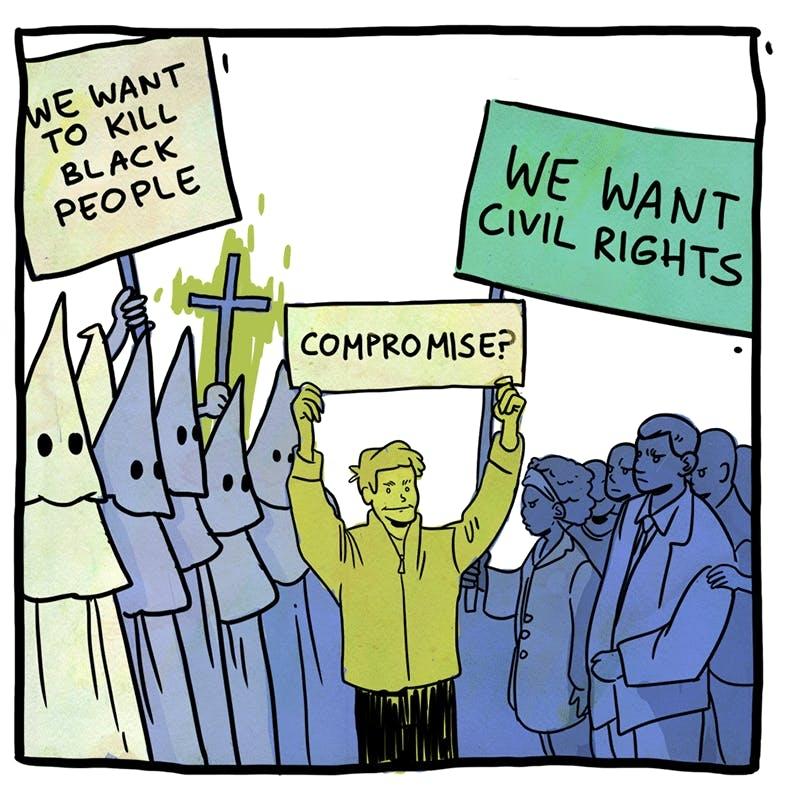
In the current context, mainstreaming is mostly bad because it pushes dilution of radical alternatives into market-friendly compromises. The #deathcult (neoliberalism) doesn’t absorb things in good faith, it co-opts and neutralizes them.

That’s why we need mediation, pushback, and a clear understanding of context when talking about #mainstreaming. Sometimes it’s the right move, but right now, the priority is defending and growing the roots of the #openweb before our # #fashionistas can sell it off as a brand.

On this path, one of the best things about the #Fediverse is that real people and community’s get to choose what kind of digital paths they want to take. Don’t want #Meta snooping around? Join or host an instance that blocks them out. Prefer not to have people search your content? Lock it down in your settings. Want to mediate the strong #blinded flow of “normies”? Close the doors via your instance settings. It’s a “nativist” system that offers a radical degree of agency compared to the #dotcons.

But what happens when people start demanding that their version of the #Fediverse become the default for everyone else? That’s where things get tricky, and where we risk losing the most valuable aspect of this messy, decentralized network: the bridges between worlds. The danger of closed loops, it’s understandable that people want their corners of the #Fediverse to feel safe, sustainable, coherent, and aligned with shared values.

The problem is that when we focus on tools so that every group can retreat into its own echo chamber, we recreate the failures of the wider #dotcons web: fragmented bubbles where ideas stagnate, and meaningful conversations can’t happen. This is what I mean when I talked about #mainstreaming echo chambers, the tendency for people to isolate themselves in what feels comfortable, which ultimately makes everything smaller.

The irony is that this impulse to close off is, in a way, the same as the desire to keep the Fediverse open. Both are reactions to the failures of centralized tech platforms. People who want to mediate #mainstreaming influences are trying to nurture the fragile seedlings of the grassroots culture they’ve built, while those advocating for broader adoption hope to prevent the network from collapsing into irrelevance. Both impulses come from wanting the Fediverse to survive, they just express that desire in too often opposite #blocking ways.

The failed bridging of FediverseHouse is a normal, the tension came to a head with projects like #FediverseHouse and #Fediforum, which aimed to be a gathering space but ultimately failed to build lasting bridges. It wasn’t because people didn’t care, it was because there wasn’t enough understanding of how to hold that tension between the grassroots and the mainstream without one swallowing the other. The projects lack the simplicity of #KISS (Keep It Simple, Stupid) and got tangled in the same old dynamics of control and fragmentation.

Keeping the bridge in place has a lot to do which sharing resources, in non #mainstreaming ways, yes, we understand, this is a hard leap for meany people but only people who can make this step can be useful in the end to the “native” #openweb paths. The solution isn’t to pick a side, but to intentionally hold the bridge in place.

In a smaller, view, that might look like running accounts across multiple instances and boosting content between different ideological spaces to keep ideas flowing. It might mean advocating for #4opens values even in mainstream-leaning spaces, or gently nudging the more isolated pockets of the Fediverse to stay curious about what lies outside their walls.

The Fediverse doesn’t need to be one thing, that’s its strength. But if we let the bridges decay, we lose the possibility of cross-pollination, of radical ideas seeping into #mainstreaming consciousness, or of everyday people stumbling into a space that makes them question the status quo. Instead of fighting, as we so often do, to make one version of the #Fediverse dominant, maybe the real work is in keeping the network alive, messy, imperfect, but always connected. Because it’s in those connections that real alternatives grow.

#Fashionistas in Activism: How Buzzword Chasing Undermines Real Change

This post is about controlling the narrative, not letting the #nastyfew dictate the terms of engagement. Too often, we let them set the agenda, reacting to their every word instead of actively building the alternatives we need.

Their power isn’t just in what they do, it’s in how much space they take up in our minds and movements. We amplify their mess making when we obsess over their rhetoric rather than dismantling their actions. This is why we need composting, not fixating.

The #Fashionistas in Activism problem is real, when people latch onto whatever gets them attention instead of doing the hard, messy work of creating change. Chasing buzzwords, getting caught in endless reaction cycles, this is what keeps us stuck. We need to be the ones setting the agenda, not just replying to theirs.

Focus. Build. Compost the mess. That’s how we win.

In activism, the term “#fashionistas” captures individuals and groups, especially within #NGOs and advocacy organizations, who latch onto trendy causes or ideologies, not out of any commitment, but more to appear relevant and to align with the latest social currents. This is corrosive to meaningful change, reducing activism to performative gestures rather than a sustained struggle for justice.

Superficial engagement comes from, when they rush to adopt the language of trending movements (like #BLM, #MeToo, or #ClimateJustice) without committing to their radical roots. For example, after George Floyd’s murder, many corporations and NGOs posted black squares on #Instaspam as a symbolic gesture. But what followed? Few made concrete policy changes or redistributed resources to Black-led grassroots organizations. It was activism as aesthetics, empty gestures, rather than the systemic action that was called for.

Lack of authenticity, when organizations prioritize optics over substance, this breeds distrust. Consider the influx of NGOs claiming to champion digital rights but quietly partnering with Big Tech for funding. The grassroots developers working on genuinely decentralized platforms are left unsupported, while the NGO pointless/parasite class absorbs attention and resources, all while pushing and reinforcing the #deathcult paths they claim to oppose.

Mainstreaming, activism, loses its teeth when it’s tailored for palatability. Take the way climate #NGOs soften their language to avoid alienating corporate funders, pushing “net zero” narratives instead of demanding degrowth and direct action. By sanitizing radical demands, they reinforce the status quo rather than confronting the power structures driving #climatechaos.

Misaligned priorities, chasing trends, means resources get funnelled away from sustained struggles. For example, the fleeting attention on #Palestine waxes and wanes with media cycles, while groups doing year-round solidarity work scrape by with minimal support. #Fashionistas flock to hashtags when they’re hot, then move on, abandoning communities who still face oppression once the spotlight fades.

Reactive rather than proactive, when #fashionistas are caught chasing the next big thing rather than strategizing long-term solutions. Think of the explosion of interest in #openweb media during political unrest, a real issue, yes, but one that reveals the broader failure to build #4opens, community-run digital infrastructure proactively. The #OMN project exists precisely to address this, but it’s hard to gain traction when attention constantly flits to the crisis of the moment.

Rectonery, the most toxic aspect of fashionista activism is its tendency to reinforce the systems it claims to oppose. When #NGOs adopt radical language but stay within #mainstreaming paradigms, they create an illusion of progress. For instance, diversity initiatives in tech are often superficial, leading to token hires rather than dismantling structural racism or addressing the #geekproblem that keeps tech culture hostile to outsiders.

How do we compost the #fashionistas mess? The answer lies in prioritizing authenticity, long-term commitment, and meaningful engagement. This means, centring grassroots voices by funding and amplify people working on the ground, not just polished, and mostly pointless #NGO campaigns.

Rejecting mainstreaming, by being willing to alienate power on radical paths. This changing of path needs us to building infrastructure, like #OMN and #indymediaback to grow autonomous spaces outside corporate control. Historical awareness, matters, to remember our past struggles, rights and freedoms were won by collective action, not #PR campaigns.

What, we don’t need, is more buzzword-chasing #nonprofits. We need shovels, compost, and a commitment to grow something real from the ruins of the #deathcult. It’s not glamorous, but it’s the only path to lasting change. Let’s start digging.

#4opens #activism #openweb #OMN #techshit #nastyfew


In the bigger picture. The best revenge against the #nastyfew is simple: don’t talk about them at all. What fuels them is attention — the endless cycle of fixating on their every move. Unless it’s absolutely necessary, keep the focus on the ideas and the collective struggles, not the individuals causing the mess.

Talk about the systems, the structures, in the US the republicans, not the disruptive few seeking to derail the conversation.

Ignoring the #nastyfew is the most powerful revenge you can take. Stay grounded, stay collective, and keep it #KISS.