#Fediverse how can we do better

#Fediverse how can we do better at this https://socialhub.activitypub.rocks/t/the-process-platform-isnt-working/3923/6

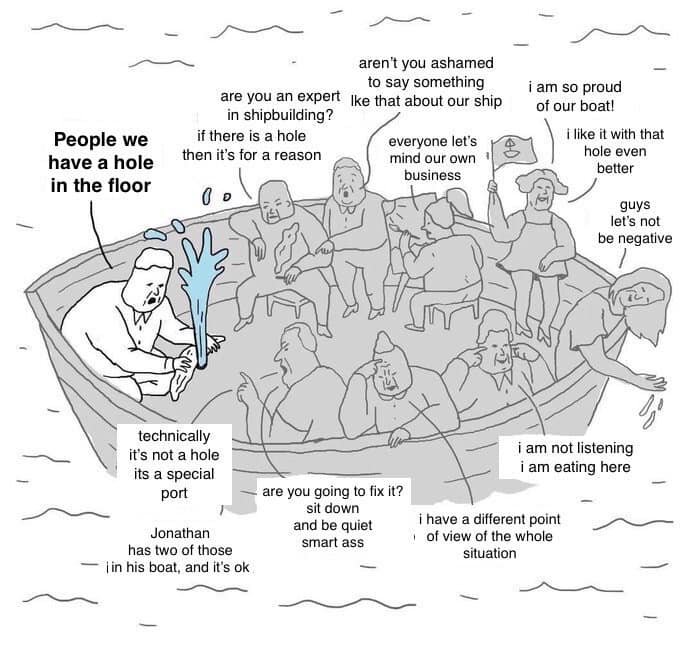
The current move in #blocking of the #dotcons moving to the #openweb is not a real solution, it’s like we are putting our heads in the sand. We need to understand that our “native” projects are #4opens thus anyone, including the #dotcons can be a part of the #openweb in this it’s a good thing they are moving back to this space.

Feel free to block them, but pushing this path as a solution is both naive and self-defeating. We need to do better and build a healthy culture and a diverstay of tools, it’s always a fight, hiding in a cave wins no wars, and we are in a war.

Issues within the #Fediverse community regarding the handling of problematic behaviour or interactions on the platform. A breakdown of some points:

  1. Problem with Blocking: That simply blocking users or instances (such as the #dotcons) is not an effective long-term solution to fostering a healthy and diverse community within the Fediverse. Blocking is “putting your head in the sand,” ignoring or isolating problematic elements doesn’t resolve underlying issues.
  2. Advocating for Openness: Emphasizes that the Fediverse should remain true to its principles of openness (#4opens), which allow anyone, including controversial entities like the #dotcons, to participate. This openness is a positive aspect of the #openweb.
  3. Building a Healthy Culture: Rather than relying on blocking, we need to advocate for actively building a healthy culture within the #Fediverse. This involves nurturing diversity of tools and fostering a community where constructive engagement and dialogue can thrive.
  4. Need for Engagement and Solutions: The importance of proactive engagement and problem-solving. We need to warn against passivity (“hiding in a cave”) and encourages efforts to address challenges head-on to create a stronger and more resilient ecosystem.

Overall, a call for constructive action within the #Fediverse community, moving beyond simple blocking measures and focusing on building a robust and inclusive path that aligns with core values of openness and diversity. With an emphasis on proactive engagement, collective responsibility, and continuous improvement to create a healthier online and offline environment.

humm needs more… what do you think?

Building trust in the openweb and Fediverse

Trust matters in our shared landscape of the #openweb and the emerging #Fediverse, trust is the currency that binds meaningful interactions and collaborations. Yet, amidst the #fashionista cacophony of voices and divergent perspectives, building trust can feel like navigating a minefield. In this post, we’ll explore the importance of trust, examine the challenges to building trust, and propose strategies to grow a culture of trust within these communities.

Trust is the soil upon which communities thrive, enabling people to engage in meaningful exchanges, share resources, and collaborate on common goals. In the decentralized ecosystem of diverse voices, converging and interacting, trust becomes more essential. Unlike centralized #dotcons platforms, where trust is bestowed upon a single authority, the “native” openweb relies on distributed networks of trust between people and communities.

However, despite the inherent value of this trust, the native path is fraught with challenges that hinder any lasting cultivation. One of the obstacles is the prevalence of #blocking and resistance to new ideas and approaches, this hinders. While blocking may be necessary in certain circumstances, to protect against harmful actors and preserve the integrity of a community, it can also impede constructive dialogue and collaboration. Without trust, too much #blocking can lead communities to become fragmented and isolated.

What can we do?

  1. Transparency: Transparency is key to building trust within communities. Open and honest communication about intentions, decisions, and actions grows a sense of accountability and reliability. Projects and peoples need to strive to be transparent in their paths, sharing information openly and engaging in dialogue with different stakeholders.
  2. Inclusivity: Inclusive communities are more likely to cultivate trust among their members. In this we need to seek out diverse perspectives and voices, and creating spaces where people feel welcome and valued, communities foster a sense of belonging. Inclusivity also involves addressing power imbalances and amplifying silent voices.
  3. Consistency: Consistency in actions and behaviour is needed for building trust over time. Communities need to strive to uphold commitments, follow through on promises, and maintain integrity in interactions. Consistency breeds reliability, and reliability breeds trust.
  4. Empathy: Empathy is the foundation of trust in human relationships. By empathizing with the experiences and perspectives of others, communities build mutual understanding and respect. Empathy involves active listening, acknowledging the feelings and concerns of others, and responding with compassion and kindness.
  5. Collaboration: By creating opportunities for people to work together towards common goals, and engaging in collaborative projects, sharing resources, to support each other’s efforts, communities build bonds of trust and solidarity.

Now, how can we build these? Trust is the cornerstone of any thriving #openweb path and the building of the wider #fediverse community. We need to create environments where trust flourishes, enabling people to engage in meaningful interactions and collaborations. Remember that trust is not a destination but a journey, one that requires ongoing effort, and commitment from all #4opens stakeholders.

“Don’t be a prat” is basic #KISS

Historically, #mainstreaming politics has a tendency to shift to the right during times of crisis

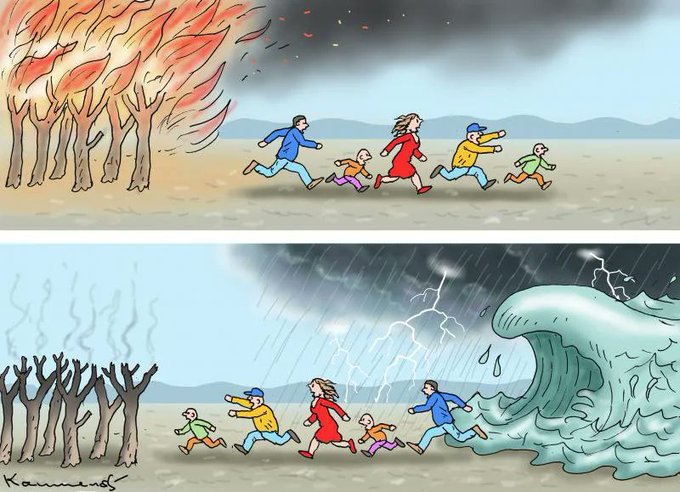
The intersection of #climatechange, #mainstreaming politics, and fear is complex but they do influence social attitudes and policies. Historically, mainstream politics exhibits a shift to the right during times of crisis, and the looming mess of #climatechaos is following this trend. In this, we need to recognize the pivotal role that fear plays in driving right-wing politics and shaping public discourse.

Fear operates as a strong motivator of political attitudes and policies, particularly within right-wing ideologies. Whether it manifests as apprehension over economic instability, cultural change, or national security, fear is fertile ground for the growing of right-wing narratives. In the context of climatechaos, this fear is further amplified by concerns surrounding environmental degradation, natural disasters, migration, and resource scarcity. Such apprehensions provide a breeding ground for the shift to the hard right, that feeds on these anxieties to promote its agenda.

However, amidst this landscape of fear, a counterpoint emerges: the waning fear of socialism. Traditionally, socialism is met with suspicion and trepidation by capitalist classes, serving as a perceived threat to the status quo. Yet, as socialist ideals gain traction and legitimacy in #mainstreaming discourse, particularly among younger generations, the fear of socialism begins to diminish. This shifting dynamic challenges the hegemony of right-wing politics and offers a glimmer of hope for progressive change in the growing mess.

Indeed, this shift presents an opportunity for hope. By embracing socialist principles and advocating for progressive policies, there is potential to counteract the politics of fear perpetuated by the right. However, this window of opportunity is narrowing in the face of escalating #climatechaos. The urgency of the climate crisis demands immediate action, and the failure to seize this opportunity through #mainstreaming inaction exacerbate the cycle of fear and despair.

In essence, the delicate balance between fear and hope shapes political narratives and responses to climate change. While fear may dominate #mainstreaming politics in the short term, there remains a potential for collective action and progressive change. In #openweb tech initiatives such as the Open Media Network (#OMN), #OGB, #indymediaback, and #makeinghistory exemplify efforts to challenge the status quo and take a course towards a future grounded in resilience, equity, and sustainability, growing a society that prioritizes collective the well-being and environmental stewardship that we need.

The problem we face is composting our own #blocking behaver, so more people can supports projects like these.

The Open Governance Body: Revolutionizing Governance with Grassroots Tech

In our ever-evolving digital spheres, governance is often left behind, struggling to catch up with the pace of technology and social change. Among the many attempts to tackle this problem, there’s one that stands out for #KISS innovative and participatory approach: the Open Governance Body (#OGB). This grassroots, federated project is more than another tech experiment; it’s a historical blueprint for any future of human-scale governance.

The Flawed Systems of Old

Let’s face it-governance, as we know it, is very far from perfect. Our current systems are either too unwieldy for large-scale implementation or too limited for local contexts. Traditional Free/Open Source (#FOSS) governance models might be native to the tech world, but they’re entrenched in a medieval hierarchy, reminiscent of kings, nobles, and peasants. Who needs feudalism in the digital age?

#Mainstreaming politics, with its disasters’ ineffectuality in the face of #climatechaos, also demonstrates that we desperately need something that works – something innovatively rooted yet freely scalable.

Grassroots Activism Meets the Fediverse

Enter the #OGB, a robust fusion of proven federated technology and grassroots governance. It’s the brainchild of a diverse group of independent experienced thinkers and activists who understand that, progressive social change has always sprung from the bottom up. They’ve taken the federated solution of #ActivityPub (think decentralized social networks) and meshed it with organic activist governance.

This blend gave birth to a surprisingly simple yet powerful platform based on sortation, where roles and responsibilities are distributed fairly, fostering efficient decision-making.

A Tale of European Success

The potential of #OGB is more than just theoretical talk – it’s processs have been field-tested with promising results. Our band of “libertarian cats” successfully outreached to the European Union, showcasing the versatility of ActivityPub and the #fediverse. Presentations and collaborations with EU bureaucrats catalysed the setup of project outline, a prescient move that looked like wisdom personified post-Twitter’s dramatic downturn.

Market Dynamics – A Hypothetical Utopia

Think of a bustling local street market, a microcosm of society with stallholders, shoppers, and various stakeholders like organizers, trash collectors, and local law enforcement. The #OGB can empower such a community to self-govern in harmony, thereby bypassing the too often #blocking cumbersome bureaucracy.

It’s a permissionless rollout – meaning, creating a governance community is as easy as setting up an instance, generating a QR code, and inviting market participants to jump on board with a simple app installation. From there, a sortation algorithm orchestrates the decision-making process, naturally enticing more stakeholders to participate.

From Small Markets to Society at Large

This isn’t just about one market. The beauty of #OGB is its inherent scalability and adaptability. Just as the #fediverse has grown organically over the years, OGB can proliferate from one market to others, weaving a tapestry of self-governance that could very well encompass more social facets.

“We know the grassroots process of organizing works. We’ve seen the federated model scale times over. Combine them, and we have a DIY governance culture that could revolutionize society.”

A History of Activism, A Future of Change

The Open Governance Body is not simply a project; it is the culmination of centuries of activism and social organizing techniques, proven time and again. Combined with the remarkable technological advancements of the Fediverse, OGB embodies a modern solution rooted in historical success. It’s a rallying cry for those seeking to instil real, lasting change in the world through cooperative, human-centric means.

The future of governance looks brighter with initiatives like OGB. Unlike the faltering structures of old, this endeavor promises to usher in an era where technology enables democracy and human connection, not control and division. It’s past time to embrace the open governance body, roll up our sleeves, and be a part of the grassroots revolution.

Remember, progress doesn’t ask for permission – it is an open invitation to innovate, participate and effectuate change. Join the OGB movement, and let’s co-create a governance model that befits our times and aspirations.

Tools for outreach:

1. Have you heard about #OGB? It’s breaking boundaries in web governance through grassroots activism & federated tech! Get ready to govern your own communities with human-scale solutions that actually work.
 
2. Exciting news: The federation of #ActivityPub proves we can scale horizontally and spark real change! Combined with grassroots governance, we’re onto a new chapter of progressive social shifts. Let’s build this together!
 
3. Picture this: A street market governed organically by its community via #OGB. Stallholders, customers, and local services all have a say. Ready to revolutionize the way we collaborate and manage shared spaces?
 
4. Do you want an active role in shaping your community? With #OGB permissionless roll-outs, anyone can start making impactful decisions. Let’s grow this movement, producers by producer group, instance by instance!
 
5. Imagine a system where your voice directly influences your surroundings. #OGB is blending hundreds of years of activist governance with the scalable power of the #fediverse. Let’s make self-governance the norm!
 
6. We’re planting seeds for a #DIY grassroots culture to flourish across society with #OGB. No permission needed, just the desire for change and collaboration. Who’s ready to be part of this empowering journey?


People pushing mess is the normal #mainstreaming

I get confused with the mess people push over my views. I am a seruse guy, addressing fundamental issues that are #blocking the change and challenge, we all agree are needed in tech to address social and environmental issues,

Have been doing this at the VERY sharp face of conflict for 40 years. Please look at the hundreds of films I made on this subject, thanks.

Where do people get the idea, what am talking about is not seruseus? This is a hard-to-understand view people push, am trying in good faith to address.

Hope this helps, so we can move past this mess making, thanks.

Some of the lifework videos on youtube

#dontbeaprat is a positive statement of what’s next?

In activism (and interestingly less so in #mainstreaming life now) #stupidindividualism is a constant poison. With #blinded, people treat critical social thinking as ONLY personal criticism. This has the effect of #blocking that spreads mess over the very needed social change and challenge. Am increasingly using the  #dontbeaprat hashtag to communicate on this problem.

I think another useful hashtag on this behaviour is #blinded, which is in part self-inflicted and in part a general social outcome of the last 40 years of worshipping #postmodernism and #neoliberalism. The hashtag #deathcult is a useful “uncomfortable” way of expressing this.

Why is this such an issue, people are directly responsible for this mess making, as both of these ideologies are actually dead themselves now. It’s an intellectual zombie block.

So #dontbeaprat is a positive statement of what’s next?

Please #dontbeaprat on this, thanks.

NGI Zero open source funding talks about the @sovtechfund

NGI Zero open source funding
The @sovtechfund is offering grants to people who contribute to a sustainable open source ecosystem. Grants go up to €300,000 per application and cover three main topics:

1. Improve FOSS Developer Tooling
2. Securing FOSS Software Production
3. FOSS Infrastructure Documentation

With this program, the Sovereign Tech Fund seeks to stimulate an open digital infrastructure: fundamental technologies that enable the creation of other software.

https://sovereigntechfund.de/en/challenges/ #opensource
Three Challenges to Contribute Back to Open Source

UPDATE Looks like people are also arguing this point https://shared-digital.eu/statement/

We are pouring public funding down the drain agen, these criteria are feeding the #geekproblem not actually trying to take the “problem” out of our geek paths. The people who PUSH this agenda are the problem – please POINT at them and talk about this mess, thanks.

Can we get a link to the people making the agenda, thanks, will try polite conversation #4opens

I worked with the guy who used to be behind the #NGIzero account, we did good stuff with the #EU outreach.

The replacement, I have no idea who they are and getting #blocking

This is a #4opens fail.

In all these toots am talking past “people” to talk about things/social/groups and not directly to individuals, they are second in all these conversations. This is the place where social value lives. The problem is, we don’t have hardly any of this… which is the subject am talking about.

#blocking is not seeing this, addressing this, the is a lot of blocking going on 😉

Am happy to talk to “individuals” as a first step.

Pouring money down the drain, because the majority of the problems in the #Fediverse and the #openweb are social not technical – if they only fund technical parts of this culture they are feeding the “problem” and this problem is going to pour the resources down the drain.

I understand this is a hard conversation to have, we have to try.

First step is #4opens, WHO ARE THESE PEOPLE PUSHING MESS while doing “good”, step into the light please #openprocess

Ignoring this basic #openprocess is #blocking, this is why conversations are done in public #4opens

yes, I understand the fear this creates and the desire to #block, but this then makes the #4opens fail more visible if people wont to use this for the needed change and challenge if they don’t yes it’s more noise what are you signal or noise 🙂

Signal vs Nose.

I find #mainstreaming people to be actually mad and increasingly bad. When do we get more #4opens people pushing change challenge in these #openweb spaces, please?

Am increasingly seeing this #blocking as a culture of fear, or more real as a culture of fear pushed as power politics.

Am thinking meany people will be confused and likely mix signal with noise on this subject.

Who are the bad people, the powerless pushing the #4opens on the #openweb or the powerful Burocrats worshipping the #deathcult while protecting these thin careers in the #mainstreaming

If you find yourself agenst the first and defending the second, then you are the problem.

This makes your behaver noise, and what you do very likely to be more #techshit to compost.

I wonder if people understand what activism is on the #openweb any more?

You talk to people to explane why they are doing WRONG, and at the same time you push them as HARD as you can to change their wrong behaver.

This works best with the #fluffy #spiky debate as a core part of this process.

People who keep saying “why can’t we all get along”, and “wouldent it go better if we were nice to each other” and the PROBLEM blocking the activism from having the needed affect…

We need fresh thinking on this mess

There will be lots of VERY bad behaver from the every side in this #openweb reboot, let’s try and keep diversity of voices in place with #4opens process. Please don’t become a prat, as it’s easy to start, and it’s hard to stop, mess and more mess.

Prat ish behaver comes in waves, that matches the waves of #mainstreaming and the Alt reaction to them, this flotsam can make things messy so good to shovel and compost.

Our main #blocking in alts is from our blinded #postmodernists and the culture they have spread for the last ten years… this is very messy and will do damage. As this is a form of “common sense” it’s hard to compost.

We need fresh thinking on this mess.

On the #openweb us and them is simple, we have to define things then collectively fight as hard as we can to keep that definition #KISS

#openweb spaces, a lot of social suicidal behaver – people strive to destroy the #openweb by pushing non “native” #NGO structures and paths. It’s a hard thing to pushback on, it’s #mainstreaming “common sense” bad behaver and a VERY bad outcome, please try not to be this problem.

Talking to friendly people who have built their careers on and in #postmodernism

I have been at the coal face of affective direct action for a progressive change/challenge of the current mess for all my life, well this is a family history going back 3 generations. And this makes meany issues obvious as they keep happening, they circal, and if we are to be the change we need to be, we need to mediate some of these bad circles #KISS

This is one #blocking

Q. Dude will tie themselves into knots rationalising their desire to be selfish by citing everything between Aristoteles, John Dewey, and utilitarianism, in lengthy hyper-complex intellectual posturing that basically just boils down to: “But I wanna!”

A. This is true, with the #postmodern default we would end up with mess. What happens if we try not to do the postmodernist default? What would that looklike #nothingnew

Q. This has nothing to do with postmodernism and everything to do with dudes rationalising their own selfishness.

A. You are not wrong, but step back for a wider view to try and see and talk about the root of this mess. I would say this is an example of #blocking from the #postmodern path. Can we look at this from a #modernist view to take a different path? Good faith question.

Q. So, I did a PhD that focused on the application of Derrida’s ideas to interactivity. I’m not the guy you come at trying to blame postmodernism for all the world’s ills.

A. can understand that, trying to highlight the bad use of the #mainstreaming of #postmodernism and highlight this in the current social mess of the last 40 years. And yes, understand that #postmodernisam and #neoliberalism are dead ideologies. But they have both deeply shaped the last 40 years of #mainstreaming culture. The mess we work in today, thus it is useful to ask questions on good paths out of this mess.

Q. Yeah, that’s nonsense. Sorry, not sorry. It’s all capitalism all the way down. Philosophical movements such as postmodernism or modernism are just window-dressing on an amoral, anti-intellectual capitalist hellscape. Any philosophical movement, even the ones that power actually pays attention to such as utilitarianism, is just completely irrelevant. Deck chairs on the Titanic.

Q. OK we can leave this here… if ideas and thinking do not matter then mess it is. Mess can be good, and it can be bad, in the current social mess it’s VERY bad https://visionon.tv/w/gq6qCiUoC2J8RqhYHgpmzq how to deal with this is a good faith question.

Q. Also, I always have an extreme scepticism about those who blame postmodernism for society’s ills because a lot of the anti-postmodernists are bedfellows with reactionaries who think these cultural ideas have mainstreamed moral and sexual degeneracy, which is just code for homophobia, transphobia, and misogyny.

A. Can continue this if you like. Let’s put this one into the #mainstreaming miss use of #postmodernisam the is a lot of this, kinda of a natural outcome, it’s a mess. Am with Chomsky on this one https://visionon.tv/w/p/kaafmbuLWyASifGg7DZ9y3 What would a #modernist path out of the current mess look like? And yes, I understand there is a bad history. Let’s not re tread that path. What is a good path? An example is #XR “tell the truth” is a modernist path. Tell the “truths” it is not.

Q. No, let’s retread that path. You’re repurposing the argument of the religious right. They blame society’s decline on postmodernism having mainstreamed moral relativism. You don’t get to gloss over the fact that this is specifically an attack against gay rights, trans rights, and women’s rights. There is no causal link between the state of the world and postmodernism. It’s all about power and money. Blaming postmodernism sides you with the most hateful reactionaries around

A. Think this is easy to answer.
Nop,
Nop,

And worth talking about, there are overlaps between the economics of #neoliberalism and the use of #postmodern philosophy over the last 40 years. We have a HUGE social mess, and no social language or thinking to compost this mess. We need a way of thinking, #Modernism is a shovel, we have lots of mess to compost.

Q. You are not making any sense whatsoever. What matters is who is in power. If you want change, you need to change who is in power using whatever nonviolent, peaceful means available. Blaming postmodernism and “social mess” sounds to me like you’re just a reactionary who wants to walk back gay rights, reproductive rights, trans rights, women’s rights, and civil rights in general. It sounds like bigotry. Postmodernism and “moral relativism” is a favourite punching bag of the religious right and fascists. When you come at me with the same kind of rhetoric, I have to assume that you’re sympathetic to their ideas on society and culture.

A. Am obviously not talking about that. Defensiveness and personalizing this is not useful, apart from it illustrates what I am talking about. https://visionon.tv/w/sNo39CPaX7MswQ57tVy2TR mess and more mess. Is #modernism useful for taking a different path is what I am asking.

UPDATE: Sorry the video links are offline the was not any money or resources to keep the video project online after 20 years, it’s sad and dysfunctional, if anyone has a big donation we could put it back online https://opencollective.com/open-media-network

Why is Mastodon so dominant in the fediverse?

Q. Why is Mastodon so dominant in the fediverse?

A. It had better #UX and @Gargron running it was an effective communicator at #KISS and built it out as a #4opens project alongside a healthy (white) lie about security and privacy.
The rest of the projects lacked these things – #Pleroma the obverse compaine was ripped apart by the #geekproblem then embraced by the right-wing. #Peertube was stuck in a good but closed development for years. #Pixelfed is a little brother project to #mastodon. Then there are a whole flood of #NGO funded projects that have no community.

Might be useful to see it as we’re having a “KING” problem, then the rest are #feudalism all the way down. This should be easy to fix as its #4opens and all #openweb, but it’s not. Just about everyone is hard #BLOCKING the obvuse need for “democracy” as a path out of the mess #OGB

How is the #NOSTR world doing on this?

People destroy things they love, not from hate, more from possession

One of the recurring problems in alternative organising is that people often destroy the things they love – not out of hatred, but out of possession. Projects become extensions of identity, territory, career, or personal meaning rather than living commons that others can build on. This is one of the hidden traps of the #fashionista path.

It’s worth looking at a few examples to critique how good intentions repeatedly fall short because of a lack of connectivity, grounded process, and social maturity.

The project at anagora.org/distributed-cooperative-organisation is an example of this, it presents itself as a distributed cooperative organisation model and contains some useful ideas around commons-oriented, cooperative, and feminist economic forms. But it suffers from a familiar problem – it does not truly LINK. The concepts float in isolation, disconnected from wider movements, histories, infrastructures, and practical organising paths.

This is the #fashionista view of the now 20-year-old #OMN path. Full of energy, aesthetics, and radical vocabulary, but with a distinctly teenage focus on novelty and identity rather than long-term grounded federation and commons building. Without deep linking between projects, communities, histories, and practices, ideas tend to fragment, scatter, lose continuity, and dissipate into noise. Flight, scatter to the wind – more compost.

The same pattern appears in the #DisCO (Distributed Cooperative Organisations) manifesto at disco.coop. Again, there are worthwhile insights and language around care, commons, and distributed organising. But the project still exists as a self-contained branding exercise rather than part of any deeply interconnected ecosystem. The issue is not bad intentions, the issue is isolation. Projects that do not effectively link socially, technically, historically, and organisationally. On this #fashionista cycle we struggle to accumulate real collective power, repeatedly restart from near-zero while presenting themselves as innovation.

The COMPOST digital magazine at two.compost.digital follows a similar #NGO and #fashionista path. It produces discourse and aesthetics around collapse, care, and alternatives, but again lacks the hard connective tissue needed for durable commons building. There is very little federation of process. Very little shared infrastructure. Very little accumulation of collective memory. Very little practical continuity.

This is what the hashtag #blocking is pointing toward, these projects unintentionally block healthier growth by occupying cultural and organisational space while failing to create pathways others can build through. Energy flows into maintaining identity, branding, and internal discourse instead of constructing durable public commons. This is where possessiveness becomes destructive, and slowly the commons closes.

This is not unique to these examples. It is a widespread problem across activist, cooperative, and #openweb spaces. Our “common sense” instincts are shaped by the wider culture of #stupidindividualism and #neoliberal competition, even inside projects supposedly trying to escape those systems.

This path naturally leads toward informal hierarchy, gatekeeping, branding over openness, resistance to criticism, control of information, and fear of genuine federation. Over time this undermines the collaborative nature of commons projects. As leadership roles become possessive, transparency weakens, collective goals become secondary to personal or organisational survival, criticism becomes threatening rather than useful and conflict is personalised instead of productive. Eventually the project spends more energy protecting itself than building any shared infrastructure.

This is one of the reasons so many alternative projects fragment despite good intentions. The tragedy is that many of these people genuinely care, but care without openness still become enclosure. That is why the 20 year old #OMN path keeps returning to linking, federation, and the #4opens, not as abstract ideology, but as practical anti-possessive tools of use.

The goal is not purity, not ownership, not building another isolated brand ecosystem. The goal is to create living commons that other people can actually connect to, extend, challenge, reuse, and build beyond. Without this, projects become temporary performances orbiting personalities and trends. With it, they have at least some chance of growing into real social infrastructure.

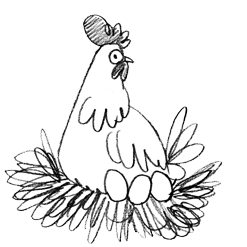
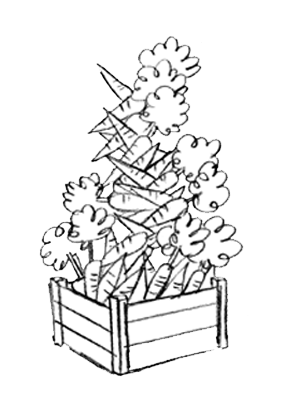
The hopeful part is that even failed projects contribute compost, ideas break down, fragments spread, lessons survive and people move on carrying experience. Compost matters, but we should still try to build gardens rather than endlessly producing piles of unfinished compost.