The Rise and Fall of Grassroots #openweb Activism in the UK

Grassroots activism has undergone significant ups and downs over the past four decades, particularly within digital communication and organizing. This post provides an overview of the challenges and successes experienced by grassroots activists during this time period, focusing on the evolution of the #openweb and its eventual decline. It explores the ideological underpinnings of internet projects, the impact of funding and #mainstreaming efforts, and the shifting dynamics between open and closed systems. By examining these trends, we can better understand the complex interplay between technology, ideology, and activism.

The rise of the open internet, was a surge of enthusiasm for #4opens and decentralized communication paths. Projects like early #indymedia, blogging platforms, wikis, and peer-to-peer networks flourished, driven by an ethos of democratization and empowerment. These offered people and grassroots movements opportunities to connect, collaborate, and mobilize on a global scale. The ideology of the #openweb, rooted in #4opens principles, captured the imaginations of many activists seeking to challenge established power structures.

Why did the #openweb flower and die over the last 30 years

However, alongside the growth of #openweb projects, there were also significant challenges and tensions. The influx of funding from state, foundation, and #NGO sources brought both opportunities and risks. While funding provided vital resources for development and expansion, it also introduced pressures to conform to #mainstreaming norms and intrenched #geekproblem agendas. Additionally, as open internet projects gained popularity, they became susceptible to co-option and manipulation by corporate interests seeking to capitalize on the growing community interest.

The fall of the openweb, despite early successes, the internet eventually faced a decline, marked by the erosion of its ideological foundations and the resurgence of closed, centralized platforms, the #dotcons. One factor in this decline was the failure of many openweb projects to align with the dominant ideology of the web itself. The pushing of non-native common sense. While some projects embraced trust-based anarchism and decentralized governance, others veered towards more hierarchical and exclusionary paths.

The rise of a new generation of technologists and entrepreneurs, shaped by #neoliberal ideologies of individualism and competition, led to a merging of open and closed paths. This shift towards closed platforms, controlled by a handful of corporate giants, undermined the diversity and resilience of the “native” openweb. The very chaos that once protected the openweb from vertical integration and monopolization was replaced by a homogenized landscape dominated by a few #dotcons.

Challenges and opportunities, in the face of these challenges, grassroots activists grapple with the complexities of a landscape that is hostile to their values and principles. The siloed nature of many media projects are a barrier to collective action and solidarity, limiting their impact and longevity. However, there are also opportunities for resistance and resilience, through the cultivation of networks based on mutual aid and cooperation like the #OMN

Conclusion, the trajectory of grassroots activism in the UK over the past four decades reflects the broader shifts and tensions within the #mainstreaming path. The rise and fall of the openweb mirrors the struggles of activists to carve out spaces for dissent and resistance in corporatized and surveilled environments. By using the #4opens to examining the ideological underpinnings of internet projects and exploring alternative paths in organizing, activists work towards reclaiming the path of a more open and decentralized future.

#KISS

The mess we made with the #dotcons

The #dotcons are designed for greed and selfishness. Everything about them feeds this and, in turn, feeds off it. This negative path is hard-coded deep into their architecture. They cannot be fixed.

The rebooting of the #openweb is the path we have taken. Copying worked well for the first step — it let us get moving. But for the next step, we need to move past the simple replication of the current #mainstreaming mess. We cannot reboot alternatives by simply copying them in #FOSS, as we have too often done in the #Fediverse.

The next step needs to be more native to the #4opens path we have started down. Let’s thank the people who copied. Let’s give them statues and security – they did us all a service. They deserve gratitude for this first step, not hatred. But we cannot stop there.

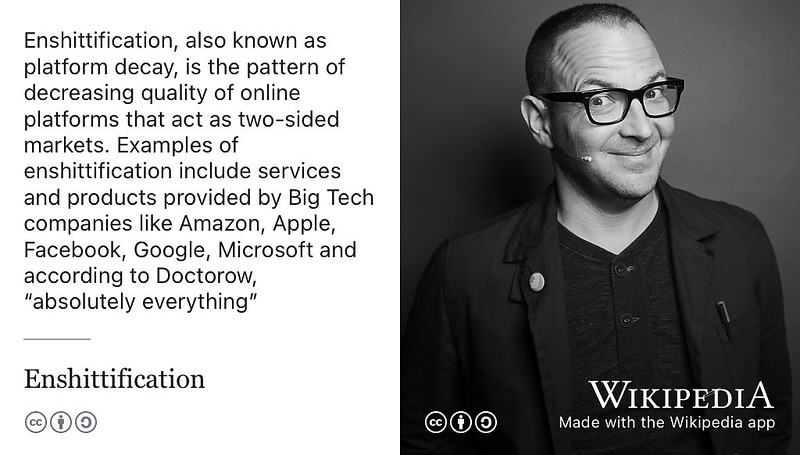
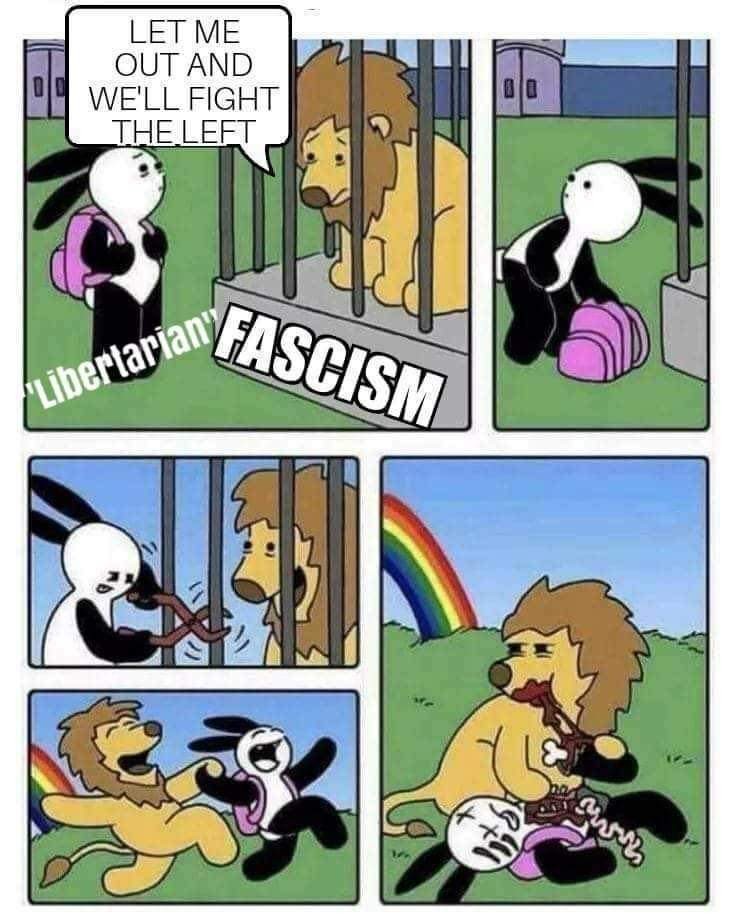
The mess of the #dotcons. Take the example of Twitter’s devolution. What began as a #neoliberal platform – deregulated, market-driven, profit-focused – has slid into a space with growing fascist tendencies under Elon Musk. This is not an accident. It’s a stark reminder of the pitfalls of unchecked corporate #dotcons and their susceptibility to authoritarian capture.

Neoliberalism, with its emphasis on deregulation and market “solutions,” inevitably concentrates wealth and power into the hands of a few. That concentration erodes democratic norms and opens the door to authoritarianism. Twitter is just one case. The intertwining of neoliberalism and fascism underscores why we need vigilance: not only against economic inequality, but also against the erosion of the native #openweb projects we struggle to build and sustain.

The trap of nostalgia, in the reaction of neoliberal “common sense” to Twitter’s fascist turn is instructive. Despite the platform’s descent, many #mainstreaming users still engage with it, clinging to nostalgia for its earlier, more liberal incarnation. This highlights the tendency of #mainstreaming to adapt to life under oppressive regimes, out of self-preservation, habit, or a misguided sense of normalcy. It is a sobering reminder of the dangers of complacency and the urgency of resisting authoritarianism, especially in its early stages.

The lesson for the #openweb can be found in this transformation of Twitter from neoliberalism to fascism, which shows the interconnectedness of economic and political systems. It underlines the need for collective action to safeguard native #openweb values. By recognizing the warning signs of authoritarianism and refusing to normalize its spread, we can prevent the erosion of the commons we are trying to grow.

The next stage of the reboot cannot be a mirror of the #dotcons. It must be different, open, grounded, messy, and alive.

The #dotcons and #closedweb of the last 20 years have clear problems:

  1. Centralization of Power: The dominant platforms in the #dotcons era are #closedweb, centralized, controlled by a handful of corporations.
  2. Monopolistic Practices: The dominance of a few major players led to monopolistic practices that stifled “native” #openweb culture. These monopolies limit people choice and hindered the development of alternative paths that could offer more diverse and community-centric life.
  3. Surveillance Capitalism: The #dotcons relies on business models built around surveillance capitalism, where data and metadata is harvested, monetized, and exploited for targeted advertising and social control without consent and transparency. This exploitation of people’s data undermines “society” and creates significant ethical concerns.
  4. Filter Bubbles and Echo Chambers: The algorithms employed in the #dotcons are designed to prioritize content based on user engagement metrics, leading to the formation of filter bubbles and echo chambers. These push people to beliefs and preferences that limit exposure to diverse perspectives and contributing to growing and entrenching polarization and disinformation.
  5. Erosion of Public Discourse: The rise of social media in the #dotcons facilitated the spread of misinformation, hate, and extremist right ideologies. These platforms prioritized engagement and virality over the quality and accuracy of content, leading to the erosion of public spaces based on trust.
  6. Data Concerns: The collection and exploitation of user data by #dotcons raised significant concerns. People have limited to no control over their social data and metadata.
  7. Digital Divide: Access to the internet and digital technologies remained unevenly distributed during the #closedweb era, exacerbating social and economic inequalities. Due to resource constraints, marginalized communities, faced barriers to access our #openweb reboot, limiting their ability to participate in our native paths and thus the wider digital economy and society we need to build.

To sum up, the dominance of centralized platforms, surveillance capitalism, algorithmic biases, erosion of social norms, and inequalities have been some of the most pressing issues associated with the #dotcons and #closedweb over the last two decades. Balancing this requires continuing efforts to promote decentralization, #4opens and “native” #openweb infrastructure and culture. You can help with this by working on projects like #OMN #OGB #makinghistory and #indymediaback

Please donate here is you can https://opencollective.com/open-media-network to support making this path happen.

This post is a reaction https://mastodon.ar.al/@aral/112098724636424845

We can work together?

The is occasional discussion surrounding the classification of different versions of the #web, such as #Web01, #Web02, #Web03, #Web04, or #Web05, this is not merely an academic exercise but an aspect of understanding the evolving nature of the digital landscape. However, the proliferation of these hashtags leads to confusion and contribute to the spread of fear, uncertainty, and doubt (#FUD) among users, people and communities.

In response to this confusion, proofer to use the hashtags #openweb and #closedweb which offer a clear and concise way to delineate between platforms that embrace openness, transparency, and community control (#openweb) and those that prioritize proprietary technology, centralized control, and lack transparency (#closedweb). By using these hashtags, we foster a better understanding of the ideological and technical underpinnings of different web platforms and paths.

Projects like #indymediaback and #OMN exemplify grassroots efforts to promote decentralized, community-controlled media and communication platforms. These initiatives can become vital in challenging the dominance of large corporations in shaping the digital paths and in offer an inclusive, diverse, and community-controlled approach to technology development.

At the heart of this discussion lies the #geekproblem, which highlights the tendency among technologically people to prioritize technical solutions without considering their broader social implications or the needs of ordinary people. By recognizing the #geekproblem, we begin to address the inherent biases and limitations of tech-centric paths to problem-solving and can then move to advocating for solutions that are inclusive and community-driven.

The solution to this “problem” lies in developing social tech that transcends the #geekproblem and focuses on the needs and perspectives of communities. This needs a diverse group of people in the development and decision-making process and promoting open-source code, open standards, open governance, and open data in technology development. By embracing this #KISS path and principles, we create a more equitable, transparent, and collaborative #4opens ecosystem.

However, this requires overcoming challenges, including the resistance of the status quo and the fear of change. By actively using the #4opens to judge projects, we challenge the prevailing narrative, call out pointless technologies, and compost the #techshit that contributes to the perpetuation of harmful social dynamics.

Moreover, it is essential to recognize that the struggle for a more sustainable future is inherently political. The dominance of large corporations and the perpetuation of #neoliberal ideologies pose significant barriers to any progress. Therefore, it is imperative to mobilize collective action and advocate for policies and initiatives that prioritize, balance the needs and well-being of communities over these profit-driven interests. Without this, the progressive tech dev will fall on barren ground.

In conclusion, the use of hashtags such as #openweb, #closedweb, and #4opens serves as powerful tools for organizing and mobilizing grassroots efforts to challenge the status quo. By embracing these hashtags and the values they represent, we work towards a future where technology serves the interests of the many rather than the few.

Let’s try harder, please.

the mess we made

This is a good podcast https://media.blubrry.com/novarafm_radio_for_a/audiofiles.novara.io/downstream/2023/03/230320_Downstream_Billions_Will_Die_If_They_Dont_Listen_To_Us_w_Roger_Hallam.mp3

The mess we have made over the last 40 years, the main challenges facing humanity today – #climatechaos, the degradation of the biosphere, and growing global inequalities – are not separate issues, rather different facets of the same problem. This problem is the #neoliberal economic system that has spread across the world through globalization, promoting high production and high consumption lifestyles and prioritizing economic growth over environmental sustainability and social equity. The #deathcult we all worship.

The neoliberal dogma is not only incompatible with a functioning Earth System at the planetary level, but it is also eroding human and societal well-being, even in the wealthiest countries. Growing global inequalities are a direct result of this economic system, which prioritizes the accumulation of wealth and power in the hands of a few at the expense of the majority.

The consequences of continuing on the present trajectory are dire. Collapse is the most likely outcome. A transition to a more socialist economy is a path out of this mess. We need to prioritize social equity, which requires a fundamental shift in our economic system, where sustainability and equity are prioritized over short-term greed. Only then can we hope to build a sustainable future for ourselves and for future generations.

The Mess We’ve Made: Neoliberalism.

Over the past 40 years, humanity has created a complete mess of our society and environment. #Climatechaos, the degradation of the biosphere, and growing global inequalities are not separate issues but different facets of the same problem. This problem is the #neoliberal economic system that has spread across the world through globalization, promoting high production and high consumption lifestyles and prioritizing economic growth over environmental sustainability and social equity. It is a #deathcult we all worship.

The #neoliberal economic system has created a world that is not only incompatible with a functioning Earth System at the planetary level, but also eroding human and societal well-being, even in the wealthiest countries. The consequences of continuing on the present trajectory are dire. Collapse is the most likely outcome.

To have any hope of turning this around, we need to prioritize social equity. This requires a fundamental shift in our economic system, where sustainability and equity are prioritized over short-term greed. A transition to a more socialist economy is a path out of this mess.

The transition to a more sustainable and equitable economic system will not be easy, but it is necessary. It requires us to fundamentally change our values and priorities as a society. This cannot be done without social friction and more mess, we need to stand up and fight for a more sustainable and equitable world. It is well pastime to reject the #deathcult of neoliberalism and build a humane and better world for all earths creatures.

The ideological swing

Published Date 7/27/17 7:30 PM

In the 19th century we had a fight between the conservatives vs fundamentalist liberalism fighting/feeding inhuman industrial growth which lead to a human backlash in the 20th century of social democracy – that is a mediated democracy to push humane growth (progressive liberalism). The late 20th century #neoliberal (fundamentalist liberals) pushed us back into a 19th century world view, which has brought with it the balancing ideas of conservatism of trump and Brixit.

The idea is to do it different. Socialism and ecological spring to mind. If we can bring the progressive liberals back, it can open the space for these other world views. If conservatism takes over then we have the revaluation of “communism” as a balance as Neo-liberalism is an inhuman dead-end that we should not be repeating.

The conservatives (trump) and the radicals are both pissing on liberals for good resions. Though it might turn out that a renewed progressive liberalism (Corbin etc.) might be the best path. Pee in moderation can be a good fertiliser 🙂

For a view of neoliberal dealing with a political created ecological disaster this podcast is a good direct reminder http://irishhistorypodcast.ie/podcast-directory/famine/