The current #mainstreaming paths are dependent on capitalist structures, when looking at this critically, it reveals itself as a #deathcult, with the embodiment of unrestrained growth and consumption that runs counter to meaningful solution to #climatechange. While billionaires and corporatens entertain the illusion of future-proofing their wealth and safety, the reality is more perilous. Their greed fed opulence and influence, but it can’t shield them indefinitely from a collapsing ecosystem that sustains all life, including their own.
Inherent to this contradiction in capitalism itself: it requires perpetual growth to survive. This expansion is incompatible with the measures needed to mediate or stop #climatechaos. But if growth halts, so does the economic machinery that upholds the current power structures, creating a destabilizing domino effect. While you might ask why those in power do not pivot to environmental preservation, it’s the same mess, the answer is the system’s relentless demand for expansion. Even if an individual capitalist – or a consortium – decides to scale back for the sake of long-term planetary health, the market will simply replace them with competitors who are more willing to pursue relentless profit, growth, and resource consumption.
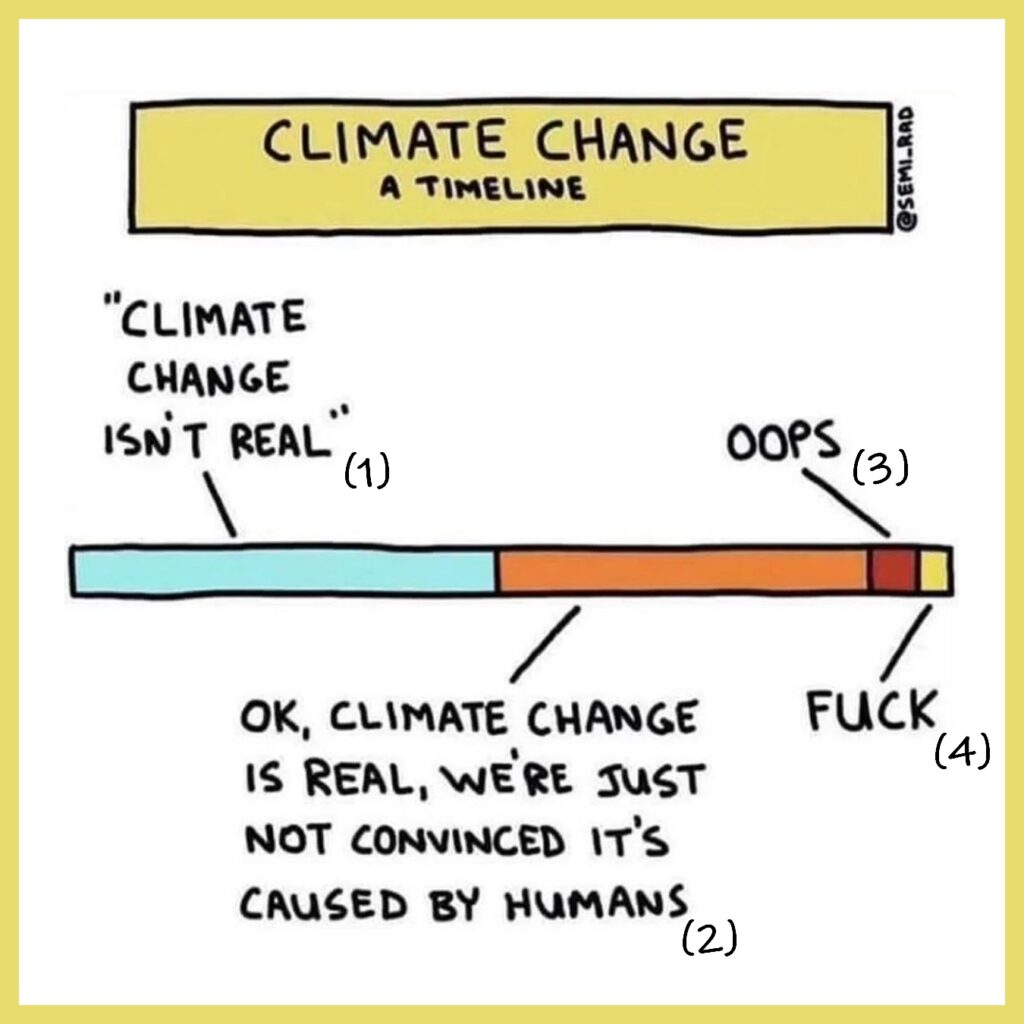
The current path has a self-destructive logic, this paradox is why even billionaires who are conscious of the dire climate situation resort to insufficient and infective measures. They might fund green technologies and push for marginally lower carbon emissions, but the actions remain constrained by the underlying logic: protecting the continuity of capital. This capital-only world-view can’t embrace the radical systemic change we actually need to avert ecological collapse.
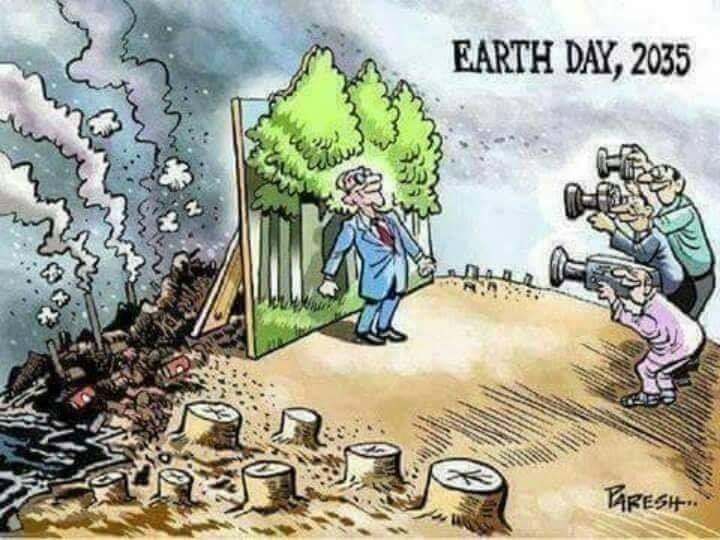
Let’s look at this, billionaires and the bunker illusion, the ultra-wealthy/greedy #fuckwits, plan to retreat to their fortified bunkers and private, insulated zones once climate-induced social and environmental chaos grows un medateable. While contingency plans do exist – high-tech shelters, land acquisitions in regions predicted to be less affected by climate change -these are temporary solutions. A world unravelling from the fabric, ecosystems will not sustain even the most fortified enclaves indefinitely. Even if technology advances to the point of enabling space colonization, the timelines required for such ventures far exceed the immediacy of the crisis we keep #blindly pushing.
This is an easy to understand systematic issue, and it should be obverse we need a collective rater tan the mask of individual solution. Capital, the motivation and power for action, is not about individual capitalists but capital as an entity, the dogmatic socio-economic phenomenon that exerts control over its arbiters. Capital has built in infinite growth, prioritizing profit over sustainability and long-term human survival. An individual or collective attempt to defy this logic and implement meaningful, planet-preserving strategies would be outpaced and outcompeted by others who align more closely with capital’s pushing of this #stupidindividualism, ruthless, greed is good.
This #KISS understanding underscores the distinction between idealist and materialist interpretations of the crisis. Idealists believe that with enough awareness and willpower, the system can change from within. Materialists, recognize that capital is a structure that acts beyond the control of individual or organization. It functions like biological evolution: it values reproduction and expansion above survival, when as we see now those traits are in the end destructive.
There is some room for corrective action within the existing system, but it’s inadequate. Policies to mitigate environmental impact, even when enacted, are slow and piecemeal. The issue isn’t that #mainstreaming decision-makers don’t understand the problem; rather, they don’t grasp the depth of systemic overhaul required to address it. The principles they consider immutable -the rules of modern economics and finance. The “common sense” is the problem.
The #deathcult of mainstreaming is propelling growth and consumption despite ecological warnings, it is locked in a dance with CAPITALS logic. While billionaires may fund clean energy startups and talk about sustainable practices, their wealth and the power structures uphold and are bound up in the unsustainable status quo. Change and challenge requires uprooting fundamental beliefs about how economies MUST operate, not just superficial adaptations. Until this realization is shared and spread, capital will continue on its path, indifferent to the ruins it leaves.
Best not to be a prat about this, thanks.
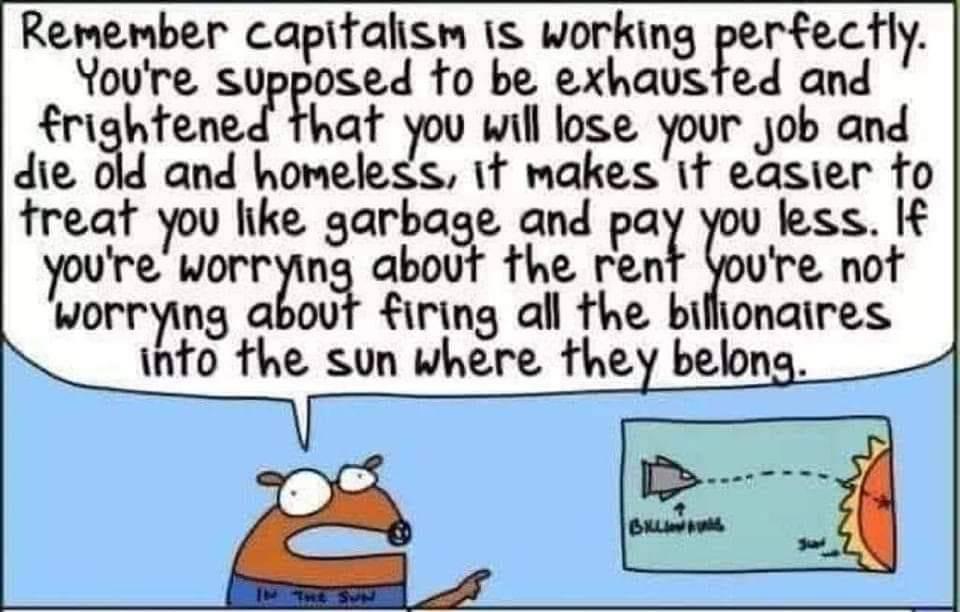
Why capitalism and climate change solutions are fundamentally incompatible. The urgent need to address climate change collides with an uncomfortable reality, as we outline capitalism’s foundational mechanics to make meaningful climate action impossible. This isn’t a case of individual negligence but a systemic flaw. As we say, capitalism, by design, prioritizes profit and growth, at the expense of long-term, collective concerns and environmental preservation.
Capitalism favours the #nastyfew who maximize profits in the shortest timeframe. It’s a path where the most ruthless and nasty competitor prevails, setting the standard that others must follow or face obsolescence. This constant pressure means that if an individual capitalist or company recognizes the existential threat of #climatechaos, they cannot afford to act on it meaningfully without losing their competitive edge. For example, a corporation that decides to limit emissions at the cost of profitability will quickly be outcompeted by one that does not.
The logic of capitalism ensures that any significant deviation from maximizing short-term profit results in failure within the market. Thus, while some companies engage in “green” initiatives to pay lip service to sustainability, these efforts are superficial. They exist to placate public concern and leverage marketing advantages, rather than drive the needed change. The myths are that capitalism, through innovation and competition, will solve climate change. However, capitalist solutions boil down to maintaining leverage and coercing others into action. For example, the race for green technologies like electric cars and renewable energy can be more about dominating a new market sector than reducing environmental harm. Elon Musk’s ventures into space and sustainable technology, was hailed as forward-thinking, illustrate this principle. Space colonization and technological fixes reflect an expansionist mindset, a search for new “territories” to exploit as resources on Earth dwindle.
Capitalism’s path needs to push costs onto external parties, the public and the environment. The system relies on government-funded infrastructure and socialized costs, as seen with subsidies for oil companies, highway construction for the automotive industry, or public bailouts for corporations in crisis. When it comes to addressing #climatechange, this reliance on externalized costs becomes a liability. The climate crisis is a global “cost” that capitalism, left unchecked, will not address willingly. It requires collective action that contradicts capitalism’s individualistic and profit-driven paths. This is why capitalist markets require regulation by state or more importantly collective paths to function at all or sustainably, and even then, such measures face fierce resistance.
We now live in the automation age, the question is how the #nastyfew plans to survive. Whether billionaires believe they can weather the storm of #climatecollapse is complex. Many of them, seeing the unsustainability of infinite growth, look for exit strategies. This explains the investments in space travel, underground bunkers, and gated communities. The implication is stark: they believe their wealth will shield them from the mass suffering climatechange will bring. Automation adds another layer to this story. With machines replacing human labour, the exploiters envision a future where their economic power persists without the masses of real people, that’s you and me. This very dystopian reality shows the detachment of capital from human and ecological concerns.
We currently face a failure of collective action to mediate, one of capitalism’s flaws ts inability to coordinate collective action without state intervention. While some countries have managed to decouple emissions from #GDP growth through, exportin emissions, advancements in service sectors and digital economies, this decoupling remains insufficient to meet the global targets needed for net-zero. The system’s piecemeal and reactive, cannot match the scale of planning required for real climate action. Without a fundamental restructuring that prioritizes the collective good over private profit, meaningful progress remains an illusion.
Conclusion: The Need for a Paradigm Shift.