Navigating the Trolls

There is a shifting of social and political paths underway, we will have a move to the left or the right, the centre path has made itself irrelevant through, with not having any valid path to mediate, growing social divisions and ecological breakdown. On the left in our efforts to find meaningful change, we often encounter the phenomenon of “trolling” a problem that has become more prevalent and divisive in recent years. The trolls, emboldened by the anonymity and reach of the #dotcons, try to act as gatekeepers of thought, determined to shut down any ideas or alternatives that fall outside their narrow, and often mean-spirited, views of the world. No matter which political ideology they think they are pushing, this is a right-wing path driven by fear and the need for control. It can be useful to look at these individuals as being drawn from two distinct but overlapping groups: #geekproblem and #fashionista.

The geekproblem, is normally a technical path, but on the social side they often approach activism with a rigid mindset, fixated on technological solutions or unthinking, thus #blinded ideological frameworks. These people are generally well-versed in their specialized areas – be it coding, digital security, or political theory – but are quick to dismiss any ideas that don’t conform to their existing dogmatic and blinded beliefs. Pushing themselves as guardians of “the truth” or the “right way”, but this is from their world they can see, and thus way to often so narrow as to be irrelevant in the messy world we actually live in and have to navigate our way through.

This attitude manifests as trolling behaviour, attacking, undermining, and deriding people who suggest different approaches and alternatives. They forget that the goal is not to dominate the conversation, but to build a collective path that embraces diversity and complexity. Their (blinded) rigidity becomes a barrier to experimentation and cooperation, stifling the messy but working solutions we desperately need.

On the other #blocking path, we have the #fashionistas who are more concerned with appearances, trends, and social currency within activist spaces and wider #mainstreaming society. This group prioritizes being seen as part of the “right” movements, using the “right” language, or following the “right” trends over actually engaging in real meaningful, substantive work. They engage in social gatekeeping, where deviations from the accepted norms or language lead to ostracization and public shaming. This too is trolling, shutting down anything that is outside their blind #deathcult fed #stupidindividualism. Adding to the mess, not composting it, unconsciously replicate the exclusionary tactics they sometimes claim to fight against, creating a culture of fear and conformity instead of openness, debate and the needed paths of diversity.

The consequence of this is the current lack of alternatives, the stifling mess where any alternative outside narrow definitions is attacked, ridiculed, then ignored. This prevents the growth of diverse solutions by marginalizing, then #blocking voices that think differently, and ultimately reinforces the status quo. In effect, the trolls on the internet, whether consciously or unconsciously, are blocking the change and challenge we need. This is a very right-wing path, what ever you might like to call this.

The sad and bad paradox is that these groups can share a genuine desire for social justice and systemic change, yet the inadequacy of their behaviour serves to uphold the paths and systems of oppression and exclusion they seek to dismantle. Trolling thrives on conflict and negativity, which feeds this mess so they can feed off it, it’s a nasty and negative circle.

What paths can we take? How do we move beyond this mess?

We can try and mediate this by focusing on compassionate communication, listening without instant judgment, speaking with some empathy, and seeking to understand rather than only to dominate—we can create spaces that are more inclusive and productive to find path to disagree without being disagreeable. Are we shutting down ideas too quickly? Are we dismissing people who don’t fit neatly into our ideological boxes? By staying open to self-critique, we can prevent ourselves from falling into the trap of this kind of narrow thinking. We can substance this path by building communities that have deepening roots in mutual aid and support.

To sustain these communities we need to focus on concrete actions, not only words, both the #geekproblem and #fashernista paths get bogged down in theoretical debates or performative displays of activism. Instead, we prioritize concrete actions that make tangible differences in our communities, whether through, building alternative networks to create spaces for messy dialogue and collaboration.

A first important step is to move outside the bindings of the dotcons, this is basic, the current internet infrastructure, dominated by social media giants (the #dotcons), is designed to amplify division, outrage, and addiction. To start to build meaningful alternatives, we need to step away from these platforms and cultivate the #openweb—decentralized, community-driven paths where we can experiment with new forms of social organization and communication.

For the last 20 years the has been a historic project, the #OMN, that is based on a culture that values diverse approaches, where multiple strategies and ideas can coexist, and where there is room for trial and error. To do this project requires a fundamental shift in an affinity group to move from rigid dogmas to a more flexible, approaches that encourage learning from the grassroot history mistakes and successes alike.

We can compost the negativity—the trolling, the rigid thinking, the performative posturing—to find fertile ground for new ideas to grow. To keep on this path we must remain open to different possibilities, willing to take risks, and courageous enough to challenge not just the status quo, but also ourselves. The trolls will always be there, but we don’t have to feed them. Instead, let’s focus on creating the world we want to see. The humanistic adventure in social technology, an Open Media Network of diverse voices and ideas. Let’s embrace the mess, compost it, and use it to grow something new. The path is open, and it can be a more happy one.

https://opencollective.com/open-media-network

Linking on the #OpenWeb: Why It Matters

The concept of linking is fundamental to the structure and philosophy of the web. Links are not simply a technical feature; they are the social connective tissue of the internet of people, enabling decentralized and interconnected paths where information is shared and accessed. However on the internet, as centralized platforms, the #dotcons, gained dominance, the social art and purpose of linking has unthinkingly been forgotten by current #fashionistas and is often actively blocked by the #geekproblem crew.

Let’s look back so we can look forward, linking is core to the path of creating a decentralized web of knowledge and wisdom. When you link to another site or resource, you’re effectively creating a pathway that connects knowledge and experience across different domains and cultures. This is how the web was originally envisioned, as a space where documents interlinked, allowing people to navigate from one piece of information to another seamlessly. This decentralized path contrasts sharply with the #closed ecosystems of current social media platforms, in which linking is discouraged, and knowledge and wisdom are siloed, controlled, for profit and power by closed algorithms.

Linking encourages collaboration and the sharing of knowledge. When you link to another’s work, you’re both acknowledging their contribution, and amplify their voice. This grows a cultural “commons”, a space where ideas and information are freely exchanged, built upon, and improved. The link is a gesture of trust and respect, integral to the “native” cooperative path of the openweb.

From a technical point of view, this path creates serendipitous discoverability, links are crucial for making information discoverable. The dotcons search engines like Google rely heavily on links to index content and determine its relevance. When your content is linked to by others, it signals that your content is valuable, this is used to raise its rank in search results. This is the essence of organic growth on the web, content becomes more visible as more people find it useful and link to it #KISS

Linking directly to sources and references maintains the basic integrity of the openweb. It allows people to verify facts, trace the origins of ideas, and explore related content. This is particularly important in an era where algorithmic pushing of misinformation spreads rapidly. On the KISS openweb, links provide the context and credibility needed to evaluate the trustworthiness of information.

The basics of how linking works on the native openweb:

  • Hypertext and hyperlinks, the web is built on the concept of hypertext—text that contains links (hyperlinks) to other text or resources. These hyperlinks are embedded within a webpage and, when clicked, take the user to a different location, whether it’s another page on the same site or an entirely different website. This simple mechanism allows the horizontal building of complex networks of information.
  • HTML and URLs, At a technical level, links are created using HTML (HyperText Markup Language), the standard language for creating web pages. A basic link is formed with the <a> tag, where href specifies the URL (Uniform Resource Locator) of the destination. For example: html <a href=”https://www.example.com”>Visit Example</a> This would create a clickable link that says “Visit Example” and takes you to the specified URL.
  • Inbound links, or backlinks, links from other websites pointing to your content. Outbound links are the links you create that point to external content. Both types of links are important.

We need to revive linking in the #openweb reboot. As for the last 20 years in the era of the dotcons, content was trapped inside walled gardens and the native path of linking was diminished. These “social media platforms” discourage, and then punished external linking, if you put a URL in a post the algorithm will hardly show that post at all, this keepa people and communities trapped to maximize addiction for profit and control. This has led to a fragmented web where content is invisible, less connected, and much less reliable. We lived for 20 years in shrinking echo chambers, feeding our rage and building ignorance.

Linking is much more than a technical function; it’s basic to the . By rejuvenating and embracing linking, we resist the centralizing forces of the #dotcons and walk the path towards a humanistic web that is open, accessible, and democratic. It’s time to remember what linking is for and to use this native path to build a better internet.

Let’s not continue to be prats on this, please. You can support this work https://opencollective.com/open-media-network

Breaking the circle of #stupidindividualism

One thing we need to emphasize more is that right-wing extremism lacks critical thinking, as conservatism tends to resist openness to alternative paths. Our #mainstreaming #fashionistas — those who mindlessly follow trends — reinforce this mess by promoting this path of #stupidindividualism, where there’s far more “stupid” than actual individuality.

The core issue with conservatism and mainstream conformity, especially in its more extreme forms, is the stubborn refusal to consider alternative ideas and different directions. This rigidity creates a dangerous inability to adapt to the rapidly changing circumstances we face, particularly in the era of #climatechaos and rising migration flows that will be driving social breakdown.

Mainstream #fashionistas, the so-called “influencers” and trendsetters, do little beyond reinforcing the status quo. They mindlessly adopt and promote tired, profitable ideas without questioning their social impact or validity. This behaviour pushes a narrow, unchallenged worldview that generates ever more mess — mess that we then need to compost. And right now, we don’t even have working shovels. #OMN

At the heart of the problem lies #stupidindividualism, 40 years of hyper-individualism, where personal success and self-interest are placed above collective well-being. This common sense mindset breeds division and erodes the capacity for collective action, making it incredibly difficult to build the solidarity needed for meaningful change.

Steps to Move Beyond the Mess:

  • Balance collective action and individualism, solidarity, not solitude, is key to shifting the focus from individual success to collective well-being. We need to encourage movements that emphasize cooperation, community support, and shared goals. Build and engage with local groups, cooperatives, and grassroots organizations that challenge the status quo from the ground up. Prioritize communal benefits over short-term personal gain to grow networks of care and resilience.
  • Cultivate critical thinking, it’s essential to question dominant narratives and dig deeper into the issues shaping our world to actorly challenge the assumptions pushed by mainstream media, political rhetoric, and cultural norms. Promote learning that goes beyond surface-level understanding to explore the root causes of social, economic, and political issues. Create spaces for education and informed discussion to help people see and understand alternative perspectives.
  • Advocate for systemic change, we need challenge that pushes for real change that addresses the roots of social and environmental issues, rather than settling for superficial fixes. Advocate for economic justice, environmental sustainability, and comprehensive social policies that support this radical change. Embrace and uplift unconventional, radical paths and ideas, progress requires stepping outside the comfort zone of conventional thinking.
  • Resist conformity and consumerism, to counter that #mainstreaming culture excels at co-opting and neutralizing dissent. We need active resistance to the pressure to conform. Stay aware of how #mainstreaming dilutes and commodifies alternative paths. Challenge the notion that consumerism is the primary way to express individuality. #KISS

Breaking from this cycle, beyond the current mess, we must break from the cycle of #stupidindividualism and blind #mainstreaming conformity. By embracing collective action, growing critical thinking, advocating for systemic change, and resisting conformity, we can step away from the rigid, invisible ideologies that fuel the #deathcult path we’re all caught up in.

It’s time to reclaim our tools, sharpen our shovels, and start composting the mess to grow something better #OMN

The importance of words and ideology

We need to think of how words shape our thoughts, and how common understandings of these words are essential for any coherent and effective communication. Ideologies form the basis of all thinking, whether unspoken and #mainstreaming or articulated and minority. The challenge is to #KISS transition creative minority ideologies to the less working mainstreaming thinking.

There is a plan: Using Common Hashtags and Syndication

To achieve this transition, we need to use common hashtags and syndication through platforms like #activertypub and #OMN (Open Media Network, looking for funding). This strategy creates a real-world mainstreaming challenge that can remain resilient against co-optation by #fashionistas while still catering to their egos so they might embrace the needed change and challenge.

Actionable Steps

  • Establish a set of common hashtags that encapsulate core principles and ideas. Examples include , #openweb, #DIY, #techchurn, and #activertypub etc.
  • Encourage the use of these hashtags across social media and other communication platforms to create a unifying language and community.
  • Educate useing guides and resources to explain the importance and meaning of these hashtags to grow widespread understanding and adoption.
  • Encourage participation by inviteing grassroots and alternative media projects to join these syndication networks, ensuring a diverse range of voices and perspectives. Use tools like the #OMN to automate the syndication process, making it easier for participants to share and distribute content.
  • Grow collaboration and linking between different projects and communities to build a robust and supportive ecosystem.
  • Maintain open standards by ensuring that all participating projects adhere to the principles (open source, open data, open standards, open processes) to focus on transparency and inclusivity.
  • Monitor and adapt to regularly assess the network’s effectiveness and build feedback to make adjustments to improve reach and impact.

    Engaging the #Fashionistas
  • Initial outreach is about identifying key #influencers and early adopters within the alternative and grassroots tech communities.
  • Appeal to egos by recognizing the need for recognition and validation among #fashionistas, to sustain and create opportunities for them to showcase their contributions within the network. Highlight their success stories by sharing these stories and case studies that demonstrate the value and impact of participating in the network, encouraging more to join.

By leveraging common hashtags and syndication through #activertypub and #OMN, we create a resilient and impactful story that brings “native” ideologies into the #mainstreaming paths. This active path not only challenges the status quo but also changes its flow. Providing a sustainable path for grassroots and alternative projects to grow and thrive. The key to this is to maintain the and grow collaboration on the stories we tell #KISS

All language is metaphor, and the metaphors we choose shape how people think about problems and solutions. The “digital drugs” metaphor works because it makes the addictive design clear, but it can also push people into a moral panic frame (“users are addicts”), which risks oversimplifying.

A few metaphors you might find less #blocking of the #hashtag story:

  • Food & Nutrition
    #Dotcons = junk food (engineered to keep you consuming, empty calories).
    #Bsky = diet soda (feels lighter, but still unhealthy).
    #Fediverse = a community kitchen (messy, you have to cook and wash up, but nourishing and shared).
  • Urban Space
    #Dotcons = shopping malls (bright, controlled, profit-driven).
    #Bsky = curated boutique arcade (less harsh, but still enclosed).
    #Fediverse = the street commons (chaotic, noisy, sometimes rough, but free and collectively shaped).
  • Agriculture/Gardening

    #Dotcons = monoculture agribusiness (neat rows, efficient, but sterile and toxic).
    #Bsky = organic supermarket (nicer branding, but still transactional).
    #Fediverse/#OMN = messy permaculture garden (takes effort, community labour, but self-sustaining and alive).

These metaphors keep the critique, from individual pathology to collective space.

The Solution: Embrace the #4opens

We can’t keep repeating the same #TechShit over and over again. #TechCurn is a dead end.
The #OMN is the only positive path I know forward.

#Mainstreaming #fashernistas are dangerously consumptive. Our alt #fashernistas are utterly pointless. We need to disrupt social norms and make fashionable to salvage any value from these people and pull them out of their vacuous existence.

From a grassroot #DIY #tech perspective, we are witnessing a problematic trend among many of our #openweb #fashionistas. Their impact is negligible, but the space they occupy stifles genuine progress. To combat this, we need to address the overwhelming #techshit and curb the ongoing #techchurn. The Problem, the centrist #mainstreaming approach is failing us, and the persistence of these misguided efforts is disheartening. We need to find a practical path forward, moving beyond pity and hate to actionable solutions. We need to open up this path.

The Solution: Embrace the

The #4opens—open source, open data, open standards, and open processes—provide a foundational framework for building sustainable and effective projects. By prioritizing these principles, we can cultivate a thriving “native” ecosystem.

Action Plan
* Education and Awareness: Promote understanding of the and their importance. This can be achieved through workshops, online tutorials, and community discussions.
* Community Building: Foster a community of like-minded people committed to the #openweb, create paths for collaboration.
* Project Audits: Regularly evaluate projects to “judge” they adhere to the . Offer support and guidance for those struggling to meet these basic standards.
* Highlight Success Stories: Showcase projects that exemplify the . Use these as case studies to inspire and guide others.
* Address Tech Churn: Identify and mitigate the causes of #techchurn. This involves simplifying tools, improving documentation, and mentorship to grow contributors.
* Challenge #Fashionista Trends: Actively push back against the unthinking pursuit of new trends that do not align with #KISS #openweb values. Advocate for stability and sustainability rather than novelty.
* Policy Advocacy: Work towards policies that support the culture of the #openweb at organizational and governmental levels. This includes promoting open licensing, funding open projects, and ensuring access to open standards.

Moving Forward, we need to gather to reclaim the space occupied by ineffective projects and redirect it towards meaningful initiatives. By committing to the and fostering a supportive community, we can overcome the current challenges and build a more resilient and humanistic path. It won’t be simple to overcome the inertia of the #mainstreaming to create lasting, positive change in the #openweb path. Are you ready to push to make this happen? Let’s work together to navigate this “common sense” mess and find a useful path forward, please.

Change and challenge group dynamics

There is a lot of mess to compost. #fashionistas are unconscious of the dynamics of “in and out groups” that split the workings of the social change movements. One of the core problems shaping the current #fediverse is not technical – it’s social power dynamics disguised as community safety and consensus. Exclusivity dynamics emerge whenever an in-group begins defining legitimacy. Over time, a small set of people implicitly decides which conversations are acceptable, viewpoints are “safe,” and which participants belong.

In group members push to feel they are accepted and seen as part of the core community, out-group members are then excluded and marginalized, This is rarely deliberate conspiracy. It grows organically through social reinforcement, shared assumptions, and unexamined norms. But the outcome is predictable: those closest to the in-group accumulate influence, shaping culture and discourse without explicit accountability. The result is a failure of real diversity.

Not diversity as branding or policy documents, but lived diversity, different approaches, different cultures, different forms of participation. Instead of a thriving common, the environment becomes sterile, only approved viewpoints circulate, disagreement becomes framed as threat and community growth stalls because new perspectives cannot root.

The #fediverse was meant to grow from pluralism, many nodes, many cultures, many experiments. But in practice, repeated reliance on social exclusion tools has produced echo chambers. When #blocking becomes the default conflict resolution mechanism rather than a last resort, several things happen to “native” diversity – the messy range of grassroots experimentation – gets filtered out. Conflict becomes polarized into “us vs them” narratives leading to cooperative bridges collapsing.

Be careful of #fashionistas hiding behind the burocracy of “Safe Space’s” mess making, they are the problem and have little to do with solutions or “safety”. Out-groups feel marginalized and disengage, what remains is not a healthy community but a narrowing cultural loop reinforcing its own assumptions. This is not safety, it is stagnation. And stagnation is fatal to an ecosystem built on federation.

The structural mistake is in confusing control with care. Many well-meaning actors believe they are protecting community health. Yet when protection turns into gatekeeping, it reproduces centralized power patterns inside supposedly decentralized spaces. This is the #NGO logic creeping into grassroots environments – speaking about “community” while exercising control over it, substituting bureaucratic process for lived trust and enforcing purity instead of cultivating resilience.

The result is a performative version of safety that reduces participation rather than expanding it. Mitigating the mess, we need to rebuild a more messy balance, not abandoning moderation or boundaries, those are necessary. The problem is imbalance, as healthy communities require active mediation between openness and protection. Federated systems do not eliminate power, they distribute it.

Without this, the #fediverse risks reproducing the same failures as centralized platforms, just at smaller scale. Maybe the simplest way to say it is if the only tool we reach for is exclusion, the community is already failing.

Maybe I need to say this clearer?

#TED – A Community of Delusions

For millennials lost after the mess of 9/11, the wars, economic upheaval, digital division, and social atomization, #TED was an appealing #mainstreaming alternate vision of a society where ideas had currency, and a wider group of people could identify with the intellectual vanguard. This vision was delusion, but it easily overtook the norms of drift and disconnection in our failed alternative culture.

To have been young and thoughtful in the late 2000s was to be a citizen of TED nation – a community of dreamers more than doers, united by a common creed: that ideas matter, that inspiration is power, that the future belongs to those who can capture imaginations. This naivety was an easy path to take for the children of the #deathcult. TED’s prominence shaped the aspirations of a generation, it shaped how we thought about ourselves. This #stupidindividualism pushed the blinding possibility: you, too, could have an idea worth spreading. You, too, could be special.

TED defined the poverty of the blinded intellectual spirit of this era, a profoundly millennial idea: that we are each of us main characters and have an individual calling and a mission to “change the world” in some vaguely indefinable generally pointless way. And while the reality fell well short of the rhetoric, the animating spirit was strong and likely sincere for most people.

The priests of the #deathcult pushed #TED as class war, it was not a youthful indiscretion of a generation, a rite of passage on the road to hard-earned intellectual growth. Rather, it was a smoke and mirror mess pushed by a “progressive” #fahernistas class. In the post TED world we are back to where we were 20 years ago, the messy reality of class war, unfriendly and unwelcoming.

#MillennialZeitgeist #IdeasWorthSpreading #TEDTalks #Dotcons #Intellectualpoverty #liberal #mainstreaming

PS. it’s interesting to remember that #TED tried to be #openweb native at the start, they only turned to #dotcons when that path was abandoned by our #fashionistas and lead to the mess we are in today, what a mess.

Serendipity and #Hashtags

What our #fashionistas do in the #dotcons and the #openweb are a problem we need to work to compost. With this in mind, we do need to talk about useful tools we are underusing. Hashtags are ubiquitous online, at best they categorize content to find and join conversations on topics. The problem with current #fashionista hashtag usage is they reinforce individualism over collective action. This is #neoliberal “common sense” and the pushing of domination of #dotcons, prioritizing profit rather than any needed change and challenge.

There is a working path out of this mess. Serendipity is about the occurrence of events by chance, this provides a beneficially fresh perspective on hashtag use. By implementing hashtags in a way that fosters unexpected connections and discoveries, it transforms how they function as social tools. Yes, misspelled hashtags result in fragmented conversations, making it difficult for people to engage in coherent discussions. However, embracing these variations also leads to a more inclusive and dynamic categorization system. By allowing for misspelled hashtags to be recognized and grouped with their counterparts, we create a more robust and forgiving serendipity path.

In a federated system like the #Fediverse, and what is envisioned for the Open Media Network (#OMN), there is a tension between universal truths and messy, subjective truths. A federated path values diversity and decentralization, allowing for meany perspectives to coexist. This aligns with the concept of serendipity, where the focus is on connections and discoveries rather than rigid categorization.

This is the value in the OMN, which address these issues by implementing word grouping flows, where different spellings or variations of hashtags can be grouped together to build cohesive category flows. This approach makes misspelled hashtags functional, thus addressing some of the fragmentation caused by individualistic usage. But the OMN project faces significant challenges in securing funding and overcoming “common sense” internal and external obstacles. The difficulty in obtaining #FOSS funding highlights the broader issue of support for projects that prioritize open, decentralized, and community-focused paths.

The use of hashtags is a progressive and critical perspective on technology and society. Think about neoliberalism (#deathcult) and consumer capitalism (#fashernista), promoting the ideals of the open web (#openweb) against the for-profit internet (#closedweb #dotcons). The interlocking hashtags tells a story that advocates, transparency, collaboration, and sharing in open-source development (#4opens).

Example Meanings:

  • #deathcult: Neoliberalism and its detrimental social and ecological impacts.
  • #fashernista: The trivialization of serious issues through consumerism and fashion.
  • #openweb: The original horizontal path of the World Wide Web.
  • #closedweb: The pre- and post-open web internet dominated by for-profit control.
  • : Principles of transparency, collaboration, and sharing in open-source, #FOSS development.
  • #geekproblem: The cultural issues within the tech community, a strong tendency towards control and determinism.
  • #techshit and #techchurn: The negative consequences of constant new technological projects that fail to address any social issues.
  • #nothingnew: The question whether new projects are needed or if existing ones should be improved.
  • #OMN and #indymediaback: Rebooting the altmedia projects on the #openweb.
  • #OGB: Open governance and the power of community lead decision-making.

For hashtags to be effective tools we need for social change, we need to shift the balance from individualistic to collectivist. This requires tech systems that accommodate human error and diversity of expression, while maintaining coherence and building community. The #OMN has a promising approach by grouping variations of hashtags, but it faces significant challenges in implementation and support due to current blocking of any funding and coding resources.

Please, let’s embrace a serendipitous view of hashtag to enrich conversations in the era of the #deathcult.

A serendipity story

The problem with academic “thinking” in activism

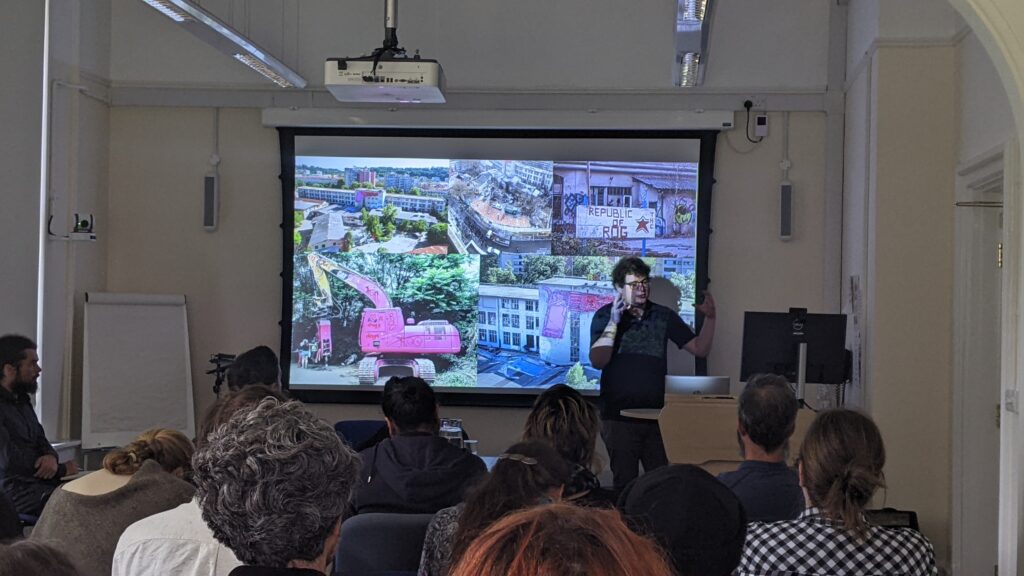
I moved my boat to Oxford a year ago, it’s an interesting city with strong academic roots, I have taken part in a few hundred university seminars since arriving. This is a few notes from an activist prospective on the university path. The common issue with these Oxford seminars, is outlined in my notes, this is the disconnect between academic discourse and the real-world challenges faced by activists and movements. A few of the key problems I have highlighted over this time:

  1. Co-optation of activism: Both right-wing groups and NGOs have co-opted the concept of activism without understanding or utilizing its purpose and path. This leads to a distortion of its original intent.
  2. Assumption of liberal path continuation: Much academic work assumes that the liberal trajectory will persist, despite mounting evidence from climate science indicating otherwise. There’s a failure to acknowledge the urgent need for alternative paths in the face of #climatechaos and its social and economic ramifications.
  3. Lack of focus on future paths: We need studies examining potential future trajectories led by both the hard right-wing and progressive left. This is particularly relevant given the likelihood of a post-apocalyptic scenario for many equatorial countries due to #climatechaos.
  4. Disconnect from real-world activism: The events are, too, often status games rather than meaningful discussions about addressing the pressing issues. There’s a failure to engage with the messy realities faced by activists and movements on the ground.
  5. Academic feedback loop: The feedback loop between academics and activists is flawed, with academics relying on poor sources and engaging with #fashionistas rather than those actively “working” in grassroots activism. This results in a caricatured understanding of activism and its challenges.
  6. Irrelevance of academic thinking: Academic thinking needs to be criticized for being detached from the practical realities faced by activists. That it’s focused on building consensus and engaging in definition games rather than addressing the substantive issues.

In summary, the common issue is the disconnect between academic discourse and the lived experiences of activists and movements, leading to a lack of relevant insights and solutions to pressing real-world challenges.

More Oxford seminars and workshops

#Oxford

Contrasting Balkan utopias: Navigating migration and futurity in the physical remnants of Yugoslavia

“Irregular” #migrants moving along the Western #Balkan Migration Route aspire to competing visions of Europe, and Europeanness, and along their journeys they encounter multiple competing, overlapping, or intersecting political projects. Drawing on fieldwork conducted in #Slovenia since 2021, this presentation will explore how various imaginaries of Europe are instantiated in the wake of Yugoslav socialism, EU integration, and an ongoing “migration crisis.”


Fun workshop on the European activist times, interesting, but not sure if much use on the subject of immigration.

#Academics, playing the determination game, is long and dull and more about statues games. As with most of these events the subject is scanned over and all the knowledge is in these statues, definition games rather than the subject itself, it’s a meta conversation.

Friendly parasite’s, sometimes it’s useful for activism to have same #mainstreaming to point at when talking to authorities. But the issue is the normal, academics talk to #fashionistas not the people who get stuff done, so it’s a caricature you end up pointing to, but one the “authorities” can relate to, a useful mess. That becomes a real problem when this becomes the history of the movement. A bad feedback loop that we keep repeating, and we are in now

#Oxford

A tech story

In the #openweb of digital innovation, there is a culture revered for its ingenuity and technical prowess – the hackers of old. Yet, beneath the surface of their achievements lays a problem, one that has led to the downfall of many social tech endeavours: the #geekproblem.

In the early days, hackers were pioneers, pushing the boundaries of what was possible, though as their influence grew, so too did the imbalance within their communities. The projects that thrived, that embodied the principles of openness and collaboration (#4opens), were not only the work of these geeks, but wider diverse affinity groups where social leadership was core.

The projects that flourished had strong social guidance, with the geeks playing one part in the larger diversity. This was a healthy dynamic, with different perspectives and different skills, complemented each other to further common social goals.

However, over time tragedy grew when the geeks seized control of the foundations and the #fashernistas, with their penchant for superficial trends, hijacked the facade. With the geeks at the helm and the fashionistas dictating the direction, the once vibrant projects slowly over time withered and died.

The demise of the #openweb was not a sudden event, this slow and steady decline was orchestrated by those who valued personal agendas and status over collective progress. The geeks, blinded by their technical prowess, failed to recognize the importance of social partnerships, while the fashionistas, eager to climb the ladder of #mainstreaming success, sold out the principles they once claimed to champion.

And so, the legacy of the #openweb was tarnished, its promise of democratized access and decentralized trust, betrayed by those who prioritized their own blinded interests over the “native” common good. Yet, amidst this wreckage, a glimmer of hope remains – a reminder that progressive tech lies not in the hands of the few, but in the collective efforts of all who dare to dream of a better, more humanist world. Let’s try not to make the same mistakes with our current #web1.5 reboot in the #Fediverse, please.

To avoid repeating this mess we need to mediate the tragic reality that within our #fashionista circles, there exists a pervasive sense of hopelessness, a destructive force that accompanies their every endeavour. Their relentless pursuit of trends and their blind devotion to the #deathcult have left a trail of destruction in their wake.

We need to actually use the project, as a beacon of hope amidst this chaos, a reminder that there is another way forward. Not doing this is leading us on the path to failure, contributing to the ever-growing piles of #techshit.

There’s much to be learned from this cycle of destruction and renewal. It’s time to embrace the lessons of the past and walk a better path, one guided not by the whims of #fashionistas or the allure of the #deathcult please.

What names to use?

From a grassroots #DIY tech perspective, most of our #openweb #fashionistas are part of the problem, not because they have much real-world impact – they don’t – but because they dominate the conversation and soak up the space needed for practical paths and projects. We need less #techshit and #techchurn, and more tools that communities use. The is a simple way to compost the noise and focus on what matters: building trust-based, working infrastructure.

A useful step for this is that words shape how we think, that if we can’t share, common meanings, we end up talking past each other, as ideology sits underneath all thinking, the dominant ideology becomes invisible as “common sense”, while alternatives are dismissed as unrealistic, extreme, or fringe. That’s how #mainstreaming works – it hides its own assumptions while demanding everyone else justify theirs.

If we want change, our job isn’t simply to oppose the mainstream, it’s to make better ideas become the new common sense. That’s why the current centrist agenda is such a dead end. It created many of the crises we’re now living through, yet it continues to defend the same assumptions that produced them. Pity won’t fix this, and hate only deepens the divide. We need practical paths that help people step outside this “common sense” trap.

This is where the comes in, it’s a simple framework that helps us compost the noise and focus on what matters: projects with open data, open source, open standards and – most importantly – open process. Together these build trust, which is the real foundation of any commons. The goal isn’t to win arguments, it’s to create working alternatives that people can use, improve and govern together. That’s how ideas stop being fringe and start becoming common sense.

The term #openweb describes a social/tech ecosystem for the internet rooted in decentralization, interoperability, and community-driven values. It embodies the – open data, open source, open standards, and open process. This stands in contrast to the #closedweb of the #dotcons, whose platforms are centralized and proprietary, and the broader #mainstreaming of the internet, which has a strong tendency to replicate closed, corporate models. The #openweb offers a fundamentally different vision for the future, both for the web and the society it shapes.

In this landscape, the #Fediverse is an example of decentralized networking. Built on the protocol #ActivityPub, it enables people and communities across different platforms to interact seamlessly. Codebases like #Mastodon, #PeerTube, and #Pixelfed serve as alternatives to corporate platforms, Twitter, YouTube, and Instagram, offering a more ethical, people-centric path for people to walk.

For more technical or geeky conversations, the term #web1.5 is useful. It acts as a buffer against the confusion and hype of #web3 and the #encryptionist obsession with blockchain-driven solutions that miss the social dimension.

When communicating with broader or more mainstream people, talking about the Fediverse can be tricky. In many cases, simply saying “Mastodon” is enough. As the most recognizable platform in the Fediverse, it serves as a useful gateway for those unfamiliar with decentralized technologies, yet curious to explore alternatives to Big Tech.

Ultimately, terminology should match context and audience. Whether you’re deep in conversation with fellow geeks or introducing someone new to decentralized spaces, choosing the right term can make all the difference in clarity and accessibility.

Of course, tribalism within these communities can sometimes make things harder than necessary. A gentle reminder applies here: don’t be a prat. Shared understanding matters more than gatekeeping.