Post-Modernism Influence on Social Movements

Leaving the fig leave of dead philosophies covering #liberalism and #neoliberalism, gives cover to continue ideological works, this mess masks and hides insidious agendas. By removing these fig leaves, we can see, understand and dismantle the mechanisms of power they obscure.

I have talked about this, a lot, let’s try one more time. The lingering #zombie of post-modernism and its influence on social movements and #mainstreaming anti-ideological “common sense”, despite being very much dead in most intellectual circles, continues to exert ongoing influence on thought. This lingering specter is not only academic debate but a tangible and invisible force that shapes ideologies, policies, and actions. Understanding the ramifications of post-modernism is a path to addressing the current societal mess and dismantling the layers of deception that obscure the nature of #liberalism and #neoliberalism.

The legacy of post-modernism, emerged in the mid-20th century as a reaction against the certainties and grand narratives of the progressive modernism with the denial of objective truths, embracing relativism, and deconstructing power and knowledge. While this philosophical approach did provide insights and can be used to challenge oppressive systems, with its embrace and twining with the #neoliberalism of the last 40 years it pushed a lot of the current mess, of pervasive skepticism and cynicism that undermined the path of collective action and coherence in social movements.

  • The Perils of Post-Modernist Relativism. Erosion of Truth: Post-modernism’s insistence on the relativity of truth has eroded the foundation of factual discourse. In a world where all narratives are equally valid, distinguishing between reality and fiction becomes opaque, creating fertile ground for misinformation and manipulation, as any attempt to assert objective truth is met with suspicion and relativistic counterarguments. This is the mess of our use of the #dotcons
  • Fragmentation of Social Movements: By emphasizing the multiplicity of perspectives and identities, post-modernism pushes the current fragmentation of social movements. While recognizing diverse voices is important, the lack of unifying visions leads to disjointed efforts that fail to achieve any substantial change. This fragmentation makes it possible for entrenched powers to maintain the status quo, as there is no cohesive opposition to challenge and change them. The mess we work in.
  • Depoliticization and Inaction: The post-modern emphasis on discourse and representation over material conditions and collective action leads to depoliticization. When activism becomes #fashionista shouting primarily about language and symbols rather than tangible change, it loses any efficacy. This shift from praxis to performative results in social movements that are about virtue signalling and status games rather than achieving concrete goals. The mess we are in today.
  • Liberalism has been a Fig Leaf for Imperialism: Liberalism, with its emphasis on individual freedoms and democratic values, serves as a fig leaf for imperialism. This is evident in foreign policies that justify interventionist actions in the name of spreading democracy and human rights. However, these interventions serve geopolitical and economic interests rather than the purported liberal ideals, leading to the exploitation and destabilization of other nations. The mess our apathy pushes over others.
  • Neo-Liberalism’s Economic Fig Leaf: Neo-liberalism uses economic theory as a fig leaf to conceal a conservative agenda that prioritizes corporate power and wealth accumulation over social welfare. Policies promoted under the cover of economic efficiency result in austerity measures, deregulation, and privatization, which harms the working class and marginalized communities while enriching the few. The mess we push over ourselves.

To move beyond the mess created by the undead philosophies which hides behind the fig leaves of liberalism and neoliberalism, we need a renewed commitment to social truth, solidarity, and collective action.

  • Reasserting Objective Truths: While acknowledging the complexity of reality, we must reclaim the importance of objective truths and evidence-based discourse. This involves resisting relativism and combating misinformation through critical thinking and basic media literacy. We need tools, shovels for this composting #OMN
  • Building Lose Unified Movements: Social movements need some unity without erasing diversity. This requires finding common ground and shared goals that can unite different groups in the pursuit of systemic change. Solidarity should be the cornerstone, enabling coordinated efforts that can actually challenge entrenched powers. We need federated p2p tools for this #OGB
  • Focusing on Material Conditions: Activism prioritizes material conditions and tangible outcomes over performative gestures. This means addressing economic inequality, environmental degradation, and social injustices through concrete policies and actions rather than symbolic acts. We need media for activism #indymediaback to build meaningful action.
  • Exposing and Dismantling Fig Leaves: By examining the fig leaves of liberalism and neo-liberalism, we can expose the motivations behind these ideologies and advocate for #grassroots alternatives that prioritize human well-being and ecological sustainability over #mainstreaming corporate profits and imperial ambitions. #makeinghistory is a #KISS tool for this.

The philosophy of post-modernism, despite its intellectual demise, continues to shape our “common sense” contemporary thought and social movements. To navigate this mess, we must compost the relativism and fragmentation it has pushed. By reasserting “objective” truths, building unifying movements, focusing on material conditions, and exposing ideological fig leaves, we can walk the path for a just, equitable, and sustainable future. It’s this simple, please try not to push prat down this path, thanks.

What can you do https://opencollective.com/open-media-network

A Critique of “fluffy” Leftist and Progressive #AI Paths

In our conversations on #AI there is a copyright trap, pushed in the #mainstreaming, the #fashionista conversation around protecting producers and cultural industries are growing hysterical. Some policymakers and activists are pushing for shielding creators from the very real threats posed by these new technologies. However, in their haste to act, leftist and progressive crew are advocating for the use of copyright law as a defensive path. This approach is a mess and fraught with contradictions and risks, a real “Copyright Trap”.

The Copyright Trap is the “common sense” belief that copyright law can be used as a tool to support and protect producers of our culture. This path is problematic:

  • Feudal Nature of Copyright: Copyright, along with patents and trademarks, is a form of intellectual property that comes from feudal rights. It grants semi-eternal rents to those who did not contribute to the production of the work, much like the way land was historically controlled by a few powerful lords.
  • Restriction of the Commons: Copyright takes works out of the public domain and locks them into walled gardens, thus restricting the commons. These runs counter to the principles of #4opens access and communal sharing that activists and progressives champion.
  • Injustice to Future Creators: By extending and expanding copyright protections, we make it harder for future producers to build upon the shoulders of giants. This stifles creativity, trapping future generations in a cycle of restricted access and limited freedom.

The mess underpin the current debates around AI and copyright:

  • “If Value, Then (Property) Right” Fallacy: This is the ideological belief that if something has value, it must be protected as property. This ignores the complex ways in which value is created and shared, particularly through communal and collaborative efforts, that do not fit into property rights dogma.
  • Unauthorized Copying as Inherently Wrongful: The idea that copying is wrong ignores the realities of how culture and knowledge developed through imitation, adaptation, and remixing. This perspective is particularly ill-suited to the #openweb era, where information is shared and transformed.
  • The Starving Artist Trope: This trope is resurrected to justify the expansion of copyright protections, suggesting that without such protections, artists will starve. This story fails to address the systemic issues that actually lead to the impoverishment of producers, such as inequitable distribution of wealth and the monopolistic practices in the #dotcons.

Using copyright as a weapon against AI companies is counterproductive and hypocritical for those who advocate for the rights of authors, creators, and intellectual workers:

  • Counter to Progressive Values: Copyright as it stands is a tool of capital that entrenches inequality and restricts access to knowledge and culture. Using it to protect producers from #AI companies simply reinforces a system that many leftists and progressives have long criticized.
  • Locking Up the Commons: Stronger copyright protections, risk enclosing the cultural commons, making it difficult for producers to share content freely to be built upon.
  • Hindering change and challenge: Stricter copyright laws stifle social activism, as new producers find it harder to access and build on existing works. This is detrimental in an era where collaborative and iterative creation is key to technological and cultural progress.

Alternative Approaches, to effectively address the risks and harms posed by generative AI, we need to move past the “copyright trap” and look towards more appropriate “native” paths:

  • Promote #4opens Open Access and Open Source: Encourage the use of open access and open source licenses and traditions that allow for the free sharing and modification of works. This helps knowledge and culture remain accessible for social use.
  • Equitable Funding Models: Develop new models for supporting creators that do not rely on restrictive copyright laws. This could include systems of public funding, grants, and cooperative ownership that ensure people are fairly compensated for their work without repressively restricting access.
  • Regulation of #AI Companies: Rather than using copyright as a blunt instrument, on the vertical path, we can regulate AI companies directly. This includes measures to ensure transparency, accountability, and fair compensation for the use of creative works.

The call to use copyright law to protect producers from the threats of #AI is not a useful path for leftist and progressive movements. Instead of reinforcing a flawed and restrictive system, we need to seek “native” #4opens paths that align with our values. By doing so, we build a future where both humane creativity and resulting technology can thrive in balance, and not just #techchun the current mess.

Reconnect with Our Social Roots

The path through technology, society, and environmental crises is a challenge that most people find difficult to find, let alone walk. This is why I have been building “sign posts” in a #hashtag story for the last 20 years, hashtags such as #geekproblem, #KISS, #4opens, and #deathcult etc. These are metaphors that highlight our technological thinking and represent issues and philosophies that make visible the paths of technological advancements and social cohesion. By using these “signs” and path, people can better understand the need to move from individualistic and technocentric working to collective and sustainable social practices.

The #geekproblem has the tendency of technologists and enthusiasts to focus excessively on technical solutions, neglecting the social and human aspects of these paths. Technologists struggle to comprehend the simplicity of #KISS path to overcome the tunnel vision where technical fixes are panaceas, side lining the importance of social dynamics and community engagement. The #4opens framework—open data, open source, open standards, and open process—offers a counterbalance by providing a structure that promotes transparency and collaboration. However, this does not inherently solve issues; it simply creates a space for people to engage and address problems collectively.

A significant barrier to overcoming the #geekproblem and embracing more holistic approaches is the pervasive culture of #deathcult worship. This is a metaphorical for the last 40 years of #neoliberalism, a term that describes the idolization of technological progress and capitalist efficiency at the expense of environmental sustainability and social well-being. Many people and groups, consciously or unconsciously, worship this path, prioritizing short-term gains and #fashionista “marvels” over sustainability and human connections.

The worship of this #deathcult is destructive because it undermines broader societal issues, it pushes the culture of #stupidindividualism with blinded competition, making it challenging to discuss and address anything outside the #mainstreaming agenda. This focus diverts attention from the collective action needed for #KISS tackling complex problems like #climatechaos and resulting social break down.

In this metaphor, composting represents the process of breaking down and re-evaluating our technological and social practices. It requires a willingness to let go of dysfunctional and harmful paradigms and to create fertile ground for new seeds or sustainable and humane approaches. This fertile soil, enriched by lessons learned and experiences gained, can nurture the sprigs of humanity through the on rushing era of #climatechaos.

To move beyond this destructive worship and technocentric mindset, we need to recognize and reject the blinded pushing of technology and efficiency as easy goals. This involves a critical examination of our values and the systems we support, using the #4opens to composting the piles of #techshit accumulated over the past decade’s symbolizes a necessary shift from merely accumulating technological advancements to reflecting on their impact and repurposing them for good.

Pickup your #OMN shovel and get to work:

  • Balance Individualism: Embrace collective action and community engagement. Recognize that social problems cannot be solved by technical solutions alone.
  • Promote the #4opens: Encourage transparency, collaboration, and openness in all endeavours. Use these principles to create spaces where people can engage and address issues together.
  • Critique the #Deathcult: Actively challenge the idolization of blinded technological progress and capitalist efficiency. Advocate for sustainable and socially responsible practices.
  • Compost and Rebuild: Reflect on past practices, learn from mistakes, and repurpose technology to support long-term sustainability and human well-being.
  • Nurture Humanity: Focus on building strong, resilient communities that can withstand and adapt to the challenges of the #climatechaos era.

The journey to overcoming the #geekproblem and moving away from #deathcult worship is needed, it’s past the time to pick up your shovels and make compost on this.

https://opencollective.com/open-media-network

Solidarity in the era of #stupidindividualism

In the current #sociopolitical landscape, building comradeship and solidarity is needed more than ever. However, the structures of capital and cultural norms are #blocking this path, promoting division and individualism that makes us all more “stupid”. How can we foster a community where #KISS class consciousness thrives?

This solidarity and comradeship are meaningful resistance against #deathcult capitalist structures. A first step is bridging vertical and horizontal structures in a healthy ongoing fluffy/spiky debate. This helps move past the current fragility of class consciousness, to strengthen this path we need to examine how the “petit bourgeoisie” and cultural industries deflect and pre-empt discussions about class.

Exclusion and division pushes the tendency to condemn and abuse, to mediate this mess is to create a culture where disagreement occur without exclusion. Addressing class does not mean downgrading the importance of many other issues like race and gender, all struggles are interconnected.

To make this work, it is important to critique the “stupid” path of individualism, the focus on individual behaviour over structural critique undermines collective action. Let’s clearly look at the ideology of individualism propagated by the ruling class and its impact on solidarity. A structural critique is the path to challenge capitalist ideologies, to take this path we need to mediate the tendency to individualize and privatize issues. How do we shift the focus from individual behaviour to structural analysis in public discourse and activism?

Revitalizing class consciousness is a way to push back fear and insecurity spread by the #deathcult. It should be easy to see that capital has subdued organized labour and co-opt the discourse of the left. Thus, the need for a renewed focus on class consciousness and mediating the left path, out of being mired in moralizing individualism and devoid of class analysis, which serves capital’s interests rather than challenging it. To do this, we need to move past the pursuit of #fashionista “bourgeois” recognition and its limitations.

The #dotcons social media is enemy terrain, a trap set by communicative capitalism. Yes, we maybe can strategically use and abuse this mess to move people back to the #openweb which is the “native” path. Remember, the goal is not to simply be an “activist”, we need tools from our own community to grow and use like the #OMN, to aid in the growth and transformation of the working class and on the ground organizing. This is the difference between performative activism and genuine class struggle.

Please, let’s shift the balance of focus from individualism to collective action and solidarity. Let’s stop our prat ish behaver on this. https://opencollective.com/open-media-network

State Funding of #FOSS and Open Source: Is it a Good Idea or a Bad Idea?

The questioning over state funding of Free and Open Source Software (FOSS) and open-source initiatives revolves around invisible ideological debates about benefits and drawbacks. Let’s look at this from a few specific examples: #NLnet, #NGI, and the European Union (#EU), to understanding the implications and effectiveness of this funding path.

  • The #NLnet Foundation is a notable example of an organization that provides funding to open-source projects. Supported by private and public funds, including significant contributions from the #EU, NLnet focuses on promoting a free, open, and secure internet.
  • The #NGI initiative, funded by the #EU, aims to shape the development of the internet of tomorrow. By supporting a range of open-source projects, NGI tries to foster innovation, privacy, and security. It emphasizes human-concentric technology, ensuring that the future internet respects humanistic values and needs.
  • The #EU has been a significant proponent of FOSS, providing funding through programs such as Horizon 2020 and Horizon Europe. The EU’s supports digital sovereignty, reduce dependency on non-European technologies through promoting open standards.

The is some democratization as these state-funded FOSS projects ensure software is accessible to wider groups, thus reducing the digital divide. For instance, NGI-funded projects are supposed to focus on inclusivity and user empowerment. At best, this transparency brings public overview to these processes.

There are some economic benefits and cost savings in using and supporting FOSS instead of expensive proprietary software. Funding initiatives like NGI stimulate innovation by allowing developers to build upon existing open-source projects, fostering a collaborative environment. Though, there are unspoken issues of sustainability in a pure capitalist path, thus the question of balance in state funding.

Open-source software allows for independent security audits, reducing the risk of vulnerabilities. The EU’s investment in secure communication tools underlines this advantage. Reducing reliance on a few large proprietaries #dotcons software vendors enhances national security and control. The EU’s support for open-source projects aims to bolster humanistic digital sovereignty.

For example, #NLnet’s diverse (though #geekproblem) funding portfolio highlights this limited community-driven development. The collaboration between public institutions, the private sector, and community contributors helps #NGI projects bring together diverse stakeholders to work on common goals. #FOSS projects thrive on community contributions, leading to continuous improvement and support and thus in theory community needs, though due to the dogmatic #geekproblem this is currently failing.

Funding Continuity: Projects become dependent on government funding, which currently is not stable or continuous. For example, sudden policy shifts in the EU affect long-term project sustainability. Without a sustainable funding, FOSS projects struggle with long-term maintenance and support.

Most #FOSS projects are too idiosyncratic to meet quality #UX standards. Thus, the current #geekproblem dominated process means that state funding inadvertently support meany unusable and thus pointless, subpar projects. Effective diversity and oversight of these mechanisms are crucial to mitigate this failing path.

Government involvement leads to bureaucracy, slowing down and ossifying development cycles, currently we do not work though this path well, The balance between oversight, diversity and agility is critical. With the #EU path this is a huge problem leading to almost all the current funding bring poured down the drain.

For #mainstreaming capitalism the issue of “Market Distortion”, the idea of competition raises the issue of state funding distorting “market” dogmas to disadvantage private companies and startups that don’t receive government support. For instance, EU funding can overshadow smaller #dotcons, capitalist thinking sees this as a risk that government-backed projects might stifle innovation by shaping the market landscape.

Political and ideological biases influence which projects receive funding, this is currently pushing a #blocking of the needed “native” #openweb path. How to move past this to ensuring diversity and “impartiality” in funding decisions need real work. How can we shift this “common sense” focus that government priorities do not align with the wider needs of the #openweb community and end-users. Aligning funding priorities with community needs is needed to address this concern, how can we make this happen with funding like #NLnet and #NGI?

To sum up, #NLnet are doing some good work, but this is focused on feeding the #geekproblem and building #fashionista careers, evern then on balance they do a better job than most. Then the wider #NGI funding is going into the #dotcons and #NGO mess, thus being poured directly down the drain. Over all, it’s fantastic that the #EU is funding the #openweb even if it is doing it very badly by funding very little that is native or useful.

Conclusion, state funding for FOSS and open-source initiatives, in our examples #NLnet, #NGI, and the #EU, has potential for creating real change and challenge, but this path presents both opportunities and challenges. When implemented thoughtfully, it can foster “native” paths, innovation, reduce costs, and enhance community and security to challenge the current worshipping of the #deathcults by our widespread use of the #dotcons. The question is the will and understanding to balancing this path to ensures that state funding positively contributes to the #4opens FOSS ecosystem, driving forward a free, open digital future or just leads to the capitalistic criticism of waste and distortion? At best and at worst, we see some real change and a lot of poring funding down the drain to feed some #geekproblem and build the careers of a few #fashernistas

The is much to compost in the current mess, can we get funding for shovels please #OMN

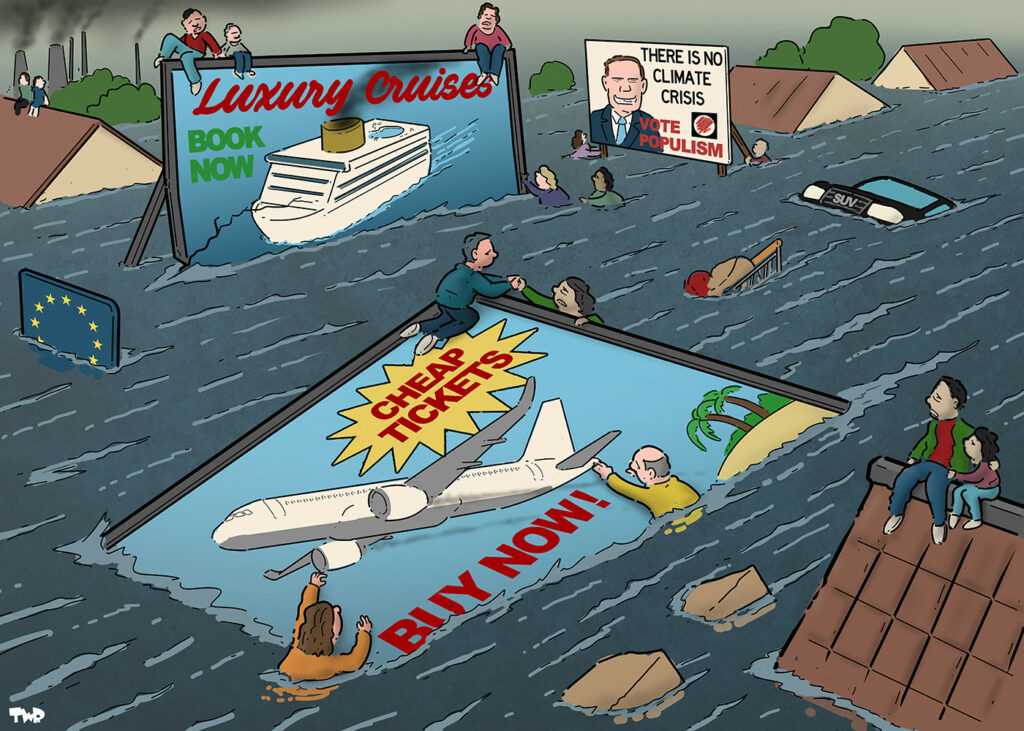
Climate Chaos who is responsible?

The CEO of a large oil company made a statement about climate change, suggesting that consumers are to blame for the slow progress in addressing the issue. According to him, the companies have the technology to produce lower-carbon fuels, but consumers are unwilling to pay the premium for these greener alternatives. He argued that consumer choices, driven by price sensitivity, are hindering the adoption of cleaner energy solutions. Criticizing activists and society at large, claiming that their exclusion of the fossil fuel industry from the climate change dialogue is counterproductive. He believes that the industry has the potential to contribute significantly to climate solutions, but is being sidelined by activist-driven narratives.

In this market logic perspective, the principles of the free market, corporations innovate and consumers drive demand, it’s up to consumers to “vote with their dollars” and choose sustainable products, thereby incentivizing companies to invest in and produce greener options.

However, this viewpoint has sparked a backlash and if you think about it as the problem of our current “common sense”, it is useful to look at this logic as akin to a drug lord blaming society for drug problems, highlighting the evil in the shifting responsibility from producers to consumers. The argument assumes that consumer choices alone is the driving force for systemic change, ignoring the influence and responsibility of corporations (capitalism) in driving fossil fuel dependency. Remember that a significant portion of global greenhouse gas emissions can be traced to a handful of companies. A 2017 study revealed that just 100 companies are responsible for 71% of global emissions since 1988. This highlights the disproportionate impact that corporations have on the environment, underscoring the need for systemic change rather than the #fashionista pushed ideas of individual consumer “choice”.

Shifting the blame onto consumers, is diverting responsibility for climate change and the disasters’ role that fossil fuel companies are directly responsible for this mess. This #mainstreaming narrative misleads by pushing that meaningful climate action is unattainable without consumer-driven solutions, a dangerous assertion in the social and environmental mess we face.

The #traditionalmedia portrays oil companies as rational actors operating within the bounds of market logic, while the activists are depicted as radical outliers. This agenda reinforces the status quo and diminishes the urgency of the need for change and challenge. In the political arena, climate change takes a backseat to concerns like the economy and national status. Even as climate awareness grows, it remains challenging to prioritize it in #mainstreaming political discourse and policymaking.

This on the surface is simply “common sense” but lifting the lid, and you find a darker and conspiratorial story about the ascent of #neoliberalism and its pervasive influence. Neoliberalism, that this #CEO is speaking, is about advocating for the primacy of free markets, deregulation, and globalization, is deeply ingrained in modern political and economic thought. Originating from the ideas of thinkers such as Friedrich Hayek, this path has undergone a transformation and expansion, and now profoundly shaping policies and ideologies across the globe.

The term “neoliberal” was coined in 1938 and gained prominence with the publication of Hayek’s The Road to Serfdom in 1944. Hayek’s argument that individual self-interest is the only safeguard against tyranny found a receptive audience among the ultra-rich, who were portrayed as heroic figures resisting collectivist governmental overreach. The Institute of Economic Affairs (IEA) influence extended to the US, where they established the Atlas Network, an umbrella organization that encompasses over 450 think tanks, including groups like the Cato Institute and the Heritage Foundation. These organizations, many of which operate as charities, do not disclose their donors, allowing them to continue to exert opaque influence on shaping policy and public opinion.

Over the next three decades, a network of academics, journalists, and business people emerged, refining and promoting the ideology. Wealthy individuals and corporations funded lobby groups that presented themselves as impartial research institutes, further embedding neoliberal principles into the political mainstream. While initially having little impact on the social democratic postwar consensus, these ideas later inspired conservative political leaders like Ronald Reagan and Margaret Thatcher, who lead, neoliberalism’s major breakthrough in the late 1970s, during the economic turmoil caused by the oil crisis and the decline of Keynesianism.

Governments, seeking new economic models, turned to neoliberal solutions. As Milton Friedman, a prominent neoliberal economist, noted, “when the time came, we were ready … and we could step right in.” The resulting policies of tax cuts, weakening of trade unions, privatization and outsourcing of public services, and widespread market deregulation lead directly to the mess we are in today.

We are feeling the consequences of 40 years of the neoliberal era in the extreme economic disparities. In the United States, the wealthiest 1% own a third of the nation’s wealth. This shift to neoliberalism failed to deliver on any of its surface promises of robust economic growth, over the past 40 years, global growth has been slower compared to the postwar period. Instead, we have seen the rise of oligarchs who have reshaped capitalism to serve their interests, through mechanisms like offshore tax havens and political influence. Despite failure, the ideology remains a dominant force in shaping contemporary political and economic paths.

A green #mainstreaming look at a path out of this

Over the next 20 years, the oil and gas push the impact of #climatechaos that will kill millions of people and displace billions. The rise of this #deathcult illustrates the profound impact that a coordinated network of ideologically driven institutions and individuals can have on global policy and economic systems.

We should learn from this, activists and grassroots movements are needed to push for more aggressive climate action, aspesherly when their efforts are met with resistance and dismissal. This resistance balances the fossil fuel industry’s substantial influence on politics and media. Fossil fuel, alongside most major corporations, spend millions on lobbying and advertising to protect their interests. The climate crisis demands urgent and radical action, to balance this pushing of mess, while individual choices play a small role, placing the burden solely on this as the oil CEO does is adding to the mess and a distraction from the path we need to take.

This post was inspired by the reviews of George Monbiot new book https://www.monbiot.com

#cop, a look at #mainstreaming mess

Indymedia based on the #OMN framework

The original #Indymedia network was a vibrant platform for decentralized grassroots media. It gave voice to those ignored by corporate media and built a culture of open publishing and collaboration. But over time it succumbed to both internal and external pressures.

Why reboot #Indymedia now? And how can we spread the understanding of why we need to do this. But, before we can revive the project, we need to face those failures honestly – and learn from them.

Why did Indymedia decline?

  • Internal conflicts – tribalism, ego, and power politics fractured unity.
  • Divergent visions – competing goals and methods led to fragmentation.
  • External pressures – surveillance, repression, and legal harassment weakened the network.
  • Technological change – rapid shifts in digital media outpaced Indymedia’s adaptability.
  • Sustainability problems – financial and operational support was always fragile.
  • Centralization vs. decentralization – endless tension between autonomy and coherence sapped energy.

These dynamics weren’t unique to Indymedia. They mirror the wider decline of radical alt-media in the face of #dotcons and the #deathcult of neoliberal “common sense.” So what is #IndymediaBack? It’s a project about rekindling what worked while composting what didn’t. It is rooted in the principles that once made Indymedia a powerful force:

  • Trust-based publishing
  • Do-ocracy
  • Anti-authoritarianism

But this time, we pair those values with modern tools and lessons learned.

The role of #OMN framework is central to this reboot. It brings with it:

  • Openness and collaboration
  • Decentralization by design

Objectives of the reboot:

  • Re-establish open publishing flows – grassroots publishing, ensuring diverse voices are heard.
  • Strengthen decentralized structures – prevent power concentration while empowering local autonomy.
  • Implement modern standards – adopt protocols like #ActivityPub to improve functionality and widen news flows.
  • Avoid past mistakes – use clear governance and messy consensus to counter tribalism and power politics.
  • Promote sustainability – develop financial and operational models that keep the network alive long-term.

Strategies for Revival:

  • Adopt a #NothingNew policy – stick to the original workflows and ethos, but update them to meet today’s realities.
  • Build affinity groups – working groups to tackle specific issues and reach consensus on direction.
  • Emphasize the #4opens – open source, open data, open standards, open processes — to guarantee transparency and inclusivity.

Expected Outcomes:

  • A resilient and inclusive network of sites – decentralized and open, able to withstand pressures from within and without.
  • Diverse, vibrant media content – a rich tapestry of perspectives beyond the mainstream.
  • Sustainable operations – financial and organizational resilience to endure over time.
  • Community-driven governance – messy consensus and grassroots decision-making, not top-down control.

Conclusion, this is not just about restoring what was lost. It is about composting the failures and growing something new, a living network that can adapt to future challenges while staying true to its radical, open, grassroots beginnings.

The Solution: Embrace the #4opens

We can’t keep repeating the same #TechShit over and over again. #TechCurn is a dead end.
The #OMN is the only positive path I know forward.

#Mainstreaming #fashernistas are dangerously consumptive. Our alt #fashernistas are utterly pointless. We need to disrupt social norms and make #4opens fashionable to salvage any value from these people and pull them out of their vacuous existence.

From a grassroot #DIY #tech perspective, we are witnessing a problematic trend among many of our #openweb #fashionistas. Their impact is negligible, but the space they occupy stifles genuine progress. To combat this, we need to address the overwhelming #techshit and curb the ongoing #techchurn. The Problem, the centrist #mainstreaming approach is failing us, and the persistence of these misguided efforts is disheartening. We need to find a practical path forward, moving beyond pity and hate to actionable solutions. We need to open up this path.

The Solution: Embrace the #4opens

The #4opens—open source, open data, open standards, and open processes—provide a foundational framework for building sustainable and effective projects. By prioritizing these principles, we can cultivate a thriving “native” ecosystem.

Action Plan
* Education and Awareness: Promote understanding of the #4opens and their importance. This can be achieved through workshops, online tutorials, and community discussions.
* Community Building: Foster a community of like-minded people committed to the #openweb, create paths for collaboration.
* Project Audits: Regularly evaluate projects to “judge” they adhere to the #4opens. Offer support and guidance for those struggling to meet these basic standards.
* Highlight Success Stories: Showcase projects that exemplify the #4opens. Use these as case studies to inspire and guide others.
* Address Tech Churn: Identify and mitigate the causes of #techchurn. This involves simplifying tools, improving documentation, and mentorship to grow contributors.
* Challenge #Fashionista Trends: Actively push back against the unthinking pursuit of new trends that do not align with #KISS #openweb values. Advocate for stability and sustainability rather than novelty.
* Policy Advocacy: Work towards policies that support the culture of the #openweb at organizational and governmental levels. This includes promoting open licensing, funding open projects, and ensuring access to open standards.

Moving Forward, we need to gather to reclaim the space occupied by ineffective projects and redirect it towards meaningful initiatives. By committing to the #4opens and fostering a supportive community, we can overcome the current challenges and build a more resilient and humanistic path. It won’t be simple to overcome the inertia of the #mainstreaming to create lasting, positive change in the #openweb path. Are you ready to push to make this happen? Let’s work together to navigate this “common sense” mess and find a useful path forward, please.

Definitions, that might help

This is from the view of progressive, grassroots and Alt media in the UK:

Silo, definition: Closed data systems hoarding information. Impact: Data vanishes when projects end, diminishing the effectiveness of alternative media. Most alt/grassroots media projects are silos, capturing data without open licensing for reuse.

Portal, definition: Attempts to be the dominant site, locking users into their ecosystem. Impact: Builds projects that trap users, contrary to the #openweb’s logic. In alt/grassroots media, this resembles a one-party state approach of the 20th century.

#Dotcons, definition: For-profit data silos and pseudo-networked portals. Impact: Many alt media projects mimic #dotcons, aspiring to their closed models.

Link, definition: Fundamental to the #openweb, giving content value. Impact: The absence of linking in alt media reduces the content’s value.

#Activitypub, definition: is a protocol and open standard for decentralized networking, a tool for commons building. Impact: this is growing in use.

#RSS, definition: An open web standard that adds value through data sharing. Impact: RSS is underutilized in alt media, overshadowed by silo and portal models.

Geek Culture, definition: A subculture focused on control and technical solutions. Impact: Often closes open projects, contributing to the failure of alt media initiatives, ca use the hashtag #geekproblem

#Fashionista Culture, definition: An unthinking pursuit of innovation and conformity. Impact: Churns through alt/grassroots projects, preventing them from growing.

#NGO, definition: Bureaucratic entities consuming resources. Impact: Push agendas that overshadow grassroots initiatives, often invisibly counterproductive.

Network, definition: Both technical (wires, frequencies) and mutual aid (diversity of strategy).
Impact: Essential for alt media but underutilized.

#4opens, definition: Open source, open data, open standards, open process. Impact: Exemplified by projects like Wikipedia; foundational to just and effective media projects.

To sum, up, we are still in the process of moving away from the mess of most UK alt/grassroots media projects, who are focused on silos, on capturing data and users rather than linking and sharing to build commons. Emphasizing the #4opens and fostering a culture of linking and openness help’s to break this cycle and build a more interconnected and effective alternative media landscape.

This post is based off this https://hamishcampbell.com/looking-at-the-tech-and-organising-of-uk-alt-grassroots-media/

Serendipity and #Hashtags

What our #fashionistas do in the #dotcons and the #openweb are a problem we need to work to compost. With this in mind, we do need to talk about useful tools we are underusing. Hashtags are ubiquitous online, at best they categorize content to find and join conversations on topics. The problem with current #fashionista hashtag usage is they reinforce individualism over collective action. This is #neoliberal “common sense” and the pushing of domination of #dotcons, prioritizing profit rather than any needed change and challenge.

There is a working path out of this mess. Serendipity is about the occurrence of events by chance, this provides a beneficially fresh perspective on hashtag use. By implementing hashtags in a way that fosters unexpected connections and discoveries, it transforms how they function as social tools. Yes, misspelled hashtags result in fragmented conversations, making it difficult for people to engage in coherent discussions. However, embracing these variations also leads to a more inclusive and dynamic categorization system. By allowing for misspelled hashtags to be recognized and grouped with their counterparts, we create a more robust and forgiving serendipity path.

In a federated system like the #Fediverse, and what is envisioned for the Open Media Network (#OMN), there is a tension between universal truths and messy, subjective truths. A federated path values diversity and decentralization, allowing for meany perspectives to coexist. This aligns with the concept of serendipity, where the focus is on connections and discoveries rather than rigid categorization.

This is the value in the OMN, which address these issues by implementing word grouping flows, where different spellings or variations of hashtags can be grouped together to build cohesive category flows. This approach makes misspelled hashtags functional, thus addressing some of the fragmentation caused by individualistic usage. But the OMN project faces significant challenges in securing funding and overcoming “common sense” internal and external obstacles. The difficulty in obtaining #FOSS funding highlights the broader issue of support for projects that prioritize open, decentralized, and community-focused paths.

The use of hashtags is a progressive and critical perspective on technology and society. Think about neoliberalism (#deathcult) and consumer capitalism (#fashernista), promoting the ideals of the open web (#openweb) against the for-profit internet (#closedweb #dotcons). The interlocking hashtags tells a story that advocates, transparency, collaboration, and sharing in open-source development (#4opens).

Example Meanings:

  • #deathcult: Neoliberalism and its detrimental social and ecological impacts.
  • #fashernista: The trivialization of serious issues through consumerism and fashion.
  • #openweb: The original horizontal path of the World Wide Web.
  • #closedweb: The pre- and post-open web internet dominated by for-profit control.
  • #4opens: Principles of transparency, collaboration, and sharing in open-source, #FOSS development.
  • #geekproblem: The cultural issues within the tech community, a strong tendency towards control and determinism.
  • #techshit and #techchurn: The negative consequences of constant new technological projects that fail to address any social issues.
  • #nothingnew: The question whether new projects are needed or if existing ones should be improved.
  • #OMN and #indymediaback: Rebooting the altmedia projects on the #openweb.
  • #OGB: Open governance and the power of community lead decision-making.

For hashtags to be effective tools we need for social change, we need to shift the balance from individualistic to collectivist. This requires tech systems that accommodate human error and diversity of expression, while maintaining coherence and building community. The #OMN has a promising approach by grouping variations of hashtags, but it faces significant challenges in implementation and support due to current blocking of any funding and coding resources.

Please, let’s embrace a serendipitous view of hashtag to enrich conversations in the era of the #deathcult.

A serendipity story

A tech story

In the #openweb of digital innovation, there is a culture revered for its ingenuity and technical prowess – the hackers of old. Yet, beneath the surface of their achievements lays a problem, one that has led to the downfall of many social tech endeavours: the #geekproblem.

In the early days, hackers were pioneers, pushing the boundaries of what was possible, though as their influence grew, so too did the imbalance within their communities. The projects that thrived, that embodied the principles of openness and collaboration (#4opens), were not only the work of these geeks, but wider diverse affinity groups where social leadership was core.

The projects that flourished had strong social guidance, with the geeks playing one part in the larger diversity. This was a healthy dynamic, with different perspectives and different skills, complemented each other to further common social goals.

However, over time tragedy grew when the geeks seized control of the foundations and the #fashernistas, with their penchant for superficial trends, hijacked the facade. With the geeks at the helm and the fashionistas dictating the direction, the once vibrant projects slowly over time withered and died.

The demise of the #openweb was not a sudden event, this slow and steady decline was orchestrated by those who valued personal agendas and status over collective progress. The geeks, blinded by their technical prowess, failed to recognize the importance of social partnerships, while the fashionistas, eager to climb the ladder of #mainstreaming success, sold out the principles they once claimed to champion.

And so, the legacy of the #openweb was tarnished, its promise of democratized access and decentralized trust, betrayed by those who prioritized their own blinded interests over the “native” common good. Yet, amidst this wreckage, a glimmer of hope remains – a reminder that progressive tech lies not in the hands of the few, but in the collective efforts of all who dare to dream of a better, more humanist world. Let’s try not to make the same mistakes with our current #web1.5 reboot in the #Fediverse, please.

To avoid repeating this mess we need to mediate the tragic reality that within our #fashionista circles, there exists a pervasive sense of hopelessness, a destructive force that accompanies their every endeavour. Their relentless pursuit of trends and their blind devotion to the #deathcult have left a trail of destruction in their wake.

We need to actually use the #4opens project, as a beacon of hope amidst this chaos, a reminder that there is another way forward. Not doing this is leading us on the path to failure, contributing to the ever-growing piles of #techshit.

There’s much to be learned from this cycle of destruction and renewal. It’s time to embrace the lessons of the past and walk a better path, one guided not by the whims of #fashionistas or the allure of the #deathcult please.

Building trust in the openweb and Fediverse

Trust matters in our shared landscape of the #openweb and the emerging #Fediverse, trust is the currency that binds meaningful interactions and collaborations. Yet, amidst the #fashionista cacophony of voices and divergent perspectives, building trust can feel like navigating a minefield. In this post, we’ll explore the importance of trust, examine the challenges to building trust, and propose strategies to grow a culture of trust within these communities.

Trust is the soil upon which communities thrive, enabling people to engage in meaningful exchanges, share resources, and collaborate on common goals. In the decentralized ecosystem of diverse voices, converging and interacting, trust becomes more essential. Unlike centralized #dotcons platforms, where trust is bestowed upon a single authority, the “native” openweb relies on distributed networks of trust between people and communities.

However, despite the inherent value of this trust, the native path is fraught with challenges that hinder any lasting cultivation. One of the obstacles is the prevalence of #blocking and resistance to new ideas and approaches, this hinders. While blocking may be necessary in certain circumstances, to protect against harmful actors and preserve the integrity of a community, it can also impede constructive dialogue and collaboration. Without trust, too much #blocking can lead communities to become fragmented and isolated.

What can we do?

  1. Transparency: Transparency is key to building trust within communities. Open and honest communication about intentions, decisions, and actions grows a sense of accountability and reliability. Projects and peoples need to strive to be transparent in their paths, sharing information openly and engaging in dialogue with different stakeholders.
  2. Inclusivity: Inclusive communities are more likely to cultivate trust among their members. In this we need to seek out diverse perspectives and voices, and creating spaces where people feel welcome and valued, communities foster a sense of belonging. Inclusivity also involves addressing power imbalances and amplifying silent voices.
  3. Consistency: Consistency in actions and behaviour is needed for building trust over time. Communities need to strive to uphold commitments, follow through on promises, and maintain integrity in interactions. Consistency breeds reliability, and reliability breeds trust.
  4. Empathy: Empathy is the foundation of trust in human relationships. By empathizing with the experiences and perspectives of others, communities build mutual understanding and respect. Empathy involves active listening, acknowledging the feelings and concerns of others, and responding with compassion and kindness.
  5. Collaboration: By creating opportunities for people to work together towards common goals, and engaging in collaborative projects, sharing resources, to support each other’s efforts, communities build bonds of trust and solidarity.

Now, how can we build these? Trust is the cornerstone of any thriving #openweb path and the building of the wider #fediverse community. We need to create environments where trust flourishes, enabling people to engage in meaningful interactions and collaborations. Remember that trust is not a destination but a journey, one that requires ongoing effort, and commitment from all #4opens stakeholders.

“Don’t be a prat” is basic #KISS