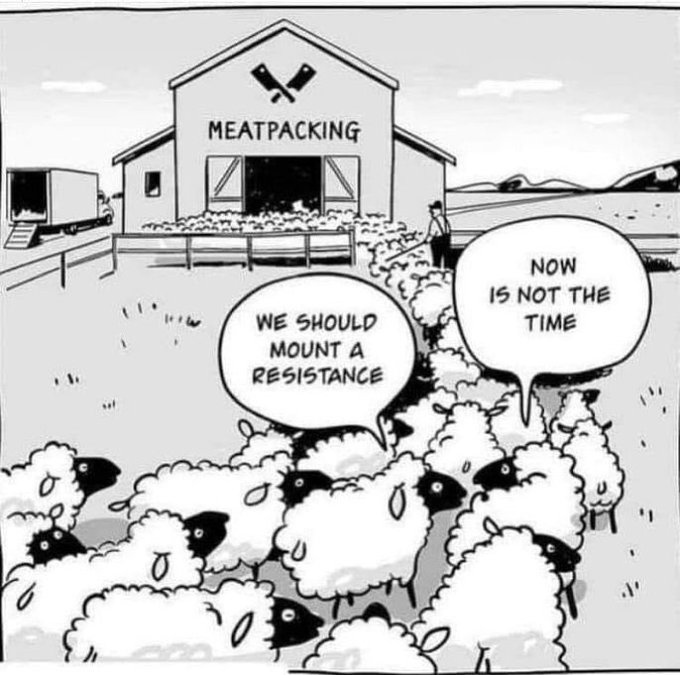
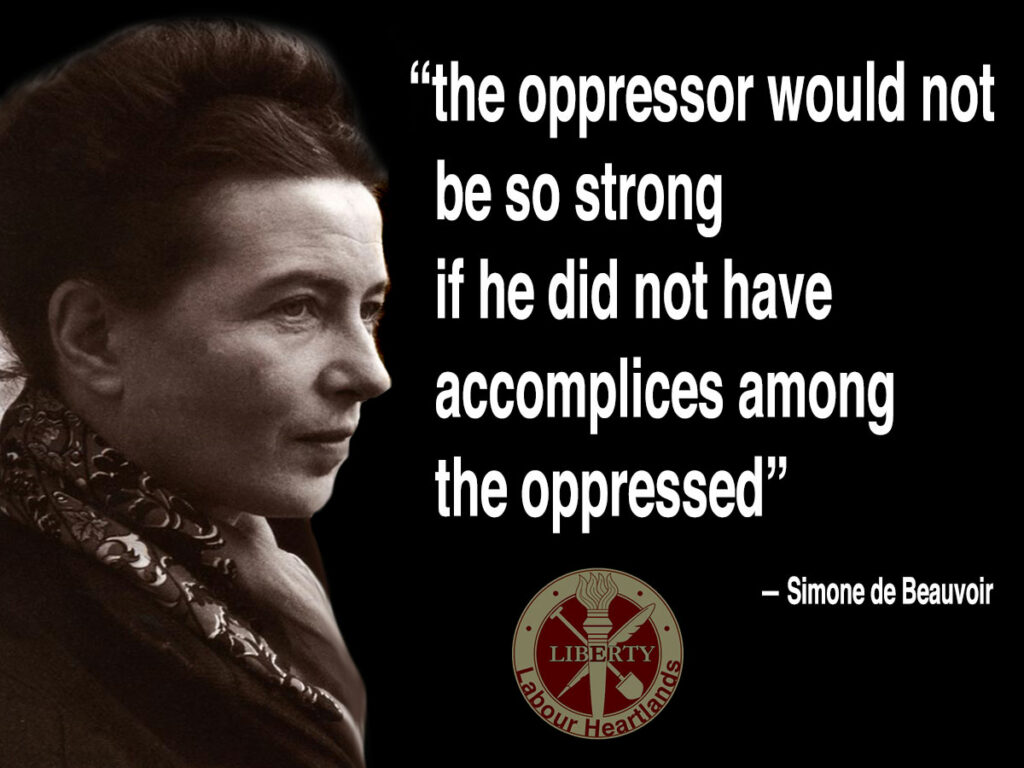
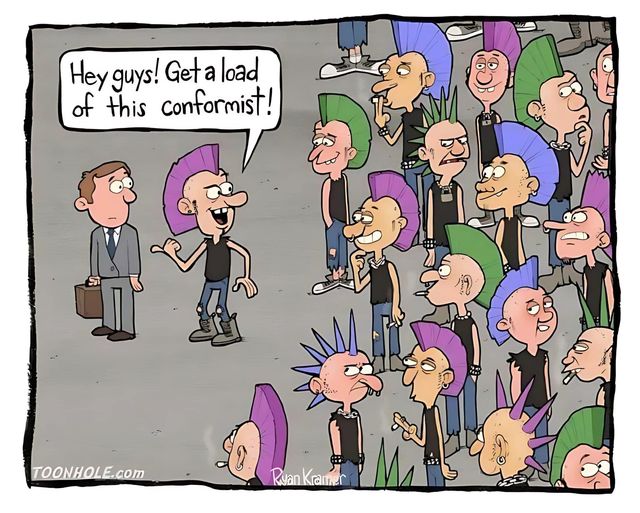
The everyday con: How the #deathcult turns crisis into extraction

The story is simple once you stop looking at the green branding and start looking at social power. A powerless tenant farmer in the Cairngorms watches land his family has worked for generations sell for ten times what it was worth only a few years ago. Not because farming suddenly became more valuable, but because carbon became a speculative asset. A corporation somewhere needs a green badge, farm land becomes the badge, our agriculture disappearing becomes the cost. This is not a “mistake”, its normal, this is the “common sense” system working as designed. #ClimateChaos under capitalism becomes another market opportunity, another asset class, another enclosure of the commons.

The mechanism of the #Carboncon, a corporation that has power can carry on almost exactly as before climate change became an issue: same factories, same flights, same extraction, same emissions, same growth ideology. Then it buys a Scottish hillside, plants trees on it, and announces to the world that it is now “carbon neutral.” If it wants more PR sparkle, it calls itself “carbon negative.” Nothing fundamental changes. The emissions are still happening, extraction is still happening, the destruction is still happening.

What changes is the accounting story, a piece of land somewhere else is converted into a tradable abstraction that launders the corporation’s image while allowing business-as-usual to continue. This is the logic of #neoliberalism applied to ecology – if there is a crisis, turn the crisis into a market. Our glaring current example of this is BrewDog and its greenwashing cycle, #BrewDog becomes a perfect illustration of the mess, in 2020 the company bought a 9,300-acre Highland estate, partly funded through public grants, promising millions of trees and “carbon negative” operations.

Then reality hit a large number of trees died, peat disturbance has released stored carbon, regulators ruled the carbon-negative advertising misleading, the branding quietly disappeared, and the estate was later sold into the carbon-offset market. Public money in, #PR campaign launched, trees dead, farmer displaced, badge worn, land commodified and Carbon credits traded – Business continues as normal, round and round the #deathcult spins.

This should sound historically familiar: The Highland Clearances never really ended, the justification changed. Then it was sheep, now it is carbon. Communities are again being displaced by distant capital as land is consolidated into investment portfolios instead of living local economies. The mess is productive mixed-use landscapes are transformed into speculative ecological assets managed for investors, corporations, and global finance.

This is enclosure updated for the era of #climatechaos. Around half of Scottish estate sales in recent years have gone to investment funds, corporations, and large trusts rather than people intending to actually live on and work the land. At the same time local communities are priced out, young farmers are locked out, food production declines, rural life becomes hollowed out, and decision-making moves further away from the people directly affected.

The language changes, the extraction remains the same, the deeper problem is that people still expect the systems causing the crisis to somehow solve the crisis. But capitalism does not solve crises, it monetises them – when pollution becomes profitable, pollution markets appear, when climate collapses, carbon markets appear, when social breakdown accelerates, surveillance markets appear, when loneliness spreads, platform monopolies appear. The system feeds on crisis because crisis creates new opportunities for extraction #KISS.

This is why the #mainstreaming obsession with “green growth” is ideological theatre, infinite growth on a finite planet was always insane, adding green branding does not make it sane in any way. The carbon market does not reduce emissions, it redistributes responsibility while preserving existing power structures. The food grown by local farmers is real, the communities rooted in landscapes are real, the accumulated ecological knowledge is real. The carbon spreadsheet is an abstraction traded by financial actors who have little or no connection to the land itself.

This is where projects like #OMN matter, its path is about rebuilding the social infrastructure needed for collective action outside the control of #dotcons, PR agencies, NGOs, and corporate gatekeepers. Because right now, the stories people hear are shaped by institutions whose survival depends on preserving the existing system. The corporation has a marketing department, the local people usually does not, so the lies travel faster than the truth.

The #openweb matters because communities need their own media infrastructure to organise, communicate, document to resist enclosure in all its modern forms. Without this, even resistance becomes mediated through controlling paths designed to neutralise it. A society built on commodification will commodify nature, society built on extraction will extract from ecological collapse itself, society built on #stupidindividualism will struggle to defend commons and collective life in any meaningful way. This is why we need to become the change and challenge, not through current common sense purity politics, not through #fashionista performative consumerism, and definitely not through corporate-approved and funded activism.

But through rebuilding #OMN commons-based culture and infrastructure from the ground up, by compost not branding – our tools are shovels, not greenwashed investment portfolios. The future depends on whether we keep feeding the #deathcult or start growing alternatives.
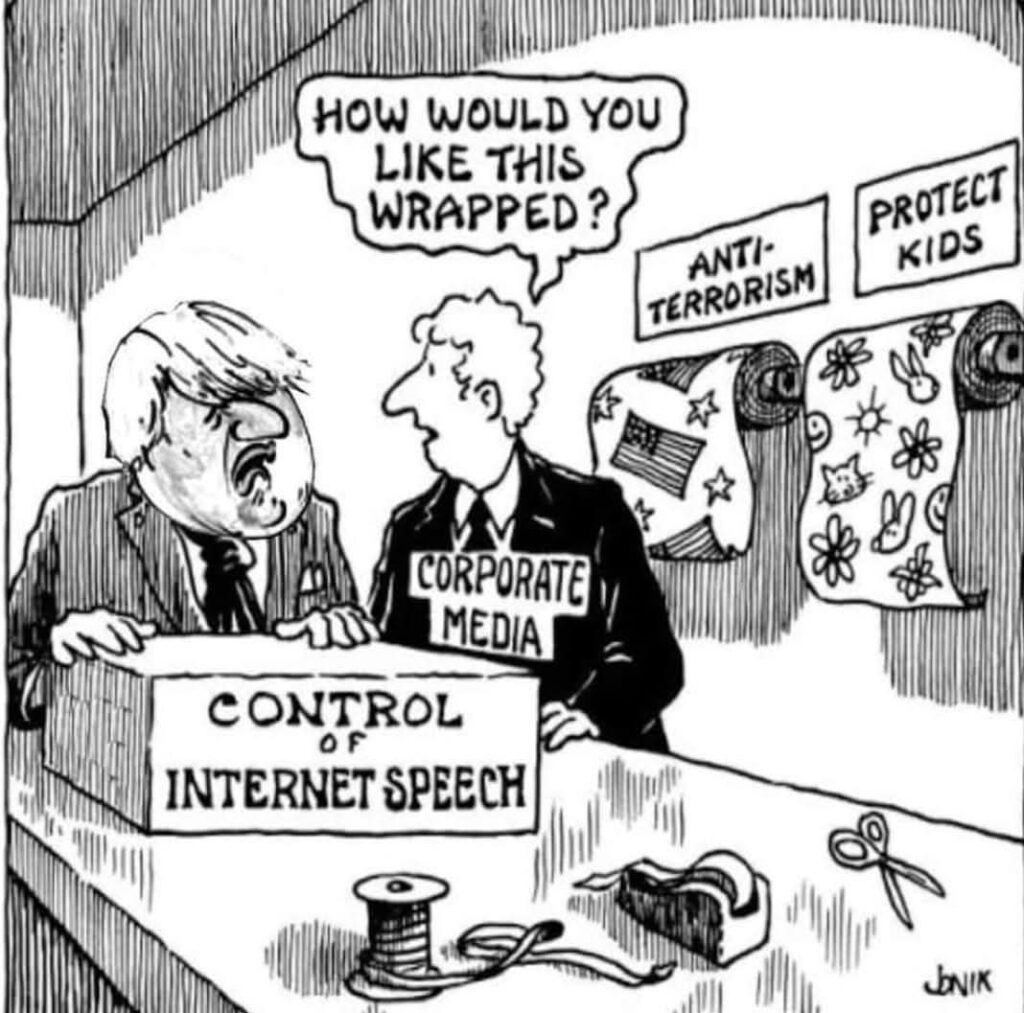
#OMN #OpenWeb #ClimateChaos #CarbonCredits #Commons #FoodSovereignty #MutualAid #LandJustice #Enclosure #Deathcult #Dotcons #Mainstreaming #NothingNew

How our “mainstreaming” people understand what they’re doing

The new #NGO generation are in the process of the second sell-out of the #openweb. These people are eather new or are coming back to this “native” space, stepped straight into running the current reboot after the original grassroots path burned out and was pushed aside. This new “NGO generation” holds strong views, their perspective, is that they already lived through a catastrophic failure once, and they are determined not to repeat there version of it.

Their mostly blinded story goes something like this: “We tried radical openness, tried informal governance, trusting culture to hold things together, It didn’t survive scale, money, or power.
The result was capture by corporations far worse than anything we imagined, we can’t afford another naive collapse.” This trauma – not betrayal – is their common sense starting point. Many of these people genuinely believe they were burned by “idealism”.

From this #NGO insider view, they did watched Flickr get eaten by Yahoo, Twitter go from a playful commons to authoritarian infrastructure, and Facebook hollow “community” into extraction. They watched #fashionista volunteer governance implode under harassment, burnout, and capture, but what they did not see was the intolerance of the internal implosion.

From that self inflicted wreckage, they did not conclude that capitalism is the problem, they concluded that informality does not scale and gets eaten alive by capitalism. So when they hear words like commons, grassroots, trust-based, or we’ll figure it out as we go, what they actually hear is: “We’re about to lose everything again, but faster this time.” That fear shapes everything in the current takeover path they push us down in the #Fediverse.

They, think they are OK, and see themselves as harm reducers, rather than visionaries or builders of a new world. In their mindset, “real alternative talk” is too often how bad actors slip in. Their self-image is closer to #mainstreaming than the alt they are trying to manage, thus are think inside the current system, the alt is working to change and challenge.

  • Platforms exist – you can’t wish them away
  • Capital exists – you can’t abolish it from a policy office
  • States exist – and they will regulate you whether you like it or not

So their question isn’t “What world do we want?” It’s “How do we prevent the worst outcomes in the world we actually have?” That’s why their tools are regulation, standards bodies, foundations, charters, boards of the great and the good (or at least the less bad). To them, this is adult responsibility, not what we see in the alt as sell-out.

So why do #NGO paths feel “inevitable” to them? They believe power only listens to things that look like power, that, what matters, is that governments won’t talk to messy collectives, anonymous affinity groups, rotating stewards and informal federations like our native #Fediverse. Funders won’t fund things without legal entities, without accountability structures or paths without named decision-makers. Media won’t quote “the commons”, “the network”, “some people on the Fediverse”. So to them the path needs foundations, and boards, which aren’t ideological to them, they’re blind to this only seeing simple translation layers in there work.

At their best, they see themselves as “Standing between chaotic grassroots energy and hostile institutions, translating one to the other, so the whole thing doesn’t get crushed.” From inside this framing, NGOs aren’t buffers, they’re shields, a polite way of saying #blocking. Where they are partly right – and where it goes wrong – is that yes, some of their fears are real. Millions of people depend on existing infrastructure, sudden collapse hurts the most vulnerable first, and power vacuums often produce authoritarianism or monopoly – not freedom.

Their nightmare scenario is not enclosure, its collapse followed by something worse. So aim for incremental change, stability (for themselves and their class), and institutional continuity, even when it’s ugly. This is dressed, with radical lipstick up as legitimacy, but, sadly, it functions as structural #blocking.

This part is uncomfortable, but central, they marginalise grassroots voices, and believe this is justified. They sincerely believe grassroots underestimate adversaries and overestimate culture, so will collapse under conflict by refusing compromise needed for staying power. They tell themselves “We’ve seen this movie. Passion burns hot, then disappears. Institutions are what remain when people move on.” So when they sideline grassroots projects as “naïve” or “unscalable”, they think they’re being pragmatic, not abusive. In there common sense they don’t see exclusion, they see triage, were they are the doctors saying who lives and dies.

Where the worldviews break is both sides are responding to real history, they just draw opposite lessons from the same wreckage. What the #NGO crew don’t see – and why this keeps looping – is that their “stability” reproduces enclosure, their “common sense” legitimacy reproduces hierarchy and professionalism produces exclusion, the obsession with safety produces stagnation.

From inside these sell-out paths, survival feels like success with funded projects, policy wins, seats at tables and published #NGO frameworks. The tragedy is that both sides are trying to prevent disaster, but they are optimizing against different disasters. Capitalism is very good at rewarding one of those fears while quietly #blocking the other.

From the NGO side, grassroots looks reckless, from the grassroots side, the NGO crew looks complicit. Both are partly right – but the power imbalance matters. The NGO crew controls: funding, platforms, mainstream legitimacy and narratives. Which means their fear shapes reality far more than the real hardworking people actually building change and challenge we need at the grassroots.

Some of the lies that keep this messy system running are “We are neutral stewards, not power holders.” This is a claim to power with NGOs and foundations acting as if they merely facilitate and convene. But they control funding flows, agenda setting, who is “in the room”, which projects are “serious” and finally which histories are remembered. That is, #KISS, power.

They must deny this because admitting it would require accountability to the commons, which they structurally cannot offer. Their accountability flows upward to funders and states, not downward to people. So when challenged, they say “we’re just trying to help” – while continuing to decide. “We represent the ecosystem.” They don’t, they represent whoever didn’t leave there process and whoever depends on their funding to make them stay. Non-participation is treated as absence, not refusal. Blocking, muting, and burnout are erased. Their legitimacy depends on being the voice, because if they admit they’re just one actor among many, their seat evaporates.

Reports about “the community” are published without recall, veto, or dissent. “Anyone can participate”, but participation requires unpaid labour, institutional literacy, polite tone-policing, time abundance, and tolerance for bureaucratic process. Then the exclusion is re-framed as personal failure. When grassroots actors disappear, the story is that “They disengaged.” Never “We made engagement unbearable.”

Formal governance, regulation, and the illusion of control is a dogma that formal structures prevents capture, its an old lie. Formalisation doesn’t prevent capture, it defines the capture interface. Once power is legible (roles, chairs, processes), it becomes fundable, lobbyable, and replaceable.

Informal power is hard to seize, formal power is easy. NGOs point to “best practice governance” while real decisions happen off-record. Likewise, regulation is not a substitute for collective ownership. Regulation manages behaviour, not incentives, shareholder obligation remains, extraction remains, enclosure remains – just slower and more polite. Abolition or ownership transfer is politically unthinkable from their position, so guardrails are celebrated while the underlying path stays untouched.

This is about scale, collapse, and conflict “Scale is necessary to matter” is another unexamined belief. Most harm on the internet comes from scale, most resilience comes from multiplicity, redundancy, and smallness. #NGOs chase scale because that’s how they survive – while dismissing small systems that actually work. Likewise, they claim “we prevent collapse” hides the truth: they mostly prevent transition, stabilizes dying models long enough for capital to reconfigure and re-enter. Everything feels “temporarily stuck”, for years in there world.

And finally “Conflict harms the movement.” but in realty, conflict is how power becomes visible. Suppressing it doesn’t remove it, it pushes it into backchannel, exits, forks, burnout, and silence. Yes, conflict scares funders, so dissent becomes “toxicity”, and #mainstreaming consensus is quietly enforced.

The deepest contradiction “We can midwife the commons without becoming its governors.” This has never been true, organizations that control resources, define legitimacy, and speak externally are exercising power, whether they admit it or not. Smiling NGOs are not outside power, they are simply power with better #PR. They say they exist because they don’t trust people, say they represent people, but you cannot hold both without lying to yourself.

Compost is the right metaphor as you can’t argue someone out of a frame that keeps their institutions alive, you can only make that frame less central by growing something that actually works. That’s what the #OMN path is about – if people build it, support it, and help it grow in the spaces we work to open up, we can become the change and challenge we actually need.

The #Fediverse is a lesson, it doesn’t need representation, it needs narration (many voices), aggregation (not unification) and refusal (to be spoken for). Every attempt to “represent” it centralizes it, makes it legible to power, and prepares it for capture. So the current move, the Fediverse isn’t being captured by villains, it’s being domesticated by caretakers. And history tells us enclosure doesn’t come screaming – it comes with minutes, frameworks, and funding rounds.

#KISS

So, who are today’s bad guys? The corporate elitists, the fossil fuel barons, the billionaire class, and their pet politicians. The #neo-liberal who chant ‘TINA’ while the world burns. The green-washers and compromises who whisper that change must be ‘reasonable’ while we march off a cliff.

Yes, it’s a mess.

“We, we, we,” they say – but who chooses the “we”?

Trump and Putin are the figureheads of the #deathcult and 3ed rate people like Staner are puppets. The #nastyfew, mostly invisible in the smoke and mirrors of #mainstreaming media, are the ones who push the “we”. And they also invest in a part of our “progressive” paths, always much less affective than they need to be, let’s look at this from the latest #AI tech the #dotcons and more importantly our own #NGO crew.

The core of the #NGO mess: they claim to represent everyone, while foreclosing every other possibility. “We, we, we,” they say – but who chooses the “we”? Meanwhile, the parasite class in tech has spent twenty years destroying the social fabric of the internet, turning everything into grift, extraction, and precarious dependence. There is every chance that this new wave of #AI/#NGO/#dotcons fusion will be just more mess for us to compost.

As I said, let’s look at these people who are in bed with the #dotcons, sucking at the teat (LINK) of the #nastyfew. It should be easy to see, at best they’re a warm blanket, precisely when we need a shovel. They always smother real change and real challenge while claiming to “scale impact.” and other buzzwords.

Working within the system and working outside it both have effects – and yes, we need to balance these paths. But let’s be honest: the “inside” path is 98% parasites, and the “outside” path is full of fashionistas hiding insider routes behind radical posturing. So the balance point isn’t where we think it is. It has to be pushed far, far back from the centre we’ve been trained to accept.

Yes, there is some value in their affective progressive-tech narratives, but it is a tiny force against the power of global capital. They love the idea of the “bridging node,” the mythical middle ground where nothing is actually bridged and nothing is actually changed. Soft, persuasive, endlessly consulting, the #NGO path is a warm blanket to snugal when you should be getting up to work. It comforts, it reassures, and it is collectively ineffective. In the end, that blanket is all they have to offer: a feeling, not a transformation.

And then there’s all the #AI, most of it #techshit witch we need to be clear, is not intelligence, just more civic control in the hands of the #nastyfew. LLMs, image recognition, all of it: tools with some utility, but zero real intelligence. What they do enable is more vertical power, refined manipulation, more subtle control, more extraction of attention, behaviour, and labour through the constantly spreading #dotcons.

With our ongoing #openweb reboot we need a real democratic steering wheel again, actual power to change, not ONLY warm blankets and #PR funding. This is why the #OMN, the , and the slow work of composting matter. Because every other path on offer right now leads straight back to the same smothering, stagnant centre – the place where nothing grows.

#OMN

Why Fail Safe Matters Now

Full film Fail Safe (1964) is a cultural mirror, from another age, that helps us think about the next ten years of mess. With technical systems out of human control. The film’s malfunctioning machines map directly onto today’s algorithmic governance (#dotcons, #AI, automated warfare). Once the chain starts, humans can’t pull back.

Leadership under impossible pressure. Henry Fonda’s president embodies the loneliness of decision-making when systems collapse. Compare that to our current leaders, who are weaker, more performative, and less willing to carry the weight of consequence.

The Professor’s logic vs. human life: Matthau’s cold “game theory” feels like the #neoliberal technocrat mindset – numbers over people, outcomes over ethics.

The unthinkable concessions of the ending forces us to imagine the price of avoiding total annihilation – not a win/lose game, but a choice between different forms of catastrophe. That’s climate politics, resource wars, pandemics, and #dotcons algorithm risk we face.

What lessons can we learn for the next decade? System fragility is the real enemy – climate systems, financial systems, digital platforms: one glitch, and collapse ripples out. We don’t have the principle modernism, Fonda’s gravitas – our current elitists class are hollowed out by #PR driven populism; when the crisis comes, trust won’t be there. The “Professor” mindset dominates – policy is still guided by “hard” data, models, metrics, and “rational actors,” even though reality has long escaped those dogmatic frames. Watching Fail Safe today is like watching the #deathcult’s worldview in black and white: centralized control, elitist decision-making, people as statistics.

What we need is open, collective mediation – instead of waiting for one lonely leader in a bunker, we need horizontal systems (#OMN, #openweb) that can act before catastrophe hardens. The #OMN and the #openweb reboot are the anti–Fail Safe projects: decentralize agency, mediate conflict before escalation, building trust outside fragile centralized systems. It’s a powerful film, because it frames the stakes not just as “politics” but as civilizational survival.

It’s a film of our times, what can we learn for the #openweb? In 1964, Sidney Lumet’s Fail Safe held its audience in terrified silence. A simple technical malfunction – a misread code – sent American bombers hurtling toward Moscow. No one could call them back. The world’s survival depended on one president’s unthinkable decision. It was fiction, but it spoke to a truth of the nuclear age: centralized systems, once in motion, cannot be controlled.

Sixty years later, we are in our own Fail Safe moment – but this time the system is digital. The malfunction, is #neoliberalism embedded in our algorithmic #dotcons pipelines. As we push more #AI moderation system, hallucinates flags, the error replicates at machine speed across platforms. What began as a technical hiccup hardens into policy. Governments, seeing chaos, step in “to restore order.” dictators empower security agencies to control networks, to stabilise their hold on power. Like the bomber wings in Fail Safe, the system escalates itself. Once the order is given, there is no recall code.

The #OMN alternative to this is #KISS we need to build is affinity groups on the #openweb – messy, small, federated – to keep our communities talking. Instead of one brittle command chain, thousands of small nodes exchange trust. Instead of a sinal voice, a new signal-to-noise ratio emerges. This slows the shift right. People can begin to rebuild, bottom-up.

Fail Safe ended in tragedy, with a president sacrificing New York to prevent global annihilation. It was a portrait of lonely leadership in a centralised system gone haywire.

Our age offers another path. The lesson is stark that In centralised systems, malfunction = collapse. In federated, mediated systems, failure = resilience. The #openweb reboot is not about nostalgia for old tech. It’s about building structures that can survive the malfunctions ahead. When the next ten years are defined by glitches, spirals, and breakdowns – and they will be – then the survival of our social fabric depends on embracing the horizontal path.

The nuclear age taught us that a single misread code could end the world. The algorithmic age is teaching us that the current glitch could end society.

The #openweb native path gives us more of a chance to be Fail Safe.

#Film #coldwar #review

The #mainstreaming is hallucinating

Let’s look at this problem, the #fashionistas are everywhere in our spaces. They look shiny, sound clever, and always seem “in the know.” But scratch the surface, and you find nothing but mirrors and buzzwords. They are hallucination machines, not listening, not dialoguing, not building, just repeating empty noise to hide their lack of substance.

What we need to do, is to shovel the empty words into piles, turn them over, and use the stink to fertilize something real. The #OMN is one such tool, not polished, not PR-friendly, not built for grants or press releases. It’s messy, grounded, spiky, and fluffy. A toolkit for people who actually want to build, not brand. The #fashionistas will hate it, because it doesn’t need them. Good, that’s how we know we’re on the right path.

These #fashionistas, conscious or not, are about wrapping the #deathcult in a soft blanket of jargon and “professionalism”, to make exploitation sound like innovation. To turn grassroots messiness into #PR. And people keep falling for it. Why? Because the #fashionistas sell the feeling of being respectable, of being listened to by power. They dangle the bait of #NGO grants, seats at the table, and photo ops. But what they deliver is silence, blockage, and decay.

They call it communication, but it’s not dialogue, not listening, not truth. It’s hallucination: Smiling faces repeating empty words. Buzzwords to cover the rot, smoke and mirrors to keep power safe in its head down worship.

This is the work of the #fashionistas of our spaces. They parade their new “frameworks,” their shiny “initiatives,” their endless “community guidelines.” Always dressed up, always polished, always empty. They are masters of looking good while doing nothing.

They sell hallucinations because reality frightens them. Reality is messy, full of dissent, full of challenge. Reality is compost – steaming, turning, breaking down. From compost grows life. From their hallucinations grows only more of the #deathcult. While they hold the space, communities are silenced. When they push themselves, the centre holds only rot. With their hallucinate, the #mainstreaming keeps killing the margins.

What we do not need is their delusions. We do not need their fashion “shows”. Our path is different. The path we take is composting. Shovel in hand, we turn the pile. We let the stink breathe. We break down the lies, the #PR, the shiny reports. We turn their hallucinations back into fertile ground for something real.

Yes tis is work, we need more projects like the #OMN: open process, open data, open code, open standards. The : sunlight over secrecy, dialogue over control. The #KISS principle is our reminder: keep it simple, keep it real.

Let the #fashionistas keep their hallucinations. We need to be busy with planting the soil.

Sanity means stepping outside the churn. The obstacle is simple but heavy, people cannot see change and cannot face challenge. That blindness keeps us stuck, yes, some say what I write here is “bleeding obvious.” It is, but that’s the point, it’s not for the already converted, not for the initiated. These posts are shovels: tools to compost the #fashionistas and the #geekproblem, to turn the pile of #techshit into fertile soil.

The #OMN project grows from this compost. It’s not a theory to admire, it’s a path to move people out of #mainstreaming and into diverse subcultures where we actually live change and challenge. When rupture comes – and it always does – the strength of that diversity, the lived practice of horizontals, will be seeds for planting a future worth having.

This path is not about being “original.” It’s about being useful. About creating spiky, fluffy translations that help us step aside from the churn, shovel in hand. Use them, or lose them, just dont stand aside like a prat, please.

We keep seeing this mess. The moment grassroots energy spills over into #mainstreaming, something alive, the #fashionistas arrive to “facilitate.” Suddenly the spiky edges are dulled, the fluffy warmth is flattened, and what’s left is another empty process path, they kill with kindness, or worse, with “common sense.”

Let’s be very blunt, these people are not important as individuals. What matters is the path they push us down. The “commonsense” they sell is poison. Every time we let them set the frame, our direction, our spaces collapse back into #stupidindividualism or #NGO capture. Every time.

Smiling-faced vileness: How enforced politeness becomes a weapon in grassroots paths

Too often, the ugliness we face in grassroots spaces wears a smile. It’s smiling-faced vileness: pleasant, agreeable individuals who wield control by blocking dissent, sanitizing movements under the guise of compromise, and maintaining the fake illusion of consensus. This is especially true in spaces overly tolerant of #NGO-style protocols – those bureaucratic, #fashionista postmodern traps that slowly erode the spark that makes real alternative communities thrive.

From my work across decades – from protest camps to #openweb projects – I’ve seen this negative pattern again and again. Projects like early #Indymedia were messy, radical, and fiercely autonomous. That edge, that wildness was slowly excised until what remains is either safe, bland, and powerless or locked down and paranoid, both smother the naive grassroots paths.

At late era #climatecamp i’ve witnessed activist planning groups that masquerade as open and inclusive, but doom radical ideas by policing language. If someone speaks candidly about power or inequality, they risk being labelled as “derailing.” Not unlike what I describe on the Fediverse: “a consensus ritual where insiders quietly veto contentious proposals, pushing them offstage.” The effect is chilling – the bold, and meaningful, get diluted and then silenced.

I’ve also seen “horizontal” groups adopt soft authoritarianism: a handful of insiders subtly side-line contentious voices with endless calls for care, safety and more research or structure, this is simply polite gatekeeping, in those quiet pauses, power consolidates. These practices don’t just kill energy, they devour possibility. They cannibalize the chance for communities that are both fluffy (nurturing) and spiky (radical).

Smiling-face vileness is not satire – it’s simple #fashionista postmodern gaslighting, that slowly smothers life with calm care and precision. To compost this mess, the task of the grassroots is to replant what’s been stomped. That means cultivating friction -mess, disagreement, negotiation – because that is how community grows, trust is built, and real alternatives emerge. Let’s embed this friction into our code, our community practices, our shared care. Let’s compost the #NGO and fashionista chokeholds so we can grow radical, tender, collective futures #KISS

A lot of the “smiling-faced vileness” comes from a mix of personal psychology, learned behaviour, and the systemic incentives that shape #NGO, institutional, and #mainstreaming culture. It’s not usually deep evil – it’s something more banal, entrenched, and self-justifying. Examples of this mess making:

  • Fear of losing control when change threatens the structures they know how to navigate, so they subconsciously (or consciously) try to stop it. Hannah Arendt’s banality of evil idea applies here: harm is done by “ordinary” functionaries protecting their turf “The real danger is not that people will rebel, but that they will acquiesce in doing what they know is wrong.”
  • Cognitive dissonance management, as they see themselves as “the good guys,” so any action – even blocking positive change – must be reframed as “responsible” or “prudent.” #Postmodern self-protection: everything can be justified with enough narrative spin, “No one is the villain of their own story.”
  • Status preservation, NGOs and funding orgs reward stability over creativity, hierarchy over challenge. If this position, funding and reputation depends on maintaining the current order, so will fight disruptive change, even if it’s obviously better “It is difficult to get a man to understand something, when his salary depends on his not understanding it.”
  • Incompetence + insecurity, breeds paranoia. If you don’t know how to balance real change, you start to fear those who do. The façade of competence becomes more important than actual results, “When a man’s only tool is a hammer, every problem looks like a nail.”
  • Groupthink & conformity pressure, #mainstreaming cultures reward going along with the majority, even if the majority is wrong “Whenever you find yourself on the side of the majority, it is time to pause and reflect.”

This is why these people who cling to “power” often look “nice” on the surface while quietly gutting or neutralising anything spiky, challenging, and any change of path. It’s not just personal malice, it’s a cultural immune system against change, fuelled by fear, vanity, and comfort.


An example of this is when the tiny few “secede” in #mainstreaming media (and the history it writes) it is not neutral, it’s a kind of #PR machine. It launders power and polishes away dissent. The smiling faces and “respectable” voices then are just the velvet gloves over the iron fist. It’s fake history as PR – it isn’t history as lived memory or contested struggle, it’s official narrative, a “storybook” written to flatter the winners and confuse the rest. That’s why it feels vile and pointless: it distracts, pacifies, and reframes mess as inevitability.

We need to be clear, the people who produce this are not innocent. Yes, many are clueless functionaries who internalize the system’s values without question. Others are parasitic aspirants, desperate to climb into the #nastyfew by copying their methods. Even when they do “small goods” (a sympathetic article, a cultural puff piece), in the larger pattern they still serve the mainstreaming #deathcult machine.

The compost metaphor is about instead of raging endlessly at the mess, take what can be siphoned off (attention, fragments of narrative, disillusioned individuals) and redirect that flow into the alt systems (#OMN, , Fediverse, grassroots histories) then compost the rest: let it rot, break down, and become the fertilizer for something alive and grounded to seed. Because otherwise we get stuck in their cycle: doom-scrolling their fake stories, wasting energy on only reacting instead of building. Yes, the challenge is mediation, not just rejection. Spot the toxic flows, tap them for useful nutrients, to feed the roots of alternatives.

https://opencollective.com/open-media-network

A guide for staying honest and native

It needs to be said, a community is only viable if enough people care enough to keep it relevant. In this era of #stupidindividualism, most people don’t lift a finger to make that happen.

This is the norm across many spaces: a near-total lack of interest in building or maintaining shared paths. It’s a textbook case of right-wing Tragedy of the Commons. Developers show up when it suits them, use the space for their narrow needs, then drift off without contributing to the upkeep. They treat community like free infrastructure – something passive they can extract from – rather than a living, tended path we need.

This same pattern plays out across the grassroots and #FOSS world. Devs focus on their code, their projects, their timelines. Rarely do they look up and engage with the broader ecology that their work depends on. In the #Fediverse especially, most developers ignore shared infrastructure, governance, and the standards they rely on, until something breaks. Then they complain.

Same social dynamics, same outcome: its a mess that keeps repeating. And until we break that pattern, we’re stuck.

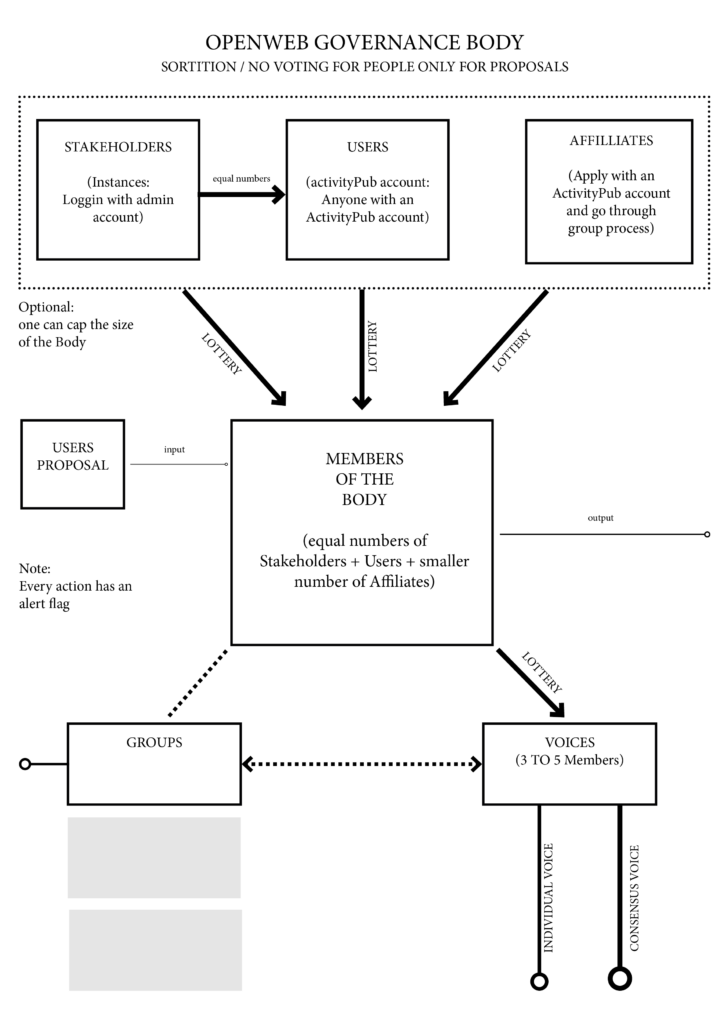
On the alt path, it’s fair to ask for clarity. When we talk about “#openweb projects,” we mean efforts grounded in the values of the early web commons: transparency, decentralization, collective ownership. This includes things like the rebooted #Indymedia, the #OMN (Open Media Network), and the #OGB (Open Governance Body). These aren’t at all about building shiny platforms, they’re about building the structures and relationships that allow real alternatives to survive and grow outside the normal #mainstreaming mess.

This isn’t simple evangelism, it’s hands-on work: shaping frameworks for local and federated publishing (like the original Indymedia), and now modelling governance and trust systems that resist hierarchy and #NGO capture.

As for government institutions joining the #Fediverse – What we pushed was a bottom-up, native process rooted in people and practice, not imposed solutions. But as is often the case, after we laid the groundwork, the institutional #PR and #NGO crowd moved in and took over.

The “community” we speak of does exist, even if it’s fragmented, marginal, and ignored. You’ll find it in squats, permaculture collectives, activist media spaces, messy corners of the #Fediverse, and in the hands of people still building trust and tools outside the #dotcons. It’s not centralized or funded, so it’s not visible like capitalist platforms are. But it’s real. I’ve lived inside it for decades.

You’re right that real “native” code is still needed. But this not about one perfect tool. It’s about the network of trust and shared values that can hold many tools and projects together. That’s slower to build, less flashy to show off, but far more resilient and necessary in the end.

The #Fediverse is a good first step. But let’s be honest: we’ve lost the thread when it comes to building tech that walks off the beaten path. Most #mainstreaming energy, and much of the #NGO outreach, still flows into reinforcing the same old ruts: centralization, enclosure, obedience to capital. Anything that doesn’t follow those routes is starved of support and often treated as a threat, a curiosity, or a waste of time.

But it’s exactly that off-path infrastructure we need, not just to resist the current system, but to outlast it. To still be standing when the old ways collapse. That means supporting tools and systems that aren’t profitable, aren’t convenient, and aren’t slick. They’re harder to fund, harder to maintain, but they’re what let us keep moving through the oncoming storm of #climatechaos.

If we don’t build and sustain these alternative tracks, the dominant mess will keep absorbing or destroying everything new. It’s a recursive trap: we need better systems to make better tools, but we can’t build those tools without some of those better systems already in place.

So we need to hold space – with care, mess, and trust – for that in-between.

That’s where projects like #OMN, the rebooted #Indymedia, and the live. Not trying to escape friction, but embracing it. Mediating it. Letting it guide us toward what’s honest, what’s native, what lasts.

The new litmus test isn’t “Does it scale?” It’s: “Does it spread? Does it take root? Can it compost and regrow?”

It’s important to recognise that friction – the mess, the slowness, the need for constant negotiation – is not a flaw in native paths, it’s a virtue. It’s how trust, mutuality, and accountability are sustained over time. These are not bugs to be eliminated with slick #UX and #VC-funded convenience – they’re part of what keeps a community honest and rooted.

The problem arises when less-native, often externally imposed systems (driven by capitalist or institutional agendas) treat these messy, friction-full spaces as broken or backwards. This is the classic dynamic of imperialism and settler colonialism: imposing order, “fixing” things, extracting value, and in doing so erasing the lived, relational logic of native systems.

If you look through the lens of native/western histories – indigenous struggles vs colonial modernity, the same pattern plays out again and again: the native path is degraded, disrespected, overwritten. In tech, it’s no different. You see it when horizontal, trust-based networks get steamrolled by #NGO capture, institutional gatekeeping, or #VC-funded platforms that keep selling convenience as control.

So the real work is mediation. Not purity, not retreat, but balancing these tensions in practice: holding space where native paths can grow without being co-opted or crushed, while at the same time still reaching out to shift the wider terrain.

We need to stop seeing native approaches as “immature” or “inefficient.” They’re often the only thing holding the line against complete enclosure. The question isn’t “How do we fix the mess?”, it’s “How do we stay with it, tend it, and let it teach us how to do this differently?”

So, it’s an old but urgent problem: how do we support tech that walks outside the dominant paths long enough to clear new ones? Infrastructure that can challenge the mainstream only survives if we build support systems that reflect different values – trust, openness, and care over control, profit, and scale. Right now, we’ve stopped thinking seriously about this. If we don’t return to this work, building the path as we walk it, we’ll be stuck cycling through the same traps, watching each alternative collapse back into the old defaults.

People keep asking for my history, so a link https://hamishcampbell.com/introduction/

The Fediverse is social tech built by people

We dig, turn over the old soil, question assumptions, get honest about what’s working and what’s not. We plant, build in the open, share power, let go of fear, we grow. Not towards scaling up, but spreading out, resilient, diverse, interconnected.

The Fediverse path could still be a true commons. But we need to build it as one, together. Right now? Our thinking and common sense is building fenced off little kingdoms, each with its own rules, its own etiquette, and its own moderators-turned-monarchs. We wave our “federation” flags proudly, but let’s be honest, most of these flags are stitched from the same cloth: control, hierarchy, and a quiet hostility to anything really different.

Let’s stop pretending, the community side of the Fediverse is a mess. The instance as a community, was a good idea, but just that an idea, it never worked, the was no code that was needed to build the links that mattered, no mod tools, nothing. And it’s not a mystery why – it was built by the #geekproblem and marketed with white #PR lies. The developers who shaped this space were (and mostly still are) people who don’t understand, or worse, actively dislike, messy human social dynamics. They wanted control, moderation as containment, not mediation, identity as code, not culture.

This isn’t to blame them personally, many were doing their best. But structurally, the Fediverse was always going to build this current mess when it grew out of narrow foundations:

Built by people who think consensus means “do what I say.”

Designed in back rooms, then announced as done.

Sold as decentralised, while consolidating power around key projects.

Promoted with “diversity” stickers, while real diversity was culturly blocked or ignored.

No surprise the result is growing to be alienating, slow-moving, and hard to trust for actual social communities. So the question now is: how do we fix this? Here is my idea where to start:

Acknowledge the rot. No more polishing turds. Let’s call things what they are.

Shift governance from control to trust.The #OGB model exists to empower native communities, not gatekeepers.

Build openly. Work in the open. Use the #4opens.Transparency is the only path back to legitimacy.

Stop begging for NGO scraps. The #OMN is about building outside their logic. If they want in, they come on our terms.

Compost the techshit, but keep the compost. Acknowledge failures. Learn from them. Don’t drag them forward for brand reasons.

The Fediverse can still be a commons – but now we need to build it as one. Right now, we’re mostly fencing off little kingdoms, waving our “federation” flags. We’ve seen where this leads. It’s time to dig, plant, and grow something different.

Let’s look at this same issue from a different view, at the individual scale, self-hosting is pushed by the #geekproblem as the golden path to “being in control of my data.” But in reality, that’s a comforting illusion – like saying, “I grow a vegetable garden to be in control of my food.”

Yes, having a garden is valuable. It connects you with the land, the seasons, the rhythm of growth. But:

You can’t grow everything you need — rice, flour, salt, coffee?

You’re one bad season away from failure — drought, pests, illness, burnout.

It’s time-consuming, and often inefficient to go it alone — especially if you’re just trying to feed one household.

The same is true for self-hosting. Sure, it can be a great learning experience. You can run your own Mastodon instance, email server, or Nextcloud. You might feel a sense of autonomy and pride, “I’m off the #dotcons cloud!”.

But, you’re now your own sysadmin, responsible 24/7. Security patches? Backups? Downtime? You’re one bug or hard drive crash away from losing everything, no safety net. If you’re DDoSed or targeted, you’re alone in the storm. Most people don’t know how to balance security and useablierty of their systems, and the risk of leaks or exploits is real.

This doesn’t mean “don’t self-host.” Like gardening, it’s a good and meaningful thing. But it’s not meaningful and sufficient for control or resilience. And the more we pretend it is, the more we set people up to fail.

The solution? We need to balance collectivizing resilience. Just like with food, we need shared kitchens, food co-ops, and community gardens – not just individual allotments. For digital infrastructure, we need to balance working #OMN mobile #p2p bridging to:

Small community-run servers with shared responsibility (like tech collectives or co-ops).

Federated services that respect autonomy and provide mutual aid.

Redundant backups across trusted peers, not just one node.

Tools designed for social trust, not corporate extraction or lonely geek heroism.

Because real control over data isn’t about having a castle with a moat. It’s about living in a village where the roads are open, the wells are shared, and people have your back when things go wrong. Resilience and transparency cannot be achieved in isolation.

It’s a social problem, and we need to bring social solutions, built with care, trust, and collective #DIY responsibility. What too meany people push is “common sense” #stupidindividualism that is so obviously prat’ish behaviour, let’s step away from this mess making soon, please.

Signal, Noise, and the Mess of #Mainstreaming

“Because controversy equals attention and attention equals brand recognition.” LINK

Yes, an interesting thread on advertising. But let’s add to this view in wider paths:

Mainstreaming controversy = attention.

Alt controversy = #blocking, by ignoring.

This mainstreaming/alt mess making is not about real disagreement or dynamic ideas. It’s about channelling noise that flatters the existing structures and silences anything genuinely alternative. This isn’t controversy, it’s signal-to-noise warfare. And right now, the noise is winning.

Let’s be blunt. On the subject of this site, nearly every so-called “alternative” tech event funded or structured by #NGO culture is riddled with parasites – projects more interested in their next grant or their place at the conference table than building anything outside the status quo. They’re not evil – just placated, softly herding us back into the polite cages we were trying to escape.

They block by doing nothing, block by talking too much, block by looking away when real change knocks. They block by turning real signal into noise.

The actual energy, the radical possibility, is elsewhere. The #OGB (Open Governance Body) is designed with this in mind: not to convince the already-compromised, but to build something permissionless and let it loose. Let people feel the value, or not. No “hard” hand-holding, no pre-approval, no gatekeepers.

It’s a #KISS project: Keep It Simple, Stupid. We’re building for the people up shit creek without a paddle, not the people arguing about paddle aesthetics on a conference panel. We don’t need more “controversy” to win attention in the #NGO #PR-sphere. We need real signal, real builds, real grassroots governance to share power.

And yes, we do have a problem with apathy and Laissez-faire “common sense” that lets this cycle repeat. So let’s stop waiting for the right moment or the perfect audience. We build with this problem in mind. We design #DIY structures that can work in the real mess.

Trust is the foundation of moderation in decentralised networks like the #OMN

In the world of decentralised, peer-to-peer, and federated networks, from the Fediverse to grassroots projects like the #OMN, moderation works differently. It’s not a matter of top-down control or terms-of-service written by #process lawyers. Instead, the basic unit of moderation is trust – and this shifts everything we think of as “common sense”.

Yes, we need practical moderation tools – blocking, filtering, reporting, curation – the whole established toolkit. But more importantly, we need to root these tools in a tech shaped culture of care, responsibility, and openness. This is where the come in:

  • Open data
  • Open source
  • Open standards
  • Open process

These aren’t #FOSS buzzwords, they’re guides to building (tech) trust in messy, real-world communities. In this path, you don’t have many hard “rights” in the liberal legalistic sense, there’s no authority swooping in to save you. Instead, you build #DIY community “safety” through the act of creating and sustaining relationships. You find people. You then build a crew to join or establish norms and communing practices.

This isn’t a call to abandon boundaries, it’s the opposite. You draw your boundaries with others and work to hold those, with bridges in place. You don’t demand control over others, you build spaces that work for you and find ways to federate, connect, and mediate with others doing the same. Your rights are your relationships. Your safety is your crew. Your power is your network.

This is the #KISS path – Keep It Simple, Stupid – agen, not in a naive way, but in a native way. It’s the opposite of the bureaucratic, compliance-obsessed, legal control systems of the #dotcons and the #NGO gatekeepers. Those are alien models people keep trying to drag into our “alternative” spaces and paths. And every time we do, we replicate the very systems we claim to oppose.

A #mainstreming view on this

We don’t need more frictionless tech platforms with “Trust & Safety” departments that answer to advertisers and #PR teams. We need open communities of care, rooted in shared values, transparency, and mutual responsibility. On this path its about working to compost the mess and growing something else.

This is how moderation works in a decentralised network, not by pretending we’re neutral, but by showing up with care and accountability. It’s messier, more human, and it works, when we let it.


On this path, we need a reboot of the #Indymediaback Infrastructure. As a core to reboot the radical media commons. Bring back trust based publishing, peer moderation, and local focus Why? Because #mainstreamin media isn’t neutral – it mainstreams the crisis while making resistance invisible. We need native alternatives.

Why #NGO and fluffy #openweb tech events should include radical real grassroots projects

If you need a working definition of the #geekproblem, it’s the habit, no, the reflex, of putting the social side of tech outside of tech. It’s the behaviour of someone sticking their head in the sand and mumbling, “That’s not my department.”
It’s “I just write the code.”
It’s “We’re neutral tools.”
It’s “Let’s keep politics out of it.”

This isn’t just naivety, it’s a deep, culturally reinforced avoidance of responsibility. And it’s one of the key reasons why even alternative tech replicates the same failures and power structures as the mainstream.

Worse, this behaviour is too often mainstreamed in the alt-tech spaces themselves, turned into best practice by #NGO people who should know better. It becomes active #blocking of any progress on alternative paths. New governance? Too political. Radical accountability? Too messy. Grassroots involvement? Too slow. Let’s just build it and hope for the best.

We can’t afford this any more, in the midst of #climatechaos, rising authoritarianism, and the enclosure of digital commons, building better tools without building better relationships, better communities, and better politics is a dead-end.

This is the core of the #geekproblem, and if we’re serious about anything more than shiny toys, it’s something we must talk about at our conferences, meetups, and hackathons. Let’s stop pretending code is apolitical, let’s start with this: tech is social, or it is very likely more wortless #tecshit.

Let’s be blunt, “inclusive” tech/#NGO events talk about change but don’t platform the people doing the hard, messy work of building this path. This is a real problem, rooted in comfort, control, and careerism.

Radical grassroots projects like the Open Media Network (#OMN) exist precisely to challenge the #mainstreaming mess, not to dress it up. We aren’t here to repeat feel-good slogans and deliver polished #PR. We’re here to offer lived solutions grounded in the and decades of collective, hands-dirty work.

So why should OMN and similar voices be invited in?

  • We speak from the grassroots, not the conference stage.
  • We build tools that people have historically used, not just write funding proposals about.
  • We hold space for #DIY, for #p2p, for real change, not only the reform theatre.

If your event doesn’t include these voices, like almost all of them, it’s the #mainstreaming problem of locking out knowledge, networks, and resistance, which the events #PR claims to support. This clearly makes the people involved into hypocrites.

On a positive, #KISS, this doesn’t need to be a fight, let’s make events better together. Can you imagine real dialogue between grassroots builders and NGO funders? Imagine shared workshops where friction leads to function, messy, honest space that acknowledges power dynamics – and really then starts to do something about this mess.

Want a better event?

Put grassroots groups on the stage, not just in the audience.

Pay people for their time — especially those working outside institutions.

Focus on practice, not just policy.

Drop the gatekeeping.

Build open process into your event — make your own structure accountable to the #4opens.

But, remember, we aren’t going just to play nice, to be seen, we’ll come to compost the status quo, and plant something that might actually grow. Let’s try and maybe do this right, please.

Power Politics and the Race/Gender Card – A Contemporary Reflection

If we want to build meaningful alternatives, we must deal with difficult issues head-on. Sweeping things under the carpet – especially in radical spaces – always comes at a cost.

One of the more complex, and often misused, areas is around identity politics, particularly the playing of the race/gender card in ways that obscure rather than clarify the real issues at stake.

Let’s be clear: systemic racism and sexism are real. We all live with the deep, painful legacies of colonialism, patriarchy, and class oppression. These power structures are embedded in our cultures, our institutions, and, yes, in our own organizing spaces. Naming and addressing them is vital.

But sometimes, identity markers are used as shields, not in the pursuit of justice, but to avoid accountability. When this happens, especially in grassroots or activist collectives, it creates paralysis and prevents us from dealing with actual abuse of power.

A real-world example. This happened to me some years ago at a community-run space in Dalston. One person dominated meetings, spoke over others, and made every decision-making process a battleground. It was classic power politics, silencing others through constant assertion and manipulation.

When I finally took responsibility to challenge this, the room froze. Instead of engaging with the issue, some defaulted to “both sides are equally problematic.” Then, when pressure built, he played the race card, asserting that my criticism was racially motivated. No one knew how to respond. The conversation shut down. I became “the problem.” He continued unchecked.

It took 6 months of dysfunction and damage to the project before he was finally removed from collective meetings. In the end, people realised: yes, he was mentally unwell, addicted, controlling, and yes, he had useful skills. But we had all failed to support him and the group because we didn’t deal with the real power dynamics early and honestly.

Hard truths, sometimes someone uses identity-based arguments not as a reflection of structural injustice, but as a way to deflect accountability. When that happens, we can end up with unchallengeable behaviour patterns that destroy collectives from within. This doesn’t mean ignoring or downplaying racism, sexism, or mental health, far from it. It means being brave enough to hold multiple truths at once:

Someone can be from a marginalised background and be acting out of line.

Someone can be struggling with mental health and still be causing harm.

Power politics doesn’t disappear just because it’s wrapped in the language of social justice.

What Can We Learn?

Deal with issues when they come up. Don’t defer hard conversations. Don’t wait for people to burn out.

Support everyone – including people acting out – with clear boundaries, not blanket exclusion or indifference.

Distinguish real oppression from manipulative tactics. It’s not easy, but it’s essential to long-term health of communities.

Don’t collapse into false equivalences – not every confrontation is “two monsters fighting.” Trust your political instincts.

Ultimately, we need to reclaim the messy, complicated work of building trust, of calling in rather than calling out, and of recognising power wherever it appears, even when it wears familiar or “progressive” clothing. We won’t fix any of this with purism or purity politics. We’ll do it by grounding ourselves in collective care, lived experience, and honest struggle.

To use technology as a part of this social change, we need better working with the #dotcons generation. This generation is a mess. No surprise after 20+ years of submission to the #deathcult:

#Neoliberalism hollowed out our economies and replaced solidarity with consumerism.
#Postmodernism fragmented identity into a battlefield of individualism over collective action.
#Dotcons centralized control, turning the internet into a corporate surveillance machine.

The real question is: how do we break free? When our #fashernistas still dodge this, trapped in cycles of performative activism, #NGO co-option, and endless distraction.

The activist path out of this mess is not more chasing trendy tech stacks or branded illusions of progress. What we need is a grounded, #KISS path forward, #OMN (Open Media Network) to building grassroots, independent media beyond corporate platforms. for transparency, collaboration, and trust baked into our tech + social governance. And, reclaiming #DIY activism real-world organizing, not just digital spectacle.

We don’t need more #geekproblem “fixes” or slick branding #PR exercises. We need radical, collective agency. The tools are here, let’s build.

#openweb #climatechaos #socialchange #indymediaback #OMN