A Note on “Security” for the #FOSS Crew

We need to have a clearer, more grounded conversation about “security” and what it actually means in the context of the #openweb. There is a long history of thinking in #FOSS spaces that security is something we can solve purely technically: better encryption, better protocols, better architectures. But in everyday life and practice, people need to work from a much simpler starting point – We do not trust client–server security. We only meaningfully trust what can be verified through the #4opens. And even with #p2p, we keep our trust closed limited.

Why? Because the underlying systems people actually use are insecure by design: old phones, opaque operating systems, proprietary blobs built and controlled by #dotcons. You can build the most secure system in the world, but if the people you are communicating with are using compromised devices, then your security collapses to their level.

That’s the bit people who fixate on closed don’t like to face. So a #KISS approach helps cut through the illusion – At normal use, there is very little real security. At paranoid levels, security breaks down socially, because you still need to interact with people operating at the normal level. That doesn’t mean security doesn’t matter. It means we need to stop pretending it technically works in isolation from social reality.

Why closed paths, spaces and projects fail socially, is a harder point. Closed systems are often justified in the name of security, privacy, or control, but socially, they create a very different dynamic in that they remove visibility. And without visibility, you cannot form shared judgment, without shared judgment, you cannot have social truth. In closed environments, bad actors – call them “monsters” if you like – can manipulate, divide, coordinate in the dark to avoid accountability, because there is no wider context to test what is happening.

In open systems, the same actors exist, but they are much easier to see, challenge, and trip up, because conversations are visible, processes are transparent and history is accessible. Closed breeds monsters, open pushes them out of the light and into the shadows. This is why, for the #openweb, “closed” should be deliberately limited and clearly bounded, not expanded as a default.

There is a very real social problem on this with #Encryptionism, as a social project as it is where meany parts of the #FOSS world go wrong. There is a strong tendency – what we call the #encryptionists – to treat encryption as a kind of universal solution, were in reality, this to often becomes: a focus on abstract technical purity, a dismissal of messy social reality to retreat into systems that don’t scale socially. And too often, aligns – ironically – with the same #deathcult logic it claims to resist: control, fear, and abstraction over lived practice. Encryption is a tool, not a culture.

This brings up the #Geekproblem – put simply – The people building the tools often cannot see the social problems those tools create. Even when those problems are pointed out repeatedly, over years, with real-world examples, the response is often negative and #blocking – to retreat into technical framing, to rephrase the issue in jargon, to build another “better” tool that misses the point.

A useful way to explain this to the #FOSS crew is yes, jargon can be messy, but this is not just about language. The deeper issue is cultural blindness, lets look at a concrete example that might help in bridging: #Indymedia was a ten-year working global experiment in open publishing and #4opens practice. And, yes, it ran into exactly these tensions, in the UK, the project fractured along three lines:

  • #Encryptionists – blocking aggregation due to abstract security concerns
  • #Fashernistas – pushing shiny but incompatible “better” solutions
  • #Openweb practitioners – arguing for simple, interoperable approaches (like #RSS)

Instead of adopting existing standards like RSS, parts of the project built new, incompatible formats, “better” on paper, but useless in practice. The result? Fragmentation, internal conflict, loss of interoperability, eventual collapse. All three sides lost. This pattern should feel familiar, you can still see it today in parts of the Fediverse.

The practical path forward, starts with taking this history seriously, then a few things become clear, that closed should be minimal and purposeful, not the default. Open processes (#4opens) are the only scalable form of trust, interoperability beats cleverness, social reality matters more than technical purity. And most importantly we need to design for the world as it is, not the world we only wish existed.

One Foot In, One Foot Out. Right now, most people are still inside the #dotcons. So the path forward isn’t purity, it’s transition. The approach we are taking with #OMN, it is simple, install and configure usable #openweb tools, make them accessible, let people use them alongside existing platforms to support a gradual #walkaway culture. One foot in. One foot out. If enough people take that step, the balance shifts.

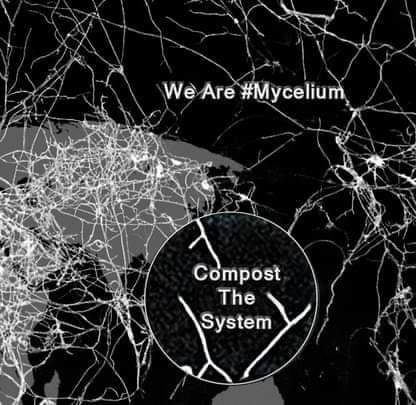
But to take this step we need to compost the closed, we don’t need to destroy everything that exists, we need to compost it. Take what works, turn over what doesn’t, to grow something better from the remains. That means being honest about the limits of security, about the dangers of closed systems and about the cultural blind spots in #FOSS. If we can do that, we have a chance to build an #openweb that actually works.

If we can’t, we will keep repeating the same failures – just with better code.

EU tech strategy, composting the mess

As #climatechaos accelerates, European politics will not stay where it is now. History suggests that periods of instability push politics to the right, because right-wing politics tends to be driven by fear and control. If that trajectory holds, then the digital infrastructure we build today needs to be resilient in a more hostile political environment tomorrow. This matters for the EU’s current technology strategy.

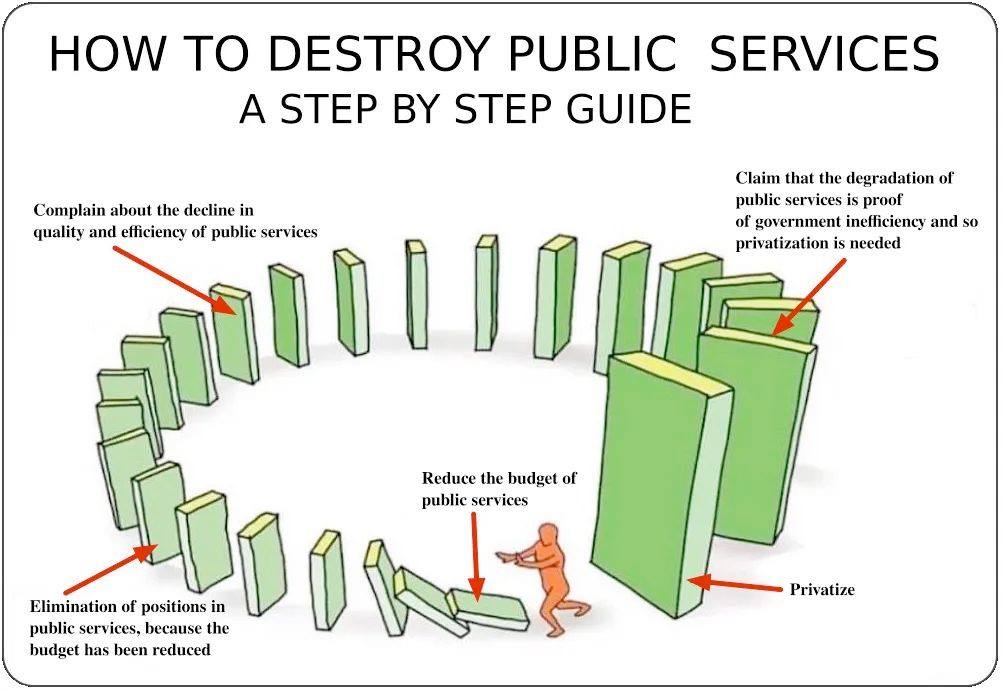
Most policy thinking still focuses on industrial competitiveness – AI funding, semiconductor independence, cloud sovereignty, cybersecurity frameworks. These are important, but they mostly reinforce state and corporate power structures. What is missing is investment in grassroots civic infrastructure.

If democratic societies are going to survive the pressures of climate disruption, economic instability, and political polarisation, they will need independent communication systems that communities themselves can run and trust. This is where projects like #OMN, #OGB, #indymediaback, and #makeinghistory fit.

The starting point: is yes, we are all inside #neoliberal systems. For forty years Europe has been shaped by neoliberal infrastructure – platforms, markets, and institutions designed around extraction and competition. In the hashtag story language this is the #deathcult we have worshipped. None of us are outside this mess, the realistic mission is not purity but gradual exit.

That means: building small affinity groups, creating tools that allow communities to organise themselves to develop infrastructure that scales socially, not just technically. The #openweb is a core path for this. The #4opens – open data, open source, open process, open standards – provide a practical way to judge whether infrastructure actually supports commons-based development we need.

Why this matters politically? The dominant platforms – the #dotcons – centralised the web’s communication power. Grassroots movements traded their own infrastructure for convenience. In doing so, they gave away their media power. The problem we need to balance is if you have no power, talking directly to power is usually pointless. Grassroots power grows from the soil, from collective organisation.

What we need are projects like the #OMN which are not more platforms, rather it is an attempt to build simple trust-based media infrastructure, the design principle is #KISS – Keep It Simple. At its core, building and boot-up media nodes run by communities, systems for publishing and sourcing content with flows of rich metadata linking media together. Technically this becomes a very simple semantic layer: media objects linked through open metadata streams.

Think of it as a network of media “cauldrons” and flows, growing from local publishing outward. The important point is that the infrastructure is open and decentralised. Communities decide how to use it. Initial examples include: #makeinghistory and #indymediaback, the architecture is intentionally general. Once you have open pipes and flows, many other uses become possible. Protocols like #RSS and #ActivityPub are starting points for this type of infrastructure.

The path looks like this: Create a focus (hashtags, projects, shared language). Grow community networks around that focus. Use those networks to regain collective power. Then speak to power with power, this matters as we have mess to compost.

The control myth in tech policy? A lot of current EU tech thinking is built around control frameworks: cybersecurity regimes, digital identity systems, privacy enforcement and regulatory compliance layers. These are needed protections, but they also reflect a deeper ideological assumption: that the internet must be controlled to be safe. In practice, many of these approaches close possibilities for social paths we need.

Two concepts in particular have been used in ways that reinforce centralisation: security and privacy. Both are important. But when implemented through centralised systems, they become tools that close infrastructure rather than open it. Security without social trust becomes just another form of control.

So trust versus control. One of the biggest ideological shifts needed in tech infrastructure is moving from control-based systems to trust-based systems. In tech culture we to often fetishise control: permissions, identity verification, cryptographic enforcement and algorithmic moderation. But the internet originally grew through something very different: open trust networks.

The early World Wide Web forced enormous social change because it was built around open protocols and shared infrastructure. The #dotcons later captured that infrastructure and turned it into centralised platforms. Rebuilding the #openweb means reopening those pathways.

Digital infrastructure is a mode of production we need this deeper economic perspective, Karl Marx famously argued that the mode of production shapes social consciousness. The digital era represents a new mode of production, built on information flows, network effects, and data infrastructures. If those infrastructures are controlled by a handful of #dotcons corporations, they shape society accordingly. If they are open, distributed, and collectively governed, they create very different possibilities.

What this means for EU policy is we need better balance in EU funding, legislation and thinking. An effective EU digital strategy should not only fund: AI research, blockchain experiments and industrial platforms. It should balance support for public digital common’s infrastructure, funding projects that: follow the #4opens, strengthen the #openweb to enable local community media networks and reduce dependence on corporate platforms. These paths will not look like Silicon Valley platforms. They will look messier, smaller, and more local. But they are also more resilient.

King Canute and the digital tide. There is an old story about King Cnut, who supposedly ordered the tide to stop to demonstrate that even kings could not control nature. The digital tide is similar. No amount of regulation or platform power can permanently control networked communication. The question is not whether the tide moves, the question is who builds the boats.

Projects like #OMN are attempts to start building them, and yes – the tools required are simple.

Shovels and compost come to mind.

A small view of steps we need

I normally talk and work on big issues, let’s look for a moment at smaller steps. To make a big change, we need to start with practical paths (everyday grassroots & do-able). A personal short step is to detox one feed, not your life. Pick one algorithmic platform and shrink usage: unfollow, mute, or temporarily uninstall the app. Replace 15–30 minutes of scrolling with one intentional action by using replacement tools (not perfect, but better).

  • Try ActivityPub/Fediverse clients (Mastodon, PixelFed, PeerTube), RSS readers, or small community forums. Start with reading, not posting – build habit.
  • Curate your attention, subscribe to a few human-edited newsletters, local news, or blogs (#RSS). Teach friends how to set up an RSS reader or follow a small subject blog.
  • Practice media hygiene, verify before sharing. Pause, check one source, ask “who benefits if this spreads?” Be boringly sceptical.
  • Vote with time and money, support small creators directly (tips, buys, memberships) and donate to independent projects like community news sites, local papers, or tech co-ops.
  • Community & organising moves, host local “show-and-tell” sessions. 1 hour: show alternatives, how to use RSS/Mastodon/PeerTube, and why they matter. Bring tea.
  • Build small trust circles, start a group that publishes a single short community bulletin or podcast – keep it non-algorithmic and share by link.
  • Make open culture visible, put simple “we’re #openweb-friendly” stickers/links in local cafés, libraries, community boards. Make it easy to find one another.
  • Teach the next person, each person teaches one other person how to escape one algorithmic trap – then they teach another. Tiny chain.
  • Tech & product-level tactics (simple, not spectacular). Run a tiny, friendly instance. Local gatherings or collectives host a low-cost Mastodon/PeerTube instance with clear moderation and a friendly onboarding doc. Promote link-first publishing.
  • Encourage people to put content on a simple blog (or even a shared public wiki document) and share links rather than rely on feeds.
  • Use interoperable standards. Favours tech that uses open protocols, so people can migrate and mix services without being trapped.
  • Policy, campaigns & pressure. Demand transparency. Pressure institutions (schools, libraries, local councils) to publish simple rules about algorithmic tools and offer alternatives.
  • Support regulatory fights that protect attention. Back campaigns that limit manipulative design (dark patterns, endless feeds) and push for algorithmic audits. Amplify worker voices. Support platform workers and former moderators who expose harms – they are crucial allies.

What positive outcomes do we want? (clear, concrete). Less algorithmic amplification of fear. Fewer engineered outrage cascades in our local networks. Resilient, localised media ecology. Lots of small, trusted outlets (indymedia, community radio, blogs) that aren’t driven by ad-engagement. Restored civic trust & shared facts. Communities that can act together because they share a baseline of reality.

Shared infrastructure under community control. Instances, archives, and services run by people and collectives, not opaque ad corporations. More empathy in circulation. Content that rewards kindness and care rather than outrage.

This matters because if we don’t act, the future is already written by the #dotcons. Their algorithms don’t just reflect society, they shape it – twisting attention into fear, isolating people in bubbles of paranoia, and feeding the hard right until cruelty looks normal. This isn’t an accident; it’s the business model.

Every minute we spend scrolling through their poisoned feeds, we’re training ourselves to be more divided, more hopeless, more powerless. That’s their plan: keep us distracted, keep us arguing, keep us consuming, while the world burns and the billionaires laugh at us.

We don’t have the luxury of despair. Walking away from the #openweb and our own traditions of collective action left a vacuum, and the hard right rushed in. They stole our language of freedom, community, and even rebellion, and twisted it into authoritarian poison. That’s on us. We fucked up.

Now we fix it. The alternative is watching the world sink into algorithmic fascism, where cruelty is the currency of attention. The positive outcome is right in front of us: small, messy, grassroots networks where kindness and solidarity are amplified instead of hate. The #OMN, the #4opens, the trust-based paths we already know work.

We compost the #techshit because what grows out of this soil is hope, and without hope we’re already lost.

If we close everything, we are left with the evil – A bad outcome

What should be open? What is okay to be closed?

Let’s begin from a traditional liberal framing: Most social interactions should be OPEN, some private or sensitive interactions may be CLOSED.

This isn’t radical. It’s been a functional principle across free societies for the last century. But in our current digital culture, this simple framing is often flipped or ignored. Many developers, activists, and even funders uncritically push for closure, often in the name of privacy, safety and control, without recognizing what’s lost when everything closes.

The power of OPEN is in all good forms of social power, and progress comes from open processes:

Transparency builds trust.

Sharing creates knowledge and community.

Federation gives us alternatives to centralized control.

From the printing press to Wikipedia, openness has always been a powerful force for liberation, creativity, and ideas of justice. Meanwhile, much of the worst abuse and corruption festers in the dark:

Hidden surveillance (NSA/Five Eyes).

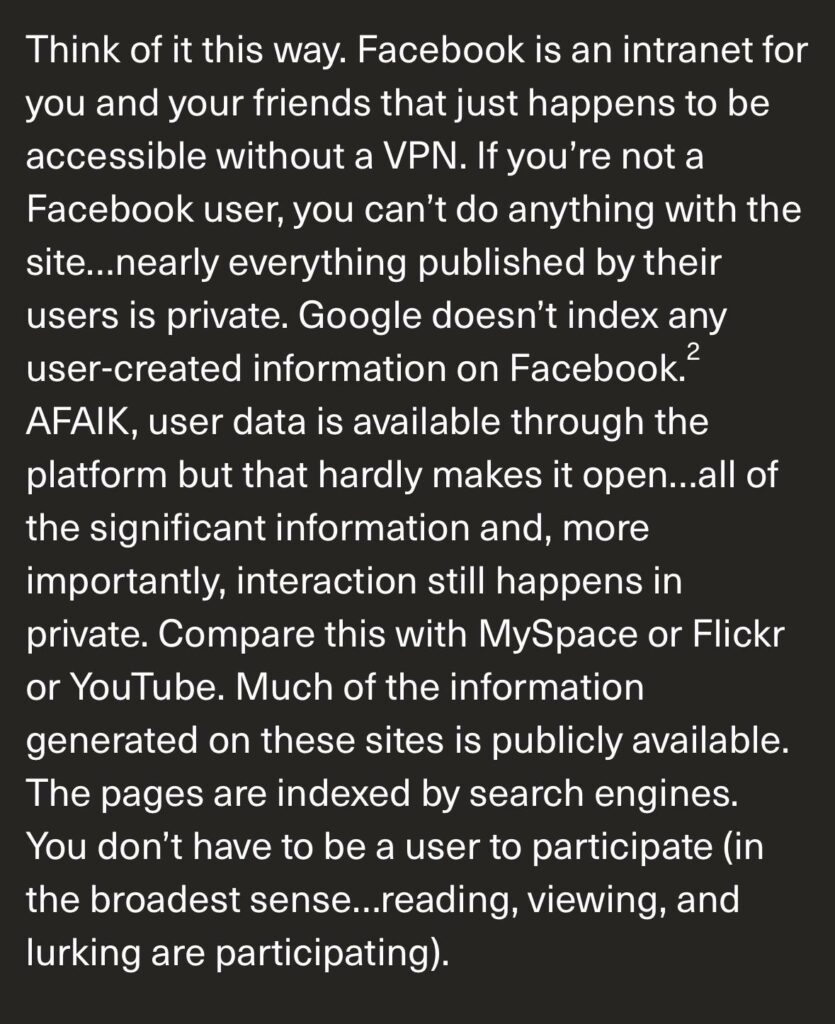
Closed algorithms (Facebook/YouTube).

Closed decision-making in opaque NGOs and funding foundations.

If we push everything into private silos or locked behind paywalls, we kill the culture that allows us to challenge and change the systems we live and die under. We are left with only closed, and that’s not a world we want to live in.

A real-world example is needed? Let’s talk about the Diaspora project, 15 years ago, in response to Facebook’s rise, a group of well-meaning devs built a “privacy-first” social network. They rejected the openness of exiting paths like #RSS and federated tech like #XMPP. They wanted to start from scratch, build their own private network, and lock down data flows, for “safety”.

The result was a very predictable mess, Diaspora burned brightly and briefly, but never built a vibrant network. In contrast, existing open networks were shouted down, de-funded, and ignored. Ten years passed. Then, we had to reinvent the same open paths, we had shut out, with ActivityPub to get back to what #RSS and other open tools had already done.

This is the #geekproblem, the idea that you can throw away working social infrastructure because it’s not “clean” or “cool”, and replace it with abstract, closed systems… a path that usually ends in failure. Worse, it delayed progress by a decade. Encryptionism, privacy dogma, and the closing of the commons, where mess we now need to compost

Yes, privacy is important, nobody is arguing otherwise, but what many #encryptionists miss is that building only for privacy is building only for fear. You can’t build a shared culture on fear alone, you need to balance this with trust, transparency, and cooperation too. These require openness. When everything defaults to closed, the commons die, and without the commons, there is no #openweb.

A politics of openness, is not just technical. It’s deeply social and political. It touches on human nature, ideology, and power. If you’re new to these ideas, start with some reading of the basics of Sociology (Wikipedia) and Political ideologies then ask what assumptions are built into tech? Who does it empower? Who does it exclude?

This is about where to begin, to understand motivations and outcomes in #openweb development, it helps to name the ideological currents at play:

Conservatism → favors stability, hierarchy, closure.

Liberalism → favors rights, transparency, and balance.

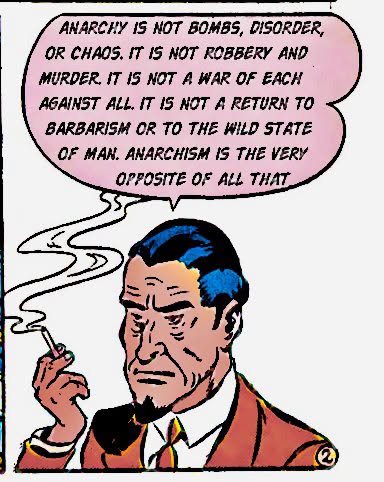
Anarchism → favors decentralization, autonomy, and openness.

Much of the Fediverse, despite the tech mess, is functionally anarchist in ethos. But this is rarely understood or spoken aloud. We have the A (Anarchy) but not yet the O (Order). A job people could take on is to fix this by building the O in the Fediverse, rather than let the default path be imposed, by the natural flow where #NGOs and #foundations bring closed governance models wrapped in the fig leaf of “participation”, we should be working now to build native, open forms of governance.

That’s what the Open Governance Body (#OGB) is outlined to do, to creating soft structure for an open culture. That’s what the #4opens help guide: basic principles for transparency and shared power, let’s support these paths. As if we default to closure – either because of fear, control, or ideology – we kill the #openweb before it can grow back.

Let’s remember, we are the stewards of the future commons, let’s keep the doors opens. Thoughts? Examples? Let’s keep this conversation alive, in the open.

What should be closed? And what should never be?

We need a better conversation about ideology, sociology, and the #openweb. A good place to start is with a basic liberal framework: “Most social interactions should happen in the open. Some personal interactions should remain private.” Seems reasonable, right? That’s the position many of us think we agree on. Yet when we look at how our technology, and by extension, our society, is being built, that balance is totally out of whack. Today, more and more of life is CLOSED:

Closed apps.

Closed data.

Closed social groups.

Closed algorithms.

Closed hardware.

Closed governance.

And on the flip side, the things that should be protected, our intimate conversations, our location, our health data, are often wide open to surveillance capitalism and state control. What the current “common sense” dogma gets wrong? What is missing from the #mainstreaming tech culture, privacy absolutists, and many crypto/anarchist types:

Almost all good social power comes from OPEN.
Most social evils take root in CLOSED spaces.

When people organize together in the open, they create commons, accountability, and momentum. They make movements. When decisions are made behind closed doors, they breed conspiracy, hierarchy, abuse, and alienation.

It’s not just about what is open or closed, it’s about who controls the boundary, and what happens on each side. If we close everything… If we follow the logic of total lockdown, of defaulting to encryption, of mistrust-by-design… then what we’re left with is only the closed. This leads to a brutal truth, the powers that dominate in closed systems are rarely the good ones. Secrecy benefits the powerful far more than the powerless. Always has.

So when we let the #openweb collapse and treat it as naive, we’re not protecting ourselves. We’re giving up the last space where power might be accountable, where ideas might circulate freely, where we might build something together.

We can find examples of when openness was lost. Let’s talk about a real-world case of #Diaspora vs. #RSS. 15 years ago, Diaspora emerged with crypto-anarchist hype as the alternative to Facebook. It was secure, decentralized, and… mostly closed. It emphasized encryption and privacy, but lacked network effects, openness, and simple flows of information.

In the same era, we already had #RSS, a beautifully open, #KISS decentralized protocol. It powered blogs, podcasts, news aggregators, without permission or centralized control. But the “Young #fashionistas ” of the scene shouted down RSS as old, irrelevant, and too “open.” They wanted to start fresh, with new protocols, new silos, new power. They abandoned the working #openweb to build “secure” ghost towns.

Fast-forward a decade, and now we’re rebuilding in the Fediverse with RSS+ as #ActivityPub. The same functionality. The same ideals, just more code and more complexity. That 10-year gap is damage caused by the #geekproblem, the failure to build with the past, and for real people.

So what is the #geekproblem? At root, it’s a worldview issue. A failure to think about human beings in real social contexts. Geeks (broadly speaking) assume:

  • People are adversaries or threats (thus: encrypt everything),
  • Centralization is evil, but decentralization is always pure (thus: build silos of one),
  • Social complexity can be reduced to elegant protocols (thus: design first, use later).
  • But technology isn’t neutral. It reflects ideologies. And if we don’t name those ideologies, they drive the project blindly.

A place to start is to map your ideology, want to understand how you think about openness vs. closeness? Start by reflecting on where you sit ideologically, not in labels, but in instincts. A quick sketch:

Conservatism: Assumes order, tradition, and authority are necessary. Values stability, hierarchy, and often privacy.

Liberalism: Believes in open society, individual freedom, transparency, and market-based solutions.

Anarchism: Rejects imposed authority, promotes mutual aid, horizontal structures, and often radical openness.

None of these are “right,” but understanding where you lean helps clarify why you walk, build or support certain tools. And if you say you’re building tools for the #openweb, these questions matter:

Do you default to closed and secure, or open and messy?

Who do you trust with knowledge—individuals or communities?

Do you believe good things come from control, or emergence?

These are sociological questions, not just technical ones, maybe start here: https://en.wikipedia.org/wiki/Sociology and https://en.wikipedia.org/wiki/List_of_political_ideologies.

Where do we go from here? Let’s bring this back to the openweb and the projects we’re trying to build, like:

#OMN (Open Media Network)

#MakingHistory

#indymediaback

#Fediverse

#P2P tools (DAT, Nostr, SSB, etc.)

All of these projects struggle with the tension between openness and privacy, between usability and purity, between federation and anarchy. But if we start with clear values, and an honest reflection on the world we want to create, we can avoid the worst traps. Let’s say it plainly:

Not everything should be open. But if we close everything, we lose what’s worth protecting.

Let’s talk: What do you think should be closed? What must be kept open at all costs? What’s your ideological instinct, and how does it shape your view of the #openweb?


Interesting look at a #4opens project notice “”Strict scrutiny” means that any measures instituted for security must address a compelling community interest, and must be narrowly tailored to achieve that objective and no other. ” We have come a long way from this with our #encryptionsist agenders.

Composting the confusion: A critical response to the misreading of the #Openweb

“It’s fascinating to see how the #OpenWeb ideology was formed in the late aughts... Open Web evangelists criticizing early Facebook for being too private is an incredible heap of irony.”
— [Someone missing the point entirely]

Let’s be clear, this is a historical and political mess, and one worth composting. The original #openweb vision, was wide, from the original European social vs the American libertarian, the person quoted is taking the view from inside the #blinded USA path rather than the original #WWW #mainstreaming of the more native social European path.

The idea on both paths was never about exposing personal data, that’s a strawman born of today’s #dotcons-common-sense, where everything gets flattened into privacy = good, openness = bad. It’s a deeply ahistorical take, infected by the post-Snowden wave of #encryptionism mess that conflates liberation with hiding, and assumes the only threat is surveillance by “them,” never enclosure by “us.”

Yes, the original more native #4opens path – Open Data, Open Source, Open Standards, Open Process – is still a radical project rooted in trust, transparency, and collective power. It is about creating shared public spaces and protocols to collaborate, self-organize, and break the silos, both big, built by tech monopolies and small built by our own #encryptionists dogmas. This original path draws from traditions of anarchist publishing and autonomous tech. And yes, it explicitly distinguished between publishing and privacy.

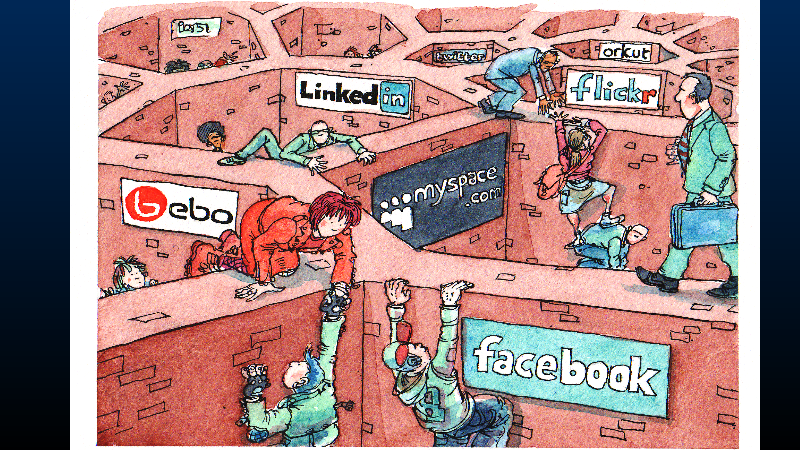
Early Facebook wasn’t “too private.” It was already a walled garden – a corporate trap disguised as a community. The real critique from #openweb folks was that it centralized control, commodified interaction, and locked users in. That’s why people built alternatives like #Indymedia, #RSS networks, (sudo)federated blogging, and early #P2P social tools.

To say the openweb led to surveillance capitalism is like blaming bicycles for car crashes. What happened wasn’t in any way openness going too far, it was openness being abandoned, subsumed, and bastardized by closed platforms under the guise of “convenience” and “safety.” And now, people are rewriting history to serve the logic of today’s bloated encryption silos and #NGO-funded moderation paths. This is not just wrong, it’s dangerous, because without remembering what native open tech looked like, we’ll keep mistaking the problem for the solution.

So yes, this quote we started with, and the worldview it represents, is a mess. But we don’t throw it in the fire, we compost it, break it down, extract the nutrients, and grow something better from the rot. The #openweb was never about exposing people, it was about building shared power. Don’t confuse this in any way with the platforms that sold us out, and don’t mistake critique for irony when it’s actually prophecy.

Don’t push prat thinking, please.

Enclosure of the open web was a crime

This spirit of the early internet and #WWW – sharing, remixing, collectively creating – is the heart of what we call the #openweb. It wasn’t perfect, but it was a space of possibilities, commons, where you could take what you needed and leave something behind, hyperlink by hyperlink. The tools were open – #RSS feeds, #XMPP and #indymedia were built to bridge between ideas and movements, not the walls of monetized algorithmic sludge we have today.

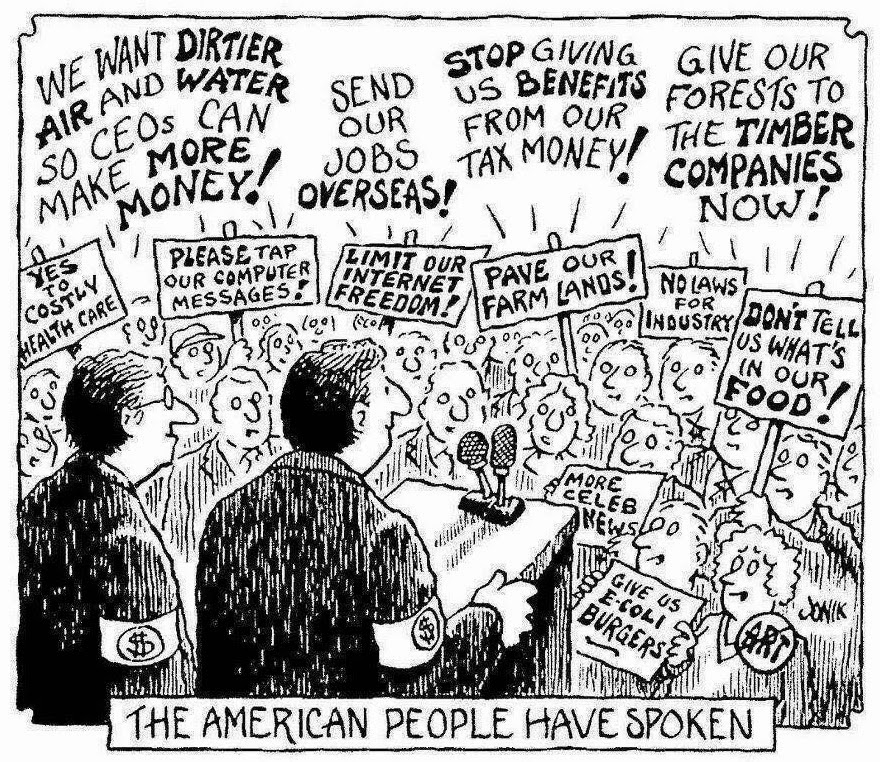
But the #dotcons came. They fenced in the wild garden. What we’re living through now is a digital version of the enclosure of the commons, a #neoliberal land grab dressed in Silicon Valley T-shirts. Just like in 16th-century England, they drew arbitrary lines around our #4opens shared land (data, conversation, culture), declared it private property, and shut the gates. And we, the people, got algorithmic slop in return.

The comparison isn’t metaphor – it’s literal – just as the landed gentry stole the commons to fuel the industrial revolution, the tech gentry stole our digital commons to feed surveillance capitalism. They did it through legalese, marketing BS, and brute force. We were left outside the firewalls, told to be thankful for “free” services while they harvested our metadata to sell back consumerism as advertisements and social control.

The #techbros didn’t invent this theft, they just updated the tools, the same ideological mess that displaced peasants from their land now displaces communities from their networks and platforms, kills independent sites, closes APIs, and locking away archives behind paywalls. Twitter’s 2023 shutdown of free API access? A textbook enclosure. Hundreds of # fashionista grassroots tools and bots vanished overnight, #Techshit at its most brazen.

And then there’s #RSS – the veins of the old web. Stabbed slowly. First by Facebook, then by Google. For the #fashernistas, the blade fell hardest in 2013 with the death of Google Reader, a quiet coup that pushed most of us into the fenced-off gardens of algorithmic consumption we live so much of our lives in today. The commons didn’t vanish; it was actively destroyed, under the smog of monetization, “engagement,” and corporate “safety.”

It is good to see this in a simple way, this isn’t #progress, it’s theft, the kind that wears the mask of legitimacy because lawyers and lobbyists made it look neat on paper. The reality is old, it’s a #classwar fought with code instead of clubs, and it’s won because we stopped remembering what common “land” even looked like.

But not everything is lost. The #Fediverse, the #OMN (Open Media Network) still plants seeds in the cracks. #Wikidata, #OpenStreetMap, the #ActivityPub protocol, these are digital hedgerows that survived the scorched earth. They are messy, collaborative, and unmonetized. That’s their strength, that’s what the #fashionistas to often don’t get – they can’t sell what they can’t own.

A story by Cory Doctorow – Masque of the Red Death

The #geekproblem here is fatal, in both the grassroots and the #dotcons, too many technologists are blind to the politics in their code. In the #mainstreaming, they build better tools for corporations that destroy the commons, over and over again. The solution? For the grassroots coders, compost the #techshit, seed something else, and reclaim what was always ours. As when we lift the lid on the #dotcons mess our unthinking #fashernistras, #NGO geeks call the internet, it is simply a thin veneer on top of what is actually ours, the #openweb

Let’s stop being polite about this. The #closedweb is a crime scene. The #dotcons platforms we rely on are bonfires of common culture, feeding the engines of the next wave of control. If we don’t remember how we got here, we can’t step out of this mess. It’s time to say it plain: The privatized web is a #deathcult, and only a #4opens reboot can bring life back.

An article: https://johl.io/blog/enclosures-and-the-open-web

Rebooting the #openweb in a good way

The #Fediverse exists, and more than that, it’s alive and kicking. Sure, it might be a messy, chaotic, a bit fragmented, and yes, still niche. But let’s not underplay it, this is the healthiest corners of the internet we’ve got. Tens of million accounts, hundreds of thousands active people, and some are sometimes talking about how we build our digital spaces from the bottom up.

Yep, there are the cat videos, the #fluffys and the #spikys. But also an in-group debate is bubbling away about who speaks for the Fediverse? What defines it? Is it the standard #ActivityPub that binds us only technically? Or is the value in the community that’s formed it, the living web of relationships, servers, instances, and admins making this work day-in-day-out? Truth is, it’s both. #activitypub without community is just code. Community without #activitypub is just another silo waiting to collapse. They are not the same, but they are inseparable. To build something real, we need to nurture both the tech and the people.

What works in the #Fediverse is decentralisation with purpose, it works because it resists centralisation. It gives people choices, want a cat picture, instance? A political instance? A hyper-local or themed space? You install and build it, and people might come. This is #DIY grassroots digital culture in motion. Standards support this growth, #ActivityPub, like #RSS before, may not be perfect, but it’s open, extensible, and functional. It allows platforms and networks to talk to one another. This is a real #4opens foundation for collaboration, not control. That’s the kind of architecture we need in the #openweb reboot.

What doesn’t currently work is the over-reliance on hard blocking as a solution, with the common approach to problems is too often to block, users, instances, entire classes of servers like the #dotcons. While this kinda makes sense in the short term, it’s not a long-term strategy. It’s the digital equivalent of putting your head in the sand. You’re not solving the problem, you’re just not looking at it any more. This has the strong tendency to feed the “Cave Mentality” where some corners of the Fediverse are in defensive mode, retreating into smaller and smaller bubbles, avoiding engagement, trying to build perfection behind walls. But hiding from the mess doesn’t clean it up. If the #openweb becomes too closed, it dies from within. Openness is a value, not just a setting.

This is in part due to a lack of collective strategy, yes we’ve got the passion. We’ve got the tools. What we’re missing is a shared direction. The is currently too much reinventing the wheel, too many forks without purpose, not enough joining the dots. A thousand flowers bloom, but the garden needs tending.

#nothingnew is a basic tool about this, then there is the use of the #4opens, we need to make the #Fediverse and every layer of the #openweb, measurably open. That means: Open Data: accessible and remixable content. Open Source: transparent and forkable codebases. Open Standards: like #ActivityPub, that let different platforms interconnect. Open Process: decision-making in public, with participation and accountability.

The #4opens framework is a guide, not to perfection, but to direction. It’s a map toward trust, decentralisation, and sustainability. On this path, we need to build culture, not only code. Healthy communities don’t just appear, they’re built. Instead of building tech features, let’s also build social norms. Encourage, informative, welcome messages, transparent moderation, shared spaces for discussion. Moderation and admin is labour, support it, reward it and most importantly decentralise it.

To build community, don’t shy away from engagement. It’s tempting to block and move on. But sometimes, the hard work is worth it, call things out, talk things through, escalate when needed, but don’t disengage by default. We need active participation, not digital ghost towns. If we want the #Fediverse to grow, we need to build bridges, not walls. Let’s weave human trust networks to grow spaces that are porous, where new people can enter, learn, contribute, and stay. This is the work of social federation, which is just as important as technical federation.

There is a bigger picture if you are interested and are motivated to look, the #OMN, Open Media Network project is a vision and collective path for this kind of social architecture. It’s a federated network of media hubs, rooted in community, powered by open standards, and guided by human trust. It doesn’t seek control, it offers #KISS tools to build trust, add value, and create meaningful networks from the ground up. On this “native” path, rather than rejecting “bad actors” by exclusion, we build systems that surface good actors through collective tagging, trusted feeds, and editorial flows. Moderation becomes a feature, not a bug.

Final thought, let’s not repeat the mistakes of the past. The last 20 years of alt-tech is a graveyard of well-meaning platforms that failed because they forgot one thing, the humans. The #geekproblem has been building “perfect” systems with no one in them. That’s not the #openweb we want. We need less abstraction, more interaction. Less control, more cooperation. And above all, we need to recognise that openness requires work, but it also delivers freedom. So yes, the Fediverse exists. It’s healthy. But it can and needs to be more. Let’s stop hiding. Let’s start building. Together.

#Fediverse #OMN #4opens #OpenWeb #IndymediaBack #SocialTechnology #AltTech #Decentralisation #FOSS #MakeHistory #ActivityPub #OGB #SocialCoding

The #fashionistas poisoned the well of alt-media

This has been going on for more than ten years, I have been at the heart of this movement, at many of the steps, I meet defeatism and negativity. It’s frustrating, especially now, when the mainstream is visibly stepping away from the #dotcons and looking for a place to land. We should be building that landing space, but instead, we’re tangled in the wreckage of failed ideas and cynical inertia.

Yes, stupid fashionable ideas have failed again and again, but that doesn’t mean the basics no longer work. The #openweb grew from simple, powerful principles: decentralization, collaboration, and a belief that media should be in the hands of the people, not locked behind corporate walls. It worked then, and it can work now.

The #blocking wall, the #dotcons built to dam this flow, just might be crumbling, but I don’t think people realize just how much defeatist noise we had and still have to break through:

“Old tech. Nobody uses torrents anymore.”
“That’s been tried — it failed.”
“This is better, nobody’s interested in that.”
“You should be using XYZ instead. I have a better idea...”

It’s an endless cycle of negativity, driven by a #geekproblem that values novelty over function, and a #fashernista culture that chases trends rather than tending to the messy, necessary work of composting old ideas to grow something real. The #openweb tools still work, If we use them. The core tools of the #openweb are still powerful:

#RSS feeds for simple, open distribution.
#Torrents for decentralized, resilient file sharing.
#Fedivers networks like #Peertube, #Mastodon, and #Wordpress for publishing and connection.
Mesh networks and local-first tech to break dependence on centralized infrastructure.

None of these are new, that’s the point, they work. The failure wasn’t in the tech, it was in our inability to hold space against the relentless creep of the #deathcult. Reclaiming the compost heap is a first step, we need to stop chasing the next shiny thing and start digging through the muck. The #OMN, #indymediaback, and #4opens are all rooted in the idea that we can rebuild from what we already know works, not by reinventing the wheel but by getting our hands dirty and composting the failures into fertile ground for the future.

The defeatism is loud, but it’s not unbeatable. We’ve been here before. We know the way out.

Decentralize.
Publish.
Connect.
Trust the process.

We (re)build the #openweb one small, stubborn step at a time.

Deep breath. Take a step.

We need real shifts to things that matter in #openweb tech dev

The Open Governance Body (#OGB) is a radical approach to decentralized governance, designed from the experience of the failures of existing governance models by combining activist organizing techniques with decentralized federated technology like #ActivityPub. It provides a very flexible governance framework that can be used across different communities, from local markets to the #Fediverse itself, creating a scalable and human-centric decision-making path.

Examples: Local Market Self-Governance: Stakeholders, such as vendors, customers, and authorities, can collaboratively make decisions without reliance on centralized institutions. Fediverse and Online Communities: Federated instances can adopt the #OGB for cooperative decision-making, ensuring grassroots control over digital spaces.

Why this path works, activist organizing as a foundation, social movements have driven radical change for centuries using decentralized, trust-based governance. The #Fediverse itself is a proof of this concept, it has demonstrated that federated, open-source technologies can scale without corporate control. Human-centric governance is built by merging these time-tested approaches, the #OGB fosters sustainable, non-hierarchical governance models rooted in #4opens values. This combination ensures adaptability and resilience against co-option by #mainstreaming forces.

Then we have permissionless rollout, the #OGB is designed to spread organically, self-initiated setup: Any individual or group can start an instance, onboard participants, and begin governance discussions. This will push network effect growth, as more people engage, the system scales naturally, shaping governance from the ground up. This bottom-up path challenges traditional top-down governance structures and paves the way for a more equitable #openweb. This needs supporting with more political paths, funding and support.

Using #RSS and #ActivityPub as core technologies offers significant advantages in grassroots politics:

  • Decentralization: Resistant to censorship and corporate control.
  • Interoperability: Enables seamless communication across platforms.
  • Transparency: Enhances accountability and public engagement.
  • Ownership & Autonomy: Empowers people to control their own data.
  • Accessibility: Breaks down barriers for marginalized voices.

The #Fediverse exemplifies this by offering a decentralized alternative to #dotcons. But the is still an often invisible ideological battle for the #openweb, the issues we aim to mediate is that programming is never neutral. Ideology inevitably shapes the systems we build. We see this in:

  • The Fediverse mirroring the #dotcons, many platforms unintentionally replicate centralized models rather than embracing true decentralization.
  • The risk of #mainstreaming takeover, without active resistance, corporate and NGO interests will attempt to co-opt the #openweb.
  • The #OMN as a counterforce, focused on linking alternative and grassroots media, the #OMN is part of a broader push to prevent the enclosure of the digital commons.

The #openweb needs to remain a space for radical inclusion and self-determination, free from corporate and direct state control. This challenging of the status quo needs real alternative paths, to get this we must critically examine the ideological underpinnings of our current world and ask:

The answers to these #blocking forces lie in building, not just critiquing, alternative paths and structures that embody the change we wish to see. The #OGB and wider #OMN projects, and the #4opens framework are part of this effort to reclaim community, autonomy from the ground up.

The OMN path, building the activist openweb infrastructure

The #OpenMediaNetwork (#OMN) offers a clear, practical path to (re)building the #openweb, grounded in #4opens. It does this by leveraging common open protocols like #ActivityPub (#AP) and #RSS, alongside existing #FOSS software, to create a distributed network of media platforms where people and groups can join, participate, and contribute. This, like the #Fediverse, is a challenge to the centralised, corporate-dominated structures which define so much of the current internet landscape.

How to make this happen, we need a crew and simple step-by-step building blocks: The #OMN is simplicity and humanistic coding, rather than over-engineered complexity we often see in tech today.

  • Start with the client-server model. The initial focus is on building a robust client-server architecture to create a stable foundation for media sharing and participation. This forms the “hot” storage layer, data that is live, accessible, and regularly used. It largely all ready exists as Fediverse coding and applications.
  • Introduce an offline cold store: Once the client-server infrastructure is operational, a secondary layer of offline cold storage is added. This acts as a backup system, providing high redundancy to safeguard against data loss. Cold storage is cheap, offline, and relies on human interaction for maintenance and retrieval, ensuring resilience and sustainability.
  • P2P connections to cold storage: The final stage introduces peer-to-peer (#P2P) connections to integrate the offline cold storage with the broader network. This allows people to share and retrieve data across the network, even in decentralised or disconnected environments.
  • Iterative learning and improvement: The process is intentionally iterative, encouraging learning from practical experience. The system path is designed to evolve and improve over time, informed by real-world use rather than any attempt at theoretical perfection.

The development of the #OMN depends on its commitment to #4opens. These principles allow for the free sharing and reuse of content, breaking down barriers to collaboration and growing grassroots innovation. By storing most data unencrypted (as the majority of it is not private), the system reduces overhead and complexity, keeping the project aligned with the “Keep It Simple, Stupid” (#KISS) philosophy.

Separating privacy from the #openweb: One critical aspect of the #OMN approach is recognising that encrypted privacy tools are a separate project. Mixing these with the development of the #openweb and #Fediverse leads to unnecessary complexity and division. Privacy tools are vital, but are developed in parallel rather than tangled with the foundational infrastructure. This separation allows each project to focus on its strengths while maintaining a clear, streamlined design philosophy and practical paths.

At its core, the #OMN empowers “normal” people to store and manage their own data. By using a mix of hot and cold storage, people gain control over their digital lives without relying on corporate platforms. The focus on redundancy, backed by tools to search and re-import old data into hot storage, ensures resilience and accessibility.

This human-centric approach contrasts sharply with the corporate and #geekproblem obsession with control and perfection. It’s a more humane vision of technology, based on trust and collaboration rather than surveillance and control.

This builds from a history rooted in activism, the #OMN isn’t just a theoretical project; it’s grounded in decades of real-world activism. From the work of Undercurrents in the 1990s (http://www.undercurrents.org/about.html) to the global mobilisation of the Carnival Against Capitalism (https://en.wikipedia.org/wiki/Carnival_Against_Capital), this draws on over 30 years of direct, on-the-ground experience. The lessons from this history inform every aspect of the OMN, ensuring it stays true, and not distracted, from its activist roots.

The current #block on this needed project is dealing with the #geekproblem and #fashernistas: One of the hardest challenges in progressive tech is the dominance of the #geekproblem, projects driven by technologists that priorities complexity and self-interest over usability and impact. Coupled with the influence of #fashionistas, who chase trends without substance, leads too many projects to doomed before they start to be useful.

The #OMN cuts through this, in that, yes, we can’t solve this mess pushing, but we can be a critical step in the right direction to mediate this mess, by encouraging us all to get out the shovels and compost these people pushing failures. The goal is to build a system that works, not one that dazzles investors, NGOs and blinded geeks with hype while failing to deliver.

The #openweb won’t (re)build itself. It requires us to reject the endless noise of pointless projects and focus on practical, sustainable solutions. By supporting and growing the #OMN path, grounded in #KISS simplicity, #4opens principles, and decades of activism, we create a resilient infrastructure that empowers people and communities.

The future of the #openweb is in our hands. Dig deep, embrace trust, and start building.

OMN #openweb #OGB #Indymediaback #makehistory

Open Media Network (OMN): An Overview

It’s past time to stop trying to own the river and start learning how to navigate it.

Principles of the #OMN

  • Simplicity: Keeping the network and its tools straightforward allows for greater accessibility and usability.
  • Decentralization: Empowering people and communities to control their narratives by avoiding reliance on centralized platforms and corporate algorithms.
  • #4opens: Building around open data, source, process, and standards to grow trust and collaboration.
  • Participatory and Transparent Processes: The network grows organically with a focus on grassroots engagement rather than top-down control.

This is a reformatted and updated text from 8 years ago:

The Open Media Network (#OMN) is a reboot of the “indymedia” project, reimagined as an open, decentralized network for sharing and aggregating content across websites. Guided by the principles of the #4opens and motivated by the PGA hallmarks, OMN creates a people-to-people trust-based tagging system for collaboration and ethical aggregation.

What Are OMN Nodes?

OMN nodes are the backbone of the network. These nodes perform specific functions to enable the sharing and dissemination of content within the #openweb:

  • Hosting Content Flows: Nodes curate and host flows of content based on tags from other OMN sites on subjects that interest them.
  • Tagging and Retagging: Nodes can tag and retag objects within content flows to direct them to other nodes or to specific sections, such as sidebars/pages on websites.
  • Providing Tagged Content: Nodes offer tagged content flows to other sites, which can embed the content using codes as needed.
  • Content Archiving (Optional): Nodes may choose to archive content locally.

The roles and functionality of nodes will evolve organically as the network develops.

Types of Sites in the OMN

OMN sites serve different purposes within the network:

  • Publishing Sites: The original sources of content. Typically, provide an #RSS feed and ActivityPub flow for the network.
  • Aggregating Sites: Focus on specific subjects, localities, or themes. Receive feeds from publishing sites and curate high-quality, trusted content for distribution to higher-level nodes.
  • News/Link Portals: Regional, national, or major subject sites. Aggregate trusted feeds from intermediate aggregating sites and select publishing sites.

The Human Element of OMN

The OMN emphasizes human moderation and relationship building. Trust: Relationships between node administrators, content providers, and users form the foundation of the network. Decentralization: Unlike traditional centralized models, OMN’s structure encourages openness and collaboration. Ethical Aggregation: Content is networked respectfully to create a robust alternative to failing commercial platforms (#dotcons).

Key Features of Ethical Aggregation

Prominent display of OMN links on participating sites. Links are live and direct users to the original host site for reading and commenting. Original sources are credited under content titles. Aggregation behaviour (e.g., full content in apps) is agreed upon by both parties, with opt-out options available. Ad placements near Creative Commons non-commercial content require explicit agreement.

Building the Network

OMN leverages existing web standards to build an open “data soup” that enables many new possibilities. Legacy Web Integration: Uses RSS for backward compatibility. Semantic Web Transition: Moves towards a peer-to-peer semantic web with more p2p protocols. User Stories: Articles published on one site can appear on many other sites, always linking back to the original source.

User Contributions

OMN encourages continuous improvement and collaboration. Content remains open-ended to invite contributions and dialogue. Tags and semantic data added by aggregators enhance the content flow for others.

Joining the OMN

Participation is voluntary and flexible. Existing sites can continue operating independently while sharing content. Posting can be done through personal blogs, group sites, or portals like #indymedia.

For “news” – A New Indymedia

Aggregating hubs/nodes in OMN represent the “new indymedia”. These hubs may focus on subjects, countries, regions, or cities. Unlike the centralizing elements of traditional networks, OMN’s open model reduces the need for centralized control.

Licensing and Openness

OMN adheres to open licensing principles. Content is shared freely within the network. Licensing ensures respect for contributors and promotes ethical usage.

Encouraging Collaboration

OMN thrives on contributions and engagement. Leave questions or incomplete ideas to inspire participation. Create linking overviews or summary articles that highlight stories within content flows. Encourage human relationships to grow the trust-based network.

Conclusion

The Open Media Network (OMN) is an ambitious and open-ended project that refocuses decentralized media sharing for the modern web. By collaboration, trust, and ethical practices, OMN empowers participants to grow a sustainable and impactful alternative to the dieing corporate media platforms.