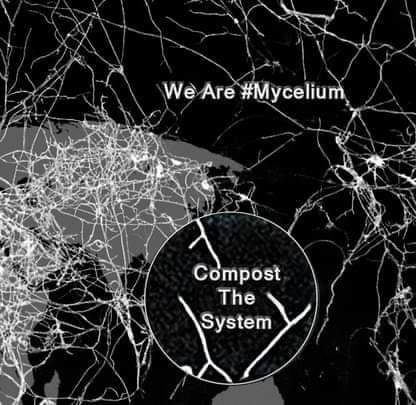
Composting the Mess to Make Room to Plant

In the swirling chaos of the digital landscape, it’s easy to feel lost. The #Fediverse, should be a beacon of hope for a decentralized, community-driven internet, but as always is facing an onslaught of push back and pressures from every direction. The #dotcons loom large, #NGO agendas quietly co-opt grassroots energy, and the #encryptionists lash out with SPAM money to drown out critique. It’s messy, but mess is where compost comes from, and compost is where new life grows.

Pick up a shovel, start composting, it’s time to stop waiting for permission. Don’t ask, just do it, start composting the wreckage of the current paths. Plant seeds of your own lived life and nurture the social gardens with your care. Build spaces where people connect, share, and create outside the control of the #dotcons corporate platforms and the clumsy grasp of the old traditional top down institutions.

So, where is the positive in this mess? I’d look to the healthy fragments of the #openweb path that still exists. Projects that embody the #4opens offer the seeds of something better. But these projects won’t survive on hope alone. They need care, attention, and participation. Use them or lose them. If we don’t actively engage, they’ll wither, and the digital paths will continue its slide into centralized control and the new #mainstreaming creeping authoritarianism.

The #ecryptionists, clinging to their fantasies of rugged individualism, would have you believe that the solution lies in isolation, in bunkers, in hoards of digital currency, in cutting ties with the social fabric. But survival, whether against digital authoritarianism or the unfolding #climatecatastrophe, will come from cooperation and collective resilience, not isolation. Even in the face of disaster, thriving requires community.

Beyond the ingroup, we can’t rebuild the #openweb if we only talk to ourselves. The term “Fediverse” is a great example of this, it makes sense to those inside the space but means little to those outside it. #Openweb is a better, more intuitive term. It’s positive, clear, and easy to contrast against the negative: the #closedweb of the #dotcons. Mastodon is a #4opens project of the openweb; Facebook is a closedweb project. Simple, direct, and powerful framing that cuts through the noise.

With the hard shift to the right, we’re standing on a knife’s edge. #Climatechange, economic instability, and accelerating automation are pushing us toward a future of disruption. But disruption doesn’t have to mean collapse, it can mean transformation. The work we do now to build and maintain #openweb projects lays the foundation for the communities that weather the coming storms.

The Fediverse, for all its narrow flaws, shows that alternatives are possible. The challenge now is to grow beyond this first step. To dig deeper, plant wider, and build an ecosystem that can sustain itself long term. We need to constantly think outside the ingroup, to bridge divides, and to invite people in. It’s hard work. But so is everything worth doing. And if we get it right, we just might cultivate a future where common humanity, not capital, shapes the digital world.

Grab a shovel. Let’s get to work.

#OMN #4opens #DIY #Openweb #Reboot

Rediscovering the Open Web: Why We Need Joined-Up Thinking with #4opens

The internet wasn’t always like this. Before the rise of #dotcons, we had a flourishing landscape of community-driven sites and platforms, built on openness, collaboration, and trust. Yet today, much of what we do online is controlled by #dotcons, closed, profit-driven systems designed to capture and commodify every interaction. It doesn’t have to be this way — but to break free, we need to think and act differently.

The #4opens offer a practical path back to the #openweb. They guide us towards building space that is open in source, data, process, and standards. This isn’t just tech jargon; it’s about creating online spaces that work for people rather than exploiting them.

The trap of piecemeal solutions, too often, attempts to rebuild the #openweb get stuck in the #fashernista trap: chasing trendy but fragmented fixes that fail to address the root problems. A federated app here, a new protocol there, while each piece might be valuable, without joined-up thinking, they scatter energy and slow momentum. We need to step back, see the bigger picture, and work together to build a truly interconnected path.

We don’t need permission to start. The tools, ideas, and history are already here. Current platforms like Mastodon and initiatives like the #OMN (Open Media Network) show what’s possible. But it takes more than just using the tools, it takes sharing the vision. If you’re reading this, consider it a nudge: start conversations, share resources, and bring people onto the path. Dig into the posts at hamishcampbell.com for more background, and share the posts widely. Every shared link, every discussion, and every new node in the network helps.

Basic activism in the digital age is about reclaiming the internet to refuse to accept the current mess as inevitable and to actively choose better paths. By advocating for the #4opens, supporting decentralized platforms, and consciously stepping away from the #dotcons, we become a small part of the solution. The future web can be cooperative, empowering, and deeply human, but only if we build it that way. So grab a metaphorical shovel, help compost the tech junk, and start planting the seeds of something better.

The #openweb is waiting.

Ideological traps

The blinding effect of mainstream ideology, whether it’s neoliberalism, conspiracy-laced #spirituality, or rigid #geekproblem worship. These all act as barriers to change, keeping people locked in reactive cycles instead of building something different.

The #deathcult (neoliberalism) ensures its survival by designing failure, carbon offsetting, cap-and-trade, plastic recycling, all engineered to look like solutions while maintaining the status quo. These weren’t mistakes; they were intentional. The same happens in tech, where #encryptionists believe they’re liberating people while locking them into opaque, controlled, isolated paths. Security as fear, rather than trust.

What do we do differently now? We have to stop playing by their rules, whether it’s cancel culture’s purity tests, the process geek bureaucracy, or liberal progressives too afraid to act outside the acceptable neoliberal framework. That means:

  • Break from #mainstreaming narratives – Stop looking to “official” solutions when they are structured to fail.
  • Stop feeding fear, cowardice, and greed – Recognize when “safe” choices are actually surrendering power to systems of control.
  • Step into federated, trust-based models – #openweb and #4opens approaches don’t just shift power; they change how power operates.

Mediating the #geekproblem is core, we have the tools to build alternatives, but the very people who have power to make the change happen are often blinded by their own logic traps, trapped in a false neutrality that serves power, or in rigid frameworks that make real-world change impossible. If we can challenge this blindness, we can bring them into broader movements instead of leaving them locked in their own subcultures.

  • Non-geeks need pathways to access, understand, and shape technology.
  • Decentralisation and federated trust models should be built with social movements, not just coders.

The #4opens is a path, the commons-based approach to software is an example of an alternative that works. The stagnant ideology of capitalism blocks innovation that already exists in open, federated models. What we need to compost is the blinded majority keeps trying to push radical tech back into the broken frameworks they understand instead of embracing real alternatives. That’s the cycle we need to break.

If we don’t step outside our own ideological traps, we won’t see the paths that already exist. The world doesn’t have to be this way, but we need to start living the alternatives, not just critiquing the failures.

We need real shifts to things that matter in #openweb tech dev

The Open Governance Body (#OGB) is a radical approach to decentralized governance, designed from the experience of the failures of existing governance models by combining activist organizing techniques with decentralized federated technology like #ActivityPub. It provides a very flexible governance framework that can be used across different communities, from local markets to the #Fediverse itself, creating a scalable and human-centric decision-making path.

Examples: Local Market Self-Governance: Stakeholders, such as vendors, customers, and authorities, can collaboratively make decisions without reliance on centralized institutions. Fediverse and Online Communities: Federated instances can adopt the #OGB for cooperative decision-making, ensuring grassroots control over digital spaces.

Why this path works, activist organizing as a foundation, social movements have driven radical change for centuries using decentralized, trust-based governance. The #Fediverse itself is a proof of this concept, it has demonstrated that federated, open-source technologies can scale without corporate control. Human-centric governance is built by merging these time-tested approaches, the #OGB fosters sustainable, non-hierarchical governance models rooted in #4opens values. This combination ensures adaptability and resilience against co-option by #mainstreaming forces.

Then we have permissionless rollout, the #OGB is designed to spread organically, self-initiated setup: Any individual or group can start an instance, onboard participants, and begin governance discussions. This will push network effect growth, as more people engage, the system scales naturally, shaping governance from the ground up. This bottom-up path challenges traditional top-down governance structures and paves the way for a more equitable #openweb. This needs supporting with more political paths, funding and support.

Using #RSS and #ActivityPub as core technologies offers significant advantages in grassroots politics:

  • Decentralization: Resistant to censorship and corporate control.
  • Interoperability: Enables seamless communication across platforms.
  • Transparency: Enhances accountability and public engagement.
  • Ownership & Autonomy: Empowers people to control their own data.
  • Accessibility: Breaks down barriers for marginalized voices.

The #Fediverse exemplifies this by offering a decentralized alternative to #dotcons. But the is still an often invisible ideological battle for the #openweb, the issues we aim to mediate is that programming is never neutral. Ideology inevitably shapes the systems we build. We see this in:

  • The Fediverse mirroring the #dotcons, many platforms unintentionally replicate centralized models rather than embracing true decentralization.
  • The risk of #mainstreaming takeover, without active resistance, corporate and NGO interests will attempt to co-opt the #openweb.
  • The #OMN as a counterforce, focused on linking alternative and grassroots media, the #OMN is part of a broader push to prevent the enclosure of the digital commons.

The #openweb needs to remain a space for radical inclusion and self-determination, free from corporate and direct state control. This challenging of the status quo needs real alternative paths, to get this we must critically examine the ideological underpinnings of our current world and ask:

The answers to these #blocking forces lie in building, not just critiquing, alternative paths and structures that embody the change we wish to see. The #OGB and wider #OMN projects, and the #4opens framework are part of this effort to reclaim community, autonomy from the ground up.

A call to action, clear diagnosis

What a waste of public money, this #fashernista career-building projects. When you think using social media is “natural,” remember you’re feeding #dotcons platforms built on the worst parts of human nature. If you want civilization and society to have a future, you cannot keep supporting this. The #encryptionists sit at the heart of our current grassroots media tech disaster, while careerist #mainstreaming pisses from the other side. But shit makes good compost, and we have the shovels.

#OMN is a path forward. Pessimism may travel faster than optimism, but only optimism holds the potential for real change. Feed the problem or solve the problem. There is no mythical “third way” out of this mess. What we have are shovels, #OMN, and shit for compost. Work hard enough, and you’ll get flowers and tasty vegetables. It’s well past time for composting. Let’s grow flowers.

Meany of our old friends in activism took the healthy internal stresses that once challenged projects like #indymedia and fed them to a #fashernista vampire class, building careers by draining the grassroots for 20 years. This is not a good look, and these are likely the people you have to talk through when you talk to “power.”

First step, clearly #stepaway from the #dotcons and return to the #openweb for our communication and news. #indymediaback and #OMN are solutions worth posting about, worth sharing, and worth doing. The #openweb lacks addiction algorithms. It will only thrive if you make it work. Gather like-minded people outside the #dotcons is a solid first step.

We must stop pouring energy into pointless #techshit if we want a chance of surviving #climatechaos and escaping the grip of the #deathcult. Basic #KISS statement: What are you doing today that isn’t pointless?

On this, #indymediaback, #OMN, and the #4opens need more crew to make the rollout work. For decades, we’ve allowed the #dotcons to dominate our communication. Trump and Brexit aren’t the causes—they’re symptoms. We made this mess together, fuelled by unhealthy digital feedback loops.

Let’s compost this mess and seed real change.

Challenging “liberal trolls” and #encryptionist blindness

Addressing liberal trolls and the #openweb tensions, the influx of users following the #X (#TwitterMigration) has highlighted tensions on the #openweb, particularly the behaviour of “liberal trolls.” Who advocates for performative inclusivity and impose hierarchical thinking, creating friction in existing working decentralized paths. Their inflowing presence derails conversations, inhibit grassroots growth, and introduce #mainstreaming patterns of control. So what can we do with this mess making:

  1. Reframing the debate: 90% Open, 10% Closed offers a sorted balanced vision. It contrasts sharply with the #encryptionists’ damaging push for 90% closed, that prioritizes secrecy over collaboration. To mediate this mess, we need to promote openness as resilience to grow diversity. This “native” path has power, it resists co-optation by authoritarian forces, a core concern of #encryptionists. We need to highlight success stories, examples where openness has thrived, such as Mastodon’s ability to scale post-Twitter Migration with little compromise. Then build bridges to encourage conversations between open and closed proponents. Identify shared values, while challenging “common sense” that to often blocks any collaboration.
  1. Combatting liberal troll dynamics that wield performative outrage and self-righteousness as tools for control, sidelining the “friction” of radical workin paths. To mitigate this deadening, we need community moderation with clear values, with moderation policies rooted in grassroots principles – collaboration, inclusion, and respect for dissent. A first step is to make these values explicit and widely understood. Empower the margins of radical communities to counterbalance dominant narratives. Ignore the noise, trolls thrive on attention, so strategic non-engagement, combined with clear policies, reduce their disruptive influence.
  1. Addressing the #geekproblem blocking, a resistance to radical ideas and community-focused solutions, creating unspoken barriers to progress in tech spaces. We need strategies to overcome, by making tech accessible to non-geeks with user-friendly with intuitive experiences to diminish the gatekeeping power of overly technical #UX. Distributed leadership encourages non-hierarchical, collective decision-making to prevent a few individuals from exerting outsized influence over grassroots tech projects. Education and outreach is needed to equip newcomers with the tools and knowledge to navigate #openweb spaces, reducing reliance on the blocking geek-centric paths.
  1. Resisting destructive cult paths, #NGO-driven power grabs and “cult-like” behaviour. This is done by seeding decentralized power structures to encourage healthy conflict and normalize constructive disagreements as part of openweb culture. To reduce the potential for groupthink and “common sense” authoritarian tendencies. We need to recognize and resist co-optation by staying vigilant against efforts to co-opt grassroots movements for institutional and corporate interests.
  1. We need proactive strategies to building radical resilience, to mediate the blocking energy and empower radical tech. Creating paths for experimentation, this might include enclaves where radical ideas can be tested without suppression and co-optation. Foster allyship by building alliances between radical movements and pragmatic reformers to amplify shared goals. Challenge “Common Sense” imposition of “practical” solutions that dilute grassroots paths and values. Embrace creative, “mad and bad” ideas to disrupt this status quo blocking.

In conclusion, the path of the #openweb depends on striking a balance between openness and security, grassroots experimentation and mainstream scalability, decentralization and coordination. The paths we need is to active mediate the mess brought into our spaces by liberal trolls, encryptionist ideologies, and the #geekproblem. If we do this we can create a more resilient digital ecosystem that we need in the era of #climatechaos and social brake down.

Currently, we have too much prat energy on these paths, so a bit of composting is needed.

The ideological blindness of the tech world

The #OMN hashtag story revolves around the #geekproblem and deeper ideological and structural issues in the tech world. There are meany internal conflicts in open movements, an example I like to talk about is the UK Indymedia project as a case study of ideological and technical battles between groups with different visions for open media. #Encryptionists: Advocated for security and privacy at the expense of openness, blocking aggregation efforts like RSS. #Fashernistas, sought control over media flows through proprietary yet “better” alternatives to open standards, undermining compatibility. #Openweb advocates promoted aggregation and widely adopted standards like RSS but were sidelined by other factions. The result was a self-destructive cycle that caused the UK Indymedia project to become irrelevant, exemplifying a broader failure to embrace shared, open paths.

The broader, #geekproblem, refers to the cultural and ideological blind spots of the tech community. A fetishization of privacy, encryption, and individualism, which serve market-driven ideologies rather than social good. A failure to address systemic social and environmental issues (e.g., #climatechaos, #deathcult worship) in favour of isolated, tech-first solutions. The division between “open” (sharing power) and “closed” (hoarding power) reflects fundamental tensions blurring between altruistic and exploitative visions of technology.

With its society and technology paths, the story draws parallels between historical ideologies (e.g., capitalism’s greed vs. socialism’s altruism) and the current state of tech. Examples: Closed systems reinforce inequality, greed, and control. Open systems, guided by #4opens principles, prioritize cooperation, connection, and social benefit. The problem of dogmatism on both sides of progressive tech (spiky vs. fluffy) hinders collaboration and slows any real progress.

Working grassroots projects need to return to #KISS basics, embrace openness, foster flow rather than blocking, and reject the destructive patterns embedded in blinded #neoliberal tech culture. The #4opens framework is a shovel to compost the ideological and technical mess, enabling meaningful technological change. Social movements and tech must integrate this change and challenge to prevent centralization and co-option.

The simple, yet complex, story shows how it’s good to critique the ideological blindness of the tech world and clearly shows that only by growing trust and openness can we build any sustainable future #KISS

We need historical paths to reboot the #openweb with the #fediverse

The #Indymedia network was a groundbreaking independent, grassroots journalism project, born from the #DIY ethos and the global alt-globalization movements of the late 1990s and early 2000s. It was a network where anyone anywhere could publish stories, videos, and photos, challenging #mainstreaming narratives. However, it eventually fragmented and became less relevant, then died as a functional network. Let’s look at why this happened:

The internal factors, where conflict among the crew and contributors, highlights the #encryptionists and #processgeeks, with disputes over priorities (e.g., security and processes) causing friction. Some pushed for hard encryption that complicated usability, while others emphasized bureaucratic formal consensus governance, stifling decision-making​. Consensus breakdown, the decentralized decision-making path, made it hard to resolve disagreements, especially as the network grew and diversified in ideology​ with the influx of more #mainstreaming people. Dogmatism and fragmentation, groups became rigid in their views, leading to infighting and a lack of unity. The inability to balance diverse perspectives led to splintering.​ Burnout and loss of purpose, as activists struggled to maintain momentum as the network ossified.

External pressures with the rise of commercial platforms. The explosion of the #dotcons, corporate platforms like Facebook, Twitter, and YouTube drew users away from the failing Indymedia project. These platforms offered easier interfaces and massive audiences, undermining the narrowing, dogmatic grassroots appeal​. Challenges with moderation, was a growing issue, dealing with fake news, spam, and inflammatory content became overwhelming. The “open publishing” model, once a strength, became a liability as it required extensive moderation​. State Pushback with governments targeting Indymedia for its critical reporting, using surveillance, raids, and legal pressures to disrupt operations. This systematic marginalization contributed to its decline​

Lessons for new #openweb projects. Balance simplicity and security, by avoiding overcomplicating platforms with technical measures that alienate non-technical people and communities. Strengthen trust-based governance, by adopting trust-driven models like those proposed by the Open Media Network (#OMN) to grow inclusive, mess and functional decision-making​. Integrate feedback loops, to insure constant input from diverse people to adapt to evolving needs and combat creeping dogmatism. Compete on accessibility, by design platforms that are intuitive and engaging to counter the allure of #dotcons social media.

Indymedia’s legacy offers critical insights into building resilient, people-centric, and trust-based media networks that can withstand internal and external challenges. We need these historical paths to reboot the #openweb with the #Fediverse.

#indymediaback

https://unite.openworlds.info/indymedia

The metaphors are change and challenge

Balancing the #mainstreaming mess by focusing on what’s “native” is a useful step in rebooting the #openweb. Rather than outright rejecting things that don’t fit, the goal is to actively engage and mediate through pushback, ensuring that the core values are preserved while allowing space for broader participation. This path helps prevent the dilution of the original ideals while embracing diversity in a constructive way.

To centre this conversation, we create frameworks that ensure any new developments align with principles like the #4opens and facilitate ongoing dialogue to maintain a shared direction. The key here is to keep it simple (#KISS), ensuring the tools are accessible and intuitive.

The metaphor of composting the mess to seed radical movements is an evocative one, emphasizing the importance of turning waste and negativity into something productive. It aligns with the path of movements growing from rich, grounded beginnings, rather than from the toxic, divisive environment that emerges with negativity spreading unchecked.

The use of these hashtags helps to frame the broader narrative, adding depth to the conversation about the failings of the digital world and how to move beyond them. With the hashtags like #deathcult, #dotcons, and #techcurn clearly defining the toxic systems at play, while others like #openweb and #4opens point toward solutions based on transparency and decentralization.

The metaphors are a powerful comparison between ecological composting and the cultivation of social and technological movements, particularly in the context of grassroots media and openweb activism and culture.

  • Seeds and compost, describe movements as seeds that grow in rich compost, meaning that movements need nurturing environments to thrive. The compost represents the ideas, collaboration, and foundational work that allow movements to grow organically.
  • Spreading shit, a metaphor about how we are distracted by “spreading shit on each other,” negativity, conflict, and infighting hampers collective efforts. While conflict and criticism are part of human interaction, too much negativity leads to a foul atmosphere, where movements struggle to grow.
  • Composting the shit, is from the phrase “shit is good for compost”, that negative experiences, bad ideas, and even failures can be turned into useful lessons, helping to enrich the soil for future movements. Rather than discarding everything, the key is to transform the bad into something productive.
  • Tools for change, the shovel, symbolize practical action. You need real tools (both literally and metaphorically) to work the compost, to nurture change, and to dig into the mess. Tools like openness, transparency, and collaboration are vital to making the compost to actually lead to growth.

    The #Hashtags are anchors, a way of framing complex social, political, and technological issues into digestible themes. The #OMN tags define the broad spectrum of the struggles and the critiques of current paths:

    #Deathcult: Neoliberalism, a system that prioritizes profit and narrow economic growth over human and environmental well-being.

    #Fashernista: The interplay of fashion, trends, and social relations, highlighting the superficiality in political movements.

    #Openweb: The original vision of the web, built on openness, collaboration, and free exchange.

    #Closedweb: The pre-internet and post-open-web eras dominated by corporate control (the #dotcons).

    #4opens: A principle-driven framework to ensure transparency, openness, and collaboration, inspired by the #FOSS and grassroots activism.

    #Encryptionists: A critique of those who advocate for excessive encryption without considering its broader social cost.

    #Dotcons: The commercialization of the internet and how it is leading to environmental and social collapse.

    #Geekproblem: The ongoing debate between determinism and free will, and its relationship to technological culture.

    #Techshit: Refers to the waste that technology produces—both physically and socially—which can be repurposed into something useful.

    #Techcurn: The technological churn, the constant cycle of “innovation” that leads to more problems than solutions.

    #Nothingnew: A philosophy of slowing down technological development to reflect and correct the negative outcomes of rapid progress.

    These are used as a call to action, to encourage a shift to the #KISS values of the openweb and to building humanistic paths. By understanding this, and acting on the metaphors and hashtags, we better navigate the challenges of today’s online and offline mess to work toward meaningful, open, and progressive alternatives to the #deathcult we have worshipped for way too long, way to long.

It’s less messy to see the “protocol wars” of #bluesky #Nostr #activitypub from a social understanding

Listening to the #mainstreaming of the 3 protocol mess, we have a building signal-to-noise issue. We need to push signal, so good to think before you share something that is likely more noise on this subject.

20338

As a way out of this, I have been pushing bridges for a while as they are the lowest common denominator and can be built and implemented “permissionless” to allow people to cross #4opens protocols. “Permissionless” is important as the is no way you would get consensus to do this, without adding much more mess. Technically, people coding the protocols are too busy with tribalism to focus on cross protocol interop… or they would not be building a new protocol

The advantage of a bridge is you do not have to get the codebase to change their project – it’s just a relay that connects one protocol to another, “permissionless”. Nobody has to federate, they can unfederated from a relay if they don’t like it.

It’s a BAD but good tech solution, and likely the best we can do to mediate the current squealing mess our #fahernistas make.

All the projects are actually kinda good, they are mostly #4opens and #openweb native this is a BIG move away from the #dotcons so good – TICK

I find it less messy to talk about the “protocol wars” of #bluesky #Nostr #activitypub from a social understanding.

They all share #4opens #openweb tech, so this is a win.

Where they differ is in the “culture” they come from and push.

#bluesky comes from surveillance capitalism, it’s from the #dotcons and has meany of the same assumptions, just “better”.

#Nostr comes from the #encryptionists and #bitcoin bro crew and suffers from being from this mess.

#activitypub is #openweb native and comes from the #4opens traditions the whole software world is actually built on.

#KISS

For us guys building on #ActivityPub, it’s important to keep focus that the #Fediverse was built on “trust” and will likely fail fast if we move to building it on “fear”.

Please, please, “don’t be a prat” about these thanks.

The world walks right past us looking the other way and takes the big bundle of bills from capitalism.

OK, had to close then open new accounts on #visionontv #peertube because of #spam, the spam is starting agen – there is an update that allows you to put new accounts on ask/moderation, we need to upgrade at some point to get this.

Interesting this is exactly the way our ten-year-old #OMN project handles flows as is the “new” moderation in #bluesky… if we don’t manage to go to the world, the world come to us… well more like the world walks right past us looking the other way and takes the big bundle of bills from capitalism.

This is normal, we are still doing needed work, but better would be good to 🙂

#bluesky #Nostr #activertypub

They all share #openweb tech, so this is a win.

Where they differ is in the “culture” they come from and push.

#bluesky comes from surveillance capitalism, it’s from the #dotcons and has meany of the same assumptions, just “better”.

#Nostr comes from the #encryptionists and #bitcoin bro crew and suffers from being from this mess.

#activertypub is #openweb native and comes from the traditions the whole software world is actually built on.

#KISS

The #KISS path is to simply bridge them all and let them cooperate, as they are all a part of the #openweb family.

The more complex and messy path is that some of them might not want to do this… OK now we get to the part where piss is likely signal rather than noise. Let’s draw a line, (a date is good) if they don’t bridge, we let loose the pee, liquid trickling in will short out their servers.

Ending thought:

For a lot of our #fashernistas in our spaces, things only matter if they come from #mainstreaming this is obviously crap blinded behaver – but it’s hard to communicate why, likely they can’t see me 😉

PS. I liked that joke.

The #hashtags embody a story and world-view

My use of #hashtags is confusing a lot of people, good to have some signal in the noise on this subject https://en.wikipedia.org/wiki/Hypertext I am using them in the way the #WWW was designed to use them #KISS

The #hashtags embody a story and world-view that are rooted in a progressive and critical perspective on technology and society. They highlight the negative impact of neoliberalism (#deathcult) and consumer capitalism (#fashionista) on society, and promote the original ideals of the World Wide Web and internet culture (#openweb). The #closedweb hashtag critiques the for-profit internet and its social consequences, while the #4opens promote the principles of transparency, collaboration, and sharing in open-source development.

The #geekproblem hashtag draws attention to the cultural movement of geeks, who can become blinded by their own technical knowledge and fail to consider the broader social implications of their work (#techshit). The #encryptionists hashtag critiques the dominant belief among some geeks that all solutions need more encryption, which can lead to a desire for total control and artificial scarcity.

Overall, these hashtags are interlocking to tell a wide-ranging story and world-view that advocates for a more humane, collaborative, and transparent path in technology and society. The #nothingnew hashtag raises whether new technological projects are needed, or whether we should focus on improving existing ones. The #techchurn hashtag refers to the technological outcome of the #geekproblem, which can lead to a constant cycle of new projects that do not address underlying social issues. Finally, the #OMN and #indymediaback hashtags promote the idea of an open media network and the rebooting of the altmedia project that was once the size of traditional media on the #openweb. The #OGB hashtag represents the need for open governance and the power of the community to make decisions collectively.

It’s simple #KISS, so please try not to react like a prat about this, thanks.

A fresh look at #openweb history

For people who like buzzwords

The World Wide Web is a system of interlinked hypertext documents that is accessed through the Internet. #Web01, #Web02, and #Web03 are terms that are used to refer to different generations or phases of the World Wide Web (#WWW).

#Web01 refers to the early days of the World Wide Web, when it was first introduced in the late 1980s and early 1990s. During this time, the web was primarily used for academic scientific, #NGO’s hobbyists and activists purposes and less yet widely adopted by the public.

#Web02 refers to the growth and expansion of the World Wide Web during the late 1990s and early 2000s, as the web became more accessible and user-friendly, and was increasingly adopted for commercial purposes. This era saw the rise of #dotcons, characterized by the growth of social media, mobile devices, and cloud computing. The web had become increasingly interactive and interconnected, and has become a critical tool for communication, misinformation, social control and commerce.

#Web03 was a waste of space, focus and money by the #Encryptionists who in bed with the scammers produced meany still born tech children in the last 10 years.

#Web01.5 refer to an intermediate stage between Web01 and Web02, marking a transition between the early and more experimental phase of the web and its more widespread commercial adoption. Web01.5 refers to a time when the web was still growing and evolving, but had already become more accessible and user-friendly, and was being adopted for more diverse purposes. With #mastodon and the #fedivers over the last 5 years, we are rebooting this web01.5 stage.