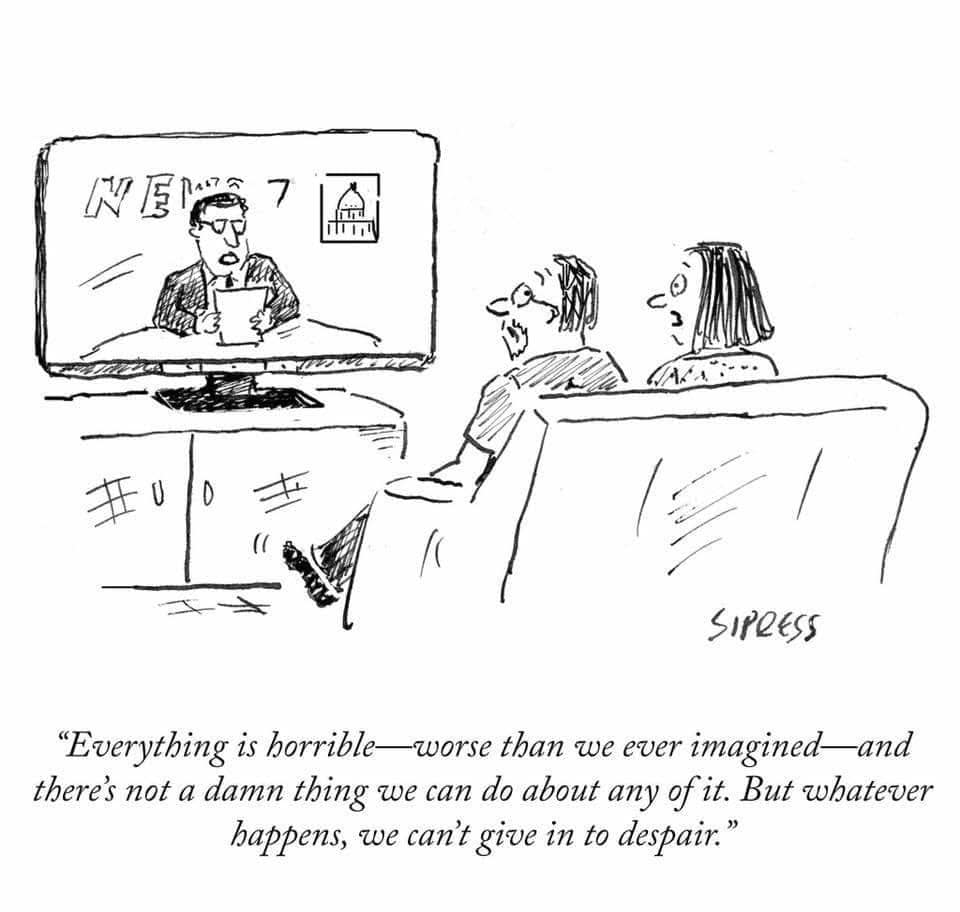
Radical movements are too often their own worst enemies. The push/pull between the desire for real change and the gravitational pull of #mainstreaming feed the #stupidindividualism that keeps people locked into conservative, performative loops. These loops are not accidental, they are the result of movements that to often shift focus to prioritize (invisible) ideological purity, insular “safety” subcultures, and a morbid reverence for past failures over the messy, unpredictable work of building living alternatives.
It’s easier to mimic revolution than to risk anything for it. People cosplay as radicals, reenacting historic struggles, as if performing the gestures of revolt is enough to topple ongoing systems of oppression. The rituals of protest, the left pamphleteering, and the echo chambers of online discourse imposed as safe spaces to play at rebellion without any actual danger of dismantling and rebuilding the world as it is.
The #mainstreaming path is insidious. It draws radical energy into a cycle of visibility and co-option, the movements become symbolic representation not material transformation. Meanwhile, #stupidindividualism fractures collective power, as people mistake dogma for meaningful action. The result? A self-policing culture where standing out, innovating, or questioning sacred paths is treated as betrayal not (rev)evolution.
It’s very basic history that radical breakthroughs happen when people break these loops. An example I keep bringing up is the early #Indymedia, an example of when people embraced uncertainty and acted as if the world could be different, not just talked about it. These moments weren’t perfect, and most collapse under internal contradictions, but they proved that stepping beyond lifestyle/ideological safety nets is possible.
This is where the #OMN come I as a real path, that, by creating decentralized, native #4opens networks for storytelling and organizing, we build infrastructures that resist the gravitational pull of mainstream capture. Instead of reinforcing ideological bubbles, we make space for radical plurality, a compost heap where competing ideas decay and fertilize new growth. The goal isn’t another subculture; it’s a living, breathing movement capable of evolving while still linking and bridging to the wider world.
One thing to keep in mind is that these people largely think they are good people, doing the best they can in the world as it is. And will become upset and very #spiky defensive when pointing at them on their knees prostrate worshipping. Like they said in the seminar, “I don’t know what to do about this”. I don’t think most of us do.
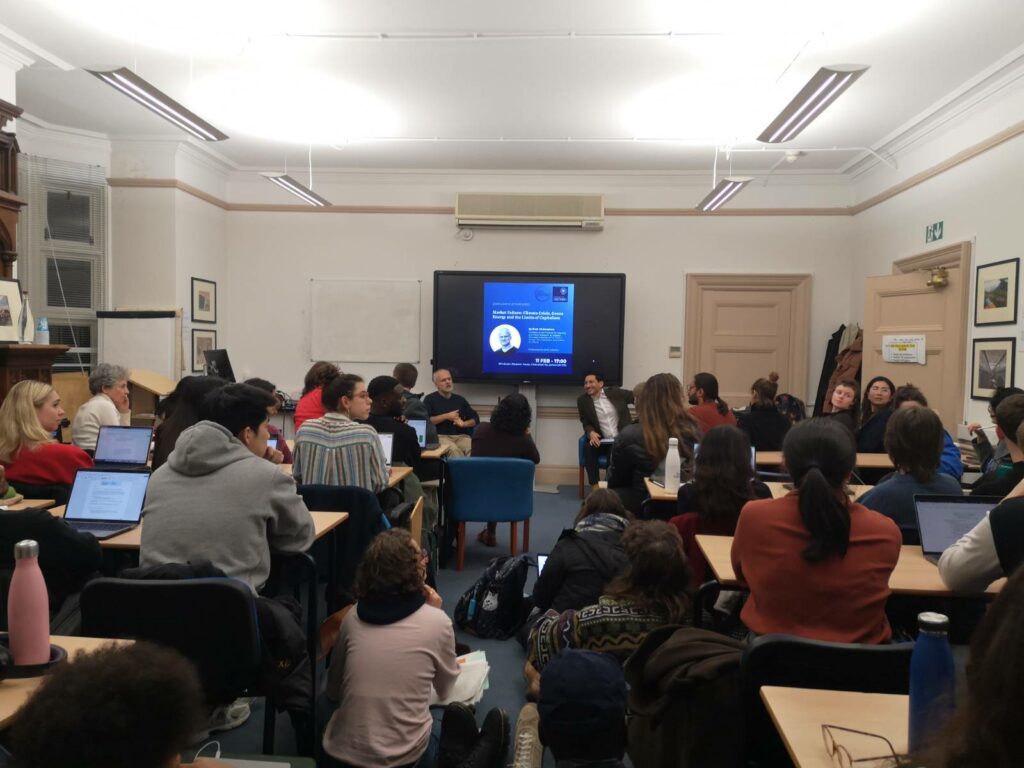
The Clarendon Lectures 2025 – Designing the Future: Multidisciplinary perspectives on designing better futures
Systems thinking challenges traditional approaches to management research and practice. In this second Clarendon event, Tima Bansal engages in conversation with academics in #Oxford who are integrating research and practice with the ambition to co-create futures rather than simply analysing solutions.
An outsider, polemical look at this event: Most university panels have a #NGO-thinking academic for process box-ticking. This is the representation of the fluffy side of #mainstreaming social change. This lettuce person is at best a #fluffy careerist and at worst a #NGO parasite. If there is any content at all, it’s box-ticking to create the illusion of consent and goodwill.
Then the meat of the business school is the worship of the #deathcult — people climbing the gravestones of hierarchy in the shiny, crumbling mausoleums. Even then, it’s mostly careerist. This one is talking about embedding in more fluffy NGO groups to build their story. It’s all about community and relationships. She lets go of the ego she pushed first, to step back to embed. No idea what the outcome of her work is — it’s all process. She ends with a call for nature and holism, the world her work destroys.
The currency is theory; on this, the business school is completely bankrupt from an academic point of view — not to get into the subject of morals, let alone basic human survival. She says they push their content out into science journalism, as these people are not able to judge the value of abstract academic work.
The next is an accounting bureaucrat, who does mention the green limits. He touches on the real and talks about the language in documents of bureaucratic regulation. He says it’s a mess and doesn’t know what to do. Trusting what companies say is not going to be enough. You need to change the economic relationships, and changing this is very difficult — and it’s currently simply not working.
The summing-up person is excited with an issue? Not sure what — no idea what she is actually saying. She is back to not talking about anything. She touches on statues and embarrassment. Finally, she asks an interesting question: who is the ordinance, us or somebody else? We have no idea who?
She says we need strong institutions, as individual companies are not going to do it — they capture the levers of power and pull them to keep the mess, and money, flowing. She has no answer to this. She does mention moving past “markets” in passing for a moment.
Boundaries come up — the answer is fluff, then more substance, accounting has hard boundaries, but useful change comes from stepping outside this. Systems thinking — no answer.
These people are lost and are training up the next lost generation. It’s interesting to see that they have some understanding of this, but it’s looking like they will do nothing to change it.
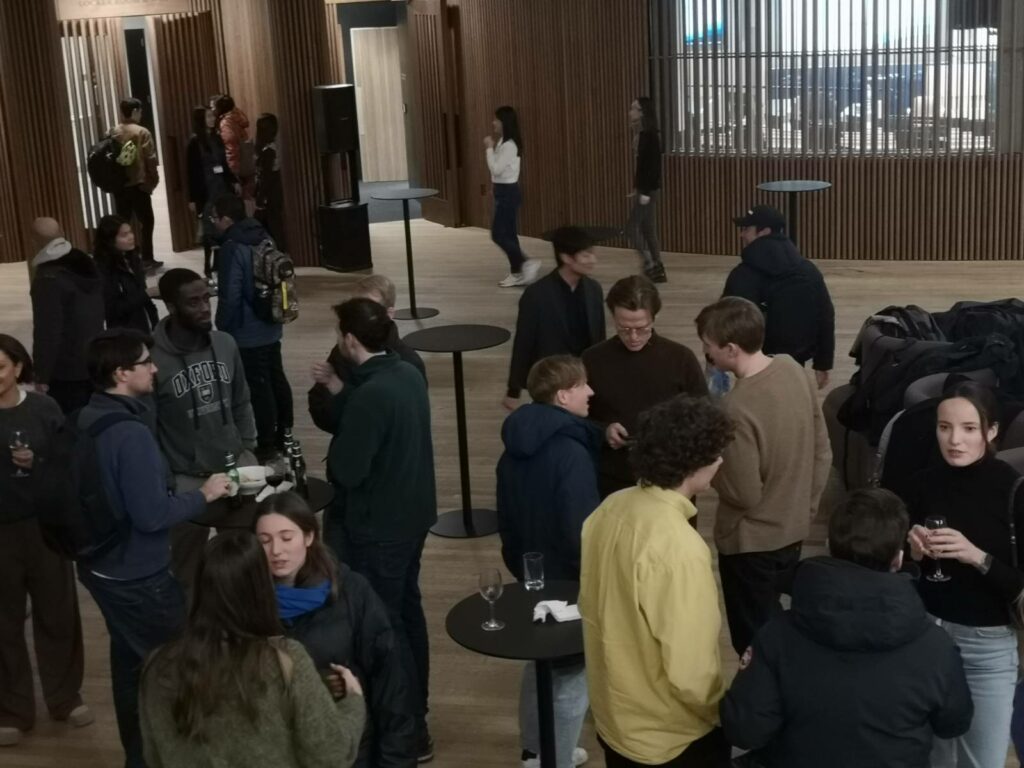
Wine and nibbles were OK.
Talked to many of them after the event. A few said they were undercover academic “radicals” infiltrating the business colleges — which was maybe a tiny bit true, or not. The students I talked to were blank and staying in academia.
The “consultants” were interested and animated; they found it a little shockingly invigorating to have a counter-culture conversation.
To sum up, mostly hopeless. I am always surprised the place doesn’t stink of rotting zombies, a metaphor, maybe? They need some real content… they really need some real content, but you get the strong feeling that they are not even going to change until the Thames is flowing up under the nearby railway bridge. Even then, there will be calls for more sandbags while talking more about careers — all they know — but underneath this, they have the fear that these careers will likely not exist.
This is it. What to do?
It’s a bleak cycle: academics pump out theory to feed the chatting classes, who in turn guide the #fashernista, spinning ever more refined justifications for the status quo. The echo chamber reverberates with hollow soundbites while the world burns. What we end up with is a layer of intellectual manure, with no one doing the work to turn it into compost.
With projects like the #OMN social tech could be the spade that digs through this mess, breaking down the dead ideas and aerating the soil for something new to grow. But instead, we use #dotcons tech to pile up more waste. Every app, platform, and algorithm is designed to reinforce the system, not break it. The closed loops of influence, profit, and prestige just churn on.
If we want to prod this beast, one way I am working on is to embrace the disruptive potential of the #openweb. What if we built platforms that exposed the rot? Imagine public academic review systems where research couldn’t hide behind paywalls, or tools that tracked the influence of corporate funding on “objective” scholarship. There are some seeds for this, what if we grow them #4opens
Or more direct action, maybe we just crash the garden party. What if we hijacked their panels, flooded their Q&As with real questions, or set up rogue alt-conferences right outside their events? The goal isn’t destruction for destruction’s sake — it’s breaking the illusion of inevitability.
What do you think? How do we spark that shift in behaviour, that even they, softly, say we need to do.
In the swirling chaos of the digital landscape, it’s easy to feel lost. The #Fediverse, should be a beacon of hope for a decentralized, community-driven internet, but as always is facing an onslaught of push back and pressures from every direction. The #dotcons loom large, #NGO agendas quietly co-opt grassroots energy, and the #encryptionists lash out with SPAM money to drown out critique. It’s messy, but mess is where compost comes from, and compost is where new life grows.
Pick up a shovel, start composting, it’s time to stop waiting for permission. Don’t ask, just do it, start composting the wreckage of the current paths. Plant seeds of your own lived life and nurture the social gardens with your care. Build spaces where people connect, share, and create outside the control of the #dotcons corporate platforms and the clumsy grasp of the old traditional top down institutions.
So, where is the positive in this mess? I’d look to the healthy fragments of the #openweb path that still exists. Projects that embody the #4opens offer the seeds of something better. But these projects won’t survive on hope alone. They need care, attention, and participation. Use them or lose them. If we don’t actively engage, they’ll wither, and the digital paths will continue its slide into centralized control and the new #mainstreaming creeping authoritarianism.
The #ecryptionists, clinging to their fantasies of rugged individualism, would have you believe that the solution lies in isolation, in bunkers, in hoards of digital currency, in cutting ties with the social fabric. But survival, whether against digital authoritarianism or the unfolding #climatecatastrophe, will come from cooperation and collective resilience, not isolation. Even in the face of disaster, thriving requires community.
Beyond the ingroup, we can’t rebuild the #openweb if we only talk to ourselves. The term “Fediverse” is a great example of this, it makes sense to those inside the space but means little to those outside it. #Openweb is a better, more intuitive term. It’s positive, clear, and easy to contrast against the negative: the #closedweb of the #dotcons. Mastodon is a #4opens project of the openweb; Facebook is a closedweb project. Simple, direct, and powerful framing that cuts through the noise.
With the hard shift to the right, we’re standing on a knife’s edge. #Climatechange, economic instability, and accelerating automation are pushing us toward a future of disruption. But disruption doesn’t have to mean collapse, it can mean transformation. The work we do now to build and maintain #openweb projects lays the foundation for the communities that weather the coming storms.
The Fediverse, for all its narrow flaws, shows that alternatives are possible. The challenge now is to grow beyond this first step. To dig deeper, plant wider, and build an ecosystem that can sustain itself long term. We need to constantly think outside the ingroup, to bridge divides, and to invite people in. It’s hard work. But so is everything worth doing. And if we get it right, we just might cultivate a future where common humanity, not capital, shapes the digital world.
Rediscovering the Open Web: Why We Need Joined-Up Thinking with #4opens
The internet wasn’t always like this. Before the rise of #dotcons, we had a flourishing landscape of community-driven sites and platforms, built on openness, collaboration, and trust. Yet today, much of what we do online is controlled by #dotcons, closed, profit-driven systems designed to capture and commodify every interaction. It doesn’t have to be this way — but to break free, we need to think and act differently.
The #4opens offer a practical path back to the #openweb. They guide us towards building space that is open in source, data, process, and standards. This isn’t just tech jargon; it’s about creating online spaces that work for people rather than exploiting them.
The trap of piecemeal solutions, too often, attempts to rebuild the #openweb get stuck in the #fashernista trap: chasing trendy but fragmented fixes that fail to address the root problems. A federated app here, a new protocol there, while each piece might be valuable, without joined-up thinking, they scatter energy and slow momentum. We need to step back, see the bigger picture, and work together to build a truly interconnected path.
We don’t need permission to start. The tools, ideas, and history are already here. Current platforms like Mastodon and initiatives like the #OMN (Open Media Network) show what’s possible. But it takes more than just using the tools, it takes sharing the vision. If you’re reading this, consider it a nudge: start conversations, share resources, and bring people onto the path. Dig into the posts at hamishcampbell.com for more background, and share the posts widely. Every shared link, every discussion, and every new node in the network helps.
Basic activism in the digital age is about reclaiming the internet to refuse to accept the current mess as inevitable and to actively choose better paths. By advocating for the #4opens, supporting decentralized platforms, and consciously stepping away from the #dotcons, we become a small part of the solution. The future web can be cooperative, empowering, and deeply human, but only if we build it that way. So grab a metaphorical shovel, help compost the tech junk, and start planting the seeds of something better.
Most people I interact with are buried deep in the rot they’ve helped create, the path out is hard, but not impossible. The composting metaphor holds — rot can become soil, but only if it’s turned, exposed to air, and given time to break down. The stench lingers, though, and the deeper the decay, the harder it is to face.
Forgiveness can be a catalyst, but only if it’s rooted in understanding, not avoidance. Too often, movements try to “move on” without actually dealing with the decay, which just locks the dysfunction into place. Real forgiveness isn’t about forgetting or excusing — it’s about acknowledging the harm, holding people accountable to growth, and making space for them to rebuild trust through action.
With the #OMN the key is to create intentional processes for airing out the rot. Spaces where people can lay out what went wrong, where the worst of the mess can be named and examined without immediately collapsing into blame. This is a form of collective composting — deliberately breaking things down so they don’t keep contaminating the roots of future growth.
For paths that avoid recreating the mess, we might need, truth-telling circles: Spaces for people to name harms, acknowledge mistakes, and speak honestly about the dynamics that led to failure. Restorative action, not just words: Forgiveness should be paired with tangible action — people need ways to rebuild trust through collective work. Memory gardens: Digital or physical archives that document past failures and successes, so the same mistakes don’t get repeated. Rhythmic cycles of reflection: Movements need to regularly pause, look back, and compost what’s no longer serving the collective purpose.
Sun, light, and fertile soil come from this messy work of turning over the past and allowing time and care to transform it. The #openweb is a part of this, especially if we build systems and paths that prioritize collective memory and iterative growth over constant reinvention and erasure.
What do you think? Could structured cycles of composting and reflection help our movements breathe again? Or is the rot too deep, and we need to burn things down to clear space for new life?
Too often, I find myself in conversations that revolve around the intersection of technology and social issues, with one view emphasizing the importance of practical solutions to real-world problems, while the other highlights the underlying social dynamics that shape the technological landscapes these “solutions” are supposed to be addressing.
The Pragmatists, prioritizes immediate, tangible solutions. For example, when discussing the digital divide, they might advocate for creating cheaper, more accessible devices or building community Wi-Fi networks. They’ll focus on the logistics: what technology stack is best, what protocols to use, and how quickly the network can be deployed.
They see critiques of the capitalist underpinnings of tech as a distraction. For instance, they might argue that worrying about Big Tech’s dominance is less important than simply getting people online, even if it means relying on Google or Facebook infrastructure in the short term. The goal is to solve the immediate problem, even if the long-term implications reinforce existing systems of control.
The Social Critics, contends that technology cannot be meaningfully separated from the social systems it emerges from. They argue that simply handing out cheap devices or relying on corporate infrastructure entrenches dependency and undermines community sovereignty. For example, they might point to the rise of open-source projects that eventually get swallowed by venture capital, losing their grassroots values in the process (#dotcons).
They argue that unless we address the systemic issues, like how profit-driven models shape the design of platforms, any immediate “solution” is likely to reinforce the problem. Take social media moderation: a pragmatist might suggest better algorithms, while a social critic would argue that the underlying problem is the ad-driven engagement path itself.
The #GeekProblem is a barrier, the divide between these groups often solidifies into this mess making. Pragmatists, especially in tech spaces, dismiss social critique as impractical or irrelevant, reinforcing an insular culture that privileges technical expertise over lived experience. This dismissal is a form of #blocking, preventing collective growth and deeper problem-solving.
Breaking the cycle, to move past this, we need to blend the perspectives. For example, community mesh networks can be built with both pragmatic goals (connecting people) and social considerations (using #4opens practices to maintain local control). The technology itself can be a tool for social empowerment, but only if the builders acknowledge and address the social dimensions.
Projects like the Open Media Network (#OMN) bridge this gap, grounding tech development in community needs while keeping processes transparent and participatory. This balance helps compost the mess, turning the tension between pragmatism and social critique into fertile ground for true change. We don’t have to choose between immediate action and long-term systemic change, the key is holding both. Let’s stop getting stuck in the mess and start growing something real.
This lecture will explore the shortcomings of market-driven solutions to the climate crisis, the role of green energy, and the structural limits of capitalism in addressing environmental challenges.
The climate crisis is getting worse, not better. We are burning more fossil fuels, not less. Even with the massive expansion of renewables, energy use is still rising, because green growth adds to consumption rather than replacing it.
So, what’s blocking real change? Professor Brett Christophers lays it out: It’s not economics—it’s politics. The cost of renewables is dropping, largely thanks to China’s command economy driving down manufacturing costs. But the real problem is deployment, not production. Governments in the rich world still rely on the private sector to make the energy transition, using subsidies, tax incentives, and market nudges.
But capitalism is not built to save us, the market won’t solve this. The profit motive is a #blocking force. The oil and energy sectors are oligarchic, meaning investment only flows where market control guarantees profit. Renewable energy doesn’t work this way. Once solar panels or wind farms are built, everyone benefits, so investors can’t “capture” the value in the same way fossil fuel companies can.
This is why China is leading the transition. In 2023, 65% of global renewable investment was happening in China, before that, it was 90%. In contrast, the for-profit world is barely moving. The left is starting to rethink public ownership, but decades of privatization and #neoliberal dogma make this difficult, especially in the Global South, where many countries lost their public energy sectors over the last 40 years.
One small but key issue is that we are trapped in a modernist mindset, where the lights must come on when you flick the switch. The market logic of energy scarcity (storage = control = profit) is at odds with the need to stabilize and expand access. When energy storage becomes widespread, its market value drops, meaning investment dries up before it even begins.
Public ownership has a bad history, but so does privatization. Without cultural change, we are stuck with broken systems that won’t save us. The Coming Storm, in the next 10–20 years, shit is going to hit the fan. #climatechaos is not a distant threat, it’s already disrupting global energy grids. Look at China, where hydropower is failing due to extreme drought, and where record heat waves are driving air conditioning demand through the roof. These are feedback loops that increase carbon emissions, pushing us closer to tipping points.
Governments aren’t prepared for the chaos that’s coming. If history is any guide, they’ll do what they always do: double down on control, repression, and violence. As the crisis deepens, we could see a return to 20th-century authoritarian solutions, forced migration, resource wars, and military crackdowns. If you’re young today, ask yourself: What future are you walking into? What careers will put you on the wrong side of history? Which paths will put a gun in your hands, or leave you standing in front of one? These are grim questions, but they are real.
The #Deathcult has failed, what comes next? For 40 years, neoliberal capitalism has blocked systemic change. Market redesign might be possible, but power and politics shape the system, and the #deathcult that built this mess won’t give it up easily.
The #dotcons are stepping into the void. Big Tech is now playing the role governments used to play, guaranteeing long-term energy contracts to fund #datacenters and #AI infrastructure. But this is a narrow and unstable path, its more noise than signal.
We need alternatives, we need #publicownership, #commons-based solutions, and #4opens governance. We need to mediate our overconsumption, compost the #mainstreaming, and reclaim progressive paths before capitalism drives us into collapse.
If we don’t, the market’s failure will become our failure, and the planet won’t care whether we survive or not.
Market Failure: Climate Crisis, Green Energy and the Limits of Capitalism
Professor Brett Christophers (Uppsala University)
This lecture will explore the shortcomings of market-driven solutions to the climate crisis, the role of green energy, and the structural limits of capitalism in addressing environmental challenges.
My notes:
We are using more carbon based energy, adding to energy use with “green growth” this varies regionally, but the numbers are going up not down.
What is #blocking this, its political and policy he argues, the NIMBYs. The economics are not a problem, the costs are going down. The costs coming down is due to China with its central command economy, this is a useful view of the path we need to take. What’s #blocking it has to do with profitability not generating costs, what douse this mean? Deployment is the hidden “cost”, the hidden restraint. Governments in most parts of the world are relying on the private sector to make this energy change, using nudges, subsidy etc. the motivation is profit, and “confidence” in this profit.
Can capitalism save us?
The oil industry is full of oligarchy’s, this shapes investment. The electricity is the same, but how it’s generated has its own market value. Your ability to make a profit is only based on you capturing the market sector. The tech change helps everyone, so the is no profit, value if the investment can’t “capture” a sector.
He slags off the understanding of the Labour Party in the UK. One ansear is market redesign, that what we have is not “natural” but planned, it’s shaped by power and politics and for the agenda of this power. Then we have the artifice of “price” we have not planned this well enough yet, externality’s. In the UK the carbon tax could be argued to have worked with the phase out of the last coal power plant, drax, is shut. But the cost of a real carbon tax is to high for our “democracy” to implement. This is likely true.
More subsidy is an example, the Inflation Reduction Act in the US is an example. To incentivise the private sector to make the change in energy production.
The left criticises this, anti market, It’s still not working, this argument is likely true, look at china. Let’s look at this in 2023 its is 65% globe of renewables investment in China, before this it was 90% this almost nothing happening in the for-profit world, for profit is obviously not working. The left are starting to rethink public ownership as a path.
In China there are contradictions, it’s a mix of clean and dirty, energy demand is growing very fast, climate change is driving this in part, with the disruption of hydropower and the heat waves driving air conditioning, it’s a feedback loop. But it’s instructive with a very different political economy you can have very different outcomes in the energy transition.
This path might happen in the rich north, but will be hard to do in the weak south? They just don’t have the public budgets, some of these have only lost to privatization there public energy sectors over the last 40 years.
We are stuck in the modernist mind set, the lights must come on when you flick the switch. This is still a core #blocking force. Storage is to tame the market, to stabilize the price. The business model is based on the scarcity of storage so when we implement it can easily lose its market value, so investment will not flow in the first place.
Culture change is needed as public ownership does have a bad history as much a for-profit ownership, without this cultural change we don’t solve any of the mess.
One path is blended finance, but the is very little of this existing, so it’s not going to happen in a meaningful way despite the fluffy propaganda people spread.
The question of responsibility?
In the next 10–20 years shit is hitting the fan with #climatechaos we are likely to go back to the 20th century tradition of shooting people, I am wondering, for this generations job prospective, what careers are likely to lead to you being shot when this history repeats and what careers will leave you with the metaphorical gun in your hands, both of course are bad outcomes. But would be useful for young people to think about this to help choices a path after #Oxford
The question of cross discipline for the students comes up, but he says this is really hard, narrow areas, grants, and culture. His ansear is pessimistic, to play the game, till you have the power not to play the game, mess. He does not like it, but advises young people to play. Market redesign, the #deathcult fucked over this path over the last 40 years.
AI and distributed energy, the #dotcons are pushing this, the preform the same role governments used to play, by garentlying prices in long term contracts for there new data centres, they promise long term fixed price which lets the banks fund projects. This is a very limited funding flow, so more noise than signal.
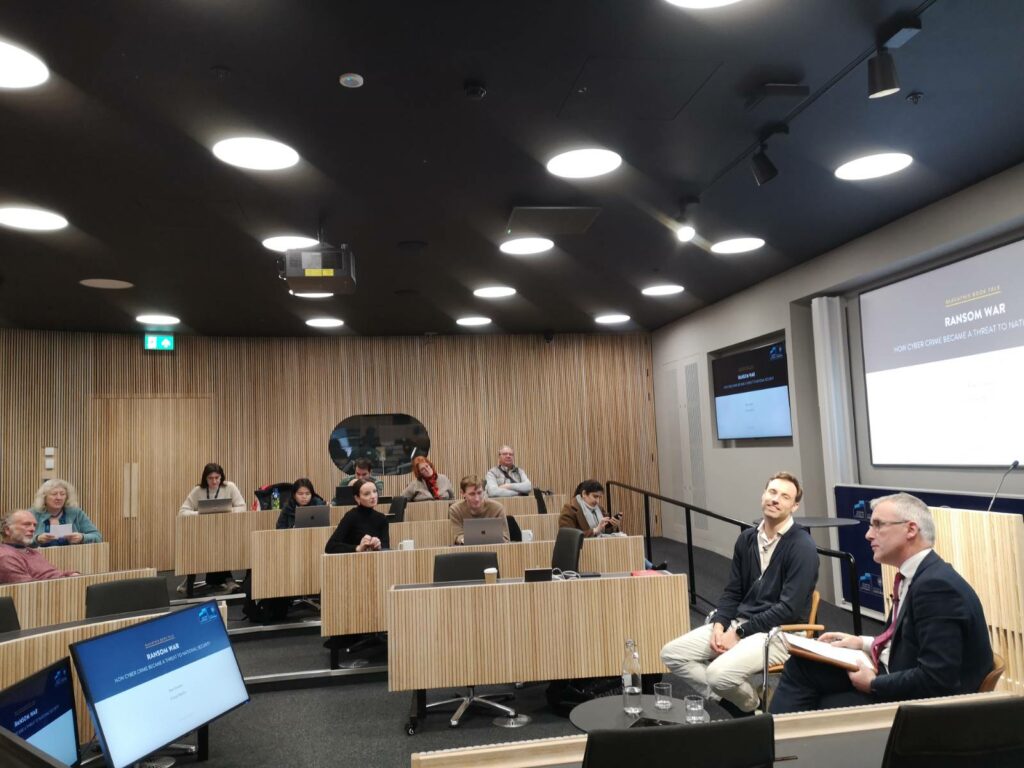
What did I get from this event: Cybercrime is no longer only about stolen credit cards and leaked emails, it has become a battleground for national security. This was the focus of the conversation between Professor Ciaran Martin and Dr Max Smeets, a new kind of war, ransomware has evolved from crude digital extortion into a highly sophisticated business model. It’s no longer just about money, it disrupts critical infrastructure, healthcare, and entire governments. The NHS cyberattack in London and the Costa Rican national emergency in 2022 illustrate its devastating impact.
Smeets explains how ransomware groups now operate like legitimate businesses, complete with branding, customer service, and even guarantees. If they fail to decrypt your files after payment, their reputation suffers. Many provide a free decryption demo to prove their credibility—demonstrating the paradox of trust within crime.
The geopolitics of cybercrime often overlaps with national interests. Many ransomware groups originate from Russia, where they operate with implicit state tolerance, as long as they avoid targeting Russian businesses. Russian secret services sometimes leverage these groups for political ends, though the connections remain murky.
Other states are now stepping into the ransomware scene, Ukraine – Once a hub for cybercrime, now co-opting hackers into its war effort, with groups like MB65 supposedly working in support of the state. North Korea & Israel – Expanding their ransomware operations, possibly for both financial and intelligence purposes. China – Running state-controlled ransomware campaigns, but is the goal money or data?
Smeets argues that Western states do not operate ransomware groups, at least not openly. But if cybercrime is now a tool of state power, will governments start adopting more aggressive tactics? We are already seeing discussions about hacking back, sanctions, and even assassinations and drone strikes against cybercriminals.
The Evolution of ransomware has moved beyond lone hackers and small groups. It has professionalised, with specialised teams handling different tasks: Some focus on technical exploits. Others on negotiation and victim management. Others still on money laundering. English-speaking countries are prime targets, as criminals can easily understand and monetise stolen data.
Originally, ransomware groups operated hierarchically, relying on top-down trust structures. Now, they are shifting to decentralised and federated models, outsourcing different parts of the process to specialist teams. This makes them more resilient and harder to disrupt.
How can this be mediated? Smeets offers several strategies to undermine ransomware networks:
Disrupt trust – Leak internal communications and sow distrust within groups.
Expose operational methods – Make it harder for them to operate in the shadows.
Sanction financial networks – Make it harder to launder ransom payments.
A ban on ransom payments won’t end ransomware, but it might shift attackers toward easier targets. The core question remains: Is ransomware just about money, or is it a new tool for states to exert power in the digital age?
My view is an alternative path, might social and economic change, the #4opens and redundant data flows work. In a world where cybercrime thrives on secrecy and centralised control, could radical transparency be part of the solution? The #4opens philosophy suggests an alternative: highly redundant, open-data systems that resist extortion because no single entity holds all the power. If data is widely distributed and accessible, ransomware loses much of its leverage. This is a shift from reactive defence to proactive resilience, a challenge to both cybercriminals and #mainstreaming vertical state actors and culture. This is already a core idea behind both the#OMN and #Fediverse networks, but yes we are talking about both economic and social models and paths shifting fundamentally, it’s a project.
There are a lot of mental health issues that are pushed over us in what remains of our open alt spaces, we need ways to mediate the damage, to help the people who spread this mess. The path of the #mainstreaming is corrosive to the alt cultures it feeds on. The cycle is always the same:
Radical ideas emerge → They are raw, open, and challenging.
Mainstreaming co-opts them → Dilutes them into something marketable.
They become performative → Used as branding by the #fashernista left, while the right weaponises the left’s discarded tools (like direct action).
The original movement is discredited → The real alternatives get buried under a mess of victimhood narratives, NGO bureaucracy, and “respectable” gatekeeping.
Composting this mess, one way is radical openness, but in a way that is intentional rather than naïve:
#4opens as a grounding principle → The more we expose the internal workings of a movement, the harder it is for power politics and NGO rot to take hold.
Affinity-based organising → Trust-based, decentralised, and responsive, avoiding the traps of rigid structures that get hijacked.
Resisting the urge to close → Every time a movement feels under attack, there’s a knee-jerk reaction to centralise and control. That’s how we lose.
Recognising how #dotcons manipulate OPEN/CLOSED → They’ve mastered open for them, closed for us, and turned it into a system of social control.
To take these step we need to admit we live in a gatekeepered world, yes the old media gatekeepers are gone, but what we have now is worse. The illusion of openness in the #dotcons masks a totalitarian model of control that makes traditional media censorship look almost quaint. Until we acknowledge that, every alt project will keep getting swallowed or broken from within.
The challenge for #OMN & #openweb is that we need to rebuild media and organising from a place of resilience, not just reaction. The #geekproblem, the #NGO mess, and the left’s failure to defend its own tools have left us in a weak position, but there’s still compost to grow something from. So, who’s ready to get their hands dirty?
Power in tech isn’t neutral, and our issue over the last 20 years is that we have allowed the #dotcons to hoarded and weaponised it. The answer to our failer isn’t to retreat or seek more “ethical” enclosures, it’s to reclaim our power through radical, commons-based networks like #indymediaback and the #OMN.
This argument is #nothingnew, we don’t need endless reinvention, we need continuity. The #openweb isn’t about mimicking #dotcons; it’s about breaking their privatisation model and returning power to collective hands. Hashtags, metadata, and federated networks help on this path, but the real strength is social, not just technical.
Examples of this: #Indymediaback isn’t just a project, it’s a continuation of a proven model that worked before the #dotcons stole the narrative. It was a social technological project embedded in radical movements, used real-world trust systems, and functioned outside of state/corporate control. Rebuilding it isn’t nostalgia; it’s a practical step toward rebalancing power.
We need ongoing arguments about power, opting out or running to “better” #dotcons just dodges the issue. Power is always there. The question is who holds it, and for what purpose? Right now, the #dotcons wield it for social control, profit, and policing. The #openweb flips that, if we build it as a “native” path.
The fight isn’t about making people “feel good” about tech choices, it’s about removing power from enclosures and putting it back into the commons. That’s the difference between real struggle and #fashernista ethics. The latter is comfortable. The former matters.
Paranoia is one of the biggest blockers in alt-tech and radical spaces. It breeds mistrust, isolation, and internal sabotage, making collective action impossible. While some caution is necessary, too much just feeds into stasis and control, mirroring the systems activists are trying to break away from.
The #4opens is a direct antidote to this. Transparency counters paranoia, when decisions, processes, and networks are open, there’s less space for suspicion to fester. Trust isn’t built by secrecy but by consistent, open, and accountable action.
The irony is that a lot of these paranoid actors think they’re resisting control, but by shutting everything down, they’re just self-sabotaging. The solution isn’t more walls—it’s more flows. The #4opens provides the framework to move past the paranoia blockade and rebuild trust in practice, not just theory.
The victimhood narrative is often a trap, weaponised by the right and co-opted by the #fashernista left to shut down alternatives. It can be used as a tool of control, not liberation. Composting the mess, in part, by refuse to play their game, victimhood, is in part real and in part is used to create moral authority without real action. If we engage on those terms, we just get dragged into performative battles.
Expose the power dynamics, by asking who benefits from this? In the negative sense, it’s often gatekeepers who want to control the narrative. NGOs do it for funding, #dotcons for engagement, and #mainstreaming activists for status. A path out of this is reclaiming direct action, which sadly meany in the left abandoned, and the right picked up. We need to take it back, not through reactionary purity politics, but by actually doing the work outside their controlled spaces. A healing path is shifting from identity to process, the current model is all about who is speaking, not what is being built. That’s a dead end. We need #4opens process-driven organising, not personality cults or gatekept “safe spaces.” Make failure visible, one of the biggest weapons against alt movements is pointing out their failures, while #mainstreaming projects hide their rot. If we embrace messy openness, we take that power away.
Breaking the cycle:
The right weaponises grievance → to mobilise.
The liberal left weaponises grievance → to control and suppress real challenge.
The alt-left needs to weaponise transparency → to break gatekeeping and rebuild trust.
So the question is: how do we make “openness” an effective tool in this? The #4opens is a step.
Most tech and political projects are pointless. They churn in circles, endlessly repeating the same mistakes. The river that needs crossing—where tech meets politics—is blocked on both sides. On the political side: arrogance and ignorance. On the geek side: naivety and over-complexity.
A solution? #NothingNew. Most of the problems we face have already been solved, or at least mediated. Instead of chasing the latest shiny, we should be composting the old and using what already works. The #4opens is a way of stepping away from the current tech mess, cutting through the churn, and building something that lasts.
Politics, of course, is messier. As always, “people are afraid of what they do not understand.” But that fear has been weaponised. Thatcher and Reagan’s children, raised on market dogma, are hopeless at cooperation. They can’t think beyond #stupidindividualism, and that’s a serious problem when trying to build #openweb projects.
If we want real change, we need to stop trying to own everything and start learning how to work together. Otherwise, we’ll keep drowning in the same river.
The web wasn’t built by solo tech geniuses, finance firms, or flashy luminaries making illusionary promises. It was grown by the collective time, energy, and creativity of millions of grassroots people and communities working together to create something greater than themselves. The internet as we know it emerged not from the top-down visions of elites, but from decentralised, collaborative efforts. This same collective energy will be what propels us into the next era of the #openweb, a web that remains true to its native principles of accessibility, freedom, and inclusivity.
For the last 20 years, however, we’ve been stuck in the corporate-controlled ecosystem of the #dotcons. Platforms like Meta, Google, and Amazon have dominated the landscape, turning the internet into a commodity to be bought, sold, and controlled. Their vision has led to the rise of the #closedweb, where profit and surveillance trump openness and collaboration. This #mainstreaming path is deeply concerning because it fundamentally contradicts what the web was meant to be, a space for sharing, learning, and connecting without the old gatekeepers.
There is a movement to reverse this trend, the #Fediverse, but like meany reboots it’s floundering as it grows through the inrushing of “common sense”. What we need is native #KISS foundations for a thriving #openweb, A path to this is to embrace the #4opens as guiding principles:
Open Data: Ensuring that information can be freely shared and reused.
Open Source: Building tools and platforms that anyone can access, modify, and improve.
Open Standards: Creating interoperable systems that work across platforms and communities.
Open Process: Making decisions transparently and inclusively to foster trust and collaboration.
This is a simple retelling of the #FOSS process with the addition of #openprocess as is used in the best projects, this is a part of the #nothingnew path we are on.
It’s not enough to critique the #dotcons, we need to actively build alternatives, the #Fediverse has already taken the first set on this path. The next step is focusing our energy on “native” projects like #OMN (Open Media Network), #IndyMediaBack, and #OGB (Open Governance Body), on this path we can create a decentralised, human-centred web that prioritises communities over corporations. These projects are not about recreating the same flawed systems in a slightly different guise; they’re about fundamentally rethinking how we engage with technology, governance, and communication. This rethink is #nothingnew as it’s copying the working structure of grassroots activism.
The time is now to come together and make history by working on these alternatives. The #openweb is not just an ideal; it’s a necessity for a sustainable, democratic future. Let’s reject the illusions of the #closedweb and instead build a web that truly belongs to everyone.
The is real frustration with “solutions” for the #Fediverse leaning toward #stupidindividualism and the normal #deathcult path, especially as these approaches undermine the foundational ethos of the “native” #openweb. What different paths do we need to take:
Re-centre on cooperation and interdependence. This should be obverse, instead of treating the #Fediverse as a platform for fragmented individualism, we need to foster a commons-first approach. Mutual Aid Networks are a path by to encourage instances to form federated clusters based on solidarity, shared values, and collaborative governance. Instance Interdependence needs tools that make cooperation between instances smoother and beneficial, such as shared moderation practices, resource sharing, or even federated funding paths.
Reject platformification, one of the Fediverse’s strengths is that it doesn’t need to mimic the dynamics of corporate platforms. To ensure its future path is native, not corporate we need to stick to the alt path of protocols over platforms, to stay on this path and not get distracted by new shiny #techshit For this we need to prioritise the development of open, robust protocols like ActivityPub that support interoperability over creating “Fediverse apps” that compete to centralise users. Standardised tools for moderation and discovery, create federated discovery and moderation tools that don’t funnel people into centralised algorithms or trending feeds but support meaningful and self-determined connections.
Community-driven innovation instead of for profit and status, communities need to be more involved in defining what needs to be built. We need to mediate the power of tech communities and non-technical people. This ensures the solutions reflect diverse realities, not just the #geekproblem technocratic priorities. Public-good funding paths, to build sustainable funding for open-source tools without relying on venture capital or individual donations. Cooperative crowdfunding, grants from public institutions, or taxation-based paths could work.
Reframe individualism as collective empowerment, the problem isn’t individual creativity; it’s when it becomes detached from collective good. Some ideas to balance this is by highlighting and rewarding people who contribution to the wider social enhance of the #Fediverse e.g., not just code contributions, but admins, moderation etc. One path could be to develop ways to celebrate shared milestones across the network, rather than competitive “likes” or algorithmic trends.
Education and advocacy are a core part of the #openweb to building awareness of the stakes and educating people about the principles of the #Fediverse and the #openweb. Some paths might be: Digital literacy campaigns to educate people about how the #Fediverse operates, its native values, and why it must avoid the #dotcons#closedweb’s pitfalls. Highlight success stories by amplify case studies of community-owned and commons-driven Fediverse instances to inspire others.
Design for long-term sustainability, any system that focuses on short-term growth or clout is doomed to fail. To build something durable, we need resilient federation models to address the scaling challenges that come with growing instances without resorting to centralised solutions. Decentralised governance is core, we need to explore and adopt models like the #OGB for instance and network governance.
Resist the #deathcult narratives, which thrives on competition, exploitation, and the idea that scarcity is inevitable. This needs constant push back, with abundance-oriented design to build paths centred on care, trust, and generosity – rejecting the zero-sum thinking of extractive systems. Radical openness is a good native path for, tools like the #4opens are core.
This “native” thinking are based on ideas to anchor the #Fediverse in the principles of mutuality, solidarity, and the commons while resisting the pull of #stupidindividualism and centralisation.
This is about the failed liberal class, with their heads bowed in worship of the #deathcult for the last 40 years, have abandoned critical thought. Their unacknowledged postmodernist complacency has pushed us away from class struggle, leaving us isolated and alone. Meanwhile, the last two decades of left identity politics have allowed the right wing to co-opt and weaponise progressive narratives, filling them with fear and hate.
Yet, amidst this bleak shift towards fascism, there is a potential positive: a return to #KISS (Keep It Simple, Stupid) class-based left-wing movements. These movements need to reclaim the ground from the current #mainstreaming crew, who continue to blindly worship neo-liberal “common sense,” while #blocking out and refusing to acknowledge its failures. It’s well past time to consign these dead ideologies to the compost heap of history.
What comes next is up to us. As a community, we face the real challenge of surviving the next generation of #climatechaos pushing social breakdown while driving forward the systemic changes these crises demand. It’s not as if we have a choice—change is no longer optional, and action is overdue.
The #OMN (Open Media Network) introduces a transformative model that replaces the traditional free-market system driven by greed with an open/gift/use market grounded in cooperation and shared values. This experimental social tech path reimagines the digital commons by prioritizing the free flow of digital “objects,” which can encompass a wide range of resources—media, tools, data, or creative works.
The OMN’s open/gift/use market: Resources and information flow freely, breaking down barriers created by proprietary systems and monetized exchanges. Collaboration thrives on transparency and inclusivity, embodying the values of the #4opens.
Gift economy with digital “objects” shared without the expectation of direct compensation, fostering a culture of generosity and mutual aid. The value lies not in profit, but in the collective benefit derived from shared resources. With the shift to use-oriented distribution, the focus shifts from ownership to utility, emphasizing the practical application and communal use of resources. This aligns with sustainable practices, reducing waste and promoting reusability.
Advantages of the OMN path are decentralized control, grassroots participation and reduces reliance on centralized, profit-driven entities. Community empowerment prioritizes collective decision-making and strengthens local and global networks. Sustainability moves away from extractive economic practices, supporting an equitable and ecological path.
Challenges, transitioning mindsets from profit-driven to cooperative models requires hard and dangurus cultural shifts. Navigating the balance between openness and exploitation in a “native” digital common’s path will be challenging, as most people worship the #deathcult
Opportunities, establishing a resilient digital common, will inspire similar transformations in wider social paths. Leveraging #openweb technology to scale and optimize the flow of digital “objects,” is a new and to an extent “proven” path with the last 5 years of the Fediverse.
The #OMN experiment is more than a theoretical framework; it’s a practical response to the failures of greed-based paths. By growing cooperation through an open/gift/use market, it offers a hopeful and actionable pathway for a real, sustainable future.