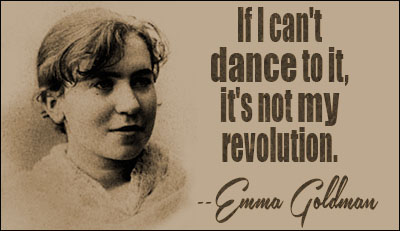
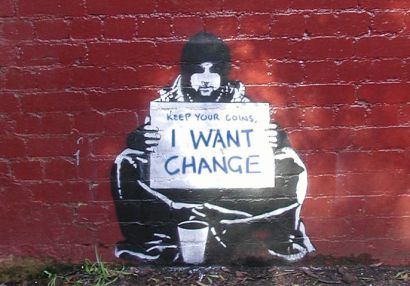
People need to understand that the tension between different approaches to activism highlights the need for creative synthesis in our current broad social and ecological crises.
Fluffy vs. #Spiky is about a Diversity of Tactics. The idea that both working within the system (#fluffy) and challenging it directly (#spiky) are necessary to creating a robust and adaptive movement. On this native path, building “common ground” is crucial, but the left’s fragmentation under decades of #neoliberalism and #postmodernism has left it standing waist deep in a metaphorical swamp. Moving anywhere requires reclaiming a grounded, shared space – intellectually, socially, and ecologically.
Revisiting #Modernism, to return to modernist thinking – despite its flaws -can offer clarity and purpose, emphasizing structure, progress, and shared goals. Balancing this with the experimental potential of socialism and anarchism, especially on a distributed scale (enabled by #federation and #P2P technologies), creates room for growth outside the mainstream.
Liberal Social Democracy, yes, is a step back because while the goal may lie in more radical transformations. Maybe a return to liberal social democracy could serve as a stepping stone away from the creeping threat of fascism. This pragmatic approach might help to stabilize the ground for further progress.
Deathcult vs. #Lifecult is a Cultural Meta-Narrative. The #deathcult metaphor encapsulates a culture driven by greed, materialism, and ecological destruction. The #lifecult offers a messy but hopeful alternative, grounded in values like ecology, social justice, and collective care. The process of “composting” – transforming negative aspects into fertile ground – is a powerful metaphor for this shift.
The Role of Undercurrents True hope lies in the grassroots undercurrents of social movements that always challenge #mainstreaming culture to provide alternative narratives. These undercurrents, messy as they may be, are where transformative potential resides. A focus on “life-affirming values” helps to communicate with those who may be entrenched in rationality or blinded by the logic of the #deathcult.
Suggestions, focus on finding shared values between different activist approaches to grow solidarity while respecting diversity of tactics. Encourage scalable experimentation with alternative economic and social models, with federation and P2P tech. Storytelling using metaphors like #deathcult and #lifecult to reframe conversations and make complex issues relatable and actionable. Education and agitation to challenge apathy and #stupidindividualism by helping people reconnect with collective action and shared purpose. Thinking in an ecology of movements, can be helpful. . On this, recognize the importance of both reformist (#fluffy) and radical (#spiky) approaches as complementary rather than contradictory.
And most importantly, please try not to be a #blocking prat, thanks.
Let me say it loud and clear, again, for the ones in the back: #P2P systems that tether their tech to #encryptionsist#/blockchain economy are a dead end, full stop. Tying “native” #openweb paths of distributed technology to the idea of selling “resources” doesn’t just miss the point, it’s engineering a system that’s designed to fail from the start. It’s self-sabotage, shooting yourself in the foot while you’re still lacing up your boots…
Why? Because these systems, heralded by the #Bitcoinbros and their ilk, are about enforcing artificial scarcity into spaces that could, and should, be models of abundance. Instead of embracing the revolutionary potential of #P2P networks to unlock and distribute resources equitably, they double down on the same tired “#deathcult” economics that brought us the current mess in the first place.
Coding scarcity into abundance, is a fatal flaw, the beauty of distributed systems lies in their ability to facilitate abundance, bypassing the bottlenecks and hoarding inherent in centralized paths. Yet, what do these “geniuses” do? They take this fertile ground for innovation and graft onto it the same broken logic of capitalism, instead of using resources efficiently and equitably, they introduce a transactional economy that prioritizes profit and competition over collaboration and sharing. Death by design paths choke out their own potential, What could be a fertile cooperative garden becomes a battlefield of extraction and exploitation.
The Bitcoin and crypto crew, with their get-rich-quick schemes, aren’t building the future, they’re pushing us back into the past, rehashing old hierarchies in a new digital wrapper. Their vision of the world isn’t radical or liberating; it’s just #techshit wearing a suit made of gold leaf and bad ideas.
Then we have the #encryptionistas and their “common sense” cult, with the mantra of 90% closed, 10% open might sound like “common sense” to those steeped in fear and control, but what they’re peddling is the same #deathcult ideology to stifle collaboration, and strangles the potential of the #openweb paths.
Both are enforcing scarcity as though it’s inevitable, despite all evidence to the contrary. They frame their closed systems as “security,” but what they’re really doing is hoarding power and excluding voices. This isn’t progress, it’s regression, the equivalent of building a massive wall in the middle of the commons and selling tickets to access what was already there for everyone.
The radical alternative is abundance by design, where we don’t need scarcity baked into our systems, we need abundance. We need tools and networks designed to share resources, knowledge, and opportunities without the artificial barriers of token economies and closed ecosystems.
P2P systems should empower cooperation, not competition
Decentralization should facilitate access, not introduce new forms of gatekeeping.
Abundance is the point: The beauty of distributed networks lies in their ability to amplify sharing, not enforce scarcity.
This is where the Open Media Network (#OMN) comes in – a vision rooted in the values of the #4opens: Open Data, Open Source, Open Process, and Open Standards. This isn’t about creating a new “elitist” crew or another #dotcons “marketplace” policed by the #geekproblem.
What are we to do with the Bitcoin bros, the #encryptionistas, and their #deathcult economics? It’s simple, compost them, take their #techshit, strip it of its toxic scarcity mindset, and use it to fertilize better paths. Systems that prioritize people over profit, collaboration over competition, and abundance over fear.
To those still clinging to the Bitcoin fantasy: Grab a shovel – you’re going to need it – not to mine more tokens, but to bury the bloated corpse of your scarcity-driven ideology. It’s dead weight, holding you back. The future belongs to those who can imagine abundance, build it, and share it. Please let’s stop walking down the “common sense” dead-end paths and start digging our way out of this mess, composting matters, you likely need a shovel #OMN
The #NGO world has been both ally and obstacle for decades. Too often, NGOs smother movements with paperwork, reporting cycles, and status-quo compromises. They professionalize struggle into careers, replacing urgency with strategy documents, and radicalism with caring workshops. Survival of the institution becomes more important than the fight itself.
But if we are serious about an #openweb reboot, we cannot just reject the #NGO crew outright. They have resources, networks, legitimacy in the eyes of institutions, and people who genuinely want change. The task is to make them more functional – to mediate them into alignment with grassroots, horizontal, #4opens values.
Transparency vs. the black box. Most NGOs operate like closed castles. Decisions are opaque, wrapped in “internal processes” no one can see. This is poison for trust. The antidote: embed radical transparency. Decisions must be documented, accessible, and open to input. When governance is open, collaboration becomes possible. When it’s closed, suspicion festers and movements fracture.
Flexibility vs. Rigidity. NGOs love five-year plans, KPIs, and strategy frameworks that collapse on contact with reality. In a world spinning into #climatechaos and political instability, rigidity is suicide. The fix: embrace iterative, adaptive paths. Think agile. Test, fail, learn, pivot. If grassroots crews can adapt in the streets and on the fly, NGOs can damn well learn to adapt in their boardrooms.
Tech as Social, Not Specialist. One of the worst NGO habits is treating technology as a “separate department.” IT staff build tools no one uses while the campaigners rely on #dotcons because “that’s where people are.” This deepens dependency and undermines any autonomy. The answer: hard code social understandings into tech frameworks. Train staff in digital literacy. Break the barrier between “techies” and “non-techies.” Build tools with grassroots values at the core, not bolted on as an afterthought.
Decentralization vs. Dependence. NGOs instinctively centralize, but resilience comes from decentralization. #Fediverse and #P2P networks show the way: messy, federated, harder to control, but alive. NGOs need to step off the corporate #dotcons treadmill and start investing in distributed infrastructures that empower communities instead of platforms.
Funding without shackles. Follow the money, and you find the leash. #NGO agendas bend to donors, governments, and foundations. If your funding is tied to maintaining the status quo, radical change is impossible. Solution: diversify funding. Community crowdfunding. Partnerships with projects that share #openweb values. Build independence rather than dependency. Stop mistaking survival for success.
Beyond tokenism. Diversity statements, inclusion workshops, and endless identity branding have become the fig leaves of #NGO culture. It’s just box-ticking while real grassroots voices are sidelined. True inclusivity means messy organizing: bringing in voices you don’t control, valuing experience over credentials, connecting with movements like #XR and #OMN not to manage them but to amplify them. Tokenism builds silos; real inclusivity builds bridges.
The polemic. The NGO crew must choose: remain bureaucratic husks feeding on donor cycles, or transform into allies that enable radical grassroots change. We do not need their brands. We do not need their logos on banners. We need their structures to stop blocking and start enabling. That means adopting the #4opens, embracing federation, composting control culture, and learning from messy grassroots organizing.
The truth is simple:
NGOs that cling to their black boxes, their rigidity, their donor-driven agendas, will collapse into irrelevance.
NGOs that embrace openness, decentralization, and collaboration can play a real role in rebooting the #openweb.
This isn’t about saving NGOs. It’s about saving movements from being smothered by them.
The challenges of today: #climatechaos, inequality, and the social impacts of #dotcons technology are a creating a very nasty social mess. However, there is a some potential for a positive transformation if we push the power of #openweb and #4opens technology and align it with progressive and radical “native” grassroots politics.
Addressing Climate Change with Technology and Revolutionary change
Renewable Energy: Solar, wind, and other renewable energy sources are becoming more than cost-effective and widespread. With strong political will, we can transition to a carbon-neutral economy. By reducing consumption and shifting this energy balance, we take a step to mitigating some of the effects of climate change.
Climate Resilience: Investment in both physical and social climate resilience infrastructure, flood defences and mediation, sustainable agriculture. This will shape and can protect vulnerable communities and ecosystems as we weather this transition. On the digital side, federation is a big step towards more #p2p native infrastructure, which will help to mediate the failing of our overly centralise #dotcons world.
Leveraging Automation for Social Good
Reducing Work Hours: Automation reduces the need for human labour, allowing for shorter work weeks and more leisure time without reducing productivity. This leads to improved quality of life and wider social and mental health benefits.
Universal Basic Income: #UBI provides a financial base for building sustainable alternatives, ensuring that wider groups benefits from increased productivity and technological advancements, rather than the normal #nastyfew.
Ensuring Equitable Access to Resources and Services
Universal Basic Services: By providing free and universal access to essential services such as healthcare, education, housing, and public transport, we create a more equitable society where people has the opportunity to thrive and build social good.
Socialized Finance: Redirecting financial resources from speculative markets to socially beneficial projects ensures that investments are made in areas that improve public well-being and infrastructure.
Fostering a Culture of Innovation and Inclusion
Inclusive Policy Making: Ensuring that marginalized communities have a voice in policymaking leads to more equitable and just outcomes. Participatory democracy and community-led tech initiatives like the #OGB drive inclusive development and the needed social challenge to become the change we need.
Education and Retraining: As the job paths shift, providing education and retraining opportunities helps people transition to new roles, ensuring that fewer people are left behind.
Utilizing Technology for Global Collaboration and Problem-Solving
Global Cooperation: Harnessing #4opens technology for international collaboration can address global challenges more effectively. Federated platforms for knowledge sharing and linking joint initiatives leads to real solutions for climate change, health, and economic development.
Data for Good: Using #openweb and #4opens data, metadata analytics to address social issues leads to more effective public planing, policies and resource allocation.
Conclusion: A vision of hope, in tech
There is a potential for a positive future when we combine technological innovation with radical progressive politics and a commitment to social equity. By addressing #climatechange, leveraging automation, ensuring food security, and providing universal access to essential services, we build a wider world of opportunity and basic justice.
This vision needs us to reimagine our current paths to prioritize humanistic well-being over profit. With the right policies and collective action, we can turn today’s challenges into opportunities for basic survival and a better global society.
Funding application for the #OMN (Open Media Networking) project, an innovative initiative to revolutionize the landscape of media and communication. The project address the limitations and challenges posed by centralized social networks by developing an interconnected network that empowers people, fosters innovation, and promotes openness and decentralization.
What do you think about/Have you heard about project X? We are always interested in learning about other projects that aim to address similar challenges in the media landscape. Collaboration and cooperation are crucial in achieving the collective goal of creating a better internet and society.
Who are your competitors? While established networks like Facebook, Youtube, and Twitter are perceived as competitors, we view them as irrelevant, techshit to be composted. Cooperation partners are other decentralization efforts such as #ActivityPub etc. are also projects we aim to reach compatibility with.
How will you attract your first users? We plan to attract our first crew through various strategies, including leveraging the advantages of our system, collaborating with “content creators” and “influencers”, fostering change and linking, through leveraging our network of contacts.
Which programming language do you use? Our team has primarily engaged with the XXXX framework. However, we plan to explore existing open-source solutions in social networking to ensure compatibility with various technologies.
Who are potential users? Potential users of #OMN include social activists, frustrated users overwhelmed with managing multiple accounts, power users seeking greater control over their online presence, content creators and journalists, users with specific needs, decentralization enthusiasts, and anyone interested in an alternative to centralized networks.
How does #OMN make the internet more awesome?#OMN empowers people by offering them the freedom to choose their networks and applications freely, fostering fairness, promoting independent media, fostering creativity, and enhancing the peoples experience.
What are you building? We are building a new media experience that allows people to interact with different networks and applications seamlessly, offering greater flexibility and control over their society and local communertys.
Why do you want to bring micropayments to social media? Microgifts are essential for supporting community creators and networks, empowering people to support those they trust and enjoy with minimal effort.
What are the goals of #OMN? The goals of #OMN are to empower people and communertys, foster effectiveness in competition to #mainstreaming “common sense”, promote independent media, and enhance change and challenge in the communication space.
What does success look like? Success for #OMN includes the development of a working prototype, collaboration with various networks and applications, and widespread adoption of the #openweb “native” #OMN protocol and working practices as an internet/social standard.
What are the key deliverables of the prototyping phase? The key deliverables of the prototyping phase include the development of the #OMN#p2p client, User self-hosting, and Networks & Network Server prototypes, along with detailed documentation for developers and communertys.
Who will do the work? Our team, consisting of dedicated people committed to the vision of the #openweb, will primarily handle the work. With funding available, we plan to expand the team to expedite the prototyping phase.
What needs to be done now? We need funding support to commence the development of the prototype and advance the #OMN project to the next stage. This includes development, coordination, collaboration, and public outreach efforts.
How are you licensing any software or documentation you produce? We intend to make all our software openly available, encouraging collaboration and innovation in the open-source community.
How do you communicate publicly about your work? We communicate publicly through various channels, including videos, direct outreach to journalists and content creators, and engagement on media platforms like Mastodon and the #dotcons.
What do you hope to learn during the project? Throughout the project, we hope to learn about community project coordination, software collaboration, public outreach, software technologies, and other relevant fields, ultimately contributing to peoples growth and success.
What happens to #OMN if it does not get funded? If #OMN does not receive funding, we will continue our efforts to raise awareness and support for the project, confident in its value and potential impact on the communication landscape.
Thank you for considering our funding application for the #OMN project. We are excited about the opportunity to bring this “native” #openweb vision to life and look forward to the possibility of collaborating with you.
#P2P projects keep failing socially because adoption is tiny. The #Fediverse succeeds socially because it keeps social #UX familiar. The path forward is a half-step strategy: bridge #fediverse + #p2p in real, usable ways until decentralised clients are socially relevant.
We need: Bridges & killer apps, seamless UX that makes federated + p2p content feel like one stream. A server that reads from both channels without making the user care about protocols.
A. what is happening with protocols:
* The #nostr crew are the children of #web3 mess, they are a bit reformed, let’s see. * Then the #BlueSky are the reformed children of the #dotcons * The #fediverse is the child of the #openweb * #dat is a child of the #geekproblem if it is reformed or not, you can maybe tell me? * #SSB was a wild child, now sickly/lonely with the #fashionable kids gathering round #nostr * #p2p was the poster child of the era of the #openweb it was caught in the quicksand of legal issues, the shadow that was left was eclipsed by “free to use” #dotcons Now finds it hard to come back due to mobile devices not having an IP address, thus most people not actually able to use p2p reliably.
Q. ssb has technical shortcomings. It cant sparsely replicate data and verify it. It needs to download all data ever created by a user to verify, which makes it infeasible for many use cases. The main underlying data format is also hard to fix and leads to performance bottlenecks. The main founder moved on and it seems most ssb people are also looking for a new home. dat’s time has not yet started as it approached things from a much more fundamental perspective. The initial vision was “git for any kind of data”, which means “version control for any kind of data” (peer to peer). The stack only now reached maturity to build proper tools on top of it. You have the dat-ecosystem with 2-3 dozen projects. You have the holepunch/pears project which built a phenomenal “never on a server” desktop/mobile p2p video conferencing messenger with built in file sharing. The app works flawless on mobile and is called https://keet.io Also https://dat-ecosystem.org just now released it’s new website. The https://pears.com runtime will be live in 5 days from now on the 14th of February for anyone to start hacking on p2p apps and some time later, the plan is to integrate it into the dat-ecosystem website, so anyone can start using p2p from within dat-cosystem page (which is an open source static website anyone can fork to get to the same) …no back ends required. pears 🍐will only start working on the 14th of february. You can set a reminder. The revolution starts then 🙂
A. will have a look, there are a few new #p2p projects reaching use at mo – the issue is none of them link to each other and likely thus non inter-op. This is the #geekproblem
Q. I don’t think there are any mature projects out there other than dat and ipfs. The former made by open source devs, self funded with a bit of help from public funding bodies, while the latter is the poster child of venture capitalists and got gazillions from investors. It’s the “big tech” of p2p. Then you have a few less general purpose p2p projects which popped into existence in the last few years, but both dat and ipfs go back all the way to 2013 and it takes a lot to get things smooth and stable and support all use cases and get enough critical adoption and nodes to make the p2p network work. That is why dat-ecosystem has a lot of existing projects that work and why it is reliable to build on top of it. I do think the new more recent p2p projects in research state might become mature as well, but it will easily take them a few more years. Many of those newer projects have people working on them part time only or focus on really special use cases and only time will tell if their approaches will bring something new to the table or not. 2024 will definitely be the year of dat, especially after February 14th, when pears.com goes live. This has been years in the making. What started 2013 as (git for data) will now finally become it’s own independent p2p runtime. Goodbye nodejs & co. …and soon goodbye github & npm 🙂
A. https://holepunch.to/ its a very sparse website with no company info or #4opens process – it looks and feels like meany #dotcons if these projects do not link to each other or inter-op then they will fail like the hundreds I have seen fail over the last 20 years of this mess making. it’s a problem we can’t keep doing this shit, but we do. #4opens is a shovel to help compost this, can you do a write-up for these projects please.
Q. dat-ecosystem is a 501c3 It’s Code for Science and Society And it is https://opencollective.com/dat And it is governed by a Manifesto. It is all on the website next to the “Info” button in the upper left corner. If you mean pears.com ….that will change on February 14th I didn’t mention holepunch. Holepunch is just one of the many dat-ecosystem projects. It is special, because one of the core developers of dat started it after he got a lot of funding and is currently maintaining many of the important code that powers dat and the dat-ecosystem projects. But it doesn’t matter too much. The stack is open source under MIT and Apache 2.0 License for anyone to use. If holepunch would ever decide to stop maintaining the stack (which we do not think), dat-ecosystem can find other maintainers.
A. they are the owners of https://keet.io always look for ownership in #dotcons 🙂 a few of the ones I have been looking at over the last few years https://www.eff.org/deep…/2023/12/meet-spritely-and-veilid and the was a another one funded by NLNET they recently whent live, but can’t find the link. None of them link or interop, not even bridges. This is the #geekproblem
Q. Spritely is a great project. It embraces the ocap security model (Object Capabilities). It does apply it in lisp/scheme, which is a great fit with GNU Guix. Their foundation is led by Randy Farmer. Randy Farmer co-created Habitat with Chip Morningstar (an MMORPG) in the 1980s. Chip Morningstar works with Mark Miller (Mentor of Christine Lemmer Webber). Their project is called “Agoric”, which is a blockchain projcet funded by Salesforce. They have their own Token and build a “Market Place”. They as well work with ocap security model (but in JavaScript). The JavaScript ocap version is what is known as SES and Endojs. They regularly talk to make sure things are interoperable. Ocap security is also what dat-ecosystem is embracing to pair it with peer to peer and bring it to the post-web. A version of the web not dominated anymore by big tech and big standard bodies.
#Veilid is a young and interesting project as well with a focus on anonymity over performance. This is a great use case that needs support, but dat was always about performance and any size of data and anonymity and privacy at all costs. I’m not saying that is an unimportant use case, but there are plenty of solutions for extreme cases where anonymity and privacy are at utmost importance. What is vastly more important imho is to have a p2p technology able to replace mainstream big tech services such as youtube, facebook, instagram, tiktok, google & co. because it won’t help us if we have a special niche technology that cant actually tackle big tech and surveillance capitalism but gives people some way to hide from it. …we need it too, but we also need a foundation on which to actually outcompete big tech imho.
Keet is a closed source peer to peer messenger & video conferencing app (might be open source in the future) and it is built on top of the dat stack. The dat stack is very modular and in it’s core consists of a few main modules. – hypercore, hyprebee & hyperdrive – hyperdht & hyperswarm – autobase Those modules are maintained by holepunch, an organisation started by one of the core dat developers afte rreceiving a lot of funding to develop keet and now the pear runtime, which will be open source and public under https://pears.com after February 14th 2024 (Valentine’s Day ❤) Keet itself is one of many apps, all part of the dat-ecosystem. Most projects are open source, but not all, but they are all built on top of the MIT/Apache licenses p2p stack, which started as `dat` in 2013 and matured many years ago. The stack is battle tested and really works. Of course – we all want everything open source and one day we might find a model, but if some closed source apps help bring in funding, it benefits the open source core. Basically, you can think of “keet” as some fancy UI/UX on top of the open source software stack. Now sure – would be sweet if the UI/UX was open source as well, but then again, it’s not essential and until we transition into fully automated luxury Communism or whatever else works, something pays the bills and enables the open source core to be maintained 🙂 At least it works without any “Cloud Landlords”. No servers, never on a server. No more cloud lords, a.k.a. Big Tech or #dotcons
A. The best we have currently is #ActivityPub DIY federated – this is community based (but fails in code to actually be this) which in meany ways is complemtery to #p2p based approaches – they are better together and if the can bridge or interop this is MUCH better, the #OMN is native to this.
Q. Yes. dat is very low level. It would be cool to see somebody implement an activity pub based tool on top of it. One dat-ecosystem project did it for nostr, but no activity pub yet. I’m personally more interested into a desktop, terminal, version controlled data and software packages. “Social” tools are just one type of tools to built on top of the more fundamental p2p network and p2p system infrastructure. I do think dat is good for laying these foundations, but “social” tools are a layer that dat as a stack will probably never focus on, but instead dat-ecosystem projects will hopefully take on that challenge 🙂
A. Some people are community based federated (the start of this conversation) others are individual, the #p2p world you talk about. This is not a fight they are both valid. As you say what we don’t won’t is more #dotcons 🙂 Good conversation on the state of #p2p I used to be much more involved in this side, but it failed with the move to #dotcons so got re-engaged when ActivityPub came alone the rebooting of web 1.5 😉 are you happy for me to copy this to my blog, can credit you or just use AQ anonymous format?
Q. any way you want. I dont think p2p has failed. the p2p of the past was naive kids playing and it took a decade of adults and all the law enforcement they had at their disposal to bring it down and despite that torrents still run and even the piratebay continues to operate, although heavily censored. Back then it was a few devs and a majority of users. This time p2p is back and will enter mainstream open source developers after February 14th 2024 (5 days now). This empowers an entire generation and anyone who wants to dive into p2p to build any kind of tool. What was once hard and reserved to a few will be available to everyone. We might see another nodejs/npm movement. It loads a bit slow, but load this and check “all time” This is the largest open source ecosystem humanity has ever experienced. http://www.modulecounts.com/ And while npm/github have been hijacked by microsoft, we will claw it all back soon Btw. regarding Spritely and the backstory behind OCap, even though extremely technical in description, here is a summary of the work by Mark Miller et. al. https://erights.org/history/index.html https://en.wikipedia.org/wiki/Mark_S._Miller > Miller has returned to this issue repeatedly since the Agoric Open Systems Papers from 1988 Mark Miller is Christine Lemmer Webbers Mentor. He works with Chip Morningstar (who with Randy Farmer did Habitat in the 80s) Randy Farmer is Executive Director of the Spritely Institute. Agoric is the Cosmos Framework based Blockchain now. https://agoric.com/team
A. Interesting to look back at all this stuff, reminds me I had dinner with https://en.wikipedia.org/wiki/Ted_Nelson in Oxford 20 years ago, he was a little eccentric with a clip on digital recording device, every convention had to be record. good to catch up with history https://www.youtube.com/watch?v=h-t405_JAJA that is more relevant today.
Q. Yes – peer to peer is hard. Not as a user, it is actually easy enough, but as a developer. Building p2p is not taught anywhere and there aren’t online learning resources the same way you can learn how to set up your react app, etc… This will change after February 14th 2024 when the pears.com runtime is released. It is powered by the same p2p stack that developed with dat since 2013. If anyone of you is a developer or has friends who are, you are all invited to dip your toes into the dat water 😛 …and start a new p2p project and join the dat-ecosystem 🙂 It will get quite easy in 4 days from now and it will again get a lot easier in the coming weeks when more examples and docs are publishes and others build as well. The Storyline around Mark Miller, Randy Farmer & Chip Morningstar is totally separate from it, but it is also important, because it is what powers 1. the Spritely project and Christine Lemmer Webber 2. the Agoric Blockchain Project backed by Salesforce 3. the Ethereum Metamask Wallet and Co. It also influences the big standards bodies and I see it two fold. It’s a story about philosophy, values and vision driven by the specific people in it. It is also a story about “object capabilities” which is a powerful perspective on security and will enable and inform a lot of p2p interaction which without would require some sort of centralized servers, but with ocap can do it on it’s own p2p
A lightly edited conversation between Hamish Campbell (A) and Alexander Praetorius (Q)
The #nostr crew are the children of #web3 mess, they are a bit reformed, let’s see.
Then the #BlueSky are the reformed children of the #dotcons
The #fediverse is the child of the #openweb
Q. Where would you put #dat or #ssb and in general the #p2p post-web tools?
A.
#dat is a child of the #geekproblem if it is reformed or not, you can maybe tell me? #SSB was a wild child, now sickly/lonely with the #fahernable kids gathering round #nostr #p2p was the poster child of the era of the #openweb it was caught in the quicksand of legal issues, the shadow that was left was eclipsed by “free to use” #dotcons Now finds it hard to come back due to mobile devices not having an IP address, thus most people not actually able to use p2p reliably.
The #OMN are building this into the archiving nodes (see the #makinghistory project https://unite.openworlds.info/Open-Media-Network/MakingHistory) you can then choose to archive hashtags, and you can get a “lossy” view of what is backed up across the network you can see, so you can choose what to focus on your archiving then we rely on “institutions like liberys, arcive.org, university’s etc to back this up in more structured ways. We just do the messy part, 🙂 so agen is a balance with no right path.
Messy is like good enough for most people, and good to have traditional institutions as a backup to this backup. Remember, all our data is #4opens so nothing is private. Privacy is done #p2p decrypted else’s where the best we offer is sudo anonymity through tor.
You can get a “lossy” view of what is backed up across the network you can see, so you can choose what to focus on your archiving. An archiving node is simply a normal node with a different template #KISS simplicity is where the value is.
This is central to the #OMN as it builds meany subject hubs, as you can’t scale storing everything. So a federated natural outcome, anyone can run one. When your database gets too full, you look at your “lossy/local network view of what is backed up and start throwing stuff away. If you are nice you though away stuff that has wide distribution of backup, if you are nasty to throw away stuff only you have.
A. on the subject of “security” we have a #open policy of not trusting ANY client server security at all, so this should only be done #4opens as far as possible and having limited trust in #p2p security, even though we use this, because of the insecurity of the undelighting syteams it runs on, mostly old outdated phones, built as blobs by #dotcons this simple approach gets round much of the current thinking of technical “security” ie. the is almost non at a normal use level and little real security at the paranoid level as you will be talking to the normal level so there security will fail even if yours is solid. Good to keep this in mind 🙂
The #OMN is all about people messing around with each other’s data 😉 but yes we need good basic security, (sudo anonymous) accounts, public audit trails (#openprocess) everywhere. We will need digital hashes/cigs for media items etc. but the data itself just sloshes around and gets hacked at and added to. it’s a common, the rules are social based on trust flows, they are not mostly hard coded or encrypted. But we add a smidgen of hard-coding and decryption ONLY where it’s needed. So 90% trust flows, 5% social norms, 4% hardcoded, 1% encryption is my thinking.
A. Data has the value the instance itself is transitory, and yes the instance is needed and stores the data but if it vanishes it has little impact on the value (the data), we build this into the network.
Q. I am talking about the machines
A. We won’t the instance to stay up and be secure, BUT we build the network, so it keeps working when they are hacked and poised by bad actors.
Q. Yes, but that doesn’t mean we make things easy for bad actors
A. Yes, the code and instances have to be secure, but the network flows, and the data soup have to keep working when the individual instances are hacked and poisend, no security is fool prof and the #OMN is focused on building trust so is inherently more open to fools, we build with this in mind. We are building a #KISS semantic internet of data/flows. For example the idea of rollback as a core security model rather than more traditional hard (control) security is a good fit, due to the #4opens approach, the missing few days of data will (mostly) rollback into the instance so the cost of being hacked/trust failed is less of a block to being open and (social) trusting to bring in actors/sysadmins/moderates etc. On the tin, we are clear that our network is a trust based “lossy” network.
Where you can still run the #OMN as a hard control based secure network if you won’t BUT it will not scale to the social change/challenge if this second option is the only one, this is the current #geekproblem we need to work our way out of. The first path of trust based “lossy” is where the real horizontal “power” comes from.
Q. We sometimes need to think/talk about “security”.
A. I can only repeat I don’t have a solution to this, but I have a path to one, make the user facing “trust” based then from this, “trust” them to fix the next “problem” the #geekproblem of the hardcoded #feudalism of all our networks and code. Or in other words head in sand and pray someone else will fix it, am bussey 😉
On the #OMN projects maybe we need to list what needs to be secure: the account, the activity feed, the data credit might be more but can’t think of much else off the top of my head. And yes to secure the account the instance has to be secure, to secure the activity feed the flows need to be secure, to secure the credit the likely needs to be some hashing done on the media objects.
We likely end up back close to the place we started, but we come to this from a very different place, if that makes sense. This path we take matters.
Blacksky: This project, created by the crypto crew for the #NGO liberal types, is firmly rooted in the #dotcons sphere. While it claims to align with #openweb values, its foundation leans towards control and capital rather than grassroots paths. Yes it adds diversity to the ecosystem but will likely become another messy experiment that feeds into the compost pile. Support it if you feel inclined, but be prepared with a shovel to deal with the outcomes.
Bonfire Networks: A project from the #NGO world trying to push into grassroots territory. However, history is littered with similar efforts that fail repeatedly due to their inability to adapt to the #openweb’s native ethos. While it contributes to diversity, its trajectory reflects a pattern of missteps.
Darius Kazemi: A #mainstreaming grassroots figure who has a notable presence but seems more focused on occupying space rather than producing actionable outcomes. While there might be potential utility here, none has been apparent thus far.
db0: This one remains a mystery for now; no further insight is available.
Emelia Smith (@ThisIsMissEm): I’ve had conversations with Emelia, but their contributions seemed incoherent and mostly negative. They might align with the #fashernista tendency—style over substance. Time will tell if they add value or continue in this vein.
Erin Kissane: A figure from the NGO and academic world who shows an appreciation for grassroots efforts but is not inherently part of that ecosystem. There may be some utility here, but needs meaningful contributions.
Fediseer: An intriguing but unclear initiative. It’s worth keeping an eye on to understand its objectives and implications for the #openweb.
Independent Federated Trust and Safety (IFTAS): This group has ambitions to play a core role in trust and safety, but has yet to approach this responsibility with the respect or engagement needed for genuine collaboration. As with similar #NGO projects, it’s wise to have a shovel ready to compost any emerging mess.
Lemmy: Originally a Reddit clone, this project has taken an interesting turn by decentralizing its focus towards forums and wikis. It’s an intriguing experiment that deserves continued observation as it evolves.
Mastodon: A truly native grassroots project that has been instrumental in expanding the fediverse and the adoption of ActivityPub. However, as the project grew, it gravitated towards an #NGO-like structure and began engaging in #mainstreaming. This shift is a natural but challenging path for projects as they scale.
Newsmast Foundation: An #NGO initiative centred around liberal #mainstreaming of news flows. While it adds diversity to the ecosystem, there remains an urgent need for native grassroots media projects to balance this narrow perspective.
Pixelfed: A companion project to Mastodon with a similar ethos. While it’s a positive addition to the ecosystem, its path leans towards #mainstreaming. It’s sometimes positioned as a token example of diversity by the Mastodon team, which could become problematic if this narrative goes unchallenged.
Social Web Foundation: An #NGO-backed initiative with some grassroots influence from its current leadership. However, in vertical structures like this, leadership tends to shift with changes in funding, which will alter its trajectory.
Spritely Institute: A strong technical project focused on a more peer-to-peer (#p2p) approach. While the technology is promising, its messaging and outreach need significant improvement to achieve broader understanding and any adoption.
This list reflects the diversity and challenges within the #openweb space. It underscores the need to balance different approaches, highlight the very real lack of native grassroots efforts, and the need to remain vigilant against co-option by #dotcons and #NGO mainstreaming paths.
Blacksky is a #dotcons being built by the crypto crew for the #NGO liberal types, it is native to the #openweb so part of diversity, but, in the end likely more mess to compost, support it if you like but have a shovel handy.
Bonfire Networks comes from the #NGO world pushing into the grassroots, not native and like all projects with this motivation there is a long history they fail, and fail, and fail. It’s a problem flow in the #openweb so a part of diversity.
Darius Kazemi a #mainstreaming grassroots person, who talks and takes up space, might have some use but not as far as I know.
Emelia Smith (@ThisIsMissEm) I talked to this one, but they did not make sense and were largely negative, #fashernista maybe. Who knows, let’s see.
Erin Kissane NGO and academic guy who likes grassroots, but is not. Might have some use, but not so far as far as I know
Fediseer This is a strange one, what is this about?
Independent Federated Trust and Safety (IFTAS) An in-group pushing into a core role, not respectfully so far, but let’s see where they go. Have a shovel at hand to compost the mess.
Lemmy Has an interesting history, a clone of Reddit, then pushing the core coding out to forums and wikis, it’s interesting and worth watching.
Mastodon a native grassroots project that pushed the fediverse and activitypub wider. With this move, as the project grew, they shifted to the #NGO path and engaged in #mainstreaming as people do.
Pixelfed is a companion to mastodon, a good project, if soft and #mainstreaming in its path. Is kinda used as meto project by the mastodon crew to say the is diversity, this could be a problem if unchallenged.
Social Web Foundation is a #NGO backed project, it has a bit of grassroots to it from its current leadership, but leadership changes in vertical structures when funding flows changes.
Spritely Institute a good tech project, a more p2p path, but hard to understand, needs actual outreach.