Let’s look at another issue that for meany people are hidden by “common sense” daily #deathcult worship. That, our “common sense” wage labour is not voluntary and very much limits our freedom, workers are forced to sell their labour due to lack of alternatives for basic survival. The ability to choose between employers does not equate to freedom in any real sense, it limits freedom because workers have no meaningful alternative. Capitalist wage labour alienates workers from their labour, the products of their labour, their human nature, and other workers, This #alienation leads to a loss of freedom and self-realization.
“Wages are determined through the antagonistic struggle between capitalist and worker. Victory goes necessarily to the #capitalist. The capitalist can live longer without the worker than can the worker without the capitalist. Combination among the capitalists is customary and effective; workers’ combination is prohibited and painful in its consequences for them. Besides, the landowner and the capitalist can make use of industrial advantages to augment their revenues; the worker has neither rent nor interest on capital to supplement his industrial income. Hence, the intensity of the competition among the workers.” https://www.marxists.org/archive/marx/works/1844/manuscripts/wages.htm
Outside our “common sense,” the capitalist and #socialist perspectives offer different ideas of freedom:
Individual liberty: #Capitalism emphasizes individual freedom to make economic choices without government interference. The ability to own private property, engage in “voluntary” exchanges, and pursue profit in a free market economy. Consumers have the freedom to choose from a variety of goods and services produced by competing businesses. Freedom is defined as the absence of coercion or constraints imposed by others, especially the government.
Collective freedom: Socialism focuses on collective liberation from economic exploitation and the constraints of capitalism. Freedom can not be achieved without basic needs (food, housing, healthcare, education) guaranteed for all. Freedom as the ability to realize one’s potential, which requires access to collective decision-making over economic resources and production.
Capitalist freedom is tied to market mechanisms, socialist freedom involves democratic planning of the economy. Formal vs. real freedom distinguishes between formal (legal) freedom and real (material) freedom, capitalism only provides the former. Capitalism focuses on economic and political freedoms, while socialism expands the concept to include social and economic issues. The elimination of economic constraints on human potential, is in part what in the digital world the #openweb is about and the wider the humanistic path we need to take.
In this, we need to view justice and freedom as intertwined concepts. True freedom is defined to incorporate justice, equality, solidarity, and universal access to substantive (not just formal) freedoms. The #anarchist and socialist perspectives reject definitions of freedom that ignore this, our refreshed “common sense” needs to reflect this.
As I said before, anarchism is the most “native” philosophy for the #openweb, a #FOSS network free from hierarchical structures and state authority, based on self-management, voluntary cooperation, and mutual aid. With this in mind, let’s look at what anarchist think:
Clement Duval “Anarchy is the negation of all authority” anarchism’s core principle of rejecting all forms of imposed authority, advocating for self-governance.
Kevin Carson: “The outcome of this vote will, at best, slow down the rate at which the American government gravitates towards plutocracy, police statism and global corporate Empire.” The inefficacy of electoral politics in curbing the drift towards oligarchy and authoritarianism, underlining the need for systemic change.
Ravachol “Anarchy is the obliteration of property.” the critique of private property as a source of inequality and exploitation.
Marius Jacob: “In order to destroy an effect, you must first destroy the cause. If there is theft it is only because there is abundance on one hand and famine on the other; because everything only belongs to some.” that social ills like theft stem from economic inequality and that true justice requires communal ownership and sharing of resources.
Murray Bookchin: “An anarchist society, far from being a remote ideal, has become a precondition for the practice of ecological principles.” that sustainable ecological practices are incompatible with hierarchical and capitalist systems.
Lucy Parsons: “The struggle for liberty is too great and the few steps we have gained have been won at too great a sacrifice, for the great mass of the people of this 20th century to consent to turn over to any political party the management of our social and industrial affairs.” warns against the dangers of political parties co-opting social movements, advocating for direct action and grassroots organizing instead.
Max Stirner: “The Revolution aimed at new arrangements; insurrection leads us no longer to let ourselves be arranged, but to arrange ourselves.” distinguishes between revolution and insurrection, emphasizing self-organization over top-down restructuring.
Voltaire: “It is dangerous to be right when the government is wrong.” the timeless observation underscores the risks of dissent in an unjust system, the anarchist critique of state repression.
Rudolf Rocker: “Dictatorship, the most extreme form of tyranny, can never lead to social liberation.” that true freedom cannot be achieved through authoritarian means, highlighting the importance of democratic and decentralized approaches.
Camillo Berneri: “Whereas we anarchists desire the extinction of the state through the social revolution and the constitution of an autonomist federal order, the Leninists desire the destruction of the bourgeois state and moreover the conquest of the state by the ‘proletariat.'” contrasts anarchist and Leninist strategies, advocating for a stateless society rather than the mere transfer of state power.
William Godwin: “If there be such a thing as truth, it must infallibly be struck out by the collision of mind with mind.” stresses the importance of free exchange of ideas in discovering truth, reflecting the anarchist value of intellectual freedom.
Errico Malatesta: “Anarchism was born in a moral revolt against social injustice.” emphasizes the ethical foundation of anarchism, rooted in opposition to systemic injustice and exploitation.
Emile Henry: “The influence that theoretical anarchists pretend to wield over the revolutionary movement is nil. Today the field is open to action, without weakness or retreat.” underscores the importance of direct action over theoretical discourse in advancing revolutionary goals.
Albert Libertad: “Those that envision the goal from the first steps, those that want the certitude of reaching it before walking, never arrive.” revolutionary change requires taking risks and proceeding without absolute certainty of success.
George Carlin: “The politicians are put there to give you the idea that you have freedom of choice. You don’t. You have no choice. You have owners. They own you.” anarchist views on the illusion of democracy under capitalist systems, where real power lies with the elite.
Anselme Bellagarrigue: “Anarchy is order; government is civil war.” contrasts the natural order of anarchism with the inherent conflict and coercion within governmental systems.
Rudolf Rocker: “The growth of technology at the expense of human personality, and especially the fatalistic submission with which the great majority surrender to this condition, is the reason why the desire for freedom is less alive among men today and has with many of them given place completely to a desire for economic security.” critiques the dehumanizing effects of technological advancement and the resulting loss of a collective yearning for freedom.
Banksy: “We can’t do anything to change the world until capitalism crumbles. In the meantime, we should all go shopping to console ourselves.” the ironic statement critiques consumerism as a coping mechanism in a capitalist society that resists meaningful change.
David Graeber: “‘Communist society’; in the sense of a society organized exclusively on that single principle — could never exist. But all social systems, even economic systems like capitalism, have always been built on top of a bedrock of actually-existing communism.” points out that communal and cooperative practices underpin all social systems, even those ostensibly opposed to communism.
Bruno Filippi: “Maybe I am crazy. But my madness is the most terrible rationality. I see further, I feel life more vividly.” reflection speaks to the deep, often radical awareness and sensitivity to social injustices that drive anarchist thought.
To sum up: Anarchism is native to a lot of people reading this as it challenges political and economic structures, advocating for a both online (#FOSS) and offline a society based on voluntary cooperation, mutual aid, and the abolition of hierarchical authority (though the is also strong feudalism in #FOSS). These quotes are a glimpse into the diverse and rich tradition. A window into the motivations, challenges, and aspirations of anarchist philosophy, emphasizing the importance of action, ethical resistance to injustice, and the push for genuine social freedom.
In the #liberal approach to politics and economic systems, there is an ambition to save the world, there is a lot of championing of progressive causes such as climate change mitigation, social justice, and human rights. The strategy to mediate the current mess involves leveraging the existing political and economic systems to achieve these goals, believing that reforms lead to significant improvements without changing the current structures.
We have “right” and “left” liberals, the right is blinded dogmatic worshippers of the #deathcult where the “left” uphold capitalist principles, regulated markets, private enterprise, and incremental reforms and are terrified of radical changes. At best, this creates a perception that they are trying to balance two inherently contradictory goals: preserving the status quo while also advocating for real progressive change.
Delusion or Pragmatism? Incremental change vs. radical overhaul, for anyone with any sense, this balancing act is delusional because capitalism’s drive for profit and growth stands in opposition to the environmental sustainability and social equity that liberals say they seek. They do argue, with some merit, that incremental change within the system is more pragmatic and achievable in the short term, and that it can lay the groundwork for more substantial transformations in the future. Looking at historical precedents, significant social changes, such as civil rights advancements, labour protections, and environmental regulations, have come through gradual reforms rather than abrupt revolutions.
What this website keeps asking is the liberal #mainstreaming path fit for purpose any more, after 40 years of worshipping the #deathcult, might we actually require radical changes? The onrushing #climatechaos and hard shifts to the right, makes actually questioning this path the new building #mainstreming. We do need to question whether the current political and economic paths address pressing global issues effectively or at all. If not, more radical solutions need to be considered.
Back to the fluffy liberals. While maintaining the strengths of liberal democracy – such as civil liberties and political freedoms – it is worthwhile exploring and experimenting with alternative economic models that prioritize ecological sustainability and social equity more explicitly. This is in part what the current #openweb reboot is about.
Constructive dialogue about this between our “left” liberals and more radical progressives needs to lead to real, innovative options that draw on the basic humanistic strengths. While the liberal approach is contradictory, in its fluffier “left” path it represents a pragmatic effort to navigate the complexities of modern society. Whether this approach is sufficient to address our global challenges is a question that deserves ongoing discussion and active critical examination. This is at the heart of the fluffy/spiky debate.
What drives the rise of social justice movements and grassroots mobilization is simple: they begin locally. Movements grow from the lived experiences of people and communities directly affected by injustice – those with the motivation and need to bring about real change.
To help these movements expand and connect, technology need to be built to serve people, not control them. That means prioritizing open, decentralized networks like the #openweb and the #fediverse, that grow free, serendipitous communication. These digital commons give activists the tools to organize, share stories, and build collective power without being bound by corporate and state control.
Projects like the #OMN and #indymediaback are built with this ethos, tools for coordination, not domination. But movements also need historical memory. We need to document and preserve the history of activism, its tactics, its victories, its failures, to educate and inspire new generations. Understanding the struggles of the past helps today’s movements avoid repeating old mistakes and build on hard-won gains. That’s the work of the #makeinghistory project.
Yet we face the ever-present threat of co-optation, when activist groups shift their focus to chase funding and institutional legitimacy, losing their deep roots in the process. Staying independent and mission-driven is hard, especially in today’s hostile environment, but it has been done before, so it can be done again. If you value this work, support us here: https://opencollective.com/open-media-network to build these tools.
Activism thrives when there’s a balance of spiky and fluffy – bold direct action paired with strategic planning and long-term vision. Pragmatism is key: we must address urgent needs now, while laying the groundwork for lasting change.
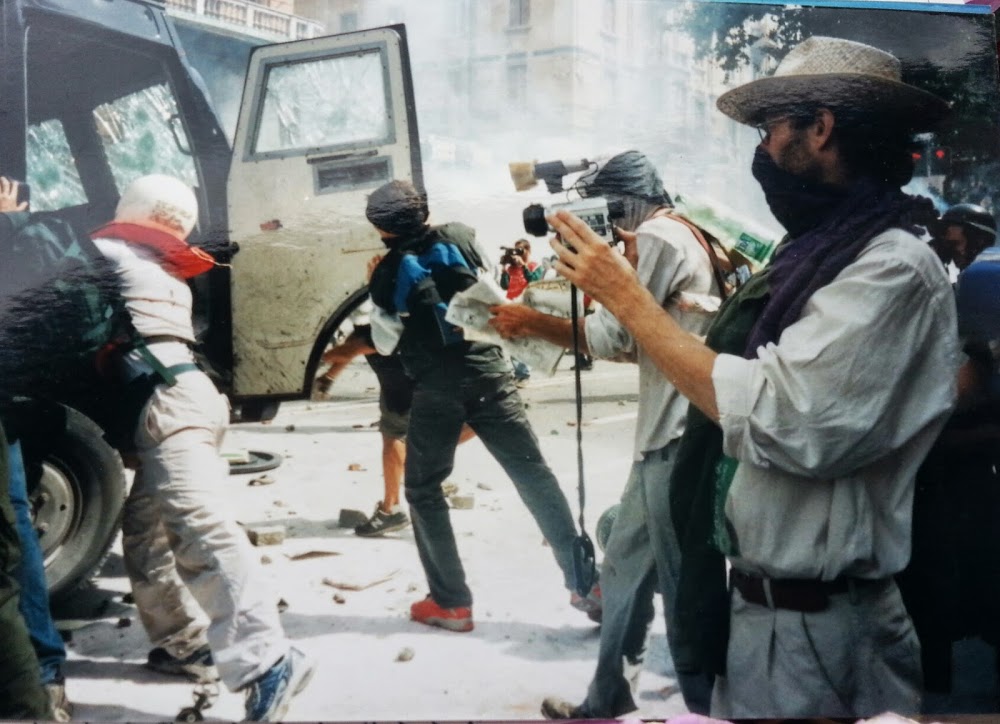
Let’s be clear: the relationship between grassroots movements and capitalism is fundamentally antagonistic. Capitalism erases history. It ignores the material realities of class struggle, slavery by debt, violence, ecocide, and mind-numbing oppression. Breeding a culture of #stupidIndividualism that keeps fuelling the #deathcult we now call “common sense.”
In its place, we should seriously consider other paths like – socialism and anarchism – not as abstract ideals, but as practical socio-economic paths rooted in public ownership and collective decision-making. These models offer a chance to distribute wealth and power more justly.
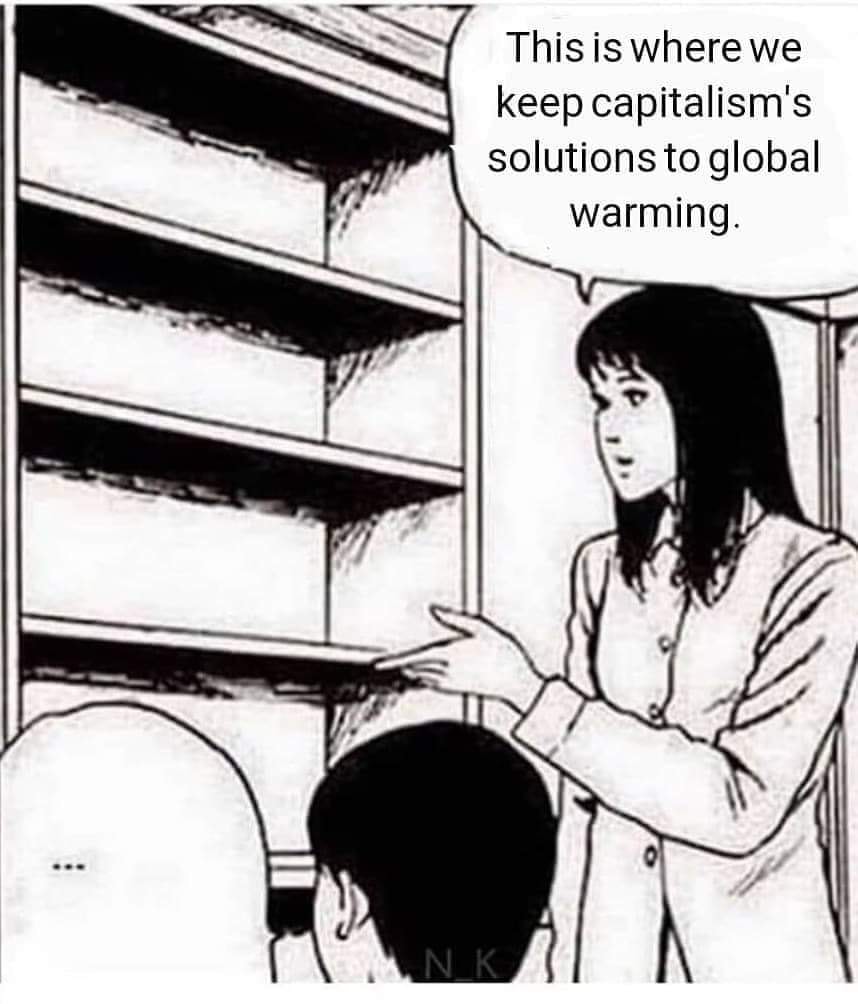
Capitalism is collapsing under its own weight.
“We all know the system we live under is destroying itself.
So what comes next? Fascism or revolution?”
Radical change isn’t a dream, it’s a necessity. The #openweb, the language of hashtags, and the memory of past movements offer us practical tools to build collective paths, connect communities, and organize resistance to the hard pushing. These are our counterforces to the algorithmic mess of #mainstreaming. We already have the tools. Now we need the will.
For millennials lost after the mess of 9/11, the wars, economic upheaval, digital division, and social atomization, #TED was an appealing #mainstreaming alternate vision of a society where ideas had currency, and a wider group of people could identify with the intellectual vanguard. This vision was delusion, but it easily overtook the norms of drift and disconnection in our failed alternative culture.
To have been young and thoughtful in the late 2000s was to be a citizen of TED nation – a community of dreamers more than doers, united by a common creed: that ideas matter, that inspiration is power, that the future belongs to those who can capture imaginations. This naivety was an easy path to take for the children of the #deathcult. TED’s prominence shaped the aspirations of a generation, it shaped how we thought about ourselves. This #stupidindividualism pushed the blinding possibility: you, too, could have an idea worth spreading. You, too, could be special.
TED defined the poverty of the blinded intellectual spirit of this era, a profoundly millennial idea: that we are each of us main characters and have an individual calling and a mission to “change the world” in some vaguely indefinable generally pointless way. And while the reality fell well short of the rhetoric, the animating spirit was strong and likely sincere for most people.
The priests of the #deathcult pushed #TED as class war, it was not a youthful indiscretion of a generation, a rite of passage on the road to hard-earned intellectual growth. Rather, it was a smoke and mirror mess pushed by a “progressive” #fahernistas class. In the post TED world we are back to where we were 20 years ago, the messy reality of class war, unfriendly and unwelcoming.
PS. it’s interesting to remember that #TED tried to be #openweb native at the start, they only turned to #dotcons when that path was abandoned by our #fashionistas and lead to the mess we are in today, what a mess.
This site is both a personal journal and a platform for broader discussions, this is a path that reflects a deep engagement in grassroots media, #4opens technology, and the mess we make with #neoliberalism and consumer culture. This tapestry of reflections, critiques, and ideas centred around technology, media, activism, and society is what you make of it, what are your thought-provoking, intersections of technology, society, and activism? It’s also outlining concrete projects to make the change and challenge we talk about here happen.
Open Media and Decentralization: a strong advocate for open media networks and decentralized paths.
Critique of Neoliberalism: our worship of the #deathcult leads to social and ecological decay.
Technology and Society: The impact of technology on society, especially the role of big tech companies (“#dotcons”) in shaping our lives.
Activism and Social Change: Deeply rooted in activism and social movements.
Hashtags and Digital Story’s: Hashtags are a feature to weave complex narratives and critique of the current digital mess. Hashtags like #deathcult, #openweb, #4opens, and #geekproblem are central to discussions.
Personal Reflections and Metaphors: Personal anecdotes and metaphors convey points to make the posts accessible and relatable, to help compost “#techshit” into fertile ground for new ideas and social change.
The primary purpose of the site is to challenge the “common sense” status quo and inspire people to think, and more importantly act differently about both technology and society, to provoke thought and then action. Candid, reflective, and polemical, not shying away from prodding #mainstreaming perspectives and offering alternatives grounded in experience. The flow of hashtags, metaphors, add a layer of depth to posts, inviting people to think critically by linking the issues. Whether you’re a technologist, activist, or simply interested, please take the time to read and then join the weaving to knit the compelling narrative on the importance of open, community-driven media and technology to grow a different world.
What our #fashionistas do in the #dotcons and the #openweb are a problem we need to work to compost. With this in mind, we do need to talk about useful tools we are underusing. Hashtags are ubiquitous online, at best they categorize content to find and join conversations on topics. The problem with current #fashionista hashtag usage is they reinforce individualism over collective action. This is #neoliberal “common sense” and the pushing of domination of #dotcons, prioritizing profit rather than any needed change and challenge.
There is a working path out of this mess. Serendipity is about the occurrence of events by chance, this provides a beneficially fresh perspective on hashtag use. By implementing hashtags in a way that fosters unexpected connections and discoveries, it transforms how they function as social tools. Yes, misspelled hashtags result in fragmented conversations, making it difficult for people to engage in coherent discussions. However, embracing these variations also leads to a more inclusive and dynamic categorization system. By allowing for misspelled hashtags to be recognized and grouped with their counterparts, we create a more robust and forgiving serendipity path.
In a federated system like the #Fediverse, and what is envisioned for the Open Media Network (#OMN), there is a tension between universal truths and messy, subjective truths. A federated path values diversity and decentralization, allowing for meany perspectives to coexist. This aligns with the concept of serendipity, where the focus is on connections and discoveries rather than rigid categorization.
This is the value in the OMN, which address these issues by implementing word grouping flows, where different spellings or variations of hashtags can be grouped together to build cohesive category flows. This approach makes misspelled hashtags functional, thus addressing some of the fragmentation caused by individualistic usage. But the OMN project faces significant challenges in securing funding and overcoming “common sense” internal and external obstacles. The difficulty in obtaining #FOSS funding highlights the broader issue of support for projects that prioritize open, decentralized, and community-focused paths.
The use of hashtags is a progressive and critical perspective on technology and society. Think about neoliberalism (#deathcult) and consumer capitalism (#fashernista), promoting the ideals of the open web (#openweb) against the for-profit internet (#closedweb#dotcons). The interlocking hashtags tells a story that advocates, transparency, collaboration, and sharing in open-source development (#4opens).
Example Meanings:
#deathcult: Neoliberalism and its detrimental social and ecological impacts.
#fashernista: The trivialization of serious issues through consumerism and fashion.
#openweb: The original horizontal path of the World Wide Web.
#closedweb: The pre- and post-open web internet dominated by for-profit control.
#4opens: Principles of transparency, collaboration, and sharing in open-source, #FOSS development.
#geekproblem: The cultural issues within the tech community, a strong tendency towards control and determinism.
#techshit and #techchurn: The negative consequences of constant new technological projects that fail to address any social issues.
#nothingnew: The question whether new projects are needed or if existing ones should be improved.
#OGB: Open governance and the power of community lead decision-making.
For hashtags to be effective tools we need for social change, we need to shift the balance from individualistic to collectivist. This requires tech systems that accommodate human error and diversity of expression, while maintaining coherence and building community. The #OMN has a promising approach by grouping variations of hashtags, but it faces significant challenges in implementation and support due to current blocking of any funding and coding resources.
Please, let’s embrace a serendipitous view of hashtag to enrich conversations in the era of the #deathcult.
#Hashtags have good and useful potential to be used for social change. They create connections between people, amplify voices, and mobilize communities. When used effectively, in a native way, they transform individual expressions into collective movements. However, the current #dotcons culture presents a very real and disempowering challenge to this.
Today we are shaped by #stupidindividualism, on this path hashtags become acts of individual expression rather than collective tools for change. This individualistic approach hides the potential for constructive use. Instead of fostering solidarity and shared purpose, hashtags become fragmented and lose any meaning and thus impact.
Tech silos like Facebook (#failbook) and generally the dominant digital corporations (#dotcons) exacerbate this problem. Their business models and design promote individualism over community, a culture obsessed with profit and control at the expense of human values, creates a landscape where meaningful social change is impossible to achieve.
The Need for Collective Action
For #hashtags to regain their social function as tools for change, there needs to be a shift in the balance from individualism to collectivism. This requires:
Shared Understanding: Developing a common understanding of the issues and the role hashtags can play in addressing them.
Community Building: Using hashtags to build and strengthen communities rather than only expressing individual opinions.
Strategic Use: Deploying hashtags strategically to mobilize action, raise awareness, and create pressure for change.
Platform Accountability: Holding digital platforms accountable with the #4opens
Movements like Extinction Rebellion (#XR), though well on the #fluffy side, can play a role in this transformation. By emphasizing collective action and the power of grassroots mobilization, they could seed hashtags to build a global community, a common cause.
In conclusion, Hashtags have potential to be used for grassroots social change, but this potential is blocked by our #mainstreaming of individualism, which is pushed by our continuing use of the #dotcons. To harness the power of hashtags, there needs to be a shift towards native #openweb tools and a more collective agenda, community building, and strategic use. Movements like #XR could be a part of this path, as could projects like #OMN#indymediaback and #OGB
Design for Abuse: The #AP protocol is vulnerable to abuse, particularly in terms of Distributed Denial of Service (#DDOS) attacks.
Push-Based Model: The push-based notification model leads to overloading servers, especially when a popular account generates a large amount of activity.
Harassment Concerns: There is a perceived inadequacy in control issues to address the worry of harassment, with issues like the inability to disable replies not being implemented.
Need for Defensive Model: A #geekproblem call for abandoning the working “native” #openweb path and push a “native” #closedweb path, with a complete overhaul of the protocol to incorporate defensive measures from the outset.
The Critique
From an #openweb and #4opens perspective, the critique highlights a different mindset that is clearly incompatible with the current path. But yes, there are questions about the balance between openness and security. Let’s not get lost in the #geekproblem and look at them:
Design for Abuse
Critique: The assertion that the protocol is designed for abuse is an overstatement, but it highlights genuine vulnerabilities. The open “trust” based nature of #ActivityPub and the #Fediverse, promotes decentralization and federation, but can indeed be exploited by malicious actors, people do brake “trust”. Transparency in code is crucial. Vulnerabilities should be openly discussed and addressed through community collaboration, most can be fixed by social norms rather than hardcoding. Data sharing is core, there should be as little as possible “private data” to abuse. Protocols should work with slow revisions to improved community feedback. Decision-making processes around security, should be based on social rather than coding, #openprocess is a core part of this.
Push-Based Model
Critique : The push-based model can indeed lead to server overloads. Popular accounts generating a lot of traffic can unintentionally cause DDOS-like situations. This is a normal lossy part of the “native” #openweb, we should work on this. Implementing caching strategies and lossy notification systems should be developed and tested within the community. Efficient data handling techniques should balance ease of hosting and speed of application, with ease of hosting first. Exploring hybrid models (push/pull) with RSS backup can lead to more resilient protocols use. Real time is less important than the app keeps working. Part of this is about ensuring that changes to the protocol are hard and slow, with debate and consensus.
Harassment Concerns
Critique : The constant talking about harassment tools and features such as disabling replies is a concern. Yes open networks are just that open, it’s the social norms of federation that make them a safe space, we need to build up our communes of trust. Developing robust moderation tools and anti-harassment features should balance with building strong social instances, who in the end do the work, be very careful of #closedweb paths in coding these features. Socialise data on harassment patterns helps to improve trust based moderation tools. The stories we tell and the way we work for moderation and anti-abuse measures should be developed collaboratively. Including diverse voices in the social decision-making process for instances is crucial.
Need for Defensive Model
Critique: Starting with a defensive model is the wrong path. Many security and abuse issues can be mitigated with a trust-first approach. A good culture should be built into the core from the beginning, with active community involvement. Developing norms of behaver through community consensus helps build a more resilient system.
Conclusion
The #closedweb path tries to raise points about vulnerabilities and shortcomings of the current #ActivityPub and #Mastodon implementations. From an #openweb and #4opens perspective, the solution lies not in suggesting we abandon the native path and implemented protocol but in addressing these issues through open, collaborative, and transparent social processes. By leveraging the strengths of the #4opens framework, the community can work to create resilient, and user-friendly networks that are already on the successful native #openweb path.
#Mastodon and the wider #Fediverse are native #openweb projects built on the #4opens. Attempts to “harden” and “secure” them by closing them down miss the point: openness is the core strength, not the weakness.
Mixing these roles, or spreading #FUD to justify unnecessary security layers on public media, doesn’t make activists safe, it undermines the very openness that makes grassroots organising possible.
Let’s look at capitalism through the lens of #dotcons (a term that plays on “dot-coms” with a critical twist).
Commercialization of the Internet: Capitalism drives the commercialization of the #openweb and internet, where profit motives override basic humanist considerations such as community, autonomy, privacy and basic democratic values. The term “#dotcons” is a critique of how the internet has been taken by commercial interests, turning it into a marketplace to push aside its “native” public good.
Exploitation of people: Digital platforms exploit users’ data and metadata and attention for profit. Companies like Facebook, Google, and Amazon collect vast amounts of personal data to sell targeted advertising and shape public behaver.
Monopolization and Centralization: Tends to create monopolies or oligopolies, as the most evil companies buy out competitors and dominate markets. Today, a few large companies control significant portions of the market, stifling competition and ending innovation.
Surveillance Capitalism: The #fahernistas term Surveillance Capitalism coined by Shoshana Zuboff describes an economic system centred around the commodification of personal data to use to manipulate behaviour and generate profits, reinforcing capitalist dynamics.
Erasing the Public: The logic erodes the public sphere by pushing profitable content over informative or educational material. Algorithms designed to maximize engagement promote sensationalist and emotionally charged content, contributing to misinformation and polarization. This diminishing of the commons is a detrimental path of capitalism on digital discourse.
Short-termism and Innovation Stagnation: In pursuit of immediate profits, capitalist enterprises prioritize short-term gains over humanistic paths, long-term innovation and ecological sustainability. A focus on quick, lucrative projects rather than any groundbreaking or socially beneficial innovations.
Digital Divide: This exacerbate inequalities, including the digital divide. Access to technology and the internet is dictated by market forces, leaving disadvantaged communities behind.
“Capitalism is the logic of the #dotcons” shows how these paths have shaped the #openweb into a landscape to prioritize profit over public good, leading to the current mess of exploitation, centralization, surveillance, and inequality.
We have made a mess of the #openweb, we can’t keep being “prats about this” please, let’s try something different #OMN
#Opensocialmedia is native to the #openweb it represents liberation, while #closedsocialmedia is centred around control for profit. The balance between these two forms is nuanced, and understanding the implications and paths of each requires consideration. It is not “common sense” so you need to think outside your current limited view please #KISS
Open Social Media: Liberation
Transparency and Accountability: Open social media operate with transparency, allowing people to see and understand the algorithms, policies, and decision-making processes. This transparency builds trust and accountability, as people feel responsible and empowered to be responsible for actions and content.
Empowerment: At best, people and communities have control over their content and data. They shape experiences to take their own path, contribute to the platform’s development, and participate in governance. This builds ownership and engagement, it’s a feedback loop.
Innovation and Collaboration: Open platforms grow through collaboration. Developers and users create features together, improving collectively. This collaborative building nurtures technological for people rather than only for profit.
Information: Open social media provides unrestricted access to information, promoting affective and for fulling speech and sharing of ideas. This supports progressive education, activism, and the basic democratization of knowledge.
Closed Social Media: Control
Monetization and Profitability: Closed social media platforms are motivated by monetization, using people’s data and metadata to generate revenue through manipulative advertising and social control.
Centralized Power: Control is centralized to the platform owners and administrators, in the end the state. This centralization limits people influence over the network, policies and progressive changes, creating vertical, top-down governance.
Content Moderation and Censorship: Content moderation is core to building community and to prevent abuse, closed platforms exercise total, manipulative control, leading to #mainstreaming censorship and the shaping of agendas, and most obviously the suppression of dissenting voices. This control is used to shape public thinking and silence any real opposition.
Data Privacy Concerns: Closed platforms collect and store vast amounts of people’s data and metadata without much transparency about how it is used. This lack of transparency highlights privacy concerns and risks of invertible data leeks.
The Complex Balance
Finding the Middle path: Balancing open and closed social media involves finding a balance where people’s empowerment and creativity coexist with democratic controls and sustainability measures. This balance requires careful consideration of the trade-offs involved in both cases.
Regulation and Governance: Effective democratic regulation and governance are crucial in maintaining this balance. Policies protects people’s rights, data privacy, and promotes transparency without stifling creativity by pushing only #mainstreaming agenda.
Community Involvement: Building in community decision-making grows this balance. Platforms that have participatory governance are likely to achieve a harmonious equilibrium between openness and control.
Conclusion
The balance between open and closed social media is not straightforward and requires taking the path of reflection and adaptation. Open social media offers liberation through transparency, empowerment, and collaboration (#4opens), while closed social media focuses on control, centralization, and monetization (#dotcons). Walking a path that maximizes the benefits of both approaches involves navigating trade-offs, growing community involvement, and implementing effective governance (#OGB).
This is as much a social issue as it is a technical one, it matters for how we think about online culture and more importantly haw our “common sense” misinterprets the paths we need to take. Since its creation, the internet and World Wide Web have been shaped by two competing and overlapping paths:
It is based on trust, and progressive left paths. Rooted in the DNA of internet code and culture, we see the web as a platform for collaboration, sharing, and the free exchange of information. Built for use in a world where information is abundant and free, embodying the ethos of “free as in free beer.”
The #OpenWeb emphasizes the #4opens: open source, open data, open standards, and open process. It walks the path of creativity and collective creation, and is closely associated with “native geek culture” alongside radical/anarchist libertarian thinking. Social interactions are visible, promoting accountability and collective decision-making. Examples include public forums, open-source projects, and community assemblies.
This is the dark side of our encryptionist culture. On the other side, we have the approach of companies like Microsoft under Bill Gates and late-stage Google, that focus on the monetization and commercial viability of the internet. This vision is fixated on control for profitability, and the economics of running online platforms in a world based on artificial scarcity
The #ClosedWeb pushes interactions to private, monetized paths with the illusion of privacy and confidentiality are necessary. This approach seeks to lock down information and interactions, creating walled gardens that can be controlled and monetized.
The Internet’s “native” Potential
The inherent democratization and egalitarianism of the internet allow people to create and share content. However, this ideal clashes with commercial interests that push for control to monetize user data and interactions.
Interconnectedness: Technology reflects human values and structures.
Empowerment: The internet empowers people to distribute their work, share ideas, and bypass traditional power politics gatekeepers.
Education and Information: The web transforms education and information access, linking vast resources to walking the path to a different society.
From the #ClosedWeb perspective, the dominant emotion is fear:
Fear of sustainability: Concerns about how to maintain and profit from online platforms.
Fear of losing control: Worries about people having too much freedom, undermining business models and #mainstreaming dogmas.
The Battleground for Openness
The #OpenWeb remains a battleground between the paths of openness and the pushing of fear. While it has democratized content creation and access, the economic models sustaining this ecosystem are often a toxic mess. This tension shapes society both online and offline, creating a complex and messy landscape to find a sustainable path.
One barrier to addressing these issues is the #GeekProblem. On the web, those with technical expertise and control over resources bypass democratic processes and accountability, leading to a kind of “feudalism.” This problem is equally present in grassroots #FOSS (Free and Open Source Software) communities and corporate #dotcons (dot-com companies), as both share the same #geekproblem mindsets regarding control and authority.
A part of the #openweb path involves re-evaluating the relationship between control, wealth, power, and social change in both technology and wider society. Currently, we lack clear ways to discuss the “problem” in geek culture, making it difficult to mediate the #closedweb problem. This is a growing issue, as groups who succeed in a capitalism are the worst equipped to solve the problems that the system creates.
The struggle between these visions is ongoing. For the #openweb to thrive, there must be a concerted effort to address the underlying hard-coded paths of control and power within both the open and closed paths. By acknowledging and working on these problems, we maintain the internet’s potential as a force for democratization, creativity, and the needed social change.