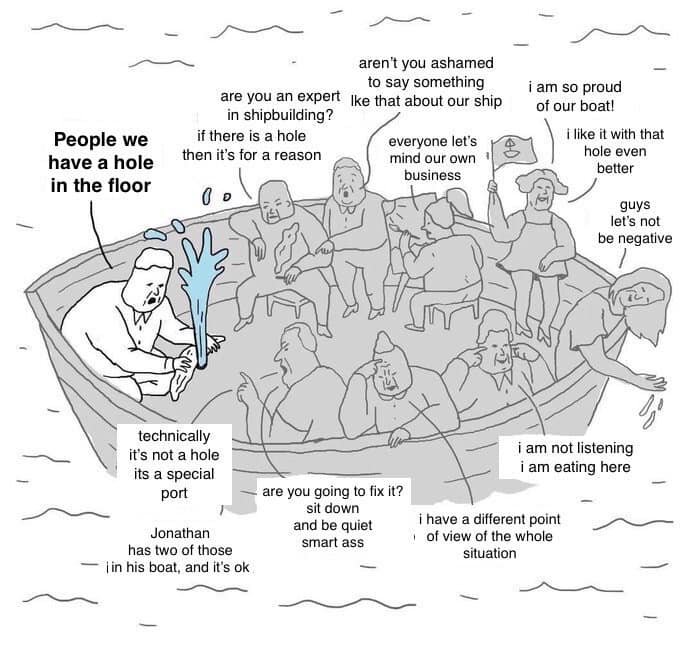
The #openweb has many benefits, though it will not always be the right tool for all situations, there is a lot of mature tech available for privacy and control. The desire to mix these technologies comes from #mainstreaming liberalisms desire for social media to be private, rather than inherently public.
The decentralized #openweb and encrypted chat are obviously separate and should coexist without reproducing the mistakes of centralized #dotcons social media. Focusing on the #4opens and leaving hard privacy for individuals and groups in peer-to-peer encrypted chat is the “native” path.
Thinking through composting the #techshit. In our era of dead ideologies like post-modernism and neoliberalism, we need to build “bounded” projects that have clear boundaries, such as #4opens and #PGA, to keep us focused and resist #mainstreaming liberalism and right-wing ideologies. This helps us create a shared space of practice and direction for politics and technology. While “branding” can be powerful, caution is needed to not creating a sense of dogmatic tribalism in these movements #OMN
Good horizontalists understand theory comes from practice, and the basis of this is #DIY – working practice to build theory. Starting from theory lead’s to a dizzy mess that results in more #techshit to compost or academic wank. Instead. Building from grassroots DIY practices, such as #OMN, #Indymediaback, and #OGB, and then using theory from these practices.
We need to emphasize the importance of focus on the #openweb. Engage with this flow to practice activism and to avoid pushing mess.
White Lies About Security and Privacy in the Fediverse
We’re told small white lies about security and privacy to boot up #Mastodon. But the truth is, this #openweb tech is about dancing elephants throwing paper planes as a security/privacy model.
Yes, this is simply not the right tool for the “common sense” privacy and control needs the #geekproblem have. In reality, there’s already a wealth of mature, privacy-focused tech out there built specifically for that path.
Enclosing the “commons” is a dark chapter in history for native societies, and we risk repeating this mistake if we misunderstand the political roots of decentralized social media.
Let’s pause and check the unspoken/unthinking political aspect of this. Much of the desire to retrofit heavy privacy into the #Fediverse comes from #mainstreaming liberalism, which frames everything through fear and control. But the Fediverse wasn’t born from that path, it emerged from a trust-based, anarchistic culture.
At its core, social media is:
Social (one-to-many)
Media (sharing news and events)
It’s an inherently public activity.
On the other hand, encrypted chat (one-on-one or in small groups) is an inherently private activity.
The #dotcons messily mix these two spheres together, but only because their centralized architecture makes it possible (and profitable). Of course, this is a black lie, since these platforms don’t actually respect the privacy they promise. Their entire business model depends on violating it.
In the decentralized #openweb, public and private spaces have generally been separate and tidy, and that’s a good thing. But lately, some online discussions feel like an attempt to deliberately blur these lines, reproducing the #mainstreaming model under the guise of “common sense”, to take the same failed path we’ve been trapped in for 20 years.
We don’t need to reproduce the mess. We can have the best of both worlds:
Public, federated social media built around the #4opens
Private, encrypted communication for individuals and groups in P2P chat
Let’s keep our focus on the true nature of social media and build tools that respect both public and private spheres, without falling back into the traps of the #deathcult.
A. on the subject of “security” we have a #open policy of not trusting ANY client server security at all, so this should only be done #4opens as far as possible and having limited trust in #p2p security, even though we use this, because of the insecurity of the undelighting syteams it runs on, mostly old outdated phones, built as blobs by #dotcons this simple approach gets round much of the current thinking of technical “security” ie. the is almost non at a normal use level and little real security at the paranoid level as you will be talking to the normal level so there security will fail even if yours is solid. Good to keep this in mind 🙂
The #OMN is all about people messing around with each other’s data 😉 but yes we need good basic security, (sudo anonymous) accounts, public audit trails (#openprocess) everywhere. We will need digital hashes/cigs for media items etc. but the data itself just sloshes around and gets hacked at and added to. it’s a common, the rules are social based on trust flows, they are not mostly hard coded or encrypted. But we add a smidgen of hard-coding and decryption ONLY where it’s needed. So 90% trust flows, 5% social norms, 4% hardcoded, 1% encryption is my thinking.
A. Data has the value the instance itself is transitory, and yes the instance is needed and stores the data but if it vanishes it has little impact on the value (the data), we build this into the network.
Q. I am talking about the machines
A. We won’t the instance to stay up and be secure, BUT we build the network, so it keeps working when they are hacked and poised by bad actors.
Q. Yes, but that doesn’t mean we make things easy for bad actors
A. Yes, the code and instances have to be secure, but the network flows, and the data soup have to keep working when the individual instances are hacked and poisend, no security is fool prof and the #OMN is focused on building trust so is inherently more open to fools, we build with this in mind. We are building a #KISS semantic internet of data/flows. For example the idea of rollback as a core security model rather than more traditional hard (control) security is a good fit, due to the #4opens approach, the missing few days of data will (mostly) rollback into the instance so the cost of being hacked/trust failed is less of a block to being open and (social) trusting to bring in actors/sysadmins/moderates etc. On the tin, we are clear that our network is a trust based “lossy” network.
Where you can still run the #OMN as a hard control based secure network if you won’t BUT it will not scale to the social change/challenge if this second option is the only one, this is the current #geekproblem we need to work our way out of. The first path of trust based “lossy” is where the real horizontal “power” comes from.
Q. We sometimes need to think/talk about “security”.
A. I can only repeat I don’t have a solution to this, but I have a path to one, make the user facing “trust” based then from this, “trust” them to fix the next “problem” the #geekproblem of the hardcoded #feudalism of all our networks and code. Or in other words head in sand and pray someone else will fix it, am bussey 😉
On the #OMN projects maybe we need to list what needs to be secure: the account, the activity feed, the data credit might be more but can’t think of much else off the top of my head. And yes to secure the account the instance has to be secure, to secure the activity feed the flows need to be secure, to secure the credit the likely needs to be some hashing done on the media objects.
We likely end up back close to the place we started, but we come to this from a very different place, if that makes sense. This path we take matters.
An example of how to do media with #AP https://visionon.tv/videos/local?sort=-trending&c=false&s=3 the content (video objects) comes in by federation https://visionon.tv/videos/recently-added trust links. Sadly the are no moderation link flows, I asked them to add this, but they have not done this yet. You can subscribe to any user account/channels etc as an AP actor, then each object (video) can have a AP native comment thread, likely as posts and reply’s. So it’s a pile of data objects (videos) feed by (trusted) flows. These objects and flows are native to the Fediverse, where you can share and interact with them. This approach is based on white listed ie trusted flows only to create the shared database.
Interestingly you can choose in the admin to share hosting as the streaming is done p2p, so each instance can manually choose to host video seeds for other instances.
The is technically a good example of what we want to build, BUT socially it’s a disaster, being too fixated on copying YouTube and the #dotcons. Currently, almost nobody sees content or interacts with it on the wider Fediverse.
Just about all the current Fediverse projects work fine as source flows and to a limited extent as comments/discushern. The #OMN want to build code that is #4opens social web native, based on historical working models, the is quite a bit of thinking needed on how to technically implement these, but the social side is well thought through and mostly documented #nothingnew. We are building code for trust groups this is obvuse and #KISS BUT it is strongly agenst much current thinking. Thus we get a lot of back pushing from people as we are pushing “open” as power for social change/challenge to the mess where many people are trying to hide from the current mess by pulling on the clock of “closed” to feel safe.
While the commercial web is dominated by large corporations, the #dotcons are what most people are familiar with, there is another side to the internet – the #openweb. In this article, we will explore what the #openweb is and why it matters.
The #openweb refers to the part of the internet that is not owned by corporations. Unlike the commercial web, where large tech companies like #Google, #Facebook, and #Amazon dominate the landscape, the #openweb is a decentralized space where people can create, share, and access content without restrictions.
The openweb is built on #4opens standards and protocols, which means that everyone can develop software or services that work seamlessly with existing tools and platforms. One of the primary benefits of the openweb is that it fosters humane creativity. Because we can all contribute to the open web, it encourages a diverse, liberal, range of voices and perspectives. Openweb technologies like blogs, wikis, and federated social networks have enabled people to connect and collaborate, leading to the emergence of new norms and social movements.
Another important aspect of the openweb is its commitment to transparency, it is a critical tool for promoting #freespeech and #democracy. Because it is not owned by any single entity or government, the openweb is a place where people can express themselves without fear of censorship or repression.
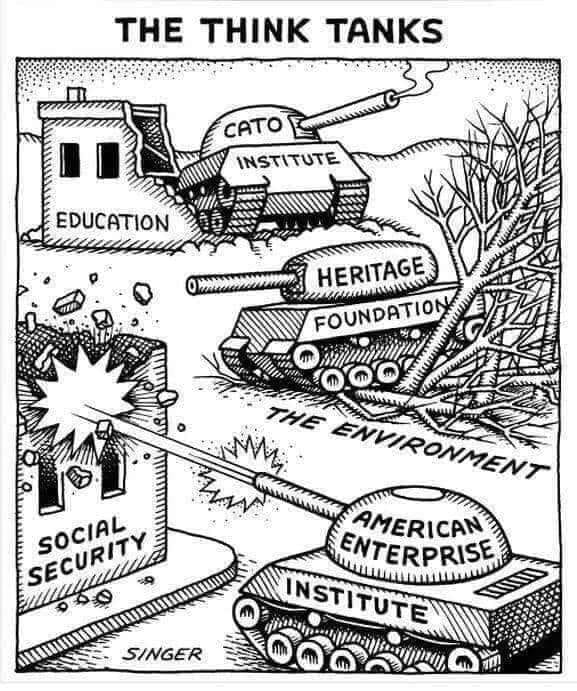
In recent years, the openweb has come under threat from the rise of the dominating #dotcons of the commercial web and the growing power of big tech companies. The commercial web is dominated by a few large corporations that control vast amounts of user data and use it to extract profit. This has led to concerns about, social control, and the concentration of power in the hands of a few tech giants and their agenders.
Despite these challenges, there are many organizations and individuals working to preserve the #openweb. From #grassroots groups such as #OMN to #NGO’s like the World Wide Web Consortium (W3C) an international community that develops open standards for the web, while #mainstreaming organizations like the Electronic Frontier Foundation (EFF) and the Google funded #Mozilla Foundation are dedicated to promoting a liberal #mainstreaming open and accessible internet.
In conclusion, the openweb is a critical part of the internet that promotes, creativity and free society. It is a space where anyone can contribute and participate without restrictions, and it has played a vital role in social movements and democracy. While the openweb faces many challenges in the face of the commercial web and big tech, it is essential to work together to ensure that the internet remains an open and accessible space.
Anarchism, in #OMN language, is not chaos. It’s the long historic struggle to build social paths growing trust, mutual responsibility, and shared power instead of fear, hierarchy, and extraction.
At its root, anarchist economics is simply the idea that people should have more direct control over the things that affect their lives. Workplaces, media, communities, land, tools, and infrastructure should be held more in common or managed cooperatively by the people actually using them, not owned by distant states, corporations, landlords, or bureaucratic classes.
This is the opposite of the current #deathcult path where power concentrates upward into institutions that claim ownership over everything while the majority are reduced to consumers, tenants, workers, and data sources. The important distinction is between use and ownership.
In capitalist logic, ownership means control without participation. You can own land you never touch. Own housing you never live in. Own platforms you never contribute to. Own factories you never work in. Then extract rent, profit, interest, and power from the people who actually do the labour. This is the normalised logic of the #closedweb and #neoliberalism.
In anarchist and mutualist thinking, possession comes from use and participation. If you use something, care for it, maintain it, and contribute to it, then you have a natural relationship with it. This is a living social process rather than an abstract legal claim enforced through violence or bureaucracy. That’s actually how many healthy human systems worked historically before everything became financialized and enclosed.
The #openweb originally functioned much closer to this model. People built websites because they needed them. Communities moderated spaces because they cared about them. Developers shared code because collaboration worked better than enclosure. Infrastructure was often maintained through trust networks, volunteer labour, and shared responsibility.
The problem is that over time the #dotcons enclosed this commons. Social relationships became platforms, sharing became monetized content, participation became engagement metrics, human communities became extractable data flows. This is why the #4opens matter:Open data. Open source. Open standards. Open process. These are not abstract technical values, they are practical social tools for preventing enclosure and concentration of power. Without them, projects quietly drift toward hidden hierarchy and soft authoritarianism even when they use radical language.
This is also why thinking about the #geekproblem matters, too much alt-tech still thinks freedom comes primarily from technical architecture while ignoring social power. But history shows that purely technical fixes usually reproduce the same social hierarchies in new forms. The problem is not only bad code, it is social relations. A decentralized system can still become socially authoritarian. An open protocol can still become culturally closed. A cooperative can still become dominated by informal elitists. A “horizontal” project can still be controlled by hidden networks of influence. That’s why anarchist economics focuses so heavily on mutual aid, federation, and self-management.
Mutual aid is simply people organizing together directly to meet shared needs without waiting for permission from markets or states. Food sharing, community defence, free software, skill swaps, radical media, housing networks, protest kitchens, neighbourhood repair groups, grassroots publishing. These are not side projects, they are the foundations of another economy already existing inside the shell of the old one.
Projects like #Indymedia worked because they embedded technology inside living social networks and shared political cultures. The value was not just the publishing software, it came from trust relationships, collective process, and common purpose. This is the same path #OMN is trying to reboot for the #openweb era. Not by inventing endless new startups and pointless platforms, chasing #fashernista tech trends or feeding the #NGO funding machine.
But by rebuilding commons infrastructure that people can actually use, shape, and govern together. The goal is not perfect ideology, the goal is reducing domination. Less extraction, hierarchy, enclosure, passive consumption. More participation, transparency, shared responsibility and more collective agency.
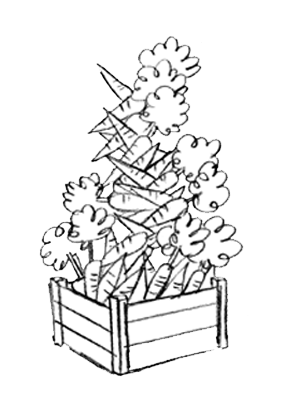
The irony is that this is often more practical than capitalism itself. Mutual aid networks regularly respond faster than states during disasters. Open-source infrastructure powers huge parts of the internet. Informal community care keeps millions alive under collapsing systems. The future probably won’t arrive as one giant revolution, it grows more like compost.
Small living networks. Shared tools. Open processes. Federated trust. Commons infrastructure.
That’s the real anarchist economy in practice, messy, human, relational, and alive.
The #openweb has become an integral part of our daily lives, with almost every aspect of our existence now touched by it. However, over the years, concerns have grown about the centralized nature of the internet and the power politics this creates. The rise of social media giants such as Facebook, Twitter, and Google has brought this issue to the fore. These platforms, #dotcons, are centralized and controlled by a handful of powerful corporations, which poses a significant threat to user privacy and freedom of expression.
In response to this, a disparate group of committed libertarian “cats” from the Fediverse community decided to take #directaction to promote decentralized and #openweb models of the Fediverse to the European Union (#EU). The Fediverse is a collection of decentralized social networking platforms that use the ActivityPub protocol to interconnect with each other.
The Fediverse crew participated in EU events, conferences, engaged with policy-makers. They explained the benefits of decentralized and autonomous models of the #openweb and how they can shape a more humane online world. As a result, a minority of people in the #EU became interested in these technologies and began to adopt them in a soft rollout of “official” instances.
The huge growth of Mastodon, one of the most popular social networking platforms in the Fediverse, due to the #Twittermigration attracted a diverse and vibrant community of users from across the EU and the world. This growth helped to validate the importance of decentralized internet and its potential to shape a more humane world.
From this seed, today, ActivityPub, Fediverse, and Mastodon continue to grow to becoming important players in the EU’s efforts to promote a more humane internet. The unspoken grassroots outreach and community-building efforts by the #Fediverse “cats” have empowered us, and helped to shift the EU closer to being what they say they are.
The story of the mouse and the elephant making friends is a reminder that even the most Eurocratic and ossified institutions can embrace radical grassroots movements. The Fediverse “cats” have shown that by working together, we can be a part of the change we would like to see. The #openweb is a powerful tool, and it is up to us to use it.
In conclusion, the efforts of the Fediverse community to promote decentralized and autonomous models of the internet in the EU have been successful. Our outreach and advocacy have helped to shift the EU closer to promoting a more humane internet, and the growth of platforms such as Mastodon has validated the importance of these models. This change and challenge is up to us., please don’t step back and let “them” take over shaping this path.
One of the reasons the technology world is in such a mess is the chronic failure to fund the social side of the #openweb. Where funding does exist, it is too often captured by parasitic NGOs that absorb resources while delivering little meaningful change. At the same time, most technical funding is narrowly aimed at “functional” coding, reinforcing the #geekproblem by never moving beyond basic infrastructure or questioning what that infrastructure is for.
This leaves a growing pile of #techshit for others to deal with. People with shovels do the cleanup work – maintaining communities, mediating conflict, building trust, and keeping projects alive – but almost no one funds them. The uncomfortable question remains: who pays for the work that actually makes technology socially usable?
Technology now underpins nearly every aspect of daily life: communication, education, work, culture, and care. Yet many of the systems we rely on are failing, not because they are poorly engineered, but because they are built on the wrong foundations.
Most dominant software today is built on a logic of control. Developers focus on regulating user behaviour: what people see, how they interact, how long they stay, and how value is extracted from them. But functional societies are not built on control, they are built on trust. This trust enables cooperation, shared responsibility, and collective problem-solving.
The commercial tech model systematically undermines this. #Dotcons produce systems people do not trust, run by institutions they do not trust, for goals that are openly extractive. The result is alienation, social fragmentation, and an accelerating ecological and social breakdown. This is not an accidental side effect – it is the predictable outcome of designing systems around domination rather than care.
The problem is compounded by the tech sector’s inability to communicate beyond its own narrow culture. Developers trained within the #geekproblem are trapped in there narrow vision, jargon, abstraction, and technical obsession. They struggle to explain why their systems exist, who they serve, or how they fit into broader social realities. This gap between technical capability and social meaning is where many projects quietly fail.
One obvious response is to fund the social layer of technology: the human work of governance, community, usability, mediation, and trust-building. When this layer is healthy, technical systems become resilient and meaningful. When it is neglected, even the best code rots.
Yet very few institutions fund this work. What funding does exist is often routed through NGOs that neither understand the technical realities nor care about building long-term trust. These organisations specialise in reports, branding, and “stakeholder engagement,” not in maintaining living systems. The result is more process, more abstraction, and more #techshit.
If we continue like this, we will keep feeding the same mess. What’s needed is funding that supports both technical competence and social intelligence. We need to invest in projects that integrate open code with open governance, technical infrastructure with human care. Initiatives like the #OMN and the #4opens matter because they centre communication, cooperation, and trust, the things that actually make technology usable in the real world.
The solution to the #geekproblem is not more control, better metrics, or smarter algorithms. It is the recognition that good societies are built on social trust, and that our technologies must reflect that reality. Until we start funding the social foundations of the #openweb, we will keep rebuilding the same broken systems and wondering why they fail.
Once upon a time, not so long ago… in a world dominated by the #dotcons, closed-source technology and centralized decision-making, a small group of passionate activists and developers came together to reboot an old way of building technology. They believed that technology should serve the needs of people, not only the profit of big corporations and governments. They called themselves the #4opens community.
The #4opens community believed that openness and trust were the path we need to take to creating technology that served the needs of people. They rallied round the codified existing #FOSS, open-source working practices as a process called the #4opens, which consisted of four #KISS principles: open data, open source, open “industrial” standards, and open process. They understand and valued that by embracing these principles, they could create technology that was more transparent, collaborative, and decentralized.
The first principle of the #4opens is #opendata. The community believed that data should be freely available to everyone, so that anyone could use it to build new tools and uses. They created a platform: #OMN where people could share data openly and collaborate on projects together.
The second principle of the #4opens is the #mainstreaming idea of #opensource. The #4opens community believed that software should be free and open for anyone to use, modify, and distribute. They created a library of #FOSS software that people and communities use to build grassroots tools and services.
The third principle of the #4opens is open “industrial” standards. This principle was a little more complex, but it basically meant that technology should be built using open, standardized protocols that anyone could use. This would ensure that technology was interoperable and that people could easily switch between different tools and services to push the projects that grow in the most healthy way.
The fourth and final principle of the #4opens is open process. This was perhaps the most important of all. The #4opens community believed that technology should be developed using transparent, collaborative processes that anyone could participate in. They organized on a platform https://unite.openworlds.info/ where people could share ideas, collaborate on projects, and make decisions together.
Over time, the #4opens community grew and expanded. They built new tools and services based on openness and trust. They created an ecosystem of developers, designers, and users who worked together to create technology that served the needs of people, and pushed back the profit greed of big corporations and governments and the people who server them.
And so the #4opens community continued to grow and evolve, creating a more healthy vision for technology. They knew that their work was just the start, they were determined to keep pushing, to keep building a better world, one link, one line of code at a time.
In today’s world, it’s common to feel overwhelmed by the barrage of information, opinions, and ideas flooding our #dotcons social media feeds and news outlets. From political debates to social issues, it is a challenging to navigate through the noise and understand what’s really happening.
A way to cut through the clutter to gain a better understanding of the political landscape is by using a metaphorical shovel to compost the last 40 years of social sh*t. By digging deep and examining the roots of political motivations, we can understand the forces driving the right and left wings of politics.
Firstly, understand that the right-wing is motivated by fear and the desire for control. Whether it’s fear of losing power, fear of change, or fear of the unknown, the right prioritize maintaining the status quo over progress and innovation. This translates into policies that restrict individual liberties, limit access to healthcare and education, and perpetuate systemic inequality.
On the other hand, the left-wing is motivated by trust and openness. Rather than relying on fear and control, the left prioritizes transparency, collaboration, and inclusivity. This leads to policies that prioritize social welfare, protect human rights, and promote equality and justice.
However, it’s not just politics that require an openness and trust-based approach. In the tech world, the #4opens framework provides a similar role in promoting transparency, collaboration, and decentralized decision-making. By embracing the principles of the #4opens:
* Open data – is the basic part of a project https://en.wikipedia.org/wiki/Open_data with out this open they cannot work.
* Open source – as in “free software” https://en.wikipedia.org/wiki/Free_software this keeps development healthy by increasing interconnectedness and bringing in serendipity. The Open licences are the “lock” that keep the first two in place, what we have ain’t perfect but they do expand the area of “trust” that a project needs to work, creative commons is a start here.
* Open “industrial” standards – this is a little understand but core open, its what the open internet and WWW are built from. Here is an outline https://en.wikipedia.org/wiki/Open_standard
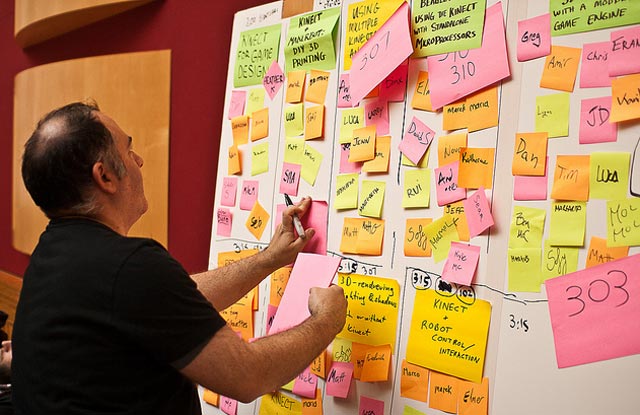
* Open process – this is the most “nebulous” part, examples of the work flow would be wikis and activity streams. Projects are built on linking trust networks so open process is the “glue” that binds the links together. https://en.wikipedia.org/wiki/Process
#4opens helps ensure that technology is used for the benefit of “us”, rather than “them”. But, as with any tool or framework, #4opens and left-wing politics can only work if people are willing to pick them up and use them. This means taking a #DIY (do-it-yourself) approach to politics and technology and embracing the power of the communertys to create change.
Tilling the fertile soil of hope requires a commitment to openness, transparency, and collaboration, but it also requires simplicity. Keeping things simple, or #KISS (Keep It Simple Stupid), helps to prevent people from getting bogged down in complexity or becoming trolls on social media. By focusing on a simple but powerful vision of openness, trust, and collaboration, we can work towards creating a more ecological, just and equitable world.
In conclusion, composting the last 40 years of social sh*t requires a willingness to dig deep and examine the roots of political motivations. By understanding the fear-based approach of the right and the trust-based approach of the left, we can better navigate the political landscape. Embracing openness and trust-based #4opens working helps to ensure that technology is used for the benefit of all, while keeping things simple can prevent us from getting bogged down in complexity or becoming trolls. It’s up to each and every one of us to pick up the shovel and start tilling the fertile soil of hope.
This was the thinking of the #OMN project ten years ago: The proposed project is to reboot basic web tools and turn existing silos and portals into a network where data flows between different sites. The technology used will be #RSS and its lesser-known counterparts, allowing sites to link to each other and content to appear on multiple sites. The project aims to provide an alternative to the #dotcons and to serve alternative grassroots media by creating open tools and processes. The project will start with the addition of a sidebar to existing sites and the building of new aggregating sites with overviews on subjects. The long-term goal is to expand into other networks.
The World Wide Web is a system of interlinked hypertext documents that is accessed through the Internet. #Web01, #Web02, and #Web03 are terms that are used to refer to different generations or phases of the World Wide Web (#WWW).
#Web01 refers to the early days of the World Wide Web, when it was first introduced in the late 1980s and early 1990s. During this time, the web was primarily used for academic scientific, #NGO’s hobbyists and activists purposes and less yet widely adopted by the public.
#Web02 refers to the growth and expansion of the World Wide Web during the late 1990s and early 2000s, as the web became more accessible and user-friendly, and was increasingly adopted for commercial purposes. This era saw the rise of #dotcons, characterized by the growth of social media, mobile devices, and cloud computing. The web had become increasingly interactive and interconnected, and has become a critical tool for communication, misinformation, social control and commerce.
#Web03 was a waste of space, focus and money by the #Encryptionists who in bed with the scammers produced meany still born tech children in the last 10 years.
#Web01.5 refer to an intermediate stage between Web01 and Web02, marking a transition between the early and more experimental phase of the web and its more widespread commercial adoption. Web01.5 refers to a time when the web was still growing and evolving, but had already become more accessible and user-friendly, and was being adopted for more diverse purposes. With #mastodon and the #fedivers over the last 5 years, we are rebooting this web01.5 stage.