What Did We Learn from Web3, Crypto?

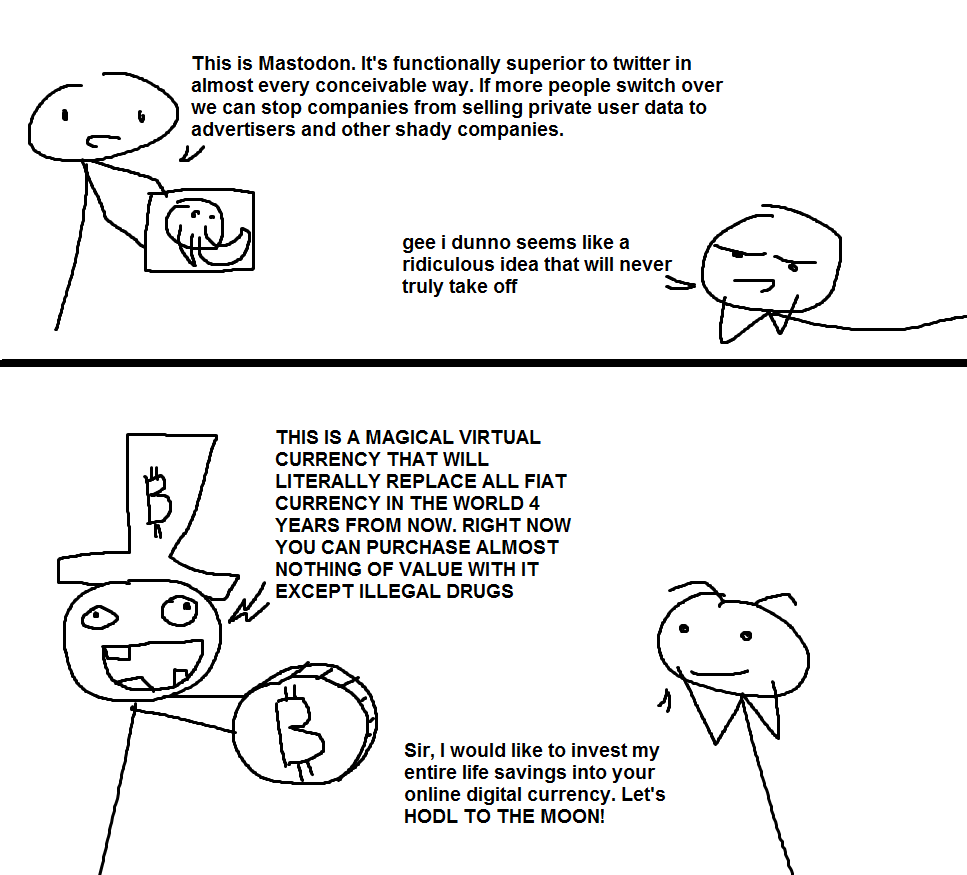
Looking back from the mid-2020s, the arc of #web03, #NFTs, and blockchain culture is very clear. What once promised (lied about) decentralisation, liberation, and a break from corporate capture now looks like the same, mess, #techcurn pattern repeating itself, yes it had new language, new branding, but it was easy to see it had the same underlying mess making dynamics.

As these #geekproblem projects hollowed out, the signs became hard to ignore. The technical optimism faded, the user bases thinned, and the economic logic exposed itself. What followed was totally predictable: spin. Makeup and perfume slapped onto decaying projects to hide the smell of rot and exploitation. Rebrands. New narratives. New demographics. Same extraction. This was the outcome of building “liberation tech” on foundations that still centred virtical money, speculation, and power concentration.

With these projects we are now in the zombie phase, projects kept moving, kept talking, kept selling – long after the animating ideas had died. Influencers and promoters continued to perform belief, even as any substance drained away.

This is a few years when #fashionista culture met #encryptionist ideology – aesthetics and technical absolutism snogging the undead remnants of a failed #deatcult vision. The result wasn’t in any way decentralisation; it was a simply a new enclosure. People weren’t being freed, they were being financialised, the money problem #KISS

At the core was a simple structural truth: #dotcons feed on money. Put money in, influence comes out. That logic doesn’t disappear just because you wrap it in cryptography or decentralised rhetoric. “Bad actors” weren’t anomalies – they were following the incentives as designed. Aany social good becomes just collateral damage. This is why the lie collapsed in te end.

The deeper harm and problem with #techcurn is each wave claims to have fixed the problems of the last. But each wave reproduces them, because this is what works when worshiping a #deathcult. This isn’t just a failed tech trend, the #techcurn disparity, driven by extraction systems cause enormous human harm, displacing livelihoods, concentrating power, and amplifying inequality at planetary scale.

These systems don’t fail harmlessly, they fail onto people. That’s why the call isn’t just to “be critical,” but to step away – and help others step away too. Not through purity exits or individual moralising, but through collective paths back to technologies built for people rather than profit, life over zombies

There has always been another path: the #openweb. Messy, imperfect, slower, less glamorous, but grounded in shared infrastructure, social trust, and human-scale governance. The #OMN approach doesn’t promise salvation. It offers compost instead of speculation. Process instead of hype. People over tokens.

A note on hashtags: And yes, the hashtags matter. Click them., search for them. They cut sideways through algorithms – small back doors into less mediated, less controlled ways of seeing. Not a solution, but a crack in the wall.

The current #Ai hype bubble is repeating this mess with a little more useful #LLM functionality, but on top of this is a huge mess of #techchurn, which will need composting.


Observation: some people go into news to speak truth from power – using institutions to legitimise the status quo and defend the worship of the #deathcult.

Others speak truth to power – using journalism to expose, question, and challenge unequal power and its consequences.

Only one of those serves the public interest #KISS

Digital Detox Is Urgently Needed

Fighting #fashionistas with fashion. We have an app outline for that: iPhone or android.

Not as a lifestyle tweak, not as wellness branding, not as another individual “better habits” story. These proposed apps and the wider projects have nothing to do with self-optimisation, productivity hacks, or personal purity. Framing it that way is already defeat – that’s #stupidindividualism doing the work of the #dotcons for them.

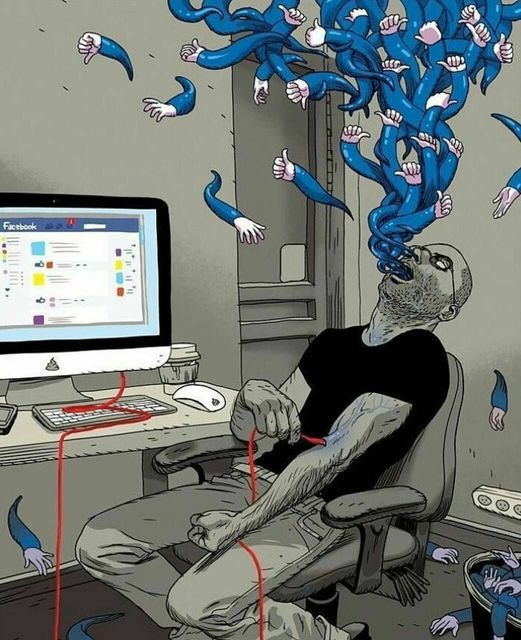
What we’re facing in our digital mess isn’t only a failure of self-control, it’s a structural capture problem. The #dotcons platforms are designed to extract attention, shape behaviour, and enclose social space. You don’t fix that by telling isolated individuals to be stronger or more disciplined. You fix it by changing the infrastructure people live in.

That’s why this has to be collective infrastructure. Shared norms, shared limits, shared tools. Social agreements embedded in tech and process, not moral pressure dumped onto individuals. The goal is to change default behaviour at the group level, so resistance isn’t exhausting and opting out doesn’t mean disappearing.

The native #OMN path is about rebuilding the commons: tools that assume trust, reciprocity, transparency, and accountability from the start. Defaults that slow extraction, not accelerate it. Processes that make manipulation visible and contestable. Mediation instead of opaque algorithms. Human-scale flows instead of infinite feeds.

We do need to keep lighting, this isn’t self-control, it’s collective self-defence. Anything on the normal path is simply dresses up surrender as “wellness” and calls it choice, it is just more head down, worshipping the #deatcult.

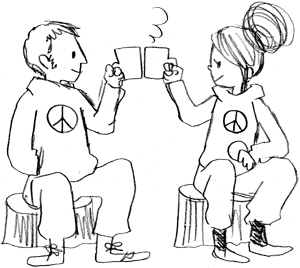
The core idea: The buddy method. You don’t fight addiction alone, don’t detox alone, you don’t escape algorithmic capture alone, you do it with another human.

App 1: Digital Detox Buddy

A simple app that sits on top of existing child lock / screen time APIs. No dark magic, spyware, behavioural profiling. Instead, simple:Just process, consent, and friction.

Defaults matter. Default allowance: 4 hours per day on #dotcons, when time runs out: You get a 10-minute grace extension button. Extending beyond this requires talking to your buddy

To permanently end limits: You must unbuddy (an explicit social action). This creates pause, reflection, conversation – the opposite of dopamine scroll loops.

Time reduction is gradual, a soft landing, not punishment. Start at 4 hours/day, reduce by 1 hour per week/month. People can stabilise or reverse with buddy agreement. This is about retraining habits, not moral purity.

What Is counted (and what Is not)? Metered: Phone screen time (total). Time spent on #dotcons platforms. Unmetered: Web browsing, #FOSS apps, Reading tools, Local-first utilities, Creative tools.

The framing is explicit: The problem is not only “screen time”. The problem is extractive platforms.

Privacy + accountability balance, Aggregated stats are public (community-level visibility, cultural pressure). Exact stats are buddy-only (trust-based accountability)

Public stats answer: Average phone use, average #dotcons use, detox participation trends

This is #DemocracyOfReach applied to behaviour change – cultural signal without surveillance.

Architecture: First version: client–server is OK, preferably designed for #p2p later

Buddy relationship is explicit, revocable, symmetric, no central behavioural scoring, no advertising, no data resale, this is infrastructure, not a product.

App 2: Consumerism Detox Buddy

Same logic. Different addiction.

Consumerism Is also a platform problem, endless consumption isn’t “choice”. It’s nudging, targeting, and engineered impulse. This second app mirrors the first but focuses on shopping behaviour. How it works, uses geolocation, identifies time spent in: shopping centres, large retail chains, branded consumption spaces,

Same buddy rules: time limits, soft extensions, explicit social negotiation. Local markets, repair, reuse, libraries, commons spaces are excluded or positively weighted.

This is people to people anti-#deathcult economics made concrete in apps.

This is why it belongs on the #OMN path, and why it is not about personal optimisation, quantified-self nonsense, wellness capitalism, #NGO nudging, or behavioural surveillance.

A clear path about collective governance of attention. With explicit social process, open defaults, visible culture change. Tools that support people talking to each other, not being silently managed.

The apps don’t “fix” people, they change the environment people live in. This is striving to mediate what matters now: digital addiction and consumerism aren’t side effects. They are core pillars of the #deathcult. If we can’t or won’t build ways to step out together, all we get is isolated “self-help”.

These apps are p2p, gentle, federated, human-scale refusal, not banning, shaming or preaching. Its #KISS “Let’s do less of this – together.” If we can build social media apps, we can build #dotcons exit apps. A #OMN-native path.

Before you ask, the second stage, step, is to socialise the first step, offline.

Why “teach everyone to code” has become a dead-end slogan

The geek answer (bad faith or blindness): “If only everyone learned to code, then society would be fairer.”

The activist answer: Code is part of the landscape, but culture, governance, and lived practice matter more. We don’t escape domination by teaching more people to type commands, we escape by changing what we do together with the tools.

Why “teach everyone to code” has become a dead-end slogan – it’s been tried, it’s been funded, and yet it hasn’t shifted power one bit. If anything, it’s reinforced the tech priesthood instead of breaking it.

The #geekproblem is exactly this blindness: geeks mistake tools for culture, skill for power, and training for change. They can’t see that the last 20 years of “learn to code” projects have failed precisely because they sidestep politics, trust, and social fabric. It’s comfortable, because it keeps power where it already is.

So, coding literacy might be useful, but it’s not transformative without social literacy – trust, collective governance, open processes. The real activist social tech path is to compost geek mess-making and build alt-cultures where tools serve the collective, not the priesthood.

Otherwise, “coding for all” is another flavour of #blocking – keeping us stuck, distracted, and blind. This is a useful example of the blinded #geekproblem. I use the word blinded to illustrate that people can’t see the sense in front of their faces. And I use the hashtag #blocking to show the outcome of this common “sense” blindness #KISS

Coding is not automatically social power, but in some contexts it does act as power, and understanding when/why helps unpack the #geekproblem.

  1. When coding is not power

Most coding done in industry is low-level labour: writing scripts, fixing bugs, maintaining old systems. These programmers aren’t powerful; they’re workers. Their code serves capital.

Teaching kids to code (“everyone can make an app!”) rarely translates to actual power, because the infrastructure, distribution, and governance of platforms remain controlled by corporations.

Coding on its own doesn’t equal voice. A line of code in a corporate repo is no more socially powerful than a line in a personal diary if the person coding has no agency over how it’s used.

  1. When coding is power

Coding becomes power when it bridges infrastructure + governance + culture.

Building #openweb infrastructure: If you can write the protocols or standards (e.g. ActivityPub, TCP/IP), you shape the possibilities for everyone downstream. That’s a kind of structural power.

Gatekeeping: If you control the codebase of a popular project, you can decide what features exist, whose contributions get merged, and which voices are excluded. This is soft but real power.

Automation and scale: Writing code that automates tasks (e.g. bots, algorithms, moderation tools) gives leverage over many people’s experience, especially when hidden in the background.

Narrative + legitimacy: In activist or grassroots spaces, coders too often get treated as “high priests” because they appear to have magical abilities others lack. This cultural framing inflates their social weight.

  1. The Catch (where the #geekproblem lives)

Coders confuse technical power with social change. They think: “If I can write the tool, I can fix the politics.” But tools reflect cultures. Without collective governance, tools just reproduce existing hierarchies.

The illusion of inevitability: because software underpins modern life, geeks assume society must organize around them. That blindness is what we’re pointing to.

When geeks push “everyone must code” as the path, they miss that most people don’t need to code to have power, they need agency in decision-making and trust networks.

  1. How it really works (coding + social power)

Coding has power when embedded in movements that control their infrastructure. Example: early #Indymedia coders had real social power because their code directly enabled publishing outside corporate media – and at the start they were accountable to activist collectives.

Coding has power when it’s used to mediate flows of attention, trust, and resources. For example, algorithms that boost or bury voices. In grassroots hands, that can be liberatory; in corporate hands, it’s oppressive.

Coding becomes shared power when it is paired with open process (#4opens), shared governance (#OGB), and cultural literacy. Otherwise, it’s generally more priesthood, likely for the #deatcult in the end.

So: coding is like fire. On its own, it’s just heat and light. In the hands of a few, it’s a weapon or a fortress. In the commons, with shared tending, it’s the hearth – collective power.

To recap, coding as social power: Myth vs Reality

Myth 1: Coding = empowerment
We’ve been told that “if everyone learns to code, everyone will have power.” Twenty years of coding bootcamps, “learn to code” initiatives, and school programs prove otherwise. Most of this simply trains people to slot into corporate pipelines. The power stays where it always was.

Reality: Coding on its own is labour, not empowerment. The infrastructure, governance, and distribution layers decide where the power flows. Without culture and collective governance, coding is just fuel for someone else’s engine.

Myth 2: Coding makes you special
Coders often act like priests, holding secret knowledge. In activist spaces, this creates the illusion that coders alone can “save” or “lead.” That’s the #geekproblem in action.

Reality: Tools are only as powerful as the cultures and processes around them. A coder without collective accountability is just another gatekeeper. A coder inside a collective, with open governance (#4opens, #OGB), can help shift power outward.

Myth 3: Coding will fix politics
The geek fantasy: “If I build the right app, the politics will fix itself.” We’ve seen this with countless “alternative platforms” that end up reproducing the same hierarchies.

Reality: Politics is culture, trust, and process. Code can mediate, amplify, or automate, but it cannot replace politics. Tools without culture are empty shells; culture without tools is still possible.

The compost view is the task isn’t to make everyone a coder, but to compost the priesthood and grow cultures where coding is a part of the collective. That’s the #KISS answer: code can support social power, but it is not social power.

What to do to compost this #geekproblem mess:

  • Build cultures, not just tools: Stop pretending apps fix politics. Tools only matter if they grow inside strong cultures. Put people first, tech second.
  • Open the process (#4opens): Keep everything open: code, data, governance, strategy. Power hides in shadows; openness dissolves the priesthood. If it’s not open, it’s not our path.
  • Practice collective governance (#OGB): It helps when decisions about infrastructure are made more horizontally. Coders are part of the collective, not above it. Shared governance turns coding from priesthood into common fire.

The path out of the #geekproblem is in composting geek blindness and building living cultures where coding is a part of growing the commons.

For an example, this post is relevant to the degeneration of the #SocialHub project, which for meany years was the place for #ActivityPub and #Fediverse #openweb reboot, but now what’s left of the social side is the few remaining active unthinking “problem” people.

This is a normal path and outcome, that we need to compost to keep growing seeds #KISS

The tech world is in a state of chaos and dysfunction

The tech world is default worshipping the #deatcult to push a state of chaos and dysfunction. To compost this mess we need to reckon with the consequences of our past decisions to understand how we arrived at this point.

Over the past four decades, there has been an intertwining of #postmodernist social thinking and #neoliberal economic ideology. This marriage of #ideologies has fractured social values and pushed out of sight the ideological divides, leading to right-wing polarization and dysfunction in both politics and technology.

In online technology, this has translated into the proliferation of centralized platforms and the erosion of community. We’ve witnessed the rise of platforms that push profit over people’s well-being, exacerbating divisions, amplifying disinformation and hate speech.

As we now have no choice but to confront existential threats like #climatechange and ecological degradation, it’s imperative that we acknowledge our role in shaping the current reality. For forty years, we’ve marched down this dark path, shaping our “human nature” through collective choices and actions.

The next four decades will be marked by hardship and suffering as we grapple with the consequences of our actions. But we must take responsibility for charting a new course forward. It’s well past time to reject the poisoned philosophies and dogmatic economic doctrines that have brought us to this precipice.

To step away from this mess, we need to reclaim agency over our collective future and commit to a path of social healing, reconciliation, and renewal. This begins with the first step of acknowledging our complicity in creating this mess and embracing the power of collective action and solidarity to fix it.

In the era of #stupidindividualism let’s try please not to just push mess back at this article. It’s essential not to view this social thinking as an individualistic moral judgment. The effectiveness of postmodernism and neoliberalism in achieving their goals is evident, the judgment lies in our collective choice of path.

The disintegration of social norms and the widening gap between the rich and the poor are natural outcomes of the path we’ve chosen. It’s not just about moral judgment; it’s about recognizing the consequences of our choices and taking steps to course correct towards a more just, equitable, and sustainable future. And away from the current “common sense” mess.

Yes, if you hear the shouting “don’t be a prat” it’s likely needed 😉