It is about the Invisible Commons, every programmer – from hobbyists hacking together weekend scripts to the coders inside Microsoft, Google, Meta – relies on open-source software. It’s the compost layer under everything. Between 70% and 90% of every app, service, and system we use is built on shared, public #FOSS code. Nobody starts from scratch, everyone pulls from libraries on GitHub/GitLab, built and maintained by people who believe in the commons.
Developers spend two-thirds of their time adapting open code to their needs. This means when there’s a flaw in that shared layer, everyone is exposed, from the #dotcons: Apple, Meta, governments, banks, critical infrastructure., to native grassroots projects. That’s the reality, the real digital world runs on a fragile but beautiful commons.
The problem is the same old one, everyone depends on it, nobody feels responsible for it. This is classic #deathcult economics. Extract, use, profit, but don’t maintain the foundations because maintenance isn’t “exciting” or “competitive.” Just like bridges or water systems, nobody “important”, no elitists, cares until they collapse.
Open-source developers have been holding this mess together for decades in their spare time, after work, unpaid, because they care. That’s the horizontal path. But the vertical world -companies, governments, institutions – have been happy to feed from that commons without nurturing it.
This is where the idea of supporting projects like the #OMN comes in, to build out, public stewardship of the shared digital foundations we all rely on.
We as people need to wake up from our denialism of digital abdication fugue dispar, its common sense that software is infrastructure, as critical as roads, bridges, or power grids. Neglect it, and society festers and stumbles to collapse in slow motion. The #OMN has been saying this for 30 years.
To keep the digital commons alive, we need to become the forces pulling together. Volunteers and grassroots maintainers, the people who keep the foundations alive out of care, not profit. They are the heart, but they can’t carry the whole world forever. We need people and communities or action to grow to rebuilding public digital infrastructure from the bottom up. This is as much about cultural as it is about tech.
But culture needs code, needs maintainers, need support. And right now we’re still facing the same #blocking of all of these. People and funding are needed, not corporate capture, not venture capital, not #NGO “managed change,” but real contributors who care about public-first tech. What we need to say clearly, is that open source (#FOSS) is a global commons, everyone uses it, no one truly maintains it, vertical institutions, like the #dotcons, depend on horizontal labour.
Without care, this digital ecosystem will rot, so projects like the #OMN is one path to restoring balance. On the #maisntreamin paths, yes, regulation will come, It unthinkingly has to. Companies exploiting shared infrastructure without feeding it is theft – from the public, from the future, from the commons.
The message for outreach, is if we want digital tools that are public, trustworthy, sustainable, and resilient, then we must invest in the shared foundations. We must move from #stupidindividualism to collective stewardship. From extraction to maintenance. From shiny platforms to compostable infrastructure.
The #OMN hashtag story gives us a language, the codebases give us the tools, the community gives us the power, now we need the crew to sprout the seeds. Let’s build the public digital foundations before they collapse beneath us.
For 200 years, capitalism, for the last 40 years #neoliberalism, taught us that we’re isolated individuals who compete to survive. But any real view of our actual history – and our biology – say the opposite: we’re interdependent, social, and ecological beings. For almost all species time before the current mess, we thrived through commons-based systems, shared forests, grazing lands, rivers, and community knowledge. Villages maintained open wells, fishermen shared tidal calendars, and guilds protected collective craft standards. Cooperation, not competition, is what allowed us to endure.
This is why now alt tech, matters, it is about rediscovering, what makes us human, the digital form of that is commoning online. Just as medieval commons were fenced off during enclosure, our early digital commons were captured by #dotcons. Rebuilding the #openweb is the act of reclaiming that shared ground, not nostalgia, but in the era of #climatechaos and hard right shift its #KISS survival.
What we need to compost is our own-shared memory. The commons are missing from today’s “common sense”. The idea that people can manage shared resources together has vanished from public imagination. Yet the commons is the older, more adaptive, and far more humane way of organizing.
In tech, the #Fediverse shows this in action, thousands of community run servers cooperating through a shared protocol, ActivityPub. Projects like #PeerTube, #Pixelfed, or #Funkwhale replace enclosure with federation, showing that open paths can scale through trust rather than control. Alt tech, built on open protocols and co-governance, is simply the digital commons rebooted, a network of networks where no one owns the whole.
We need much more resources and focus pushed into this real grassroots path of reclaiming the means of communication, in the 1990s and early 2000s, the internet was all ready a commons: decentralized, people-driven, and impactful. Early #Indymedia collectives covered protests outside mainstream #blocking narratives. #4opens email lists and wikis built movements across borders. Then capital pushed in, WE let the #nastyfew of #Facebook, #Google etc privatize our collective infrastructure, turning participation into surveillance and creativity into content.
Alt tech projects like the #OMN (Open Media Network), Mastodon, and wider #Fediverse are attempts to rebuild what we keep forgetting, this time, protected by #4opens shield to build shared governance. This path is not a nostalgic throwback, but living/acting paths for post-capitalist communication we need in the growing era of social backdown.
It’s not only “tech” – it’s social trust infrastructure. A common is not only software; it’s the culture of cooperation that surrounds it, shared values, mutual aid, and relational ethics, you can’t “code” trust into hardware, as the last decade of #blockchain and #AI mess proves. Smart contracts failed to make people honest; they just automated mistrust, it’s on going #geekproblem blindness we need to be working to compost.
What works, the resilience, comes from people, not algorithms. Through frameworks like the #4opens: open data, open code, open standards, open process. We can build transparency and accountability into the social layer of the network. Trust is a practice, not a protocol #KISS
We need a future that’s better, not just less bad. The #deathcult story – neoliberalism’s great myth – says “there is no alternative.” Alt tech is the alternative, working proof that cooperation scales, that people build shared infrastructure without extraction and less coercion. Look at LibreOffice, Wikipedia, Linux, or the #Fediverse, all imperfect, collaborative systems built on trust, not profit. They are real-world examples of how collective will outperform the normal deadened paths of corporate hierarchy.
Alt tech gives us believable hope, which is the only real antidote to despair and apathy. The ground for grassroots power is in pushing change and challenge. If the liberal state and #dotcons won’t reform, we need to be building parallel structures that work differently. Projects like the #OGB (Open Governance Body) experiment with federated, transparent decision-making. The #OMN builds tools to connect grassroots media in trust networks, bypassing gatekeepers entirely. Together they form a scaffolding of a working commons, capable of hosting culture, not only control.
Healing the social media wound? We need to compost the lie of #dotcons which spent the last 20 years turning us into consumers and outrage machines. The shovel we need is affinity groups rebuilding social tech around self-governance, interoperability, and most importantly trust to reclaim the human side of the internet. Imagine the world different, feeds that empower communities, not advertisers, tools that nurture relationships, not metrics, platforms that amplify context, not conflict.
This is the work of making the internet human again, working together on the path of alt tech matters because it’s not about gadgets; it’s about freedom, community, and survival. It’s our path to remembering that the #openweb, like the Earth itself, belongs to everyone, or it belongs to no one. And every time we build a shared tool, or hold open a door, we remind the world that cooperation is not naïve, it’s our oldest #KISS technology.
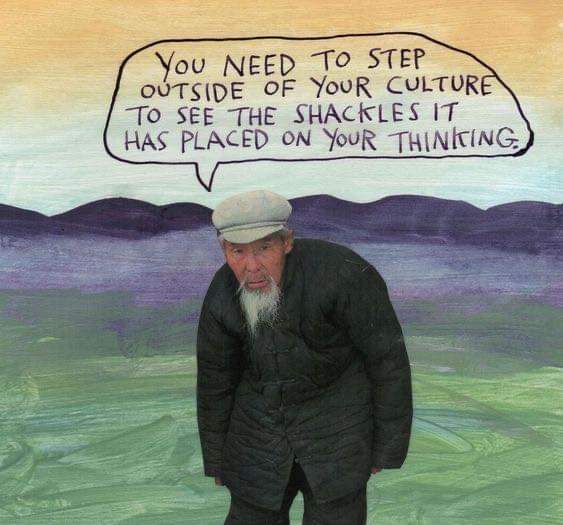
A cross-cultural conversation on this subject
UPDATE: I haven’t touched on two other #4opens projects here, so let’s tap them at the end: #Nostr is a “me-too” project stuck in the #geekproblem loop, it won’t go anywhere until it learns to value community as a building block. #Bluesky, on the other hand, is already drifting into the hands of VC-funded #fluffy elitists who turn every commons into a brand. It’s a very likely a dead-end for real change or challenge, which is why the #mainstreaming#blocking#NGO and #fashionista crowds flock to it.
UPDATE 02: Digesting the comments. For the past 10,000 years of agriculture, 500+ years of Euro-colonialism, 200+ years of #capitalism, and 95 years of #neoliberalism (45 officially declared as such), the #nastyfew practicing control through production have dominated everyone else. Capitalism, as described in Capital, grew wherever it could. By the late 19th century, labour organised and fought back. Social democracy transformed the capitalist state so effectively that capitalist development stalled by the 1930s.
The response? A reorganisation of capital, using anti-communism as its rallying cry (WWII, NATO, Korea, Vietnam) to defeat social democracy and retake control of the state. By the 1980s, “they” felt secure enough to brand reform itself as a product: #Neoliberalism. I’m simplifying, of course – this is for the #hashtagStory outreach, so it can become a #KISS tool people can actually use. Clarifications and deeper dives you can find in the comments 🙂
Now, about this idea that “capitalism told us we’re isolated individuals competing to survive.” It’s partly true, but not in the way people think. Capitalism depends on interdependence, we work together to produce, but in a way that isolates us socially and politically. That’s the contradiction: interdependence turned into alienation. It’s the mess in our heads that recreates these bad social structures, the inner factory of control. That’s what we have to compost.
In the end, it’s not just social control, it’s social destruction. As we rush deeper into #climatechaos and the global hard-right turn, it’s clearer than ever: the ideology of separation keeps power safe and people powerless. I know this isn’t #mainstreaming liberal logic, that’s the point. We have to think differently.
And for context, I’m not speaking from the sidelines – I’ve got an MA in politics and 30 years of hands-on work in grassroots #openweb tech. Isolation is social control, see #stupidindividualism. Let’s keep this grounded and not turn it into trolling, yeah?
In alt tech there are lots of people doing good, and they are, but this is blinded shifting to doing “good” head down worshipping the #deathcult, this would be kinda OK if they held the bridge to a wider view of “good” but they don’t, they block and obscure there #blocking, this is bad, very bad as in the end the “good” they say they do, is just more mess we need to compost.
The real solution is always to respect and build from the fluffy/spiky debate, not bury it under politeness or pretend blindly it doesn’t matter. #Fluffy brings empathy, care, and bridge-building – vital social glue. #Spiky brings clarity, honesty, and challenge – the fire that keeps things real. Both are needed if a project is to stay alive and #4opens. The moment one side silences the other, the culture starts to rot. The second-best path, if balance isn’t yet possible, is to shift the #NGO-style fluffy language – soften its domination reflex – so it stops sounding like control disguised as kindness. This is where care can evolve into openness rather than enclosure.
The worst outcome is what we’ve already seen too often: blinded narrowness, the slow creep of civility politics that smothers dissent while smiling at best and ignoring then #blocking at worst. It’s silent damage, and it killed #SocialHub, turning what could have been a commons into a small irrelevant gated forum of insiders. You can’t maintain trust by excluding the spiky voices; you can only maintain a hollow sham.
So how can people try not to be prats about this conversation? Start by listening across difference, don’t pathologize conflict; compost it. Assume that critique is care, not attack. Drop the impulse to manage or “align” others – those are imperial moves. Instead, nurture space for spikiness within shared trust. The goal isn’t harmony, it’s living balance – a federation of tones, not a choir of compliance.
UPDATE: my feeling and experience of this is that these types of people will with blindness destroy what they say they value for the security of what they say they don’t value. The next generation will likely repeat this mess, and the compost will likely mould, as will our environment because little real change or challenge comes from the narrow blinded path this group keeps pushing. Yes it’s a hopeless mess, ideas to change and challenge this please?
PS. I would like to be proved wrong, this is a real opportunity for a nice group of people to do the right thing. By admitting the mess – don’t polish it – stop pretending everything’s fine. The blindness comes from politeness and professionalized facades – people smiling while quietly blocking change. Naming the rot is the first act of care, #4opens starts with open process, not spin.
Reignite the spiky energy – spikiness is honesty, critique, fire – not aggression. Without that spark, the culture flat-lines into #NGO sludge. Invite spiky voices back with trust, not fear. Build cultures that can handle disagreement as fuel, not threat.
Rebuild from affinity, not hierarchy. Instead of “leadership” and “representation,” think federation – small, rooted, overlapping networks of trust. The #OGB model (Open Governance Body) can be a path for this shared stewardship, visible processes, no invisible power.
Compost the infective NGOs, use what’s useful (resources, access, tools) but don’t let them define the framing. Their language and logic are imperial – centralizing, sanitizing. Translate their “professional” talk into commons language, from “impact metrics” to “shared meaning,” from “alignment” to “affinity.”
Re-root culture in lived practice – the grassroots aren’t a romantic idea – they’re the only working base, real change comes from where people actually do things together, not from panels or “stakeholder dialogues.” Focus energy there, make it visible, and let legitimacy flow upward again.
Make openness the discipline, openness isn’t chaos, it’s a discipline of trust. The #4opens – open data, open process, open source, open access – are the anti-imperial charter. If a group can’t work by them, they’re not #openweb; they’re enclosure with good #PR.
Keep it #KISS simple. Most of the blindness hides in over complication – endless frameworks, metrics, governance layers. Keep it small, human, and understandable. Simplicity keeps power honest.
It’s been going on for the last few years, let’s look at a current example. Live at c-base is a #Fediverse event that highlights the need for composting the dogmatic #fluffy mess making to keep balance in our shared #openweb reboot. With our #fluffy crew talking about the shared reboot, on the surface it looks positive – friendly conversations, smiles, the right hashtags – but underneath it reveals a deeper problem: there is zero balance at these events. This is the third event I’ve seen with the same issue: the same small group, the same narrow framing, the same blindness. It is not healthy. It is not balanced. And it is not a good path to stay on.
What we are seeing, again and again, is a kind of #blinded#blocking. A narrow circle, reproducing itself, shutting out the very people who dug the digital soil for the seedling stage of the current #Fediverse growth. Sadly, #blindness and #blocking makes these people prats, not because they don’t care, but because they can’t see beyond their narrow bubbles.
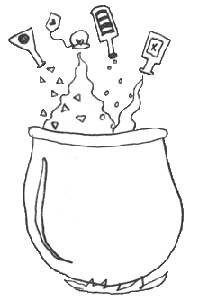
Composting the mess, we need to be honest here. We all make messes in movement spaces, and the only way forward is to compost these messes. Composting means breaking down what is toxic, unbalanced, or self-serving and transforming it into nutrients that can grow something better. If we ignore the problem, the mess just piles up until the whole project smells. If we compost it, we can build soil, roots, and future growth.
Where’s the hope? Right now, hope is hard to see in these paths. A purely #fluffy approach – friendly, soft, smiling – is good for atmosphere, but it slides into dogmatic blindness. Fluffy alone does not challenge power. Fluffy alone does not create balance. Fluffy alone does not compost.
What we need is spiky/fluffy. We need the warmth of fluff but also the edge of spike, the courage to challenge, to draw lines, to say when things are going wrong. Without this, we share the same blindness, wrapped in smiles and funding applications. One thing that might explain this narrowness is that we are in the middle of a generation change. The original crew who put real work into growing the #Fediverse in its seedling years are no longer invited, and the real problem is that to this new fluffy crowd the last generation are mostly invisible.
Looking at the Berlin Fedi Day schedule the only person I recognise from that seedling stage, that built the current working reboot is Christine Lemmer-Webber, and they were always firmly within the #NGO-fluffy camp. Everyone else? New faces, from before, like Evan Prodromou who played no role in the atavism of the seedling stage or the people from after ??? Who to often bring the #NGO and funding paths that is at the root of current mess making.
One such event would be understandable. But three in a row? It looks less like an “accident” and more like a PRAT move, hardcoded fork of our shared project. A fork that speaks with arrogance “for all of us” while shutting out the #spiky voices of the community who helped built the current #fedivers path. Towards balance, where do we go from here?
Name the mess: We can’t fix what we won’t face. #blinded#blocking is real, and it needs to be called out. This is what I am doing here.
Compost, don’t cancel: These are not enemies, just our #NGO, #fashionista in need of wider perspective. We don’t waste energy and focus in burning them out; we compost their mess into fuel for growth, they are a part of the debate.
Spiky/Fluffy events: The next gathering should explicitly mix both tendencies. Spikiness to challenge, fluffiness to care. That balance is the only way to keep hope alive, let’s not be prats on this, please.
Reconnect with roots: We need to bring back more of the seedling stage #Fediverse builders and seedling voices, not as nostalgia but as grounding. The roots matter if the tree is to grow.
Expand the circle: No small group should speak for the whole. Open doors, open process, open web. #4opens. A part of this is embedded in the closed funding of these events and process.
Final thought, right now, what we’re watching is real prat behaviour, dressed up in smiles and #NGO funding. That’s a dead end. If we want the #openweb reboot to be more than another hollow fad, we need balance, humility, and compost. The fluffy mess won’t compost itself. That’s our job.
You likely need a shovel #OMN to work on composting. Or if you want to continue with this kind of mess making then clearer naming the events for the minority they invite and host would help to make less mess, a few #NGO groups have started to do this like #FediForum and the #SWF now have less imperialistic language, which is at least is a little less blinded.
We are having a tech reboot for the last few years, federated seems to be where it’s at right now, and it makes sense, the #fediverse is flourishing where so many “#web3” or pure #p2p projects stumbled. This isn’t to say #p2p is bad. But for a peer-to-peer social network to actually work and be social useful, it would need mechanisms for collectivising: shared moderation, subjective trust, a way to handle conflict. Purely (stupid)individualist solutions have been tried before, and they don’t hold together at all beyond a tiny scale. Atomised people cannot build any lasting commons.
The strength of federation as a path is that it collectivises by default. Servers are groups, not individuals, decisions are made within communities, not in isolation, this builds resilience. What is currently #blocking this path is our #fashionistas and #geekproblem people, who are still clinging to parts of #mainstreaming “common sense!. If you try to vertically scale, if you dream of competing head-on with Silicon Valley, running giant datacentres with teams of sysadmins, you’ve already lost. That’s their game, their best proficiency. You cannot beat them at it.
The path forward is to do something they cannot do without breaking their own business model. Something they would never want to do even if they could. That’s the opening. That’s the #OMN path. So let’s be clear about what the current #openweb reboot and the #fediverse is not:
The fediverse is not an electricity grid. You don’t have to be plugged in everywhere for it to function.
The fediverse is not feudalism. You are not a serf bound to some lord’s server. You can leave, fork, migrate, or self-host.
The fediverse is not a commodity. It is not like a telephone line or a utility service to be packaged, sold, or regulated in the same way.
And no, the fediverse is not a big truck that carries data down the highway. It’s a messy garden, a bazaar, a commons.
The #fediverse works because it is untidy, diverse, and decentralised. It’s a network of collectives, not a monopoly machine. The #OMN path and vision is to lean into this: not to replicate the #dotcons in smaller, scrappier forms, but to compost the mistakes of the past and grow something native, nourishing, and #4opens.
The #OMN isn’t about isolated gestures, it’s about building federated, trust-based media networks that actually work at scale. Right now, the truth is simple: you can’t just join or create one tomorrow. Why? Because the path needs composting first.
By composting, we mean taking the wreckage of past projects – messy, co-opted, burned-out, over-managed, or over-centralised – and turning it into fertile ground. From this social fertile soil can we grow #OMN that support:
Open, federated collaboration
Shared media creation and distribution
Affinity group – based moderation and governance
Strong social resilience against co-option by corporations or #dotcons
We need to then bride this existing federated path into the seed #p2p path with social tools that work and hold this bridge in place. The #OMN is a work in progress, and that’s intentional. It’s about building the crew, the culture, and the infrastructure before anyone can just “join.” This isn’t a platform you log into; it’s a path we create together, step by step. Until we do that composting, passive participation isn’t possible, the first step is #KISS that’s exactly what we’re focused on making happen.
We need to look at our paths and current the controversy in “diversity” in our #deathcult worship, to see the need to compost more of the current mess. The problem with “pushing diversity” isn’t diversity itself, that’s fine – essential, even – the problem is in the ideology shaping the push.
Much of it comes from #mainstreaming progressive liberalism, which operates inside the logic of the deathcult. It reduces diversity to a checklist, a branding exercise, a way to appear “inclusive” while leaving power untouched, not liberation, more about management.
When we enter into this mess, conversations about diversity collapse into the mixing of right and left framings, with too much suspicion on all sides, endless accusations. Instead of solidarity, we end up with #blocking. Instead of building, we burn out. The is no good outcome.
This is the normal worship of the #deathcult, the endless loop of optics and control, where movements fracture and collectives suffocate with “diversity strategies” that have no relation to grassroots realities.
The path as ever is compost. Take the mess – the liberal tokenism, the reactionary backlash, the burnout – and compost it into something alive. Composting means, returning to grassroots voices, not #NGO checklists, seeing diversity as lived struggle, not branding. Grounding it in #4opens, where openness makes co-option harder, to turn toxic blocks into fertile soil for needed collective growth.
The #OMN path is simple: it’s not about ticking boxes or replicating liberal #NGO frameworks. It’s about federated, messy collaboration that actually works. Diversity is not a corporate slogan, more a the lived struggle. If we can compost the deathcult ideology that poisons this, diversity becomes strength rather than a management tool.
The question is, are we willing to compost the liberal mess, or do we let it keep rotting movements from the inside?
From “Woke” Capital to MAGA Capital – A Case Study
In the US, every presidential election is sold to us as a transformation of the nation. The chattering class pundits and their #fashionista followers tell us: a new people have been elected alongside a new government. Obama, Trump, Biden, each framed as a seismic cultural shift. But if you care to look, the reality is different: turnout is low, margins slim, the electoral college dulls change. What’s hyped as a national rebirth is just the normal reshuffling of the same #deathcult mess.
Still, perception matters. After Trump’s re-election, the “zeitgeist shift” rippled through politics and corporate boardrooms. Suddenly, dozens of corporations rolled back their Diversity, Equity, and Inclusion (#DEI) programs. Woke capital simply pivoted into #MAGA capital.
Liberal woke capital was about projecting inclusion as market expansion: Pride logos in June. Minorities cast in blockbuster films. “Inclusive” ad campaigns. It looked progressive, but it is the normal markets: new demographics = new customers, just sometimes the invisible hand holds a rainbow flag.
MAGA Capital, in contrast, is about disciplining workers and pleasing investors. It’s about showing loyalty to the strongman, not customers. DEI didn’t collapse because “the people rejected it.” CEOs saw an opening: align with Trump, roll back diversity, keep profits flowing.
In the media, the firings of Colbert and Kimmel crystallized this shift. Networks needed mergers approved. “Ratings” were the excuse, but raw political loyalty was the reality. This is crony capitalism: the stockholder and the strongman aligning. Trump, the fake businessman from TV, borrows legitimacy from profits and ratings, hiding authoritarianism in smoke and mirrors “democracy”. This is the logic of the #deathcult: all values are disposable, as long as accumulation continues.
Lessons for the #OMN path. The shift from Woke to MAGA shows how fragile diversity is when it’s managed as a brand. It’s reversible, hollow, and always subordinated to capital. For the #OMN and the #openweb reboot, the lesson is simple: Don’t outsource diversity to branding exercises. Don’t confuse representation under capitalism with liberation. Don’t build systems where power pivots on a corporate whim. Instead, compost the mess. Root diversity in lived struggle. Anchor it in the #4opens so co-option is harder and collaboration is resilient.
What should be more obvious is that capital, the #nastyfew, its servants, doesn’t care about values, only accumulation. If we want diversity, inclusion, and justice to be real, we have to build them outside the #deathcult logic, in federated, grassroots spaces that don’t bend every time the political wind shifts.
The question remains: will we keep chasing the mess of spectacle – Woke vs. MAGA, or will we compost it and build something more rooted, messy, and alive #KISS
What is #blocking this simple step away, one reason is the #mainstreaming insist you use the “proper channels” is because they own the channels. They wrote the rules. They staffed the committees. They built a maze where the end is always defeat.
That’s why they’re so confident it “won’t work.” Because it isn’t designed to. The proper channels exist to bleed energy, to bury dissent in paperwork and “stakeholder processes,” to keep power safe where it already sits.
The #OMN takes the opposite path. No hard gatekeepers. No “proper channels.” Just open flows. #4opens all the way down.
Instead of wasting years trying to squeeze through their pipes, we compost their mess and build new streams. Trust networks. Shared publishing. Messy collectives that actually do the work instead of talking it to death.
That’s what really scares the #mainstreaming people most. That we don’t need their channels at all. That we can walk away and build our own.
The deep wound a lot of people carry – and it’s not personal, it’s structural. When “you” don’t feel “respected,” when the mainstream has no time or use for “you”, it’s because their whole machine is built on efficiency of exclusion. They don’t even see “you” as a subject in the conversation – you’re treated as noise, not signal.
And when the alt paths are blocked – often by the same smiling faces, the same gatekeepers in different clothing – the feeling is doubled: shut out by the mainstream, and suffocated by those who claim to be building alternatives.
This is by design, the “common sense” mainstream wants you atomized, silenced, despairing. The #fashionistas push you into disciplined frameworks, their branding, their “proper channels.”
What happens then? Most people turn inward. Cynicism. Burnout. Bitterness. Or they retreat into bubbles that feel safe but become sterile. That’s the trap.
The composting metaphor matters here. The disrespect, the exclusion, the blocking, it’s all stink. If we don’t turn it, it just festers and poisons everything. If we do turn it together – shovel in hand – it becomes the soil of solidarity, resilience, culture.
The act of composting is, naming the disrespect (without internalizing it), pulling people back from isolation into trust networks, refusing to fight on their terrain (mainstream channels, fashionista frameworks), building small, living alternatives that don’t need their validation.
The painful truth: you will never get “respect” from #mainstreaming. The dignity comes from walking away, composting their waste, and growing something rooted in trust not division.
This should be obvious to anyone who as some knolage of left politics. They are the people who always rise to the top when #mainstreaming takes hold. You see them on TV, in parliament, running #NGOs, managing #dotcons tech projects.
On the surface, they don’t always look bad – in fact, they often present as competent, articulate, even charming. But scratch that surface and the pattern is clear: their drive is not shared flourishing, it’s possession and control.
This minority #nastyfew, from a historical view, are today’s bourgeoisie. Marx outlined (https://en.wikipedia.org/wiki/Bourgeoisie), that the bourgeoisie historically gained their power through ownership of the means of production – factories, land, capital – while the working class had nothing but their labour to sell. The bourgeoisie used their control over wealth and coercion to keep society in balance, a balance where they stayed on top and everyone else stayed dependent.
The same dynamic runs through our present, the #nastyfew work to preserve a status quo that serves them. They exploit labour (waged or unwaged), capture resources, and use subtle or blunt coercion to suppress any change or challenge.
Those who hold power – social, technical, financial – remain the #nastyfew unless we actively work to compost them.
Then, in our cultural circles, we have our own “common sense” #blocking, the “parasites” who feed from progressive paths.
#fashernistas – chasing visibility, hashtags, and trends instead of substance. They drain energy by endlessly cycling the latest buzzwords while ignoring the compost underneath.
#Blinded dogmatic liberals – well-meaning perhaps, but so trapped in their own ideology that they block radical change without even seeing it.
The wannabe #nastyfew – those who orbit power, adopting the habits of control in hopes of rising up themselves.
Neo-liberals in disguise – the most dangerous, because they consciously wear the clothing of other paths: climate, diversity, openness… while quietly feeding the #deathcult of enclosure, growth, and control.
Some of these act blindly, reproducing harmful patterns without much thought. Others are deliberate: they know what they’re doing, and they’re doing it to consolidate control.
The unthinking #mainstreaming majority are shadows of the above. They’re not directly malicious, but they absorb the surface story: They repost the slogans. They nod along with “common sense” solutions pushed by the #dotcons and NGOs. They go with the flow, even when the flow is a sewer. Without working composting, they become the mulch for the #nastyfew to grow stronger.
The “nice liberals”. Not all liberals are destructive. Sometimes they play a healthy role: They keep projects afloat by doing practical work. They can mediate between radicals and the #mainstreaming. They often mean well, and can be allies if they’re not left holding the steering wheel all the time. They’re not the compost, they’re more like the worms: sometimes useful, sometimes wriggly, but part of the soil cycle.
And beyond, there are what has value, the progressive radical paths – both #fluffy (trust, care, openness) and #spiky (confrontation, defence, rupture). That’s another layer of the compost pile, and deserves its own focus. The key point: the #nastyfew and their parasites will always try to rise up in any fertile ground. The progressive trick is to compost them early – recycle their energy, block their possessiveness, and keep the soil rich for new seeds.
To recap, let’s look at some history. When the #openweb reboot began about a decade ago, it was rooted in grassroots values: #4opens, federation, collective governance, affinity trust networks. But as soon as the energy started to gather, the #mainstreamin pushed in:
#Dotcons pivoting into the space – Facebook rebranding as “Meta” and trying to swallow the Fediverse through the #Threads/ActivityPub move. This is enclosure dressed up as “openness”.
Standards capture – The #NGO actors increasingly gatekeeper the “neglected” #W3C processes, pushing, more corporate-driven priorities while blocking messy grassroots paths that did the shovelling to grow the reboot during the seedling years.
Control of resources – a few “elitist” individuals began hoarding power over infrastructure, domain names, and repos, reproducing the same top-down model we’re supposed to be escaping.
The result? We are seeing the #mainstreaming channeling energy away from collective growth into more controlled, branded silos. The Fediverse started as messy, small-scale, radical. But the same pattern repeated:
SocialHub degeneration – once the buzzing hub for ActivityPub, it decayed into a handful of blockers. The sometimes competent-and-charming surface masks a deeper instinct for control. Threads stagnate, dissent is suppressed, and the soil turns barren.
Mastodon centralization – while #Mastodon has been vital, its dominance has also let a single dev-team shape the Fediverse “common sense”. That concentration of reputation and technical control looks very much like a wannabe mini-bourgeois class rising.
#NGO incursions – funded NGOs present themselves as allies, but bring managerialism, paywalls thinking, and “stakeholder” logic. Instead of composting conflict, they plaster over it with workshops and careerism. Then #block the people who complain.
This is the #Fediverse version of “workers remain workers, employers remain employers”: contributors remain contributors, gatekeepers remain gatekeepers. We face the issue of possession over collaboration – we see that collectives fracture when individuals cling to admin roles, mailing lists, funds, and leadership positions. Possession rots trust and then groups wither.
The people who hold (and hored) resources, contacts, and media attention become more deadened than path, even if they started with good intentions.
The composting lesson, is that over and over, the #nastyfew and their parasites repeat the bourgeois pattern at scale: They present as competent and charming. They consolidate possession and control. They preserve the status quo by suppressing dissent.
And over and over, the solution is the same: compost them. Turn the piles of #techshit and #NGO mess back into fertile ground. Protect the seeds of grassroots tech trust, keep the social soil messy and alive.
The #OMN is based on human beings doing the right thing.
And they will not, and it will fail.
Human beings doing the right thing, and they will not, and it will fail.
And they will not, and it will fail.
And will fail.
This is the challenge in the era of the #deathcult: A culture that feeds on fear, on greed, on possession.
Seeds are planted, but the soil is barren. Trust is offered, but hands close into fists. A path is drawn, but the walkers scatter into shadows.
The #OMN is fragile, thin green shoots in a field of ash.
It asks the simplest thing: Do the right thing. Not once, but again, and again, and again.
And if we do not? It will fail.
And if we do? Perhaps, seeds will take root, and grow beyond the compost, beyond the #deathcult, into the messy, open, living forest.
It’s good to see more people turning their focus back to the #openweb. But for the past five years of the #reboot we’ve been distracted in a signal-to-noise mess from the #fashionistas. That waisted time needs to be over, we need to start looking clearly at both internal rot and the external threats.
A good first step to this is in balancing the realisation that we actually have far more direct power to deal with the internal mess than we do over the external #dotcons and their #closedweb “common sense” colonialisation. That’s why we need to put activism into composting the internal #blocking (see: https://hamishcampbell.com/?s=compost). Composting isn’t just a metaphor – it’s a way to recycle the piles of #techshit we’ve built up into soil that can grow new #openweb seeds we need to cultivate.
I understand the normal focus on the external #dotcons, yes, we need to balance this to keep pushing back against the external enclosures. But inside our own spaces, it’s clear that possessiveness, in code, in reputation, in control over projects, undermines cooperation and destroys trust. It wastes resources, it corrodes integrity – People often destroy what they love, not out of hate, but out of possession.
The lesson is simple: compost the blocking, keep the seeds alive, and make space for growth.
What can you do? Use the compost metaphors (#techshit, seeds, soil) into accessible non-branded messaging that sticks. You can help with editing to transform the long posts into shareable, short-form content for Mastodon, Fediverse, and allied networks.
Help is needed in curating and organizing existing #OMN writings into a structured wiki-style knowledge base. To build summaries, FAQs, and primers for newcomers who hit the projects cold. We need draft “composting guides” – how to deal with #blocking, #fashionistas, and #geekproblem inside communities. Moving this simple documentation to the Unite Forge and other new #OMN tools. Helping draft roadmaps that explain what’s built, what’s missing, and what needs contributors. Producing explainers on why #OMN is different from #dotcons and #NGO capture, why being grounded in #4opens matters.
Write out templates for horizontal decision-making (#OGB style) that projects can adapt. Suggest practical ways to “compost” blockers while keeping the wider network fertile. Help draft neticate rooted in #KISS + #4opens rather than #NGO-speak.
Each of these can be grown into living resources: wiki pages, blog posts, shareable guides, or activist toolkits – depending on where you want the energy to flow.
The geek answer (bad faith or blindness): “If only everyone learned to code, then society would be fairer.”
The activist answer: Code is part of the landscape, but culture, governance, and lived practice matter more. We don’t escape domination by teaching more people to type commands, we escape by changing what we do together with the tools.
Why “teach everyone to code” has become a dead-end slogan – it’s been tried, it’s been funded, and yet it hasn’t shifted power one bit. If anything, it’s reinforced the tech priesthood instead of breaking it.
The #geekproblem is exactly this blindness: geeks mistake tools for culture, skill for power, and training for change. They can’t see that the last 20 years of “learn to code” projects have failed precisely because they sidestep politics, trust, and social fabric. It’s comfortable, because it keeps power where it already is.
So, coding literacy might be useful, but it’s not transformative without social literacy – trust, collective governance, open processes. The real activist social tech path is to compost geek mess-making and build alt-cultures where tools serve the collective, not the priesthood.
Otherwise, “coding for all” is another flavour of #blocking – keeping us stuck, distracted, and blind. This is a useful example of the blinded #geekproblem. I use the word blinded to illustrate that people can’t see the sense in front of their faces. And I use the hashtag #blocking to show the outcome of this common “sense” blindness #KISS
Coding is not automatically social power, but in some contexts it does act as power, and understanding when/why helps unpack the #geekproblem.
When coding is not power
Most coding done in industry is low-level labour: writing scripts, fixing bugs, maintaining old systems. These programmers aren’t powerful; they’re workers. Their code serves capital.
Teaching kids to code (“everyone can make an app!”) rarely translates to actual power, because the infrastructure, distribution, and governance of platforms remain controlled by corporations.
Coding on its own doesn’t equal voice. A line of code in a corporate repo is no more socially powerful than a line in a personal diary if the person coding has no agency over how it’s used.
When coding is power
Coding becomes power when it bridges infrastructure + governance + culture.
Building #openweb infrastructure: If you can write the protocols or standards (e.g. ActivityPub, TCP/IP), you shape the possibilities for everyone downstream. That’s a kind of structural power.
Gatekeeping: If you control the codebase of a popular project, you can decide what features exist, whose contributions get merged, and which voices are excluded. This is soft but real power.
Automation and scale: Writing code that automates tasks (e.g. bots, algorithms, moderation tools) gives leverage over many people’s experience, especially when hidden in the background.
Narrative + legitimacy: In activist or grassroots spaces, coders too often get treated as “high priests” because they appear to have magical abilities others lack. This cultural framing inflates their social weight.
Coders confuse technical power with social change. They think: “If I can write the tool, I can fix the politics.” But tools reflect cultures. Without collective governance, tools just reproduce existing hierarchies.
The illusion of inevitability: because software underpins modern life, geeks assume society must organize around them. That blindness is what we’re pointing to.
When geeks push “everyone must code” as the path, they miss that most people don’t need to code to have power, they need agency in decision-making and trust networks.
How it really works (coding + social power)
Coding has power when embedded in movements that control their infrastructure. Example: early #Indymedia coders had real social power because their code directly enabled publishing outside corporate media – and at the start they were accountable to activist collectives.
Coding has power when it’s used to mediate flows of attention, trust, and resources. For example, algorithms that boost or bury voices. In grassroots hands, that can be liberatory; in corporate hands, it’s oppressive.
Coding becomes shared power when it is paired with open process (#4opens), shared governance (#OGB), and cultural literacy. Otherwise, it’s generally more priesthood, likely for the #deatcult in the end.
So: coding is like fire. On its own, it’s just heat and light. In the hands of a few, it’s a weapon or a fortress. In the commons, with shared tending, it’s the hearth – collective power.
To recap, coding as social power: Myth vs Reality
Myth 1: Coding = empowerment We’ve been told that “if everyone learns to code, everyone will have power.” Twenty years of coding bootcamps, “learn to code” initiatives, and school programs prove otherwise. Most of this simply trains people to slot into corporate pipelines. The power stays where it always was.
Reality: Coding on its own is labour, not empowerment. The infrastructure, governance, and distribution layers decide where the power flows. Without culture and collective governance, coding is just fuel for someone else’s engine.
Myth 2: Coding makes you special Coders often act like priests, holding secret knowledge. In activist spaces, this creates the illusion that coders alone can “save” or “lead.” That’s the #geekproblem in action.
Reality: Tools are only as powerful as the cultures and processes around them. A coder without collective accountability is just another gatekeeper. A coder inside a collective, with open governance (#4opens, #OGB), can help shift power outward.
Myth 3: Coding will fix politics The geek fantasy: “If I build the right app, the politics will fix itself.” We’ve seen this with countless “alternative platforms” that end up reproducing the same hierarchies.
Reality: Politics is culture, trust, and process. Code can mediate, amplify, or automate, but it cannot replace politics. Tools without culture are empty shells; culture without tools is still possible.
The compost view is the task isn’t to make everyone a coder, but to compost the priesthood and grow cultures where coding is a part of the collective. That’s the #KISS answer: code can support social power, but it is not social power.
Build cultures, not just tools: Stop pretending apps fix politics. Tools only matter if they grow inside strong cultures. Put people first, tech second.
Open the process (#4opens): Keep everything open: code, data, governance, strategy. Power hides in shadows; openness dissolves the priesthood. If it’s not open, it’s not our path.
Practice collective governance (#OGB): It helps when decisions about infrastructure are made more horizontally. Coders are part of the collective, not above it. Shared governance turns coding from priesthood into common fire.
The path out of the #geekproblem is in composting geek blindness and building living cultures where coding is a part of growing the commons.
For an example, this post is relevant to the degeneration of the #SocialHub project, which for meany years was the place for #ActivityPub and #Fediverse#openweb reboot, but now what’s left of the social side is the few remaining active unthinking “problem” people.
This is a normal path and outcome, that we need to compost to keep growing seeds #KISS
Most of the mess, and most of the #blocking, comes down to the same old story – ownership and control. Who holds the keys? Who decides? Who gets locked out? Instead of wrestling in that cage, the #OMN takes a simpler path: we walk away.
We put a class of media into the commons, governed openly through the #4opens: open data, open process, open source, and open standards. That means no one can close it down, hoard it, or fence it off for profit. The value comes from the shared pool, not from gatekeeping.
This is the heart of #KISS in the #OMN: make the flows work first, in ways people can understand, and build trust on top of that. The tech exists to serve these flows, not to dictate them. This isn’t about perfect crypto or hard lockdowns; it’s about commoning media so that everyone has the right to read, share, and build on it.
Yes, the #mainstreaming mess will eventually follow us – as it always does. But the plan and hope is that by the time it catches up, the habits, culture, and expectations we’ve grown around open media will have shifted society enough that the old traps won’t work the same way. If we’ve done our job, the default will be more open, collaborative, and accountable, not locked down. That’s the #KISS path: simple, resilient, and grounded in the commons.
On the #OMN with #indymediaback and #makeinghistory paths – We’re not talking about a single bridge, but a federated ecosystem, with the current example of both #DAT and #ActivityPub running on the same server, sharing a common database of media objects. As the data flows, text and metadata are redundantly stored in the open (#4opens). That way, if one server gets hacked, it can simply be rolled back and restored from the wider pool. #KISS
The P2P side works much like #nostr in that it can have a list of flows in and out to servers and can use any of these to publish and receive media on the #openweb. The advantage of the #p2p app side is that each local app in a backup for the online servers (see #makeinghistory), which as critics say can be, and will be, taken down some times. Also, they will work in their own right for people who need a more locked down path, and this will be needed in more repressive spaces and times. The clear advantage is this still gives them outflows to the wider #mainstreaming client server media outreach, to what matters, effect, so it ticks both boxes.
We aim to solve technical issues with human-understandable social paths, not hard tech for its own sake. Yes, in a minority of cases hard tech will be needed – but that’s for the #geeks to solve after the working social paths are clear, not before.
We fix problems through #KISS social processes and #4opens transparency, not by defaulting to encryption and lockdown. Hacking is outside the focus scope of the #OMN. What we’re building is about trust and flows, not code as an end in itself. Hacking belongs on the #geek paths – useful, but only after the trust and flows are established. The code should be there to secure what’s been built, not to block it before it exists.
Without trust and working flows, there’s no value at all, no matter how secure, encrypted, or elegant the tech stack. If the campaigns, activism, and people aren’t using it, the system is pointless. And being pointless is something we need to be more honest about. Building for the sake of building, while ignoring the social, community layer, feeds the #geekproblem and starves the movement.
So, what can people actually do in the real world to make this path happen?
If you have resources, you can help fund the development work – keeping it in the hands of the people actually building the open commons, not some corporate gatekeeper.
If you’re technical, you can code the applications and servers that power the flows. We need builders who understand that trust and usability come first, not shiny tech for its own sake.
If you work in UX or testing, you can make sure what we build is something real people can actually use and trust – simple, clear, and accessible.
If you do media, you can tell the story. Write, film, photograph, blog, podcast – whatever it takes to spread the word. The more people hear about an alternative that works, the more chance it has to grow.
Whatever your skills or resources, the important thing is to get involved in the flow. This is not a spectator sport, and the is unlikely to be pay, it’s #DIY so the commons will only be built if we build it together. #KISS#4opens#OMN
Appropriate technology in activist tech means tools built for our real contexts, not for Silicon Valley fantasies or bunker-dwelling paranoia. It’s about lightweight, repairable, understandable systems that communities can actually run, adapt, and share. Right now, the #geekproblem pushes us toward shiny, #dotcons shaped over-engineered toys that serve developer ego more than people and community need or bloated encryption stacks nobody understands, federated protocols that collapse under complexity, and endless half-finished “next big things” with no grounding in any actual social use.
We need to drag the conversation back to fit for purpose, tech that works in the messy, underfunded, real world of activism, where trust and openness are the foundation, and security is woven in without becoming a fetish that locks us away from each other.
The #fedivers#openweb reboot of the last ten years is a good first step, but it still embeds meany of the #mainstreaming issues and has the deep #geekproblems culture in its tech stacks. A second step is needed from this is, the social understanding, that security doesn’t come from code alone, it comes from the community that surrounds it, and that without a living, visible, and shared culture, the best tools are just dead weight.
The path starts with embedding our tools inside open, self-documenting, collective cultures. If you can’t see how decisions happen, you’re just replacing one opaque power structure with another. Forget the myth of the “perfect” platform. What we need are messy but resilient spaces, a diversity of nodes, loosely connected, each carrying its own part of the load.
Build commons-first infrastructure, to re-anchor our work in openness, federation, and trust-based networks baked in from the start. The baseline is #4opens – open data, open source, open standards, open process – non-negotiable.
On this path, the #OMN (Open Media Network) can be the publishing spine: a trust-based network where stories, actions, and knowledge move between activist spaces without corporate choke points and #blocking.
We must bridge into existing real-world struggles – unions, climate justice, housing fights. Tech that only talks to other techies is just another dead end.
Stop digging the same hole, we stop wasting energy on projects that make us smaller and weaker:
No more encryption fetishism. Encryption is the lock on the door, not the whole house.

No more closed, invite-only dev silos. If you can’t talk openly about the work, it’s either the wrong work or the wrong space.

No more “founder cult” projects that collapse when one person burns out or drifts off.
Security is not enough, survival is not victory, we can be safe and irrelevant – or vulnerable and changing the world by breaking corporate dependency, by building the infrastructure of a post-#dotcons world. This isn’t about perfect software, it’s about building the cultures that can use it – and win.
So what is it that currently blocks this needed change and challenge? #Geekproblem is about when the “solution” Is the problem. One of the most frustrating things is how often its defenders mistake their narrow fixations for universal solutions, or worse, offer them up in bad faith to derail the real conversation.
You’ll raise an issue – social, political, cultural – and instead of engaging with the messy, human, collective work needed to address it, the geek brain rushes to replace it with a neat technical patch. The tool, the workflow, the protocol. As if the complexity of human trust, governance, and solidarity can be debugged into submission.
This isn’t just misunderstanding; sometimes it’s sabotage. By framing the “solution” purely in terms of tech or procedure, they strip the problem of its social and political context. What remains is something sterile, depoliticised, and ultimately unfit for purpose.
It’s why I keep bringing this up. Because if we don’t name the #Geekproblem for what it is, we’ll keep circling in the same loops, patching over social fractures with shiny but hollow code. The answer isn’t more complexity; it’s #KISS – Keep It Simple, Stupid. Simple in the sense of clear, human-first, and grounded in open, accessible processes.
The truth is, solving problems in the #openweb isn’t about cleverness or code alone. It’s about people, and unless the geeks can learn to work with that, rather than overwrite it, they’ll stay part of the problem, the #geekproblem
Please, please try not to keep being a prat about this.