Navigating the Trolls

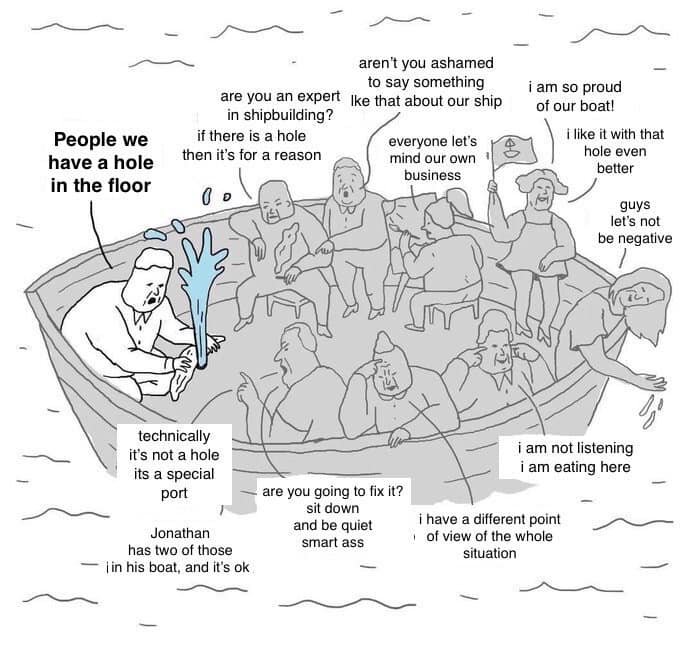
There is a shifting of social and political paths underway, we will have a move to the left or the right, the centre path has made itself irrelevant through, with not having any valid path to mediate, growing social divisions and ecological breakdown. On the left in our efforts to find meaningful change, we often encounter the phenomenon of “trolling” a problem that has become more prevalent and divisive in recent years. The trolls, emboldened by the anonymity and reach of the #dotcons, try to act as gatekeepers of thought, determined to shut down any ideas or alternatives that fall outside their narrow, and often mean-spirited, views of the world. No matter which political ideology they think they are pushing, this is a right-wing path driven by fear and the need for control. It can be useful to look at these individuals as being drawn from two distinct but overlapping groups: #geekproblem and #fashionista.

The geekproblem, is normally a technical path, but on the social side they often approach activism with a rigid mindset, fixated on technological solutions or unthinking, thus #blinded ideological frameworks. These people are generally well-versed in their specialized areas – be it coding, digital security, or political theory – but are quick to dismiss any ideas that don’t conform to their existing dogmatic and blinded beliefs. Pushing themselves as guardians of “the truth” or the “right way”, but this is from their world they can see, and thus way to often so narrow as to be irrelevant in the messy world we actually live in and have to navigate our way through.

This attitude manifests as trolling behaviour, attacking, undermining, and deriding people who suggest different approaches and alternatives. They forget that the goal is not to dominate the conversation, but to build a collective path that embraces diversity and complexity. Their (blinded) rigidity becomes a barrier to experimentation and cooperation, stifling the messy but working solutions we desperately need.

On the other #blocking path, we have the #fashionistas who are more concerned with appearances, trends, and social currency within activist spaces and wider #mainstreaming society. This group prioritizes being seen as part of the “right” movements, using the “right” language, or following the “right” trends over actually engaging in real meaningful, substantive work. They engage in social gatekeeping, where deviations from the accepted norms or language lead to ostracization and public shaming. This too is trolling, shutting down anything that is outside their blind #deathcult fed #stupidindividualism. Adding to the mess, not composting it, unconsciously replicate the exclusionary tactics they sometimes claim to fight against, creating a culture of fear and conformity instead of openness, debate and the needed paths of diversity.

The consequence of this is the current lack of alternatives, the stifling mess where any alternative outside narrow definitions is attacked, ridiculed, then ignored. This prevents the growth of diverse solutions by marginalizing, then #blocking voices that think differently, and ultimately reinforces the status quo. In effect, the trolls on the internet, whether consciously or unconsciously, are blocking the change and challenge we need. This is a very right-wing path, what ever you might like to call this.

The sad and bad paradox is that these groups can share a genuine desire for social justice and systemic change, yet the inadequacy of their behaviour serves to uphold the paths and systems of oppression and exclusion they seek to dismantle. Trolling thrives on conflict and negativity, which feeds this mess so they can feed off it, it’s a nasty and negative circle.

What paths can we take? How do we move beyond this mess?

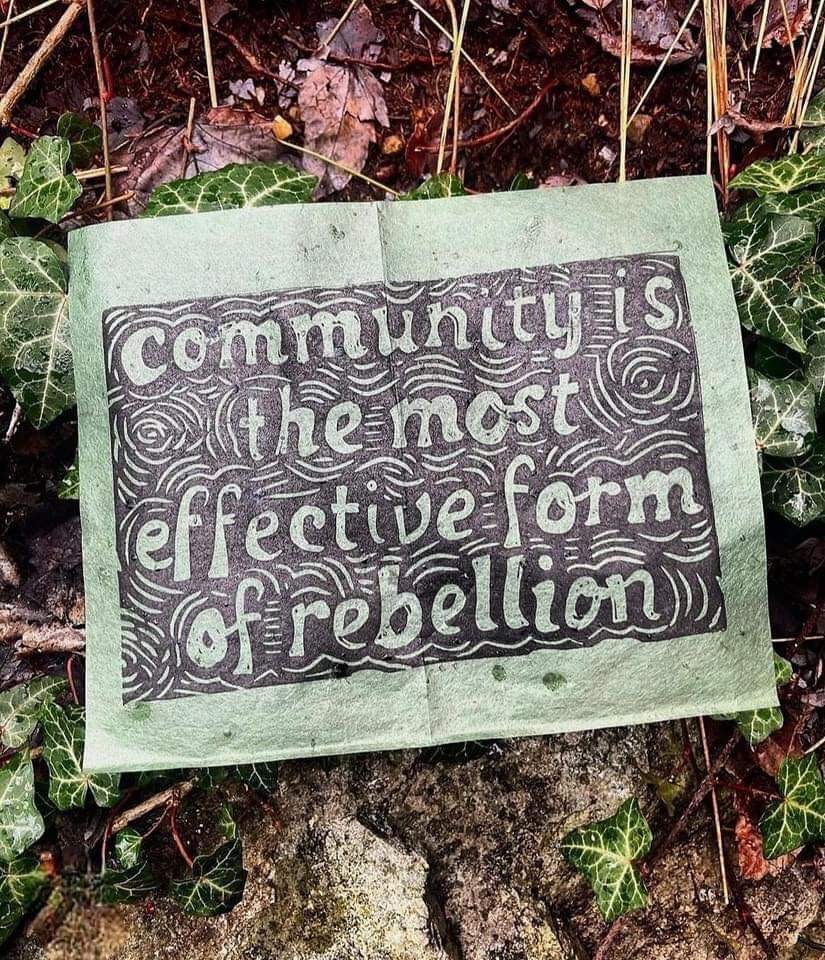
We can try and mediate this by focusing on compassionate communication, listening without instant judgment, speaking with some empathy, and seeking to understand rather than only to dominate—we can create spaces that are more inclusive and productive to find path to disagree without being disagreeable. Are we shutting down ideas too quickly? Are we dismissing people who don’t fit neatly into our ideological boxes? By staying open to self-critique, we can prevent ourselves from falling into the trap of this kind of narrow thinking. We can substance this path by building communities that have deepening roots in mutual aid and support.

To sustain these communities we need to focus on concrete actions, not only words, both the #geekproblem and #fashernista paths get bogged down in theoretical debates or performative displays of activism. Instead, we prioritize concrete actions that make tangible differences in our communities, whether through, building alternative networks to create spaces for messy dialogue and collaboration.

A first important step is to move outside the bindings of the dotcons, this is basic, the current internet infrastructure, dominated by social media giants (the #dotcons), is designed to amplify division, outrage, and addiction. To start to build meaningful alternatives, we need to step away from these platforms and cultivate the #openweb—decentralized, community-driven paths where we can experiment with new forms of social organization and communication.

For the last 20 years the has been a historic project, the #OMN, that is based on a culture that values diverse approaches, where multiple strategies and ideas can coexist, and where there is room for trial and error. To do this project requires a fundamental shift in an affinity group to move from rigid dogmas to a more flexible, #4opens approaches that encourage learning from the grassroot history mistakes and successes alike.

We can compost the negativity—the trolling, the rigid thinking, the performative posturing—to find fertile ground for new ideas to grow. To keep on this path we must remain open to different possibilities, willing to take risks, and courageous enough to challenge not just the status quo, but also ourselves. The trolls will always be there, but we don’t have to feed them. Instead, let’s focus on creating the world we want to see. The humanistic adventure in social technology, an Open Media Network of diverse voices and ideas. Let’s embrace the mess, compost it, and use it to grow something new. The path is open, and it can be a more happy one.

https://opencollective.com/open-media-network

Political Belief Systems

This matters in today’s mess. In right wing and left wing, political extremism easily functions like #blinded religious fervour, creating clusters of bad ideas and behavers that are ingrained and resistant to any change and challenge. This is cognitive dissonance, where people hold contradictory beliefs and behaviours without perceiving the inconsistency. We need to explore more on how dogmatic belief mirror religious convictions, the role of cognitive dissonance, and the mechanisms that allow people to maintain such conflicting views.

“How do these cretins live with their cognitive dissonance? ‘We won the war’/’I’m doing Nazi salutes’; ‘Respect the police’/’attack the police’; ‘Respect working people’/’trash this working neighbourhood’; ‘I demand the MSM tells the truth’/’I’ll believe anything from an unverified source’; ‘No unelected people in positions of power’/’Respect the royals’. In the US: ‘Heed the word of Jesus’/’Vote for a felonious sexual predator who vows to contradict all that Jesus said'” LINK

These are examples of how political beliefs can and do become religious dogmas for people, becoming central to their very identities. These beliefs are resistant to change because they provide a sense of belonging and certainty in a complex and uncertain world. Once embedded, belief systems create a filter and feedback loop through which all information is interpreted, leading to a confirmation bias where only supporting evidence is acknowledged, and contrary evidence is dismissed.

This cognitive dissonance occurs when peoples experience conflict between beliefs and behaviours, leading to psychological discomfort. To manage this discomfort, people employ coping mechanisms, such as rationalization, denial, or selective attention, allowing them to maintain contradictory positions without recognizing the inconsistency.

Let’s look at the quote above, paradoxes: “Respect the police/attack the police” or “Heed the word of Jesus/vote for a felonious sexual predator” – illustrate how people in our current right-wing mess navigate conflicting ideas. These contradictions are resolved through rationalization and creating narratives to justify the inconsistency. For instance, violent actions against the police are framed as necessary resistance against a corrupt system, while supporting a morally evil leader is seen as a strategic choice for a greater good. From a psychological view:

  • Confirmation Bias: people seek information that confirms their pre-existing beliefs and ignore or dismiss information that contradicts them. This bias reinforces their world-view and minimizes cognitive dissonance.
  • Identity Protection: Dogmatic political beliefs become intertwined with personal identity. Challenging beliefs feels like a personal attack, leading people to defend their positions vehemently in the face of contradictory evidence.
  • Echo Chambers: the #dotcons social media and partisan news outlets create echo chambers, where people and communities are pushed information that only reinforces their beliefs. This isolation from diverse perspectives strengthens their commitment to their ideological positions.
  • Moral Licensing: Some people use their adherence to certain moral principles to justify behaviours that contradict other principles. For example, they rationalize supporting a morally flawed leader by emphasizing his perceived effectiveness in achieving their broader goals.

The intractability of dogmatic beliefs and the accompanying cognitive dissonance make it hard to compost this growing mess. Attempts to introduce logical or evidence-based counterarguments backfire, reinforcing the original beliefs through a phenomenon known as the “backfire effect.” This occurs because the cognitive dissonance created by the counterargument leads people to cling more tightly to their initial beliefs as a defence mechanism to the change and challenge being as they see it pushed over them.

Dogmatic political beliefs then become fervent religious convictions, digging people and communities into deep paths that are difficult to move away from. Cognitive dissonance allows people to stay on these paths by maintain contradictory beliefs and behaviours and employing mechanisms such as confirmation bias, identity protection, echo chambers, to allow moral licensing.

Understanding these #KISS psychological ideas helps, a little, to shovel the shit we need to compost, the challenges and changes we need for progressive movement to grow alternative #4opens paths of constructive dialogue. Recognizing the deep-seated nature of these beliefs can help to grow engagement and thus the needed change to challenge this mess making.

This is tough to compost, and is the root of our growing political and social violence. You can maybe help https://opencollective.com/open-media-network by building alternative paths.

Understanding Left-Wing Anti-Communism

History is worth looking at, in sectors of the left, particularly within the Western left, there’s a trend to dismiss past socialist experiments, at best these critics debate whether these experiments were “true” socialism or not. However, the point remains that these experiments attempted to organize society differently from capitalism, what we need to learn from is that each succeeded to some extent. They stood as threats to global capitalism, which is why the priests of the #deathcult, and its worshippers, keep demonizing them. Yet, on the progressive side, left-wing anti-communists also to often blindly reject these experiments, dismissing them as perversions of their “idealized” socialism, claiming there’s nothing to learn from them.

Then the capitalist establishment pushes and supports this with glowing reviews of books that condemn real socialism, backed by #mainstreaming institutions. For example, on this path much radical/progressive literature on the Bolshevik Revolution tends to glorify its early years but condemns the period afterward, romanticizing the shift and condemning the troubling steps taken to consolidate the revolution in reaction to the very real and strong backlashes.

How can we change and challenge this? These left-wing anti-communists tend to lack any nuance in their criticisms, they ignore the complexities and harsh “spiky” realities that revolutionary movements’ had pushed over them in the early 20th century. The Bolsheviks, for example, had to build a strong army and internal security apparatus in reaction to western invasions, ration due to widespread economic sanctions. Criticizing these actions, while valid, is not helpful without understanding the very uneasy context, only blindly criticising, this time, shows a lack of appreciation for the recurring challenges any real revolution will face.

Then the “fluffy” left lionize revolutions that failed because these revolutions never had to contend with the practical challenges of building a stable alternative. This glorification ignores, the violent backlash and the hardships that successful socialist experiments have to endure and the real, tangible benefits they provided to their societies.

So we do need to criticize socialist experiments with evidence, good faith, and an understanding of the circumstances they happen in. Honest progressives engage in nuanced criticism, unlike those who blankly condemn these movements. It’s worth defending some of the heritage of socialism, while acknowledging its strong vertical flaws, to learning from these lessons. At best, Marxist spaces provide the most scathing and honest criticisms of socialist experiments, aiming for constructive dialogue and improvement rather than wholesale rejection. This balanced approach is infinitely better than denouncing these experiments under superficial pressure from #blinded capitalist propaganda.

Left-wing anti-communism is a trend to dislike and disregard almost every socialist experiment. Over the last 40 years, on this path of #mainstreaming, the neoliberal world-view replaces trust with fear, when we try to discuss solutions, So it’s needed to challenge common sense #neoliberal views and advocate for basic nuanced, evidence-based perspectives. Let’s learn from this history, please.

Why Mainstreaming Politics is Crap

Common sense “fake” news and #mainstreaming propaganda fuel division, confusion, and empower reactionary forces, this rise of fascism isn’t a random phenomenon, it’s a direct result of the failures of our crap #mainstreaming politics. Corrupt elitists, indifferent politicians, and sell-out parties abandoned people, creating a vacuum that far-right forces are all too eager to fill.

Yet, most people still cling to the idea that these broken institutions will somehow save us. That’s the oxymoron. The path that created the problem won’t be the one to fix it. We need to step outside this collapsing framework, build grassroots alternatives, and reclaim power through more collective action.

Today’s left-wing politics, represented by figures like Biden, Stammer and Macron, has long ago devolved into centrism that tries to balance market interests with bureaucratic oversight. This blend of mess results in policies that are neither here nor there, failing to inspire or facilitate any genuine change and challenge. The only real appeal of this kind of politics is that it’s “better than the alternative,” often perceived as extreme right-wing or fascist ideologies.

This centrist approach, can now be seen as the “extreme centre” which is fundamentally immoderate. That moderates, and centrist politicians, lack positive arguments and real vision. They focus on pragmatism and compromise, reducing politics to a series of performative acts rather than any democratic outcomes. This lack of compelling vision makes centrism unappealing and devoid of substantive change.

Figures like Obama and Tony Blear were “successful” because they projected an image of visionary leadership, though, in reality, their vision was about maintaining the status quo through right wing pragmatism and compromise. This kind of leadership is a performance of having a vision rather than the actual implementation of transformative ideas we need.

There is a symbiotic relationship between centrist politicians and right-wing populists. Right-wing leaders like Trump, Farage and Johnson adopt a persona of being a “yokel” or an “idiot,” which elicits scorn from the educated classes. This dynamic appeals to those who resent the cultural #mainstreaming, creating an “us vs. them” mentality. Voters feeling marginalized by the #mainstreaming mess and disdain to find solace in supporting these populist figures as a #blinded form of “rebellion”.

Right-wing populists perform a caricature of fascism or idiocy to appeal to their base, while centrist politicians push a veneer of moral superiority. This dynamic creates a dichotomy, where voters feel compelled to choose between two unappealing options. Both sides thrive on this manufactured conflict, ensuring their ongoing mutual dominance in the political paths.

The media plays a significant role in this broken system. The upcoming UK election demonstrates that this mainstream media is not a reliable ally for the public. There is a pressing need for alternative media that amplifies real diverse voices to present genuine political options outside the false dichotomy of centrism and right-wing populism.

Mainstream politics today, dominated by a centrist approach, lacking vision and substance, is inherently flawed. The symbiotic relationship between centrist politicians and right-wing populists creates a political landscape that stifles any progress and any needed change and challenge. To compost this mess, it is crucial to grow alternative media like the #OMN alongside social and political movements that offer real, transformative paths and solutions.

https://opencollective.com/open-media-network

We must reckon with the consequences of our past decisions

One thing we can all now likely agree is that we have made a complete mess of our society, ecology and tech paths. The intertwining of #postmodernist social thinking and #neoliberal economic ideology over the past four decades has laid the groundwork for the turbulent state of contemporary politics and the social chaos evident in our digital ecosystems (#dotcons)

This marriage of ideologies led to a fracturing of political values and an obscuring of ideological divides, resulting in the polarization and dysfunction we witness in both right and left-wing politics. In the realm of technology, this has resulted in the proliferation of centralized platforms and the erosion of community.

“From the outset of the industrial revolution, what is nostalgically called “laissez-faire” was in fact a system of continuing state intervention to subsidize accumulation, guarantee privilege, and maintain work discipline.”
— Kevin Carson

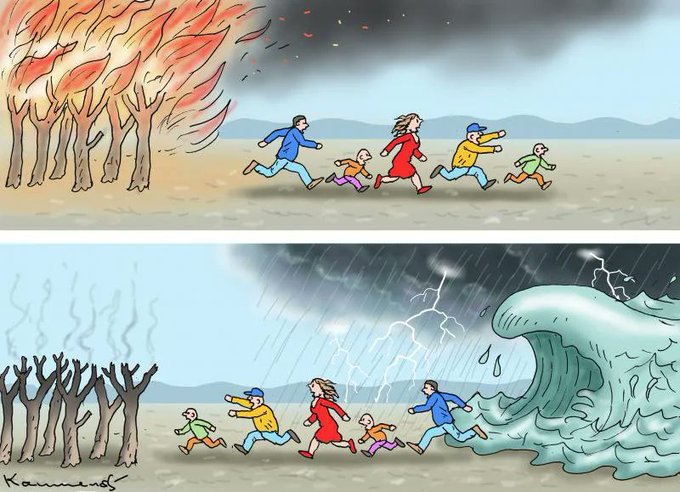
For forty years, we’ve marched down this dark path, “unwittingly” shaping the current “human nature” through the failed dogmatic #blinded collective choices and actions. Now, as we confront the existential threats growing #climatechaos and ecological degradation, we must reckon with the consequences of our decisions.

The next four decades will be marked by hardship, suffering, and loss as we grapple with the consequences of our past actions. As a first step, it’s very useful we acknowledge our role in shaping this grim reality and take responsibility for charting a new course forward.

It’s time to reject the poisoned philosophies and economic doctrines that have brought us to this precipice. We must reclaim agency over our collective future and commit to a path of social healing, reconciliation, and renewal.

Acknowledging our complicity in creating this mess is the first step towards redemption. The path I am outlining to do this is to embrace the power of #openweb collective action and solidarity, working together to build a more just, equitable, and sustainable world for generations to come.

One of the strong #blocking of this is to see this social thinking as simply an individualistic moral judgment, this would be using the current mess to judge the current mess. An all too common, hopeless path to walk down, and would only lead to the pushing of more mess. Please try not to take this path, thanks.

Let point out a glaringly obverse statement, I am not saying that these ways of thinking are not working as intended, they obviously are. Postmodernism has been used to disintegrate social norms that bind society together, it has done this. Neoliberalism has been used to divide the rich and the poor, it has done this. The moral judgment is not in the effectiveness of these paths but in our choice of path.

These too dead philosophy together push social disintegration that lubricated the pushing of the divide between the rich and the poor to the extremes that are growing today. It’s important not to simple see this as a moral judgment, as it’s a natural outcome of the path we have chosen to walk over the last 40 years, the moral judgment is on the path we have chosen.

#dontbeaprat is a positive statement of what’s next?

In activism (and interestingly less so in #mainstreaming life now) #stupidindividualism is a constant poison. With #blinded, people treat critical social thinking as ONLY personal criticism. This has the effect of #blocking that spreads mess over the very needed social change and challenge. Am increasingly using the  #dontbeaprat hashtag to communicate on this problem.

I think another useful hashtag on this behaviour is #blinded, which is in part self-inflicted and in part a general social outcome of the last 40 years of worshipping #postmodernism and #neoliberalism. The hashtag #deathcult is a useful “uncomfortable” way of expressing this.

Why is this such an issue, people are directly responsible for this mess making, as both of these ideologies are actually dead themselves now. It’s an intellectual zombie block.

So #dontbeaprat is a positive statement of what’s next?

Please #dontbeaprat on this, thanks.