Should we do something that is native to the Fediverse, and what would this look like?

The #Fediverse is #anarchism this is likely the best description of the community.
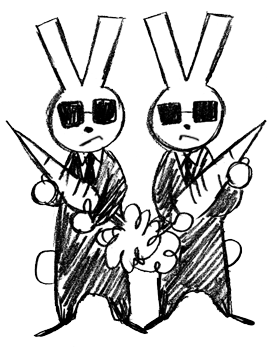
A represents the Greek anarkhia (‘without ruler/authority’), and the circle can be read as the letter O , standing for order or organization.
We currently have a Herding cats governance in the Fediverse and the projects that make it up
An idiom denoting a futile attempt to control or organize a class of entities which are inherently uncontrollable
This was very evident in the outreach to the #EU project.
We have the A but we do not have the O – we are asking what would the O look like in a online social tech project?
The #liberal #foundation model will be forced onto us if the Fediverse is taken up buy large #Burocratic orgs like the #EU and yes the will be a figleaf of “democracy” placed over the self-selecting oligarchy that will be put into place by “power politics” that this path embeds.
This path is the default outcome.
Should we do something that is native to the Fediverse, and what would this look like?

Q. how can someone “take up” the fediverse while it’s based on free software and open protocols like #activitypub, that are available to everyone and cannot be taken up by anyone?

A. Microsoft used to be very good at “taking up” open source projects. Google is VERY good at doing this… I think this is a part of the crises in #FSF foundation currently. When a big institution brings money and resources into an underfunded project it takes power and shapes the agender.

Q. Platform cooperatives, owned and run by users. Coupling this with netcommons. I am trying to launch PoC in ****

A. This is a path. My experience of this path is problematic and have repeatedly seen “process geeks” kill social movements by ossification of process, without any idea of the damage they are actually doing.

The whole tech co-op movement smells like this issue. But I don’t know anufe about this to make a judgment so kinda put the movement to one side for now.

Looking for places where it works on the ground is always a good thing. Examples please.

#mainstreaming #openweb standerds to the #EU

I have been working with a group based around the activitypub socialhub to outreach the #fedivers and #activitypub  standard to the #EU in seminars you can see the video recording in this post. Looking like the #EU will trial a few fedivers apps as tools for communication.

ActivityPub For Administrations (with chat) 2021-04-19
This is a recording of the first webinar in the ActivityPub for Administrations series.
This version also displays the live chat during the webinaire.

https://socialhub.activitypub.rocks/pub/ec-ngi0-liaison-webinars-and-workshop-april-2021

ActivityPub For Administrations 2021-04-26

This is a recording of the second webinar in the ActivityPub for Administrations series.

https://socialhub.activitypub.rocks/pub/ec-ngi0-liaison-webinars-and-workshop-april-2021

My thought on -Outreaching ActivityPub to the EU

It’s a good fit both strategically, in challenging the big US tech corporations dominance and tactically, in it being simple to implement and open to innovation as it is outside of anyone group control and agendas.

The #EU implementing AP could help to reset the capture of the WWW (which made the internet human) its good to remember was a European project – The birth of the Web | CERN home.cern/science/computing/bi

Let’s look at practical small steps to make this happen.

My thoughts/feelings are pragmatic on a good outcome.

If we close everything we are left with the evil, a bad outcome

What do you think *should* be closed? Or at least is OK to be closed?

Let’s start from a traditional liberal view: The majority of social interactions should be done in the OPEN and some private interactions should be done CLOSED.

We can discuss from this.

What the current dogma misses is that just about all good social power comes from OPEN

And meany social evils come from CLOSED

If we close/lock everything down, we are left with the evil, a bad outcome.

There are world-view gaps that make this a hard bridge to hold in place.

Example Diaspora and RSS based networks – the young Turks did a CLOSED network and shouted down the existing OPEN networks… 10 years go by, and we have to reinvent RSS+ as #ActivityPub to launch open networks a new – lets talk more about examples like this when we talk about the #geekproblem and #encryptionists. The 10 years that is missing is the problem.

It’s mostly a view of human nature, thus sociology and politics, applied to social groups who make and use #openweb technology. So if you are new to thinking about this maybe start with some basic wikipedia though the quality has become well muddy over the last 5 years.

https://en.wikipedia.org/wiki/Sociology

https://en.wikipedia.org/wiki/List_of_political_ideologies

The #geekproblem has assumptions, so we need to start to think about this, a good start:

Conservatism

Liberalism

Anarchism

Then ask questions with ideology in mind as motivations and course for the #openweb

The Fediverse – We need to now not fight like we always do

The problem isn’t that the #Fediverse has politics – it’s that people keep pretending it doesn’t, and then acting them out anyway in messy, unconscious ways. The Fediverse didn’t appear from nowhere, like all tech, it’s built on assumptions about power, trust, ownership, and human behaviour, and right now, those assumptions are colliding.

At its roots, the Fediverse grows out of we could call “stupid anarchism” – meaning not a deep, grounded anarchist practice, but a default instinct: no central authority, let people self-organise, trust will emerge. You can see this clearly in protocols like #ActivityPub – federation instead of central control, local autonomy over global rules. That’s the good part, the messy part is that this instinct often stops there, without the hard work of building sustainable trust, governance, or conflict mediation.

On top of this, you’ve got a layer of people trying to push toward cooperative or commons-based socialism. They’re asking real questions about shared ownership, moderation as collective care, and how to build infrastructure that isn’t captured by capital. But this layer is still thin. It exists more in intention and small experiments than in strong, lived structures.

Then pressing in from the outside – and increasingly from the inside – is #mainstreaming capitalism. Not the obvious corporate takeover (though that’s always lurking), but the softer version of growth metrics, influencer culture, branding, monetisation logic. You are seeing code-bases acting like platforms, admins acting like CEOs, and social capital turning into attention economies. It’s subtle, but it bends things.

And yes, there’s always an authoritarian shadow, not fully formed, not dominant, but present in tendencies with calls for tighter control “for safety” and central blocklists becoming de facto authority resulting in pressure for standardisation that removes local autonomy. This isn’t new. It’s just history repeating in a new technical wrapper.

If you want a clear historical parallel, look at Spanish Civil War, not because the scale is the same, but because the dynamics are familiar: anarchists, socialists, liberals, and authoritarians all operating in the same space, sometimes cooperating, often undermining each other, while larger power structures move in to shape the outcome. The tragedy there wasn’t just external force – it was internal fragmentation and failure to build shared process. That’s the uncomfortable mirror, back in the Fediverse, what do we actually have?

  • Anarchist roots – decentralisation, autonomy, federation
  • Proto-feudal remnants – big instances, influential admins, emerging “princes” of attention
  • Weak socialist layer – some cooperative thinking, but little durable structure
  • Encroaching capitalist logic – attention economies, soft monetisation, branding
  • Background authoritarian impulses – control creeping in through safety and scaling pressures

And sitting awkwardly across all this is the Social Web Foundation and similar efforts – trying to stabilise things, but often pulling toward NGO-style mediation and #mainstreaming rather than any native grounded, messy governance. So yes, we keep making horrible mistakes, not because people are stupid, but because we refuse to name the politics we’re already enacting. We default to blinded ideology without admitting it, then fight over symptoms instead of causes.

The result is predictable endless meta arguments, fragile communities that fracture under pressure, governance that either collapses or ossifies and energy burned on internal conflict instead of building. What’s missing isn’t more blinded ideology, it’s conscious mediation between them. This is where process work matters, if the #Fediverse is going to grow into something more real, it needs to stop replaying these patterns blindly and start building with open eyes:

  • accept the anarchist base – but add real trust structures
  • grow socialist practice – not as slogans, but as working governance
  • resist capitalist drift – especially the subtle, “friendly” versions
  • keep authoritarian tendencies in check – without pretending they don’t exist

And most importantly – stop trying to “win” the ideological argument, and start building processes where these tensions can exist without tearing everything apart. That’s the shift from repeating history to learning from it, because without process, all you have is ideology colliding with itself, and ideology alone doesn’t build anything that lasts.

If we don’t get this right, the likely outcome is simple – The Fediverse becomes either a nicer version of the platforms it was meant to replace or a fragmented landscape that never scales beyond small niches. If we do get it right, it becomes something rarer, a living, federated commons that can actually hold difference without collapsing. But that only happens if we stop pretending the politics aren’t there – and start designing for them.

Bluesky thinking of a “governance” body of the fedivers

“A resource arrangement that works in practice can work in theory”

What exists already?

The is a pretty sorted #ActivityPub crew, then some organizing sites/forums, the yearly conference. MOST importantly some “kings”, “princes” a bit of a tech/influencer aristocracy who currently hold much of the “power”.

Where do we go from here?

On online “governing body” to be a VOICE for the #Fediverse – all done #4opens in social code:

For background on this https://en.wikipedia.org/wiki/Sortition

We have a yearly voting/consensus (online) body made up of “stakeholders”

Who are the bulk stakeholders-representatives:

  • One voice one instance – if you run an instance you get a vote – put the URL in as long as it’s online last year your vote counts.
  • The is then an equal/matching number of votes based on a “user” lottery – have to opt in by adding your account name. This is refreshed every year.

Then we have other more “affiliate” stakeholders that have to be “ratified” through the body

  • Codebases – could be factored by installed based on instance registered above. Over a basic threshold and the body agrees.
  • fedivers events – any group that regularly runs events gets a “stakeholder” vote based on them doing it last year. If the body agrees to this.
  • fedivers support organizations get a vote if the body agrees to this.
  • activitypub standards crew – get votes through all the rest and can have a vote as a  founding fedivers org.

Groups and individuals could get more than one vote – which is fine.

This would give us

A representative “stakeholder” body that could accept proposals and make decisions.

How would the body work?

#techshit all ready has way to much LOOK at ME look AT me. I don’t like competitive elections as the shit float to the top

Let’s do a LOTTERY- from these “voters” that makes up the body a lottery decides 3-5 as #spokespeople then leave um to get on with it. There is a tick box to opt out of being in the “spokespeople” lottery, so you have too wont to do the extra work if you don’t want to, its opt out rather than opt in – this is important.

They have the power to speak for the body and thus the #fedivers and can make policy decisions on consensus minus one process. Or put policy directly to the body to be voted (majority vote) on by the stakeholders.  (of course they would be subject to recall/impeachment if they fuckup too much, say proposal and 2/3 vote of the body)

Levels of “voice” anyone with an #activertpub account can put in a public proposal to be voted on by the stakeholders – if it jumps that hoop then it can be edited/pushed by an open group of stakeholders though a semiformal #4opens online process to jump to an agreement. Agreements are acted on by the “spokespeople” up to them to take these ideas forward? If non are interested better luck next year with your agender and new spokes people.

Q. what dose digital online Community “democracy” look like

If it does not have elephants running around throwing paper planes it’s likely the wrong structure.

NOTE: of course these alt-ideas have been tried in the offline world, and they generally DO NOT work. But this is no reason to go down the dead end of “liberal” foundation governances that also does not work. People are trying these ideas in Citizens’ assemblies so no issue not to try them online.

Lotteries take the “power” out of power politics… likely worth an experiment.

Compost and shovels are needed.

The power of the voice

  1. User proposals are excepted by anyone who has an activertypub account- just an idea – this can become a group.
  2. User groups – a part of the process, these come from ideas getting a level of support of the stakeholders.
  3. User agreements come out of groups these can then be enacted by the spokes people if they are interested.
  4. Spokes people can start groups to reach agreements and can enact agreements.
  5. Consensus of spokes people (-1) makes agreements body wide.

What are the risks:

* need basic security and checks – to see if an instance still exists and is real. If a member account is actively posting or a pulpit – all of this can be done with flagging some of them by code some by people – flags stuff goes to the “security group”

* Groups can be captured by agenders – being open to all stakeholder members mediates this – we solve swamping by having a dynamic short non-voting time based on the number of new members in the group.

* Bad group of spokes people, it’s a lottery, it’s up to the groups to influence and as a last resort “impeach” if one goes a new one is chosen by lottery.

* The actual number of spokes people are dynamic depending on the number of stakeholders but between 3-5 is likely a good number.

UPDATE

  • The body is made up of stakeholder one for each instance – you wont a voice you run an instance and register it. This is clearly the voice of the #Fediverse as they are the people running it.
  • This is then balanced dynamically by the same number of “users” who are interested in the process, they are chosen by lottery from the registered accounts. Your choice to register or not your account as a possable stakeholder.

On registration the is a box you can untick if you do NOT do this then you are in the lottery to get “governing positions” Sortition – Wikipedia for a background on why this path.

Only people who want to be part of the governing body AND play an active role are enrolled in the lottery.

You second point “common voice” comes from the working groups, agen are made up of ONLY people who are interested in playing a role.

“serving the humans trying to communicate.” we get out of the way and let the humans work it out – we provide structer for the groups, we don’t define the groups.

SocialHub though an interesting tool has strong tech aristocracy which is not surprising as this is how almost all open source project run – the Fediverse is something different which is why we do so badly at governance. Let’s continue to use the SocialHub for #ActivityPub organizing and possibly governance though it has no tools that I have found for the governance.

The money is a subject up for discusern, am just using https://opencollective.com as example.

Help would be needed to do the proposal and #UX

UPDATE

The work flow would be:

Sign up for the site, then don’t untick the box for “do work” if you become a “stakeholder” every time a position opens the lottery picks a stakeholder to fill it if it is you and you would like to do the job – get to it. If you do not wont the job then resign and the lottery will pick a new person.

If you are not picked by the lottery for a job opening the is still a meany things you can do as a stakeholder in the groups. If you are not picked as a stakeholder you can still put ideas for the stakeholders to make into group decisions.

The outcome is something much more representative of the #Fediverse than we can currently think about let alone implement.

The is #nothingnew in this idea or implementation, some examples from Wikipedia

Examples

  • Law court juries are formed through sortition in some countries, such as the United States and United Kingdom.
  • Citizens’ assemblies have been used to provide input to policy makers. In 2004, a randomly selected group of citizens in British Columbia convened to propose a new electoral system. This Citizens’ Assembly on Electoral Reform was repeated three years later in Ontario’s citizens’ assembly. However, neither assembly’s recommendations reached the required thresholds for implementation in subsequent referendums.
  • MASS LBP, a Canadian company inspired by the work of the Citizens’ Assemblies on Electoral Reform, has pioneered the use of Citizens’ Reference Panels for addressing a range of policy issues for public sector clients. The Reference Panels use civic lotteries, a modern form of sortition, to randomly select citizen-representatives from the general public.
  • Democracy In Practice, an international organization dedicated to democratic innovation, experimentation and capacity-building, has implemented sortition in schools in Bolivia, replacing student government elections with lotteries.[23]
  • Danish Consensus conferences give ordinary citizens a chance to make their voices heard in debates on public policy. The selection of citizens is not perfectly random, but still aims to be representative.
  • The South Australian Constitutional Convention was a deliberative opinion poll created to consider changes to the state constitution.
  • Private organizations can also use sortition. For example, the Samaritan Ministries health plan sometimes uses a panel of 13 randomly selected members to resolve disputes, which sometimes leads to policy changes.[24]
  • The Amish use sortition applied to a slate of nominees when they select their community leaders. In their process, formal members of the community each register a single private nomination, and candidates with a minimum threshold of nominations then stand for the random selection that follows.[25]
  • Citizens’ Initiative Review at Healthy Democracy uses a sortition based panel of citizen voters to review and comment on ballot initiative measures in the United States. The selection process utilizes random and stratified sampling techniques to create a representative 24-person panel which deliberates in order to evaluate the measure in question.[26]
  • The environmental group Extinction Rebellion has as one of its goals the introduction of a Citizens’ assembly that is given legislative power to make decisions about climate and ecological justice.[1]
  • Following the 1978 Meghalaya Legislative Assembly election, due to disagreements amongst the parties of the governing coalition, the Chief Minister’s position was chosen by drawing lots.[27]

“blue sky thinking”

UPDATE

Some stats

population ~ 4.152.753 accounts

active users ~ 1.192.023people

servers > 6.828 instances

Let’s be optimistic and say half the instances signed up that would be over 3000 instances stakeholders and thus 3000 user stakeholders for a total of 6000 and a number from affiliate groups. This number is likely too much, so we can put a limit to 100 chosen by lottery from the stakeholders instances, this is then matched by 100 from the user stakeholders for 200 stakeholders + 5-10 affiliates it’s up to the admin group to choice the right number to build a working community, if you don’t have enough good workers open the pool up if the is to much dicushern close the pool down, try different approaches.

UPDATE

Looking at this in conversation it becomes clear it is a 3 way split of stakolder groups: instances/users/builders&supporters with the last group in big groups could be the size of the others so just to higlight they would be treted in exactly the same way if they are over the number of the body then they would be chosen by lottery just like the others.

External discuern

https://socialhub.activitypub.rocks/t/organizing-for-socialhub-community-empowerment/1529

https://socialhub.activitypub.rocks/t/what-would-a-fediverse-governance-body-look-like/1497/2

UPDATE

https://gnu.tools

Now that is serendipity timeing.

This looks like a tech/process based attempt at grassroots governance. Must say straight out, in my expirence, I have seen many process lead models like this, and they have NEVER worked.

Though it is always a good thing to try iteration. And good to contrast this to the humane/serendipity based aproch that we have been working on at the #omn

I like it.