Open source was always political, the very idea of #FOSS was always a radical, left-leaning stance.
Let’s be honest, you’re giving away your labour.
Not for profit, not for career points,
but because you believe we’d all be better off together
if we stopped rewriting the same bits of code in isolation
and started building commons instead of empires.
That’s not apolitical – that’s solidarity.
The #openweb is not just about better software.
It is about building a world where cooperation
beats competition,
where transparency outlasts control,
and where freedom comes from sharing, not hoarding.
People forget this because the #dotcons spent twenty years
repackaging #4opens code into the thin layer of closed platforms,
wrapping our collective labour, covered in corporate branding,
and calling it “innovation.”
They turned our commons into their capital.
But the roots of the movement, the #4opens,
the free software ethos, the hacker culture of mutual aid –
were never neutral.
They were radical acts of refusal.
Refusal to sell out creativity.
Refusal to turn knowledge into property.
Refusal to let gatekeepers define what freedom means.
So yes, the open-source community is political.
It always has been.
Every act of collaboration is rebellion
against the isolation and control of the #deathcult.
When you write open code, you’re not only solving problems –
you’re composting capitalism.
You’re proving that another way of working exists,
that cooperation scales better than greed,
and that shared tools make freer people.
That’s why projects like the #OMN (Open Media Network) matter.
They’re not simply technical, they’re social, cultural, revolutionary.
They remind us that freedom isn’t built on code alone,
but on the courage to share, to trust, and to keep paths open
when everything around us screams for control.
Open source is always political, it’s time we remembered what side it we are on.

To look at why this is important, we need to move outside the comfort zones of narrow #mainstreaming thinking. Let’s start by touching on the role of #protestcamps in direct action: protest camps are temporary activist spaces set up in public areas to bring attention to social, environmental, and political issues. These camps create a direct action environment where people gather, discuss, and demonstrate. They range from #fluffy (peaceful and symbolic) to #spiky (disruptive and confrontational), depending on the nature of the cause and the activists involved.
This raises the question of who uses these strategies and spaces, some examples of protest movements: #Occupy Movement – challenged economic inequality and corporate influence. #ClimateCamp – radical grassroots direct action movement to counter #climatechaos through awareness, policy pressure, and direct disruption. Climate camp was active in multiple countries, it peaked in the late 2000s and early 2010s, influencing both public debate and government action. #CriticalMass – decentralized cycling activism, founded in 1992, monthly mass bike rides to reclaim public space and challenge car culture.
These are all of grassroots politics, that operates from the bottom up, empowering people to engage directly rather than relying on mediating political parties or #NGO institutions. This long traditional path takes voice and enables change outside the #blocking power of traditional power structures, using disruptive tactics like strikes, sit-ins, and blockades.
Together, these provide the non #mainstreaming – democratic, practical paths to challenge authority, disrupt harmful policies, and drive real needed change. Let’s look at other examples, the debate around #XR (Extinction Rebellion), founded in 2018, #XR uses nonviolent civil disobedience to push governments to act on the #climatecrisis. The movement is divisive, some see it as #spiky, using direct action to force political change. Others argue it’s too #fluffy, adhering to liberal ideas of legality and non-violence, that limits its real radical potential. Whether #XR is a radical or liberal movement remains an active debate, but the impact it has had on public discourse and activism is undeniable. This debate itself, the living active fluffy/spiky debate is core to affective grassroots activism.
This is what we need to pass onto the current #4opens alternatives & horizontalist paths in tech, that to often, have the assumption that liberal legality alone will resolve systemic problems, that is an easy to see #geekproblem fantasy we need to focus on re-balancing. A path to do this is learning from the above history of activism, native #FOSS and #4opens structures, which, yes are not without challenges.
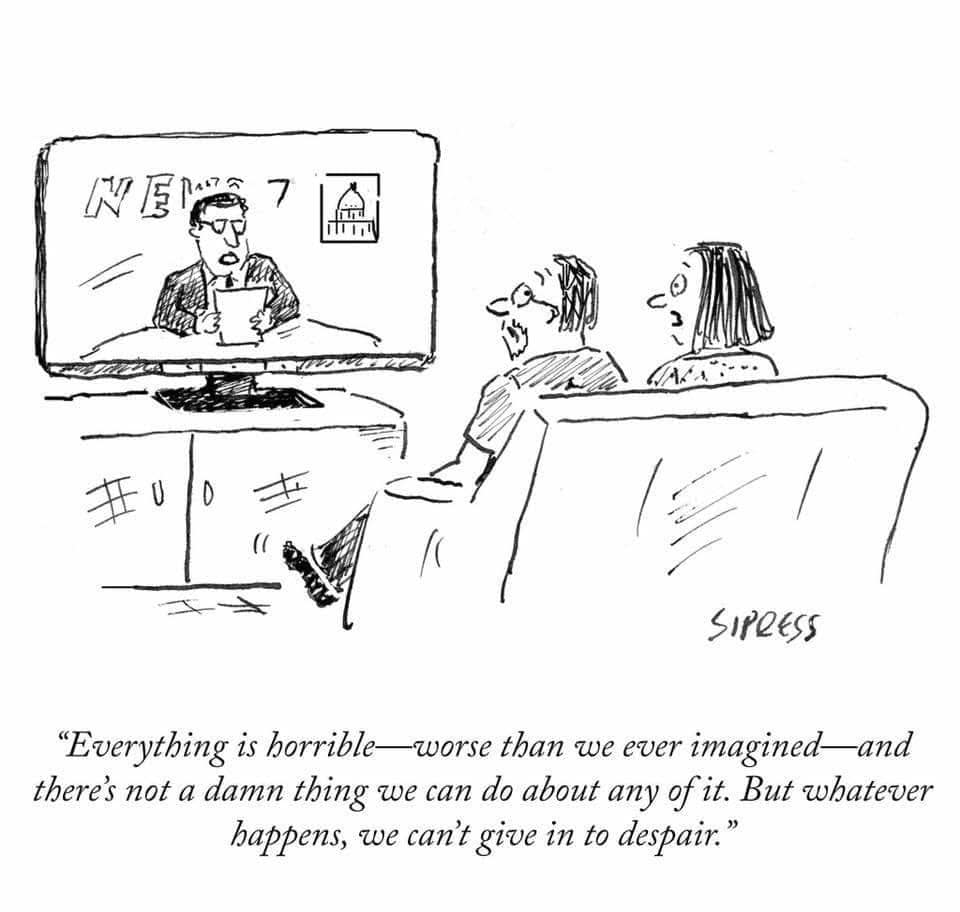
As we keep highlighting, activism isn’t separate from tech development, with the #FOSS traditions coming from tech activism from the start. Movements like #Indymedia, #Fediverse, and #OMN show that #FOSS paths can be built with social movements in mind. As in the end, if we don’t shape our own digital tools, they will be co-opted by #dotcons and restricted #mainstreaming “common sense”. The solution? Rebuild tech from the ground up, not just by resisting, but by actively creating the alternatives we want to see.