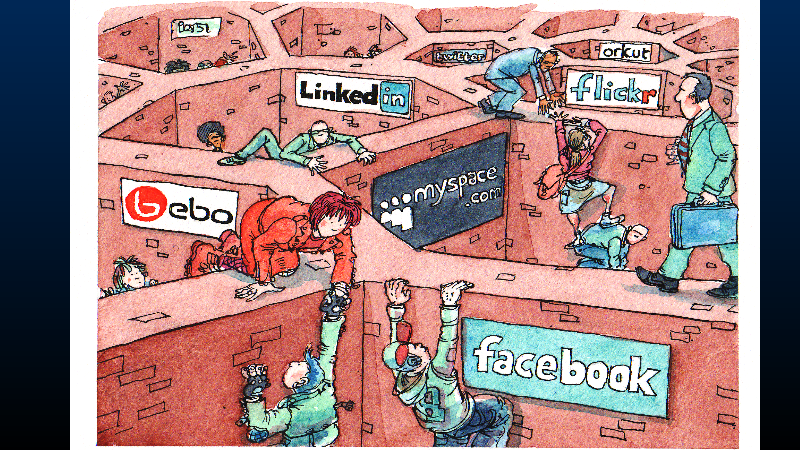
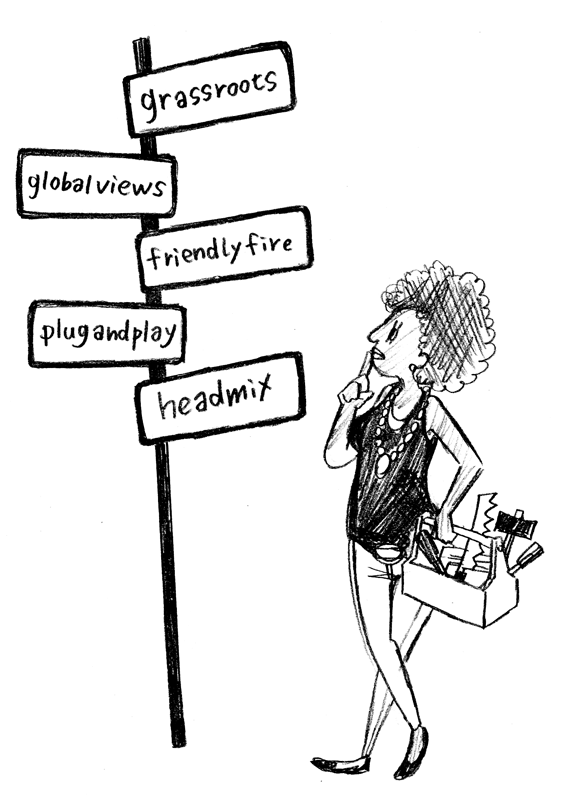
In alt-culture paths we have meany problems, one of them is the #mainstreaming “colonize” what works, absorbing popular, fringe, and grassroots ideas, stripping them of their radical core, and adapting them to serve the common sense #deathcult paths. Let’s look at an example of this sewage pipeline:
Organic success, a movement, phrase, or subculture gains organic traction because it effectively speaks to real-world anxieties, desires, or truths (e.g., environmentalism, civil rights language, or anti-establishment rhetoric).
The “invasion” of language, institutions, corporate entities, or dominant political figures notice the strategic effectiveness of this concept, they “colonize” it by adopting its language, framing, and aesthetics to appeal to the public.
Dilution and diffusion, absorbed into the mainstream, the original, transformative power of the idea is neutralized, restructured to reinforce existing power systems rather than challenge them.
An example we can look at here is the story of Burning Man that holds a warning for the #Fediverse and the wider #openweb reboot. That #techshit success can becomes the process that destroys the thing that made our reboot worth doing in the first place.
Burning Man was born from Rainbow Gathering traditions, from this native path, culture of participation, self-reliance, gifting and collective effort, people didn’t only turn up to consume an experience; they made things #DIY, built spaces, shared skills and invited strangers to join in. The organizations came later, as a way to describe and pass on the culture that had grown organically from the grassroots.
But as Burning Man became successful, those principles became easier to package, sell and perform. Participation become an identity rather than a practice, so self-reliance could become an expensive aesthetic. Then community could become an institution, with the living culture buried beneath branding, bureaucracy and the drug feed path of commercial convenience.
The danger isn’t as simply as outsiders arrived or money entered the picture. It was that the culture became capable of reproducing the appearance of its values without requiring people to practise them. You could buy your way into the experience without developing the skills, relationships and responsibilities that had made it meaningful in the first place.
This is the trap of mainstreaming that the #Fediverse is now walking into it with its eyes closed. We keep hearing from our current self appointed “leadership crew” that the answer to the Fediverse’s problems is to grow, attract mainstream users, become more familiar and make ourselves acceptable to the platforms and institutions we’re supposedly trying to move beyond. On this path growth is treated as success in itself, familiarity becomes the measure of progress. The harder questions about power, ownership, participation and community are pushed aside, ignored and then repressed.
But who is this mainstreaming actually for? What are we trying to grow, and what are we prepared to lose along the way? The #Fediverse like rainbow gathering and its bastard sibling burning man grew from a different set of possibilities: decentralized communication, community-run servers, open protocols and the ability to build social spaces outside corporate control. Its value isn’t simply that it offers another place to post, it is that people participate in building and governing the spaces through which their communication flows.
Yet the blind pushing from the current #mainstreaming crew risks turning those #4opens possibilities into the normal consumer path. Instead of growing communities capable of running their own infrastructure, we concentrate on attracting users. Instead of strengthening collective responsibility, we make everything more convenient and expect somebody else to handle the difficult parts. Instead of building shared power, we copy the familiar platform model and hope a nicer technical foundation will somehow produce a different outcome.
This is where the #geekproblem comes in. Technical people become so focused on adoption, interfaces, scale and implementation that they lose sight of the social purpose of the technology. They build systems that make participation look easy, while doing little to help people become more capable participants. The result is a growing network with increasingly passive users and increasingly concentrated and blinded influence.
The lesson from Burning Man isn’t that growth is always bad, or that institutions and infrastructure are unnecessary. The same culture that produced commercial spectacle also produced genuine solidarity and practical action, including volunteers helping communities recover after Hurricane Katrina. The gift and its shadow grew from the same source.
The question is what our success makes possible – and what it allows us to avoid. A principle is a map, not the territory. Saying we believe in decentralization doesn’t make us decentralized in practice. Saying we support the commons doesn’t mean we share responsibility. Calling something participatory doesn’t mean people have any meaningful influence over it. We have to look at what our structures actually do.
This is why the #OMN project matter in practical sense, not only as culture. We need practical tools for grassroots news, shared archives and community media, built around open flows, reusable data and human trust. We need infrastructure that helps people and communities make things together, rather than another platform designed to turn them into an audience. We need to grow the capacity to participate, not just the number of accounts.
#Mainstreaming should 90% mean taking the values of the #openweb out into the wider world – not reshaping the #openweb until it fits the expectations of the mainstream. If growth requires us to abandon the practices that make the network different, then we need to ask what, exactly, we are growing.
The test isn’t whether our projects become bigger, more polished or more familiar. It’s whether people gain more ability to act, organize, share and govern together. It’s whether the structures serve the communities, or the communities end up serving the structures. Less performance, more participation – Less passive consumption, more shared capacity – Less chasing growth for its own sake, more building things that work.
Keep the tools simple, the flows open and power close to the people doing the work. That’s how we grow the #lifecult instead of reproducing the #deathcult in a new technical wrapper, it’s how we compost the #techshit and build an #openweb worth having. The test isn’t what our projects say they stand for, it’s what people become able to do through them.
For those of us who’ve spent the last twenty years working around alternative technology, grassroots media and activism, the hardest thing to watch has been how deeply the #dotcons have become embedded in the culture. We know the problems, we’ve been talking about surveillance, extraction, algorithmic manipulation, platform lock-in and the destruction of community for years. And yet we keep going back, not because people are stupid, but because addiction is powerful – especially when the thing you’re addicted to is also where everyone else is.
This is where #mainstreaming becomes such a problem. People have been, and still are, vile in their interactions with the alternatives. Instead of helping build something different, too much energy gets spent defending the existing system, attacking people trying alternatives, or having endless prat fights about which alternative is ideologically pure enough. The result? We waste years fighting each other while the #dotcons keep growing.
Our #mainstreaming crew/friends are always pushing pointless fights over alternatives, while defending the obvious worship of the #deathcult – forty years of #neoliberal “common sense” normalised extraction, competition, growth and individual consumption as if these were laws of nature, they aren’t, they are political choices. And “common sense” built around those choices is going to take time – and a lot of messy work – to change.
That’s what we mean by composting, not throwing people away, not creating another subculture purity club. Taking the accumulated #techshit, failed projects, bad assumptions, ego battles, corporate habits and activist baggage and turning it into something useful. Because dumping Big Tech isn’t just a matter of personal politics, it isn’t even primarily about “tech sovereignty” – that is another con when sovereignty means building our own little versions of the same extractive systems. It’s about survival – Big Tech is the latest flag-bearer for our recurring worship of #deathcults.
After living through this mess, we don’t need another shiny platform, we need to recover the ability to build things together. Small-scale, federated, open, human, trust-based, with memory and governance. With communities that can survive the failure of the latest #dotcons or #fashionista platform. That’s the point of the #openweb, #FOSS, #Indymedia and projects like #OMN. Not another tech fashion, more a way out of the addiction. So, grab a shoal and compost this mess, please.
The current mess in media isn’t that journalism has become biased, its always been, the problem is that the “progressive” #mainstreaming institutions trying to solve the crisis are still inside the assumptions that created it. Take the current liberal darling project Ground News, their promise is attractive: escape your filter bubble, compare left and right, become a more informed citizen. But notice the framing, the solution to broken media is… another layer of liberal media infrastructure.
This is a classic liberal response, instead of questioning the structure, it tries to manage the symptoms. The wrong question is “How do we balance left and right?” where it’s better to ask “Who owns the infrastructure? Who controls trust? Who decides what is visible?” These are very different questions. Political bias matters, but ownership, funding, moderation and publishing infrastructure matter far more. They shape what can be said long before anyone labels an article “left” or “right”.
Modern liberal media believes enough transparency, enough fact-checking and enough algorithmic tuning can repair journalism. But every new layer simply becomes another institution requiring trust.
Who rates the raters?
Who moderates the moderators?
Who audits the algorithms?
The answer is usually another professional organisation, another foundation, another for profit corporation, or another “independent” expert group. This creates an endless chain of powerless power rather than building any genuine public trust, it’s the false centre. One #KISS thing we need to understand is that political “centrism” is not a neutral place, it is constructed. On a surface layer – when publications owned by billionaires are labelled “centre”, while grassroots or socialist publications are labelled “left”, the scale itself quietly normalises existing power. This isn’t necessarily a conspiracy, it is simply what happens when institutions built inside capitalism reproduce capitalist assumptions.
The #OpenMediaNetwork starts somewhere else – instead of trying to create perfect neutrality, it creates open process. The #4opens don’t solve bias or decide truth to determine who is correct, they simply make the process visible. This doesn’t eliminate conflict, instead it makes conflict transparent. People can inspect decisions, challenge moderation, fork communities, preserve history and build alternative trust networks. The goal isn’t perfect objectivity, it is accountable process, that in the end trust comes from communities
Liberal media imagines trust that comes from old (and by now well captured) institutions – where the #OMN argues that trust emerges from communities that can see how decisions are made, that trust is built through transparent moderation, open metadata, public discussion, versioned history actively used for federation instead of monopoly. This native path is closer to how the early #openweb worked, and how projects like #Indymedia succeeded before platforms enclosed this public conversation flow.
Ones you take this #KISS path the problem isn’t simply media bias it’s about ownership of traditional media itself. As long as publishing, discovery, moderation and archives remain controlled by institutions whose survival depends on existing power structures, every attempt to “fix” journalism will reproduce those same structures. This is the root problem when liberal media keeps trying to repair liberal media.
The #OMN starts somewhere different – building commons instead of platforms, process instead of authority and trust instead of branding. Yes, that won’t magically solve media bias, but what it can do is balance the current mess by creating open space where communities can solve these problems together. That is a much stronger foundation than asking another algorithm to tell us which billionaire newspaper is slightly more “centre” than another.
One of the things missing from conversations about rebuilding radical networks is that we defult to looking first at the technology. The #OMN question is different – What are the social systems that allow alternatives to survive?
A useful example comes from the history of the Rainbow Gatherings. To an outsider, the strangest thing about a Rainbow Gathering is likely the hippies, the second is the absence of money. Thousands of people gather in forests, share food, organise care, create culture and then disappear again – without tickets, vendors or commercial stages. This can look like a quirky tradition, but there are lessons – the absence of commerce was never just a rule, it was the point. The idea was simple – If you want to show that another society is possible, you cannot only argue against the existing system, you have to create a working alternative.
The non-commercial path was the message, a living example of a working alternative logic. The early Rainbow organisers came out of the Vietnam War veterans and the antiwar counterculture of the late 1960s and early 1970s. They were asking a question that still matters – How do you challenge a system built around war, competition, consumption and hierarchy? One answer was confrontation, another answer was demonstration. the rainbow path was instead of only fighting the existing culture, was to create a space where different values operate with shared resources, mutual aid, no buying and selling, no central authority. People contributing what they can and receiving what they need.
The Free Store experiments and early free festivals showed this approach in practice. The gathering itself became temporary commons – a place where the normal rules of the market were suspended. The important part was not the camping, not the festival. It is the social infrastructure underneath – Food does not appear magically, care does not happen automatically, conflict does not disappear.
A commons requires trust, participation, shared responsibility, informal governance and a culture of contribution. This is the part missing from technology discussions, people imagine the #openweb as about tools – Protocols – Platforms – Software. But the deeper layer is social, the software only works because communities create meaning around it.
The #OMN connection is that this is the same lesson for radical media networks. #Indymedia was never only a publishing platform, It was a social path, the technology enabled publishing, but the power came from the culture of open participation, collective editing and local autonomy to build shared responsibility.
The failure of this network was not simply technical, like many commons, the challenge was maintaining the social practices that made the technology meaningful. A reboot cannot just recreate the tools, it has to regrow the conditions that allowed the tools to matter in a world beyond the market logic.
The #dotcons path blindly pushes – create a product, grow users, extract value, centralise control.
The commons model works differently – create relationships, grow trust, share value to distribute power.
This does not mean money disappears from the world. The Rainbow example itself shows this complexity. People still need resources. Food still has to be bought somewhere. The outside economy still exists. The difference is where the organising principle sits. Does money organise the community? Or does the community organise resources?
That is the question that matters, it’s the danger of rebuilding the same common sense system – that many alternative paths fail because they challenge the surface while reproducing the structure underneath. A shiny platform can still become a gatekeeper, a new network can still become centralised. A new media system can still become extractive. The question is not only “Is the technology open?” The question is also “Is the culture open?”
The Rainbow Gatherings survived because they were not trying to build a better marketplace. They were trying to practice another way of organising, that is the deeper #openweb lesson. We do not just need alternative tools, we need alternative relationships with tools. It is about creating spaces where people can trust, participate, maintain and build together.
The #OMN vision is not a replacement platform, it is a garden, the technology is the soil, the people are the gardeners, the commons are what grows.
There’s no profit in this for me, the more useful question is: who benefits from #blocking these projects? When people ask “what’s the agenda?” they look for who is trying to benefit from building something. But the better question is who gains when alternatives never get built. The #openweb has always been about creating spaces outside the usual incentives. That threatens people whose power depends on keeping things closed, controlled, and dependent.
The commercialization of the “sharing economy” created something strange – a return to a pre-modern world. What looked like community became extraction. What looked like sharing became renting, platforms became landlords, and relationships became transactions.
Let’s be clear about something, the commons are not an academic concept waiting to be discovered by economists or policy wonks, not a diagram in a textbook, not something that needs a queen, a government, or a management consultant to bring into existence. The commons are what people have always done when they are left alone to organise their own survival with neighbours they trust.
Peasants managing grazing land across medieval Europe. Indigenous communities stewarding water, forest and fishery for generations. Canal boat communities building informal mutual aid along waterways. Squatters running collective houses. Hackers building free software together. #Indymedia collectives publishing grassroots news from the bottom up. The digital commons – open source, creative commons, the #fediverse, the #openweb – already existing right now, built by thousands of ordinary people, not by any institution.
This is worth saying clearly because the #mainstreaming story about the commons almost always starts in the wrong place – with Garrett Hardin’s 1968 “tragedy of the commons” paper, which blamed collective ownership for environmental destruction and was used for decades to justify privatisation. The paper was ideologically loaded, historically illiterate, and largely wrong.
On the other side of mainstreaming we have Elinor Ostrom who spent her privileged career documenting why, eventually winning a Nobel Prize for showing that communities routinely manage commons successfully under the right social conditions. Her work, it is full of peasants, fishers, farmers and irrigators, not governments or corporations, let’s try and balance pointing at the top by point to the source
The real tragedy is not the commons. It is what #neoliberalism does to the social fabric that makes commons possible. As I have been arguing for years at hamishcampbell.com, the #deathcult worship of the 1980s and 1990s didn’t just privatise assets – it broke the institutions and the relationships that made collective stewardship possible. Hyper-individualism doesn’t just make people selfish, it makes cooperation feel unnatural, even threatening. That is not an accident, it is a classic divide-and-control strategy.
The path back is not top-down – it never was – it is horizontal, rooted in trust, built through repeated small acts of mutual accountability. It is turning stress and conflict into commons culture rather than mutual destruction. It is rebuilding journalism as a commons rather than a product. It is composting “digital sovereignty” branding and just actually building working commons tech instead. The #4opens – open process, open data, open standards, open licences – are not abstract technical principles, they are social trust infrastructure, the modern grounding the commons grows from.
Thatcher said there is no such thing as society – the commons, everywhere it has ever worked, is the practical, lived refutation of that claim. Not a government programme, not a think tank report. Peasants. Boaters. Coders. Neighbours. People organising their own lives together, horizontally, with accountability to each other.
That is where we start, that is where we always started.
This story is about the ideology that won. In the late 1970s and early 1980s, two politicians on either side of the Atlantic didn’t only win elections, they reshaped what people came to accept as “common sense.” Margaret Thatcher in Britain and Ronald Reagan in the United States did not invent capitalism’s worst tendencies, but they gave them state power, institutional infrastructure, and ideological legitimacy.
What they built was not simply a set of policies, it was a social programme we are still trapped inside more than forty years later. The push was simple and devastating citizens became “taxpayers,” public services became “handouts,” collective investment became “inefficiency,” and the commons became a problem to be solved through privatisation.
Decades of postwar social infrastructure – built on the understanding that some things are too important to be left to markets – were dismantled, defunded, and handed over to private interests -the very same interests funding the political projects carrying out the dismantling.
This is what #OMN means when we talk about enclosure. Not just land enclosure, but the enclosure of everyday life itself: Water, housing, transport, education, healthcare, communication and culture. Everything turned into a commodity.
Neither Thatcher nor Reagan created this mess, the project was carefully engineered. Reagan established a President’s Commission on Privatisation which drew up extensive plans to strip public assets and services. Thatcher pushed through mass privatisation of utilities, council housing, and national industries while selling the process as “popular capitalism.”
Behind them stood an entire ideological machine of the Heritage Foundation, the Adam Smith Institute, the Institute of Economic Affairs, the Reason Foundation, and countless university economics departments and corporate-funded policy groups.
Their role was to make radical upward redistribution sound like neutral common sense, and they succeeded. Even the language changed “tax burden,” “efficiency,” “choice,” “reform,” “flexibility.” Every word quietly carrying the ideology.
The method itself was brutally simple – cut taxes for the wealthy and corporations. Create public deficits. Use those deficits to declare public services “unaffordable.” Privatise the resulting wreckage. Transfer wealth upward. Starve public institutions until they fail, then point at the failure as proof they never worked.
The cruelty was not accidental, it was structural. Thatcher’s Chancellor openly described mass unemployment as “a price worth paying.” Reagan’s administration treated social devastation as collateral damage in the restoration of elitist power.
The results were not abstract, from 1948 to roughly 1979 in the United States, productivity and worker wages rose together. After Reagan, productivity continued climbing sharply while wages largely stagnated. Workers produced more wealth than ever before, but a growing share of that wealth flowed upward into capital accumulation rather than wages or public goods.
The mess this created was Labour’s share of national income steadily declined while housing costs rose, debt exploded, unions collapsed, and public infrastructure deteriorated. Debt became the mechanism keeping society functioning: mortgages, credit cards, car loans, student loans, payday lending. Daily survival increasingly depended on borrowing. Higher education shifted from a public good into a privatised commodity. Healthcare became financial extraction. Housing became speculation rather than shelter.
The language was “freedom.” But the freedom being expanded was the freedom of capital. None of this was racially neutral. Reagan’s “welfare queen” narrative deliberately racialised poverty to fracture working-class solidarity. The actual fraud case behind the story was tiny compared to the propaganda built around it, but the myth worked politically because it redirected anger downward rather than upward.
The so-called “War on Drugs” targeted Black communities while harsher sentencing laws entrenched mass incarceration. Meanwhile, the AIDS epidemic was ignored for years because many of the people dying were treated as disposable by political elites. Thatcher’s government supported sanctions-busting trade with apartheid South Africa while denouncing the ANC and treating Nelson Mandela as a terrorist.
These were not side issues, the neoliberalism story required enemies: welfare scroungers, criminals, radicals, immigrants, trade unionists, the “undeserving poor.” Every enclosure needs someone to blame for the damage enclosure causes.
In the rich west the programme attacked wages, unions, and public services. Abroad it was openly violent. Reagan’s administration funded and armed the Contras in Nicaragua despite international condemnation. US-backed regimes across Latin America carried out massacres, disappearances, and systematic repression while being framed as defenders of “freedom.” Thatcher supported Augusto Pinochet long after the scale of torture and repression was well known.
The noise was consistent and on going as liberation movements became “terrorists,” dictators aligned with Western capital became “allies,” and democracy mattered only when it protected existing power. The same logic still dominates global politics today.
What was lost was not only economic, the postwar social settlement – however flawed – rested on the idea that some things belonged to everyone and should be collectively protected:
healthcare,
housing,
education,
water,
transport,
welfare,
culture,
democratic infrastructure.
These systems were not gifts from benevolent elitists, they were won through the struggle by labour movements, cooperatives, mutual aid traditions, socialist organising, and community solidarity. Thatcher famously claimed:
“There is no such thing as society.”
This was not only rhetoric, it was a political programme. Destroy people’s belief in collective action and you destroy their ability to resist enclosure. This is where the #OMN critique of the “tragedy of the commons” matters. People are capable of managing commons collectively, history is full of successful examples, what neoliberalism destroys are the social conditions that make commons possible:
trust,
reciprocity,
accountability,
long-term stewardship,
community responsibility.
When competition replaces care, extraction replaces stewardship, hyper-individualism – what we call #stupidindividualism – erodes social fabric itself. The tragedy becomes real because the conditions needed to avoid it are systematically dismantled.
Understanding this matters not for nostalgia, but for navigation. The crises surrounding us now: housing collapse, ecological breakdown, inequality, democratic decay, loneliness, food insecurity, social fragmentation, mental health crises, are not random failures. They are predictable outcomes of forty years of #neoliberal wrecking. The mess this created is functioning largely as designed, prioritises elitist capital accumulation above any social wellbeing.
The liberal centre cannot solve this because it operates inside the same logic, technocratic management of decline is not transformation. Real alternatives require rebuilding #KISS commons-based infrastructure, not only as abstract ideals, but as practical trust infrastructure. This is the work of composting the current mess and growing alternatives from within the ruins.
Thatcher claimed there was no alternative, she was wrong. But building alternatives means being honest about what was destroyed, who destroyed it, how they destroyed it, and why the same logic still dominates today. This honesty is where rebuilding begins.
With this in mind, let’s recap on what Thatcher and Reagan built, its not just bad policy, not just inequality, its a full #deathcult – the self-destructive logic of #neoliberalism so committed to short-term greed and #stupidindividualism that it knowingly sacrifices the ecological and social foundations human life depends on. Forty years of hard indoctrination that doesn’t just fade away its – normal is walking around in a toxic story and calling it common sense.
The #nastyfew – platform owners, landlords, corporate lobbies, think tank networks – didn’t win through merit. They won the #classwar temporarily, by capturing institutions, rewriting rules, and flooding the #mainstreaming with their logic until it felt like gravity.
The #dotcons – Facebook, Google, X/Twitter and the rest – are the digital continuation of the same enclosure. Corporate platforms built on data extraction, presenting themselves as neutral public spaces while converting human attention and community into profit. The #closedweb is just privatisation with a friendlier interface.
And the #climatechaos bearing down on us is not a separate crisis. It is the #deathcult arriving at its logical destination.
Real alternatives are built from the bottom, not handed down from the top. The #openweb – internet infrastructure built on open standards, community control, and the #4opens (open code, open data, open standards, open process) – already exists as working infrastructure, built by thousands of ordinary people, not governments or corporations. Then we have the #fediverse, #activitypub, #FOSS, #indymedia – these are not utopian visions, already built, from the ground up, by people practising #DIY politics for real.
The #geekproblem is when this gets captured – when technical control replaces social trust, when complexity becomes a barrier rather than a tool, when #techchurn burns through community energy without building anything lasting. The antidote is #KISS – keeping it simple, human, and rooted in real relationships.
The #NGO path – professionalised, funder-friendly, managed dissent – is #mainstreaming with a radical badge on, it defuses rather than builds. The #fashernista tendency prioritising the look and language of activism over the unglamorous work of building lasting structure is #fluffy blocking in performance clothing.
What actually works is #grassroots organising grounded in trust, horizontal process, and the willingness to #compost failure breaking down what didn’t work into fuel for what comes next rather than hiding the mess or repeating it. As the #OMN path puts it: broken institutions need rebuilding as commons, not as managed services or branded campaigns.
The #deathcult is real, the mess is real, the #nothingnew reminder is useful – these cycles have happened before, and ignoring that history is how we walk straight into the same traps again. But so is the ground we already stand on, sart there.
It should be obvious that we need a path back to good journalism – journalism that sheds light on facts, connects the dots, and lets people trace those dots back to sources. This is what allows us to share, question, and discuss within our own trusted communities, and then spread that knowledge outward through federation, always linking back to the source.
Right now, the #mainstreaming path is broken. It’s sometimes hard for people to see this because the decline has been slow, a gradual death of journalism. Since the early days of the internet, we’ve been told the same story: “People expect news for free, so quality journalism is no longer economically viable.” There’s truth in that. Good journalism is expensive. It takes time, skill, trust, and institutional memory.
But that’s only half the story. What actually happened is this: people kept consuming familiar “news brands,” and those brands were bought, consolidated, and financialised until shareholder value replaced any sense of public value. Slowly, investigative journalists were cut and sidelined, editorial independence eroded, and content shifted toward ads, PR, and narrative management. What we now call “news” is marketing, agenda-setting, and reputation management – a distraction. Journalism, as a public good, has been hollowed out, in part through our own passive acceptance of this shift.
Today, we can see more clearly that if you do real journalism – the kind that challenges power – you have no real career path and face risks: #dotcons blocking, right-wing co-option, and at worst, isolation, exile, prison, or worse. The result is a broken landscape: corporate media that won’t tell the truth, and under-resourced independent media that carries high risk for little or no reward. In that situation, who chooses journalism as a life path?
The deeper problem is articulation and power. The world is complex, most people don’t have the time, energy, or tools to fully articulate what they see, feel, and experience. Into that gap step politicians, corporations, and #fashernista influencers. They have the resources – especially through the #dotcons – to articulate reality, but in ways that divide people, flatten complexity into conflict, and steer perception to serve power and profit. This isn’t just misinformation. It’s structured narrative control.
Why the old models won’t come back, we can’t simply “fix” legacy media. It is structurally tied to advertising, concentrated ownership, and political influence. And we can’t rely on heroic individuals either, that path is too fragile, too dangerous, and too easy to suppress. If journalism is going to survive, it won’t look like the past.
A different path: journalism as networked commons. At #OMN, we’re outlining a different approach decentralised, collective path. Think of it as a second coming of #Indymedia, but more resilient, more sustainable, and better integrated with current networks.
This is where the #openweb and the #Fediverse matter. With protocols like ActivityPub, we already have the foundations for distributed publishing, shared visibility, and cross-community discussion. But tech alone isn’t enough, the missing layer is trust and flow. To rebuild journalism, we need to focus on how information flows socially, not just how it’s published.
Metadata (tags, context, sources, warnings) travels with stories
People can trace information back through the flow
Instead of one “authoritative source,” we get many sources, with visible relationships between them, shaped through community trust and discussion. This is journalism people can actually use to follow a story back to its sources, add context and local knowledge and share and challenge it within trusted spaces.
That’s how we rebuild public understanding – not just publish articles – but from product to process. Journalism should not be a product to consume, it needs to be a process we participate in. When it’s treated as a product it’s optimised for clicks, shaped by incentives and in the end controlled by owners. When it becomes a process it becomes collective, accountable and thus resilient.
So composting the mess, we’re not starting from nothing, we have the ruins of legacy media, the lessons of projects like #Indymedia and the living infrastructure of the #Fediverse. This is compost, from it, we can grow something new – grounded in the #4opens, simple enough to understand (#KISS), and social at its core, not just technical.
The real question isn’t “How do we save journalism?” It’s: How do we rebuild the social systems that make truth-telling possible? Because without those paths, journalism doesn’t just struggle – it disappears.
In #mainstreaming and alt political cultures there’s a constant call in messy times for “strong leaders” to cut through the chaos, but this is the wrong path. What Jeremy Corbyn and Bernie Sanders actually show is something more uncomfortable and more useful that real change doesn’t come from strong individuals – it comes from movements we don’t fully control. They were signals, not saviours.
Both figures emerged on the left because something deeper was already shifting with widespread discontent, a break from #mainstreaming politics and a hunger for alternatives to 40 years of #deathcult worshipping. They didn’t create these conditions – they channelled them. “Weakness” is often misnamed, Corbyn in particular was constantly framed as weak, but what was actually happening? When people treat them as failed “leaders,” they miss the point, at best they were interfaces to movements, rather than top-down commanders. They:
Hold together fragile, diverse coalition
Refusal to impose top-down control
Emphasis on process, participation, and consensus
In a stable system, this might look slow, in a fragile system, it’s often the only thing preventing collapse. In the open vs closed battle, it’s not as simple as it looks – especially in the mess we’re in.
CLOSED → conservative / fear / control OPEN → progressive / hope / trust
We need to keep looking at the underlying path when deciding which way to push the balance.
Where the demand for “strength” usually means more control, less democracy. That path tends to deepen the mess, not fix it, as personality politics is a dead end. When media and institutions focus on personalities where movements are about issues and structures. This mismatch is fatal if your politics depends on a person you are attacked through that person – we all collapse when they falter. You never build lasting power, it is the trap both campaigns fell into, despite trying to avoid it.
Movements without structure (hard or soft) stall, is the harder truth – Horizontal energy alone isn’t enough – Electoral politics alone isn’t enough. Both Corbyn and Sanders mobilised huge grassroots energy, but institutions resisted, internal fragmentation grew – the energy wasn’t fully translated into durable paths, and they fell through the gap.
From a #OMN perspective, the takeaway is clear – Don’t look for better leaders – Don’t rely on existing institutions – Build commons-based infrastructure that movements can stand on. This means: Media we control (#indymedia paths), Governance we participate in (#OGB) and tech that reflects trust, not control (#openweb, #Fediverse)
So in messy times, don’t reach for “Strong Leaders” as this comes from fear, frustration and the desire for simple solutions, history – from left and right – shows where that road leads. In poisoned times, the work is slower, to build trust, to stay grounded in shared issues.
Corbyn and Sanders didn’t fail because they were too weak, they struggled because we don’t yet have the social, technical, and institutional commons needed to carry the kind of change they pointed toward. That’s the work, and it’s not about finding the right leader – it’s about becoming the movement that doesn’t need one.
We need to have a clearer, more grounded conversation about “security” and what it actually means in the context of the #openweb. There is a long history of thinking in #FOSS spaces that security is something we can solve purely technically: better encryption, better protocols, better architectures. But in everyday life and practice, people need to work from a much simpler starting point – We do not trust client–server security. We only meaningfully trust what can be verified through the #4opens. And even with #p2p, we keep our trust closed limited.
Why? Because the underlying systems people actually use are insecure by design: old phones, opaque operating systems, proprietary blobs built and controlled by #dotcons. You can build the most secure system in the world, but if the people you are communicating with are using compromised devices, then your security collapses to their level.
That’s the bit people who fixate on closed don’t like to face. So a #KISS approach helps cut through the illusion – At normal use, there is very little real security. At paranoid levels, security breaks down socially, because you still need to interact with people operating at the normal level. That doesn’t mean security doesn’t matter. It means we need to stop pretending it technically works in isolation from social reality.
Why closed paths, spaces and projects fail socially, is a harder point. Closed systems are often justified in the name of security, privacy, or control, but socially, they create a very different dynamic in that they remove visibility. And without visibility, you cannot form shared judgment, without shared judgment, you cannot have social truth. In closed environments, bad actors – call them “monsters” if you like – can manipulate, divide, coordinate in the dark to avoid accountability, because there is no wider context to test what is happening.
In open systems, the same actors exist, but they are much easier to see, challenge, and trip up, because conversations are visible, processes are transparent and history is accessible. Closed breeds monsters, open pushes them out of the light and into the shadows. This is why, for the #openweb, “closed” should be deliberately limited and clearly bounded, not expanded as a default.
There is a very real social problem on this with #Encryptionism, as a social project as it is where meany parts of the #FOSS world go wrong. There is a strong tendency – what we call the #encryptionists – to treat encryption as a kind of universal solution, were in reality, this to often becomes: a focus on abstract technical purity, a dismissal of messy social reality to retreat into systems that don’t scale socially. And too often, aligns – ironically – with the same #deathcult logic it claims to resist: control, fear, and abstraction over lived practice. Encryption is a tool, not a culture.
This brings up the #Geekproblem – put simply – The people building the tools often cannot see the social problems those tools create. Even when those problems are pointed out repeatedly, over years, with real-world examples, the response is often negative and #blocking – to retreat into technical framing, to rephrase the issue in jargon, to build another “better” tool that misses the point.
A useful way to explain this to the #FOSS crew is yes, jargon can be messy, but this is not just about language. The deeper issue is cultural blindness, lets look at a concrete example that might help in bridging: #Indymedia was a ten-year working global experiment in open publishing and #4opens practice. And, yes, it ran into exactly these tensions, in the UK, the project fractured along three lines:
#Encryptionists – blocking aggregation due to abstract security concerns
#Fashernistas – pushing shiny but incompatible “better” solutions
#Openweb practitioners – arguing for simple, interoperable approaches (like #RSS)
Instead of adopting existing standards like RSS, parts of the project built new, incompatible formats, “better” on paper, but useless in practice. The result? Fragmentation, internal conflict, loss of interoperability, eventual collapse. All three sides lost. This pattern should feel familiar, you can still see it today in parts of the Fediverse.
The practical path forward, starts with taking this history seriously, then a few things become clear, that closed should be minimal and purposeful, not the default. Open processes (#4opens) are the only scalable form of trust, interoperability beats cleverness, social reality matters more than technical purity. And most importantly we need to design for the world as it is, not the world we only wish existed.
One Foot In, One Foot Out. Right now, most people are still inside the #dotcons. So the path forward isn’t purity, it’s transition. The approach we are taking with #OMN, it is simple, install and configure usable #openweb tools, make them accessible, let people use them alongside existing platforms to support a gradual #walkaway culture. One foot in. One foot out. If enough people take that step, the balance shifts.
But to take this step we need to compost the closed, we don’t need to destroy everything that exists, we need to compost it. Take what works, turn over what doesn’t, to grow something better from the remains. That means being honest about the limits of security, about the dangers of closed systems and about the cultural blind spots in #FOSS. If we can do that, we have a chance to build an #openweb that actually works.
If we can’t, we will keep repeating the same failures – just with better code.
Hamish Campbell is a long-time #openweb activist and technologist working on grassroots media and digital commons. He was involved in the early development of #Indymedia and continues this work through projects like the Open Media Network (#OMN), which works on how federated tools and community publishing supports public-interest media infrastructure. His focus is balancing building native platforms and on growing the social culture that makes the #openweb work: transparency, decentralisation, and horizontal collaboration. Through writing, workshops, and practical projects, he argues that the future of the Fediverse depends as much on culture, governance, and shared infrastructure as it does on code.
Purpose is to open conversation that many people feel but rarely articulate: the tension between grassroots culture and institutional capture. Start with your simple distinction:
Bad #mainstreaming → corporate/NGO structures reshaping the Fediverse
Then ask: “Which direction are we currently moving?”
Discussion topics – funding and governance, foundations and institutional capture, developer vs user power, infrastructure vs platforms. How to avoid repeating Web 2.0
Activity is to ask participants to map layers: Grassroots – NGO / institutional – Corporate. To discuss where power currently sits and what healthy balance might look like.
Outcome is people leave with language to understand the tensions they are experiencing in the Fediverse.
Workshop 02
Maybe a second one on why #makeinghistory is needed? Translating #OMN from “activist infrastructure” into “missing public digital infrastructure.” That language is what this event is trying to figure out. The Open Media Network (#OMN) proposes a model where grassroots publishing, community moderation, and institutional participation are balanced. Participants can discuss how institutions support shared infrastructure rather than just deploying isolated platforms.
Many institutions are experimenting with the Fediverse as an alternative to #dotcons corporate social media. However, simply running institutional servers risks reproducing the same platform dynamics in a federated form. We need workshops that explore the broader ecosystem of public-interest media infrastructure.
“What happens after institutions join the Fediverse?” The #KISS answer is they need to support the commons infrastructure that makes it socially viable. Running Mastodon is not enough, institutions need to support the wider open media ecosystem.
Talking about #openweb culture in a constructive way is tricky because most #FOSS and Fediverse conversations default to technical framing: code quality, scalability, moderation tooling, and #UX. These things matter, but they are not the foundation that determines whether a network lives or dies.
Maybe a useful way to open the conversation is to shift the starting point. Instead of saying “culture is important too”, say something stronger but practical: The success or failure of open systems is primarily a cultural question, not a technical one. The code only expresses the culture behind it.
Start with a simple historical observation. Many technically strong systems failed because the social layer was weak, while some technically rough systems succeeded because the community culture worked.
Examples from the open web – early open source projects that thrived because communities shared norms of collaboration. Grassroots networks like Indymedia worked socially even when the software was messy. Corporate platforms that succeeded not because they were technically better, but because they built powerful social gravity.
The pattern is clear, that technology enables networks, but culture sustains them. This is the missing step in most Fediverse conversations. Right now to meany discussions focus on: scaling servers, moderation tools, interface design and onboarding. These are all necessary but insufficient.
What way to often goes missing is the deeper questions – What culture are we actually trying to grow? Without answering that, the system tends to drift toward the dominant internet culture, which today is shaped by the #dotcon platform model of engagement optimisation, algorithmic attention markets, influencer dynamics and centralised power. When that culture seeps into the Fediverse, the result is a federated copy of the same problems.
So why is culture harder than code? Code can be written by a few developers, culture requires shared understanding across thousands of people. To grow this we need native governance norms, trust networks, moderation values and expectations about ownership and participation to hold to native paths for how conflict is handled. These things cannot simply be implemented in software, they must be grown socially, fail to address this is why many technically strong projects fail, they assume the social layer will somehow emerge automatically. It rarely does.
To make this constructive, it helps to clearly describe what we mean by #openweb culture. Some core values historically included public-first communication rather than platform ownership, decentralised responsibility instead of central moderation authority, commons thinking rather than product thinking to nurture horizontal participation rather than audience/influencer hierarchies, this need clear #4opens processes rather than opaque decision-making.
These values were never perfect, but they created a different social environment from today’s corporate social media. If we do not actively cultivate these values, the surrounding internet culture will slowly overwrite them. If the Fediverse continues to grow without addressing culture as it currently is, the most likely outcome is large institutional instances dominate, smaller community spaces struggle leading to more moderation being centralised. This all shifts user expectations toward platform-style experiences.
At that point, the system may still be technically federated, but the culture will have drifted back toward Web 2.0. The code will be open, but the social dynamics will not be.
So the “extra step” is simply, we must talk about culture as deliberately as we talk about software architecture. That means asking questions like: What social norms should Fediverse communities encourage? What governance models support open participation? How do we keep the ecosystem diverse rather than dominated by large actors? What responsibilities come with running infrastructure in a commons network?
These conversations are sometimes uncomfortable, because they move beyond engineering into politics, sociology, and ethics. But avoiding them does not make them disappear, it simply means the culture will be shaped by default forces instead of conscious choices.
A simple way to frame this – A phrase that often works well in discussion is – “Code builds the network, but culture decides what the network becomes.” If we want the #openweb to remain something different from the #closedweb platform internet, we need to invest as much thought into the culture as we do into the code and #UX. Otherwise, the technology may succeed technically, but the social project behind it will quietly fail.
Public Money, Public Communication, Public Infrastructure
Public institutions are funded by taxpayers. Their role is to serve the public. So it should be obvious that their communication systems are open, accessible, and accountable to everyone -without requiring people to sign up to proprietary, for-profit platforms.
Yet this is not the world we live in. Today, much of public communication is effectively outsourced to the #dotcons. If you want to follow government updates, participate in consultations, or even access timely public information, you are often expected to create an account on a closed platform – designed for profit, data extraction, and behavioural manipulation. That alone should raise serious questions.
This contradiction is especially stark in Europe as they regularly speak about digital sovereignty, data protection and public accountability. And yet, at the same time, they rely on U.S.-based corporate platforms to communicate with their own citizens. It’s a strange situation:
Public institutions, funded by European taxpayers, using foreign, proprietary infrastructure to mediate public communication.
Not only does this create dependency, it also places public discourse inside systems that are not governed by public interest.
It’s not just ironic. It’s structurally broken, we should think about prosicuting the people who have made this happen.
The access problem, useing closed platforms to access public communication creates real barriers: Not everyone wants to create or maintain dotcons social media accounts. Some people are excluded for ethical, political, or practical reasons. Algorithms decide what is seen and what is not. Public information becomes entangled with advertising and engagement metrics. This undermines a basic democratic principle that public communication should be universally accessible, without conditions.
We already have an alternative to this curupt mess, the #DIY#OpenWeb comes from europe, it offers a different path. Instead of #closedweb platform dependency, it builds on open standards, interoperable systems with multiple access points, no user lock-in. This is not a new path, it is how the web was originally created to work in the EU.
An example project that contines this native mission and supports this is the #OMN whitch creates spaces where public institutions and public communities can meet on equal terms, without one dominating the other, and without relying on closed corporate systems. If institutions instead invest in and support the wider #OMN ecosystem, they help build something fundamentally different, a public communication infrastructure that is open by default, accessible to all, resilient and distributed and aligned with democratic values.
A simple principle, if it is funded by the public, it should be accessible to the public – without restriction. No accounts required, no platform dependency and no hidden gatekeepers.
We need to organise a call to act. Public institutions need to move beyond simply using the #Fediverse. They need to help build and sustain the commons that makes open communication possible. That means, supporting open infrastructure projects, funding shared ecosystems like the #OMN and building real, not facke PR commitment to public-first communication practices.
This is not just a technical shift, it is a political and cultural choice.
A simple #KISS way forward is to shift public social communication onto the #Fediverse. This is already a significant improvement on current platform dependency. However, I want to raise a point that may sound controversial at first, but is actually quite practical: public institutions should not rely exclusively on the existing codebases.
Most current Fediverse platforms have done vital groundwork – particularly in establishing shared protocols, interoperability, and a working culture of federation. That contribution is important and should be recognised. However, many of these tools evolved shaped by the same assumptions as #dotcons and constrained by #NGO project models. As a result, they can be complex, difficult to maintain, and not always well aligned with the long-term needs of public institutions or commons-based infrastructure.
A constructive path forward would be to fund the development of a small number of new, purpose-built codebases focused on commons publishing. Not one, but three parallel implementations.
Why three? Because diversity reduces risk. In practice, not every project will succeed – this is normal and expected. Funding multiple approaches ensures resilience, encourages innovation, and avoids over-reliance on a single solution. The cost of doing this would be minimal relative to existing public digital budgets, yet the potential long-term value is significant.
Importantly, this is not about replacing the existing ecosystem. Because the Fediverse is built on shared protocols, any new tools would remain fully interoperable with current platforms. This means users of existing services can still interact seamlessly, while the overall ecosystem becomes stronger, more diverse, and better aligned with public service values.
In short: build on what exists, but don’t be constrained by it. By investing modestly in new, commons-oriented infrastructure alongside the current tools, public institutions can shape a more robust, sustainable, and genuinely public digital communication space.
Outreach to @newsmast interesting to see the #NGO view of the real alt path we need to take https://hamishcampbell.com/thinking-of-workshops-to-run-at-nodes-on-a-web-noaw-unconference/ you guys might be interested in working on the 3ed workshop outline. The 3 codebase need to be 1) mainstreaming, 2) radical #NGO and 3) native messy grassroots. You guys could be the second codebase. We do need diversity, best not to keep blindly messing up this path in the current globe mess.
Stopped going to in-person general tech conferences around 15 years ago – they’d become beyond pointless. Since then, I’ve stuck to more focused online events.
Now heading back to an in-person one. Curious what I’ll actually find.
I have a feeling it’ll be about 75% pointless, 20% narrow geek, academic and #NGO-focused (slightly useful), and maybe 5% – probably less – actually useful.
Let’s see how that shifts after the event.
UPDATE: The event was posative, people were looking for change.
One of the biggest barriers to building projects like the #OMN (Open Media Network) is not technical – it is structural – how resources are distributed in our society. Under capitalism, the driving force behind what gets built and what counts as “innovation” is profit. Investment flows toward projects that promise financial returns. Venture capital, grants, and corporate funding all operate under this logic: if a project can generate profit, scale, or market dominance, it is considered worthy of investment. If it cannot do those things, it does not get funded.
This creates a deep distortion in what kinds of technology and social infrastructure actually get built. Projects that could save lives, strengthen communities, or benefit wider society struggle to find any resources simply because they do not generate profit. We can see this clearly in the digital world. Billions flow into speculative technologies, advertising systems, surveillance platforms, and financial schemes. Meanwhile, the basic tools people need for public communication, community coordination, and independent media remain fragile and under-resourced.
The result is the landscape we now call the #dotcons: platforms that monetize our attention, harvest our data, and shape public conversation for the benefit of a handful of corporations and shareholders.
A different motivation? The native Fediverse and projects like the #OMN are built from a completely different starting point. Not designed to extract profit or built encloser. And not driven by the logic of venture capital. Instead, at best they grow from a humanist motivation: the desire to build social meaning and meet simple human needs. The goal is to improve the quality of life in general by supporting open publishing, shared media infrastructure, and grassroots communication. These are the kinds of tools we need to help communities tell their own stories, organise collectively, and respond to crises.
In this sense, the #OMN sits firmly in the tradition of the #openweb and projects like #indymedia. The technology exists, the cultural knowledge exists, what is missing is not possibility, but resources. Because the #OMN does not promise financial returns, it sits outside the normal funding pipelines. Venture capital has no interest, corporate sponsors want control, institutional funding comes with strings attached that reshape projects into something “safer” and less disruptive.
Over the past decades we have also seen how #NGO funding models neutralize grassroots initiatives, the original goals become softened, the governance shifts upward, and projects become professionalized to the point where they lose the communities they were meant to serve. So the challenge becomes very simple, but very real how do we resource projects that are built for social value rather than profit? This is the core difficulty in building the #OMN.
It is not that people disagree with the idea, in fact, many people recognise the need for open, public-first media infrastructure. The difficulty lies in finding ways to support that work outside the normal profit-driven economy.
Growing from seeds – the good news is that the #OMN does not need to start big. Many of the most important pieces of the #openweb have always grown from small seeds: communities, volunteer effort, shared infrastructure, and trust networks. The #Fediverse itself is proof that distributed systems can grow organically when people care enough to build and maintain them.
The aim is not to replace the existing system overnight. It is to grow an alternative ecosystem alongside it, rooted in openness, collaboration, and public benefit. This means building slowly, sharing knowledge, and keeping the processes transparent and simple. The #4opens principles remain a useful guide: open data, open source, open standards, and open process.
What you can do – if the #OMN is going to exist – it will exist because people decide it should. There are a few practical ways to help make that happen:
Contribute skills and development. Developers, designers, writers, organisers, and testers are all needed to grow the network.
Use and experiment with the tools. Real projects and real communities are what give infrastructure meaning.
Share the ideas. Talk about the need for public-first media systems and the problems with the current #dotcons landscape.
Help build the culture. Technology alone is not enough. The #OMN depends on the social culture of the #openweb: cooperation, trust, and collective responsibility.
This is a #KISS path to building the world we need. The current system directs enormous resources toward technologies that extract value rather than create it. That is not inevitable, it is simply how our economic structures currently allocate attention and funding.
The #OMN represents a small but practical step to build something different, not a platform empire, or another startup. Just a shared piece of public media infrastructure, grown from the grassroots, and built to serve the people who use it. If that sounds like a world worth building, you can help make it real: https://opencollective.com/open-media-network
For a long time the focus has been on solving two linked problems – both of which are actually #nothingnew. The first is grassroots publishing and organising. The second is network coordination between communities. Neither of these problems started with the internet, and they certainly didn’t start with Silicon Valley.
Projects like #Indymedia and community organising networks solved these problems culturally long before modern platforms existed. They worked through shared practice, trust networks, affinity groups, and rough consensus. Importantly, they worked in non-federated ways – loose collaboration across independent nodes. This model likely stretches back a century or more in activist and cooperative cultures.
What the last five years of #ActivityPub rollout has given us is something new to add to that history: technical federation. So we now have two complementary paths that both grow naturally from the #openweb:
Grassroots #DIY culture – social federation built on trust, practice and community.
Technical federation – protocols like ActivityPub enabling networks of independent servers to interoperate.
Both are native to the open web. From the #OMN perspective this leads to practical projects:
#indymediaback – rebuilding grassroots publishing and organising infrastructure based on the lessons of the original Indymedia movement, but updated with openweb tools.
#OGB – a parallel path emerging through EU outreach and institutional engagement.
The key point is that these paths do not depend on the dominant platform ecosystem, the #dotcons. In fact, if we step back historically, we can see a fork in the road that happened twenty years ago. Instead of building open infrastructure, most movements ended up relying on corporate platforms. It was easier, faster, and seemed practical at the time. But that path turned out to be a trap.
The current tech landscape – platforms, algorithms, venture capital ecosystems, and the ideology surrounding them – is largely #techshit. Not because technology itself is bad, but because the dominant model is built to extract value and control attention rather than support communities. The solution isn’t simply to reject technology, it’s to compost it. Take what works, discard what doesn’t, and grow something healthier from the remains. That’s the thinking behind #OMN projects.
The projects start from a social understanding: technology alone doesn’t create networks. Culture, trust, and shared practice do. The tools should support those relationships, not capture or replace them. So the historical loop closes. Grassroots culture + open protocols – #DIY practice + federation. If we had taken that path twenty years ago, the web might look very different today.
The task now is simple, go back to that fork and take the other path.