Disciplined curiosity beats IQ, Oxford

There is a persistent myth pushed in our culture that intelligence – high IQ, academic credentials, elitist education – leads naturally to clear thinking. My organic experience suggests the opposite, what matters is disciplined, skeptical, freethinking curiosity. Without that, intelligence simply becomes a tool for defending whatever assumptions people already hold.

This is one of the reasons many academic environments produce people who are, bluntly, credulous. Not because they lack intelligence, but because the institutional structures around them reward conformity and reputation management far more than genuine curiosity.

Over the last two years I’ve been spending time in and around the university culture in Oxford, participating in discussions, events, and academic life. The experience has been instructive, if in the end frustrating. You would expect a place associated with University of Oxford to be a centre of open intellectual challenge. In practice, it feels like something else: a system that filters, polishes, and reproduces existing assumptions.

This is not universal, some of the hard scientific disciplines still cultivate a form of disciplined skepticism, experiments fail, evidence contradicts theory, so you are expected to question results. The process encourages a narrow but very real culture of doubt, but outside those narrow areas, skepticism to often fades.

Instead, you find intellectual fashion cycles building reputational alliances that push institutional caution based on #blinded ideological signalling. The result can be a strange mix of high intelligence and low #blocking curiosity. People who are good at working inside established frameworks, but much less comfortable questioning the foundations of privilege those frameworks rest on.

This matters for the #openweb and projects like #OMN. I got nowhere here as many of the institutions that might have supported open digital infrastructure – universities, NGOs, research centres – have shifted toward the same #deathcult #mainstreaming #blocking that dominates the wider tech world. Funding cycles shape research priorities, institutional partnerships shape acceptable ideas and career incentives shape what can safely be questioned.

So even where intelligence and resources exist, the culture of disciplined curiosity that drives the needed real innovation is thin if it exists at all. The irony is that the early internet grew out of exactly the same institutions, but with opposite culture. The original World Wide Web ecosystem, the hacker and #FOSS communities, and early grassroots media projects like #indymedia were built by people who combined technical curiosity with deep skepticism about centralised control.

They didn’t wait for institutional approval, they experimented, built #DIY tools that broke things and rebuilt them. That spirit is what projects like #OMN are trying to revive. The goal is not to outcompete corporate #dotcons platforms or impress #NGO academic institutions. The goal is simpler: to build open media infrastructure that communities can use based on small nodes, trust networks and open metadata flows. Simple tools that allow people to publish, share, and connect.

This is a working #KISS approach to rebuilding grassroots media. If the last twenty years of the web have taught us anything, it’s that intelligence alone doesn’t produce healthy systems. You can have brilliant engineers building platforms that clearly undermine democratic communication, it’s the mess that shapes the current #dotcons world.

What makes the difference is curiosity combined with skepticism, the willingness to question the structures that shape our digital lives. Without that, even the smartest institutions drift into the same patterns of credulity and conformity, which is why rebuilding the #openweb is not just a technical project, it’s a cultural one.

For some reflections from the last couple of years around Oxford life and technology culture, see: https://hamishcampbell.com/tag/oxford/

#Oxford #academic #elitist

Why does it feel like so many people have become intolerant prats? A blunt observation: it increasingly feels like many people today are intolerant prats. And worse, this behaviour has started to feel normal. You see it everywhere. Online discussions collapse quickly into hostility. Small disagreements become unthinking moral #blocking were people retreat into camps where any challenge is treated as an attack.

This isn’t just a social media problem, though the #dotcons have certainly amplified it, it’s a deeper cultural shift. For decades the dominant systems shaping our culture have encouraged competition, individualism, and personal branding. The result is what I often call #stupidindividualism – a worldview where the individual ego becomes the centre of everything. In that environment, disagreement stops being part of learning and becomes a threat to identity, so people react defensively, aggressively or dismissively. What used to be debate becomes performance.

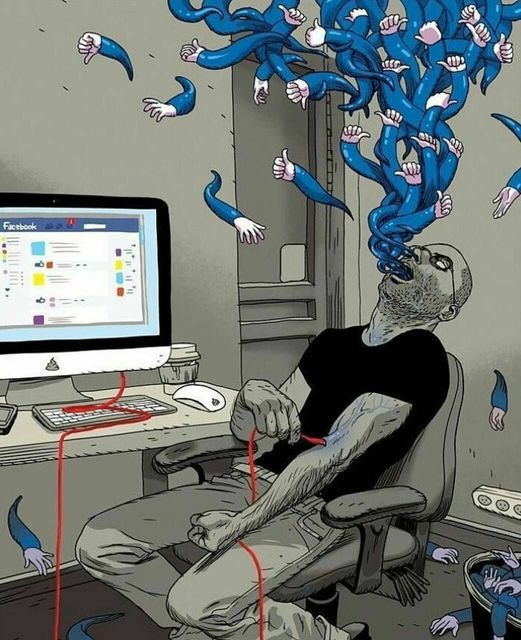
The platform problem is when the #dotcons platforms are designed to amplify this behaviour where algorithms reward outrage, tribal loyalty and moral signalling to push conflict to drive engagement. They do not reward patience, nuance, or curiosity, in other words, they are structurally optimised to turn ordinary people into worse versions of themselves. Over time this becomes cultural habit, people start to assume that hostility is normal conversation.

Another factor is the slow collapse of collective spaces. When communities interact face-to-face, or in smaller trust networks, people have to deal with each other as human beings. Relationships create friction but also accountability. In large anonymous digital environments, those social checks weaken. People become avatars and opinions rather than neighbours, this makes it much easier, “natural” to treat each other badly.

Why this matters for the #openweb. If we are trying to rebuild grassroots media and communication infrastructure, we need to recognise that these cultural habits have already spread into many communities, including the tech and activist spaces that should be alternatives. This is one reason projects fragment so easily as small disagreements spiral, people assume bad faith and thus trust collapses.

You end up with endless internal conflict instead of collective building. This isn’t just a personality problem, it’s the legacy of systems that reward attention and conflict rather than cooperation.

A different path can be grown in projects like #OMN which is partly about rebuilding infrastructure, but they are also about rebuilding culture. The idea is simple: smaller networks, trust-based publishing, open metadata flows and simple tools people can run themselves. A #KISS approach to communication infrastructure.

But technology alone doesn’t solve the deeper issue, what actually makes communities work is something much older and simpler: tolerance and curiosity. The ability to disagree without instantly turning disagreement into war. The ability to assume that the other person might have something worth hearing. Without those habits, no infrastructure – open or closed – will function well for long.

Composting the mess – the current online culture is a mess. A lot of the behaviour we see today is the product of twenty years of #dotcons platform design. But mess is also compost, it shows us clearly what doesn’t work. The next generation of the #openweb has an opportunity to build systems that encourage something better: slower conversation, local trust networks, collective responsibility, shared media infrastructure. Less shouting, more listening.

It won’t magically make people perfect. Some people will still be intolerant prats. But at least we won’t be running the entire communication system of society on platforms designed to encourage it.

#KISS

This Oxford mess is a shadow of a larger mess. We were told the story of Prometheus: fire stolen from the gods and given to humans – our first real piece of technology. The myth asks a simple question: what do we do with power once we have it?

In democratic society why do we put up gig work and side hustles, endless surveillance platforms pushing algorithmic attention traps, housing crises and climate collapse all pushed by a handful of billionaires controlling huge parts of the economy. Why do we put up with What with the mess of technocratic oligarchy – a system where technological infrastructure concentrates power instead of distributing it?

The #mainstreaming mythology of the tech founder helped this happen. The “visionary genius” narrative around people like Bill Gates, Steve Jobs, Mark Zuckerberg, Jeff Bezos, Peter Thiel and Elon Musk turned corporate executives into cultural heroes. This mess is simply #KISS oligarchy with better marketing.

Even ancient thinkers warned about this. Plato and Aristotle described how societies cycle through forms of power, and how rule by the wealthy tends to serve the wealthy above everyone else. The irony is that many of today’s tech elitists think of themselves as the new aristocracy – the “smartest people in the room” guiding humanity forward.

Yet the future they’ve built is #techshit platform #feudalism with people monitored constantly, economic life mediated by a few #dotcons platforms. Infrastructure owned by private empires and democratic institutions bought out then sidelined.

The tragedy isn’t that technology failed, it is more that we let our technological imagination be captured by oligarchs. Prometheus gave humanity fire so we could build civilization together, not so a tiny #nastyfew tech CEOs can privatise the flame and sell back the light.

The real question isn’t whether technology will shape the future, it’s who controls it.

#OMN #OpenWeb #TechPower #Oligarchy #Future #Compost

OMN: Broken Institutions, and the Need to Rebuild the Commons

For progressive and radical people, one of the central political questions of our time is simple to ask but hard to answer – Why is it so difficult to rebuild the institutions that were destroyed in our #deathcult worship of the 1980s and 1990s? And more importantly why does the impossibility of rebuilding them make it so hard to change the needed balance of power in society? These question matters for working on the future of the society and most importantly the grassroots part of this: #openweb, grassroots media, and projects like #OMN.

The hollowing out of institutions, in the 20th century, politics used to be deeply institutional. People didn’t just express opinions, they joined organisations. If you marched in a protest, we usually marched as a member of something: a trade union, a political party, a civil rights organisation or community association. These organisations formed the infrastructure of democracy, connecting everyday anger and hope to real power.

But beginning in the 1980s and 1990s, much of this infrastructure was deliberately dismantled. Union power was broken, mass political parties were hollowed out, and community organisations lost resources and influence. The result is the political landscape we inherit, a society with political anger but without any working political structures.

Today we live in what #fashionistas and academics call #hyperpolitics or what I call #stupidindividualism in the hashtag story. Yes, some people are more politically engaged than they were in the 1990s or early 2000s: More fluffy protests, #dotcons online political discussion. But this engagement is almost all unstructured in the old sense.

Millions may join a protest or share a political message in the #dotcons, yet very little, if any lasting organisation emerges from this. This surface engagement creates a strange paradox of huge drifting mobilisations leading to very little structural change. We can have the largest protests in history – yet the underlying power structures remain completely untouched.

Closed #dotcons social media lowered the cost of expression, but algorithmically shaped it into smoke and mirrors. Let’s take a moment to lift the lid on this #tecsit mess. The role of media in this is complex, on the positive side, #closedweb platforms drastically reduced the cost of political expression.

Forty years ago, if you wanted to express a political opinion publicly you needed a newspaper, radio station, a public meeting or to stand in a square shouting. Now you can reach thousands of people instantly. But there is a downside that #dotcons smoke and mirror online engagement replaces the slow work of institution-building. Posting, sharing, and reacting can feel like participation, but it has very little role in building the durable structures needed for any long-term change.

So why do the current hard right succeed without institutions? There is an uncomfortable asymmetry between left and right. The right can carry out its agenda without building mass organisations, because it relys on: existing elitist power structures, wealthy donors, state institutions and traditional corporate media.

The left cannot rely on these, historically the left needed mass organisations because its power came from collective action – workers, communities, movements. Without those structures, left politics becomes, mess, fragmented and reactive. This is why protest waves can be enormous but still fail to shift any real policy.

The #undeadleft problem is where vertical left respond to this crisis with nostalgia, there imagination stops at rebuilding the mass political parties and institutions of the 20th century. But this is to often like trying to animate a corpse, even if you could recreate it, the environment has changed so much that it wouldn’t survive.

At the same time, the opposite response – abandoning institutions entirely to relying purely on digital networks – also fails. Purely online movements often dissolve as quickly as they form. We need a #DIY hybrid path based on federated #4opens institutions like the tools we are building and rebooting with the #OMN projects.

Not rigid old institutions, not purely online networks, But something that seeds the in between. The goal is not to create another platform, it is to expand #federated #p2p infrastructure for collective media and collective politics. The original #openweb worked because it supported networks of communities, independent publishers and grassroots movements. The corporate #dotcons replaced this with extractive platforms designed for profit and control.

KISS rebuilding the commons means rebuilding the social infrastructure of media, not just tools, but institutions and practices that persist to allow collective voices to organise and persist.

The simple truth, if we want real political change, we cannot rely on viral posts, temporary movements or algorithmic attention. We need structures that last, connect people, that can turn energy into horizontal power. That work is slow, messy, and unfashionable, but like digging compost for a garden, it’s the only way anything grows.

A path to start to compost this #techshit is growing horizontal tools from the Fediverse for real change (#OMN).

If the problem of our time is political energy without institutions, then the opportunity is clear:
build new institutions native to the #openweb. Not simply recreate the rigid organisations of the 20th century, and not fall into the hollow performative politics of the #dotcons. Instead, we grow native horizontal digital tools to help people organise, coordinate, and act collectively. This is where the Fediverse and projects like #OMN matter.

The #Fediverse already proves that distributed infrastructure works. But right now it is mostly used for conversation. If we want meaningful change and challenge, we need to extend it into practical coordination and collective action. by build tools for organising, not just talking

Current social media tools are built for attention and engagement, not organisation. What we need to add to the mix is simple #4opens tools that help people form groups, coordinate action, share resources, document activity and most importantly maintain continuity over time (#makinghistory). The Fediverse already has #fashionista and #geekproblem pieces of this:

Mastodon / Pleroma → conversation

Mobilizon → events and gatherings

PeerTube → video publishing

PixelFed → visual storytelling

Lemmy / Kbin → community forums

These existing pieces can become seeds to be woven together into workflows for collective action. On this path we need to remember the goal is not more platforms, it’s practical ecosystems. For this to work a first step is rebuilding commons-based media. A core idea behind #OMN is returning to something like the #Indymedia publishing model, but rebuilt using modern federated tools. Instead of a single website, imagine distributed publishing nodes where local groups post reports, media is shared across networks, discussions happen across servers and archives remain accessible and most importantly meaningful.

This builds collective memory, something the algorithmic feeds of the #dotcons constantly destroy. Movements need memory to learn.

#makinghistory is the same code-base as this grassroots media project

One reason mass organisations collapsed is that participation became too heavy, people don’t want to “join a church” politically any more. So tools should allow different levels of engagement: casual participation, occasional contribution, active organising with core stewardship. The Fediverse naturally supports this because it allows loose affiliation rather than rigid membership. You don’t need permission from a central authority to participate.

Focus on infrastructure, not branding. A common #NGO trap in activist tech is building new branded platforms that compete with existing networks. That approach usually fails. The better path is infrastructure building based on protocols instead of platforms for #4opens interoperability instead of silos, tools that connect existing communities. This was the original power of the #openweb, protocols scale. Platforms capture.

Keep the tech simple (#KISS), as the biggest barrier to grassroots technology is complexity. Many promising projects fail because they become too technical for real communities to use. So the rule should always be KISS – Keep It Simple, Stupid. Tools should be installable easily, understandable by non-geeks and maintainable by small communities to grow resilience without large funding. If only developers can run the system, it will never become a movement infrastructure.

Compost the failures (#techshit). Another key idea is recognising that the tech world constantly churns useful waste. Old tools, failed platforms, abandoned code, all of this is #techshit that can be composted instead of chasing fashionable new tech, we reuse working ideas, simplify existing tools to combine proven approaches. The #openweb already solved many of these problems decades ago. Sometimes progress means going back to what worked.

Build trust networks, as the most important layer isn’t technical – it’s social. Horizontal networks only function when there is trust and shared culture. The Fediverse works because communities can federate with trusted peers, block hostile actors, build local norms. This allows networks to remain open but resilient. The challenge is nurturing communities of practice around the tools.

Grow slowly and organically, movements that scale too quickly often collapse. The better model is ecological growth with small nodes → connected networks → resilient ecosystems. Just like compost turning into soil. The goal is not explosive growth, its sustainable infrastructure for collective action.

The real challenge is the biggest obstacle isn’t technology, it’s the #geekproblem – the gap between technical culture and social reality. Too many tech projects assume that better tools automatically produce social change, but tools only matter when they are embedded in real communities and struggles. The work of projects like #OMN is bridging that gap.

Shovels, not silver bullets, we don’t need magic platforms, we need shovels, tools that help people dig, build, connect, and organise together on the native #openweb. If we can do that, the Fediverse becomes more than an alternative social network, it becomes infrastructure for democratic power.

What projects like #OMN can learn from history

Why good faith is a technical requirement for #FOSS

If you’ve spent years in #FOSS, you’ve likely developed a strong allergy to vague political language. You care about licenses, reproducibility, governance models, and whether something actually runs. Good. That discipline is why free software exists at all.

But here’s the uncomfortable question, what if the biggest blocker to the #openweb right now isn’t technical debt – but social debt? And what if “good faith” is not a moral nicety, but a core infrastructure requirement?

The problem is when activism meets the #geekproblem. Anyone who pushes for change – especially against #mainstreaming pressures – develops a recurring relationship with bad faith. You see this when:

  • Corporate actors adopt the language of openness while enclosing the commons.
  • Institutions celebrate “community” while centralizing control.
  • Projects technically comply with openness while culturally gatekeeping participation.

This isn’t new, but the scale is new, in the age of #dotcons, #NGO enclosure is polished, funded, and normalized. Resistance generally fragmented, exhausted, and defensive as years of platform manipulation and extractive models have left people burnt out and cynical. In that climate, good faith is fragile, yet without it, nothing decentralized works. Good faith is infrastructure, decentralized systems cannot rely on coercion at scale. They rely on:

  • Trust
  • Transparency
  • Shared norms

The assumption is that participants are not actively trying to sabotage the commons, as when bad faith dominates, decentralized governance collapses into:

  • Endless meta arguments
  • Capture by the loudest actors
  • Drift toward hierarchy “for efficiency”

Sound familiar? This is why good faith isn’t sentimental, it’s structural. If you’ve ever tried to maintain a FOSS project while navigating trolls, corporate opportunists, and purity politics, you already know this.

To help the #4opens is a practical test, not a vibe. The #4opens framework exists precisely to operationalize good faith. It asks four simple questions of any grassroots tech project:

  • Is the data open?
  • Is the source open?
  • Are the processes open?
  • Are the standards open?

This extends beyond traditional open data initiatives (often institutional, often cosmetic). It covers the entire ecosystem of a project, not just its outputs. The value is not ideological purity, it’s resilience. When data, code, process, and standards are open:

  • Capture becomes harder.
  • Forking remains possible.
  • Governance can be contested transparently.
  • Communities can leave without losing everything.

That’s not abstract politics, it’s survival architecture. Composting the current rot is why #OMN exists as a project. We are living in a digital environment thick with enclosure and manipulation. Years of bad faith, disempowerment, and algorithmic extraction have created social decay. The instinct of many geeks is to build a cleaner stack and hope people migrate. But the problem isn’t just software, it’s trust collapse.

If the #openweb is to mean anything beyond developer autonomy, it has to support collective storytelling and coordination, not just individual expression. #OMN is a shovel, not a cathedral. It’s a way to compost the mess rather than pretend it isn’t there.

The #OMN (Open Media Network) is not a shiny new protocol. It’s deliberately simple: Publish, Subscribe, Moderate, Rollback, Edit. That’s it, no engagement hacks, no growth funnels and no surveillance capitalism. It’s a #DIY, trust-based, human-moderated space. Messy, organic, built for communities, not only users.

This matters in the era of #climatechaos and social break down. As climate instability accelerates, centralized platforms will align with state and corporate power to prioritize “order” over dissent and optimize for profitability in shrinking margins.

To balance these communities will need coordination without permission, information flows that aren’t algorithmically distorted and infrastructure they can adapt locally, that’s a social demand. If #FOSS remains culturally optimized for the small minority who enjoy living inside the #geekproblem, it will not meet that demand at all.

We need to understand that the vast majority do not want to self-host, they do not want to debate licences, they do not want to live inside issue trackers. They want functioning, trustworthy spaces, if we can’t provide that, someone else will – and it won’t be #4opens.

The hard part is working with the empowered disempowered of our #fashionista class. We have a generation trained in #closed systems that reward performative critique over collective construction. On #dotcons platforms and strands of #NGO thinking, people are empowered to disempower others with common sense #blocking of call-out culture, optics over substance and branding over shared process. You get a strange anti-politics, egotistical, individualistic, allergic to long-term responsibility. A culture that critiques power while replicating it. Escaping this dynamic may be uncomfortable, it may get nasty before it stabilizes.

But here are some kinder strategies we can use:

  • Make contributions obvious and low-drama, clear process reduces ego battles.
  • Reward maintenance, not only innovation, culture follows incentives.
  • Default to transparency over suspicion, sunlight reduces paranoia looping.
  • Design for groups, not influencers, collective accounts, shared moderation, distributed ownership.
  • Keep it simple (#KISS), as complexity amplifies gatekeeping.

None of this eliminates conflict, but it shifts the terrain from personality warfare to shared work.

An invitation to the sceptics, you don’t need to buy the rhetoric, maybe ask instead does this increase forkability? Reduce capture risk? Does it lower dependence on extractive infrastructure to strengthen collective agency? If the answers are yes, they belong in the #FOSS conversation. The future of the #openweb will not be secured by better branding or cleverer stacks. It will be secured by projects that treat good faith as a design constraint and collective resilience as the goal.

This is not about purity, it’s about durability. We can keep polishing tools for the tiny minority who enjoy living inside the #geekproblem, but, we need to build infrastructure that ordinary communities can also use to navigate the storms ahead. The invitation stands, pick up a shovel, help compost the mess by build something that gives back more than it extracts.

#4opens #indymediaback #openweb #compostingthemess #KISS #makeinghistory #OMN

State Funding of #FOSS and Open Source: Is it a Good Idea or a Bad Idea?

People need permission to stop controlling

We need to describe a real structural problem that shows up again and again in grassroots projects. Well-meaning people arrive claiming to help “community”, but operate through control patterns learned from institutions, #dotcons platforms and professional #NGO culture. They work very hard, believe they are doing good, and unintentionally damage horizontal processes they want to become a part of.

This isn’t primarily a personal problem – it’s a culture clash problem. And yes, mediation, especially embedded mediation, is what we’re building into #OMN to correct direction. Let’s break this down in to practical approaches that actually work in messy grassroots ecosystems. First we need to name the real tension clearly, the conflict is NOT good people vs bad people, activists vs NGOs and grassroots vs professionals. The real tension is: Control logic vs Trust logic

  • Control logic (learned from #dotcons / NGO structures) is about optimising for risk reduction by centralise decision-making to push standardisation. They measure success through outputs and metrics, and assume governance must prevent failure.
  • Trust logic (#DIY / grassroots / early #openweb) is about optimise for participation and learning by distributed responsibility and messy iteration. Success is measured by living community, where governance supports emergence rather than preventing mistakes.

Most people don’t consciously choose control, they import it because it’s what they know. So #OMN mediation starts by framing this as different operating paths, not moral failure. We build “translation layers” instead of confrontation, the worst outcome is ideological escalation, leading to #blocking

Instead, we try to create structures that translate between cultures. Examples: Write governance docs describing WHY things are messy, explicitly explain “social messiness is intentional design”. We to do this to frame openness as resilience, not lack of structure.

People from institutional backgrounds need permission to stop controlling. We can try and use process friction as onboarding. Maybe sending people through archaeology (reading posts, repos, etc). Might be actually GOOD – but only if framed constructively. Instead of “read this before asking questions” we could try “The project is built through shared learning – exploring this material helps you understand why we work this way.” Make friction educational, intentional, welcoming but firm. Not defensive.

One contradictory thing is that we need to recognise is the hardest workers are risk points, the worst ones work the hardest. Yes, because control-oriented people express care through effort, effort becomes legitimacy, legitimacy becomes informal authority. What’s the solution maybe to balance effort and decision power, decisions require some consensus and transparent process, not only labour contribution. We can also help by make invisible labour visible (care work, mediation, maintenance).

On this path, we need to introduce “soft boundaries” instead of hard blocking, as hard blocking only escalates conflict. Instead, we can focus on redirecting energy into specific roles or tasks, channel control impulses into infrastructure or documentation. Example: “That’s an interesting governance idea, can you prototype it in a parallel working group?”. This, preserves autonomy, avoids direct rejection and tests ideas in practice.

What works if you have the resources and patience is to teach #DIY culture implicitly, not by argument. Many problems come from lack of exposure to horizontal culture. Best not to lecture about #DIY, instead make participation experiential, let people see how trust works through doing. Design processes where newcomers experience collective decision-making, and failure is visible but safe.

Structural mediation patterns for #OMN are strengthened by regularly asking:

  • Are we slipping into control patterns?
  • Are we excluding through complexity?
  • Are we drifting too far into informal hierarchy?

Make this normal so that multiple pathways allow for experimental edges, stable core infrastructure and messy periphery. People can self-select into environments matching their comfort level.

We should always be making visible social values, not just technical #4opens. This needs to be explicit: openness to disagreement, expectation of plural narratives, composting failure, a powerful governance guidance – Compost works because decomposition is allowed, friction produces transformation, nothing is wasted, but everything changes form. Translating into policy – that conflict is expected, critique is welcomed but must produce something, few things are sacred – but everything is documented.

The deep strategic insight (important) is the goal is NOT to eliminate control-oriented people. We need them as healthy ecosystems require institutional thinkers (stability), grassroots experimenters (innovation), activists (accountability) and bridge-builders (translation). The problem occurs when one mode dominates. So mediation is about maintaining ecological balance.

#KISS #DRAFT

Yes, its messy stepping out of the churn

Everywhere we look – what we see, touch, and use – we are living inside systems shaped by decades of economic and technological assumptions. This isn’t only something happening “out there”. It has been normalised and internalised over the last forty years.

The dominance of #stupidindividualism, combined with rigid economic dogma, influenced how we design technology, how we organise communities, and how we imagine progress itself. The outcomes are now starkly visible: #climatechaos, social fragmentation, and a weakening of collective sense-making.

The internet reflects this reality. Online and offline are no longer separate spaces; they feed back and reinforce each other. Recognising this isn’t only about blame, it’s more importantly about understanding the terrain we’re all navigating. These are the technology limits of the current path and why we continue to repeat familiar patterns. New platforms emerge, new interfaces are launched, yet the underlying values remain unchanged. The result does feel like endless churn to people who notice, innovation that rearranges surfaces while leaving deeper structures intact.

This isn’t simply the fault of individuals or communities. Many developers, especially within #FOSS and the #fediverse, are actively trying to build alternatives. But the broader ecosystem still pushes toward centralisation, scaling, and extraction because those are the dominant incentives of the wider paths.

So recognising our #geekproblem isn’t about rejecting technical culture – it’s about expanding it. Technical excellence alone cannot solve social problems without grounding in alt collective needs and lived social realities. This is what the #openweb means, it’s more than #blinded nostalgia for the early internet. It represents a shared direction many communities are already moving toward.

The #openweb is an internet where #4opens information is accessible regardless of platform or location, content can be shared, linked, and reused, participation is not gated by proprietary control. It’s basic: open data, open source, open standards, and open processes.

The growth of the Fediverse demonstrates that alternatives like these are possible. Decentralised social networks, community-run servers, and cooperative governance models show glimpses of a healthier digital ecosystem. Yet within these paths, tensions remain between “native” grassroots values and pressures toward #NGO #mainstreaming and power politics institutionalisation.

For this space to grow, we need to keep moving beyond false choices. On institutional paths, many proposed solutions focus solely on regulation or institutional reform, imagining that better rules will fix systemic problems. While governance matters, relying exclusively on top-down solutions risks becoming another form of dependency to add to the mess.

Another path exists alongside institutional change: horizontal, grassroots approaches rooted in #DIY practice, #4opens shared infrastructure. This path is imperfect and often messy, but it keeps agency within communities rather than outsourcing change to distant structures.

The goal is not purity, it is balance, the #OMN approach grows from this perspective. Grassroots, #DIY, non-corporate, human-scale, not disruption for its own sake, not scaling driven by venture logic. Instead, building social technology that serve collective needs while respecting individual agency. Many people within #FOSS and the Fediverse are already working toward these goals, even if they use different languages. The opportunity now is to deepen collaboration, connect projects that share values, and strengthen the social foundations alongside the technical ones.

So the path we need is about finding each other, it’s the path we made work for a while then failed on socialhub, so I need to repeat, the question isn’t whether alternatives exist, they do. The challenge is finding alignment among people who are already trying to move in similar directions, but feel isolated or fragmented.

Who recognises that technology must serve communities rather than extract from them. If you see value in grassroots, cooperative approaches to technology – if you believe the #openweb is still worth building – then the invitation is simple. Stop churning, start building. Who is ready to move beyond endless reinvention toward shared infrastructure and shared purpose?

Seeds, Safety, and the Chicken-and-Egg Problem – A Q&A on Practical Building vs Intellectual #Blocking. This explores a recurring tension in grassroots technology projects: the gap between practical historical paths and fresh “intellectual” critique, it reflects on a broader patterns seen in #openweb, #FOSS, and #DIY spaces.

Q: What is the “shared path” and why describe it as a seed?

A: The shared path is a practical response to repeated historical failure. It is not a finished solution, a moral demand, or a complete alternative system. It begins as a seed, something small, imperfect, and grounded. If you judge a seed by whether it is already a tree, nothing will ever grow. The idea is to start building despite uncertainty and allow structure to emerge rooted organically through practice.

Q: What is the main critique of this “seed” approach?

A: Critics argue that metaphors like seeds and growth avoid addressing concrete mechanisms. They focus on first-step effects: What signals are being sent? Who carries risk or unpaid labour? What moral pressures are created? What happens when survivability is deferred? From this perspective, issues must be addressed at the beginning rather than grown from the seed.

Q: Why does this debate often become circular?

A: Because both sides are asking different questions. Practical builders ask: Where do the resources come from to implement safety before anything exists? Critics ask: How do we prevent harm if we begin without safeguards? Without answering the resource question, discussions loop endlessly between ethics and feasibility.

Q: What is the “chicken-and-egg” problem here?

A: Many grassroots projects face a structural paradox: You need resources, tools, and commitment to build sustainable alternatives. But those resources only appear after something exists and demonstrates use value, agenst mainstreaming pushback Waiting for perfect conditions prevents starting; starting without resources has risks, but it’s the only thing that can grow change and challenge.

Q: What work is actually happening in practice?

A: Practical work often remains messy, distributed, and unpaid. Examples include: Supporting student journalists in rebooting grassroots media projects like Oxford #Indymedia. Motivating unfunded technical communities to collaborate on shared codebases such as #indymediaback. Maintaining ongoing organisational and community infrastructure through long-term volunteer labour. These efforts are naturally invisible and impossible to summarise because they work organically rather than following formal project structures.

Q: Why is documentation itself a source of conflict?

A: Critics ask for clear summaries or structured documentation of ongoing work. Builders simply see this as additional unpaid labour imposed on already stretched contributors. External demands that assume others should organise information for them, creates friction between expectations of accessibility and the working realities of #4opens and #DIY grassroots work.

Q: What role does #DIY culture play?

A: In #DIY culture, participation is active rather than observational. If someone believes something needs improvement – documentation, tools, funding guides – the expectation is that they step in and contribute rather than stand outside only pointing critique. Critique without participation is too often lazy negative pressure rather than constructive help on “native” DIY paths.

Q: Is this simply a disagreement about ethics?

A: Not entirely. Both sides often share ethical concerns. The deeper disagreement is about sequence: Should, impossible and irrelevant in a practical sense, safety and compensation frameworks exist before building begins? Or can these frameworks emerge better through #DIY messy real-world working practice?

Q: What is the takeaway?

A: Grassroots building requires balancing, ethical awareness and practical starting points. Intellectual critique can help identify risks, but when detached from material constraints it too often unintentionally blocks action at best or turn into trolling at worst. Likewise, practical work can benefit from reflection, but cannot wait for perfect theoretical clarity.

The challenge is to compost both approaches into something that moves forward.

The uncomfortable path

The individual, their freedom, and their capacity for reason are products of social relationships, not independent origins. Society is not built from isolated individuals; individuals arise from shared culture, history, and collective life. As society grows richer and more humane, individuals gain the conditions needed for deeper development and freedom emerges from this shared foundation.

What’s really at stake is power. The shift has to be away from private ownership and toward the commons – not just in licensing, but in governance, culture, and decision-making. The whole #OMN project is grounded in this understanding. It’s about building shared infrastructure that people can actually use, shape, and grow trust.

One of the great ironies of many “alternative” spaces is that people believe they’re resisting power, yet by locking everything down – secret decisions, closed processes, gatekeeping – they end up recreating the systems they claim to oppose. The result is stasis, nothing moves or grows, everything fragments.

Paranoia is one of the biggest blocking forces in alt-tech and radical spaces. It breeds mistrust, isolation, and internal sabotage, making collective action almost impossible. Some caution is necessary, we’re not naïve, but when paranoia becomes the default posture, it hardens into control. At that point, it stops being defensive and starts being corrupting.

The #4opens is a direct antidote to this. Transparency punctures paranoia. When decisions, processes, and networks are open, there’s less space for suspicion to fester. Trust isn’t built through secrecy or technical cleverness; it’s built through visible, accountable practice over time. Open process beats “good intentions” every time.

This is also why letting technical people make final product decisions is a mistake, overemphasizing technology then underplaying the social problems we’re actually trying to solve. We end up designing better mousetraps without ever asking whether we’re even trying to catch mice. Tech becomes the point, rather than a tool.

This is where the #fashernista problem kicks in, being seen to hold the correct stance replaces doing the work. But staying “right” while nothing changes is another form of failure. If we want alternatives that function, we have to move past paranoia, reopen flows, and accept that trust is something you build, not something you secure with walls.

The uncomfortable truth is that it’s easy to be “right” in theory. It’s much harder to take part in the compromises that building anything real requires. Most people prefer the comfort of ideological purity over the messiness of collective practice, especially when dealing with complex social truths. That’s the trap.

#OMN is often critiqued as if it were a finished system, a moral framework, or an alternative economy. It is none of those things. We need to be clear about scope, sequence, and intent if discussion is going to move forward instead of circling the same ground.

#OMN is a commons-first, tool-building project. It exists to create shared infrastructure, processes, and cultural practices that can grow non-extractive media and communication. It prioritizes shared ownership, open process (#4opens), and reducing capture in order to build the needed public-first infrastructure. It’s about creating conditions, not declaring outcomes.

It’s an early-phase project, an affinity-building space to create tools and governance to reconnect fragmented activist and media histories. It is not claiming to already provide economic survivability, stable long-term livelihoods, or a full replacement for existing systems. Confusing the step with the destination is the root of most disagreement.

It’s grounded in lived historical practice. #OMN grows out of more than 30 years of real projects – Indymedia, grassroots media, squatting and DIY cultures, trust-based networks – and a clear view of where #NGO-driven paths have failed. This history matters. The path is not speculative theory, it’s an attempt to compost what worked, acknowledge what failed, and try again with better tools.

That’s based on a simple historical reality, society does not pay people to challenge itself. Early change is driven by passion, not wages, and support structures emerge after commons exist, not before. This isn’t a moral claim, it’s an observation drawn from experience. #OMN is also a space where tone is a process tool. Friction is used to slow things down, open space for challenge, and form affinity where none yet exists. This is messy by design, not a finished social contract.

We don’t set out to solve how everyone is paid, how risk is evenly distributed, or how long-term security is guaranteed. These are unsolved problems, not denied ones. #OMN exists because these tools do not yet exist, so expecting it to already provide them misunderstands its scope and phase. Participation is voluntary, alignment is practical, not moral. Funding may be used tactically, but OMN is not structured around chasing it.

This is not a safe, smooth, or finished space. The path is unfinished, uneven, and sometimes uncomfortable. If a project has to be safe, stable, and fully funded before it can exist, it will never challenge anything.

The core misunderstanding is that the #OMN is judged for failing to deliver something it has never claimed to already be. What we are doing is building the tools that make survivability possible later, without reproducing the failures that keep repeating. That work is slow, messy, and incomplete – because it has to be.

The shared path is a practical response to repeated historical failure. It is not a promise, a moral demand, or a finished alternative. If you judge a seed by whether it is already a tree, you will never grow anything.

Why groups matter, in our “common sense” we like to pretend society is made up of strong, independent individuals who freely choose everything about their lives. That story is comforting, but it’s also mostly false, humans are group creatures first. People don’t start as individuals. We are born into families, cultures, languages, histories. Our values, assumptions, and sense of what’s “normal” are learned socially long before we ever get a chance to reflect on them. Groups aren’t an add-on to human life – they’re the foundation.

Individual identity is hard work, as modern culture tells us we must be ourselves, define our own path, build a unique identity. But doing that alone is exhausting, being an “individual” means constant self-definition, self-presentation, self-justification. You’re never finished as you’re always proving who you are, to employers, platforms, institutions, and peers.

That permanent uncertainty is what people mean when they talk about burnout, anxiety, and imposter syndrome. Groups reduce that pressure, as belonging to a group shares the load, with values, purpose, norms, responsibility. You don’t have to invent everything from scratch, you’re part of something that existed before you and will continue after you. This isn’t about conformity, it’s about being human, support and continuity.

The current #deathcult myth of pure individual freedom, where individuals are fully free and self-made #KISS serves power. When people are isolated, all problems look personal instead of structural, failure feels like a moral flaw and collective solutions disappear. You can’t organise if everyone thinks and acts as if they’re alone.

Healthy groups vs. toxic groups, yep, groups aren’t automatically good. Some are rigid, exclusionary and authoritarian. Healthy groups are porous and open to change, allow disagreement, are based on trust, not fear and exist to serve their members, not control them. The solution to bad groups isn’t no groups – it’s better ones.

Why this matters for media and the web? The #openweb wasn’t built by isolated individuals chasing personal brands. It grew out of horizontal’ish communities, shared tools, and mutual aid. What broke it, was pushing of individual status, platforms replacing communities then metrics replacing relationships. Projects like #OMN are about rebuilding group-based publishing, shared infrastructure, and collective voice, not amplifying lone influencers.

In short, (stupid) Individualism puts people in a permanent liminal state – alone, unstable, competing. Groups give people grounding, belonging, continuity, and the ability to act together. If we want social change, resilient media, and a future beyond the current mess, we on balance don’t need better individuals, we need better groups.

#stupidindividualism

I proposed a long time ago that #openweb is a less tribal, more expansive framing than #fediverse socially and technically. It’s also #nothingnew, which is honestly a breath of fresh air. We can (and should) use both terms, but if we want meaningful change and challenge to the #mainstreaming mess, we need to foreground the more generic one.

Predictably, this gets pushback from two directions: the non-political #FOSS crowd, and the mainstreaming crew. And yes, when you bring #NGO behaviour into the #fediverse, there’s going to be friction. Try being #openweb-native on this, please.

People are going to keep doing self- and socially-destructive things. That’s a human problem, not a branding one. But the language we choose does shape how we respond to it.

One of the reasons we use a #4opens process is to balance the reality that people often arrive with strong opinions before understanding the history, context, or existing work. The process isn’t there to exclude anyone, it’s there to slow things down just enough so people can orient themselves before trying to reshape what already exists.

At the moment this only works partially, because some people still interpret being asked to explore existing materials as dismissal. For example “You have sent me on a ride through Mastodon posts and two repos while not providing direct answers.”

What may feel like dismissal is actually part of a #DIY open process. The intention is to encourage people to engage with the work already done so conversations can move forward from shared context rather than restarting the same debates repeatedly.

Similarly: “Why assume blog archaeology is the right approach instead of presenting everything in a more processed way?” In grassroots projects, documentation is often messy, organic, and evolving rather than packaged into clean summaries. Exploring this material isn’t busywork, it’s a way to understand the social and historical layers that shape the project. Without that grounding, discussions can unintentionally repeat old loops to propose changes that have already been explored.

And when people say: “Most people don’t have time or energy for this.” That’s a real constraint, but it also highlights the core challenge. Open, collective projects rely on participants investing some effort to understand shared context. Without that, the burden shifts onto existing contributors to repeatedly re-explain the basics, which keeps stalling progress.

The aim here is not gatekeeping or dismissal. It’s #KISS: keep the process simple, open, and grounded in shared effort. If something needs improving – documentation, summaries, onboarding – the most constructive path in a #DIY culture is to step in and help build that improvement together.

The rise of #stupidindividualism as a common sense path

Part of the shitty mess we’re in comes from the failure of #DIY culture and the rise of #stupidindividualism as the common sense path. #stupidindividualism is completely unscalable in social terms. It fragments, isolates, and exhausts. That isn’t accidental, it’s a classic divide-and-control strategy of the #deathcult. And we need to consciously step away, and away, and far away from this.

An example, over the last 20 years, I’ve answered the same questions individually, over and over. But the point of #DIY culture was never one-to-one hand-holding. You don’t need to stress personal connections just to begin. The hashtags are links – they exist to let you start the process yourself.

You can do this by #KISS following the flow, not by demanding individual explanations. Click the #hashtag links. Read the background posts. Trace the project history. Use a search engine. Learn how the process works before pulling people into one-on-one clarification. This is basic #DIY practice, grounded in the #4opens.

You need a second example, looking back, remember how many of our activist friends ran workshops on how to use #dotcons social media as a campaign tool? How to organise activism through corporate platforms? While this was happening, our own independent media was being ripped apart internally, ossified by process, and then abandoned by the same #fashionista activists.

This mess is the devil child of #postmodernism and #neoliberalism, all surface, no grounding, all individual expression, no shared responsibility. We know the names and URLs of many of the people who did this. It’s the legacy we’re dealing with. Our projects like #indymediaback exists because of this history.

If you’re serious about changing society, you have to think your way past this common sense #blocking. That means rebuilding collective pathways, shared knowledge, and common processes, not endlessly repeating the same individual conversations. The tools are here. The links are here. The work starts when we stop pretending this is a personal problem and recognise it as a social one.

Capitalism grew from historical processes rooted in enclosure, extraction, and the exploitation of people and nature. Liberal politics stabilise rather than challenge this, while promoting forms of (stupid)individualism that fragment collective power, making it harder for people to organise together against entrenched control.

The individual, their freedom, and their capacity for reason are products of social relationships, not independent origins. Society is not built from isolated individuals; individuals grow from shared culture, history, and collective life. As society grows richer and more humane, individuals gain the conditions needed for deeper development – and real freedom emerges from this shared foundation.

We fucked up… and that matters because we still have agency

Let’s start with the uncomfortable truth: we fucked up the last 20 years of #openweb tech. Not “they” fucked it up. Not only #BigTech, not only venture capital, not only governments and surveillance states. We did, especially those of us who were closest to the tools, the protocols, the decisions – the geeks, developers, architects, and maintainers who shaped how this stuff actually worked in practice.

That matters, because it means we still have direct power over what happens next. Too often, external forces are used as an excuse. “Capital captured everything.” “Users don’t care.” “The network effects are too strong.” These stories become a form of #blocking – a way to avoid the harder work of change and challenge that is still possible inside our own communities.

The #geekproblem role in the #techmess is one of the hardest things to admit, that much of the current #techmess wasn’t imposed on us – it was designed by us. We built systems that privileged scale over care, efficiency over use, protocol purity over social process. We treated governance as a technical problem and social mess as something to be engineered away. We told ourselves that decentralisation alone would save us, while quietly centralising power in code repos, foundation boards, and informal hierarchies.

This is the #geekproblem in action: the blindness to social value, to lived use, to human mediation. The result is vast piles of #techshit – technically impressive, socially hollow systems that decay quickly because nobody actually owns them in a meaningful way.

And when these systems fail, the blame gets pushed outward. “The market did this.” “Users misused it.” “NGOs ruined it.” Sometimes those things are true – but they are never the whole story.

Then we have the # fashionistas default worship of the #deathcult which is the part people really don’t like hearing: most of us default-worship the #deathcult. #Neoliberalism doesn’t need true believers to function. It survives perfectly well on habit, convenience, careerism, and fear. We reproduce it every time we copy the UX patterns of the #dotcons, every time we design for engagement instead of meaning, every time we prioritise respectability over rupture.

At this point, polite critique is not enough. The climate is collapsing. Social trust is eroded. Institutions are hollowed out facades. We do not have the luxury of endless moderation and tone-policing.

Let’s be clear, it is well past time to hold active worshippers of the #deathcult in contempt – not as individuals to be cancelled, but as ideas and practices to be openly rejected. And more importantly, to challenge our own default compliance with those values.

Time is the one thing we don’t have. Yes, this shift will happen. Over the last few years, more people have abandon #dotcons, more will rediscover collective tools, more will rebuild local, horizontal networks.

The #OMN is precisely about that internal power: what we do together, how we organise, how we build, and crucially, what we refuse to reproduce. But here’s the problem #climatechaos does not wait for cultural maturation. Ecological breakdown, authoritarian drift, and economic precarity are accelerating now. If the #openweb is going to matter, it has to matter in this decade – not as a promise, but as lived infrastructure.

That means pushing change and challenge now, even when it’s uncomfortable, even when it breaks consensus, even when it costs status. We cannot keep living inside copies of the #dotcons is one of the clearest failures of the last 10 years is this: we kept rebuilding copies of corporate platforms and calling them alternatives. The same feeds. Same metrics. Same influencer dynamics. Same UX assumptions. Just with better politics in the bio. That will never be enough.

For projects like #OMN to become real, we need to invest serious resources and energy into good #UX for #openweb projects – not slickness, not branding, but clarity, legibility, and human-scale control. Interfaces that normal people can understand. Systems that work in mess. Tools that support mediation instead of suppression. This is not about perfection. It’s about use-value over #blocking.

The next step is obvious and unavoidable, it’s not more think pieces, more foundations, more grant cycles. It’s rebuilding social-technical systems that people can actually use together, under pressure, without surrendering control. We already know this. Deep down, everyone reading this does.

The question is whether we act on it – or whether we keep hiding behind inevitability while the world burns. The #OMN is not a guarantee. It’s a refusal: to keep worshipping the #deathcult,
to keep copying the #dotcons, to keep pretending we have more time than we do.

The work is here. The tools are here. What’s missing is the will to stop fucking around.

What are you doing today that is not pointless? Not a rhetorical question, a line in the sand. As too much contemporary “activism” is still busywork inside the #dotcons – visible, branded, career-friendly, and structurally harmless. Our old activist circles took the healthy internal tensions that once kept projects like #indymedia honest and fed them upward into a #fashernista vampire class: NGOs, foundations, panels, consultancies. For twenty years, they’ve drained grassroots energy to build CVs and gain access to “power”. That’s not radical, it’s capture.

Now, if we are serious about surviving #climatechaos and confronting the #deathcult, we have to stop doing pointless #techshit and start rebuilding outside the platforms that profit from our failure.

We need projects that doesn’t need permission, we need a #DIY crew. That means gathering like-minded people off the #dotcons, working collectively, not performatively, building small, useful things that actually publish, connect, and persist, following the #4opens: open process, open governance, open code, open data to accept mess, conflict, and compost as signs of life

The Open Media Network (#OMN) is not a brand or career ladder, not a #NGO pitch deck.
It’s unfinished work from the original #openweb – work that was paused, captured, and now needs rebooting.

So again, plainly – What are you doing today that is not pointless? If the answer is “posting”, “networking”, or “waiting for funding”, that’s a bad answer. If the answer is building with others, publishing outside capture, sharing control, doing the unglamorous work, welcome back.

#indymediaback #OMN #4opens #makeinghistory #OGB

The Mess is Boiling

We’re in a mess, our worship of the #deathcult has driven emissions to another record: the world’s CO₂ levels jumped by 3.5 parts per million from 2023 to 2024 the largest single-year increase on record. Our decision to leave the #nastyfew in charge – our short-sightedness and worship of greed – has pushed the planet beyond the stable ecosystem that supported human life. We have done this for nothing, only for big numbers to go up, for nothing. The one planet we know that can support life is being burnt to a crisp for nothing.

There are two reasons. First: we’re still burning, still digging, still feeding the growth obsession. Emissions are rising – the curve is bending, but not nearly fast enough. Second: the planet’s natural buffers – forests, wetlands, oceans – are weakening. The carbon sinks are choking: less CO₂ is being absorbed and more remains suspended in the atmosphere.

The math is brutal and simple: more in, less out. The atmosphere fills faster; the climate accelerates. This isn’t a surprise – scientists warned us for decades – but the facts are stark: we’ve locked in more than 1.5°C of warming. The UN has said it plainly. In the UK, the Climate Change Committee told the government to start planning for a +2°C world. That’s not a prediction, it’s a plan for failure.

If we want credibility beyond our grassroots #DIY bubble to change and challenge a wider #mainstreaming audience, we must call out both corruption and profiteering within the so-called eco industry as well as celebrate any genuine innovation. Otherwise, billions are spent on initiatives that inflate costs while ‘eco leaders’ jet around in privilege and luxury. Tens of millions in the West are angry about this corruption and injustice. But the effect is negative, that anger is feeding a hard shift to the right which will #block any meaningful progress toward sustainability.

The problem isn’t that we don’t know what to do. The solutions exist and are already working in many places, but we’re not scaling them quickly enough. Renewables are expanding, but too slowly. Deforestation is slowing, but not enough to save the canopy. Methane-detection and fixes are finally being reported more widely – responses have risen from around 1% to 12% – but that’s still negligible compared with what’s required.

The story of the living world since 1970 is one of catastrophic loss: roughly 73% of wildlife populations wiped out. The curve may flatten slightly at the end, but only after the living world has been gutted. That’s not balance, that’s exhaustion.

The catastrophe we are facing is because of a tiny number of powerful actors and their enablers, pushed past tipping points in multiple systems. Warm-water corals have crossed thresholds: the ocean is too hot for recovery in many regions; collapse is now locked in. The Amazon risks drying into Savannah. Ice sheets are destabilising. Methane is beginning to be released from thawing tundra. We’ve crossed a red line.

Meanwhile, political theatre keeps serving up delays and rollbacks. A global carbon tax for shipping was scuppered by hardline actors; the Net Zero Banking Alliance collapsed under pressure. While leaders squabble, the Atlantic produced one of its strongest-ever storms for this time of year – Hurricane Melissa – supercharged by waters heated by our pollution.

For anyone paying attention, recent months have been the worst climate months on record, not only in numbers but in meaning. We’ve forced the planet into feedback loops. Scientists warned this would happen; watching it unfolds brings a new grief.

Yet despair is not a plan. The #deathcult wants us paralysed, to claim “it’s too late.” But this isn’t binary. A planet at 1.5°C is bad; at 2°C it’s worse; at 3°C it’s catastrophic. Every fraction of a degree matters. Most projections today point to a 2.5–3.0°C increase by century’s end under optimistic political assumptions. A more realistic projection, accounting for slower, fragmented action, could be 3.0–3.5°C by 2100.

From a #spiky perspective: Western electorates are increasingly choosing far-right, climate-denying parties. Growth is capitalism’s lifeblood, but it’s death for the environment. Leaving decisions that affect society to a tiny, profit-driven minority is morally unacceptable. This isn’t a technological problem we lack the tools to solve – we have the tools. Instead, a relatively tiny number of selfish actors and their fear and greed are blocking meaningful change.

From a #fluffy perspective: Individuals, billions of us, can act. Start with these everyday steps:

Eat a plant-based diet instead of meat and dairy.

Use public transport, cycling and trains instead of cars.

Buy less; choose used over new whenever possible.

Insulate homes and reduce energy consumption.

Support and use renewable energy: solar and wind.

We can’t walk away from this, the only option is challenge. Reconciling this fluffy and spiky debates is the hardest part: we must act without illusions. We may never “win” in a clean, final sense, but our actions still matter. The difference between 2°C and 3°C will cost billions of lives. The difference between despair and defiance is the grassroots #DIY future we need to seed and grow.

From the spiky side, some argue for direct action: break laws that protect destructive industries, sabotage systems that perpetuate ecological harm, or withdraw labour to halt the economy. These are radical proposals with profound ethical and practical consequences.

From the fluffy side: consider moderating those impulses. Channel energy into mass organising, nonviolent direct action, community resilience, and building alternatives that scale. We need both defiance and construction: refuse what destroys us and build what sustains us. That is how we turn grief into resolve. From the fluffy side, maybe mediate your blocking of this needed spiky path?

Rebuilding Grassroots Media – Back to the Soil

From my point of view, it needs to start from the raw truth: There is currently no functioning grassroots media. Not in any coherent sense. Before we talk about video, storytelling and digital tools, we have to answer the most basic question, one that most people have forgotten to ask: What is grassroots media?

It’s not “content creation.”
It’s not “influencer culture.”
It’s not another #NGO-funded project selling “voices from below” to tick a box for a funder’s annual report.

Grassroots media is the messy, local, real-world network of people using simple tools to speak, share, and act together, outside institutional control.
It’s about agency, not branding.
It’s about trust, not reach.
It’s about doing, not performing.

This is the core almost everyone skips, and it’s why so much “independent media” ends up feeling like a watered-down copy of the mainstream it was meant to replace.

Building networks, not platforms. If we want living, breathing alternatives, we need to think like ecosystem builders, not tech entrepreneurs. Balance means deliberately prioritising the roots – where stories grow from – to counter the dominance of traditional and #NGO media that always speak from above.

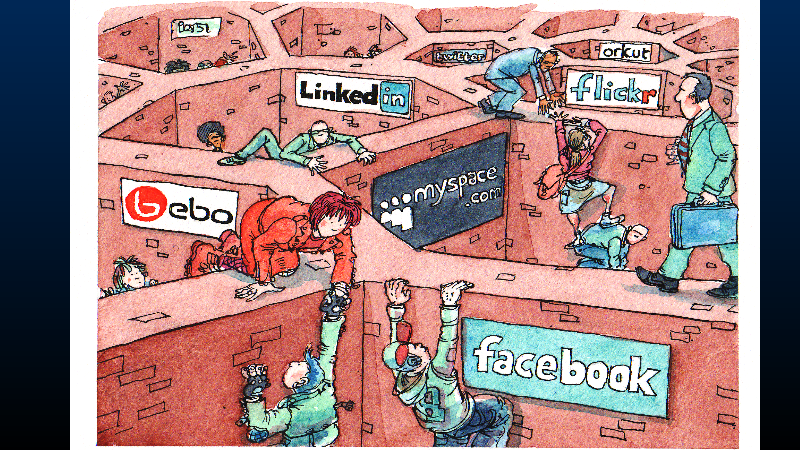
The corporate #dotcons – Facebook, YouTube, TikTok, X, all of them – have poisoned the soil. Their logic is control, enclosure, and profit extraction. We can’t reform them, but we can compost them. Use what’s left of their infrastructure tactically. KISS – keep it simple, use and abuse what remains as compost to fertilise the new.

We need to dig back into the living history of #DIY media culture, those messy, chaotic, beautiful experiments that worked, to where and when media grown from social trust, not algorithmic metrics. Back in the day, it used to work because it was grounded in the #openweb a culture built on openness, transparency, federation, and collaboration. What we call the #4opens.

The #OMN (Open Media Network) path is about rediscovering that soil and replanting in it.
Building federated, trust-based, messy, human networks of media again. It’s not about replacing corporate platforms with shinier tech. It’s about rebuilding the culture of open media, the relationships, the ethics, the shared practice of truth-telling and collaboration.

Because if we don’t grow our own grassroots media again, someone else will sell it back to us in plastic wrap.

Extreme liberalism is the outcome of #postmodernism, the rot at the heart of the current “progressive” mess. It’s what happens when shared stories are replaced by (non) individual narrative, and meaning dissolves into (non) individual performance.

Our current #fashernistas swim in this thin soup, they call it “diversity,” “empowerment,” “innovation,” but it’s a dysfunctional mess, with marketing dressed as virtue. The problem we need to compost is that every attempt to make something that works – collective, rooted, accountable – gets drowned in an endless tide of self-expression and identity management.

Postmodernism was supposed to liberate us from hierarchy and dogma. But it left us atomised, trapped in their #dotcons feeds, without any shared compass. Out of that vacuum came the extreme liberalism of the last 20 years we think as “progressive”: the cult of the individual, the religion of choice, and the morality of markets. It’s the #KISS polite face of the #deathcult, its neoliberalism with a rainbow filter.

The #openweb – through the #4opens – is a path out of this swamp. It’s not about the illusion of freedom sold by #dotcons, or the grant-funded “activism” of the #NGO class. It’s about activist trust-based openness: code, data, governance, and process dogmatically open, that people and community can build, see and shape.

The #OMN (Open Media Network) grows from this ground. It’s not another brand or a platform – it’s a garden for messy, local, grassroots media to regrow. It starts from compost: the failures, the blocks, the burned-out projects. From that, we build something living again.

To move at all on this, we have to compost #postmodernism, keep its healthy scepticism, but drop the self-absorption. Keep openness, but return to shared meaning. Truth matters. Trust matters. The network needs to feed the commons, not the “individual” play-acting ego.

OMN projects are tools for YOU to change and challenge the world we live (and die) in

The Open Media Network (#OMN) is an “anything in, anything out” network powered by a mediated trust system. Instead of one corporation or #NGO controlling the flow, the commernerty decides what happens to the data that moves through it. At its core, the #OMN is a data soup: tagged data objects flowing through channels. These flows are shaped by trust. You consume and share based on your trust relationships, not on algorithms designed to manipulate you.

Key features are built-in, not bugs: Lossy data – it doesn’t have to be perfect to be useful. Redundancy – multiple instances mean resilience, not waste. Trust mediation – human-scale filters that grow communities. The #geekproblem often resists these messy but living dynamics, demanding rigid perfection. But that rigidity kills creativity. The #OMN embraces mess as the fertile ground where culture grows.

The network is built on the normal #FOSS process, #4opens – open data, open source, open process, open standards. Its focus isn’t inventing new shiny toys. It’s about weaving together what already exists into a functioning grassroots media/news commons. Others are free to build their own projects on top of the framework. What’s exciting is the flows of trust that emerge. These aren’t abstract protocols, they’re the living arteries of new communities.

In short: The #OMN is decentralized, trust-based, open by design. It empowers people and communities to take control of media, to create their own flows, their own networks, their own power.

It’s not about serving users.
It’s about empowering people.
It’s not about control.
It’s about trust.

The #OMN is not a product. It’s a shovel. Use it to compost the #deathcult, and grow something alive.

The #OMN is a simple project

For the more geeky – 5 Functions of the #OMN (#5F)

Think of the #OMN as plumbing for media, a system of pipes, holding tanks, and connectors. It’s designed so anyone (not just geeks) can understand and use it. Every site in the network is built from these 5 basic functions:

  1. Link / Subscribe

Plumb a new pipe into the network. A flow of content comes in or goes out. Each pipe can connect to any other function.

  1. Trust / Moderate

Flow passes through a sieve. Trusted content moves smoothly; noise gets filtered. You can send flows straight through, into holding tanks, or split them into new pipes.

  1. Rollback

Empty the tank, rewind a flow, or remove specific objects. Essential for correcting errors, spam, or bad data.

  1. Edit Metadata

Add tags or notes to the “tail” of a data object. Metadata determines how content gets sieved and aggregated. This is the backbone of news curation in the OMN.

  1. Publish

Add new content objects into the flow. Optionally editable. Publishing is just another pipe into the system. At the core sits the storage tank: a simple database holding all the flows.

Nothing new here. This isn’t rocket science – it’s the same way plumbing works, or how power grids function, or how neurons connect in the brain. The #OMN builds on this #nothingnew principle: simple, understandable systems scaled up to empower communities.

UX/UI then sits on top of these 5 functions. That’s the “macro” – the surface layer people touch – but underneath, it’s all just pipes and tanks for flows of data.

#KISS


If you would like and example of what real #DIY activist grassroots media looks like https://www.indymedia.org.uk/en/actions/2006/climatecamp/ and https://www.indymedia.org.uk/en/actions/2007/climatecamp/ and https://www.indymedia.org.uk/en/actions/2008/climatecamp/

We need to reboot this project #indymediaback #OMN #Fediverse

The OMN with indymediaback and makeinghistory are paths

Most of the mess, and most of the #blocking, comes down to the same old story – ownership and control. Who holds the keys? Who decides? Who gets locked out? Instead of wrestling in that cage, the #OMN takes a simpler path: we walk away.

We put a class of media into the commons, governed openly through the #4opens: open data, open process, open source, and open standards. That means no one can close it down, hoard it, or fence it off for profit. The value comes from the shared pool, not from gatekeeping.

This is the heart of #KISS in the #OMN: make the flows work first, in ways people can understand, and build trust on top of that. The tech exists to serve these flows, not to dictate them. This isn’t about perfect crypto or hard lockdowns; it’s about commoning media so that everyone has the right to read, share, and build on it.

Yes, the #mainstreaming mess will eventually follow us – as it always does. But the plan and hope is that by the time it catches up, the habits, culture, and expectations we’ve grown around open media will have shifted society enough that the old traps won’t work the same way. If we’ve done our job, the default will be more open, collaborative, and accountable, not locked down. That’s the #KISS path: simple, resilient, and grounded in the commons.

On the #OMN with #indymediaback and #makeinghistory paths – We’re not talking about a single bridge, but a federated ecosystem, with the current example of both #DAT and #ActivityPub running on the same server, sharing a common database of media objects. As the data flows, text and metadata are redundantly stored in the open (#4opens). That way, if one server gets hacked, it can simply be rolled back and restored from the wider pool. #KISS

The P2P side works much like #nostr in that it can have a list of flows in and out to servers and can use any of these to publish and receive media on the #openweb. The advantage of the #p2p app side is that each local app in a backup for the online servers (see #makeinghistory), which as critics say can be, and will be, taken down some times. Also, they will work in their own right for people who need a more locked down path, and this will be needed in more repressive spaces and times. The clear advantage is this still gives them outflows to the wider #mainstreaming client server media outreach, to what matters, effect, so it ticks both boxes.

We aim to solve technical issues with human-understandable social paths, not hard tech for its own sake. Yes, in a minority of cases hard tech will be needed – but that’s for the #geeks to solve after the working social paths are clear, not before.

We fix problems through #KISS social processes and #4opens transparency, not by defaulting to encryption and lockdown. Hacking is outside the focus scope of the #OMN. What we’re building is about trust and flows, not code as an end in itself. Hacking belongs on the #geek paths – useful, but only after the trust and flows are established. The code should be there to secure what’s been built, not to block it before it exists.

Without trust and working flows, there’s no value at all, no matter how secure, encrypted, or elegant the tech stack. If the campaigns, activism, and people aren’t using it, the system is pointless. And being pointless is something we need to be more honest about. Building for the sake of building, while ignoring the social, community layer, feeds the #geekproblem and starves the movement.

So, what can people actually do in the real world to make this path happen?

  • If you have resources, you can help fund the development work – keeping it in the hands of the people actually building the open commons, not some corporate gatekeeper.
  • If you’re technical, you can code the applications and servers that power the flows. We need builders who understand that trust and usability come first, not shiny tech for its own sake.
  • If you work in UX or testing, you can make sure what we build is something real people can actually use and trust – simple, clear, and accessible.
  • If you do media, you can tell the story. Write, film, photograph, blog, podcast – whatever it takes to spread the word. The more people hear about an alternative that works, the more chance it has to grow.

Whatever your skills or resources, the important thing is to get involved in the flow. This is not a spectator sport, and the is unlikely to be pay, it’s #DIY so the commons will only be built if we build it together. #KISS #4opens #OMN