The ongoing conflict between Russia and Ukraine exacerbates the influence of far-right groups. The Russia narrative highlights the presence of far-right elements in Ukraine to justify its actions. However, this narrative is used politically rather than in any way sincerely addressing the issue. Western support for Ukraine, primarily aimed at countering Russian aggression, overlooks the rise of far-right groups, this creates a messy dynamic where far-right groups use the conflict to legitimize their actions.
The mess of Ukraine’s socio-political landscape is deeply intertwined with historical legacies, geopolitical tensions, and the resurgence of far-right movements. The far-right in Ukraine traces back to fascist movements such as the Organization of Ukrainian Nationalists (OUN) and its split factions, OUN-B (led by Stepan Bandera) and OUN-M (led by Andriy Melnyk). These groups were terrorist and collaborators with Nazi Germany during WWII. In the post-Soviet turmoil, the collapse of the Eastern Bloc, Ukraine, like many post-Soviet states, faced corruption, organized crime, and economic instability. This environment has been fertile ground for far-right ideologies’ growth.
The far-right in modern Ukraine gained significant influence, particularly since the #Euromaidan protests in 2014. Azov Battalion: Initially a paramilitary unit, has become a formal part of the Ukrainian National Guard, with its political wing, National Corps, active nationwide. Azov runs youth programs and community centres, blending patriotic education with far-right ideology. Right Sector: Another prominent far-right group, involved in paramilitary activities and political violence. It has substantial influence despite its relatively small size. Other Groups: Organizations like Centuria and Tradition and Order contribute to the far-right landscape, with Centuria focusing on militant training and Tradition and Order blending ultra-nationalism with Orthodox Christianity.
Political and Social Implications of the integration of the far right into state structures: Far-right groups like Azov have integrated into Ukrainian state structures, receiving state resources and influencing government policies. Youth Mobilization: These groups actively recruit and indoctrinate youth, creating a new generation aligned with their ideologies. Political Violence and Intimidation: Far-right groups regularly engage in political violence and intimidation, targeting minorities and political opponents.
Future Prospects, the entrenchment of far-right groups in Ukrainian politics and society poses significant risks: Without a any left-wing alternative or meaningful efforts to counteract far-right influence, the possibility of a fascist takeover in Ukraine increases. This feeds a dangerous precedent to inspire similar movements globally.
To address these issues, there needs to be a focus on democratic values, countering #fascist ideologies, and fostering political and social alternatives that prioritize humanistic paths. In the digital world, the principles of #4opens (open data, open source, open standards, and open processes), #OGB (Open Governance Body), and #OMN (Open Media Network) are designed to pay a role in mediating mess like this. They are designed to creating a transparent, inclusive, and resilient society. We should actually make technology like this work, you can help https://opencollective.com/open-media-network
The pervasive influence of consumerism and blinded ideology in modern society means that even well-intentioned actions are easily absorbed and redirected by the very systems they claim to resist. This is why so much contemporary “activism” ends up functioning as branding, lifestyle, or identity performance rather than creating meaningful structural change.
The mess we need to mediate is that everyday consumer choices are framed as political action. Buy the right product, use the right platform, display the right identity markers, and you are told you are “making a difference”. This creates complacency and a false sense of participation while leaving the deeper systems of power almost entirely untouched.
Instead of challenging the structures driving ecological collapse, enclosure, inequality, and social fragmentation, people are encouraged to express themselves safely inside the limits of consumer culture. The result is a society full of symbolic gestures and very little collective power.
There are strong historical parallels here. Medieval serfs often accepted feudal structures as part of the natural order of life itself. Today we see a similar dynamic where people mistake current social and economic systems for inevitable reality rather than historically produced structures that can be changed.
Modern advertising and #dotcons platform culture deepen this problem by commodifying not only products, but also values, identities, and political expression. Resistance itself becomes marketable. Activism becomes aesthetic. Radical language becomes branding. Social movements are absorbed into the culture industry and turned into consumer performance.
This is why genuine activism cannot stop at symbolic acts, real change requires:
sustained engagement,
collective organisation,
trust building,
practical solidarity,
and often real sacrifice.
The #mainstreaming path is highly effective at neutralising dissent by transforming it into something safe, marketable, and emotionally satisfying without allowing it to become structurally threatening. This is why fluffy incrementalism and individual consumer choices are not in any way enough to address any systemic crises. They can sometimes maybe help at the margins, but they cannot replace organised collective action. What is needed is a more grounded and “spiky” approach capable of confronting the roots of the problems rather than endlessly managing the symptoms.
The #OMN path needs to encourage deeper participation beyond symbolic support or passive consumption. That means building real community relationships, practical mutual aid, grassroots media, collaborative organising, skill sharing, and durable trust networks. The goal is not to create another lifestyle brand or online identity space. The goal is to rebuild commons culture and collective agency. This is why the #4opens remain central:
Open Process
Open Data
Open Standards
Open Licences
These are not abstract technical preferences, they are social tools for transparency, accountability, participation, and shared ownership. Without them, projects drift toward invisible hierarchy, NGO capture, branding culture, and enclosure. There is also a need for political education and historical memory. The #OMN path should help people understand the limits of commodified activism, how consumer culture absorbs dissent, and how successful grassroots movements historically organised themselves outside dominant systems.
Examples from labour movements, radical publishing, free software, environmental struggles, and commons-based organising all matter here. They remind us that meaningful change has always depended on collective structures, not isolated consumer choices.
The #OMN path is about facilitating collective responses to systemic problems rather than promoting individualised “ethical consumption” as a substitute for politics. This means resisting the commodification of the movement itself resisting branding replacing substance, careerism replacing commitment, platform logic replacing community, and resisting consumer identity replacing shared struggle. Instead, we need grassroots, community-driven approaches rooted in trust, openness, and practical action.
Slogan for #OMN “Beyond Consumerism: Building Trust Through #4opens and Action”
The neoliberal world-view is designed to replace trust with greed as the social motivator. Of course, all successful societies are based/built on trust, so neoliberalism is building a #deathcult. The current #climatechaos and social decay are simple to understand outcomes. If you’re wondering why this is useful, it’s an important part of a conversation and an obvious statement that many can agree with. When they do, ask them for solutions. When they inevitably come up with common sense neoliberal mainstream views, you can then gently dismiss these as #deathcult.
For the last 40 years, #neoliberalism and #postmodernism have shaped “common sense” in #mainstreaming society. This has led to behaviours that become hostile when challenged. These behaviours are especially entrenched in our communities, both online and offline, as we are building from activism it’s a challenge to mediate this behaviour to foster better outcomes.
Composting the mess requires empathy, patience, and strategic mediation. By creating activist spaces for dialogue, showcasing success stories, leveraging #4opens tools and principles, and managing defensive reactions effectively, we foster a culture of sustainability, justice, and collaboration.
In the tech, path, the world is so different and so BROKEN now that I have to re-watch and re-read to talk about #OMN stuff now. We forget how broken things have become over the last 40 years… we are all lost in the “common sense” muddle, it’s a mess.
From the #openweb: “A Silicon Valley VC-funded startup succeeds or fails based on how fast it can grow. At the start, it needs YOU to grow. It will put its best face forward and promise to be nice. Once it has grown enough, and it no longer needs you (see: network effects), you have little to no power to affect its behaviour. That’s when you get screwed. Maybe not all at once (see: slowly-boiling frogs) but eventually, sure enough.”
So exercise your power when you have it. At the start. By looking the other way.
Strategies for Effective Mediation
Building Empathy and Patience from the understanding that many people’s world-views have been shaped by decades of dominant #deathcult ideologies. Balance “spiky” confrontational and “fluffy” non-confrontational Language.
Gradual Introduction of Alternative Views: from the “fluffy” path soft prodding, introducing alternative perspectives gently. Use relatable examples and stories to illustrate points, promote small, manageable changes rather than radical shifts. Incremental changes are more likely to be accepted and adopted.
From the “spiky” prospective, it’s sometimes needed to break things to clear space, this activism is a core to this path. We do need space for people to express their views and explore new ideas.
Highlight success stories of grassroots and alternative projects that have achieved real life positive outcomes. Emphasize the visible benefits of these projects in terms of community well-being, environmental sustainability, and social justice.
Leveraging Tools and Principles: #4opens can be used to build tools for community engagement, to mobilize communities around principles of mutual aid, collaboration and shared knowledge.
In conclusion, composting the mess created by 40 years of #neoliberalism and #postmodernism requires empathy, patience, and strategic mediation. By creating activist spaces for dialogue, showcasing success stories, leveraging #4opens tools and principles, and managing defensive reactions effectively, we foster a culture of sustainability, justice, and collaboration. It’s a messy job, but with the right tools and approach, we can make progress. Now, let’s pick up our shovels and get to work.
We need to think of how words shape our thoughts, and how common understandings of these words are essential for any coherent and effective communication. Ideologies form the basis of all thinking, whether unspoken and #mainstreaming or articulated and minority. The challenge is to #KISS transition creative minority ideologies to the less working mainstreaming thinking.
There is a plan: Using Common Hashtags and Syndication
To achieve this transition, we need to use common hashtags and syndication through platforms like #activertypub and #OMN (Open Media Network, looking for funding). This strategy creates a real-world mainstreaming challenge that can remain resilient against co-optation by #fashionistas while still catering to their egos so they might embrace the needed change and challenge.
Actionable Steps
Establish a set of common hashtags that encapsulate core principles and ideas. Examples include #4opens, #openweb, #DIY, #techchurn, and #activertypub etc.
Encourage the use of these hashtags across social media and other communication platforms to create a unifying language and community.
Educate useing guides and resources to explain the importance and meaning of these hashtags to grow widespread understanding and adoption.
Encourage participation by inviteing grassroots and alternative media projects to join these syndication networks, ensuring a diverse range of voices and perspectives. Use tools like the #OMN to automate the syndication process, making it easier for participants to share and distribute content.
Grow collaboration and linking between different projects and communities to build a robust and supportive ecosystem.
Maintain open standards by ensuring that all participating projects adhere to the #4opens principles (open source, open data, open standards, open processes) to focus on transparency and inclusivity.
Monitor and adapt to regularly assess the network’s effectiveness and build feedback to make adjustments to improve reach and impact.
Initial outreach is about identifying key #influencers and early adopters within the alternative and grassroots tech communities.
Appeal to egos by recognizing the need for recognition and validation among #fashionistas, to sustain and create opportunities for them to showcase their contributions within the network. Highlight their success stories by sharing these stories and case studies that demonstrate the value and impact of participating in the network, encouraging more to join.
By leveraging common hashtags and syndication through #activertypub and #OMN, we create a resilient and impactful story that brings “native” ideologies into the #mainstreaming paths. This active path not only challenges the status quo but also changes its flow. Providing a sustainable path for grassroots and alternative projects to grow and thrive. The key to this is to maintain the #4opens and grow collaboration on the stories we tell #KISS
All language is metaphor, and the metaphors we choose shape how people think about problems and solutions. The “digital drugs” metaphor works because it makes the addictive design clear, but it can also push people into a moral panic frame (“users are addicts”), which risks oversimplifying.
A few metaphors you might find less #blocking of the #hashtag story:
Food & Nutrition #Dotcons = junk food (engineered to keep you consuming, empty calories). #Bsky = diet soda (feels lighter, but still unhealthy). #Fediverse = a community kitchen (messy, you have to cook and wash up, but nourishing and shared).
Urban Space #Dotcons = shopping malls (bright, controlled, profit-driven). #Bsky = curated boutique arcade (less harsh, but still enclosed). #Fediverse = the street commons (chaotic, noisy, sometimes rough, but free and collectively shaped).
Agriculture/Gardening
#Dotcons = monoculture agribusiness (neat rows, efficient, but sterile and toxic). #Bsky = organic supermarket (nicer branding, but still transactional). #Fediverse/#OMN = messy permaculture garden (takes effort, community labour, but self-sustaining and alive).
These metaphors keep the critique, from individual pathology to collective space.
We can’t keep repeating the same #TechShit over and over again. #TechCurn is a dead end. The #OMN is the only positive path I know forward.
#Mainstreaming#fashernistas are dangerously consumptive. Our alt #fashernistas are utterly pointless. We need to disrupt social norms and make #4opens fashionable to salvage any value from these people and pull them out of their vacuous existence.
From a grassroot #DIY#tech perspective, we are witnessing a problematic trend among many of our #openweb#fashionistas. Their impact is negligible, but the space they occupy stifles genuine progress. To combat this, we need to address the overwhelming #techshit and curb the ongoing #techchurn. The Problem, the centrist #mainstreaming approach is failing us, and the persistence of these misguided efforts is disheartening. We need to find a practical path forward, moving beyond pity and hate to actionable solutions. We need to open up this path. The Solution: Embrace the #4opens
The #4opens—open source, open data, open standards, and open processes—provide a foundational framework for building sustainable and effective projects. By prioritizing these principles, we can cultivate a thriving “native” ecosystem.
Action Plan * Education and Awareness: Promote understanding of the #4opens and their importance. This can be achieved through workshops, online tutorials, and community discussions. * Community Building: Foster a community of like-minded people committed to the #openweb, create paths for collaboration. * Project Audits: Regularly evaluate projects to “judge” they adhere to the #4opens. Offer support and guidance for those struggling to meet these basic standards. * Highlight Success Stories: Showcase projects that exemplify the #4opens. Use these as case studies to inspire and guide others. * Address Tech Churn: Identify and mitigate the causes of #techchurn. This involves simplifying tools, improving documentation, and mentorship to grow contributors. * Challenge #Fashionista Trends: Actively push back against the unthinking pursuit of new trends that do not align with #KISS#openweb values. Advocate for stability and sustainability rather than novelty. * Policy Advocacy: Work towards policies that support the culture of the #openweb at organizational and governmental levels. This includes promoting open licensing, funding open projects, and ensuring access to open standards.
Moving Forward, we need to gather to reclaim the space occupied by ineffective projects and redirect it towards meaningful initiatives. By committing to the #4opens and fostering a supportive community, we can overcome the current challenges and build a more resilient and humanistic path. It won’t be simple to overcome the inertia of the #mainstreaming to create lasting, positive change in the #openweb path. Are you ready to push to make this happen? Let’s work together to navigate this “common sense” mess and find a useful path forward, please.
The path of #fascism is blighted by ignorance and the rejection of deeper meaning in life. Fascist leaders and their followers push overconfidence and assertive ignorance, using baseless claims to hold dominance and control. They push false displays of good qualities, such as exaggerated patriotism or faux moral superiority, rather than any real ability and experience.
Fascist ideologies exploit the frustrations and insecurities of “lost” people, by offering them a sense of belonging and purpose based on false premises of identifying and vilifying scapegoats (immigrants, minorities, political opponents), fascist movements create and feed on this dysfunctional sense of unity and purpose.
The #mainstreming focus on superficial success, materialism, and immediate gratification lead to a rejection of deeper, more meaningful pursuits in life. This lack of cultural reflection and philosophical engagement makes it easier for fascist ideologies to take root, as they offer simplistic, emotionally appealing paths that answer base human paths.
#stupidindividualism is a seed for fascism, as it thrives in environments where people are isolated from broader perspectives and realities, so can reinforce narrow provincial mindsets. Without exposure to diverse cultures and ideas, people develop prejudiced views and simplistic solutions to complex problems.
Recognizing and Fighting Fascism is #KISS to progressives:
To move away from fascism, as a first step, people and communities need to acknowledge and confront the “stupid, pathetic, frustrated side” of themselves. This means taking social responsibility for our prejudices, ignorance, and superficial values. In this, education has a path to play to build critical thinking, cultural awareness, and the ability to reflect. But more immediate, is the need to encouraging engagement with activism, social movements, art, philosophy, and history which helps people to develop a more “real” understanding of the world and their place in it, and most importantly a real ability to change it.
Promoting dialogue between groups is a way to share understandings and reduce isolation and prejudice, this helps to support initiatives that build strong, #4opens communities where people feel valued and heard. Fascism is rooted in ignorance, superficial values, and the exploitation of frustration and prejudice. By acknowledging this we open up space for education, cultural engagement, and critical thinking where our activism holds the path to foster inclusive communities, we can, and need to, push back at the rise of fascist ideologies.
You, personally, are not going to defeat fascism. But that doesn’t mean you do nothing. Find ways to organise, figure out where you can push and pull. There’s always something you can do, but you have to do it—not just hold a positive opinion of it being done.
The #deathcult thrives on static control – hoarding, fences, borders, walled gardens, and hierarchies. The #openweb, radical media, and grassroots organising all work differently: they live in flows, decentralisation, and trust.
It’s past time to stop trying to own the river and start learning how to navigate it.
Progress is rarely a straight line, and it requires a lot of grit, patience, and consistency to push through the plateaus. The struggle is exactly where the growth happens, the struggles within the left progressives movements / cultures need #KISS paths that take into account the shadow of the #deathcult we live in and the broader ideological battles against the entrenching of the far right. The first step is composting entrenched “common sense” which feeds division that to often rip apart and destroy progressive movements.
So most people live in entrenched “Common Sense” of Liberal Ideology: Many of our well-meaning liberals hold a belief in the current system’s capacity to reform itself, despite clear evidence of systemic failures. But this “common sense” is #blocking the necessary radical changes any progressive, left path needs, as it supports a status quo that resists meaningful change and keeps us from the path we need to take.
Then we have the native fear based internal division on the left, Fluffy vs Spiky: The “fluffy” left emphasizes kindness and inclusivity to attract people to social change, while the “spiky” left pushes for a much more confrontational stance against power structures. We need to balance this infighting, as both approaches are needed to push any real change and challenge, as the continuing excessive internal conflict over which method is superior weakens any movement.
On the native path, we need:
Promote clear messages that acknowledge the systemic failures and the need for substantial change. Focus on common goals and shared values.
Balancing Fluffy and Spiky tactics and strategic flexibility: Recognize that different situations require different paths. Sometimes a softer, being more inclusive is needed, while other times, direct confrontation is necessary. Open the space for different groups within the left to play to their strengths without undermining each other. Create paths where both fluffy and spiky tactics coexist and complement each other.
Develop shared platforms and communication channels like the #OMN where diverse voices can communicate, collaborate, and coordinate actions without falling into divisive arguments. Clear Messaging is needed, use #KISS, consistent messaging that highlights the urgency of systemic change and the inadequacies of the current system.
Highlight success stories of both fluffy and spiky tactics to show effectiveness and the importance of balance. Organize joint actions, events, protests, and campaigns that involve both inclusive and confrontational elements. Ensure these actions are coordinated, not just pushed by blinded people to build division.
Shared goals, focus on actions that address common wider goals, such as #climatechange, economic inequality, and basic justice, to grow solidarity. Use projects like the #OGB governance app to create accountability and establish norms and traditions for trust within the movement to try and minimize recurring infighting.
Conflict resolution is hard, fostering divers paths helps to mediate this, avoid implement burocratic conflict resolution strategies is important.
Use hashtags and #openweb native culture to organize, communicate, and amplify the movement’s messages. Hashtags like #KISS, #openweb, and #4opens help create a divers narrative.
Education is key, run online and offline campaigns that explain the necessity of both fluffy and spiky tactics, aiming to outreach and mobilize the broad community.
Space for your point here…
Have fun, “If I can’t dance, I don’t want to be part of your revolution” is #KISS get to it.
In conclusion, we need to be walking a path that actually works for progressive ends, and yes this is not easy on the left, real effectiveness requires acknowledging the systemic failures many liberals overlook to actively balance inclusive and confrontational tactics. By focusing on shared goals, promoting clear #KISS messaging, and leveraging #openweb technology, the left can push back on the status quo and the far right. This is a first step view of a bigger issue.
Please don’t be a prat about this, thanks as we need this progressive path to work, the hard-right know exactly what they are doing, these wars are not only lies, it’s bribes. It’s a signal to power: there is loot on the table, imperial wars isn’t talking points, they are payouts. Oil, contracts, leverage, chaos converted into profit. That’s why it works, not because people believe it, but because the right people benefit from it.
Once you stop assuming politics is about persuasion and start seeing it as deal-making between elitists, the behaviour makes sense, the spectacle is for the public, the offer is for insiders. This is how the #deathcult operates: not through truth or lies, but through incentives. When extraction is the reward, outrage doesn’t stop it – it lubricates it.
If you want to resist this, stop arguing about whether the story is believable. Start asking who gets paid, who gets access, and who gets to loot. Basic grassroots journalism #OMN
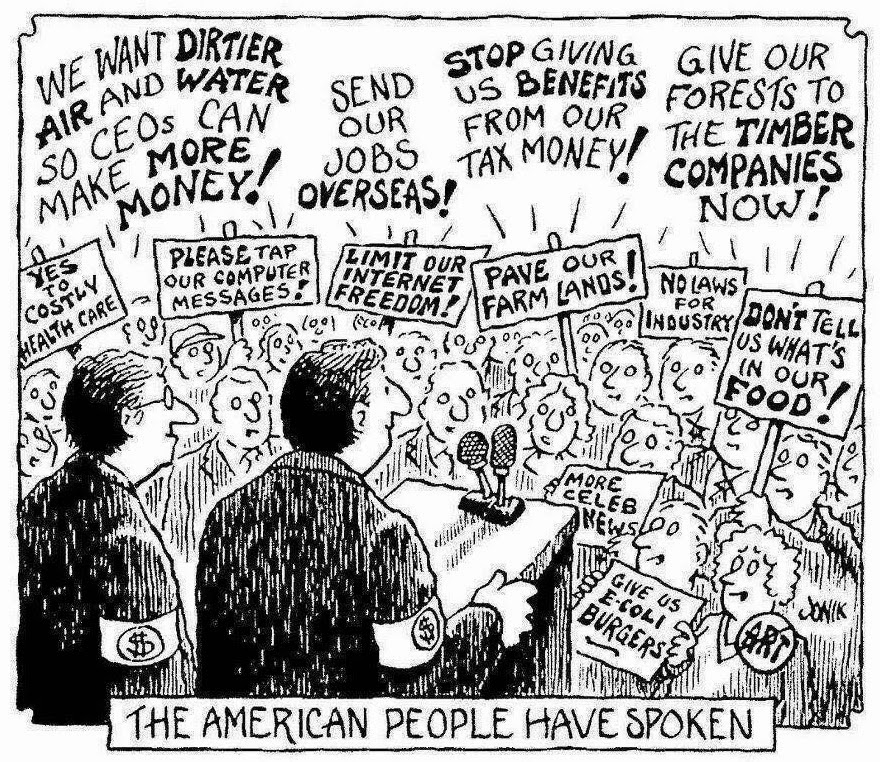
Yes, it’s a mess. The last 40 years of social and environmental mismanagement have brought us the onrushing disaster of #climatechaos and social break down. This situation highlights a troubling reality about society. On one side, we have the powerful and fundamental evil hard right anti #mainstreaming entities responsible for the harm. On the other side, there’s a small movement of left anti manstreaming activists pushing for urgent and necessary change. Caught in the middle are the mainstream majority, the “common sense” liberals, who by default align with the #mainstreaming evil forces that side with the hard right to resist this push for needed change. This alignment is a #blocking obstacle to addressing the root causes of our environmental and social crisis.
What I’ve been doing through the #OMN (Open Media Network) the last 20 years is to support the left and targeting these middle-ground liberals, aiming to grow their perspective and support towards meaningful change. It’s notable that #XR (Extinction Rebellion) has also taken the fluffy side of this approach in recent years. Currently, liberals represent a #blocking force. Overcoming their resistance is essential to addressing the challenges posed by dogmatic power and achieving the transformative change our we and the wider ecological planet so desperately needs.
It’s a desperate time for people have to work past their prat’ish “common sense” to compost this mess.
On this site, I am looking at the path of change challenge, with a focus on tech and activism leading to revolution. What meany people still do not understand is that this is the positive path to take. Though, as has been pointed out, “the issue is that time is running out for this path before global climate collapse — one bad feedback trigger cascading into the next. Ocean circulation and weather disturbances, massive forest fires and famine, ocean acidification, phytoplankton death, oxygen depletion. The stuff of disaster movies.”
In a world hurtling towards environmental catastrophe, for some people the spectre of revolution can be seen as pointless. The harsh reality is that the clock is ticking, and our time and focus to avert the most devastating impacts of climate change is fading, we do need to act, and we need tools to act with #OMN. The real nightmare begins with one feedback loop after another: Ocean Circulation Disruptions: Changes in ocean currents drastically alter global climate systems, leading to unprecedented weather disturbances. Massive Forest Fires: Temperatures rise, forest fires become more frequent and intense, releasing massive amounts of carbon dioxide and further accelerating global warming. Famine: Altered weather patterns and prolonged droughts could devastate agriculture, leading to widespread food shortages and famine. Ocean Acidification: Increased CO2 levels lead to more acidic oceans, endangering marine life, especially those with calcium carbonate shells or skeletons. Phytoplankton Death: The death of these tiny but vital organisms would disrupt the marine food chain and significantly reduce oxygen production. Oxygen Depletion: With less oxygen being produced by phytoplankton, we face a future where breathable air is no longer guaranteed.
Without urgent change, we will likely survive this, but at what cost? Think Mad Max rather than liberal norms, there might be a billion survivors, but they won’t be happy people. Struggling to live in a world drastically different and much harsher than the one we know today. Necessities like food, water, and clean air become scarce, with societal structures collapsed under the pressure of survival. The thought of living through such a scenario is scary.
So on a positive note, this is a wake-up call for the urgent need for social change and immediate action to mediate climate change, we need to shift our focus from merely surviving to thriving by fostering resilience and sustainability, fundamentally shifting away from the current mess. We need tools to use to bring about this change #OMN
It should be obverse to most of us that we are past the stage for pushing only sustainable practices in daily life, from reducing waste to supporting eco-friendly businesses. The is likely still some effect from, policy changes and raising awareness to educate others about the dangers of climate collapse so they can take direct action now to build communities. One thing which will have some affect is building resilience by invest time and effect in community projects to help mediate the social paths through the impacts of climate change.
The fight against climate change is not only about preventing disaster; it’s about creating a path through the mess. We can still take action, as catastrophe unfolds. Understanding paths that actually matter, helps. You can support one path here https://opencollective.com/open-media-network
The Looming of Human Extinction: We Need A Call to Action
Why Human Extinction is Almost Certain, human survival is based on maintaining global temperatures within a certain threshold. Staying under 5°C of additional global warming to avoid catastrophic consequences. Peer-reviewed research says that the pace at which temperatures are rising has been underestimated due to greenhouse gas emissions driven by the current mess. We are now on a trajectory towards 7-13°C of additional heating, far exceeding the critical threshold of 5°C.
The Evidence is in the underestimation of Temperature Rise. Multiple peer-reviewed studies highlight that the rate of temperature increase has been significantly underestimated. The Intergovernmental Panel on Climate Change (IPCC) climate models have not fully accounted for feedback loops and other accelerating factors.
Current emissions’ trajectory, despite crap international agreements and pledges, global greenhouse gas emissions continue to skyrocket. Coming over the next ten years are feedback loops, permafrost thawing, ice melt, and oceanic methane release. These feedback loops are not linear; they amplify the effects of greenhouse gas, leading to faster and more severe #climatechaos.
The consequence of 7-13°C Heating is simply ecosystem collapse, disrupting food chains and natural services. Human health and livelihoods are affected by heatwaves, severe weather events, and sea-level rise which will displace millions. Agricultural productivity will plummet, leading to widespread food shortages and famine, combined with increased disease transmission due to changing climates and habitat ranges for vectors.
Social and Political Unrest, resource scarcity will push conflicts and migration crises. Political instability and societal breakdowns will become more frequent as communities struggle to adapt. Why Transformation is Inevitable, leading to revolutionary change. The impending collapse of societal structures under environmental pressures necessitates revolutionary change. Transformation is not just desirable, but essential to steer the course towards any future.
Guiding the Transformation is a role for our grassroots movements, activism and community-driven initiatives that are crucial. The Open Media Network (#OMN) and other decentralized platforms provide tools for organizing and disseminating information for action. This can drive technological and social innovation, shifting investment to renewable energy, sustainable agriculture, and resilient infrastructure. This will need social innovations, such as new governance models exemplified by the Open Governance Body (#OGB), which offers adaptive and participatory solutions.
More #mainstreaming policy and accountability has a role in holding our greedy classes and policymakers accountable for climate actions and emissions. International cooperation and enforcement of stringent climate policies needs to be prioritized.
Call to Action, human extinction due to #climatechaos is not a distant possibility but an imminent threat. We must act to mediate in any way we can the worst outcomes and guide on a progressive path the inevitable transformation. Join grassroots movements, support technological and social innovations, and demand accountability from those who cling to power. Together, we try to steer the course of history towards survival and flourishing rather than extinction.
What drives the rise of social justice movements and grassroots mobilization is simple: they begin locally. Movements grow from the lived experiences of people and communities directly affected by injustice – those with the motivation and need to bring about real change.
To help these movements expand and connect, technology need to be built to serve people, not control them. That means prioritizing open, decentralized networks like the #openweb and the #fediverse, that grow free, serendipitous communication. These digital commons give activists the tools to organize, share stories, and build collective power without being bound by corporate and state control.
Projects like the #OMN and #indymediaback are built with this ethos, tools for coordination, not domination. But movements also need historical memory. We need to document and preserve the history of activism, its tactics, its victories, its failures, to educate and inspire new generations. Understanding the struggles of the past helps today’s movements avoid repeating old mistakes and build on hard-won gains. That’s the work of the #makeinghistory project.
Yet we face the ever-present threat of co-optation, when activist groups shift their focus to chase funding and institutional legitimacy, losing their deep roots in the process. Staying independent and mission-driven is hard, especially in today’s hostile environment, but it has been done before, so it can be done again. If you value this work, support us here: https://opencollective.com/open-media-network to build these tools.
Activism thrives when there’s a balance of spiky and fluffy – bold direct action paired with strategic planning and long-term vision. Pragmatism is key: we must address urgent needs now, while laying the groundwork for lasting change.
Let’s be clear: the relationship between grassroots movements and capitalism is fundamentally antagonistic. Capitalism erases history. It ignores the material realities of class struggle, slavery by debt, violence, ecocide, and mind-numbing oppression. Breeding a culture of #stupidIndividualism that keeps fuelling the #deathcult we now call “common sense.”
In its place, we should seriously consider other paths like – socialism and anarchism – not as abstract ideals, but as practical socio-economic paths rooted in public ownership and collective decision-making. These models offer a chance to distribute wealth and power more justly.
Capitalism is collapsing under its own weight.
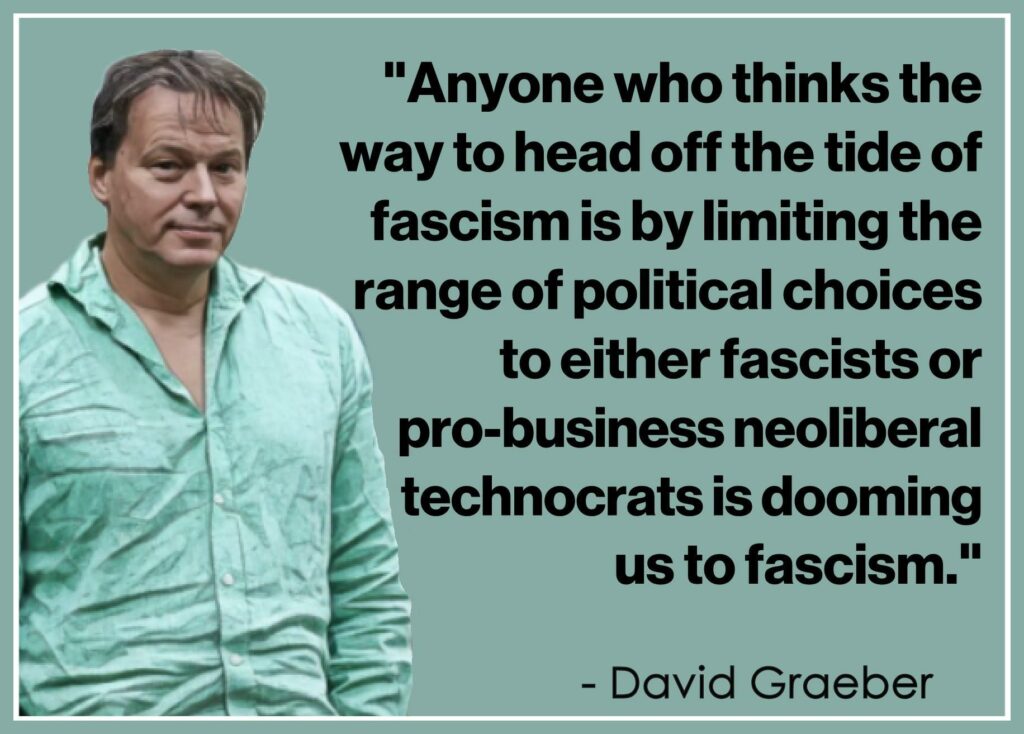
“We all know the system we live under is destroying itself.
So what comes next? Fascism or revolution?”
Radical change isn’t a dream, it’s a necessity. The #openweb, the language of hashtags, and the memory of past movements offer us practical tools to build collective paths, connect communities, and organize resistance to the hard pushing. These are our counterforces to the algorithmic mess of #mainstreaming. We already have the tools. Now we need the will.
Our everyday, often dogmatic “common sense” in capitalism disregards the history of socio-economic material conditions, #classwar, #ecocide, debt, slavery, violence, and oppression. In this we are currently blinded by the myth that there is no alternative to the current crap and broken system, this willfull blindness blinds us and obscures the brutal realities, pushed out of sight, on the edge of our “privileged” western lives. The narrative is too often of inevitability, the market logic pushing us down the path of extinction is natural and unchangeable. So, what can we do? It becomes obverse that we need to change this “common sense”, how do we do this?
To understand why capitalism cannot be reformed into an ethical system, we need to delve into its history. Capitalism always thrives on exploitation and inequality, the wealth of the few is built on the backs of the many, over the last 40 years, after the decades of hard moving away from 20th century social democracy this has accelerated into view.
Class War: The division between the working class and the ruling class has is stark, with the latter using their power to maintain and increase their wealth at the expense of the former. This struggle is not just economic, but also a political and social battle, deeply embedded in the fabric of our societies.
#Ecocide: Capitalism’s dogmatic pursuit of “profit” leads to environmental degradation, which now grows at on an unprecedented scale with the blinded pushing of #climatechaos. It’s simple, the logic of endless growth is incompatible with the finite resources of our planet. This drive for the illusion of total control leads to a legacy of destruction that we are now have to begin to reckon with.
Debt and Slavery: The modern economy is built on a foundation of debt, trapping people and “nations” in cycles of dependence and exploitation. This mirrors the historical use of slavery, where human lives were commodified and controlled to serve the interests of capital. While the forms of exploitation have changed, the underlying power dynamics remain the same. From colonial conquests to modern-day policing, violence is a tool of the capitalist system to suppress dissent and build control.
The liberal attempts to reform capitalism have failed because the system’s core is fundamentally unethical. Reforms serve to placate dissent without addressing the root inequality and exploitation. This band-aid approach leaves the structural issues intact, allowing them to fester and re-emerge in new forms we see today.
Economic Inequality: while making lives meaningful for meany people, wealth redistribution measures, such as progressive taxation or social welfare programs, do little to challenge the accumulation of capital by the worst people. When the cycle of boom and crash comes round, these measures are rolled back and undermined, highlighting the difficulty of enacting lasting change within the capitalist path.
Environmental Initiatives: Green capitalism, focus on sustainable business practices and eco-friendly products, fails to address in any way, the systemic drivers of environmental degradation. It results in greenwashing, where the appearance of sustainability masks ongoing ecological harm. It’s not working and is not going to work.
Social Reforms: While social justice movements have achieved victories, they face fierce resistance and are limited by the capitalist context in which they operate. True social change requires a fundamental shift in the distribution of power and resources #KISS
Today, we are at a juncture, the choice is simple: continue down the path of capitalist “common sense” with its smoke and mirrors and building crises, or embark on a journey towards a different, equitable, and sustainable future. This shift requires collective action, imagination, and the courage to change and challenge entrenched holders of power. The revolutionary calls for a new global movement established outside the collapsing system, ready, willing, and able to build examples of this alternative, so people have options to move away from the blinded “common sense”. In this change, we don’t actually have any choice!
What our #fashionistas do in the #dotcons and the #openweb are a problem we need to work to compost. With this in mind, we do need to talk about useful tools we are underusing. Hashtags are ubiquitous online, at best they categorize content to find and join conversations on topics. The problem with current #fashionista hashtag usage is they reinforce individualism over collective action. This is #neoliberal “common sense” and the pushing of domination of #dotcons, prioritizing profit rather than any needed change and challenge.
There is a working path out of this mess. Serendipity is about the occurrence of events by chance, this provides a beneficially fresh perspective on hashtag use. By implementing hashtags in a way that fosters unexpected connections and discoveries, it transforms how they function as social tools. Yes, misspelled hashtags result in fragmented conversations, making it difficult for people to engage in coherent discussions. However, embracing these variations also leads to a more inclusive and dynamic categorization system. By allowing for misspelled hashtags to be recognized and grouped with their counterparts, we create a more robust and forgiving serendipity path.
In a federated system like the #Fediverse, and what is envisioned for the Open Media Network (#OMN), there is a tension between universal truths and messy, subjective truths. A federated path values diversity and decentralization, allowing for meany perspectives to coexist. This aligns with the concept of serendipity, where the focus is on connections and discoveries rather than rigid categorization.
This is the value in the OMN, which address these issues by implementing word grouping flows, where different spellings or variations of hashtags can be grouped together to build cohesive category flows. This approach makes misspelled hashtags functional, thus addressing some of the fragmentation caused by individualistic usage. But the OMN project faces significant challenges in securing funding and overcoming “common sense” internal and external obstacles. The difficulty in obtaining #FOSS funding highlights the broader issue of support for projects that prioritize open, decentralized, and community-focused paths.
The use of hashtags is a progressive and critical perspective on technology and society. Think about neoliberalism (#deathcult) and consumer capitalism (#fashernista), promoting the ideals of the open web (#openweb) against the for-profit internet (#closedweb#dotcons). The interlocking hashtags tells a story that advocates, transparency, collaboration, and sharing in open-source development (#4opens).
Example Meanings:
#deathcult: Neoliberalism and its detrimental social and ecological impacts.
#fashernista: The trivialization of serious issues through consumerism and fashion.
#openweb: The original horizontal path of the World Wide Web.
#closedweb: The pre- and post-open web internet dominated by for-profit control.
#4opens: Principles of transparency, collaboration, and sharing in open-source, #FOSS development.
#geekproblem: The cultural issues within the tech community, a strong tendency towards control and determinism.
#techshit and #techchurn: The negative consequences of constant new technological projects that fail to address any social issues.
#nothingnew: The question whether new projects are needed or if existing ones should be improved.
#OGB: Open governance and the power of community lead decision-making.
For hashtags to be effective tools we need for social change, we need to shift the balance from individualistic to collectivist. This requires tech systems that accommodate human error and diversity of expression, while maintaining coherence and building community. The #OMN has a promising approach by grouping variations of hashtags, but it faces significant challenges in implementation and support due to current blocking of any funding and coding resources.
Please, let’s embrace a serendipitous view of hashtag to enrich conversations in the era of the #deathcult.