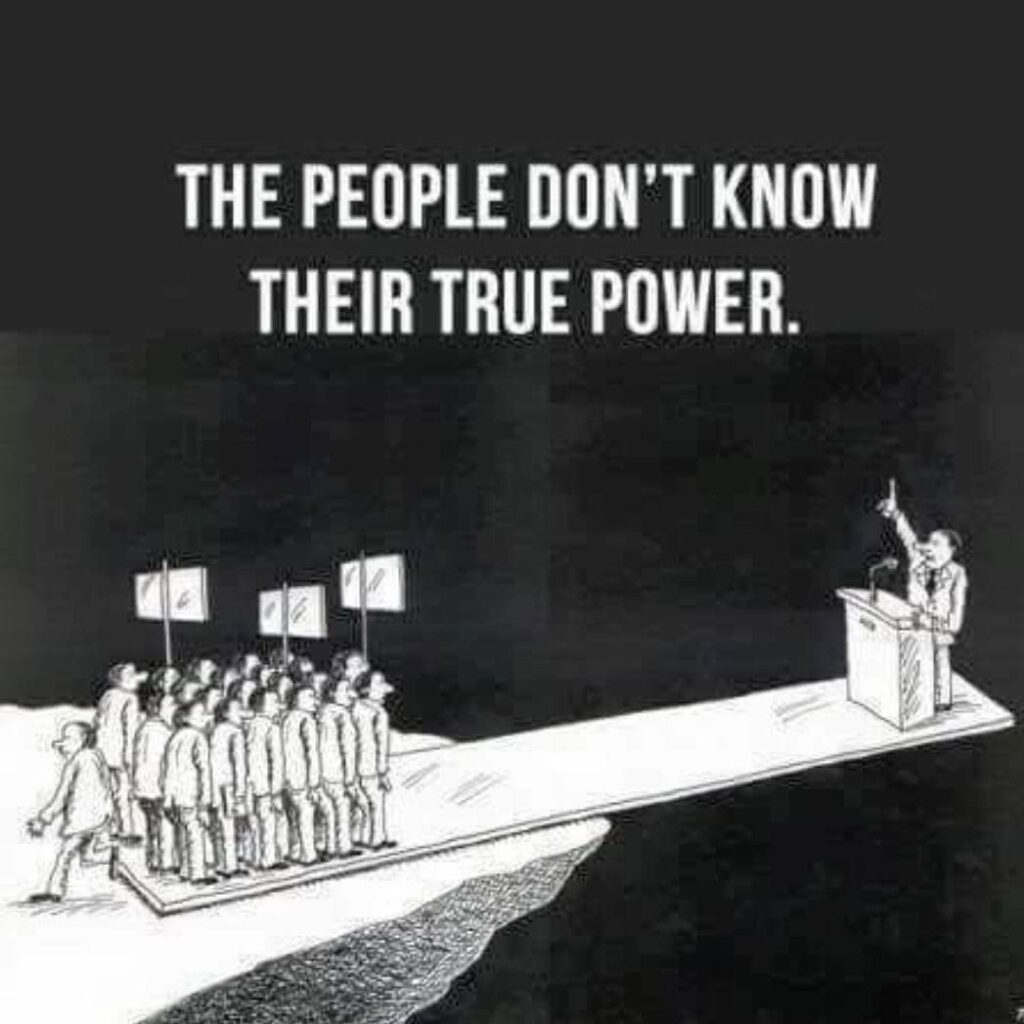
Horizontal people always get fucked over by vertical people. This is normal, why? Because horizontals give away power to build social fabric, while verticals hoard and concentrate power to extract and dominate. Every. Single. Time.
And the only thing that makes horizontals work, in the face of such mess making, is shared worldview, which we currently lack. Instead, we’ve got swarms of #stupidindividualism, where everyone thinks they’re the centre of the universe, interpreting everything as if their personal “common sense” whims are political strategy. And then, surprise! We keep getting steam rolled.
An example, let’s bring in the rot of #postmodernism, the #pomo guy proudly clams that “Ah, but classification requires a classifier!” This is what #postmodernism does to your brain. It unplugs you from reality while pretending it’s insight. It’s true that classifiers precede categories linguistically. But the material world precedes both. Rocks didn’t need a PhD to be granite.
This kind of derangement isn’t just stupid, it’s systemically useful to the #deathcult. Because if you believe that value only exists if humans assign it, then a tree has no value unless it can be turned into toilet paper. A whale has no value unless it can be monetized or aestheticized. Nature becomes valueless. And so it’s obliterated.
Meanwhile, people in the #fediverse are still pretending codebases matter more than people. No. The value of the Fediverse is in the humans running the instances and inhabiting them. Not the bloody Git repos. Without people, the code is just more maths.
On this #FOSS path, don’t be a prat. Recognize the root issue:
Let’s get the shit-shoveling out of the way first. People get twitchy about the word Communism, waving their arms about “utopian” back-to-the-land communes or religious cults that gave up on society and ran off into the woods, on one side and on the other expansionist totalitarian empires on the other. That’s not what we’re talking about, those were retreats, both are dead ends. The problem is that the people pushing these didn’t believe the world can change, so they isolated themselves, or build closed empires of CONTROL, both closed states in the shadows of the #deathcult empire we to often live in. That’s not compost, that’s too often decay.
What I might mean by communism is radically simple: a society based on practical equality. That means everyone has what they need, and nobody gets to hoard. It’s not abstract, it’s built on what people can do and what they really need, no more and no less #KISS
And this path grows out of a basic truth, humans are social creatures, we exist inside society, not apart from it. So any real ethics, any workable economics, has to start there. The individual is not some walled-off unit of value, that’s the current poison the #deathcult worships. And under the current mess, that poison is poured into everything. It’s why we get so much waste, so much suffering, and why inequality isn’t a glitch, it’s the damn #mainstreaming path.
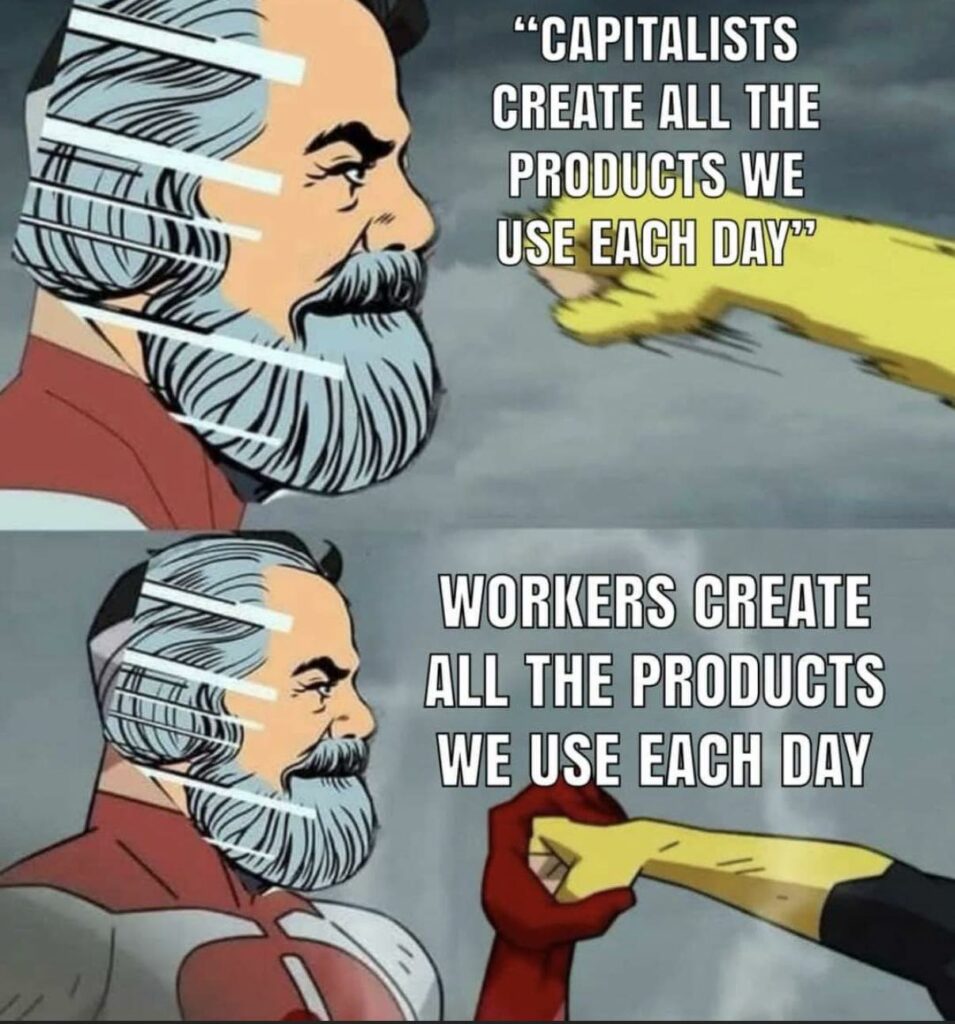
So let’s be honest, there are two ways to organize society: Slavery or Equality, everything else tends to become a mask. What we’ve got now is, for most people, the latest version of slavery – Wage Labour – which is just chattel slavery with the branding updated, and the chains made invisible. The #nastyfew ruling class, the “worthy”, decide what’s valuable and over the long term try and squeeze the rest of us dry. These self-declared “useful” people are entirely parasitic. The only productive class is the one they exploit: the workers, the creators, the growers, the rest are to often just shuffling paper and shifting blame, smoke and mirrors.
Every age has dressed this up differently – Rome had chains, #feudalism had serfs, now we have debt, wages, and endless hustle, same shit, different form. But the composting truth, we’ve arrived at a point in history where this can break down. The system that enslaved us has finally created the possibility of liberation. That’s the dialectic, out of the rot, we can grow something living.
Communism does not need to be a dream – it can be a practical toolkit for that growth. It says:
From each according to their capacity, to each according to their need.
And when they ask, “But how will you measure someone’s need?” we answer, in a real society, people grow up inside a culture of mutual care. You stop thinking in terms of what you can grab and start thinking in terms of what you can share. The culture composts greed, the idea of stepping on someone else to get ahead just doesn’t make so much sense anymore.
You want doctors? You make space for people who want to heal, not for those who want a title and a paycheck. The community will support their learning because everyone benefits. A fake doctor who slides through on bullshit credentials won’t last long in a society that knows what real care looks like. The mask mostly won’t work anymore.
Yes, we’ll still need to deal with logistics, conflict, even assholes, “communism” isn’t heaven, it’s just a #KISS honest way to live. And it can maybe handle everything the current system handles, only better. Capitalism is a hack job, it hoards, it wastes, it burns (often literally) people out. A communal society builds real wealth of time, beauty, knowledge, unpolluted air, clean water, and space to actually live.
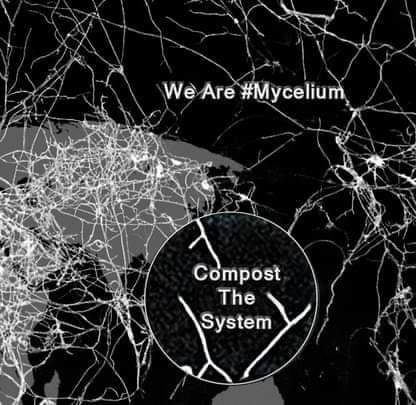
And how do we get there? Not by magic, not by seizing the TV stations and declaring victory. The revolution is already underway, but it’s compost, not dynamite. We’re building a soil layer thick enough for life to grow.
It starts by making more communists, by spreading the seed idea, that equality isn’t just desirable, it’s necessary. It grows when workers demand not just crumbs but real power, not reforms, but transformation. First they fight for better pay, then for control, and finally they realize the masters have no magic, no divine right – just theft, backed by violence and lies.
The change won’t come as an any single event, it’s a long decay and regrowth – a shift from brittle control to living interdependence. The capitalist state will still try to crush this change when the time comes, but by then, it could be too late. Its legitimacy will have rotted away as people will already be walking, building the alternative paths.
In short:
I could be a Communist because the current system is slavery with marketing.

I could be a Communist because I believe in people, not profit.

I could be a Communist because the future can be communal, or there will be no future.
The worst parts of people and society – fear, greed, envy, control – are self-reinforcing. They act as feedback loops in a broken sound system: shrieking, distorting, drowning out all nuance is the signal-to-noise issue we need to mediate. The problem is that some people feed on this noise. The media amplifies it, social networks algorithmically reward it. This cycle of breaking – where outrage breeds more outrage, where mistrust deepens isolation, and where competition crushes collaboration – is an act of destruction. It corrodes relationships, communities, and in the end our capacity to imagine a better world.
We see this every day:
Clickbait headlines that fuel division because rage gets more views than reason.

Politicians who stoke fear to gain power, scapegoating the most vulnerable.

Tech platforms that extract attention through anxiety and reward extremism.

Economic systems that pit workers against each other, just to survive.
To compost this mess, we have to do the opposite to this current “common sense”: to normalize and nourish the best parts of people and society, trust, generosity, curiosity, empathy. When these values are much more visible, practiced, and shared, people can feed on hope instead of despair. This cycle of creation builds, it doesn’t break. It connects, it doesn’t divide. Examples of composting:
Mutual aid groups during crises, where strangers organize to care for one another without waiting for permission or profit.

Community-run media that uplifts real voices, telling stories not as commodities but as threads in a shared tapestry.

Free software movements built not on scarcity and control but on abundance and sharing.

Occupy kitchens, copwatch collectives, local food co-ops, and even open-source libraries — all rooted in the principle: we are stronger together.
The problem is capitalism, it is a system founded on the worst instincts, it glorifies greed, promotes fear, breeds control, and accumulates power in the hands of the #nastyfew. It at long last now becomes obverse that it is a system that thrives on destruction – of nature, of community, of meaning.
In contrast, socialism and anarchism, at their best, are grounded in trust, solidarity, and hope. They offer frameworks for cooperation without coercion, for shared abundance, for bottom-up resilience. These are not utopias – they are gardens. Messy, real, and alive. They root us in better soil – the kind where the seeds of collective flourishing can actually grow.
We do need to stand, together, shovels in our hands. The world is breaking, but we are not powerless. The mess is here, let’s not run from it, let’s work to compost it. Let’s build from the rot something rich, something wild, rooted, and real.
What do we balance this with? The #OMN projects – short for Open Media Network – are not a brand, not a platform, and not a startup. They’re a loosely coordinated, commons-rooted pathway emerging from the native #openweb trajectory. They’re aimed at building a livable media ecology, that grows from open-source ethics, affinity-based social organization, and federated infrastructure rather than enclosure, extractivism and spectacle.
Rather than falling into the traps of heroic dev culture or platform monoculture, #OMN treats tech as an ensemble process: modular, collectively maintainable, and explicitly oriented toward mutual coordination and deliberation, not content flow or engagement metrics. It’s tech that refuses to pretend it’s neutral.
The point is not digital for digital’s sake. These networks are meant to scaffold on-the-ground, hybrid practices – to support real-world collective activity, embedded presence, and the messy, rhythmic back-and-forth of embodied organizing.
Unlike most open-source projects that depend on the labour of isolated overcommitted maintainers (and collapse when they burn out), #OMN foregrounds shared stewardship and viscous governance – avoiding the trap of what is aptly called #stupidindividualism. This is code with a metabolism, not code as artifact.
Philosophically, #OMN differs from most “tech for good” efforts by refusing to detach “technology” from semiotic infrastructure. Defaults, interfaces, metaphors, these aren’t just UI choices; they’re interpretive compressions that shape how collectives think, decide, and remember.
So the stakes are high. Latency pressures, whether social, cognitive, or computational, have to be designed for, not ignored. That means systems that scaffold deliberation, not shortcut it. That means treating the commons as composed, not given, building stacks that help ensembles hold interpretive tension instead of collapsing into fast consensus or false clarity.
In short: #OMN is infrastructure for the kind of world where #4opens matters. It’s a path to build tech that metabolizes collective meaning-making under conditions of mortal constraint. Not because it’s ideal – but because it’s necessary.
#Neoliberalism isn’t just an economic system, it’s a cult of self-enclosure. Its superpower? #stupidindividualism, turning people inward, away from shared life, into isolated fragments clicking, swiping, and scrolling through ruins. It disconnects us from collective being, and then sells the pieces back as “individual freedoms.” This isn’t an accident. It’s the plan, a trick of enclosure, take a concept of civic breakdown and turn it into a moral failing of the person, not the system. A classic #deathcult move.
Let’s call it what it is #stupidindividualism = the neoliberal condition of enclosure. A social operating system designed to lock us into self-referential survival while the commons burn.
We’ve all been forced into #stupidindividualism with the #dotcons enclosing our attention. The gig economy encloses our labour. Even our friendships are enclosed in “encrypted” DMs, monetized by adtech. Public life? Gone, auctioned off to the highest bidder or locked behind paywalls.
We are encouraged to be good “idiots” in the ancient Greek sense – disengaged from collective power. This #deathcult under capitalism, is a feature, not a bug. They, the #nastyfew want “us” atomized, docile, and scrolling, not stepping away from the path to new norms. And so we rot in a swamp of aestheticized politics – “likes” over lives, vibes over values, empty radical branding over messy collective struggle.
Some symptoms of this sickness can be seen in commons being destroyed: Libraries gutted, parks sold off, hospitals privatized. Nothing left to meet in. Social life enclosed: From Facebook groups to “creator economies,” all relations are branded and transactional. Fear replaces solidarity, precarity rewires our brains – everyone a competitor, every community a threat. Politics becomes content, no spaces for deliberation, only locked comment sections and algorithmic outrage. Under this path, “engagement” is a metric, not a practice. #stupidindividualism is the “normal” common sense path we currently blindly walk down.
The left hasn’t escaped, we’re not immune, we’re infected. Too much of what passes for radicalism is just #stupidindividualism with better fonts. Buzzwords, identity consumption, internal drama cycles, empty memes. Most leftist language itself has been enclosed into performative radicalism, saying the right things in the right tone to the right audience – but nothing changes. It’s a ritual, not resistance. Aesthetic replaces action: Solidarity becomes merch. Mutual aid becomes charity. “Revolution” becomes content marketing.
This is all the “common sense”, #mainstreaming by another name, the #stupidindividualism is also core to what meany of our #fashionistas call the left. And, simply, we can’t win if we keep playing by the #deathcult’s dogma. So how do we compost this? We grow living language from real ground. No more floating hashtags. No more semantic bubbles. Here’s the path, embed language in practice, political terms should come from mutual aid kitchens, picket lines, and assemblies – not Slack threads or Twitter feuds.
Don’t just “speak truth to power” – speak truth to each other, if we want to build a better world, we need collective life again. This isn’t nostalgia. It’s survival. We’re in a fight against a system that thrives on isolation. #Neoliberalism has turned us all into (stupid)individuals, and then blamed us for it.
Let’s be clear, the opposite of #stupidindividualism is not intellect, it’s interdependence. So let’s plant words in soil again. Let’s grow meaning from shared struggle. Let’s compost the #deathcult and sprout something real. On this path, just say no to self-enclosure. No to semantic drift. No to aesthetic radicals trapped in content loops. Instead, let’s get our hands dirty.
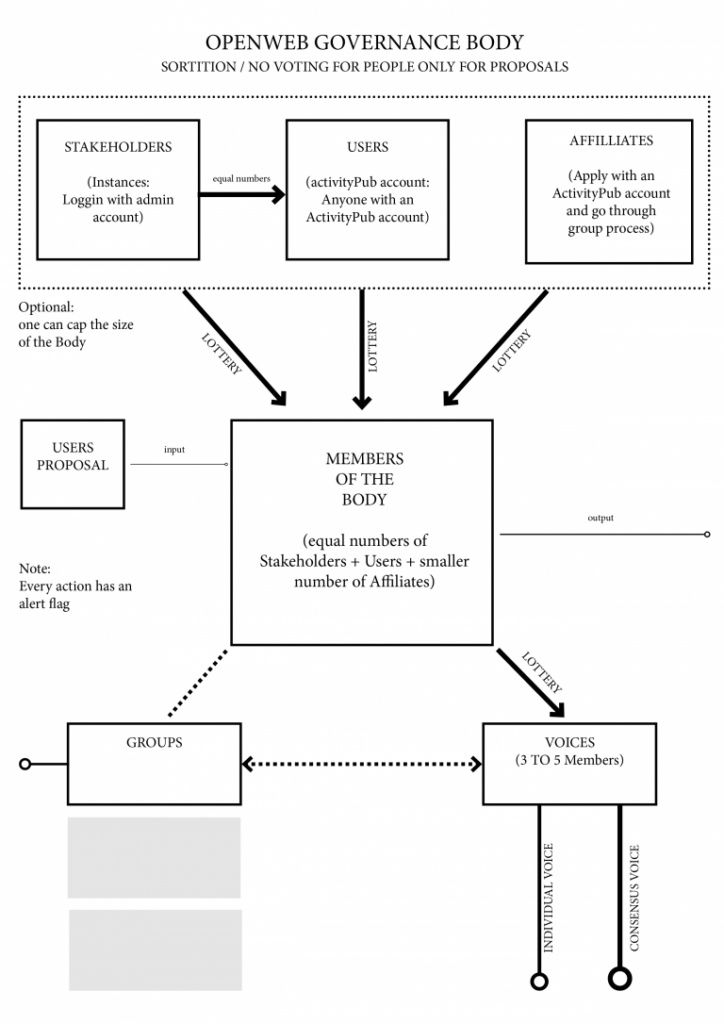
We’re living in the wreckage of the old 19th century social order. The so-called Four Estates, pillars of traditional power and authority, which 200 years latter are either rotting from within or already dead. It’s now past time to stop mourning and start composting this. Right now we are doing this at the #OMN we’re outlining and building horizontal social/digital tools to grow grassroots governance, aiming to replace what no longer serves us. These tools are based on tested activist process and being built out using current working federated technology through the Open Media Network (#OMN).
Before we get into that, let’s break down the old foundational history:
Lords Temporal – the elites, landowners, oligarchs. Fuckum. Their power is bloated and corrupt. From billionaires flying private jets to COP summits while the planet burns, to political dynasties laughing at austerity from gated compounds, they’re done, even if they don’t know it yet.
Lords Spiritual – organized religion as moral compass? Please. They long ago ceded relevance. As the Church clutches pearls over gender and culture wars, the people are elsewhere, building new values and solidarities.
House of Commons – dysfunctional, what was meant to represent the people now represents donors, lobbyists, and corporate interests. Labour and Tory are different shades of the same managerial grey. Real democracy? It’s not coming from Westminster.
Journalism – the one estate still standing, sort of. But it’s on life support. Mainstream media dances to the tune of its billionaire owners, or worse, chases clicks in the race to the bottom. The BBC parrots government lines and succumbs to culture war baiting.
So what’s next? Our mission is not salvaging old institutions, others can try that path. We’re building on different traditions and mythology. Right now, people are fleeing from the corporate-controlled web (#dotcons) and rediscovering decentralized platforms: Mastodon, Peertube and others built on #ActivityPub. These are important steps towards a federated path. But tech alone isn’t enough, we need governance. We need trust-based, horizontal, transparent tools that empower communities to organize, decide, and act together without traditional gatekeepers.
That’s where the Open Media Network (#OMN) projects come in. We’re designing and testing code to enable this shift, tools for publishing, moderation, and coordination that are rooted in the #4opens: open data, open source, open governance, and open standards. It’s messy, yes. But so is composting. And from that mess, we grow soil. Soil for new media, new movements, and new paths as the old crumbles.
We’re starting with the last two relevant estates: journalism and representative governance. Both are broken, but maybe still salvageable, not by patching them up, but by rebooting change and challenge from the ground up. Think of it as digital mutual aid, media gardening, and radical democracy rolled into one. We have project outlines, we have grounded flows and process. We just need more people who give a shit. This is an invitation, to join, and help build media and governance paths that actually works for the many, not only the churning #nastyfew.
The best working definition of fascism is simple, economic: “The continuation of capitalism by undemocratic means.” This isn’t abstract theory. Fascism in the 1920s and 30s emerged precisely in response to a very real threat of revolutionary socialism. The Russian Revolution sparked global fear among the capitalist class that their time was up. Fascism – in Italy, Germany, Spain, Austria – arose as a counter-revolution. It wasn’t merely authoritarian nationalism or aesthetic militarism. It was the repressive armor worn by capitalism under existential threat.
Look at the details: In Spain, Franco rose after a democratically elected socialist government began to challenge entrenched economic power. In Germany, the first Nazi concentration camps were built for communists, not Jews. In Chile in the 1970s, the overthrow of Allende’s democratic socialist government was orchestrated by domestic elitists and foreign (read: U.S.) interests terrified of socialism spreading in Latin America. Fascism wasn’t a deviation. It was capitalism defending itself with violence. Today, we face the same moment – and too many people are looking the other way.
For 40 years, neoliberalism, that mix of deregulation, privatization, and gutting of social safety nets, has shaped our economics and cultures unchallenged. Its effects are easy to see: skyrocketing inequality, mass precarity, and ecological breakdown. But there’s a dangerous myth that neoliberalism is simply unregulated capitalism. In truth, it’s much closer path to economic fascism without the jackboots, until now.
#Neoliberalism didn’t grow in a vacuum. Its roots are in explicit reaction to socialism’s successes. Take Friedrich Hayek, ideological godfather of neoliberals – he was deeply disturbed by Red Vienna, where municipal socialism (like public housing) was working too well. His entire framework arose as an intellectual counterattack to these working collectivist policies.
And Hayek wasn’t just an ivory tower academic. He directly shaped the policies of Thatcher, Reagan, Pinochet, and the Chicago Boys – bringing theory to life through brutal economic “shock therapy.” Thatcher herself famously declared during a cabinet meeting: “This is what we believe” as she slammed Hayek’s book on the table.
From Mussolini to Musk, capitalism’s new wannabe strongmen. There’s little material difference between Mussolini’s Italy selling off state assets to loyal industrialists and today’s global elitists (#nastyfew) hoovering up public infrastructure in the guise of “efficiency.” Mussolini at least expected those capitalists to serve the nation. Neoliberalism assumes, foolishly, that global capital will take care of society without loyalty, borders, or accountability.
In Russia, we see a more classical fascist arrangement: oligarchs allowed to profit, provided they serve the state’s nationalist goals. In the U.S., capital’s alignment with far-right politics is more chaotic but no less real. Corporations rarely oppose Trumpism, despite its chaos. Why? Because, as with 1930s Europe or 1970s Chile, fascism is good for business – so long as the profits roll in and unions, climate activists, and grassroots movements are crushed.
Where we are now is neoliberalism’s endgame, capitalism is in crisis again. But this time the existential threat isn’t just socialism – it’s climate and ecological collapse, a crisis neoliberalism created and cannot in any real way solve. And once again, the system’s response is not reform, but repression. Neoliberalism cannot survive democratically. The people don’t want it. So increasingly, undemocratic means are being deployed: voter suppression, propaganda, surveillance, repression, and the rise of far-right movements that promise “order” and scapegoats instead of justice. This is fascism, not a return to it, but its next iteration.
So what now? We don’t just need to resist this – we need to name it. Clearly. Loudly. Repeatedly. The myth that neoliberalism is merely “capitalism with the brakes off” must be composted. It is fascism with #PR. And as in the past, any progressive a step, a real alternative comes from the bottom up. From grassroots media, mutual aid networks, radical unions, climate justice movements, and the digital commons. We need to rebuild this solidarity, and we must do it #4opens horizontally, outside the broken institutions that created this mess.
The current problem we face is simple and brutal. The right-wing eats everything. Every radical spark, every hopeful idea, every challenge to power, they swallow it, mutate it, and spit it back as bland, digestible social shit.
They take our justified rage and push it back as conspiracy. They take our care and twist it into control. Every revolutionary idea, stripped bare, rebranded, and fed into the #mainstreaming machine as more slop to feed and shape the masses.
This isn’t new. It’s the old game of cultural capture. And they’re very good at it. That’s why we need tools and paths they can’t easily co-opt. Stories they can’t rinse out and rebrand. Protocols that don’t translate into buzzword #blocking. The #4opens, the #OMN, the hashtag as resistance, are frameworks built to rot their greed and appetite.
We compost instead of consume. We grow native paths, not polished products. What we’re building is deliberately messy, deeply rooted, and absolutely unpalatable to the #nastyfew and their simpering acolytes. They want power. We want relational fabric. They want purity spirals and hot takes. We want compost, community, and continuity.
It’s a step. And that matters. As I always say – I like big ideas, but right now, I’m putting my shovel into small steps towards big ideas. That’s how you build something that lasts.
People are celebrating that Trump and the new right are tearing down the neoliberal #deathcult consensus. And to be fair, they’re right, Trump’s movement is smashing the status quo. But there is an easy to see problem, it’s not being replaced with anything better. It’s just more stinking shit, only now it’s wrapped in authoritarian aesthetics and crypto-gold-rush dreams. This is the “new” mess being pushed by the different #nastyfew.
Wannabe king, fascist
This regime change without a roadmap is the end of neoliberalism, and good riddances to that, but this change is not a “nice” step toward justice, but a corporate free-for-all masked in anti-elitist smoke and mirrors. Trump project isn’t building anything. It’s the looting of the ruins.
We have already suffered through the 40 years of neoliberal breaking government to sell it off. What many still don’t understand is that neoliberalism doesn’t just passively fail, it actively sabotaged. For people who pine for this vanishing mess, let’s remind you that if you elect neoliberals, they will work tirelessly to make your government services worse. Why? Because good public services threaten private profit. This is the history of the last 40 years:
Defund and sabotage public services, transit, healthcare, education.
Add layers of bureaucracy to make them inefficient and annoying to use.
Watch public trust erode as services collapse.
Claim privatization is the only solution, and sell it off to friends and donors.
The result? A hollowed-out state, where private companies profit off pain, and public goods are rebranded as luxuries. This is what we voted for with Starmer’s labour coup in the UK. This isn’t mismanagement, it’s strategy.
But Trump, and likely Farage, if we vote for him to replace Starmer, goes a step further. They’re not just running the neoliberal script, they are rewriting it with a real estate mogul’s pen, driven by a dystopian vision of climate opportunism. Want proof? Look at the growing obsession on the American right with Canada and Greenland. Yes, Greenland. It’s not simply a joke, it’s a climate gold rush. As the Arctic melts, they see land, water, and new frontiers. The kids we put in charge who dream of being kings are buying into collapse like its beachfront property.
Prince of nasty, fuckwittery
Trumpism is what happens when the neoliberal state collapses under its own mess and contradictions, and instead of building something new, it hands the keys to a cartel of extractive fantasists. They don’t deny climate change any more, they’re planning to capitalize on it.
The is currently no plan, no future on the current path. This new right-wing movement isn’t even pretending to govern. There’s no vision beyond seizing land, eroding rights, and cutting deals. They’re not here to fix the climate. They’re here to survive it better than you, and leave you and your kids dieing in the mess.
We need to be absolutely clear about this, government services don’t have to be slow and bureaucratic. That’s a choice, a bad one. We can build public systems that are efficient, trustworthy, and just, but to do this, we need to reject the current “common sense” neoliberal decay and right-wing collapse profiteering.
These men featured here are all #fuckwits, we simply can’t let the #nastyfew define the on rushing era of collapse. A first step away from this mess is in saying out load that the hard shift to the right isn’t the antidote to neoliberalism, it’s the final form, stripped of illusion and fully weaponized. And the answer to this isn’t hiding from the collapse, it’s composting the mess, we need a shovels #OMN
State violence is the final refuge of the incompetent, considering the staggering incompetence of the present governments, it’s no surprise they’re hedging their failures with increased military spending. When leaders are intellectually and morally bankrupt, when they run out of ideas, when their authority falters under the weight of economic inequality, climate breakdown, and crumbling public services, they reach for the oldest tools of control: fear, force, and distraction.
Across the world, we’re watching this trend unfold. Governments are pouring resources into militarisation while systematically underfunding healthcare, education, and welfare. In the UK, billions are being funnelled into new military hardware, expanded surveillance infrastructure, and policing, all while people struggle to heat their homes, access a GP, or keep a roof over their heads. This isn’t mismanagement. It’s a political choice, and it makes clear where the priorities lie, in protecting the power of the #nastyfew, not people.
They tell us it’s about “security” and “defence.” But when a government starts to feel more threatened by its own people than by any foreign force, we must ask: what kind of future are they preparing for? It’s starting to look like one where dissent is criminalised, protest is heavily surveilled, and public frustration is met not with care or accountability, but with batons and border walls.
We should be deeply worried, because violence is not only about tanks and drones, it’s the everyday grinding violence of austerity, the hostile environment, the punitive benefit sanctions, the calculated dismantling of social safety nets. It’s a state driven project that protects the profits of the #nastyfew while punishing those who dare to imagine something different.
But here’s the hard truth, we did this, and we keep doing it. It’s us. We have the power not to do this. We vote, we organise, we protest, and sometimes we stay silent, and all of that shapes the world we live in. Every time we shrug our shoulders, every time we tell ourselves change is impossible, we make the next wave of repression that much stronger. But the other side of this is also true, when we act, when we organise, when we care, we push the tide in the other direction, this is a basic story of #activism.
Incompetence, paired with unchecked power and militarisation, becomes very sinister fast. It’s a very basic first step, that we must resist this story of more control, more surveillance, and more force as the solutions. What we need now is courage, creativity, compassion and solidarity. The qualities that have been deliberately stripped from the institutions that govern us, but that still live in us, and in the communities in this #openweb commons we build.
It’s a mess we need to compost, we are living through a deep crisis, not just of environment, economy, or governance, but of imagination and the will to live. The old systems are visibly broken, the #IPCC reports confirm what many already feel, we are trapped inside a #deathcult, and #mainstreaming culture offers only distraction, careerism, and status games for isolated individuals. There is no hope there.
But hope is not some fluffy optimism, it’s a needed social force for basic metal health. What we talk about here is that in every grassroot, federated, #DIY tech project, the solution is always the same, more people. Not more gatekeepers, more hierarchy, just more people. This is the core truth of the #OMN (Open Media Network), that it’s not a product, it’s a process. It’s not a startup pitch, it’s a compost heap where good things grow, if we turn it, feed it, and invite others to join, to grow.
We already know how the far right wins, they appeal to real feelings of injustice, then twist those feelings into #stupidindividualism that serves their own #nastyfew class interests. It’s reactionary ideology, and it’s spreading fast. What do we do? Step away from their game. Get involved in building something different. The #4opens is a simple, powerful tool to judge who’s building towards the commons and who’s just repackaging and pushing the same old poison.
This needed “common sense” path, break, is about using shovels to turn over the ground we grow from. When we do this, one thing that is fertile is that in the end, all social action happens through generalized talk, categories, metaphors, shorthand. That’s how language works. But we live in a cultural amnesia where this is forgotten, mistaken for bad “common sense.”
This is why the very different tech projects of the #OMN actually embraces this messy, human space, while the more mainstreaming #geekproblem seeks rigid machine-like CONTROL. Yes, this is about balance, they’re often technically right, but socially intolerant. We, by contrast, are often technically wrong, but humanly right. What we need is a bridge between these approaches, or we’ll just keep circling, as our spirt withers.
The #OMN project use some control; the #geekproblem needs a lot of humanity. The current hard blocking is that they don’t see this, and so they keep #BLOCKING. For example, take the common pattern where someone says, “why don’t you just develop it?” That line unconsciously dumps all responsibility on narrow “geeks” while ignoring the role of social imagination, UI/UX design, and the deeper process we’re trying to solve together. That’s the #geekproblem: not the code, but the refusal to look at the problem outside the code. So here we are again – rinse, repeat. Let’s not. instead, let’s build the bridge.
For the last 5 years conversations have been about, the #Fediverse, #Web3 and more recently the pushing of #mainstreaming into the #openweb native path. But despite this, the fediverse is still a notable outlier in the digital landscape. This is in part because unlike the dominant tech trends, which emerge from Silicon Valley and the cross-Atlantic #dotcons agenda, the fediverse is rooted in European ideals of decentralization, federation, and digital autonomy, it’s a “native” openweb project.
When you step outside, into so-called “global” tech events, you’re hit with a wall of #techshit nonsense. Looking back, when I used to bring up the Fediverse at these events, the reaction was predictable: blank stares, polite nods, and then a quick return to parroting the latest #bluesky, #blockchain, talking points. This tells us that the techshit is still mainstreaming and more native paths will continue to be invisible to most people looking for real decentralized alternatives.
One of the issue that pushes this is Identity Politics, in our own spaces, beyond the tech sphere, this issue impacts the Fediverse and grassroots media projects or more precisely, its misapplication dose. By overemphasizing individual identity over collective struggle, leftist and progressive movements fall into fragmentation, making them easier for the #nastyfew to co-opt, divide, and neutralize. This is not to dismiss identity politics outright, systemic oppression is real, and addressing issues of race, gender, and class matters deeply. But when these struggles are disconnected from broader grassroots organizing, they are easily absorbed into the neoliberal agenda.
This is the normal mess dressed in a dress, to push a likely unhelpful metaphor. We’ve seen this time and again with corporate tokenism of big tech and NGOs pushing superficial diversity while maintaining exploitative structures. This “thinking” leads to co-optation of radical movements, which are watered down into harmless social branding exercises that don’t threaten power. Feeding divisiveness, when instead of organizing collectively, activists are pitted against each other over micro-issues, while top-down power structures remain untouched.
The central question is who gains power, the only question that matters in activism, are we giving more power to the centralizers, or are we shifting power to the grassroots? Everything else, culture wars, internal leftist feuds, academic debates, is secondary. And the normal reality is that our current #mainstreaming always leads to power centralization. When the path we need to take, requires discomfort, real change, which is never easy. And right now, we are still stuck in this mess, watching many in the #Fediverse waste time repeating liberal nonsense instead of challenging the #neoliberal dieing old world order.
This leads us onto the illusion of the liberal “centre”, where many so-called progressives are still worshipping the #deathcult, by amplifying right-wing culture war narratives. Why? Because it’s easier. The liberal-left is caught in an endless cycle of reacting to right-wing provocations instead of fighting systemic power. The truth, is that the “centre” is not holding, the centre is never going to hold. And that if you refuse to choose a side, both the left and the right will decide your fate for you. Liberal fence-sitting has always been about the rise of reactionary forces, both online and offline. Thus, if you’re still spending your time fighting over petty internal issues while ignoring the big-picture consolidation of power, you are helping the system you claim to oppose.
What’s can people do? A good first step is building real alternative’s. my example is the #OMN projects and growing the Fediverse, this means: Keeping focus on systemic power, not just individual experience that people keep focusing on. Actively pushing back against co-optation, building truly decentralized native alternatives, not only clones of corporate platforms. Rejecting the culture war distractions and pushing real organizing.
The Fediverse should be better, it’s one of the last remaining spaces where you can create rather than just consume. But we won’t get there unless we actively fight for it. So the question is: Are we ready to stop feeding shit and start building something real?
Remember when drone deliveries were going to revolutionize shopping? When every major news outlet unthinkably reported that we’d have autonomous quadcopters dropping off toothpaste and Amazon boxes on our doorsteps?
Or when 3D TVs were the future of entertainment, pushed so aggressively that manufacturers stopped making non-3D models for a while? Where are they now? Rotting covered in dust in clearance bins or forgotten in garages.
Then there was the Internet of Things (#IoT) hype, your fridge was supposed to talk to your toaster, which would text your smart kettle to boil water before you even knew you wanted tea. Instead, we got insecure, surveillance-riddled devices spying on us for #dotcons corporate profit.
And we need to not forget #blockchain, #NFTs, and the endless #Web3 hype? Each was pushed as a revolution, yet all followed the same pattern of hype, vulture capital gold rush, and then, inevitably, disillusionment. NFTs went from “the future of digital ownership” to being abandoned by even their most vocal promoters.
If we won’t a progressive world, why do we keep pushing this #techshit? Every time a new #mainstreaming tech fad appears, it follows a predictable, boring hype cycle. First, it’s marketed as the next big thing, a must-have, must-invest, must-embrace technology. Then, sceptics, like this site, are ridiculed as out-of-touch or anti-progress, at best or simply trolling at worst. But when the promised revolution never materializes, the same people, quietly move on, forgetting the past mistakes and priming ourselves for the next wave, this is a rinse and repeat cycle.
We need more people, to lift their heads, to say, “Not this again, you were wrong last time”? So we have space to ask why do we let the wannabe #nastyfew feed us this mess, why do we let it slide, allowing the same marketing binds to #blind us over and over?
The answer is that we have our heads down worshipping a #deathcult, and this is the pushing of #fashernista tech, the cycle of embracing new trends not because they work but because they fit the cultural moment. A mixture of corporate propaganda, social pressure, and the desire to be seen as forward-thinking creates a path where critical thinking is drowned out by #FOMO (fear of missing out). It’s fear, simply fear.
How do compost this? A first step is, instead of dismissing #KISS critics, we should embrace grounded scepticism as part of a healthy tech culture. The goal isn’t to reject all new technology, it’s to demand real, meaningful progress rather than letting corporations sell us snake oil over and over. There’s a hashtag for this: #nothingnew, a reminder that most “revolutions” are just recycled ideas repackaged for a new round of exploitation.
This is part of the native #openweb story, not just about technology, but about culture. We don’t need to keep mindlessly adopting every new fad. Instead, we should compost the hype, extract what’s useful, and discard the corporate waste. Yes, it’s messy. But that’s what being native to the #openweb means.
The media’s focus on Trump’s spectacle over substance pushes the current #mainstreaming path. By focusing on his contradictory statements, they keep the news cycle spinning around noise (words) rather than signal (policies and actions). This distraction benefits those on the #powerpolatics path, that is pushed with little scrutiny while the public and journalists remain fixated on the smoke and mirrors of the rhetorical outrage mess.
The #KISS media’s role needs to be exposing the real consequences of his administration, focusing on who is profiting? Billionaires and corporations received massive tax cuts, while working-class wages stagnated. And who is suffering? What institutions are being gutted? What laws and policies are being enacted or dismantled?
The real story is the looting of the old #mainstreaming system while distracting us all with mess. By chasing every outrageous statement, journalists failed to cover how the new #mainstreaming#nastyfew is looting the remains of the old #nastyfew system. The distractions, bombastic rhetoric, manufactured culture wars, scandals, have a role to play, they bury the obverse of enriching from dismantling public institutions.
The progressive majority must focus on real accountability and action. Instead of reacting to every piece of nonsense, progressives need to cut through the noise and push for more independent journalism that prioritizes policy analysis over personality-driven coverage. Community-driven movements that expose corruption and mobilize against real threats. Structural reforms that break the cycle of #nastyfew capture and maintain public control over essential institutions.
It’s not about what they say, it’s about what they do.