Hummm this needs more thought… DRAFT
The #deathcult is selling the void, turning meaning into a market, in this post we cover the normal themes of #stupidindividualism, commodification, atomisation, trust and community.
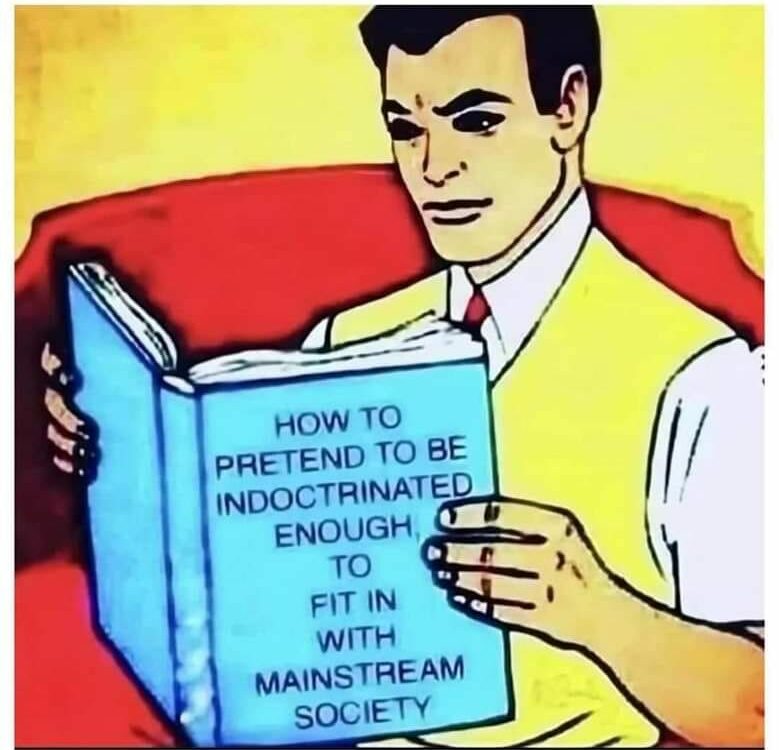
One of the deeper tricks of the #deathcult is that it doesn’t only sell us products. It sells us back the meaning, belonging and connection that the system itself has striped away. Nietzsche’s famous declaration “God is dead.” was not simply that religion was disappearing, but that an outdated system of shared meaning and moral authority had collapsed.
For many people, that leaves a void, a longing for meaning, connection, protection and purpose, for something larger than the isolated self. And where there is longing, capitalism sees a market – consumer capitalism, the market for meaning has always promised that dissatisfaction can be solved through consumption. Buy the car, the clothes, the holiday, the experience, buy the lifestyle. But what this hides is the more profound needs of belonging, meaning, safety, trust, community – don’t fit comfortably into commodity form – more stuff does not fill the hole – so the market moves further inward.
Instead of simply selling objects, it starts selling the self with self-improvement, self-mastery, self-optimization and personal growth. Manifestation and spiritual awakening, the lie becomes: the problem is not the society you live in, the surrounding relationships, or the structures shaping your life, the problem is you. And in the mainstreaming, conveniently, there is always another influencer peddling a course, book, retreat, coach or guru available to fix you.

This is the perfect market because the product must never work, if people actually became fulfilled, the market would disappear. So people need to remain almost healed, almost whole, almost happy, almost enough – the longing itself becomes the business model – this is #stupidindividualism dressed as enlightenment.
Then we have religion reborn – the commercialised form of Western spiritualism – not community ritual, religion or spiritual practice, but the Instagram-ready world of manifestation, “high vibration”, gurus, retreats and personal enlightenment. This supposedly alternative culture simply reproduces the core values of capitalism: individualism, control, competition, self-surveillance and the hero narrative.
Our current “thinking” instead of challenging these values, we spiritualise them, you are told that your thoughts create your reality, everything happens specifically for your personal development. That success proves you are aligned, suffering means you failed to think correctly. The fantasy is that you can become the god of your own reality.
This looks like liberation, but underneath it is the same old #stupidindividualism. The individual becomes the centre of everything, society disappears, material conditions disappear, history disappears and power disappears. The outcome is you treat other people as supporting characters in your personal journey, then exploit them by turning structural problems in to personal failure.
This is where politics becomes important, if every outcome is understood as a reflection of your mindset, then structural criticism becomes difficult. Poverty? It is a mindset problem. Loneliness? Means you need to work on yourself. Abuse? A lesson the universe sent you. Illness? Your energy is wrong. Failure? You did not manifest hard enough.
The effect of this “thinking” is deeply conservative, instead of asking why people are suffering, we tell them their suffering is evidence of their own failure. Instead of rebellion, we get self-improvement. Instead of solidarity, introspection. Instead of collective action, another #SEO journal.
This is an affective #mainstreaming way of neutralising dissent because it turns social pain into private inadequacy. The death of empathy is the ugliest part of this, if someone’s suffering is something they “manifested”, then nobody has to sit with them in it. Nobody has to listen, has to ask what happened, has to offer real help. A platitude replaces solidarity “Everything happens for a reason.” “You need to forgive.” “This is a lesson.” “You attracted this into your life.”
The language sounds caring, but the practice becomes the opposite – cruelty is renamed healing, blame as wisdom, detachment is renamed enlightenment. This is simply more emotional capitalism, were the language of empathy remains everywhere, while the actual social practice of empathy disappears, but when empathy dies, connection dies with it.
Community is dangerous to power, people who gather can organise, people who form relationships can resist. People who trust each other become harder to govern through fear and isolation. The current mess does not need tanks in the streets to atomise people, it can do it culturally as when connection is labelled dependency, needing people becomes weakness and community becomes inconvenient. In our worship of the #deathcult the ideal person becomes the isolated, self-managing individual who treats every problem as something to solve alone.
At the #OMN we keep coming back to the #mainstreaming problem. Why? A system is most powerful when its values stop looking political, when they become common sense, when individualism becomes blinded freedom, competition becomes human nature, consumption becomes happiness. Self-surveillance becomes personal growth and isolation becomes independence. At this point, the system barely needs to tell people what to do, people reproduce the values themselves. They discipline themselves, blame themselves, sell the same worldview to each other. The #deathcult ideology becomes culture, becomes infrastructure.
But, the path away from this mess is simple, without followers, the hierarchy collapses, this is particularly obvious in digital culture. The supposed influencer is still dependent on likes, subscribers, sales, views and reputation. They claim independence while being embedded in the same attention economy they supposedly escaped. They are not outside the market, they are a particularly efficient product of it.
We need to remember that human beings have always created ritual, meaning, myth and shared practices. The #OMN path points in this direction, less self-obsession, more participation. Less individual optimisation, more shared action. Less influencer culture, more horizontal knowledge. Less performance, more trust. Less “fix yourself” more “build something together”.
The #openweb matters here because the structure of our technology also shapes our culture. The #dotcons push the isolated individual, your feed, brand, your followers, your engagement, your identity. The #deathcult repeatedly breaks social things into individual fragments and then sells them back to us. It breaks community and sells networking, meaning and sells lifestyle, confidence and sells self-help. It breaks connection and sells social media, belonging and sells branding.
The answer is not another product, its simply to rebuild the social fabric that commodification has been eating away. Yes, real connection is messy, solidarity is inconvenient, community involves disagreement, compromise, responsibility and mutual care. You cannot optimise it, you have to participate in it. And it is one of the reasons the #OMN keeps saying the same apparently simple thing – Trust matters. Community matters. Participation matters. The #deathcult wants you staring endlessly into yourself, the commons start when we look outward and find each other #KISS
I kind of though this was incomplete so did some reading and added this section.
The Chinese Cultural Revolution remains a difficult and important experiences for anyone seriously interested in emancipatory politics. It is tempting to reduce it to the normal #mainstreaming a story of authoritarianism, Mao, political violence and social chaos, but doing that misses something more useful. The Cultural Revolution was also a huge experiment in what happens when millions of people are encouraged to challenge established political power and create new forms of organisation.
Its failure raises a question that remains relevant today – how do people share real power without reproducing the behaviour of the structures we are trying to replace? – This is a central question for the #OMN path to walk from challenging power to creating alternatives.
The distinction between dismissal and pluralisation.
- Dismissal is the politics of removing people, defeating factions and taking control. It is fundamentally about deciding who should have power and who should be excluded from it.
- Pluralisation is different. It is about people organising themselves, experimenting with new relationships and creating institutions outside existing hierarchies.
The Cultural Revolution contained both tendencies, in its early years, independent organisations and new forms of mass political participation emerged. But these experiments became caught up in factional struggles. Groups began fighting over who would control political power rather than concentrating on what new forms of social organisation they could create.
The result was destructive, the politics of negation overwhelmed the politics of creation. This distinction matters as it is relatively easy to define what we are against. It is much harder to build something that people actually want to participate in. A movement can become good at identifying enemies while becoming progressively worse at creating alternatives.
That is one of the traps that the #OMN path is avoiding. A simple problem is that authoritarianism does not require a state, it is possible for people to reproduce authoritarian relationships among themselves. You can see this today in cancel culture, how ordinary people became involved in policing one another, enforcing political identities and attacking those considered insufficiently revolutionary.
This creates a difficult problem for anyone pursuing decentralised or anti-authoritarian politics, simply removing the state does not automatically create freedom. Simply decentralising power does not automatically make relationships democratic. A crowd can become authoritarian, a community can become authoritarian, a movement can become authoritarian or a social-media group can become authoritarian.
Even a supposedly horizontal organisation do develop informal hierarchies, gatekeepers and systems of exclusion. This is why “power to the people” is not enough as a political programme. We also need structures that help people exercise power without turning that power into domination over others. This is what the #OGB is for and about.
The danger of dismissal has a connection with what we now call cancel culture, although the underlying behaviour is much older than social media. The important issue is not simply criticism of individuals, criticism is necessary in any functioning democratic culture. The problem is the development of an internal policing culture where belonging depends upon ideological or moral purity. People are divided into the good and the bad. Disagreement becomes evidence of corruption. Mistakes become grounds for exclusion and political differences become moral crimes, eventually the movement starts consuming its own members. This is the logic of dismissal.
And it is particularly dangerous for grassroots movements because they lack the institutional safeguards that exist, at least theoretically, within formal democratic structures. Without some way of managing disagreement, accountability and conflict, decentralisation simply produce competing factions fighting for informal control.
Creation has to be the core path, this is the most important lesson, not simply “don’t be authoritarian.” It is more positive than that. Build, build! Institutions, relationships, build commons, build democratic practices, build alternative infrastructures. Build ways for people to participate without having to surrender control to a central authority, this #KISS step changes the political question.
Instead of asking – who should control the existing system? We ask – what can we create that makes the existing system less necessary? This is a much more interesting question, that moves politics away from permanent opposition and towards experimentation. The goal is not simply to seize somebody else’s institution and run it with different people, it is to create institutions with different relationships built into them.
Then we have the old stalwart of class analysis, this is useful for understanding economic power and exploitation, but when class becomes a moral label, it becomes another mechanism of dismissal. Someone is no longer disagreed with because of what they are proposing, they are dismissed because of what category they have been placed into.
This creates a strange reversal, the people who were supposedly building a more egalitarian society can become increasingly concerned with identifying and eliminating the “wrong” people. The category becomes more important than the political project, a historical paradox that people who had been oppressed under the old system could become defenders of the new hierarchy, while people from previously privileged backgrounds could become radical opponents of bureaucratic privilege. People are more complicated than political categories that matters for any attempt to build a genuinely participatory politics.
A needed balance is that institutions matter, we should not only romanticise spontaneity. People organising themselves is important, grassroots experimentation is important, but spontaneous organisation does not automatically remain democratic. There need to be ways to deal with disputes, abuse, exclusion, manipulation and concentrations of informal power.
This does not mean rebuilding a centralised bureaucracy, more about developing lightweight (like the #4opens) democratic institutions that protect pluralism and participation. The challenge is to create enough structure to prevent domination without creating so much structure that the institution becomes another hierarchy. Yes, a difficult balance, but avoiding the problem does not make it disappear.
The #OMN project is not about building another political machine, it is to experiment with infrastructure that allows people to organise, communicate, publish, archive and make decisions while retaining meaningful control over their own participation. That means moving away from the logic of the centralised platform, instead of one organisation → one authority → one set of rules, we can explore, many participants → shared protocols → transparent processes → distributed participation.
But distributed does not mean unaccountable, the infrastructure needs mechanisms for trust, moderation, transparency, rollback, correction and disagreement. The aim is not to eliminate conflict, it is to make conflict productive rather than destructive. But openness alone is not enough, an open system can still develop closed social relationships. A technically decentralised network can still become dominated by a few people. A community project can still develop gatekeepers. So the technical architecture and the social architecture have to develop together.
This is why the #OMN path is not simply about technology, it is about learning how to build social systems that are capable of remaining open, while not repeating the politics of negation. The path is therefore be surprisingly simple, a movement cannot define itself forever by what it opposes. If all our energy goes into removing enemies, exposing bad actors, denouncing ideological impurity and winning internal arguments, we eventually become trapped in the same power logic we claim to oppose.
We need to spend more energy on creating, create spaces where people can participate, commons where people can contribute without surrendering ownership to a corporation, archives that preserve collective memory. We need media systems that don’t depend upon algorithmic gatekeepers, governance where disagreement does not become exclusion. Not only that, but we need to create institutions that can learn, this path is the difference between negation and creation.
We need a path, not a blueprint. Questions to address, problems any emancipatory movement has to confront. How do we prevent bureaucracy from becoming permanent? How do we stop decentralisation becoming factionalism? How do we deal with disagreement without turning it into moral warfare? How do we give people real power without enabling new forms of domination? How do we create democratic institutions that remain open to change?
The #OMN therefore starts from a path of creation rather than dismissal, we should not try to build a perfect system. We build systems that people can participate in, question, modify and improve. That means accepting disagreement, allowing experimentation to create mechanisms that prevent any one group from permanently capturing the commons. This path to self-government has to be learned, practised and institutionally supported.
Freedom is not created simply by removing authority, it is created by building the social relationships and institutions that allow people to exercise power together without turning that power into domination. That is a much harder project, but also the more interesting one.
The #OMN path is not about taking power – it is about building the capacity for people to share power #KISS