We need better, more hopeful understanding of this technology. The internet’s origins are tangled with the military-industrial complex, designed for resilience in the face of catastrophe. But the protocols themselves, once set loose, created a tool box for anarchistic experimentation. The lack of centralized control allowed people to build without permission, and that openness birthed the wild, decentralized internet we briefly glimpsed.
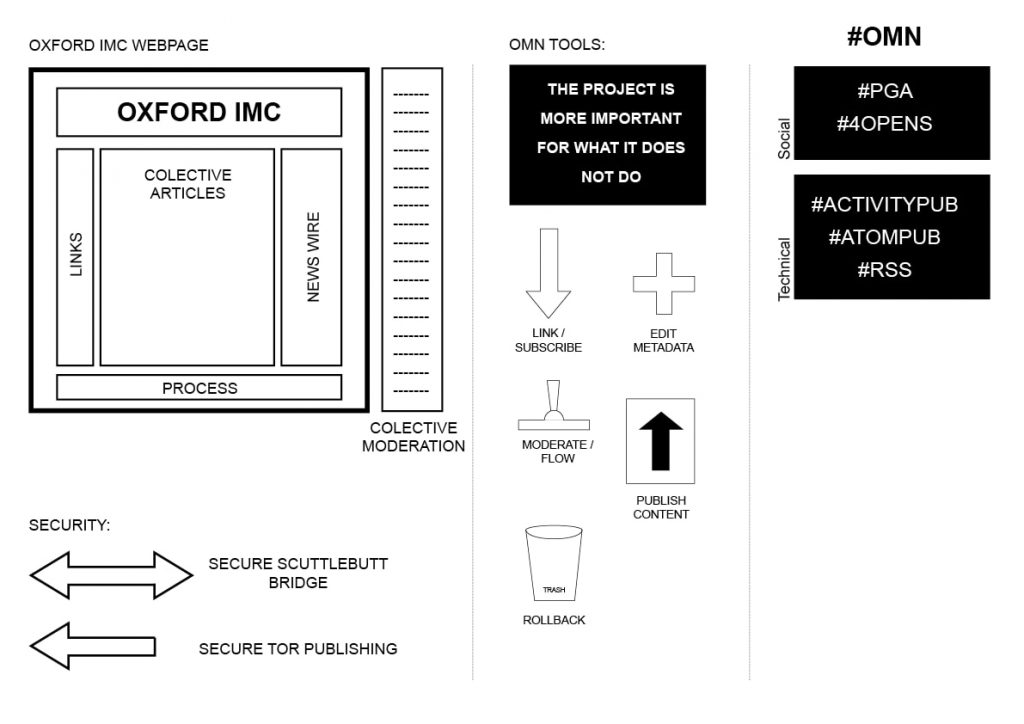
It was an accident, but an accident we can repeat. The #dotcons crushed that brief era of freedom, but the same dynamics that let the early #openweb flourish still exist. The #4opens, the #Fediverse, #OMN – these are our tools to recreate the “mistake” deliberately this time.
What if we embrace the idea that technology can escape its creators? Maybe we can compost the current #techshit and let something more resilient grow. What do you think? Should we lean into the idea of building “mistakes” on purpose?
In the current urgent need for change and challenge, it’s well past time to pick a side. For decades, the internet has been being enclosed. The one’s living decentralized network of commentary sites, blogs, forums has been corralled into a handful of paved prison yards controlled by the #dotcons. With most people’s attention and thus freedom being in the hands of a #nastyfew oligarchs. Every post, every ‘friend,’ every creative work is locked behind closed doors, and when push comes to shove as it is now, you will increasingly find that you don’t have the keys.
But the metaphorical keys still exist, and it’s not so hard for us to pickup them up. There has been a #openweb digital jailbreak going on for the last 5 years, if you value your humanity you need to become a part of this blackout, put the key in the lock and turn it, open the #Fediverse door and step through.
OK, yes, maybe a little strong, the #openweb isn’t a utopia, but it’s the closest thing we’ve got to freedom online. It’s built on the #4opens: Open Source: The code is public, hackable, and accountable. Open Data: Information flows freely, not hoarded for control. Open Standards: Interoperability beats lock-in monopolies. Open Process: Transparent governance, not shadowy boardrooms.
This #fediverse path is an escape hatch from the #closedweb. It’s not a product. It’s not something you can buy stock in. It’s a network of interconnected platforms like #Mastodon, #Lemmy, and #PeerTube to name a few, all running on the open protocol #activertypub. It’s messy. It’s human. And it’s ours if you use it.
It should be easy, but sill for meany it’s not, to see that the #closedweb is a digital prison, a mausoleum for human creativity, dressed up like a theme park. It’s run by billionaire-controlled #dotcons and polished by the illusion of safety sold by the #encryptionists. In our collective passivity, we keep misshaping our paths.
What did the #dotcons offer? Control: Your identity, your data, your connections – all owned by them. Manipulation: Your timeline, your reach, your visibility – dictated by algorithmic gods. Exploitation: Every interaction, every word, every click – another drop in their profit bucket. We’ve eaten their lie that the internet had to be this way. That Meta, Google, and the hollow husk of Twitter are the price of admission to digital society. But #KISS simply, this was never true.
OK, I get your apathy, why does it matter? Because when we blur the lines, we lose the fight. People pour energy into platforms that wear the clothes of progress but are stitched with threads of control. We need to clearly label projects as #openweb or #closedweb, so people can choose where to dig and build. The #4opens are our shovels, and the remnants of failed #web03 promises are good compost to start clearing away. Let’s turn the decay of false hope into fertile ground for real digital commons.
The internet wasn’t built to be a machine for ad revenue. It was built to connect the paths for radical, collective steps we need in today’s mess.
This post is about controlling the narrative, not letting the #nastyfew dictate the terms of engagement. Too often, we let them set the agenda, reacting to their every word instead of actively building the alternatives we need.
Their power isn’t just in what they do, it’s in how much space they take up in our minds and movements. We amplify their mess making when we obsess over their rhetoric rather than dismantling their actions. This is why we need composting, not fixating.
The #Fashionistas in Activism problem is real, when people latch onto whatever gets them attention instead of doing the hard, messy work of creating change. Chasing buzzwords, getting caught in endless reaction cycles, this is what keeps us stuck. We need to be the ones setting the agenda, not just replying to theirs.
Focus. Build. Compost the mess. That’s how we win.
In activism, the term “#fashionistas” captures individuals and groups, especially within #NGOs and advocacy organizations, who latch onto trendy causes or ideologies, not out of any commitment, but more to appear relevant and to align with the latest social currents. This is corrosive to meaningful change, reducing activism to performative gestures rather than a sustained struggle for justice.
Superficial engagement comes from, when they rush to adopt the language of trending movements (like #BLM, #MeToo, or #ClimateJustice) without committing to their radical roots. For example, after George Floyd’s murder, many corporations and NGOs posted black squares on #Instaspam as a symbolic gesture. But what followed? Few made concrete policy changes or redistributed resources to Black-led grassroots organizations. It was activism as aesthetics, empty gestures, rather than the systemic action that was called for.
Lack of authenticity, when organizations prioritize optics over substance, this breeds distrust. Consider the influx of NGOs claiming to champion digital rights but quietly partnering with Big Tech for funding. The grassroots developers working on genuinely decentralized platforms are left unsupported, while the NGO pointless/parasite class absorbs attention and resources, all while pushing and reinforcing the #deathcult paths they claim to oppose.
Mainstreaming, activism, loses its teeth when it’s tailored for palatability. Take the way climate #NGOs soften their language to avoid alienating corporate funders, pushing “net zero” narratives instead of demanding degrowth and direct action. By sanitizing radical demands, they reinforce the status quo rather than confronting the power structures driving #climatechaos.
Misaligned priorities, chasing trends, means resources get funnelled away from sustained struggles. For example, the fleeting attention on #Palestine waxes and wanes with media cycles, while groups doing year-round solidarity work scrape by with minimal support. #Fashionistas flock to hashtags when they’re hot, then move on, abandoning communities who still face oppression once the spotlight fades.
Reactive rather than proactive, when #fashionistas are caught chasing the next big thing rather than strategizing long-term solutions. Think of the explosion of interest in #openweb media during political unrest, a real issue, yes, but one that reveals the broader failure to build #4opens, community-run digital infrastructure proactively. The #OMN project exists precisely to address this, but it’s hard to gain traction when attention constantly flits to the crisis of the moment.
Rectonery, the most toxic aspect of fashionista activism is its tendency to reinforce the systems it claims to oppose. When #NGOs adopt radical language but stay within #mainstreaming paradigms, they create an illusion of progress. For instance, diversity initiatives in tech are often superficial, leading to token hires rather than dismantling structural racism or addressing the #geekproblem that keeps tech culture hostile to outsiders.
How do we compost the #fashionistas mess? The answer lies in prioritizing authenticity, long-term commitment, and meaningful engagement. This means, centring grassroots voices by funding and amplify people working on the ground, not just polished, and mostly pointless #NGO campaigns.
Rejecting mainstreaming, by being willing to alienate power on radical paths. This changing of path needs us to building infrastructure, like #OMN and #indymediaback to grow autonomous spaces outside corporate control. Historical awareness, matters, to remember our past struggles, rights and freedoms were won by collective action, not #PR campaigns.
What, we don’t need, is more buzzword-chasing #nonprofits. We need shovels, compost, and a commitment to grow something real from the ruins of the #deathcult. It’s not glamorous, but it’s the only path to lasting change. Let’s start digging.
In the bigger picture. The best revenge against the #nastyfew is simple: don’t talk about them at all. What fuels them is attention — the endless cycle of fixating on their every move. Unless it’s absolutely necessary, keep the focus on the ideas and the collective struggles, not the individuals causing the mess.
Talk about the systems, the structures, in the US the republicans, not the disruptive few seeking to derail the conversation.
Ignoring the #nastyfew is the most powerful revenge you can take. Stay grounded, stay collective, and keep it #KISS.
To start to make things better this is a mess that we constantly need to compost, over the last ten years, it’s wild how people barrel into grassroots tech projects like #OMN behaving like blinded paranoid #fuckwits, wreaking havoc and then scampering off to nurse their self-inflicted wounds. This nasty pattern repeats so often it feels like a badly scripted tragedy. And yes, this is VERY crap behaviour. Please, try not to do this. Thanks.
The people who do this are often #fashionistas chasing the latest fad or the #NGO prats clinging to crumbling institutions, or the geeks blind to anything beyond their screen. What they have in common is that they are all unknowingly (or knowingly) kneeling at the altar of the #deathcult. They do this by dragging in their #mainstreaming assumptions, wielding ‘common sense’ like a cudgel, and are oblivious to how it shatters the delicate, horizontal culture the real #4opens we need grows from.
On the #fediverse, we’re witnessing a growing native/non-native culture clash. Which is not inherently bad, friction sparks growth. But when the horizontal crew, the ones refusing to play the #mainstreaming power games, consistently get trampled by this, then we have a problem. The commons reputedly collapses under the weight of imported hierarchy and fear-driven control.
This #mainstreaming pushing of mess and more mess, means we need shovels, lots of shovels, to dig deep and compost this wreckage back into fertile ground. The tech? It’s just scaffolding. The actual building is made of people, mythos, and tradition. It’s a historical flow, as is everything of value. But instead of embracing this flow, people, in the grip of #stupidindividualism, push hard for self-destruction and distraction. It’s almost like they want the #deathcult to win. And in this world, where the economic machine grinds everything to dust, this is a hard problem to shift.
We need to become the change and challenge to break this cycle, to remember our own history, back when we did things better, back when we built #indymedia, not just as a tool but as a living, breathing community. A space where the value was in the social fabric itself. The path to do this is in federating out to a non-(owned) branded networks. Building the flows, the undercurrents, the radical gardens of storytelling and truth. It’s time to stop licking the self-inflicted wounds and get our hands dirt to start digging again.
On this, the #OMN hashtag story is a shovel, we need to actively use to dig through the layers of decay in the tech mess. It’s a tool to help us compost the rot of the #deathcult and plant the seeds of a new, living, breathing #openweb.
We have had a working, growing plan for the last 20 years: to use #hashtags to seed affinity groups of action. This isn’t tech, it’s about creating the movement that actually make a difference. #Hashtags are more than metadata; they’re flags, rallying points, paths leading through the chaos. And in this #Fediverse based reboot of the #openweb, we finally have the space to take this path to push the needed change and challenge.
We’ve been exploring this path for years, you can dive the thinking here. But what we really need is a home for this practice, a network where these seeds can grow into something tangible. Because fighting back doesn’t need to be complicated. It’s how every “common sense” right and freedom we enjoy was won in the first place: by pushing, not just defending.
The commons won’t protect itself. We haven’t yet effectively used the openings we have to defend our digital commons. Over the last 5 years, we have pushed to expand this space, as history shows, the best defence is an active attack, not with weapons, but with action, storytelling, and a refusal to let the #mainstreaming mess suffocate this #KISS motivation.
A part of this plain talking, calling out the #nastyfew instead of talking vaguely about ‘elites.’ Let’s name the problem, plant the seeds, and grow the alternatives. The path we outline in the #OMN can be used to shape this living network, a flow where our history informs our present, and where collective action mediates the cycle of destruction. It’s time to remember our history, build the native #4opens path, and stop waiting for someone else to save us. We have the tools, let’s start digging.
For the last 40 years, we’ve worshiped the #deathcult of #neoliberalism that still blinds us to the collapse unfolding around us. Every institution that promised to guide and protect us has failed. The ruling classes, in every hue of politics, have abandoned us. Our media and entertainment elitists distract and distort. #NGOs, once trusted, have betrayed the causes they claimed to champion. Academia and business alike have clutched at power, are now dithering while the world burns.
We face #climatechaos naked and disjointed – at war with ourselves and lost in consumerism. Yet, in this wreckage, there is still a choice to step away from the #mainstreaming, let go of fake promises, and dive into the #undercurrents. Compost the mess, build anew.
The #makinghistory project is a seed for this rebuilding. It’s a #KISS project that offers a way to reclaim our own narratives, digitizing archives like the Campbell Family collection to preserve grassroots histories of resistance and hope. I use this data set as an example here. This is more than data collection, it’s a living, breathing ecosystem of collective memory.
Walking through this step by step:
Setting up the application: Communities install the #makinghistory app on local machines or hosted instances, creating a decentralized network of storytellers.
Uploading digital Files: Activists and archivists upload historical files, adding metadata and context.
Building a community: By inviting family, affinity groups, and wider activist circles, the archive grows into a collaborative space, nurturing participation.
Interacting with data: Users engage directly with the history, categorizing, tagging, and enriching it with new insights.
Storytelling features: The enriched data flows into narratives, connecting seemingly isolated events into cohesive stories of struggle, solidarity, and change.
Public sharing: These stories aren’t locked away, they’re shared openly, contributing to a global commons of knowledge.
Impact is by reclaiming history, people find inspiration and strength. Grassroots stories challenge the top-down narratives, showing that change comes not from a #nastyfew (elitists) but from those who dare to dream and act.
The ‘Resistance Exhibition’ was started to extend this vision, turning physical spaces into participatory hubs where visitors become archivists and storytellers themselves. This is not passive consumption, it’s collective action. It’s the compost from which new movements grow. It’s #makeinghistory – not as an abstract concept, but as a living, evolving reality. Let’s step away from the wreckage and start building something real, please.
Privatization is one of those words that has been thrown around a lot, usually accompanied by promises of efficiency, lower costs, and better services. But the reality is far grimmer, and people generally don’t understand why. What Is Privatization? It is simply when publicly owned industries or services are transferred to private companies. It usually happens under the pretence of cutting costs and driving innovation, but the underlying reason is always profit by extracting value from public goods, selling assets cheaply. Public infrastructure, built and maintained with taxpayer money, is sold off to private interests for far less than it’s worth. Then this is ongoing – when privatized, companies monopolizing sectors, jack up prices, and pay workers as little as possible, to maximize returns for shareholders.
We need to see that the ideology behind privatization is beyond profit. #Neoliberals say that public services are flawed because people might use them without paying directly (the “free rider” problem) or be forced to pay for services they don’t use (the “forced rider” problem). Privatization supposedly fixes this by turning everything into a transaction. But this ignores the complex nature of economies. Even if you never use public transport, you benefit from reduced traffic congestion. The same logic applies to healthcare, education, and other services that generate economy-wide benefits.
Privatization claims to improve efficiency through competition, but it’s less efficient. Yes, public services can be inefficient due to bureaucracy and mismanagement, but privatization builds inefficiency into the path because profit is a drain, shareholders demand returns, which means money is siphoned away rather than reinvested. Plus, splitting industries to create the illusion of competition reduces economies of scale.
An example of this is Britain’s rail disaster, rail privatization is a textbook example of failure. In the ’90s, British Rail was split into dozens of companies: some ran trains, others owned the tracks, and still more handled maintenance. This fragmented was designed to prevent trade unions from gaining too much power, but it created a logistical nightmare. The private company Railtrack, which inherited the infrastructure, cut corners to boost profits, leading to catastrophic accidents like the Ladbroke Grove and Hatfield crashes. In the end, Railtrack collapsed, and the government had to step in and take control through Network Rail. But train operations and rolling stock leasing remain privatized, meaning public subsidies prop up private profits while fares remain some of the highest in Europe.
After 40 years of this mess making, the endgame, is that it doesn’t just fail on its promises, it makes things worse. It centralizes capital, encourages monopolies, and turns essential services into cash cows for the #nastyfew. Companies prioritize wealthy communities, rely on government bailouts, and pour money into executive salaries while neglecting public needs.
The truth is that public services, no matter how flawed, exist to serve people. Privatized services exist to serve shareholders. And until we break free from the grip of our worship of the #deathcult of neoliberal ideology, we’ll keep paying more for worse services, while the nasty rich fuck wits keep getting richer. It’s past time to rethink privatization, not as a necessary evil but as a failed experiment in greed. Let’s start talking about this, please.
The #dotcons have turned web searches into a cesspit of algorithm-driven consumerist and political ideological propaganda. What was a tool for discovery and connection is now a tightly controlled funnel, pushing people towards preordained narratives and commercialized echo chambers. Nowhere is this more obvious than on Google, the go-to gatekeeper of information, where what you find is shaped not by the richness of human knowledge, but by whatever serves the interests of the #nastyfew who control power and capital.
This isn’t simply an “inconvenience”; it’s a crisis for public knowledge and collective memory. When dissenting views, grassroots history, and alternative voices are buried under layers of #SEO spam, ad-driven results, and opaque censorship, we lose the ability to shape any understanding of the world. So what’s the plan to step outside this mess?
A real path is to build and use the #openweb to actively shift our habits to support networks, platforms and projects built on the #4opens principles – open source, open data, open process, and open standards. The #OMN (Open Media Network) is one path to reclaiming these collective narratives, by creating decentralized, community-driven archives where stories are curated by people, not algorithms.
With the #dotcons shift to #AI in everything, resisting this algorithmic trap is key, that the more people understand how these systems blind us, the less power they have. Building native #4opens tech is a very good first step, then teaching media literacy, by running workshops on the dangers of algorithmic control, and spreading knowledge about decentralized alternatives, so this can gradually chip away at the illusion of choice presented by the #closedweb paths.
This is a big step to #Rewilding the digital commons, the web was meant to be a messy, vibrant ecosystem, not a manicured, walled garden. We need to plant seeds in neglected corners of the internet, build hyperlocal networks, and use peer-to-peer tech to share knowledge directly. The more we create and share outside the #dotcons, the harder it becomes for them to control the narrative.
The next step is to create and nurture alternative search tools, we used to run an instance of #Searx which is #metasearch tool which works outside the algorithm as much as possible. But we had to shut this down due to lack of support, this lack of support is a real continuing issue we urgently need to overcome, we need users, contributors, and champions to increase usage of these tools and promote their development to build the infrastructure for an alternative discovery layer that need to bypass the #dotcons.
This is based on #KISS just do it, don’t wait for permission or a perfect alternative to emerge. Start archiving, writing, and sharing now. Build your own small-scale #4opens projects and connect them to others. The #OMN isn’t some grand centralized solution, it’s a framework for thousands of messy, local, independent nodes, each adding to a larger network of people-powered knowledge. This is a shovel-ready project. We don’t need to beg the #dotcons to change, and we certainly don’t need to play by their rules. Let’s get our hands dirty, compost the rotting remains of the algorithmic web, and start cultivating a truly human-centred internet again.
Over the last week you can see it in real time, Trump meeting world leaders, the handshakes, the staged press moments, the ass sniffing, barely concealed jockeying for position. But beneath the surface, we need to see that something bigger is cracking apart. The last 40 years of #neoliberalism, cold, calculating #realpolitik path is collapsing. The alliances of the #nastyfew we took as fixed is shifting, not because of thoughtful, progressive change but because of the hard shove of a global rightward lurch.
The world shaped by the #deathcult of neoliberalism is disintegrating, but don’t mistake this for liberation. The old deathcult is simply being replaced by a new mask, this is history repeating, not a new start. What was once masked in the language of freedom, democracy, and human rights is shedding its disguise, revealing a rawer, more brutal face to the same pessimistic human paths.
One of the most dangerous elements of this shift is the ideological bait-and-switch. The old liberal order for the last 40 years had co-opted the language of the right, with neo-imperialism of the new world order. Now, the emerging #fascist path is playing the same game in reverse, adopting the language of the left to push far-right outcomes. Talking about peace, authoritarians wrapping themselves in ‘anti-colonial’ rhetoric, hard-right demagogues claiming to fight for the ‘working class’ while gutting social safety nets, and far-right online communities using ‘free speech’ and “safety” to silence dissent. This ideological camouflage is not a glitch; it’s a feature. It confuses opposition, fractures movements, and traps the #mainstreaming in endless powerless cycles of reaction and outrage. It’s a survival mechanism for the #deathcult, a shapeshifting strategy, to ensure it evolves unchallenged.
For those of us working on projects like the Open Media Network (#OMN) that push for a genuine #openweb, this is the landscape we need to navigate. The answer isn’t to retreat or try to ‘purify’ movements from infiltration, that feeds the cycle. Instead, we need to cultivate resilience and clarity. Recognize the patterns, understand the language games, and keep building decentralized, trust-based networks that can weather the storm, both in the media and practically with onrushing #climatechaos.
The shift in both cases is happening whether we like it or not. The question is, do we use the compost of the old world order to feed the roots of something new, or do we let the poison linger in the soil? It’s time to get out the shovels.
Are we in such a mess? People conform to the #deathcult of neoliberalism, capitalism, and its destructive paths because they are conditioned to. The control is media, education, social pressure, economic dependence, is used by the #nastyfew and their acolytes to shaped compliance. Even when people recognize the system is dark and broken, they still bow down. Why?
Fear & survival, meany people get trapped in precarious economic conditions. They fear losing their jobs, homes, and social standing if they resist. When survival is at stake, rebellion feels too dangerous to risk the little they have.
Comfort & convenience, worshipping the #deathcult provides short-term rewards: consumerism, entertainment and distraction. Even those who hate it find comfort in its predictability. Change is hard, uncertainty is scary.
Psychological conditioning, our #mainstreaming propaganda is everywhere, it has convinced people there is no alternative (#TINA). They’ve been trained to see resistance as futile, rebellion as chaos, and compliance as “normal.”
Social pressure & herd mentality, simply few people want to be outsiders. They follow the crowd, even when the crowd is heading off a cliff. Conforming is easier than facing any rejection and isolation.
Exhaustion & despair, knowing the current path is going to harm them and kill their children, makes them feel powerless. The #deathcult grinds people down, keeps them struggling just to survive, leaving little energy or focus for resistance.
Lack of vision, the #mainstreaming invests a lot in destroying alternatives before they can take root. Without these clear, viable paths, people fall back into the familiar, no matter how broken it is.
But why STILL? Five years ago, yes, this wasn’t as obvious. Now, the mask has fallen, simply look around, you can see people on their knees, the #deathcult is marching us straight into #climatecollapse, endless wars, and digital enslavement. Yet people still conform. Why? Because fear works, the system adapts, the majority would rather scrabble for comfortable servitude than risk any unknown path.
On the positive, note, cracks are forming, the illusion is fading, the question is, will we build something better before it all collapses around us?
PS. The current hard shift to the right is simply worshipping a more historical #deathcult, that of #fascism with its dark, very dark history, so the question still stands, WHY?
What’s striking in today’s mess is how desperately we need spaces for people to come together and organise against the concentrated accumulations of power that are running rampant. Billionaires and massive corporations hold most of the power, shaping society to serve their narrow interests, while the rest of us are left to fend for ourselves as the social and ecological foundations collapse around us. Worse still, the law—once seen by some as a tool for justice—has been openly co-opted to maintain this imbalance. By declaring that corporations are people and that money is speech, the legal system has been twisted to the will of the #nastyfew, rigging the system ever more.
Yet, as is often the case, the root of this wealth and power is labour. Wealth doesn’t exist without the workers who create it. If workers collectively said, “We’re not putting up with this anymore,” the balance of power would shift overnight. The numbers are overwhelmingly on our side—there are far more workers than there are billionaires and CEOs. The problem isn’t a lack of power, it’s a lack of organised power. The real challenge is bringing that latent force together.
This is where the original promise of the internet—and the #openweb—once offered hope. These tools were supposed to create open, horizontal spaces for solidarity, connection, and global collective action. But for the last 20 years, with the rise of the #dotcons, they’ve done the exact opposite. Instead of bringing us together, they’ve carved us into isolated filter bubbles and antagonistic echo chambers, constantly at war over manufactured divisions.
And it’s become increasingly obvious that this isn’t a byproduct of bad design—it’s the business model. The algorithms that dominate our online lives are designed to maximise profit and control by fuelling conflict and outrage. The more we argue, click, and spiral into reactive cycles, the more money flows into the pockets of the platform owners. Social media hasn’t just failed its stated purpose of connection—it’s been repurposed as a weapon of division.
A study out of the Netherlands drove this home. Researchers found that the overwhelming majority of misinformation on social media originates from right-wing populist networks. This is a deliberate tactic, misinformation and polarisation serve to confuse and distract, obscuring the suffering, the unchecked concentration of wealth and power in the hands of a toxic few. The #dotcons are a systemic effort to fracture society, weaponising identity politics and #stupidindividualism to keep us fighting each other instead of confronting the root causes.
If we’re going to break out of this death spiral, we have to bypass the endemic #techshit. This is where activist-led projects like the #OMN come in—creating new spaces rooted in solidarity, shared stories, and collective action. These aren’t just tools, they’re seeds for new social relations and regenerative culture. We still have the numbers. What we need now is the courage and will to come together—to become the change and challenge that this world so urgently needs.
On this, it’s worth looking back on the 1980s #Thatcher era in the UK, #deathcult privatisations, this era is now ripe for real and useful contemporary criticism. And this criticism could be used for a useful push for the change and challenge we need now.
Water Companies, privatized in 1989 with promises of efficiency and investment, have since faced continuous scandals over sewage spills, underinvestment, and skyrocketing bills. The outcome, profits have been pushed over public service, leading to environmental and infrastructure mess which will coat billions to compost.
Railways, privatized in the 1990s under Major, have led to fragmented operations, high ticket prices, and crap service. Public subsidies have increased dramatically, effectively making it a publicly funded but privately profiting system. The failures of companies like Railtrack highlighted systemic issues. This urgently needs to change, but this is a mess that leads to huge public costs.
The Steel Industry, British Steel, was privatized in 1988 but continued to struggle to compete globally. Subsequent closures and job losses have been crippling to industrial regions. Today, the UK steel industry remains a declining mess, requiring government intervention and subsidies to survive. We don’t have a path out of this mess, in the era of international instability we need a solution.
Energy, the privatisation of electricity and gas led to reduced competition over time, with prices soaring for consumers. Companies have been price gouging and underinvesting in sustainable energy. A mess, to manage the shift to renewables, that we now need to compost.
Telecom, while privatisation of BT (British Telecom) did modernize telecommunications, it created an uneven playing field, with BT retaining dominance and smaller competitors struggling to compete meaningfully. What is the path with this?
The promise of our worshipping of the #deathcult was to reduce costs through privatisation unsurprisingly, this hasn’t materialized; instead, public funds have been used and continue to be used to subsidize failing privatized companies owned by the #nastyfew.
The broader impact has been the pushing of widening social inequality. Essential natural “commons” services and utilities were turned into “profit” drains for the #nastyfew at the expense of affordability and quality for the meany. With privatisation, it transferred wealth from the public to this small group of greedy and nasty people.
The scale of these failures and public dissatisfaction might be a force for the change and challenge we so urgently need. That is, if we can make the more horizontal path actually work for us as a first step #OMN
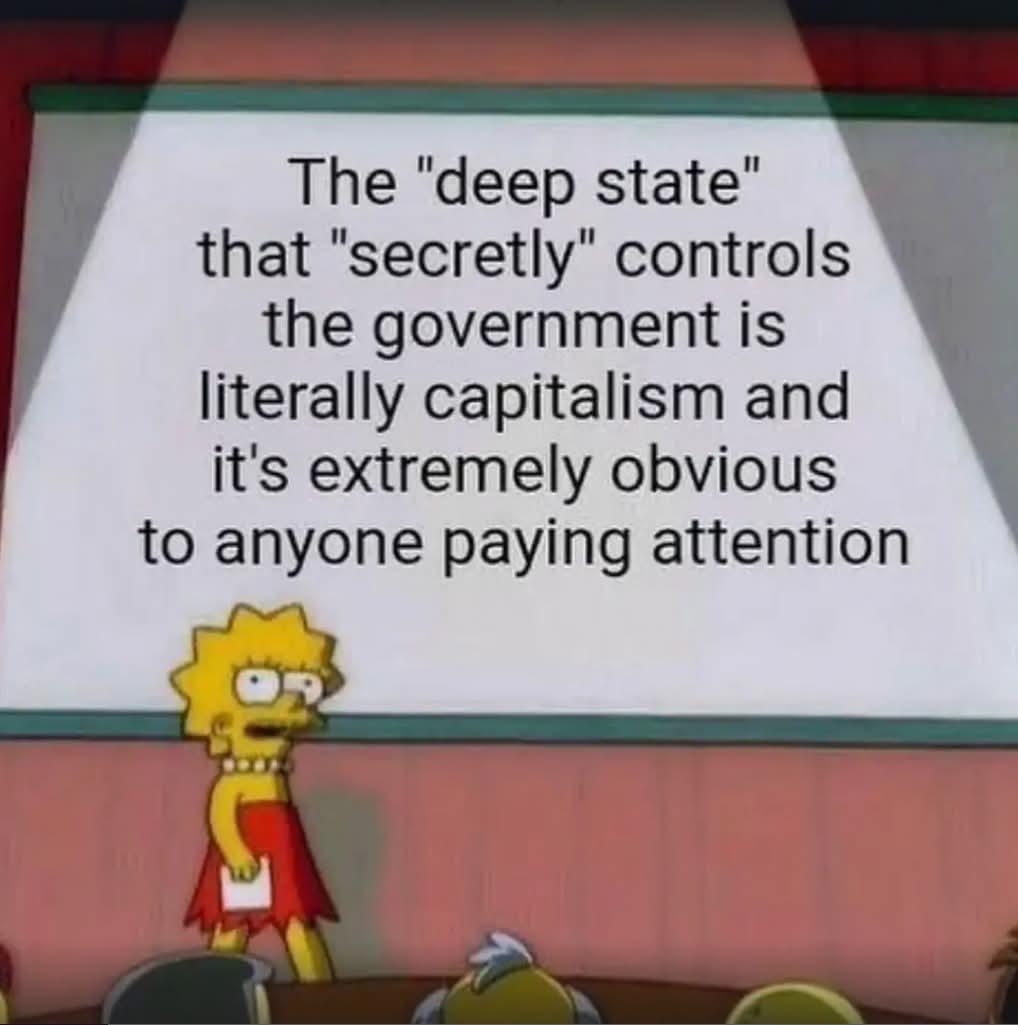
The current #mainstreaming paths are dependent on capitalist structures, when looking at this critically, it reveals itself as a #deathcult, with the embodiment of unrestrained growth and consumption that runs counter to meaningful solution to #climatechange. While billionaires and corporatens entertain the illusion of future-proofing their wealth and safety, the reality is more perilous. Their greed fed opulence and influence, but it can’t shield them indefinitely from a collapsing ecosystem that sustains all life, including their own.
Inherent to this contradiction in capitalism itself: it requires perpetual growth to survive. This expansion is incompatible with the measures needed to mediate or stop #climatechaos. But if growth halts, so does the economic machinery that upholds the current power structures, creating a destabilizing domino effect. While you might ask why those in power do not pivot to environmental preservation, it’s the same mess, the answer is the system’s relentless demand for expansion. Even if an individual capitalist – or a consortium – decides to scale back for the sake of long-term planetary health, the market will simply replace them with competitors who are more willing to pursue relentless profit, growth, and resource consumption.
The current path has a self-destructive logic, this paradox is why even billionaires who are conscious of the dire climate situation resort to insufficient and infective measures. They might fund green technologies and push for marginally lower carbon emissions, but the actions remain constrained by the underlying logic: protecting the continuity of capital. This capital-only world-view can’t embrace the radical systemic change we actually need to avert ecological collapse.
Let’s look at this, billionaires and the bunker illusion, the ultra-wealthy/greedy #fuckwits, plan to retreat to their fortified bunkers and private, insulated zones once climate-induced social and environmental chaos grows un medateable. While contingency plans do exist – high-tech shelters, land acquisitions in regions predicted to be less affected by climate change -these are temporary solutions. A world unravelling from the fabric, ecosystems will not sustain even the most fortified enclaves indefinitely. Even if technology advances to the point of enabling space colonization, the timelines required for such ventures far exceed the immediacy of the crisis we keep #blindly pushing.
This is an easy to understand systematic issue, and it should be obverse we need a collective rater tan the mask of individual solution. Capital, the motivation and power for action, is not about individual capitalists but capital as an entity, the dogmatic socio-economic phenomenon that exerts control over its arbiters. Capital has built in infinite growth, prioritizing profit over sustainability and long-term human survival. An individual or collective attempt to defy this logic and implement meaningful, planet-preserving strategies would be outpaced and outcompeted by others who align more closely with capital’s pushing of this #stupidindividualism, ruthless, greed is good.
This #KISS understanding underscores the distinction between idealist and materialist interpretations of the crisis. Idealists believe that with enough awareness and willpower, the system can change from within. Materialists, recognize that capital is a structure that acts beyond the control of individual or organization. It functions like biological evolution: it values reproduction and expansion above survival, when as we see now those traits are in the end destructive.
There is some room for corrective action within the existing system, but it’s inadequate. Policies to mitigate environmental impact, even when enacted, are slow and piecemeal. The issue isn’t that #mainstreaming decision-makers don’t understand the problem; rather, they don’t grasp the depth of systemic overhaul required to address it. The principles they consider immutable -the rules of modern economics and finance. The “common sense” is the problem.
The #deathcult of mainstreaming is propelling growth and consumption despite ecological warnings, it is locked in a dance with CAPITALS logic. While billionaires may fund clean energy startups and talk about sustainable practices, their wealth and the power structures uphold and are bound up in the unsustainable status quo. Change and challenge requires uprooting fundamental beliefs about how economies MUST operate, not just superficial adaptations. Until this realization is shared and spread, capital will continue on its path, indifferent to the ruins it leaves.
Best not to be a prat about this, thanks.
Why capitalism and climate change solutions are fundamentally incompatible. The urgent need to address climate change collides with an uncomfortable reality, as we outline capitalism’s foundational mechanics to make meaningful climate action impossible. This isn’t a case of individual negligence but a systemic flaw. As we say, capitalism, by design, prioritizes profit and growth, at the expense of long-term, collective concerns and environmental preservation.
Capitalism favours the #nastyfew who maximize profits in the shortest timeframe. It’s a path where the most ruthless and nasty competitor prevails, setting the standard that others must follow or face obsolescence. This constant pressure means that if an individual capitalist or company recognizes the existential threat of #climatechaos, they cannot afford to act on it meaningfully without losing their competitive edge. For example, a corporation that decides to limit emissions at the cost of profitability will quickly be outcompeted by one that does not.
The logic of capitalism ensures that any significant deviation from maximizing short-term profit results in failure within the market. Thus, while some companies engage in “green” initiatives to pay lip service to sustainability, these efforts are superficial. They exist to placate public concern and leverage marketing advantages, rather than drive the needed change. The myths are that capitalism, through innovation and competition, will solve climate change. However, capitalist solutions boil down to maintaining leverage and coercing others into action. For example, the race for green technologies like electric cars and renewable energy can be more about dominating a new market sector than reducing environmental harm. Elon Musk’s ventures into space and sustainable technology, was hailed as forward-thinking, illustrate this principle. Space colonization and technological fixes reflect an expansionist mindset, a search for new “territories” to exploit as resources on Earth dwindle.
Capitalism’s path needs to push costs onto external parties, the public and the environment. The system relies on government-funded infrastructure and socialized costs, as seen with subsidies for oil companies, highway construction for the automotive industry, or public bailouts for corporations in crisis. When it comes to addressing #climatechange, this reliance on externalized costs becomes a liability. The climate crisis is a global “cost” that capitalism, left unchecked, will not address willingly. It requires collective action that contradicts capitalism’s individualistic and profit-driven paths. This is why capitalist markets require regulation by state or more importantly collective paths to function at all or sustainably, and even then, such measures face fierce resistance.
We now live in the automation age, the question is how the #nastyfew plans to survive. Whether billionaires believe they can weather the storm of #climatecollapse is complex. Many of them, seeing the unsustainability of infinite growth, look for exit strategies. This explains the investments in space travel, underground bunkers, and gated communities. The implication is stark: they believe their wealth will shield them from the mass suffering climatechange will bring. Automation adds another layer to this story. With machines replacing human labour, the exploiters envision a future where their economic power persists without the masses of real people, that’s you and me. This very dystopian reality shows the detachment of capital from human and ecological concerns.
We currently face a failure of collective action to mediate, one of capitalism’s flaws ts inability to coordinate collective action without state intervention. While some countries have managed to decouple emissions from #GDP growth through, exportin emissions, advancements in service sectors and digital economies, this decoupling remains insufficient to meet the global targets needed for net-zero. The system’s piecemeal and reactive, cannot match the scale of planning required for real climate action. Without a fundamental restructuring that prioritizes the collective good over private profit, meaningful progress remains an illusion.
In the modern world, #neoliberalism penetrates every aspect of our lives. It commodifies not only goods and services but human relations, creativity, and increasingly the natural world. This historical #deathcult is designed to obscure its roots and operations, keeping people powerless and confused, while ensuring the prosperity of a greedy and #nastyfew. By stripping away regulations and protections, neoliberalism pushes into a rentier society that thrives on exploiting paths essential for survival.
After 40 years of this mess, people think this is natural, a natural law, but in reality it is an ideology engineered to strip away all barriers to capital. This system reconfigures societies, deindustrializing, privatizing, and commoditizing vital services while dismantling unions, which are key obstacles to capital’s control. As a result, wealth is funnelled upwards, creating vast inequality and social decay.
For many, life feels empty, alienated, and devoid of meaning. Stripped of communities of trust, disconnected from nature, and instrumentalized relationships, turning humanists into consumers. The result is widespread disenchantment and mental health crises as people struggle to find purpose beyond our worship of this #deathcult of cold logic, profit.
On this #mainstreaming path, nature itself is commodified, with the “natural capital” agenda aiming to put a price on ecosystems, further pushing exploitation rather than preservation. This soulless, anti-humanistic calculation drains the “spiritual” value from the world, creating an environment where everything, including human beings, are treated as a resource to be mined, used and exploited until they collapse.
The allure of this system is its false promise of simplicity, we can point to external forces, like an enemy or a far-off political struggle, and believe the problem is out of our hands. This form of disengagement is a hallmark of neoliberal control, preventing the collective action required to reclaim #KISS power and meaning in our lives.
The antidote is not only in dismantling neoliberalism but in rediscovering our sense of agency, rebuilding social bonds, and fostering a grassroots vision of community and solidarity. This is where resistance begins, by recognizing that another world is possible and actively working to reclaim the future from those who profit from the present decay.
In doing so, we must compost the rot in the current path and plant seeds of hope and collective action, like the #OMN, #OGB and #indymediaback to build paths that ensuring that the systems of tomorrow are built with people and planet in mind, not only profit.