In the #openweb of digital innovation, there is a culture revered for its ingenuity and technical prowess – the hackers of old. Yet, beneath the surface of their achievements lays a problem, one that has led to the downfall of many social tech endeavours: the #geekproblem.
In the early days, hackers were pioneers, pushing the boundaries of what was possible, though as their influence grew, so too did the imbalance within their communities. The projects that thrived, that embodied the principles of openness and collaboration (#4opens), were not only the work of these geeks, but wider diverse affinity groups where social leadership was core.
The projects that flourished had strong social guidance, with the geeks playing one part in the larger diversity. This was a healthy dynamic, with different perspectives and different skills, complemented each other to further common social goals.
However, over time tragedy grew when the geeks seized control of the foundations and the #fashernistas, with their penchant for superficial trends, hijacked the facade. With the geeks at the helm and the fashionistas dictating the direction, the once vibrant projects slowly over time withered and died.
The demise of the #openweb was not a sudden event, this slow and steady decline was orchestrated by those who valued personal agendas and status over collective progress. The geeks, blinded by their technical prowess, failed to recognize the importance of social partnerships, while the fashionistas, eager to climb the ladder of #mainstreaming success, sold out the principles they once claimed to champion.
And so, the legacy of the #openweb was tarnished, its promise of democratized access and decentralized trust, betrayed by those who prioritized their own blinded interests over the “native” common good. Yet, amidst this wreckage, a glimmer of hope remains – a reminder that progressive tech lies not in the hands of the few, but in the collective efforts of all who dare to dream of a better, more humanist world. Let’s try not to make the same mistakes with our current #web1.5 reboot in the #Fediverse, please.
To avoid repeating this mess we need to mediate the tragic reality that within our #fashionista circles, there exists a pervasive sense of hopelessness, a destructive force that accompanies their every endeavour. Their relentless pursuit of trends and their blind devotion to the #deathcult have left a trail of destruction in their wake.
We need to actually use the #4opens project, as a beacon of hope amidst this chaos, a reminder that there is another way forward. Not doing this is leading us on the path to failure, contributing to the ever-growing piles of #techshit.
There’s much to be learned from this cycle of destruction and renewal. It’s time to embrace the lessons of the past and walk a better path, one guided not by the whims of #fashionistas or the allure of the #deathcult please.
Trust matters in our shared landscape of the #openweb and the emerging #Fediverse, trust is the currency that binds meaningful interactions and collaborations. Yet, amidst the #fashionista cacophony of voices and divergent perspectives, building trust can feel like navigating a minefield. In this post, we’ll explore the importance of trust, examine the challenges to building trust, and propose strategies to grow a culture of trust within these communities.
Trust is the soil upon which communities thrive, enabling people to engage in meaningful exchanges, share resources, and collaborate on common goals. In the decentralized ecosystem of diverse voices, converging and interacting, trust becomes more essential. Unlike centralized #dotcons platforms, where trust is bestowed upon a single authority, the “native” openweb relies on distributed networks of trust between people and communities.
However, despite the inherent value of this trust, the native path is fraught with challenges that hinder any lasting cultivation. One of the obstacles is the prevalence of #blocking and resistance to new ideas and approaches, this hinders. While blocking may be necessary in certain circumstances, to protect against harmful actors and preserve the integrity of a community, it can also impede constructive dialogue and collaboration. Without trust, too much #blocking can lead communities to become fragmented and isolated.
What can we do?
Transparency: Transparency is key to building trust within communities. Open and honest communication about intentions, decisions, and actions grows a sense of accountability and reliability. Projects and peoples need to strive to be transparent in their paths, sharing information openly and engaging in dialogue with different stakeholders.
Inclusivity: Inclusive communities are more likely to cultivate trust among their members. In this we need to seek out diverse perspectives and voices, and creating spaces where people feel welcome and valued, communities foster a sense of belonging. Inclusivity also involves addressing power imbalances and amplifying silent voices.
Consistency: Consistency in actions and behaviour is needed for building trust over time. Communities need to strive to uphold commitments, follow through on promises, and maintain integrity in interactions. Consistency breeds reliability, and reliability breeds trust.
Empathy: Empathy is the foundation of trust in human relationships. By empathizing with the experiences and perspectives of others, communities build mutual understanding and respect. Empathy involves active listening, acknowledging the feelings and concerns of others, and responding with compassion and kindness.
Collaboration: By creating opportunities for people to work together towards common goals, and engaging in collaborative projects, sharing resources, to support each other’s efforts, communities build bonds of trust and solidarity.
Now, how can we build these? Trust is the cornerstone of any thriving #openweb path and the building of the wider #fediverse community. We need to create environments where trust flourishes, enabling people to engage in meaningful interactions and collaborations. Remember that trust is not a destination but a journey, one that requires ongoing effort, and commitment from all #4opens stakeholders.
The hashtag #fashionistas” typically describes individuals or groups who adopt trends or ideologies in activism, for the sake of appearance or to align themselves with what is currently popular or socially acceptable. In the realm of activism, this phenomenon to often manifests in the behaviour of #NGOs and advocacy organizations who prioritize “chasing the buzzword” over meaningful action.
The problem with “fashionistas” in activism, particularly among NGOs, is the mess they push:
* Superficial Engagement: NGOs adopt trendy causes or issues without any understanding or committing to them. This results in superficial engagement with complex social problems, leading to tokenistic gestures rather than any real substantive change.
* Lack of Authenticity: When prioritize appearing progressive by aligning with popular movements without commitment to the cause, this undermines trust and authenticity within the community.
* Mainstreaming: prioritize activism that is palatable to #mainstreaming audiences and funders, sacrificing radical or grassroots voices in the process. This mainstreaming tendency dilutes the effectiveness of activism and reinforces existing power structures.
* Misaligned Priorities: By chasing buzzwords and trends #fashernistas divert resources and attention away from pressing issues that are less visible or popular but more important. This perpetuate injustice and inequality in actavist communities.
* Reactive Rather Than Proactive: #Fashionista activism is reactive, responding to the latest trend or crisis rather than addressing systemic issues in a sustained and strategic manner. This leads to short-term gains but fails to create lasting change.
* Rectonery: Adopting trends without a commitment to the underlying values and principles leads to performative activism or “rectonery” – actions that serve to maintain the status quo rather than challenging oppressive systems.
To address the problems of fashionista activism, we need for NGOs and advocacy that prioritize authenticity, long-term commitment, and meaningful engagement with the communities they are a part of. This involves centring the voices of active grassroots groups, challenging #mainstreaming narratives, and pursuing paths that address root causes rather than superficial symptoms. By doing so, activists can work towards creating genuine, transformative change and challenge rather than blindly simply following the latest trend.
This site is about, looking at the past and future of “native” grassroots media. In the last three decades, the digital landscape has undergone dramatic changes. I have witnessed its evolution firsthand, working in radical media and engaging with grassroots technology. But this journey hasn’t been without its challenges and setbacks.
The Dawn of the OpenWeb
The early years of the #openweb were a golden age, a time when the power of connectivity and innovation was shared and wielded by people rather than confined to corporate silos, built at a human scale, with real conversations and decisions made not by algorithms or profit-driven entities, but by human beings.
However, those pioneering days of the openweb seem distant now. The landscape rapidly shifted, favouring echo chambers over open forums, transforming the working participatory digital spaces into commercialized pockets designed to commodify our data and society
The Rise and Fall of .Coms
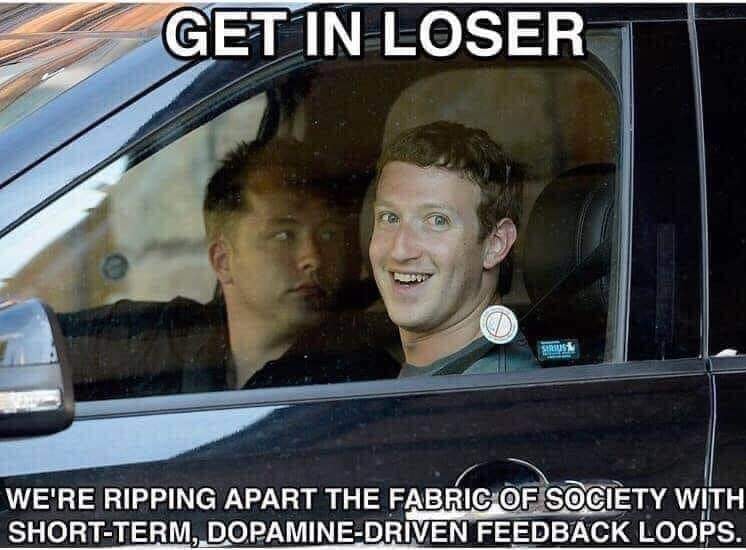
The term #dotcons, inspired by the .com boom, exposes the underlying deceit in this new era of the internet. Companies emerged with the aim of capitalizing on our online presence, turning every click and keystroke into a financial opportunity. Social media platforms like #Facebook -aptly dubbed #Failbook and others have become disasters for both our personal mental health and social construct.
The Encryptionist Agenda
In response to the corporatization of the web, alternative technology, especially within radical grassroots movements, began to focus heavily on encryption. Yet this #encryptionist agenda, instead of growing a true alternative, led us to a dead end. An example #Indymedia, which once stood as a beacon of open, participatory journalism, eventually succumbed to this closed technology approach.
The Plight of Progressive Technology
#Fashionista politics – those which blindly follow trends without questioning the underlying systems – have dominated the progressive tech landscape, often embracing the very platforms that stand contrary to open standards. The ideals that spurred movements and created spaces for change have been eroded, leaving us in a technological quagmire that stifles creativity and any real progress.
Rebuilding from the Roots
Despite these challenges, hope remains for a resurgence of grassroots media. By revisiting the core principles that made #Indymedia a force in its early days, we can steer the movement back on course.
A Simple Federated Network
I consider Oxford IMC, which I co-founded, as a blueprint for this revival. Through a network of trust-based content sharing, we create a federated model that allows information to flow freely yet responsibly.
Think of it as a series of nodes: activist news websites, Mastodon instances, peertube channels, and local blogs, all interlinked by trust and moderated collaboration, governed by a simple yet effective set of controls – including link subscribe, moderate/trusted flow, and rollback functions to maintain the integrity of our content.
Trust First, Moderate Later
By focusing on trust-first networking, where content flows are based on established relationships, we not only streamline communication but also protect against the pitfalls of a closed, controlled web. This approach allows for open, decentralized storytelling, with an organic curation system that respects the diversity and autonomy of each node.
Reclaiming and Reshaping Security
Recognizing the need for secure communication without sacrificing openness, the reboot incorporates both bridges to other #4opens network publishing and guidelines for pseudo-anonymous contributions through Tor.
These measures provide a balanced approach, enabling activists to share their stories without fear of repercussion while maintaining a spirit of openness and community-driven journalism.
Foundations of the Reboot
Central to this reboot are the #PGA hallmarks and the #4opens – open data, open source, open standards, and open process. This framework, informed by the lessons from #Indymedia’s past, will ensure that we do not repeat the same mistakes.
Moreover, by adopting federated databases and leveraging tags and flows of news objects, this network will function as a vibrant, resilient web of news, accessible at different levels and capable of adapting to the ever-changing demands of radical grassroots journalism.
Be Part of the Open Media Reboot
I invite you to join us as we embark on this journey to reclaim our digital commons. If you share the vision for an open, grassroots-powered web, visit http://unite.openworlds.info and contribute your expertise. With a commitment to the #4opens and a collaborative spirit, we can usher in a new era of the Fediverse centred on truth, empowerment, and community.
This is more than a project, it’s a movement. Let’s create a network that stands as a testament to our collective power, one that honors our past achievements while forging a future that lives up to our highest aspirations. Let’s make history, again.
The open web is not just a concept; it’s our birthright. Together, let’s bring it back to life.
This post is a call to action. It’s a bid to revive the original spirit of #Indymedia and extend a hand to those willing to contribute to the future of open, grassroots media.
# Introduction – Hamish Campbell’s background in grassroots and radical media – The open web’s early potential for alternative media
# The Failure of Alternative Media – Rise of big tech like Facebook led to closed and monopolized systems – Encryptionist agenda went nowhere over the past decade – Climate crisis shows need for societal alternatives
# The Open Media Network – Explaining the decentralized federated network model – Trusted flows of content based on open standards
# Rebooting Indymedia – Rebuilding the local community news site with focus areas – Approaches for enabling secure anonymous publishing
# Why Indymedia Failed – Early successes but internal disputes over openness – Problems with incompatible customized systems – Control desires led to user-hostile encryption
# Lessons Learned – Open standards critical for networks – Loose flexible processes over rigid bureaucracy – Explicitly embedding the “four opens” philosophy
# Project Overview – Building a web of trusted news flows – Agnostic decentralized network via protocols like ActivityPub – Get involved to help create alternative media
The #hashtags embody a story and world-view that are rooted in a progressive and critical perspective on technology and society. They highlight the negative impact of neoliberalism (#deathcult) and consumer capitalism (#fashionista) on society, and promote the original ideals of the World Wide Web and internet culture (#openweb). The #closedweb hashtag critiques the for-profit internet and its social consequences, while the #4opens promote the principles of transparency, collaboration, and sharing in open-source development.
The #geekproblem hashtag draws attention to the cultural movement of geeks, who can become blinded by their own technical knowledge and fail to consider the broader social implications of their work (#techshit). The #encryptionists hashtag critiques the dominant belief among some geeks that all solutions need more encryption, which can lead to a desire for total control and artificial scarcity.
Overall, these hashtags are interlocking to tell a wide-ranging story and world-view that advocates for a more humane, collaborative, and transparent path in technology and society. The #nothingnew hashtag raises whether new technological projects are needed, or whether we should focus on improving existing ones. The #techchurn hashtag refers to the technological outcome of the #geekproblem, which can lead to a constant cycle of new projects that do not address underlying social issues. Finally, the #OMN and #indymediaback hashtags promote the idea of an open media network and the rebooting of the altmedia project that was once the size of traditional media on the #openweb. The #OGB hashtag represents the need for open governance and the power of the community to make decisions collectively.
It’s simple #KISS, so please try not to react like a prat about this, thanks.
The mess we make, people often destroy things they love, not from hate, more from possession. Let’s look at a few projects on this path to critique the short fall of potential due to a lack of connectivity and maturity
The distributed cooperative organisation project on https://anagora.org while it aims to provide organizational tools for cooperative, commons-oriented, and feminist economic forms, it lacks the necessary links and connections to be in any way truly effective.
http://disco.coop/manifesto/ the same mess, this is the #fashionista view of the 20-year-old #OMN project, it is full of teenage focus and might be interesting if it LINKED, but it does not, flight and scatter to the wind, more to compost.
The #DisCO (Distributed Cooperative Organisations) manifesto at disco.coop is the same project run by #fashionistas
https://two.compost.digital/ This is the #NGO # fashionista view of the 20-year-old #OMN project, it is full of teenage focus and might be interesting if it LINKED, but it does not, flight and scatter to the wind, more to compost.
The COMPOST digital magazine (two.compost.digital) is also in similar terms, #NGO and #fashernista path, with no affective linking.
These projects are all #blocking by occupying space. In this #fashernista path, we do need to see how possessiveness leads to unintended destruction of things we cherish. This reflects a common path of human nature, where love and possession become intertwined, with negative consequences.
“Flight and scatter to the wind, more to compost” these projects, despite their intentions, ultimately dissipate or break down without achieving any goals. The use of “compost” as a metaphor that suggests that in their failure, these projects might contribute to future growth or development in unexpected ways. The hashtag “#blocking” is a way too express this ineffective approaches.
Our “common sense” paths are often bad:
This path of possession can easily lead to bad paths in alt organising. Abuse of power, when leadership positions within a cooperative become possessive of their authority, this then lead to corrupt practices and mismanagement, misappropriation of resources, even fraud. The desire to maintain control and cover up misdeeds leads to the destruction of records and falsification of information. Erosion of cooperative principles grow when peoples interests overshadow collective goals, this then destroys the ethos of cooperation. Then trying to fix this becomes much harder with resistance to transparency, and over control of information. This all leads naturally to conflict and retaliation, destructive actions against those who challenge them.
How possessiveness in different forms undermines the collaborative nature of cooperatives, leading to the destruction of trust, resources, and the organisation’s integrity.
Hey, changemakers! Are you tired of shouting into the void on social media? Frustrated with the endless noise and the lack of impact? It’s time to harness the power of #hashtags to fuel a movement that can actually make a difference. And guess what? The #openweb is our playground for this revolution!
Check out The Hashtag Story https://hamishcampbell.com/?s=the+hashtag+story it’s more than just a guide; it’s a blueprint for building something big, something real. If you’re passionate about activism and ready to step up, this is your chance. This isn’t going to be an easy or comfortable path, but hey, who ever said change was easy?
The #OMN (Open Media Network) path is more than a simple call to action. Core to this is that the hashtags story can be more than just noise; it can be seeds for a movement, a way to connect, organize, and grow. But this only works if we make the commitment to turn those hashtags into something more than just digital graffiti. We need to take that extra step, turn talk into action, and make the #openweb a place for real, meaningful activism.
The #hashtags cover technology and society from a progressive view and are very simple, on a surface level, but full of complex conversations when you lift the lid and talk in the context they are planted in.
#BLOCKING = refusing to look/averting eyes/eyes closed
The stroy is complex and interlocking, telling us a wide story and world-view, to show a path out of our current mess.
#deathcult is relevant because of #XR forcing us to look the truth of ecological and social decay in the eye, good to ground this in real historical experiences, think of the Irish Potato and Bengal famine.
#Fashionista is about consumer capitalism, looked at as social illness.
#openweb is about building code for anachronism rather than capitalism
#dotcons are feeding social illness, we cannot keep building this sickness, the step away metaphor is a positive path away from this.
#closedweb is a form of technological slavery, we often choose.
#4opens is a tool that can be used to guide us on to the better humane path and, it gives us the power to JUDGE and thus decide, it is POWER.
#geekproblem is a group of people lost in darkness, blinded to humane light, they inbreed monsters in code #techcurn#techshit
The #geekproblem hashtag is not simply negative, it’s taking obvious “problem” out of “geek”.
The problem is obvious look at #failbook and Google both “geek” projects of domination/control, and yes you are right it’s geek culture shaped by capital in both cases.
What does #openweb geek culture look like? Looking back at early #couchsurfing and #indymedia you have healthy non “problem” examples. Look at both projects late in their decline, we have strong examples of the “problem”.
#techcurn the world is full of me to projects, everyone has the same ideas, few if anyone links.
#nothingnew is a question, do we need this codeing project.
#techshit is when people do not ask this question and build it anyway agen and agen
#encryptionists are in the end way too often about artificial scarcity (web03), this is not actually needed. To be clear this is a minority need for this technology, but as a limited use case not as a dominant way of thinking, codeing. #encryptionists is about the feeling of total control that encryption gives the #geekproblem this is key because all good progressive society are based on trust, which is about giving up this desire. The problem in geek is the problem of socialization… a known geek issue 🙂 in itself is fine, am not judging. BUT this is embedded in code that shapes society, it becomes a “problem”. Good to think a bit more on this one. With power comes responsibility.
This list only touches on the meanings and subjects. Next question, what is the story and world-view that these #hashtags embody?
One uncomfortable thing we need to address, calmly and constructively, is this: for the last decade, the right has been better at cooperating around #openweb media than the left.
This isn’t because the right has better politics. It’s because they’ve been more pragmatic about infrastructure. While much of the left argued endlessly about identity, fashion, theory, tone, and purity, right-wing and reactionary groups quietly built linking ecosystems: shared blogs, cross-posting networks, video hubs, newsletters, forums, and self-hosted media that reinforced each other. They understood, often instinctively, that control of distribution matters more than rhetorical perfection.
By contrast, the left has been worse than useless on some of the basics. Something as simple as linking between radical media projects has often failed. Projects compete for attention, split over minor differences, or collapse into internal conflict. Even when the politics align, cooperation doesn’t follow. The result? Fragmentation without any resilience.
Ironically, the few left-wing media projects that have succeeded at scale largely did so by abandoning alternative tech altogether. They built their audiences and careers inside the #dotcons – Twitter/X, YouTube, Facebook, Substack – accepting algorithmic dependency as the cost of survival. That choice brought reach, but at the price of autonomy, long-term stability, solidarity and real political leverage.
This isn’t a moral judgement – it’s a structural observation. Platforms reward individual brands, they block collective ecosystems. Once inside that logic, cooperation becomes optional and is often discouraged.
Where progressives have quietly seceded is not primarily in party politics or campaigning, but in lifestyle and cultural subcultures. This is where the #fediverse, #Mastodon, and other #openweb tools first took root. These spaces were driven by values – privacy, autonomy, care, consent – rather than reach or growth.
For a long time, that made them feel “apolitical” in the narrow sense. But in reality, they were deeply political, just not aligned with electoral or media spectacle cycles. They were building infrastructure for different kinds of social relations, not greed feed messaging machines.
Alongside this, we’re seeing tools being used more explicitly for radical and progressive agendas. Projects like #VisionOnTV and #IndymediaBack are reconnecting media with movement. Spaces like #Kolektiva bring an explicitly #fashionista anarchist politics into federated infrastructure. And frameworks like #OMN (Open Media Network) focus on shared process, trust, and governance rather than branding or growth.
This is important because as #mainstreaming accelerates and trust in the #dotcons continues to erode, both progressive and reactionary groups move further into the #openweb. The question is not whether this will happen, it’s how we shape the culture and norms of these spaces.
The right tends to treat tech instrumentally: as a tool for mobilisation, influence, and power accumulation. That can make them effective in the short term, but it often leads to centralisation, cults of personality, and brittle structures that fracture under pressure.
The left, when it’s at its best, treats tech as part of a broader social ecology: something that should support care, plurality, mutual aid, and collective agency. But when the left fails, it fails by refusing to build — mistaking critique for action, and purity for strategy.
The #openweb doesn’t automatically belong to anyone. It’s a terrain of struggle. If progressives don’t show up, cooperate, and do the boring work of linking, hosting, moderating, and sustaining infrastructure, others will fill that vacuum. This is why now is the time to make your space in this network and be heard.
Not by abandoning existing networks overnight, but by practicing a #stepback: one foot in, one foot out. Staying connected where people are, while actively building and strengthening open alternatives. Helping others take that step, rather than shaming them for not already being there.
If we could build #dotcons social media, we can build #openweb social infrastructure. If we could centralise power, we can federate it. The #openweb path is not a retreat, it’s a return to shared ownership, shared memory, and shared responsibility. And it’s long past time the left took it seriously again.
Take a moment to think about basics: activism/campaigning is about building resistance to the mainstream to change its flow in progressive directions. Were #mainstreaming is about shifting activism to reduce these resistances to the mainstream flow. Thus, it’s good to understand that #mainstreaming is a #NGO agenda to build the jobs of the people involved, and is in turn funded to this end. Good not to get this shit mixed up.
Lifestyle is a way of forming a tribe inside this mainstream flow. The problem for activism is that this old school tribalism is obviously a BLOCK on social change, as looking and talking right are MORE important than being right. Being right would be “resistance” and lifestyle is about going with the counter flow.
On the other hand, there are advantages to “modern” tribal and lifestyle activism – it functions as social glue to hold campaigns together and provides a “uniform” flag to rally round. You notice I do not use words like anarchist, socialist, liberalism here as these have a different role in social change thinking – they are the ideas – the clothing is what I am taking about #fashionista is the hashtag.
#Revolution is about blowing up the flow of the mainstream so it floods into a different path, with much “collateral” damage in the process as we live inside a highly urban complex society. Both paths can be useful, both have costs.
Good not to mix this shit up, let’s build something to compost this mess #OMN
It’s time to #reboot many parts of the #openweb With the “visibility” of the failing of #dotcons such as #failbook privacy/obscured agronomic control of you, #uber and the race to the bottom culture.
The will be a plausible “class” of people who come up with convincing sounding solutions, these #fashionista are not part of any solution and are a clear and historical core to our failers in the past.
I understand it’s hard to see the differences of tech projects, what is worth supporting and what not. We have issues from two different directions that have to at least a little understood to have a hope of supporting projects that have the possibility to be part of a real LINKING alt.
“A river that needs crossing – On the political side, there is arrogance and ignorance, on the geek side there is naivety and over complexity”
A good first step solution to both is the #4opens
They will dis-empower the worst of the #fashionista thinking by shining light on their actions and mediate to a better outcome the “closing push” of the #geekproblem by keeping the LINKING in place.
Simple and sweet, a first step solution in a hashtag 😉
I start to understand why all alt/grassroots events have the same speakers. Looking about, you send out invites to everyone who has done it before. To reach out to new people would be taking a risk, and would be hard work to hand hold them though the process. The lack of time and resources leaves little focus than to just repeat the past. This is a hard realization and incite into the poverty of such events.
I am starting to feel slightly ashamed of not knowing this before. Ideas please, we do need to fix this. Not a #conspiracey, rather a #fuckup, we are only human.
“To be honest, you should be commended for putting it all together in the first place. No one else is doing it, and it’s essential. Every form of direct action is worthy and amazing given the world we live in.”
What can we do:
1 a bit of mentoring goes a long way
2 offer expenses and look for some funding – either grant funding or crowdfunded
3 offer speaker training events
The idea would work if we had the time and the funding, time is relative but funding for alt/left is tiny and hard to get. Almost all left’ish funding is dispelled into #NGO and #fashionista pointlessness.
Ideas for diverting some of this waste might be a start? Actually it is a good time to try this, who is up for it?
There is a hard-to-understand idea that the technology behind the OMN (open media network) is complex. At a base level it is not, it’s the same tech that has been written 1000s of times in the past and uses nearly 20-year-old technology.
What is complex is the ideas and social understandings behind the ideas of using this “stupidly simple” technology in the OMN.
Firstly, it’s needed to understand that Alt-media and the open web in general is F**cked. Once past this point, it becomes easier. Secondly an understanding of the forces that F**cked is both on their side: the #dotcons, Facebook, uber, Amazon etc and on our-side, our encryptionist geeks, NGO social media gurus, process vampires etc.
We don’t currently have power to affect their side, so let’s look at our side, in the sense of understanding the OMN. It’s based on the #4opens and none of our guys like this combination for different reasons. It’s based on KISS – our geeks don’t like building on the old and our politicos are pushing the #fashionista of the vapours avant-garde, so both reject the “old” foundation ideas/tech of the #OMN.
The idea is very simple – that we get alt-media groups and sites to be part of a network so they become bigger than their parts. And a very basic issue is solved, they link to each other, which currently the isolated silos do not consistently do. The link is the currency of the web, in this we all become richer and have wider outreach on the “#openweb”.
The “innovation” of the OMN is the use of RSS articles as a database exchange format. We thus create a redundant, distributed network of databases holding and displaying (linking) to our collective history. Why RSS? Without it, we have to get agreement and write custom code for every site that wants to join. With RSS, it’s copy/paste and go on 98% of existing sites on the open web. The first is self limiting and impossible to grow, the second just works. There is no complexity at all at this basic level and no need for site agreements etc.
Troubleshooting this rollout there are issues, but nothing that can’t be solved by tweaking and bodging. The next stage is a little more complex, synchronising these databases and keeping articles up-to-date and exchanging tagged metadata so that the “curating of the flows works”. This will need thinking and programming for real, but nothing that throwing some bandwidth and processing power can’t solve in an “inefficient way” – again, #KISS.
Build it first, scale it second. We are running this out in the small world of alt-media, so geeks keep it KISS. There is a philosophical and design issue that will cause bottlenecks, the CMS’s we will be using are designed as portals/silos not data rivers/media flow sites. Some creative thought can help here. And there is the opening for innovation and new CMS’s at a later time.
To conclude, the blocks on building out the OMN are within our own geeks and politicos and have to be overcome. That is the tech is relatively easy, the social side is complex, Ideas for this? My idea is to form a wide;y skilled affinity group and go for it, lead by example. Other paths, ideas, welcome.