The Open Governance Body: Revolutionizing Governance with Grassroots Tech

In our ever-evolving digital spheres, governance is often left behind, struggling to catch up with the pace of technology and social change. Among the many attempts to tackle this problem, there’s one that stands out for #KISS innovative and participatory approach: the Open Governance Body (#OGB). This grassroots, federated project is more than another tech experiment; it’s a historical blueprint for any future of human-scale governance.

The Flawed Systems of Old

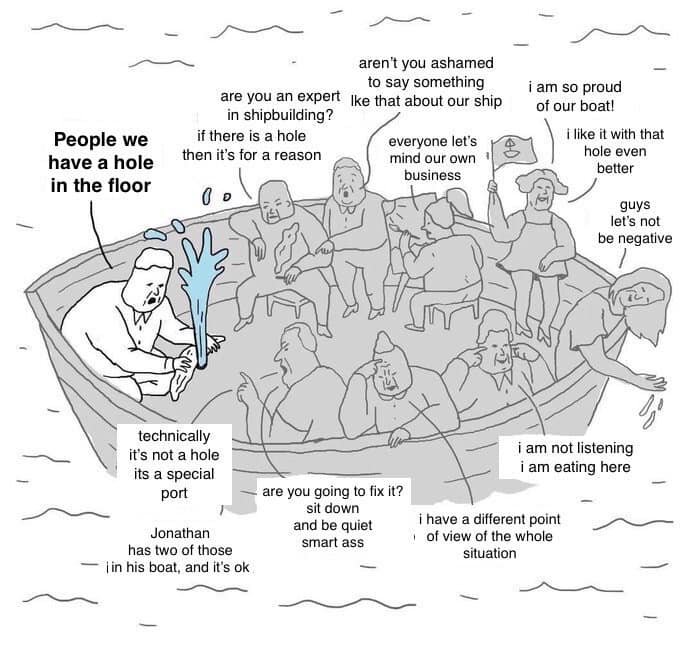
Let’s face it-governance, as we know it, is very far from perfect. Our current systems are either too unwieldy for large-scale implementation or too limited for local contexts. Traditional Free/Open Source (#FOSS) governance models might be native to the tech world, but they’re entrenched in a medieval hierarchy, reminiscent of kings, nobles, and peasants. Who needs feudalism in the digital age?

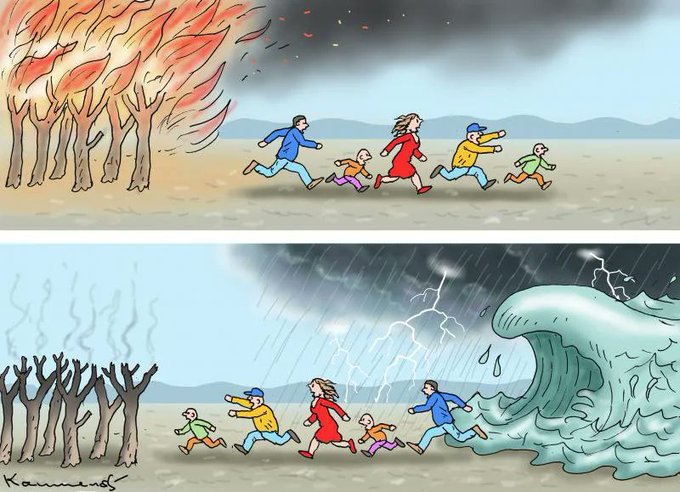
#Mainstreaming politics, with its disasters’ ineffectuality in the face of #climatechaos, also demonstrates that we desperately need something that works – something innovatively rooted yet freely scalable.

Grassroots Activism Meets the Fediverse

Enter the #OGB, a robust fusion of proven federated technology and grassroots governance. It’s the brainchild of a diverse group of independent experienced thinkers and activists who understand that, progressive social change has always sprung from the bottom up. They’ve taken the federated solution of #ActivityPub (think decentralized social networks) and meshed it with organic activist governance.

This blend gave birth to a surprisingly simple yet powerful platform based on sortation, where roles and responsibilities are distributed fairly, fostering efficient decision-making.

A Tale of European Success

The potential of #OGB is more than just theoretical talk – it’s processs have been field-tested with promising results. Our band of “libertarian cats” successfully outreached to the European Union, showcasing the versatility of ActivityPub and the #fediverse. Presentations and collaborations with EU bureaucrats catalysed the setup of project outline, a prescient move that looked like wisdom personified post-Twitter’s dramatic downturn.

Market Dynamics – A Hypothetical Utopia

Think of a bustling local street market, a microcosm of society with stallholders, shoppers, and various stakeholders like organizers, trash collectors, and local law enforcement. The #OGB can empower such a community to self-govern in harmony, thereby bypassing the too often #blocking cumbersome bureaucracy.

It’s a permissionless rollout – meaning, creating a governance community is as easy as setting up an instance, generating a QR code, and inviting market participants to jump on board with a simple app installation. From there, a sortation algorithm orchestrates the decision-making process, naturally enticing more stakeholders to participate.

From Small Markets to Society at Large

This isn’t just about one market. The beauty of #OGB is its inherent scalability and adaptability. Just as the #fediverse has grown organically over the years, OGB can proliferate from one market to others, weaving a tapestry of self-governance that could very well encompass more social facets.

“We know the grassroots process of organizing works. We’ve seen the federated model scale times over. Combine them, and we have a DIY governance culture that could revolutionize society.”

A History of Activism, A Future of Change

The Open Governance Body is not simply a project; it is the culmination of centuries of activism and social organizing techniques, proven time and again. Combined with the remarkable technological advancements of the Fediverse, OGB embodies a modern solution rooted in historical success. It’s a rallying cry for those seeking to instil real, lasting change in the world through cooperative, human-centric means.

The future of governance looks brighter with initiatives like OGB. Unlike the faltering structures of old, this endeavor promises to usher in an era where technology enables democracy and human connection, not control and division. It’s past time to embrace the open governance body, roll up our sleeves, and be a part of the grassroots revolution.

Remember, progress doesn’t ask for permission – it is an open invitation to innovate, participate and effectuate change. Join the OGB movement, and let’s co-create a governance model that befits our times and aspirations.

Tools for outreach:

1. Have you heard about #OGB? It’s breaking boundaries in web governance through grassroots activism & federated tech! Get ready to govern your own communities with human-scale solutions that actually work.
 
2. Exciting news: The federation of #ActivityPub proves we can scale horizontally and spark real change! Combined with grassroots governance, we’re onto a new chapter of progressive social shifts. Let’s build this together!
 
3. Picture this: A street market governed organically by its community via #OGB. Stallholders, customers, and local services all have a say. Ready to revolutionize the way we collaborate and manage shared spaces?
 
4. Do you want an active role in shaping your community? With #OGB permissionless roll-outs, anyone can start making impactful decisions. Let’s grow this movement, producers by producer group, instance by instance!
 
5. Imagine a system where your voice directly influences your surroundings. #OGB is blending hundreds of years of activist governance with the scalable power of the #fediverse. Let’s make self-governance the norm!
 
6. We’re planting seeds for a #DIY grassroots culture to flourish across society with #OGB. No permission needed, just the desire for change and collaboration. Who’s ready to be part of this empowering journey?


‘The Arkenstone and the Ring: wilful objects in Tolkien’s The Hobbit’

A series of seminars to commemorate the death of J. R. R. Tolkien, to be held in 2023/2024 in the University of Oxford. The talks present an introduction and further background to Tolkien’s life, work, and legacy. They have an academic approach, but they are also aimed at those who have read Tolkien’s work but are interested in gaining a bit more insight into his life, career, and writings.

Week 1 – 19 January (MERTON COLLEGE T.S. ELIOT LECTURE THEATRE)
Mark Atherton (University of Oxford)
The Arkenstone and the Ring: wilful objects in Tolkien’s The Hobbit’


Draft

Wilful objects in the Tolkien’s work, thinking about embedded AI in ten years, and mobile phone now. This world could become like Tolkien world after the #climatechaos claps in 50 years.

Dwarfs are the geeks, control #geekproblem

Elves are the #fashernistas, appearance, humanists

The humans are the Oxford union, power politics

The hobbits? – the wholly greens

Orcs? –

#Oxford

Panel discussion: ‘Post-COP28 debrief: Does the agreement go far enough?’

COP28 closed with an agreement, that for the first time in three decades, includes oil and gas. But what does the agreement mean in real terms? And is keeping the global temperature limit of 1.5°C within reach. Join us as our panel of academics share their thoughts after attending COP28 and look forward to what it means for COP29 and the world over the coming years.

Panel:

Professor Myles Allen, Director, Oxford Net Zero
Dr Abrar Chaudhury, Senior Associate, Oxford Net Zero
Professor Benito Müller, Managing Director, Oxford Climate Policy (Chair)
Professor Nicola Ranger, Senior Fellow, Oxford Martin Programme on Net Zero Regulation and Policy
Professor Mette Morsing, Director, Smith School of Enterprise and the Environment

This talk is in conjunction with Oxford Net Zero and Oxford Climate Research Network.


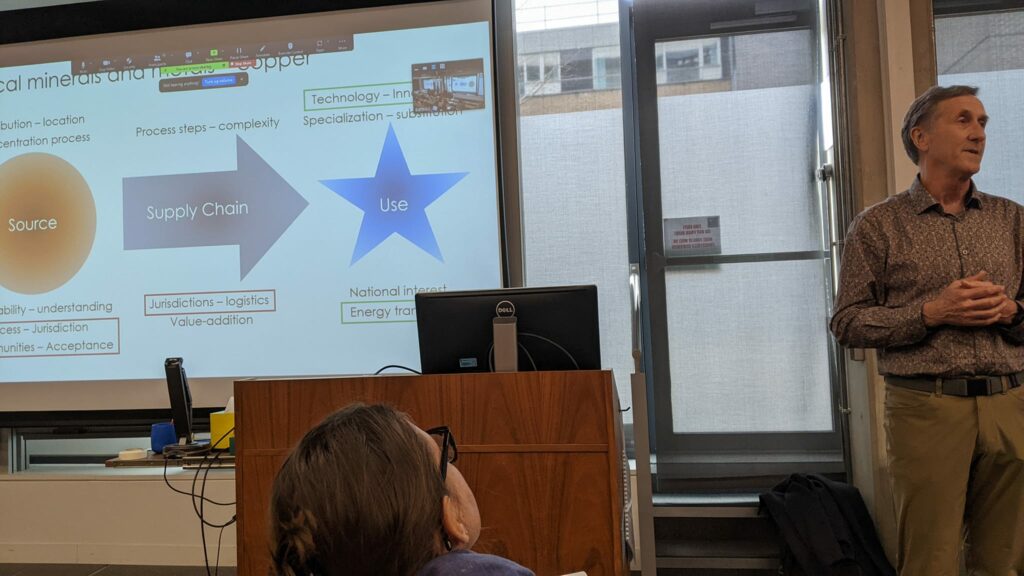
God these people are #deathcult worshipping at the Martin school Oxford event, the room is full of the green great and good, I wonder how meany are not worshipping?

“Sack all the panel and then evict the building occupations” comes to mind as a path/spark out of this mess, likely more chance of working than these people staying as the gatekeepers to the change that is needed.

This thinking is reinforced during the businessmen presentation. Nothing on the subject, he is vile. Academic finance is next, all the speakers start nice and move onto there pointless subject then end vile, this is the nature of #mainstreaming people in the room.

In the era of #climatechaos they are insane, most Tories, some blinded liberals, it’s the Oxford mess, ideas please?

#Oxford

Who is the change and challenge we need?

#Deathcult dilemma, over the past 40 years, #mainstreaming society has been driven by a choice between the “nice” and “nasty” facets of a #deathcult, with fear often pushing people towards the latter. This has led to catastrophic consequences, over the next ten years millions of deaths and billions of people displaced. With our society’s focus narrowed to daily worship of the #deathcult or the so-called “nasty progressive” secret worshippers. This duality has trapped us in a cycle of destructive choices, undermining genuine progress and sustainable paths.

Grassroots Solutions, we need to compost this mess, transforming it into fertile ground for sustainable alternatives. Two key tools for this transformation are fluffy and spiky, this post is about the first, we have #4opens in tech and #XR (Extinction Rebellion) in society.

  • The #4opens: A Shovel for Tech, the principles can act as a shovel to break through the tech-related obstacles: Open Source: Ensure all software used and developed is open source, promoting transparency and collaboration. Open Data: Make all data openly accessible to foster accountability and shared knowledge. Open Standards: Adhere to open standards to ensure interoperability and inclusivity. Open Processes: Implement open processes to enable community participation and democratic decision-making.
  • A #fluffy path in Society, Extinction Rebellion provide a simple and actionable path for societal change: Non-Violent Direct Action: Use peaceful civil disobedience to draw attention to climate crises and force governmental action. Mobilizing Communities: Engage and organize local communities to participate in climate action, building a broad-based movement. Demanding Systemic Change: Advocate for systemic changes that address the root causes of climate chaos, including economic and political reforms. Promoting Sustainability: Foster a culture of sustainability and resilience in everyday life, encouraging practices that reduce ecological impact.

These give space for a simple “fluffy” call to action. You’re taking these paths as part of the grassroots movement, are crucial in this transformation. You can contribute: Educate and Advocate: Spread awareness about the #4opens and the principles of Extinction Rebellion. Host workshops, create educational content, and engage in public speaking. Participate and Organize: Join or form local XR groups, participate in actions, and organize community events. Use the #4opens to develop and support open, collaborative tech projects. Collaborate and Network: Build networks with other grassroots organizations, tech activists, and climate action groups. Share resources, knowledge, and strategies. Innovate and Implement: Develop innovative solutions based on the #4opens and implement them in real-world #OMN projects. Pilot sustainable practices and technologies within your community.

In conclusion, the chose between the nice and nasty facets of the #deathcult has led us to the brink of disaster. However, by adopting and promoting the #4opens in tech and the #fluffy path of Extinction Rebellion in society, we can compost this mess and pave a different path for a more sustainable, just, and resilient future. Your #DIY effect is the key to making this happen.

Now we also need to look at the “spiky” path, very different but likely still needed.


In the era of #climatechaos of the last 40 years #mainstreaming  we have had a choice of the nice or nasty #deathcult most people in fear have chosen the nasty, we are going to pay the price for this choice over the next 20 years, With millions of deaths and billions of people displaced.

This mess we have made has narrowed our daily worship to actually the #deathcult or nasty “progressive” secrets worshippers.

In the grassroots we need to compost this mess #4opens is a shovel for this in tech, #XR an easy pail path in society. You are the only people who can or will do this.

Official launch of the special issue on “Change in Armed Conflict”


Join the Minerva Global Security Programme for the official launch of the special issue on “Change in Armed Conflict,” as featured in the International Political Science Review.This publication establishes a new agenda in the examination of change in armed conflict. It approaches the theme as a dynamic social phenomenon, employing a shared conceptual framework that encompasses five dimensions of change. Serving as a ‘lingua franca,’ this framework unites diverse approaches and perspectives, fostering a comprehensive understanding of the subject.—————————————————–

Very #Oxford, the event is about the terms academics use to study war and conflicts, it’s about words and categories about violence. How the skinny non-violent crew talk about the muscular dangerous crew.

Words and categories of the vile are cleaned and abstracted, spoken in a building that is likely a temple of the #deathcult. A place of worship, the pouring of funding and bright young things down the drain in the face of rushing displacement, starvation and death of #climatechaos

The must be some value here, but it’s not visible in the talk or images. Even shit has value in composting, am here with a shovel. Through from the talk so far there is only academic constipation, so nothing to shovel.

OK we have one presentation a tool for mapping conflict over time, a bit interesting.

Best not to go down this path

I have been in Oxford for the last month, attending university talks and seminars on subjects of interest. And I am seeing the normal issues of https://en.wikipedia.org/wiki/Mannerism this is an “art” way of expressing the issue but it’s a good description of much inward looking thinking. Their answers when questioned on this are https://en.wiktionary.org/wiki/Panglossianism#English in that, It’s not as bad as you think, “am more positive” etc.

This is an issue with the current #geekproblem and much #mainstreaming thinking in the era of #climatechaos

The mess we are likely to make over the next ten years. Best not to go down this path.

Trustworthiness as Reputation in International Cooperation-building

Intuitively, reputation matters in daily life. Thus, it is unsurprising that scholars and statesmen have long held that reputation must also matter in international relations (IR) since Pericles. Yet, while reputation, especially reputation for resolve in (international) conflict, has enjoyed renewed attention in the past decade or so, few in-depth studies of reputation in (international) cooperation exist, other than a few studies on reputation in alliance and treaty compliance. Professor Shiping Tang takes a first step toward a preliminary theory of reputation in cooperation-building and provides some preliminary evidence that reputation in international cooperation can form and have effect, drawing from a diverse literature, including reputation in conflict and cooperation, trust and trustworthiness in sociology and social theory, and trust and cooperation in international relations and other areas. Professor Tang’s contributions are three-fold: conceptual, theoretical and empirical. He then connects with trustworthiness as reputation with US-China relations.

Our western societies have been building from neo-liberalism, greed, fear and control for the last 40 years. How is it now possible to move back to “trust” in the west.

This is now an urgent question with the onrushing mess of #climatechaos

In #Oxford you have the move from trust to control in the card readers on all the doors over the last 20 years.

Mainstreaming “common sense” insanity

Am starting to get the feeling we have really fucked up on the #Fediverse… It was coming, has it arrived?

I went to a geek meetup yesterday, and I came away with a feeling that our insanity is too deep to move away from. This is a problem for people who would like to see some active change and challenge. People really are insane in the era of #XR and #climatechaos

People are suiciding the idea of the #openweb agen, they can’t help themselves. 40 years of worshipping of the #deathcult affects people’s attempt to be humane, “common sense” wins in the current mess each time. This is BAD, very bad, come on guys #4opens

Ideas from the mental help profershernal please for dealing with #mainstreaming “common sense” insanity.

the mess we made

This is a good podcast https://media.blubrry.com/novarafm_radio_for_a/audiofiles.novara.io/downstream/2023/03/230320_Downstream_Billions_Will_Die_If_They_Dont_Listen_To_Us_w_Roger_Hallam.mp3

The mess we have made over the last 40 years, the main challenges facing humanity today – #climatechaos, the degradation of the biosphere, and growing global inequalities – are not separate issues, rather different facets of the same problem. This problem is the #neoliberal economic system that has spread across the world through globalization, promoting high production and high consumption lifestyles and prioritizing economic growth over environmental sustainability and social equity. The #deathcult we all worship.

The neoliberal dogma is not only incompatible with a functioning Earth System at the planetary level, but it is also eroding human and societal well-being, even in the wealthiest countries. Growing global inequalities are a direct result of this economic system, which prioritizes the accumulation of wealth and power in the hands of a few at the expense of the majority.

The consequences of continuing on the present trajectory are dire. Collapse is the most likely outcome. A transition to a more socialist economy is a path out of this mess. We need to prioritize social equity, which requires a fundamental shift in our economic system, where sustainability and equity are prioritized over short-term greed. Only then can we hope to build a sustainable future for ourselves and for future generations.

The Mess We’ve Made: Neoliberalism.

Over the past 40 years, humanity has created a complete mess of our society and environment. #Climatechaos, the degradation of the biosphere, and growing global inequalities are not separate issues but different facets of the same problem. This problem is the #neoliberal economic system that has spread across the world through globalization, promoting high production and high consumption lifestyles and prioritizing economic growth over environmental sustainability and social equity. It is a #deathcult we all worship.

The #neoliberal economic system has created a world that is not only incompatible with a functioning Earth System at the planetary level, but also eroding human and societal well-being, even in the wealthiest countries. The consequences of continuing on the present trajectory are dire. Collapse is the most likely outcome.

To have any hope of turning this around, we need to prioritize social equity. This requires a fundamental shift in our economic system, where sustainability and equity are prioritized over short-term greed. A transition to a more socialist economy is a path out of this mess.

The transition to a more sustainable and equitable economic system will not be easy, but it is necessary. It requires us to fundamentally change our values and priorities as a society. This cannot be done without social friction and more mess, we need to stand up and fight for a more sustainable and equitable world. It is well pastime to reject the #deathcult of neoliberalism and build a humane and better world for all earths creatures.

Why European Social Democracy for some people is a path to a just and sustainable future

For decades, European social democracy has stood as a counterweight to the relentless logic of capitalism, proving that societies can thrive when they prioritize people and planet over profit. Yet in recent years, these ideals have been swept away by the rise of #neoliberalism and the slow creep of corporate capture. For some people it’s worth revisited the core principles, not as relics of a bygone era, but as seeds for the future? Let’s look at potential benefits of this approach, and why reclaiming its best elements might be help in rebuilding our world in the face of #climatechaos and growing inequality.

Reduced income inequality by challenging the hoarders of wealth, Social democracy actively fights against the extreme wealth inequality that fuels the #deathcult path of capitalism. By implementing progressive taxation on the ultra-rich and corporations, wealth redistribution to fund public services and social programs, outs limits on wealth accumulation to prevent runaway hoarding. This old #mainstreaming path treats wealth not as a private treasure, but as a collective resource. It challenges the idea that billionaires should exist at all while millions live in poverty, and asserts that the role of the state is to level the playing field, not deepen the divides.

Improved standard of living, a life of dignity for all, not only trying to mitigate suffering, this works to actively uplift people’s quality of life through: Universal healthcare that prioritizes public well-being over profit. Free or affordable education as a path to empowerment. Robust public services like transport, libraries, and childcare. By ensuring everyone has access to the essentials for a good life, social democracy shows that collective care leads to individual flourishing. It breaks the narrative that people must “earn” the right to exist and replaces it with the belief that dignity is a human right.

Stronger safety nets with protection from capitalist precarity, where markets rule, people are left vulnerable to constant boom-and-bust cycles. Social democracy disrupts this instability by creating social safety nets that catch people when they fall. Unemployment benefits to prevent destitution during job loss, Disability and sickness support for those unable to work, Public pensions to ensure people can retire in dignity. These policies directly challenge the capitalist threat that without endless labour, people deserve to suffer. Instead, they affirm the belief that societies are strongest when no one is left behind.

Greater economic security with power to the workers, social democracy strengthens workers’ rights and provides economic stability: Job protections & fair dismissal laws, living wage policies tied to actual living costs, Support for unions & collective bargaining. This redistribution of power away from corporate greed towards the workers who actually produce value is a radical shift from the top-down hierarchies of capitalism. It proves that economies don’t need to run on exploitation, they can be collaborative systems where workers share in the prosperity they create.

Increased political representation by reclaiming democracy, deepened democracy where people have a real say in how their societies function through, proportional representation to ensure every vote counts, publicly funded elections to reduce corporate influence, citizen assemblies and referenda for direct democracy. This expands democracy beyond just voting every few years, empowering people to shape the decisions that shape and impact their lives. It challenges the idea that politics is the domain of #nastyfew elitists and replaces it with the radical belief that people can and should govern themselves.

Environmental protection by defending the future from #climatechaos. Social democracy recognizes that the health of the planet is inseparable from the well-being of people. That’s why this path champions investment in renewable energy & public green infrastructure, strict environmental regulations & corporate accountability, sustainable development policies that balance human and ecological needs. Rather than treating nature as a resource to be exploited, this path sees the environment as a common inheritance that must be preserved for future generations. It directly challenges the short-termism of capitalism, which sacrifices the future for the sake of immediate profits.

Investment in public goods for the collective good, instead of pouring public money into private profit machines, social democracy reinvests in the public commons through infrastructure development for sustainable transport and energy, public research & innovation for collective progress, cultural and community spaces to foster connection and creativity. This long-term public investment shows that societies thrive when they share resources, not when they sell them off to the highest bidder. It dismantles the myth that privatization is more “efficient”, and proves that public ownership can build lasting prosperity.

What this means for radical media and the #openweb, The principles of solidarity, collective ownership, and democratic control, overlap the values that grassroots projects like the #OMN and #indymediaback embody. But instead of waiting for governments to catch up, we can start building these systems and paths now. Decentralized media platforms to break corporate control of information, open-source technologies governed by communities, not corporations, digital commons where people can share, learn, and organize freely.

The #4opens already provide the blueprint for a more democratic and sustainable digital ecosystem. It’s an easy path that by combining the best aspects of the older #mainstreaming social democracy with the “new” power of decentralized tech, we can bypass broken #deathcult institutions and start creating the future from the ground up. The old story of social democracy showed us a path, now it’s time to take it further http://hamishcampbell.com

#SocialDemocracy #WorkersRights #PublicGood #ClimateJustice #OpenWeb #ReclaimTheFuture