The#IMC project is an affinity group – so we are planing to work through consensus and diversity of strategy to move the project past where it was ripped apart by internal stresses after 10 years of running as a successfully worldwide radical grassroots media project.
Of course this can and will be updated as needed, but we have a “chicken and egg” issue that we need a working affinity group/s to reach consensus on where we go. The #indymediaback project is a way of bootstrapping this code/process in #4opens way.
To keep “diversity of strategy” in place, we are using the #OMN framework.
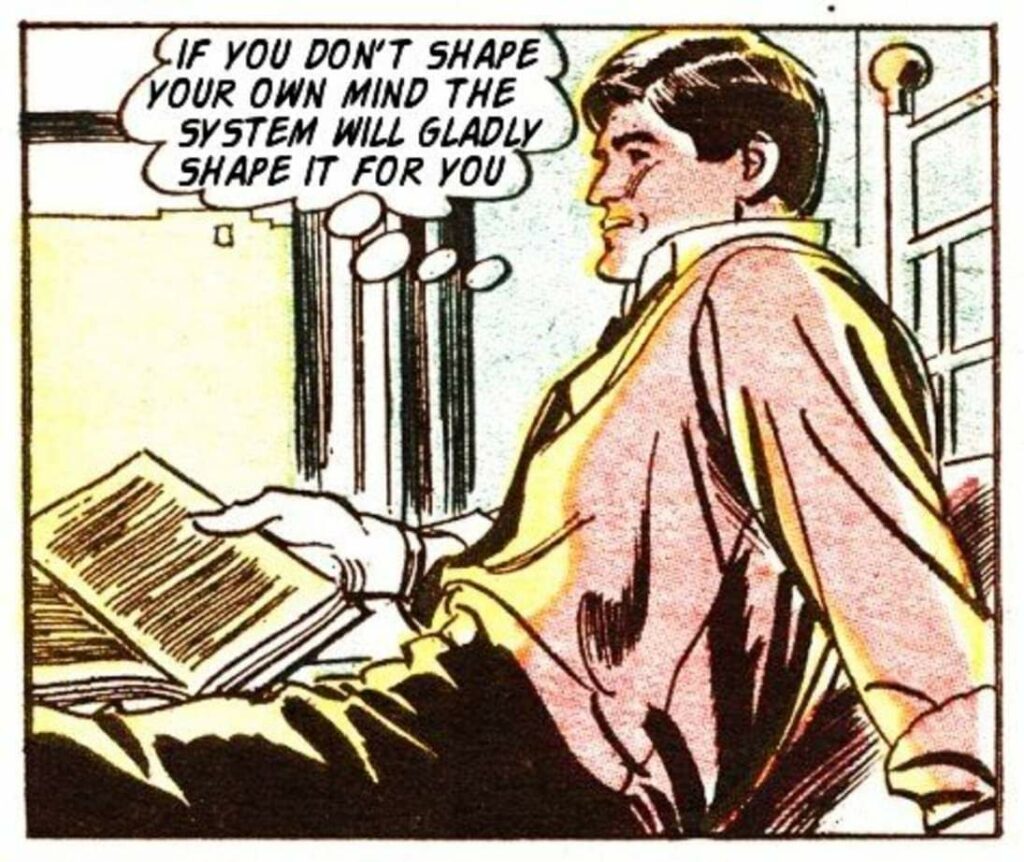
If you look at contemporary programming, I don’t think we have properly understood the social damage that our coding culture has already done, and is still doing. We have built enormous parts of modern life out of software, while pretending that software is somehow separate from society. It isn’t, code structures how we communicate, what we can see, who can participate, what gets remembered, what gets deleted, who gets heard and who gets ignored. And much of contemporary programming culture has a deeply contradictory relationship with this power.
In theory, the culture talks like anarchism: decentralisation, freedom, hacking, autonomy, permissionless innovation, open protocols. In practice, the resulting infrastructure feels closer to an authoritarian bureaucracy: rigid hierarchies, centralised control, surveillance, locked-down permissions, opaque decision-making and an almost obsessive belief that more control and more security will produce a safer society. This is part of the #geekproblem.
Closed systems hide power – in a #closed system, the monsters can operate without being easily seen. They can plot, manipulate, divide and control because the surrounding community cannot properly see what is happening. There is no shared social process for checking the claims being made or comparing them against what everyone else can see.
You cannot easily create social “truth” inside a closed system, you can have an official truth, corporate truth, an algorithmically manufactured truth. You can have whatever the people controlling the system want you to believe. But social truth is different, it emerges from people being able to see, question, compare, remember and challenge what is happening, that is one of the powerful things about #open. With genuinely open systems, the monster becomes more obvious. It becomes easier to see the relationships, the decisions, the contradictions and the consequences.
It becomes easier for other people to say – hang on, that’s not what happened – open systems don’t magically prevent abuse, they don’t make people good, but they make some forms of abuse harder to hide. Closed breeds monsters. Open pushes them out of the shadows where they can be seen.
The security paradox – this is where programming culture gets particularly strange. The demand for control and security is to often presented as neutral engineering. We are told that systems need permissions, authentication, central administration, surveillance and increasingly complex layers of security because the world is dangerous.
Of course some security is necessary, but when security becomes the organising principle of the whole system, something changes, the technology begins to reproduce the social assumptions of its creators. People become permissions, communities become accounts, relationships become access-control lists, trust becomes authentication and thus social problems become technical problems. Uncertainty becomes something that must be eliminated rather than something that society needs to learn to live with – this produces systems that are technically impressive but socially impoverished.
The fantasy of perfect control is a deeper problem here. We keep trying to build technology that removes mess, but human society is messy. People disagree, misunderstand each other, change their minds. Communities develop traditions as different groups have different needs. Sometimes things fail or somebody has a better idea, that isn’t necessarily a bug, it is social life. The #geekproblem treats this mess as something that technology should solve. The result, an endless attempt to build cleaner abstractions over increasingly complicated social realities. But the cleaner the technical abstraction becomes, the more human reality gets pushed outside the closeing system.
Then the system becomes brittle, and when it breaks, everyone is surprised. Code should be allowed to be messy – this doesn’t mean writing bad code. It means recognising that good social technology cannot be based on the fantasy of perfect control. We need systems that accommodate disagreement, forks, experiments, mistakes, local variation, negotiation and repair. In that sense, code should be a little bit messy, because society is messy. The goal isn’t to eliminate the mess, it is to create structures that help us live with it. That is different from the programming culture of trying to close every possible hole, define every possible behaviour and control every possible interaction.
#OPEN is a direction, not an endpoint – there is also a danger in treating #open as another purity project. Yes, the #openweb isn’t automatically good as open systems can contain abuse, misinformation, exclusion and power games. The #openweb itself contains plenty of contradictions. The #dotcons have their own versions of “openness”, often while retaining enormous concentrations of corporate power. So this isn’t a simple story of good open people versus bad closed people, more a balancing process.
#OPEN is a way to step away from #CLOSED – it creates space for transparency, plurality, experimentation and social accountability, gives communities more opportunities to see what is happening and to build alternatives. And that matters because we are currently living inside an enormous pile of inherited closed #techshit – closed platforms, closed data, closed algorithms, closed governance, closed infrastructures and assumptions about what technology is supposed to do. As a first step we need to compost a lot of this closed crap.
The mistake, we make to often today, is that we believe that we can build the perfect open system and finally end the struggle, we can’t, and we shouldn’t. There is no final technical architecture for society. There is no perfect governance model, no moment when we finally solve disagreement, power or human contradiction. Anyone promising that is either selling something, hiding something, or has fallen deeply into the #geekproblem.
The point is not to end the mess, it is to keep the mess visible, social and negotiable. We need technology that leaves room for people to challenge each other, organise, experiment, repair and move in different directions. That is why the #OMN work matters – to build practical #openweb infrastructure where media, metadata, moderation, governance and community relationships can remain visible, shared and contestable.
To make this happen we need #4opens starting points, #OGB experiments with governance, #MakingHistory to keep collective memory alive and #IndymediaBack to remember what grassroots media learned before the current wave of #dotcons.
#indymedia was ripped apart by the war of open/closed
Build open tools without HARD coded defaults – yes you can choose where the switches are flicked on the default install, but that is as much power that the dev team should take in #4opens dev
“War, What is it good for?
Absolutely nothing, say it agen…”
You can’t start a war if there is nothing to fight over.
The is a pretty sorted #ActivityPub crew, then some organizing sites/forums, the yearly conference. MOST importantly some “kings”, “princes” a bit of a tech/influencer aristocracy who currently hold much of the “power”.
Where do we go from here?
On online “governing body” to be a VOICE for the #Fediverse – all done #4opens in social code:
We have a yearly voting/consensus (online) body made up of “stakeholders”
Who are the bulk stakeholders-representatives:
One voice one instance – if you run an instance you get a vote – put the URL in as long as it’s online last year your vote counts.
The is then an equal/matching number of votes based on a “user” lottery – have to opt in by adding your account name. This is refreshed every year.
Then we have other more “affiliate” stakeholders that have to be “ratified” through the body
Codebases – could be factored by installed based on instance registered above. Over a basic threshold and the body agrees.
fedivers events – any group that regularly runs events gets a “stakeholder” vote based on them doing it last year. If the body agrees to this.
fedivers support organizations get a vote if the body agrees to this.
activitypub standards crew – get votes through all the rest and can have a vote as a founding fedivers org.
Groups and individuals could get more than one vote – which is fine.
This would give us
A representative “stakeholder” body that could accept proposals and make decisions.
How would the body work?
#techshit all ready has way to much LOOK at ME look AT me. I don’t like competitive elections as the shit float to the top
Let’s do a LOTTERY- from these “voters” that makes up the body a lottery decides 3-5 as #spokespeople then leave um to get on with it. There is a tick box to opt out of being in the “spokespeople” lottery, so you have too wont to do the extra work if you don’t want to, its opt out rather than opt in – this is important.
They have the power to speak for the body and thus the #fedivers and can make policy decisions on consensus minus one process. Or put policy directly to the body to be voted (majority vote) on by the stakeholders. (of course they would be subject to recall/impeachment if they fuckup too much, say proposal and 2/3 vote of the body)
Levels of “voice” anyone with an #activertpub account can put in a public proposal to be voted on by the stakeholders – if it jumps that hoop then it can be edited/pushed by an open group of stakeholders though a semiformal #4opens online process to jump to an agreement. Agreements are acted on by the “spokespeople” up to them to take these ideas forward? If non are interested better luck next year with your agender and new spokes people.
Q. what dose digital online Community “democracy” look like
If it does not have elephants running around throwing paper planes it’s likely the wrong structure.
NOTE: of course these alt-ideas have been tried in the offline world, and they generally DO NOT work. But this is no reason to go down the dead end of “liberal” foundation governances that also does not work. People are trying these ideas in Citizens’ assemblies so no issue not to try them online.
Lotteries take the “power” out of power politics… likely worth an experiment.
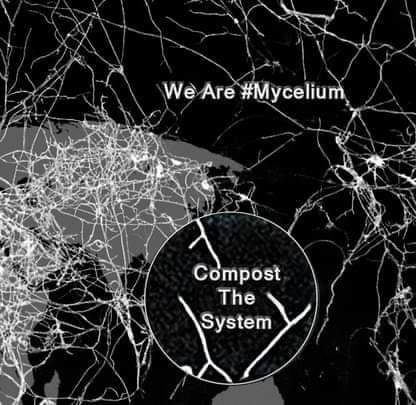
Compost and shovels are needed.
The power of the voice
User proposals are excepted by anyone who has an activertypub account- just an idea – this can become a group.
User groups – a part of the process, these come from ideas getting a level of support of the stakeholders.
User agreements come out of groups these can then be enacted by the spokes people if they are interested.
Spokes people can start groups to reach agreements and can enact agreements.
Consensus of spokes people (-1) makes agreements body wide.
What are the risks:
* need basic security and checks – to see if an instance still exists and is real. If a member account is actively posting or a pulpit – all of this can be done with flagging some of them by code some by people – flags stuff goes to the “security group”
* Groups can be captured by agenders – being open to all stakeholder members mediates this – we solve swamping by having a dynamic short non-voting time based on the number of new members in the group.
* Bad group of spokes people, it’s a lottery, it’s up to the groups to influence and as a last resort “impeach” if one goes a new one is chosen by lottery.
* The actual number of spokes people are dynamic depending on the number of stakeholders but between 3-5 is likely a good number.
UPDATE
The body is made up of stakeholder one for each instance – you wont a voice you run an instance and register it. This is clearly the voice of the #Fediverse as they are the people running it.
This is then balanced dynamically by the same number of “users” who are interested in the process, they are chosen by lottery from the registered accounts. Your choice to register or not your account as a possable stakeholder.
On registration the is a box you can untick if you do NOT do this then you are in the lottery to get “governing positions” Sortition – Wikipedia for a background on why this path.
Only people who want to be part of the governing body AND play an active role are enrolled in the lottery.
You second point “common voice” comes from the working groups, agen are made up of ONLY people who are interested in playing a role.
“serving the humans trying to communicate.” we get out of the way and let the humans work it out – we provide structer for the groups, we don’t define the groups.
SocialHub though an interesting tool has strong tech aristocracy which is not surprising as this is how almost all open source project run – the Fediverse is something different which is why we do so badly at governance. Let’s continue to use the SocialHub for #ActivityPub organizing and possibly governance though it has no tools that I have found for the governance.
Sign up for the site, then don’t untick the box for “do work” if you become a “stakeholder” every time a position opens the lottery picks a stakeholder to fill it if it is you and you would like to do the job – get to it. If you do not wont the job then resign and the lottery will pick a new person.
If you are not picked by the lottery for a job opening the is still a meany things you can do as a stakeholder in the groups. If you are not picked as a stakeholder you can still put ideas for the stakeholders to make into group decisions.
The outcome is something much more representative of the #Fediverse than we can currently think about let alone implement.
The is #nothingnew in this idea or implementation, some examples from Wikipedia
Examples
Law court juries are formed through sortition in some countries, such as the United States and United Kingdom.
Citizens’ assemblies have been used to provide input to policy makers. In 2004, a randomly selected group of citizens in British Columbia convened to propose a new electoral system. This Citizens’ Assembly on Electoral Reform was repeated three years later in Ontario’scitizens’ assembly. However, neither assembly’s recommendations reached the required thresholds for implementation in subsequent referendums.
MASS LBP, a Canadian company inspired by the work of the Citizens’ Assemblies on Electoral Reform, has pioneered the use of Citizens’ Reference Panels for addressing a range of policy issues for public sector clients. The Reference Panels use civic lotteries, a modern form of sortition, to randomly select citizen-representatives from the general public.
Democracy In Practice, an international organization dedicated to democratic innovation, experimentation and capacity-building, has implemented sortition in schools in Bolivia, replacing student government elections with lotteries.[23]
DanishConsensus conferences give ordinary citizens a chance to make their voices heard in debates on public policy. The selection of citizens is not perfectly random, but still aims to be representative.
Private organizations can also use sortition. For example, the Samaritan Ministries health plan sometimes uses a panel of 13 randomly selected members to resolve disputes, which sometimes leads to policy changes.[24]
The Amish use sortition applied to a slate of nominees when they select their community leaders. In their process, formal members of the community each register a single private nomination, and candidates with a minimum threshold of nominations then stand for the random selection that follows.[25]
Citizens’ Initiative Review at Healthy Democracy uses a sortition based panel of citizen voters to review and comment on ballot initiative measures in the United States. The selection process utilizes random and stratified sampling techniques to create a representative 24-person panel which deliberates in order to evaluate the measure in question.[26]
The environmental group Extinction Rebellion has as one of its goals the introduction of a Citizens’ assembly that is given legislative power to make decisions about climate and ecological justice.[1]
Let’s be optimistic and say half the instances signed up that would be over 3000 instances stakeholders and thus 3000 user stakeholders for a total of 6000 and a number from affiliate groups. This number is likely too much, so we can put a limit to 100 chosen by lottery from the stakeholders instances, this is then matched by 100 from the user stakeholders for 200 stakeholders + 5-10 affiliates it’s up to the admin group to choice the right number to build a working community, if you don’t have enough good workers open the pool up if the is to much dicushern close the pool down, try different approaches.
UPDATE
Looking at this in conversation it becomes clear it is a 3 way split of stakolder groups: instances/users/builders&supporters with the last group in big groups could be the size of the others so just to higlight they would be treted in exactly the same way if they are over the number of the body then they would be chosen by lottery just like the others.
This looks like a tech/process based attempt at grassroots governance. Must say straight out, in my expirence, I have seen many process lead models like this, and they have NEVER worked.
Though it is always a good thing to try iteration. And good to contrast this to the humane/serendipity based aproch that we have been working on at the #omn
The #OMN is about building #KISS bootem up trust based media networks for publishing and soughing content with enriched metadata flows. In the end you have a “stupidly simple semantic web of media object “cauldrons” and flows build up from a local level. What you/we do with this is up to the users/producers… this is held to radical politics by #PGA
Initial projects are media #indymediaback and archiving #makeinghistory with the resistances’ exhibition. There are likely lots of other things you can build as its just pipes and flows – the internet as a “open/trust” database of humane objects/people.
How this fits into traditional or Alt economics is not rarely up to us – but bounded by #4opens and #PGA so up for “connections” based on opendata flows – #RSS or #activertypub are good starts.
Q. While I agree with everything you wrote in that post, I don’t get how that illustrates the geekproblem. Is the #geekproblem the same as the #encryptionists?
A. The #geekproblem is illustrated here http://hamishcampbell.com/index.php/2021/03/06/over-the-last-10-years-we-have-been-told-a-lie/
Q. In one post you wrote that the geek problem is replacing trust with control. That immediately communicated clearly to me.
A. The #geekproblem is a general issue of misunderstanding of “total control” and what it is to be human. The #encryptionists are an example of this, that have been dominate for the last 10 years, the solution to everything is “privacy” “lock down” isolated individualism, me only me “no such thing as society only individuals and their family’s”.
The hashtags have different meanings if you look at them from different directions – but always #KISS and radical at base. Metaphors, soft knowledge. The are no hard definitions – but add them together and they tell a story of “control”. The opening is that YOU have the opertinertly… maybe its a bit Qanion, first time I thought about that one 🙂
Q. I assume open data, which is good in some contexts but shades into surveillance in others.
Open processes? Which again I like in most of the contexts I work in,
What else?
A. The is a few pages http://hamishcampbell.com/index.php/projects/4opens its a radical “social” definition of the open-source/free-software process. #4opens can be used to judge any tech/social project. It’s needed to lift the lid on what #dotcons and #NGO say and what they actually do, always different. If people make judgments it’s likely to put to one side 95% of the current tech crap and concentrate on real #openweb projects that get lost in the churning of #fahernista and #geekproblem agenders.
With #opendata currently we have a control issue. All the #dotcons data is open to corporations who pay and government agencies who spy, it’s just closed to us. What is the role of data in society is a complex issue that we do almost nothing to talk about in any real sense.
Social (data) ideas to think about:
What is a “free-market”
A. Ain’t no such thing and never has been nor will be
What is a command economy.
A. Any capitalist supply chain.
What are humane relationships.
A. longer conversation…
Q. But this is such a thing as a “free-market” in inverted commers 🙂 it’s the data we have on the things we “value” which we exchange for “data” that is created and guarded by our “states” with lots of guns and bombs.
A command economy is what the soviets tried and failed and china is trying to recreate with a state “manoalay” on data and metadata.
The “humane data” is the interesting one for #4opens and #OMN which are planting seeds for.
The is no security in CLOSED – The is security in OPEN/social
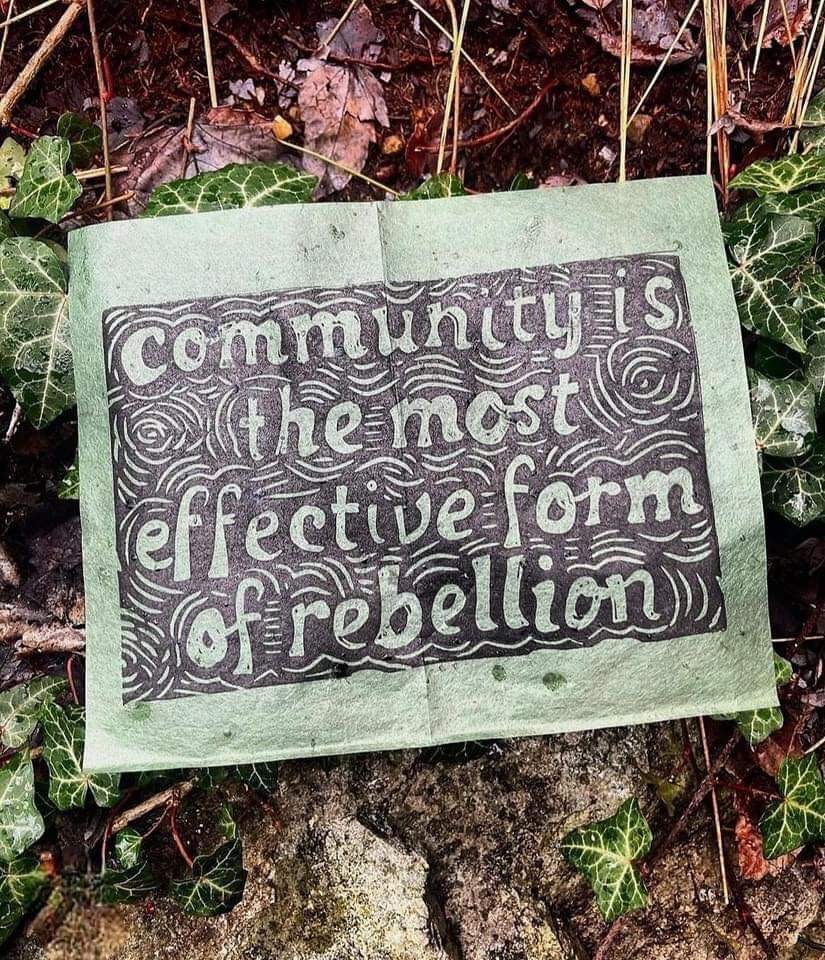
The is no security in individualism – this is only security in community.
The is no security in “trustless” – The is security is in social trust
Over the last 10 years we have been told a lie. A thought to set a spark – this is easy to see in tech – look at #opensource and think if there is any CLOSED in this?
Over the last 20 years there has been a battle between OPEN/CLOSED and over the last 10 years CLOSED has come to dominated with #dotcons and their shadow puppet the #encryptionists Both are CLOSED- both put on the cloth of OPEN and say the words, but words are wind, look at the ground #4opens we live in a closed world. Please do not add to this mess.
let’s start with history. The editorial workflow of #OMN is based on #indymediaback which is based on basic grassroots journalism growing from radical anarchist traditions.
The newswire is made up of original content published to the site and aggregated flows from a trust network of #4opens sites built out of a community of interest/affinity groups.
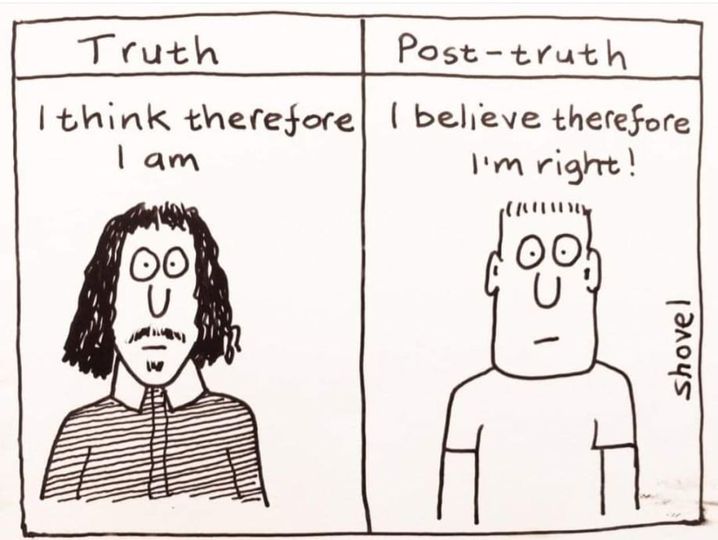
Using the #5W and #4opens we start the step away from “post truth” by grounding this flow in a community of action bounded by physical locations.
https://en.wikipedia.org/wiki/Five_Ws
The “news” value of “this happened” Who, What, When, Where, Why.
From this a feature flow is built by the core affinity group to show the #5W storeys from different views as a “consensuses” centre column articles.
These articles are then aggregated to other subject/geographic instances newswires.
In this the small streams/flows build a strong river of “social truth” that feeds into seeding a more humane world.
The wider #OMN network, using the fresh newswire and aggregated features to build wider features – these “social truth” networks links the humane world from a grounded real grassroots action/communities.
We build society from the bootem up rather than the old top down of #traditionalmedia/governances.
This itself shifts and moves solutions by aggregation and drives social economics to #4opens humane agender. In the end we play/build a new more humane/ecological world.
To move this part of the project on:
We need “news” a flow of subject/geographic 5W newswire posts on the 3 test instances – then we need to cross-link these by turning the instance based flows into feature articles.
These are aggregated across to the other instances and pushed out to the #fedivers for comments and feedback which then flows back into the #indymediaback instances to the newswire. This new flow needs to be cross-linked into articles, all linking back to the source.
From this we can flesh out the training resources and start the outreach of the project properly, build the power of different voices.
The #geekproblem is a humane failure of trust and its replacement with control.
The #hashtags add up to tell a story and thus build a way out of this mess.
The #deathcult is the last 40 years of neo-liberalism.
Need to work in shovels, shit and compost to the story. Hashtags a tool for #openweb organizing ideas/stories/community’s. The is obviously a balance with self-expression. At the moment this “balance” is pure #deathcult being pushed by our shared #stupidindividualism
We have a #shoval, common storied #hashtags we have piles of #techshit to shovel for #compost to build up fertile soil for planting flower and vegetables to nourish our soles and actions.
Why talk in “soft” metaphors?
The issues are soft as are the explanations/metaphors. You can’t have a hard explanation of the social world without building it up from an ideological foundation. As most people are in denial of the possibility of different world views/ideologies this makes “hard” conversations a largely pointless way of communicating. People asking for them have not taken the first step so talking their hand to help them will soon lead you down a different/ideology path. As the project is about #KISS and focus this is something we have limited time/focus for.
If you can glimpse the world from different views/ideologies than the soft/metaphor will talk to you and the attraction for hard will be less strong. These people have a hope of building a different/ideology world/process so can help in real ways.
As we need to focus, it’s not an issue to talk to the first and more important to consolidate around the second… question is finding people that have not been “broken” by #mainstreaming agenders.
Q. I am looking for the definition of open standards, and it’s quite foggy. I found on opensource.com something useful, but it’s still a candle in the dark
A. it’s an under resourced process for the #openweb that need input. It’s at the heart of the #OMN project. How we define it at the #OMN is a standard produced with #4opens process which is a bit circler as open “industrial” standards is one of the #4opens 🙂
All “standards” are social agreements/consensuses thus they CANT BE built form #geekproblem#stupidindividualism and the #deathcult we have wasted and will waste more time if we keep pushing this shit.
The idea of the #OMN is that it does NOT host any/meany of projects it incubates rather it is the “holder” of the standards that glues the projects together. Some of these will be “standards body” some will be defacto by use and consensus. In the end we need to look beyond #nothingnew and create new standards #4opens body’s – go slow on this as concessions are hard and only worthwhile if you do the hard work to achieve them.
I have found memories of fighting the Power Politics of the “undead left” during the London Social Forum many years ago – lots of knotted strings of organic garlic around the top “taking the power table” to highlight the uncomfortable “undead left´s” grasping for power.
Then the ad hock crew taking away the top table altogether during the lunch break and arranging all the chairs in a circle. Their faces were a delight, coming back after lunch and it kinda/might have worked… but the splits of “not thought of here” took over and the undead were permissioned to take back the space at the next meeting.
The ESF movement faded and now is a shadow – no alt was built.
The use of cultural myths and traditions will mediate and disempower “power politics” but it’s a chicken and an egg to get these embedded in groups that are already ensnared in “power politics”.
The rainbow gatherings used to work this way till they were “disrupted” by the digital shift and capture by the #dotcons now the gatherings themselves are broken due in part by being organized through #failbook
The #OMN could fail from the same issue. The myths and traditions are in place PGA and #4opens. But the project does not have deep roots to weather the inrush of success. And on the other hand will likely not last the slow growth needed for the roots to dig deep.
In activism when you have a shitty stinky process situation due to control freekery. You have two options:
Open
Closed
If its a open process project, the closing things down and hiding the crapness/mess will not help at all. The stink will leak out of every bit of the project from relations of core personals to the compromises involved in every piece of design/interaction during the project. This “low” misama might not to be immediately visible but it will cling to everything the project touches.
Open projects become dysfunctional when controlled by closed process, this is a feedback loop that this dysfunction is solved by more closed working/thinking till you are running a closed project.
If it’s a closed to start with then kick the people out – information can be controlled – power kept – and agendas pushed through till the funding runs out or people lose wider goodwill. Opening up a closed project without a revolutionary explosion is nearly impossible – all the repressed and hidden crapness that is needed to keep a closed project going will feed on itself when let loose.
Almost all NGO and activist groups are a mixture of open/closed.
The NGO´s falsify openness in consultations and meaningless focus groups. But always work closed at the core to continue funding and careers of the benefiting group – those who control the closed – not the community the NGO is setup to serve.
Activist by their nature tend to start out open then grow closed as they grow bigger – it’s a human scale thing. Interestingly affinity group organizing is trust based and another subject.
Hopefully we get an idea for the “dogma” of open and the clear rejection of “closed”.
With the#OMN building progressive alt tech we cannot repeat the behaver of the #dotcons as it’s a different environment, we need different amenders.
“The security context is the relationships between a security referent and its environment. From this perspective, security and insecurity depend first on whether the environment is beneficial or hostile to the referent, and also how capable is the referent of responding to its/their environment in order to survive and thrive.”
Approaches to security are subject of debate.
For example, some argue that security depends on developing protective and coercive capabilities in order to protect the security referent in a hostile environment (and potentially to project that power into its environment, and dominate it to the point of supremacy). The #geekproblem strives for this outcome without putting it into words.
The #OMN argue that security depends principally on building the conditions in which equitable relationships can develop, partly by reducing antagonism between actors, ensuring that fundamental needs can be met, and also that differences of interest can be negotiated effectively.
Some traditional view of security
* Access control – the selective restriction of access to a place or other resource.
* Authorization – the function of specifying access rights/privileges to resources related to information security and computer security in general and to access control in particular.
* Countermeasure – a means of preventing an act or system from having its intended effect.
* Defense in depth – a school of thought holding that a wider range of security measures will enhance security.
* Identity management – enables the right individuals to access the right resources at the right times and for the right reasons.
* Resilience – the degree to which a person, community, nation or system is able to resist adverse external forces.
* Risk – a possible event which could lead to damage, harm, or loss.
* Security management – identification of an organization’s assets (including people, buildings, machines, systems and information assets), followed by the development, documentation, and implementation of policies and procedures for protecting these assets.
* Threat – a potential source of harm.
* Vulnerability – the degree to which something may be changed (usually in an unwanted manner) by external forces.
If we are building projects for progressive ends, we need to balance the conservatism in these ideas with #4opens approaches, this is a little understood simple path.