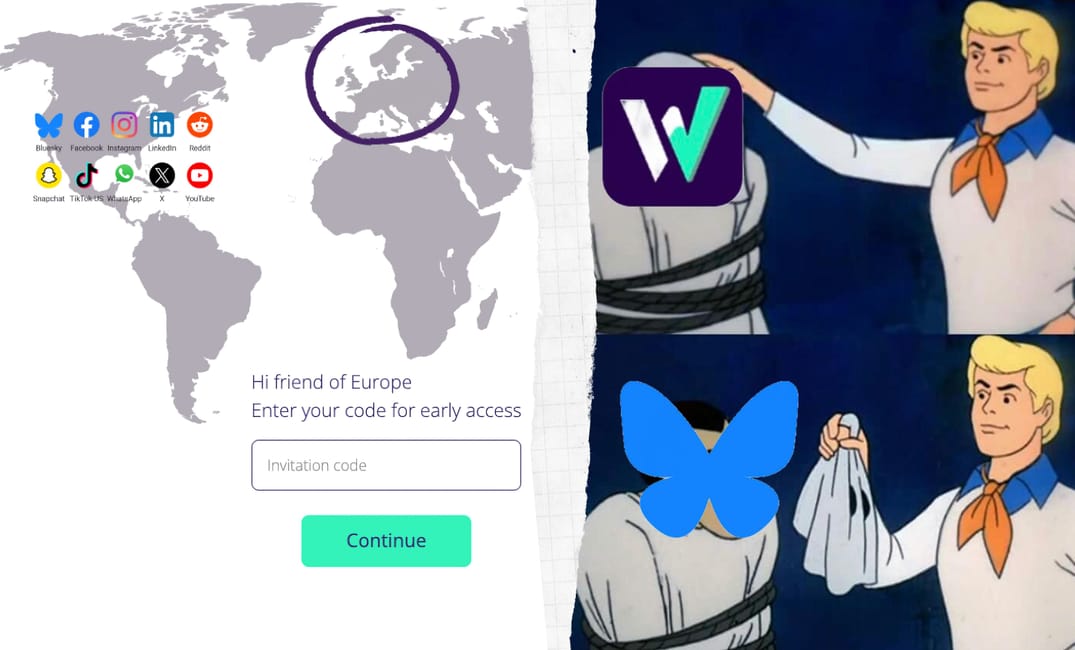
The #WSocialmess is about more than one failed platform, it exposes a deeper problem with the EU’s approach to digital sovereignty. If Europe is serious about sovereignty, it needs to stop confusing European ownership with digital freedom. A platform hosted in Europe built as a proprietary, venture-capital project recreates the same #dotcons model under a European flag. Changing the server location doesn’t change the underlying power relationships.
This matters because the European Commission has spent years promoting open standards, interoperability, user choice and open source through its own policy. Yet when it came to practice, it publicly embraced a platform moving in the opposite direction: closed development, identity verification, restricted participation and a business model built around enclosure rather than the commons.
This contradiction should not simply be criticised on social media. It needs to be challenged within the EU’s own institutions. The issue isn’t whether #WSocialsucceeds or fails. The issue is whether public institutions are reinforcing closed corporate platforms while claiming to champion openness. That contradiction deserves formal scrutiny and, where appropriate, legal challenge.
The broader problem is cultural as much as legal. Too much European digital policy remains trapped in #mainstreaming thinking:
Replace American monopolies with European monopolies.
Replace Silicon Valley venture capital with European venture capital.
Replace one gatekeeper with another.
That isn’t digital sovereignty.
Real sovereignty (what every that means) comes from building digital commons that nobody owns and everybody can use. That’s why the #4opens matter: open data, open source, open standards and open process. These aren’t ideological preferences; they’re practical safeguards against the next generation of vendor lock-in.
The #Fediverse already demonstrates the path we need to be on. It’s messy, imperfect and decentralised, and those are strengths, not weaknesses. The challenge is to improve these commons rather than abandon it for the latest corporate platform wrapped in European branding.
Europe needs courage to defend the digital commons it already has. And perhaps the hardest truth is, successful European alternatives are unlikely to come from institutionsalone. They will come from communities, public-interest developers, grassroots organisations and #FOSS projects building native #openweb infrastructure from the ground up, institutions should be supporting that commons.
When they don’t (and they won’t) then a three-pronged prodding attack to help balance this mess they make.
There’s a common understanding that we’re living inside a new digital world, that feels like enclosure, where people are “controlled” by platforms they can’t easily leave, where behaviour is shaped at scale, and where #AI intensifies this mess. That’s why #fashernista terms like #technofeudalism are being used to argue that we’ve moved beyond capitalism into something different – a system based not primarily on profit, but on rent extraction through “cloud capital.” In this narrow framing:
Capitalism = wage labour, markets, profit from production
Technofeudalism = platform power, behavioural capture, rent from digital dependency
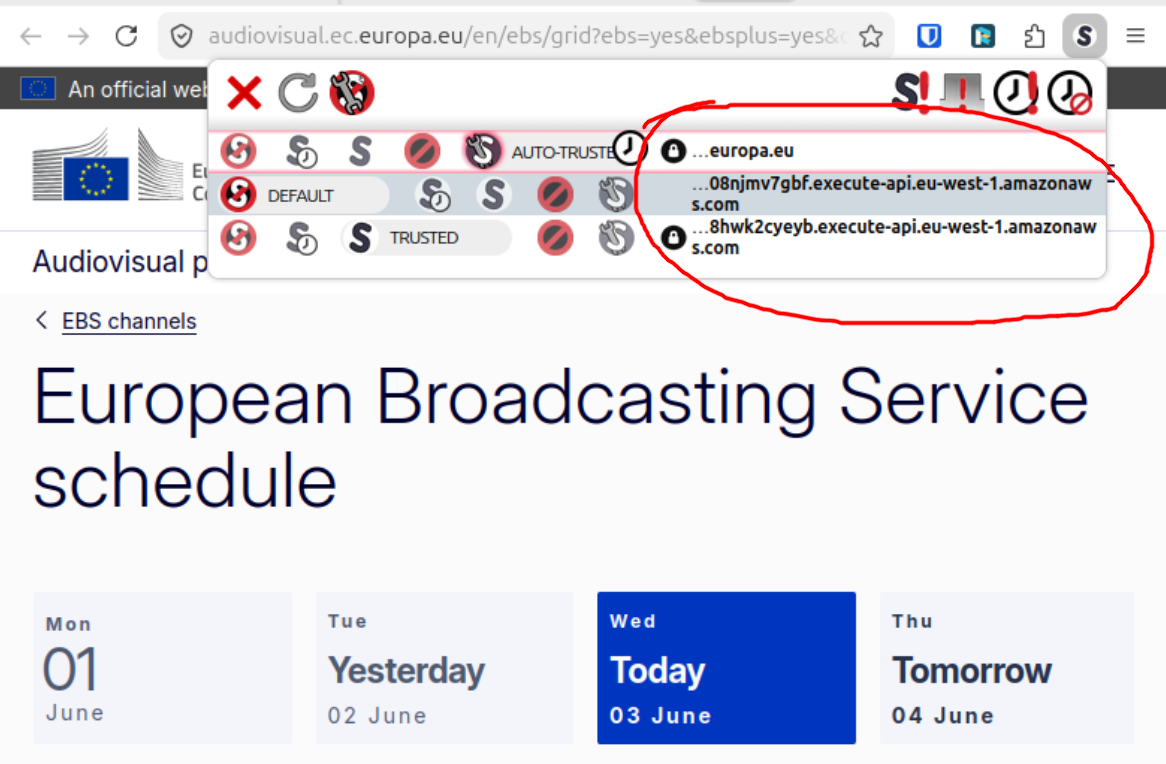
The “cloud lords” (Google, Amazon, Meta, Apple etc.) operate their digital fiefdoms, making us the “cloud serfs” by producing data and metadata for free. This generating value through participation while feeding tech that learn from us and reshape our behaviour. Even businesses and workers are pulled in, sellers depend on Amazon marketplaces, workers are managed through platform systems and, as the #EU is finding, entire infrastructures depend on AWS-style cloud provision.
From this narrowing view, capitalism starts to look secondary to rent extraction. But is this actually a new economic system? The argument soon starts to break down as critics point out that many of these dynamics are not historically new: supermarkets already control supply chains and choice, advertising has shaped desire for decades, monopolies are standard capitalist patterns and enclosure of markets predates the internet by centuries.
Even “lock-in” effects (like Amazon Prime convenience or #dotcons platform dependency) can be explained through normal capitalist mechanisms: convenience, pricing, network effects, and infrastructure dominance. From this step back view, what we’re seeing is not a new epoch, but late-stage capitalism with intensified digital tools, not a structural break.
The more grounded #OMN suggests something different, the change is not mystical “cloud feudalism”, but that data and metadata has become a primary economic resource. We now live in systems where behaviour is continuously captured as data, that data to be aggregated, sold, and operationalised, then feedback loops reshape what people do next and participation itself becomes productive labour. This shifts relationships, not only worker vs capitalist, not just consumer vs market, but user-as-infrastructure. Yes, people are no longer only buying and selling inside systems, they are constituting the system itself through participation. That is a shift in how production works, even if it doesn’t replace capitalism as the structure, it is reshaping it.
The infrastructural question? Where the #technofeudal framing becomes useful is infrastructure. The real power isn’t only in apps or interfaces, it is in “cloud” hosting (AWS, Google Cloud, Azure), database and compute control and the resulting dependency of entire industries on a few providers. This is less “digital shopkeeping” and more systemic dependency at the infrastructure layer. At that level, switching costs are enormous, entire economies are built on top of systems owned by a handful of #nastyfew actors. Yes, this is a real enclosure of the commons, not of in the old sense land, but of the new digital reality.
Where this leaves us? The danger is less about whether we label this “capitalism” or “technofeudalism”, more, it’s the simple assumption that the system is stable. In reality, we have capitalist dynamics operating the data-driven extraction layered on top of this older mess, with infrastructure consolidation amplifying both. Not a clean break – more a messy transition stage.
From an #OMN perspective, the useful question is not the label, it is where is agency located? Who controls infrastructure? How is knowledge produced and shared? What forms of network are open vs enclosed? Because whether we call it capitalism or #technofeudalism, the political problem is the same that control is concentrating, while participation is being harvested. And that is the mess we need to compost, not the theoretical naming of it.
The European Commission has published its new Tech Sovereignty Plan. On the surface this sounds promising. Europe talks about reducing dependence on foreign tech giants, strengthening digital autonomy, and supporting open source. These are all things many of us in the #openweb world have been arguing for decades.
But when you look at where the money and attention actually go, a different picture emerges. The plan allocates vast resources to semiconductors, cloud infrastructure, AI, and data centres. Open source gets a much smaller slice of the pie, and native #openweb like the #Fediverse barely registers at all. The one mention is support for decentralised social media, highlighted through the Commission’s continued use of Mastodon. (Digital Strategy)
The problem is that this isn’t new, as the European Commission has already been running a Mastodon server for years. Extending account creation to more EU institutions is not a strategic breakthrough, it is clicking a button that could have been clicked years ago. If this is the flagship example of support for social communication sovereignty, then the ambition is criminally limited.
The issue is that the Commission still does not understand that social infrastructure is infrastructure. We hear endless noise about sovereign AI, sovereign cloud, sovereign chips, and sovereign data centres. Yet the FOSS code and communities through which citizens actually communicate, organise, publish, collaborate, and build are treated as an afterthought.
The result is a contradiction – Europe recognises that depending on foreign cloud providers is a strategic weakness. It recognises that depending on foreign AI companies is a strategic weakness. It recognises that depending on foreign semiconductor supply chains is a strategic weakness. Yet dependence on a handful of US-owned social platforms for public discourse apparently remains acceptable. Who needs sovereignty over communication anyway?
The #openweb blind spot is the normal long-running #geekproblem in institutional form. Policymakers see infrastructure as technical systems. Servers, processors, storage, networks. But the real value of the internet was never the hardware, it was always the social layer built on top. The #openweb succeeded because it created shared public spaces based on open standards. Email. RSS. Blogs. Forums. Early independent media. Later, federated systems like ActivityPub.
The Commission’s sovereignty agenda focuses on plumbing while ignoring the public spaces that the plumbing exists to support. Without investment in #4opens social protocols, community governance, and public communication infrastructure, Europe is building sovereign pipes that still carry people back into the same #dotcons corporate platforms.
Open source without communities is the unspoken problem. The Commission talks about open source as a strategic asset for European competitiveness and sovereignty. That’s welcome as far as it goes. But open source is not simply a collection of code repositories, it survives because communities maintain it. The danger is that Europe treats open source as a procurement strategy rather than a social ecosystem. Buy some software, fund a few projects, write a strategy document, then assume the problem is solved.
Real digital sovereignty requires long-term investment in communities of use, admins, mods, maintainers, governance, interoperability, and public institutions that can steward shared infrastructure over decades. Even many open-source advocates point out that procurement rules, short-term funding cycles, and “open-source washing” continue to undermine the ecosystem. (FSFE – Free Software Foundation Europe). You cannot buy sovereignty off the shelf.
From an #OMN perspective, the weakness in the Tech Sovereignty Plan is that it remains trapped inside an industrial understanding of technology. Technology is not just hardware, technology is not just software, technology is social relations embodied in tools. If Europe wants genuine digital sovereignty, it needs to invest in:
Open social protocols.
Federated communication infrastructure.
Community-owned media.
Public digital commons.
Open governance.
Long-term stewardship of shared resources.
The social institutions needed to keep these systems alive.
Without this, “tech sovereignty” is another industrial policy aimed at creating European versions of existing #dotcons platforms. That may reduce dependence on Silicon Valley, but it does not necessarily increase freedom.
Beyond “sovereignty” is the deeper question – not whether Europe controls its technology stack. The deeper question is whether citizens control the systems that shape their lives. The Commission is slowly beginning to recognise the importance of open source. That’s a positive step. But as things stand, social communication sovereignty remains a tiny footnote in a strategy dominated by chips, cloud, AI, and data centres.
For the #openweb, that is the wrong way round, the future of “digital sovereignty” is not simply owning the infrastructure, it is owning the public spaces built on top of it.
The problem with the #EU Eurocracy on social and tech issues isn’t usually only malice, it’s institutional incompetence. They struggle to understand grassroots digital culture, the #openweb, commons-based governance, and the social realities of how technology actually works.
That leaves us with a choice. We can try to engage, push, educate, and help them become a little less incompetent. Or we can focus entirely on tearing down existing institutions.
The danger with the second path is obvious. Vacuums rarely stay empty. If progressive and grassroots voices walk away, the people most ready to fill the space are the nationalist, authoritarian, and right-wing forces already waiting in the wings.
This isn’t just an #EU issue. It applies to most #mainstreaming institutions. They are often failing, slow-moving, and trapped in outdated assumptions. But abandoning them entirely doesn’t automatically lead somewhere better.
The challenge is to build alternatives like #OMN and the #openweb while also applying enough pressure, education, and challenge to stop existing institutions from becoming even worse.
Not a comfortable path, but likely the least dangerous one.
The #KISS secret about the noise in “digital sovereignty” is very simple – Ignore most of this branding and build commons tech instead. That’s the path, not another layer of management, another funding bureaucracy for a glossy strategy document. Not another NGO conference circuit explaining why nothing can happen without another round of funding. Just build working commons.
This matters because much of the #EU “digital sovereignty” conversation is simply more churn inside the same #neoliberal#mainstreaming logic that created the problem in the first place. Europe spent decades outsourcing infrastructure, privatising public space, undermining local autonomy, and feeding the #dotcons.
Now the consequences are becoming impossible to ignore, dependence on US platform monopolies, fragile infrastructure, imperialist surveillance capitalism, cloud centralisation, shrinking democratic accountability, and growing geopolitical vulnerability.
So suddenly everybody is talking about “sovereignty”, but what do our chattering class of institutional actors mean by sovereignty? Too often they mean procurement contracts, compliance frameworks, consultancy ecosystems, defence posturing, startup hype and fashionable funding narratives. The same old structures wearing a new outfit.
This is where the #fashionistas rush in to cash out of the latest cycle of #techshit, every crisis produces a new branding wave #Web3, #AI, #blockchain, smart cities, trusted identity and now digital sovereignty. The words change, the consultants were the same clothes, to push funding applications with different buzz words. But underneath, the social relations to often stay exactly the same. This is why so much “innovation” produces so little durable social value, the energy and focus gets consumed by branding, positioning, institutional competition, and funding capture.
The #OMN approach is to compost this mess rather than feed it. Composting means recognising that some parts of the existing system still contain nutrients technical knowledge, infrastructure, institutions, legal frameworks, public funding, developer skills. But these need breaking down and re-rooting into commons processes instead of simply reproducing the same dead structures.
The #KISS approach is important because complexity is often used as a control system, the more complicated the governance path becomes the harder it is for normal people to participate, the easier it is for insiders to dominate, and the more power flows to the parasite class managing the process. People then confuse institutional complexity with competence, but most healthy social systems are not built this way, healthy systems tend to be transparent, iterative, federated, participatory, and grounded in practical trust.
That’s why the native #openweb worked when it worked, people built things together directly like mailing lists, forums, blogs (bit more messy), federated publishing, open protocols, community hosting, shared standards. Messy? Yes. Human? Yes, but functional. The current “digital sovereignty” debate ignores this history because acknowledging it would undermine the need for the giant managerial layer now feeding on the crisis.
A lot of the current policy noise is about preserving institutional power during systemic decline, that’s why signal-to-noise matters, most of the noise performs concern, manages perception, protects careers, and absorbs dissent into harmless process. Signal is rarer, it’s about building actual commons’ infrastructure, creating durable trust networks, supporting federation, sharing governance openly, and keeping paths simple enough that communities can understand and maintain them.
This is one reason the #4opens remain central, without these, “digital sovereignty” simply becomes another enclosure strategy under a different flag. European-owned silos are still silos, state-managed platform capitalism is still platform capitalism. Replacing Silicon Valley landlords with Brussels landlords is not liberation.
The real challenge is rebuilding public digital commons, that means the hard part is cultural, not only technical. People are deeply trained by #mainstreaming to look upward for solutions to governments, corporations, experts, influencers, NGO etc. But commons culture grows sideways instead, through participation, trust and through practical collaboration, yes this is slower at first, but far more resilient over time.
That’s the real #KISS secret, ignore much of the spectacle and quietly build the alternative underneath it. Less noise, more compost – Less branding, more commons – Less #techshit. More grounded infrastructure. That’s how you compost the #mainstreaming mess instead of endlessly feeding it.
You know, when people are heading over a cliff, I’m more than happy to be “left behind“.
This story is #openwashing, not innovation. “New European social network” is actually a fork of #Bluesky wrapped in sovereignty language, as Elena Rossini says with the same #dotcons logic – PR-first launch (Davos), reality comes later (or never). This tech mess illustrates, if people start with branding, funding, and media narrative instead of community and process, it’s not #openweb – it’s #closedweb in a mask, when people ignore existing commons is easy to see the red flag.
Why is this a mess? Existing working systems: #Fediverse (e.g. Mastodon), RSS, open standards, were ignored or dismissed as “non-scalable” or “non-monetizable” so there plan is reinventing the wheel → badly. With “scaling” used as an excuse for control with claims that the #fediverse “can’t scale” and “needs monetization”. The simple reality is scaling here is an old story of centralising control + extracting value.
Let’s look at this from a native view of grassroots scale = trust, diversity, human limits vs corporate scale vs control, extraction, surveillance. They are different processes → different outcomes with ID verification = anti-commons architecture. What this creates is exclusion, surveillance, and power asymmetry. This shallowly hidden #dotcons path flips the #openweb model from permissionless participation to controlled access and tracking. It’s not a public space – it’s “smiling” infrastructure for governance and policing.
How the media fails as it’s a part of the problem, journalists repeated press releases with no technical or cultural literacy, leading to the #mainstreaming mythology of “first European network” unchallenged, this cultural memory hole is a recurring mess we need to compost. The outcome is every shallow reboot looks “new”.
This feeds the real divide in tech vs culture. You see the same split again on the dev side: forks protocols, builds platforms → ignores social process. And on the activist side: understands community → stuck in Facebook/Slack. Without combining both you either get silos or you get capture. One useful way of seeing this is to follow the money, to see the outcome of investor-driven, marketing-heavy teams with “Monetization” as a core requirement. Funding-first projects don’t build commons, they build exits, leverage and control systems.
It should be obviously – nobody should be surprised that this liberal pushing of “Sovereignty” is being hijacked, using #EU branding as legitimacy. This is the #eurowashing of #dotcons models we touched on at the start. Real “sovereignty”, what ever it means, lives in open protocols, distributed governance and local autonomy. Not in a branded platform, or the nation state any more – thus the danger is confusion. People will still join because “it’s European”, “it’s new” and “it sounds ethical”. Thus, the problem isn’t only evil actors – it’s signal-to-noise collapse.
What this means for projects like the #OMN (the actionable bit). This whole story reinforces the core path – that we focus on stopping building “new platforms” to start composting what already exists. A common’s strategy using existing protocols (#ActivityPub, RSS), rooted in grassroots trust networks. Keep processes open (#4opens) to accept human-scale limits then scale by federate for reach, not control.
The #WSocial mess shows what happens when you strip the #openweb of its culture and replace it with PR, funding, and control. Our native path is the opposite, growth from the commons. Its #KISS or you just recreate the problem.
I’ve been working at the heart of this space for more than 30 years, funded and unfunded. In that time I’ve seen hundreds of alternative tech projects start with energy and good intentions. Most of them wither on the vine, a very small number flower.
After watching this cycle repeat for decades, one thing has become clear: the projects that survive and grow almost always follow a simple pattern. I call this the #4opens. Other people describe similar ideas as open source development, open governance, or commons-based development. The label doesn’t matter – the practice does.
If you want to know which projects will flower and which will wither, look at the ground, not the words. The #4opens ask four very simple questions:
Open data – can people access and reuse the information?
Open source – can people read, modify, and share the code?
Open process – can people see and participate in how decisions are made?
Open standards – can different systems interoperate and grow a wider ecosystem?
Projects that are open in all four of these ways tend to build living ecosystems. Projects that are only partially open tend to stall or collapse. The two repeating problems, over the years two patterns constantly undermine good projects.
#geekproblem – A teenage mix of arrogance and ignorance that is surprisingly universal in tech culture. Developers assume technical elegance (and complexity) will automatically solve social problems. They underestimate governance, community, and messy human reality.
#dotcons – The opposite pressure: corporate platforms pushing business models that prioritise extraction and growth over human need. They happily wrap themselves in the language of “open” while building fundamentally closed systems.
Both pressures distort funding decisions. Both lead to projects that sound open but aren’t. Money is a dangerous subject, yes, funding matters, but money inside infrastructure projects to often distorts them quickly. For #openweb work, a useful rule of thumb is: Keep the core simple. Focus funding on maintaining the #4opens infrastructure. Let many different organisations, businesses, and NGOs build external services and applications on top.
This keeps the core commons stable while allowing diversity and experimentation around it. It’s the #KISS principle applied to digital commons. When funding pushes too many external agendas into the core, projects become heavy, political, and fragile.
Some uncomfortable truths, over the last decade we’ve been told several stories about security and scale that simply don’t hold up. There is no security in CLOSED systems, security emerges from open scrutiny and shared responsibility:
There is no security in radical individualism, security emerges from community.
There is no security in “trustless” systems, real resilience grows from social trust.
These ideas have been obscured by hype cycles and by the influence of #dotcons and their shadow allies, the #encryptionists who push purely technical “trustless” thinking. Both camps wrap themselves in the language of openness, but their systems remain structurally closed. Words are wind, look at the ground: #4opens.
The unspoken scaling problem, there is also an unspoken #geekproblem around how we think about scaling. When many developers talk about #p2p, they imagine data-to-data scaling, systems optimised to move information as efficiently as possible. From that perspective, human friction looks like a problem.
But if you see #p2p as human-to-human, the picture changes. Human scaling limits – smaller communities, slower processes, local trust networks – are not bugs, they are virtues, creating resilience and accountability. The data-first model is the one favoured by the #dotcons. The human-first model is the one the #openweb actually needs. Funders should be aware of which philosophy a project is building around.
A simple test If you want a quick filter when looking at proposals, ask:
In tech funding, over the last decade, the #EU poured hundreds of millions of euros into the #blockchain mess. The promise has proven to be illusion, we built no working transformation: trustless systems, frictionless governance or new economic layers for Europe. The reality? By any honest social metric, 99.9% of that public funding was poured straight down the drain.
Now we are lining up to do the same with AI. Another wave of hundreds of millions, based on another cycle of hype, feeding frenzy for consultants, startups, and policy conferences. And if we are realistic, 99% of this funding will follow the same path: absorbed into closed, corporate-driven ecosystems with minimal public return, poured down the drain.
In between these two hype cycles, we invested comparatively little in the #openweb and #FOSS. And yet that is where we actually saw meaningful results. Even if we are conservative and say 70% of public funding for #openweb and Free and Open Source Software was wasted, that still leaves 30% that worked. Thirty percent that built tools people use. Thirty percent that created infrastructure that continues to function. Thirty percent that delivered measurable social good.
Compared to less than 0.001% meaningful return from blockchain projects (and that’s being generous), and perhaps 1% from AI funding (also generous), this is an extraordinary success rate. So why aren’t we talking more about this?
The Pattern: Funding the Closed, Ignoring the Commons
The problem is not technology, it’s political economy. Public money is repeatedly funnelled into closed ecosystems. #Blockchain projects were built around proprietary platforms, based on financialisation. They all failed to deliver public infrastructure, most were simply vehicles for extraction.
#AI is following the same pattern. Instead of building public infrastructure rooted in openness, transparency, and shared governance, we are too often simply subsidising closed models and corporate consolidation. The result will be the same: dependency, vendor lock-in, and very little democratic control.
Meanwhile, the #4opens and #FOSS quietly power the world.
Servers run on open-source operating systems.
The web runs on open protocols.
Community platforms run on federated code.
Critical infrastructure depends on open libraries.
And yet funding for these projects remains very marginal, precarious, and treated, if at all, as an afterthought.
Why This Matters
This is not only about waste, it is about direction. We are living in an era of climate breakdown, democratic fragility, and accelerating inequality. Public investment needs to strengthen commons-based infrastructure, not deepen dependency on mess of speculative and corporate-controlled #dotcons. When we fund the #fashionista hype cycles we increase centralisation, reduce public oversight and lock ourselves into closed ecosystems, which hollow out our needed local capacity.
When we fund #openweb and #FOSS we build shared infrastructure, increase resilience, enable local innovation to create tools that can be forked, adapted, and reused. Even a poor 30% success rate in commons-based funding creates compounding social value. Code written once can be reused globally. Infrastructure built openly becomes a foundation others can extend. Knowledge stays in the public sphere.
Closed projects don’t compound in the same way. They expire, pivot, get acquired, and then disappear behind paywalls.
The Incentive Problem
So why does this mess keep happening? Because hype is easier to support than maintenance. The current #mainstreaming is to blind, Blockchain and AI come with glossy narratives of disruption and geopolitical competition. They promise growth, dominance, strategic autonomy. They flatter policymakers with the illusion of being at the frontier.
The #openweb and #FOSS, by contrast, are mundane. They are about maintenance, collaboration, and long-term stewardship. They don’t produce any unicorn valuations, the smoke and mirrors that feed splashy policy headlines. But they work, and in public policy, “working” should be the gold standard.
What We Need to Talk About
We need to keep asking direct #spiky questions about what percentage of publicly funded tech projects remain usable five years later? How many are open, forkable, and independently maintainable? Who owns the infrastructure we are building with public money? And does this investment strengthen the commons or subsidise enclosure? If we measured blockchain funding by long-term public utility, it would be exposed as a massive misallocation at best and fraud at worst. If we measure AI funding the same way in five years, we may reach the same conclusion. We #KISS need structural change:
Default to #4opens – Public funding #KISS should require open licenses, open standards, and transparent governance.
Fund Maintenance – Not just #fashionista projects, but long-term stewardship of critical open infrastructure.
Measure Social Value – Not hype, not valuation, not patents, but actual public use and resilience.
Grassroots tech as seedlings – to be open to real change and challenge in tech.
Support Commons Governance – Fund communities, not more startups.
Why We Need to Act
If we do not challenge the current messy #techshit cycle, we keep pushing ourselves into a future defined by the #dotcons, closed platforms with extractive models. To say this is not anti-technology, it is pro-public infrastructure. The choice is simple, do we keep pouring public money into, closed ecosystems with near-zero public return or invest systematically in the messy, imperfect, but functioning #openweb commons.
The data – even by generous estimates – is clear. Thirty percent real return beats 0.001% every time. We need to stop funding hype, we need to fund what works, and we need to say this loudly, before the next billion euros disappears down the same drain.
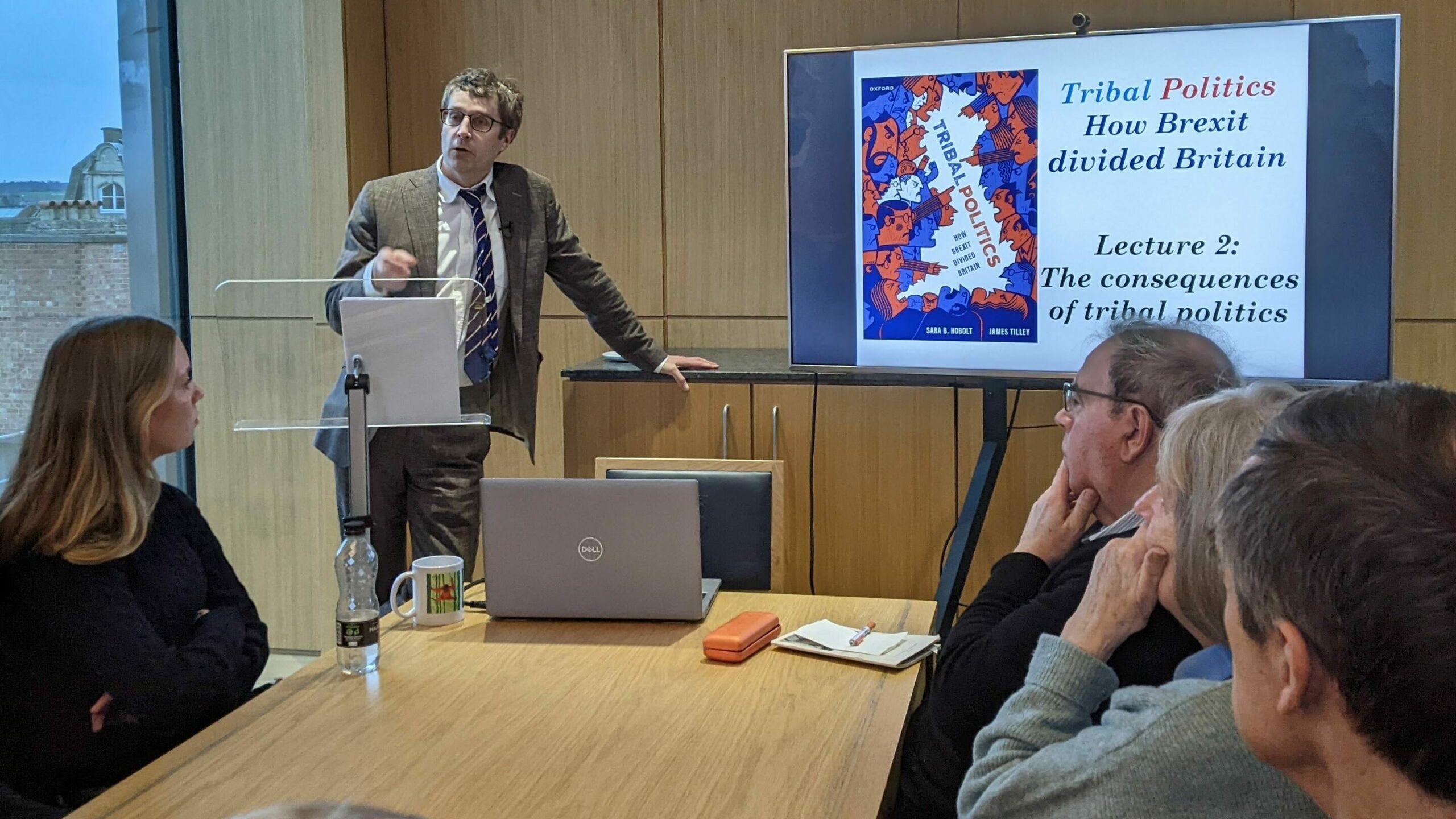
The tenth anniversary of the #EU referendum is approaching, and there is still talk about economics, institutions, and political strategy. But sitting through a discussion on this subject, the uncomfortable truth remains: the real transformation was not structural, it was psychological. And ten years later, it is still a mess.
The statistics are stark. The divide between “Leavers” and “Remainers” persists long after the referendum itself faded into history. The identities remain entrenched, even as the practical realities that supposedly defined them blur and lose relevance. This suggests the divide is not primarily rational or policy-driven, it is psychological, cultural, and emotional.
In many ways, it is strange – almost absurd – that this split continues to shape British political identity so strongly. The original issue has moved on, the world has shifted, yet the identities remain frozen. For me this persistence comes from the lack of meaningful alternatives, when there is no shared narrative or collective project to replace the old divisions, people hold onto the identities they have, even when they never made any sense.
The hard-right instrumentalisation of the referendum did long-term damage to our social fabric. Political actors pushed tribal framing because it worked, it mobilised people through emotion rather than consensus. But once unleashed, this dynamic did not disappear, it reshaped how people see each other and how they interpret political reality itself.
Political identities existed before Brexit, but there was once a larger middle ground, a messy but functional consensus where disagreement did not translate into mutual hostility. The referendum hardened boundaries that had previously been softer. It turned difference into braking division. A growing disconnect between cultural elitists and broader society, might help to explain why the referendum could become such a powerful symbolic battleground, many people felt excluded from decision-making long before Brexit became the focal point.
What is striking from this event, is how some analyses continue to dismiss the role of algorithmic platforms – the #dotcons – in amplifying these divides. Ignoring the structural role of platform incentives, attention economies, and engagement-driven algorithms feels like a blind spot. Social media did not create division out of nothing, but it undeniably intensified and entrenched #blinded tribal identity. Likewise, dismissing disinformation entirely misses the broader dynamic: even without organised campaigns, for profit algorithm social ecosystems reward emotional narratives over any shared understanding.
Perhaps the most unsettling aspect of discussions about tribal politics is the quiet resignation that often accompanies them. “That’s the way the world is,” some commentators say, as if polarisation were an inevitable feature of modern life rather than a social outcome shaped by technology, media, and bad political choices. From my perspective, this fatalism is part of the problem. Disaster in leads to bigger disaster out, accepting division as normal ensures it continues.
The deeper issue is that we have not yet built credible alternatives – social, technological, or cultural – that allow people to see tribal identity. Without shared spaces for dialogue, without media infrastructures designed for cooperation rather than conflict, the divide persists because there is nowhere else for collective energy to go. Ten years on, the lesson of Brexit may not be about sovereignty or trade deals, it may be about how fragile shared reality is, and how easily societies slide into identity-driven conflict when communication systems reward division over understanding.
The challenge now is not to analyse tribal politics, but to outgrow it. That means rebuilding common ground – culturally, socially, and technologically – rather than accepting fragmentation as the new normal. Because if we keep feeding the same dynamics, the outcome is predictable, mess in, and an even bigger mess out.
The #openweb reminds us that meaningful autonomy comes from shared infrastructure, collective governance, and mutual trust. Projects like #OMN are built on this understanding: individuals do not create networks alone; networks create the conditions that allow individuals to flourish. Real freedom grows from commons-based collaboration, not from isolated platforms or competitive silos.
What can grassroots #openweb people actually do when the EU is building alternatives to #dotcons, but with very real risks of recreating European versions of the same problems? This is a historic moment, for the first time in decades public funding is flowing toward digital commons and infrastructure sovereignty is being taken seriously. Federated technologies like #ActivityPub are gaining traction, largely due to years of grassroots work which is leading to initiatives such as @NGICommons attempting to support open infrastructure.
But alongside this opportunity comes an obvious risk, that they replace Californian platform capitalism with European platform capitalism. The danger: is European #dotcons. Institutional “common sense” – especially when combined with bureaucracy and the #NGO class – tends to reproduce familiar patterns of projects prioritise compliance and institutions over communities. Tech governance becomes professionalised and detached from users and seed communities. Yes, open standards exist, but power centralises anyway as funding rewards scale, stability, and safety rather than needed native grassroots paths.
The result is predictable, European #dotcons. The structural problem is institutions optimise for safety when #EU funding systems are designed around risk avoidance, measurable outcomes to build controlled delivery structures. This leads to only professional actors and institutional partnerships. Grassroots projects – messy, political, horizontal – rarely fit comfortably into this narrow thinking.
So even when the intention is to “build commons,” the outcome becomes safe-looking infrastructure that lacks living social ecosystems. The commons turn into infrastructure without community, and frequently fail, leaving funding poured down the drain and more #techshit to compost.
Why grassroots counter-currents matter is that healthy technology ecosystems need tension between institutional builders for stability, grassroots radicals for innovation and activists for accountability. This balancing leads to communities and real-world grounding.
Without this tension, governance ossifies and technology becomes abstracted from users. Political imagination shrinks and becomes #blocked. Grassroots projects like #OMN represent the compost layer, the messy soil where new forms grow. Institutions rarely generate this energy themselves.
Where initiatives like #NGICommons sit is that some people inside these initiatives genuinely want openness. Much like early Google’s “don’t be evil” phase, there is still a window of possibility. This means influence is still possible and direction is not fully locked in. Individuals inside may be allies, even if institutional structures trend toward mainstreaming. The danger is not simply bad intentions, it is the structural gravity toward institutionalisation.
We need practical strategies (not just critique) to move grassroots actors to shift direction, critique alone is not enough. Practical engagement matters to frame grassroots work as ecosystem infrastructure. Don’t argue only from ideology, speak in terms institutions understand: that tech ecosystems need experimental edges as monocultures fail. We need to argue that diversity increases resilience.
Policy language travels further, when we push for small “wild funding” streams. Instead of demanding institutional transformation, push for small structural openings:
microgrants
low-bureaucracy funding
experimental tracks
funding for governance experiments, not just technical deliverables.
Small budgets, cents on the euro, can create disproportionate impact.
Promote ActivityPub + social governance together as many EU projects adopt federation technically while retaining centralised governance culturally. We need to communicate that federation without social decentralisation is fake decentralisation. This is where #OMN has strong positioning.
Build parallel legitimacy, not only opposition, as institutions might respond to working prototypes with visible communities that demonstrated outcomes. Critique alone rarely shifts funding flows, were working alternatives do.
We need to find sympathetic insiders, every institutional structure contains pragmatists, a few idealists and sometimes meany reformers. So bridge-building matters. Not everyone inside #NGICommons or EU initiatives is an opponent, some are actively trying to resist corporate capture from within.
The EU currently has three possible futures:
European #dotcons – platform capitalism with EU branding
Technocratic infrastructure without social life (#techshit to compost)
Living digital commons grounded in grassroots communities.
The third path requires messy activism with strong social processes (#4opens) and historical memory rooted in #openweb culture. Without pressure from the grassroots edge, institutions drift toward the first outcome by default.
The deeper insight is that grassroots movements do not need to “win” against mainstreaming. They need to remain the compost layer that keeps the ecosystem alive. That means critique combined with collaboration where possible, strong and grounded independent experimentation and most importantly refusal of capture.
Across Europe, large-scale “mainstreaming” tech projects are increasingly shaping the future of the digital commons. From infrastructure initiatives to sovereign cloud strategies and federated social technologies, the EU tech stack is becoming more organised, more funded, and more institutionalised.
On the surface, this looks like progress. But history suggests that without active counter-currents, #mainstreaming inevitably drifts toward bureaucracy, risk-aversion, and quiet capture by institutional and corporate interests. The problem is almost all current European tech funding is poured down the drain of soft painless corruption.
This is why a small but intentional flow of funding toward grassroots, activist, and counter-cultural projects within #FOSS is not a luxury, it is essential infrastructure.
Innovation rarely if ever starts in the mainstream
Most genuinely transformative ideas in #FOSS and free software and #openweb did not originate from institutional programmes. They came from messy edges of volunteer collectives, activist media projects feed by autonomous spaces building #FOSS social infrastructure.
These environments allow experimentation without needing immediate legitimacy or scalability. They tolerate failure and contradiction, conditions that mainstream programmes often cannot. Without supporting these edge spaces, mainstream funding feeds an echo chamber that only produces incremental improvements, if any, to existing paradigms. Counter-currents are not only opposition; they are the ecosystem that generates future pathways.
Activism keeps governance honest
Institutional projects naturally optimise for stability, compliance, and reputation. This creates blind spots where needed difficult political questions get softened and avoided, governance becomes less participatory over time leading to decisions shift toward funders and professional stakeholders. Activist communities provide necessary friction by asking uncomfortable questions about power concentration and co-option by #NGO and corporate actors.
This friction is often misinterpreted as negativity or disruption. In reality, it acts as a corrective force that keeps projects aligned with the original European values, and the values of the #openweb and #FOSS. Without activist pressure, mainstreaming tends toward the same #closedweb patterns it now claims to be resisting.
Diversity of approach is a resilience strategy
A healthy ecosystem requires multiple approaches operating simultaneously, with institutional scaling projects in balance with community-led infrastructure. When funding flows only toward “safe” and easily measurable projects, the ecosystem loses adaptive capacity. Counter-currents provide alternative models and paths that become critical when dominant approaches fail. This is something repeatedly demonstrated in the history of internet development. Funding these spaces is therefore not charity; it is long-term risk management.
The current gap: refusal to fund counter-currents
Some current alternative funding bodies – including initiatives like #NLnet – have done valuable work supporting open technology. However, when funding structures avoid explicitly supporting activist or counter-cultural paths, a structural imbalance emerges. By prioritising technical outputs without investing in the social and political ecosystems that sustain them, funding breaks down, reinforcing the same dynamics that previously enabled enclosure and platform capture. Technical neutrality is not neutral. It implicitly favours existing power structures.
A truly balanced funding flow would intentionally support more grassroots organising capacity to build activist infrastructure projects with working governance experimentation like the #OGB to open spaces to shape community memory and historical continuity. Without this, mainstream funding cannot claim to represent the full health of the #FOSS ecosystem.
Why this matters now
The European tech stack is at a turning point. As public funding grows, so does the risk of institutionalising the very problems open technology originally emerged to resist. Activism is not only an external threat to mainstream projects, it is also a feedback system.
Supporting counter-currents prevents stagnation and helps to surface blind spots early by keeping alignment with public values. It’s needed to keep the tech ecosystem genuinely open rather than merely #NGO branded as such. The simple principle is if mainstream funding only supports what already looks safe and legitimate, it stops being an engine of innovation and becomes a mechanism of consolidation.
To keep the #openweb alive, we need funding flows that intentionally include the messy edges – the activists, the grassroots builders, and the experiments that don’t yet fit neat categories.
Not because they are comfortable, because they are necessary.
And to tell the truth we need a better balance of useful verses funding poured down the drain #NLnet#EU#NGI#NGIzero and likely more, please post in the comments.
A bunch of native #openweb people spent real time, energy, and focus pushing the #EU toward the #Fediverse. This wasn’t theoretical, it wasn’t speculative, it wasn’t a #NGO whitepaper or a #VC funding pitch. It was practical outreach, grounded in working technology and lived experience, aimed at reducing Europe’s dependency on centralized corporate platforms.
The webinars mattered, they demonstrated that EU institutions were genuinely open to #ActivityPub as a viable public infrastructure standard, not as a niche hobby project, but as a way to regain institutional and civic agency without defaulting to US-based platforms.
This is the work we needed more of, but this kind of engagement is slow, unglamorous, and politically awkward. It doesn’t fit VC startup narratives or revolutionary aesthetics. But it is the work required if Europe wants digital sovereignty without surrendering to #BigTech or reinventing the same centralized failures under an #EU flag.
So the obvious question is: what went wrong? Drift, fragmentation, and the return of the #dotcons. Instead of consolidating that momentum, the grassroots fractured, attention drifted, energy leaked away, people burned out or moved on. In the end, outreach was blocked from both sides
And then slowly, predictably, attention returned to the familiar #dotcons, because they are easy, visible, and culturally dominant. They offer the illusion of reach without the substance of agency, in the long run, this is just more #techshit to compost later.
#SocialHub itself documents much of this history. The discussions are there, the threads exist, the intent is visible. But there is little aggregation, little synthesis, and almost no narrative continuity. For anyone not already embedded, it’s hard to see what mattered, what succeeded, and what was quietly blocked or abandoned.
Because we didn’t document, curate, and repeat this story, the same myths keep resurfacing:
“The EU was never interested.”
“Federation can’t work at institutional scale.”
“There were no serious alternatives.”
“Centralized platforms are the only realistic option.”
None of these are true – but they feel true when history is missing. When people don’t know that EU–Fediverse outreach already happened, when they don’t know that viable alternatives already exist, when they don’t know that these paths were actively neglected rather than disproven.
Then people fall – again and again – for the #dotcons mess, believing it’s the only possible future. This matters now, as focus shifts back to tech change, and is exactly why #OMN, #indymediaback, #makinghistory, and #OGB exist, not as competing platforms, not as replacements for everything else, but as infrastructure for memory, communication, and accountability.
Before we argue about funding models, platforms, or scale, we need to get the ordering right:
History — to remember what already worked and what failed, and why
Media — to tell the story properly, in our own words
Governance — to keep power visible, contestable, and rooted in trust rather than myth
Without these, attempts at “European digital sovereignty” will reproduce the same capture dynamics under a different logo. Telling the story is political work, if we don’t tell our story, someone else will, and it won’t be told in our interests. It will be told as inevitability, as market logic, as “there was no alternative.” That story always ends the same way: more centralization, more dependency, more enclosure – followed by another round of cleanup and composting.
We already did part of the hard work, we opened doors, we proved viability. What’s missing is not only technology – it’s memory, narrative, and continuity. Until we fix that, Europe will keep mistaking amnesia for realism, and surrender for pragmatism.
And what would that actually look like? Let’s be honest about what the #Fediverse is, despite all the code and standards talk, the heart of the Fediverse is anarchism – not in the chaos sense, but in the older meaning:
The letter A for anarkhia (‘without ruler’), circled by an O that stands for order or organization.
We have plenty of the A with decentralization, voluntary cooperation and resistance to imposed authority. But where’s the O? Of clear coordination, transparent process and federated trust and mediation?
Right now, we’re herding cats – each server, dev group, and community running off on their own, building tools and protocols, often without clear ways to connect, share governance, or defend against capture. This worked when we were small, it will not work now the big boys have arrived.
Warning from experience: The #EU outreach failure, we had a direct taste of this during the 2023–24 EU outreach process. It worked, but was quickly transitioned to the infrastructure of the #Fediverse without its soul. This isn’t theoretical, it is what happened to #FOSS transitioning to #opensource in the 2010s. This is what happens if we keep doing nothing? If we don’t act:
The foundation model is imposed — not built.

The fig leaf of “community governance” will be ignored.

A self-selecting oligarchy will form — friendly faces, perhaps, but still an eliteist power cleqe.

The Fediverse will be co-opted — just like we watched Google and Microsoft do to open source over the last 20 years.
Yes, #ActivityPub is “open” but openness alone doesn’t stop capture. Ask the #FSF, or look at meany #NGO paths in tech.
What would “native” governance look like? Built from our values, not imported from the institutions we’re resisting.
Real federation of trust -Imagine something like “trust instances”, each instance or org can choose to endorse certain process and values (e.g., 4opens, PGA hallmarks), creating a visible network of aligned projects. Not a central body, but a web of consent, the #OMN is an example of this.
Self-accountability + Diversity of tactics. Everyone agrees to transparency and openness. Everyone chooses their own path. Nobody is forced, but the community can see what you’re doing. This is essential for resisting #NGO co-option without creating more gatekeeping elitists
Are Platform Co-ops the Answer? Maybe, but… proceed with caution. Many tech co-op projects I’ve seen:
Become ossified in bureaucratic process

Elevate process geeks over users and communities

Reproduce #NGO behaviours under a different name
We’ve seen this in the #techcoop movement, especially in the UK, where platform co-ops often start with radical aims and drift into “doing B2B consulting for ethical startups.” Fine, but not the revolution we worked for. The stakes are real, we’re not just talking about tech here, we’re talking about:
Climate collapse

Social fragmentation

The rise of digital authoritarianism
We need an #openweb that reflects our values, #fediverse governance that protects the commons, and to move from just the A to the full A inside the O – the anarchist circle of voluntary structure. Let’s not wait for another hijacking, we need to build something native to the Fediverse before it’s too late.
The signal-to-noise problem of our #geekproblem in the #fediverse and the wider #openweb. Let’s be clear: platforms like #Mastodon and the #Fediverse are native openweb projects. They embody the values of the #4opens — open data, open source, open process, and open standards.
The value here is not in hardening and securing these systems to the teeth. People who are pushing for hyper-“security” are missing the point entirely. This isn’t about “common sense” dev practice. It’s about use-case. Public media content should be open — and that’s what the Fediverse is good at. It’s media. It’s conversation. It’s public dialogue. That’s what #ActivityPub is designed for. For private communication, we already have mature and well-tested encrypted tools: #Matrix, #Briar, #Signal, etc. Use those for whistleblowing, direct action, or anything sensitive.
Trying to bolt high-security models onto public communication tools breaks the value of the #Fediverse – its simplicity, accessibility, and low barrier to entry. Right now, the #Fediverse is a functional part of the #OMN – it’s a mesh of many small pieces, loosely joined, low-barrier, easy to host, easy to adapt, easy to grow. This is a fragile ecosystem, not a fortress. By pushing unnecessary “security” requirements, this #geekproblem are:
Scaring away potential users and admins

Raising technical barriers

Spreading #FUD

And most dangerously — undermining real-world activists who rely on open visibility and reach, not secrecy.
The #geekproblem, pushing complexity, abstraction, and fear over usability and trust, has been blocking the alt-tech world for over 20 years, it’s happening again. Let’s not let them smother this moment, the open web works when it’s messy, simple, and human.