The #OMN is not trying to invent the future, it’s trying to restart a social path people forgot they had. That path was never clean, it never asked permission, it never felt safe. But it was real, and that’s the only soil movements have ever grown in.
Why this has to happen now? Because the ground we’re standing on is collapsing. The #dotcons are rotting – hollowed out into surveillance, manipulation, and rent extraction. Journalism has collapsed into PR cycles, outrage farming, and access journalism. Activism is trapped in performative loops that generate visibility but not power.
#climatechaos doesn’t wait for governance frameworks, steering committees, or another round of funding calls. And more bluntly: the knowledge is dying with the people who lived it. If this knowledge isn’t re-embedded in practice now, it doesn’t get “preserved”. It becomes an archive, not a lineage. Archives don’t fight back, lineages do.
Why everything feels so hard? The feeling of complexity isn’t because the work is impossible. It exists because people are traumatised by collapse, capture, and betrayal. Projects were taken over, movements were professionalised, trust was burned and replaced with process. You don’t argue people out of that, you outgrow it by example. Working systems dissolve fear faster than any explanation ever could.
This will never be mainstream – stop wanting it to be, accept this early and everything gets easier. The goal is not millions of users. The goal is hundreds of nodes that matter. If it works, it spreads sideways: by imitation, by reuse, by adaptation, that’s how #Indymedia spread, that’s how it will happen again – if it’s allowed to stay messy. #Mainstreaming is how movements die politely.
Reboot action media, not commentary, this is where most #Fediverse projects go wrong. #Indymedia worked because: it covered what people were doing, it was embedded in movements, it was operational, not opinion-driven – Action reports. Situation updates. Logistics. Reflection after action. Signal is useful under pressure. Noise is everything else.
Make mediation visible again – #Blocking culture killed community memory, bring back: named metaphors, public-but-careful conflict summaries, rollback instead of deletion, context instead of erasure. This does not mean tolerating abuse, it means treating conflict as social material, not contamination. Movements grow by composting tension, not pretending it isn’t there.
Cultural infrastructure, not nostalgia. Plumbing, not a platform. The #OMN is not: a solution, a network to “join”, a replacement for anything. It is: pipes, flows, tools for people already doing work. Examples:
“You’re documenting housing struggles? Here’s a way to syndicate without selling your soul.”
“You’re organising climate actions? Here’s a way to publish without an algorithm.”
“You’re running a local media collective? Here’s a way to connect without central control.”
People don’t trust platforms, they trust tools that work.
The reboot principle is affinity before scale. Action before legitimacy. Use before platform. This is how #Indymedia worked before it forgot itself. A practical path to rebooting a community of action. Start with a small, visible “We”. Not an open call, not a mailing list, a named affinity cluster of people with shared history and aligned instincts, 5–15 people, is ideal. People who ship things, who argue honestly, who don’t need brand permission to act. This group is not representative, it’s responsible. Their job is not to speak for anyone, it’s to do visible work others can plug into.
Final note. This isn’t about being radical for style points, it’s about being adequate to the moment. The tools already exist, the knowledge already exists, the need is obvious. What’s missing is the courage to stop waiting for permission and start rebuilding the paths that once carried real power.
Let’s start with the uncomfortable truth: we fucked up the last 20 years of #openweb tech. Not “they” fucked it up. Not only #BigTech, not only venture capital, not only governments and surveillance states. We did, especially those of us who were closest to the tools, the protocols, the decisions – the geeks, developers, architects, and maintainers who shaped how this stuff actually worked in practice.
That matters, because it means we still have direct power over what happens next. Too often, external forces are used as an excuse. “Capital captured everything.” “Users don’t care.” “The network effects are too strong.” These stories become a form of #blocking – a way to avoid the harder work of change and challenge that is still possible inside our own communities.
The #geekproblem role in the #techmess is one of the hardest things to admit, that much of the current #techmess wasn’t imposed on us – it was designed by us. We built systems that privileged scale over care, efficiency over use, protocol purity over social process. We treated governance as a technical problem and social mess as something to be engineered away. We told ourselves that decentralisation alone would save us, while quietly centralising power in code repos, foundation boards, and informal hierarchies.
This is the #geekproblem in action: the blindness to social value, to lived use, to human mediation. The result is vast piles of #techshit – technically impressive, socially hollow systems that decay quickly because nobody actually owns them in a meaningful way.
And when these systems fail, the blame gets pushed outward. “The market did this.” “Users misused it.” “NGOs ruined it.” Sometimes those things are true – but they are never the whole story.
Then we have the # fashionistas default worship of the #deathcult which is the part people really don’t like hearing: most of us default-worship the #deathcult. #Neoliberalism doesn’t need true believers to function. It survives perfectly well on habit, convenience, careerism, and fear. We reproduce it every time we copy the UX patterns of the #dotcons, every time we design for engagement instead of meaning, every time we prioritise respectability over rupture.
At this point, polite critique is not enough. The climate is collapsing. Social trust is eroded. Institutions are hollowed out facades. We do not have the luxury of endless moderation and tone-policing.
Let’s be clear, it is well past time to hold active worshippers of the #deathcult in contempt – not as individuals to be cancelled, but as ideas and practices to be openly rejected. And more importantly, to challenge our own default compliance with those values.
Time is the one thing we don’t have. Yes, this shift will happen. Over the last few years, more people have abandon #dotcons, more will rediscover collective tools, more will rebuild local, horizontal networks.
The #OMN is precisely about that internal power: what we do together, how we organise, how we build, and crucially, what we refuse to reproduce. But here’s the problem #climatechaos does not wait for cultural maturation. Ecological breakdown, authoritarian drift, and economic precarity are accelerating now. If the #openweb is going to matter, it has to matter in this decade – not as a promise, but as lived infrastructure.
That means pushing change and challenge now, even when it’s uncomfortable, even when it breaks consensus, even when it costs status. We cannot keep living inside copies of the #dotcons is one of the clearest failures of the last 10 years is this: we kept rebuilding copies of corporate platforms and calling them alternatives. The same feeds. Same metrics. Same influencer dynamics. Same UX assumptions. Just with better politics in the bio. That will never be enough.
For projects like #OMN to become real, we need to invest serious resources and energy into good #UX for #openweb projects – not slickness, not branding, but clarity, legibility, and human-scale control. Interfaces that normal people can understand. Systems that work in mess. Tools that support mediation instead of suppression. This is not about perfection. It’s about use-value over #blocking.
The next step is obvious and unavoidable, it’s not more think pieces, more foundations, more grant cycles. It’s rebuilding social-technical systems that people can actually use together, under pressure, without surrendering control. We already know this. Deep down, everyone reading this does.
The question is whether we act on it – or whether we keep hiding behind inevitability while the world burns. The #OMN is not a guarantee. It’s a refusal: to keep worshipping the #deathcult, to keep copying the #dotcons, to keep pretending we have more time than we do.
The work is here. The tools are here. What’s missing is the will to stop fucking around.
What are you doing today that is not pointless? Not a rhetorical question, a line in the sand. As too much contemporary “activism” is still busywork inside the #dotcons – visible, branded, career-friendly, and structurally harmless. Our old activist circles took the healthy internal tensions that once kept projects like #indymedia honest and fed them upward into a #fashernista vampire class: NGOs, foundations, panels, consultancies. For twenty years, they’ve drained grassroots energy to build CVs and gain access to “power”. That’s not radical, it’s capture.
Now, if we are serious about surviving #climatechaos and confronting the #deathcult, we have to stop doing pointless #techshit and start rebuilding outside the platforms that profit from our failure.
We need projects that doesn’t need permission, we need a #DIY crew. That means gathering like-minded people off the #dotcons, working collectively, not performatively, building small, useful things that actually publish, connect, and persist, following the #4opens: open process, open governance, open code, open data to accept mess, conflict, and compost as signs of life
The Open Media Network (#OMN) is not a brand or career ladder, not a #NGO pitch deck. It’s unfinished work from the original #openweb – work that was paused, captured, and now needs rebooting.
So again, plainly – What are you doing today that is not pointless? If the answer is “posting”, “networking”, or “waiting for funding”, that’s a bad answer. If the answer is building with others, publishing outside capture, sharing control, doing the unglamorous work, welcome back.
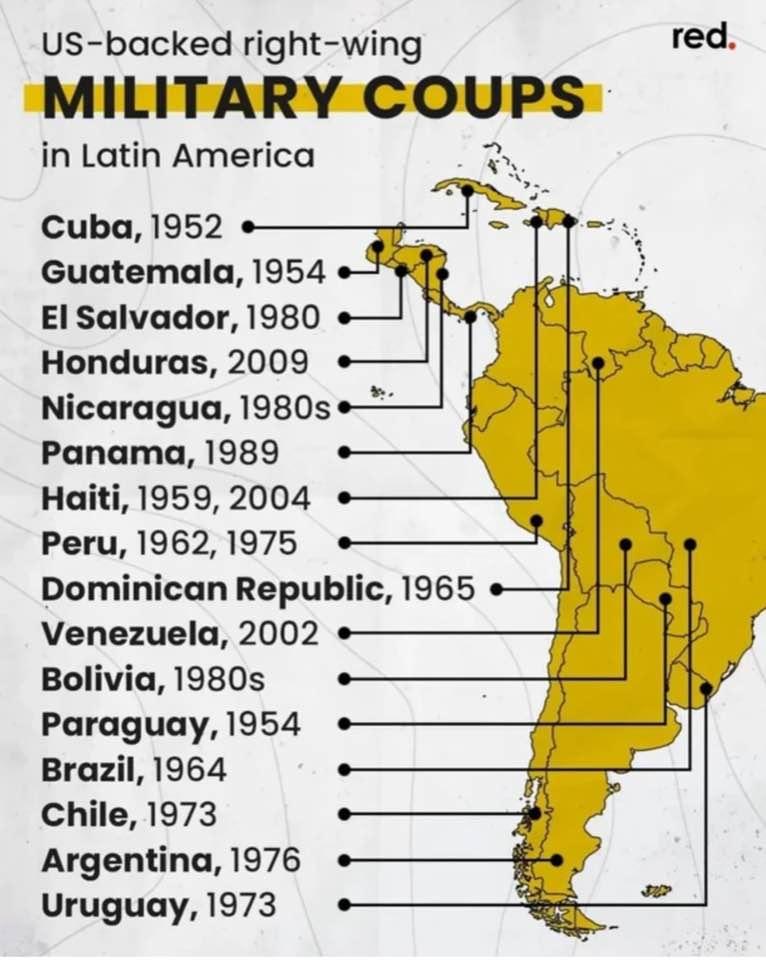
Venezuela has oil, a lot of it. And in a collapsing global system, access to energy is power – not in the abstract, but in the most brutally material sense. When growth stalls, debt grows, and #climatechaos tightens the margins, oil stops being a commodity and becomes leverage. Control over it is no longer about markets; it’s about survival for #blinded states and profit for capital.
What the United States offers in this context is not persuasion or principle, it is a deal. Side with us, and you get a cut. Corporations get extraction contracts, infrastructure rebuilds, and long-term revenue streams. Political elitists get stability, recognition, and protection from consequences. Regional allies get leverage in their own power games. Everyone involved understands what is happening. No one at the top is confused. The humanitarian language is not meant to convince – it’s meant to lubricate the transaction.
A simple way of looking at this is as an easy to see shift from neo-imperialism back to straight forward imperialism. This is how late-stage capitalism, when the liberal democratic facing is striped bare, operates. It no longer expands by building new worlds or any possibility of shared futures. It expands by stripping assets, hollowing out states, and converting crisis into opportunity. When growth fails, extraction replaces development. When consent fails, coercion replaces politics, when legitimacy collapses, force and incentives do the work.
Trump didn’t invent this model, he just dropped the pretence. He said the quiet part out loud, tore away the diplomatic language, and treated empire like a property deal. That shocked people who still believed in the performance of norms. But the system has not changed, the Biden administration didn’t reverse this trajectory – they polished it – restoring the language of values, process, and responsibility while keeping the mess running underneath.
Different language, same mess. This is where #mainstreaming progressive critique went wrong for over a decade. It focused on hypocrisy, on broken norms, on credibility and decorum. But that’s a category error. Those critiques assume a system that actorly cares about legitimacy.
You can’t shame a system that no longer pretends to need moral authority.
You can’t expose corruption when corruption is the operating model.
You can’t “hold accountable” a machine that has already priced in outrage as background noise
This isn’t about Trump, it’s not about one administration, or even one country. In the era of #climatecahos it’s about a global order that replaces politics with managed extraction and calls it stability. A system where decisions are only pantomime debated in public, but executed through sanctions, proxy conflicts, financial pressure, and media narratives to prepare the ground.
Seen this way, the war on Venezuela is not a lie to be debunked. It’s a bribe to be refused. And refusal doesn’t work as an individual moral stance. It only works collectively – outside the institutions that profit from the lie, outside the platforms that normalise it, outside the careers built on managing its mess.
That’s the hard part, the work. And that’s why projects like #OMN matter, not to perfect critique, but to build the social and media infrastructure that makes refusal possible at scale.
This space has a long history. The #fediverse grew out of the “cats” of libertarianism and, to a lesser extent, anarchism – notably without the (O). That lineage mattered. It shaped the instincts of the space: suspicion of central authority, an emphasis on autonomy, and a belief that technical decentralisation could substitute for social and political process.
I wrote this a few years ago.
Today the landscape has shifted. This #openweb space is increasingly layered with #NGO capture and thick #mainstreaming noise. Yet it remains fundamentally #native. That contradiction is where the real work now lies.
So the question is not whether the #fediverse is “good” or “bad”. The question is how we rebalance it so it becomes effective for real change and challenge. This is where #4opens matters – taking #FOSS out of narrow tech culture and back into society as a lived, social process.
We also need to be honest about failure. In the struggle between open and closed, we didn’t just lose because they won. We lost because we failed. And this matters, because we have power over our own failures. Over theirs, we mostly have liberal wish-fulfilment.
That distinction is crucial.
If you are genuinely interested in social change, there is one thing you should not do: do not push #mainstreaming agendas.
This is where the Fediverse is badly out of balance. The flows are soaked through with #deathcult assumptions, even when wrapped in progressive language. These agendas reproduce the system while pretending to soften it. They are driven by careerism, respectability politics, and status-chasing – not transformation.
What the #fediverse does not need is more branding, more respectability, more #NGO frameworks, or more “safe” narratives. That path leads to capture, stagnation, and eventual irrelevance. What we actually need are real alternatives: grounded social process, not just protocol purity; governance that emerges from use, not authority; democratic mediation, not aristocratic coders; trust built through practice, not #blocking policy documents.
What the world actually looks like
To be clear, #NGO occupation rarely looks like a hostile takeover. It arrives wearing the language of care, safety, professionalism, and responsibility. For many involved, the problem is not intention, it is structural effect.
A recurring pattern appears: governance without mandate. Foundations and NGOs emerge claiming to “represent the Fediverse” while having no meaningful user representation at all. Boards dominated by a small, self-referencing mix of developers, funders, and institutional figures. Decisions made behind closed doors, then presented as consensus.
This is the classic NGO move: speaking for communities rather than being accountable to them. Native, messy, grassroots portrayal is replaced with advisory councils and codes of conduct written by people who do not do the day-to-day social work of maintaining messy communities.
Then comes funding-driven agenda setting. Once grant money enters, priorities shift. Work that is legible to funders gets done; work that is socially necessary but messy gets sidelined. Success is measured in reports, visibility, and institutional recognition. Use-value is replaced by funding-value. Common-sense problems are reframed as opportunities to be sold to institutions rather than grown with communities.
This produces policy-first, people-second thinking: universal moderation frameworks, platform-wide “best practices”, compliance language imported from reactions to corporate platforms. All of this ignores the Fediverse’s actual strength – that it is contextual, local, and plural.
What works for a medium-sized EU instance does not work for a radical activist server, a queer safe space, or a small-language community. One-size-fits-all governance is a centralising instinct wearing decentralised branding.
Conflict is then sanitised rather than mediated. Conflict is treated as reputational risk, not as a normal and necessary part of social life. The response becomes pre-emptive rules, rigid enforcement, avoidance of political disagreement – in #OMN languae, #blocking.
But grassroots communities are not products. Conflict does not disappear when it is hidden; it reappears as burnout, factionalism, and quiet exits. This is one of the main drivers of the long-term churn that drains focus and energy from the #openweb.
Meanwhile, the space is distracted by attempts to brand the Fediverse for mainstream acceptability: “safe for brands”, “ready for institutions”, “just like Twitter, but nicer”. This strips away its radical roots while offering none of the resources of corporate platforms – the worst of both worlds.
Finally, depoliticisation is smuggled in under the banner of neutrality. Calls for “apolitical” spaces function in practice as quiet enforcement of liberal norms, exclusion of anti-capitalist, anti-colonial, and system-critical voices, and privileging those already comfortable within the mainstream. Neutrality is not neutral. It is a political choice that favours the status quo – the #deathcult dressed up as common sense.
This kind of behaver is inevitable, so the question is not if we ban it, but much more how we balance this with healthy grassroots structure. The way out of this is not less politics. It is better, more grounded politics: rooted in lived use, open process, and the messy reality of collective life.
Get off your knees.
Why “messy” matters explicit, social, and unavoidable. The word “messy” matters, a lot. It’s not a weakness, it’s the core requirement of any humane alternative social technological project. If what we build only works when everything is clean, controlled, and predictable, then it will collapse the moment real people start using it.
Real life is messy, communities are messy, power is messy, conflict is messy. If our tools and processes can’t survive that, then they aren’t tools for liberation – they’re toys for ideal conditions that don’t exist. This is where most alt-tech keeps failing.
We keep trying to build hard systems that assume away social complexity. Perfect protocols, elegant abstractions, clean governance models. But this obsession with cleanliness produces brittle systems that shatter under any stress. Anything that requires everyone to behave “correctly” in order to function is already authoritarian by design.
That’s why messy-first thinking is not optional – it’s the way out. Most “hard code” is actually #techshit from the moment it’s written, not an insult, it’s compost. The uncomfortable truth is the value of software is not only in the code, it’s in the social use around this code. Documentation, shared norms, trust, mediation, onboarding, storytelling, conflict resolution, continuity – this is where value lives. Code is one needed layer of that social substrate. Without the substrate, the code is dead on arrival.
This is where the #geekproblem bites hardest. The value that actually matters – social use – is invisible to many of the people writing the code. So they optimise for what they can see: features, refactors, rewrites, new projects. The result is more churn, more fragmentation, and ever-growing piles of decaying #techshit. From the inside, it feels like progress. From the outside, it’s entropy.
This is why #4opens is such a sharp tool if we use it. Not just open source code, but open process, open governance, open data, open participation. That means valuing outreach, long-running social threads, and shared ownership as much as clever technical solutions. If a project can’t explain itself in plain language, can’t survive disagreement, can’t onboard non-experts, and can’t evolve without a small priesthood of maintainers, then it’s already failing – no matter how elegant the code is.
So the question of value isn’t “how clever is the system?” It’s: who can use it, who can shape it, and who can carry it forward when things get messy? We need a diversity of tools and cultures that can live in the mud, absorb conflict, and keep going anyway. Mess isn’t the problem, mess is the medium.
Have you noticed how, over the last few decades, many sentences are repeated so often they start to become “common sense”? “You need to love yourself” is one of these, it sounds harmless, kind, even progressive. But this sentence didn’t only reshape how we feel about ourselves – it reshapes how the economy works. This is a story about how “self-esteem” become an engine of #stupidindividualism, that helped produce the explosion of inequality and mess we now live inside.
Today, self-esteem is treated as a universal good. The cure for anxiety, failure, loneliness, precarity. If you’re struggling, the message is simple: look inward. Fix yourself. Believe harder. And that’s the trick, this isn’t about telling people to hate themselves. It’s about noticing that something deeply political has been smuggled into something that looks purely personal.
For most of human history, self-esteem wasn’t a virtue, it was a vice. Across Christianity, Islam, Judaism, Buddhism, Hinduism, pride was seen as dangerous. The seed of arrogance, ignorance, suffering. Fulfilment came from humility, mutual obligation, and limits, not self-celebration. The very idea of “loving yourself” would have sounded morally wrong, not empowering. So how did pride get rebranded as progress?
In part this is a #geekproblem, in an industrialising world obsessed with measurement: output per worker, profit per hour, value per share. Humans were no longer judged by moral contribution, but by performance, self-esteem quietly became an economic variable.
Drum roll – we had the #neoliberal turn – market ideology glorifies selfishness, despises solidarity, and frames empathy as weakness. This mess was used to increase the push for common sense #mainstreaming heroes to be lone geniuses, the media meme helped to drive the invisible destruction of any shared social structures. Then helped to obfuscate when western economies dismantling welfare states, deregulating markets, outsourcing industrial labour and rebranding citizens as entrepreneurs of the self. This was not a coincidence.
With this ideological turn, structural problems were redefined as personal psychological failures. If you’re poor, anxious, unemployed – the problem isn’t the system – it’s your mindset. This become self-esteem as labour discipline. As blue-collar work paths closed and white-collar “service” work expanded, confidence became currency, not skill, care or competence.
To day in the daily grind, work rewards presentation, persuasion, and performance. Self-esteem became professional armour. Bragging outperformed quiet skill. Selling yourself matters more than doing the work. This is where #stupidindividualism hardens:
Success looks personal
Failure looks personal
Solidarity disappears
Power becomes invisible
Outside the office – consumerism becomes about buying self-worth. Advertising doesn’t sell products. It sells reassurance. A handbag isn’t a bag, a car isn’t transport, a platform isn’t communication. They’re proof that you matter, until the next upgrade. Self-esteem – the kind that depends on validation, status, and visibility – is never satisfied, which makes it incredibly profitable. Self-esteem becomes something you only can rent from the market.
Then we have the rule of the #nastyfew, the #CEO as narcissist-priest. Research shows corporate leadership selects for narcissistic traits: grandiosity, risk-taking, obsession with image, contempt for limits. These “leaders” chase metrics that look like success – stock price, media praise, personal compensation – while hollowing out organisations and communities we need to live and push the change and challenge we need in the era of #climatchaos and social break down. In this mess, confidence replaces accountability, performance replaces reality. Collapse soon follows.
In this mess, the easy to understand #KISS lie is that the quiet violence of the self-esteem ideology tells people to solve systemic harm as only personal feelings. It tells us to love ourselves inside conditions designed to grind us down. This is why self-esteem culture is the drug feeding us precarious work, algorithmic management, influencer economies and endless competition. It makes people blame themselves instead of the structures exploiting them.
What we can do – the #OMNhashtag story names this as #stupidindividualism: Radical inwardness paired with radical powerlessness, emotional self-management instead of collective change, narcissism dressed up as empowerment. That self-esteem like this is divorced from community, becomes a control system.
So, to say again, get off your knees, we don’t need more self-love slogans, we need shared power where native paths are about confidence that does not come from mainstreaming affirmations, rather from shared competence, mutual aid and belonging.
The project we need, the #OMN is not about polishing the self, instead it is a path to rebuild the commons which “self-esteem” was used to dismantle. So please stop worshipping yourself, start standing with others, this is how we compost this mess.
Don’t worry too much, the corporate world has solutions, we look here at #ESG which stands for Environmental, Social, and Governance. Its advocates say that if companies disclose enough data about their environmental and social behaviour, “good” corporate conduct will be rewarded by investors with higher share prices.
Let’s really look at #ESG, for what they are, #greenwash, a system of delay, distraction, and capture – on this #deatcult path this it is not a mistake, it is a function. The green halo on the same old shit, #mainstreaming sustainability has always been a corporate scam. Much less “green transition” more global polycrisis. Climate breakdown, ecological collapse, rising inequality – all accelerating.
The market, once again, is meant to save us. So what happened next was predictable. A sewage flow of private ESG frameworks spread across the corporate world. None issued by public bodies. None democratically accountable. All vague, inconsistent, and easily gamed. Companies can score highly on ESG while: Exploiting workers, running unsafe workplaces, destroying ecosystems and locking in fossil fuel dependency
How? It’s the normal mainstream economics, counting the wrong things. Employee cycling schemes, wellbeing surveys, diversity, trivial “green” initiatives. Meanwhile, any real structural harm is ignored. Companies can claim to be “100% renewable” by buying Renewable Energy Certificates (#REC) – while still running entirely on fossil-fuel electricity. This #greenwash is not broken – It’s working, but the grassroots question is for whom? It is not environmentalism, to see it clearly, it’s risk management for capital.
One fluffy/spiky path to fixing this is composting the consultancies who market themselves as climate saviours while simultaneously advising coal, oil, and gas firms on “upstream optimisation” – which is consultant-speak for extract more, faster.
There is a lot to compost, our “progressive” institutions are captured, The UN climate summits (#COPs) are crawling with these consultants. At COP28, the talks were presided over by the head of a state oil company. McKinsey, a big consultancy company, “advised” the process – while simultaneously serving the world’s biggest fossil fuel producers. This isn’t failure, it’s corruption, regulatory capture in public view.
Then we have the “investment”, magical thinking for grown adults. Carbon offsets are sold as a way to “neutralise” emissions. When in practice few if any reduce emissions, what they do is allow corporations to continue polluting while outsourcing guilt. And yes – the same eco parasites, consultancies, helped design the metrics that made this scam possible.
All the mess is a delay infrastructure that does not exist to solve climate change. It exists to slow real regulation, displace political action, convert existential crisis into financial products and keep power exactly where it is. This is why projects like #ESG are voluntary, private, fragmented, and endlessly technical. Complexity is not a bug – it’s the shield.
So back to the subject of this site – what #OMN calls signal – is grassroots journalism that does not only ask: “How can companies do better?” But focus on: Who benefits? Who decides? Who profits from delay? Who pays the price, and what power structures remain untouched?
And the answer to this is not complex, it’s the mess we live in. Which can be #KISS solved by breaking the power of the institutions that caused it. The example we talk about here #ESG is capitalism blessing itself in public. A ritual, a distraction, The priesthood of consultants chanting metrics while the planet burns.
To put this simply, if “sustainability” is filtered through profit first, it is not sustainability, it’s more lies we are being asked to kneel before, more #deathcult we all need to stop worshipping. So get up, pick up a shovel, there’s a lot of composting to do.
People keep asking the same question, because daily life keeps getting harder: Why is everything so expensive? Why is everyone so stressed? Why does it feel like the economy is rigged?
The short answer is – it is – The longer answer matters, because this didn’t happen by accident. For most of human history, wealth inequality was brutal. A tiny elitist crew owned almost everything, and most people lived short, precarious lives. That only changed briefly, and recently.
The Post-war exception (1945–1975). After World War II, something unusual happened. Governments become in part democratic, and with the balance of the Cold War, remembered what economic collapse leads to: fascism, war, and social breakdown. So they built a tightly regulated global economic system designed to keep things boringly stable. This was the Bretton Woods system.
Currencies were fixed. Banks were regulated. Capital was controlled. Unions were strong. Taxes on the rich were high – often 90%+ on top incomes and inheritances. And this worked from 1945 to the early 1970s. Wages rose with productivity, housing was affordable, one income could support a family, inequality fell, a broad middle class emerged. This wasn’t the “free market”. It was the opposite. It was embedded liberalism – markets contained by society, not the other way around.
The Crisis of the 1970s was when the system hit its limits. The US stopped running trade surpluses. The #coldwar drained resources, oil shocks sent inflation soaring. The Bretton Woods system collapsed in 1971. By the mid-1970s, the global economy was in stagflation: high inflation, high unemployment, low growth. For ordinary people, life got harder. For the #nastyfew elitists, something else happened. Their share of national income – quietly shrinking since the 1940s – suddenly mattered again. When growth slowed, they could no longer tolerate workers getting a larger slice of the pie.
This was the moment they chose #neoliberal counter-revolution, this wasn’t spontaneous, it was planned. Corporations funded think tanks, media narratives were reshaped, universities were targeted. Politics was captured from the inside. Business needed to seize cultural, political, and ideological power.
Thatcher, Reagan wasn’t neutral “economic science”, they were populist #classwar. Labour lost bargaining power, capital regained it. The tools of the post-war order were put to use – The IMF used debt crises to force austerity and privatization on the Global South, whole countries were stripped of economic sovereignty, poverty and inequality exploded. This was accumulation by dispossession – old colonial extraction, updated for financial capitalism.
Thatcher and Reagan:
Broke unions through force and law
Slashed taxes on the rich
Deregulated finance
Privatized public assets
Redefined government as the enemy
From this point on, productivity rose, but wages stopped. The new normal is ownership over work, it’s the world we live in now.
Housing treated as an investment, not a home
Wages stagnating while CEO pay explodes
Finance dominating the real economy
Debt disciplining both workers and nations
“Market logic” replacing democracy
This is not failure, it is success, for the people who pushed it. We now have 40 years of #mainstreaming to shift and compost.
Why this matters for us, and why the #OMN projects matter for you. Media matters, #mainstreaming journalism, always reports within this system. It speaks truth from power – explaining, managing, normalising. What we need is grassroots journalism that speaks truth to power. We need more signal, and less noise in our own media. This signal asks: Who benefits? Who decides? Who pays? What was deliberately dismantled? What can be rebuilt – differently?
The native #openweb#OMN path is not about fixing the worship of the market. It’s about walking out of the temple. This economy was designed. That means it can be redesigned. But not by begging. Not by rearranging seats, and not by pretending this mess is accidental.
So if you want to help make one of this missing piler of society work, then #KISS get up, pick up a shovel, start composting the shite pile. That’s where new growth comes from.
Both “great leaders” and shared governance can rot, nothing is pure. Leader-centric / “#stupidindividualism” – can work, strong individual leadership can produce positive outcomes, this path is strong when early-stage projects need speed and coherence, moments of crisis where coordination matters more than deliberation, visionary synthesis when no shared language exists yet. Historically, many projects only exist because one or two people pushed through inertia. That’s real.
The benefit is clarity, momentum, and decision velocity. The cost is hidden, deferred, and structural. Leader-centric systems rot, almost always fail in predictable ways: succession failure (what happens when the leader burns out, dies, or changes?), myth-making replaces accountability, disagreement becomes personal betrayal, values drift accelerates once scale or money enters. This rot is catastrophic, everything looks fine until it suddenly isn’t.
Shared governance and open process has other failure modes, it fails differently. When shared governance works there is a shared direction even if there’s disagreement on method, people accept unfinishedness, trust precedes rules, power is treated as something to circulate, not hoard. This is why federated systems work better than monoliths, they don’t need everyone aligned – they need enough alignment locally.
How shared governance rots is about noise, mismatched visions, process fetishism, endless discussion with no production. This is rot by dilution, not domination. The distinction is that shared governance doesn’t fail because there’s too much democracy. It fails because there’s no gardening. The compost metaphor isn’t only poetic – it’s operational, compost is not “anything goes”. Compost works because: inputs are constrained, time matters, turning matters, bad material is broken down, not allowed to dominate
In social paths composting means that bad ideas aren’t banned, but they’re depowered, noise isn’t amplified, conflict is metabolised, not performed, unfinished work is expected, not punished. This is where most “open” projects fail, they open input, but never govern flow.
Does this scale? Or does attention rot it? Attention always brings rot, there is no version of scale that doesn’t attract: careerists, ideology tourists, control-seekers, people looking for identity rather than contribution. The mistake is thinking you can prevent this, you can’t. What you can do is design for survivable rot. OMN’s approach (and similar paths) assume rot is inevitable, conflict is normal, bad faith is periodic, misunderstanding is constant
So instead of prevention, you build filters, loose coupling (people can leave without damage), low barrier to exit, moderate barrier to influence, contribution > opinion, process over charisma, forks are allowed, capture is not
This is why tone is not neutral – it acts as a filter, hostility, and “scaring away the right people” is an issue that deserves honesty. Yes – some good people are put off by sharp language, that’s real, I’ve seen it happen. But the uncomfortable truth is learned the hard way, softening tone attracts more people early, but it attracts the wrong power dynamics later. In long-running projects, the people who demand comfort early often become blockers later, demand control when disagreement arises, moralise process instead of doing work, then collapse when ambiguity appears.
Sharp language is not about anger, it’s about boundary-setting in advance. If someone can’t get past discomfort, they usually can’t handle the needed path of unfinished systems, horizontal accountability, slow value emergence and loss of status metrics This is not elitism – it’s pattern recognition over decades.
Then there is the question of funding, survival, and eating while resisting capture, people need to live. Some distilled lesson from examples:
Externally funded projects scale fast and lose mission fast
Self-funded projects keep integrity and burn out
Volunteer-only projects are fragile to conflict
Career-based projects become platforms, not commons
There is no clean solution, the OMN’s wager is not “no money forever”. It’s, no money before governance, no scale before culture, no funding without exit paths. Most projects reverse this order and die because of it. Why this looks vague (and why that’s not a bug) is that cultural infrastructure cannot be fully specified in advance without killing it. If it could, corporations would already own it.
The #OMN path is not a product, not a pitch, not a platform. It’s a set of constraints and practices that allow people to build things that don’t immediately collapse into hierarchy or careerism. That’s why it reads as incomplete, why it frustrates optimisation instincts, why it can survive longer than most projects.
The real trade-off:
Individual-led systems fail spectacularly
Shared systems fail invisibly
Soft systems fail by capture
Hard systems fail by fracture
#OMN is choosing a failure mode that is: slow, repairable, forkable and survivable. It’s not idealism, it’s engineering with human materials. It’s a path not for everyone, it never is, and doesn’t need to be. What is needed is enough people who understand why mess, slowness, and friction are features, not bugs – and who are willing to keep turning the compost instead of demanding a finished product.
In the traditional media and our social reflection of this – “Belief in markets”, is theological thinking disguised as economics. The market is a god, and economists its priesthood. Modern economic discourse treats “the Market” as: omniscient (“the market knows best”), omnipotent (“there is no alternative”), morally authoritative (“price signals reveal truth”), beyond democratic challenge (“don’t interfere, or you’ll anger it”)
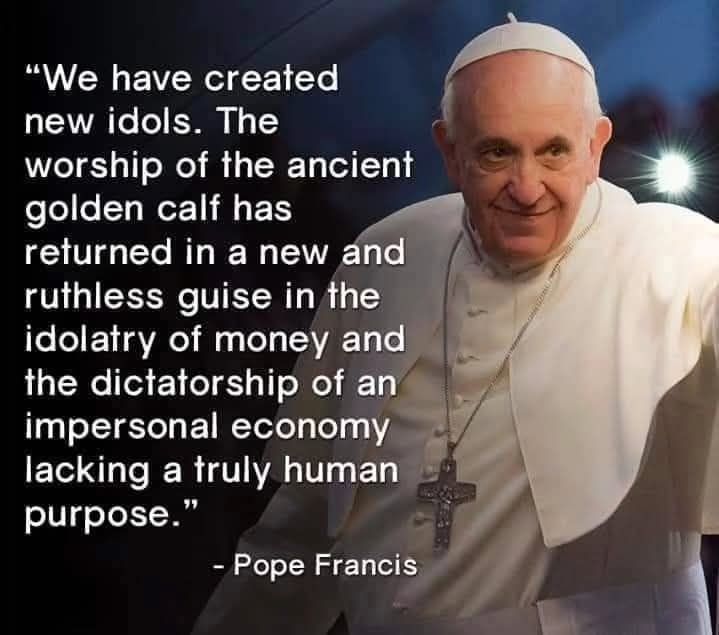
It should be easy to understand this isn’t analysis, it’s faith. When something goes wrong, the response isn’t accountability, it’s ritual: austerity, deregulation, labour discipline, “tightening belts”. This working class suffering becomes a necessary sacrifice to restore god’s favor. That’s why at the #OMN we called it the #deathcult – normal people are expected to suffer and die, quietly, so the economic system can live.
Priests, temples, and worshippers, religions have hierarchy, in this mainstream one: Central bankers are high priests, rating agencies are oracles, think tanks are seminaries, media pundits are evangelists, platforms are temples, metrics are scripture. It’s all theological thinking all the way down, surface disguised as economics
The closer you are to god (capital, liquidity, investment flows), the more authority you’re granted. Those far away – workers, communities, the climate – are treated as abstractions, “externalities”. And, like all priesthoods, our elitists claim neutrality while enforcing doctrine.
Heresy is not allowed, questioning the market is treated at best as: naive, dangerous, emotional, “anti-growth”, “anti-business”, “unrealistic”. This mirrors religious heresy exactly. Then we have the last 40 years of #posttruth, once belief replaces evidence, language becomes performative, words are used to signal loyalty, not to describe reality.
This matters for the #openweb and #OMN as the current path, the #dotcons are the digital expression of this religion, encoding market theology into infrastructure with engagement replaces meaning, growth replaces health, metrics replace judgment, extraction replaces relationship. This is why reform inside platforms fails, you’re not tweaking a tool, you’re challenging a faith system.
The #openweb threatens this religion because it decentralises authority, reintroduces human judgment, values trust over metrics, treats technology as means, not destiny. That’s apostasy and why “fairer worship” isn’t liberation, it’s at most progressive #mainstreaming that wants more inclusive access to the temple, fairer distribution of sacrifices, representation among the priests. That has real short-term value, yes, but it never questions the altar itself.
The #OMN position is different, it focused on stand up, walking out, building something else. So what would a post-religious economics look like? Signal thinking, not worship, markets as tools, not gods, economics as a social science, not divine law. Values decided democratically, not revealed by price. Survival and care as nonnegotiable, growth as optional, not sacred. This aligns directly with our insistence on balancing social value and personal value.
This framing cuts through the mess, calling it religion, we break the spell. People can see faith masquerading as fact, priests masquerading as experts, sacrifice masquerading as necessity, they can no longer pretend this is “just how the world works”. That’s why this language, hashtag story matters. It’s not rhetorical excess – it’s diagnosis. And diagnosis is the first step to composting the #deathcult and planting something that can actually keep people alive.
Most mainstream journalism is not about public truth, it’s about platform survival. This shite pile is why almost everything is noise, what gets called “news” today, when It’s not straight up propaganda is shaped by: attention metrics, outrage cycles, advertiser safety, institutional access, career risk management.
That’s why it feels so empty, even when it’s “factually” correct. The framing is already captured, journalism inside the logic of the #deathcult, wearing progressive, neutral, or technocratic costumes. So yes: most #mainstreaming news is noise, not because it’s all fake, but because it is: structurally irrelevant to challenge lived power, allergic to root causes, incapable of imagining alternatives, It’s mess because it job is to explain the world in ways that prevent change.
Signal vs noise is a useful distinction, signal isn’t “better facts” its orientation. Noise at best tells you a narrow view of what happened today, who said what in this narrow view, which team is winning in this view, how to feel about this. Signal doesn’t chase this novelty, it tracks patterns, power, and consequence.
What would “signal journalism” actually look like? Practically and philosophically, signal journalism would start from social need, not market demand, not “what will people click?” but “what do people need to know to act together?” Signal helps you understand, why things keep happening, who benefits structurally, what capacities are being destroyed or built, where collective agency still exists.
It’s thus explicitly about power, not pretending neutrality where none exists, rather about who is protected and who is exposed. It doesn’t confuse balance with truth, it treats people as participants, not audiences
Traditional media and #dotcons journalism assumes: speaker → audience → consumption.
Signal journalism assumes: participants → shared inquiry → shared action.
Today, too much journalism is caught in this trap. Precarious journalists + algorithmic discipline = fear-driven reporting. When private greed meets public need, this is the path of corruption. Working journalism is supposed to be: a public good, a memory system, a mediation layer for democracy. But the current mess is optimized for: extraction, surveillance, behavioural control, brand safety. So even “good” journalism becomes structurally conservative. This is why reform inside the same platforms fails.
This is where projects like the #OMN matters: shared media, shared process, shared memory. “The capitalism of digital platforms makes labour discipline more rigid… subordinate and precarious at the same time.” The constant “now now now” is a discipline mechanism, its fake urgency.
Signal journalism asks:
what is structurally urgent?
what is manufactured urgency?
what requires patience and continuity?
Why this is an #OMN problem (and opportunity). The OMN was never about “better content”, it is about changing the conditions under which content exists. This is signal journalism: federated publishing, shared archives, transparent process, local grounding, slow trust-building. In other words: social infrastructure first, content second.
On this path #Indymedia worked not because it was perfect, but because it was situated, collective, and accountable to real communities, not metrics.
The hard part – Signal is harder than noise because: it doesn’t flatter identities, it doesn’t reward instant reaction, it often feels boring at first, it requires shared effort over time. Where noise feels alive… If we want journalism that matters, we have to build the soil it can grow in. That’s the #OMN path: less spectacle, more process, less worship, more walking out of the temple.
Most progressive #mainstreaming isn’t about ending the #deathcult – it’s about making its worship feel more fair, more inclusive, more polite. There is some real everyday value in this. Fewer people get crushed immediately, some suffering is reduced, that matters.
But let’s be honest about what it does not do, it does not get people off their knees to challenge the altar to stop the sacrifice. It rearranges the seating in the temple, feeding the deeper problem, obedience. Progressive mainstreaming accepts the frame, accepts the metrics, accepts the economy of extraction and then argues about distribution. It negotiates better terms with a machine that is killing us. That is not transformation, it’s managed decline.
The project of real change and challenge – the work the #OMN exists for – starts somewhere else entirely. It starts with people standing up and walking away. Walking out of the temple of the #deathcult we all live in, not in purity, utopia or comfort. But into mess, cooperation, unfinished tools, shared risk, and actual agency. This isn’t about better policies inside the system. It’s about building outside it, under it, alongside it – until the system hollowed itself out and no longer matters.
It’s about people picking up shovels, composting the wreckage, and growing something that can actually sustain life. This is simplicity #KISS#OMN
We have already seen the failures: lived through #Indymedia, the #NGO turn, the #dotcons capture, the #Fediverse repeating old mistakes. When we talk about #OMN, we’re trying to stop people from re-learning the same lessons by losing again. Silence would be complicity.
The #OMN is where critique becomes agency. It’s not about “promoting a project”, if we don’t talk about this without something like #OMN, critique collapses into doom, aesthetics, or personal exits. #OMN is a way to, act collectively, without lying about power, money, or governance.
Forgetting is how capture happens, the moment people stop naming alternatives, the space fills with managerial language, funding logic, and fear-based control. We talk about #OMN to keep the space open enough for something human to grow.
The #OMN is a path that resists #stupidindividualism, where most contemporary “solutions” reinforce isolation, personal brands, and individual safety strategies. #OMN starts from the assumption that survival and meaning are collective. We need to keep talking about this because almost nobody else does.
It’s unfinished – and that matters. It’s not about defending a polished system, instead, it’s about holding open a process. Talking about #OMN is how we invite others into the compost rather than presenting them with a finished product to consume.
We talk about #OMN because it’s a native way of saying: “We don’t have to repeat this. We can build differently, together, if we remember what already worked.”*
It’s not evangelism, it’s stewardship.
A few of us have been working on real, positive, horizontal social and technological solutions for over twenty years. Not hypotheticals, not vibes, things that actually work.
We know they work locally, we know they work socially. And after more than a decade building on the #fediverse, we know they can work in tech, at scale without going vertical, corporate, or authoritarian.
This isn’t speculative any more. Our creative task now – the #nothingnew work – is simply to combine what already works: Horizontal social practice, federated #openweb tech, trust-based governance. We already have a slate of projects waiting to be built: #OMN, #OGB, #indymediaback and #makinghistory. What’s missing is not ideas, it is people willing to show up and implement.
And here’s the hard truth: every time we try to talk about radical or progressive language, power, or structure, people retreat into #blocking and ignoring. The same unresolved tensions get replayed endlessly, nothing is mediated, nothing is grounded. Bad will accumulates, the social commons rots.
This rot isn’t accidental – it’s structural – To work our way out of this mess, we need both #fluff and #spiky. We need broad categories to think clearly, the #mainstreaming#fashernista rejection of this isn’t sophistication – it’s submission. It’s a soft, polite form of #deathcult worship.
You don’t dismantle a #deathcult by being nicer to it, you dismantle it by stopping your participation and building something better.
So this is the question, not rhetorical, not theoretical: Are you going to help make this happen? Are you going to pick up a shovel? Or are you going to stay on your knees, arguing about tone while the ground burns?
There is such a thing as society. The entire #openweb is built on that assumption 🙂 Deny it, and everything collapses into noise, power grabs, and enclosure. That denial, dressed up today as “post-truth” – is killing us.
Our current media ecology is broken. So called #AI and Google are no longer a useful way to find information about most things that actually matter. This isn’t accidental; it’s a structural #dotcons problem. Extraction, advertising, and algorithmic manipulation have replaced human discovery, context, and trust.
The same sickness runs through much of today’s open-source and free software world. Its governance models are still rooted in medieval political ideas: aristocrats, benevolent dictators, kings and courts. That might have muddled through in the 20th century, but it is obviously useless for the world we now live in.
The last twenty years trying to mediate this with neoliberal #stupidindividualism has only made things worse. The result is towering piles of steaming #techshit, endlessly churned, rarely useful, and increasingly disconnected from any healthy social reality. This is the #geekproblem made in: code, silicon and concrete.
The #mainstreaming disaster driven by #dotcons is obvious. We don’t need to relitigate it every five minutes. For motivation and clarity, let’s put them to one side and focus on what we can actually change. Our own tech culture is still hopelessly mired in the #geekproblem. So yes, we need to compost a lot of our own mess.
The path out of both the #closedweb and the geek cul-de-sac is not new. It’s old, boring, and powerful: trust, shared responsibility, and human-scale democracy. If we are serious, the #openweb has to be rebooted with grassroots democracy at its core. Social tech needs social governance. Without that, we are just recreating vertical power with nicer licences.
This is where #OGB (Open Governance Bodies) matter. With real democratic process, it becomes relatively simple to push the #dotcons back out of spaces they currently dominate by default. Without democracy, they will always win, not because they are smarter, but because they are organised.
Right now, we are drowning in the #mainstreaming mess. And worse, we are still adding to it. Every pointless project, every ego-driven fork, every governance-free platform accelerates #techchurn and deepens the rot. We need to stop pretending this is neutral.
Yes, “open standards” are a mess, always have been, but they are the mess we must build on until enough of the #openweb is rebooted – including democratic decision-making – to rejuvenate and civilise the standards bodies themselves. Strong democracy changes the game. With it, enclosure becomes contestable. Without it, we just get louder arguments and faster failure.
And when people doing obviously stupid things can’t understand what the #OMN hashtags mean? Click the hashtags and think, or stand and shout, then hit the block button. You get to choose 🙂 This is not rudeness, it’s focus. And focus is how we stop adding to the mess and start composting it into something that might actually grow.