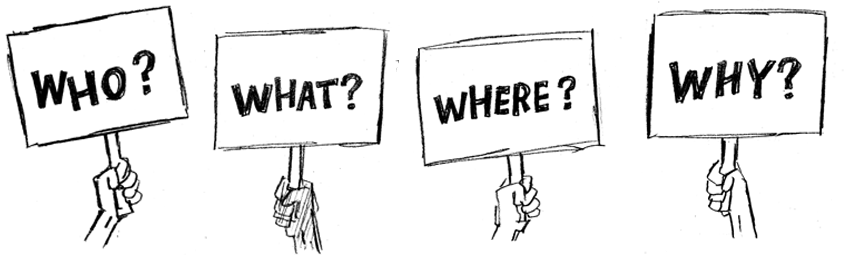
People BLOCKING needed process, or worst simply ignore it

We need to start from a simple but often-missed point – different starting assumptions lead to different processes – and those lead to very different outcomes. This is the lesson that gets lost when radical #openweb projects are treated like just another app, or reduced to a polished #NGO common sense path.

The #OMN doesn’t come from that place. It grows out of a different worldview, rooted in the lived traditions of the commons, the early internet, and grassroots organising. This isn’t abstract theory; it’s a body of practice that has already worked in many different forms.

We’ve seen it before in the early #indymedia network giving global voice to decentralised movements in the #wikis and early blogospheres building shared knowledge in public and more recently, the #Fediverse (for example Mastodon) showing that federated systems can scale without (yet) falling under corporate control.

These are not utopian ideas, they are working proofs that transparent, decentralised, trust-based systems can function and sustain real communities. Yes, they have limits. But those limits are not simply weaknesses, they are part of what keeps them healthy. They enforce diversity, autonomy, and accountability at a human scale, rather than collapsing everything into a single, extractive system like the #dotcons.

Where things go wrong, the current problem is a loss of context. Many people entering tech and activism today don’t have access to this lineage, or only see half of it. Developers who understand federation but not community process often build technically elegant systems that don’t sustain real social use. You end up with silos that work, but don’t live. Activists who understand horizontal organising but not open standards end up relying on closed tools – Facebook groups, Google Docs, Slack – rebuilding their movements inside systems that ultimately undermine them.

In both cases, something essential is missing. Without a grounding in the subcultures that shaped civil rights movements, free software, and the commons, people default to what feels like “common sense” – but is really just #mainstreaming logic.

That tends to look like discomfort with open governance (“too messy”), preference for control and clarity over participation and suspicion of openness when it challenges institutional norms. The result is familiar: well-intentioned projects that centralise, burn out, and quietly disappear when funding cycles end.

The #OMN is an attempt to break that cycle, it’s not a single platform or product, it’s better understood as shared infrastructure – both social and technical – that helps reconnect what has been fragmented. Think of it as soil, not a finished structure. The aim is to reconnect grassroots practice with open technical standards, compost the backlog of half-built projects and abandoned ideas and create conditions where new work can actually take root and grow.

On the technical side, the building blocks already exist – protocols like ActivityPub and RSS. On the social side, we have long-standing practices of trust, transparency, and collective governance. What’s missing isn’t only the tools, it’s cultural memory, continuity of practice and the confidence to build differently.

If we’re serious about the #openweb, the shift is less about innovation and more about orientation from products → to processes, from platforms → to ecosystems, from control → to trust and from presentation → to practice.

This isn’t about rejecting institutions or funding outright. It’s about recognising that if everything is filtered through those to often blinded lenses, we lose the qualities that make the #openweb viable in the first place.

The challenge – and the opportunity – is to reconnect the layers of narrative with practice, funding with real needs and technology with lived community. Because without that, we don’t get growth, we just get better storytelling about stagnation.
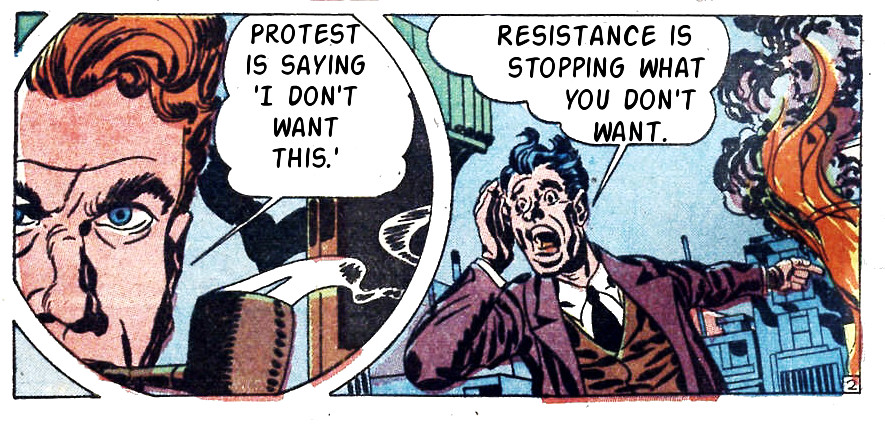
#OMN #openweb #OGB

Let’s talk about the hashtag story

Hey, changemakers! 🌍Tech world Are you tired of shouting into the void on social media? Frustrated with the endless noise and the lack of impact? It’s time to harness the power of #hashtags to fuel a movement that can actually make a difference. And guess what? The #openweb is our playground for this revolution!

Check out The Hashtag Story https://hamishcampbell.com/?s=the+hashtag+story it’s more than just a guide; it’s a blueprint for building something big, something real. If you’re passionate about activism and ready to step up, this is your chance. This isn’t going to be an easy or comfortable path, but hey, who ever said change was easy? 💥

The #OMN (Open Media Network) path is more than a simple call to action. Core to this is that the hashtags story can be more than just noise; it can be seeds for a movement, a way to connect, organize, and grow. But this only works if we make the commitment to turn those hashtags into something more than just digital graffiti. We need to take that extra step, turn talk into action, and make the #openweb a place for real, meaningful activism.

The #hashtags cover technology and society from a progressive view and are very simple, on a surface level, but full of complex conversations when you lift the lid and talk in the context they are planted in.

#deathcult = neoliberalism

#fashernista = fashion in relation to social political relations

#openweb = the original ideals of the WWW and internet culture

#closedweb = is the pre internet computer networks and the post #openweb networks, the #dotcons grow.

= the workings of FSF and open-source development with the addition of transparent process.

#encryptionists = all solutions need more encryption, this is often unthinking technological fascism.

#dotcons = the transition to for profit internet, and the social con this embodies.

#geekproblem = an old discussion on freewill and determinism, also a cultural movement, think of “two cultures” as a path to start to understand this.

#techshit = is a part of the composting metaphor, shit as a core, important, part of the ecological waist (social) cycle.

#techchurn = the technological outcome of the #geekproblem

#nothingnew = a polemical way of slowing and reversing #techcurn in a non-dogmatic way.

#OMN = open media network

#indymediaback = rebooting the dead altmedia project that was in its time the size of the #traditionalmedia on the #openweb

#OGB = open governance body

#BLOCKING = refusing to look/averting eyes/eyes closed

The stroy is complex and interlocking, telling us a wide story and world-view, to show a path out of our current mess.

#deathcult is relevant because of #XR forcing us to look the truth of ecological and social decay in the eye, good to ground this in real historical experiences, think of the Irish Potato and Bengal famine.

#Fashionista is about consumer capitalism, looked at as social illness.

#openweb is about building code for anachronism rather than capitalism

#dotcons are feeding social illness, we cannot keep building this sickness, the step away metaphor is a positive path away from this.

#closedweb is a form of technological slavery, we often choose.

is a tool that can be used to guide us on to the better humane path and, it gives us the power to JUDGE and thus decide, it is POWER.

#geekproblem is a group of people lost in darkness, blinded to humane light, they inbreed monsters in code #techcurn #techshit

The #geekproblem hashtag is not simply negative, it’s taking obvious “problem” out of “geek”.

The problem is obvious look at #failbook and Google both “geek” projects of domination/control, and yes you are right it’s geek culture shaped by capital in both cases.

What does #openweb geek culture look like? Looking back at early #couchsurfing and #indymedia you have healthy non “problem” examples. Look at both projects late in their decline, we have strong examples of the “problem”.

#techcurn the world is full of me to projects, everyone has the same ideas, few if anyone links.

#nothingnew is a question, do we need this codeing project.

#techshit is when people do not ask this question and build it anyway agen and agen

#encryptionists are in the end way too often about artificial scarcity (web03), this is not actually needed. To be clear this is a minority need for this technology, but as a limited use case not as a dominant way of thinking, codeing. #encryptionists is about the feeling of total control that encryption gives the #geekproblem this is key because all good progressive society are based on trust, which is about giving up this desire. The problem in geek is the problem of socialization… a known geek issue 🙂 in itself is fine, am not judging. BUT this is embedded in code that shapes society, it becomes a “problem”. Good to think a bit more on this one. With power comes responsibility.

This list only touches on the meanings and subjects. Next question, what is the story and world-view that these #hashtags embody?

Feeding a vampire class of #fashernistas for 20 years

When people do not understand/respect the value in keeping the fluffy/spiky debate in place you end up like this the-crypto-syllabus.com/france This is the problem, not the solution.

Worth a read to see the issue of feeding off the state and the VC poison that shapes the #fashernista ploughing over grassroots by the #deathcult These people are adding to the #techshit and shifting the focus to pointlessness, I have seen no good outcomes from their work.

But they were “our” people at one time, our old friends in activism took the heathy internal stresses that were braking projects like #indymedia to feed a #fashernista vampire class, to built careers feeding on and draining grassroots corpus for 20 years.

It’s not a good look, but people like these are the gatekeepers you talk to when you talk to “power” #indymediaback

Influx of EU funding into the Fediverse – all together push through, the HARD block crumbles

Getting a good outcome is hard… And this current influx of EU funding risks doing more damage than good to the health of the #Fediverse, if it continues along its present agenda. Yes, the #Fediverse already has its own lifestyle-driven mess, but we can try to mediate the damage driven by funding first. If we succeed there, maybe the lifestyle drift can self-mediate in time.

Aiming for a better outcome, what we’re looking for is social change and challenge with less mess. This page looks at some of the best funding we’ve found http://unite.openworlds.info/Open-Media-Network/4opens/wiki/Funding-of-openweb-projects Not an attack, but opening a conversation on an obvious issue.

We can also look at funding that is being completely wasted, but that’s likely outside our influence. Lets keeping it positive (When We Can), I like to keep things positive… if possible.
But let’s be honest — a lot of people are BLOCKING, and that’s going to cause fire and a LOT of smoke. This is what real social change/challenge looks like: murky. Focus on #KISS — Keep It Simple — to see through the smoke.

Transparency matters, it’s hard to imagine how you can do a left-wing project without showing your workings:

  • Open/Trust = left
  • Fear/Control = right

That’s the core framing this page is about.

#Dotcons & poisoned agenda, Yep, the whole #dotcons side of the EU funding agenda is poison.
It only feeds the mess. And as I’ve pointed out before, most funding ends up poured straight down the drain. Sadly, that’s the default outcome.

#IndymediaBack – Learning the right lessons, one thing to keep in mind: I think we (the #Indymedia crew) learned the wrong lesson from the repression and state raids. We pushed fear/control as the solution, and this added to the #closedweb mess. But as the #Fediverse now shows, the path should have been open/trust — That’s the #openweb path we abandoned. That split ripped Indymedia apart, and we’ve been stuck in the #dotcons mess ever since.

Simplicity as Strategy, when making judgments, keep it #KISS — Simplicity is what cuts through the mess. Shovels and compost, is the #OMN approach.

Trauma, Repression & Healing, Yes, trauma is real. That’s why I lean into basic ways of looking at these things. From there, it’s up to people to build up, DIY style — a real grassroots approach.

Practical approaches, watch the film:

I made this for the legal support crew of a major campaign. The repression was ongoing and intense — But the healing came through mass participation, like walking calmly through police stop and search zones. That likely helped to mediate a lot of growing trauma.

Final thought: #Openweb – all together push through, the HARD block crumbles. We’ve got work to do. Let’s keep it grounded, open, and as clear as we can through the murk.

Doesn’t OMN need to fit into some economic relationships?

The big #fedivers is run in the voluntarist economic model of patron and donations to cover basic costs. The technical federation allows this to happen at a humane scale. This was how #indymedia was run for 10 years – not without stresses that we do need to mediate. at the #OMN we have seed funding for 3-4 years and looking for sustainability here.

We are building “grassroots” at #OMN the is a role for #mainstreaming journalism and media. Projects like @novaramedia etc. they can be funded in different ways. Diversity is always a good thing, its were real humane power lays.

It’s now hard to get an easy view of the death of #indymedia

It’s now hard to get an easy view of the death of #indymedia as a lot of the most shitty behaver was taken offline as a part of the ripping that tore the project apart. For the #OMN this is a problem that we strongly need to mediate when implementing “individualistic” rights/workflows. We need to keep metadata flows intact to build trust and history. This challenge raises questions on the balance between privacy and transparency.

The were internal and external forces… I tend to concentrate on the internal as it’s the area that we actually have power/responsibility to make work. The external is a harder task that we then have to fight to challenge/change.

A good (non-neutral) write up of the #death of #indymedia https://sheffield.indymedia.org.uk/2011/04/478397.html

The start of the end for #indymedia with the project splitting into open/closed and the growing intolerances on both sides https://www.indymedia.org.uk/en/2008/02/391384.html

How do movement die. Some #indymedia crew trying to unblock the ossification and growing open/closed conflict https://www.indymedia.org.uk/en/regions/nottinghamshire/2008/02/391385.html

We need to not repeat this mess for the #indymediaback project.

What should #indymediaback look like?

For some of my views from living/working through this mess

http://hamishcampbell.com/index.php/2020/03/17/a-look-at-the-internal-mess-of-the-uk-indymedia-project/

http://hamishcampbell.com/index.php/2013/03/28/a-brief-history-of-activism/

Most history’s of #indymedia are full of academic wank

The problem of academics covering activism, particularly within grassroots movements like #Indymedia, is the significant disconnect between academic interpretations and the realities on the ground. This gap is not a matter of perspective but represents a fundamental systematic misunderstanding of the dynamics and operational mechanisms of activist movements.

The disconnect is that academics gravitate towards more visible and vocal members of activist circles, the #fashernistas. These are, often, passionate and articulate, but are not in any way the people making the movement’s wheels turn. The core of activism, the real work, is carried out by those who are too busy to engage with academia because they are immersed in the day-to-day efforts of driving change.

The history of the Indymedia project is a case in point. Indymedia was a pioneering effort in the early 2000s to create an open publishing platform for grassroots journalists. Its story is a rich tapestry of collaboration, innovation, and relentless dedication. However, much of the academic writing on Indymedia misses the mark, focusing instead on surface-level narratives. For a deeper understanding of the Indymedia project’s history from someone who was actively involved, you can read my activism stories.

Academia push analyses that are often removed from the practical realities of activism. The theoretical frameworks and methodologies used serve more to fulfil academic desires for publication and recognition than to provide a faithful representation of activist efforts. This creates a body of work that can be described as “wish-fulfilling #fashernista wank,” offering little insight into the actual functioning of the movements they are supposed to be covering.

The consequences of this misrepresentation are significant. Historical records, influenced heavily by academic accounts, paint an inaccurate picture of how movements operated and succeeded. This not only distorts the past but also impacts future activists who look to these records for guidance and inspiration. The narratives crafted by academics sideline the contributions of the true workhorses of the movement, leading to a strongly skewed and broken understanding of what is effective in activism.

To bridge this gap, we need academics to engage more deeply with the core activists, those whose hands are dirty from the work of making change happen. This requires a shift from seeking out the most vocal and visible to those who are often unseen but indispensable. Additionally, activists themselves must recognize the importance of documenting their efforts and experiences, ensuring that future narratives reflect the true spirit and mechanics of their movements.

There is a #OMN project for this #makeinghistory, which matters as we do need more authentic dialogue between academics and activists, to build a more accurate and useful body of knowledge that actually honours and reflects the efforts of those who actually are driving change.

A Q&A on this:

Q. I wish the hacker culture connection to anarchism was more thorough and consistent. It looks a lot more like privileged fuckery and pet insurrections. It could be that the academic scene wasn’t representative of the movement as a whole

A. I would largely ignore most existing academic history of anachronism and tech as it is extreme https://en.wikipedia.org/wiki/Mannerism

In my view, if people want the truth, a good place to start a project like this would be to look through the #indymedia email archives for an “original” anarchist workflow. I would not take much notice of the “official” history’s of indymedia as they are full of academic wank. The theoretical analysis of the time is all pushing agenders that ripped the project apart and killed it – while it is interesting to see this nasty process, but it’s much less useful as exacting history of what actually happened. The whole internal process is saved in open email lists now hosted on archive.org no other anarchist project is this well documented.

Best not to add to the activist “mannerism” in our shared history, it’s really bad all ready. That is if we are to have hope for “anarchism” fluffy and spiky playing a role in saving a humane/ecological world we need.

#indymediaback

Churning of pointless tech projects

Too much built in alt-radical tech ends up feeding pointless #fashernista churn. New platforms, new protocols, new branding, new codebases tend to be endless motion with very little grounding in actual social need. People mistake novelty for progress, and the result is a constant cycle of abandoned projects, burnt-out developers, and fragmented communities.

That’s one of the reasons why #indymediaback matters. It is not another pointless radical tech project chasing fashion. It grows from the #nothingnew path, building around things that already worked socially, culturally, and politically before the current mess swallowed the #openweb.

The point of #nothingnew is not nostalgia, it’s mediation. Instead of endlessly reinventing tools and social structures, we look at existing working practices and compost the failures while keeping the value that already exists, we build from continuity rather than disruption.

For the first 5 years of the #fediverse, this often means creating #openweb replacements for existing #dotcons platforms. That has value, people need usable alternatives to corporate systems, but simply copying the logic of the #dotcons into federated code has real limits.

Code is never neutral, all code carries embedded assumptions, social relations, and ideology. When we directly replicate #dotcons platforms, we import the values of the #deathcult along with the interface design. Metrics, branding, influence economies, performative identities, engagement addiction, soft/hard hierarchies – all this gets reproduced inside supposedly “alternative” spaces.

This is where the problem needs mediating rather than denying. The path of #indymediaback is different because it starts from an existing radical social process, not from abstract tech blindness. #indymedia already had working publishing flows, distributed trust networks, collective moderation practices, and real-world activist communities. The technology existed to support those social relations, not replace them.

That means the real value of #indymediaback is not primarily the tech stack, even though the tech matters. The value is in rebuilding the social continuity that made the original project meaningful. Without that grounding, you likely just produce another empty platform that disappears into the pile of forgotten radical tech experiments.

Food for thought: the #geekproblem is often not actually interested in the #openweb as a human value network. Instead, parts of geek culture feed parasitically off the current mess – thriving on fragmentation, novelty churn, status games, and technical abstraction disconnected from lived social reality.

Feeding off the collapse of the #openweb while calling it innovation is still bowing down to the #deathcult. Seen this way, the need for change becomes clearer, that we need active mediation, not passive drift. Both carrot and stick. Support grounded projects that grow from real communities, and challenge the pointless churn that keeps draining energy away from building durable alternatives.

The #OMN is one attempt at this – a shovel for composting the inhuman mess, so something living can grow from it.

What do you mean by “mainstreaming”

Q. what do you mean by “mainstreaming”.

A. we all worship the #deathcult (neo-liberalism) in polatics, economics, most of the food we eat, our jobs and social lives are all mediated/mostly created by this invisible world-view. In progressive terms #mainstreaming is pushing this agender to build carriears and social structures to further the personal #stupidindividualism created by the #deathcult we live in. This is a circle that is going to kill and displace billions of people over the next 100 years from #climatechaos and the social feedback loop of political #fascism

#stupidindividualism is created by the social disintegration of the last 40 years of neo-liberalism, fascism is an outcome of this.

Examples from the UK groups @NovaraMedia while producing fab content its all distributed through the #dotcons and in the end they aspire to be the new @guardian to take the role of #traditionalmedia This is fair anufe but the wider “we” need to balance this with #grassroots media which is a non #mainstreaming mission.

Most #NGO agrenders are #mainstreaming this is an easy to see view.

I played a role in training thousands of grassroots “journalists” over the last 25 years at #undercurrents, #indymedia, #visionontv and now #OMN the majority that are still creating media went onto build there carriears in the mainstream and #NGO sectors few stayed in non #mainstreaming production missions. Cant blame them for this, though no alts were sustained from this which was why we did the training.

In each case grassroots/alt structures were devoured by the #deathcult pushing the need for mainstreaming survival – cant blame people for this.

BUT we need a working alternative if we are going to change the world that does not kill and displace billions of people over the next 100 years #XR

learning for expirence the #OMN is a political/tech tool to mediate this issue.

Anti dogmatic thinking

Brining #indymediaback

The fallow flower beds/farm that is #indymedia needs to be bought back to life slowly with as little change to the structure as possible. In our current social tech state just about ANY change will start ripping and when this starts it escalates quickly to do real damage. The original 2000-2008’ish structures cover 90% of issues in a good way, let’s live with that for a while.

The are a host of outstanding big issues in the remaining 10% that are undefined – let’s concentrate our energies on these missing bits and roll out solutions respecting “diversity of tactics”. The ansears to the missing 10% generally cannot be found pre-defined, we should be very weary of people coming in with fixed agender. Diversity and good process in hand with on the ground working overtime as a part of the real network is the ONLY valued test.

Slow/diversity/nurture vs fast/dogmatic/tearing. To highlight now before we roll out bigger, there will be lots of the second and little of the first much of the time. It is just how it is…

* is not dogma, it’s simply the last 30 years of open source development codified as social structure.

* PGA is not dogma, it’s the embodied wishes/dreams and planning of thousands of peoples over meany country’s and years of time.

* Indymedia is not dogma, it’s the expirence of meany radical media groups coming together to build an open network to fight neoliberalism (#deathcult) on the ground, in the streets, in the fields and online.

The difference between indymedia and the hundreds of failed “radical” media projects over the last 20 years is that indymedia flourished for a good time before it succumbed to the “forgetting” of the #PGA and foundation it was built on and was thus helpless against the internal forces that ripped it apart. Leaving  no malubilerty to shift to the heavy blows from the forces attacking from the outside.

We core crew need to learn how to become benign older folks who answer every “better” solution put forward by the thrusting young with “how does that work with the #4opens” then fallow up with “lets look to see if that furthers the PGA hallmarks” to all their enthusiastic “youth” energy for “change”. Keep it gentle and most importantly, keep the focus…

At meany stages there will be howling mobs soured by hatred and through wing shit to create a stinking mess… our job is to keep focus and calm… a hard thing to do in a messy/disaster world #Brexit and #climatechaos pushes, but it’s the simple job we are taking on.