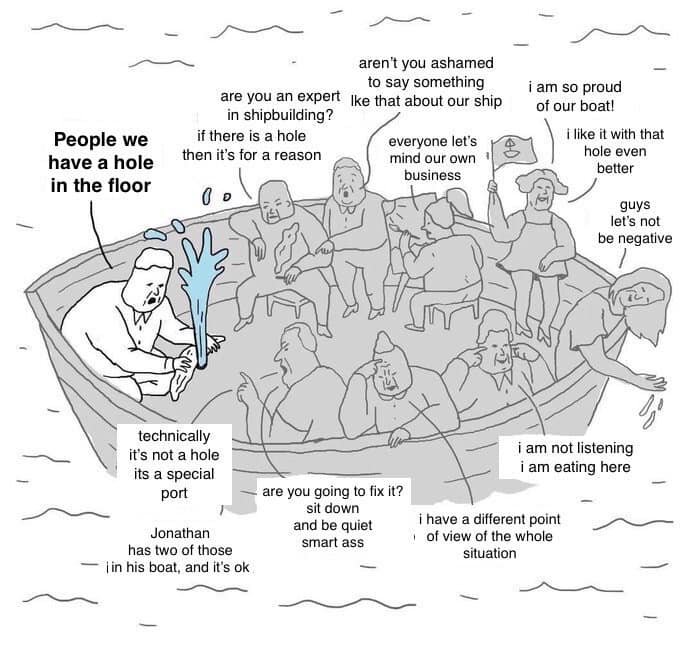
How our “mainstreaming” people understand what they’re doing

The new #NGO generation are in the process of the second sell-out of the #openweb. These people are eather new or are comeing back to this “native” space, have stepped stright into running the current reboot after the original grassroots path burned out and was pushed aside. This new “NGO generation” holds strong views, their perspective, is that they already lived through a catastrophic failure once, and they are determined not to repeat there version of it.

Their mostly blinded story goes something like this: “We tried radical openness, tried informal governance, trusting culture to hold things together, It didn’t survive scale, money, or power.
The result was capture by corporations far worse than anything we imagined, we can’t afford another naïve collapse.” This trauma – not betrayal – is their common sense starting point. Many of these people genuinely believe they were burned by “idealism”.

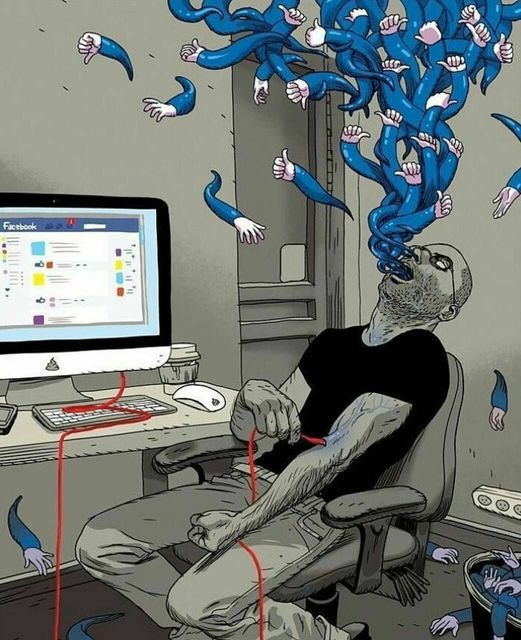
From this NGO insider view, they did watched Flickr get eaten by Yahoo, Twitter go from a playful commons to authoritarian infrastructure, and Facebook hollow “community” into extraction. They watched # fashernista volunteer governance implode under harassment, burnout, and capture, but what they did not see was the intolernce of the internal imploshern.

From that self inflicted wreckage, they did not conclude that capitalism is the problem, they concluded that informality does not scale and gets eaten alive by capitalism. So when they hear words like commons, grassroots, trust-based, or we’ll figure it out as we go, what they actually hear is: “We’re about to lose everything again, but faster this time.” That fear shapes everything in the current takeover path they push us down in the Fediverse.

They, think they are OK, and see themselves as harm reducers, rather than visionaries or builders of a new world. In their mindset, “real alternative talk” is too often how bad actors slip in. Their self-image is closer to #mainstreaming than the alt they are trying to manage, thus are think inside the current system, the alt is working to change and challange.

  • Platforms exist – you can’t wish them away
  • Capital exists – you can’t abolish it from a policy office
  • States exist – and they will regulate you whether you like it or not

So their question isn’t “What world do we want?” It’s “How do we prevent the worst outcomes in the world we actually have?” That’s why their tools are regulation, standards bodies, foundations, charters, boards of the great and the good (or at least the less bad). To them, this is adult responsibility, not what we see in the alt as sell-out.

So why do NGO paths feel “inevitable” to them? They believe power only listens to things that look like power, that, what matters, is that governments won’t talk to messy collectives, anonymous affinity groups, rotating stewards and informal federations like our native #Fediverse. Funders won’t fund things without legal entities, without accountability structures or paths without named decision-makers. Media won’t quote “the commons”, “the network”, “some people on the Fediverse”. So to them the path needs foundations, and boards, which aren’t ideological to them, they’re blind to this only seeing simple translation layers in there work.

At their best, they see themselves as “Standing between chaotic grassroots energy and hostile institutions, translating one to the other, so the whole thing doesn’t get crushed.” From inside this framing, NGOs aren’t buffers, they’re shields, a polite way of saying #blocking. Where they are partly right – and where it goes wrong – is that yes, some of their fears are real. Millions of people depend on existing infrastructure, sudden collapse hurts the most vulnerable first, and power vacuums often produce authoritarianism or monopoly – not freedom.

Their nightmare scenario is not enclosure, its collapse followed by something worse. So aim for incremental change, stability (for themselves and their class), and institutional continuity, even when it’s ugly. This is dressed, with radical lipstick up as legitimacy, but, sadly, it functions as structural #blocking.

This part is uncomfortable, but central, they marginalise grassroots voices, and believe this is justified. They sincerely believe grassroots underestimate adversaries and overestimate culture, so will collapse under conflict by refusing compromise needed for staying power. They tell themselves “We’ve seen this movie. Passion burns hot, then disappears. Institutions are what remain when people move on.” So when they sideline grassroots projects as “naïve” or “unscalable”, they think they’re being pragmatic, not abusive. In there common sense they don’t see exclusion, they see triage, were they are the doctors saying who lives and dies.

Where the worldviews break is both sides are responding to real history, they just draw opposite lessons from the same wreckage. What the #NGO crew don’t see – and why this keeps looping – is that their “stability” reproduces enclosure, their “common sense” legitimacy reproduces hierarchy and professionalism produces exclusion, the obsession with safety produces stagnation.

From inside these sell-out paths, survival feels like success with funded projects, policy wins, seats at tables and published NGO frameworks. The tragedy is that both sides are trying to prevent disaster, but they are optimising against different disasters. Capitalism is very good at rewarding one of those fears while quietly #blocking the other.

From the NGO side, grassroots looks reckless, from the grassroots side, the NGO crew looks complicit. Both are partly right – but the power imbalance matters. The NGO crew controls: funding, platforms, mainstream legitimacy and narratives. Which means their fear shapes reality far more than the real hardworking people actually building change and challenge at the grassroots.

Some of the lies that keep this messy system running are “We are neutral stewards, not power holders.” This is a claim to power with NGOs and foundations acting as if they merely facilitate and convene. But they control funding flows, agenda setting, who is “in the room”, which projects are “serious” and finally which histories are remembered. That is, #KISS, power.

They must deny this because admitting it would require accountability to the commons, which they structurally cannot offer. Their accountability flows upward to funders and states, not downward to people. So when challenged, they say “we’re just trying to help” – while continuing to decide. “We represent the ecosystem.” They don’t. They represent whoever didn’t leave there process and whoever depends on their funding to make them stay.

Non-participation is treated as absence, not refusal. Blocking, muting, and burnout are erased. Their legitimacy depends on being the voice, because if they admit they’re just one actor among many, their seat evaporates. Reports about “the community” are published without recall, veto, or dissent.

“Anyone can participate.” But participation requires unpaid labour, institutional literacy, polite tone-policing, time abundance, and tolerance for bureaucratic process. Then the exclusion is reframed as personal failure. When grassroots actors disappear, the story is that “They disengaged.” Never “We made engagement unbearable.”

Formal governance, regulation, and the illusion of control is a dogma that formal structures prevents capture, its an old lie. Formalisation doesn’t prevent capture, it defines the capture interface. Once power is legible (roles, chairs, processes), it becomes fundable, lobbyable, and replaceable.

Informal power is hard to seize, formal power is easy. NGOs point to “best practice governance” while real decisions happen off-record. Likewise, regulation is not a substitute for collective ownership. Regulation manages behaviour, not incentives, shareholder obligation remains, extraction remains, enclosure remains – just slower and more polite. Abolition or ownership transfer is politically unthinkable from their position, so guardrails are celebrated while the underlying model stays untouched.

This is about scale, collapse, and conflict “Scale is necessary to matter” is another unexamined belief. Most harm on the internet comes from scale, most resilience comes from multiplicity, redundancy, and smallness. #NGOs chase scale because that’s how they survive – while dismissing small systems that actually work. Likewise, they claim “we prevent collapse” hides the truth: they mostly prevent transition, stabilises dying models long enough for capital to reconfigure and re-enter. Everything feels “temporarily stuck”, for years in there world.

And finally “Conflict harms the movement.” but in realerty, conflict is how power becomes visible. Suppressing it doesn’t remove it, it pushes it into backchannels, exits, forks, burnout, and silence. Yes, conflict scares funders, so dissent becomes “toxicity”, and #mainstreaming consensus is quietly enforced.

The deepest contradiction “We can midwife the commons without becoming its governors.” This has never been true, organisations that control resources, define legitimacy, and speak externally are exercising power, whether they admit it or not. Smiling NGOs are not outside power, they are simply power with better PR. They say they exist because they don’t trust people. They say they represent people. You cannot hold both without lying to yourself.

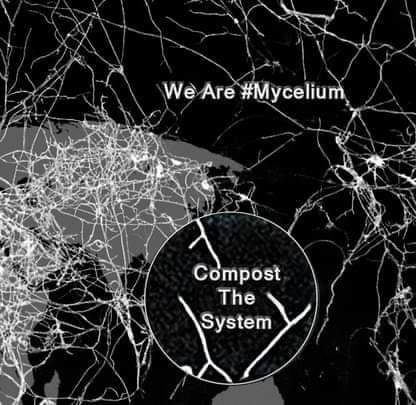
Compost is the right metaphor as you can’t argue someone out of a frame that keeps their institutions alive, you can only make that frame less central by growing something that actually works. That’s what the #OMN path is about – if people build it, support it, and let it grow in the spaces we work to open up, we can become the change and challenge we actually need.

The #Fediverse as a lesson, it doesn’t need representation, it needs narration (many voices), aggregation (not unification) and refusal (to be spoken for). Every attempt to “represent” it recentralises it, makes it legible to power, and prepares it for capture. So the current move, the Fediverse isn’t being captured by villains, it’s being domesticated by caretakers. And history tells us enclosure doesn’t come screaming – it comes with minutes, frameworks, and funding rounds.

#KISS

So, who are today’s bad guys? The corporate eliteits, the fossil fuel barons, the billionaire class, and their pet politicians. The #neoliberals who chant ‘TINA’ while the world burns. The green-washers and compromisers who whisper that change must be ‘reasonable’ while we march off a cliff.

Yes, it’s a mess.

DRAFT

Power, the social cost we keep talking past in #FOSS

A post sparked Hacker News spouting of noise and smoke. It looks like “just fork it.” phrase in #FOSS culture provokes heat. So worth a second look, for some it’s the purest expression of freedom, to others, it’s a conversation-stopper that quietly protects power. What’s striking isn’t that one side is right and the other wrong, it’s that people are too often talking about entirely different things, while using overlapping words, thus the smoke and heat in the linked discussion above.

It’s worth a little time to look at this issue. The pro-fork view is about permissionless agency. From the classic #Geekproblem perspective, “just fork it” is not an insult or a dismissal, it’s a reminder of where power actually lies. The arguments, often bad-tempered, go like this: Open source removes the need for permission, maintainers are not obligated to implement anyone else’s ideas, if you want something different, you can do the work yourself, forks are non-hostile, temporary, and often merge back.

In this view, forking is not fragmentation, it’s pressure relief, to protects maintainers from entitlement, unpaid labour demands, and endless arguments over direction. It’s also what makes #FOSS resilient: even if a maintainer disappears or a project takes a turn you dislike, the code remains usable.

For libraries, tools, and infrastructure components, this works remarkably well. Many developers maintain private forks, carry patches for clients, or experiment freely without any intention of creating a new community. No drama, no schism, no ideology “mess”, just work. From this “native” angle, criticism of “just fork it” sounds like a demand for obligation where none exists.

The counterpoint is that forks aren’t free in social systems, the critique isn’t only about forking code, everyone agrees that’s normal, healthy, and foundational. The tension is when “just fork it” is applied to social platforms, protocols, and shared infrastructure, systems where the software is only a small part of the project.

Running a fork as a new public project isn’t only technical work, it needs: attracting users, building trust, maintaining governance, handling conflict, sustaining moderation and care and thus carrying long-term responsibility. This is where the phrase starts to feel different, in these contexts, “just fork it” is heard not as empowerment, but as exit over engagement, a way to avoid dealing with governance failures, power asymmetries, or unresolved social conflicts inside an existing social project.

From a social #OMN perspective, this isn’t neutral, forking risks: splitting attention, duplicating effort, losing shared history, weakening already fragile commons. Forking may preserve freedom, but it can still destroy value. Forks vs schisms is maybe a way to look at this:

  • forks – technical divergence
  • schisms – social rupture

You can fork without a schism, but every schism requires a fork. Many arguments talk past each other on this, because one side is defending the right to fork, while the other is warning about the cost of schisms. These are related, but not identical. Power, ownership, and stewardship, are fault lines about how people understand authority.

  • One view holds that open source projects are a #feudalistic kingship – benevolent or not – and contributors knowingly accept this. Maintainers owe nothing, forking is the safety valve.
  • The opposing view sees projects as commons built from collective labour where maintainers are stewards rather than owners, carrying responsibilities that go beyond “my repo, my rules.”

Neither position is imaginary, both exist in the wild. The conflict arises when a project quietly shifts from one model to the other without naming it.

Why this matters for OMN-style projects, they are explicitly social, federated, and historical, they depend on: continuity, shared narrative, visible governance, memory. In this context, common sense “just fork it” instincts unintentionally reinforce the problems #4open paths are meant to solve: fragmentation, invisibility of power, and loss of collective learning.

That doesn’t mean maintainers owe endless emotional labour It does mean that governance and mediation matter as much as code, and can’t be solved by technical exits alone. Two truths at once, the debate becomes clearer if we hold these two truths together:

  • No one owes you unpaid labour, forking is a legitimate, necessary protection for maintainers.
  • Social infrastructure is not just software, treating forks as cost-free exits erodes shared commons over time.

When people argue past each other, it’s usually because they’re defending one truth while denying the other. This creates mess, social mess. So to compost this mess, we need to understand better where this leaves us, “Just fork it” is neither a delusion nor a universal solution, it is:

  • healthy in libraries and tools
  • essential as a last resort
  • dangerous as a reflex
  • corrosive when used to silence governance questions

The real work – the hard, unglamorous part – is knowing which situation you’re in, and being honest about the social costs of the choices you make. That’s not a technical problem, it’s a cultural one, best not to be a prat about this.

This matters because we have social problems created by tech intolerances, #blocking culture. The #dotcons industry’s ability to pull the ladder up behind itself should not be underestimated.

We’ve created digital systems so complex, fragile, and professionally gated that an entire generation is being locked out of owning and understanding their own tools. Communities and people should be able to run their own services, control their own data, and participate meaningfully in digital culture, but few can, because we made everything unnecessarily controlled and complicated.

This wasn’t an accident, it’s a part of the #eekproblem, complexity concentrates power, it creates dependency on experts, platforms, and the corporations that have been quietly erasing the possibility of autonomy. What once required curiosity and modest effort now demands specialist knowledge, constant updates, and institutional backing. The result is a widening gap between those who can build and control systems, and those who are forced to rent/beg access to them.

This is why #KISS simplicity matters, why documentation matters and most importantly why social tooling matters as much as code. And why the #openweb was always about people, not only protocols. When we ignore this, we don’t just lose users, we lose a generation’s ability to imagine, agency, and collective control in the first place.

It’s a real mess we need to compost.

Reclaiming the Meaning of “Common Sense”

The #OMN is a good-faith project, so let’s begin from that assumption. I don’t value the mainstreaming direction of this podcast, but it is still a useful thinking point when considering our project outlines. It highlights the pressures and narratives that open projects eventually have to navigate when we deliberately choose a diversity of paths rather than a single, optimised one.

Yes, it is always possible to game any system, including those built on trust. That risk never disappears. The difference with trust-based projects is not that they are immune to gaming, but that they consciously refuse to optimise around it. Instead, they rely on serendipity, social norms, shared myths, and lived traditions to provide balance when people do start to “play the game.” These informal constraints matter more than formal rules, because they shape behaviour without hardening into control systems.

This is the tension space #OMN operates in: resisting the urge to over-engineer against bad faith, while nurturing cultures in which bad faith becomes costly, visible, and socially discouraged rather than mechanically policed. In this transition, we will have to rethink almost everything we take for granted.

  • Why do we work so much in jobs that drain us without creating real value?
  • Why do we compete when cooperation would make life easier, richer, and more sustainable?
  • Why is everything treated as a secret – data, knowledge, even culture – and why are we trained to distrust each other at every turn?

Capitalism naturalised its own ideology. It taught us that exploitation is inevitable, that scarcity is absolute, and that hierarchy is a fact of nature. Profit was framed as virtuous, generosity as naïve. Over decades, this conditioning became “common sense.” We internalised it until it became invisible, shaping our behaviour, our policies, and even our dreams.

The #4opens world undoes this conditioning. By making infrastructure, code, governance, and knowledge open and accessible, it forces us to see the assumptions capitalism presented as natural for what they really are. We begin to recognise that scarcity can be artificial, that competition is socially engineered, and that secrecy primarily serves power, not communities.

In this context, our old “common sense” becomes a prison. The rules we followed without question – work harder, own more, hoard, extract – no longer hold. Open systems teach us that cooperation, sharing, and transparency are not just ethical ideals; they are practical tools for living and thriving together.

Open thinking makes new realities possible. When knowledge, governance, and infrastructure are transparent and modifiable, we can ask new questions, and act on them collectively:

  • What if work were aligned with care, creativity, and social need rather than profit for the few?
  • What if trust replaced fear as the default in our networks?
  • What if data abundance, rather than scarcity, became the starting point for planning society?

Reclaiming “common sense” in this way is not abstract philosophy. It is a practical, political, and social act. It means noticing the invisible rules that keep us trapped, and then designing systems that embed fairness, resilience, and collaboration into the foundations of everyday life. The transition will not be easy. It requires questioning almost everything we were taught about “how the world works.” But it is necessary if we want to survive the current mess of exploitation, artificial scarcity, and isolation.

The #4opens give us the tools. The commons give us the space. Open thinking gives us the courage. Together, they allow us to redefine what “common sense” really means, and to build a world that is more humane, more resilient, and more just than the one we inherited.

I hope this helps us keep finding the “native” path.

We need to be explicit that spiky and fluffy are complementary, not opposing paths. They serve different functions in the same path, both are necessary for anything healthy to grow.

The problem is not disagreement between spiky and fluffy. The problem is the large number of people who actively fight against this complementarity – who insist on one mode being legitimate, and work to exclude and delegitimise the other.

This is the majority of people we end up interacting with. So until we name this clearly, we keep misdiagnosing the conflict. It isn’t about tone, strategy, or culture. It’s about a refusal to accept plurality, balance, and context – that refusal blocks progress far more effectively than any external opposition.

  • Spiky without fluffy becomes brittle and exclusionary.
  • Fluffy without spiky becomes easily captured and ineffective.

Together, they create resilience.
For the #OMN and #openweb to survive, we have to stop treating this as a personality clash and start recognising it as a structural issue that needs active mediation, not denial and #blocking

The rise of #stupidindividualism as a common sense path

Part of the shitty mess we’re in comes from the failure of #DIY culture and the rise of #stupidindividualism as the common sense path. #stupidindividualism is completely unscalable in social terms. It fragments, isolates, and exhausts. That isn’t accidental, it’s a classic divide-and-control strategy of the #deathcult. And we need to consciously step away, and away, and far away from this.

An example, over the last 20 years, I’ve answered the same questions individually, over and over. But the point of #DIY culture was never one-to-one hand-holding. You don’t need to stress personal connections just to begin. The hashtags are links – they exist to let you start the process yourself.

You can do this by #KISS following the flow, not by demanding individual explanations. Click the #hashtag links. Read the background posts. Trace the project history. Use a search engine. Learn how the process works before pulling people into one-on-one clarification. This is basic #DIY practice, grounded in the #4opens.

You need a second example, looking back, remember how many of our activist friends ran workshops on how to use #dotcons social media as a campaign tool? How to organise activism through corporate platforms? While this was happening, our own independent media was being ripped apart internally, ossified by process, and then abandoned by the same #fashionista activists.

This mess is the devil child of #postmodernism and #neoliberalism, all surface, no grounding, all individual expression, no shared responsibility. We know the names and URLs of many of the people who did this. It’s the legacy we’re dealing with. Our projects like #indymediaback exists because of this history.

If you’re serious about changing society, you have to think your way past this common sense #blocking. That means rebuilding collective pathways, shared knowledge, and common processes, not endlessly repeating the same individual conversations. The tools are here. The links are here. The work starts when we stop pretending this is a personal problem and recognise it as a social one.

The greybeards and the second sell-out of the #openweb

There is a familiar voice resurfacing in today’s debates about the future of the web, its measured, reflective, earnest, often grey-bearded., and it has funding. These are the people who were there in the Web 2.0 era. The #Flickr builders. The early platform designers. The conference speakers who once talked about “community”, “social objects”, and “public infrastructure”. Many of them now occupy foundations, NGOs, advisory boards, and policy circles.

And they are doing something dangerous, as their thinking is too trapped inside capitalism. They are selling the #openweb reboot for a second time. Not maliciously. Not cynically. But from a place of deeply internalised capitalist thinking that they cannot – or will not – step outside.

The original Web 2.0 was built on a powerful lie, one many progressive people wanted to believe: That privately owned platforms could become public infrastructure. “social” media might actually mean social in a public, civic sense, that venture capital could somehow birth commons. As one of the original designers of Flickr puts it:

“We had sort of deluded ourselves into thinking in Web 2.0 that we were building public infrastructure.”

Yes. Exactly. But that delusion wasn’t accidental, it was structural, it came from trying to build public goods inside a system whose legal obligation is to maximise shareholder value. The moment scale arrived, the moment infrastructure emerged, the public was quietly enclosed. This wasn’t a failure of design, it was a failure of basic political economy.

The problem isn’t insight – it’s the frame – what makes the current moment frustrating isn’t that these voices lack insight. On the contrary: their analysis of algorithmic control, enclosure, loss of stewardship, and extractive business models is often sharp. The problem is where their thinking stops.

Again and again, the horizon of possibility remains trapped inside capitalism:

  • Regulation instead of abolition
  • Better governance instead of collective ownership
  • NGOs instead of grassroots power
  • “Public–private partnerships” instead of commons

Even when they correctly identify that platforms have become infrastructure, the proposed solutions remain managerial, institutional, and polite. The unspoken assumption is always the same, capitalism stays, “we” sand the sharp edges. This is the limit of their self-imposed view, and the danger we need to see is that this mirrors of the original sell-out and what makes this especially dangerous is that this thinking now takes up far more space than it deserves.

Just like in the Web 2.0 era, these voices dominate conferences, funding channels, policy conversations, and media narratives. Grassroots alternatives are marginalised as “naïve”, “unscalable”, or “too political”. This is abusive sidelining where the outcome at best is: Once again, we are told to be patient. Once again, we are told to trust institutions. Once again, the radical edges are smoothed away.

This mirrors the original sell-out:

  • Then: “Let’s build community on platforms.”
  • Now: “Let’s fix platforms with better policy.”

Different language, same enclosure. We see this agen with the #NGO trap and the illusion of stewardship, ones agen #foundations and #NGOs are presented as the solution. “Public product organisations”. “Stewardship entities”. Carefully designed governance models that still orbit state and capital power. The mess we need to see to compost is that NGOs are not the commons, they are buffers.

They absorb dissent, professionalise resistance, and translate radical demands into grant-safe language. They reproduce hierarchy while speaking the language of participation. This is not an accident, it is how capitalism metabolises critique.

This is why bridges keep collapsing, I have said my self: “Let’s build bridges. We need these people on side.” Yep, we’ve tried that, the problem is that when challenged – when the underlying mess is named – the response is not dialogue, its #blocking, muting, institutional silence, invitations withdrawn and funding evaporates.

This mess keeps tells us what we need to know, bridge-building only works when both sides are willing to move. When one side controls the platforms, the conferences, and the purse strings, “bridges” become assimilation pipelines.

So yes the path we need to take is compost, not deference, not cancellation, not personal attack. But refusing to let this thinking dominate the space again. Compost is how dead ideas become fertile ground for new growth. It is messy, uncomfortable, and necessary.

We don’t need another generation of politely regulated enclosures. We don’t need a warmed up Web 2.0, reboot with better language and worse outcomes.

We need:

  • Commons, not platforms
  • Collective ownership, not stewardship theatre
  • Grassroots infrastructure, not NGO mediation

We need the #4opens, not “ethical-ish” branding. The #openweb will not be rebooted by the same people, using the same frameworks, who helped bury it the first time.

  • If you want to bridge, comment and engage honestly.
  • If you want to defend the mess, expect compost.

That’s where new growth actually comes from.

#KISS

The video flow that sparked this post

PS: I kinda like the strong metaphor of house slaves and field slaves, these people are the metaphorical house slaves.

From personal mess to shared paths, #OMN in the post-truth world

Consensus matters – but it’s so hard – collective projects, media, activism and infrastructure require a minimum level of agreement about what the problem is. Not total agreement, but enough shared reality to coordinate sustainable action. Without some form of shared external social truth, progressive projects do not move at all, this is not always because people are malicious, but more often because they are no longer standing on any shared ground. This mess, is a problem, as it means needed paths keep being blocked.

We are living in a post-truth world, but that phrase hides the real problem. The deeper issue is that too meany people are fighting private battles inside their own heads – about identity, status, belonging, fear, and control – and then projecting those battles onto the social world around them. These internal conflicts are treated as universal truths, so when challenged, they harden rather than soften, this is the mess we need to compost. This is why so many conversations that should lead to collective action instead collapse into friction, blinded misunderstanding, and burnout.

In the absence of this, every proposal becomes personal: Critique feels like attack, needed structure feels like control, boundaries feel like exclusion. The result is paralysis disguised as debate, it is not accidental, it is the #dotcons cultural outcome of decades of individualisation, platform capitalism, and algorithmic amplification of conflict. This created mess blocks any progress, including an inability to talk clearly about why existing systems fail, what we have to put up with is constant triggering of defensiveness and rejection.

Two recurring patterns surface here, the “geek problem”: an over-focus on tools, optimisation, and abstract purity, detached from any useful lived social reality. The “fashionista problem”: an over-focus on language, image, and alignment with dominant narratives, avoiding any useful structural conflict. The problem is that if you don’t see these patterns, the current media ecosystem mess looks “natural” and inevitable. If you do see them, the need for something like #OMN becomes much more obvious, thus the hashtag story as a tool some people might understand this path

Why this keeps turning into conflict, it is not really about tone, vocabulary, or even definitions. It is about where responsibility sits, some people want problems softened so they feel welcoming. Others insist problems must be named clearly, or they cannot be solved. Both impulses sometimes come from good places. But when clarity is treated as hostility, and comfort is treated as progress, nothing moves. People disengage, energy drains away, the needed projects stall.

This is all mixed up in a Chicken-and-Egg trap. Outreach is hard because #OMN deliberately refuses to do certain things: It avoids central control, it avoids “common sense” corporate mediation, it avoids vague and easy “platform” path promises. This makes it difficult to write promotional text without either: Over-promising things that don’t exist, or explaining constraints that sound negative without context. To try and compost this chicken-and-egg problem, we need shared understanding to communicate simply, but we need communication to build shared understanding. Can you see the mess from this?

We use hashtags as scaffolding for the needed social truth, not as slogans, but as scaffolding, lightweight markers that point to recurring structural issues: #geekproblem #fashernista #dotcons #blocking are not insults. They are shorthand for patterns that otherwise take pages to explain. But, without shared context, they are still easily misread as personal attacks. Again we face #blocking.

So what can actually help? If #OMN is to happen, we need to change how we resolve these moments of friction. Collective projects do not grow by consensus with everyone, so we need to build shared language gradually, not defensively, social truth is cultivated, not imposed. A first step is #KISS stop treating discomfort as failure, discomfort is often the signal that something real is being touched.

The hard truth, is that no one is obliged to participate, nobody has to do anything. But collective alternatives do not appear by magic. They are built by people willing to sit with tension long enough to let something shared emerge. OMN is an attempt to do that, to move from affinity groups from isolated personal wars toward media commons where cooperation is once again possible.

The #blocking is real, but so is the way through it, if we stop mistaking friction for hostility, and clarity for aggression. The work is not to be nicer, it is to be collective again.

Change and challenge

Let’s be honest about something we usually skate around. Many of our #fluffy activist friends are not fighting for change. They are fighting for equality of access to the existing system. That system is the #deathcult – growth, extraction, hierarchy, control – and most progressive mainstream activism is about making that worship fairer, nicer, more inclusive. More seats in the temple, better language on the altar, safer rituals for those already kneeling. This is not transformation, it is managed inclusion.

And yes, this work can have real, immediate value for people suffering now. That matters. But we need to stop pretending it is the same thing as change and challenge. Equality within a system is not the same as escaping the system.

Most #mainstreaming activism, accepts capitalism as inevitable, state power as the horizon, extraction as the price of living, climate collapse as something to be “managed”, this leads them to except platforms, NGOs, and institutions as arbiters of legitimacy. Then the limit is to ask politely for representation, protections, funding, visibility. This is reformist harm reduction, not the liberation we need. We need to say this out loud, more, because this “confusion” currently is #blocking real alternatives. When people who want out are constantly blindly told to slow down, be safer, be nicer, be more legible, be more fundable, the result is paralysis.

The #OMN path is not about polishing this mess, or making oppression more diverse, it’s in no way about optimising injustice. It’s about walking out of the temple, even when that feels irresponsible, unsafe, or unrealistic.

This Is where the friction comes from: pushing for messy governance and mediation instead of blocking, use-value over branding, affinity over scale, action over commentary. We are simply refusing to confuse survival within the system with escape from it. That refusal makes people uncomfortable – especially those whose activism is already recognised, funded and socially rewarded.

A simple test: Ask this of any project, campaign, or platform – Does this help people stop worshipping the #deathcult? Or does it help them worship it more safely? If the answer is the second, be honest about it, don’t lie by call it radical, don’t call it transformative, don’t call it challenge. Be honest, call it what it is, continuity, for all our sakes we need to say this clearly, even if it costs social comfort.

Because real change and challenge has always been unpopular – especially with those most invested in making the current mess feel livable.

#OMN #PROD #KISS

We need to balance this mess – a diversity of agendas ≠ winner-takes-all politics. Different projects are based on different agendas – and that diversity is not a weakness, it’s a survival trait. Winner-takes-all politics (electoral, market, platform, narrative) flattens this into a single metric of success: scale, growth, legitimacy, dominance. That logic is a social and ecological disaster, as it pushes everything toward monoculture, and monocultures always collapse.

The mistake is assuming that coordination requires uniformity – it doesn’t – what it requires is tolerance of difference plus shared boundaries. This is what “diversity of tactics” originally meant before it was watered down into a slogan. This is why: “acceptable rebels” are celebrated after they succeed, “useful weirdos” are allowed once they prove value to the system, everyone else gets disciplined, marginalised, or erased.

But what really matters is social context, not the tool. The problem now is that: individual self-destructiveness has scaled up, systems amplify harm faster than reflection, ecosystems are the casualty. This is why “just let people choose” no longer works, choice without structure leads to collapse.

In this mess, the #stupidindividualism reaction of #blocking is just displaced survival energy, blocking energy that takes up the space that needs to be filled with creativity. Blocking is not strength, it’s defensive overload.

In most cases, blocking emerges from damaged or threatened sense of self, lack of any working mediation structures leading to fear of being overwhelmed or erased. This happens when people don’t trust processes, they rely instead on hard personal boundaries, then when people don’t trust themselves, they externalise control.

#Blocking becomes a way to regain agency, stop cognitive overload, avoid unresolved conflict and preserve identity under pressure. It’s not a moral failure, as much as a systemic trauma response. But it is also creativity-killing.

Why blocking scales and creativity doesn’t. Blocking scales easily: fast, binary, emotionally satisfying, requires no social labour. Where creativity is slow: relational, risky, ambiguous and requires trust and time. So in high-stress environments, #blocking wins by default. This is why systems that rely on blocking alone cannot generate alternatives, they only fragment.

A weak sense of self? Yes, but it’s socially produced, not individual pathology, it’s produced by: platform hostility, collapse of community memory, loss of intergenerational skill transfer, constant precarity leading to only performative politics replacing any lived practice.

People are asked to be everything – safe, radical, inclusive, legible, pure – with no tools like the #OMN to manage contradiction. Blocking becomes the last remaining control lever.

In this mess, how do we communicate “diversity of tactics”? Not only as tolerance, as ideology, but more usefully as infrastructure like the #OMN projects which have soft boundaries before hard ones, based on affinity as much as agreement, you don’t need shared beliefs to work together, you need shared purpose locally.

This leads to the uncomfortable truth, that creativity doesn’t emerge from safety, it emerges from bounded risk. Too much danger = collapse. Too much safety = stagnation. What we have too much of today is safety theatre covering structural fear. The path out of this is that people need to develop a stronger, not weaker, sense of self, one that can survive disagreement without disappearing. That’s the real work.

Safety-absolutism is quietly killing change and challenge

Good to look at this without attacking individuals, we need to mediate the safety-absolutism that is quietly killing change and challenge. When fear becomes #blocking, safety becomes dangerous. This is hard to say plainly, but it needs to be said. Fear is now one of the primary blocking forces in our movements. And the way we currently talk about “safety” is actively preventing change and challenge.

This isn’t about mocking trauma, denying harm, or dismissing the very real violence people experience. It’s about recognising when defensive survival strategies harden into political dead ends. The safety spiral logic: “We can only be close to people or communities that already fully align with us on every axis of harm, identity, politics, health, and worldview – otherwise we are not safe.”

So the conditions for engagement become: covid-conscious in exactly the right way, anti-psychiatry / anti-DSM, anti-state, anti-capitalist, anti-cop, inclusive of disabled, trans, plural collectives, youth-liberatory, anti-electoral, explicitly anti-racist (correctly so), rejecting radfem frameworks, rejecting astrology-based categorisation, acknowledging ongoing pandemic realities, and doing all this perfectly, visibly, immediately. Are a few of the more messy examples.

Only when every expanding box has been ticked can contact begin, only then can conversation happen and blocking stop being the default. This isn’t solidarity, it’s pre-emptive social closure, a social kind of #geekproblem as we call it in the hashtag story

What this produces in practice isn’t safety, it’s total fragmentation. Everyone is one misstep away from exile, disagreement becomes a threat vector, an unfamiliar person is a risk assessment. Every public space collapses into curated micro-enclaves, where blocking becomes the primary social technology. Not mediation, not context, not repair, just disappearance, head in the sand. This doesn’t build resilient communities, it builds brittle ones that shatter under any pressure.

This Is especially dangerous now, we are not in a stable period, we are in accelerating collapse: ecological, political, economic, informational. Change and challenge require friction, they require contact across difference, they require disagreement that doesn’t immediately become expulsion. If every space must feel safe before struggle begins, then struggle never begins at all.

Movements don’t grow in controlled environments, they grow in contested, imperfect, human ones. #Blocking can have good social use, it’s a secondary tool in porous community building in projects like the #OMN

But when blocking becomes: the default response, the first tool, not the last, the substitute for governance, mediation, and care …it stops being protective and starts being politically disabling. Blocking erases memory, erases accountability, erases the possibility of learning. A movement that cannot remember its conflicts cannot grow.

This is the hardest truth, safety is incompatible with transformation, safety-first politics assume: stable institutions, time to refine norms, space to withdraw, systems that absorb failure. We don’t have those conditions anymore.

When safety becomes sacred, it silently aligns with the status quo, because the status quo is what guarantees minimal risk for those who already have community. Radical change always feels unsafe, it always threatens identities, certainties, and boundaries. That doesn’t mean we abandon care, it means we stop confusing comfort with justice.

An example: Anti-racism doesn’t mean zero engagement with difference. It means building structures that can hold conflict without defaulting to erasure.

What modernist projects like the #OMN are actually arguing for is not in any way: “everyone should feel unsafe”, “ignore harm” or “abolish boundaries”. It is more about context instead of purity tests, and accountable conflict instead of silent blocking. Visible social process, not invisible fear management.

This is not a call-out – It’s a call back – to movement cultures that could argue, fracture, repair, and continue. A final, uncomfortable point, if a political space can only exist by blocking most people on sight, it is not a movement, it’s a bunker, and bunkers don’t build futures. They just help people wait out the collapse – alone.

We need less fear pretending to be politics, less safety pretending to be justice, more messy, risky, mediated, human engagement. That’s where change has always come from.

Open Media Network, a path we forgot

The #OMN is not trying to invent the future, it’s trying to restart a social path people forgot they had. That path was never clean, it never asked permission, it never felt safe. But it was real, and that’s the only soil movements have ever grown in.

Why this has to happen now? Because the ground we’re standing on is collapsing. The #dotcons are rotting – hollowed out into surveillance, manipulation, and rent extraction. Journalism has collapsed into PR cycles, outrage farming, and access journalism. Activism is trapped in performative loops that generate visibility but not power.

#climatechaos doesn’t wait for governance frameworks, steering committees, or another round of funding calls. And more bluntly: the knowledge is dying with the people who lived it. If this knowledge isn’t re-embedded in practice now, it doesn’t get “preserved”. It becomes an archive, not a lineage. Archives don’t fight back, lineages do.

Why everything feels so hard? The feeling of complexity isn’t because the work is impossible. It exists because people are traumatised by collapse, capture, and betrayal. Projects were taken over, movements were professionalised, trust was burned and replaced with process. You don’t argue people out of that, you outgrow it by example. Working systems dissolve fear faster than any explanation ever could.

This will never be mainstream – stop wanting it to be, accept this early and everything gets easier. The goal is not millions of users. The goal is hundreds of nodes that matter. If it works, it spreads sideways: by imitation, by reuse, by adaptation, that’s how #Indymedia spread, that’s how it will happen again – if it’s allowed to stay messy. #Mainstreaming is how movements die politely.

Reboot action media, not commentary, this is where most #Fediverse projects go wrong. #Indymedia worked because: it covered what people were doing, it was embedded in movements, it was operational, not opinion-driven – Action reports. Situation updates. Logistics. Reflection after action. Signal is useful under pressure. Noise is everything else.

Make mediation visible again – #Blocking culture killed community memory, bring back: named metaphors, public-but-careful conflict summaries, rollback instead of deletion, context instead of erasure. This does not mean tolerating abuse, it means treating conflict as social material, not contamination. Movements grow by composting tension, not pretending it isn’t there.

Cultural infrastructure, not nostalgia. Plumbing, not a platform. The #OMN is not: a solution, a network to “join”, a replacement for anything. It is: pipes, flows, tools for people already doing work. Examples:

“You’re documenting housing struggles? Here’s a way to syndicate without selling your soul.”

“You’re organising climate actions? Here’s a way to publish without an algorithm.”

“You’re running a local media collective? Here’s a way to connect without central control.”

People don’t trust platforms, they trust tools that work.

The reboot principle is affinity before scale. Action before legitimacy. Use before platform. This is how #Indymedia worked before it forgot itself. A practical path to rebooting a community of action. Start with a small, visible “We”. Not an open call, not a mailing list, a named affinity cluster of people with shared history and aligned instincts, 5–15 people, is ideal. People who ship things, who argue honestly, who don’t need brand permission to act. This group is not representative, it’s responsible. Their job is not to speak for anyone, it’s to do visible work others can plug into.

Final note. This isn’t about being radical for style points, it’s about being adequate to the moment. The tools already exist, the knowledge already exists, the need is obvious. What’s missing is the courage to stop waiting for permission and start rebuilding the paths that once carried real power.

That’s what the #OMN is for.

We fucked up… and that matters because we still have agency

Let’s start with the uncomfortable truth: we fucked up the last 20 years of #openweb tech. Not “they” fucked it up. Not only #BigTech, not only venture capital, not only governments and surveillance states. We did, especially those of us who were closest to the tools, the protocols, the decisions – the geeks, developers, architects, and maintainers who shaped how this stuff actually worked in practice.

That matters, because it means we still have direct power over what happens next. Too often, external forces are used as an excuse. “Capital captured everything.” “Users don’t care.” “The network effects are too strong.” These stories become a form of #blocking – a way to avoid the harder work of change and challenge that is still possible inside our own communities.

The #geekproblem role in the #techmess is one of the hardest things to admit, that much of the current #techmess wasn’t imposed on us – it was designed by us. We built systems that privileged scale over care, efficiency over use, protocol purity over social process. We treated governance as a technical problem and social mess as something to be engineered away. We told ourselves that decentralisation alone would save us, while quietly centralising power in code repos, foundation boards, and informal hierarchies.

This is the #geekproblem in action: the blindness to social value, to lived use, to human mediation. The result is vast piles of #techshit – technically impressive, socially hollow systems that decay quickly because nobody actually owns them in a meaningful way.

And when these systems fail, the blame gets pushed outward. “The market did this.” “Users misused it.” “NGOs ruined it.” Sometimes those things are true – but they are never the whole story.

Then we have the # fashionistas default worship of the #deathcult which is the part people really don’t like hearing: most of us default-worship the #deathcult. #Neoliberalism doesn’t need true believers to function. It survives perfectly well on habit, convenience, careerism, and fear. We reproduce it every time we copy the UX patterns of the #dotcons, every time we design for engagement instead of meaning, every time we prioritise respectability over rupture.

At this point, polite critique is not enough. The climate is collapsing. Social trust is eroded. Institutions are hollowed out facades. We do not have the luxury of endless moderation and tone-policing.

Let’s be clear, it is well past time to hold active worshippers of the #deathcult in contempt – not as individuals to be cancelled, but as ideas and practices to be openly rejected. And more importantly, to challenge our own default compliance with those values.

Time is the one thing we don’t have. Yes, this shift will happen. Over the last few years, more people have abandon #dotcons, more will rediscover collective tools, more will rebuild local, horizontal networks.

The #OMN is precisely about that internal power: what we do together, how we organise, how we build, and crucially, what we refuse to reproduce. But here’s the problem #climatechaos does not wait for cultural maturation. Ecological breakdown, authoritarian drift, and economic precarity are accelerating now. If the #openweb is going to matter, it has to matter in this decade – not as a promise, but as lived infrastructure.

That means pushing change and challenge now, even when it’s uncomfortable, even when it breaks consensus, even when it costs status. We cannot keep living inside copies of the #dotcons is one of the clearest failures of the last 10 years is this: we kept rebuilding copies of corporate platforms and calling them alternatives. The same feeds. Same metrics. Same influencer dynamics. Same UX assumptions. Just with better politics in the bio. That will never be enough.

For projects like #OMN to become real, we need to invest serious resources and energy into good #UX for #openweb projects – not slickness, not branding, but clarity, legibility, and human-scale control. Interfaces that normal people can understand. Systems that work in mess. Tools that support mediation instead of suppression. This is not about perfection. It’s about use-value over #blocking.

The next step is obvious and unavoidable, it’s not more think pieces, more foundations, more grant cycles. It’s rebuilding social-technical systems that people can actually use together, under pressure, without surrendering control. We already know this. Deep down, everyone reading this does.

The question is whether we act on it – or whether we keep hiding behind inevitability while the world burns. The #OMN is not a guarantee. It’s a refusal: to keep worshipping the #deathcult,
to keep copying the #dotcons, to keep pretending we have more time than we do.

The work is here. The tools are here. What’s missing is the will to stop fucking around.

What are you doing today that is not pointless? Not a rhetorical question, a line in the sand. As too much contemporary “activism” is still busywork inside the #dotcons – visible, branded, career-friendly, and structurally harmless. Our old activist circles took the healthy internal tensions that once kept projects like #indymedia honest and fed them upward into a #fashernista vampire class: NGOs, foundations, panels, consultancies. For twenty years, they’ve drained grassroots energy to build CVs and gain access to “power”. That’s not radical, it’s capture.

Now, if we are serious about surviving #climatechaos and confronting the #deathcult, we have to stop doing pointless #techshit and start rebuilding outside the platforms that profit from our failure.

We need projects that doesn’t need permission, we need a #DIY crew. That means gathering like-minded people off the #dotcons, working collectively, not performatively, building small, useful things that actually publish, connect, and persist, following the #4opens: open process, open governance, open code, open data to accept mess, conflict, and compost as signs of life

The Open Media Network (#OMN) is not a brand or career ladder, not a #NGO pitch deck.
It’s unfinished work from the original #openweb – work that was paused, captured, and now needs rebooting.

So again, plainly – What are you doing today that is not pointless? If the answer is “posting”, “networking”, or “waiting for funding”, that’s a bad answer. If the answer is building with others, publishing outside capture, sharing control, doing the unglamorous work, welcome back.

#indymediaback #OMN #4opens #makeinghistory #OGB

Belief in technical decentralisation

This space has a long history. The #fediverse grew out of the “cats” of libertarianism and, to a lesser extent, anarchism – notably without the (O). That lineage mattered. It shaped the instincts of the space: suspicion of central authority, an emphasis on autonomy, and a belief that technical decentralisation could substitute for social and political process.

I wrote this a few years ago.

Today the landscape has shifted. This #openweb space is increasingly layered with #NGO capture and thick #mainstreaming noise. Yet it remains fundamentally #native. That contradiction is where the real work now lies.

So the question is not whether the #fediverse is “good” or “bad”. The question is how we rebalance it so it becomes effective for real change and challenge. This is where #4opens matters – taking #FOSS out of narrow tech culture and back into society as a lived, social process.

We also need to be honest about failure. In the struggle between open and closed, we didn’t just lose because they won. We lost because we failed. And this matters, because we have power over our own failures. Over theirs, we mostly have liberal wish-fulfilment.

That distinction is crucial.

If you are genuinely interested in social change, there is one thing you should not do:
do not push #mainstreaming agendas.

This is where the Fediverse is badly out of balance. The flows are soaked through with #deathcult assumptions, even when wrapped in progressive language. These agendas reproduce the system while pretending to soften it. They are driven by careerism, respectability politics, and status-chasing – not transformation.

What the #fediverse does not need is more branding, more respectability, more #NGO frameworks, or more “safe” narratives. That path leads to capture, stagnation, and eventual irrelevance. What we actually need are real alternatives: grounded social process, not just protocol purity; governance that emerges from use, not authority; democratic mediation, not aristocratic coders; trust built through practice, not #blocking policy documents.

What the world actually looks like

To be clear, #NGO occupation rarely looks like a hostile takeover. It arrives wearing the language of care, safety, professionalism, and responsibility. For many involved, the problem is not intention, it is structural effect.

A recurring pattern appears: governance without mandate. Foundations and NGOs emerge claiming to “represent the Fediverse” while having no meaningful user representation at all. Boards dominated by a small, self-referencing mix of developers, funders, and institutional figures. Decisions made behind closed doors, then presented as consensus.

This is the classic NGO move: speaking for communities rather than being accountable to them. Native, messy, grassroots portrayal is replaced with advisory councils and codes of conduct written by people who do not do the day-to-day social work of maintaining messy communities.

Then comes funding-driven agenda setting. Once grant money enters, priorities shift. Work that is legible to funders gets done; work that is socially necessary but messy gets sidelined. Success is measured in reports, visibility, and institutional recognition. Use-value is replaced by funding-value. Common-sense problems are reframed as opportunities to be sold to institutions rather than grown with communities.

This produces policy-first, people-second thinking: universal moderation frameworks, platform-wide “best practices”, compliance language imported from reactions to corporate platforms. All of this ignores the Fediverse’s actual strength – that it is contextual, local, and plural.

What works for a medium-sized EU instance does not work for a radical activist server, a queer safe space, or a small-language community. One-size-fits-all governance is a centralising instinct wearing decentralised branding.

Conflict is then sanitised rather than mediated. Conflict is treated as reputational risk, not as a normal and necessary part of social life. The response becomes pre-emptive rules, rigid enforcement, avoidance of political disagreement – in #OMN languae, #blocking.

But grassroots communities are not products. Conflict does not disappear when it is hidden; it reappears as burnout, factionalism, and quiet exits. This is one of the main drivers of the long-term churn that drains focus and energy from the #openweb.

Meanwhile, the space is distracted by attempts to brand the Fediverse for mainstream acceptability: “safe for brands”, “ready for institutions”, “just like Twitter, but nicer”. This strips away its radical roots while offering none of the resources of corporate platforms – the worst of both worlds.

Finally, depoliticisation is smuggled in under the banner of neutrality. Calls for “apolitical” spaces function in practice as quiet enforcement of liberal norms, exclusion of anti-capitalist, anti-colonial, and system-critical voices, and privileging those already comfortable within the mainstream. Neutrality is not neutral. It is a political choice that favours the status quo – the #deathcult dressed up as common sense.

This kind of behaver is inevitable, so the question is not if we ban it, but much more how we balance this with healthy grassroots structure. The way out of this is not less politics. It is better, more grounded politics: rooted in lived use, open process, and the messy reality of collective life.

Get off your knees.

Why “messy” matters explicit, social, and unavoidable. The word “messy” matters, a lot. It’s not a weakness, it’s the core requirement of any humane alternative social technological project. If what we build only works when everything is clean, controlled, and predictable, then it will collapse the moment real people start using it.

Real life is messy, communities are messy, power is messy, conflict is messy. If our tools and processes can’t survive that, then they aren’t tools for liberation – they’re toys for ideal conditions that don’t exist. This is where most alt-tech keeps failing.

We keep trying to build hard systems that assume away social complexity. Perfect protocols, elegant abstractions, clean governance models. But this obsession with cleanliness produces brittle systems that shatter under any stress. Anything that requires everyone to behave “correctly” in order to function is already authoritarian by design.

That’s why messy-first thinking is not optional – it’s the way out. Most “hard code” is actually #techshit from the moment it’s written, not an insult, it’s compost. The uncomfortable truth is the value of software is not only in the code, it’s in the social use around this code. Documentation, shared norms, trust, mediation, onboarding, storytelling, conflict resolution, continuity – this is where value lives. Code is one needed layer of that social substrate. Without the substrate, the code is dead on arrival.

This is where the #geekproblem bites hardest. The value that actually matters – social use – is invisible to many of the people writing the code. So they optimise for what they can see: features, refactors, rewrites, new projects. The result is more churn, more fragmentation, and ever-growing piles of decaying #techshit. From the inside, it feels like progress. From the outside, it’s entropy.

This is why #4opens is such a sharp tool if we use it. Not just open source code, but open process, open governance, open data, open participation. That means valuing outreach, long-running social threads, and shared ownership as much as clever technical solutions. If a project can’t explain itself in plain language, can’t survive disagreement, can’t onboard non-experts, and can’t evolve without a small priesthood of maintainers, then it’s already failing – no matter how elegant the code is.

So the question of value isn’t “how clever is the system?” It’s: who can use it, who can shape it, and who can carry it forward when things get messy? We need a diversity of tools and cultures that can live in the mud, absorb conflict, and keep going anyway. Mess isn’t the problem, mess is the medium.

Progressive Mainstreaming

Most progressive #mainstreaming isn’t about ending the #deathcult – it’s about making its worship feel more fair, more inclusive, more polite. There is some real everyday value in this. Fewer people get crushed immediately, some suffering is reduced, that matters.

But let’s be honest about what it does not do, it does not get people off their knees to challenge the altar to stop the sacrifice. It rearranges the seating in the temple, feeding the deeper problem, obedience. Progressive mainstreaming accepts the frame, accepts the metrics, accepts the economy of extraction and then argues about distribution. It negotiates better terms with a machine that is killing us. That is not transformation, it’s managed decline.

The project of real change and challenge – the work the #OMN exists for – starts somewhere else entirely. It starts with people standing up and walking away. Walking out of the temple of the #deathcult we all live in, not in purity, utopia or comfort. But into mess, cooperation, unfinished tools, shared risk, and actual agency. This isn’t about better policies inside the system. It’s about building outside it, under it, alongside it – until the system hollowed itself out and no longer matters.

It’s about people picking up shovels, composting the wreckage, and growing something that can actually sustain life. This is simplicity #KISS #OMN

We have already seen the failures: lived through #Indymedia, the #NGO turn, the #dotcons capture, the #Fediverse repeating old mistakes. When we talk about #OMN, we’re trying to stop people from re-learning the same lessons by losing again. Silence would be complicity.

The #OMN is where critique becomes agency. It’s not about “promoting a project”, if we don’t talk about this without something like #OMN, critique collapses into doom, aesthetics, or personal exits. #OMN is a way to, act collectively, without lying about power, money, or governance.

Forgetting is how capture happens, the moment people stop naming alternatives, the space fills with managerial language, funding logic, and fear-based control. We talk about #OMN to keep the space open enough for something human to grow.

The #OMN is a path that resists #stupidindividualism, where most contemporary “solutions” reinforce isolation, personal brands, and individual safety strategies. #OMN starts from the assumption that survival and meaning are collective. We need to keep talking about this because almost nobody else does.

It’s unfinished – and that matters. It’s not about defending a polished system, instead, it’s about holding open a process. Talking about #OMN is how we invite others into the compost rather than presenting them with a finished product to consume.

We talk about #OMN because it’s a native way of saying: “We don’t have to repeat this. We can build differently, together, if we remember what already worked.”*

It’s not evangelism, it’s stewardship.

A few of us have been working on real, positive, horizontal social and technological solutions for over twenty years. Not hypotheticals, not vibes, things that actually work.

We know they work locally, we know they work socially. And after more than a decade building on the #fediverse, we know they can work in tech, at scale without going vertical, corporate, or authoritarian.

This isn’t speculative any more. Our creative task now – the #nothingnew work – is simply to combine what already works: Horizontal social practice, federated #openweb tech, trust-based governance. We already have a slate of projects waiting to be built: #OMN, #OGB, #indymediaback and #makinghistory. What’s missing is not ideas, it is people willing to show up and implement.

And here’s the hard truth: every time we try to talk about radical or progressive language, power, or structure, people retreat into #blocking and ignoring. The same unresolved tensions get replayed endlessly, nothing is mediated, nothing is grounded. Bad will accumulates, the social commons rots.

This rot isn’t accidental – it’s structural – To work our way out of this mess, we need both #fluff and #spiky. We need broad categories to think clearly, the #mainstreaming #fashernista rejection of this isn’t sophistication – it’s submission. It’s a soft, polite form of #deathcult worship.

You don’t dismantle a #deathcult by being nicer to it, you dismantle it by stopping your participation and building something better.

So this is the question, not rhetorical, not theoretical: Are you going to help make this happen? Are you going to pick up a shovel? Or are you going to stay on your knees, arguing about tone while the ground burns?