The #openweb is #4opens, where dues this place the current #AI path?

To understand and walk this, lets look at an example of the mess we need to compost – by lifting the lid on the current #AI noise. The problem, isn’t simply whether #AI is intelligent; it is who controls the infrastructure, what incentives drive it, and whether technology serves people or turns people into components of the machine. When can see this we might be able to see, thus act on the #OMN trajectory: technology → power → participation → open infrastructure → commons, let try and get past the #fashionista mess of whether #AI is or isn’t “really intelligent.” as this is a lot of #mainstreaming noise.

AI is going to take all our jobs.
AI is going to transform everything.
AI is going to become conscious.
AI is going to kill us.
AI is going to save us.

Some of these claims might be true, some are noise and others certainly nonsense. The more useful questions are simpler – Who controls the technology, what are they trying to achieve, and who gets to decide how it is used? This is where the #OMN view of technology starts, don’t believe the hype – but don’t ignore the technology.

One of the problems we need to mediate, is, we should be careful about criticizing AI by repeating the claims made by the #dotcons (AI companies). If a company tells us its system is basically becoming a digital human, and we respond by saying “yes, but this digital human is dangerous”, we have already accepted their framing, we are helping improve there profits and power by repeating there story.

The same thing happens with the last generation of #dotcons, #Facebook told us its algorithm understands us, #Google tells us its systems are intelligent, #AI companies tell us their models are reasoning. Most of this is smoke and mirrors that we should be ignoring if we actually wont to see anything real.
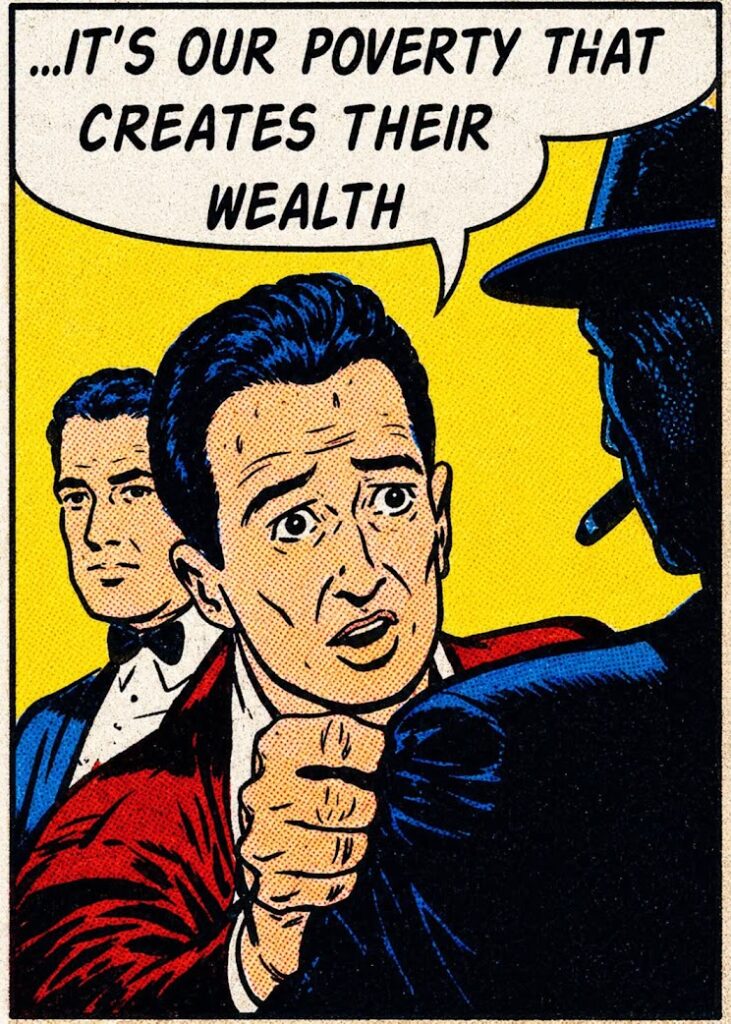
This next #dotcons #AI boom involves enormous amounts of investment in computing infrastructure, data centres, chips and energy. The companies involved are under pressure to keep growing because the financial system only rewards growth. This produces a dangerous feedback loop, a company needs to keep growing as investors expect growth, the company therefore needs a new story about future growth, the technology becomes that story. The investment creates infrastructure, the infrastructure creates pressure to find uses for it, the uses become evidence that the technology is inevitable. Then more investment follows, it isn’t only a conspiracy, it is a #KISS system of incentives.

The better approach for us is to look underneath the noise. Q. What does the system actually do? What infrastructure does it require? Who pays for it? Who owns it? Who benefits? What happens when it fails? What happens to the workers? What happens to the users? What happens to the communities around it? All are more interesting than arguing about whether a snake oil chatbot is “really thinking”.

And this is an important #OMN lesson – technology does not exist outside society – the code is one layer, underneath the code are ownership, money, labour, institutions, energy, law, culture and power, when we get distracted and ignore those lower layers we don’t understand the technology at all. When this happens the mess we constantly have to compost is that this pushing of #techchurn isn’t innovation. We’ve seen this before, #web02 was going to transform everything, then crypto, NFTs. Then the metaverse, and then whatever the next shiny thing was.

Each wave arrived with claims about revolutionary transformation, yes some of the technologies were useful, but the investment system doesn’t reward usefulness, it rewards growth stories. This produces #techchurn, endless technological change driven partly by the need to find the next thing to invest in, rather than by any clearly identified social need. This is not new, we have been pushing this kinda mess since the industrial revolution.

So, how can we compost this mainstreaming mess, one path we tried and it kinda worked in the 20 century was socialism, or in the western guise social democracy. This is a different politics from simply saying “technology bad”. That older question takes us directly into territory were there is another mythology we need to challenge – Markets don’t produce good technology, the idea that if a technology is useful, the market will automatically discover the best version of it. History doesn’t support this well, this is why the #openweb matters. A genuinely open network gives people alternative paths. Open standards reduce #dotcons lock-in. Open source makes systems modifiable. Open data makes information reusable. Open process makes power visible.

The fourth one of these is especially important, so that the social consequences of technology aren’t hidden inside the code. We can find them hidden inside the process, who funded the project? Who decided the priorities? Who was consulted? Who wasn’t? Who owns the infrastructure? Who gets to change it? Who carries the social and ecological risk? Who gets the benefit? If those questions aren’t visible, the technology is normally reproducing the same old power structures, we need to compost.

This mess is not only to be found in technological we can use the to look and judge social paths. The same thing happens with markets, with bureaucracies, algorithms. The system follows its incentives, consequences emerge from the interaction between the system and the world. This is the reason #KISS matters, don’t invent unnecessary mythology when a simpler explanation works.

Open source is a social technology, one of the strengths of #FOSS is that people can inspect the system. That doesn’t magically make it secure, but it creates a culture in which claims can be challenged, problems exposed and were people can build alternatives. The current #mainstreaming path is not this, its repeating trust us:

Trust the company.

Trust the algorithm.

Trust the secret model.

Trust the security team.

Trust the executives.

Trust the experts.

Trust the investor story.

That is the kind of technological hierarchy that the native #openweb paths needs to challenging with a shovel. Native paths, need native technologies, with community participation, not #dotcons or #geekproblem technologies of obedience. Our path is about composting the layer of abstraction between people and reality – technology can make people more capable or it can make people more manageable, this simply understanding is what makes #OMN a shovel.

The #OMN isn’t trying to build another AI-powered social media platform or creating a better algorithm, it isn’t trying to replace one technological priesthood with another, the #OMN is much more basic.

News.
Archiving.
And eventually, down the road, governance.

The idea is to build infrastructure where people participate in the flows of information rather than being only consumers. Events come into the network – People and communities add context – Stories connect and organize those events – Objects move between nodes – Metadata gets added and corrected – Different communities can see different things – Useful information can spread – Useless information is allowed to decay.

And, nobody has to maintain one giant master database containing the “correct” version of reality. This is a what we call a #datasoup, messy, living, federated information environment. And that mess isn’t weakness, it becomes the very resilience we need. Distributed systems need distributed understanding.

The #OMN path is deliberately different from the dominant AI model, were the dominant model says: collect everything → centralize it → train the model → produce the answer. The #OMN is closer to: collect from many places → connect → tag → contextualize → challenge → correct → archive → feed back into the network.

As I keep saying, this is not an attempt to create a perfect database, it is an attempt to create flows of trust. The network flows become the process of understanding. That is why federation matters, open process matters, why human moderation matters. It is why disagreement matters, and why we don’t need another central algorithm deciding what everybody should see.

In our current economics: People are inputs, workers are costs. Communities become markets. Attention becomes a resource. Knowledge becomes training data. Care becomes an inefficiency. That should reveal to you the common sense #deathcult mess we need to compost. That is the #OMN path, technology is a tool, the question that matters is who holds it, who maintains it, who benefits from it, and what kind of society it helps us to build.

Care is missing in the current mess, in a better world, a worker cares about the person using the product, a journalist cares whether the information is true, a nurse cares whether the patient gets better, a programmer cares whether the software actually works, a community cares whether its infrastructure remains useful after the funding runs out. This is difficult to understand for only automated paths because care isn’t an optimization problem, it is a social relationship.

The future doesn’t need more technological priests, it needs people able to pick up the tools, understand how they work, challenge the assumptions behind them and use them together.

That is the #openweb path, that is .

A more progressive liberal view of this same #AI mess

#OMN #openweb #FOSS #AI #automation #techchurn #techshit #dotcons #geekproblem #commons #KISS
Outreaching, what is the #OMN?

The #OMN (Open Media Network) is “anything in, anything out” network operating through a mediated trust, designed to handle a diverse range of content, data and interactions while leaving communities with the power to decide what they do with that data.

People can also choose their own level of engagement. You can be an active participant – publishing, tagging, moderating, connecting and contributing – or a more passive consumer, following trusted flows of information. The network does not need everyone to participate in the same way.

At its simplest, the #OMN is a “data soup” of tagged data objects flowing through channels, mediated by trust, rather than assuming that everything entering the network is equally valuable, useful or trustworthy, the network allows trust relationships to shape how data moves and how it is consumed.

This creates a different model of media consumption, with no central algorithm deciding what everyone sees, people and communities navigate the data soup through their own relationships, tags, channels and trust networks.

The #OMN is part of what we describe as Web 1.5 were #web01 had many of the things we now need back: openness, decentralisation, interoperability, linking, publishing and the ability for people to build their own spaces. #Web02 took much of that openness and wrapped it in dramatically better user interfaces. That was useful – people quite reasonably liked the easier ways of sharing, communicating and publishing. The problem was what happened next. The platforms became the infrastructure, this infrastructure was privately owned, communities became users, data became a commodity, social relationships became network effects. The #openweb was transformed turned into the #dotcons.

This is the mess we need to compost #Web15 is not about going backwards to Web 1.0. It is about taking the openness and decentralisation of Web 1.0, keeping the useful UX lessons of Web 2.0, and rebuilding the underlying infrastructure as an open, federated commons. That is the path we have taken the first steps on in the #Fediverse and #ActivityPub.

It’s the space the #OMN is working in – a data soup – the metaphor matters, not creating one perfect, clean, central database containing the definitive version of everything. Instead, tagged data objects to flows through networks. Objects can be copied, edited, tagged, linked, filtered, challenged, archived and passed between different communities. Different nodes carry different parts of the soup, some information will be useful in one context and apparently useless in another, that is OK.

The network is deliberately lossy and redundant, information does not have to be complete or perfectly synchronised everywhere, multiple copies and versions can exist, context is added as data flows. Something that appears irrelevant today may become important tomorrow – this is closer to how knowledge actually works than the fantasy of one perfect database.

The #geekproblem tends to see this redundancy, uncertainty and lossy data as technical failures that need to be eliminated. The #OMN sees them as characteristics of a living information network that need to be managed through trust and participation. Flows of trust – not simply the data, it is the flows of trust around the data. Trust becomes part of the network architecture, when people and communities decide which sources, objects, tag, channels and relationships they trust.

That trust can change over time, you don’t have to trust everything, you don’t even have to participate fully. You can follow particular people, communities or channels because you trust them, while ignoring other parts of the network. Someone else can make entirely different choices. This means there is no single central algorithm to decide what is important for everyone, instead, many smaller trust relationships create many overlapping flows through the #datasoup.

Those flows form communities and because they are federated, communities remain distinct while still sharing information and infrastructure. Trust instead of the algorithm is the differences between the #OMN and the #dotcons. The #dotcons operate by extracting social relationships into centralised systems, then using opaque algorithms to decide what people see. The #OMN starts from almost the opposite assumption: people and communities should have more control over the flows they participate in, the context and community relationships do more of the work.

This does not make the network magically free of disagreement, misinformation or bad behaviour. Quite the opposite, it makes those things visible and gives communities tools to respond to them. That is where mediation, moderation, tagging, rollback and open process become important. The network should make it possible for communities to see how things work, participate in decisions, challenge mistakes and build their own projects.

The aim is to take existing tools, protocols and technologies and embed practical federated media/news networks with a good user interface into these existing native #openweb flows. That is where the interesting part begins, real value is not the database, the protocol or the interface, it is the flows that emerge between people, communities, media objects and networks.

Those flows allow communities to form around shared interests, shared histories and shared trust without requiring everyone to belong to the same organisation or use the same interface. A network, not a platform, is better understood as commons infrastructure, rather than another social-media platform.

We build basic infrastructure and lets communities decide what they want to do with it, that is Web 1.5, not a nostalgic return to the old web, not another version of Web 2.0 – an #openweb reboot – using the best of what came before, leaving the centralised ownership model behind, and building the next layer around federation, trust, participation and the commons.

#OMN #Web15 #openweb #FOSS #commons #fediverse #KISS #geekproblem #dotcons

The language around #climatechaos is changing

For years, climate breakdown was treated as distant, a problem for activists, scientists, future generations or places somewhere else. That blinded view is now harder to sustain. Heat, fires, floods, crop failures, infrastructure disruption, rising insurance costs and the growing difficulty of simply keeping homes and communities safe are making climate disruption part of our everyday life.

As we are talking about tech on this site – the important question for the #OMN is therefore not only how do we stop climate change? It is also – how do we build the social infrastructure needed to live through the disruption that is already here? This is where the climate conversation needs to become broader, and treat adaptation not surrendering, due to the fear that talking about adaptation means giving up on mitigation, it doesn’t.

We still need fundamental social change to reduce emissions, change energy systems and challenge the economic structures pushing us to ecological destruction. But we also need to mediate the very real mess and disruption is already here, we need to be honest about that. A community facing repeated flooding needs flood planning, when homes become dangerously hot, people need cooling, insulation and better housing. When extreme weather repeatedly disrupts transport, energy or communications, communities need resilient alternatives, insurance companies withdraw from areas they consider too risky, it is basic that communities also need better ways of thinking about collective risk and resilience.

These are not future problems, they are now simply ordinary infrastructure questions. And this infrastructure is never only physical, we also need social infrastructure too. This is needed to grow climate resilience, information resilience, on this path we need native #openweb systems where communities can publish what is happening, preserve local knowledge, compare experiences, challenge bad information, coordinate responses and maintain collective memory. That is very different from the current model of social media, where information is filtered and controlled through commercial algorithms, engagement incentives and platform ownership.

The #climatecrisis is already difficult enough – we don’t need our communication systems making it harder. Thus, the climate crisis is also a media crisis: When a flood happens, what matters? People need to know where the water is. They need to know which roads are closed, where vulnerable people are, which services are operating. They need to know what happened last time to know who they can trust.

And afterwards, someone needs to record what actually happened, this last part is particularly important. Without good local records, every disaster becomes an isolated event. Communities repeatedly rediscover the same problems because institutional memory disappears. This is one reason the #OMN #makinghistory matters, the idea is simple: communities should create living, collaborative records of what is happening around them. Not just journalism in the traditional sense, but a shared memory infrastructure. Stories, events, places, people, evidence, changes and responses connected over time to give communities something valuable during #climatechaos – memory.

You would be right we already have more information than ever, the problem is that information is fragmented into disconnected #closedweb platforms. One person posts on Facebook, someone else posts on X, another publishes a video on YouTube. A council puts an announcement somewhere else, a local activist keeps information on a personal website were a journalist publishes an article that disappears behind a paywall.

Then the flooding comes, and suddenly nobody has a reliable picture of what happened. This is the #datasoup problem. The answer isn’t simply more information, we need better ways of connecting information while keeping its provenance, context and history. This is why open standards matter – #RSS, #ActivityPub, open metadata, decentralised publishing, archives and interoperable tools are not just technical preferences, they are pieces of a social resilience infrastructure. The is a useful starting point: Open Data. Open Source. Open Standards. Open Process. These matter because climate resilience cannot depend entirely on proprietary systems controlled by a few companies.

We shouldn’t respond to the crisis by creating another centralised technological solution and declaring it the answer. This is not about building one perfect system, there is another lesson here – climate chaos is too complicated for that. Different communities have different needs, the important thing is that these systems connect and remain open. We already have a path for this – the #openweb is already a diverse ecosystem rather than another platform monopoly. This is why the #OMN approach is deliberately practical and pluralistic, we don’t need technological purity, we need useful tools that work together and remain in the commons.

Yes, finally the wider #mainstreaming is noticing the physical problem. Heatwaves are no longer exceptional, flooding is no longer unimaginable, insurance withdrawal will become a political issue. Food and energy security need to become part of everyday political discussion. The mainstream is beginning to understand the hard infrastructure problem, but the social infrastructure problem remains much less visible.

We need to build paths through this before we need them – The worst time to discover that your community has no communication infrastructure is during a disaster. The worst time to discover that nobody knows what happened during the previous flood is during the next flood. The worst time to discover that all your community information lives on somebody else’s platform is when that platform changes its access rules or goes away.

Resilience therefore means building before the emergency, but not another giant centralised project, more lots of small interconnected pieces. Open tools, local archives, community websites, federated publishing sharing metadata based on open standards. Then the social side is people who know how to maintain servers, know how to tell stories, how to moderate and systems that allow all those pieces to connect, as climate resilience is also social resilience.

The deeper point is that climate chaos exposes the weakness of the current #dotcons social model. A society organised around individual consumption, competition, private ownership and short-term profit is poorly equipped for long-term collective disruption. The response has to move in the opposite direction: balancing individualism towards community; from enclosure towards commons; from proprietary platforms towards open infrastructure; from disposable information towards collective memory and from centralised control towards distributed resilience.

Technology cannot solve #climatechaos, but the wrong technology can make it much worse, while the right kind of technology can help communities organise, remember, communicate and cooperate. That is the space we are interested in with the #OMN to build the open social infrastructure underneath society – infrastructure that can survive the platforms, the political fashions and hopefully some of the climate disruption coming our way.

The climate crisis is not only asking whether we can build stronger walls, better drains and cooler buildings, it is asking whether we can become better at being a society. That is where the #openweb has a role – you need a shovel #OMN

#OMN #MakingHistory #climatechaos #openweb #IndymediaBack #OGB #resilience #commons #federation #community #climateadaptation

Looking at working with legacy media thinking – silo vs flow

Every so often I answer the out reach calls from more traditional alt/progressive media orgs, let’s look at some of the very illustrative “common sense” knock backs. The recent examples are Freedom’s reaction and Good Internet’s submission call – As their reaction is useful to illustrate the fault line of “radical publishing” in a federated media path.

Here’s a sketch of how it can (and arguably should) work if we’re serious about, #openweb, and soft-communing infrastructure:

  1. Radical publishing vs content marketing

Linking, promiscuous citation, and remixing are not “self-promotion,” they are the currency of commons media. The #deathcult “common sense” (silo good, linking bad) flips this into “spam” because it serves enclosure. A federated media path re-asserts: to link is to share; the work which is often missing is to normalize this against the #geekproblem hostility.

  1. Federated magazine model

Think of Good Internet or Freedom not as final silos but as temporary, themed hubs: Each issue/edition is an editorial filter over the wider #datasoup. Every piece lives in at least two places: Original home (blog, Fediverse post, OMN node, site). Curated home (magazine issue, zine, aggregator). Citation = federation: linking outward is a feature, not a weakness.

  1. Protocols over Silos

ActivityPub / OMN: an article = Note or Article with links, tags, signatures. Bridging: same content can be pulled into Good Internet’s site, Freedom, an OMN feed, or a #p2p archive. Editorial collectives act as curators, not gatekeepers: they federate, contextualize, and remix.

  1. Radical editorial practice

News vs. Narrative: anarchist/left publishers still to often mimic #mainstreaming news style. But radical publishing can foreground process stories (assemblies, conflicts, federations, mistakes) as valuable. The “native common sense” is that embedded links aren’t a vice; they’re a form of solidarity economy. Columns / paths: rather than stand-alone “takes,” recurring voices build a long-form conversation thread across issues.

  1. Overcoming the spam accusation

Transparency: declare openly, “this piece first appeared on hamishcampbell.com – we federate because knowledge is commons.” Reciprocity: every time you link out, you also lift other projects, so the “flow” is visible. Editorial notes: curators can preface with: “We include links because they build the #openweb – federation isn’t promotion, it’s solidarity.”

  1. Practical workflow (2026-ish)

Write a blog/site piece on your own, or community domain (independent anchor). Publish simultaneously to Fediverse (AP Article). Flag it with #OMN metadata (topic, source, tags). Editorial collectives subscribe to flows/feeds – curate into magazine/zine/weekly digest. Federation tools track lineage: where did this piece appear, when, how remixed. Readers move from curated hubs back to source domains (and sideways to other linked nodes).

  1. Why it matters to anarchists

Free software is political; so is free publishing. Federation prevents capture by the #nastyfew – no central owner can throttle which radical voices appear. Linking promiscuously creates a mutual aid economy of attention, the opposite of platform/silo enclosure. Each zine/collective/magazine is an affinity group node; federation = council of nodes. It encodes horizontalism in media.

So when you bump against “not news enough” or “too self-promotional,” that’s the clash between #mainstreaming editorial common sense and federated radical publishing practice. One assumes scarcity (guard the pages); the other assumes abundance (share the flow).

We do need to compost some of this mess #KISS

Let’s build the shovels: #OMN #indymediaback #makeingstory #OGB

In the reboot of native #openweb media, one guiding principle must be clear: #mainstreaming stays second-rank media. That means:

If you can’t link to a working, open URL, you don’t link.

Any mainstream links are placed at the end of the article, not woven in as authority.

This path is #nothingnew, it’s how we held space before. You can see it in practice back in 2006 with Indymedia’s coverage of the Climate Camp: https://www.indymedia.org.uk/en/actions/2006/climatecamp/

In the currently spaces trust is built at scale, or do we need to create them from scratch?

The tension between control vs. trust in tech and society is a core to defining the success or failure of grassroots, open projects like #OMN and the #fediverse. The problem isn’t just technical, but deeply social: a struggle between hierarchical control (power over) and distributed, democratic trust (power within).

But we have the ongoing #geekproblem which keeps repeating, open projects fail because devs build control-based systems rather than trust-based ones. This results in endless cycles of #techchurn, producing #techshit instead of durable, humane tools. Metaphors matter, I like to try #datasoup or #witchescauldron (with the #goldenladle as the app interface) as a powerful way to frame how we should be thinking about tech, fluid, organic, adaptable rather than rigid, controlled, and top-down.

The approach is a solution to a thriving semantic web of transparency, grassroots processes, and tools that reflect the diversity of people using them – not centralizing power in closed systems. Balance is crucial, the #openweb decays when #mainstreaming pushes over the commons, just as the #dotcons did with the early web. If we don’t actively mediate power, we lose everything to enclosure. Spreading power widely through open democratic governance, combined with a real culture of diversity and autonomy, is the best balance we’ve found so far. The problem we face is that this in our current thinking, this is anti “common sense”.

The #Fediverse is a useful case study, its strength is accidental, not only in standards, code, or power politics, but in good UX and processes. The biggest danger is internal infighting and distractions, often fuelled by ego, control struggles, and lack of process. The chaos of #mainstreaming serves a purpose, but it’s not a good one. It fractures movements, undermines trust, and ultimately hands power back to the gatekeepers.

What’s next, how do we actively resist these cycles rather than just watching them play out again? The #OMN path makes sense, but what’s the next tangible step to anchor it in practice? Are there any spaces left where trust can be built at scale, or do we need to create them from scratch?