The #OMN (Open Media Network) is “anything in, anything out” network operating through a mediated trust, designed to handle a diverse range of content, data and interactions while leaving communities with the power to decide what they do with that data.
People can also choose their own level of engagement. You can be an active participant – publishing, tagging, moderating, connecting and contributing – or a more passive consumer, following trusted flows of information. The network does not need everyone to participate in the same way.
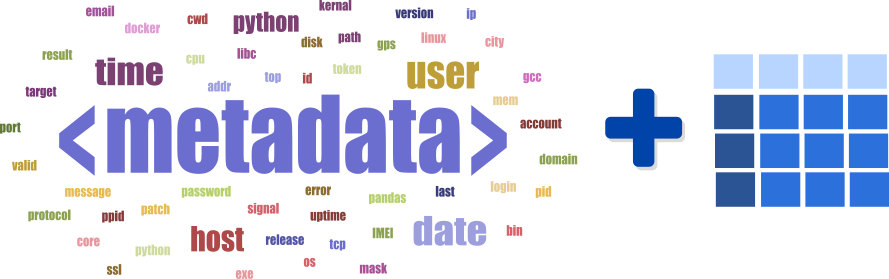
At its simplest, the #OMN is a “data soup” of tagged data objects flowing through channels, mediated by trust, rather than assuming that everything entering the network is equally valuable, useful or trustworthy, the network allows trust relationships to shape how data moves and how it is consumed.
This creates a different model of media consumption, with no central algorithm deciding what everyone sees, people and communities navigate the data soup through their own relationships, tags, channels and trust networks.
The #OMN is part of what we describe as Web 1.5 were #web01 had many of the things we now need back: openness, decentralisation, interoperability, linking, publishing and the ability for people to build their own spaces. #Web02 took much of that openness and wrapped it in dramatically better user interfaces. That was useful – people quite reasonably liked the easier ways of sharing, communicating and publishing. The problem was what happened next. The platforms became the infrastructure, this infrastructure was privately owned, communities became users, data became a commodity, social relationships became network effects. The #openweb was transformed turned into the #dotcons.
This is the mess we need to compost #Web15 is not about going backwards to Web 1.0. It is about taking the openness and decentralisation of Web 1.0, keeping the useful UX lessons of Web 2.0, and rebuilding the underlying infrastructure as an open, federated commons. That is the path we have taken the first steps on in the #Fediverse and #ActivityPub.
It’s the space the #OMN is working in – a data soup – the metaphor matters, not creating one perfect, clean, central database containing the definitive version of everything. Instead, tagged data objects to flows through networks. Objects can be copied, edited, tagged, linked, filtered, challenged, archived and passed between different communities. Different nodes carry different parts of the soup, some information will be useful in one context and apparently useless in another, that is OK.
The network is deliberately lossy and redundant, information does not have to be complete or perfectly synchronised everywhere, multiple copies and versions can exist, context is added as data flows. Something that appears irrelevant today may become important tomorrow – this is closer to how knowledge actually works than the fantasy of one perfect database.
The #geekproblem tends to see this redundancy, uncertainty and lossy data as technical failures that need to be eliminated. The #OMN sees them as characteristics of a living information network that need to be managed through trust and participation. Flows of trust – not simply the data, it is the flows of trust around the data. Trust becomes part of the network architecture, when people and communities decide which sources, objects, tag, channels and relationships they trust.
That trust can change over time, you don’t have to trust everything, you don’t even have to participate fully. You can follow particular people, communities or channels because you trust them, while ignoring other parts of the network. Someone else can make entirely different choices. This means there is no single central algorithm to decide what is important for everyone, instead, many smaller trust relationships create many overlapping flows through the #datasoup.
Those flows form communities and because they are federated, communities remain distinct while still sharing information and infrastructure. Trust instead of the algorithm is the differences between the #OMN and the #dotcons. The #dotcons operate by extracting social relationships into centralised systems, then using opaque algorithms to decide what people see. The #OMN starts from almost the opposite assumption: people and communities should have more control over the flows they participate in, the context and community relationships do more of the work.
This does not make the network magically free of disagreement, misinformation or bad behaviour. Quite the opposite, it makes those things visible and gives communities tools to respond to them. That is where mediation, moderation, tagging, rollback and open process become important. The network should make it possible for communities to see how things work, participate in decisions, challenge mistakes and build their own projects.
The aim is to take existing tools, protocols and technologies and embed practical federated media/news networks with a good user interface into these existing native #openweb flows. That is where the interesting part begins, real value is not the database, the protocol or the interface, it is the flows that emerge between people, communities, media objects and networks.
Those flows allow communities to form around shared interests, shared histories and shared trust without requiring everyone to belong to the same organisation or use the same interface. A network, not a platform, is better understood as commons infrastructure, rather than another social-media platform.
We build basic infrastructure and lets communities decide what they want to do with it, that is Web 1.5, not a nostalgic return to the old web, not another version of Web 2.0 – an #openweb reboot – using the best of what came before, leaving the centralised ownership model behind, and building the next layer around federation, trust, participation and the commons.
#OMN #Web15 #openweb #4opens #FOSS #commons #fediverse #KISS #geekproblem #dotcons