We do have a good history, with our involvement in #EUdigital outreach and policy meetings, but this has made one thing starkly clear, our #openweb is deeply entangled in the process of #mainstreaming, a messy, often co-optative dynamic where grassroots voices are softened, diluted, and redirected into bureaucracy, then in the end they are simply #blocked. Yes, while there is value in taking part, it’s also a wake-up call.
The push to shape digital paths from above is strong. But without active grassroots alternatives, there will be no balancing of this push. The building of a so-called “commons” is pushed into reshaping in to #NGO boxes, filled with #dotcons-friendly language, and stripped of any radical potential. This is why our native #openweb projects and paths matter more than ever.
At the heart of this balancing must be #KISS (Keep It Simple, Stupid) in both technology and user experience. We don’t need more convoluted tools or platforms weighed down by geek prestige. We need simple, effective frameworks and networks that allow users-as-producers to build the social complexity on their own terms. A fundament is that complexity should come from people, not code.
And this brings us to the elephant in the room, the #geekproblem. Our own grassroots digital spaces are still shaped by a narrow, deterministic culture that lacks wider social understanding. In the path we need to be on, we cannot code our way to liberation if the ideology behind the code is warped, and currently, it is. As we often say: all code is ideology solidified, and has real social effects.
Right now, way too much of that ideology stems from the #deathcult, hidden behind kind words, progressive branding, and empty buzzwords. This disconnect between stated values and real-world outcomes is dangerous, and disturbingly common.
This is why we’re pushing the #OGB, an online Open Governance Body for the #fediverse and beyond. Built around the #4opens and grounded in social paths, the OGB is designed to be a real voice for grassroots communities. It’s an open project, a no-permissions outreach tool, for people to use if they find value in it.
We’re currently looking for funding support and collaborators, particularly developers who are attracted to this vision. If you have links, networks, or skills to offer, get in touch. The timing is urgent. The mainstreaming machine is rolling forward. Let’s get on with composting the #techshit, reclaiming our spaces, and growing better from the bottom up.
The #Fediverse exists, and more than that, it’s alive and kicking. Sure, it might be a messy, chaotic, a bit fragmented, and yes, still niche. But let’s not underplay it, this is the healthiest corners of the internet we’ve got. Tens of million accounts, hundreds of thousands active people, and some are sometimes talking about how we build our digital spaces from the bottom up.
Yep, there are the cat videos, the #fluffys and the #spikys. But also an in-group debate is bubbling away about who speaks for the Fediverse? What defines it? Is it the standard #ActivityPub that binds us only technically? Or is the value in the community that’s formed it, the living web of relationships, servers, instances, and admins making this work day-in-day-out? Truth is, it’s both. #activitypub without community is just code. Community without #activitypub is just another silo waiting to collapse. They are not the same, but they are inseparable. To build something real, we need to nurture both the tech and the people.
What works in the #Fediverse is decentralisation with purpose, it works because it resists centralisation. It gives people choices, want a cat picture, instance? A political instance? A hyper-local or themed space? You install and build it, and people might come. This is #DIY grassroots digital culture in motion. Standards support this growth, #ActivityPub, like #RSS before, may not be perfect, but it’s open, extensible, and functional. It allows platforms and networks to talk to one another. This is a real #4opens foundation for collaboration, not control. That’s the kind of architecture we need in the #openweb reboot.
What doesn’t currently work is the over-reliance on hard blocking as a solution, with the common approach to problems is too often to block, users, instances, entire classes of servers like the #dotcons. While this kinda makes sense in the short term, it’s not a long-term strategy. It’s the digital equivalent of putting your head in the sand. You’re not solving the problem, you’re just not looking at it any more. This has the strong tendency to feed the “Cave Mentality” where some corners of the Fediverse are in defensive mode, retreating into smaller and smaller bubbles, avoiding engagement, trying to build perfection behind walls. But hiding from the mess doesn’t clean it up. If the #openweb becomes too closed, it dies from within. Openness is a value, not just a setting.
This is in part due to a lack of collective strategy, yes we’ve got the passion. We’ve got the tools. What we’re missing is a shared direction. The is currently too much reinventing the wheel, too many forks without purpose, not enough joining the dots. A thousand flowers bloom, but the garden needs tending.
#nothingnew is a basic tool about this, then there is the use of the #4opens, we need to make the #Fediverse and every layer of the #openweb, measurably open. That means: Open Data: accessible and remixable content. Open Source: transparent and forkable codebases. Open Standards: like #ActivityPub, that let different platforms interconnect. Open Process: decision-making in public, with participation and accountability.
The #4opens framework is a guide, not to perfection, but to direction. It’s a map toward trust, decentralisation, and sustainability. On this path, we need to build culture, not only code. Healthy communities don’t just appear, they’re built. Instead of building tech features, let’s also build social norms. Encourage, informative, welcome messages, transparent moderation, shared spaces for discussion. Moderation and admin is labour, support it, reward it and most importantly decentralise it.
To build community, don’t shy away from engagement. It’s tempting to block and move on. But sometimes, the hard work is worth it, call things out, talk things through, escalate when needed, but don’t disengage by default. We need active participation, not digital ghost towns. If we want the #Fediverse to grow, we need to build bridges, not walls. Let’s weave human trust networks to grow spaces that are porous, where new people can enter, learn, contribute, and stay. This is the work of social federation, which is just as important as technical federation.
There is a bigger picture if you are interested and are motivated to look, the #OMN, Open Media Network project is a vision and collective path for this kind of social architecture. It’s a federated network of media hubs, rooted in community, powered by open standards, and guided by human trust. It doesn’t seek control, it offers #KISS tools to build trust, add value, and create meaningful networks from the ground up. On this “native” path, rather than rejecting “bad actors” by exclusion, we build systems that surface good actors through collective tagging, trusted feeds, and editorial flows. Moderation becomes a feature, not a bug.
Final thought, let’s not repeat the mistakes of the past. The last 20 years of alt-tech is a graveyard of well-meaning platforms that failed because they forgot one thing, the humans. The #geekproblem has been building “perfect” systems with no one in them. That’s not the #openweb we want. We need less abstraction, more interaction. Less control, more cooperation. And above all, we need to recognise that openness requires work, but it also delivers freedom. So yes, the Fediverse exists. It’s healthy. But it can and needs to be more. Let’s stop hiding. Let’s start building. Together.
It’s a mess we need to compost, we are living through a deep crisis, not just of environment, economy, or governance, but of imagination and the will to live. The old systems are visibly broken, the #IPCC reports confirm what many already feel, we are trapped inside a #deathcult, and #mainstreaming culture offers only distraction, careerism, and status games for isolated individuals. There is no hope there.
But hope is not some fluffy optimism, it’s a needed social force for basic metal health. What we talk about here is that in every grassroot, federated, #DIY tech project, the solution is always the same, more people. Not more gatekeepers, more hierarchy, just more people. This is the core truth of the #OMN (Open Media Network), that it’s not a product, it’s a process. It’s not a startup pitch, it’s a compost heap where good things grow, if we turn it, feed it, and invite others to join, to grow.
We already know how the far right wins, they appeal to real feelings of injustice, then twist those feelings into #stupidindividualism that serves their own #nastyfew class interests. It’s reactionary ideology, and it’s spreading fast. What do we do? Step away from their game. Get involved in building something different. The #4opens is a simple, powerful tool to judge who’s building towards the commons and who’s just repackaging and pushing the same old poison.
This needed “common sense” path, break, is about using shovels to turn over the ground we grow from. When we do this, one thing that is fertile is that in the end, all social action happens through generalized talk, categories, metaphors, shorthand. That’s how language works. But we live in a cultural amnesia where this is forgotten, mistaken for bad “common sense.”
This is why the very different tech projects of the #OMN actually embraces this messy, human space, while the more mainstreaming #geekproblem seeks rigid machine-like CONTROL. Yes, this is about balance, they’re often technically right, but socially intolerant. We, by contrast, are often technically wrong, but humanly right. What we need is a bridge between these approaches, or we’ll just keep circling, as our spirt withers.
The #OMN project use some control; the #geekproblem needs a lot of humanity. The current hard blocking is that they don’t see this, and so they keep #BLOCKING. For example, take the common pattern where someone says, “why don’t you just develop it?” That line unconsciously dumps all responsibility on narrow “geeks” while ignoring the role of social imagination, UI/UX design, and the deeper process we’re trying to solve together. That’s the #geekproblem: not the code, but the refusal to look at the problem outside the code. So here we are again – rinse, repeat. Let’s not. instead, let’s build the bridge.
Not for the first time, and certainly not the last, we hit the same wall: misunderstanding and misdirection. The #geekproblem isn’t just about bad code or poor decisions, it’s about an unhealthy, almost inhuman obsession with control. Where we are now? The federated model, which is a useful half step, a half-measure? Federation is an interesting paradox, as it panders to control, offering people their own little digital kingdoms. It dilutes control, spreading authority so thinly that it could evaporate into nothing.
The “problem” is that the tech conversations are controlled by ghosts. For ten years, “control” was the centre of everything in tech, privacy, moderation, governance, structure. Now that conversation is fading into the background, this makes you wonder, What was directing those conversations? Why did they fade? And why do we keep falling for the same cycle of control and distraction? If I were a conspiracy nutter, I’d say these people were paid by lizards to keep us agitated just enough to stay passive, so that back in the day we’d accept the next wave of #dotcons with open arms.
The non conspiracy view is that every day, we carry small shrines to the #deathcult in our pockets, and at every moment pull them out to endlessly scroll, consuming, and reinforcing the same failed, despondent paths. So, if we dont empty our pockets, what’s the alternative?
Shovels, I call for shovels, we need to dig deep and build real alternatives.
In this, the #OMN isn’t about recreating old power structures, it’s about growing new ones.
The #4opens isn’t just a technical framework, it’s a way to judge and navigate tech without getting lost in corporate distractions and traps.
What can we do now? Instead of trudging along with the same tired paths, let’s build and support real #KISS solutions. Support projects that aren’t just replicating the old models. Stop chasing the latest distraction and focus on the real work. Turn agitation into action, not passivity. Shovels in hand, it’s time to dig the #OMN, this could be fun, but it won’t be easy.
Critique without action is just noise. If we want real change, we need to move beyond commentary and into building. The #OMN isn’t just an idea, it’s a framework waiting for hands to shape it. So, instead of watching from the sidelines, who’s actually up for developing the tech we need? The tools exist, the knowledge is there, and the moment is ripe. If we don’t build our own paths, we’ll keep walking the ones laid out by the same failing institutions.
If we want the #openweb to survive and thrive, we need new forms of power, ones that can defend the community and challenge traditional power dynamics without falling into the traps of control, hierarchy, and co-option.
The problem is clear: If we follow traditional power politics, which are built on control, manipulation, and exclusion, we will fail. We’ve seen this play out repeatedly, grassroots movements spark change, only to be then sold out and absorbed, neutralized by the #mainstreaming flows of #blinded personal and institutional power.
The #blocking issues, what’s stopping us building the #OGB? This is about the “Silo Path” vs. the “Aggregation Path”. Centralized control (the silo path) is easier to manage, but it kills autonomy and leads to gatekeeping. A decentralized, organic approach (the aggregation path) requires more effort but keeps power in the hands of the community. The #OGB needs to be built on open trust networks, not locked-down institutions. This leads to perception of a lack of “perceived power” and currently people, default to following power. It’s a chicken-and-egg issue, If we don’t look like power, we will struggle to attract participation. But power doesn’t have to mean hierarchy, it can mean influence, legitimacy, and real impact. We need to keep building structures that feel like power while staying true to open, bottom-up values.
This brings up issues of funding and recognition of grassroots growth, which is where almost all valuable social and technological change, comes from, ONLY grassroots movements, not the #mainstreaming institutions that later co-opt them and claim ownership and CONTROL. The problem is that these CONTROL institutions default to sucking up resources, draining the energy and focus from grassroots projects, leaving hollowed out shells, undervalued and underfunded. To fix this, we need a cultural shift that recognizes and invests in decentralized, community-driven alternatives.
An important change is needed before we can be coming the change and challenge, to actually make this work. This is the path of supporting “Organic Intellectuals with Muddy Feet”, Change happens on the ground, not in #NGO meetings or #dotcons boardrooms. We need to elevate people who are actively engaged in building solutions, not just talking, or co-opting them.
To learn from effective grassroots paths, the #OGB draws from real-world activist organizing, not abstract theories or #fashernista posturing. Let’s look at some examples, in coding, loose scrum for open source dev leads to adapting flexible, iterative structures for governance. In culture, Burning Man’s self-organizing, mutated from Rainbow Gatherings, illustrating that radical decentralization works at scale, though this dose brining issues. And in tech federated networks (like the #Fediverse), show that distributed, non-hierarchical systems can replace corporate monopolies.
To take a few steps, we need to avoid the trap of fighting over power, where internal battles drain energy and distract from the real mission. This is needed to keep the focus on building the native path, not arguing over control. In this #KISS path, the #OGB must function as a shared infrastructure, not a battleground for egos.
The Path isn’t to directly destroy existing power structures, it’s to build alternatives that are too effective to ignore. The #OGB isn’t just another governance tool; it’s a blueprint for creating sustainable, community-led power without falling into the traps of traditional politics.
Let’s work together as if we are at a turning point. We can either follow the same old paths of control, stagnation, and eventual failure, or we can build something new that actually works. The choice is ours. Let’s make it happen, please.
The “social./bill-of-rights” is a fresh example of a well-meaning but toothless attempt at defining ethical tech. It’s the same process and project as the existing #4opens, but framed in a way that’s more palatable to liberal and capitalist interests. The difference? The #4opens isn’t an appeal to values, it’s a functional way of judging, thus pushing developers and projects. #KISS
For those who actually want to build a better #openweb, the real work is here: https://unite.openworlds.info/Open-Media-Network/4opens This should not be about reinventing the wheel. We really don’t need another set of guidelines that sound good but change nothing. What we need is accountability and practical tools that push projects directly to align with the open principles they often claim to support.
The #4opens isn’t an ideal, it’s a framework for action.
If a project doesn’t hold up under scrutiny, it’s not open.
The hashtag #nothingnew comes to mind, but diversity is not necessarily bad, diversity in approaches is good, but fragmentation isn’t. To fix this these initiatives need to be linked together in a meaningful way, rather than diluted into disconnected efforts. This is basic #openweb thinking, connect, build, and push back against the corporate creep. If the #deathcult of #neoliberal tech has taught us anything, it’s that soft reforms lead to endless co-option. The effective path to take is through grassroots accountability and practical, enforceable openness #KISS
Remember when drone deliveries were going to revolutionize shopping? When every major news outlet unthinkably reported that we’d have autonomous quadcopters dropping off toothpaste and Amazon boxes on our doorsteps?
Or when 3D TVs were the future of entertainment, pushed so aggressively that manufacturers stopped making non-3D models for a while? Where are they now? Rotting covered in dust in clearance bins or forgotten in garages.
Then there was the Internet of Things (#IoT) hype, your fridge was supposed to talk to your toaster, which would text your smart kettle to boil water before you even knew you wanted tea. Instead, we got insecure, surveillance-riddled devices spying on us for #dotcons corporate profit.
And we need to not forget #blockchain, #NFTs, and the endless #Web3 hype? Each was pushed as a revolution, yet all followed the same pattern of hype, vulture capital gold rush, and then, inevitably, disillusionment. NFTs went from “the future of digital ownership” to being abandoned by even their most vocal promoters.
If we won’t a progressive world, why do we keep pushing this #techshit? Every time a new #mainstreaming tech fad appears, it follows a predictable, boring hype cycle. First, it’s marketed as the next big thing, a must-have, must-invest, must-embrace technology. Then, sceptics, like this site, are ridiculed as out-of-touch or anti-progress, at best or simply trolling at worst. But when the promised revolution never materializes, the same people, quietly move on, forgetting the past mistakes and priming ourselves for the next wave, this is a rinse and repeat cycle.
We need more people, to lift their heads, to say, “Not this again, you were wrong last time”? So we have space to ask why do we let the wannabe #nastyfew feed us this mess, why do we let it slide, allowing the same marketing binds to #blind us over and over?
The answer is that we have our heads down worshipping a #deathcult, and this is the pushing of #fashernista tech, the cycle of embracing new trends not because they work but because they fit the cultural moment. A mixture of corporate propaganda, social pressure, and the desire to be seen as forward-thinking creates a path where critical thinking is drowned out by #FOMO (fear of missing out). It’s fear, simply fear.
How do compost this? A first step is, instead of dismissing #KISS critics, we should embrace grounded scepticism as part of a healthy tech culture. The goal isn’t to reject all new technology, it’s to demand real, meaningful progress rather than letting corporations sell us snake oil over and over. There’s a hashtag for this: #nothingnew, a reminder that most “revolutions” are just recycled ideas repackaged for a new round of exploitation.
This is part of the native #openweb story, not just about technology, but about culture. We don’t need to keep mindlessly adopting every new fad. Instead, we should compost the hype, extract what’s useful, and discard the corporate waste. Yes, it’s messy. But that’s what being native to the #openweb means.
People working inside non-profits often emphasize “mission” and “impact,” but we need to talk honestly about structure. Most non-profits are designed to be accountable to funders, boards, and regulatory frameworks – not to the communities they claim to serve. This isn’t necessarily about bad individuals; it’s about institutional design.
The form itself grew out of tax structures, philanthropy models, and governance systems that allow wealth and power to shape social agendas while appearing neutral and benevolent. Funding cycles define priorities. Reporting requirements shape language. Boards – often drawn from elitist networks – hold real decision-making power.
The result is predictable: social change is professionalized and risk-managed, radical ideas are softened into grant-friendly language. Projects learn to align upward toward funders rather than outward toward communities. Activism becomes administration.
If your mission statement contains radical goals, you are relying on the tolerance of a governance structure that can constrains and redirect those goals at any time. That tension is structural, not personal.
None of this means people inside NGOs don’t care, many do. But real change emerges outside institutional comfort zones: grassroots networks, commons-based organising, open processes, and messy collective experimentation.
Understanding this isn’t cynicism, it’s #KISS compost. Once we see the limits, we can build structures accountable to participants rather than patrons, and create space where transformation is actually possible.
So yes, we need to talk (again) about how parts of the #NGO world push HARD BLOCKING against native #openweb paths. This isn’t new; we’ve been having the same conversation for years. Yet here we are, watching the same behaviours repeat, only now amplified by #mainstreaming, increased funding, and institutional interference.
The antidote isn’t complicated: listen, think, and stop blocking. If the #NGO crowd could grasp this, we might build bridges instead of walls. What do we currently get? More #BLOCKING, more CONTROL, and a persistent refusal to engage with people already working on digital commons paths.
Take the #OMN approach: messy, leaky, human. If it’s not messy, it’s probably not real social change. “Messy” doesn’t mean technical chaos, it means social openness. The #KISS truth:
Social change is messy.
The best ideas leak, evolve, and adapt.
Social “security” framed as CONTROL to often becomes gatekeeping.
Lock everything down and you block creativity, trust, and progress. We need leaky systems where communication and data flow in ways that respond to community needs, especially when we don’t yet know what the community fully is.
The #geekproblem has spent years prioritizing CONTROL and SECURITY because social reality is treated as an engineering problem. But trust isn’t a technical feature, it’s a human process. CONTROL can create functioning systems; it rarely creates healthy societies.
Fear-based governance consistently fails. History shows that systems built primarily on CONTROL and FEAR eventually collapse under their own weight. If we repeat that pattern in the #Fediverse, we risk recreating the structures we claim to replace.
So who organizes the #Fediverse? For years there’s been tension between #DIY grassroots approaches and forms of #DoOcracy where those doing the work accumulate decision power. Meanwhile, the more native path – parallel communities cooperating (as explored in #OGB) – struggles to emerge because these models block each other. It’s a mess that needs composting.
The #twittermigration and ongoing #mainstreaming influx won’t magically fix this. Doing nothing is itself a form of blocking; refusing to change simply entrenches existing power structures.
No dressing up old CONTROL structures in #fashernista clothing.
No gatekeeping disguised as governance.
No pretending fear and CONTROL will build a better society.
So what might unblock the path?
Stop treating the #Fediverse like a product, it’s a social movement.
Shift from CONTROL-based systems to TRUST-based ones: radical transparency and the #4opens.
Learn from past #mainstreaming mistakes instead of repeating them.
Support builders who understand social trust, not just software, but community.
The question is simple: are we building from CONTROL or from TRUST? One leads to stagnation; the other opens the possibility of a genuine alternative future.
The #geekproblem has been an ongoing issue in the development of radical and open internet paths. This is particularly evident in the influx of #mainstreaming users into the #Fediverse, bringing with them behaviours that, for us #openweb natives, are easy to recognize as part’ish, a mix of good intentions and ingrained habits that common sense uphold the status quo we are trying to move away from. Our response needs to be one of patience, hand-holding rather than outright biting, because if we want real change, we need to build bridges, not gates.
In the #geekproblem worldview, technical infrastructure is about CONTROL. The metaphor they use for protocols and interactions is a gateway, something that can be opened or closed at will, something that allows some people in and keeps others out. The #OMN, by contrast, understands this infrastructure in terms of TRUST. Our metaphor is a bridge, something that facilitates free movement, allowing people to interact organically, without arbitrary restrictions. This fundamental difference in perspective is crucial. In real life, bridges don’t have gates. This should be obvious, but it is entirely non-obvious to the geek mindset and its to often rigid coding paths.
The root is the lack of social thinking. One of the driving forces behind the constant tech churn, the never-ending cycle of new projects, new code, new systems that never seem to lead anywhere, is a fundamental lack of respect for joined-up social thinking. In the #geekproblem worldview, technology exists in a vacuum, disconnected from the wider social context. They believe they can invent from their limited social experience and simply ignore the history of radical movements that shapes the flows they supposedly code for.
This is why so many geek-led projects fail to align with humane agendas. Without social grounding, their work reinforces the dominant, pointless, and extractive tech industry culture rather than challenging it. The irony is that this problem isn’t just limited to #dotcons; it also infects the alt-tech sphere, where supposedly radical projects fall into the same patterns of CONTROL rather than TRUST.
Open vs. closed, is the same old struggle: #openweb vs. #closedweb, TRUST vs. CONTROL. It is useful to see this as the spirit of the age, a battle that has become a worldwide issue affecting both corporate platforms and alternative technology movements alike. To move away from tis mess, what we need is a radical shift in thinking. We need to move from a mindset of CONTROL, of hard blocks, of gatekeeping, of rigid protocol enforcement, to one of TRUST. This requires unlearning deeply ingrained habits and embracing the messy, leaky, social reality of real-world interaction. What can people do practically, the #4opens provide a clear path out of this mess, but the geek world’s obsession with control constantly obstructs this path.
Let’s look at our current work on this, how breaking the blocks is needed to shift this balance. The first step in this movement is to recognize that the current approach in the #Fediverse is failing. The narrow #DoOcracy model, which has dominated for the last five years, is not working. With the #dotcons bringing an influx of new people to the Fediverse, the problem is only going to get worse if we don’t address it. And it’s useful to remember that to do nothing is to actively block progress.
Solutions, are about challenging the orthodoxies, that the dominant thinking in tech culture is not set in stone. We need to push back against the assumption that CONTROL is the only way to maintain order.
Build bridges, not gates: The infrastructure we create must facilitate movement and exchange, not gatekeeping and restriction. We must actively design for TRUST rather than CONTROL.
Reject the #fashernista trap: Many existing solutions are just old ideas dressed up in new clothes. If we want real change, we must strip away the façade and get to the core of what actually works, not simply recreate the same mess, with shiny coverings.
Trust-based coding: We need to find and support #FOSS coders who are willing to build systems based on trust, rather than reinforcing the culture of control. The #OGB is one example of an initiative attempting to do this.
Learn from history: We need to avoid repeating the mistakes of the past. For a #mainstreaming example, the Soviet Union’s control-based economic system ultimately failed, and we should be wary of replicating its top-down approach in our tech movements.
We need this non-mainstreaming movement, a truly radical path to break free from the invisible constraints that now seem like common sense to to meany people. One way is to go back in time, before these blocks solidified, and build up from there. Non-mainstreaming tech must be SOCIAL and COMMUNITY-driven. To achieve real social change, we step away from the current narrow geek agendas and refocus on the needs of people rather than the diversity of protocols. Let’s treat them as simple flows.
The #OMN project is an answer to this problem. By using the #4opens as a foundation, we build open and transformative alternative to both #dotcons and alt-tech dead ends. But to get there, we must first overcome the obsession with control. The bottom line is the desire for CONTROL in both code and culture is a dead-end. It is part of the #deathcult ideology that shapes both corporate and alternative tech spaces. If we want to break free from this cycle, we must embrace TRUST, social thinking, and real-world complexity. We must compost the old ways of thinking and build something new.
The solution is clear, #KISS stop hard-blocking progress, embrace messiness as a necessary part of building real alternatives, design systems that prioritize TRUST over CONTROL. If we can do this, we have a chance to build the future we actually want. If not, we will remain trapped in an endless cycle of reinvention, failure, and stagnation.
The media’s focus on Trump’s spectacle over substance pushes the current #mainstreaming path. By focusing on his contradictory statements, they keep the news cycle spinning around noise (words) rather than signal (policies and actions). This distraction benefits those on the #powerpolatics path, that is pushed with little scrutiny while the public and journalists remain fixated on the smoke and mirrors of the rhetorical outrage mess.
The #KISS media’s role needs to be exposing the real consequences of his administration, focusing on who is profiting? Billionaires and corporations received massive tax cuts, while working-class wages stagnated. And who is suffering? What institutions are being gutted? What laws and policies are being enacted or dismantled?
The real story is the looting of the old #mainstreaming system while distracting us all with mess. By chasing every outrageous statement, journalists failed to cover how the new #mainstreaming#nastyfew is looting the remains of the old #nastyfew system. The distractions, bombastic rhetoric, manufactured culture wars, scandals, have a role to play, they bury the obverse of enriching from dismantling public institutions.
The progressive majority must focus on real accountability and action. Instead of reacting to every piece of nonsense, progressives need to cut through the noise and push for more independent journalism that prioritizes policy analysis over personality-driven coverage. Community-driven movements that expose corruption and mobilize against real threats. Structural reforms that break the cycle of #nastyfew capture and maintain public control over essential institutions.
It’s not about what they say, it’s about what they do.
Let’s look at a hidden centralization crisis in #openweb tech, and how #OMN works to fixes It. One of the often overlooked issue in #openweb technology is that our data remains dangerously centralized. Even in supposedly decentralized systems, vast amounts of critical information still rely on a handful of corporate-owned data centres. This fragile setup means that a single accident, political upheaval, corporate shutdown, or environmental catastrophe (#climatechaos) could wipe out entire digital histories overnight.
Despite the promise of decentralization, much of our infrastructure still depends on centralized hosting, leaving communities vulnerable to erasure. The illusion of permanence is just that, an illusion. The question isn’t if data loss will happen, but when.
The #OMN path to building a resilient web, is a radically different approach, ensuring that content remains accessible even in the face of system failures. Instead of relying on fragile, monolithic storage solutions, it embraces redundancy, simplicity, and resilience through the #4opens principles.
How the #OMN keeps the web truly open and sustainable is though redundant, grassroots network-stored content. Data is distributed across multiple independent nodes rather than locked into a single corporate-controlled server. This scales down to individual accounts and home hosting paths. This prevents mass erasure and ensures that no single entity controls access to vital information.
#KISS (Keep It Simple, Stupid) design, instead of complex, failure-prone tech, #OMN emphasizes simplicity and usability. The system is built to survive disruptions by keeping technology accessible, lightweight, and easy to replicate. No reliance on traditional backups, when a node fails (which it inevitably will), there’s no need for massive backup operations. Simply boot up a new node, input your hashtags and user info, and the network automatically reconstructs as much data as possible. This lossy-but-functional recovery method ensures continuity without unnecessary complexity.
Next is the grassroots #DIY path of scalability through home hosting, the future of a resilient #openweb in balance lies in decentralized, grassroots hosting rather than reliance on corporate servers. Home hosting allows people and communities to reclaim control, expanding the network organically without falling into the traps of commercialization.
The corporate web is fragile because it’s designed for profit, not people. The #openweb was never meant to be centralized, and yet, the forces of capitalism, surveillance, and convenience have led to its current vulnerable state. If we want a web that survives revolutions, #climatechaos, and the collapse of tech giants, we need to reboot the #openweb and commit to the basic #4opens:
Open Data – Data should be accessible and free from corporate control.
Open Source – Technology should be transparent and modifiable by anyone.
Open Standards – Systems should communicate and work together, not be locked into proprietary silos.
Open Process – Development should be done in public, ensuring accountability and community-driven decision-making.
The native path isn’t bigger servers or better encryption, it’s resilient, people-powered infrastructure that is based on trust, usability, and decentralization over corporate control.
Reboot the web. Build for resilience. Follow the #4opens.
This is a mess which has been clear to see for 20 years, but people still keep falling into the same traps instead of stepping off the cycle of conflict leading to control. Yes, we had something, we lost it, but as I talk about, we are still refusing to face why.
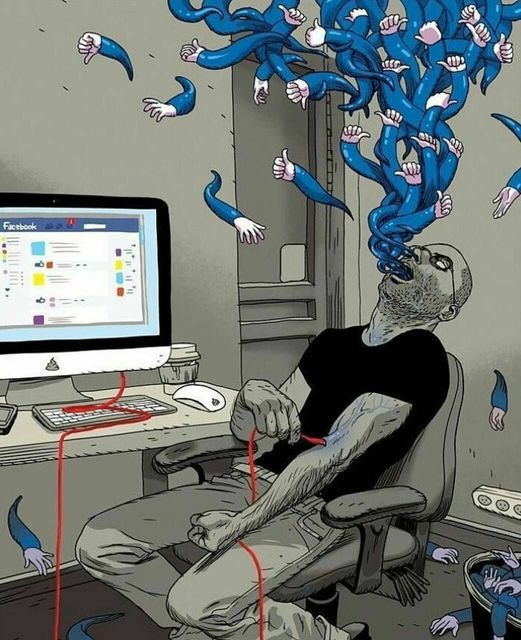
Let’s use #Failbook as a practical example of a monster that devours our dreams, fifteen years ago, the writing was already on the wall, #failbook and the #dotcons would eat everything. It wasn’t some grand conspiracy, just basic power and control dynamics. People knew this. They saw the cage being built around them, yet walked in willingly. Why? Because in the small picture, it was “easier” to stay inside than to step outside. They thought they were users, but they were being used. Every attempt to “fix” #failbook, the endless ethical tech debates, the “kinder, fairer” alternatives, the #NGO-funded projects promising “a better social network”, misses the core issue: You don’t fix a monster. You stop feeding it and walk away.
This is where the religious metaphor fits, people don’t want atheism (the #openweb), they do want a nicer god (ethical #dotcons). They are still kneeling before centralized power, just hoping for a softer whip. We need to stop worshipping the digital feudal lords and start building something else entirely. One path is to reboot the original #openweb
To do this we need some social history: The #openweb was murdered, and no one faced the consequences, we need a truth and reconciliation process for what happened to the #openweb. Why? Because people refuse to learn from history, and that means they keep making the same mistakes. Look at the waves of migration from open to closed over the last two decades:
The rise of blogs and open publishing (2000s) → The pull into social media walled gardens (2010s)
The rise of the federated web (2000s, early 2010s) → The collapse into corporate-owned silos (late 2010s, 2020s)
The rebirth of the Fediverse (Mastodon, PeerTube, Lemmy, etc.) → Now being co-opted by NGOs and #mainstreaming interests
Each time, the excuse is different, but the result is the same, we hand over power, they take control, we lose everything. Until we face the fact that we let this happen, that we were complicit, this cycle won’t stop. Every time we fail to call it what it is, the blood-letting/stains soaking back.
The problem with #NGO and co-op models, people love to push the same “solutions” that failed before. Pushing a voluntary project into a hard “not-for-profit” structure kills it, this happened again and again. Look at #indymedia. It worked because it was messy, decentralized, built from the ground up. Run by volunteers, not controlled by a central authority. Rooted in the activist base, not an #NGO-funded agenda. Then came the push to “formalize” it, and what happened?
Funding fights, bureaucracy, infighting.
Projects being hijacked or forced into rigid structures.
Most of the co-op/NGO media projects collapsed.
There is nothing wrong with people building not-for-profit media, but stop forcing voluntary activism into structures that will kill it. The old mistakes aren’t new solutions. They are just mistakes waiting to happen again.
The #OMN and the need for diversity of strategies, the #OMN is built on a simple idea, diversity of strategies is strength. We need:
Commercial models where they work.
Not-for-profit structures where they make sense.
Voluntary activism as the foundation.
Then the basic #4opens of them linking to each other. What we don’t need is people using their own narrow worldview as a #BLOCK on other approaches in the guise of “helping”. This happens all the time, with the #NGO crowd that wants everything formalized, structured, and professionalized, they see grassroots messiness as a problem. The geeks want everything to be purely about the tech, ignoring the social and political realities. The politicos want everything to align with their ideology, even when that means excluding actual working solutions. These proxy fights kill the meany projects before they even start.
The solution is not ideological purity, it’s pragmatic diversity. If we want to break the cycle, we need to stop repeating the same mistakes, stop blocking each other, link and start building with what we have #KISS
The light in this is the #Fediverse, otherwise the last decade in tech has been a complete dead end. We’ve watched the same old mistakes play out, layering more “solutions” onto the #geekproblem without ever questioning the foundation. Instead of building trust, we’ve been sold “security” wrapped in fear, reinforcing the same toxic cycles that keep us locked in place.
The #OMN projects build from the #Fediverse and #openweb reboot to break from this. They are about real empowerment, shifting power by growing trust rather than control. If we keep repeating the same mistakes, we’re just feeding the #deathcult, accelerating the collapse. The #fashernista and #encryptionist obsessions, instead of opening paths to change, have become blind alleyways leading to catastrophe. We need to step back, reassess, and build differently, before the coming decades bring suffering on a scale we’ve barely begun to grasp.