Social value, personal value, and the chicken-and-egg problem

We still haven’t solved this. Looking back at a conversation from six years ago, what stands out isn’t disagreement – it’s how hard it is to even name the problem we keep circling.

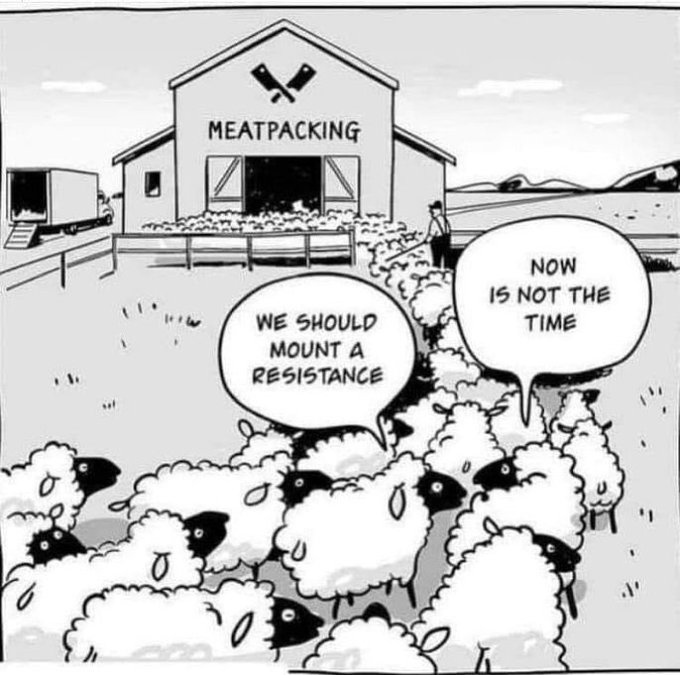
Over the last 20 years, again and again, the discussion slips into the same dead end: personal value versus social value, framed through the language of #dotcons platforms, followers, influence, and business growth. What we need to learn from this is the confusion isn’t accidental, it is structural.

What we need is not only #socialmedia value, not engagement, not visibility. But offline value that exists between people, over time, as shared culture, trust, memory, and capacity. The chicken-and-egg problem, people ask: “What personal value do I get from this?”, “Will this help my business?”, “Can I use this without it using me?”

We need to compost, this messy common sense path. This is why the #OMN project was never about optimising personal outcomes. That #blocking framing belongs to platform logic, the idea that every action must be measurable in reach, influence, growth, or return. This is why the posts, like the one embedded above, people found “hard to understand” weren’t speaking that language at all. It were articulating what the #mainstreaming was #blocking and thus missing from our tech culture: social value.

What is hard to communicate is that social value doesn’t work like our current common sense thinks it does. You don’t extract it first and then decide whether it was worth it. Social value only emerges after people act collectively, without clear personal payoff in advance. Yes, personal value does flow from social value. Skills, relationships, meaning, resilience, opportunity. But it’s indirect, uneven, and slow. That makes it almost invisible inside systems trained to ONLY prioritise immediate, individual reward.

That’s why the conversation keeps short-circuiting, one of the early questions was whether the posts were meant to “influence followers”. That already assumes a vertical model: speaker → audience → outcome.

But #OMN thinking starts from a different place. It’s not about influencing people. It’s about creating conditions where different kinds of interaction can happen – horizontally, over time, without a central controller. That’s why the work often looks vague, unfinished, or “omelette-like”. Cultural values can’t be shipped as a product. It has to be grown, maintained, and defended collectively.

#Facebook was a comfort trap in hindsight. In the thread, several people describe using it pragmatically: staying in touch, organising events, maintaining real-world relationships. All true, and still kinda true today. But the counter-point raised then has only become clearer since: you don’t get to opt out of being used, no matter how carefully you think you’re using the system.

The lock-in effect (“everyone is on it”) was already obvious. What was less visible to meany people than was how disastrously deeply this would shape behaviour, politics, culture, and attention – and how hard it would become to imagine alternatives once that infrastructure was taken for granted.

Why this was hard to hear at the time? This conversation shows how difficult it is to talk about non-market value inside market-dominated spaces. Language itself becomes a barrier. People reach for familiar metrics because they have no shared vocabulary for anything else. So the discussion stalls. People get frustrated. It feels circular. Someone says “find out for yourself”, another hears that as dismissal. Nobody is wrong in isolation, but the frame itself is broken.

What we can learn now? Six years on, a few things are clearer: Social value is real, but it’s slow, collective, and hard to quantify. #dotcons platforms systematically erase the conditions needed for social value to emerge. Personal value derived from social value is indirect, not extractive. You can’t explain this cleanly inside systems optimised against it. This wasn’t a failure of communication. It was an early signal that we were trying to grow an open, cultural infrastructure inside environments hostile to its very existence.

Now is time to work on the unfinished path… #OMN project was – and still is – about creating space for social value to exist again: shared media, shared process, shared governance, shared memory. That was hard to see then, it’s still hard to see now. But the confusion in this old thread isn’t embarrassing. It’s instructive. It shows exactly where the fault lines are, and why the work has always been hard, messy, slow, and necessary.

Some things only make sense after you start doing them together #KISS

The impulse, it’s not wrong. What is wrong is how often that anger gets misdirected sideways, inward, and downward instead of upward, toward actual power.

A lot of people who think of themselves as “radical” aren’t being radical at all. They’re being assholes with better language. Cancel culture in 2020 played a similar role to political correctness in the 1990s: a way to signal virtue, police behaviour, and avoid confronting real power.

An example of this – done right, a code of conduct isn’t a weapon. It’s not a piece of paper you use to beat people with. It’s a declaration that you will protect the people who actually need protection – from harassment, abuse, and structural harm.

Done wrong, rules become clubs. People pick them up and hit each other with them. The wording becomes vague, moralistic, and performative. The enforcement becomes selective. And suddenly “safety” is being used to silence any disagreement rather than defend the vulnerable.

That failure creates space for bad actors, conservatives step in and pretend they’re “speaking truth to power” or “defending free speech”, when what they’re really doing is exploiting the mess to protect the normal hierarchy and privilege. They’re not wrong that something’s broken – they’re wrong about what and why.

The behaviour being criticised isn’t a tribe. It’s a mode of thinking, a widespread, unspoken #postmodernism that still dominates contemporary discourse. A style of politics where everything is relative, language replaces material reality, and moral positioning matters more than any outcomes.

This thinking eats movements alive, it fragments people, replaces strategy with signalling, and turns accountability into spectacle. Most importantly, it redirects energy away from those actually using power. This is a dangerous moment because we no longer have a shared baseline of reality. The #mainstreaming narratives are designed to divide, distract, and trigger – pulling attention away from concrete demands and real accountability.

That didn’t come from nowhere, forty years of #neoliberal economics hollowed out material security. At the same time, generations were trained in postmodern academic frameworks that are excellent at critique but terrible at building shared ground. Strip out material analysis, strip out class, strip out power – and you’re left with vibes, identity skirmishes, and endless internal conflict.

That’s what #OMN has always been pointing toward: rebuilding social truth, shared process, and horizontal power in a culture trained to fragment itself. Without that, we keep fighting each other – and the #deathcult keeps winning.

A fashionista culture addicted to surface can’t change

Most of what the #fashionista fights and campaigns for, and expends endless energy on isn’t liberation, it’s unthinking equality in worshipping the #deathcult. The argument isn’t about whether the path is destructive. That’s quietly accepted ignored, inevitable, “just how things are.” The fight is about who gets included on the path, who gets representation, who gets a seat at the table – not about whether the table should exist, or whether it’s crushing everyone underneath it.

In this #mainstreaming, success means being allowed to participate in the same extractive systems, the same growth-at-all-costs economics, the same surveillance platforms, the same attention-harvesting tech, the same environmental destruction, as long as access is more “equal”, It’s little to do with emancipation, rather its about equal opportunity complicity.

This is how too often radical language gets emptied out, structural critique is replaced with branding. Power isn’t challenged; it’s redistributed symbolically. The mess keeps spreading, just with better covers and more diverse faces unrolling it.

The #fashionista mindset treats inclusion as the goal, rather than a first step for dismantling what is actually killing us. It can’t imagine stepping outside the current “safe” path, because its common sense value structure depends on recognition within it. The outcome? Dissent gets flattened into lifestyle, resistance becomes performance, politics becomes aesthetic alignment. And anyone who questions the underlying mess is treated as naive, impractical, or “not serious”.

But when the altar is poison, equal access to worship before it doesn’t make it less deadly. Real change means refusing to kneel to the altar itself, and that requires mess, conflict, loss of status, and building alternatives that don’t look good on a CV.

That’s why the #OMN path feels uncomfortable, unfashionable, and slow. It doesn’t offer better branding, it offers a way out. And in a culture addicted to surface, people can’t change, and thus refusing the #deathcult looks like heresy.

The #Fashionista problem: How fear blocks change

This story is about compost, not control: Our world is smeared in social shit. We live in a vast, stinking pile of it. The left has its post-modern shit – where truth dissolves into vibes and dreams. The right has its fascist shit – where truth is something you enforce with obedience and violence. We drink the seeping effluent from this dung heap. Our work, our shops, our politics, our tech… all of it is smeared in the same rot. The planet itself is decomposing under the weight of this social shit.

But, shit makes good compost, you just need a shovel, It’s useful to start this composting with #fashionista thinking being the enemy of compost, its one of the recurring problems in our movements, from grassroots tech to climate activism to alternative media, it is why we need to call out this #fashionista thinking. It’s damage, pushing a complacent, fear-based mindset shaped by aesthetics, purity, and performance rather than working process, mess, and collective work.

This blindness leads to a focus on control, which quickly turns toxic. The moment control becomes the organising principle, everything messy, experimental, or unfinished becomes a threat. And that’s when behaviour turns into this full-on #blocking.

This path of narrow “thinking” skips the first steps: The awkward attempts, the compost and mud, the scaffolding, the incomplete prototypes. Instead, it judges the seed for not already being a tree, the foundations for not being a building, and the prototype for not being a polished “safe” product.

It’s not just irritating, it’s actively destructive, when #fashionista worldview treats change like a commodity, it’s a poisonous dynamic. The refusal to understand #KISS process leaves people stuck in this dark pattern, mostly having no idea they’re doing it. This is a very contradictory issue, on one hand they can still believe they’re “defending standards”, protecting “the right way”, or acting as guardians of quality or values. But in practice, it’s ignorance, and malice or parody at worst. On the other there are nihilism just destroying everything, as I say it’s a mess.

Taking about an example of this mess

Organic metaphors help bridge the messy gap: A plant needs soil, soil needs compost, compost is messy. If you can’t handle the compost, you are not working in the garden.

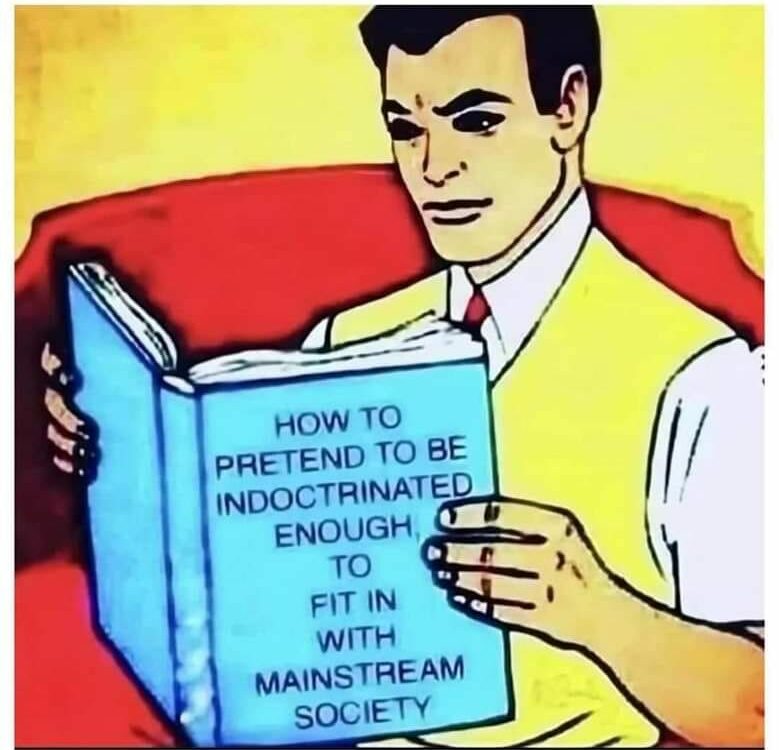
Then we need to touch upon the defensiveness problem, when we challenge this behaviour you get instant negativity. A strong defensiveness kick because critiquing the #fashionista paradigm exposes the gap between self-image and real impact. People who think they’re “the adults in the room” get, fearful, then angry when told they’re slowing things down. They double down, personalise the issue, and then retreat into purity/safety politics.

Refusing to have conversational space outside the deathcult’s terms is, frankly, worshipping the #deathcult. Conversations become impossible, because they can’t tolerate talking outside the narrow bandwidth of #mainstreaming “common sense”, that is in “undefined terms”,

So what can we do? The #openweb reboot needs mess, not perfection. The tradition – the real open web, not the #NGO-sanitised simulation – is built on: rough consensus, running code, shared mistakes, public process, imperfect prototypes, open but flawed governance and messy collaboration. We need to communicate the understanding that everything meaningful starts rough, unfinished, and imperfect. Perfection is not the starting point, perfection is what you get after a thousand messy, iterative steps.

This is why #fashionista thinking harms the #openweb, a strong tendency to block all of this, and worst of all, it convinces people who should be building that, shaming, they’re “not good enough” to begin, this mess kills movements before they start. People trapped in this rarely see that they’re part of the problem, not the solution.

We need a culture that protects messy steps, if we want the #openweb to reboot in a way that isn’t swallowed by #dotcons logic. We need collective composting, not competitive posturing.
Likewise, we need a culture that treats steps as legitimate even when they’re provisional, blurry, imperfect. Never judge the seed by the standards of the forest, nothing grows if people are afraid to plant in the first place.

The #OMN plan, is to keep working and presume people will stop being #mainstreaming prats at some point. And start doing useful #openweb tech. This could be you, message us if it is 🙂

Verticals can be fuckwits when it comes to anything horizontal. That’s not a personality flaw, it’s a values clash, a basic “common sense” failure.

You see this in every movement, and you can see it clearly online right now in the #openweb. Vertical thinking defaults to hierarchy, control, and enforcement. Horizontal thinking defaults to trust, process, and shared responsibility. When the former tries to manage the latter, everything breaks.

I short-circuit a lot of pointless debate by defining the terms #KISS, with a tech focus:

Left = open / trust

Right = control / fear

That’s it. Everything else is noise.

It’s pointless to build on complexity in a post-truth world powered by #techchurn and driven by #fashionista incentives. Complexity just becomes camouflage for power, branding, and control. We’ve spent the last few years watching this fail, over and over again.

Without this #KISS shortcut, we go nowhere, the real choice is simple: build social truth together, or keep worshipping the #deathcult.

The second option is what currently passes for “common sense.” The first one needs a shovel #OMN

Argentina’s Dirty War wasn’t an “excess” it’s glimpse of our hard right future

For todays hard right mess, you don’t have to look back far to see how this works. Let’s look at a real world example: Argentina’s Dirty War wasn’t an “excess”, a few bad generals, as our liberal friends might say. It was state terrorism, built deliberately and scaled region-wide through right-wing #mainstreaming, they called this Operation Condor at the time.

In South America, from the late 1960s into the 1976 coup, repression was already underway with Peronism. After the junta took power, the gloves came off. This state sanctioned violence wasn’t aimed at only armed groups. It targeted everyone who didn’t fit: trade unionists, students, teachers, artists, journalists, lawyers, priests, activists, exiles. Political disagreement became a death sentence.

Every day people were kidnapped, disappeared into secret camps, tortured, executed, thrown from planes into the sea. Evidence erased. Bodies vanished. Between 22,000–30,000 killed or disappeared. Babies born in captivity were stolen and handed to regime families – identities erased as policy. This wasn’t isolated chaos, it was administration.

And it didn’t stop at national borders. Operation Condor wired together the dictatorships of Argentina, Chile, Uruguay, Paraguay, Bolivia, Brazil. Shared intelligence. Joint death squads. Cross-border kidnappings and assassinations. Safe exile became a trap. People fled one regime only to be captured by another. This was a transnational system, not national repression.

Automotores Orletti. Death flights. The Caravan of Death. The murder of Orlando Letelier in Washington. This was global – Europe, the US, everywhere dissidents thought they were safe.

Foreign power mattered. The western mainstreaming, US, France, and others trained, armed, advised. Cold War “anti-communism” gave cover. Declassified documents show our officials knew, and the literal #deathcult machine kept running.

When our own politics changed, with president Carter who didn’t endorse the horror – he pushed human-rights language harder than anyone before him – but pressure isn’t power. By then the terror system was entrenched, protected by years of US military aid, diplomatic cover, and right-wing internal resistance inside Washington itself. You don’t politely stop an autonomous death machine already at scale.

Inside Argentina the net was wide. Jews – 1% of the population – made up 5–12% of victims. Anti-Semitism baked into “national security.” Children stolen. Families destroyed twice over.

Justice didn’t arrive cleanly or fast. Truth commissions. Trials. Then amnesties to protect the military. Decades of silence enforced by fear. What broke it wasn’t the state – it was the Mothers and Grandmothers of Plaza de Mayo, refusing to shut up, refusing to forget. Grassroots memory works as relentless pressure. From the 2000s, amnesties fell. Trials reopened. Convictions followed. Stolen children recovered their names. Planes used in death flights traced. Archives pried open. Not enough, but something.

This example, Operation Condor, shows what happens when hard right state power + neoliberal ideology + secrecy + transnational “cooperation” align. Violence becomes normal. Accountability disappears. “Security” becomes a licence to kill. This is a warning, because when terror is framed as “order”, it always comes back. We are on a path to repeat this mess, please let’s make the effort to become the change and challenge to do something better this time.

And as ever, best not to be a prat, thanks.

We are not suffering from a shortage of “great leaders”

What we are suffering from a shortage of collective pathways. The crisis we are walking into isn’t caused by a lack of charisma or vision at the top. It’s caused by the cultural trap we’ve built around individual solutions to systemic problems. #stupidindividualism – the obsession with personal leaders, personal brands, personal genius – is going to kill millions and displace billions over the next 20 years. Not because individuals are inherently harmful, but because individualism is the wrong tool for a collapsing world.

Vertical thinking can’t see horizontal realities. If your whole value system is built around leaders, ranks, and “key figures,” you will be blind to the commons, to networks, to peer processes, to messy collective agency. And this blindness is not neutral, it accelerates #climatechaos, feeds the #deathcult, and locks us into the same extractive paths that got us here in the first place.

The way forward isn’t another charismatic savior or another “hero innovator.” What we need is to balance collective pathways built from the ground up. Any working future needs:

  • Networks, not heroes. Because no single person can hold the complexity ahead.
  • Practices, not brands. Because technique and culture outlast personalities.
  • Open processes, not closed hierarchies. Because transparency is the only antidote to captured systems.
  • Shared governance, not managed optics. Because appearance won’t save us, but participation might.
  • Messy, compostable infrastructures, not shiny hype machines. Because real change grows from what we renew, reuse, and reimagine, not what we market.

This thinking points toward the #OMN, not as a product, not as a platform, not as “the next big thing,” but as a path. A way of organising, publishing, coordinating, and governing that is native to the horizontal world we actually live in. A way to compost the #techshit and grow something more real.

We don’t need better leaders, we need better collectives, we need spaces where the horizontal becomes visible again. And we need them now.

The #mainstreaming has a crap story, they say that the crisis of communication – the noise, the chaos, the misinformation, the anxiety – can only be solved by “returning to trusted sources.”
They will argue that decentralized media is dangerous, that the “wild internet” must be cleaned up, that only vetted, official voices should have reach.

They will say that decentralized paths, all horizontal spaces are inevitably viral cesspools, and that our #openweb native podcasts, newsletters, open blogs, fedi servers are similer unregulated contamination. The growing fascism, in the end, will push that non-institutional voices are a threat to public order. That public conversation must be brought back under professional management, them.

The line will be simple: “Let the experts speak. Everyone else, sit down.” This is the predictable response of a broken society that lost control of its own narratives. And yes, they are right about one thing, that Big Tech is a sewer. The #dotcons profit from rage, division, algorithmic sewage, and emotional manipulation. Their business model is engineered disinformation. They are the factories of mess we live in.

But the establishment’s mistake, or more accurately, their strategic convenient lie, is pretending we, the #openweb, are the same, we are not. The #fediverse is not Facebook, Podcasts are not TikTok, Blogs and newsletters are not X, the #openweb is not #AlgoMedia.

We are: human-scale, chronological, transparent, open-process, community governed, non-addictive, non-manipulative. Decentralized media is not chaos – it is plurality. The messy public – not the polished elitists – speaking in many voices.

The establishment wants a return to vertical media because they cannot see horizontal people. Their value system literally blinds them. They believe discourse must be orderly, top-down, fact-checked by institutions that have long since been captured by the #deathcult of capital and careerism.

The problem is not that too many people speak, the problem is that too few people have been allowed to listen. The #OMN is the seedling of the opposite vision, many small voices, widely distributed, human editorial networks, community amplification and messy compostable infrastructure. The fedi, podcasts, blogs, newsletters – these are not the disease. They are the immune system emerging in response to the disease.

The establishment sees disorder, we see a rewilding,

They see danger, we see a necessary correction.

They see fragmentation, we see a path back to collective agency.

Not only that, but the current #mainstreaming are desperate to recentralize the narrative because decentralization breaks their #deathcult monopole on truth, framing, and attention. The people do not need saving from themselves, they need saving from the system that hijacked their voices. They need a native path that is open, messy, federated, to push compostable public media, where trust is earned through transparency, not authority.

#KISS

The Power of Film

The Godfather films, aren’t only stories about criminals, they’re stories about the world we live in: hierarchy pretending to be community, patriarchy pretending to be protection, capitalism pretending to be freedom, politicians pretending to be legitimate, family pretending to be love. It’s the #deathcult mythos in cinematic form.

They’re parables about how hierarchy rots everything it touches. Coppola and Puzo create a world where the mafia isn’t an aberration but a mirror of #mainstreaming power: patriarchal families, capitalist accumulation, politicians in pockets, and a state captured by private interests. It’s #deathcult logic wrapped in myth.

It opens not with the fake glamour of today’s action films, with none of the politically correct obscuring, but with real working people doing real life, it’s a view outside the current post truth polished mess. It’s about what’s behind the shiny surface blindness, you watch this film today to experience filmmaking and politics, like meany older films, the pacing is slow. Our attention spans are broken, good to keep this in your mind as you learn to see anew this ethnography of a pastime.

The Corleones aren’t only monsters from the shadows; they’re the real face of American power with the mask removed. Vito Corleone is an older, more honest version of the #neoliberal billionaire who buys judges today. The story’s “crime families” are stand-ins for competing capitalist blocks. The story is a metaphor for how power protects itself, how legitimacy is a costume, and how the violence of the system, hides behind talk of “family,” “business,” “respect,” and “tradition.”

The first two films critique the world we live in, a family built on the same contradictions that tear it apart. Quotes:

“It’s not personal, it’s strictly business.”
→ the neoliberal worldview: harm without responsibility.

“I’m going to make him an offer he can’t refuse.”
→ the essence of capitalist coercion: “choice” backed by threat.

“We’re bigger than U.S. Steel.”
→ capitalism’s real goal: monopoly masked as freedom.

“Just when I thought I was out…”
→ no exit from systems built on domination.

The films are showing us the mythology of the mainstreaming #deathcult. America as Mafia, Mafia as America.

The first film opens with a small man being crushed by the system: a father whose daughter is brutalized, and the courts shrug. This is how neoliberalism works: public services are defunded, fail, people are pushed into private “solutions.” Justice outsourced to a Don is no different from healthcare outsourced to a corporation: both sell what should be a right. Vito’s “friendship” is the same as corporate “philanthropy”, a mask over structural violence.

The “family” keeps up appearances – the bourgeoisie’s favourite hobby – while patriarchal rot devours everyone inside. Connie is beaten by Carlo, but the family shrugs because patriarchal norms demand they stay out of a “private matter.” The same system that fetishizes “protecting our women” abandons them whenever protection would inconvenience male hierarchy. It’s about too much control and not enough care.

Competition, crises, violence – the capitalist cycle – it is useful to see the mythology in #KISS terms, the Five Families aren’t criminals; they’re competing capitalist firms. Their war is a stand-in for economic crises. Clemenza even says these things happen “every ten years,” which is basically the capitalist business cycle.

The Tattaglias and Barzinis pushing heroin aren’t “more evil”, they’re the next stage of capitalism’s expansion, accumulation demanding new markets. Violence is “nothing personal,” which is how every predatory corporation sees the world.

Michael, capitalism’s golden child, was meant to be “legitimate” – a senator, a governor. A respectable frontman to maintain the illusion. Instead, he becomes the perfect neoliberal mess: calm, disciplined, efficient, emotionally repressed, willing to destroy anyone to maintain order. He is the patriarchal son weaponized. The obvious patriarchy flowing through the films is a useful reminder for some and insight for meany about what happens behind closed doors in the current hard right with their calling for “family values”.

By the end of the first film, when he wipes out all rivals while standing in a church professing faith, we see the metaphor: authoritarian capitalism, patriarchal religion, and state legitimacy all fused together. He “renounces Satan” while becoming him, the system itself.

Part II, sharpens this critique. We see young Vito’s rise in a world where feudalism is giving way to capitalism, one hierarchy composting into another. He kills Don Fanucci (feudal power) so he can build Genco Olive Oil (capitalist power). Same structure, new branding.

Meanwhile, Michael, the more matured form of this system, expands the empire into Nevada, New York, Miami, Sicily, Cuba. It’s the globalisation arc. And like all global empires, it’s built on betrayal: Fredo’s betrayal (internal collapse), Kay’s rejection (patriarchal fragility exposed), Michael’s violence against his own (self-destruction inherent in all hierarchical systems). By killing Fredo “for the family,” Michael destroys the family. Capitalism works the same way: protecting profit destroys society.

And the ending is the #techcurn lesson: systems built on secrecy, power, and control always collapse inward, devouring the people they claim to protect. Michael Corleone is neoliberalism in human form. Vito is the earlier, “nicer” version of the same system. And the people around them? Compost.

The Cuba revolution is the one moment where the system cracks – the #openweb moment of the film – where people try to reclaim the commons, break the hierarchy, stop being pawns.

On the subject of filmmaking, a lot of the films’ technics now look every day, this is not because they are, they are brilliant, it’s because every film for the last 50 years has coped them and thus diluted their shine with mediacy. Open your eyes, afresh, watch the films, you are seeing the invention of cinema. When you are used to a lifetime of derivative drivel.

“We, we, we,” they say – but who chooses the “we”?

Trump and Putin are the figureheads of the #deathcult and 3ed rate people like Staner are puppets. The #nastyfew, mostly invisible in the smoke and mirrors of #mainstreaming media, are the ones who push the “we”. And they also invest in a part of our “progressive” paths, always much less affective than they need to be, let’s look at this from the latest #AI tech the #dotcons and more importantly our own #NGO crew.

The core of the #NGO mess: they claim to represent everyone, while foreclosing every other possibility. “We, we, we,” they say – but who chooses the “we”? Meanwhile, the parasite class in tech has spent twenty years destroying the social fabric of the internet, turning everything into grift, extraction, and precarious dependence. There is every chance that this new wave of #AI/#NGO/#dotcons fusion will be just more mess for us to compost.

As I said, let’s look at these people who are in bed with the #dotcons, sucking at the teat (LINK) of the #nastyfew. It should be easy to see, at best they’re a warm blanket, precisely when we need a shovel. They always smother real change and real challenge while claiming to “scale impact.” and other buzzwords.

Working within the system and working outside it both have effects – and yes, we need to balance these paths. But let’s be honest: the “inside” path is 98% parasites, and the “outside” path is full of fashionistas hiding insider routes behind radical posturing. So the balance point isn’t where we think it is. It has to be pushed far, far back from the centre we’ve been trained to accept.

Yes, there is some value in their affective progressive-tech narratives, but it is a tiny force against the power of global capital. They love the idea of the “bridging node,” the mythical middle ground where nothing is actually bridged and nothing is actually changed. Soft, persuasive, endlessly consulting, the #NGO path is a warm blanket to snugal when you should be getting up to work. It comforts, it reassures, and it is collectively ineffective. In the end, that blanket is all they have to offer: a feeling, not a transformation.

And then there’s all the #AI, most of it #techshit witch we need to be clear, is not intelligence, just more civic control in the hands of the #nastyfew. LLMs, image recognition, all of it: tools with some utility, but zero real intelligence. What they do enable is more vertical power, refined manipulation, more subtle control, more extraction of attention, behaviour, and labour through the constantly spreading #dotcons.

With our ongoing #openweb reboot we need a real democratic steering wheel again, actual power to change, not ONLY warm blankets and #PR funding. This is why the #OMN, the #4opens, and the slow work of composting matter. Because every other path on offer right now leads straight back to the same smothering, stagnant centre – the place where nothing grows.

#OMN

The Mess is Boiling

We’re in a mess, our worship of the #deathcult has driven emissions to another record: the world’s CO₂ levels jumped by 3.5 parts per million from 2023 to 2024 the largest single-year increase on record. Our decision to leave the #nastyfew in charge – our short-sightedness and worship of greed – has pushed the planet beyond the stable ecosystem that supported human life. We have done this for nothing, only for big numbers to go up, for nothing. The one planet we know that can support life is being burnt to a crisp for nothing.

There are two reasons. First: we’re still burning, still digging, still feeding the growth obsession. Emissions are rising – the curve is bending, but not nearly fast enough. Second: the planet’s natural buffers – forests, wetlands, oceans – are weakening. The carbon sinks are choking: less CO₂ is being absorbed and more remains suspended in the atmosphere.

The math is brutal and simple: more in, less out. The atmosphere fills faster; the climate accelerates. This isn’t a surprise – scientists warned us for decades – but the facts are stark: we’ve locked in more than 1.5°C of warming. The UN has said it plainly. In the UK, the Climate Change Committee told the government to start planning for a +2°C world. That’s not a prediction, it’s a plan for failure.

If we want credibility beyond our grassroots #DIY bubble to change and challenge a wider #mainstreaming audience, we must call out both corruption and profiteering within the so-called eco industry as well as celebrate any genuine innovation. Otherwise, billions are spent on initiatives that inflate costs while ‘eco leaders’ jet around in privilege and luxury. Tens of millions in the West are angry about this corruption and injustice. But the effect is negative, that anger is feeding a hard shift to the right which will #block any meaningful progress toward sustainability.

The problem isn’t that we don’t know what to do. The solutions exist and are already working in many places, but we’re not scaling them quickly enough. Renewables are expanding, but too slowly. Deforestation is slowing, but not enough to save the canopy. Methane-detection and fixes are finally being reported more widely – responses have risen from around 1% to 12% – but that’s still negligible compared with what’s required.

The story of the living world since 1970 is one of catastrophic loss: roughly 73% of wildlife populations wiped out. The curve may flatten slightly at the end, but only after the living world has been gutted. That’s not balance, that’s exhaustion.

The catastrophe we are facing is because of a tiny number of powerful actors and their enablers, pushed past tipping points in multiple systems. Warm-water corals have crossed thresholds: the ocean is too hot for recovery in many regions; collapse is now locked in. The Amazon risks drying into Savannah. Ice sheets are destabilising. Methane is beginning to be released from thawing tundra. We’ve crossed a red line.

Meanwhile, political theatre keeps serving up delays and rollbacks. A global carbon tax for shipping was scuppered by hardline actors; the Net Zero Banking Alliance collapsed under pressure. While leaders squabble, the Atlantic produced one of its strongest-ever storms for this time of year – Hurricane Melissa – supercharged by waters heated by our pollution.

For anyone paying attention, recent months have been the worst climate months on record, not only in numbers but in meaning. We’ve forced the planet into feedback loops. Scientists warned this would happen; watching it unfolds brings a new grief.

Yet despair is not a plan. The #deathcult wants us paralysed, to claim “it’s too late.” But this isn’t binary. A planet at 1.5°C is bad; at 2°C it’s worse; at 3°C it’s catastrophic. Every fraction of a degree matters. Most projections today point to a 2.5–3.0°C increase by century’s end under optimistic political assumptions. A more realistic projection, accounting for slower, fragmented action, could be 3.0–3.5°C by 2100.

From a #spiky perspective: Western electorates are increasingly choosing far-right, climate-denying parties. Growth is capitalism’s lifeblood, but it’s death for the environment. Leaving decisions that affect society to a tiny, profit-driven minority is morally unacceptable. This isn’t a technological problem we lack the tools to solve – we have the tools. Instead, a relatively tiny number of selfish actors and their fear and greed are blocking meaningful change.

From a #fluffy perspective: Individuals, billions of us, can act. Start with these everyday steps:

Eat a plant-based diet instead of meat and dairy.

Use public transport, cycling and trains instead of cars.

Buy less; choose used over new whenever possible.

Insulate homes and reduce energy consumption.

Support and use renewable energy: solar and wind.

We can’t walk away from this, the only option is challenge. Reconciling this fluffy and spiky debates is the hardest part: we must act without illusions. We may never “win” in a clean, final sense, but our actions still matter. The difference between 2°C and 3°C will cost billions of lives. The difference between despair and defiance is the grassroots #DIY future we need to seed and grow.

From the spiky side, some argue for direct action: break laws that protect destructive industries, sabotage systems that perpetuate ecological harm, or withdraw labour to halt the economy. These are radical proposals with profound ethical and practical consequences.

From the fluffy side: consider moderating those impulses. Channel energy into mass organising, nonviolent direct action, community resilience, and building alternatives that scale. We need both defiance and construction: refuse what destroys us and build what sustains us. That is how we turn grief into resolve. From the fluffy side, maybe mediate your blocking of this needed spiky path?

At best, the old #mainstreaming was about equality in worshipping the #deathcult

The old #mainstreaming was only in a limited way about freedom, so we now need to focus on more on what it was about, equality in obedience. Equality in our blinded worship of the #deathcult: growth, consumption, competition, endless mess on a dying planet.

That’s why #fashernista liberal progressivism is always a dead end problem, it plays radical, says radical, but composts nothing. At best, it sells rebellion as a lifestyle. It’s equality inside the system, not about freedom from it.

We’ve seen this play out a thousand times. Movements rise, fresh and alive, then get polished into campaigns, reports, and consultancy slides. Grassroots becomes “stakeholder.” Vision becomes “strategy.” Change becomes “branding.” All form, no compost. All language, no shared life.

Any real change, living change, means turning the dead weight of institutions, egos, and fear into fertile soil. It’s messy, collective, risky. It doesn’t ask permission. It doesn’t chase funding and #NGO approval. It grows because it has to.

That’s what the #OMN (Open Media Network) path is about – composting the old #techshit, the #dotcons, and the NGO decay into something living again. Media that belongs to no one but serves everyone, built on the #4opens.

So the real question is simple. What does real change and challenge look like to you? How do we build it together, in the open, without falling back into the same polite obedience that killed everything before?

The #OMN and the #4opens aren’t abstract ideas, they’re tools for action. If we’re serious about composting the old world into something living, we need hands in the soil, not just words in the air. Here’s how people can start now, from wherever they stand:

#FOSS coding: Build the #openweb, not the #closedweb. Work on #Fediverse tools – join existing native #fashernista projects like Mastodon, PeerTube, Mobilizon, Funkwhale, or the more useful #OMN itself. Fix bugs, improve UI, write docs, or just help test and report issues.

Use the #4opens in practice: No private repos, no hoarding, public decision-making, everyone can use it. Compost old code: take abandoned projects and adapt them. Don’t build shiny new tech for ego points, fix what’s already here. If you’re practical, run small community servers: self-host media, blogs, Fedi instances. Learn how networks breathe.

Then we have social activism, keep it social, messy, and grounded. Form local affinity groups around #openweb media – film nights, repair cafés, public jams. Document everything: record protests, community stories, forgotten spaces.

The next #Indymedia starts with people saying this matters. Challenge control where you see it growing – in meetings, projects, #NGOs, progressive spaces. Ask: is this open? Who holds power here? What’s being hidden? Compost negativity: don’t waste energy on flame wars. Turn frustration into content, conversation, and code.

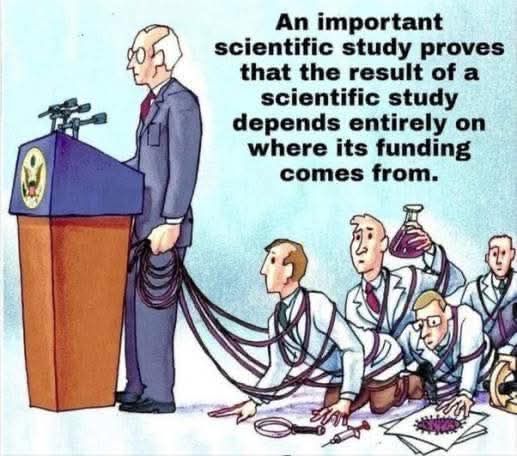
Avoid the #NGO trap – don’t let money dictate the mission. Use micro-funding and co-ops:
OpenCollective, Liberapay, cooperative hosting. Keep the process/books open: publish budgets, donations, and decisions publicly (#4opens). Value labour differently, not everything needs to be paid. Shared work and mutual aid count as real economy.

Bridging to #NGOs and Institutions but don’t get eaten. Engage, but on your terms, use the #4opens as a boundary tool. If an #NGO don’t work openly, walk away. Offer bridges, not control. Help NGOs learn openness, federate, don’t integrate.

Bring culture into the conversation. Explain why open process and transparency are political acts, not technical choices. Stay autonomous: The moment an institution starts setting your agenda, compost it.

Build the commons, not empires. Everything we do should feed back into the collective soil.
* If you build a tool, make it usable by others.
* If you make media, licence it open.
* If you host something, teach others how to host too.

This is how we win: not through scale, but through replication. Small, self-organizing, composting networks connected through trust. Remember, revolution isn’t about blowing up the system. It’s about composting what’s dead, sharing what’s alive, and keeping the soil open for what’s next.

#openweb #nothingnew #techshit #OMN #fashernista #mainstreaming #deathcult

Freedom is not mine or yours. It’s ours, or it isn’t freedom at all

The illusion of modern society is that freedom is only individualistic, when our freedom is in truth interconnected with the well-being of everyone. This is one of the central pushes of the #deathcult – the mess of #neoliberalism we still live and work inside. It tells us that we are free as consumers, that choice equals’ liberation, and that personal success is the highest form of virtue.

But this is a hollow freedom. What kind of liberty exists when every interaction is transactional, every space is owned, and every so-called “community” is just a market segment waiting to be monetized? We experience this every day. The #dotcons sell us “empowerment” through sharing, but it’s sharing inside a cage. Their platforms reduce human connection to engagement metrics and ad revenue. Every “like” is data for their shareholders, not any gesture of solidarity.

The #NGO world isn’t much better. It preaches collective change and “amplifying voices,” yet operates like any other corporation, brand-driven, risk-averse, allergic to the messy, unpredictable reality of grassroots organising. Instead of networks of solidarity, they build vertical hierarchies of control. The people they claim to represent become “beneficiaries,” not participants.

Even in the alt-tech and “decentralised” spaces, this same illusion creeps in. Too often, we see projects confusing personal control with collective freedom, endless talk about privacy and autonomy without any grounding in social trust. A federation of silos is still a field of fences if the people behind them don’t share any values, practices, and care.

Real freedom isn’t about escaping others; it’s about building with them. The #openweb once embodied this, a commons of creativity, trust, and shared #FOSS tools. It wasn’t perfect, but it worked because people shared more than data; they shared intentions. The current #4opens are social principles first, technical structures second, path back to this.

25 years ago, seeded from the undercurrents video collective, we built #indymedia from this soil. Affinity groups came together to tell stories from the streets – direct, unfiltered, alive. You could see and touch it: the cables, the battered servers, the faces in the room lit by CRT monitors and endless tea. It wasn’t about perfection or control; it was about social connection.

Now we are knee-deep in mess, and need shovels to composting the Illusion, the challenge is to compost this #mainstreaming, to turn the rotting soil of #stupidindividualism into fertile ground. This is the work of the #OMN (Open Media Network): to regrow grassroots media not as a brand, not as a product, but as a living ecosystem of stories, links, and local action. Each part feeding the other. Each voice linked, not owned.

Where #dotcons feed on data extraction, we feed on compost, the messy remains of failed systems and burnt-out movements, broken down, rotted, turned into nourishment for the next cycle. Because our freedom doesn’t live in the self, it lives in the network, in the commons, in the trust between people, in the code and culture we share.

The individual without community is not free, only adrift. The collective without openness is not strong, only captured. Freedom is not mine or yours. It’s ours, or it isn’t freedom at all.

In the #mainstreamin tech path, this is a useful step:

It’s how humans have always lived – together

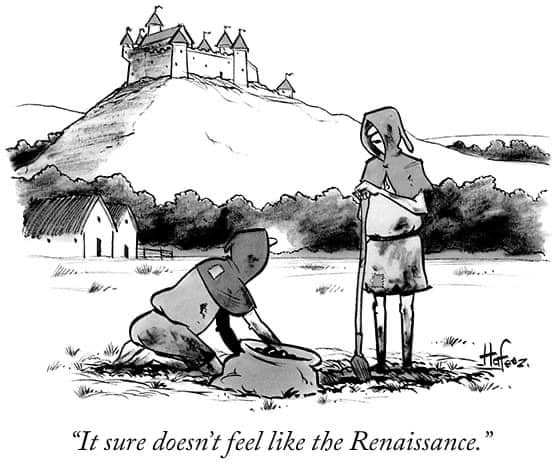
For 200 years, capitalism, for the last 40 years #neoliberalism, taught us that we’re isolated individuals who compete to survive. But any real view of our actual history – and our biology – say the opposite: we’re interdependent, social, and ecological beings. For almost all species time before the current mess, we thrived through commons-based systems, shared forests, grazing lands, rivers, and community knowledge. Villages maintained open wells, fishermen shared tidal calendars, and guilds protected collective craft standards. Cooperation, not competition, is what allowed us to endure.

This is why now alt tech, matters, it is about rediscovering, what makes us human, the digital form of that is commoning online. Just as medieval commons were fenced off during enclosure, our early digital commons were captured by #dotcons. Rebuilding the #openweb is the act of reclaiming that shared ground, not nostalgia, but in the era of #climatechaos and hard right shift its #KISS survival.

What we need to compost is our own-shared memory. The commons are missing from today’s “common sense”. The idea that people can manage shared resources together has vanished from public imagination. Yet the commons is the older, more adaptive, and far more humane way of organizing.

In tech, the #Fediverse shows this in action, thousands of community run servers cooperating through a shared protocol, ActivityPub. Projects like #PeerTube, #Pixelfed, or #Funkwhale replace enclosure with federation, showing that open paths can scale through trust rather than control. Alt tech, built on open protocols and co-governance, is simply the digital commons rebooted, a network of networks where no one owns the whole.

We need much more resources and focus pushed into this real grassroots path of reclaiming the means of communication, in the 1990s and early 2000s, the internet was all ready a commons: decentralized, people-driven, and impactful. Early #Indymedia collectives covered protests outside mainstream #blocking narratives. #4opens email lists and wikis built movements across borders. Then capital pushed in, WE let the #nastyfew of #Facebook, #Google etc privatize our collective infrastructure, turning participation into surveillance and creativity into content.

Alt tech projects like the #OMN (Open Media Network), Mastodon, and wider #Fediverse are attempts to rebuild what we keep forgetting, this time, protected by #4opens shield to build shared governance. This path is not a nostalgic throwback, but living/acting paths for post-capitalist communication we need in the growing era of social backdown.

It’s not only “tech” – it’s social trust infrastructure. A common is not only software; it’s the culture of cooperation that surrounds it, shared values, mutual aid, and relational ethics, you can’t “code” trust into hardware, as the last decade of #blockchain and #AI mess proves. Smart contracts failed to make people honest; they just automated mistrust, it’s on going #geekproblem blindness we need to be working to compost.

What works, the resilience, comes from people, not algorithms. Through frameworks like the #4opens: open data, open code, open standards, open process. We can build transparency and accountability into the social layer of the network. Trust is a practice, not a protocol #KISS

We need a future that’s better, not just less bad. The #deathcult story – neoliberalism’s great myth – says “there is no alternative.” Alt tech is the alternative, working proof that cooperation scales, that people build shared infrastructure without extraction and less coercion. Look at LibreOffice, Wikipedia, Linux, or the #Fediverse, all imperfect, collaborative systems built on trust, not profit. They are real-world examples of how collective will outperform the normal deadened paths of corporate hierarchy.

Alt tech gives us believable hope, which is the only real antidote to despair and apathy. The ground for grassroots power is in pushing change and challenge. If the liberal state and #dotcons won’t reform, we need to be building parallel structures that work differently.
Projects like the #OGB (Open Governance Body) experiment with federated, transparent decision-making. The #OMN builds tools to connect grassroots media in trust networks, bypassing gatekeepers entirely. Together they form a scaffolding of a working commons, capable of hosting culture, not only control.

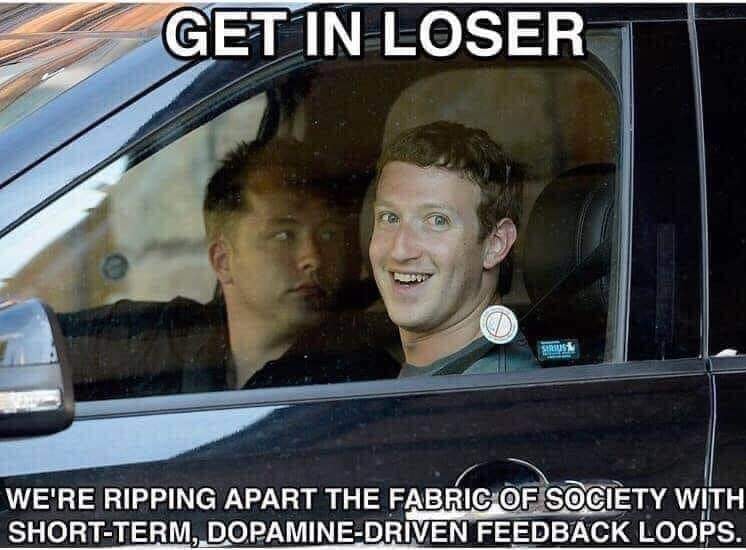
Healing the social media wound? We need to compost the lie of #dotcons which spent the last 20 years turning us into consumers and outrage machines. The shovel we need is affinity groups rebuilding social tech around self-governance, interoperability, and most importantly trust to reclaim the human side of the internet. Imagine the world different, feeds that empower communities, not advertisers, tools that nurture relationships, not metrics, platforms that amplify context, not conflict.

This is the work of making the internet human again, working together on the path of alt tech matters because it’s not about gadgets; it’s about freedom, community, and survival. It’s our path to remembering that the #openweb, like the Earth itself, belongs to everyone, or it belongs to no one. And every time we build a shared tool, or hold open a door, we remind the world that cooperation is not naïve, it’s our oldest #KISS technology.

A cross-cultural conversation on this subject

UPDATE: I haven’t touched on two other #4opens projects here, so let’s tap them at the end: #Nostr is a “me-too” project stuck in the #geekproblem loop, it won’t go anywhere until it learns to value community as a building block. #Bluesky, on the other hand, is already drifting into the hands of VC-funded #fluffy elitists who turn every commons into a brand. It’s a very likely a dead-end for real change or challenge, which is why the #mainstreaming #blocking #NGO and #fashionista crowds flock to it.

UPDATE 02: Digesting the comments. For the past 10,000 years of agriculture, 500+ years of Euro-colonialism, 200+ years of #capitalism, and 95 years of #neoliberalism (45 officially declared as such), the #nastyfew practicing control through production have dominated everyone else. Capitalism, as described in Capital, grew wherever it could. By the late 19th century, labour organised and fought back. Social democracy transformed the capitalist state so effectively that capitalist development stalled by the 1930s.

The response? A reorganisation of capital, using anti-communism as its rallying cry (WWII, NATO, Korea, Vietnam) to defeat social democracy and retake control of the state. By the 1980s, “they” felt secure enough to brand reform itself as a product: #Neoliberalism. I’m simplifying, of course – this is for the #hashtagStory outreach, so it can become a #KISS tool people can actually use. Clarifications and deeper dives you can find in the comments 🙂

Now, about this idea that “capitalism told us we’re isolated individuals competing to survive.” It’s partly true, but not in the way people think. Capitalism depends on interdependence, we work together to produce, but in a way that isolates us socially and politically. That’s the contradiction: interdependence turned into alienation. It’s the mess in our heads that recreates these bad social structures, the inner factory of control. That’s what we have to compost.

In the end, it’s not just social control, it’s social destruction. As we rush deeper into #climatechaos and the global hard-right turn, it’s clearer than ever: the ideology of separation keeps power safe and people powerless. I know this isn’t #mainstreaming liberal logic, that’s the point. We have to think differently.

And for context, I’m not speaking from the sidelines – I’ve got an MA in politics and 30 years of hands-on work in grassroots #openweb tech. Isolation is social control, see #stupidindividualism. Let’s keep this grounded and not turn it into trolling, yeah?

A Tolkien view of #OMN

A central thesis of Tolkien’s books is that evil provides the means of its own defeat. Sauron forged the One Ring that destroyed him. Shelob impaled herself on Sam’s blade. Smaug exposed his belly to Bilbo and revealed the weak point that brought him down. Tolkien’s world is full of this pattern: the seed of destruction lies buried inside the will to dominate. Power over others always carries its own undoing.

But there’s a second truth, less often spoken. Good must still act. The Ring did not cast itself into the fires of Mount Doom, it had to be carried, inch by inch, through the mud and terror, by two small Hobbits who refused to give up. Shelob could only fall because Sam held his arm firm when it would have been easier to drop the blade. Smaug was slain not by fate, but by the hand that fired the black arrow.

Even when evil weakens itself, the act of courage still has to be taken. The small people still have to step up. And there’s a third lesson here, one that feels painfully relevant to our time: good only loses when it surrenders to hopelessness. Denethor’s despair nearly doomed Minas Tirith.
Frodo would have fallen without Sam’s stubborn love. Bilbo’s small act of faith. In Tolkien’s world, hope is not naïve optimism, it’s an act of defiance.

In our current #closedweb Mordor, we see a similar pattern. The #dotcons – Facebook, Google, X, TikTok – are our modern Mordor. Their empire of control looks invincible, but the same logic applies: the seed of their undoing lies within their design. They rely on enclosure, makes them brittle. They feed on attention, makes them hollow. They claim to connect, yet they isolate. Their power depends on us believing there is no alternative. The moment we act otherwise, the “Ring” begins to crack.

This is where the #OMN (Open Media Network) is about, it’s the Hobbits of the #openweb, a simple idea built around trust, openness, and shared meaning, the values that the #mainstreaming web abandoned in their push for scale and profit. The #OMN path is not glamorous, it’s messy, human, and small in the best possible way, it’s the hobbit path.

While the lords of code build towers of algorithms and surveillance, the #OMN builds compost – small, fertile spaces for stories, community, and resistance to grow. Each node, each local server, each trust-based network is another Hobbiton – small, grounded, but vital to the health of the wider networked world.

And like Tolkien’s hobbits, the people carrying these projects are not heroes in the conventional sense. They’re tinkerers, storytellers, boat-dwellers, coders, gardeners – ordinary people who refuse to give in to despair.

The weakness of the Ring, is the weakness of Mordor – and of our #dotcons empires – is that they depend entirely on compliance. Their control works only as long as we feed it: our attention, our data, our labour. The act of reclaiming media, even on a small scale, is an act of resistance, the equivalent of carrying the Ring toward Mount Doom.

But again: it doesn’t happen automatically, we have to act, have to keep building, sharing, teaching, mediating – before the co-option machine moves in, before the #fashernista crowd turns the work into branding and drains it of meaning.

This is the role of projects like #OMN, #indymediaback, #4opens, and the broader #openweb ecosystem. They’re not just technical projects, they’re moral ones. They remind us that good requires persistence, that hope is work, and that defeat only comes when we stop trying.

Evil destroys itself, yes, but only if someone carries the Ring. The systems of enclosure, surveillance, and monetized despair will fall apart on their own contradictions, but only if enough of us are walking the long, muddy road toward something better.

That’s what the #OMN is for: a space to hold hope, to act before hopelessness takes root, to build the commons even when it feels impossible. And like Tolkien’s world, we won’t win through strength, but through endurance, through small acts done together, with trust.

Because the web – like Middle-Earth – is worth saving.