There is such a thing as society. The entire #openweb is built on that assumption 🙂 Deny it, and everything collapses into noise, power grabs, and enclosure. That denial, dressed up today as “post-truth” – is killing us.
Our current media ecology is broken. So called #AI and Google are no longer a useful way to find information about most things that actually matter. This isn’t accidental; it’s a structural #dotcons problem. Extraction, advertising, and algorithmic manipulation have replaced human discovery, context, and trust.
The same sickness runs through much of today’s open-source and free software world. Its governance models are still rooted in medieval political ideas: aristocrats, benevolent dictators, kings and courts. That might have muddled through in the 20th century, but it is obviously useless for the world we now live in.
The last twenty years trying to mediate this with neoliberal #stupidindividualism has only made things worse. The result is towering piles of steaming #techshit, endlessly churned, rarely useful, and increasingly disconnected from any healthy social reality. This is the #geekproblem made in: code, silicon and concrete.
The #mainstreaming disaster driven by #dotcons is obvious. We don’t need to relitigate it every five minutes. For motivation and clarity, let’s put them to one side and focus on what we can actually change. Our own tech culture is still hopelessly mired in the #geekproblem. So yes, we need to compost a lot of our own mess.
The path out of both the #closedweb and the geek cul-de-sac is not new. It’s old, boring, and powerful: trust, shared responsibility, and human-scale democracy. If we are serious, the #openweb has to be rebooted with grassroots democracy at its core. Social tech needs social governance. Without that, we are just recreating vertical power with nicer licences.
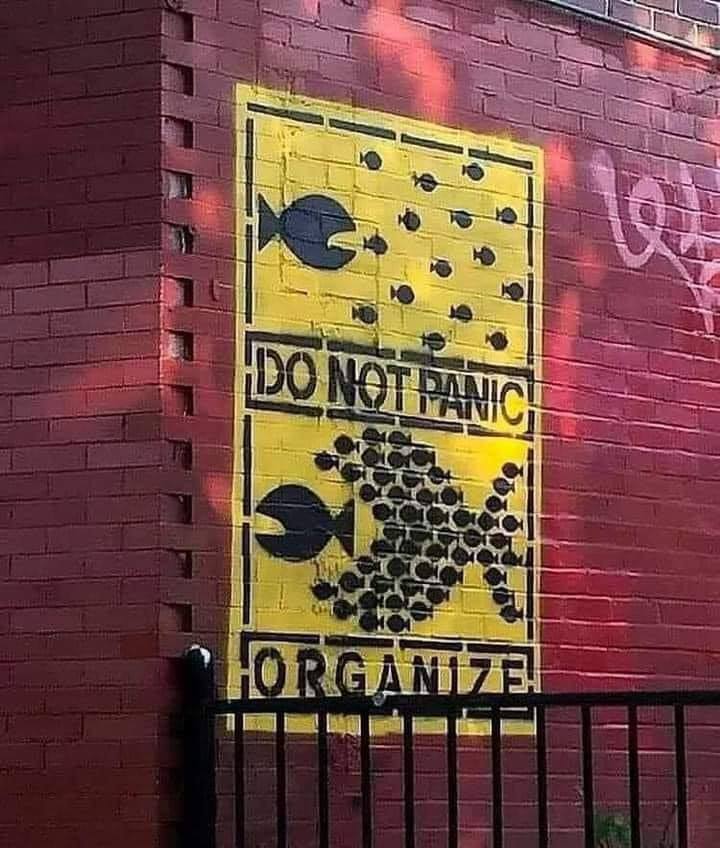
This is where #OGB (Open Governance Bodies) matter. With real democratic process, it becomes relatively simple to push the #dotcons back out of spaces they currently dominate by default. Without democracy, they will always win, not because they are smarter, but because they are organised.
Right now, we are drowning in the #mainstreaming mess. And worse, we are still adding to it. Every pointless project, every ego-driven fork, every governance-free platform accelerates #techchurn and deepens the rot. We need to stop pretending this is neutral.
Yes, “open standards” are a mess, always have been, but they are the mess we must build on until enough of the #openweb is rebooted – including democratic decision-making – to rejuvenate and civilise the standards bodies themselves. Strong democracy changes the game. With it, enclosure becomes contestable. Without it, we just get louder arguments and faster failure.
And when people doing obviously stupid things can’t understand what the #OMN hashtags mean? Click the hashtags and think, or stand and shout, then hit the block button. You get to choose 🙂 This is not rudeness, it’s focus. And focus is how we stop adding to the mess and start composting it into something that might actually grow.
The debate about so called #AI and large language models inside the #openweb paths is not, at its core, a technical argument. It is a question of relationship. Not “is this tool good or bad?” but how is it used, who controls it, and whose interests it serves.
This tension is not new, every wave of open communication technology has arrived carrying the same anxiety: printing presses, telephones, email, the web itself. Each was accused – often correctly – of flattening culture, centralising power and then when enclosed eroding human connection. And yet, each was also reclaimed, repurposed, and bent toward collective use when used within humanistic social structures. The #openweb path was obviously never about rejecting technology, it was about refusing enclosure.
On the #FOSS and the #openweb, we have always understood that tools are political. Not only because they contain ideology in their code, but because they embody power relations in how they are built, owned, governed, and deployed. The #OMN project grew from this understanding, it isn’t an anti-tech project, it is a re-grounding of technology in social process: trust-based publishing, local autonomy, messy collaboration, and human-scale governance. On this path we have to constantly balance the #geekproblem that servers mattered less than relationships, code mattered less than continuity.
#LLMs arrive into this tradition not as something unprecedented, but as something familiar: a tool emerging inside systems that are deeply broken. The danger is not that LLMs exist, the danger is that they are being normalised inside closed, extractive, #dotcons infrastructures.
What makes LLMs unsettling is not intelligence, they have none, It’s proximity. They sit close to language, meaning, memory, synthesis, things humans associate with thought, culture, and identity. When an LLM speaks fluently without being feed lived experience, then yes, it can feel hollow, verbose, even uncanny. This is the “paid-by-the-word” reaction many people have: form without presence, articulation without accountability. This discomfort is valid.
But confusing discomfort with real danger leads to the wrong response. #LLMs do not have agency, consciousness, or ethics, they don’t take responsibility, they cannot sit in a meeting, be accountable to a community, or live with the consequences of what they produce. Which means the responsibility is entirely ours. Just like with publishing tools, encryption, or federated protocols.
Much of the current backlash against “AI” is not about facts. It’s about vibe. People aren’t only disputing accuracy or pointing to errors. They’re saying: “This feels wrong.” That instinct is worth listening to, but it’s not enough. The #openweb tradition asks harder questions:
Who controls the infrastructure?
Can this tool be used without enclosure?
Can its outputs be traced, contextualised, and contested?
Does it strengthen collective capacity, or replace it?
Does it help people build, remember, translate, and connect, or does it manufacture authority?
An LLM used to simulate “wisdom”, speak for communities, and replace lived participation is rightly rejected. That is automation of voice, not amplification of agency. But an LLM used as:
an archive index
a translation layer
a research assistant
a memory prosthetic
a bridge between fragmented histories
…can work within in a humanistic path if it is embedded in transparent, accountable, human governance. The #openweb lesson has always been the same: you don’t wait for systems to fail – you build alongside them until they are no longer needed. On this path #LLMs will become infrastructure, the real question is whether they are integrated into: Closed corporate stacks, surveillance capitalism, and narrative control or federated, inspectable, collectively governed knowledge commons.
If the open web does not claim this space, authoritarian systems will. This is not about fetishising this so-called AI, nor about rejecting it on moral grounds. Both are forms of avoidance. The #OMN path is pragmatic:
build parallel systems
insist on open processes
embed tools in social trust
keep humans in the loop
keep power contestable
#LLMs can’t and don’t need to understand spirit, culture, or community, humans do. What matters is whether we remain grounded while using tools – or whether we outsource judgment, memory, and meaning to systems that cannot be accountable.
Every generation of the open tech faces this moment, and every time, the answer needs to be not purity, but practice. Not withdrawal, but responsibility. Not fear, but composting the mess and planting something better. #LLMs are just the latest shovel, the question is whether we use them to deepen the enclosure, or to help dig our way out.
On the #OMN and #openweb paths, the answer has never been abstract. It has always been: build, govern, and care – together.
Most social problems aren’t conspiracies – they’re #fuckups, we’re only human. You could say “most social problems are caused by social issues”, but that doesn’t land the same way 🙂 The problem isn’t secret cabals, it’s accumulated dysfunction, bad incentives, and people defending their tribe instead of fixing the plumbing.
A practical example of this is the core of the #geekproblem. Everything we do in tech is built on standards. That part is unavoidable. The real problem is who defines them, how, and in whose interests.
Some people like building sandcastles. That’s effectively what you’re doing if you just make stuff up in tech and pretend it exists in isolation. In reality, anything you build already sits on top of a huge pile of standards – protocols, formats, conventions, governance models. Denying that isn’t radical, it’s fantasy.
And this is where things derail: instead of talking about tech practically, people slip into tribalism. They argue identity, ideology, vibes – not architecture, interoperability, or power flows. You see endless positioning, almost no engineering.
“Open industrial standards” get dismissed as nebulous or boring, but they’re actually where the value is. They’re the difference between shared infrastructure and enclosed fiefdoms. The #openweb worked precisely because of this boring, collective work.
Let’s look at this a different way – Nationalism is a similar kind of abstraction – a nebulous idea that people pour meaning into. And it’s also where violence tends to appear. Tribalism can be beautiful, grounding, and human, but it can also turn toxic when it replaces thinking.
Some #dotcons are now larger than nation states, so the metaphor isn’t stretched at all. They control territory (platforms), populations (users), economies (attention and money), and law (terms of service). Yet we still pretend this isn’t political. The geek “problem” is a very 20th-century dysfunction: a narrow tribal mindset that mistakes technical cleverness for social wisdom. And it’s damaging us all.
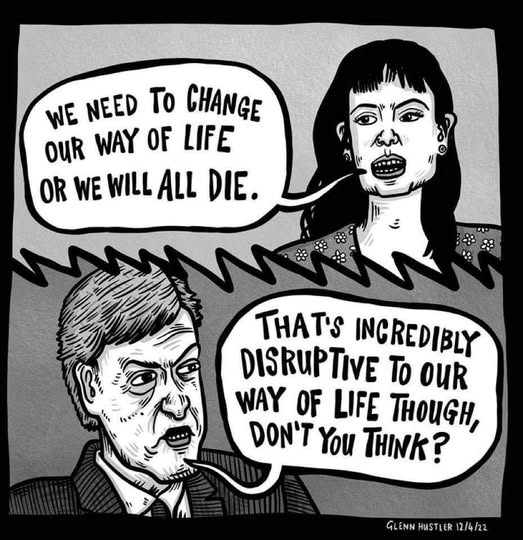
People are up for change. The frustration and anger are real. But we need to work ourselves past the current #blocking energies – the endless arguments, purity tests, and performative conflict.
On this needed move, short and sharp is often more ethical than long and drawn out. Say what matters. Build what works. Use #4opens to cut through the fog.
We don’t need more right-wing myths. We need shovels.
Looking back from the mid-2020s, the arc of #web03, #NFTs, and blockchain culture is very clear. What once promised (lied about) decentralisation, liberation, and a break from corporate capture now looks like the same, mess, #techcurn pattern repeating itself, yes it had new language, new branding, but it was easy to see it had the same underlying mess making dynamics.
As these #geekproblem projects hollowed out, the signs became hard to ignore. The technical optimism faded, the user bases thinned, and the economic logic exposed itself. What followed was totally predictable: spin. Makeup and perfume slapped onto decaying projects to hide the smell of rot and exploitation. Rebrands. New narratives. New demographics. Same extraction. This was the outcome of building “liberation tech” on foundations that still centred virtical money, speculation, and power concentration.
With these projects we are now in the zombie phase, projects kept moving, kept talking, kept selling – long after the animating ideas had died. Influencers and promoters continued to perform belief, even as any substance drained away.
This is a few years when #fashionista culture met #encryptionist ideology – aesthetics and technical absolutism snogging the undead remnants of a failed #deatcult vision. The result wasn’t in any way decentralisation; it was a simply a new enclosure. People weren’t being freed, they were being financialised, the money problem #KISS
At the core was a simple structural truth: #dotcons feed on money. Put money in, influence comes out. That logic doesn’t disappear just because you wrap it in cryptography or decentralised rhetoric. “Bad actors” weren’t anomalies – they were following the incentives as designed. Aany social good becomes just collateral damage. This is why the lie collapsed in te end.
The deeper harm and problem with #techcurn is each wave claims to have fixed the problems of the last. But each wave reproduces them, because this is what works when worshiping a #deathcult. This isn’t just a failed tech trend, the #techcurn disparity, driven by extraction systems cause enormous human harm, displacing livelihoods, concentrating power, and amplifying inequality at planetary scale.
These systems don’t fail harmlessly, they fail onto people. That’s why the call isn’t just to “be critical,” but to step away – and help others step away too. Not through purity exits or individual moralising, but through collective paths back to technologies built for people rather than profit, life over zombies
There has always been another path: the #openweb. Messy, imperfect, slower, less glamorous, but grounded in shared infrastructure, social trust, and human-scale governance. The #OMN approach doesn’t promise salvation. It offers compost instead of speculation. Process instead of hype. People over tokens.
A note on hashtags: And yes, the hashtags matter. Click them., search for them. They cut sideways through algorithms – small back doors into less mediated, less controlled ways of seeing. Not a solution, but a crack in the wall.
The current #Ai hype bubble is repeating this mess with a little more useful #LLM functionality, but on top of this is a huge mess of #techchurn, which will need composting.
Observation: some people go into news to speak truth from power – using institutions to legitimise the status quo and defend the worship of the #deathcult.
Others speak truth to power – using journalism to expose, question, and challenge unequal power and its consequences.
Only one of those serves the public interest #KISS
Let’s look at this. #ActivityPub is not a product. It’s not even really a “protocol” in the narrow, rigid sense that vertical tech likes to imagine. ActivityPub is a shared vocabulary, a public language for moving meaning and connection across the #openweb. It gives you nouns and verbs, and the community defines the grammar through lived use.
This is why the #OMN works with ActivityPub, a metadata and meaning layer, not a platform, flows, not silos. ActivityPub is the widely deployed #4opens protocol that treats publishing as a flow, a conversation.
Unlike the more vertical stacks (#ATProto is a good example), ActivityPub doesn’t force a worldview. It doesn’t tell you, “this is how your network must be structured.” It doesn’t enforce hierarchy or lock you into one interpretation of identity, authority, or workflow. It’s a #KISS path – here’s a shared language, verbs for publishing and receiving, express objects, updates, relationships. The rest is up to the commons
This flexibility is exactly why the #OMN can become a part of this flow. ActivityPub, with #FAP process, is already evolving this way – not through top-down committees, but by developers and users defining new grammar for shared needs. Quote posts, permissions, object types, and many other extensions are emerging organically. This is horizontal protocol evolution, which aligns well with the #OMN path.
To mediate the #geekproblem trying to break this path. We need to say clearly why we don’t want an “ActivityPub 2.0”. A clean break is a vertical move, it reproduces the #techcurn cycle: throw away the compost, start another shiny stack, burn everything down every five years because fashion demands it. It’s the #fashernista mindset applied to protocols.
For the #OMN, we need continuity, evolving the commons, not abandoning it. ActivityPub works because it’s an accretion protocol, not a replacement protocol. We extend it, we add grammar, we build bridges, we compost the broken bits. This is the #nothingnew ethos: repair, adapt, extend, don’t rewrite reality every cycle.
This is fine up to a point, but still too much – Central points of failure – Which is fine for much of the #fediverse. But the #OMN isn’t only for well-resourced servers, it’s for change and challenge. Activists on the ground, communities without reliable hosting, people under surveillance, low-resource groups, offline-first publishing, pop-up networks, autonomous movements that cannot rely on central infrastructure.
For this layer, we need true #p2p protocols. This is where #DAT, #Hypercore, and similar tools matter – not as replacements, but as bridges. These are needed for resilient metadata flows, where stories, tags, and meaning travel across networks even when the networks are broken.
We need to understand why both matter, It’s because they do different things. ActivityPub gives us: wide distribution, discoverability, moderation structures, federation, slow-moving cultural infrastructure. We add to this what #p2p gives us: autonomy, resilience, offline survival, local-first publishing, anti-censorship pathways,
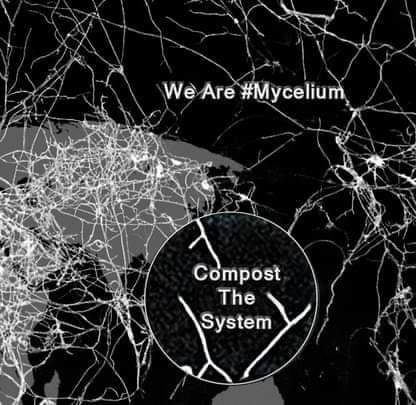
The #OMN’s job is to bridge these layers, same metadata vocabulary, same hashtag meaning system, same open processes. Two different transport layers depending on the need. Think of it like the compost metaphor: ActivityPub is the shared soil bed. #p2p is the mycelium running underneath, keeping it alive when storms hit.
This matters, we don’t want just another Fediverse, we don’t want just another p2p experiment. We need a living ecosystem that can: publish everywhere, survive disconnection, resist capture, remain open, remain public, remain messy, remain ours. ActivityPub gives us the public commons, p2p gives us the underground root network. The #OMN ties them together through shared metadata, hashtags, practices, and governance.
Compost, not silos, ecosystems, not empires. Federation on the surface, peer-to-peer underneath. This is the #OMN path.
This is about revolution as regeneration, not only destruction. In an era built on tech dependency, revolution isn’t only about smashing the machines, it’s about liberating them. Turning tools back into commons, not commodities. It’s composting the toxic monoculture of the #dotcons into fertile ground for the #openweb to grow again. Revolution means reclaiming agency, not blindly rejecting technology, but re-rooting it into light, human-scale, transparent, and accountable relationships.
The #openweb as infrastructure for freedom, isn’t just a technical architecture, it’s a social contract. Revolution means re-establishing that contract through the #4opens. When we build networks this way, we decentralize power, not just servers. The #KISS act of publishing, federating, and remixing information freely is itself revolutionary in a world where everything is locked behind paywalls and algorithms.
Tech as commons, not commodity, We’ve learned that “innovation” under capitalism means enclosure and surveillance. Revolution in this context looks like refusal of extraction: creating cooperative infrastructures that are not driven by profit but by maintenance, care, and shared use. Think of community built #p2p mesh networks, open hardware, peer-to-peer storage, and federated #ActivityPub publishing as revolutionary paths – not add-ons, but foundations.
Cultural and cognitive shifts, shifting the cultural narrative from “user” to participant. From “consumer” to custodian. The real struggle is against the #deathcult of endless growth and the #geekproblem of technocratic detachment. It’s about re-learning how to think together, rebuilding trust, and balancing the #fluffy (care, empathy, collaboration) and the #spiky (truth, resistance, boundaries).
Practicing digital mutual aid – sharing skills, hosting, dev, and care.
Bridging online and offline organising, connecting digital tools to local struggles for housing, food, land, and rights etc.
Above all, any real revolutionary network – like the #OMN – has to strip away the old skins of power. No hierarchies. No hidden structures. No property games. No fetishizing of tools, status, or “official” etiquette.
If we’re building something new, we can’t carry the unconshuse ghosts of the old world with us. That means not just saying we’re open, but being #4opens. Open in decisions, and open in how decisions are made. Transparent in process, not just in outcome. Coherent theory is practice, and practice is theory.
Everyday life has to reflect the world we want to grow. That means composting the commodity mindset, no trading social trust for personal gain. It means building through shared assemblies, through community, through small and self-directing circles that stay alive to change and challenge.
The structure of the #OMN should always be simple, transparent, and direct, so that anyone can walk in, understand it, and shape it. No special knowledge required, no gatekeeping. Thousands of “unprepared” people able to join, act, and make it their own. That’s what #4opens means, a living culture of clarity and participation.
Only when a movement reflects the decentralized, self-organizing community it wants to bring into being can it avoid becoming another elitist shell, another bureaucracy pretending to be radical.
When the #OMN does its work right, it doesn’t stand above the revolution, it dissolves into it, like a thread into a healing wound, leaving behind not an organization, but a living network.
That’s the path: community, openness, trust, and the messy joy of self-organization.
The Blockchain Socialist podcast is the deluded self-destructive talking about the deluded self-destructive in tech. It’s a mirror of our time: intellectuals dissecting the ruins while still worshipping the same #deathcult gods that caused the collapse.
I am listening to an example of this Urbit – about a hardcoded, reactionary tech dream of order built on decentralization, doomed from the start. Not only because the code is bad, but because the culture is. Control disguised as liberation. Hierarchy dressed up as protocol.
This pointless conversation, like so many in the blockchain mess, shows the core #geekproblem: A culture so desperate to escape (old)capitalism that it rebuilds it, line by line, in smart contracts and hard tech algorithms. The people of the blinded tech #deathcult feed on this delusion. Which rewards cleverness over care, abstraction over community, and always, always mistakes power for freedom.
If we want a real alternative, it won’t come from this technocratic dystopias or tokenized cooperation. It will come from composting this mess, from projects grounded in the #4opens, from the living soil of the #openweb, from people who choose the path of trust over control.
Listen to this chattering on the dark enlightenment if you must, but listen as you’d watch decay: as part of the cycle. The old world breaking down so something new can grow.
For 200 years, capitalism, for the last 40 years #neoliberalism, taught us that we’re isolated individuals who compete to survive. But any real view of our actual history – and our biology – say the opposite: we’re interdependent, social, and ecological beings. For almost all species time before the current mess, we thrived through commons-based systems, shared forests, grazing lands, rivers, and community knowledge. Villages maintained open wells, fishermen shared tidal calendars, and guilds protected collective craft standards. Cooperation, not competition, is what allowed us to endure.
This is why now alt tech, matters, it is about rediscovering, what makes us human, the digital form of that is commoning online. Just as medieval commons were fenced off during enclosure, our early digital commons were captured by #dotcons. Rebuilding the #openweb is the act of reclaiming that shared ground, not nostalgia, but in the era of #climatechaos and hard right shift its #KISS survival.
What we need to compost is our own-shared memory. The commons are missing from today’s “common sense”. The idea that people can manage shared resources together has vanished from public imagination. Yet the commons is the older, more adaptive, and far more humane way of organizing.
In tech, the #Fediverse shows this in action, thousands of community run servers cooperating through a shared protocol, ActivityPub. Projects like #PeerTube, #Pixelfed, or #Funkwhale replace enclosure with federation, showing that open paths can scale through trust rather than control. Alt tech, built on open protocols and co-governance, is simply the digital commons rebooted, a network of networks where no one owns the whole.
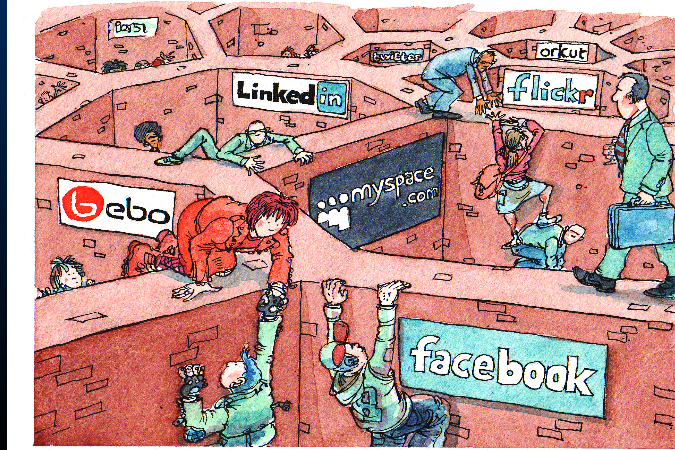
We need much more resources and focus pushed into this real grassroots path of reclaiming the means of communication, in the 1990s and early 2000s, the internet was all ready a commons: decentralized, people-driven, and impactful. Early #Indymedia collectives covered protests outside mainstream #blocking narratives. #4opens email lists and wikis built movements across borders. Then capital pushed in, WE let the #nastyfew of #Facebook, #Google etc privatize our collective infrastructure, turning participation into surveillance and creativity into content.
Alt tech projects like the #OMN (Open Media Network), Mastodon, and wider #Fediverse are attempts to rebuild what we keep forgetting, this time, protected by #4opens shield to build shared governance. This path is not a nostalgic throwback, but living/acting paths for post-capitalist communication we need in the growing era of social backdown.
It’s not only “tech” – it’s social trust infrastructure. A common is not only software; it’s the culture of cooperation that surrounds it, shared values, mutual aid, and relational ethics, you can’t “code” trust into hardware, as the last decade of #blockchain and #AI mess proves. Smart contracts failed to make people honest; they just automated mistrust, it’s on going #geekproblem blindness we need to be working to compost.
What works, the resilience, comes from people, not algorithms. Through frameworks like the #4opens: open data, open code, open standards, open process. We can build transparency and accountability into the social layer of the network. Trust is a practice, not a protocol #KISS
We need a future that’s better, not just less bad. The #deathcult story – neoliberalism’s great myth – says “there is no alternative.” Alt tech is the alternative, working proof that cooperation scales, that people build shared infrastructure without extraction and less coercion. Look at LibreOffice, Wikipedia, Linux, or the #Fediverse, all imperfect, collaborative systems built on trust, not profit. They are real-world examples of how collective will outperform the normal deadened paths of corporate hierarchy.
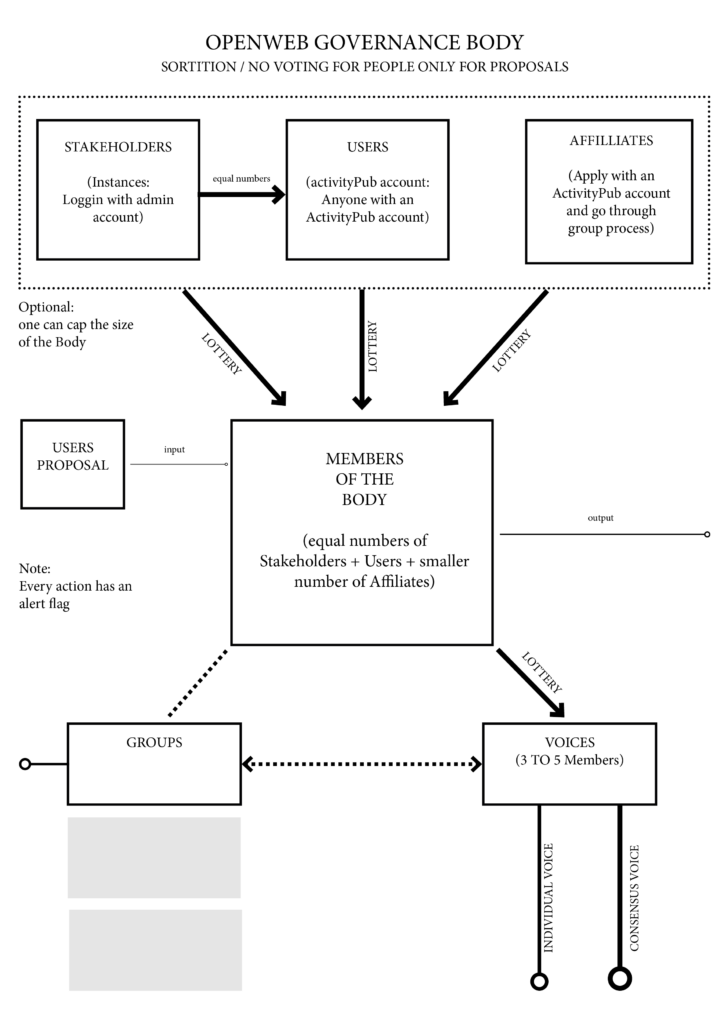
Alt tech gives us believable hope, which is the only real antidote to despair and apathy. The ground for grassroots power is in pushing change and challenge. If the liberal state and #dotcons won’t reform, we need to be building parallel structures that work differently. Projects like the #OGB (Open Governance Body) experiment with federated, transparent decision-making. The #OMN builds tools to connect grassroots media in trust networks, bypassing gatekeepers entirely. Together they form a scaffolding of a working commons, capable of hosting culture, not only control.
Healing the social media wound? We need to compost the lie of #dotcons which spent the last 20 years turning us into consumers and outrage machines. The shovel we need is affinity groups rebuilding social tech around self-governance, interoperability, and most importantly trust to reclaim the human side of the internet. Imagine the world different, feeds that empower communities, not advertisers, tools that nurture relationships, not metrics, platforms that amplify context, not conflict.
This is the work of making the internet human again, working together on the path of alt tech matters because it’s not about gadgets; it’s about freedom, community, and survival. It’s our path to remembering that the #openweb, like the Earth itself, belongs to everyone, or it belongs to no one. And every time we build a shared tool, or hold open a door, we remind the world that cooperation is not naïve, it’s our oldest #KISS technology.
A cross-cultural conversation on this subject
UPDATE: I haven’t touched on two other #4opens projects here, so let’s tap them at the end: #Nostr is a “me-too” project stuck in the #geekproblem loop, it won’t go anywhere until it learns to value community as a building block. #Bluesky, on the other hand, is already drifting into the hands of VC-funded #fluffy elitists who turn every commons into a brand. It’s a very likely a dead-end for real change or challenge, which is why the #mainstreaming#blocking#NGO and #fashionista crowds flock to it.
UPDATE 02: Digesting the comments. For the past 10,000 years of agriculture, 500+ years of Euro-colonialism, 200+ years of #capitalism, and 95 years of #neoliberalism (45 officially declared as such), the #nastyfew practicing control through production have dominated everyone else. Capitalism, as described in Capital, grew wherever it could. By the late 19th century, labour organised and fought back. Social democracy transformed the capitalist state so effectively that capitalist development stalled by the 1930s.
The response? A reorganisation of capital, using anti-communism as its rallying cry (WWII, NATO, Korea, Vietnam) to defeat social democracy and retake control of the state. By the 1980s, “they” felt secure enough to brand reform itself as a product: #Neoliberalism. I’m simplifying, of course – this is for the #hashtagStory outreach, so it can become a #KISS tool people can actually use. Clarifications and deeper dives you can find in the comments 🙂
Now, about this idea that “capitalism told us we’re isolated individuals competing to survive.” It’s partly true, but not in the way people think. Capitalism depends on interdependence, we work together to produce, but in a way that isolates us socially and politically. That’s the contradiction: interdependence turned into alienation. It’s the mess in our heads that recreates these bad social structures, the inner factory of control. That’s what we have to compost.
In the end, it’s not just social control, it’s social destruction. As we rush deeper into #climatechaos and the global hard-right turn, it’s clearer than ever: the ideology of separation keeps power safe and people powerless. I know this isn’t #mainstreaming liberal logic, that’s the point. We have to think differently.
And for context, I’m not speaking from the sidelines – I’ve got an MA in politics and 30 years of hands-on work in grassroots #openweb tech. Isolation is social control, see #stupidindividualism. Let’s keep this grounded and not turn it into trolling, yeah?
We are having a tech reboot for the last few years, federated seems to be where it’s at right now, and it makes sense, the #fediverse is flourishing where so many “#web3” or pure #p2p projects stumbled. This isn’t to say #p2p is bad. But for a peer-to-peer social network to actually work and be social useful, it would need mechanisms for collectivising: shared moderation, subjective trust, a way to handle conflict. Purely (stupid)individualist solutions have been tried before, and they don’t hold together at all beyond a tiny scale. Atomised people cannot build any lasting commons.
The strength of federation as a path is that it collectivises by default. Servers are groups, not individuals, decisions are made within communities, not in isolation, this builds resilience. What is currently #blocking this path is our #fashionistas and #geekproblem people, who are still clinging to parts of #mainstreaming “common sense!. If you try to vertically scale, if you dream of competing head-on with Silicon Valley, running giant datacentres with teams of sysadmins, you’ve already lost. That’s their game, their best proficiency. You cannot beat them at it.
The path forward is to do something they cannot do without breaking their own business model. Something they would never want to do even if they could. That’s the opening. That’s the #OMN path. So let’s be clear about what the current #openweb reboot and the #fediverse is not:
The fediverse is not an electricity grid. You don’t have to be plugged in everywhere for it to function.
The fediverse is not feudalism. You are not a serf bound to some lord’s server. You can leave, fork, migrate, or self-host.
The fediverse is not a commodity. It is not like a telephone line or a utility service to be packaged, sold, or regulated in the same way.
And no, the fediverse is not a big truck that carries data down the highway. It’s a messy garden, a bazaar, a commons.
The #fediverse works because it is untidy, diverse, and decentralised. It’s a network of collectives, not a monopoly machine. The #OMN path and vision is to lean into this: not to replicate the #dotcons in smaller, scrappier forms, but to compost the mistakes of the past and grow something native, nourishing, and #4opens.
The #OMN isn’t about isolated gestures, it’s about building federated, trust-based media networks that actually work at scale. Right now, the truth is simple: you can’t just join or create one tomorrow. Why? Because the path needs composting first.
By composting, we mean taking the wreckage of past projects – messy, co-opted, burned-out, over-managed, or over-centralised – and turning it into fertile ground. From this social fertile soil can we grow #OMN that support:
Open, federated collaboration
Shared media creation and distribution
Affinity group – based moderation and governance
Strong social resilience against co-option by corporations or #dotcons
We need to then bride this existing federated path into the seed #p2p path with social tools that work and hold this bridge in place. The #OMN is a work in progress, and that’s intentional. It’s about building the crew, the culture, and the infrastructure before anyone can just “join.” This isn’t a platform you log into; it’s a path we create together, step by step. Until we do that composting, passive participation isn’t possible, the first step is #KISS that’s exactly what we’re focused on making happen.
Fluffy side: cautious, slow-moving, grounded in “keeping the peace” and managing optics. Classic problem: avoidance of conflict means bottlenecking decisions, blocking energy, and trying to centralise control, so things don’t blow up. Spiky side: impatient, direct, “get it done” energy. Spikiness pushes things forward, but often burns bridges, creating splits and mistrust. Neither path alone works – one stalls out, the other fragments. Their clash in the UK “Your Party”, just tore apart what was an opening for a broad left #mainstreaming alternative which we do need.
There are lessons here for horizontal/grassroots paths, a big one is that centralisation kills: When “leadership” becomes bottlenecked around personalities (Corbyn as “elder statesman”, Sultana as “young firebrand”), it reproduces the same control problems we see everywhere – #NGO capture, careerist gatekeeping, etc. Energy without mediation burns out: Spiky approaches are essential (they break inertia), but without social glue and open processes, the movement shatters.
Sadly, it’s looking like the political vacuum, is back. The 700,000 people who signed up are proof that there is real mass desire for something beyond the #deathcult#mainstreaming. But they’re now “homeless” – with no trustworthy structures to plug into. That vacuum will either be filled by opportunists (careerists, NGOs, “#fashernista”), or open the path for something like the #OMN: messy, federated, not centralised around personalities. And/Or the Green Party (this needs a separate post).
Focusing on the grassroots path I have been working on: this is exactly why the #OMN and #openweb reboot needs balance, so the signal-to-noise ratio can stay healthy. Otherwise, we just mirror the left’s long history of splits. What it means for the fluffy/spiky debate: The “Your Party” implosion shows us:
You can’t fix spiky by being fluffy. The soft style just frustrated allies and deepened mistrust.
You can’t replace fluffy with spiky.
The only path forward is process, not personality. That’s where horizontal projects like the #OMN can work – by creating open, transparent, mediated structures that don’t depend on charismatic individuals at the centre.
For the #openweb reboot, this bad moment is actually what we are working to fix. It shows how much energy there is (hundreds of thousands signing up). It shows the cost of control blindness. Likewise, it creates urgency for native governance paths and experiments in the #fediverse and beyond – where messy affinity-based groups, guided by the #4opens, can provide a home that doesn’t implode around personality clashes.
The question now is who can see the need for the practical mediation layer of the #OMN, is designed to bridge – not abstract theory – it’s the path that makes messy, spiky, fluffy humans work together without blowing everything up. For the #OMN and #openweb reboot, the answer isn’t “less conflict” or “more central leadership,” but better mediation and horizontal process, so collective energy isn’t wasted on repeating the same old splits.
The generation of the last 40 years of “There is no alternative” (Thatcher → Blair → Sunak/Starmer) produced passivity and cynicism. #Dotcons capture: people live inside algorithmic bubbles, shaped for consumption, not collaboration. This is the era of individualism as common sense: many can’t even imagine “the collective” except as a threat. We now face naked, fear + distraction: #climatechaos, wars, economic precarity → endless doomscrolling instead of agency. And this is why movements implode: the raw material (people) have been warped by the #deathcult.
What we can work with, even in this mess, people still show hunger for meaning (why 700,000 signed up for Corbyn–Sultana’s thing). Anger at the #nastyfew elitists (but it often gets channelled rightwards – Farage, Trump, Reform, conspiracies).
There are moments of solidarity (mutual aid, Palestine protests, climate camps). Skill fragments (#geekproblem energy, activist culture, DIY practice – but siloed). We don’t start from zero – we start from these contradictions.
Practical paths for dealing with this generation is in part about: Break the spell by expose #mainstreaming as a control system, using simple, repeatable stories (hashtags, memes, metaphors like composting/shovels) to make the invisible visible.
Then the path, affinity first, not mass. Don’t try to herd 700,000 people. Start with small, trust-based circles that actually work. Show results, not rhetoric. This attracts people who are sick of endless talking shops. Compost the conflict, instead of suppressing spiky energy (which turns toxic), build mediation layers, so conflict gets processed into growth. This prevents the inevitable splits from killing projects before they start.
We need working, visible alternatives, things people can touch: #OMN publishing hubs, #fediverse tools, radical media gardens. Each working piece is a counter-spell against “there is no alternative.” This is about reframing success and stop only measuring change in electoral wins or #NGO funding circles. We need to measure it in resilient collectives, working infrastructure, and shifts in common sense.
The challenge we need to compost, is that, the current generation has been trained in #stupidindividualism. What we need to learn is you cannot beat that as individuals, the only path is to recreate collectives – messy, organic, trust-based – where people can unlearn the #deathcult through practice. That’s why #OMN, #OGB, #indymediaback matter: they’re not just tools, they’re containers for relearning collective life.
The #algorithm on #YouTube has flipped hard right wing for me, a few other people have said the same, please add if you have seen this as well? If this is widespread, it shows how important it is to get normal people back to the #openweb reboot we are all involved in here.
This is obviously a form of social control, with the dominating of the #dotcons platforms in most peoples lives, plain and simple, the price of us building this domination.
The #hashtag story begins with disempowering the #mainstreaming in our own minds. First step: breaking the spell, realising we don’t have to live inside their frame.
Second step: forming the affinity group circle. Gathering with others who can see through the smoke and mirrors. From that circle comes the power to build the #OMN shovel.
Third step: composting. Taking all the #techshit – the failed projects, poisoned cultures, and dead ends – and turning them back into fertile soil. #OGB
What we do with that soil is up to us. That’s where the future grows. #KISS
The #geekproblem only sees #cavetechnology. But society is far too complex for that, you’d have to kill billions to make it work.
4opens is the opposite: a data commons. Light as a tool to fight with, not darkness to hide in.
The problem isn’t that people refuse to act. The problem is that most are stuck in paralysis: “What do I do?” If the only options they see are worshipping the #deathcult or reinventing the wheels, passivity looks like the safest choice.
The design challenge of the #OMN isn’t just tech – pipes, tanks, metadata – it’s rituals and rhythms that invite participation. We need a seed affinity group whose job is simple: set the shovel down in front of people.
Don’t only complain that they aren’t digging. Literally put the shovel in their hands and say:
Run a local flow.
Tag a batch of data.
Moderate one stream.
Host one screening/fire circle.
Tiny, clear tasks. The kind you can do in an hour. That’s how you turn passivity into momentum. Shifting habits into usefulness, instead of fighting people’s flaws, turn them into leverage.
#fashionistas crave visibility. Fine. Give them the role of spreading compost metaphors, making the work look alive and fresh. Let them shine light on the soil.
#geekproblem crave puzzles and edge cases. Good. Hand them the tricky parts: trust plumbing, metadata sieves, redundancy logic. Their obsessiveness is an asset if aimed at the right joints of the system.
#mainstreaming crave “safe” recognition. Use it. Frame #OMN as “the next big thing everyone will need to join.” Let them be the “early adopters” who stay safe by appearing ahead of the curve. They don’t need to lead, they just need to follow momentum.
Each group moves in circles, polishing surfaces while the compost pile rots. But if you show them something real – a flow that works, a network that breathes – they drift toward it. Shiny surface with soil beneath, puzzles that connect to lived use, recognition that feels inevitable.
The Lesson, is, don’t try to convince people in the abstract. Show them working compost. Show them trust flows in action. Show them that it’s easier to do something useful than to do nothing. That’s how we should be pushing, that’s how we turn paralysis into practice. That’s how you start to compost the #deathcult.
For this to flow in activism, We need to compost – some traditions work, many do not. It’s more complex than it looks, because those traditions that “don’t work” often do work – but only for the people who push them. That’s the root of the hashtag story: a tactic, a format, a ritual can give visibility, ego, and career advancement to its promoters, while leaving the commons weaker. The tradition “works” as a personal lever, but fails as a collective tool.
We’ve all seen this: Endless meetings that build someone’s identity as a “process person,” but drain energy from action. Branding projects that make a clique look good to funders, while hollowing out grassroots trust. Campaigns designed for headlines and hashtags, not for long-term change.
There is a bitter truth: a tradition can succeed as a ladder while failing as a bridge. We don’t need to throw everything away. We need to compost. To ask: Who does this serve? Does it build trust, or personal power? Does it strengthen the commons, or just the clique?
The hashtag story isn’t about rejecting all rituals. It’s about refusing to confuse personal gain with collective growth. Traditions that build soil – trust, flows, openness – must be tended. Traditions that rot into self-serving traps must be turned, aerated, broken down. That’s the cycle: compost the false, nurture the living.