Were is value online

Published Date 1/12/17 6:24 PM

Its interesting to think for a moment about how widely posts on the #openweb and #failbook are seen. On #failbook an average post on my time line might be seen/read by 10 people and a dog, a good shared post a few hundred people. On my blog an average post would be a few hundred people and a good post 10,000’s of people maybe more. its easy to forget that #failbook is a #dotcon in real terms not just in idealogical arguments. The value is on the #openweb – how have people forgotten this?

EC “Cos convenience and the software works”

Yep thats why am pushing the #OMN so the is a space to do something about this.

You do all know that posting polatics on failbook is a pointless circle of nothingness

Published Date 12/20/16 9:20 PM

You do all know that posting polatics on #failbook is a pointless circle of nothingness. Please stop and do something more usefull.

We have a clective Liberal fantasy in the is an idea that #dotcon can be social useful. Its not what the money (billions) was invested in. They “invested” into a silo/portal for capturing data and capturing users. Letting this “value” free is a liberal delusion in the sense it dues not payback for investment. Your talking an act of enlighten philanthropy or old fashioned nationalization to keep the value for the people who created it – the users.

We now have a problem that most of our best alt media producers are children of the #dotcon and have little or no understanding of the #openweb We need to express positive views of value. #linking #4opens etc all very basic stuff and not hard to do. I wont practical open ideas on were to start on this.

#moveon

Human beings are by nature social creatures, we link

“The Ring slowly but inevitably corrupted its bearer, regardless of the bearer’s initial intent. For this reason the Wise, including Gandalf, Elrond, and Galadriel, refused to wield it themselves, but determined instead that it should be destroyed. The corrupting power of the ring was apparently stronger on individuals more inclined to evil and selfishness: it took almost immediate hold of the greedy Sméagol as soon as he saw it, and corrupted Boromir after a few months of near proximity, while its effects were only starting to be seen in the well-meaning Bilbo after his 60 years’ possession.”

On the #openweb the creation of blogging makes personal sites with in reach of a majority of people, the balance between community and individual began to shift. Blogging was about empowering the individual, many geek/fashernista attempts to rebalance this failed, as each tended to be an island, mirroring the individualism of the blogging network they were trying to link. Blogging declined into silo/portals with the growth of SEO and the resulting failer of linking that resulted from this.

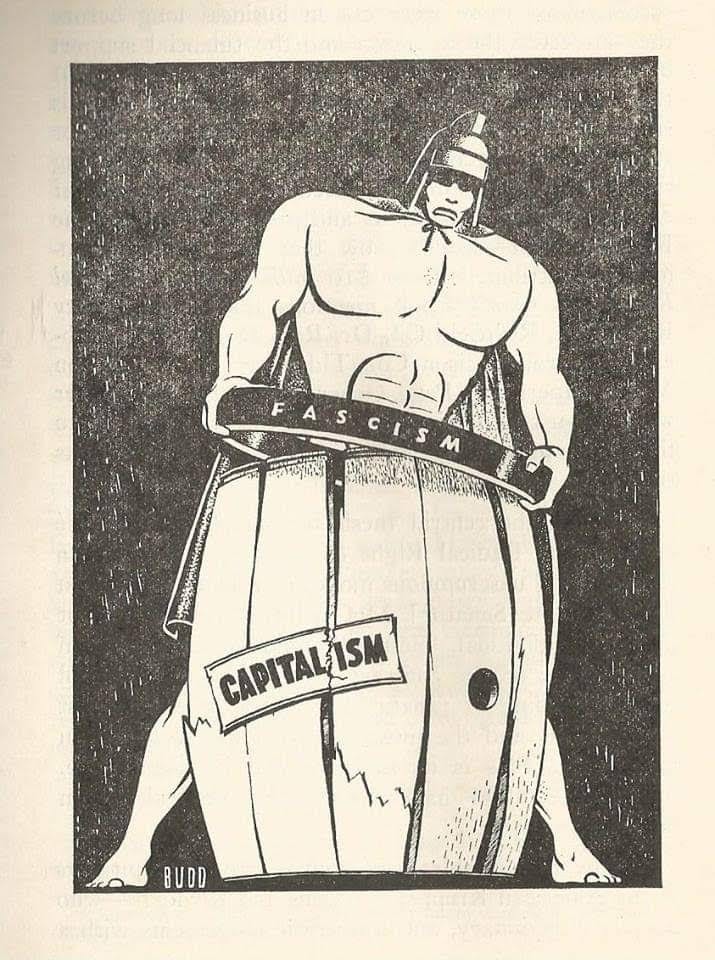
In the openweb nothing stayed static, the first to secsede in bringing the social (community) back into this world were the first #dotcon ‘s and the most powerful grew from the worst parts of human nature:

“One ring to rule them all, one ring to find them, One ring to bring them all and in the darkness bind them.” https://en.wikipedia.org/wiki/One_Ring

This is the shadow of the role of #failbook currently on the #openweb

How to recover from this “capturing of the commons”? One step would be to #reboot the last steps of the #openweb by fixing the balance between individualism in blogging and the community of the human condition. This is surprisingly simple to do, we need to fix the failed  geek/fashernista linking and thus #reboot blogging as a core to the #openweb. Almost everything we need to achieve this already exists, it’s a question of an affinity group kicking it into motion. Who is up for building links?

Let the web of trusted links grow (as this is ALL THE OPEN WEB is) and let the data (#4opens) flow over these links. From this trust building, community comes back into both the online and offline worlds.

And if a Dark Lord (Mr Zuckerburg) and his minions (Mr Trump) offer you a shiny ring – don’t take it.

Looking at the tech and organising of UK alt grassroots media

How meany sites link to another alt/grassroots media sits. From this list of 38 UK sites, only 2 link to another site.

Many people find it hard to understand the underlining understandings that push projects based on flow and linking, such as #OMN and #openweb. Here is a short list of activism projects.

Silo

Is a place for holding/hoarding closed data – this is used by the #dotcons to extract funding from “free users” when mainstream/alt silo projects finish, as 99.9% do, the data varnishes and is lost, and in this the effectiveness of any alt building is diminished. Silos do not use open licensing for content re-use. Just about every alt/grassroots media project is a silo. It’s about capturing data. It’s obvious that this is a unthought through issue of “churning”

Portal

It is an idea that you can be the big one, all the small fashionista websites aspire to be the big one and by doing this they are working to the logic of the #dotcon and working against the logic of the openweb. They are building a project to lock their users into their project. Portal and silo are overlapping (but different) ideas for building web projects. In the mainstream, Apple is a prime example of this working. In the alt/grassroots, almost all alt/grassroots media projects are portals. It’s about capturing users, just as silos are about capturing data. For a left wing group this looks much like “recreating the Soviet Union” the one party to rule the state.

Dotcons

Are for-profit data silos in the old days working as portals, more recently they are building out siloed networks as a pseudo networked portal. It’s both sad and bad that many alt media projects unthinkingly aspire to be #dotcons

Link

It is where ALL the value is, on the open web. Without links, content has NO VALUE. This is an obvious statement, its hard to understand the lack of understanding around this simple thing.

RSS

Is a grassroots web standard that is still at the base of many of the #dotcons world but is being pushed into the background of the #openweb by building silos/portals in the grassroots/alt. RSS is like an open LINK with added data, thus adds value to the web. Its a powerful open tool that we still have. An API is like a geek control freak superpower of RSS – the problem is in the complexity/control freak bit…

Geek

A subculture that is control/obscurity and more recently technical solutions to trust (wraparound right) this has always been a closing force on open projects.  This helped to strangle the original successful alt/grassroots media projects and is pushing for the shrinking of the open web.

Fashionista

The unthinking desire for new/innovation/conformity. A wider subculture that churns the growth of alt/grassroots so little can grow beyond seedlings.

NGO

Are greedy dispoling of resources, both human and money. The liberals that use bureaucratic funding to push out the geek/fashernista agendas over alt/grassroots projects. These are uneasy friends and clear (invisible) enemies.

Network

It is both a technical thing of wires and frequency and  an understanding of mutual aid and of “diversity of strategy”. It’s native to the openweb and should be at the base of any alt/grassroots media project. In the closed #dotcons the widespread use of A/B testing is a pail controlled shadow of this.

4opens

Wikipedia is an example of this. It’s basic stuff, open source project stuff. LINK

Looking at the tech and organising of UK alt/grassroots media. Do sites link to other alt-media projects? Do they support/display openweb standards (RSS)

First DRAFT (please message me with corrections/info)

the canary

http://www.thecanary.co/

Has a RSS feed, regular updates, copyright group silo, it has no outside linking

Reelnews

http://reelnews.co.uk/

UPDATE: site back online, no visible RSS but can find a hidden one. It’s likely copyright and a silo.

(Their website is hacked/down, so posted the #failbook link used to have RSS and regular updates. Anyone know what’s happening? Update they hope the site is back online soon.)

Real Media

http://realmedia.press/

UPDATE: website back online copyright, no visible RSS feed, but you can find ones. It’s a bit of an aggregator but has been suffering from poor spam control. It’s pretty much a portal/silo – but could be more.

(They used to have an interesting website for the tec used, but it ended up being just a silo, they look like they are rebooting? Maybe a another silo? We shall see.)

Update they are rebooting as a linking site, let’s hope it’s not a silo.

Novaramedia

http://novaramedia.com/

Has regular good content, RSS, they are a product of the #dotcons social media wave and good at it. Copyright/CC is not stated. The site is a silo with no outside linking

Counterfire

http://www.counterfire.org/

No RSS feed, starting to look a bit “old left” regular updates, no copyright/CC notice. A silo with no external links

The Bristol Cable – Bristol

https://thebristolcable.org/

No visible RSS feed, it kinda probably tries to obey the #4opens, maybe. It’s a WP blog site, in this it’s a media silo with no external links.

Port Talbot Magnet

http://www.porttalbotmagnet.com/

No visible RSS feed, it mostly fails the #4opens due to copyright, data and organising. It’s a WP blog site, in this it’s a media silo with few if any external links.

New Internationalist – based in Oxford

https://newint.org/

Has RSS feeds, it kinda passes the #4opens using a CC licence for its content.  It links to the #visionOntv project.

The Ferret – Scotland, based in Edinburgh

https://theferret.scot/

Looks like the old media transitioning to the new media. No visible RSS feed or copyright/CC notice. Is trying to be “open process” looks like a WP site.

Strike! – based in London

http://strikemag.org/

Looks like an archive of a print mag? Has an RSS feed 🙂

Positive News – based in London

http://positive.news/

Dated looking site, hard to read, no RSS feed and a copyright notice. A silo.

Slaney Street – Birmingham

http://www.slaneystreet.com/

Did not load

Manchester Mule – Manchester

http://manchestermule.com/

Has RSS feed but last article end of 2015 so not an active site. Probably for fills the #4opens.

Co-operative News – based in Manchester

http://www.thenews.coop/

Nasty looking site and no RSS, copyrighted, it’s a silo

Ethical Consumer

http://www.ethicalconsumer.org/

No RSS, copy rightish, old looking site.

Marlborough News Online

http://www.marlboroughnewsonline.co.uk/

no RSS, copyright

West Highland Free Press

http://www.whfp.com/

No RSS, copyright, it’s a silo.

Star and Cresent – based in Portsmouth

http://www.starandcrescent.org.uk/

No RSS, no copyright notice? It’s a silo.

Morning Star – based in London

https://www.morningstaronline.co.uk/

Has an RSS feed but its empty, copyright, silo.

Cambria Publishing Co-operative

http://www.cambriapublishing.org.uk/

Publishes paper books?

Zed Books – London

https://www.zedbooks.net/

paper books and online reading lists, no RSS I can see.

Sheffield Live!

http://web.sheffieldlive.org/

Copyright, has an RSS feed, looks bureaucratic open.

Blake House – based in London

http://blake.house/

No RSS, fashionable calling card website without content, probably copyright?

Media Co-op

http://mediaco-op.net/

Calling card website without content, no RSS, likely copyright.

Ignite Creative – based in Oxford

http://ignitecreative.co.uk/

Calling card website without content, no RSS, copyright.

Shedlight Productions – based in Southampton

http://www.shedlightproductions.co.uk/

Calling card website without content, no RSS, copyright.

Steel City Film and Media Co-op – based in Sheffield

https://www.facebook.com/SteelCityFAM

it’s a #failbook page, maybe open?

Trafford Media & Communications – based in Manchester

(mostly a printer, but also do film production)

http://www.traffordmc.org.uk/

Calling card, no site.

The Community Channel

Community Channel

The granddaddy of NGO media, no RSS feed, likely copyright silo.

Jammu Kashmir TV

http://www.jammukashmir.tv/

It has content, silo?

Open Audio

http://openaudio.co.uk/

Has a working RSS feed

Inform My Opinion

https://audioboom.com/channel/informmyopinion

Has working RSS feed, but it fails in my pod catcher, it’s a page on a #dotcon?

Mydylarama

http://mydylarama.org.uk/

Has RSS feed, copyright, silo?

AMP Worcs

http://www.ampworcs.co.uk/

Calling card.

A Television

http://www.afro-media.org/

Half finished calling card site.

Salfordstar

http://salfordstar.com/

Hastings independent press

No RSS, no copyright/CC notice, a silo with no external links.

http://www.hastingsindependentpress.co.uk/

Copyright, no RSS feed, has some old school widgets which might show external links. Its a local news silo.

Corporatewatch

https://corporatewatch.org/

Has RSS feed and CC licence, no external links on front page, it’s a silo but better than most.

bellacaledonia

http://bellacaledonia.org.uk/

Has a RSS feed, it’s a silo but the is hope for it.

voxpoliticalonline

http://voxpoliticalonline.com/

it’s a blog in the old school sense, has RSS

evolvepolitics

http://evolvepolitics.com/

it’s a silo with no RSS and no external links

A lot of the original links came from https://www.facebook.com/jdaviescoates

Rebooting the openweb

Published Date 9/20/16 2:42 PM

The OMN is based on a simple understanding that the last 10 years have been wasted on #dotcons and #encryptionists delusions. In this time #NGO’s, activists and at-geeks have wasted the #openwebs potential to shift society to a more humane path.

To move beyond this decaying circle, we need to #reboot the basic infrastructure that has been allowed to decay. Early “#web02” was based on open features that crossed website boundary’s in a way unthinkable today. A partial list of has been complied here https://medium.com/@anildash/the-lost-infrastructure-of-social-media-d2b95662ccd3#.rcs7irbas

To take this needed path the #OMN project can be built out to overlap many of the projects listed, at its core it is aggregation, linking and metadata. This is one of the steps for the needed #reboot

Publishing – we have no problem with this though technically (though phones are becoming more of an isolation issue) there are lots of existing CMS and tools outside the #dotcons that can be used, many of them are kinda #4opens though most miss the #KISS part.

Search – this is lost and hard to regain, but the is space for a clever use of “adblocking” browser plug-ins replacing adverts with native #openweb content (like the #OMN flows) while obscuring the data mining that the #dotcons are cash powered by.

Comments – this is a hard one to solve, but the problem is meditated by linking back to the source of articles. To OMN this part could be done with a few open standards – but pushing this out would be hard. A back burner issue.

Responses – can use the existing “open standards” maybe choosing a KISS implementation to #reboot

Likes/Favourites – we build a back end version of this as core to the OMN, how to front end this is an interesting avant-garde project that we should implement in different “standard” ways after OMN boot up.

Updates – is core to what the OMN is.

Identity – try #rebooting a KISS implementation of the existing open standards to use this in the OMN roll out, use it, but don’t push it hard as It’s going to be hard to overcome the #dotcons on this one.

Friends list – half core to the OMN, can attempt to #reboot this as part of the #RSS “object” aggregation your identity is an object to be aggregated.

Following – is a core part of the RSS OMN project.

Syndication – this is the core of the project, using existing tools based on RSS

API – a #reboot of Atom pub is a likely useful part of the OMN for the synchronisation of content.

Metadata – in the OMN this is a KISS fockonermy that a more systematic labelling rules can be built on. A KISS roll-out of the semantic web is what the OMN is about. Creative commons will be at its core.

Discovery and tagging – is what the OMN is, and it allows easy uptake by alt-media producers, who wonts content to be seen by more people and traffic driven to their sites.

Analytics – can be built up as the project expands, the current #dotcons tools will work fine on roll-out as it’s just the #openweb.

Advertising – is up to the individual sites (with reference to the CC licensing of content) the tools of the OMN could be used to roll out a #4opens advertising network if someone was interested. The creative use of “adblockers” has a role here?

Aggregation – is what is core to the OMN the back end of this is no more than a “small number” of people. The output is as wide as the openweb allows and can be feed as links into the #dotcons

Time shifting & reading – can be added to the OMN tools using basic user RSS lists.

The Lessons – “there’s (almost) nothing new under the sun.” this is at its core a #reboot of existing projects/standards rolled out as KISS as possible with in the small existing network of alt/grassroots media. From there…

To escape our silo thinking

Published Date 3/10/16 12:01 PM

“A river that needs crossing political and tech culture – On the political side, the is arrogance and ignorance, on the Geek side the is naivety and over-complexity”

Right now, there’s a widening gap between political organising culture and technical development culture, and neither side is entirely wrong, but both are incomplete.

On the political side, there can be a strong understanding of power, institutions, and social dynamics – but sometimes limited understanding of the underlying technical structures that shape digital reality.

On the technical side, there is deep expertise in systems and architecture – but often a tendency to treat social problems as purely technical challenges, leading to over-complex solutions that struggle to survive real-world communities.

Both cultures end up building silos. Not because they intend to fragment the ecosystem, but because silos offer clarity, autonomy, and a sense of control. Unfortunately, isolated projects – whether political or technical – cannot compete with the continental-scale infrastructures built by the #dotcons.

The deeper issue is that we are collectively neglecting the shared infrastructure beneath all of this: the #openweb itself. Returning to simple shared ground, if we want to rebuild cooperation, we need to start from principles both sides can recognise. The web is fundamentally made of relationships:

  • Articles are data objects.
  • Data moves through flows.
  • Feeds are living links that carry those flows across networks.
  • Links – not platforms – are where long-term value accumulates.
  • Synchronisation and redundancy are what create resilience, memory, and continuity.

This isn’t a political claim or a technical ideology, it’s simply how the web works when it is healthy. For political organisers, this means understanding that content alone isn’t enough; influence comes from shaping flows and networks. For engineers, this means recognising that technical architecture always encodes social assumptions – and usability, trust, and governance cannot be abstracted away.

Why silos fail. Many alternative media and grassroots tech projects emerge with strong intentions, but remain isolated. Without shared protocols, interoperability, and common infrastructure, each becomes another temporary island. Meanwhile, legislation and platform enclosure continue shrinking the open internet, reinforcing dependency on centralised systems.

The question is not whether we build alternatives, we already are. The question is whether those alternatives connect into a living ecosystem or remain fragmented experiments. The bridge is federation as social and technical practice. Projects rooted in federation – like ActivityPub and related #openweb work – offer a path, because they align technical architecture with social values: decentralised but connected, autonomous but interoperable and “native” diverse without fragmentation.

The #OMN approach tries to extend this principle beyond software into social organisation with shared commons instead of platform ownership, collaboration instead of central coordination and replication instead of scaling hierarchies. This isn’t anti-engineering or anti-politics. It’s an attempt to integrate both.

Crossing the river together, political organisers bring understanding of power, context, and collective action. Engineers bring understanding of systems, resilience, and infrastructure, neither alone is enough.

The challenge is to move away from siloed thinking toward shared stewardship of the #openweb – treating it not as a product or ideology, but as a living ecosystem that requires ongoing care.

We don’t need perfect agreement to start building bridges. We just need enough shared understanding to reconnect the flows. Because ultimately, the goal isn’t to build another island, it’s to rebuild the river.

Why did the #openweb flower and die over the last 30 years

Published Date 2/22/16 1:17 AM

Why did the thousands of open internet projects fail? Despite large amounts of state, foundation, #NGO funding. There were early successful activist tech projects, all proved to be pointless or withered with success. In all cases I would argue that the underlining fairer was one of ideology, almost all projects worked against the dominate ideology of the net and web itself. Just as the #dotcons burned and bust repeatedly, traditional media was hopeless in till a new generation came along who had an inclining of the underlining working of the new tech ideology.

The few open projects that worked with in the ideology of the web were swamped by the pushing of the funding of the #mainstreaming of the web/internet. I am arguing here that the majority of people making a living in the #openweb/internet world are core to the problem not the solution, I could name hundreds of projected with the word open/radical in um who actively destroyed “open”.

A tiny minority created a world expanding technology based on the ideology and practices of trust based Anarchism. This exploded into the existing tech/communication worlds, pushing aside, pushing over, all the “better” 20th century vertical (ideology) tech already in place. Open became dominant for a while and this open was “locked in” because of a strong ideological thread throughout the standards and structures of the internet/web, the very “chaos” of the #openweb protected it from the “vertical” (20th century) locking of corporates such as Microsoft etal.

Nothing last forever, a new generation came along who merged the “open” back into the “closed” can’t really blame them, they were children of Thatcher and Reagan. Am amazed to have lived though the time of the #openweb, the world really did feel very different for a time. Who are the heroes and who the villeins, this history is unwritten yet, better get to it.

This is my realistic/pessimistic view of where we are at LINK

We face a digital cliff the open internet may be over

Published Date 2/11/16 5:30 PM

The is no consensus on this, here are two views on this subject:

We have Phil Windley who thinks the open internet was a historical fluke http://www.windley.com/archives/2016/02/decentralization_is_hard_maybe_too_hard.shtml here he is talking about the very real view that the internet is finished, that the commons have been enclosed by the #dotcons silos and what remains outside are terminally withered and dying.

Then Dave Winer http://scripting.com/liveblog/users/davewiner/2016/01/26/0936.html who argues that the #openweb comes in waves and what Phil Windley is arguing is but the drawing back of the water before the next wave of open washes in.

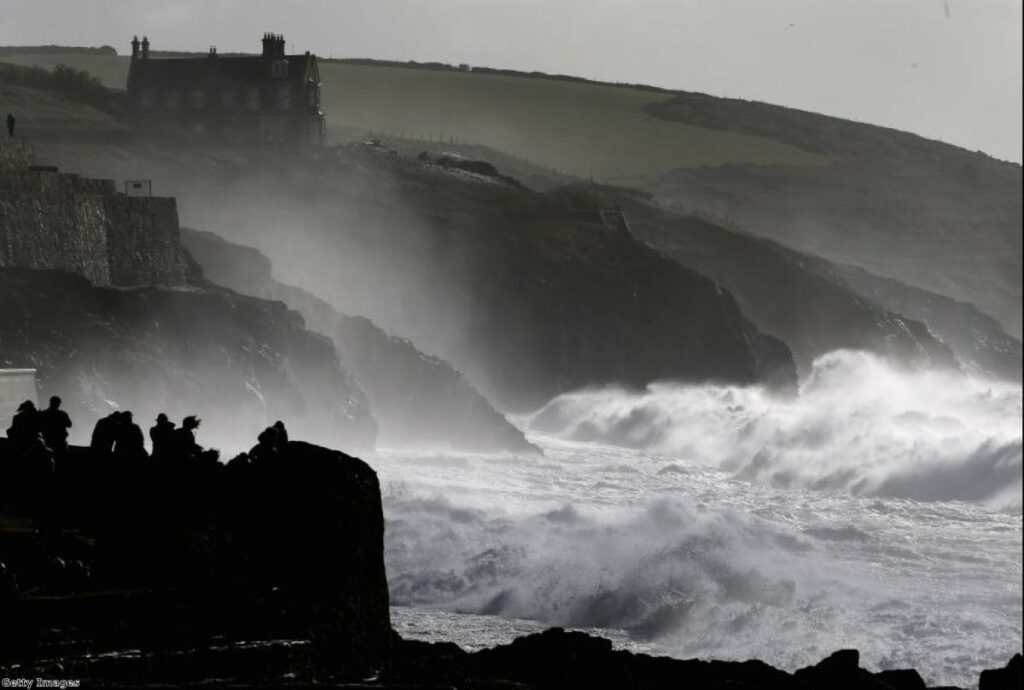
My point of view is that both are right, the open internet was a historical “mistake” and with Winer that there are a few waves left, the storm is not over yet. There is a logic to the digitisation of everything and the web was a living example of this let loss, it was a tsunami that crashed over our cultures and this storm is not over yet.

Yes, the commons opened up by the early web was enclosed by #dotcons, but their sea defences are low and weak and the digitisation storm still rages.

We are free to make our lives have meaning in this stormy weather.

Lets look for a moment at sanity in grassroots terms

Published Date 2/23/15 3:24 PM

The are a lot of “insane” people in activism and counter-culture, its what makes it exciting, dynamic and affective. However with everything its a question of balance, lets look at how a movement stagnates, fails or growes and blossems.

A short off the top of head list

NGO’ists push limited bureaucratic thinking over everything, they get into bed with anything that can be shaped to their mind set and is fashionably fundable. They take up mind space and squander resources. The vast majority of “institutional” money goes into this.

Encryptionists – service the paranoid fuckists, they have a strong tendencies to reduce usability and create dangerous fantasises of security and anonymity. The are a lot of these as this has been a dominate way of thinking for the last 5-10 years.

Traditional media panderers have there uses for a companion, but soon start to misshape the movement to mainstream agenda’s – hard not to have this outcome.

Horizontal dotcom’sts try to use our movement to jump start their dotcom, fine if its built with the #4opens, if its not then distraction if  failur and disaster if people use it – so bad outcome both ways.

Insecure and nasty lifestyles are endemic and are attracted like fly’s to any successful grassroots project and they are feed by the felandering of the Traditional media panderist – this can easily tip into being a movement death spiral.

Hidden careerist are good for movement building as tend to be the competent ones, but start to drift to NGO and media philanders to build their careerer rather than the grassroots movement.

Paranoid fuckwists are the bedroock of most grassroots campines and in small doses help hold things together, get to many of them in places of responsibility and you have out of control infighting.

Dogmatic liberals are lovely people, but a strong force for blocking sustainable alternatives, its imposable to meditate the breakdowns with a few of these at the core of any counter-culture.

Now for a corresponding “good” list of activist “insanity’s”

On this subject it helps to be a bit “mad” to stay in grassroot movement for any leaghnth of time

The hand’s off NGO’s the is a long (hidden) history of healthy NGO/atavism synergy

The user focused KISS per2per’ists are working on the uphill project of (re)booting the #openweb.

Traditional media outreach’sts are promoting grassroots media and technology by linking it into traditional media narratives to build the world rather than misshape it.

Horizontal dotcom’s are working on “open” federated sustainability rather than closed client server “solutions”

Lifestyles are though opening up in the campaigning lifestyle flow and learning to let go and build healthy connected lives.

Open careerist, are bootstrapping the campaign while bootstrapping themselves, they take the open energy like a trosion horse into the belly of the traditional beast. Some one has to do this…

Secure organising crew is everyone job to keep it calrm and focus, and help out with the very real “offline” security and communication that activism needs.

Liberal liberals the calm and the balance of “common sense” that’s needed to keep things from going horribly wrong.

Activism is a dynamic and crazy place full of “insane” people doing fantastic things, its a balancing act to hold it all together, to much of the top and not anufe off the bottom and it quickly slides into something few people wont to be involved in – then disappears with little trace.

Did an updated version

Activist social media suicide and its prevention

Published Date 11/6/13 8:46 PM

Organising on Facebook is suicide for the internet and the future of our society. We need to do different, and we need to do this now, luckily this isn’t actuality a very hard thing to do.

The most simple/basic thing to do is to have an organising website hosted on a independent/activist server – you can ask such people as OMN for a social office organising site or network23 for a basic blog. Then to reach into (but not be controlled by) the closed walls of Facebook you can post links to your content FROM YOUR SITE to Facebook. With this, you can kinda have the best of both worlds.

The second part is more ambitious and geek centred, read this link for some ideas on building tools LINK

It’s important not to get engrossed in the geek/activist paranoia about security – the is non-on the #openweb, it was designed that way, and It’s why it has been so successful at tacking over the world in the way it has. If you want to do anything secret or possibly illegal – do not do it on ANY activist or corporate website, that’s what physical meet-ups are for.

The is a potential small exception to this statement, will talk about Per-Per encrypted connections in another post – BUT this is not a thing to use for 99% of activist communication so not relevant here.

At a minimum, all future campaigns should be using the atavist hosting and post links to inside the walled corporate internet. I can help, leave a comment here on this activist hosted site. Or try this site out for organising

Diaz Don’t clean up this blood

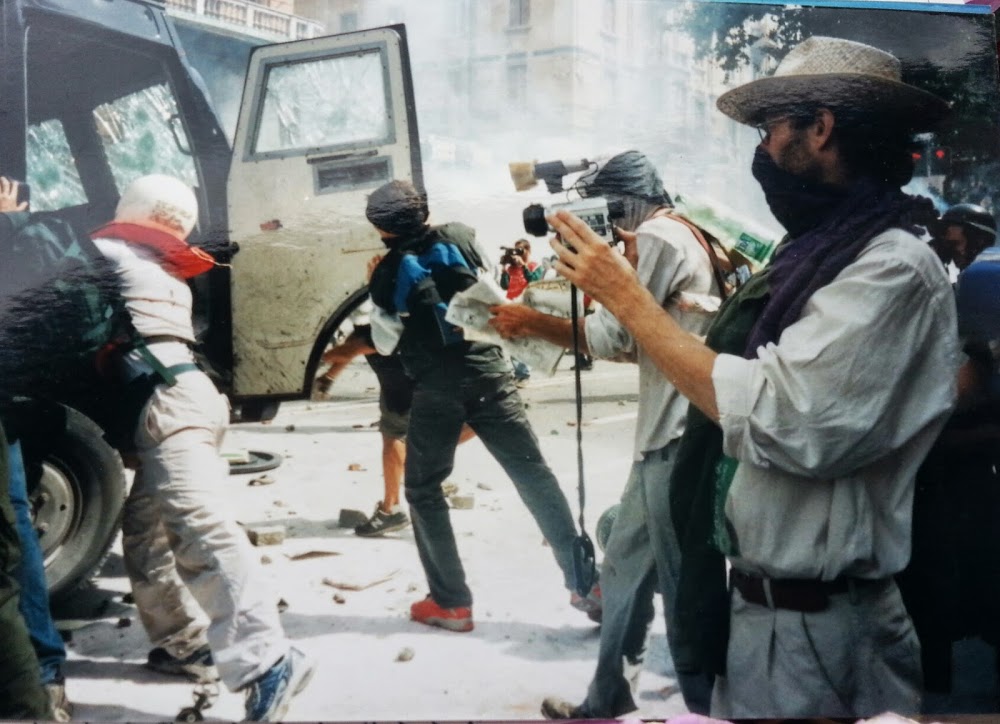
The Genoa G8 Summit protests, held from July 18 to 22, 2001, were a turning point in the global justice movement. More than 200,000 people converged on the medieval port city to block the summit and challenge the concentrated power of the world’s richest nations. A gathering of the priests of the #deathcult, grinding the planet into dust for profit.

For many of us, the G8 represented everything wrong with the world: an unelected body shaping economic and social policy for billions without legitimacy, accountability, or consent. We traveled to Genoa not as isolated activists but as a flowing living ecosystem of movements, anarchists, trade unionists, farmers, climate campaigners, media collectives, migrants’ rights groups, students, pacifists, the lot. We were there to resist and to build alternatives in the cracks protest pushes wider.

Arriving in a besieged city, Genoa a few days before the demonstrations to help set up the Media Center, for grassroots reporting. Genoa, though, felt nothing like a holiday town. Police were everywhere. Riot vans on street corners. Helicopters thudding overhead. The protest convergence center was being built on the beach; just 100 yards away from the stadium, where police forces were massing in their thousands. Walking around felt like moving inside a tightening fist.

We slept in the camper van that first night, tucked beside a half-built marquee. At dawn, we joined the organisers at the Diaz school, the building that housed both the Genoa Social Forum and the Media Centre.

We requisition two PCs from other rooms, installed video editing softwer, and turned them into the only two shared editing stations in the building. One was upgraded with a new hard drive and FireWire card for DV footage, not that it mattered, because it broke on day two and never recovered. The analogue capture system we had brought did most of the work that went online.

On one of our first reporting trips, filming outside the police barracks beside the convergence centre, we were detained by undercover cops. More arrived. Then more. Ten or twelve by the end. They demanded our tapes. I refused. They checked our documents, questioned us for hours, and released us without charge. I secretly filmed some of them; two would resurface later outside the IMC on the night of the raid.

Driving around the city to document the expanding “red zone” – the militarised area blocking off the summit – we were detained twice more. Civil rights meant nothing here. The police behaved like a sovereign power unto themselves. That Orwellian twinge – the sense that you are inside a lawless machine – grew stronger every day.

When the city turned red, one protester, Carlo Giuliani, was shot dead by police. Fear rippled across the city. The #IMC became a space threaded with arguments about what to do. People drifted away, hour by hour, some deciding the risks were too great. By midnight the centre had half emptied.

Then the screams came: “THE POLICE ARE COMING!”

Looking out the window, I saw nothing at first. Panic surged anyway, people barricading doors, grabbing bags, racing up staircases. Marion moved the archive tapes to the hiding place I’d scouted earlier: the water tower on the roof.

From the rooftop I filmed carabinieri smashing into the building next door, the Diaz Pertini school, with vans and sledgehammers. Chairs were used to break windows. Tables became battering rams. It was happening fast, shockingly fast. Then I saw them entering our stairwell.

The Diaz Raid: Running for our lives. I headed downstairs to check if the Media Center itself was being stormed. Turning the stairwell corner, I came face-to-face with a fully armoured carabiniere charging upward, truncheon raised, panting with adrenaline. I spun and bolted. Two flights up, shouting, “They’re in the building!” I sprinted to the roof and slipped into the tower.

Inside the darkness, I whispered for Marion. No answer. I crept through the corridor of water tanks, lit only by the IR beam from my camera. Finally, a small, terrified voice: “Turn the light off.” She had hidden behind the last tank, clutching tapes and equipment.

For hours, three, maybe four, we lay silent as the helicopter’s spotlight swept the windows. Police boots thudded across the roof. Below us, the city echoed with screams, crashes, and the chanted word “ASSASSINI.”

When the helicopter finally left, we emerged. The rooftop was scattered with stunned survivors. Downstairs, the destruction was total. Computers smashed. Hard drives ripped out. Doors hanging loose. The walls of the Diaz school across the street were painted with blood. Skin and hair stuck to corners. Piles of clothing soaked red. People moving like ghosts.

The Carabinieri had left their calling card.

What happened inside that school, was not policing. It was torture, humiliation, and fascist ritual. Ninety-three sleeping demonstrators were beaten so badly that the floors resembled a slaughterhouse. People hiding under tables or sleeping in bags were clubbed unconscious. A 65-year-old woman’s arm was broken. One student needed surgery for brain bleeding. Others had their teeth kicked out. One officer cut clumps of hair from victims as trophies.

Those who survived were taken to Bolzaneto detention centre, where the abuse continued: beatings, stress positions, pepper spray, threats of rape, and forced chants of “Viva il Duce!” and “Viva Pinochet!” A systematic, organised brutality. This wasn’t loss of control, it was ideology.

Aftermath: Truth in the Ruins. The Italian state tried to bury it all. But survivors, lawyers, journalists, and prosecutors fought for years. The European Court of Human Rights eventually ruled that Italy had committed grave human rights violations. But almost none of the officers served jail time. Politicians escaped entirely.

The police weren’t out of control. They were following a logic, the logic of protecting elitists power against democratic dissent. The logic of the #deathcult. The logic that treats people as obstacles, not citizens. Genoa showed the world what happens when movements gain too much momentum: the mask drops.

And still, in that chaos, seeds were planted – #indymedia, #OMN, the global justice movement, the early #openweb – messy, hopeful, compost for future uprisings.

Is it to late to save the open web

Published Date 2/5/12 3:50 PM

(UPDATED)

This is still well worth a read, it’s too late to save the common web from Scoble and an answer from Dave Winer

This is something I have been facing for the last few years, and its why i have been working on the visionOntv open web project. Phwww…. but as you may have realised this has been an uphill battle which has become bogged down in the trenches and the mud.

If you care about the #openweb, pass some ammunition… and a flask of hot choclet and rum.