We can work together?

The is occasional discussion surrounding the classification of different versions of the #web, such as #Web01, #Web02, #Web03, #Web04, or #Web05, this is not merely an academic exercise but an aspect of understanding the evolving nature of the digital landscape. However, the proliferation of these hashtags leads to confusion and contribute to the spread of fear, uncertainty, and doubt (#FUD) among users, people and communities.

In response to this confusion, proofer to use the hashtags #openweb and #closedweb which offer a clear and concise way to delineate between platforms that embrace openness, transparency, and community control (#openweb) and those that prioritize proprietary technology, centralized control, and lack transparency (#closedweb). By using these hashtags, we foster a better understanding of the ideological and technical underpinnings of different web platforms and paths.

Projects like #indymediaback and #OMN exemplify grassroots efforts to promote decentralized, community-controlled media and communication platforms. These initiatives can become vital in challenging the dominance of large corporations in shaping the digital paths and in offer an inclusive, diverse, and community-controlled approach to technology development.

At the heart of this discussion lies the #geekproblem, which highlights the tendency among technologically people to prioritize technical solutions without considering their broader social implications or the needs of ordinary people. By recognizing the #geekproblem, we begin to address the inherent biases and limitations of tech-centric paths to problem-solving and can then move to advocating for solutions that are inclusive and community-driven.

The solution to this “problem” lies in developing social tech that transcends the #geekproblem and focuses on the needs and perspectives of communities. This needs a diverse group of people in the development and decision-making process and promoting open-source code, open standards, open governance, and open data in technology development. By embracing this #KISS path and principles, we create a more equitable, transparent, and collaborative ecosystem.

However, this requires overcoming challenges, including the resistance of the status quo and the fear of change. By actively using the to judge projects, we challenge the prevailing narrative, call out pointless technologies, and compost the #techshit that contributes to the perpetuation of harmful social dynamics.

Moreover, it is essential to recognize that the struggle for a more sustainable future is inherently political. The dominance of large corporations and the perpetuation of #neoliberal ideologies pose significant barriers to any progress. Therefore, it is imperative to mobilize collective action and advocate for policies and initiatives that prioritize, balance the needs and well-being of communities over these profit-driven interests. Without this, the progressive tech dev will fall on barren ground.

In conclusion, the use of hashtags such as #openweb, #closedweb, and serves as powerful tools for organizing and mobilizing grassroots efforts to challenge the status quo. By embracing these hashtags and the values they represent, we work towards a future where technology serves the interests of the many rather than the few.

Let’s try harder, please.
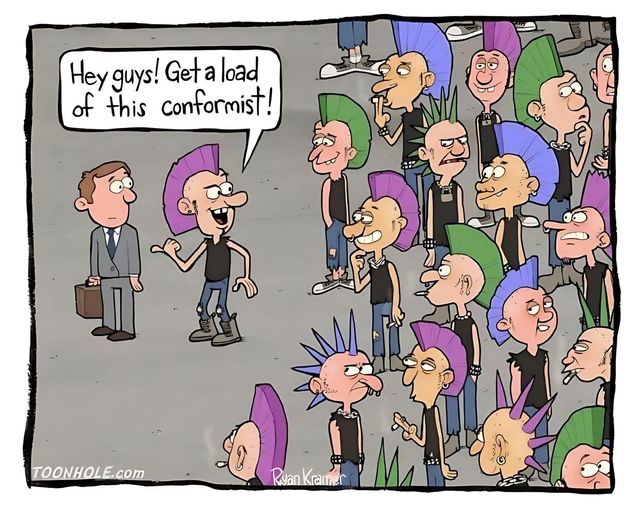
People destroy things they love, not from hate, more from possession

One of the recurring problems in alternative organising is that people often destroy the things they love – not out of hatred, but out of possession. Projects become extensions of identity, territory, career, or personal meaning rather than living commons that others can build on. This is one of the hidden traps of the #fashionista path.

It’s worth looking at a few examples to critique how good intentions repeatedly fall short because of a lack of connectivity, grounded process, and social maturity.

The project at anagora.org/distributed-cooperative-organisation is an example of this, it presents itself as a distributed cooperative organisation model and contains some useful ideas around commons-oriented, cooperative, and feminist economic forms. But it suffers from a familiar problem – it does not truly LINK. The concepts float in isolation, disconnected from wider movements, histories, infrastructures, and practical organising paths.

This is the #fashionista view of the now 20-year-old #OMN path. Full of energy, aesthetics, and radical vocabulary, but with a distinctly teenage focus on novelty and identity rather than long-term grounded federation and commons building. Without deep linking between projects, communities, histories, and practices, ideas tend to fragment, scatter, lose continuity, and dissipate into noise. Flight, scatter to the wind – more compost.

The same pattern appears in the #DisCO (Distributed Cooperative Organisations) manifesto at disco.coop. Again, there are worthwhile insights and language around care, commons, and distributed organising. But the project still exists as a self-contained branding exercise rather than part of any deeply interconnected ecosystem. The issue is not bad intentions, the issue is isolation. Projects that do not effectively link socially, technically, historically, and organisationally. On this #fashionista cycle we struggle to accumulate real collective power, repeatedly restart from near-zero while presenting themselves as innovation.

The COMPOST digital magazine at two.compost.digital follows a similar #NGO and #fashionista path. It produces discourse and aesthetics around collapse, care, and alternatives, but again lacks the hard connective tissue needed for durable commons building. There is very little federation of process. Very little shared infrastructure. Very little accumulation of collective memory. Very little practical continuity.

This is what the hashtag #blocking is pointing toward, these projects unintentionally block healthier growth by occupying cultural and organisational space while failing to create pathways others can build through. Energy flows into maintaining identity, branding, and internal discourse instead of constructing durable public commons. This is where possessiveness becomes destructive, and slowly the commons closes.

This is not unique to these examples. It is a widespread problem across activist, cooperative, and #openweb spaces. Our “common sense” instincts are shaped by the wider culture of #stupidindividualism and #neoliberal competition, even inside projects supposedly trying to escape those systems.

This path naturally leads toward informal hierarchy, gatekeeping, branding over openness, resistance to criticism, control of information, and fear of genuine federation. Over time this undermines the collaborative nature of commons projects. As leadership roles become possessive, transparency weakens, collective goals become secondary to personal or organisational survival, criticism becomes threatening rather than useful and conflict is personalised instead of productive. Eventually the project spends more energy protecting itself than building any shared infrastructure.

This is one of the reasons so many alternative projects fragment despite good intentions. The tragedy is that many of these people genuinely care, but care without openness still become enclosure. That is why the 20 year old #OMN path keeps returning to linking, federation, and the , not as abstract ideology, but as practical anti-possessive tools of use.

The goal is not purity, not ownership, not building another isolated brand ecosystem. The goal is to create living commons that other people can actually connect to, extend, challenge, reuse, and build beyond. Without this, projects become temporary performances orbiting personalities and trends. With it, they have at least some chance of growing into real social infrastructure.

The hopeful part is that even failed projects contribute compost, ideas break down, fragments spread, lessons survive and people move on carrying experience. Compost matters, but we should still try to build gardens rather than endlessly producing piles of unfinished compost.

The mess we made

This is a good podcast https://media.blubrry.com/novarafm_radio_for_a/audiofiles.novara.io/downstream/2023/03/230320_Downstream_Billions_Will_Die_If_They_Dont_Listen_To_Us_w_Roger_Hallam.mp3

The mess we have made over the last 40 years. Lets look at the main challenges facing humanity today – #climatechaos, the degradation of the biosphere, and growing global inequalities – are not separate issues, rather different facets of the same problem. This problem is the #neoliberal economic system that has spread across the world through globalization. Leading to high production and high consumption lifestyles that prioritize economic growth over environmental sustainability and social equity. We call this the #deathcult we all worship.

The neo-liberal dogma is not only incompatible with a functioning Earth System at the planetary level, but it is also eroding human and social well-being, even in the wealthiest countries. Growing global inequalities are a direct result of this economic mess, which prioritizes the accumulation of wealth and power in the hands of a #nastyfew at the expense of the majority.

The consequences of continuing on the present trajectory are dire, collapse is the most likely outcome. A transition to a more socialist economy is a path out of this mess. We need to prioritize social equity, which requires a fundamental shift in our economic system, where sustainability and equity are prioritized over short-term greed. Only then can we hope to build a sustainable future for ourselves and for future generations.

The Mess We’ve Made: Neoliberalism.

Over the past 40 years, humanity has created a complete mess of our society and environment. #Climatechaos, the degradation of the biosphere, and growing global inequalities are not separate issues but different facets of the same problem. This problem is the #neoliberal economic system that has spread across the world through globalization, promoting high production and high consumption lifestyles and prioritizing economic growth over environmental sustainability and social equity. It is a #deathcult we all worship.

The #neoliberal economic system has created a world that is not only incompatible with a functioning Earth System at the planetary level, but also eroding human and societal well-being, even in the wealthiest countries. The consequences of continuing on the present trajectory are dire. Collapse is the most likely outcome.

To have any hope of turning this around, we need to prioritize social equity. This requires a fundamental shift in our economic system, where sustainability and equity are prioritized over short-term greed. A transition to a more socialist economy is a path out of this mess.

The transition to a more sustainable and equitable economic system will not be easy, but it is necessary. It requires us to fundamentally change our values and priorities as a society. This cannot be done without social friction and more mess, we need to stand up and fight for a more sustainable and equitable world. It is well pastime to reject the #deathcult of neoliberalism and build a humane and better world for all earths creatures.

The ideological swing

Published Date 7/27/17 7:30 PM

In the 19th century we had a fight between the conservatives vs fundamentalist liberalism fighting/feeding inhuman industrial growth which lead to a human backlash in the 20th century of social democracy – that is a mediated democracy to push humane growth (progressive liberalism). The late 20th century #neoliberal (fundamentalist liberals) pushed us back into a 19th century world view, which has brought with it the balancing ideas of conservatism of trump and Brixit.

The idea is to do it different. Socialism and ecological spring to mind. If we can bring the progressive liberals back, it can open the space for these other world views. If conservatism takes over then we have the revaluation of “communism” as a balance as Neo-liberalism is an inhuman dead-end that we should not be repeating.

The conservatives (trump) and the radicals are both pissing on liberals for good resions. Though it might turn out that a renewed progressive liberalism (Corbin etc.) might be the best path. Pee in moderation can be a good fertiliser 🙂

For a view of neoliberal dealing with a political created ecological disaster this podcast is a good direct reminder http://irishhistorypodcast.ie/podcast-directory/famine/