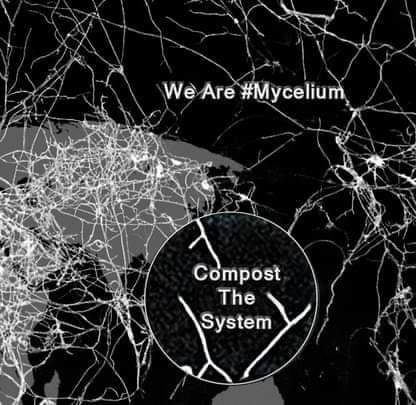
A lot of current #mainstreaming arguments that are treated as left and right are actually not. They are arguments between modernism and postmodernism. This is a mess that the postmodernists have pushed over the last 40 years.
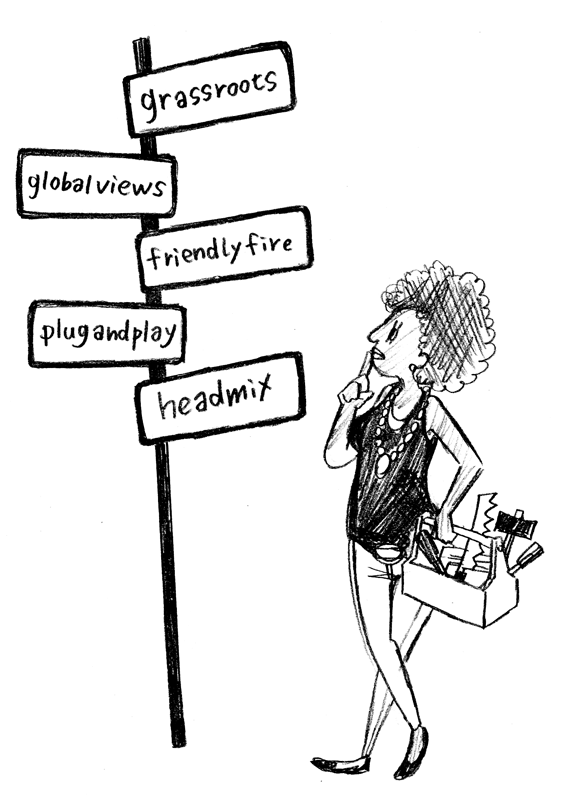
We need tools for composting this mess, shovels come to mind. But it’s hard to grasp a shovel on your knees with no handle and no head… so we are currently dealing with the shit with our hands, yes it’s messy.
We have people who are dogmatic, careerist and secretly worshipping the #deathcult as the #mainstreaming voices of much of the #Fediverse, this is ALWAYS a problem in activism and #FOSS is activism if it’s anything at all.
This is an issue that needs active mediation, and yes this will create mess and bad feelings, this is how you can tell you are doing the right thing and being useful… phwww… work.
We need to think of a serendipity view of how #hashtags work and how our coder kings implement them (#feudalism). Not saying this is a good aproch… i don’t know… but spelling hashtags “wrong” makes their use in categorization and sorting work differently. Might be worth thinking if this could add value or is purely negative? This depends on different views on federation and ideas of a universal truth or messy “truths”. Composting thought on this.
In the #OMN coding project, currently offline (unite.openworlds.info) we add word grouping flows, so you can say one hashtag is the same as another, ie. you can group different “meanings” to build category flows. This makes misspelled hashtags functional, and our current coding broken from the #OMN point of view.
It’s not implemented, is a speck projects so can’t test this. Over the last year I have put 5 #FOSS funding applications in to try and get this built, 3 turned down so far 2 more to be turned down (cross fingers and toes not) soon. Our #AP#openweb reboot is being destroyed by our #fahernistas and #geekproblem nothing new here, but we do need to do better.
That’s what we set out to fix 20 years ago, with the #OMN still digging, but my shovel has no handeal nor a head… says the man on his knees hands covered in shit… composting worthwhile however you do it, I could not make this shit up… but we keep making more #techshit
#Mastodon and the wider #fedivers are native #openweb project based on the #4opens people who try to “harden” and “secure” these are completely missing where the value is at.
They are spreading #FUD and endangering real activists acting this way.
Anything that is not media should use encrypted p2p chat, there are many mature #FOSS projects for this.
At the moment as the #Fediverse is a #OMN based on the #4opens you have very low barrier to running or even developing an instance, this is where the value is.
Adding security generally makes a HUGE barrier to Dev and #DIY running an instance.
The #geekproblem has no idea of the damage they do when pushing their “common sense”. This creates a signal-to-noise issue that has been blocking alt for 20 years.
The #Fediverse is all #4opens so should not be used for anything that should be P2P encrypted. It’s important to keep this clear to users by not focused on the fig leaf of “hardening” security as the is non. It’s a very successful #OMN open media network, and it’s value lies in this.
Peoples pushing this are often not seeing the point that it’s designed #4opens this is why it works.
Both paths have value, but they are different.
And the push a different project (#closedweb) which is fine. But not a #OMN maybe they would be better off working on bridges as companion projects.
Good to think about this mess they talk about as it is not solved by more tech, we already have most of what we need.
* Open media is #4opens based on trust, the current ActivityPub is a relatively #KISS good example of this.
* Privacy is encrypted p2p chat, which there are meany good #UX mature #FOSS projects you can find
The change we need is social, getting people to use the different approaches for different needs, this is surprisingly difficult.
Bridges while dangerous are needed here, it’s good to talk about this in the sense of “security”.
This text reads like a vanguards path, based on #mainstreaming reading and narrow #geekproblem thinking. It’s missing the paths that hold value in #4opens horizontal activist paths we are building. But yes, we are getting lost in the growing #fediverse and the wider spread of #openweb reboot diversity projects.
What it does highlight is the need for social and political thinking is needed, the is value there.
It’s hard to stress how “nave” meany devs on the #fediverse
#openweb#4opens is about building human trust, hard security is a very slightly overlapping but easy to see different path for building non “trust” based connections.
Some surprisingly hard to build bridges might help with this ongoing mess.
#Visionontv is a grassroots media project that aims to provide an alternative to mainstream media by creating and distributing independent video content. The project has been running for over ten years and is based on the principles of openness, collaboration, and decentralization. It uses #FOSS open-source software and decentralized platforms to create and distribute activist video content. One of the key features of the project is its participation in the Open Media Network (#OMN), a decentralized network of media sites that share content and promote independent media that is not controlled by any single entity. The project emphasizes the importance of grassroots community-driven media, where people and groups can create and share their own content.
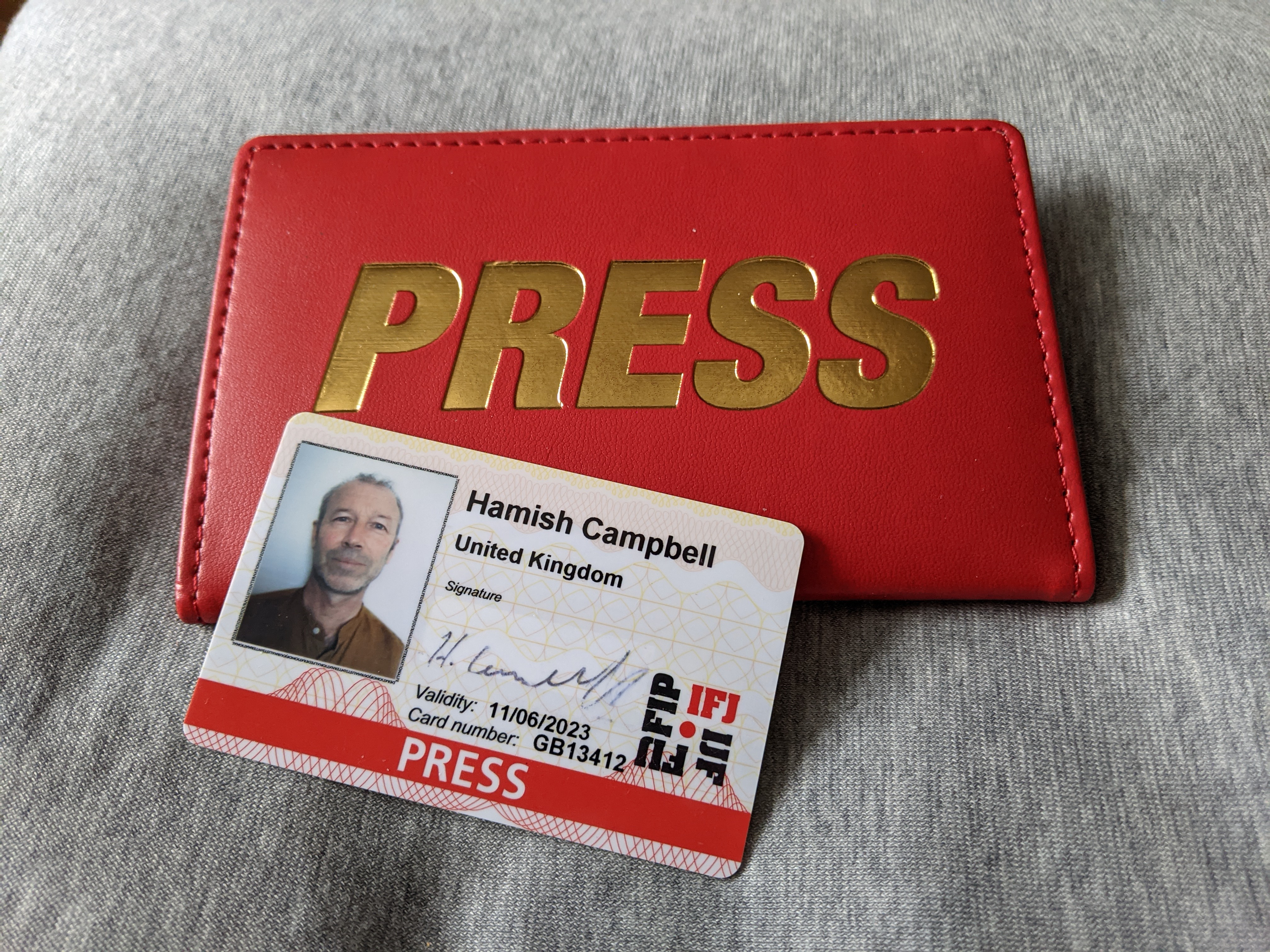
Hamish Campbell is an #openweb organic intellectual and a core contributor to the #OMN (Open Media Network). He publishes at http://hamishcampbell.com, where he documents decades of radical media work, social tech projects, and reflections on activist culture. You’ll find him across the #Fediverse, on the #dotcons, and #YouTube – pushing for open dialogue around politics, technology, and media.
Over the years, Hamish has been central to meany grassroots tech and media initiatives, including:
Undercurrents – video activism documenting direct action and alternative culture.
Ruffcuts – Copy left (before, Creative Commons) licensed video CD-ROMs project distributed across UK and global activist networks.
UK Indymedia – part of the global Indymedia network, building open publishing platforms for activist journalism.
VisionOnTV – producing and distributing social movement video through peer-to-peer networks and open tools. Now in its fourth generation of FOSS tech, the project has been running on and off for nearly 20 years.
The PeoplesTV Project – creating low-cost, live-edit, and video aggregation tools for real-time, mobile grassroots reporting.
4opens – a framework for ethical #FOSS tech development, demanding openness of code, data, standards, and governance.
OMN (Open Media Network) – building a trust-based federated media infrastructure for alternative publishing.
ActivityPub and the Fediverse – working with native protocols and community to develop open, decentralized publishing tools and outreach them.
OGB (Open Governance Body) – prototyping grassroots governance models tailored to activist and Fediverse cultures.
Rebooting Indymedia – re-energising grassroots media infrastructure with fediverse tech and horizontal process. This Fediverse tech got to roll out before covid but did not survive the pandemic
MakingHistory – a new project under active development, exploring collective memory and storytelling.
Hamish approaches all of this through a political lens – believing that code is ideology made real. He is sharply critical of tech shaped by capitalism, which he sees as systemically extractive, closed, and hostile to real social change. His approach to “humane coding” centres on designing systems that embrace complexity, emergence, and care – tools that reflect human relationships rather than enforce control.
Beyond the tech world, Hamish has been involved in hundreds of activist campaigns and alternative life experiments. He’s written academically on vagabond culture and hitchhiking, and has produced and edited over 1,000 videos and documentaries in the last 20 years.
For the past decade, he has lived aboard a semi-off-grid lifeboat, navigating Europe’s canals and coasts, a real-world metaphor for the digital values he champions: autonomy, resilience, and mutual aid. #BoatingEurope
Once upon a time, not so long ago… in a world dominated by the #dotcons, closed-source technology and centralized decision-making, a small group of passionate activists and developers came together to reboot an old way of building technology. They believed that technology should serve the needs of people, not only the profit of big corporations and governments. They called themselves the #4opens community.
The #4opens community believed that openness and trust were the path we need to take to creating technology that served the needs of people. They rallied round the codified existing #FOSS, open-source working practices as a process called the #4opens, which consisted of four #KISS principles: open data, open source, open “industrial” standards, and open process. They understand and valued that by embracing these principles, they could create technology that was more transparent, collaborative, and decentralized.
The first principle of the #4opens is #opendata. The community believed that data should be freely available to everyone, so that anyone could use it to build new tools and uses. They created a platform: #OMN where people could share data openly and collaborate on projects together.
The second principle of the #4opens is the #mainstreaming idea of #opensource. The #4opens community believed that software should be free and open for anyone to use, modify, and distribute. They created a library of #FOSS software that people and communities use to build grassroots tools and services.
The third principle of the #4opens is open “industrial” standards. This principle was a little more complex, but it basically meant that technology should be built using open, standardized protocols that anyone could use. This would ensure that technology was interoperable and that people could easily switch between different tools and services to push the projects that grow in the most healthy way.
The fourth and final principle of the #4opens is open process. This was perhaps the most important of all. The #4opens community believed that technology should be developed using transparent, collaborative processes that anyone could participate in. They organized on a platform https://unite.openworlds.info/ where people could share ideas, collaborate on projects, and make decisions together.
Over time, the #4opens community grew and expanded. They built new tools and services based on openness and trust. They created an ecosystem of developers, designers, and users who worked together to create technology that served the needs of people, and pushed back the profit greed of big corporations and governments and the people who server them.
And so the #4opens community continued to grow and evolve, creating a more healthy vision for technology. They knew that their work was just the start, they were determined to keep pushing, to keep building a better world, one link, one line of code at a time.
On the #fediverse, we need to work/think about the need to cross-link the subject instance.
As, the idea of as instance as a community is lightly built into the code of mastodon. So individuals and groups need to push this into existence, then add issues to the #ygithub mastodon tracker to try and get this into the code (hard job due to #feudalism as governance in #FOSS).
As a first step, we need to build flows between subject instances by individually fallowing people cross subject instance, to leak the content into timelines. Then encourage people to look at the global and local timelines, not just their personal timeline, which is likely pretty empty.
Nurturing community’s – the tech is not going to do this for us, is my thinking. This is a problem as community’s have the power for social change/challenge we need to get out of this mess.
I am asking people to try working round the poor “community” side of the hard coded ideas of community in mastodon.
Who does your code actually empower? (#FOSS reality check for #openweb builders). In web application development there are broadly three groups you can empower. Every architectural decision – whether you acknowledge it or not – shifts power toward one of these groups.
Understanding which group your system empowers is probably the single most important design question in social technology. In the “fluffy thinking” the three power centres:
1) Users, people who consume, participate, and live inside the system. They care about usability, safety, autonomy, continuity and real-world outcomes. Users are rarely technical, but they are the reason the system exists. If users lack agency, your project is a toy or a control mechanism – not infrastructure.
2) Producers are people who create content, knowledge and value. Examples: writers, organisers, artists, moderators and community builders. These are the people who make platforms meaningful. Without empowered producers networks stagnate, communities collapse and content becomes algorithmic sludge.
3) Geeks (developers/admins). The builders, maintainers, infrastructure operators who care about architecture, performance, elegance, security and scalability. This group is essential – but historically, especially in #FOSS and federated spaces, it becomes the dominant power holder.
This is the #geekproblem. Most #openweb projects “accidentally” empower the third group above all others. Why? Because developers build tools primarily for themselves, #UX is treated as secondary, social dynamics are assumed to be solvable through technical controls and complexity becomes a gatekeeping mechanism.
The result is systems that might be technically impressive, but socially brittle, unusable by normal humans. The tiny group of unthinking “elitists” end up deciding what is good for everyone else, not because they are evil – but because the system structurally centres their perspective. Good #UX in social technology is extremely hard precisely because it requires humility about what engineers don’t know.
The #dotcons model works much “better”, as corporate platforms take a different path. They empower capital which then hires geeks to serve producers, extract from users and optimise engagement and surveillance.
Power structure is: Capital → Developers → Producers → Users. The users become the product, producers become dependent and developers become instruments of extraction. It’s an efficient machine – and a socially destructive one.
The missing model is user empowerment, an uncomfortable truth is that users are rarely genuinely empowered. Some partial attempts that worked in the past are early #Indymedia (open publishing + collective moderation. Wikipedia (community governance + editable commons), email protocols (user portability, decentralised identity) and RSS/blogosphere era (subscription over algorithm). None are perfect – but they shift power closer to participants.
What we need are non-extractive incentives. As good #openweb projects try to do, real grassroots projects empower users AND producers together. Not by removing structure, but by distributing power through federation, open standards, collective moderation and visible process.
These are still rare because they are harder to build. They require solving social problems, not just technical ones. It’s why we keep repeating the same failure, oscillate between two broken patterns of #geekproblem systems → technically elegant, socially inaccessible and #dotcons systems → socially addictive, structurally extractive. The problem we now need to compost is that both have produced piles of stinking manure across the tech landscape of the last 20 years.
The #OMN approach is not perfection, it is #KISS shifting the default power alignment to infrastructure that empowers users to participate without needing technical expertise. Producers retain agency over their work and context and most importantly developers build frameworks that decentralise their own authority over time.
In short, build systems where developers are gardeners, not rulers. Questions for #FOSS developers are, before writing code, ask: Who can say “no” inside this system? Who owns the data? Who can leave without losing their social graph? Who defines moderation rules? Who can fork socially, not just technically? Questions like these questions help reveal where power really sits.
You have a shovel, we don’t need more abstract debate. We need people willing to compost the failures and build differently. That means accepting messiness, designing for humans, not idealised users, building structures where power flows outward rather than upward. That’s the path #OMN is trying to walk.
Throwing ideas into the air to see where they land, this is a sketch, not a blueprint – a thought experiment. As if we’re serious about using the #openweb to challenge #mainstreaming, and build alternatives to failing capitalist status quo, we have to start somewhere. So let’s ask: what does a world built around the #4opens look like?
We’re talking about a soft move away from capitalism, not an apocalyptic collapse or utopian leap, but a pragmatic, grounded shift in how we live, relate, and build together in the digital era. A society governed by openness, not profit, future rooted in collaboration, not control.
The End of Money as the Primary Motivator
In a #4opens world, exchange is no longer driven by the blunt instrument of money. The logic of scarcity fades when information is abundant and freely shared. With open data and transparent process, value can be tracked, distributed, and balanced – not hoarded.
Imagine a path where you give not to accumulate, but to re-balance. Where you’re recognized and supported for what you contribute, openly. This doesn’t mean the end of value, it means the end of commodification as the only language for it. Capitalism made money sacred. The #4opens world breaks that spell in the digital paths, which can then be used as a lever to re-balance this in the more physical world.
Radical Reductions in Inequality
The current digital economy centralises control in the hands of the #nastyfew, the platform owners, the server landlords, the data hoarders. In contrast, a #4opens world puts common infrastructure – physical and digital – under #FOSS democratic stewardship.
Open code, open governance, open data, open processes. These tools dismantle the gatekeeping logic of closed silos. We stop renting access to our lives and can then stop working to make the rich richer. What results is not just a redistribution of resources, but a recomposition of power. Rich and poor stop being natural categories, we start down the path of inequality becoming a historical memory.
Ecological Transformation via Digital Abundance
In this world changing, we break the toxic loop where growth = progress. As digital goods expand – freely shareable, replicable, adaptable – the material basis of economic growth shrinks.
Instead of growth for its own sake, we can choose to sift focus to ecological outcomes. Energy systems localise, circular economies flourish. The planet breathes again because we’ve stopped mistaking consumerism for culture. On this post-consumption, we can meet human needs without destroying the biosphere.
Real Community, Not Algorithmic Spectacle
When your networks are open, knowable is modifiable, you stop being a metric or a data point. You become a person in a community again, who can re-build networks of care and trust. The #4opens give us tools to know each other better, to collaborate without permission, and to keep relationships alive across distance and time. We escape the isolation of the #dotcons by remembering what it means to belong, not to brands, but to people.
Reclaiming the Meaning of ‘Common Sense’
In this transition, we’ll have to rethink almost everything we take for granted. Why do we work so much? Why do we compete instead of collaborate? Why is everything a secret? Why are we trained to distrust?
The capitalist world naturalised its own ideology, it taught us that exploitation was just “how the world works.” The #4opens world undoes this conditioning. We’ll discover that our “common sense” was a prison, and that open thinking makes new realities possible.
We already lost privacy, let’s be honest that the #dotcons and the surveillance state see everything. This isn’t a warning, it’s the present, there’s no going back to closed data. Not legally or technically. The dream of sealed-off privacy is gone. So what can we do?
We open the #metadata bag. All of it. We make the hidden flows of power visible. We stop pretending that corporate surveillance is okay while peer-to-peer transparency is dangerous.
Yes, it’s uncomfortable. But in a world where we’ve already been stripped naked by Google, Amazon, and the NSA, radical transparency becomes the preferd path to justice. The question isn’t “how do we hide?” but “how do we share wisely and govern openly?”
What Does a Post-Capitalist, Open Society Look Like?
It’s not utopia, it’s messy, it’s federated, full of tension and debate. But it’s also a world where:
Decisions are made in the open, not behind closed doors.

Software is built to be forked, not locked.

Platforms are governed by people and communitys, not shareholders.

Care is more valuable than control.

Collaboration is default, not an afterthought.
This is the vision of the #4opens, not a theory, but a practice. A lived, everyday politics. A shift from passive consumption to active creation. It’s the beginning of something new, rooted in #FOSS, a real path, where everything we already know works if we just trust each other enough to try.
So, what does a #4opens world look like? It looks like the world we’re already building, underneath the rubble of the old one. Time to pick up your shovels.