Thinking of workshops to run at “Nodes On A Web” #NOAW unconference

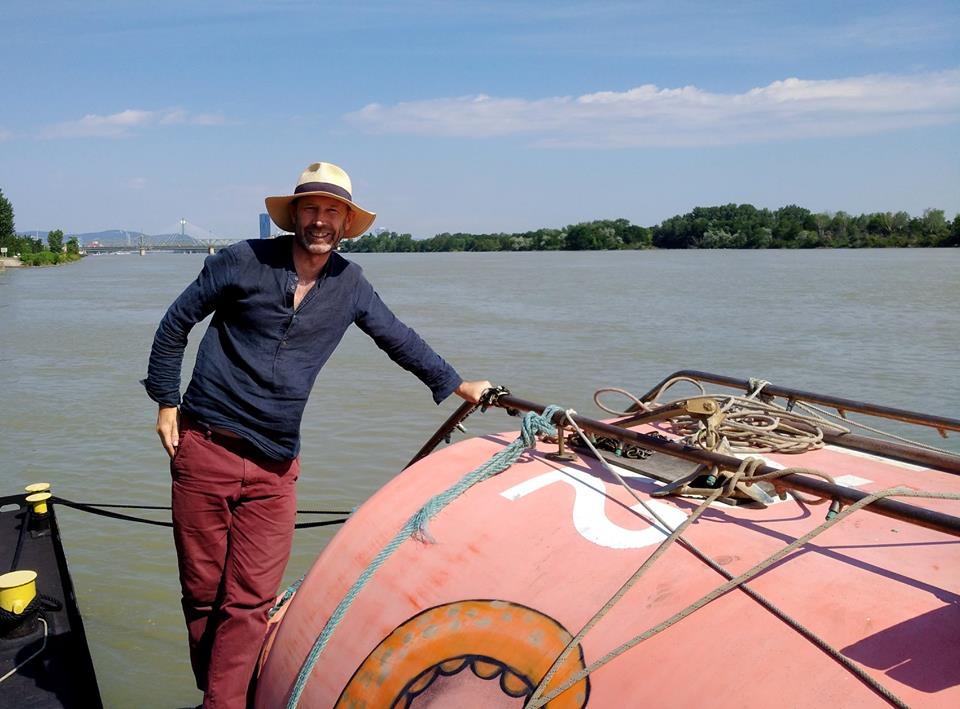
Hamish Campbell is a long-time #openweb activist and technologist working on grassroots media and digital commons. He was involved in the early development of #Indymedia and continues this work through projects like the Open Media Network (#OMN), which works on how federated tools and community publishing supports public-interest media infrastructure. His focus is balancing building native platforms and on growing the social culture that makes the #openweb work: transparency, decentralisation, and horizontal collaboration. Through writing, workshops, and practical projects, he argues that the future of the Fediverse depends as much on culture, governance, and shared infrastructure as it does on code.

Workshop 01

The #Mainstreaming Problem in the Fediverse

Purpose is to open conversation that many people feel but rarely articulate: the tension between grassroots culture and institutional capture. Start with your simple distinction:

  • Bad #mainstreaming → corporate/NGO structures reshaping the Fediverse

Then ask: “Which direction are we currently moving?”

Discussion topics – funding and governance, foundations and institutional capture, developer vs user power, infrastructure vs platforms. How to avoid repeating Web 2.0

Activity is to ask participants to map layers: Grassroots – NGO / institutional – Corporate. To discuss where power currently sits and what healthy balance might look like.

Outcome is people leave with language to understand the tensions they are experiencing in the Fediverse.

Workshop 02

Maybe a second one on why #makeinghistory is needed? Translating #OMN from “activist infrastructure” into “missing public digital infrastructure.” That language is what this event is trying to figure out. The Open Media Network (#OMN) proposes a model where grassroots publishing, community moderation, and institutional participation are balanced. Participants can discuss how institutions support shared infrastructure rather than just deploying isolated platforms.

Many institutions are experimenting with the Fediverse as an alternative to #dotcons corporate social media. However, simply running institutional servers risks reproducing the same platform dynamics in a federated form. We need workshops that explore the broader ecosystem of public-interest media infrastructure.

“What happens after institutions join the Fediverse?” The #KISS answer is they need to support the commons infrastructure that makes it socially viable. Running Mastodon is not enough, institutions need to support the wider open media ecosystem.


Talking about #openweb culture in a constructive way is tricky because most #FOSS and Fediverse conversations default to technical framing: code quality, scalability, moderation tooling, and #UX. These things matter, but they are not the foundation that determines whether a network lives or dies.

Maybe a useful way to open the conversation is to shift the starting point. Instead of saying “culture is important too”, say something stronger but practical: The success or failure of open systems is primarily a cultural question, not a technical one. The code only expresses the culture behind it.

Start with a simple historical observation. Many technically strong systems failed because the social layer was weak, while some technically rough systems succeeded because the community culture worked.

Examples from the open web – early open source projects that thrived because communities shared norms of collaboration. Grassroots networks like Indymedia worked socially even when the software was messy. Corporate platforms that succeeded not because they were technically better, but because they built powerful social gravity.

The pattern is clear, that technology enables networks, but culture sustains them. This is the missing step in most Fediverse conversations. Right now to meany discussions focus on: scaling servers, moderation tools, interface design and onboarding. These are all necessary but insufficient.

What way to often goes missing is the deeper questions – What culture are we actually trying to grow? Without answering that, the system tends to drift toward the dominant internet culture, which today is shaped by the #dotcon platform model of engagement optimisation, algorithmic attention markets, influencer dynamics and centralised power. When that culture seeps into the Fediverse, the result is a federated copy of the same problems.

So why is culture harder than code? Code can be written by a few developers, culture requires shared understanding across thousands of people. To grow this we need native governance norms, trust networks, moderation values and expectations about ownership and participation to hold to native paths for how conflict is handled. These things cannot simply be implemented in software, they must be grown socially, fail to address this is why many technically strong projects fail, they assume the social layer will somehow emerge automatically. It rarely does.

To make this constructive, it helps to clearly describe what we mean by #openweb culture. Some core values historically included public-first communication rather than platform ownership, decentralised responsibility instead of central moderation authority, commons thinking rather than product thinking to nurture horizontal participation rather than audience/influencer hierarchies, this need clear #4opens processes rather than opaque decision-making.

These values were never perfect, but they created a different social environment from today’s corporate social media. If we do not actively cultivate these values, the surrounding internet culture will slowly overwrite them. If the Fediverse continues to grow without addressing culture as it currently is, the most likely outcome is large institutional instances dominate, smaller community spaces struggle leading to more moderation being centralised. This all shifts user expectations toward platform-style experiences.

At that point, the system may still be technically federated, but the culture will have drifted back toward Web 2.0. The code will be open, but the social dynamics will not be.

So the “extra step” is simply, we must talk about culture as deliberately as we talk about software architecture. That means asking questions like: What social norms should Fediverse communities encourage? What governance models support open participation? How do we keep the ecosystem diverse rather than dominated by large actors? What responsibilities come with running infrastructure in a commons network?

These conversations are sometimes uncomfortable, because they move beyond engineering into politics, sociology, and ethics. But avoiding them does not make them disappear, it simply means the culture will be shaped by default forces instead of conscious choices.

A simple way to frame this – A phrase that often works well in discussion is – “Code builds the network, but culture decides what the network becomes.” If we want the #openweb to remain something different from the #closedweb platform internet, we need to invest as much thought into the culture as we do into the code and #UX. Otherwise, the technology may succeed technically, but the social project behind it will quietly fail.
Workshop 03

https://hamishcampbell.com/the-wall-of-funding-silence/ I am going to “Nodes On A Web” #NOAW to try and have this conversation in a polite way.

Public Money, Public Communication, Public Infrastructure

Public institutions are funded by taxpayers. Their role is to serve the public. So it should be obvious that their communication systems are open, accessible, and accountable to everyone -without requiring people to sign up to proprietary, for-profit platforms.

Yet this is not the world we live in. Today, much of public communication is effectively outsourced to the #dotcons. If you want to follow government updates, participate in consultations, or even access timely public information, you are often expected to create an account on a closed platform – designed for profit, data extraction, and behavioural manipulation. That alone should raise serious questions.

This contradiction is especially stark in Europe as they regularly speak about digital sovereignty, data protection and public accountability. And yet, at the same time, they rely on U.S.-based corporate platforms to communicate with their own citizens. It’s a strange situation:

  • Public institutions, funded by European taxpayers, using foreign, proprietary infrastructure to mediate public communication.
  • Not only does this create dependency, it also places public discourse inside systems that are not governed by public interest.
  • It’s not just ironic. It’s structurally broken, we should think about prosicuting the people who have made this happen.

The access problem, useing closed platforms to access public communication creates real barriers: Not everyone wants to create or maintain dotcons social media accounts. Some people are excluded for ethical, political, or practical reasons. Algorithms decide what is seen and what is not. Public information becomes entangled with advertising and engagement metrics. This undermines a basic democratic principle that public communication should be universally accessible, without conditions.

We already have an alternative to this curupt mess, the #DIY #OpenWeb comes from europe, it offers a different path. Instead of #closedweb platform dependency, it builds on open standards, interoperable systems with multiple access points, no user lock-in. This is not a new path, it is how the web was originally created to work in the EU.

An example project that contines this native mission and supports this is the #OMN whitch creates spaces where public institutions and public communities can meet on equal terms, without one dominating the other, and without relying on closed corporate systems. If institutions instead invest in and support the wider #OMN ecosystem, they help build something fundamentally different, a public communication infrastructure that is open by default, accessible to all, resilient and distributed and aligned with democratic values.

A simple principle, if it is funded by the public, it should be accessible to the public – without restriction. No accounts required, no platform dependency and no hidden gatekeepers.

We need to organise a call to act. Public institutions need to move beyond simply using the #Fediverse. They need to help build and sustain the commons that makes open communication possible. That means, supporting open infrastructure projects, funding shared ecosystems like the #OMN and building real, not facke PR commitment to public-first communication practices.

This is not just a technical shift, it is a political and cultural choice.


A simple #KISS way forward is to shift public social communication onto the #Fediverse. This is already a significant improvement on current platform dependency. However, I want to raise a point that may sound controversial at first, but is actually quite practical: public institutions should not rely exclusively on the existing codebases.

Most current Fediverse platforms have done vital groundwork – particularly in establishing shared protocols, interoperability, and a working culture of federation. That contribution is important and should be recognised. However, many of these tools evolved shaped by the same assumptions as #dotcons and constrained by #NGO project models. As a result, they can be complex, difficult to maintain, and not always well aligned with the long-term needs of public institutions or commons-based infrastructure.

A constructive path forward would be to fund the development of a small number of new, purpose-built codebases focused on commons publishing. Not one, but three parallel implementations.

Why three? Because diversity reduces risk. In practice, not every project will succeed – this is normal and expected. Funding multiple approaches ensures resilience, encourages innovation, and avoids over-reliance on a single solution. The cost of doing this would be minimal relative to existing public digital budgets, yet the potential long-term value is significant.

Importantly, this is not about replacing the existing ecosystem. Because the Fediverse is built on shared protocols, any new tools would remain fully interoperable with current platforms. This means users of existing services can still interact seamlessly, while the overall ecosystem becomes stronger, more diverse, and better aligned with public service values.

In short: build on what exists, but don’t be constrained by it. By investing modestly in new, commons-oriented infrastructure alongside the current tools, public institutions can shape a more robust, sustainable, and genuinely public digital communication space.

#KISS

Outreach to @newsmast interesting to see the #NGO view of the real alt path we need to take https://hamishcampbell.com/thinking-of-workshops-to-run-at-nodes-on-a-web-noaw-unconference/ you guys might be interested in working on the 3ed workshop outline. The 3 codebase need to be 1) mainstreaming, 2) radical #NGO and 3) native messy grassroots. You guys could be the second codebase. We do need diversity, best not to keep blindly messing up this path in the current globe mess.

Why It’s Difficult to Build the #OMN – and What We Can Do About It
Growing the #openweb – Notes for Composting the #dotcons (and growing an #OMN)

Stopped going to in-person general tech conferences around 15 years ago – they’d become beyond pointless. Since then, I’ve stuck to more focused online events.

Now heading back to an in-person one. Curious what I’ll actually find.

I have a feeling it’ll be about 75% pointless, 20% narrow geek, academic and #NGO-focused (slightly useful), and maybe 5% – probably less – actually useful.

Let’s see how that shifts after the event.

UPDATE: The event was posative, people were looking for change.
The #Hashtags Tell a Story: Building Trust in a Messy World

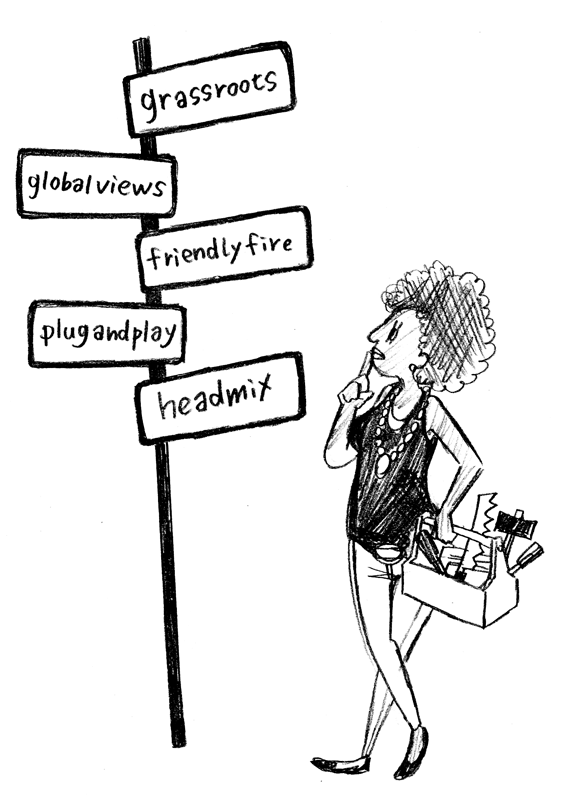
We live in a time of crisis. Climate, community, communication, all are breaking down. Our tools and platforms no longer serve us. To make sense of this, we need to tell stories. And in the digital world, hashtags are one of the most powerful ways we do this. But our hashtags don’t just tag, they trace the roots of our problems, and signpost paths out. Each one is a seed. Together, they are a map.

#dotcons – From #openweb to walled gardens. Once, the internet was a place of openness, built on free tools, shared protocols, and community spirit. Then came the #dotcom era, where profit became the driving force. Platforms like Facebook, Google, and Amazon, what we call the #dotcons, reshaped the web to lock us in and sell us out. A handful of corporations own the highways of our communication, and their algorithms guide what we see, say, and believe.

#dotcon = profit for a few, con for the rest.

#stupidindividualism – A trap we set for ourselves, we were promised empowerment. But what we got was individualism without solidarity. We’re told: brand yourself, hustle alone, curate your reality. But without community, there is no resilience. Without cooperation, there is no change.

#stupidindividualism is the cultural poison that tells you “you’re on your own.” It weakens us from the inside.

#deathcult – Forty years of neoliberalism. The last four decades have been shaped by a ruthless ideology, that markets solve everything, government should step back, and people must compete, not care. This is the #deathcult – a term for the deadly logic of late-stage capitalism. It’s taken over politics, media, even our sense of self.

Climate denial, gig work precarity, housing crises, mental health collapse - these are all symptoms.

#geekproblem – The failure of trust in tech. Even our allies, the people building tech to fix things, fall into a trap. The #geekproblem is when developers replace trust with control, more permissions, more encryption, more complexity. Instead of building with people, they build over them. The result? More unusable tools, more silos, more #techshit that ends up needing to be composted in abandoned GitHub repos.

#4opens is a way out of the mess, we need this new paths, based on simplicity, humility, and openness, a compass. If a project doesn’t pass the #4opens, it’s not building for the commons, it’s just making another silo.

#OMN, shovels and compost, we already have the tools, projects that build media flows, not platforms. To connect blogs and podcasts into open rivers of content, using simple tech instead of complicated “Web3” vaporware or #dotcons mess.

We’ve built up piles of #techshit. It’s time to pick up our #shovels, compost the waste, and grow something new.

Hashtags = Soft tools for hard times. We use soft metaphors because we live in soft systems: culture, emotion, trust. You can’t “solve” these with code alone. You need care, community, and storytelling. Yes, many demand hard, scientific “proofs” or “frameworks.” But if someone can’t feel the metaphor, they’re probably not ready for the work of rebuilding. We need to focus on those who can, who’ve seen that a different world is possible.

If you can understand that different ideologies shape different realities, then these hashtags will start to speak to you.

Let’s recap the key tags in the story:

#dotcons – Corporations that own and fence in our web

#failbook – Facebook and its culture of manipulation

#openweb – The decentralized, people-powered internet

#4opens – A compass for ethical, sustainable tech

#geekproblem – Tech that controls instead of empowers

#stupidindividualism – Isolation sold as freedom

#deathcult – Forty years of neoliberalism and its collapse

#OMN – Building networks, not silos

#techshit – All the unusable tools that ignore real needs

#shovels – The work we must do

#compost – Making good soil from past mistakes

We don’t need heroes, we need gardeners, grab a shovel, let’s build a future please.

What do you mean by “mainstreaming”?

At its core, #mainstreaming is how we, often unconsciously, uphold and reproduce the values of the dominant system. In our time, that system is #neoliberalism, or what I metaphorically call the #deathcult. It’s the air we breathe: shaping our politics, our economics, even the food we eat and how we relate to each other.

In activist terms, #mainstreaming too often means pushing this dominant worldview into alternative spaces, building careers and institutions that play progressive on the surface, but reproduce the system that’s driving the crisis. It’s what happens when people take grassroots energy and repackage it in #NGO boxes or #dotcon business plans. The result? We end up feeding the monster we’re supposed to be fighting.

This is the path to #stupidindividualism, where neoliberalism “common sense” didn’t just attack unions, welfare and public goods – it atomized our identities. Over the past 40 years, we’ve been trained to act as isolated economic units, individualism replaced solidarity, competition replaced care. This is what we metaphorically call #stupidindividualism – the corrosive belief that the only way forward is by looking after yourself, even when your actions are part of a system that destroys community and climate we realy on. And as history has shown us, when communities collapse, what rushes in to fill the vacuum is fear, resentment, and authoritarianism, in a word: #fascism.

In real-world examples, let’s take @NovaraMedia. They produce great content. But their distribution strategy is rooted in #dotcons (YouTube, Twitter, Instagram), and their cultural aspirations are aimed at becoming the next @Guardian – a new fresh node in the old crumbling system. They’re playing inside the media ecosystem of the #deathcult. Now, there’s nothing wrong with wanting to grow an audience. But if we don’t also invest in building and sustaining #grassroots alternatives, we’re just treading water in the mainstream’s tide.

Most NGO agendas follow this same logic: speak in respectable tones, aim for policy tweaks, never rock the boat too hard, and above all, protect your funding. This echos my experience of doing media training and its limits, I’ve spent 25+ years training thousands of people to create radical, grassroots media, through projects like #Undercurrents, #Indymedia, #visionontv, and now the #OMN. Here’s what happened: Most of those trained went on to have careers in mainstream journalism or #NGO communications. Almost none stayed with grassroots projects. And honestly, I kinda don’t blame them, it’s hard to survive outside the system. But that’s the problem: without long-term support for non-mainstreaming work, there’s no soil for alternatives to grow.

We trained them to change the world, but the world then trained them to change careers. So what do we do? If we don’t build real, working, alternatives, then the only future left is one where billions of people die or are displaced over the next 100 years, from accelerating #climatechaos, and the rise of digital authoritarianism and political fascism. That’s why we need to push back against mainstreaming, not with purity politics or infighting, but with tools and structures that offer real alternatives.

The #OMN (Open Media Network) is one such tool:

Technically solid

Politically grounded in the #4opens and #PGA hallmarks

Designed to resist co-option by the #NGO sector or #dotcon logic

Rooted in peer-to-peer cooperation instead of hierarchical control

This path is a seed of something better, not perfect, not finished, but growing from decades of experience. We can’t blame people for trying to survive, but still we can and must build and defend spaces that nurture something, different, better.

Otherwise, the #deathcult “wins” by default.

Talking about grassroots media as a step away from the current #techshit

Hamish Campbell on the #openweb and rebooting indymedia

Hamish Campbell, a veteran of radical media for more than 30 years, argues that mainstream technology and culture are failing us. The rise of the #dotcon platforms has commodified our lives: closed silos like #Facebook and #Instagram harvest our attention and data, locking us into systems that serve profit, not people.

Attempts to build alternatives around an #encryptionist agenda have gone nowhere. As a result, the tech giants dominate. For Campbell, the answer lies in the #openweb – once born open, but now slowly suffocated over the past two decades. His solution is to reboot grassroots media.

Drawing on the example of Oxford #IMC, Campbell shows how a simple federated network can thrive: content is shared through trusted link flows, moderation happens collectively, and mistakes can be rolled back. Unlike the #closedweb, the beauty of the #openweb is its free-flowing links, its openness to serendipity and collaboration.

For Campbell, the #OMN project is most powerful not for what it does, but for what it refuses to do: it rejects capture, centralisation, and gatekeeping. Change begins with small, practical steps, rebooting grassroots media as a living example.

What You Can Do

In recent years, events in the US, Portugal, and Madrid have explored the idea of #rebooting #Indymedia. So far, the history of Indymedia has been told mainly by academics, often through a narrow, American lens. To truly revive it, we need to retell those stories more widely, and more honestly.

A successful reboot means returning to Indymedia’s open and serendipitous roots, not the bureaucratic, closed structures it later became. The good news is that most of the technical tools we need already exist, from federated protocols like ActivityPub to peer-to-peer networks like dat.

To keep its radical, grassroots character intact, any reboot must follow the #4opens: open data, open process, open access, and open source. These principles ensure transparency, accessibility, and trust.

If you want to get involved, search for #indymediaback or “reboot Indymedia” to find links, projects, and discussions around the #OMN.

Seeding video on the openweb

Published Date 3/8/18 12:32 PM

We are #rebooting the #openweb side of http://visionon.tv project based on https://github.com/Chocobozzz/PeerTube/wiki in early/middle of April.

The idea is to run this as decentralised as possible, that is to only temporally store the large videos files on the central server and rely much more on seedboxes in peoples homes and business.

Am looking for a few people to help set these up and host them for the first roll-out.

Basically:

* A low power computer (raspberry pie, old laptop, desktop)
* With a big external usb HD
* Running a torrent app configured to pull the video files down and seed them ver RSS from
the visionontv server.
This APP can be rate limited depending on your internet connection to stop your ISP complaining.
Then this is left online and dues its thing, you become a core part of the #openweb and OMN

We have to move nearly 2000 videos with more than 30 million views off the #dotcon and back onto the #openweb

Be a part of this.

Lets look at some alt projects from the perspective of the 4opens Themediafund

Lets look at some alt projects from the perspective of the #4opens – Themediafund

https://themediafund.org

Open data – the site has no visible RSS its likely wordpress so maybe has a hidden feed. Copyright content so the data is closed and locked vier copyright.
1/4 open

Open source – The site is likely wordpress so opensource but everything else is copyright. All the media is stored in #dotcon so not a open. Give them 1/4 open

Open “industrial” standards – Well wordpress is kinda a standard, but they do not openly support RSS, podcasting and all media is vier #dotcon so no.

Open process – The is no visible process (likely hidden bureaucratic open’ish). For tech dev I cannot fined the code anywhere.

Escaping the dotcon worldwide

Published Date 11/4/17 2:40 PM

UPDATE this is in process.

Escaping the #dotcon worldwide

Terms of services – based on the #4opens

* Activist – based on PGA hallmarks

* NGO – find a big org and use that’s TOS

Copy the mastodon TOS and refocus to the above

* Names x2

* Domains x2

Then setup Github sites with these names to run the tech side of the project and provide a on-line organizing space.

We need a list of outreach orgs and contacts in this likely all ready exists.

Funding document writing for LUSH

Open letter to 4 alt grasssroots media groups about the openweb

Published Date 6/27/17 5:15 PM

DRAFT (please comment)

Building up alt/grassroots media would be nice to get a reply 🙂

NovaraMedia

The Canary

Reel Media

Real News

Hi guys,

Good to get a reply about this project from you.

OMN is a network of Open Media Sites. Its a push to #reboot the openweb that most “value” you currently use has been built upon in the last 20 years. Your careers were built on the destruction of the digital commons its time to pay this back. The cost to your career is light and the openweb can and should be run in parallel to your current use of the #dotcon distribution.

The currency (value) of the web is the link without linking content (no matter how good) has little/no value online and will likely not be seen offline.

Left wing and progressive sites DO NOT LINK and share content with each other. This leads them to have little or no value outside the bubble/echo chambers. And we are surprised and depressed when we keep looseing, there is nothing surprising about this, but there is something depressing about it.

Why is the OMN different to all the other activist tech failed projects.

The top 5:

1) It’s based on the #4opens, meaning it doesn’t have the buy-in (sell out) issue of NGO’s and dotcons and can spread as wildly as the original world wide web (www) if people start to use/build it out.

2) It’s KISS, that is simple and standards based, so open to be built-out in unseen directions and open to wide creativity. It galvanises and empowers openweb projects.

3) It’s not under the control of one group and is a “universal/standard based so can build and link many niches to link and thus build a real alternative.

4) It solidifies a morality of co-operation and trust rather than fear and compation. Its left wing rather than right wing. All current projects are products of right wing thinking in structure and expectations.

5) It gives the tech/grassroots #fashionista’s something useful to do and promote at their events. Its hard to express the pointlessness of all the current alt-tech.

——————————————

reply from one of the alt-media/grassroots groups

Aren’t “existing” doing this anyway, linking all media groups together? Afraid I’m not techie enough to understand what OMN is, how it’s different, or any of the points you’ve made, but I’m happy to go along with what everyone else decides if it can be explained in plain English!

—————————-

We have done some “user story’s” https://github.com/Openmedianetwork/OMN/wiki/user-storys hope this helps get away from the tech 🙂

This is a part list of current working roll-out https://github.com/tomspost/OMN/wiki your content already appears as links on all these sites as you post it.

All current successful projects are networks or in the case of the #dotcon social networks (closed) sudo networks.

Currently the OMN is the only bud of a network we have in place in the alt/progressive.

What dues the OMN mean for the your org

Nothing has to change in what you do if you don’t want to do more.

To be part of the network you add a easy OMN sidebar/section/page to your existing site with the content flow you are interested in from any OMN site. You control what appears on your site.

At the moment the is just the one/first that covers the best of grassroots media from a UK and a bit of globle news focus so use that one http://omn.openworlds.info:8080

That’s it, you can do more if you like but don’t have to.

What this means is that your site will link and share content with other grassroots/alt media sites on there sidebar/section/pages.

Your content as you publish it on your site will appear (you do not have to do anything for this to work) on many other OMN sidebars/sections/pages on other sites and blogs.

It will play a role in “aggregating” the viewership of alt-media, everyone gains from this.

—————————–

What we are talking about is building expanding distribution outside Facebook/twitter. You can, and should continue to use Facebook etc. what the OMN dues is start to build independent and horizontal alternative that run/expands in parallel, its working now and easy to use.

Am more than happy to help set-up the embeds in your website, will likely take 20 min.

——————————————

Just in case you are worried about security of your site all scripting is striped from the articles and links and the embed is a standard plug-in that comes from the dotcon markets that 1000’s of people have been using for years with out any issues.

Its mature and safe tech that just works.

——————————————-

Ps. if this outreach duse not work its looking like time for a bit of a kicking…. phwww….. crap.

Trying to unstall the roll out of OMN

Published Date 5/12/17 11:55 AM

Building up alt/grassroots media would be nice to get a reply 🙂

Hi guys,

Good to get a reply about this project from you.

OMN is a network of Open Media Sites.

The currency (value) of the web is the link without linking content (no matter how good) it has little/no value online and will likely not be seen offline.

Left wing and progressive sites DO NOT LINK and share content with each other. This leads them to have little or no value outside the bubble/echo chambers. And we are surprised and depressed when we always loose, there is nothing surprising about this, but there is something depressing about it.

Why is the OMN different to all the other activist tech failed projects.

The top 5:

1) It’s based on the #4opens, meaning it doesn’t have the buy-in issue of NGO’s and dotcons and can spread as wildly as the original WWW if people start to use it/build it out.

2) It’s KISS, that is simple and standards based, so open to be built-out in unseen directions and open to wide creativity.

3) It’s not under the control of one group and is a universal in its subject matter, so can build and link many niches to link a real alternative.

4) It solidifies a morality of co-operation and trust rather than fear and compation.

5) It gives the tech/grassroots #fashionista’s something useful to do and promote at their events.

——————————————

reply

Hi Hamish,

Aren’t Real Media doing this anyway, linking all media groups together? Afraid I’m not techie enough to understand what OMN is, how it’s different, or any of the points you’ve made, but I’m happy to go along with what everyone else decides if it can be explained in plain English!

XXXX

—————————-

Hi XXXX,

We have done some “user story’s” https://github.com/Openmedianetwork/OMN/wiki/user-storys hope this helps get away from the tech 🙂

This is a part list of current working roll-out https://github.com/tomspost/OMN/wiki your content already appears as links on all these sites as you post it.

The realmedia site/project is version of the visionontv project we were fund-raising and trying to build 10 years ago. Fine for the silo it is but the world has moved on.

All current successful projects are networks or in the case of the #dotcon social networks (closed) sudo networks.

Currently the OMN is the only bud of a network we have in place in the alt/progressive.

What dues the OMN mean for the XXXX

Nothing has to change in what you do if you don’t want to do more.

To be part of the network you add a easy OMN sidebar/section/page to your existing site with the content flow you are interested in from any OMN site.

At the moment the is just the one/first that covers the best of grassroots media from a UK focus so use that one http://omn.openworlds.info:8080

That’s it, you can do more if you like but don’t have to.

What this means is that your site will link and share content with other grassroots/alt media sites on there sidebar/section/pages.

Your content as you publish it on your site will appear (you do not have to do anything for this to work) on many other OMN sidebars/sections/pages on other sites and blogs.

—————————–

XXXX

What we are talking about is building huge distribution outside Facebook. You can, and should continue to use Facebook etc. what the OMN dues is start to build independent and horizontal alternative that runs/expands in parallel, its working now.

Am more than happy to help set-up the embed in your wordpress site, will take 20 min.

Be the first of the 4 alt/grassroots media sites to take the step 😉

——————————————

Just in case you are worried about security of your site all scripting is striped from the articles and links and the embed is a standard plug-in that comes from the wordpress market that 1000’s of people have been using for years with out any issues.

Its mature and safe tech that just works.

——————————————-

Were is value online

Published Date 1/12/17 6:24 PM

Its interesting to think for a moment about how widely posts on the #openweb and #failbook are seen. On #failbook an average post on my time line might be seen/read by 10 people and a dog, a good shared post a few hundred people. On my blog an average post would be a few hundred people and a good post 10,000’s of people maybe more. its easy to forget that #failbook is a #dotcon in real terms not just in idealogical arguments. The value is on the #openweb – how have people forgotten this?

EC “Cos convenience and the software works”

Yep thats why am pushing the #OMN so the is a space to do something about this.

You do all know that posting polatics on failbook is a pointless circle of nothingness

Published Date 12/20/16 9:20 PM

You do all know that posting polatics on #failbook is a pointless circle of nothingness. Please stop and do something more usefull.

We have a clective Liberal fantasy in the is an idea that #dotcon can be social useful. Its not what the money (billions) was invested in. They “invested” into a silo/portal for capturing data and capturing users. Letting this “value” free is a liberal delusion in the sense it dues not payback for investment. Your talking an act of enlighten philanthropy or old fashioned nationalization to keep the value for the people who created it – the users.

We now have a problem that most of our best alt media producers are children of the #dotcon and have little or no understanding of the #openweb We need to express positive views of value. #linking #4opens etc all very basic stuff and not hard to do. I wont practical open ideas on were to start on this.

#moveon

Draft user storys

More OMN user stores

Tabs Troughton Richard Hering John Hoggett Thomas Barlow can you guys have a go at writing versions of these that are readable by normal people – then I can geek up the originals so they outreach to both worlds. if you wont to #reboot the media this is one way to play a role.

Here I look at wider uses than just alt/grassroots media.

Lucy has an old inactive blog about horses, since #failbook came along almost all activity has moved to a page on this #dotcon but fewer people are seeing her photos/posts and she is annoyed by the nagging adverts asking her to pay for distribution. She likes going to evening classes and sees one on blogging after her art class. Signing up she learns about this new thing the Open Media Network, during a practical part of the class the tutor gets the students to help each other add a “blog role” sidebar to their sites using OMN tools adding a few tags she soon has a list of local horsey sites and blogs linking off a sidebar widget. From this class she finds a group of new proto-blogers to help each other out, they have regular social meetings in her kitchen and after a few months they setup a local news site/noid linking all there blogs together.

Jim is a librarian who has always been interested in counter culture. He has spent the last 10 years collecting all the leaflets and pamphlet he can find on road protesting, climate change, GMO’s ect. One day he goes to his favorite activist news site and finds it offline. Asking around he find that the has been a problem with the server and nobody knows how to reboot it as the volunteer sys admin left 9 months ago. Because of “security” the is no working backup and the only redundant files are on an encrypted harddrive that nobody remembers the password for. All the work and connections of hundreds of people have been lost as well as the archive of media and articles going back 10 years. He had been to a public meeting about the OMN a few months ago and had been interested in how it could be used to create DIY backups of articles flowing through it. Setting up a noid/site is still complex so he has to get some atavist geek friends to help, after a few days its up and running and actively crating a data base of all articles flowing through the network with the tags he choices. In this if any site goes down he, like anyone, can have the full text backup. As text is small he can hold millions of articles on a cheap server and manages to set-up himself a RSS reading app to copy this taged flow to his local computer just in case he has server issues like his now defunct favorite activist website. From this experience he becomes an expert on open data flows.

Jasper is a fashernista geek looking to make a iphone app, he see news as a growth area, as a programmer he has no knowledge or skill producing news content so he is looking for existing sources he can find and use. Being a talent programmer he quickly knocks together a “cover flow” interface with a tag highlighting linking structure. He fills his app with content from a mainstream OMN aggregater noid and highlights the tags in the text to give a interface on this data flow. As his app is tool which data freely flows through he can sell it for $2.99 on the apple store. After a number of good reviews he sells 100,000 installs which allows him to give up his day job in the local council tax office.

Tabs wrights an opinion news blog with hart-warming storeys covering powerful social issues. Currently she has few readers as her distribution is to friends on #failbook. She has known about the OMN since before it started booting up and her content was added ver RSS by one of the founding aggregaters. Since then she has seen her viewing figures more than double, encouraged by this she puts a sidebar widget displaying OMN content flow that interests her. With this in place a number of prominent sites feature her blog as she is now a part of the OMN, her viewing numbers go up by a factor of 10 and keep growing as the network expands.

Ana loves her cat pixi and wants to set-up a blog with photos and life stories she could set-up a tumbler blog like everyone else, but her friend told her about the OMN so she set-up a wordpress site and adds her RSS feed to the OMN aggregater Catlovers in this her posts are added to the OMN network. To make her blog more interesting and dynamic she adds two OMN widgets to the blog sidebar the first is a photo widget that she configures with tags “black and white” “cat” “fun” so that it has an updating image from the catlovers view of the OMN and the second is the latest articles headlines from this catlovers site view.

Janice has a family history website that she updates regularly. The is a group of history web sites that have setup a OMN aggregater to push out there content to a wider audience, Janice adds her RSS feed to this aggregater and the hits on her site jump immediately each time she publishes new content. She gets help to add a sidebar section on her site with a OMN flow based on the tags “family history” and “research” with this in place she become a member of the OMN and her site becomes more visible to people. She finds her self working with a group of interesting people.

Fabo has a bus in East London converted into a restaurant, he currently has a Facebook page but this only reaches a tiny number of people (3%) who like it. He is a member of London Hackspace were he goes to a workshop on booting up the OMN. Inspired by this he decides to set-up a (OMN) aggregating site covering events and food in East London, he gets a friend to do this for him using drupal and the OMN plug-ins. After spending an evening adding RSS feeds of all the restaurants and venues he can find. The next morning he has a website linking to content that regularly updates. He features his own content on this to promote his business, his site after a bit of design work becomes a place to find out what is happening in fashionable hackney.

Jeff has a band, he used to get contacts for gigs on myspace and more recently on facebook, but this had been drying up. He has a friend who is setting up a OMN aggregater in Manchester linking to the music seen. Jeff helps them out by becoming a volunteer tag moderator of the data flows, from the inside knowledge of these rich data flows he rebuilds personal connections that help to re-spark his music.

Feedback please.