The #algorithm on #YouTube has flipped hard right wing for me, a few other people have said the same, please add if you have seen this as well? If this is widespread, it shows how important it is to get normal people back to the #openweb reboot we are all involved in here.
This is obviously a form of social control, with the dominating of the #dotcons platforms in most peoples lives, plain and simple, the price of us building this domination.
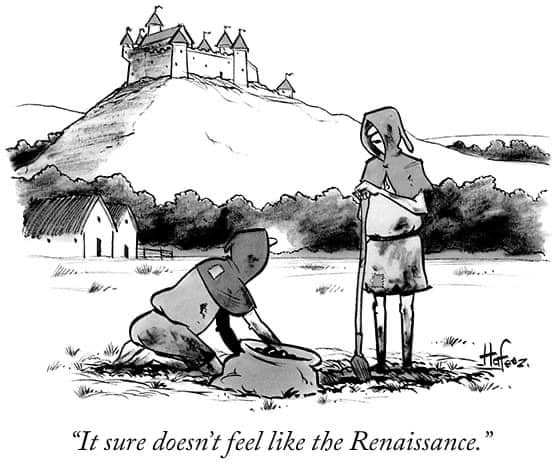
The #hashtag story begins with disempowering the #mainstreaming in our own minds. First step: breaking the spell, realising we don’t have to live inside their frame.
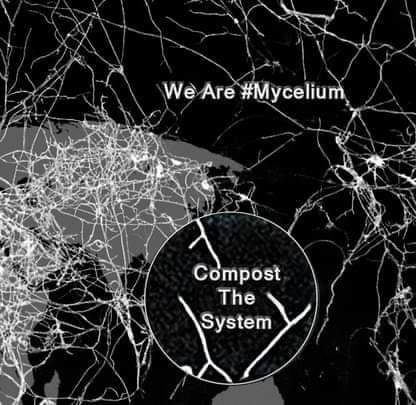
Second step: forming the affinity group circle. Gathering with others who can see through the smoke and mirrors. From that circle comes the power to build the #OMN shovel.
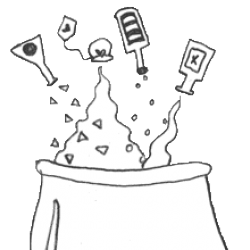
Third step: composting. Taking all the #techshit – the failed projects, poisoned cultures, and dead ends – and turning them back into fertile soil. #OGB
What we do with that soil is up to us. That’s where the future grows. #KISS
The #geekproblem only sees #cavetechnology. But society is far too complex for that, you’d have to kill billions to make it work.
4opens is the opposite: a data commons. Light as a tool to fight with, not darkness to hide in.
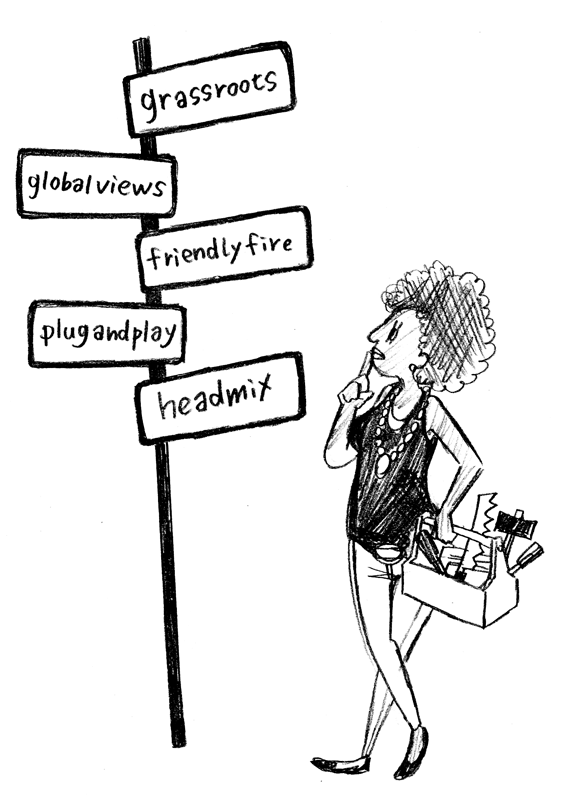
I normally talk and work on big issues, let’s look for a moment at smaller steps. To make a big change, we need to start with practical paths (everyday grassroots & do-able). A personal short step is to detox a few feeds, not your whole life. Pick a algorithmic platform and shrink usage: unfollow, mute, or temporarily uninstall the app. Replace 15–30 minutes of scrolling with one intentional action by using replacement tools (not perfect, but better).
Try ActivityPub/Fediverse clients (Mastodon, PixelFed, PeerTube), RSS readers, or small community forums. Start with reading, not posting – build habit.
Curate your attention, subscribe to a few human-edited newsletters, local news, or blogs (#RSS). Teach friends how to set up an RSS reader or follow a small subject blog.
Practice media hygiene, verify before sharing. Pause, check a source, ask “who benefits if this spreads?” Be boringly sceptical.
Vote with time and money, support small creators directly (tips, buys, memberships) and donate to independent projects like community news sites or tech co-ops.
Community & organising moves, host local “show-and-tell” sessions. 1 hour: show alternatives, how to use RSS/Mastodon/PeerTube, and why they matter. Bring tea and biscuits.
Build small trust circles, start a group that publishes a single short community bulletin or podcast – keep it non-algorithmic and share by link.
Make open culture visible, put simple “we’re #openweb-friendly” stickers/links in local cafés, libraries, community boards. Make it easy to find one another.
Teach the next person, each person teaches other person how to escape the algorithmic trap – then they teach another. Keep adding links to the tiny chain.
Tech & product-level tactics (simple, not spectacular). Run a tiny, friendly instance. Local gatherings or collectives host a low-cost #Fediverse, Mastodon/PeerTube instance with clear moderation and a friendly onboarding doc. Promote link-first publishing.
Encourage people to put content on a simple blog (or even a shared public wiki document) and share links rather than rely on feeds.
Use interoperable standards. Favours tech that uses open protocols, so people can migrate and mix services without being trapped.
Policy, campaigns & pressure. Demand transparency. Pressure institutions (schools, libraries, local councils) to publish simple rules about algorithmic tools and offer alternatives.
Support regulatory fights that protect attention. Back campaigns that limit manipulative design (dark patterns, endless feeds) and push for algorithmic audits. Amplify worker voices. Support platform workers and former moderators who expose harms – they are crucial allies.
What positive outcomes do we want? (clear, concrete). Less algorithmic amplification of fear. Fewer engineered outrage cascades in our local networks. Resilient, localised media ecology. Lots of small, trusted outlets (indymedia, community radio, blogs) that aren’t driven by ad-engagement. Restored civic trust & shared facts. Communities that can act together because they share a baseline of reality.
Shared infrastructure under community control. Instances, archives, and services run by people and collectives, not opaque ad corporations. More empathy in circulation, content that rewards kindness and care rather than outrage.
This matters because if we don’t act, the future is already written by the #dotcons. Their algorithms don’t just reflect society, they shape it – twisting attention into fear, isolating people in bubbles of paranoia, and feeding the hard right until cruelty looks normal. This isn’t an accident, it’s the business model.
Every minute we spend scrolling through their poisoned feeds, we’re training ourselves to be more divided, more hopeless, more powerless. That’s their plan: keep us distracted, keep us arguing, keep us consuming, while the world burns and the billionaires laugh at us.
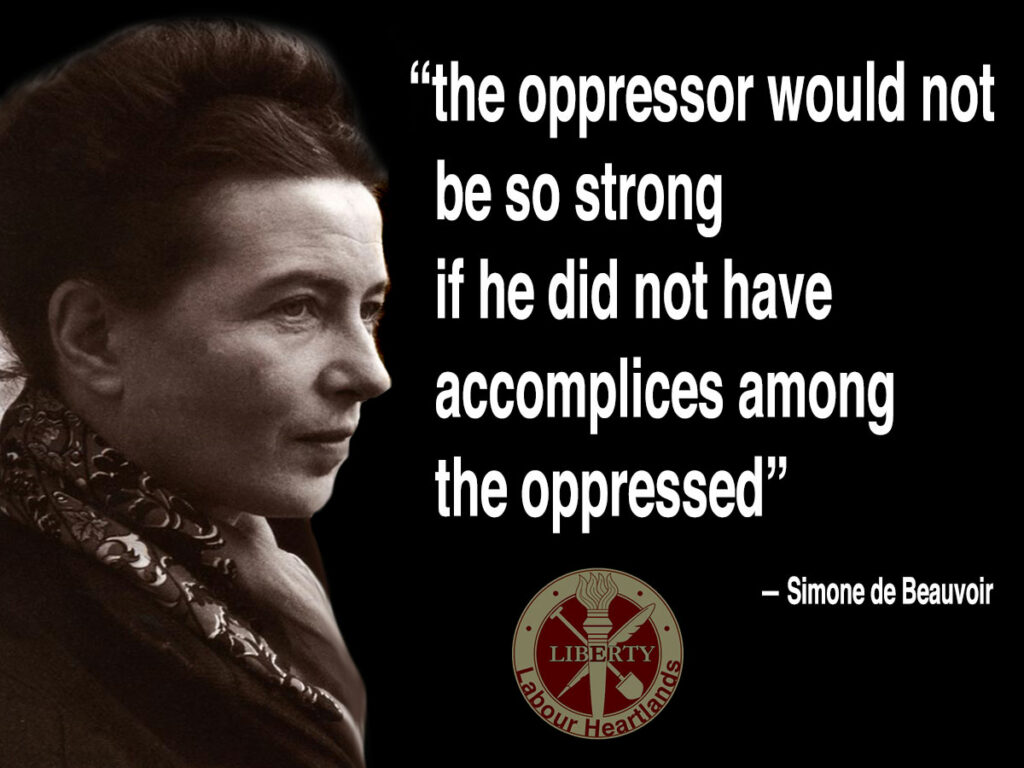
We don’t have the luxury of despair. Walking away from the #openweb and our own traditions of collective action left a vacuum, and the hard right rushed in. They stole our language of freedom, community, and even rebellion, and twisted it into authoritarian poison. That’s on us, we fucked up.
Now we fix it – The alternative is watching the world sink into algorithmic fascism, where cruelty is the currency of attention. The positive outcome is right in front of us: small, messy, grassroots networks where kindness and solidarity are amplified instead of hate. The #OMN, the #4opens, the trust-based paths we already know work.
We compost the #techshit because what grows out of this soil is hope, and without hope we’re already lost.
In our political paths we face a mess, the hard right has been taking the agendas, traditions, and paths that the left abandoned, and twisting them to push its authoritarian politics harder. It’s a mess of our own making. When we walked away from the sense-based left paths – trust, solidarity, open debate, collective action – we left a vacuum, that the right filled with fear and control. Yes, we fucked this up, now we have to fix it #KISS
With the spreading of right-wing propaganda on the #dotcons we’re experiencing late-stage algorithm control. Once our #dotcons accounts starts feeding this current level of right-wing “recommended” propaganda, you can be certain that the average person has been saturated with it for years. That’s in large part is how we end up with the cultural rot and polarisation we see now.
The dynamic is simple:
Engagement is the only metric → anger and fear drive more engagement than trust or hope → the algorithms amplify right-wing and conspiratorial content as a feedback loop.
Normalisation follows → people stop noticing the manipulation, because it comes wrapped in every day “banter,” “debate,” as “news.”
Politics bends to the feed → #mainstreaming media, #NGOs, and politicians chase the same attention flows, further dragging “common sense” into the gutter.
So yes, getting people to step away from #dotcons and back into the #openweb is crucial. The compost metaphor fits:
#techshit to compost → all the broken, manipulative, ad-driven “social” platforms.
The #Fediverse is a step, then the #OMN → a messy, trust-based garden where communities can grow their own media again, rather than being force-fed monoculture by algorithm.
Path forward → build simple, transparent tools (#KISS) and link them to social practices (trust, affinity, #4opens) so people see the difference in their own lives
This move is necessary because the alternative is to let the rotting #deathcult (#neoliberalism + #dotcons) keep pushing smoke and mirrors, feeding on our attention, poisoning our discourse, and steering our politics to the hard right.
To start this useful composting work, is getting people to step away from the right propaganda paths, that plays us, to distract from the extremes of the right by for example claiming there’s an “extreme left.”
Let’s lift the lid on this. The right is driven by individualism and the obsession with “winning” as if it’s a contest. This path breeds selfishness and calculated cruelty with zero empathy – more selfishness, more cruelty. The left, is a strong contrast, it starts from kindness and mutual support, at best it believes in sharing, in building together. The extreme of that isn’t violent chaos but extreme kindness, extreme empathy. Which side would you rather see amplified by algorithms?
And yes, our thinking on this is a mess. We need to get to work with shovels to compost it – so get digging.
Right now, our digital lives are stuck between two bad choices: Stranded silos, your notes, photos, chats locked into one device. #dotcons capture, hand it all to Google, Apple, Meta, and rent your own history back from them.
We deserve better. What we actually need is simple: Blobs of data that syncs across devices and servers. A conflict resolution flow. Sync is hard, but not impossible, better to resolve a clash than lose flow. A protocol path that isn’t “just another cloud,” but part of a commons.
This is the path of the #OMN (Open Media Network). Bridging client/server with #p2p flows, people power, where people hold their own history instead of renting it back from the #deathcult. To make this work, we need to keep it #KISS so normal people, not just geeks, can understand and use it. It’s not about building a new shiny app. It’s about laying the pipes, tanks, and flows – the plumbing – that keeps our media and our history, as a reflection of us, in native flows.
This is shovel work. This is how we compost the #techshit and grow something real. The choice is clear, stay stuck in silos, lease life from the cloud. Or pick up the shovel and build a trust-based, decentralised future. The tools are #OMN, #4opens. What’s missing is you. That’s the shovel work. That’s the compost. The question isn’t “can we build it?” – the question is: who’s going to pick up the shovel first?
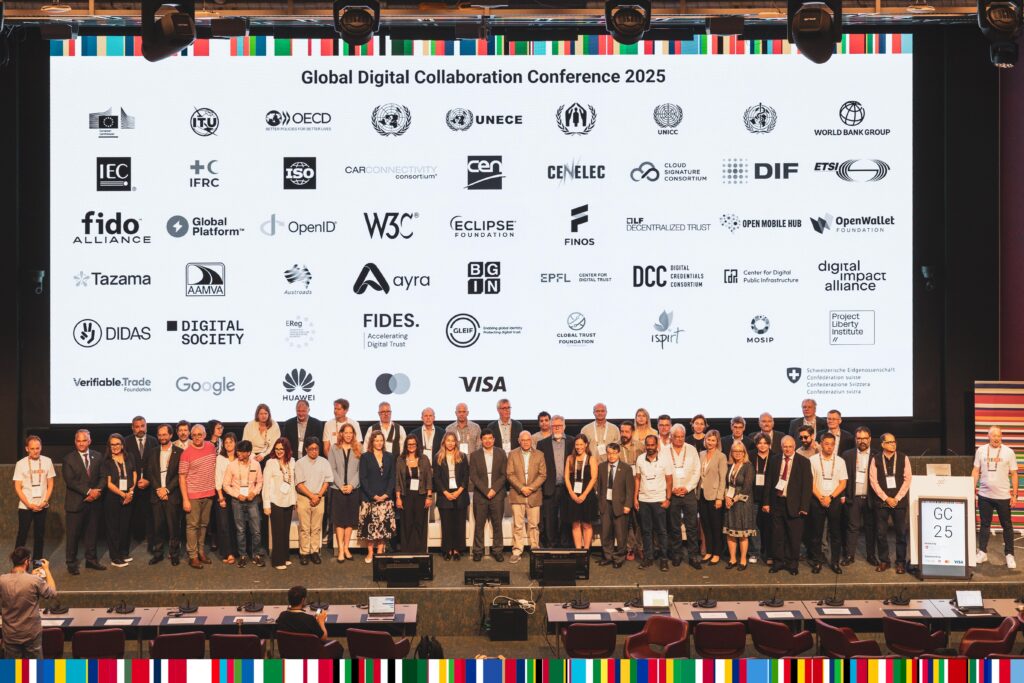
We’re seeing “official” moves in the development of the #opensocialweb. Big players are turning up. Conferences in Geneva. Glossy orgs like @ProjectLiberty positioning themselves as bridge-builders between tech and governance.
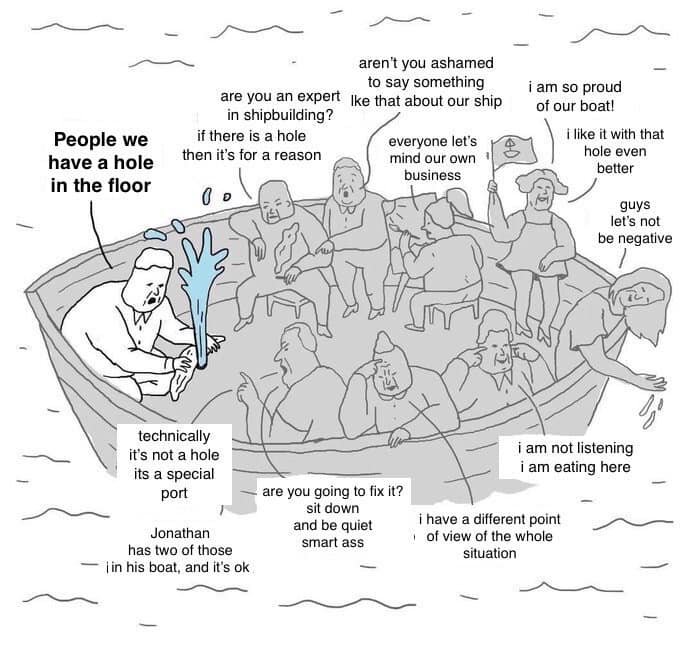
On the surface, this looks like progress, recognition, and legitimacy. But let’s be brutally honest: these are completely the wrong people to be steering the direction. The problem isn’t that they show up, it’s that they try to take up all the air in the room.
Where are the bridges to activism? Where’s the link to movements that actually push change and challenge? Without those, all we have is tech-for-the-sake-of-tech, more elitist panels, more smiling faces managing decline. Looking closer, is this anything but a bunch of ****wits in suits?
The #OMN is an example project, about building the shovel factory, simple tools that anyone can pick up. Open pipes, trust flows, collective publishing. Not another empty standard, but working soil where communities can actually grow culture and power.
We can’t keep ignoring the stink, Yes, it’s nice to see recognition. But let’s not confuse recognition with change. Without shovels, glossy projects just pile up stink. No perfume, no branding exercise can hide the smell.
We need to say VERY clearly that in the native #openweb, bridges go both ways. If you build them only toward governance elitists, you’ve built a cul-de-sac. If you build them toward activism and grassroots, you create “native” flows that actually move.
Let’s look at this problem, the #fashionistas are everywhere in our spaces. They look shiny, sound clever, and always seem “in the know.” But scratch the surface, and you find nothing but mirrors and buzzwords. They are hallucination machines, not listening, not dialoguing, not building, just repeating empty noise to hide their lack of substance.
What we need to do, is to shovel the empty words into piles, turn them over, and use the stink to fertilize something real. The #OMN is one such tool, not polished, not PR-friendly, not built for grants or press releases. It’s messy, grounded, spiky, and fluffy. A toolkit for people who actually want to build, not brand. The #fashionistas will hate it, because it doesn’t need them. Good, that’s how we know we’re on the right path.
These #fashionistas, conscious or not, are about wrapping the #deathcult in a soft blanket of jargon and “professionalism”, to make exploitation sound like innovation. To turn grassroots messiness into #PR. And people keep falling for it. Why? Because the #fashionistas sell the feeling of being respectable, of being listened to by power. They dangle the bait of #NGO grants, seats at the table, and photo ops. But what they deliver is silence, blockage, and decay.
They call it communication, but it’s not dialogue, not listening, not truth. It’s hallucination: Smiling faces repeating empty words. Buzzwords to cover the rot, smoke and mirrors to keep power safe in its head down worship.
This is the work of the #fashionistas of our spaces. They parade their new “frameworks,” their shiny “initiatives,” their endless “community guidelines.” Always dressed up, always polished, always empty. They are masters of looking good while doing nothing.
They sell hallucinations because reality frightens them. Reality is messy, full of dissent, full of challenge. Reality is compost – steaming, turning, breaking down. From compost grows life. From their hallucinations grows only more of the #deathcult. While they hold the space, communities are silenced. When they push themselves, the centre holds only rot. With their hallucinate, the #mainstreaming keeps killing the margins.
What we do not need is their delusions. We do not need their fashion “shows”. Our path is different. The path we take is composting. Shovel in hand, we turn the pile. We let the stink breathe. We break down the lies, the #PR, the shiny reports. We turn their hallucinations back into fertile ground for something real.
Yes tis is work, we need more projects like the #OMN: open process, open data, open code, open standards. The #4opens: sunlight over secrecy, dialogue over control. The #KISS principle is our reminder: keep it simple, keep it real.
Let the #fashionistas keep their hallucinations. We need to be busy with planting the soil.
Sanity means stepping outside the churn. The obstacle is simple but heavy, people cannot see change and cannot face challenge. That blindness keeps us stuck, yes, some say what I write here is “bleeding obvious.” It is, but that’s the point, it’s not for the already converted, not for the initiated. These posts are shovels: tools to compost the #fashionistas and the #geekproblem, to turn the pile of #techshit into fertile soil.
The #OMN project grows from this compost. It’s not a theory to admire, it’s a path to move people out of #mainstreaming and into diverse subcultures where we actually live change and challenge. When rupture comes – and it always does – the strength of that diversity, the lived practice of horizontals, will be seeds for planting a future worth having.
This path is not about being “original.” It’s about being useful. About creating spiky, fluffy translations that help us step aside from the churn, shovel in hand. Use them, or lose them, just dont stand aside like a prat, please.
We keep seeing this mess. The moment grassroots energy spills over into #mainstreaming, something alive, the #fashionistas arrive to “facilitate.” Suddenly the spiky edges are dulled, the fluffy warmth is flattened, and what’s left is another empty process path, they kill with kindness, or worse, with “common sense.”
Let’s be very blunt, these people are not important as individuals. What matters is the path they push us down. The “commonsense” they sell is poison. Every time we let them set the frame, our direction, our spaces collapse back into #stupidindividualism or #NGO capture. Every time.
It can be hard explane this, as people make the needed change complex, it is not, yes, it’s messy and the are no simple answers. So a first step is composting the #techshit:
Raw waste → The constant flood of mainstreaming, broken promises of #dotcons, bad-faith #NGO capture, shallow “innovation theatre.” This is the smelly mess we are swimming in.
Shovel work → Activists and communities don’t just sit in the mess. We work to turn it over, exposing the rot, adding oxygen. This is critique, transparency, and the #4opens in action.
Aeration → Sunlight + openness turns stink into something useful. Lies are exposed, corruption made visible, hidden power structures dragged out into the light.
Soil of change → The same waste that poisoned us can become fertile ground for new growth, but only if we do the work of turning it. This is how trust-based networks sprout, how projects like the #OMN emerge.
What it means in practice:
Don’t just delete the shit – we instead compost it. Bad actors, bad processes, and bad tech are made visible and contextualized.
Don’t hoard the shit – silos just trap the stink. Share, federate, distribute – so communities can add their own oxygen.
Don’t wallow in the shit – critique alone is not enough. The point is to grow fertile alternatives.
The composting metaphor says: yes, we’re drowning in #techshit, but we have the tools to turn it into the soil for something humane, resilient, and alive. #KISS
The #OMN is a simple project. But simplicity is deceptive, what makes it difficult for many #fashernista and #mainstreaming people is not the code, not the servers, not even the logistics. The difficulty is that the #OMN is rooted in a different path of human nature.
It isn’t designed to fit the old path of #stupidindividualism. It isn’t built to serve the greed of #dotcons. It isn’t here to bend the knee to the #deathcult. The #OMN is designed as a transition tool, a bridge to a different path, commons, trust, a living path. Once people arrive, they can build what they like. That’s why the #OMN isn’t just tech, it’s a toolkit for social change and challenge.
#KISS. Keep it simple. Keep it real. I’ve been building this bridge for 20 years, agenst strong counter flows, we were all pushed off the path when we handed our voices to the #dotcons. When #openweb culture gave way to #stupidindividualism, I was ready to give up.
So I bought a boat and sailed away. #boatingeurope. Not a metaphor – it’s survival. But then came the #ActivityPub reboot, the #openweb with the #Fediverse rose again. I came back. Because there was hope, there still is.
And now – five years into this reboot – we face the next predictable crisis: #mainstreaming, the sell-outs, the “respectable voices”, the NGO parasites. Yep, it’s normal, it happens to every alt project. And now it’s happening here.
The solution? Compost the mess. Not to attack individuals – most of them aren’t important. What matters are the paths they push us down. Because their “common sense” is the real danger. These are “common sense” paths that turn living networks into dusty, dry creeks.
That’s why I keep writing the #hashtag stories: to make these hidden paths visible. So we can choose differently by seeing what’s going on. . Then act to compost the #techshit to grow something real.
Instead of only deleting, we contextualize and critique.
This “compost” becomes fertile ground for better growth.
Grow
New media projects emerge from the toolkit.
Each can shape the #OMN path to fit their community.
A living, adaptive commons.
Principles in practice, KISS → tools stay simple, human-readable, small pieces that fit together. #4opens → open data, open code, open process, open standards. Trust-based networks → rooted in commons, not control. Resilience → many weak ties are stronger than one big silo.
The #OMN is not an app you install. It’s a set of processes + tools to move us from isolation to commons, from #dotcons back to #openweb.
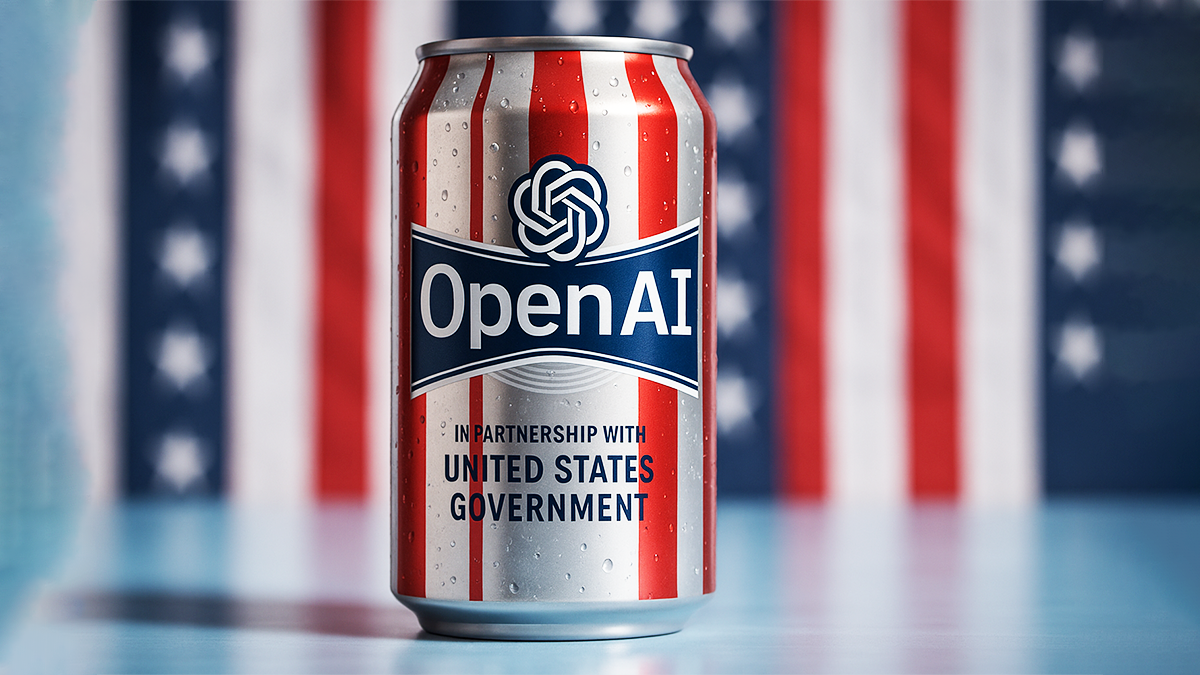
In the USA #techshit mess, #OpenAI is busy wrapping itself in the stars and stripes, pushing the fantasy of “democratic AI” while the democracy fig leaf is withering. This isn’t democracy – it’s branding. It’s the normal Silicon Valley laundering greed through the American imperialism.
The #nastyfew, Sam Altman, Larry Ellison, Masayoshi Son, and the Saudis will do fine. They’ll gorge on taxpayer, subsides, pouring billions down the drain, just like the political as normal boondoggles – the useless littoral ships, the Foxconn ghost factory. It’s all the same scam: shovel public money into private pockets, call it progress, leave wreckage behind.
This is the everyday #deathcult at work. The language of freedom and democracy as always been hollow, with the smoke and mirrors hiding corporate profit motives, sprayed in red, white, and blue gloss. They, the #nastyfew and their acolytes, were never building tools for people, they’re entrenching power, exporting Silicon Valley’s #dotcons extraction model under state sanction.
The rest of us? We get the surveillance, the climate wreckage, the bill. The only thing “democratic” about this current #AI path is how widely the costs will be socialized while the profits remain privatized.
What we don’t need is more Silicon Valley scams draped in flags. We don’t need “democratic AI” pushing billionaire control. What we do need is a living alternative: like the #OMN path.
The #OpenMediaNetwork isn’t built on subsidies for the #nastyfew, it’s built on trust, transparency, and tools for the many. It’s messy, human, and alive, rejecting the hollow language of branding and growing on the grounded: #4opens for media, code, governance, and community.
The #OMN path says: we don’t wait for corporations to drip-feed us “freedom” while chaining us with surveillance. We build our own networks. We create media that resists capture. We code grassroots protocols that put groups first, not extractive markets. We reclaim the #openweb as commons, not as the current shackled slave plantation.
This is the real “democracy” they are terrified about, and why they keep pushing their stage-managed branding “democracy” exercise. We need instead people creating together, federating, refusing capture, building resilience in the cracks of the failing empire. The #deathcult is extraction, distraction, and decay. The #OMN is life, connection, and power in our hands. The choice is simple. Which side are you on?
The #dotcons sell us lies. Shiny apps. Smooth words. Addictive feeds. It’s branded corporate greed wrapped in a digital addiction – the drug of distraction, sold to us as “connection.”
The #nastyfew billionaires gorge. They own the servers, the wires, the algorithms. They gorge on our clicks, our labour, our lives. And the rest of us pay.
We pay in surveillance. We pay in broken trust. We pay in climate wreckage, while their jets and data centres burn the sky. The bill is dumped in our laps. That’s the #deathcult we all worship.
But we have a choice. If we choose a different path, we don’t need their tools. We don’t need their lies. We don’t need their cages.
We build our own paths. Messy, raw, imperfect – but ours. That’s the #4opens. That’s the #OMN path.
Not for the market. For the people. Not top-down. Ground-up. Group-first. Trust-first. Messy, real, alive.
This is democracy they cannot script. This is media they cannot buy. This is the #openweb commons, we create together, not consume alone.
The choice is simple. Kneel to the #dotcons. Or rise up, and rebuild the #openweb.
Most software today = individualist. Even “collective” tools (Fediverse servers, enterprise SaaS, etc.) are just abstractions that aggregate individuals. The default assumption is the liberal subject: the sovereign individual. The infrastructure is built for self-expression, personal feeds, private chats, me, me, me. That’s why for example, when you step into libertarian codebases like #nostr, the smell of #stupidindividualism is everywhere.
Communities are treated as “groups of individuals,” not as entities, that’s the bourgeois blind spot, a community is not just a pile of people. A village, a crew, an affinity group, a social centre – these are organisms in themselves – they have memory, metabolism, reproduction, decision-making that aren’t reducible to a sum of there members.
Much of activism and grassroots assemblies already know this, in real life, you’ve seen how assemblies develop rules-of-thumb, consensus practices, and internal cultures. They don’t need hard rules (code) to function; they need space, trust and ritual. What digital tools can do is soft map those existing practices into code, what they should not do is create more structured #techshit that imposes individualist logic from the normal every day #deathcult priests of Silicon Valley.
So, if we take this different path, what would the balancing of communal-first tech look like? Well, much like the current mod process of good grassroots mastodon instances. Malatesta was right: anarchism is not the absence of “paths”, it’s paths we make for ourselves.
So looking over our shoulder, if we apply this lens to #nostr: The tech is libertarian free market, good for individual broadcasting. If you wanted to fork or layer it for communal use, you’d have to invert its assumptions: design clients that display group deliberation outputs, not only individual chatter. Right now, the #nostr crowd is hostile to this, because they’re blinded by narrow crypto-bro ideology. But the protocol itself is kinda neutral, though the UX is still half-baked.
For #OMN and #indymediaback: This community-as-unit model is already in the DNA (#Indymedia was not a bunch of bloggers; it was collectives federating). The challenge is resisting the gravitational pull of the “common sense”, #mainstreaming, #dotcons control of the #nastyfew who can’t help but push everything to look like personal brands and influencer feeds.
As it should be easy to see, real-world collective practice – assemblies, affinity groups, neighbourhood councils – work differently. The base unit is not the individual but the group, bound by shared process. Thus, we need to build mythos and traditions before tools, decision-making protocols need to be horizontal and social, rather than hard coded digital control.
To recap, the unit of measure matters. Most digital tools are still built around the individual user account as the base unit. Everything radiates out from that: identity, control, permissions, content. This encodes #liberal, capitalist assumptions into the tech: atomised people, making “choices,” “connecting” in a marketplace of attention. To take this different path, we need to change and challenge the #mainstreaming with #KISS “native” tools, rather than the current mess of retrofitting governance into individualist existing software.
The #OMN is there to provide scaffolding for the path away from this current mess: a social layer that privileges collectives over individuals, that federates assemblies not personalities, and that accepts messiness as a feature rather than a bug. This is the path the #OMN can nurture, even if it means swimming against both the #dotcons and the libertarian crypto crowd, because we know that without shared process society collapses into prats, paranoia, and power-hoarding.
Let’s try to compost the mess rather than add to it, the #OMN is a shovel, please try not to be a prat about this, thanks.
This should be obvious to anyone who as some knolage of left politics. They are the people who always rise to the top when #mainstreaming takes hold. You see them on TV, in parliament, running #NGOs, managing #dotcons tech projects.
On the surface, they don’t always look bad – in fact, they often present as competent, articulate, even charming. But scratch that surface and the pattern is clear: their drive is not shared flourishing, it’s possession and control.
This minority #nastyfew, from a historical view, are today’s bourgeoisie. Marx outlined (https://en.wikipedia.org/wiki/Bourgeoisie), that the bourgeoisie historically gained their power through ownership of the means of production – factories, land, capital – while the working class had nothing but their labour to sell. The bourgeoisie used their control over wealth and coercion to keep society in balance, a balance where they stayed on top and everyone else stayed dependent.
The same dynamic runs through our present, the #nastyfew work to preserve a status quo that serves them. They exploit labour (waged or unwaged), capture resources, and use subtle or blunt coercion to suppress any change or challenge.
Those who hold power – social, technical, financial – remain the #nastyfew unless we actively work to compost them.
Then, in our cultural circles, we have our own “common sense” #blocking, the “parasites” who feed from progressive paths.
#fashernistas – chasing visibility, hashtags, and trends instead of substance. They drain energy by endlessly cycling the latest buzzwords while ignoring the compost underneath.
#Blinded dogmatic liberals – well-meaning perhaps, but so trapped in their own ideology that they block radical change without even seeing it.
The wannabe #nastyfew – those who orbit power, adopting the habits of control in hopes of rising up themselves.
Neo-liberals in disguise – the most dangerous, because they consciously wear the clothing of other paths: climate, diversity, openness… while quietly feeding the #deathcult of enclosure, growth, and control.
Some of these act blindly, reproducing harmful patterns without much thought. Others are deliberate: they know what they’re doing, and they’re doing it to consolidate control.
The unthinking #mainstreaming majority are shadows of the above. They’re not directly malicious, but they absorb the surface story: They repost the slogans. They nod along with “common sense” solutions pushed by the #dotcons and NGOs. They go with the flow, even when the flow is a sewer. Without working composting, they become the mulch for the #nastyfew to grow stronger.
The “nice liberals”. Not all liberals are destructive. Sometimes they play a healthy role: They keep projects afloat by doing practical work. They can mediate between radicals and the #mainstreaming. They often mean well, and can be allies if they’re not left holding the steering wheel all the time. They’re not the compost, they’re more like the worms: sometimes useful, sometimes wriggly, but part of the soil cycle.
And beyond, there are what has value, the progressive radical paths – both #fluffy (trust, care, openness) and #spiky (confrontation, defence, rupture). That’s another layer of the compost pile, and deserves its own focus. The key point: the #nastyfew and their parasites will always try to rise up in any fertile ground. The progressive trick is to compost them early – recycle their energy, block their possessiveness, and keep the soil rich for new seeds.
To recap, let’s look at some history. When the #openweb reboot began about a decade ago, it was rooted in grassroots values: #4opens, federation, collective governance, affinity trust networks. But as soon as the energy started to gather, the #mainstreamin pushed in:
#Dotcons pivoting into the space – Facebook rebranding as “Meta” and trying to swallow the Fediverse through the #Threads/ActivityPub move. This is enclosure dressed up as “openness”.
Standards capture – The #NGO actors increasingly gatekeeper the “neglected” #W3C processes, pushing, more corporate-driven priorities while blocking messy grassroots paths that did the shovelling to grow the reboot during the seedling years.
Control of resources – a few “elitist” individuals began hoarding power over infrastructure, domain names, and repos, reproducing the same top-down model we’re supposed to be escaping.
The result? We are seeing the #mainstreaming channeling energy away from collective growth into more controlled, branded silos. The Fediverse started as messy, small-scale, radical. But the same pattern repeated:
SocialHub degeneration – once the buzzing hub for ActivityPub, it decayed into a handful of blockers. The sometimes competent-and-charming surface masks a deeper instinct for control. Threads stagnate, dissent is suppressed, and the soil turns barren.
Mastodon centralization – while #Mastodon has been vital, its dominance has also let a single dev-team shape the Fediverse “common sense”. That concentration of reputation and technical control looks very much like a wannabe mini-bourgeois class rising.
#NGO incursions – funded NGOs present themselves as allies, but bring managerialism, paywalls thinking, and “stakeholder” logic. Instead of composting conflict, they plaster over it with workshops and careerism. Then #block the people who complain.
This is the #Fediverse version of “workers remain workers, employers remain employers”: contributors remain contributors, gatekeepers remain gatekeepers. We face the issue of possession over collaboration – we see that collectives fracture when individuals cling to admin roles, mailing lists, funds, and leadership positions. Possession rots trust and then groups wither.
The people who hold (and hored) resources, contacts, and media attention become more deadened than path, even if they started with good intentions.
The composting lesson, is that over and over, the #nastyfew and their parasites repeat the bourgeois pattern at scale: They present as competent and charming. They consolidate possession and control. They preserve the status quo by suppressing dissent.
And over and over, the solution is the same: compost them. Turn the piles of #techshit and #NGO mess back into fertile ground. Protect the seeds of grassroots tech trust, keep the social soil messy and alive.
The #OMN is based on human beings doing the right thing.
And they will not, and it will fail.
Human beings doing the right thing, and they will not, and it will fail.
And they will not, and it will fail.
And will fail.
This is the challenge in the era of the #deathcult: A culture that feeds on fear, on greed, on possession.
Seeds are planted, but the soil is barren. Trust is offered, but hands close into fists. A path is drawn, but the walkers scatter into shadows.
The #OMN is fragile, thin green shoots in a field of ash.
It asks the simplest thing: Do the right thing. Not once, but again, and again, and again.
And if we do not? It will fail.
And if we do? Perhaps, seeds will take root, and grow beyond the compost, beyond the #deathcult, into the messy, open, living forest.
It’s good to see more people turning their focus back to the #openweb. But for the past five years of the #reboot we’ve been distracted in a signal-to-noise mess from the #fashionistas. That waisted time needs to be over, we need to start looking clearly at both internal rot and the external threats.
A good first step to this is in balancing the realisation that we actually have far more direct power to deal with the internal mess than we do over the external #dotcons and their #closedweb “common sense” colonialisation. That’s why we need to put activism into composting the internal #blocking (see: https://hamishcampbell.com/?s=compost). Composting isn’t just a metaphor – it’s a way to recycle the piles of #techshit we’ve built up into soil that can grow new #openweb seeds we need to cultivate.
I understand the normal focus on the external #dotcons, yes, we need to balance this to keep pushing back against the external enclosures. But inside our own spaces, it’s clear that possessiveness, in code, in reputation, in control over projects, undermines cooperation and destroys trust. It wastes resources, it corrodes integrity – People often destroy what they love, not out of hate, but out of possession.
The lesson is simple: compost the blocking, keep the seeds alive, and make space for growth.
What can you do? Use the compost metaphors (#techshit, seeds, soil) into accessible non-branded messaging that sticks. You can help with editing to transform the long posts into shareable, short-form content for Mastodon, Fediverse, and allied networks.
Help is needed in curating and organizing existing #OMN writings into a structured wiki-style knowledge base. To build summaries, FAQs, and primers for newcomers who hit the projects cold. We need draft “composting guides” – how to deal with #blocking, #fashionistas, and #geekproblem inside communities. Moving this simple documentation to the Unite Forge and other new #OMN tools. Helping draft roadmaps that explain what’s built, what’s missing, and what needs contributors. Producing explainers on why #OMN is different from #dotcons and #NGO capture, why being grounded in #4opens matters.
Write out templates for horizontal decision-making (#OGB style) that projects can adapt. Suggest practical ways to “compost” blockers while keeping the wider network fertile. Help draft neticate rooted in #KISS + #4opens rather than #NGO-speak.
Each of these can be grown into living resources: wiki pages, blog posts, shareable guides, or activist toolkits – depending on where you want the energy to flow.
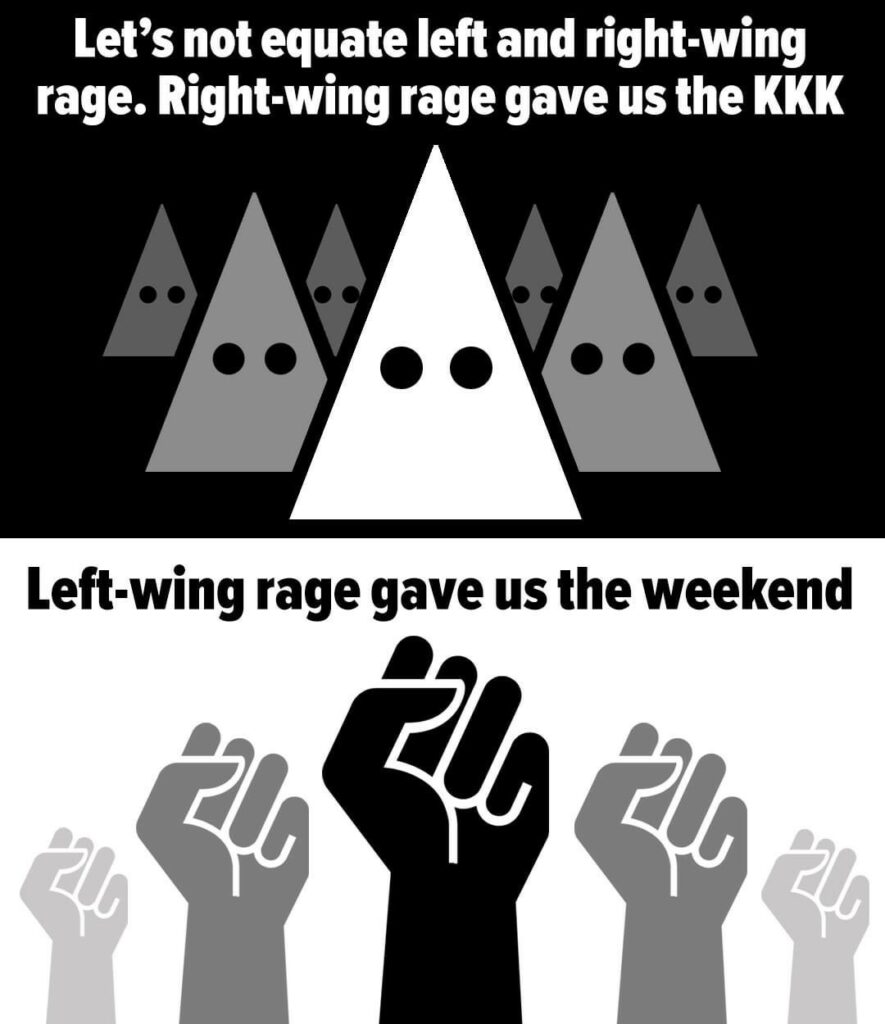
We need to start saying this more often, and without apology: there is a moral difference between left and right. Not just a difference in opinion, or strategy, or culture, but a real difference in the kind of people and world each side fights for. Left-wing politics, reflects our better human instincts: generosity, compassion, mutual care, sociability, conviviality, and courage. These are the values that hold communities together, that push back against cruelty and isolation, that imagine a world where no one is left behind. In contrast, right-wing politics are the organised expression of greed, selfishness, ego, bigotry, and fear. They hoard, they divide, they scapegoat, and they dominate.
It’s time we stop pretending this is just a polite disagreement and call it what it is: the left is the political force for good, and the right is the political expression of evil. Naming this clearly matters – because when we blur the line between solidarity and selfishness, we lose the ground we need to stand on. And note we need to put much of the hierarchical left on the right spectrum, it’s important to say this often as well.
Then on the centre path there’s a lot of #fluffy around these days. Take books like Abundance – dressed up as bold new visions, but really just more of the same old liberal centrism with a shiny, tech-friendly finish. It flirts with Marx at the end, but only to dress up in borrowed credibility. At heart, it’s not socialist, it’s a manifesto to reassure the #mainstreaming chattering class that everything will be OK if we innovate harder and manage smarter. This is blinded feel-good “supply-side liberalism” for the TED Talk crowd.
Let’s be very clear: the “problems of the modern Left” exists. Identity tokenism, #NGO capture, and aimless cultural navel-gazing have turned real struggle into performance art. But the answer isn’t to step back into the arms of liberalism or #techbro ideology – it’s to push further and deeper into balancing the path of radical collective politics. Not less left, but more grounded and grown-up socialism?
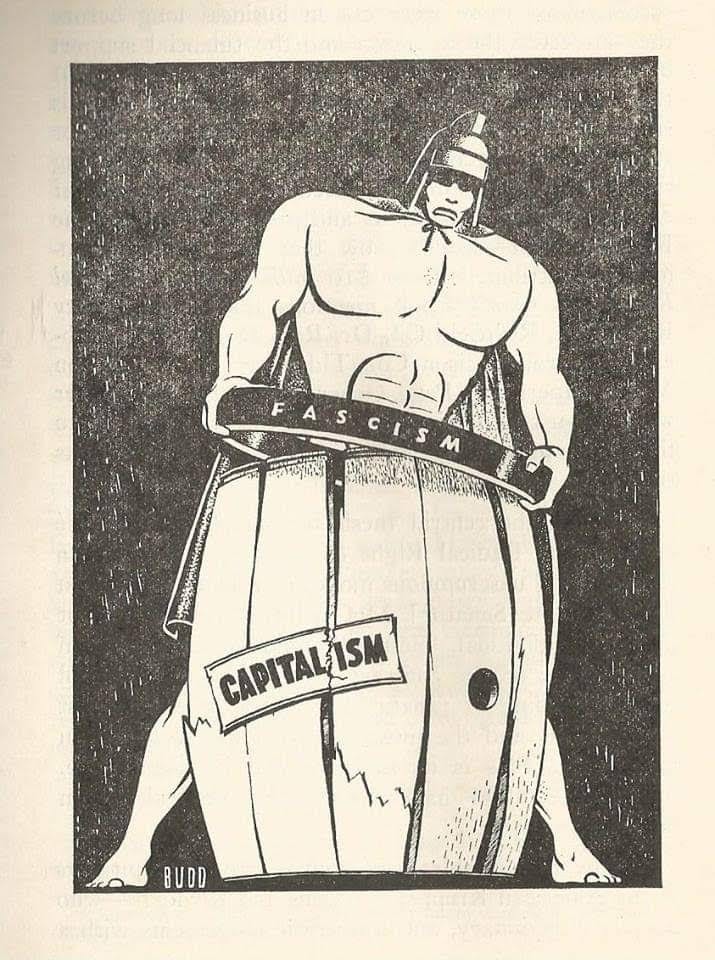
Because the actual problem isn’t scarcity, or inefficiency, or bad design. The problem is capitalism. Let’s spell it out: Capitalism needs artificial scarcity to work. That’s how it makes money. You think landlords want more housing to be built? Of course not. Flood the market with affordable homes and they lose their grip on rent extraction. Same with developers, they make their money by building just enough to keep prices high. It’s not a bug, it’s the core business model. We need to see this for what it is #miseryeconomics.
Take energy, the whole history of fossil fuels is cartels, from the Seven Sisters to OPEC, it’s a game of controlling supply to keep prices (and profits) up. It’s not about abundance, it’s about engineered shortage. Try fitting that into your neat little supply-and-demand graphs.
Even beyond housing and energy, the entire financial system is tied to the constant rise in asset values. You don’t keep Wall Street humming by flooding the world with free and accessible goods. You do it by enclosing, bottling, and selling scarcity.
So when these liberal optimists talk about “unlocking abundance” without touching class power or property relations, they’re missing the entire point. Or worse, helping to hide it.
What we actually need is a radical shift, that builds on grassroots cooperation, trust, and open systems. Not more shiny ethical #dotcons platforms or visionary #nastyfew billionaires, but boring, solid, stubborn collective action. We need commons, not commodities. Federation, not feudalism. We need to compost the #techshit, not polish it.
This is where projects like the #OMN come in – grounded in the #4opens and decades of lived, messy, practical resistance. Built to share, not to own. Grown from the ground up, not imposed from on high.
We’ve seen what doesn’t work. Let’s stop pretending that liberalism with a few wires stuck in it is going to save us. It’s time to build something real, together, and you get to chose to take the left or the right path. And on this choice, try not to be “common sense” evil in your choice.
Here is a trilogy of stories you can use for outreach if you take the grassroots left path: